Los Islands
Los Islands, Guinea
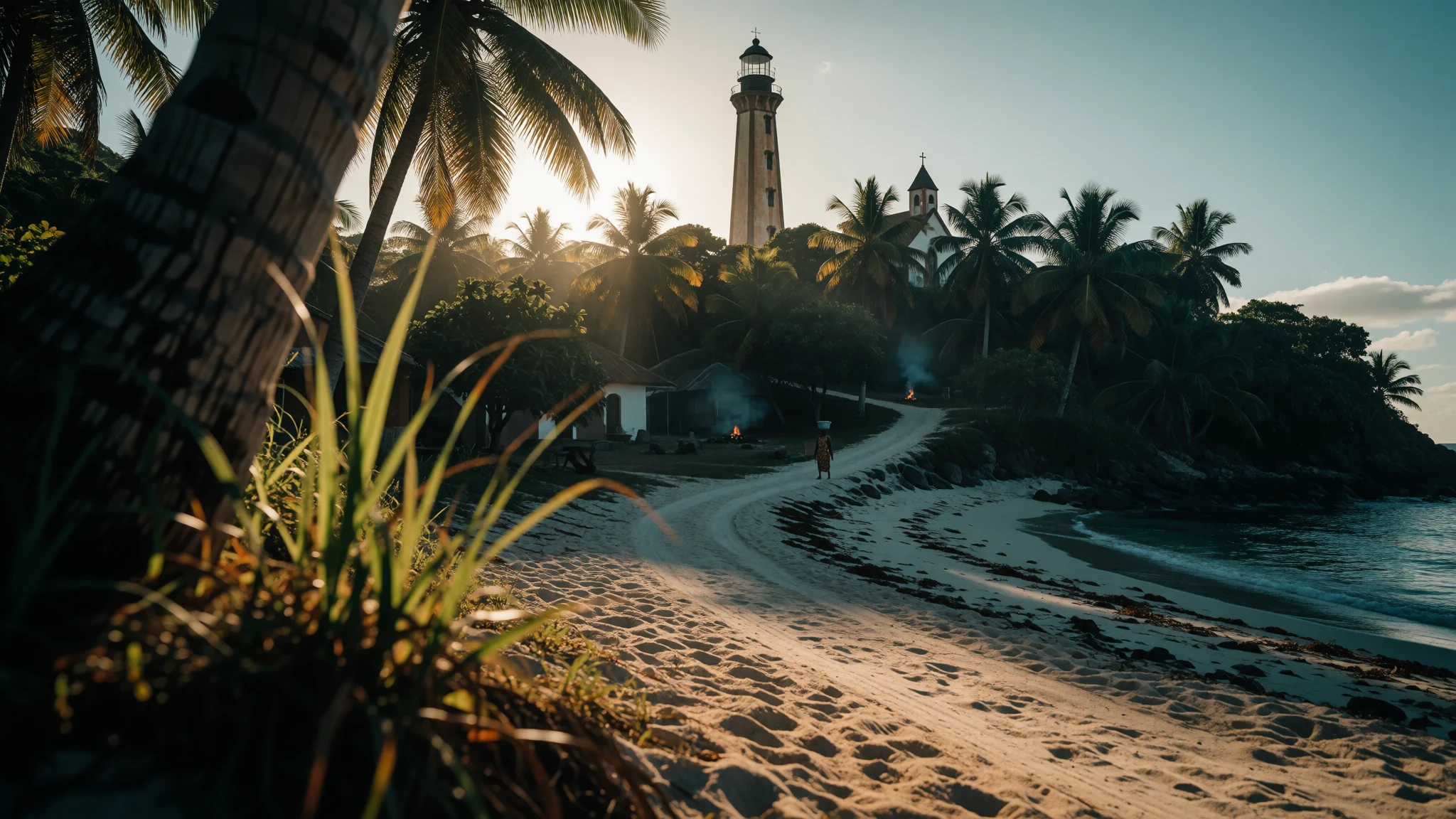
Los Islands are a cluster of Atlantic islets off Conakry, reached by boat for beaches, grilled fish, and a quiet shore away from the capital.
The place
Los Islands, known in French as the Îles de Los, lie in the Atlantic immediately off Conakry, the capital of Guinea. They are a small archipelago of volcanic rock and sand, close enough that the mainland peninsula stays in view and far enough that the city noise falls away once a boat clears the harbour. Fishing villages, coconut palms, mango trees, and low laterite tracks share the ground with long pale beaches. The sea is the warm Atlantic of this coast, often turbid near the landings and clearer on calm mornings over open sand.
The group is spoken of as a few lived-in islands and a scatter of lesser islets. Tamara, also called Fotoba, holds a village, a lighthouse, and a small Anglican church among the trees. Kassa faces the city and takes most of the weekend boats; its shore is the one people mean by a beach day from Conakry. Roume is quieter, a low green island of coves rather than a town. Paths are sandy, landings are beaches or rough jetties, and power and fresh water are uneven, so the feeling is of a working shore at its best on a clear morning.
From the water the islands read as dark green humps, with Conakry’s headland behind the boat on the way out. Mangroves and creek mouths mark parts of the sheltered shore; the windward side takes the Atlantic swell. In the dry months the light is hazy, sometimes thick with harmattan dust, and the heat is steady. In the rains the hills turn a deeper green, squalls empty the beaches, and the crossing grows choppy. On a Sunday the boats carry families, and the shore fills with mats and cooking fires until everyone returns to the city.
Its story
Los Islands came into European writing under a Portuguese name, Ilhas dos Ídolos, after carved figures that mariners reported on these shores. French maps compressed the idea to Îles de Los, and English usage settled on Los Islands. They were never a capital. They were a roadside of the Atlantic: water, trade, and a lookout on the coast that is now Guinea.
That roadside was caught up in the Atlantic slave trade. Ships watered and traded here while that traffic still ran along this coast, and later British patrols used these waters while trying to stop it. A British settlement took root, with officials, merchants, and a church tradition that the village on Tamara still keeps. In the colonial bargaining between London and Paris the islands passed to France and were joined to French Guinea, the territory that became today’s Guinea.
Independence did not make them a city. People fished, farmed, and crossed to Conakry for school, market, and work. On Kassa, bauxite was dug and shipped; the mining left pits, a jetty, and a community that swelled with the work and thinned when it slowed. What remains is a village island with a scarred interior and a shore the capital treats as its beach. Church feasts, the fish trade, and weekend boats are the present tense of Los Islands: a small place that has been a waypoint, a colonial bargain, and a quarry, and is once again a shore for swimming and eating.
What to see
- Tamara (Fotoba) — Tamara (Fotoba)
Tamara, also called Fotoba, is the Los Islands shore where a village, a lighthouse, and a small Anglican church share a wooded rise above the landing. Saint-Jean-le-Divin is a parish building in daily use, and the sandy lanes around it hold cooking fires, nets, and children. The shore path looks back towards Conakry, and the landing beach is where boats and the inland track meet.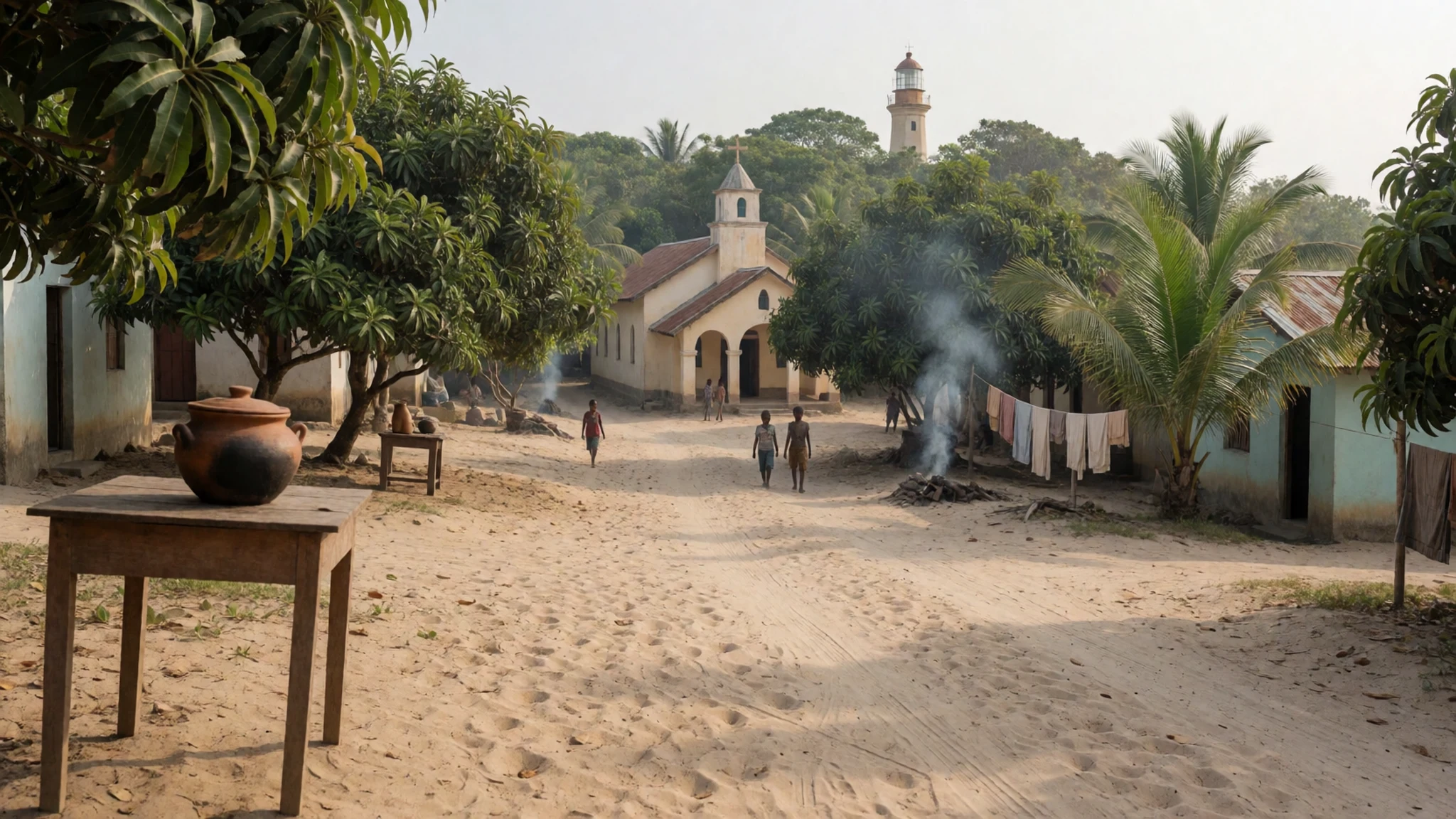
- Kassa — Kassa
Kassa is the Los Islands beach that Conakry uses. Weekend boats unload mats, speakers, and cool boxes onto a long sandy shore, and by midday the shade trees hold family groups and grill smoke. Inland, old bauxite workings have left pits and a rough industrial trace, so the island is both a picnic coast and a worked landscape. Swimming and grilled fish are the draw; village paths are homes.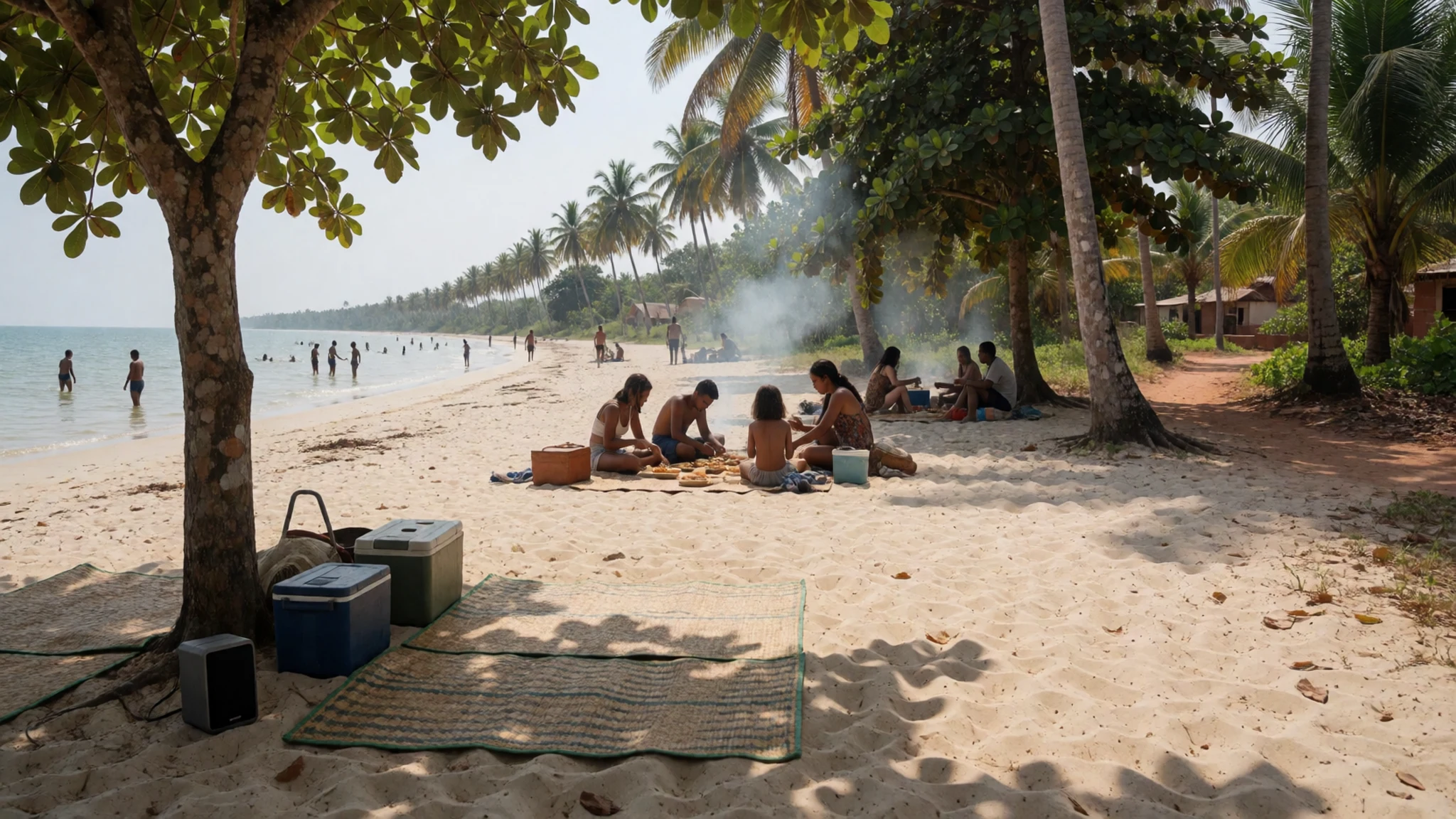
- Roume — Roume
Roume is a quieter Los Islands shore, a low green island of coves rather than a busy weekend beach. Fishing pirogues work the lee, and the paths between trees stay sandy and short. There is no town to tour; the landing is about water, shade, and a coast that still feels like a village edge. Swimming stays where the local boats are drawn up, out of the stronger ocean-side swell.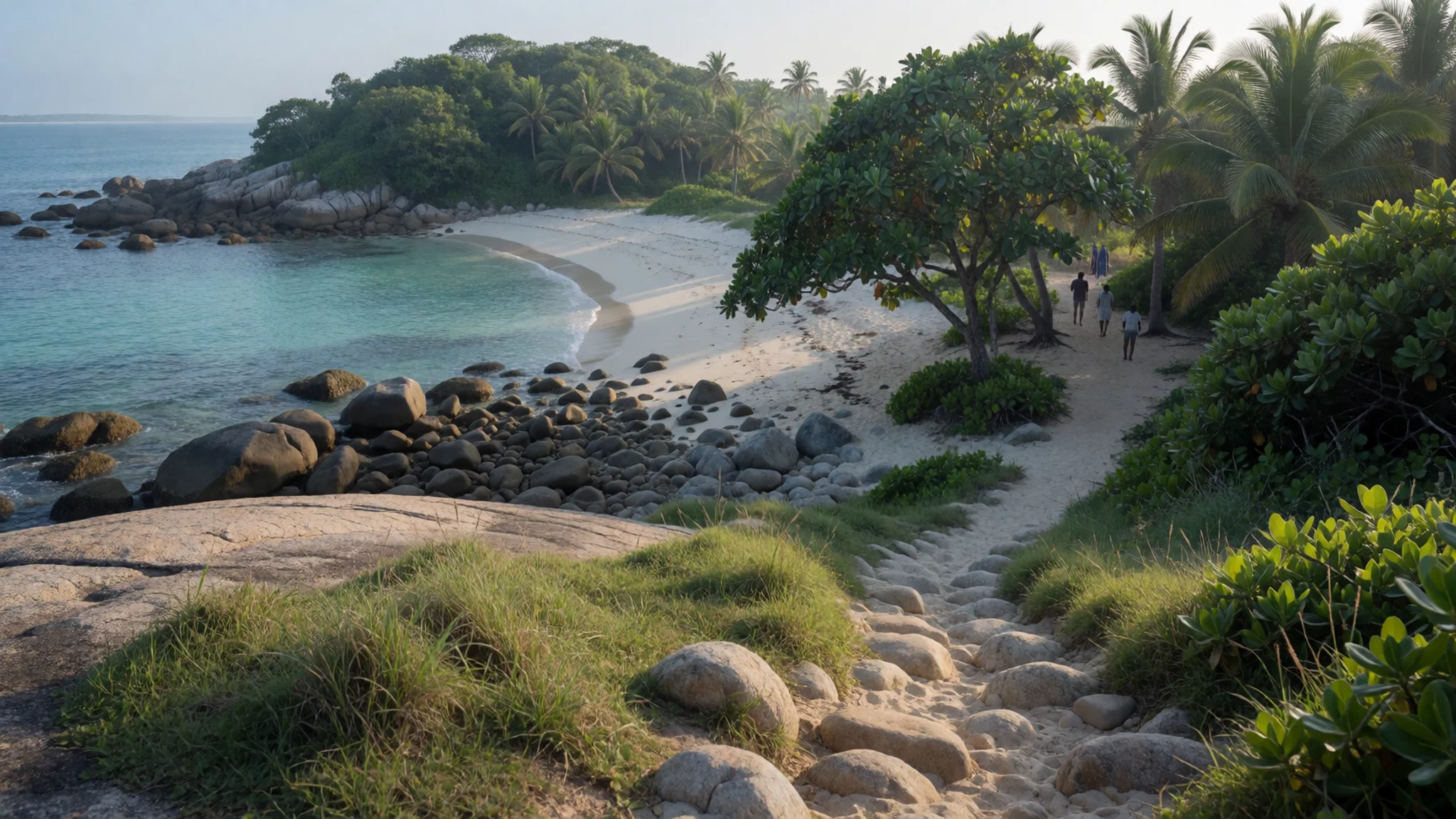
- The boat crossing — Conakry pier to the islands
The boat crossing is the real approach to Los Islands, a run from a Conakry pier through harbour traffic and out to open water. Pirogues and small motorboats carry passengers, fish boxes, and fuel. On a clear day the islands lift as green humps while the city falls back into haze. Old Admiralty charts of this coast still explain the caution: shoals and channels sit close under a harmless-looking surface.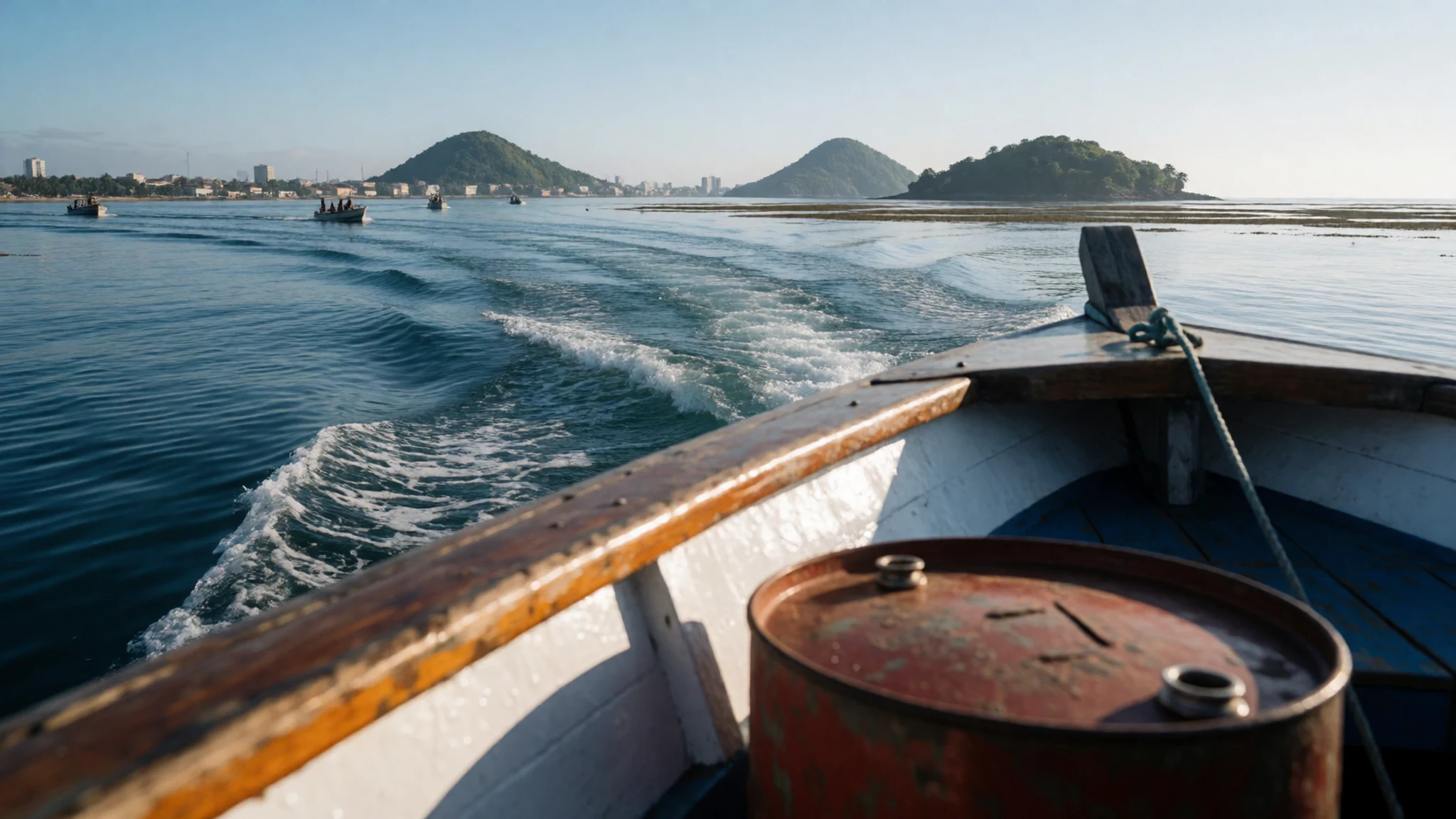
- Leeward beaches — Sheltered shores
The leeward beaches are where people swim on Los Islands: pale sand in the shelter of each island, the Atlantic swell broken. Water near the villages runs murky with stirred sand, and it clears over the open coves on a calm morning. Shade is a tree or a mat. Nobody lifeguards these shores, so swimmers watch how the pirogues use the beach and stay inside that line.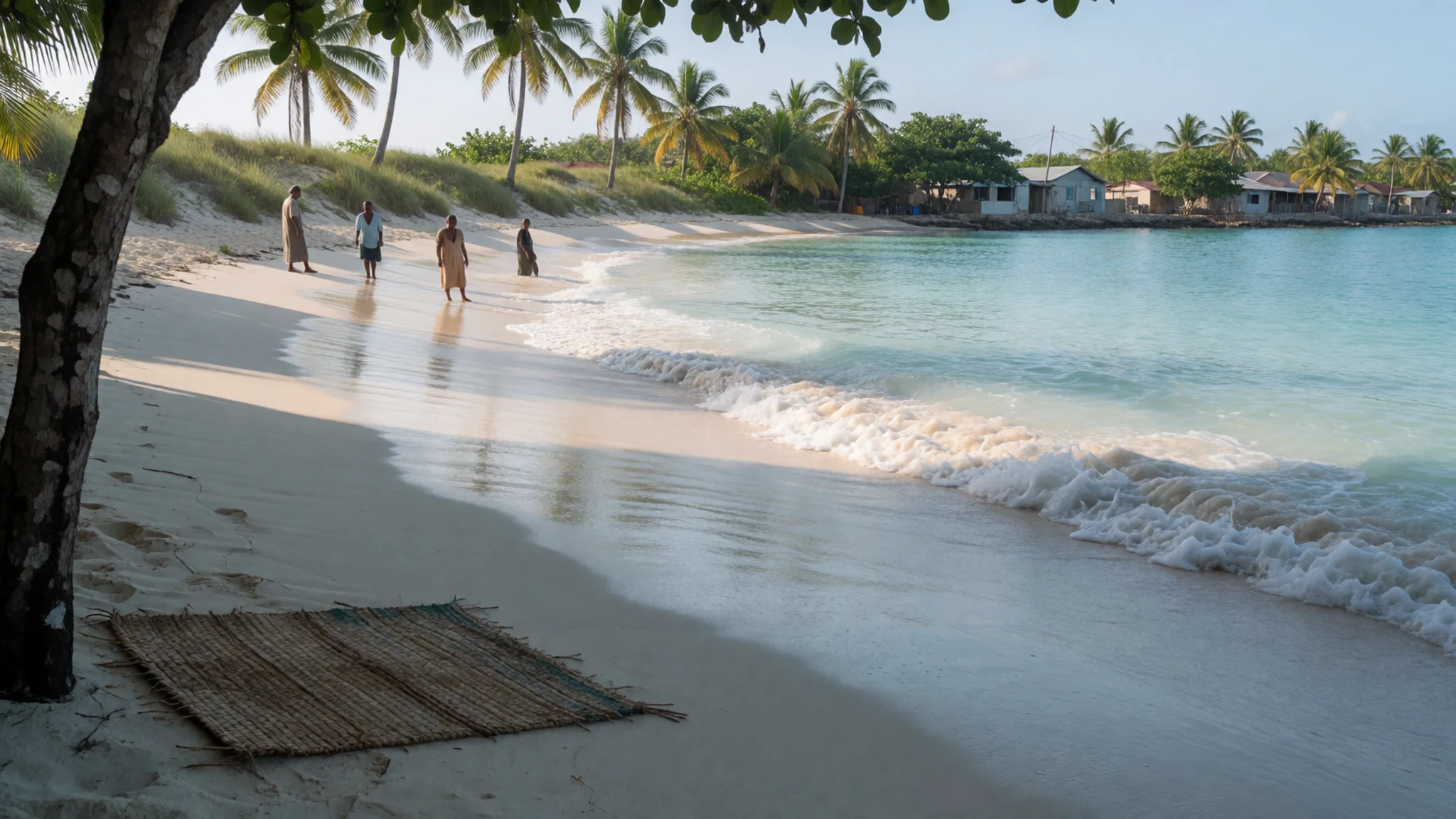
Culture
Los Islands share the coast’s mix of Susu-speaking fishing families, French as the language of school and official life, and a Muslim majority that lives easily beside Christian parishes, including the Anglican church on Tamara. The week is organised around boats. Men fish before dawn and mend nets in the shade; women sell the catch, rice, and fruit, and run a large share of the market talk. Friday prayers shape the village day, and Sunday brings both church and the influx of Conakry families who treat Kassa as their shore.
Music is portable: a speaker, a drum, the Guinean popular styles that already fill the capital’s taxis, turned up under a tree. Dress and greeting still matter more than the beach mood. People shake hands, ask after family, and expect a stranger to do the same before launching into a request.
The islands are not a stage. A feast, a funeral, or a net-pull can fill a beach that a short while earlier looked empty, and the right move is to stand aside. Ask before you photograph people on Los Islands, and keep swimwear to the sand rather than the village lanes.
What to wear
On Los Islands the formal cloth is the boubou of the Guinea coast: a long robe, often in bazin, the stiff cotton damask dyed and beaten to a sheen, worn for Friday prayers, weddings, and funerals. Women pair a tailored top and wrapper, or a full boubou, with a headtie. Everyday cloth is wax-print cotton, the pagne, sold in lengths and tied at the waist for market, cooking, and the boat.
Fishermen set out in shorts, a faded football shirt, and plastic sandals. Visitors off the weekend boat wear vests and rolled jeans, then pull a wrapper over swimwear once they leave the sand. In the villages, covered shoulders and a wrapper or loose trousers are the normal public clothes. Shoes come off near prayer space and often at a house door, and the church on Tamara calls for modest dress rather than beachwear.
A visitor is best in light cotton that can soak and dry, plus a wrap or long shirt for village lanes and sandals that survive a wet landing. Swimwear stays on the beach. A hat helps in the dry-season glare and under rainy bright cloud, and a spare wrapper works as shade, a changing screen, and a respectful cover if a ceremony is underway.
What to eat
- Poisson braisé — beach grills by the weekend landings
Poisson braisé is the Los Islands meal people cross for: whole fish, often barracuda or grouper, salted and grilled over wood until the skin blisters, then eaten with rice or bread in the shade. Beach grills beside the weekend landings cook it to order.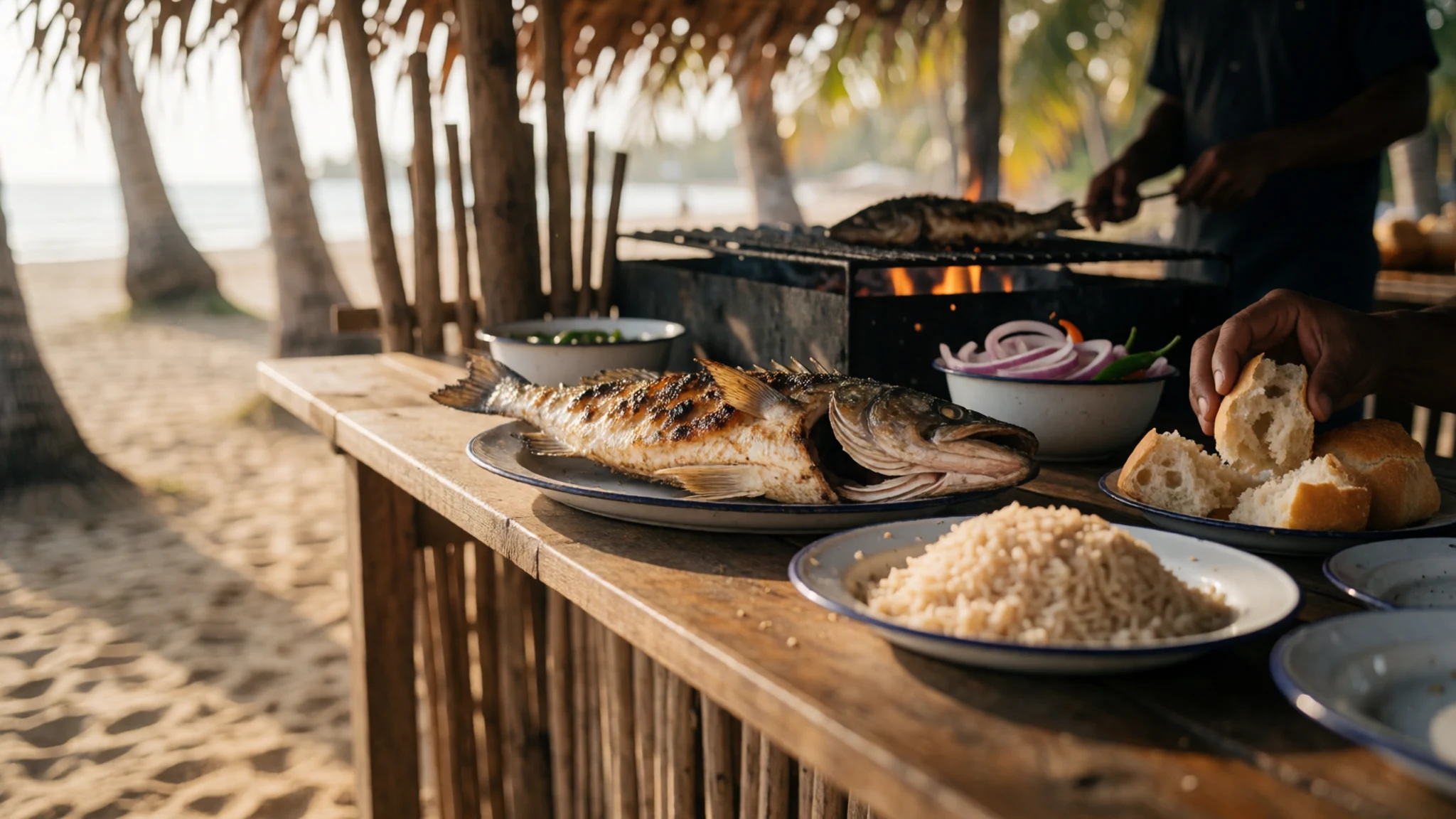
- Riz sauce — basins near the landings
Riz sauce is the ordinary Los Islands plate: steamed rice under peanut sauce, a palm-oil and tomato sauce, or leaf sauce with greens and smoked fish. It is shared from a common bowl more often than plated. Women sell it from basins near the landings.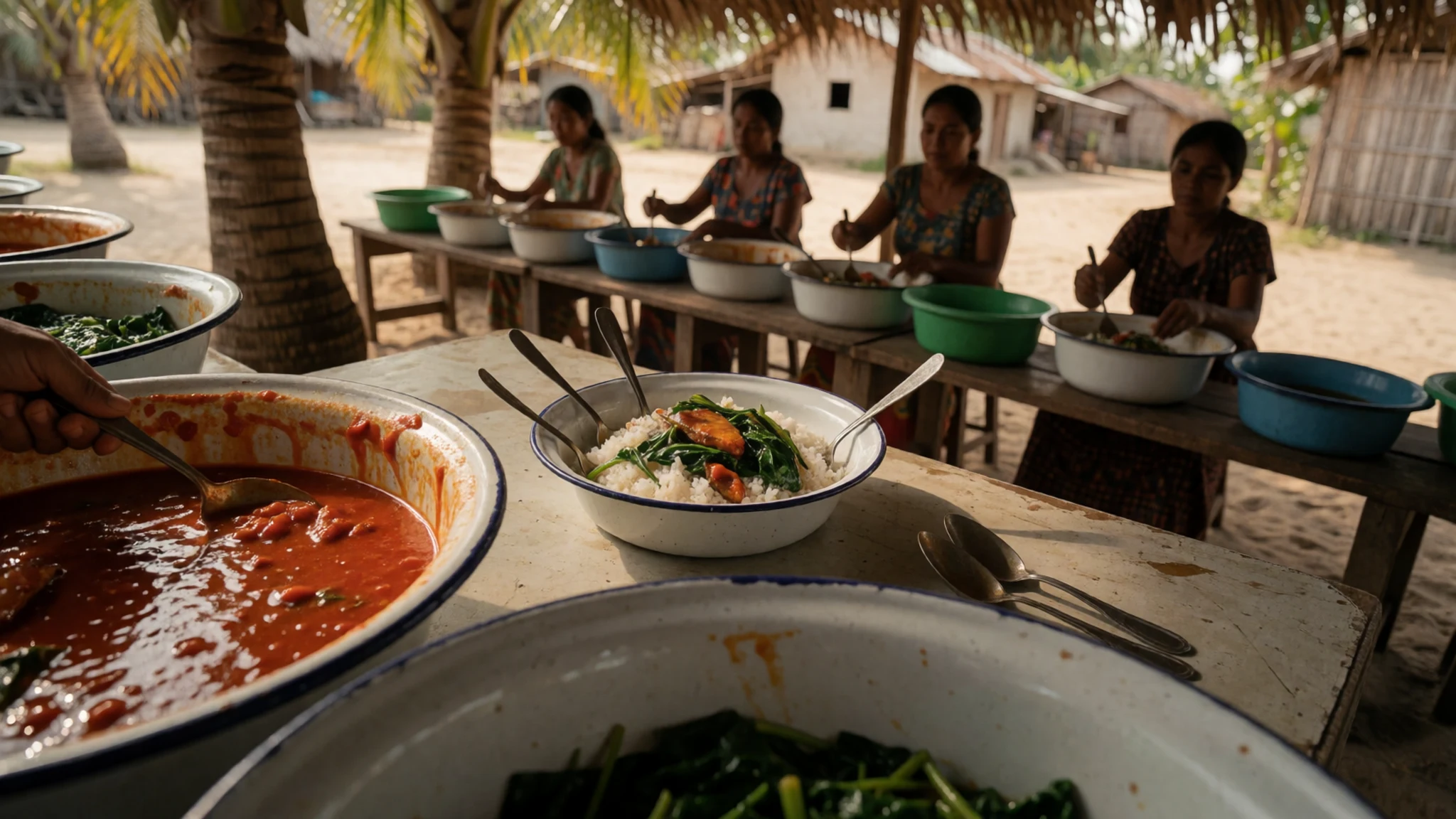
- Poisson fumé — village stalls
Poisson fumé, fish smoked until dry and intense, is a Los Islands staple that flavours sauces when the fresh catch is still at sea. A little goes into the pot with palm oil, onion, and chilli. Village stalls sell it in pieces, and it keeps without a cold chain. - Jus de gingembre — coolers at the landings
Jus de gingembre is the Los Islands cooler, fresh ginger crushed with lime and water, sweetened, sometimes with mint. Sharp and cloudy, it is sold in tied bags or reused bottles from coolers at the landings, and it is the sensible drink when the water supply looks doubtful. - Bissap — basins at the boat beach
Bissap, a hibiscus infusion, is the other Los Islands cold drink, deep red, tart, and sweetened to taste. Dried calyces are boiled and strained, then chilled if there is ice. Stalls that sell ginger usually sell it too, from basins at the boat beach. - Fried plantain — shade-line pans on the beach
Fried plantain is the Los Islands snack between swims: ripe fingers fried in palm oil until the edges caramelise, salted or left sweet. Vendors fry it in shallow pans along the shade line and wrap it in paper to eat with grilled fish.
Plan it
Best time. November to April is the easier window on Los Islands: rain is scarce, the crossing is calmer, and harmattan haze cools some mornings. From about May the rains take over, the hills turn deep green, and swell and squalls thin the boat traffic.
How long. 2–3
Getting there. Conakry’s Ahmed Sékou Touré International Airport is the air gateway for Los Islands, then a road transfer to a city pier. The last leg is a pirogue or small motorboat to Tamara, Kassa, or Roume. There is no published visitor timetable; agree the crossing on the day with the boatmen and check the sea before you go. Any permit or port question belongs with official guidance.
Budget. low
Tips
- Agree the fare and the return before leaving Conakry.
- Carry cash in small notes. Card payments are not how the islands work.
- Bring drinking water. Sachets and wells vary, and ginger drink is not a water supply.
- Leave in the morning. Wind and the rush back to the city make the return the harder leg.
- Sunday crowds Kassa with families from Conakry. A weekday is quieter when boats are running.
Etiquette
- Ask before you photograph people, and do not photograph prayer.
- Keep swimwear on the beach; cover shoulders in villages and at the church on Tamara.
- Greet before you ask for anything, and stand aside from fishing, funerals, and ceremonies.
Nearby
Sources
- Wikidata: Los Islands (CC0)
- Wikipedia: Los Islands (CC BY-SA 4.0)
- Wikivoyage: Conakry (CC BY-SA 4.0)