Badiar National Park
Badiar National Park, Guinea
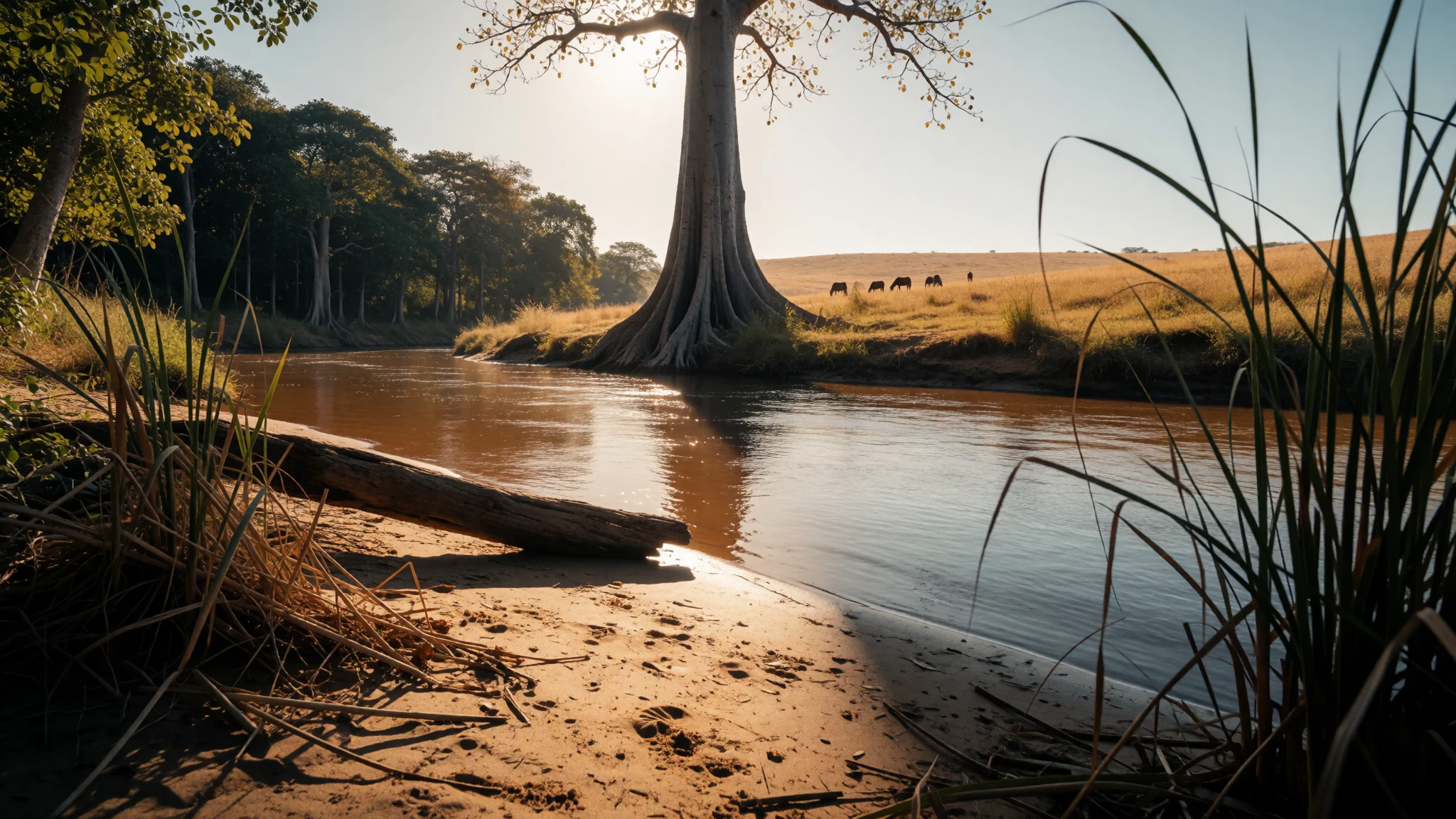
Badiar National Park is a rarely visited stretch of savanna and river forest where chimpanzees, elephants and rare birds live along Guinea's border with Senegal.
The place
Badiar National Park sits in north-western Guinea, right on the Senegalese frontier, where it runs straight on into Niokolo-Koba National Park on the other side. Together the two reserves form a continuous block of protected land, which suits animals that pay no attention to borders. Badiar itself is divided into two separate pieces, the Mafou and Kouya sectors, with a buffer zone wrapped around Mafou to soften the edge between wildlife and farmland. The landscape is mostly savanna: scrubby woodland in the east, taller wooded savanna and open forest in the west, and narrow ribbons of gallery forest along the watercourses. The Koulountou, a river that eventually feeds the Gambia, and the smaller Mitji supply the water. Rain arrives between June and October, turning tracks to mud and the grass shoulder-high; the dry months that follow thin the cover and draw animals towards the rivers. Badiar also forms one core area of the wider Badiar Biosphere Reserve, set up in 2002, which takes in neighbouring forest. A frank word is needed here: this is a remote, lightly visited park in a country with little tourist infrastructure. There are no lodges to count on, the roads are rough, and any visit has to be planned around a local guide and current travel advice rather than improvised on arrival.
Its story
Badiar National Park was created in 1985, and a good part of the reason lay across the border. Senegal was worried about poaching in Niokolo-Koba, its own big reserve, and a protected area on the Guinean side promised a second refuge for animals under pressure. The thinking was simple: wildlife driven out of one park should find cover and safety in the next, rather than disappearing altogether.
That logic still explains the park's value. Its mix of savanna, open woodland and river forest supports a wide range of animals. Western chimpanzees and western red colobus monkeys, both endangered, depend on the tree cover along the rivers. Elephants, roan antelope, kob, giant eland, leopards, spotted hyenas and Guinea baboons range over the drier ground, while African rock pythons and ball pythons live in the grass and scrub.
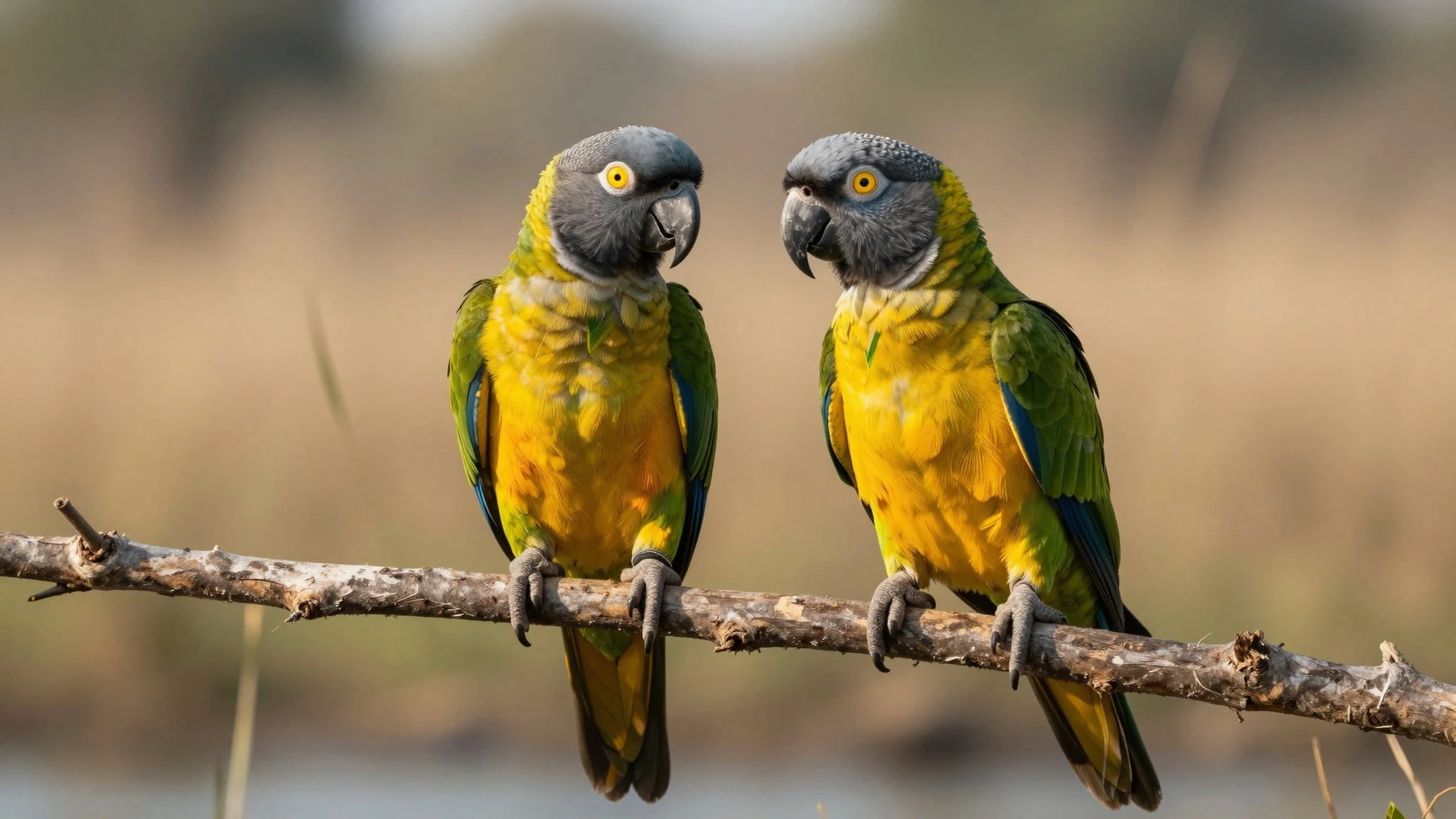
Birdlife adds another layer. BirdLife International has named the park an Important Bird Area, and the residents include violet turacos, Senegal parrots, piapiacs and several kinds of bee-eater and roller.
Protection on paper does not guarantee animals on the ground. Patrols, funding and relations with the villages around the buffer zone all shape what survives, and the biosphere reserve designation was meant to bring local land use into the picture. A visitor should expect tracks, signs and birds before any big mammal, and treat a sighting of a large animal as a gift rather than a promise.
What to see
- Mafou sector — Western Guinea, near the Senegal border
Mafou is one of the park's two blocks, with a buffer zone wrapped around it. Open savanna and woodland make for the best walking country in the dry season, when sightlines are long and animals gather near water. Go with a local guide who knows the tracks, and ask rangers which areas are currently open.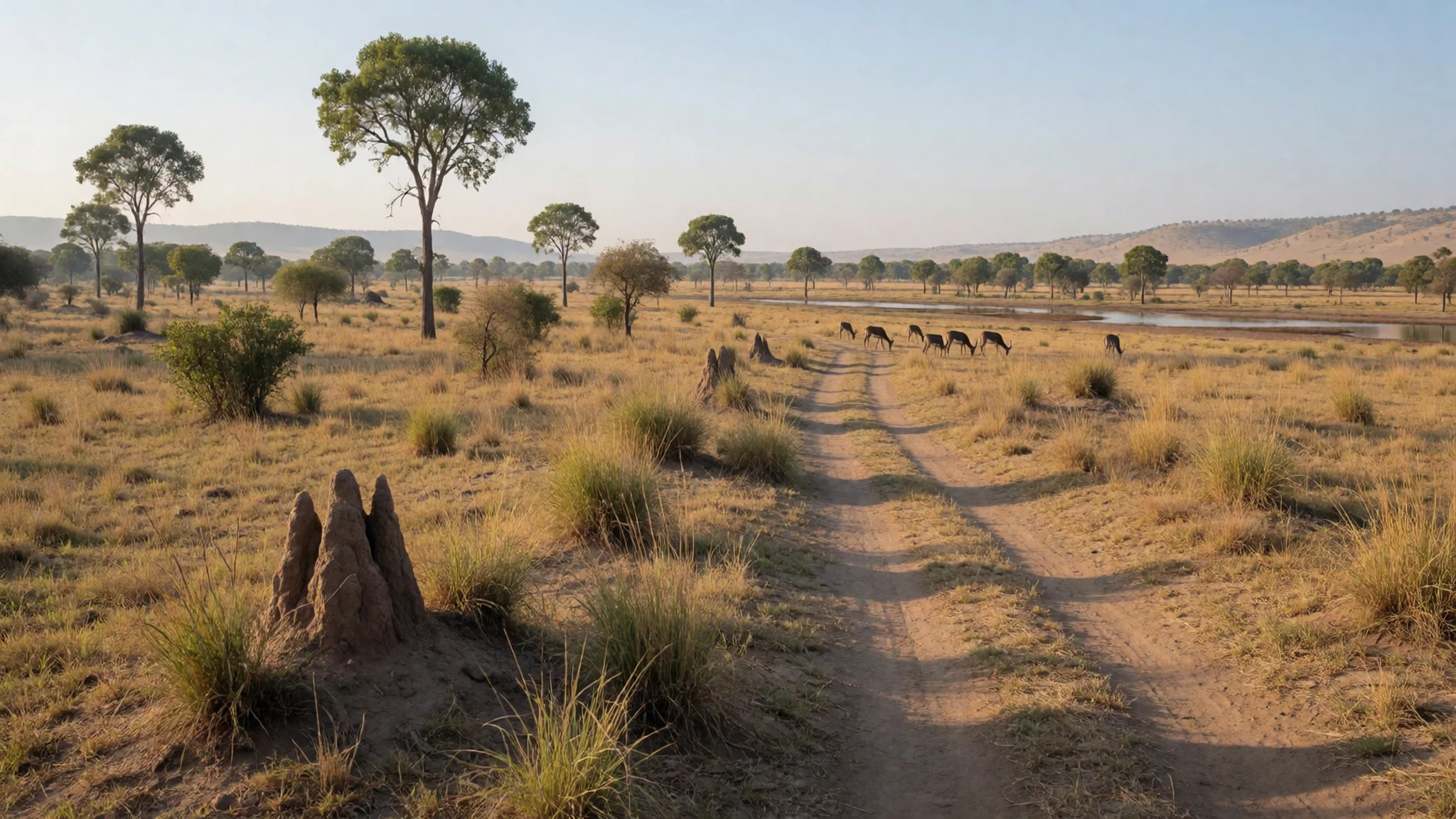
- Kouya sector — Badiar National Park
The Kouya sector is the park's second, separate block. Because it is detached from Mafou, it adds a different patch of woodland and savanna to a trip, but reaching it takes extra time on rough tracks. Treat it as an add-on for a longer expedition and confirm access locally before setting out.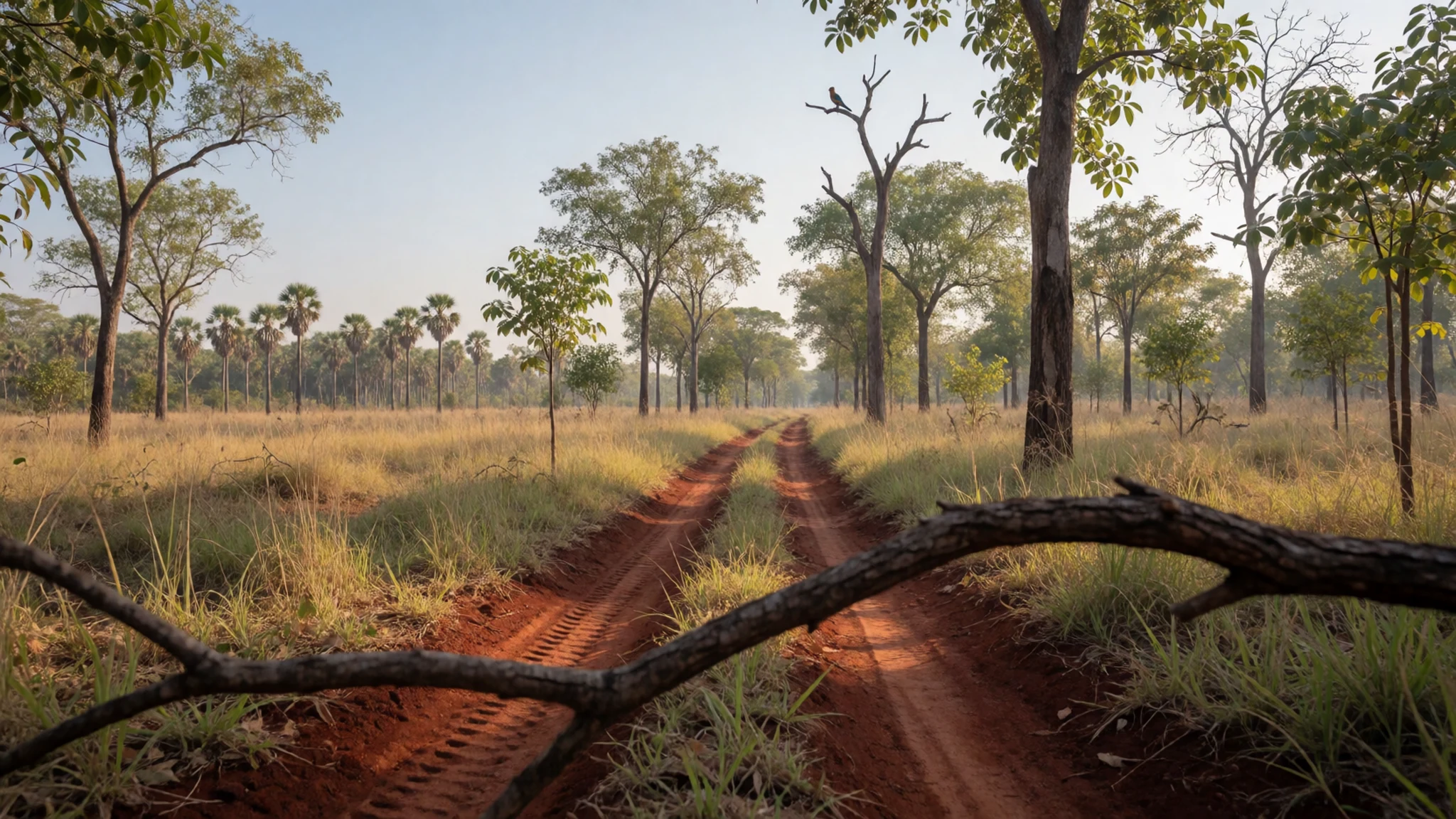
- Koulountou river and the Mitji — Along the park's rivers
The Koulountou and the smaller Mitji are the park's main watercourses. In the dry season animals come to them to drink, and the shade of the riverside trees makes the best spot to sit quietly with binoculars. After the rains the banks turn soft and tracks may be impassable.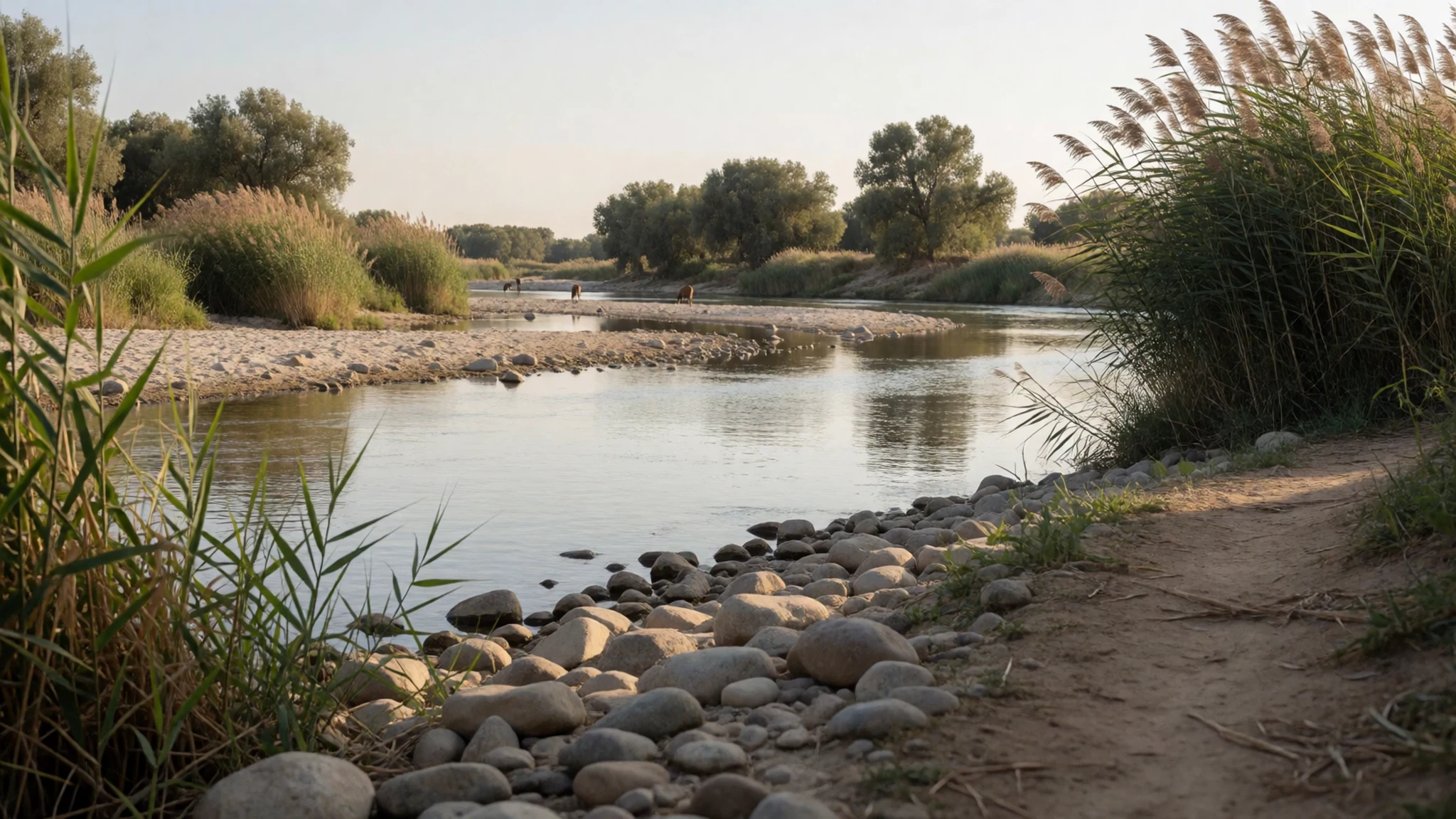
- Gallery forest — Riverbanks within the park
Strips of dense forest follow the rivers through the savanna, and they shelter the park's primates, including western chimpanzees and western red colobus. Sightings are never guaranteed and need patience, early starts and a guide who can read fresh signs. Keep a respectful distance and move slowly and quietly.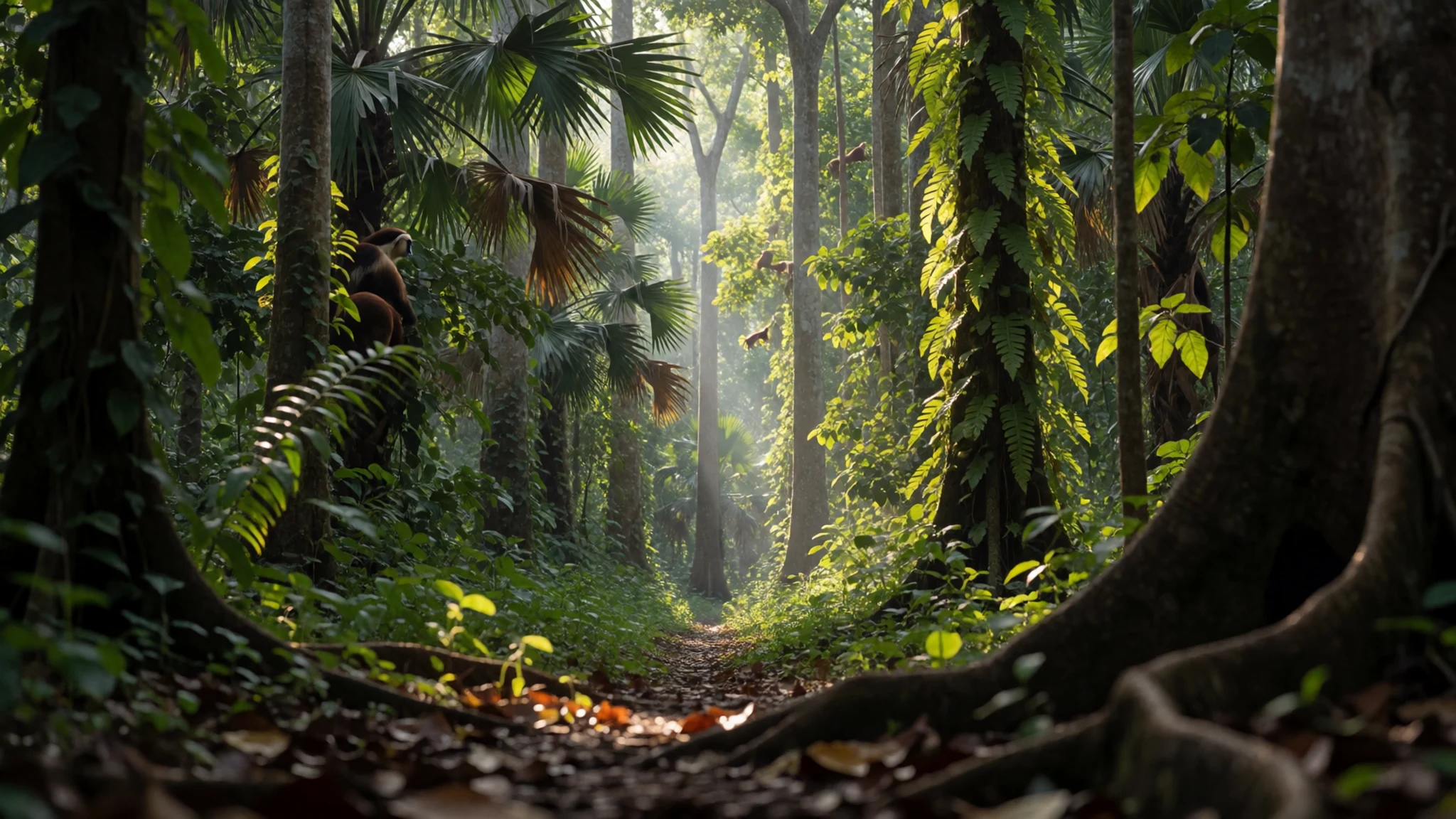
- Birdwatching in the wooded savanna — Savanna and open woodland, western part of the park
Birders come for the park's Important Bird Area status. Turacos flash through the canopy, bee-eaters hawk from bare branches, and parrots and rollers add colour to the open woodland. Dawn is the best time, before the heat builds. A good field guide to West African birds is worth carrying.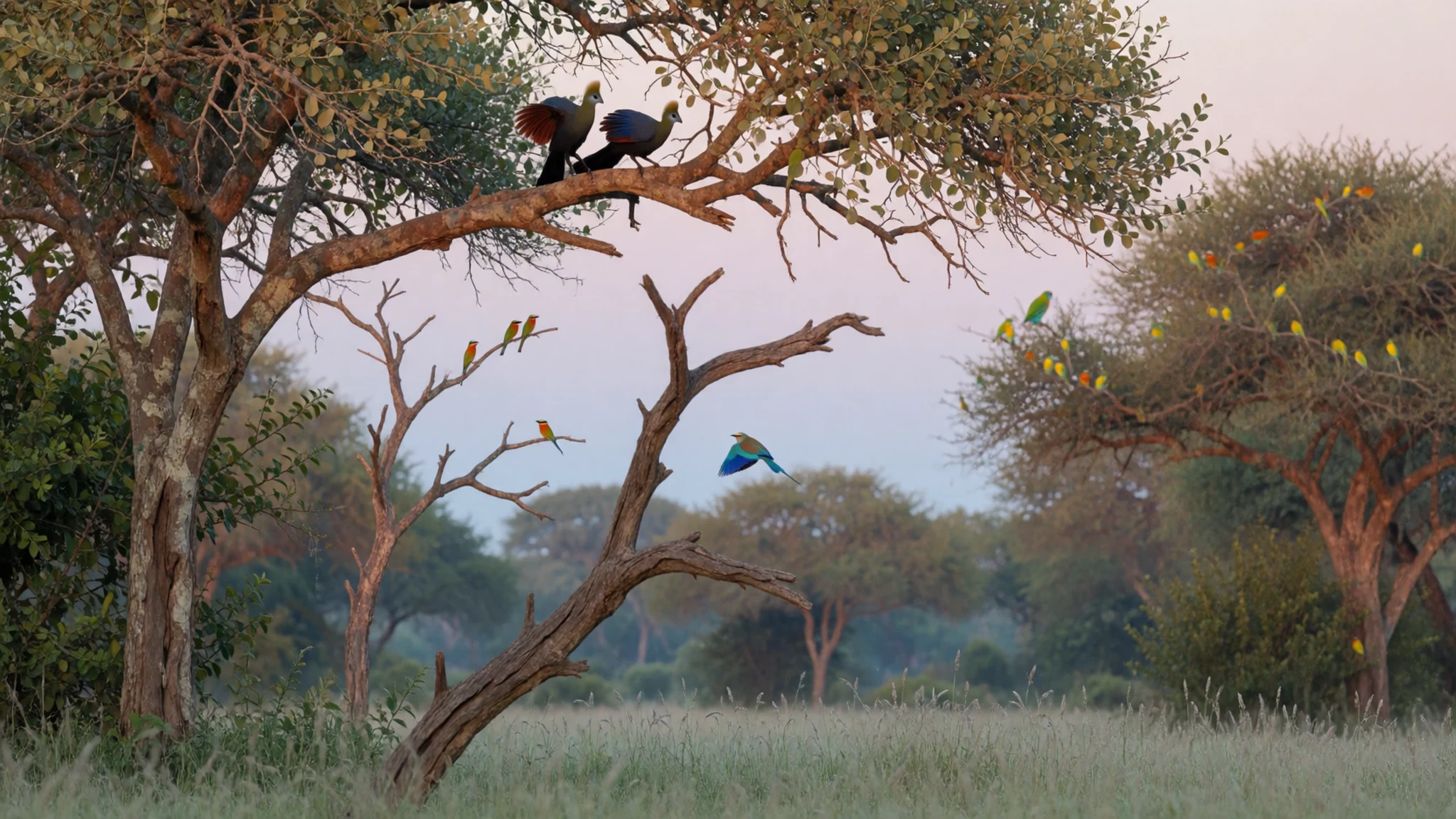
Culture
Badiar National Park lies in a part of Guinea where daily life is shaped by greeting. Conversations begin with questions about health, family, work or studies, and rushing straight to business is considered poor manners. In French, a simple "ça va?" opens the door, and asking after the family goes down well. Guinea is a mostly Muslim, fairly conservative and male-dominated society, yet foreign women travellers generally report little trouble, and harassment is frowned upon. Villages around the park depend on farming and the land beside it, so the park is not an empty wilderness to the people nearby; it is a neighbour, with rules on hunting and grazing that have long affected local livelihoods. Hiring a local guide, buying food and water in nearby villages and being open about where you are heading are ways of keeping goodwill. Music is central to Guinean life, and in the evening a drum or a kora (a West African harp-lute) may be heard in a village, usually welcome company if you are invited to listen. Photography needs care in rural areas: people may feel uneasy about cameras, officials can be touchy about photographing uniforms and checkpoints, and requests are better made through a guide. Greet, eat and hand over money with your right hand only, and always ask before photographing a person, a household or a checkpoint.
What to wear
Around Badiar National Park, traditional dress follows the wider West African pattern. Women wear wrapped cloths, often called pagnes, with fitted tops and matching headwraps, and men wear long loose boubous in cotton or dyed fabrics, the best of them for festivals, weddings and Friday prayers. Hand-dyed and tie-dyed cotton is a Guinean speciality, with indigo and bright patterned prints turning up in markets. Day to day, people in villages and towns mix these with practical clothes: loose trousers, long skirts, football shirts, sandals and plastic shoes for the mud. Farm work calls for simple, washable cloth. Visitors should dress for heat, dust and bush walking, and for a conservative Muslim region. Lightweight long trousers and long-sleeved shirts in neutral colours protect against sun, thorns, grass seeds and insects, while a wide-brimmed hat and sunglasses are sensible. Avoid bright colours and camouflage patterns, as the latter can be mistaken for military wear. Sturdy, broken-in boots or closed shoes suit uneven tracks, and a light waterproof is useful in the rainy months. In villages, women and men alike should cover shoulders and knees, and a light scarf is handy for visiting a mosque yard or a home. Pack quick-drying fabrics, since laundry is slow in humid weather.
What to eat
- Rice with sauce — Small local eateries in market towns
The everyday meal is Guinean-style rice served with one of several main sauces, made with leaves, peanuts or tomato and sometimes with a little beef or fish. Plain, filling and cheap, it is served at small roadside eateries in towns outside the capital.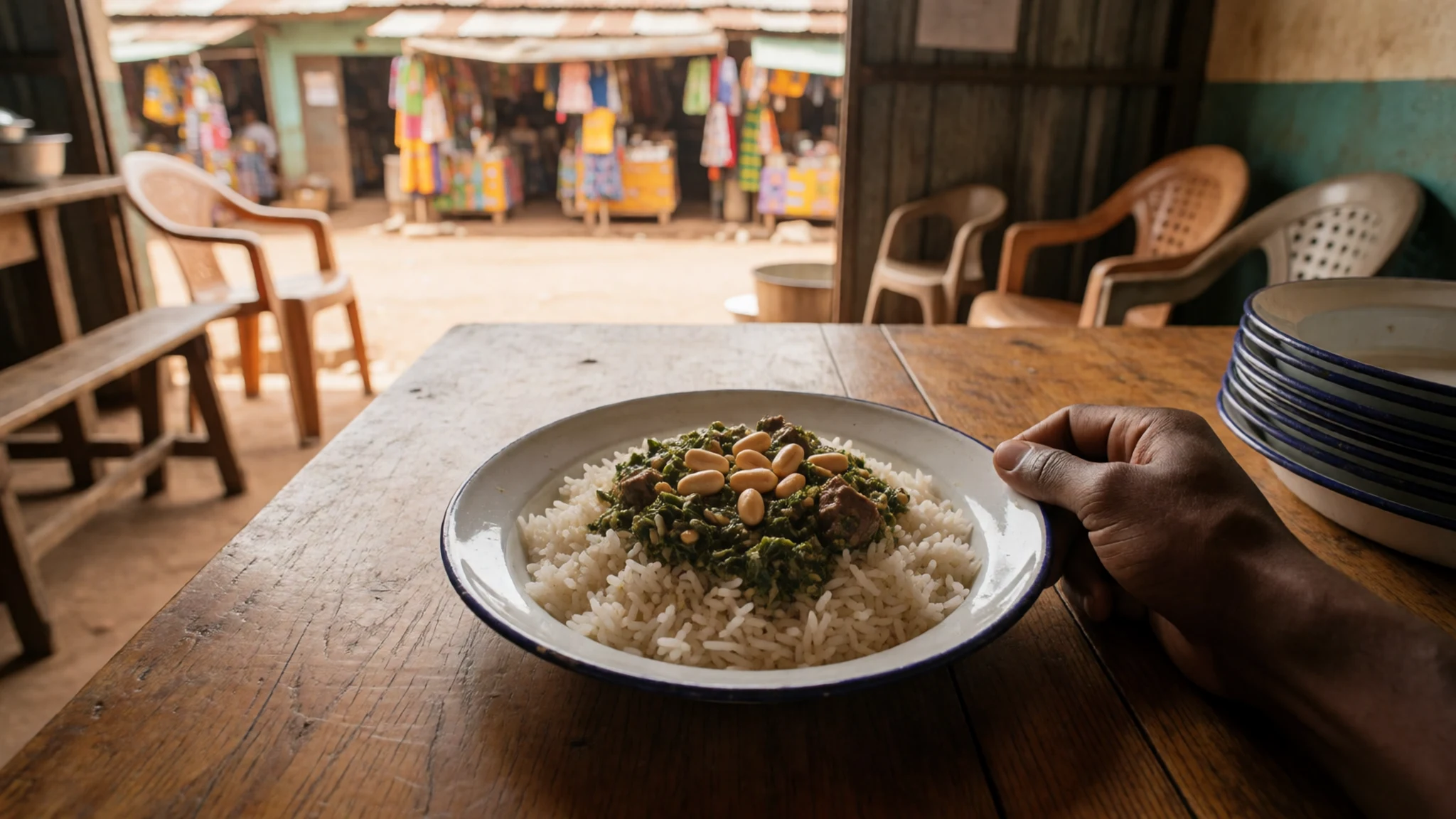
- Grilled beef — Roadside grill stalls near markets
Beef is well regarded in Guinea and is often grilled over charcoal and served with onions and bread. Pork is rarely offered because of the country's Muslim majority. Look for smoke and a queue by the roadside in the evening.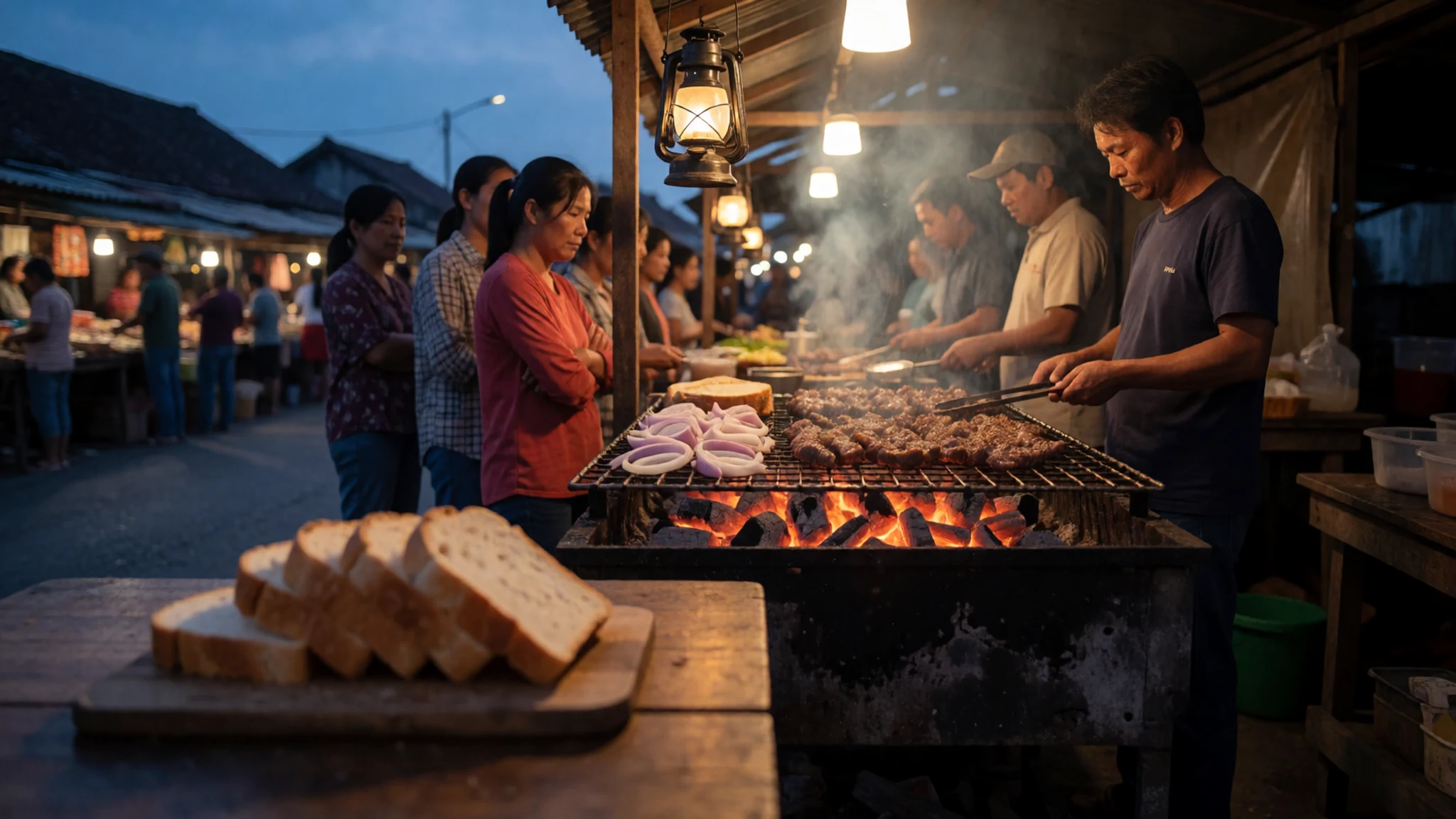
- River or coastal fish with rice — Town markets and simple eateries
Fish is eaten fresh or smoked, usually with rice and a spicy sauce. Along the coast the catch comes from the sea; inland, freshwater fish and smoked fish arrive at village and town markets. Ask for it freshly cooked rather than reheated. - Seasonal fruit — Village and town markets
Fruit is cheap and plentiful, including mango, pineapple, banana and citrus in season. It is sold from baskets and tables in markets and beside the road. Peel it yourself or wash it with safe water before eating. - Bread and sweet tea breakfast — Small bakeries and café-style eateries in towns
A simple breakfast of baguette-style bread with tea or coffee is common in towns, sometimes with eggs or a spread. Lebanese-run places in larger towns and the capital also offer European-style breakfasts.
Plan it
Best time. November to March, when the dry season gives clearer views, easier tracks and animals concentrated near water. Rain falls from June to October and can make tracks impassable.
How long. 3–4
Getting there. Fly into Conakry (CKY), served from Europe by Royal Air Maroc via Casablanca, Air France from Paris and Brussels Airlines from Brussels. There are no passenger trains, so the onward journey north-west towards the Senegal border is overland by road with a local driver and guide. Check the latest advice on access to the park before you travel.
Budget. mid
Tips
- Check your government's current travel advice and confirm access with local park authorities before booking anything
- Arrange a vehicle, driver and guide in advance; there is little public transport and almost no tourist infrastructure near the park
- Apply for your visa before you travel, as it is not issued at borders or the airport, and carry your yellow fever certificate
- Carry plenty of drinking water, cash in small notes and a basic medical kit, since supplies are scarce
- Stay alert in airports, markets and busy areas, and refuse unsolicited offers of help with luggage
Etiquette
- Greet people properly before asking for anything, and use your right hand for greeting, eating and handing over money
- Ask before photographing people, homes, officials or checkpoints
- Keep your distance from wildlife and follow your guide's instructions at all times
Nearby
Sources
- Wikidata Q3364507 (CC0)
- Wikipedia: Badiar National Park (rev 1362696486) (CC BY-SA 4.0)
- Wikivoyage: Guinea (rev 5423119) (CC BY-SA 4.0)
Wildlife
- Chimpanzee (animal)
The chimpanzee is a great ape and one of our closest living relatives, with coarse black hair and a bare face, hands and feet. In Badiar National Park, chimpanzees live in the quiet savanna and river forest near Guinea's border with Senegal, a place few travellers reach. Go with a guide, keep a respectful distance, stay calm and quiet, and never offer food. Ask your guide when and where sightings are most likely.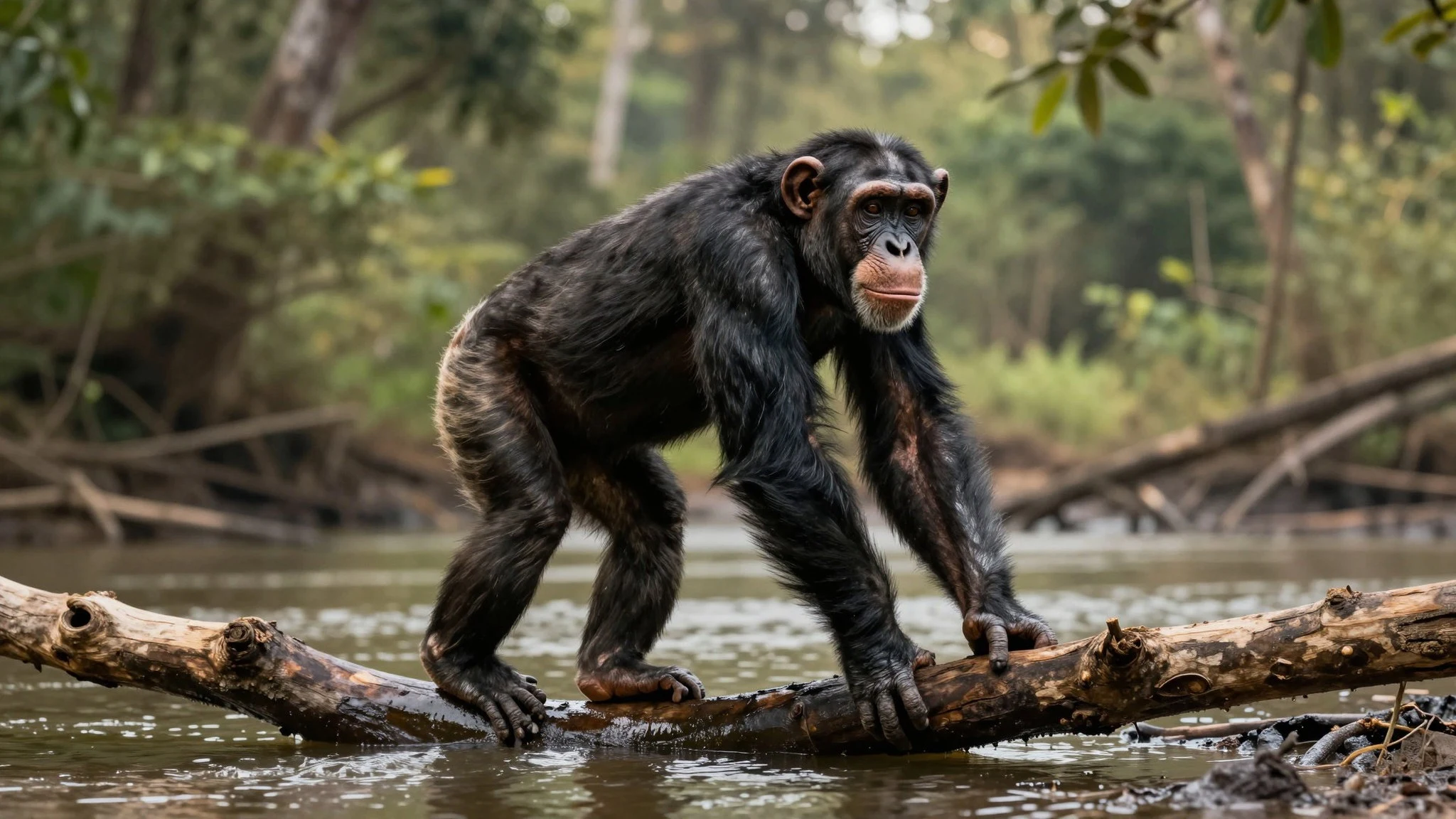
- Elephant (animal)
The African bush elephant is the biggest animal on land, with a long trunk that works like a hand, large ears that help it stay cool, and curved tusks. In Badiar National Park, elephants live in the savanna and river forest along Guinea's border with Senegal. Watch from a generous distance, speak softly, let your guide judge the herd's mood, and never offer food. Ask locally about the best time to look.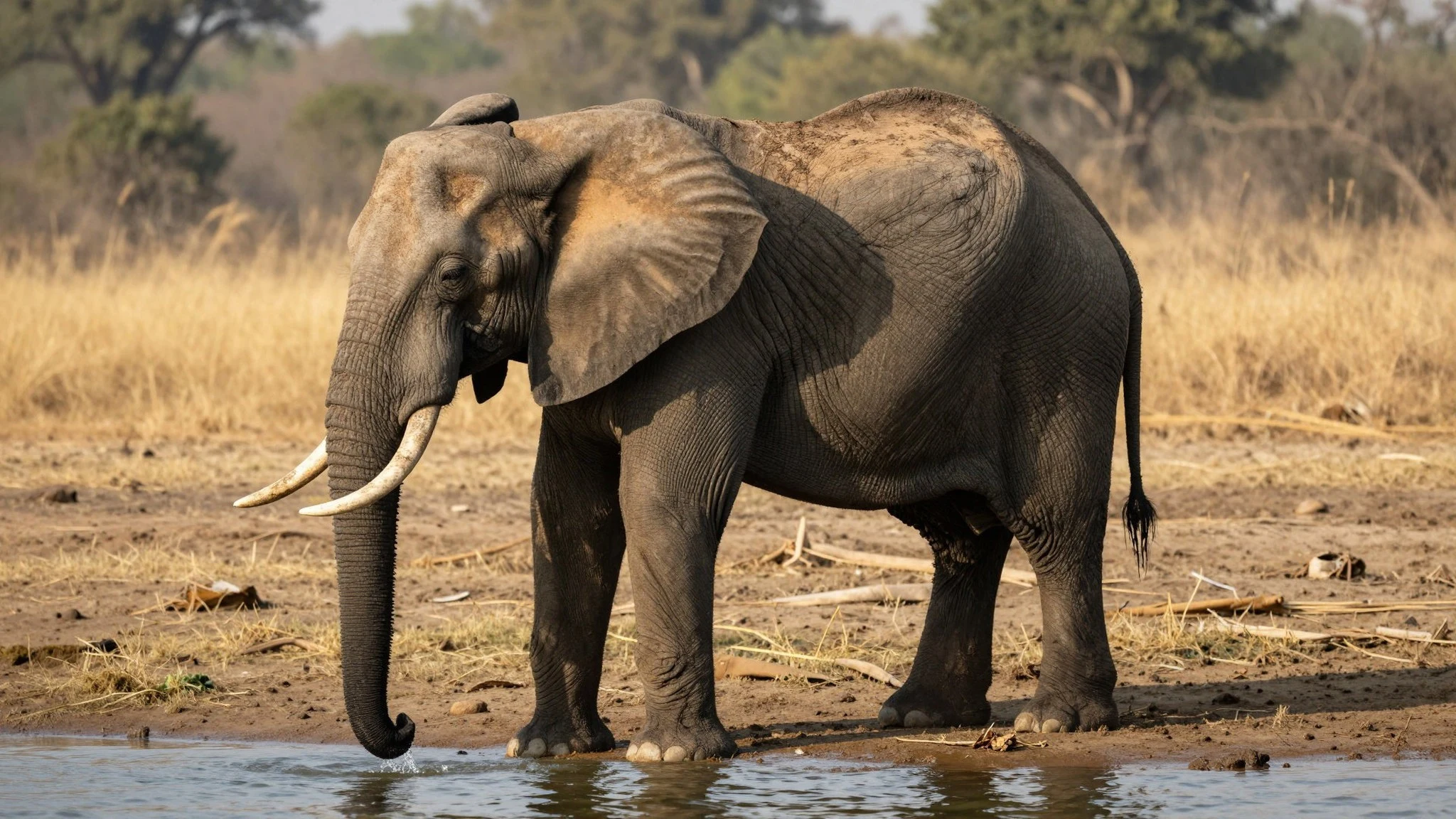
- Violet turaco (bird)
The violet turaco is a large African bird, also called the violaceous plantain eater. Badiar National Park has been named an Important Bird Area by BirdLife International, and violet turacos are among the birds that live there. The notes do not say where in the park or at what hour to look, so ask your guide on arrival. Watch from afar with binoculars, move slowly and quietly, and never feed wild birds.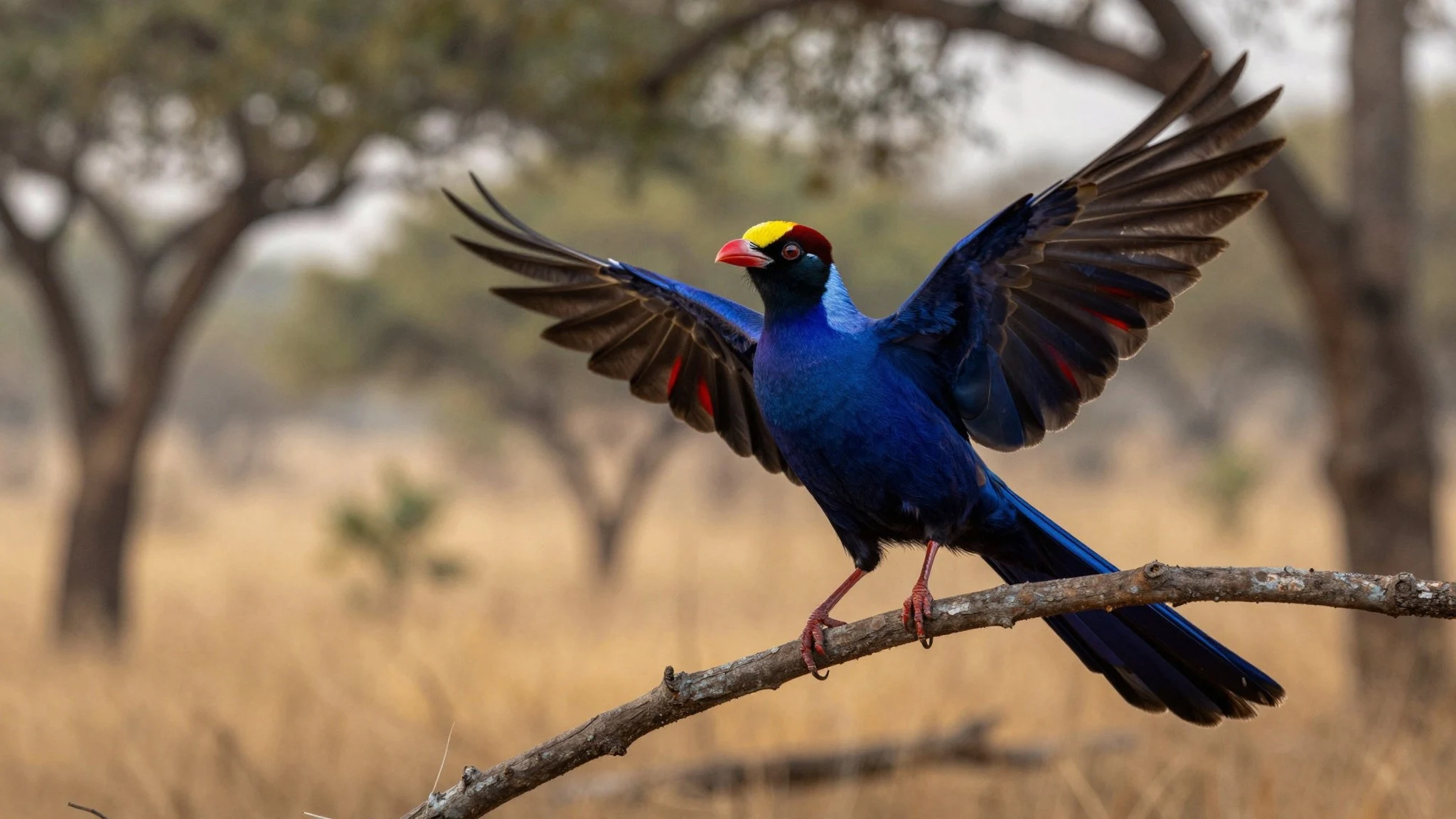
- Senegal parrot (bird)
The Senegal parrot, sometimes called the youyou, is a west African parrot that roams within the region, following ripe fruit, seeds and blossoms. It is one of the resident birds of Badiar National Park, which is recognised internationally for its birdlife. Farmers know it as a raider of maize and millet. Watch quietly from a distance with a guide, avoid crowding the birds, and never feed them.