Kindia
Kindia, Guinea
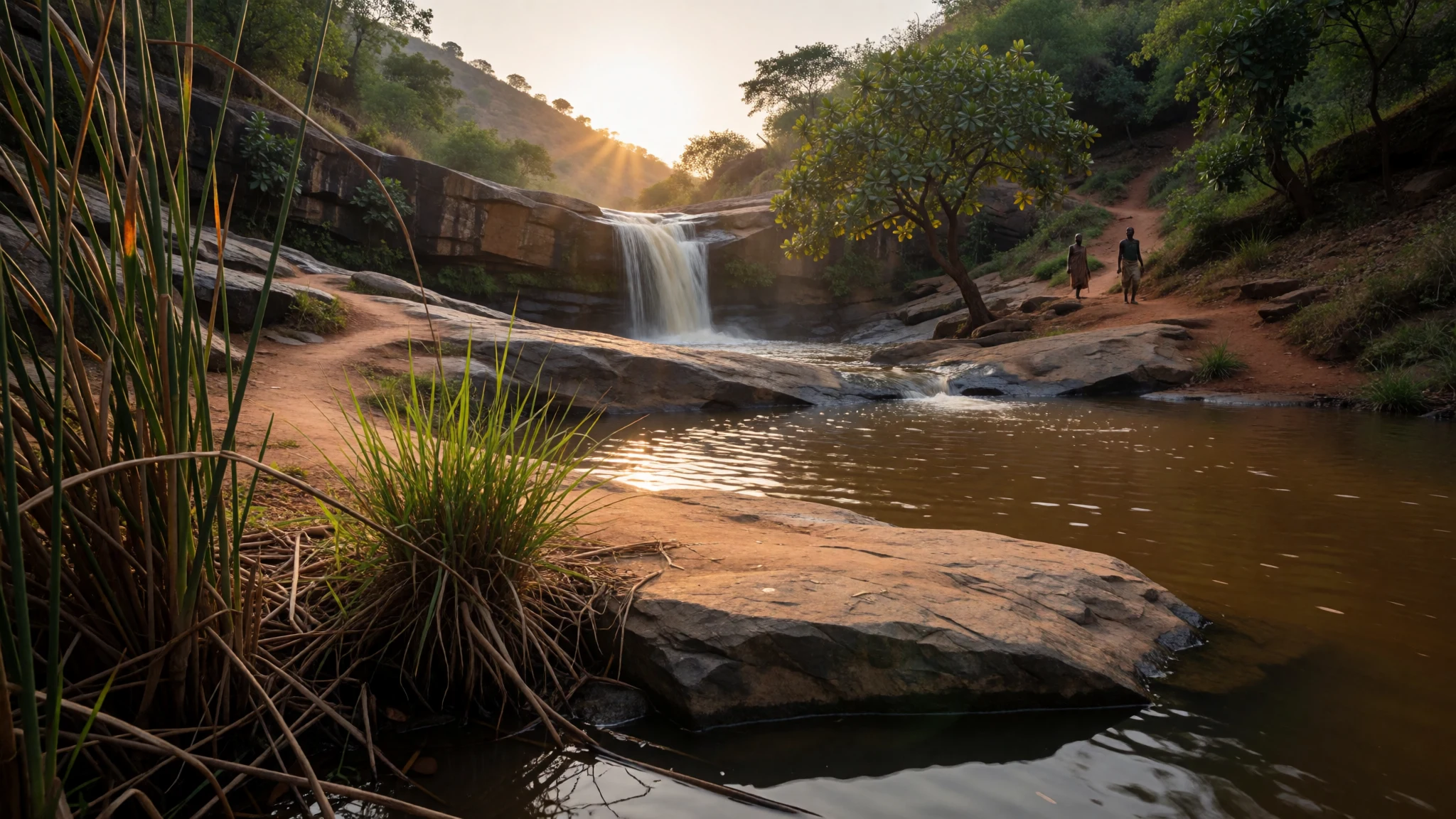
Kindia is a Susu-speaking market town in green hills, with waterfalls and a mountain walk a short drive from Conakry.
The place
Kindia sits in western Guinea, an easy road journey inland from the capital, Conakry, and serves as the administrative centre of its prefecture and region. It is a working town rather than a resort: a main road lined with small eateries, market stalls, motorbikes and shared taxis, with hills closing in behind. The language of daily life is Susu, the same as in Conakry and across much of the coast, so even a few words of greeting in Susu are noticed and appreciated. French remains the language of officialdom and schooling. The climate is tropical savanna, which means a clear split between a wet season and a dry one. Rain turns paths to mud and swells the waterfalls, while the dry months bring dust, haze and easier walking. The land around the town grew up on banana growing, and plantations still shape the surroundings, alongside cashew trees that appear in local photographs. Nature is the real draw. Mount Gangan rises close to town, and the Voile de la Mariée falls and the Cascade de Tabouna are near enough for half-day outings. Travellers should expect little polished tourist infrastructure: few signs, no ticket-booth culture, and plans that usually depend on a local driver or guide. That suits people who like to set their own pace. Kindia also makes a sensible stop on the road between Conakry and the highland towns of Dalaba and Labé, which is how many visitors first meet it.
Its story
Kindia was founded in 1904, and its origins are tied to the railway built from Conakry towards the interior. Old postcards from the days of French Guinea, now in the public domain, show a broad main street and a station building, a reminder that the town grew as a stop on that line. The railway is closed today, but the settlement it created carried on. Banana plantations spread around Kindia, and the fruit travelled down to the coast by rail. The town kept its role as a regional administrative centre, and it holds that role still. Kindia also carries a painful memory. In October 2002, mass graves were found near the town. Most of the victims had been killed over two days in October 1971, under the government of Touré, and one grave was reported to hold hundreds of bodies. The discovery belongs to a wider national reckoning with that period of political repression in Guinea. Visitors are unlikely to find a polished memorial or interpretive centre, and local people may or may not wish to talk about it. It is best treated as a subject to listen to if someone raises it, not one to probe. Understanding it, though, helps explain why a town that looks relaxed on the surface carries a long memory.
What to see
- Voile de la Mariée — Outskirts of Kindia
The Bridal Veil falls are the best-known natural sight near Kindia, a thin curtain of water that is at its fullest in the rainy season and much slimmer in the dry months. Go with a local driver, expect a short walk over uneven ground, and wear shoes with grip, because rocks near the water stay slippery.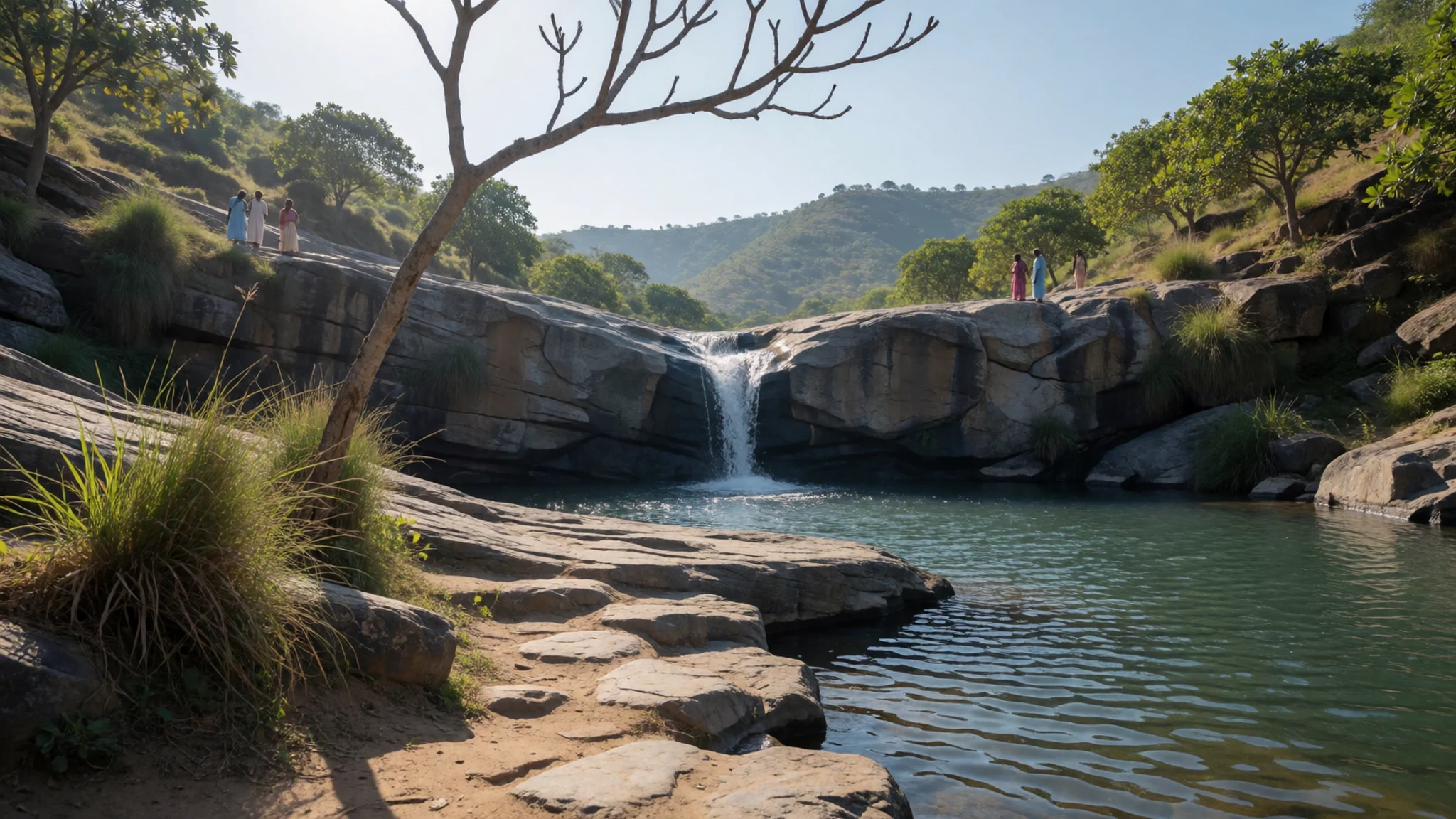
- Cascade de Tabouna — Countryside around Kindia
A second waterfall in the countryside around Kindia, less photographed than the Voile and good for a quieter outing. Ask in town about current road and path conditions, particularly after heavy rain, and agree the arrangements with your driver before leaving. Bring water and a bag to keep a camera dry.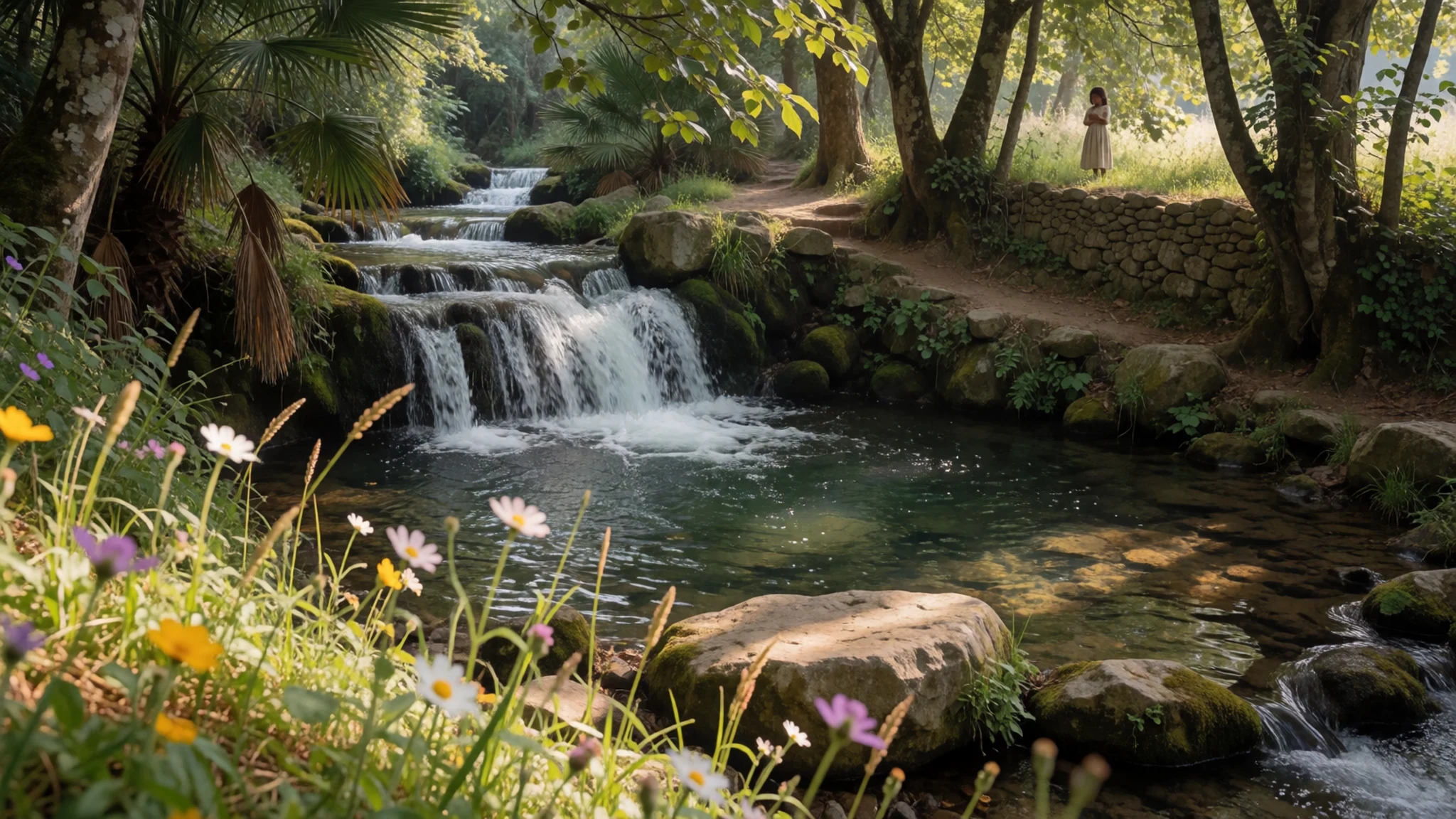
- Mount Gangan — Beside Kindia
A hill walk rising close to the town, rewarded with wide views over the plantations and rooftops. In the wet season the path can involve wading through water. Some locals say a guide is compulsory; that is not confirmed, so ask politely, settle terms beforehand and start early, before heat and cloud build.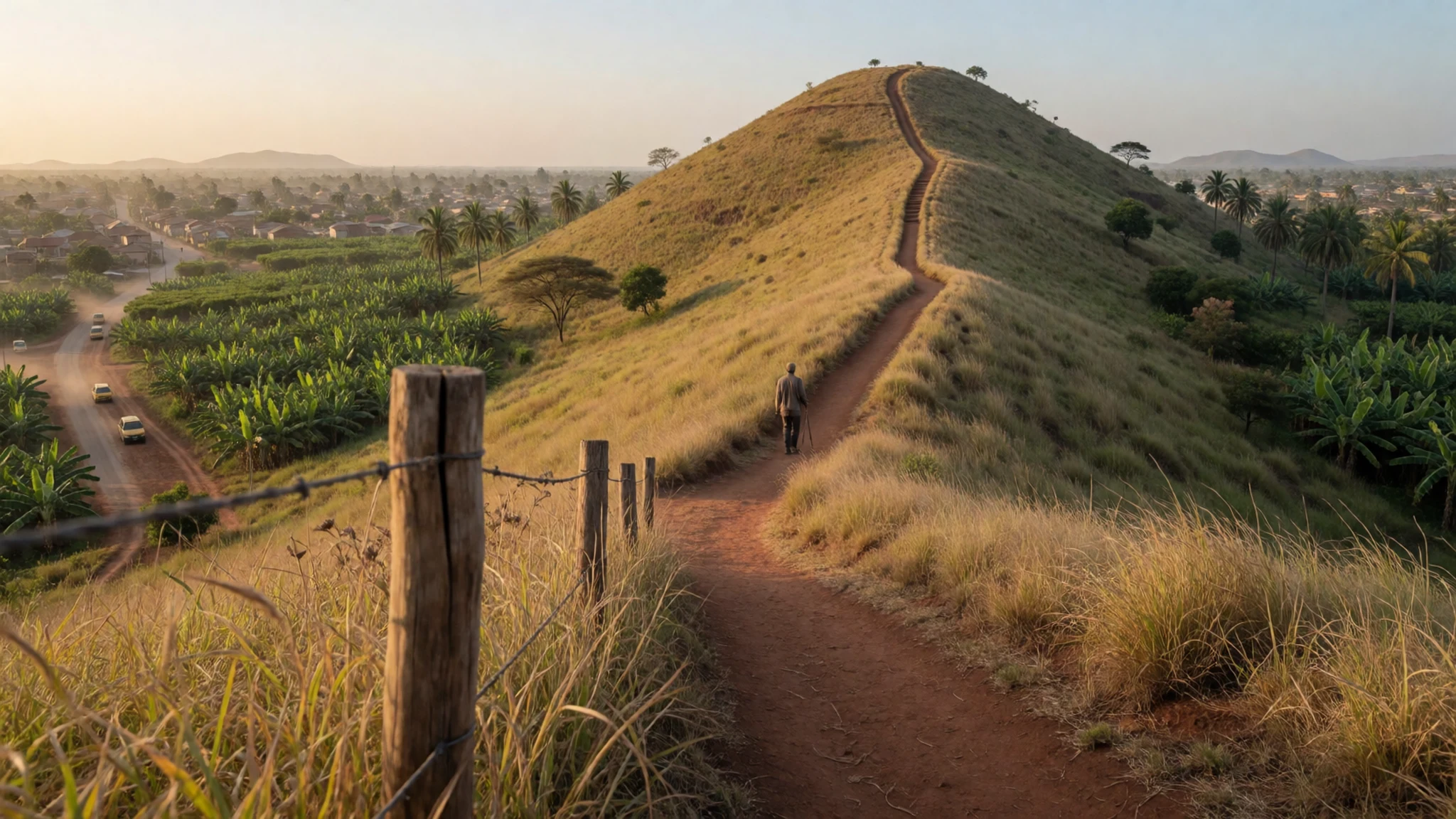
- The main street — Town centre
Kindia's main road, running towards Faranah, is a window onto daily life: small eateries, shared taxis, traders and mechanics. Early morning and late afternoon are the pleasant hours, when it is cooler and people are out. Ask before photographing anyone, and buy something small if you linger at a stall.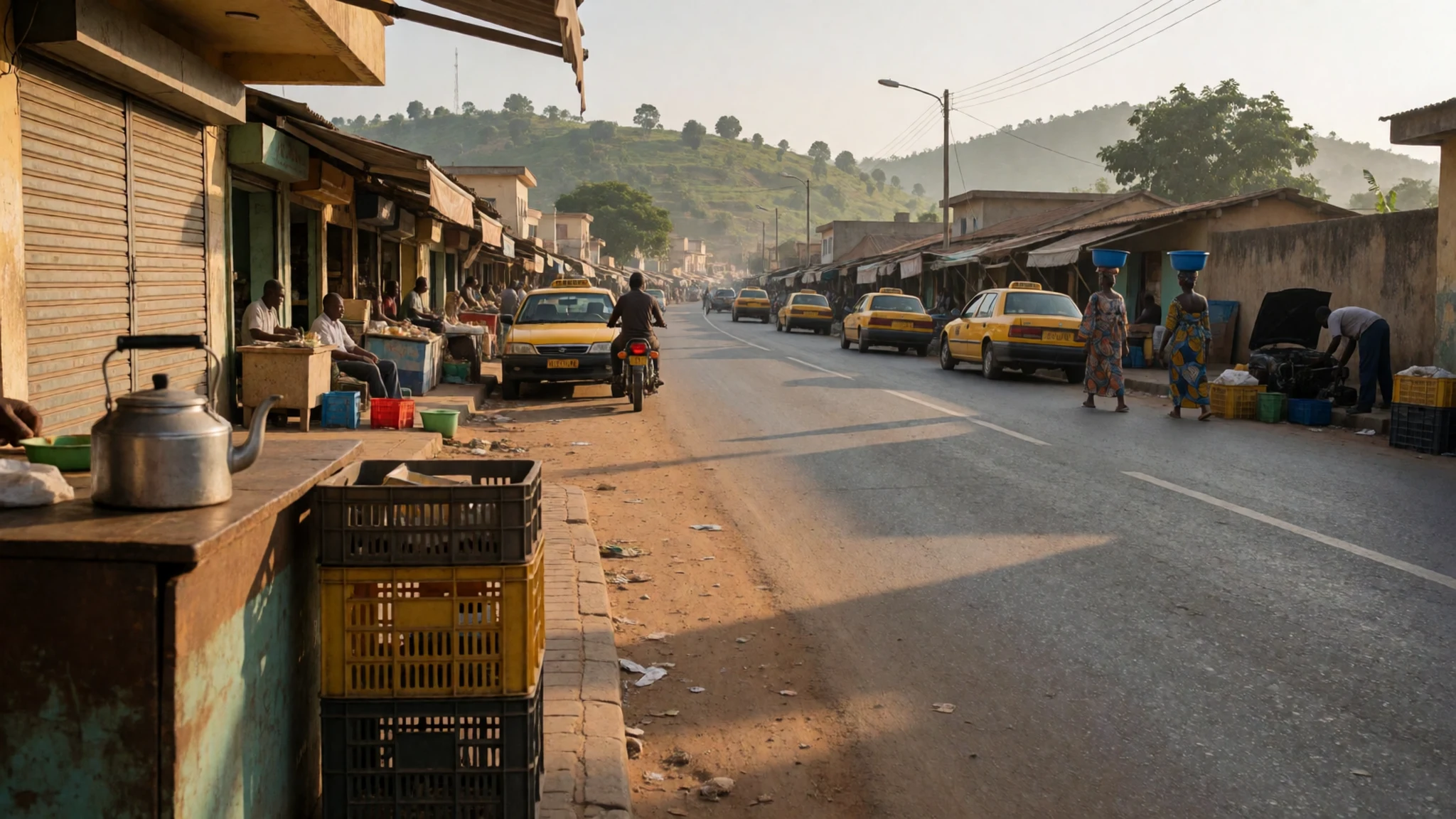
- The old railway quarter — Near the former station
Colonial-era photographs show a station and a wide main street, evidence of the town's origins on the Conakry line. The railway itself is closed, so go for atmosphere and history, not trains. Ask older residents what survives; their answers are often more revealing than any sign.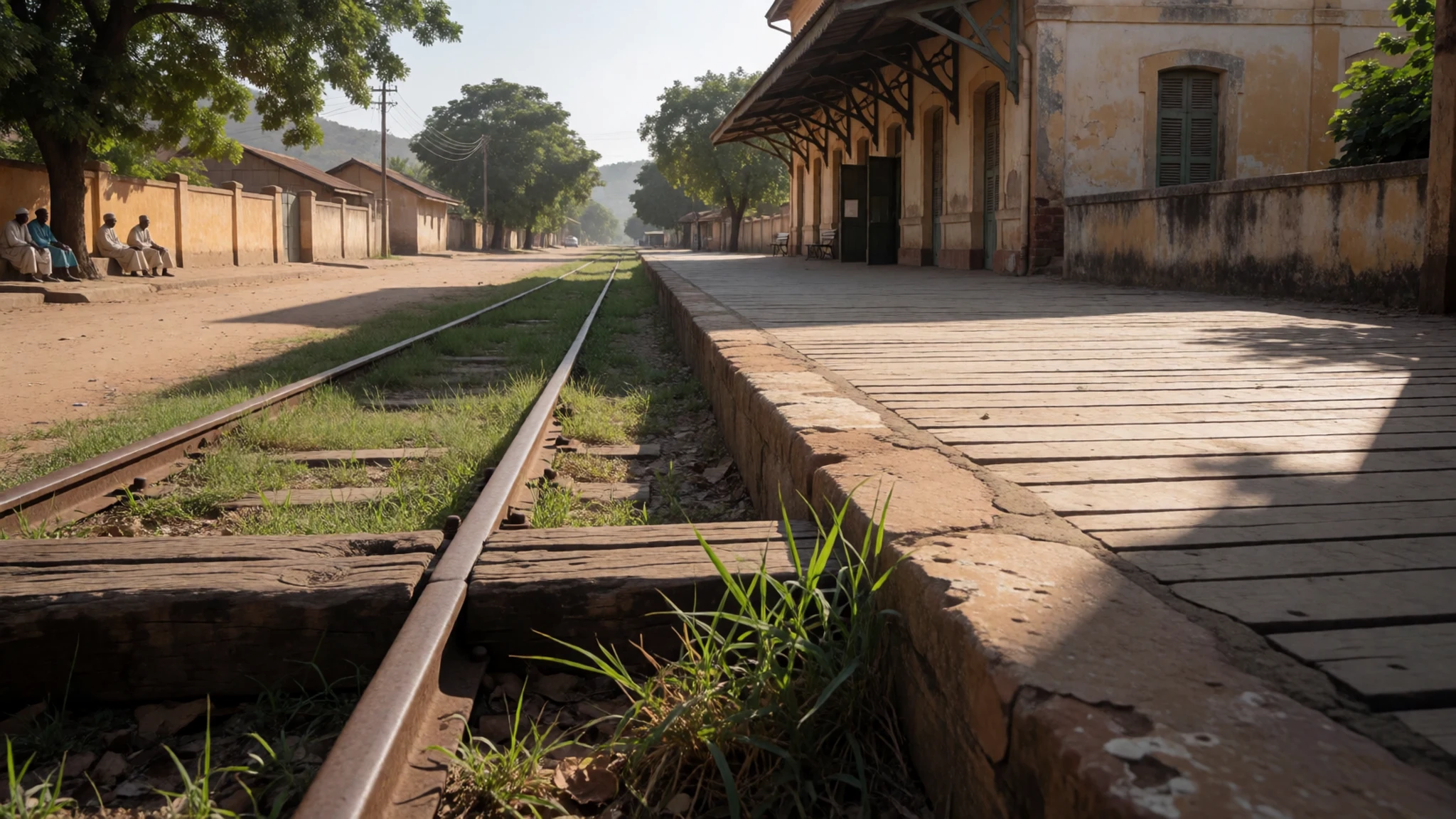
Culture
Kindia's everyday culture is Susu, the language shared with Conakry and much of coastal Guinea, and daily life revolves around markets, family networks, farming and trade. Most people in Guinea are Muslim, and the rhythm of the day in town follows prayer times and Friday gatherings, with a noticeable quiet around midday on Fridays. Greetings matter. A proper hello involves asking after health, family and work before any business is done, and rushing past this is read as rude. Using the right hand to give, receive and eat is the norm. Music and storytelling run through celebrations, with drumming, singing and dance at weddings and festivals, and the wider region is known for its musical heritage. Town life is sociable and unhurried, and strangers are generally met with curiosity and humour. The area has a difficult political history, and many people have personal memories of it, so conversations about politics are best led by locals. Traders appreciate patience and good-humoured bargaining, and small purchases from stallholders are a simple way to be a good guest. Women often run food stalls and market trade, and speaking with them respectfully is as important as speaking with men. When walking to the waterfalls or hills, you pass through farmland and villages, where people's land and homes sit close to the path. Always greet people you pass, and ask permission before taking a photograph of anyone, especially women and children.
What to wear
In Kindia, traditional dress follows patterns found across Guinea. Men wear the boubou, a wide, flowing robe, often over matching trousers, and women wear wrapped cloth skirts called pagnes with fitted tops and a head tie, in cotton or in dyed and patterned fabrics such as bazin. Tie-dye and bold printed cloth are everyday textiles in the region. These outfits come out for Friday prayers, weddings, naming ceremonies and religious festivals, when colour and fine tailoring are a point of pride. Day to day, many people wear a mix: jeans or trousers with shirts, football shirts, simple dresses, and wrappers over practical clothes for market and farm work. Clothes are generally neat and modest, and women often cover their shoulders and knees. A visitor will be most comfortable in light cotton or linen that dries quickly, since the climate is hot and humid in the wet months. Long trousers or skirts below the knee and tops that cover the shoulders fit local norms and also protect against sun and insects. Sturdy closed shoes with grip suit the waterfall paths and Mount Gangan walk, and sandals are fine in town. A hat, sunscreen and a light rain jacket are worth packing, and a scarf is useful near mosques or when visiting villages.
What to eat
- Rice with sauce — Small eateries along the main road
The staple meal across Guinea is rice served with a thick sauce of leaves, peanut or tomato, often with fish or meat. It is filling, inexpensive and eaten at lunchtime in simple eateries, usually from a shared pot or a plated portion.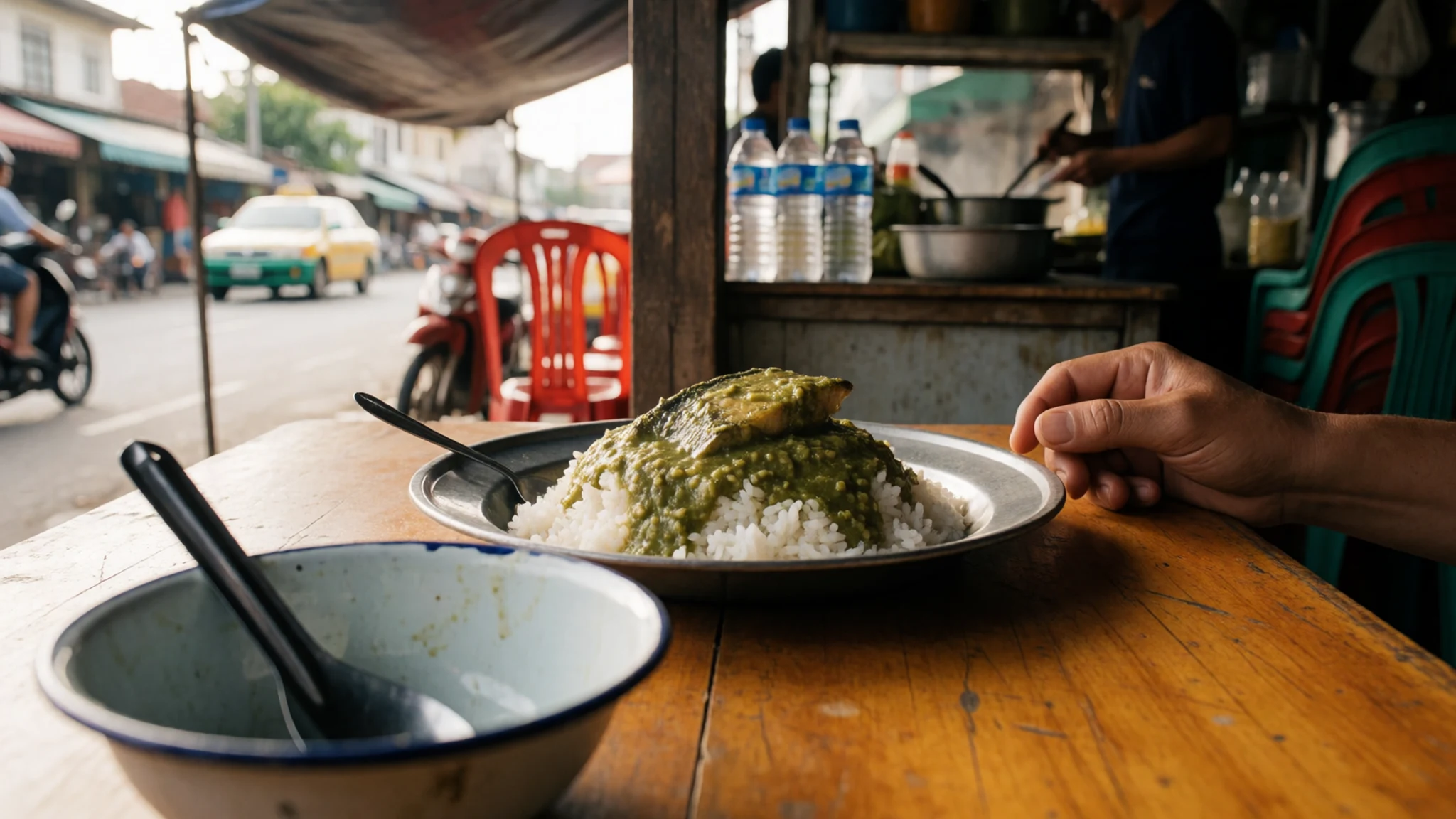
- Grilled chicken or fish — Roadside grills in the evening
Pieces of chicken or fish cooked over charcoal with onions and pepper, served with bread or rice. The smell draws people in towards dusk. Choose busy stalls where the meat is cooked to order, and ask for the pepper on the side.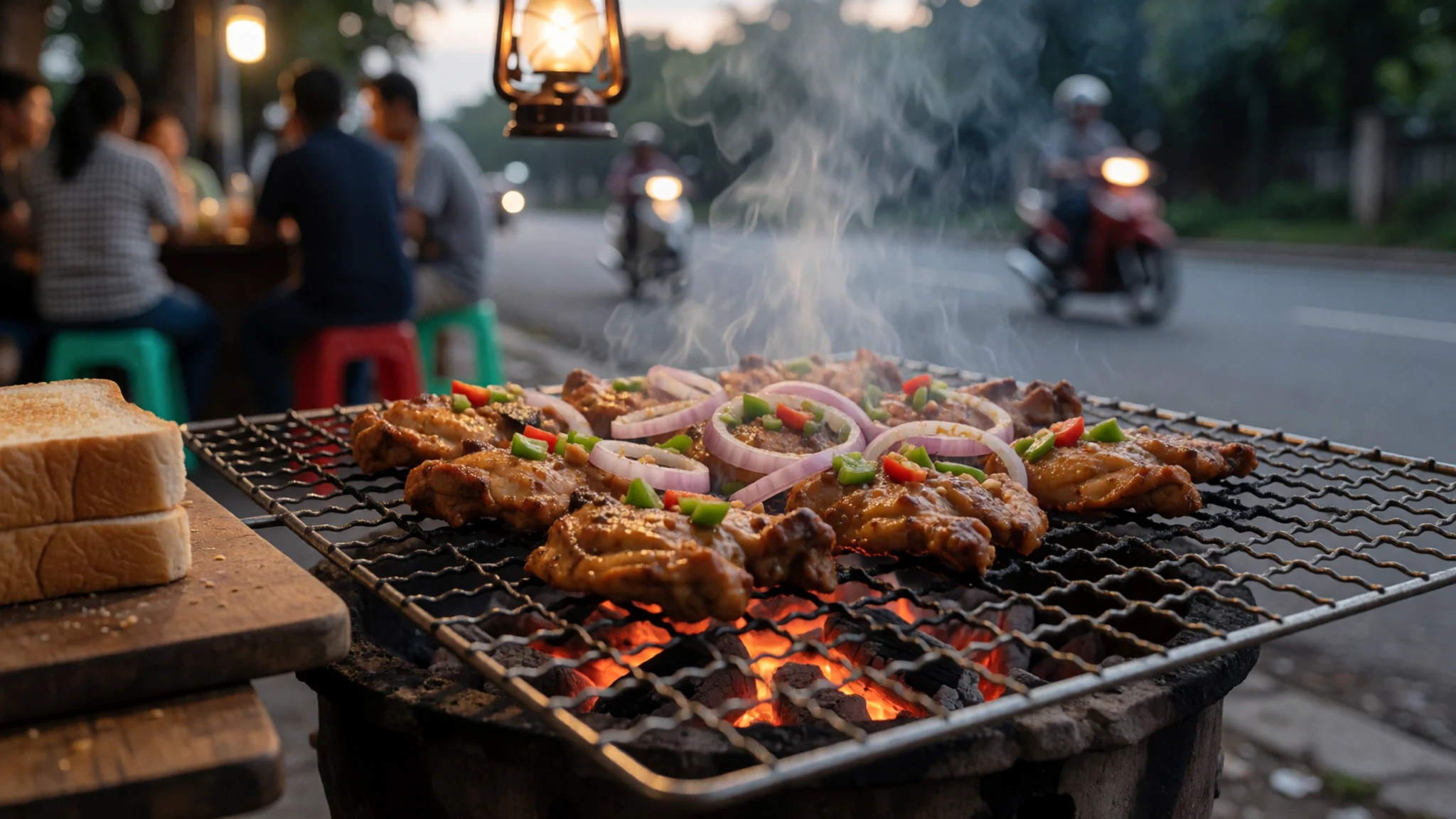
- Fried plantain — Market stalls and street corners
Slices of ripe plantain fried until sweet and crisp at the edges, eaten as a snack or alongside a meal. In a banana-growing area, fruit stalls are plentiful, and the plantain is usually fresher and cheaper than anywhere near the coast. - Fresh bananas — Roadside stands and the town market
Kindia grew up around banana plantations, and small, sweet local bananas are sold in bunches at roadside stands. They make a good breakfast or a walking snack for the waterfall paths, and the skin keeps them clean. - Cashew nuts — Market stalls
Cashew trees grow around Kindia, and the roasted nuts are sold in small bags. They make a useful, portable souvenir. Look for sellers at markets, and ask for fresh batches, since nuts kept in the sun turn stale quickly.
Plan it
Best time. November to March, the drier months, when paths are easier, roads are reliable and the hike up Mount Gangan is more comfortable. Kindia has a tropical savanna climate, so the rainy season brings mud and swollen streams, though the waterfalls are fullest then.
How long. 1–2
Getting there. Fly to Conakry's international airport, then take a car to Kindia, which takes about 1.5–2 hours on a road renovated in early 2023. From the highlands, shared taxis run from Dalaba and take about 1–1.5 hours.
Budget. low
Tips
- Hire a driver in Conakry for a day trip or overnight, since waterfalls and paths are reached by car
- Start walks early in the morning, before the heat and afternoon cloud build
- Carry cash in small notes, because card machines are rare outside the capital
- Bring plenty of drinking water and sun protection
- Ask locally about a guide for Mount Gangan and agree terms beforehand
Etiquette
- Greet people before asking a question or a favour
- Ask permission before photographing anyone
- Dress modestly in town and near mosques
Nearby
Sources
- Wikidata Q997057 (CC0)
- Wikipedia: Kindia (rev 1378281673) (CC BY-SA 4.0)
- Wikivoyage: Kindia (rev 5340612) (CC BY-SA 4.0)
- Flucco, Kleine Restaurants an Hauptstrasse Richtung Faranah (CC BY-SA 4.0)
- Fatoumata D, Le "Voile" de la mariée à Kindia (CC BY-SA 4.0)
- 46. Guinée Française. Kindia. La Rue principale (Public domain)
- 44. Guinée Française. Kindia. Gare (Public domain)
- Abdoulrahamane 99MDS Barry, Anacardier à Kindia (CC BY-SA 4.0)
- Abdoulrahamane 99MDS Barry, Anacardier (CC BY-SA 4.0)
- Assia queen jalloh, Assiatou Diallo (CC BY-SA 4.0)
- Mdou Alpha Nourouko Diallo, Atelier de Wikimedia Kindia (CC BY-SA 4.0)


