Conakry
Conakry, Guinea
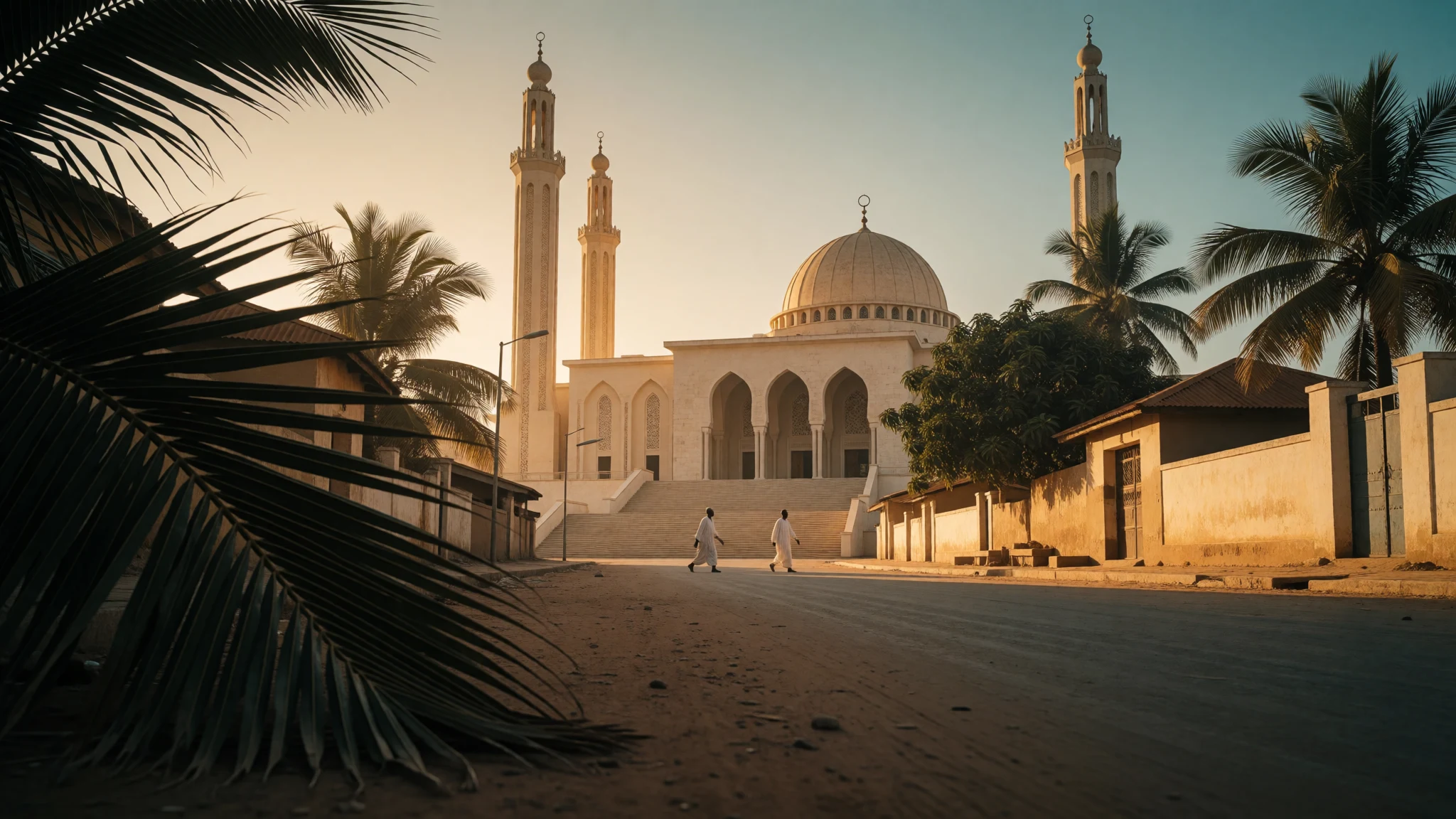
Conakry is Guinea's Atlantic capital, a peninsula port of mosques, markets and heavy rain, with the Îles de Los just offshore.
The place
Conakry is the capital of Guinea, a port on a narrow Atlantic peninsula called Kaloum. People first lived on Tombo, in the Îles de Los offshore, and only later built across the water onto the peninsula's outer end. From there the streets have pushed back along the land until the whole spit is city. The ground is low, about 13 metres above the sea, so harbour, beach edge and rooftops stay in one tight band. Conakry holds the country's government, its main port and much of its cultural life. Alumina and bananas leave through the harbour, and local plants also make foodstuffs, cement, metalwork and fuel. Marché Madina and Marché du Niger keep everyday buying and selling moving, and the fish market is a working quay rather than a viewpoint. About 3.4 million people live here, and the crush shows in the traffic, the informal building and the strain on services. Conakry has a tropical monsoon climate. From December through April a dry harmattan comes off the continent and showers almost disappear. Rain peaks in July and August, and those months are far wetter here than across much of West Africa. Heat and humidity linger for much of the year. Since the early 2000s, residents have lived with electricity and water that fail and return without much warning, so outages are part of the city's ordinary rhythm. The city's name is Conakry in French, Kɔnakiri in Susu and Konaakiri in Fula, with an N'Ko form (ߞߐߣߊߞߙߌ߫) as well. Mosques and churches share the peninsula with the port, the campuses and the markets.
Its story
Conakry's story starts on Tombo, one of the offshore Îles de Los, where the villages of Conakry and Boubinet stood before any colonial capital. By 1885 those two villages still counted under 500 residents between them. France took the island over from Britain in 1887, and that handover is when the colonial town really began. The new streets soon jumped to Kaloum, the long narrow peninsula that still holds the centre. In 1904 the French made Conakry the capital of their Guinea colony. The town did well as a harbour, above all once a rail line to Kankan — later abandoned — let groundnuts move out of the interior in bulk. Independence came in 1958 and the capital stayed put. The headcount was about 50,000 that year and about 600,000 in 1980, against more than 3.4 million today. Ahmed Sékou Touré, the first president, left buildings rather than a preserved quarter. The Grand Mosque went up in 1982, and the Monument du 22 Novembre 1970 recalls how a Portuguese-backed landing, Operation Green Sea, was fought off. After independence the city raced off the island. The national museum opened within a few years, campuses such as Université Kofi Annan took their place in the urban area, and the harbour still carries the economy. Conakry is less an old town kept for visitors than a capital that outgrew its first island and then its pipes and power.
What to see
- Grand Mosque of Conakry — Kaloum peninsula
The Grand Mosque of Conakry, also known as the Grande Mosquée Fayçal, went up in 1982 while Ahmed Sékou Touré was Guinea's first president. Few mosques in sub-Saharan Africa match it for size. Pale walls and minarets rise straight out of the surrounding streets, so the approach runs through a living neighbourhood rather than a cleared park. The prayer hall is the heart of the visit.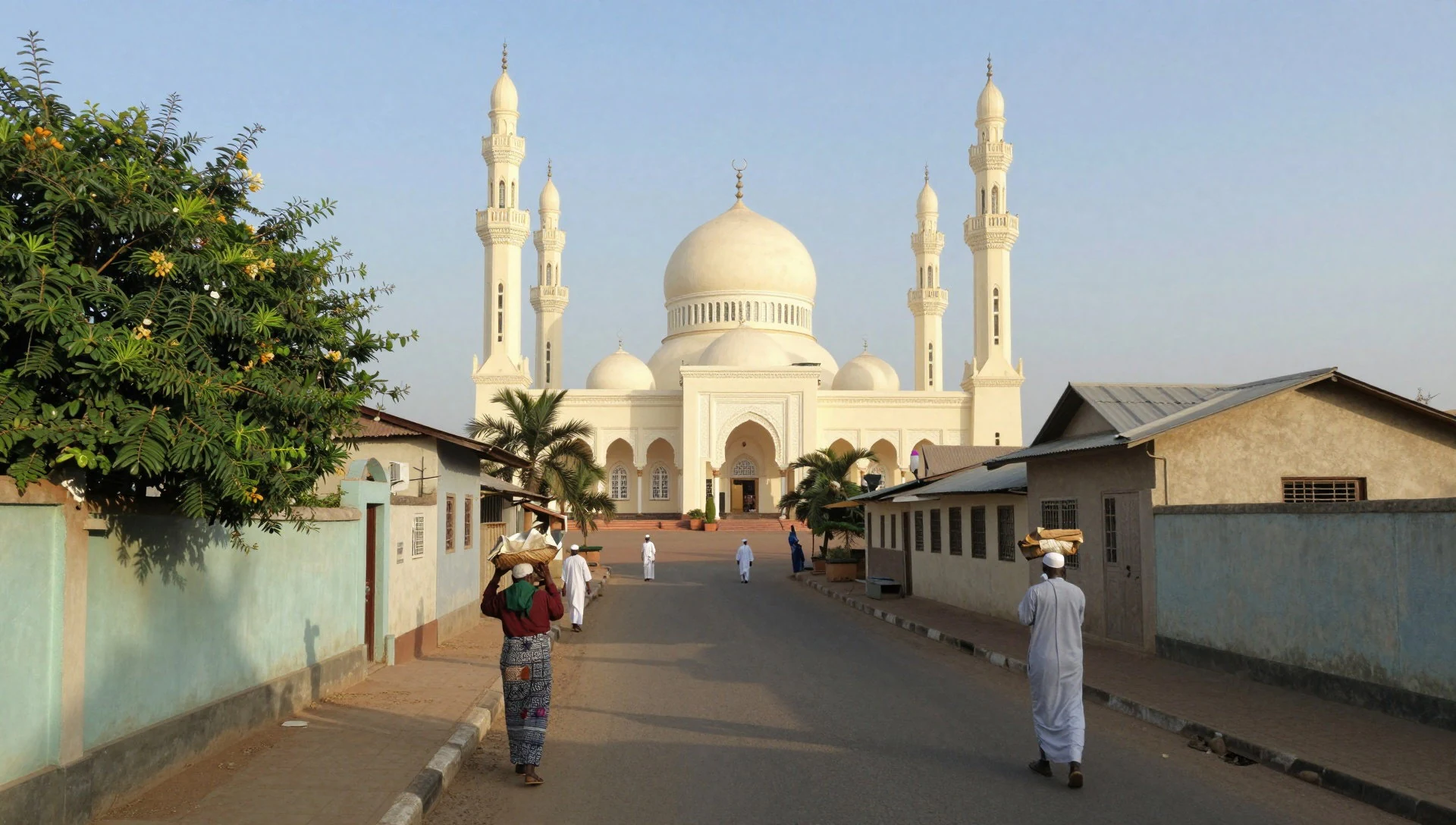
- Monument du 22 Novembre 1970 — Kaloum peninsula
Monument du 22 Novembre 1970, in Conakry, marks the day a seaborne bid to topple the government — Operation Green Sea, carried out by Portuguese troops — was beaten. The sculpture stands in the open on the peninsula, with traffic going past, rather than in a set of museum rooms. It helps to know that November 1970 episode; otherwise it is simply a large public statue.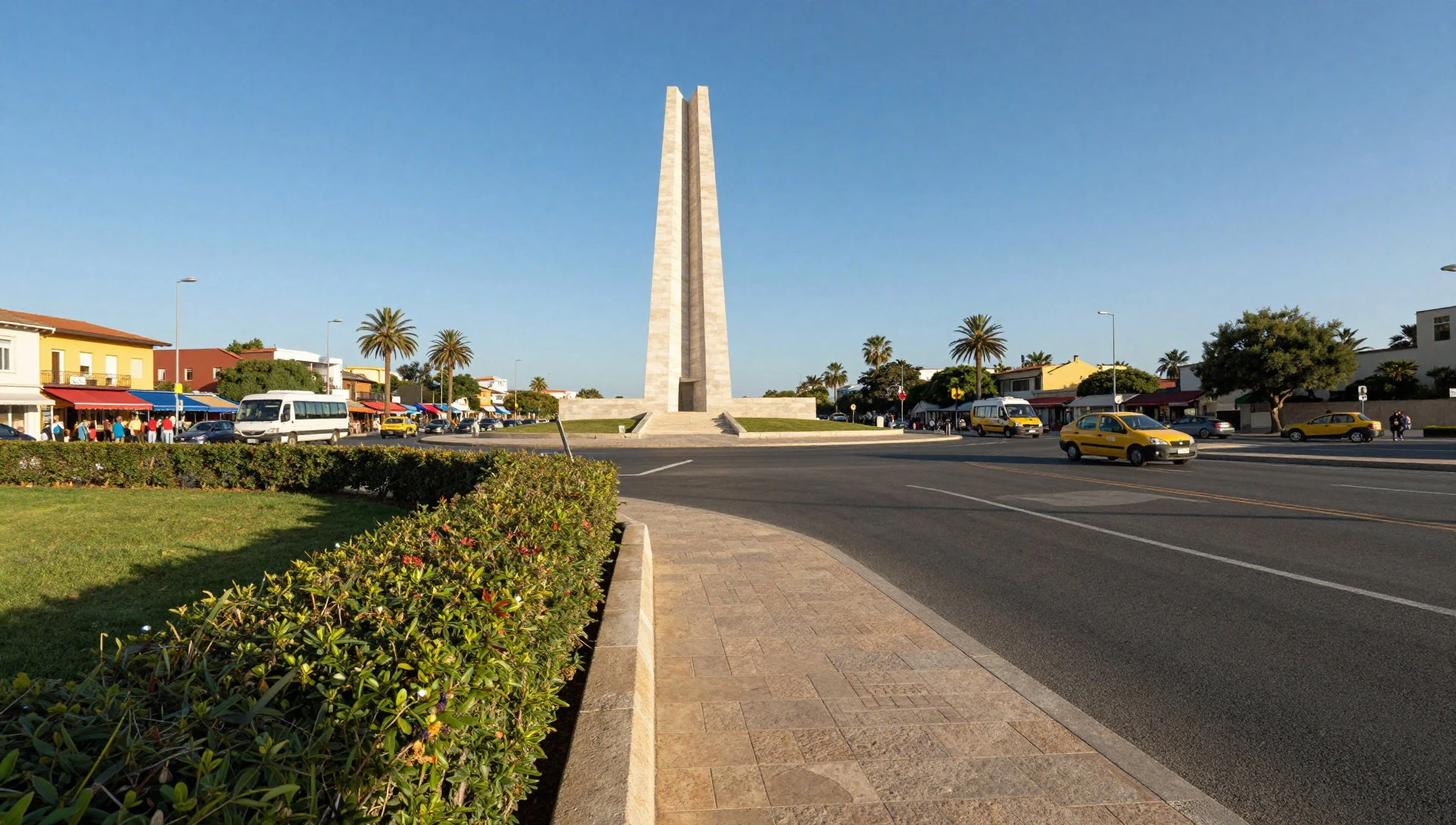
- Sandervalia National Museum — Sandervalia
Sandervalia National Museum is Guinea's national collection in Conakry, opened in 1960 soon after independence. Masks, sacred objects and other works sit beside accounts of the country's peoples and of the deep past. The rooms are a direct view of inland cultures that the port otherwise meets as cargo and migration. Ask which galleries are open.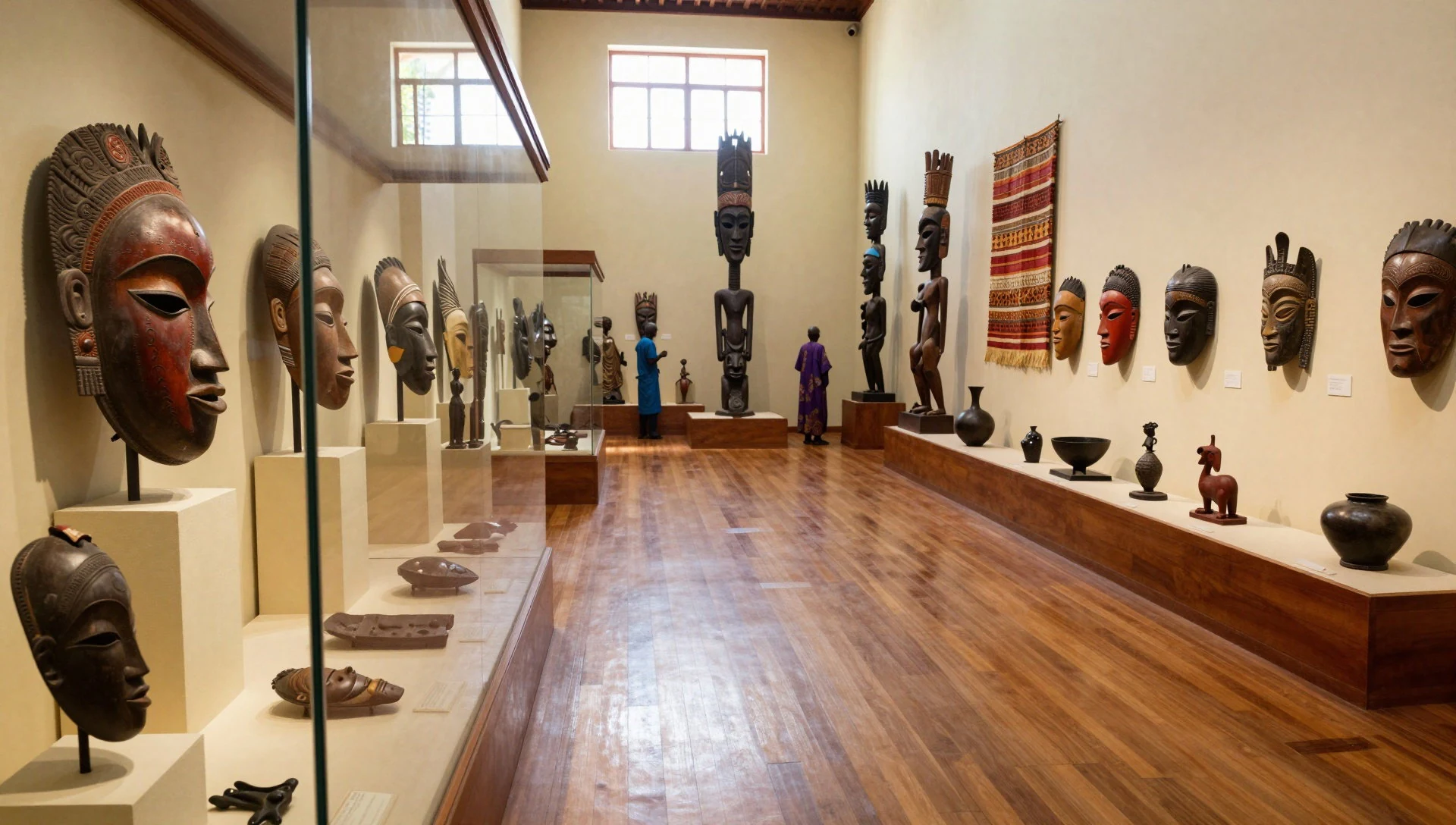
- Conakry Botanical Garden — Kaloum, near the Grand Mosque
Conakry Botanical Garden is a pocket of shade on the peninsula, and kapok trees are the planting people come to see. Canopy matters here more than formal beds. It lies a short walk from the Grand Mosque, so the two pair well on a cool morning.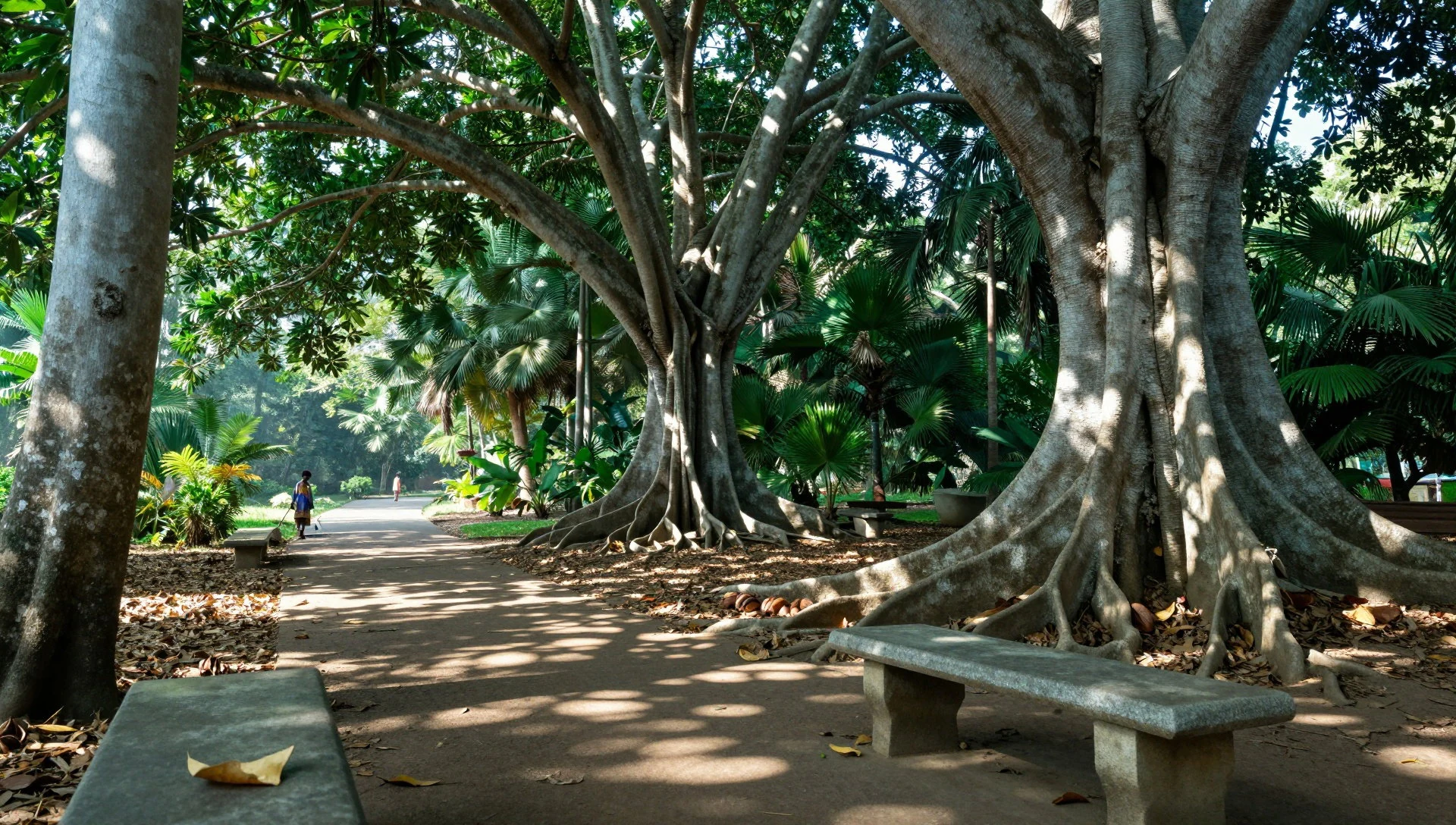
- Îles de Los — offshore from the peninsula
The Îles de Los lie just off Conakry, wooded islands with sandy beaches, Tombo among them. The crossing starts at the fish market, the one tucked behind the Novotel. People cross for sand, trees and open water after the noise of the port. The dry months are the kinder window for the trip.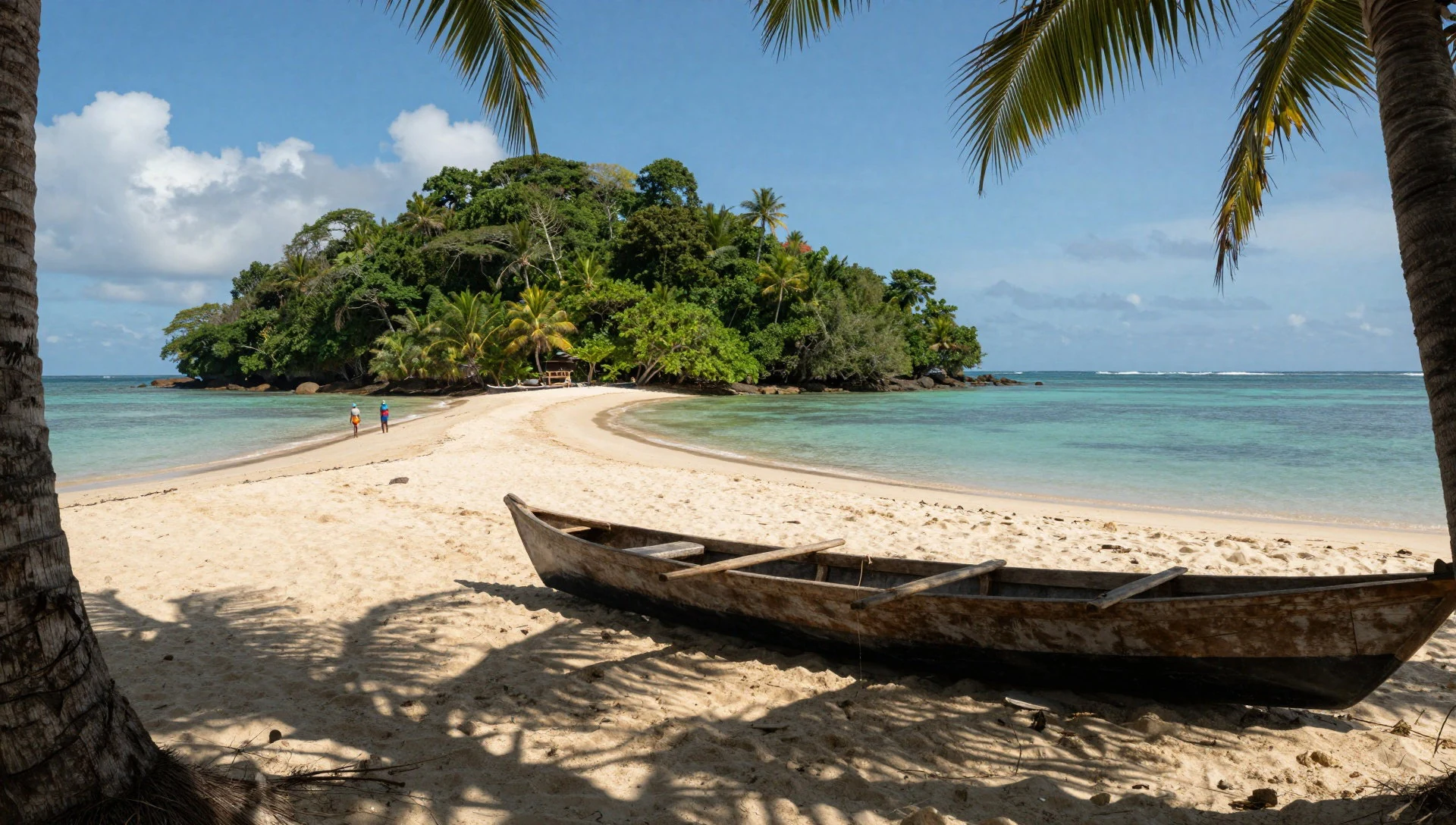
Culture
Conakry's cultural life sits in public buildings and in the street at once. At Sandervalia the national museum, opened in the first years after independence, holds masks and sacred objects and tells the story of Guinea's peoples and their older past, while the National Library and the National Archives look after the state's written memory. The Monument du 22 Novembre 1970 puts the 1970 coup attempt into the open air of the peninsula. Faith is part of the ordinary cityscape. The Grand Mosque of Conakry is the main Islamic landmark, and Christian worship includes the Roman Catholic Cathédrale Sainte-Marie, the Église Protestante Évangélique de Guinée and Assemblies of God congregations. Schools and universities share the peninsula, from Gamal Abdel Nasser University and Université Kofi Annan to the Lycée français Albert Camus. Green space is limited. The Conakry Botanical Garden, where kapok trees stand out, and Jardin 2 Octobre are the named parks; most shade in the city is accidental. Football sets the sporting year. Many sides in the top national league are based in Conakry, play runs from October to June, and the national team, the Elephants, uses the city's stadiums. Dress modestly at Conakry's mosques, take your shoes off where others do, and ask before you photograph people at prayer or in the markets.
What to wear
Conakry dresses in a West African range that changes with the day. For prayers, weddings and feast days, people still commission bazin, a stiff damask cotton that tailors dye and beat to a shine, cut as a boubou for men and as a matching complet — top, wrapper and headcloth — for women. Wax-print cotton, the pagne, is the everyday ceremonial cloth, sewn by neighbourhood tailors. Embroidery on the chest and a kufi cap mark formal men's wear, and many women add a headscarf, especially in Fula families and at the mosque. On a weekday the peninsula looks more mixed. Office staff wear light shirts and trousers or simple dresses, students wear jeans and football shirts, and market traders choose clothes that can take heat, dust and a sudden soak. Bazin comes out on Fridays and at celebrations; the rest of the week, imported cuts and local tailoring sit side by side. Shoulders and knees covered are the right default for a visitor in Conakry, with a scarf for the Grand Mosque and shoes that slip off at prayer halls. The climate is hot and often very wet, so breathable cotton is kinder than heavy cloth, and a light rain jacket beats a formal coat.
What to eat
- Riz gras — Marché Madina, Marché du Niger and peninsula eateries
Riz gras is a common Conakry lunch: rice cooked down in a tomato-oil sauce with fish or meat and a little vegetable. Market stalls around Marché Madina and Marché du Niger serve it, as do plain eateries across the peninsula.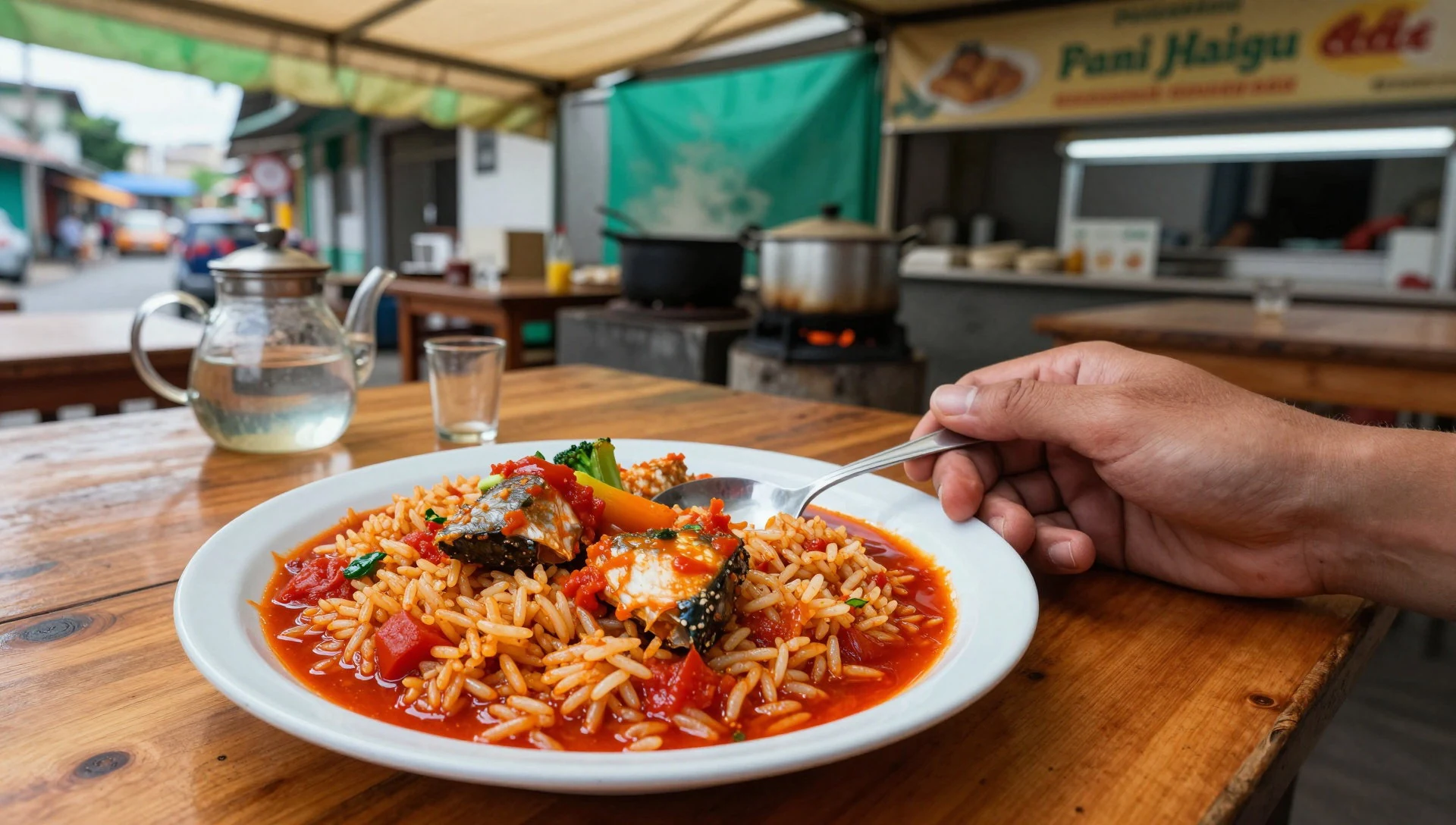
- Sauce d'arachide — market kitchens and neighbourhood eateries
Sauce d'arachide is a thick, slightly sweet peanut sauce ladled over rice. In Conakry it is everyday cooking, sold from the same market kitchens as riz gras and from neighbourhood eateries that set out several sauces by late morning.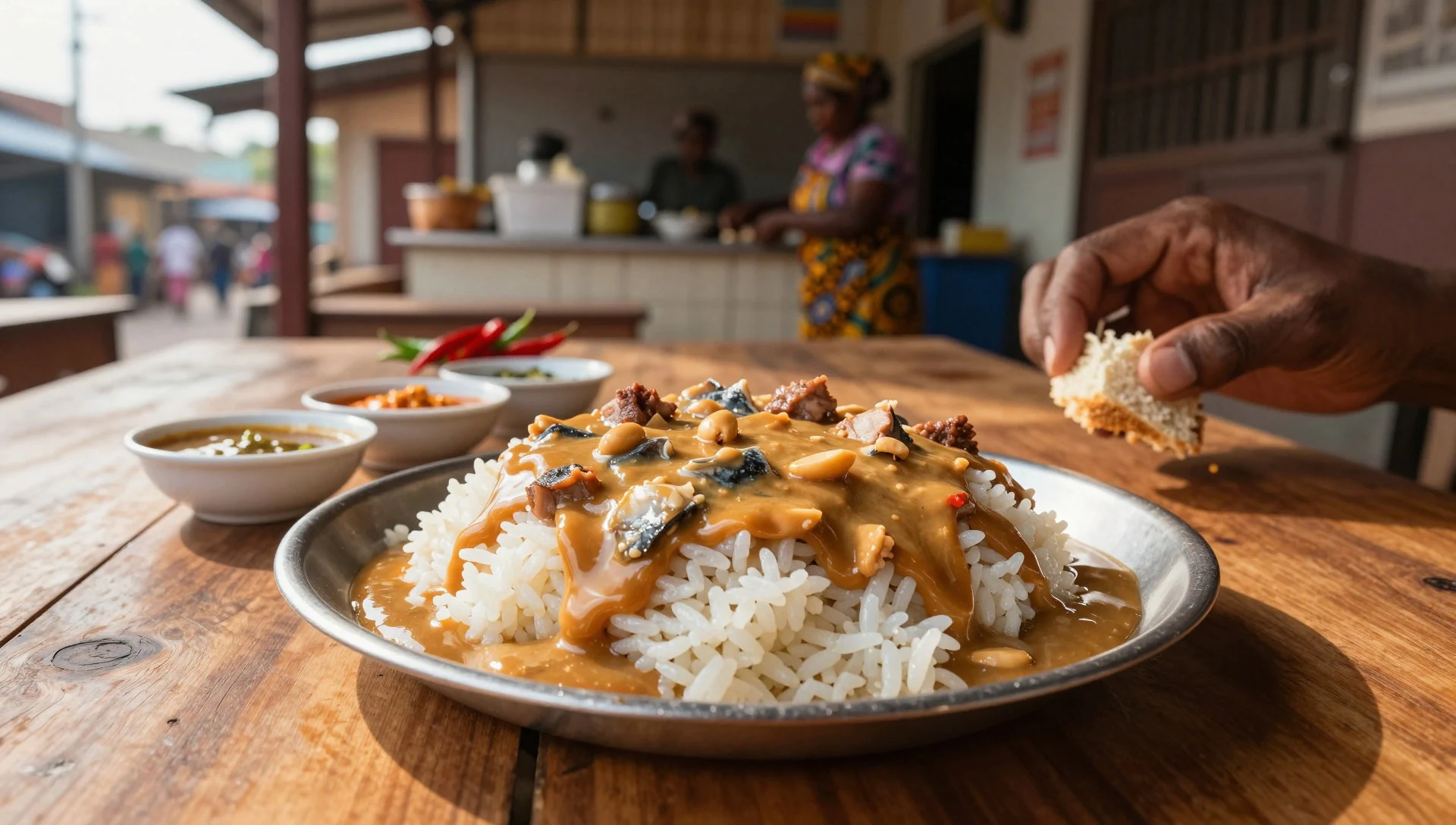
- Poisson braisé — the fish market and stalls near the port
Poisson braisé is fish grilled over charcoal, often with a pepper relish and fried plantain or rice. The fish market in Conakry is the place to look, and stalls near the port serve the same lunch. The point is the smoke and the heat on the day it is cooked. - Fonio — Marché Madina and neighbourhood markets
Fonio is a small grain long grown in Guinea and eaten in Conakry as a soft porridge or under sauce. Morning stalls in Marché Madina and other neighbourhood markets sell it cooked, and some eateries keep a pot beside the rice. - Jus de gingembre — street corners by the markets and outside mosques
Jus de gingembre is fresh ginger juice, sometimes mixed with pineapple or mint, sold from coolers all over Conakry. Street corners by the markets, and the streets outside mosques after prayers, are reliable places to find a cup on a hot afternoon.
Plan it
Best time. December to April is Conakry's dry season, when the harmattan leaves the city almost without rain and walking is easier. July and August are the wettest months, and the rest of the wet season stays humid and hard to plan around.
How long. 3–4
Getting there. Conakry's international airport is on the peninsula, and a taxi covers the last leg into the centre. A fast ferry runs from Freetown, and shared taxis come from Kindia. The railway inland is closed, so an overland arrival is by road, with extra time for checkpoints beyond the city.
Budget. mid
Tips
- Use the mornings for the mosque, the museum and the garden, before the heat and, in the wet season, the heaviest rain.
- Expect power and water cuts, and carry drinking water when you are out for the day.
- Arrange Îles de Los boats from the fish market in daylight, and treat the islands as a day trip.
- Read current official travel advice, and allow time for checkpoints on roads leaving Conakry.
- If you leave Conakry for Kindia or Freetown, start early and keep the return in daylight.
Etiquette
- At mosques, cover shoulders and knees, remove your shoes where others do, and stay to the side of the prayer hall if you are not praying.
- Ask before you photograph people, above all at prayer and in the markets.
- Keep voices low in mosques and in Cathédrale Sainte-Marie, and follow the attendants.
Nearby
Sources
- Wikidata Q3733 (CC0)
- Wikipedia (rev 1379002361) (CC BY-SA 4.0)
- Wikivoyage (rev 5423223) (CC BY-SA 4.0)
- Photo: Un aperçu de la ville de Conakry (CC BY-SA 4.0)
- Photo: Ville de Conakry (CC BY-SA 4.0)
- Photo: Palais du Peuple de Conakry (CC BY-SA 4.0)
- Photo: Université Kofi Annan de Guinée en 2024 (CC BY 4.0)
- Photo: Grande Mosquée Fayçal de Conakry (CC BY 4.0)
- Photo: Statut du 22 novembre de Conakry (CC BY 4.0)
- Photo: Palm Camayenne Hotel, Conakry (CC BY 4.0)
- Photo: Conakry, French Governor's Palace, 1956 (CC BY 3.0)


