Nzérékoré
Nzérékoré, Guinea
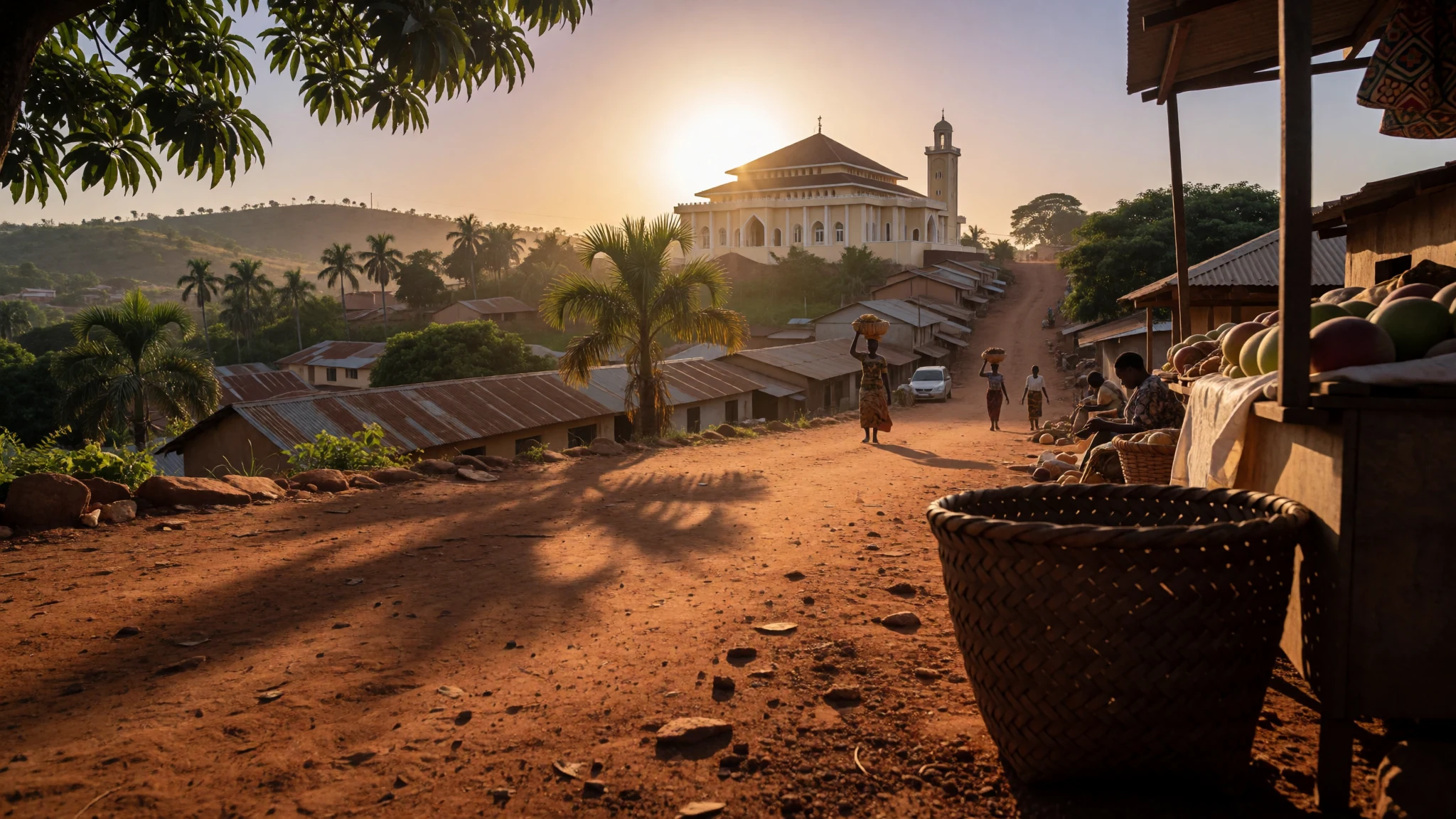
Nzérékoré is a working forest-region market town in southern Guinea, for travellers who want everyday West African life over polished sights.
The place
Nzérékoré sits about 560 m above sea level in the forested south-east of Guinea and serves as the main city of the Guinée forestière region. Around 316,000 people live here, which puts it behind only Conakry and Kankan among Guinea's cities. The capital is roughly 570 km away, and that distance shapes the town: it is a regional hub whose trade looks across the borders towards Liberia and Ivory Coast as much as back to the coast. The streets run over low hills, with tin and concrete roofs among oil palms, mango trees and patches of surviving forest. Daily life revolves around the big market, where produce from surrounding villages meets goods carried in by traders from across the region. Silversmiths have worked here for a long time, and small workshops keep the craft going. Wars in neighbouring countries pushed many people into the town, and population estimates still vary widely, so any figure is approximate. The climate is humid: a long rainy season turns red earth roads to slurry, while the short dry season brings dusty air and cooler nights. This is not a polished destination. There are few formal attractions and almost no tourist infrastructure, and most visitors are aid workers, researchers, traders or people visiting family. Those who come for the forest country, the people and the markets find a busy, sociable town that rewards patience.
Its story
Nzérékoré entered the colonial record in 1911, when people in the area rose against French rule. The authorities answered with force, and for roughly a year most of the surrounding region was run directly by the military rather than through the usual civil administration. Later, the town absorbed people fleeing wars in Liberia, Sierra Leone and Ivory Coast, which swelled its size and changed its mix of communities. Tensions between neighbours surfaced in July 2013, when three days of fighting between Guerzé (Kpelle) residents, who are mostly Christian or follow older beliefs, and Konianke residents, who are Muslim and linked to the wider Malinké group, left dozens dead. Calm returned after the army imposed a curfew and the president appealed on television for restraint. In December 2024 the town suffered another tragedy at its football stadium. A disputed refereeing decision led fans to throw stones, police responded with tear gas, and the crowd surged towards the single exit. Dozens of people died in the crush, many of them children. These events are recent and painful, and residents may not want to discuss them with strangers. They sit alongside ordinary routines of trade, worship and football, which carry on. Anyone visiting should read current travel advice first and treat the town's history with the seriousness it deserves.
What to see
- The central market — Town centre
The main market is the best single way to understand Nzérékoré. Stalls spill into the surrounding lanes with cassava, rice, palm oil, smoked fish, cloth and secondhand goods, and traders arrive from villages and across the borders. Go early in the morning, keep valuables out of sight, and ask before taking pictures.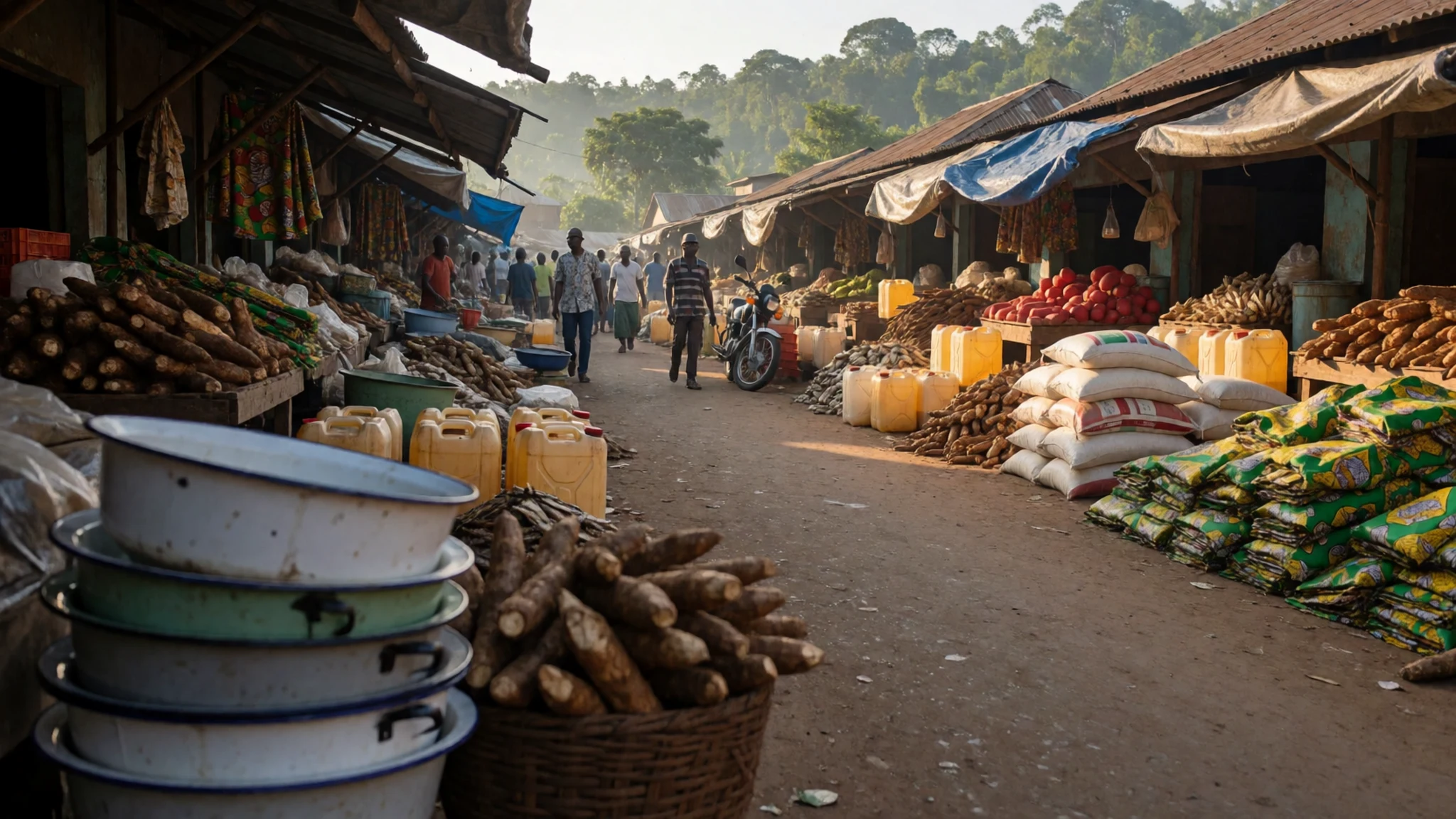
- The grand mosque — Central Nzérékoré
The grand mosque stands out over the town's rooftops and is visible in many views of the city. It is first of all a place of worship for the Muslim community, so admire it from outside unless someone invites you in. Around midday on Fridays the nearby streets get busy with worshippers.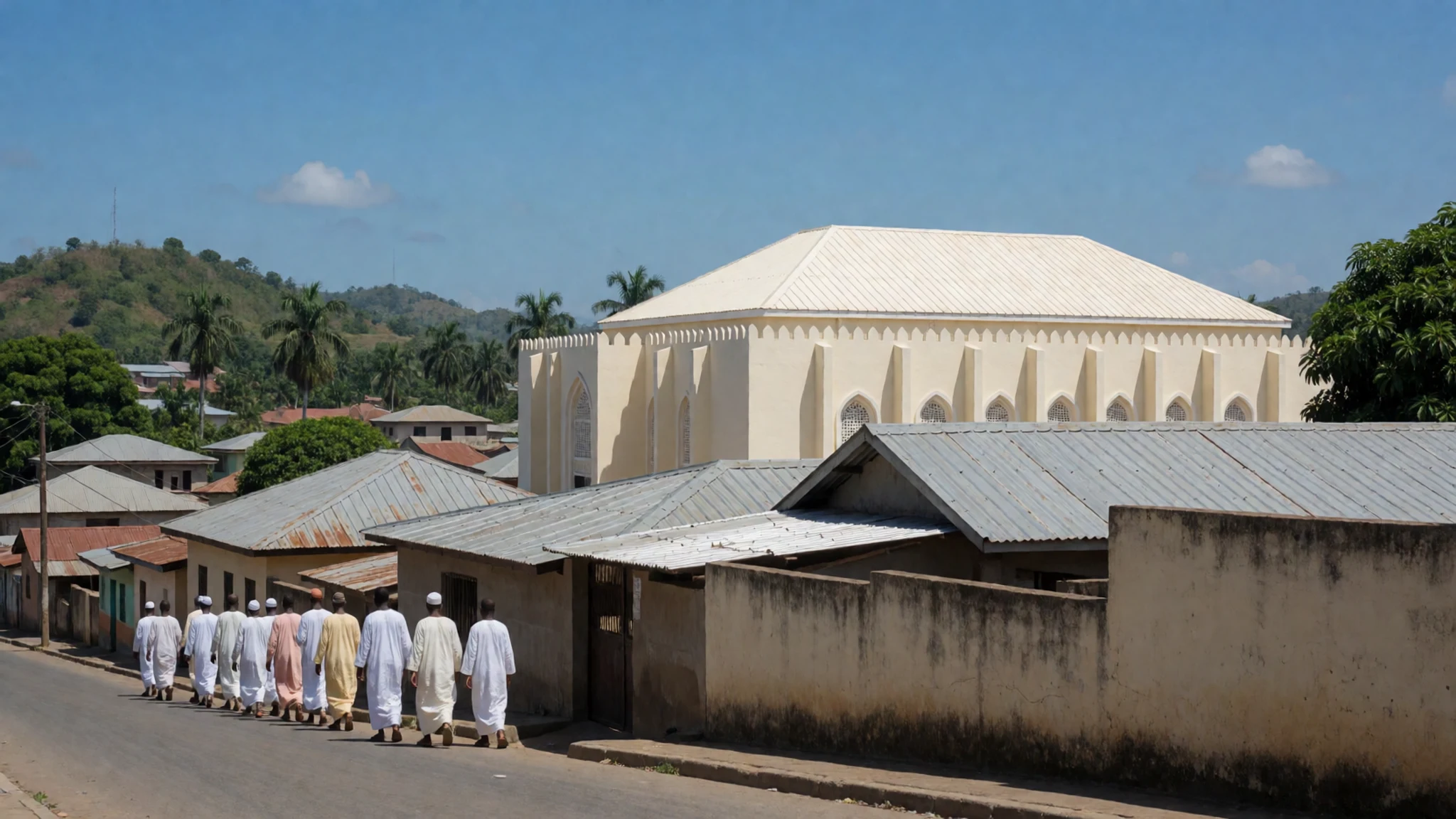
- Silversmiths' workshops — Craft quarters near the market
Silverwork is one of the crafts the town is known for, and small workshops make jewellery and decorative pieces by hand. Visiting is best done by asking around the market for a recommended workshop. Expect to watch the work, talk about the craft and bargain politely if you decide to buy something.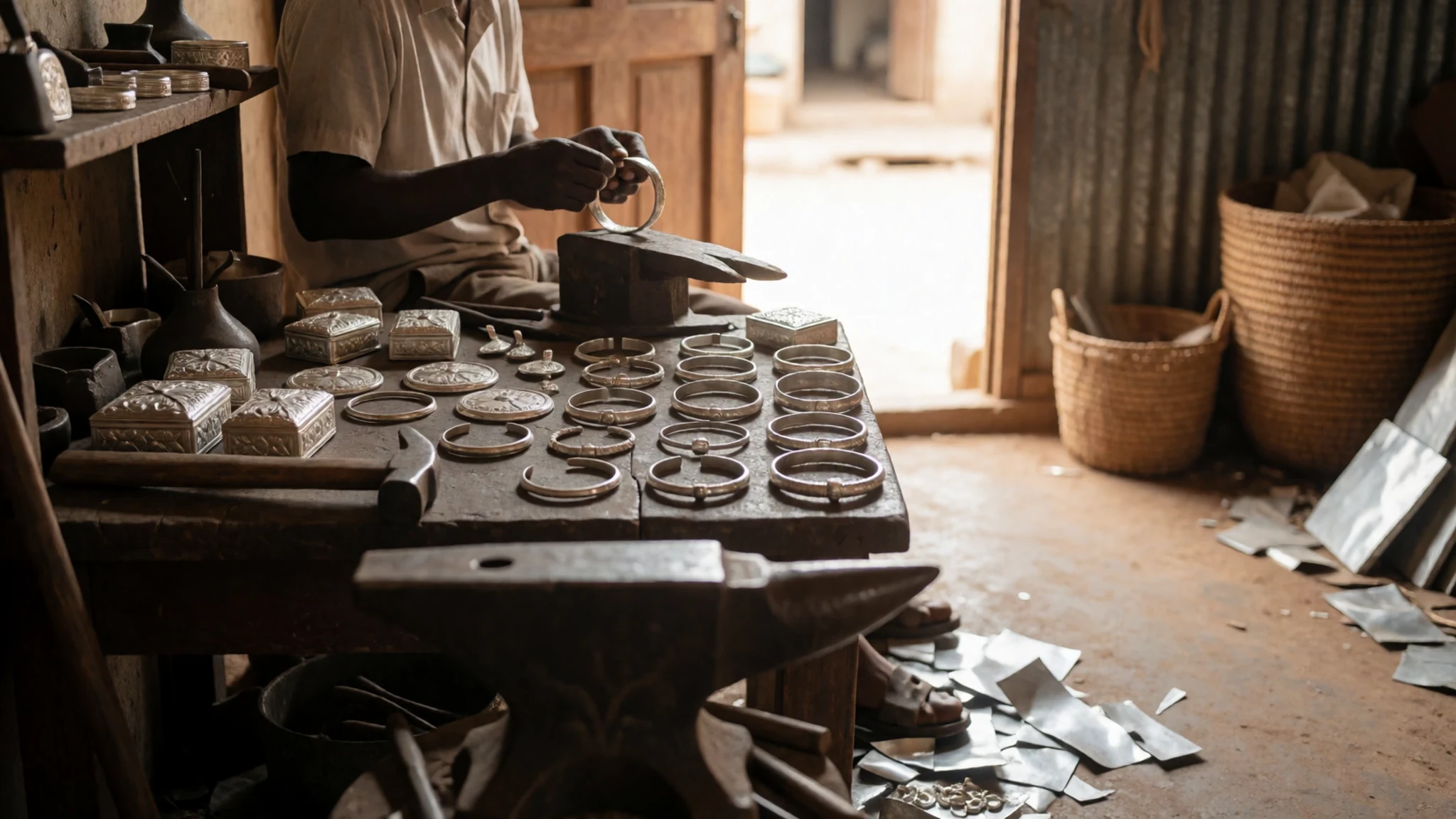
- Forest edge and the Nimba foothills — East of town, a day trip
East of town the land rises into forested hills near the Nimba range, close to the borders with Liberia and Ivory Coast. A day trip needs a local guide, a reliable vehicle with a driver and a check on road and security conditions. Dry-season months make the tracks far easier to travel.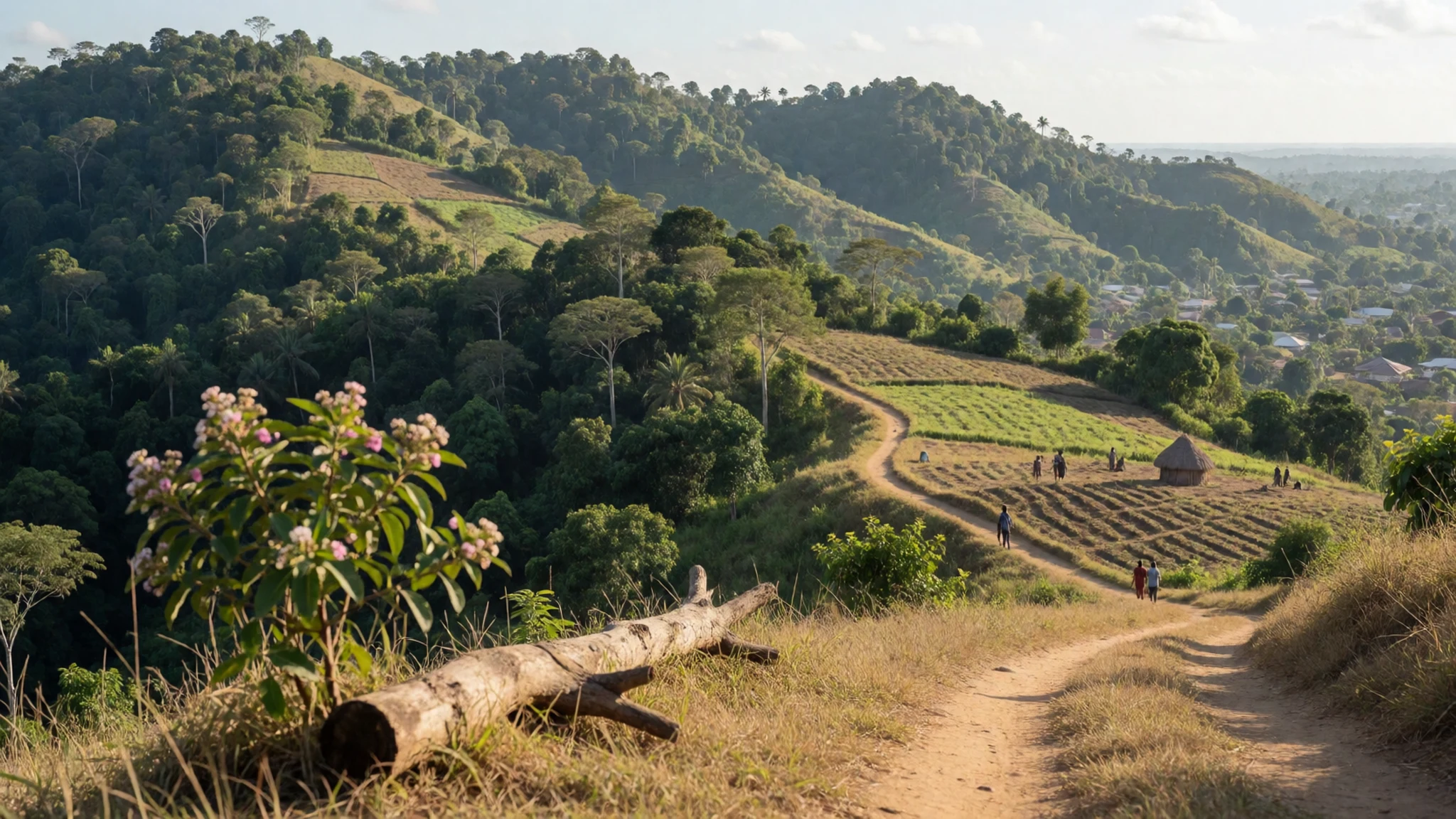
- Street life and motorbike taxis — Main roads through the town
Much of Nzérékoré's character comes from simply walking its main roads. Motorbike taxis weave past roadside sellers, tailors, phone-charging stands and small eateries, and the red dust shifts with the seasons. Walk in daylight, carry small notes, and stop at a tea or coffee stall to talk to people.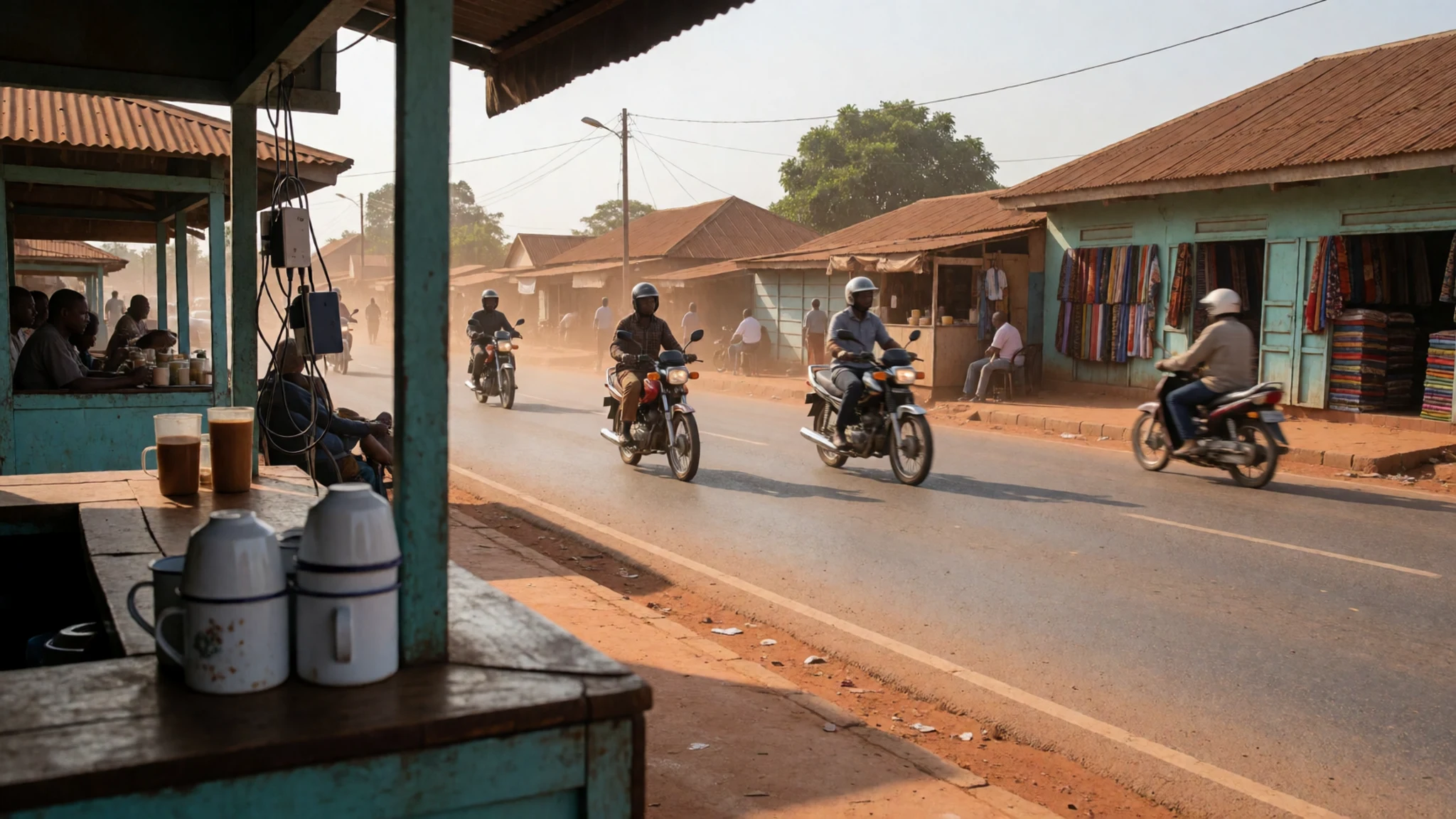
Culture
Nzérékoré is one of Guinea's most mixed towns, and its culture is shaped by that mix. Guerzé (Kpelle) families, many of them Christian or following older beliefs, live alongside Konianke and other Muslim communities, with further groups from across the forest region and beyond. French is the language of administration and schools, but day-to-day talk moves between several local languages, and the N'ko script, written right to left, appears on signs and in online posts. Churches ring with singing on Sundays, and mosques fill on Fridays. In the surrounding villages, masked ceremonies and initiation rites form part of community life in the forest country, and they are private matters that outsiders should not expect to attend or photograph. Social life revolves around greetings, which are longer and warmer than in many places, and around family obligations, markets and football. A visitor who takes time over a proper greeting, asks about family and health, and accepts a seat if one is offered will find doors open quickly. The town has also lived through serious communal tension, so keep conversations about ethnicity and politics light unless a local friend raises them first. Greet people properly before asking for anything, and always ask permission before photographing someone, their stall, a place of worship or a ceremony.
What to wear
Traditional dress in Nzérékoré draws on wider West African habits. Women wear wrapped cloth skirts called pagnes, usually printed cotton, with a matching fitted top and a head wrap. Men wear the boubou, a loose, flowing robe over trousers, often in plain or dyed cotton, and many Muslim men add a cap. Dyed, glossy damask known as bazin is kept for weddings, Fridays and religious festivals. Silver jewellery from local workshops is part of festive outfits. On ordinary days, most people wear practical clothes: jeans, shirts, football kits, dresses made by tailors in the market, and, among many Muslim women, a headscarf. Tailors can copy almost any design from a piece of cloth in a few days. Visitors should dress for heat, rain and modest norms. Choose light cotton or linen with sleeves and long trousers or skirts that cover the knees, because covering shoulders and legs is respectful around mosques, churches and in the market. Bring a hat, a light rain jacket for the wet months, and closed shoes with a good grip, since red earth paths turn slick. Sandals are fine for the town centre in dry weather, but not for forest tracks.
What to eat
- Rice with leaf sauce — Market food stalls and family-run eateries
Rice served with a sauce of pounded cassava or potato leaves, cooked down with palm oil, onions and fish or meat, is a staple across the forest region. It is rich, earthy and filling, and best eaten at midday at a busy market eatery.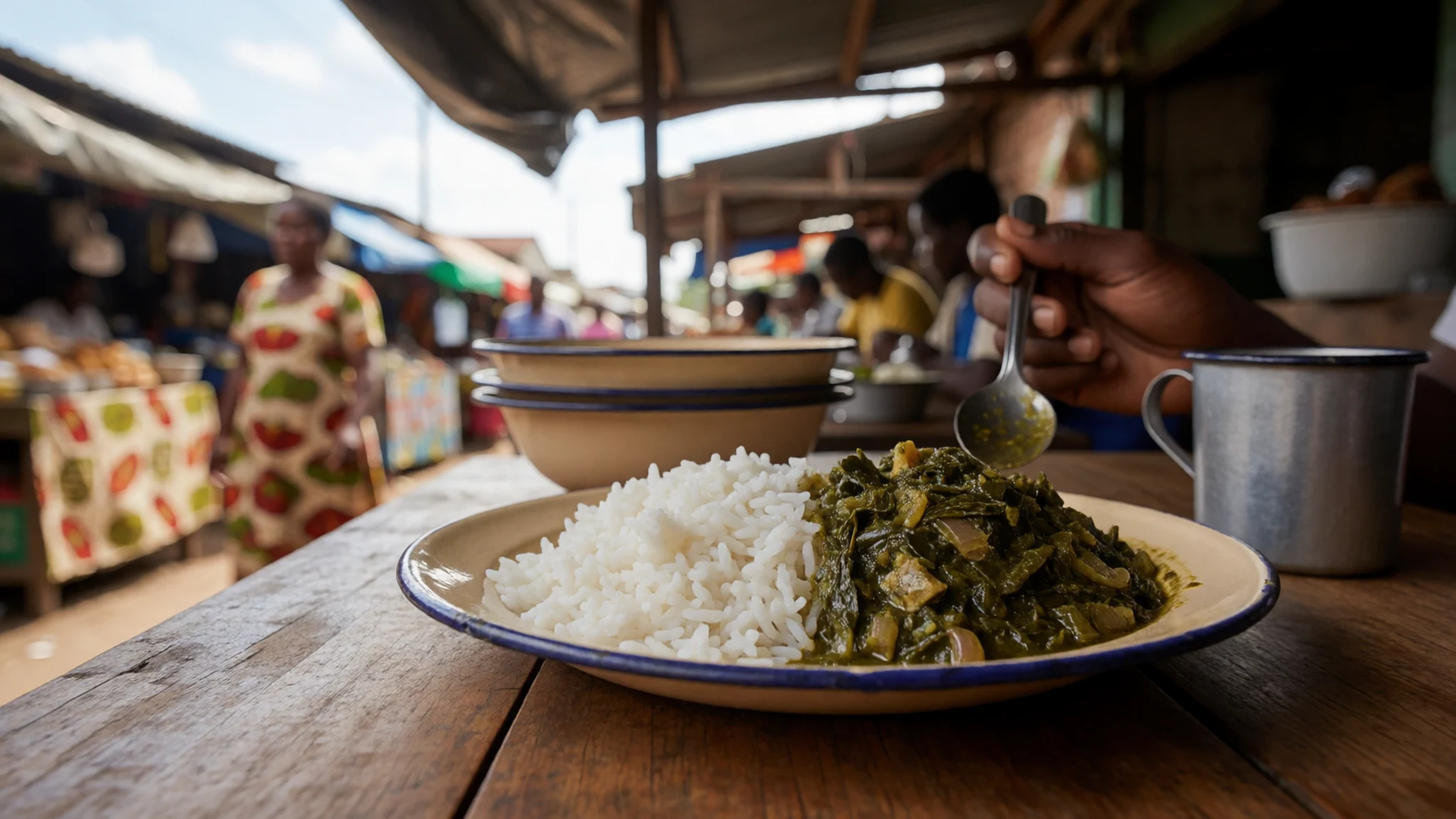
- Rice with peanut sauce — Family-run eateries and street-side cooks
A thick groundnut sauce, simmered with chicken, fish or vegetables and ladled over rice, is a common lunchtime dish. Spicing varies by cook, so ask for chilli on the side if you want to control the heat.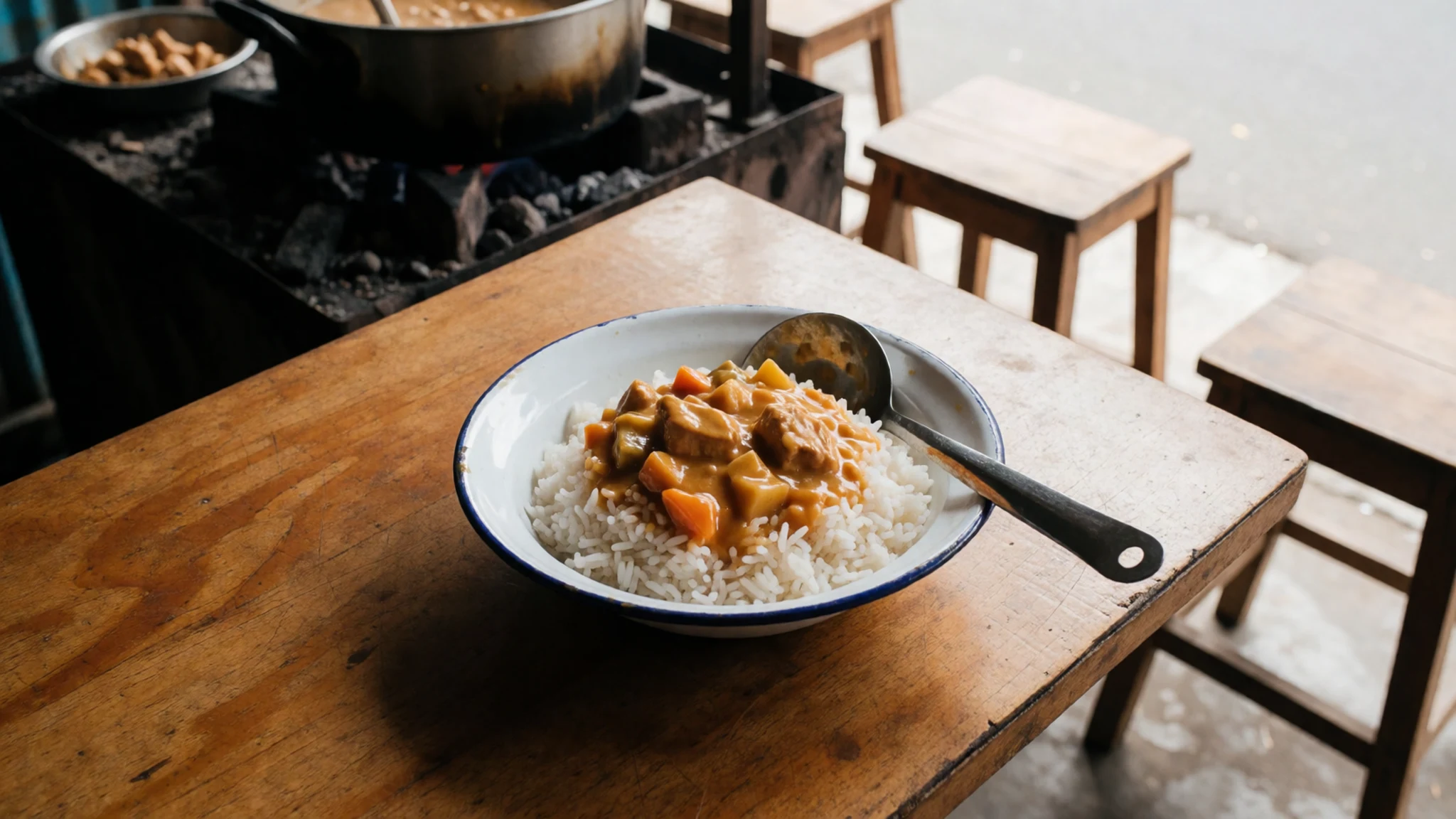
- Grilled chicken or fish — Evening roadside grills
After dark, cooks set up charcoal grills by the roadside and serve chicken or fish with sliced onions, pepper sauce and bread. It is simple street food and one of the easiest meals for newcomers. Choose a stall with a steady crowd. - Foufou with sauce — Neighbourhood eateries and home-style cooks
Foufou is a smooth, stretchy dough made from pounded cassava or similar starch, eaten by hand with a sauce of leaves, fish or meat. Tear a piece, roll it, dip it and swallow rather than chew. Locals will happily show you how. - Fried plantain and roasted corn — Market edges and roadside sellers
Ripe plantains fried until caramelised, or cobs of corn roasted over embers, make an easy snack during the day. They are sold by women at market edges and busy junctions, usually for small change, and pair well with a cold drink.
Plan it
Best time. December to February, the dry season, is easiest for travel, with hot days around 33 °C, cooler nights and drier roads. March to November is wet, with roughly 1,800 mm of rain across the year, so tracks turn to mud and forest trips get harder.
How long. 2–3
Getting there. Conakry is the main international gateway, and Nzérékoré is roughly 570 km from it, a long journey by road. Check current domestic flight options and road conditions before booking; overland routes from Liberia and Ivory Coast also exist. In town, motorbike taxis and shared cars handle the last leg.
Budget. low
Tips
- Read your government's current travel advice before booking, and check local conditions again just before you travel.
- Carry cash in small notes, because cards are of little use outside a few places.
- Bring bottled or purified water and a basic medical kit, and take advice on malaria prevention.
- Visit the market early in the morning, before the heat and the crowds build.
- Arrange a local guide and driver for any trip into the forest, and avoid travelling after dark.
Etiquette
- Greet people properly before asking questions or making requests.
- Ask before photographing people, stalls, mosques, churches or ceremonies.
- Dress modestly, with shoulders and knees covered, particularly around places of worship.
Nearby
Sources
- Wikidata Q1002799 (CC0)
- Wikipedia — Nzérékoré (rev 1376949457) (CC BY-SA 4.0)
- Wikivoyage — Nzérékoré (CC BY-SA 4.0)
- Photo 01 — Lancine.kounfantoh.fofana (CC BY-SA 4.0)
- Photo 02 — Yakoo1986 (CC BY-SA 4.0)
- Photo 03 — Maarten van der Bent (CC BY-SA 2.0)
- Photo 04 — Maarten van der Bent (CC BY-SA 2.0)
- Photo 05 — Maarten van der Bent (CC BY-SA 2.0)
- Photo 06 — Maarten van der Bent (CC BY-SA 2.0)
- Photo 07 — Maarten van der Bent (CC BY-SA 2.0)
- Photo 08 — Lancine.kounfantoh.fofana (CC BY-SA 4.0)


