Tinkisso Falls
Tinkisso Falls, Guinea
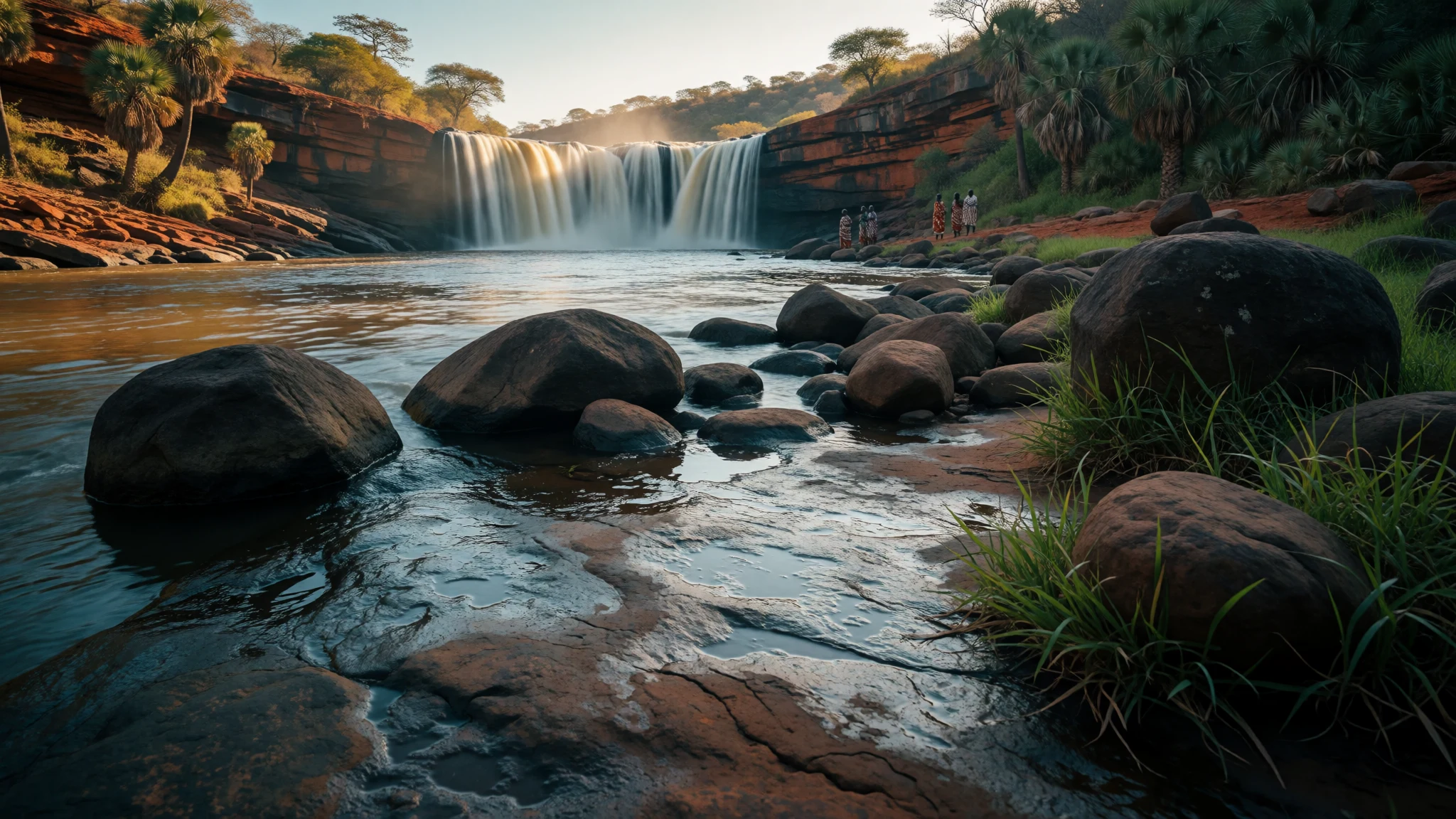
Tinkisso Falls is a broad river cascade in central Guinea, best for travellers who like quiet, rough roads and a wide view of moving water.
The place
Tinkisso Falls sits on the Tinkisso River near Dabola, in the interior of Guinea, far from the coast and the capital, Conakry. The drop is about 45 m high and 70 m across, so it reads as a broad curtain of water rather than a single thin plunge. That width is what makes the place photogenic, and it is also why the scene changes so much through the year.
The river is the real variable. In the rainy season the flow is roughly ten times what it is in the dry months, so the same ledge can look like a thundering wall of brown water in one season and a set of separate threads over bare rock in another. Rain in this part of West Africa generally runs from April to November, with high humidity and warm temperatures all year.
The setting is rural: scrub, grassland and trees along the banks, small settlements nearby, and very little in the way of visitor facilities. Guinea as a whole has a land area comparable to that of the United Kingdom, but its roads and services are thin, so reaching the falls takes planning, a driver who knows the route and flexible timing. Visitors who come for the falls usually combine them with a longer overland journey through the Haute and Moyenne Guinée regions rather than treating them as a day trip from anywhere.
Its story
Tinkisso Falls belongs to a country whose modern story is tangled and often painful, and it helps to know a little of it before travelling. Guinea was ruled by a series of empires before France took control in the 1890s and folded it into French West Africa. It became independent from France in the late 1950s, under Ahmed Sékou Touré, who wanted a self-reliant state and was widely criticised abroad for repression of opponents.
Touré died in 1984 and General Lansana Conté took over. Elections began in the 1990s, but their results have been disputed ever since. Conté died at the end of the 2000s without naming a successor, and a captain, Moussa Dadis Camara, seized power in a coup; he was shot in an assassination attempt within a year. Alpha Condé was elected president in 2010, but his bid for a third term in 2021 prompted protests and a military takeover led by Lieutenant Colonel Mamady Doumbouya.
None of this touches the falls directly, but it explains why infrastructure is limited, why official information can be patchy, and why travellers should check current advice before setting out. The country is rich in minerals, including a large share of the world's bauxite, yet ranks low on measures of living standards. The photograph from the colonial era held for this reading shows the falls as French-era photographers saw them: a wide, low cascade in open country.
What to see
- Tinkisso Falls — Near Dabola, central Guinea
The main reason to come. The river spreads over a wide ledge near Dabola, about 70 m across and 45 m high. Go in the rainy season for power and noise, or the early dry season for clearer views of the rock and the channels between flows.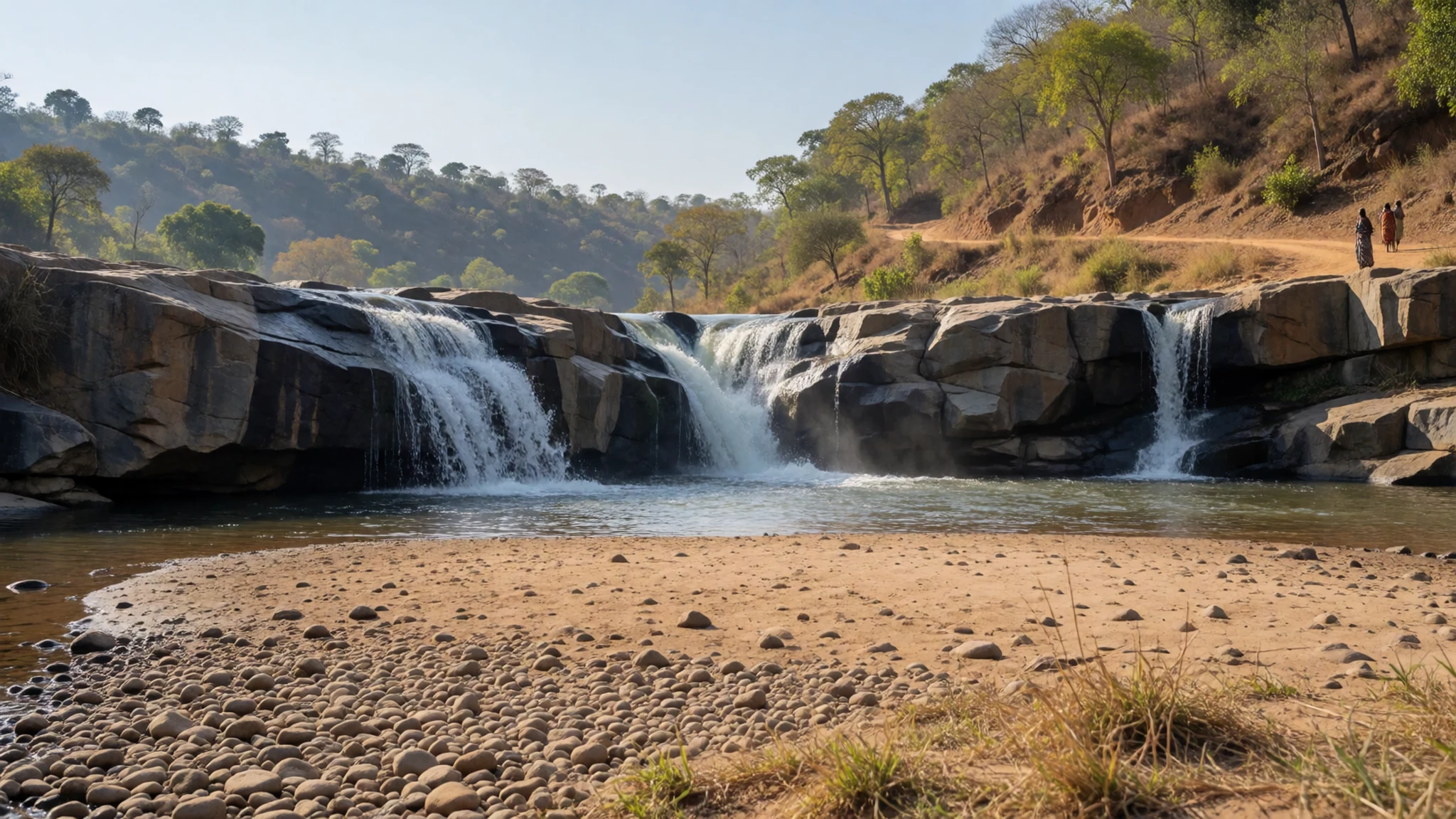
- National Museum, Conakry — Conakry
A useful first stop in the capital for understanding the country's many ethnic groups. Displays cover traditional instruments, masks and other everyday and ceremonial objects, and give helpful background before heading inland to places like the falls.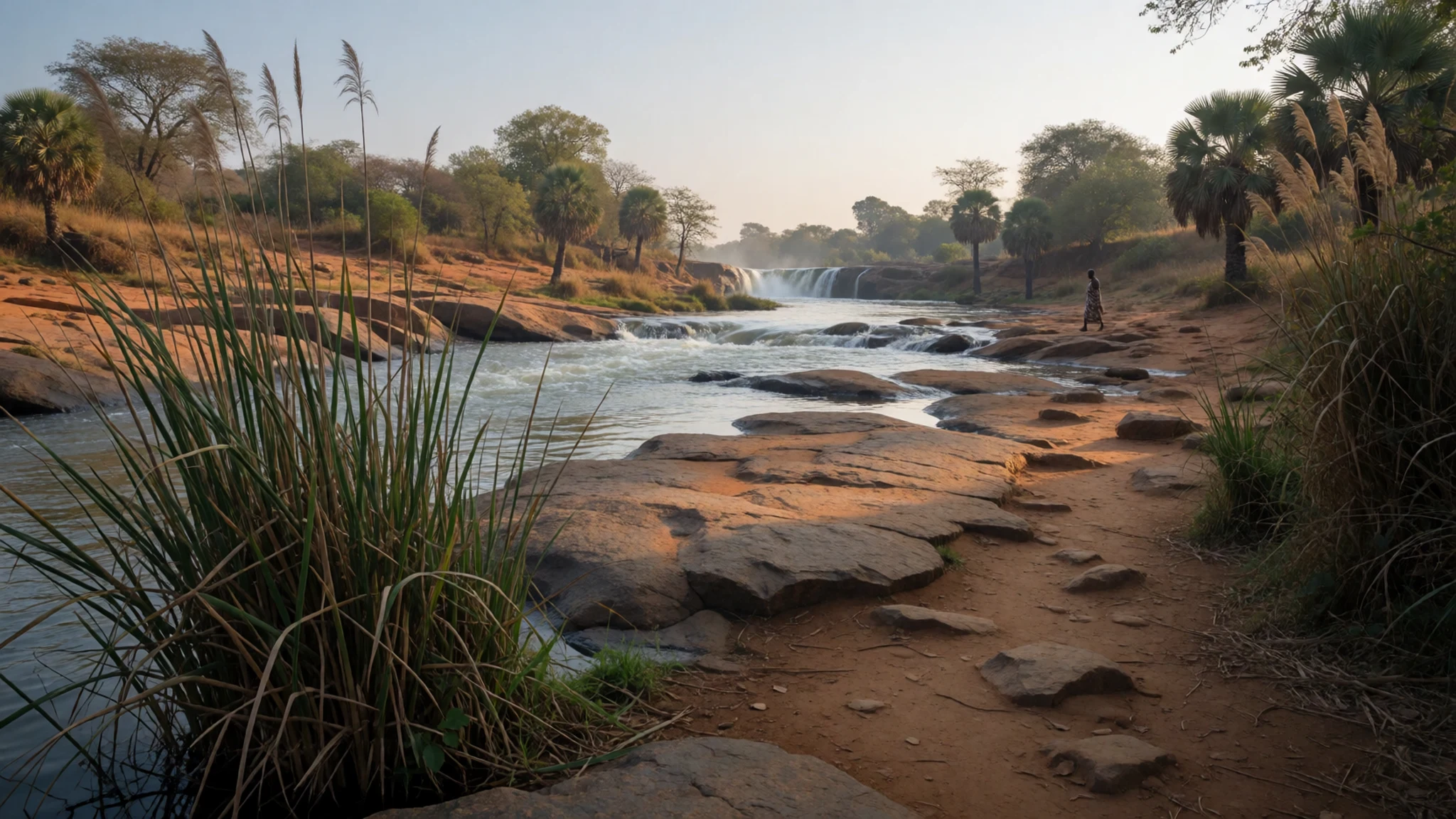
- Conakry port and the Loos islands — Conakry peninsula
Boats leave from the main port, near the presidential palace at the tip of the peninsula, for the Loos islands, either as a day trip or an overnight stay. The port itself is busy, with fishermen unloading the day's catch.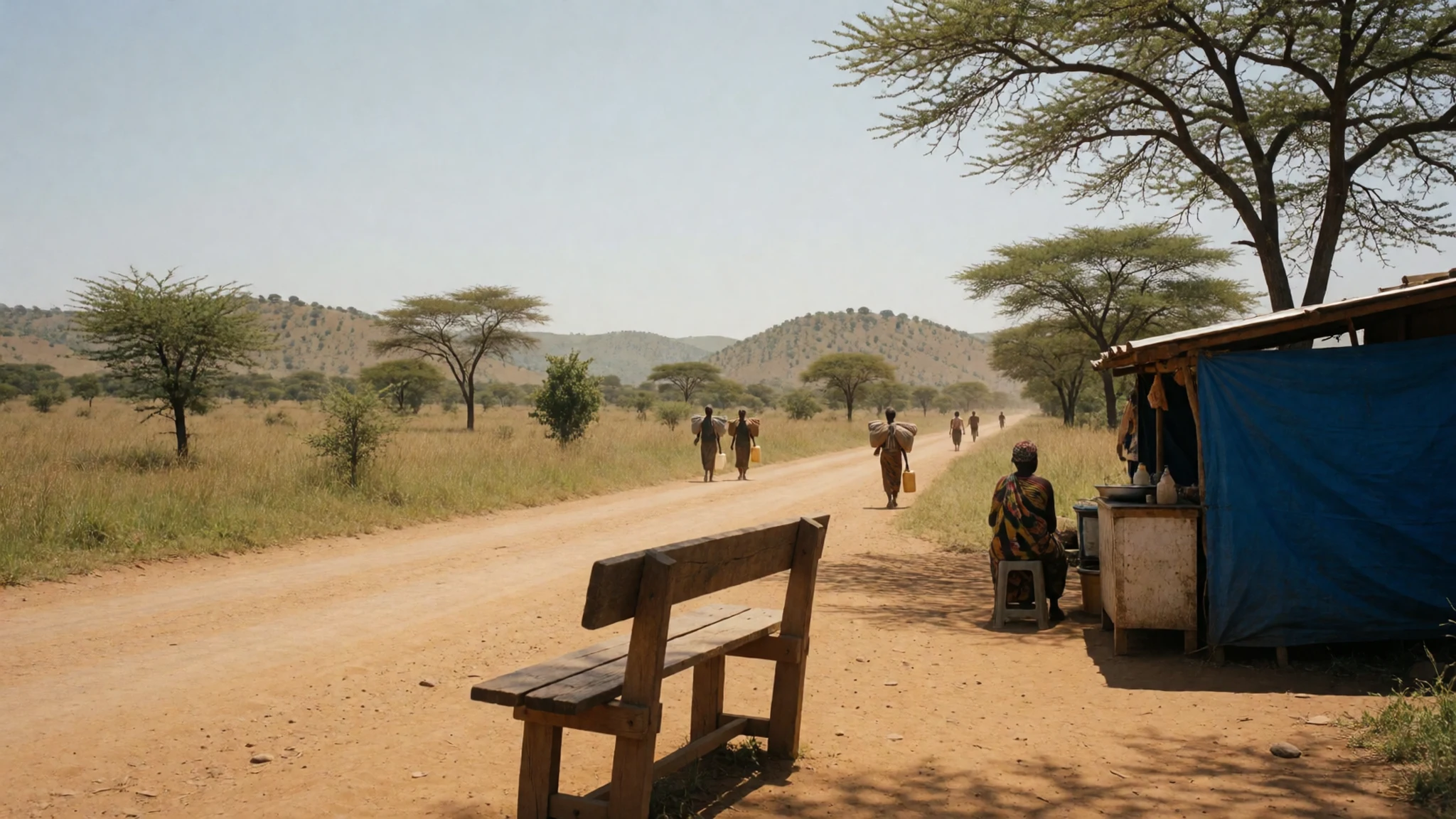
- Mount Nimba — South-eastern Guinea
The highest peak in Guinea and the country's main trekking destination, in the far south-east near the borders with Liberia and Côte d'Ivoire. It is a serious expedition from the falls, so treat it as a separate trip with a guide and proper preparation.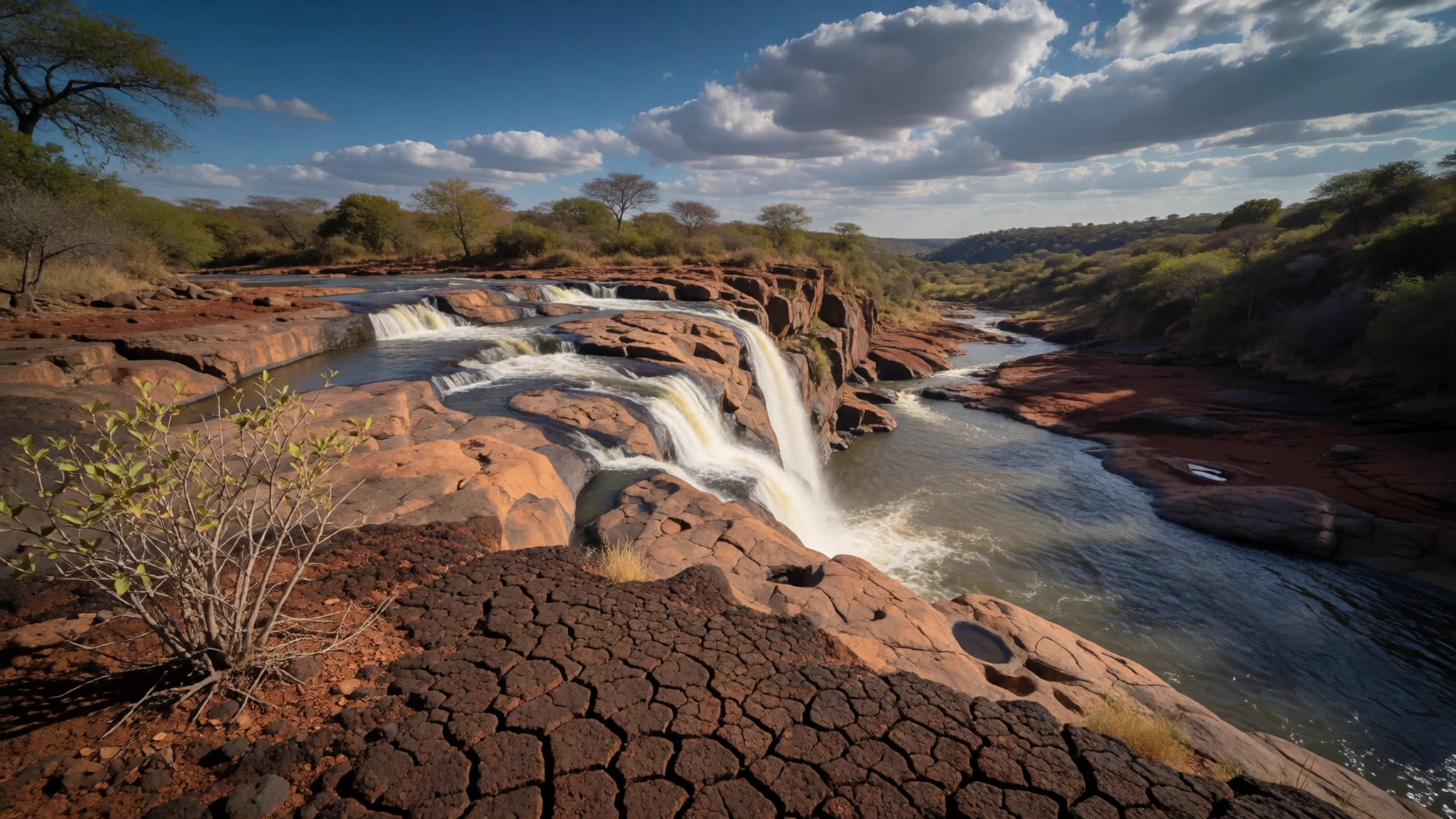
- Live music in Conakry — Conakry
Guinea is known for its kora players, and many bars in the capital host live music. The French-Guinean Cultural Centre also stages concerts, films, plays and traditional dance, and staff there can usually point you to that week's best performances.
Culture
Tinkisso Falls lies in a part of Guinea where daily life runs on greetings. Conversations, messages and even business emails open with a few polite questions about how the person is, and about family, health and work or studies, before anyone gets to the point. A simple "ça va?" is acceptable, but asking after the family is warmly appreciated and goes a long way with drivers, guides and villagers alike.
Guinea is a majority-Muslim and fairly conservative society. Visitors will find people welcoming and curious, and foreign women travelling are generally treated respectfully, with harassment rare and frowned upon. Pork is not normally served in most of the country because of Islam, though it is eaten among forest communities in the south-east.
Music is central to cultural life. The kora, a West African harp-lute, has a strong tradition in Guinea, and live performance is easy to find in the capital. Outside Conakry, village life is quieter and more traditional, and the people around the falls are farmers and traders rather than hosts for tourism, so patience and good humour matter more than any itinerary.
Greet, hand over money and eat with your right hand only, since the left is considered unclean, and ask before photographing people.
What to wear
Traditional dress in Guinea, as across much of West Africa, centres on brightly dyed and printed cotton. Women wear wrapped skirts called pagnes, matching tops and headwraps, often cut from wax-print cloth, and many communities are known for tie-dyed and hand-dyed fabrics. Men wear boubous, long loose robes in cotton, often with matching trousers, especially for Friday prayers, weddings and festivals.
In everyday life, particularly in Conakry and larger towns, people mix these with western clothes: jeans, shirts, football shirts and trainers are common, and tailors make bespoke outfits cheaply from market cloth. In villages near the falls, expect practical dress: wrappers, simple shirts and sandals, with robes for religious occasions.
A visitor should dress for heat, humidity and a conservative Muslim setting. Lightweight cotton or linen that covers the shoulders and knees is comfortable and respectful, and a scarf is useful for women entering mosques or villages. The path to the falls can be rough and wet, so bring closed shoes or sturdy sandals with grip, a hat and sun protection, and a light rain jacket if travelling between April and November. Quick-drying fabrics cope best with the weather.
What to eat
- Rice with sauce — Small local eateries in market towns such as Dabola
The everyday meal outside the capital is Guinean-style rice with one of the main sauces, sometimes with beef or fish. Portions are generous and filling, and the sauces are rich, so it suits a hungry day of travel.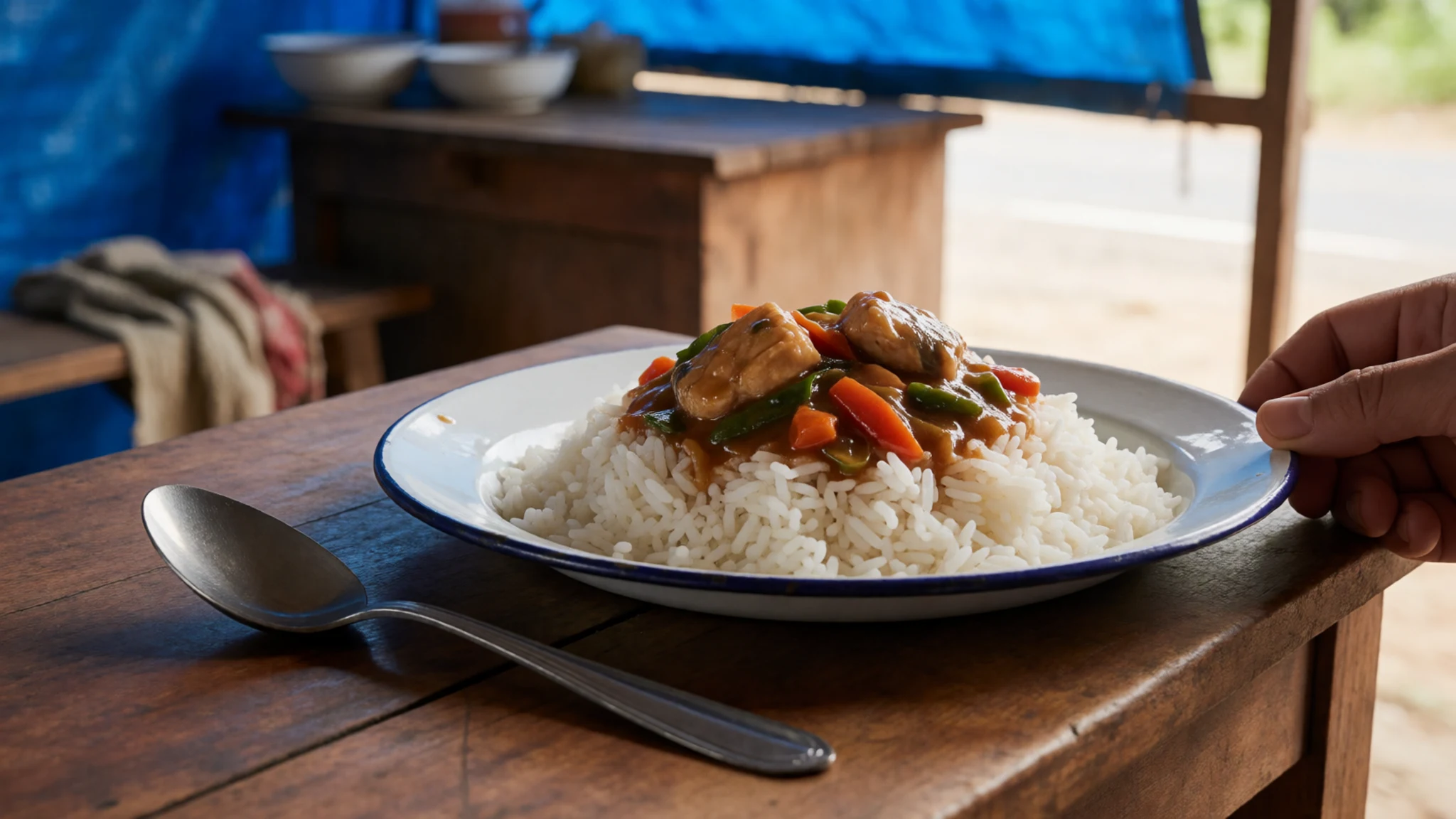
- Grilled beef — Roadside grills and town markets
Beef is well regarded in Guinea and often served grilled or in sauce. Because pork is rarely on menus in most Muslim areas, beef, chicken and fish are the usual proteins, and roadside grills are a good place to try them.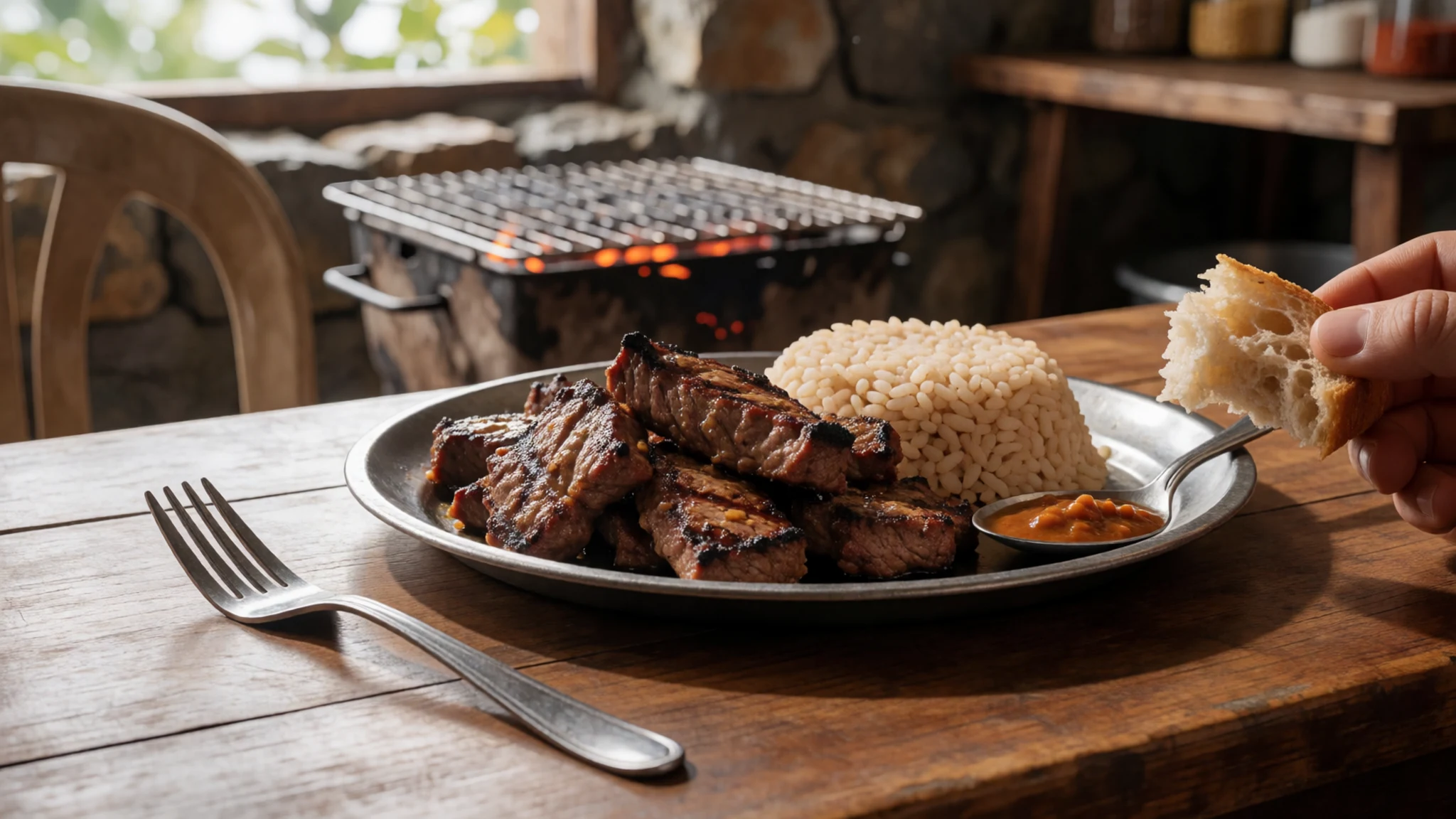
- Fresh fish and chicken by the sea — Beach bars in Taouyah, Conakry
In Conakry, fish and chicken dishes are common at beach bars, usually eaten around sunset with a breeze, music and local football games nearby. It is a relaxed way to begin or end a trip. - Seasonal fruit — Town and village markets
Fruit is inexpensive in Guinea, and markets stock whatever is in season, from mangoes to bananas and citrus. Buying a bag from a stall is an easy, refreshing snack on a hot day of driving between towns. - Lebanese-style breakfast — Lebanese restaurants in Conakry
Conakry has a number of Lebanese restaurants, some of which serve European-style breakfasts with bread, eggs and coffee. They are a useful, comfortable option before a long drive inland, and an alternative to street food.
Plan it
Best time. November to February is the practical window: the rains of April to November have eased, roads are easier and the falls still carry water. For maximum volume, go at the end of the rainy season, though access is harder and humidity is high.
How long. 2–3
Getting there. Fly to Conakry (CKY), with connections from Europe via Casablanca on Royal Air Maroc, or direct from Paris on Air France and from Brussels on Brussels Airlines. There are no passenger trains, so the last leg inland to Dabola and the falls is by road, ideally with a hired driver or 4x4. A visa is needed for most nationalities, and a yellow fever certificate is required.
Budget. mid
Tips
- Arrange the visa in advance through an embassy or the e-visa system, as it is not issued at the airport
- Carry a yellow fever vaccination certificate
- Hire a driver who knows the roads, and allow slack for delays
- Bring cash, as cards are rarely accepted outside Conakry
- Drink bottled or boiled water, and avoid tap water in the capital
Etiquette
- Greet people properly and ask after their family before getting to the point
- Use your right hand for greeting, eating and handing over money
- Ask before photographing people
Nearby
Sources
- Wikidata Q37987 (CC0)
- Wikipedia: Tinkisso Falls (rev 1362227600) (CC BY-SA 4.0)
- Wikivoyage: Guinea (rev 5423119) (CC BY-SA 4.0)
- Chutes du Tinkisso, Guinée (François-Edmond Fortier, presumed) (Public domain)
