Lonar Lake
Lonar Lake, India
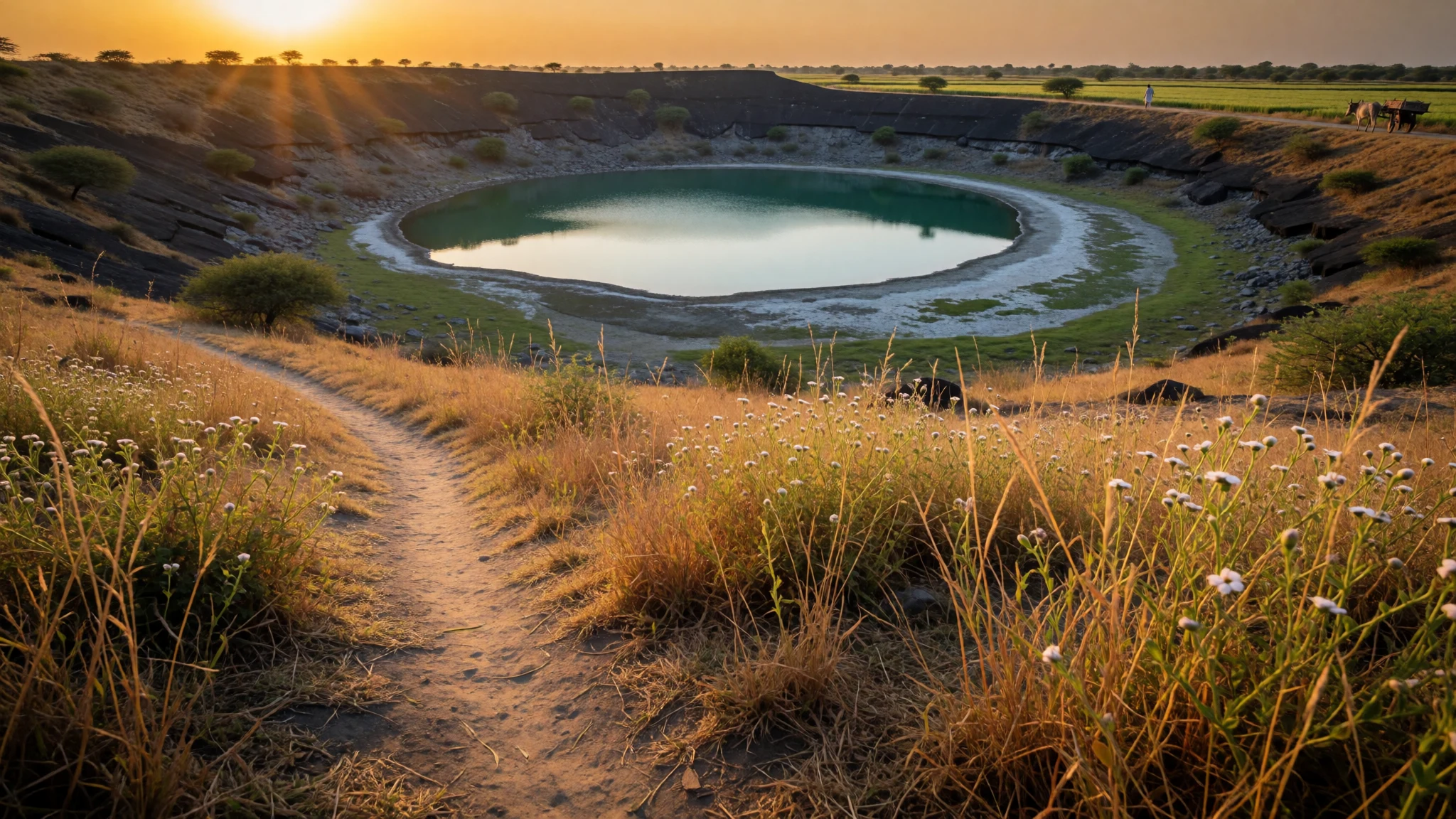
Lonar Lake is a salty lake inside a meteorite crater on the Deccan Plateau, ringed by old temples and quiet farmland.
The place
Lonar Lake lies in Buldhana district of Maharashtra, in the Vidarbha region, on the Deccan Plateau at 480 m above sea level. A meteorite struck the volcanic basalt here and left a bowl about 1.8 km across and 150 m deep, which now holds the lake. The basalt is around 66 million years old, so the impact hit very ancient ground. Nothing drains out of the basin, which makes it endorheic: water arrives, evaporates and leaves its salts behind, so the lake is saline and strongly alkaline, a soda lake. The crater is almost perfectly round, except on its north-eastern side, where silt has piled up into raised mud flats. The rim rises only slightly above the farmland around it, so the lake stays out of sight until a walker is nearly at the edge, and then the whole bowl opens at once. The site is protected as a National Geological Monument and a Ramsar wetland. Lonar town sits beside the crater, and the country around it is cotton, orange and soybean land. People speak Marathi, often the Varhadi dialect, and Hindi is widely understood. Summers across Vidarbha can push temperatures past 45°C, so the season of a visit matters a great deal.
Its story
Lonar Lake has two stories, one told by geologists and one by the temples around its rim. The scientific account is recent: a British officer, C.J.E. Alexander, identified the crater in 1823, and researchers have argued about it ever since. An early estimate put the impact at about 52 thousand years ago, while later argon-argon dating gave about 570 thousand years, a figure others dispute because argon inherited from older rock could inflate the result. The age remains unsettled. The older story is devotional. Tradition says the name Lonar comes from Lonasura, a demon killed by Vishnu, and the Daitya Sudan Temple is tied to that tale. Passages in the Skanda Purana, from the 8th century, and the Ain-i-Akbari, from the 16th century, have been linked to the lake, though the match has not been firmly confirmed. Around the crater stand several Hindu temples in the Chalukya and Hemadpanti styles, among them the Shankar Ganesha temple, now partly under water, the Ram Gaya temple, the Kamalja Devi temple and the Sita Nahani temple. Together they give Lonar a layered past in which a natural wonder was absorbed into worship long before anyone measured it. Anyone who cares for either story will find the other close at hand.
What to see
- The crater rim walk — Lonar, Buldhana district
A walk along the rim shows how modest the raised edge is and how round and steep the bowl below it feels. The lake appears suddenly, which is half the pleasure. Go early, carry water, and keep to worn paths, since slopes can be loose underfoot and shade is patchy.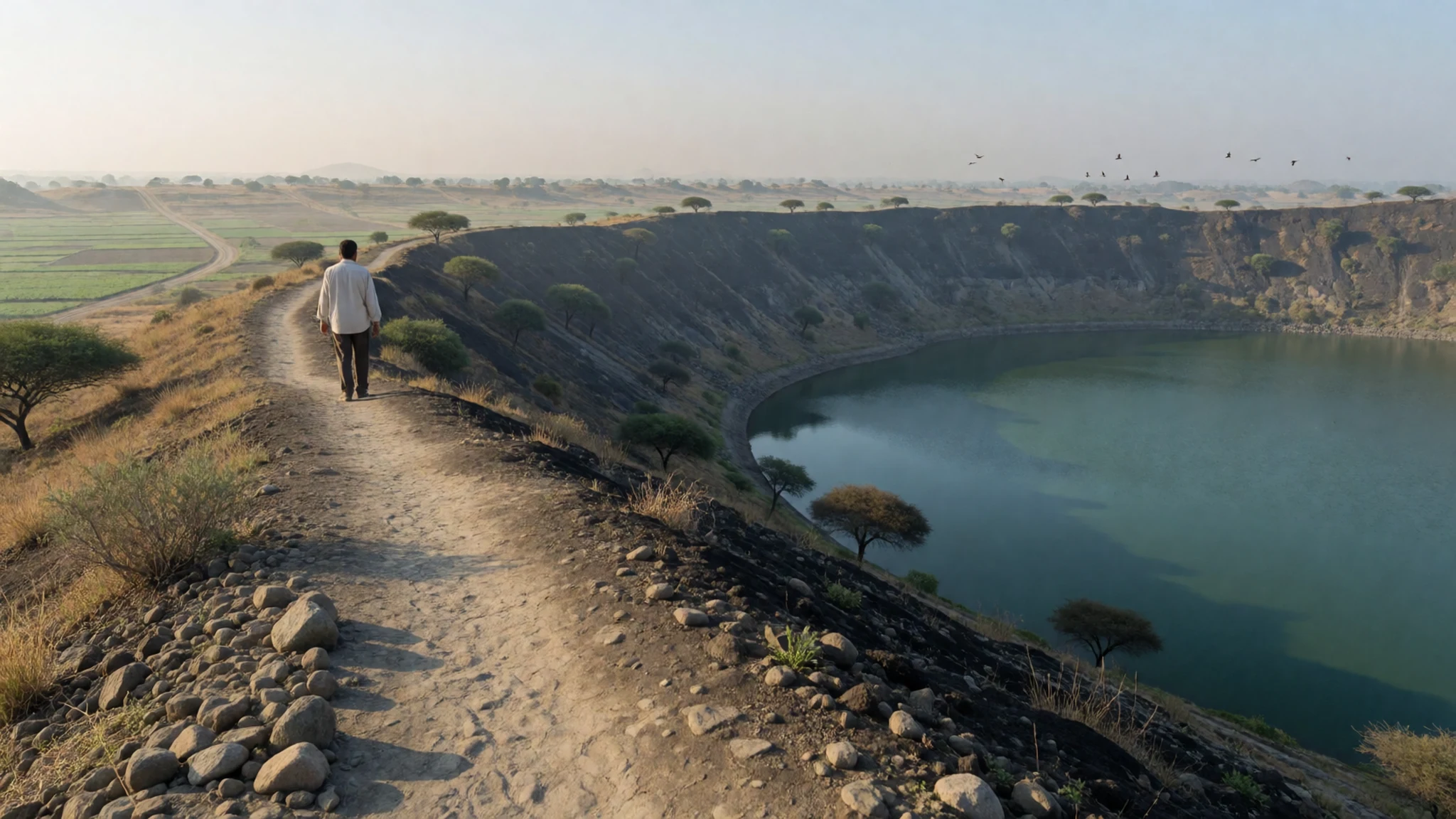
- Daitya Sudan Temple — Lonar town
This temple in Lonar town is linked to the story of Vishnu slaying Lonasura, the demon from whom the town's name is traditionally traced. It is a working place of worship, so visits fit around prayers. Local residents and priests are usually glad to explain the legend if asked politely.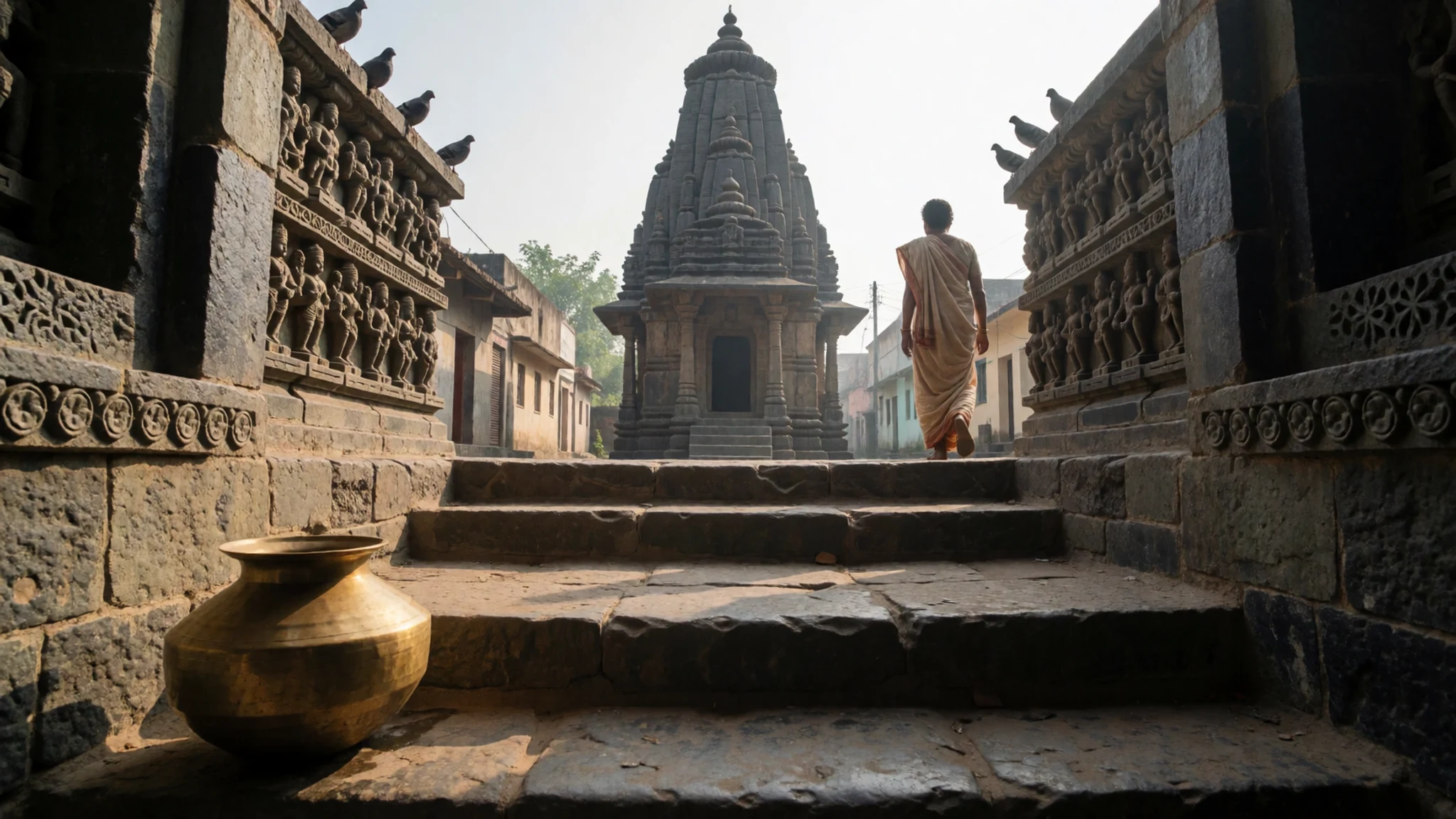
- Shankar Ganesha temple — Lake edge, Lonar crater
This shrine stands partly submerged in the lake, so how much of it shows depends on the water level, which shifts with season and rain. It is best seen from the shore at a respectful distance. A local guide can say what is currently reachable and which paths are safe.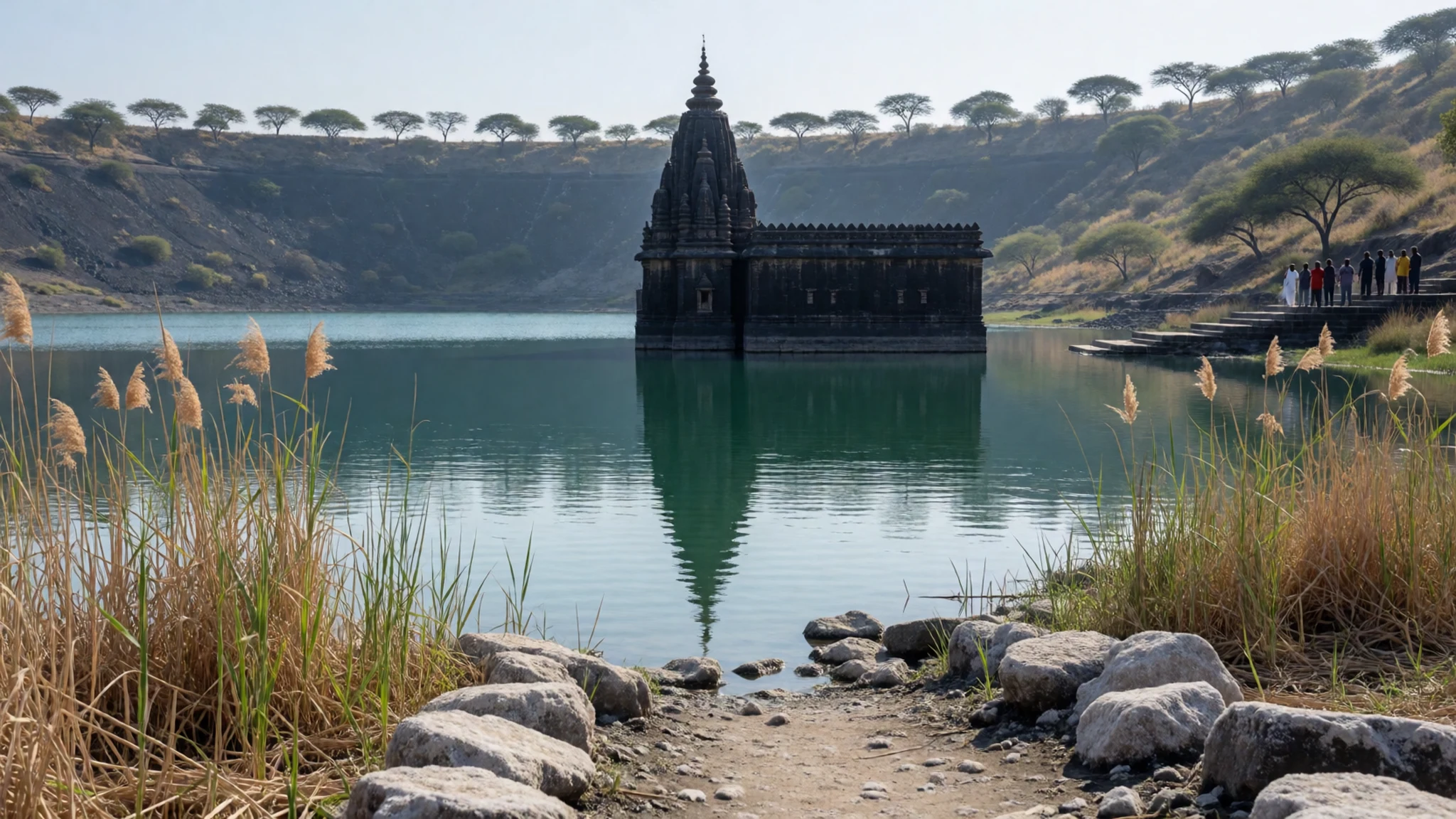
- Kamalja Devi and Sita Nahani temples — Around the crater
The Kamalja Devi temple and the Sita Nahani temple belong to the group of Chalukya and Hemadpanti-style shrines around the crater. They are quieter than the main lake views, which suits a slow loop. Ask locally which are open and how to reach them, as signage is limited.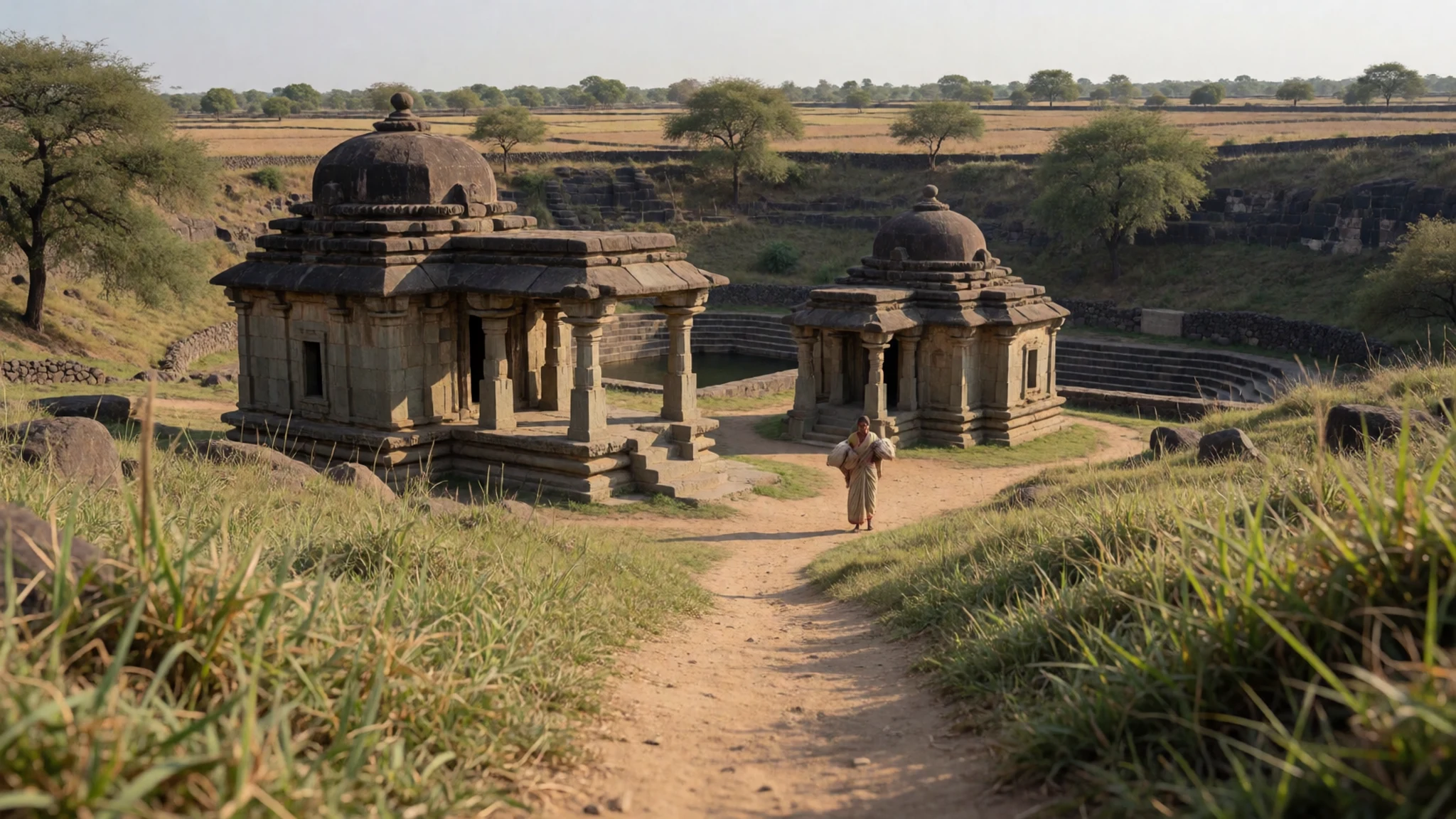
- Carved ceilings and statues — Temples around the crater
Several temples around Lonar carry carved ceilings and rows of statues, worn in places but still detailed in photographs. Interiors can be dark, so a torch or phone light helps. Check whether photography is welcome, and take shoes off wherever steps lead up to a shrine.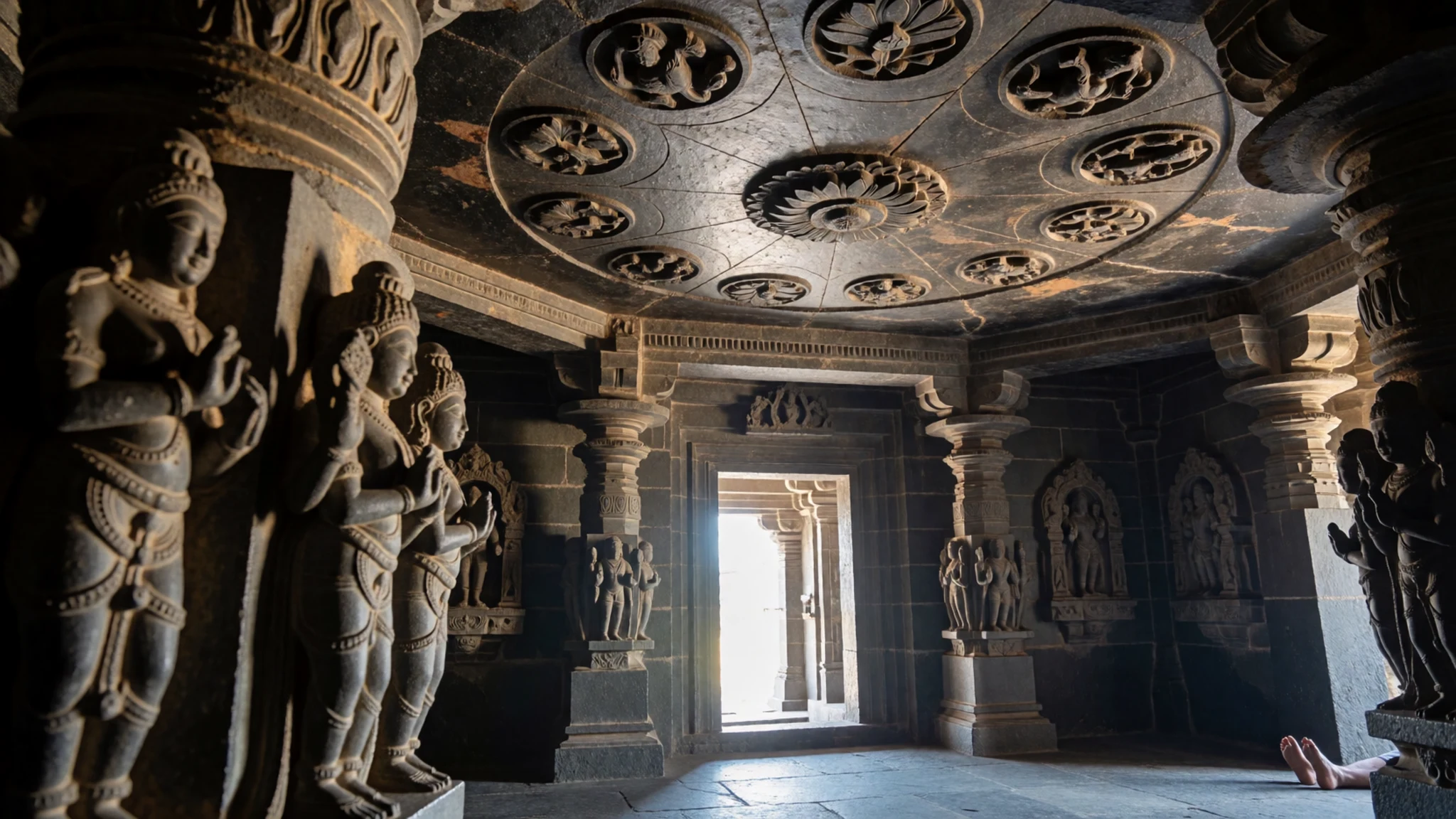
- Wild bee hives and the shore — Crater slopes and shore
Trees in and around the crater carry wild bee hives, some hanging from branches in neat half-circles. Watch them from a distance and stay calm and quiet nearby. The shore gives the closest look at the lake's mineral-rich water, which is saline and alkaline and not for swimming or drinking.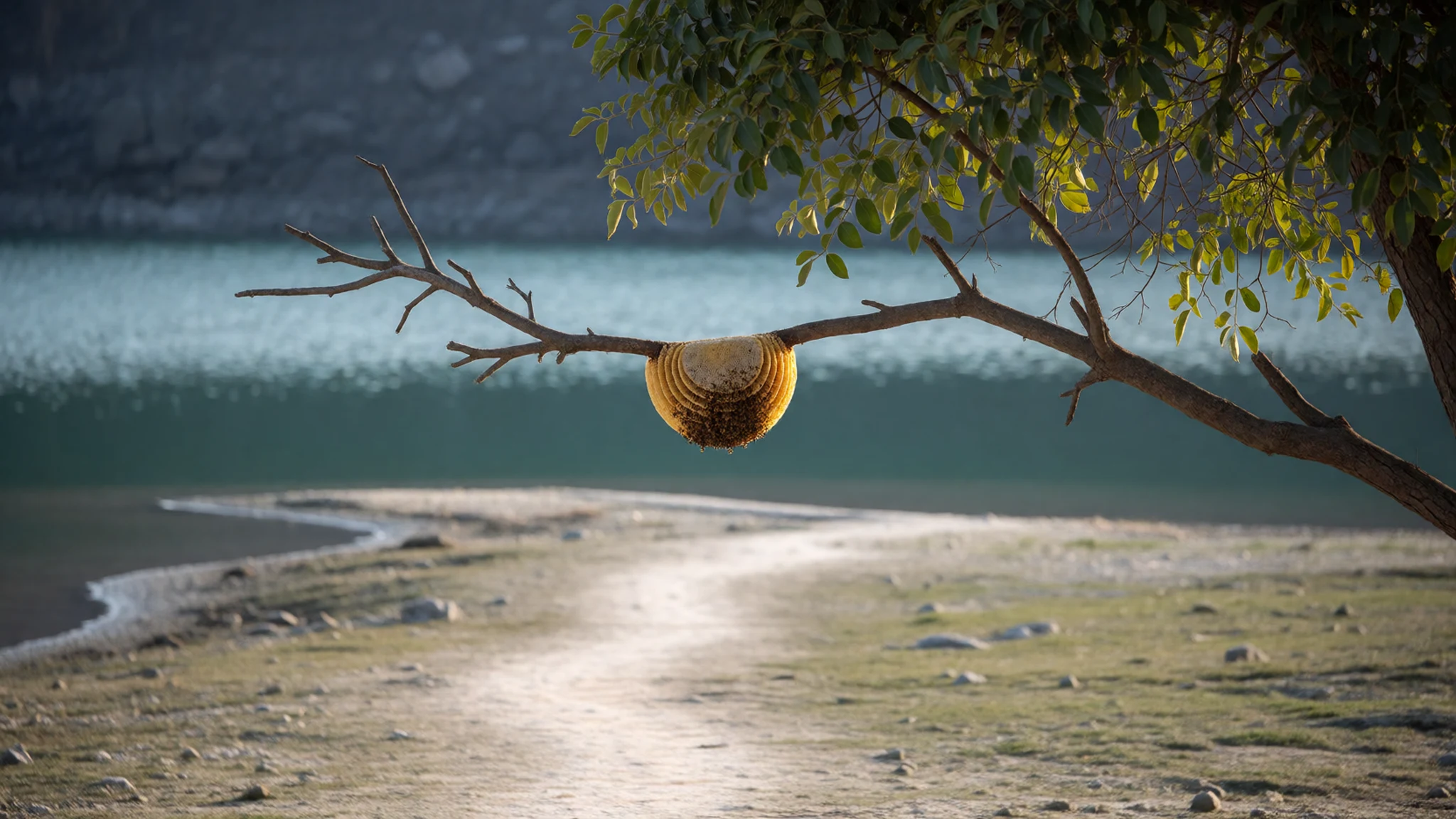
Culture
Lonar Lake is both a geological monument and a living sacred landscape, and the two sit comfortably together. The Hindu temples around the crater are still places of worship, and local tradition traces the town's name to the legend of Vishnu and the demon Lonasura. Daily rites and festivals follow the Hindu calendar, so it is worth asking residents which days are busy. Lonar is in Vidarbha, a farming region of cotton, oranges and soybeans, where life follows the monsoon and the harvest more closely than it follows tourism. Most people speak Marathi, often in the Varhadi dialect, with Hindi widely understood, and a few words in either are appreciated. The region has a name for being calm, and strangers are generally met with curiosity and courtesy. Tourism here is small in scale, and guides are mostly local people who know both the temples and the stories, so hiring one supports the town directly. Researchers and curious travellers come for the science, while pilgrims and families come for the shrines, so the crater can feel empty in one hour and busy the next. Respect for both uses keeps it pleasant for everyone. At the temples around the crater, take off your shoes before any step up to a shrine, dress modestly, and ask before photographing worshippers or priests.
What to wear
Lonar sits in Maharashtra's Vidarbha, a cotton-growing region, and everyday dress follows Marathi tradition. Women's traditional wear centres on the sari, including the long nauvari drape and Paithani silk with woven borders, kept for weddings and festivals, while plain cotton saris suit daily life. Men traditionally wear the dhoti with a kurta, and a cap or turban at ceremonies. Today most people in Lonar and nearby towns wear practical modern clothes: salwar kameez and saris for women, shirts and trousers for men, and jeans and T-shirts among younger people. Farmers favour light cotton and a cloth against the sun. A visitor should dress for heat and sun first: loose cotton or linen, long sleeves or a scarf for shade, a brimmed hat and sunglasses. Because the temples are active, shoulders and knees should be covered. Footwear matters too: closed shoes or sturdy sandals with grip suit the loose, uneven ground on the crater slopes, and slip-on shoes are handy for temple steps. A light rain layer is useful in the monsoon months. A scarf also serves as a head or shoulder covering wherever a shrine asks for one.
What to eat
- Pithla-bhakri — Village-style thali eateries in Lonar town and on the approach roads
A thick gram-flour curry served with flat millet or jowar bhakri, a staple Maharashtrian farm meal. It is simple, filling and mildly spiced, and it suits a long day outdoors around the crater.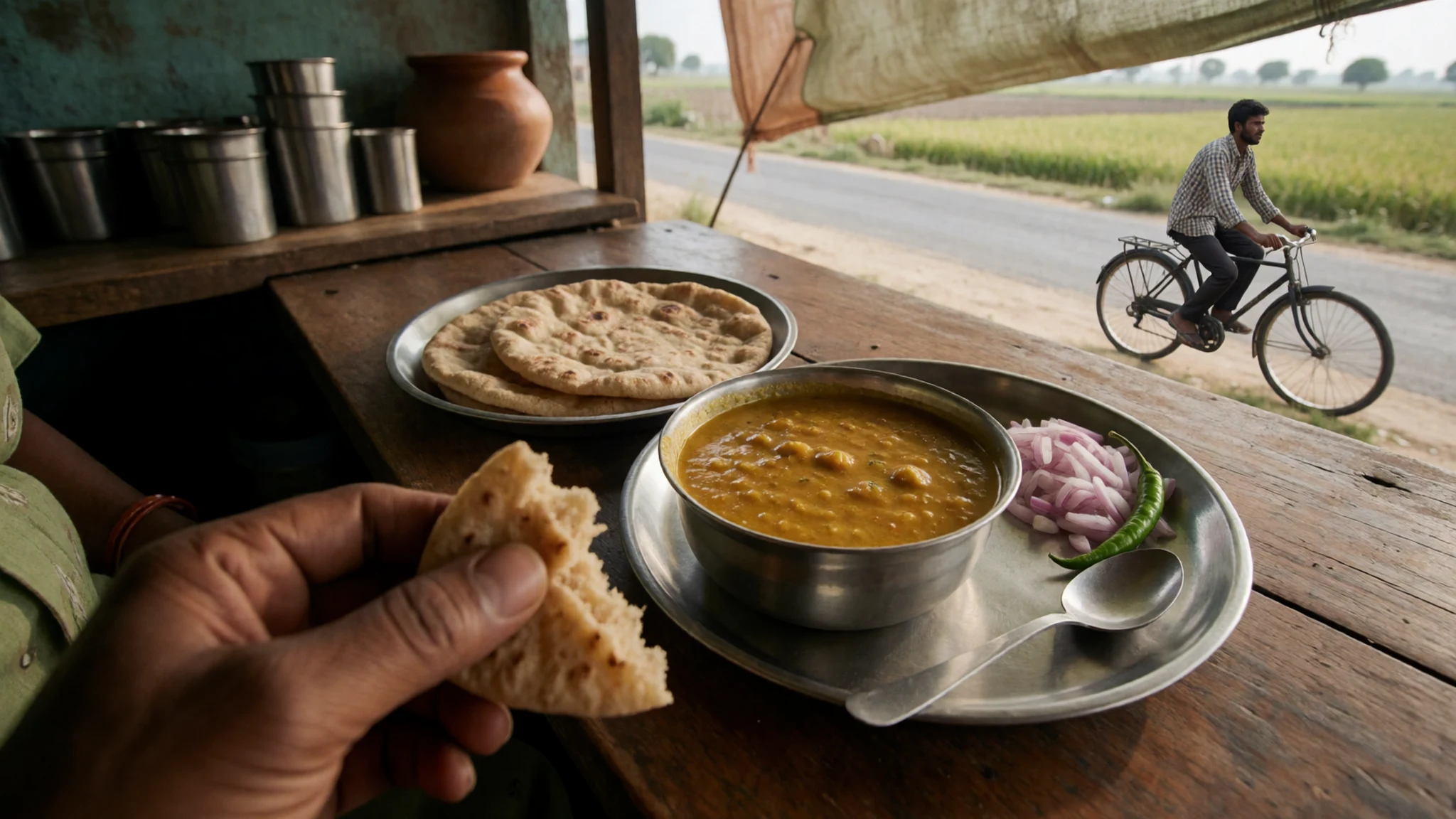
- Patodi rassa — Local eateries and roadside dhabas in the region
Steamed gram-flour cakes simmered in a thin, spicy gravy, a favourite across Vidarbha. It is eaten with bread or rice and can be hot, so ask for it milder on a first try.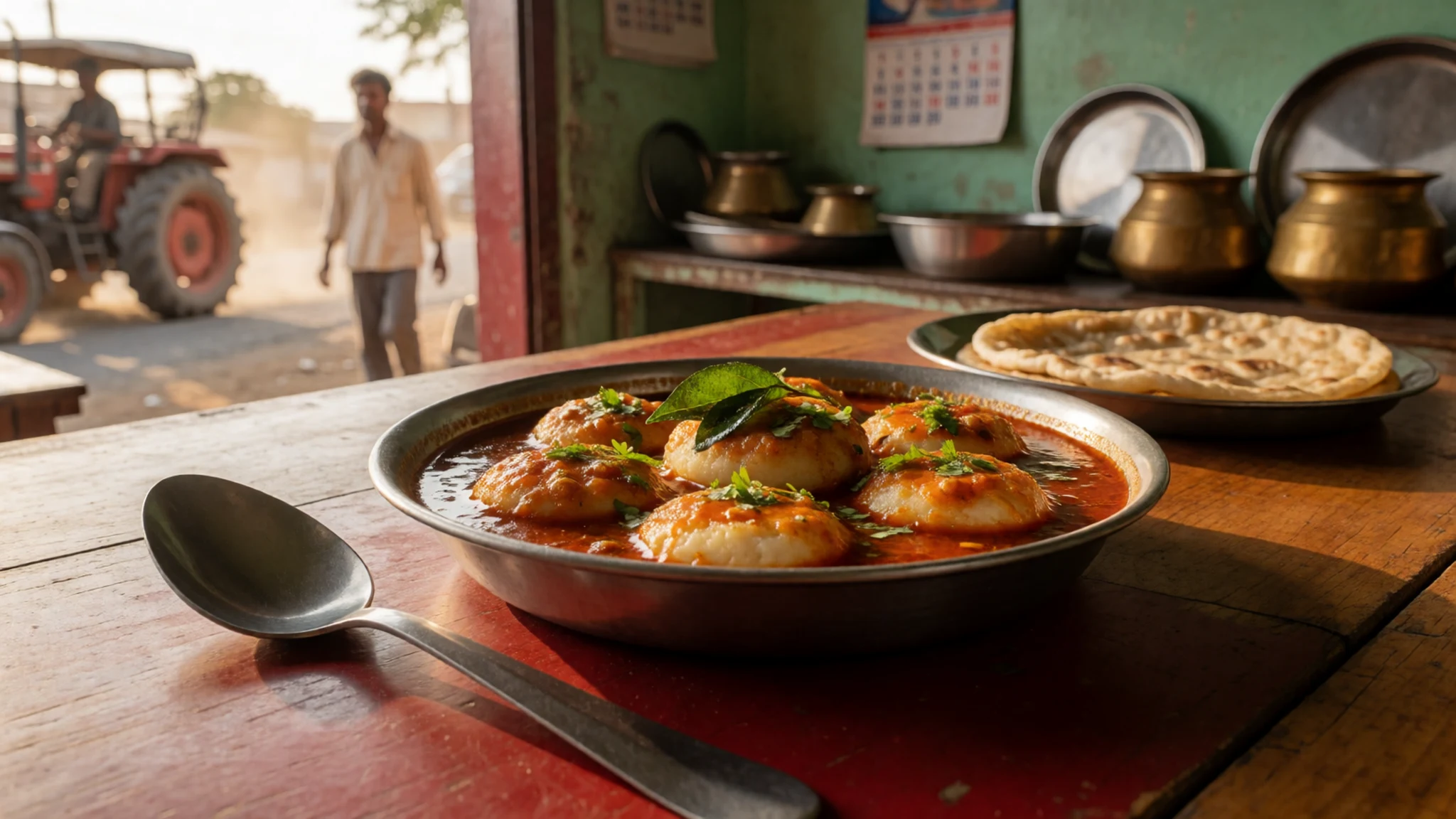
- Saoji curry — Saoji-style eateries, easier to find in Nagpur than in Lonar
A fiery Vidarbha curry from the Saoji tradition around Nagpur, usually mutton or chicken in a dark spice paste. It is very hot, and vegetarians should ask what a place offers instead. - Fresh oranges and juice — Fruit stalls along the roads into Lonar
Vidarbha grows oranges, so fresh fruit or pressed juice is the sensible way to cool down after walking the rim. Choose stalls that peel or press in front of you and use clean cups. - Poha with sweet tea — Tea stalls and snack counters near the town bus stand
Flattened rice cooked with onion, peanuts and turmeric is a standard morning snack, usually taken with a glass of sweet tea. It makes a light, cheap start before the walk down to the lake.
Plan it
Best time. October to February, when days are cooler for walking the rim. Summers in Vidarbha can rise above 45°C, so April and May are punishing, and the monsoon months bring rain and slippery slopes.
How long. 1–2
Getting there. Dr. Babasaheb Ambedkar International Airport (NAG) in Nagpur is the regional international airport, but Lonar is a long road journey from it, so also check nearer airports and rail stations for your route. The last leg is by road, by taxi or state bus; confirm current services locally.
Budget. low
Tips
- Start early, before the heat builds, and carry plenty of water and a hat
- Hire a local guide to find the temples and learn the legends
- Carry cash for small eateries and guides, as card use can be patchy
- Check temple opening times locally, as no official hours were available
- Keep valuables secure and use registered taxis or app-based transport in bigger cities
Etiquette
- Remove shoes before steps up to a shrine and dress modestly
- Ask before photographing worshippers or priests
- Do not swim in or drink from the lake
Nearby
Sources
- Wikidata Q2572189 (CC0)
- Wikipedia: Lonar Lake (rev 1385152403) (CC BY-SA 4.0)
- Wikivoyage: Amravati (division) (rev 5362115) (CC BY-SA 4.0)
- Lonar Crater — Amitabhkhare (Public domain)
- Panorama image of Lonar Crater — Aditya Laghate (CC BY 3.0)
- Lonar Crater Lake — NASA (CC0 1.0)
- Alms House, Lonar in the 1860s — Robert Gill (Public domain)
- Half circle wild bee hive at Lonar Crater — Glasreifen (CC BY-SA 4.0)
- India, Lonar crater, Meteorite Impact, Aerial view — NASA (Public domain)
- Inscriptions at Lonar Crater 10 — Dhruva Punde (CC BY-SA 4.0)
- Inscriptions at Lonar Crater 11 — Dhruva Punde (CC BY-SA 4.0)


