Lo Manthang
Lo Manthang, Nepal
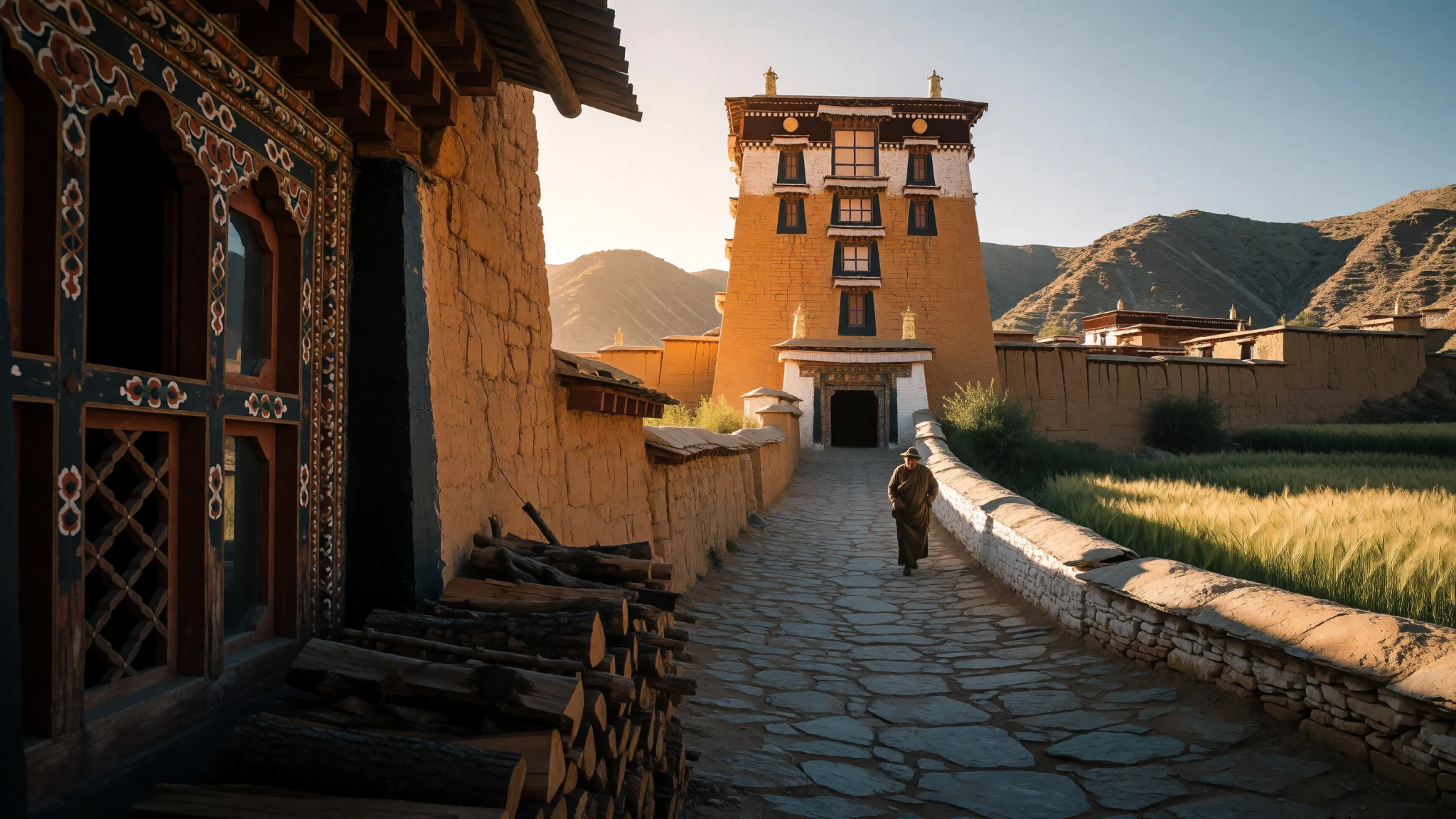
Lo Manthang is a walled Himalayan town where Tibetan Buddhist life still shapes the lanes, the fields and the festival year.
The place
Lo Manthang stands in Upper Mustang, in the high north of Nepal, near the Tibetan plateau. The settlement is small enough to cross on foot: a ring of earthen wall, flat roofs, and lanes that stay in shadow for much of the day. Houses are built of mud plaster over stone and timber, with window frames picked out in wood, and the streets bend between courtyard walls rather than running to a grid. Below the gates, irrigation channels feed plots of barley and buckwheat, the crops that still colour the valley floor in the growing season. Above them the hills are bare, streaked with scree, and marked by the walls of old dzongs.
Lo Manthang is the historic centre of the Kingdom of Lo, and the town still reads as a royal and monastic place rather than a market city. Palace rooms, temples and ordinary houses share the same mud, stone and timber, so the sacred and the domestic sit side by side. Mani walls and prayer flags mark the paths. Wind is constant, dust lifts off the tracks in the drier months, and June through September bring heavy rain, wettest in July.
Daily life in Lo Manthang is paced by water, livestock and the temple calendar. People store fodder, move animals and walk the circuit of the shrines. The wall is a working edge: homes, shops and schoolrooms stand inside it, and a rough road runs south through the rest of Mustang. A newcomer notices the quiet and the thin air first. From a rise just outside the walls the whole town sits in a single glance, a pale cluster between green fields and brown hills.
Its story
Lo Manthang began as the walled seat of the Kingdom of Lo. Ame Pal founded the town in 1380 and set it at the centre of a small Tibetan Buddhist kingdom on the Nepal-Tibet margin. The wall marked the kingdom: ruler, monasteries and households inside, and trails of salt, wool and grain outside. Later kings kept Lo Manthang as their capital even as authority in the wider Himalaya shifted, and the town's identity stayed tied to that court rather than to the cities of the lowlands.
The culture that grew up here is Tibetan in language, rite and building. The people of Lo, often called Loba, speak a Tibetan dialect and follow monastic traditions shared with the plateau to the north. Monasteries accumulated murals, manuscripts and a calendar of festivals. Among them, Tiji brings masked dancers who retell the binding of a demon, and the town fills with people from the surrounding villages. Trade made the kingdom viable. Caravans linked the dry valley to Tibet and to the greener hills of Nepal, and the palace stood as the point where dues, hospitality and decisions met.
Lo Manthang's royal story did not vanish when the old order of kings in Nepal came to an end. The palace is still there, the wall still closes the lanes, and families still carry the memory of that kingdom in names, festivals and the rooms of the old court. A road has crept north, travellers now arrive, and Upper Mustang's restricted status means a visit is arranged. The story still readable in the streets is rammed earth, a palace front, temple doors and fields tilled for barley.
What to see
- The town wall — Walled town
The earthen wall around Lo Manthang is a thick mud rampart with timber-laced gates that still funnel people into the lanes. Walking the inside line, a visitor passes courtyards, shrines and stacked firewood, then looks back over flat pale roofs packed against the hills. Weather has worn the wall, yet it still shows how compact the capital of Lo remains, and how the town ends and the bare slope begins.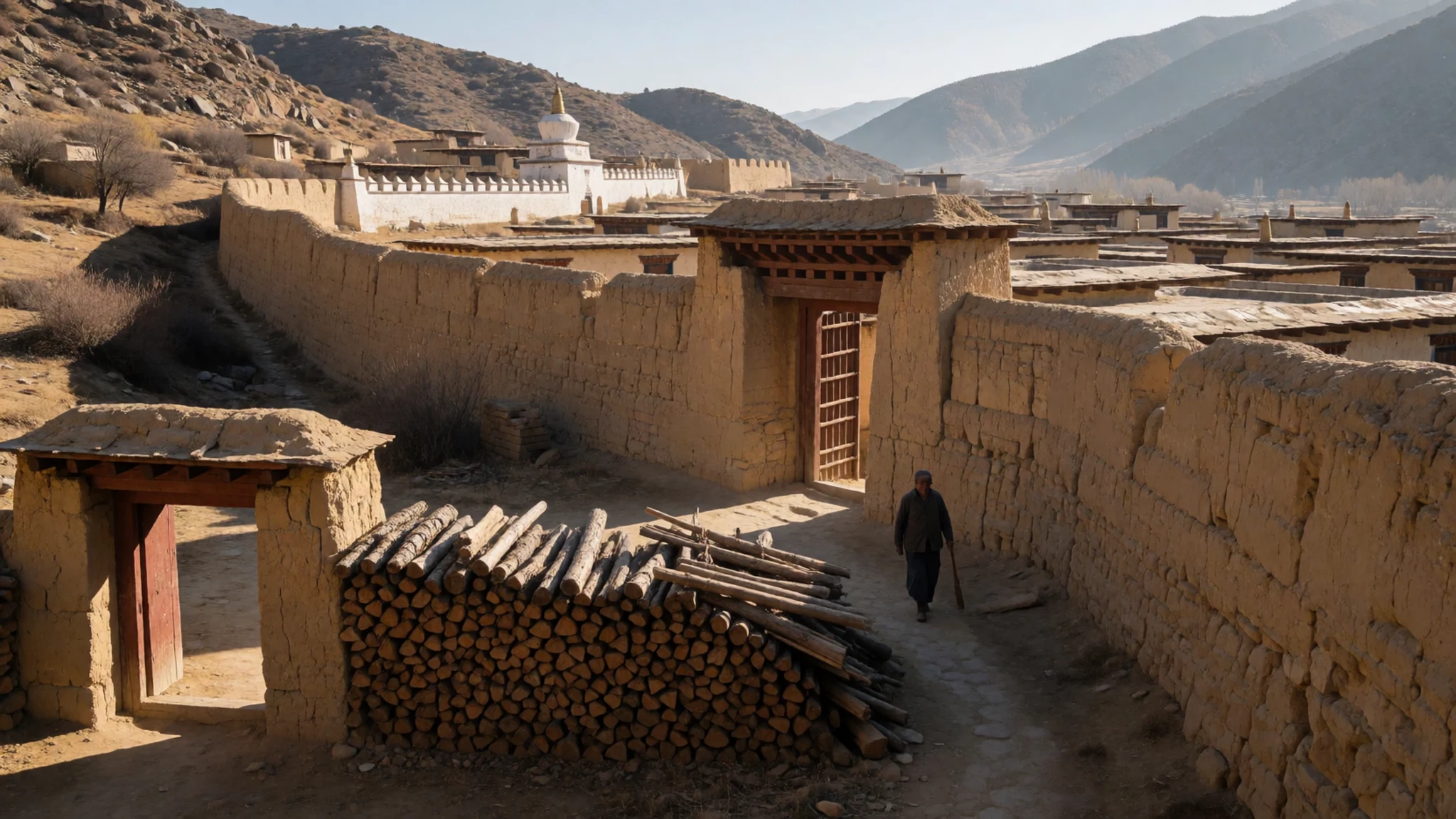
- Royal Palace — Inside the walls
The royal palace of Lo Manthang stands inside the walls as a tall earthen block, plainer than a lowland court and heavier than the houses around it. White and ochre walls, a flat roof and rows of windows give it a fortress quiet. It was the seat of the kings of Lo and anchors the lanes, which bend towards its front. A caretaker can say whether the interior is open.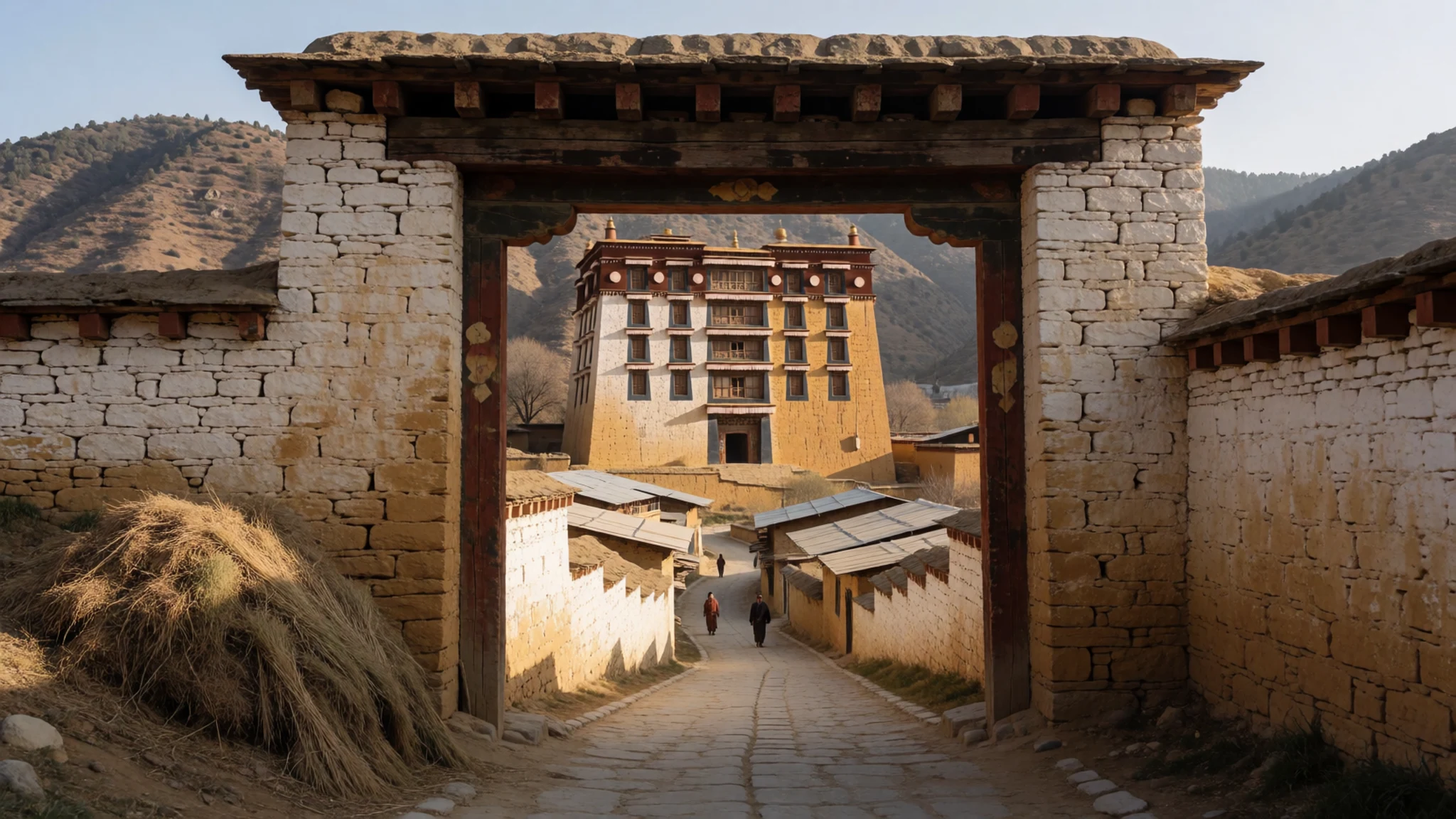
- Jampa Lhakhang — Inside the walls
Jampa Lhakhang stands inside the walls of Lo Manthang, a temple whose painted halls are among the town's main religious rooms. The murals and statues belong to the Tibetan Buddhist practice of Lo. A caretaker may be present, and the door is not on a timetable a stranger can predict. Visitors should speak quietly and leave the painted surface untouched; this is a working shrine for the town.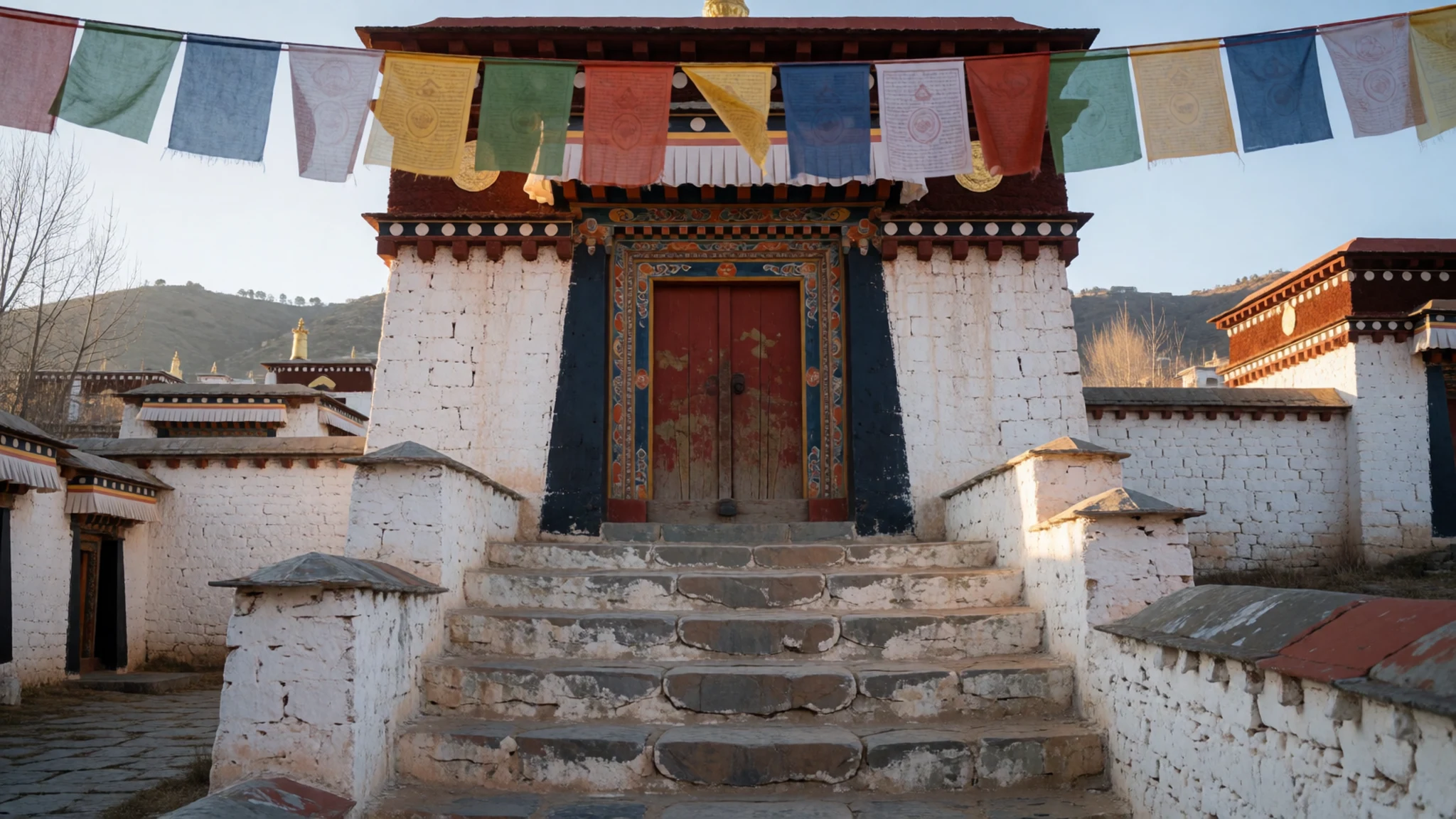
- Lower Dzong and Higher Dzong — Hills above the town
Above Lo Manthang, the bare hills carry the walls of the Lower Dzong and the Higher Dzong, overlooking the town and the fields. The walk up is short and tiring in thin air, on stony ground with no shade. From either height the wall, the palace and the fields read clearly. The ruins are fragile earth and stone, and scrambling on broken walls brings more of them down.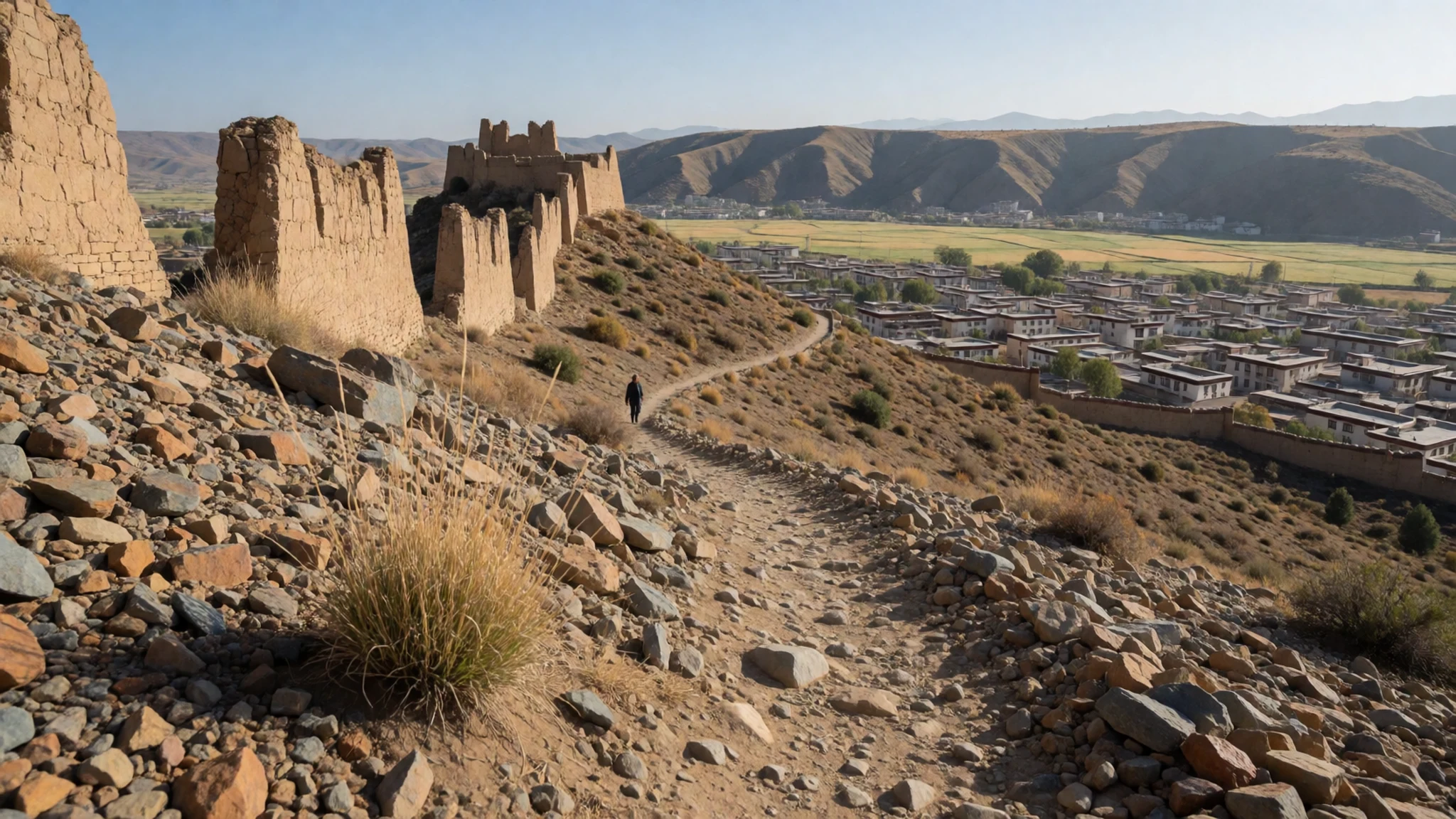
- Barley and buckwheat fields — Valley floor below the walls
The barley and buckwheat fields below Lo Manthang are a working landscape, fed by channels that villagers still open and close by hand. In the growing months the plots carry the valley's colour; later they turn gold, then stubble. Paths on the bunds make a good walk when the lanes feel busy. Visitors should keep to the bunds and stay out of sown plots; the fields are the harvest.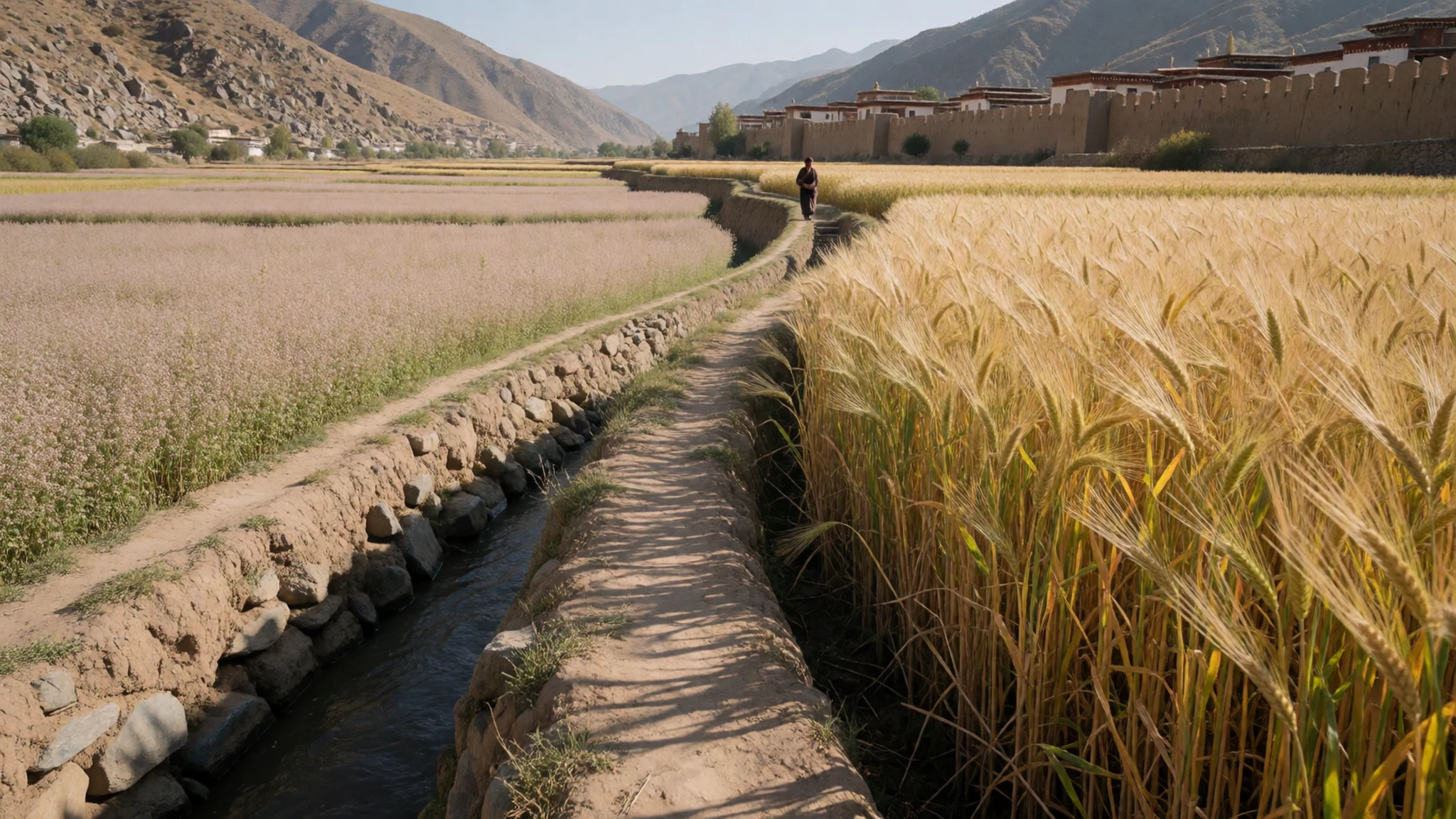
Culture
Culture in Lo Manthang is Tibetan Buddhist and local at once. The Loba community keeps a dialect of Tibetan, a monastic calendar and a habit of marking sacred ground with mani walls, chortens and prayer flags. Monasteries share the town with homes and the old royal centre, and festival days pull villagers in from the valley. Tiji, with its masked dances, retells the taming of a destructive spirit and turns the lanes into a public rite. Butter lamps, circumambulation and the quiet of a shrine at dusk are ordinary, not staged.
Respect is practical. People here are used to visitors and also tired of being treated as scenery. A camera pointed at a face mid-prayer, a hand on a mural, or a shortcut across a mani wall reads as carelessness. The amchi tradition of Himalayan medicine still sits alongside the monastery, and conversation about illness or ritual is personal. Dress and noise matter inside temple courtyards, where a loud group can fill a room that was built for chanting, not for commentary.
In Lo Manthang, walk clockwise around mani walls and chortens, take your shoes off before you enter a temple, and ask before you photograph anyone at prayer.
What to wear
Dress in Lo Manthang starts with wool and the high-desert climate. The traditional robe, a chuba or bakhu, is a long woollen wrap, belted at the waist. Women may add a striped pangden apron, and festivals such as Tiji bring out brocade, felt boots and turquoise and coral. These clothes belong to the Loba wardrobe and to the Tibetan textile world: woven bands, sheep wool, and the heavier yak wool used against winter wind.
On an ordinary day in Lo Manthang the picture is mixed. Many people wear the robe, especially older residents and anyone going to a monastery or a rite. Others wear the same practical layers seen on the road: a down jacket, trekking trousers, a sun cap, sneakers or plastic sandals, and a scarf across the mouth when dust blows. Market clothes from lower Nepal and from across the border sit beside homespun. The traditional garment has not disappeared; it is simply no longer the only thing in the lane.
A visitor should dress for cold mornings, hard sun and dust, and for shrine rules. Shoulders and knees covered will be right inside monasteries; a hat comes off with the shoes. Sturdy footwear matters on uneven earth and loose scree, and a scarf is more useful than an extra smart layer. Bright ceremonial dress is for residents at festivals; guests do better in muted, modest, warm clothes they can walk in.
What to eat
- Tsampa — Households and teahouses inside the walls
Tsampa is roasted barley flour, the staple grain of Lo Manthang, stirred into tea or eaten as a dough with butter. Households and teahouses inside the walls prepare it in the morning, and it travels well in a pocket for a walk to the fields.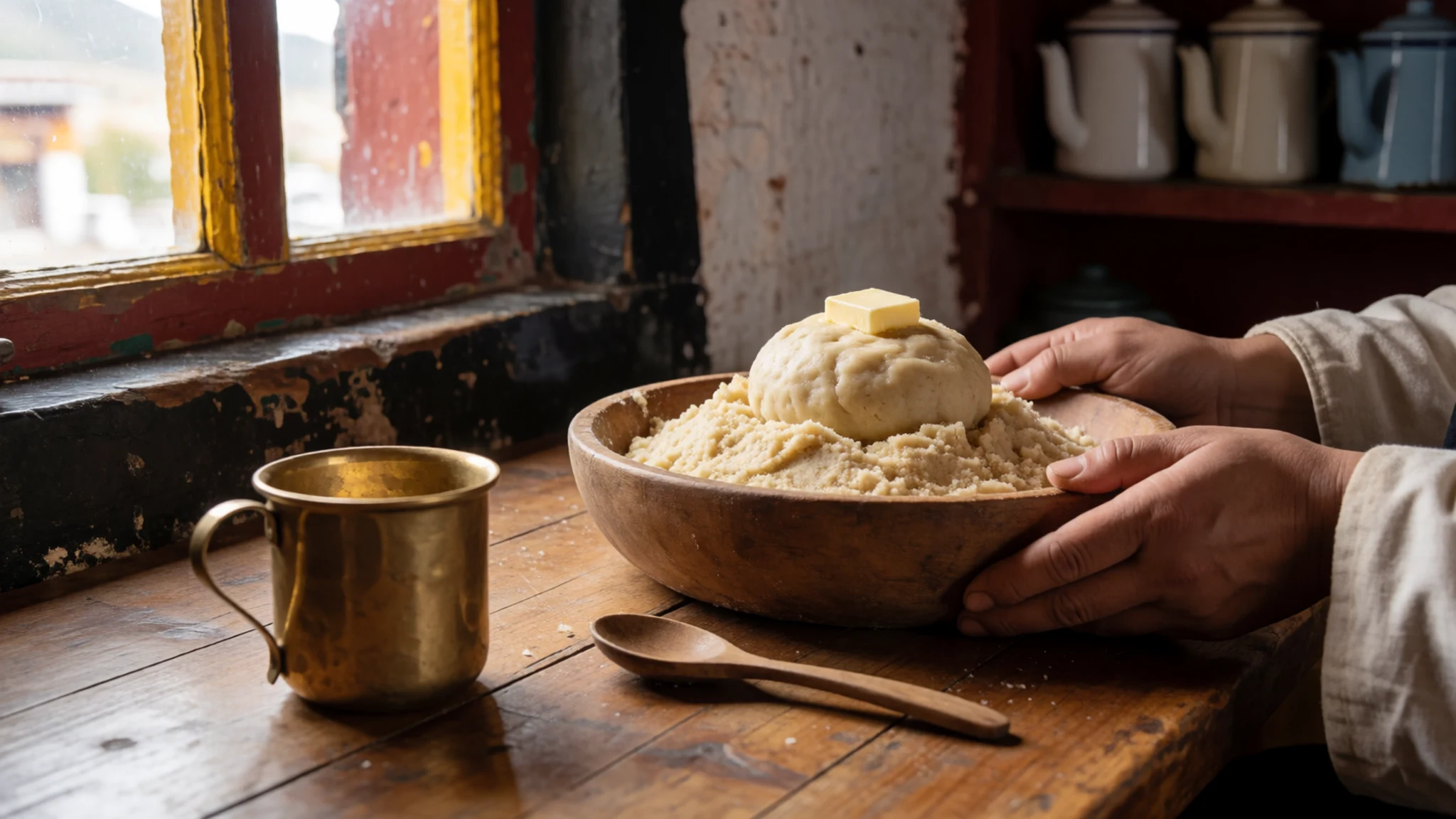
- Butter tea — Lane-side teahouses and family kitchens
Butter tea, po cha in the Tibetan speech of Lo Manthang, is salty tea churned with butter and salt. Lane-side teahouses and family kitchens serve it through the day. A cup offered in a home is a welcome, so take at least a sip.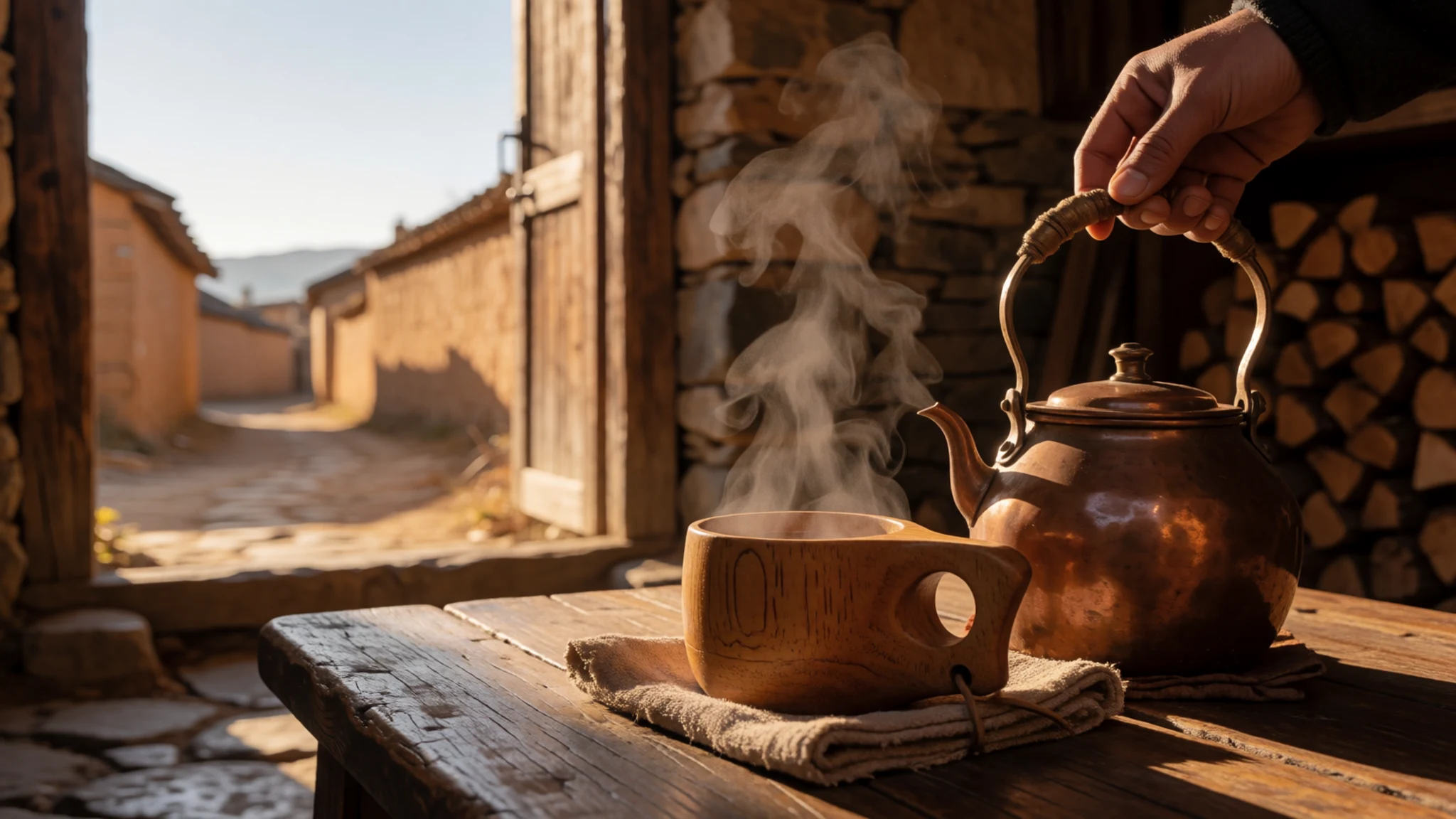
- Thukpa — Lodge kitchens in the walled town
Thukpa is a noodle soup that lodge kitchens in Lo Manthang turn out for cold evenings: wheat noodles, a light broth, and whatever vegetable or meat is on hand. It is the warming bowl after a windy walk on the hills. - Dal bhat — Lodge kitchens and small eateries inside the walls
Dal bhat, lentil stew with rice, is the Nepali plate that has travelled up the road into Lo Manthang. Lodge kitchens and small eateries inside the walls serve it as the reliable midday meal, usually with pickle and a seasonal vegetable. - Buckwheat bread — Village kitchens and teahouses
Buckwheat breads and pancakes use the other grain growing under Lo Manthang's walls. Village kitchens and teahouses cook them on a griddle, sometimes with a little honey or local butter. The taste is nutty and denser than wheat bread, and it pairs with butter tea on a cold morning.
Plan it
Best time. Late spring and early autumn suit Lo Manthang: the southern approaches are more often open, the days are bright, and the cold is bearable. Deep winter is severe, with many activities slowed; July is hottest and wettest, June to September are wet in the town, and May and September are the most comfortable.
How long. 2-3
Getting there. Reach Lo Manthang via Pokhara, then on to Jomsom by air when the mountain strip is operating, and north by road through Kagbeni into Upper Mustang. The road alternative from Pokhara is long and weather-dependent. Upper Mustang is a restricted area, so arrange the permit with a licensed agency and confirm the current rule before travelling.
Budget. high
Tips
- Ascend in stages; the air in Lo Manthang is thin and a rushed climb from Pokhara often causes illness.
- Carry enough cash for lodges, teahouses and small offerings; card payment is not reliable here.
- Treat the Jomsom flight as weather-dependent and keep spare time in Pokhara.
- Visit temples in the morning, when courtyards are quieter and the wind is often lighter.
- Bring water, sun cream, a hat and lip balm; the sun is strong and the air is dry.
Etiquette
- Walk clockwise around mani walls, chortens and temple complexes.
- Remove shoes and headwear inside shrines, and do not touch murals or statues.
- Ask before photographing people, monks or the interior of a shrine.
Nearby
Sources
- Wikidata (CC0)
- Wikipedia — Lo Manthang (CC BY-SA 4.0)
- Wikivoyage — Lo Manthang (CC BY-SA 4.0)