Lin Family Mansion
Lin Family Mansion, Taiwan
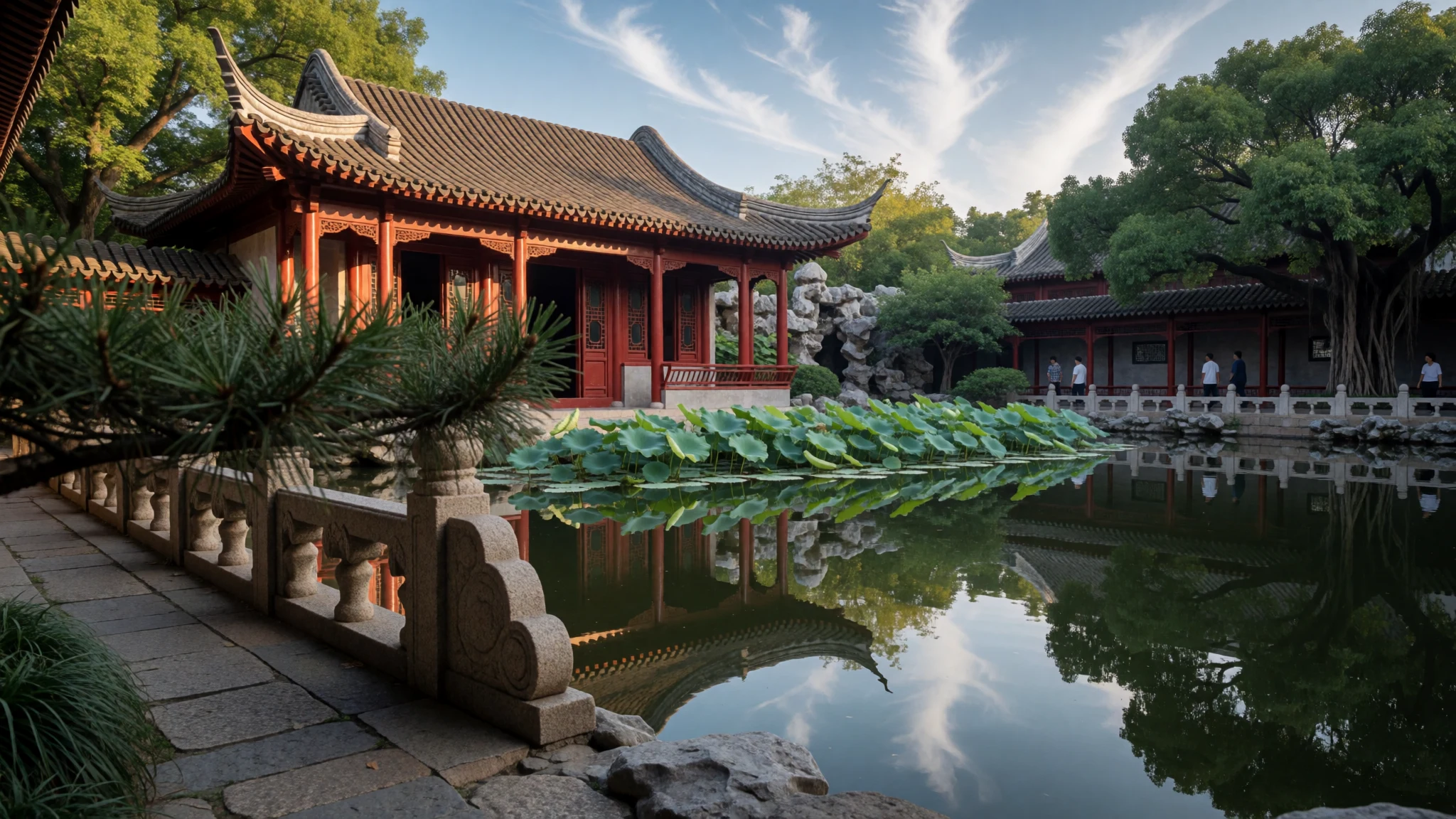
Lin Family Mansion in Banqiao is a Qing-era landowning family's garden of pavilions, studies and courtyards, a short train ride from central Taipei.
The place
Lin Family Mansion and Garden sits in Banqiao District, a dense urban neighbourhood of New Taipei City just west of central Taipei. Once the home of the Lin Ben Yuan family, it is noted by Wikidata as Taiwan's most intact remaining instance of traditional Chinese garden architecture. It is usually listed with three other historic gardens, in Tainan, Hsinchu and Wufeng, as the Four Great Gardens of Taiwan. The whole estate covers roughly 20,000 square metres, and it helps to think of it as two linked parts. The garden is what most people come for: halls, covered walkways, ponds, stone paths and small pavilions arranged so that the view changes every few steps. To its west stands the Three-Courtyard Mansion, the family's actual residence. That building belongs to a Lin family association, and its interior can only be entered with a guide. Around the compound, Banqiao is a modern district with a high-speed rail station, an MRT line, working temples, parks and night markets, so the walled garden feels like a quiet pocket inside ordinary city life. A visit suits a slow pace better than a checklist, since the pleasure lies in the framing of views, the roof lines and the water. Opening days, ticketing and guided-tour arrangements change, and the official site at https://www.linfamily.ntpc.gov.tw/ is the place to confirm them.
Its story
Lin Family Mansion begins with rice. A Lin ancestor, Lin Yingyin, reached Taiwan in 1778 and settled near Xinzhuang. His son Lin Pinghou made his living selling rice, turned the trade into a fortune and bought large areas of farmland, which became the foundation of the Lin Ben Yuan family's wealth. In the 1840s two of Pinghou's sons, Lin Guohua and Lin Guofang, wanted a convenient place in Banqiao to store the grain that tenants paid as rent. The building they raised, called Biyiguan, is the origin of the site, which the facts date to 1847. In 1851 the wider clan moved to Banqiao and built the Three-Courtyard Mansion as its home. The times were tense, because settlers from Zhangzhou and Quanzhou were fighting each other. The Lins, rich and influential, became leading figures among the Zhangzhou community, and the house served as their headquarters. It was therefore built with defensive features and guarded by several hundred militiamen, an arrangement that lasted until Japanese rule began in 1895. The twentieth century was harder on the place. After 1949 the head of the family lent the garden to the government to shelter soldiers who had come from the mainland. In 1977 the family gave part of it to Taipei County, now New Taipei. By then squatters had moved in and the grounds were badly neglected, which is why the restoration work now shared among several government bodies matters so much.
What to see
- Yuebo Water Pavilion — Lin Family Mansion and Garden, Banqiao
The Yuebo Water Pavilion (月波水榭) is one of the garden's waterside buildings. Pavilions of this kind were made for sitting, tea and watching the light shift across the pond, not for any practical use. It is a good spot to slow down, though paths and viewpoints are likely to be busier at weekends than on weekday mornings.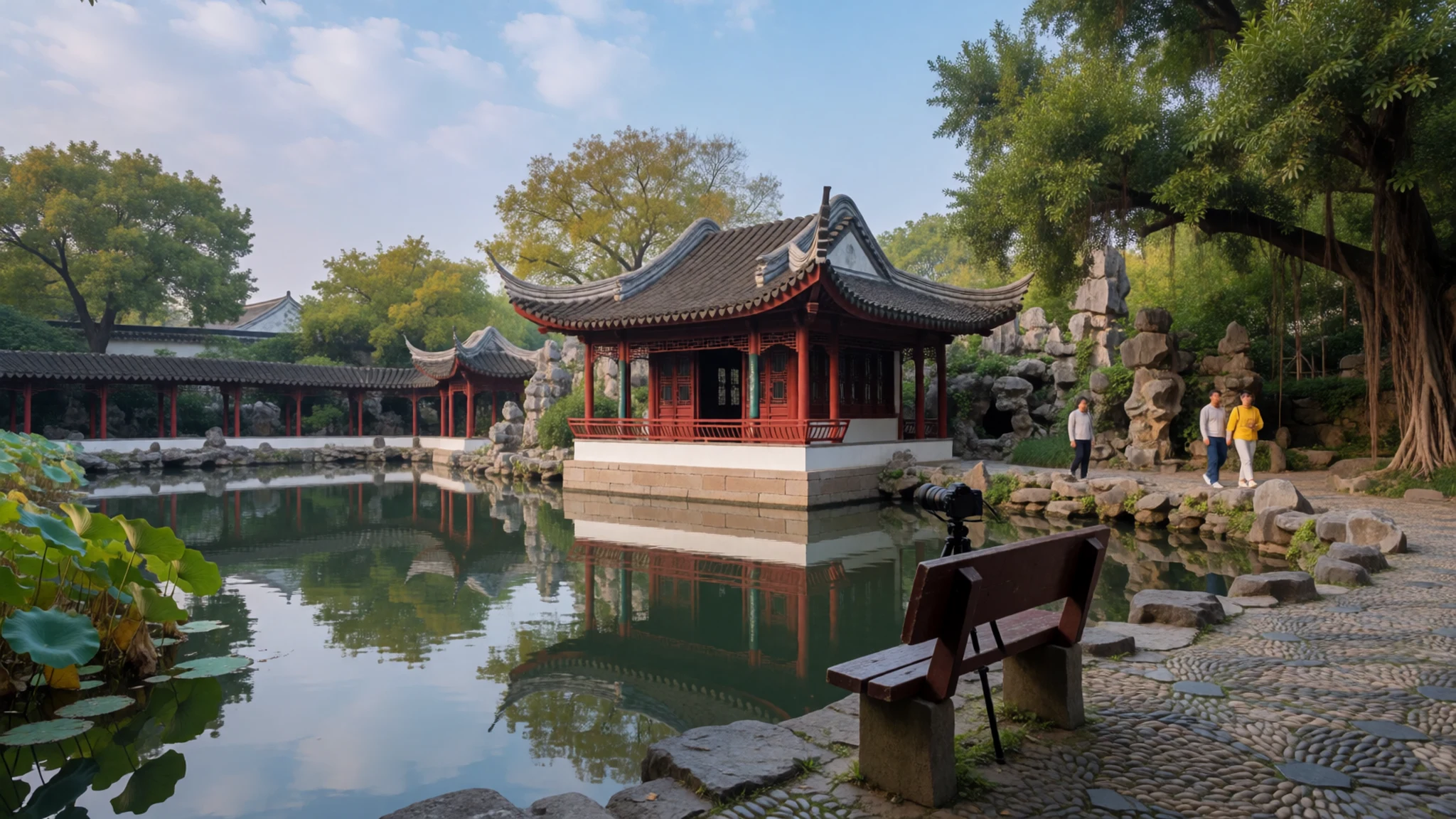
- Jigu Study — Lin Family Mansion and Garden, Banqiao
Jigu Shuwu (汲古書屋) is a study building within the garden. Studies and reading rooms show that a rich household of the period wanted places for quiet and learning as well as for display. Look at how the building is set into the planting and sightlines rather than standing alone as a monument.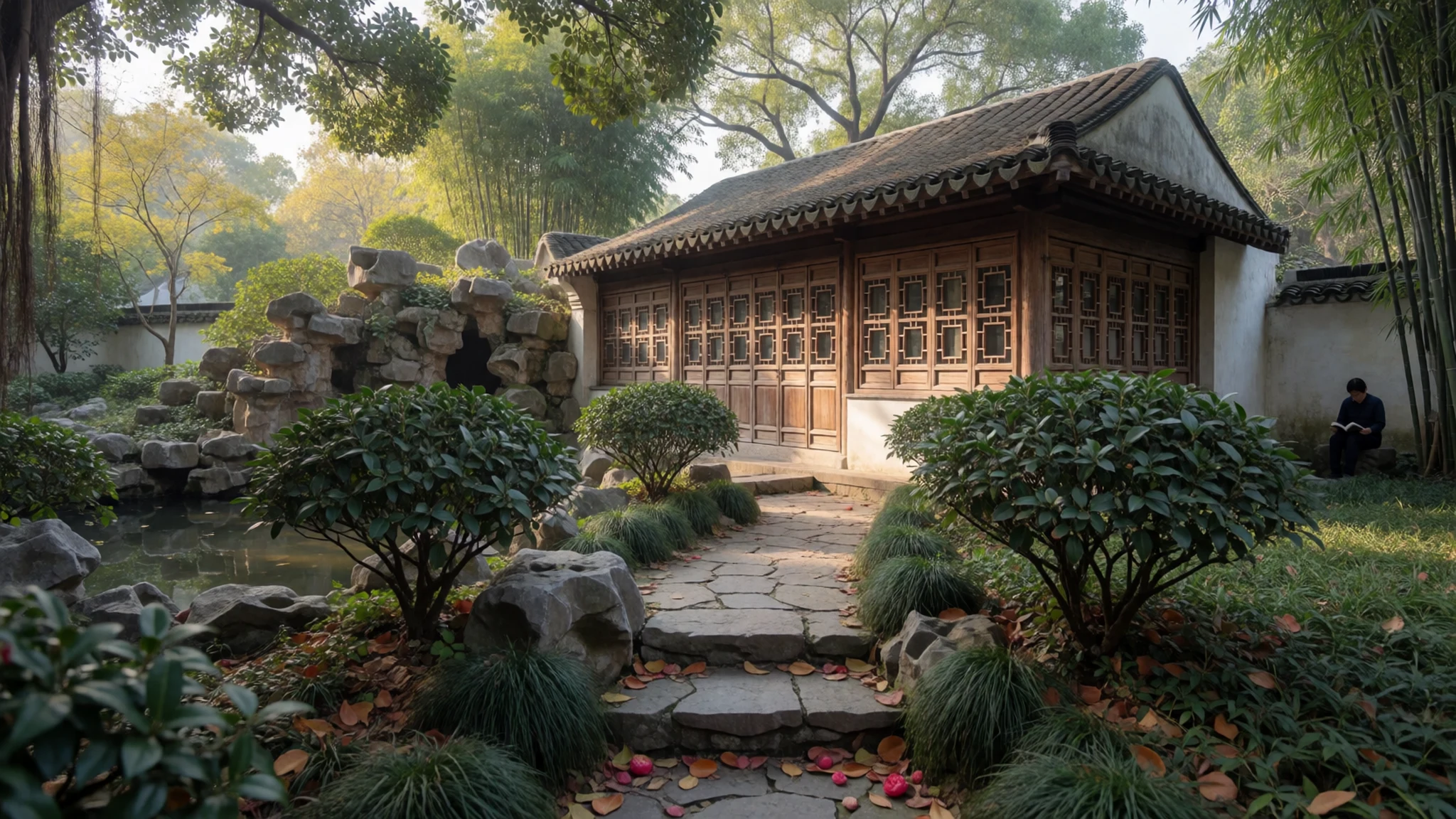
- Three-Courtyard Mansion — West side of the garden, Banqiao
The Three-Courtyard Mansion was built in 1851 as the family's home, and its defensive design reflects the feuds of the time. It belongs to a Lin family association, and entry is by guided tour only. Exhibits at the site include a reconstructed old map of Banqiao's walled town, useful for placing the mansion in its setting.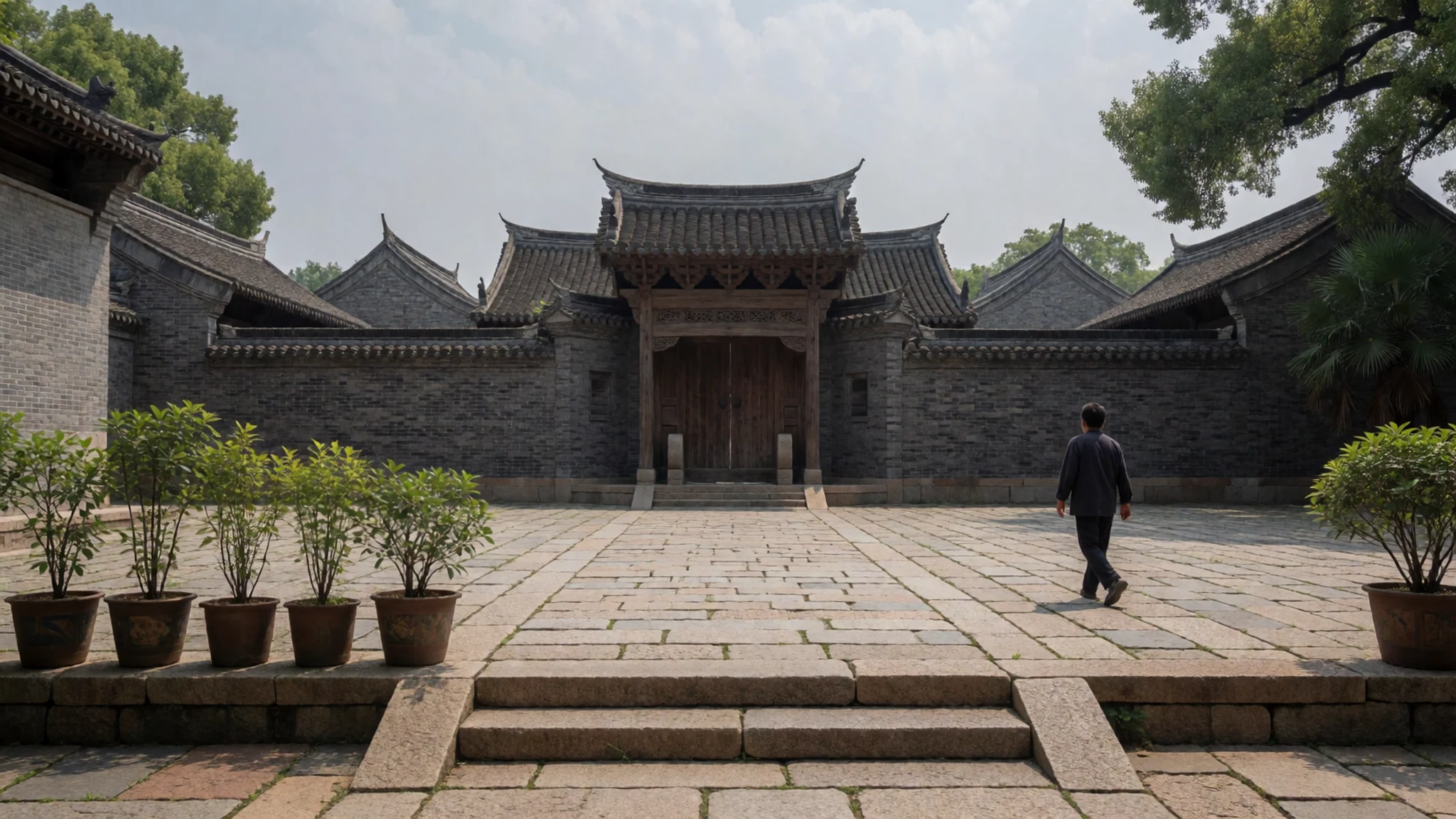
- Cihui Mazu Temple — Banqiao, a short walk from the garden
Cihui Mazu Temple is a working temple dedicated to Mazu, the protector of seafarers. Its worth lies in watching local worship: families bringing offerings, incense smoke drifting through the forecourt, and regulars stopping in on their way through the neighbourhood. Visit quietly, and treat it as a place of prayer rather than a sight.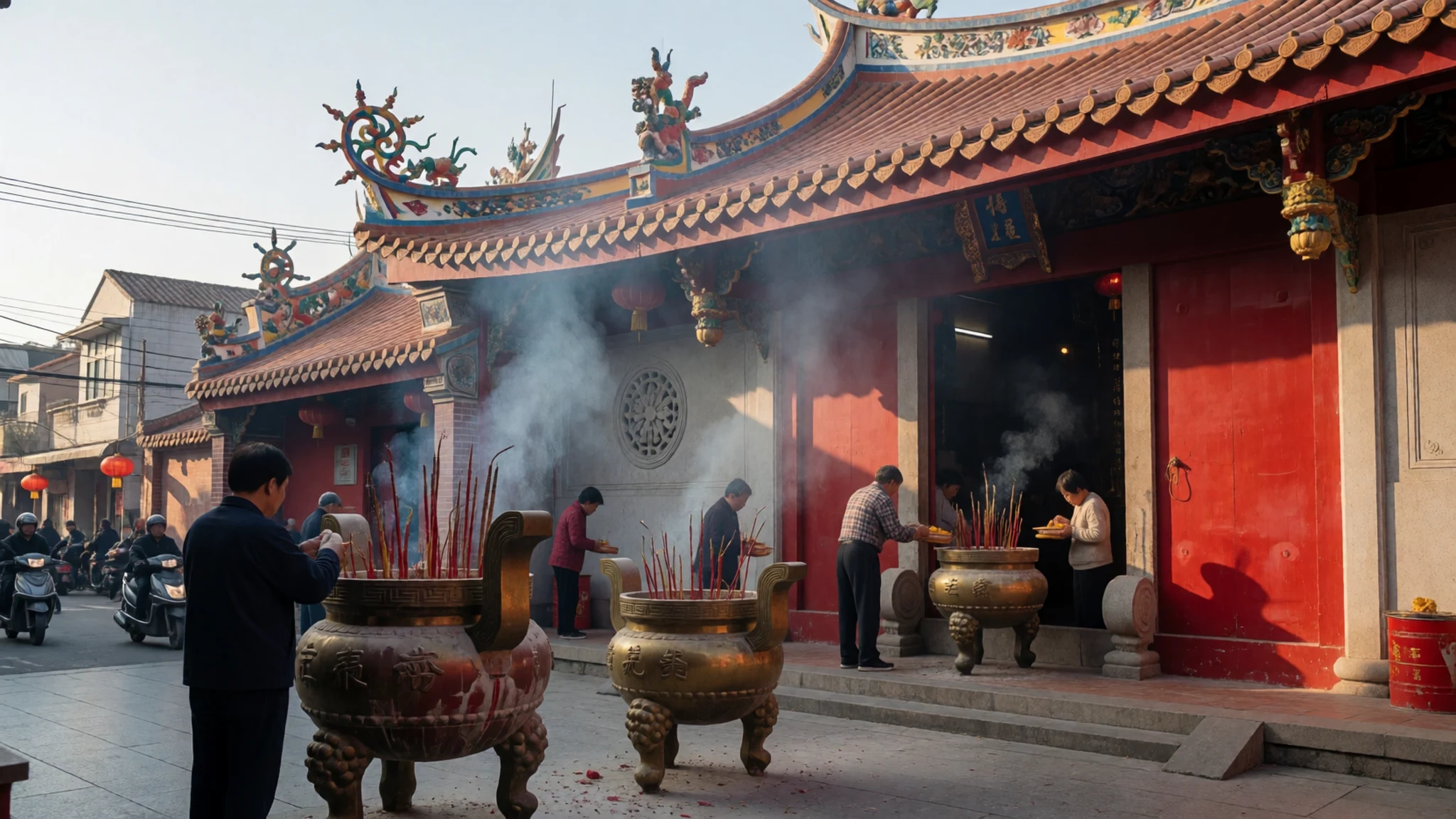
- Jieyun Temple — Banqiao, close to the garden
Jieyun Temple stands very close to the garden and is easy to combine with it. Like other temples in the area it is in daily use, with a steady trickle of local worshippers. A short stop here gives a sense of the living religious life that surrounds the preserved family compound.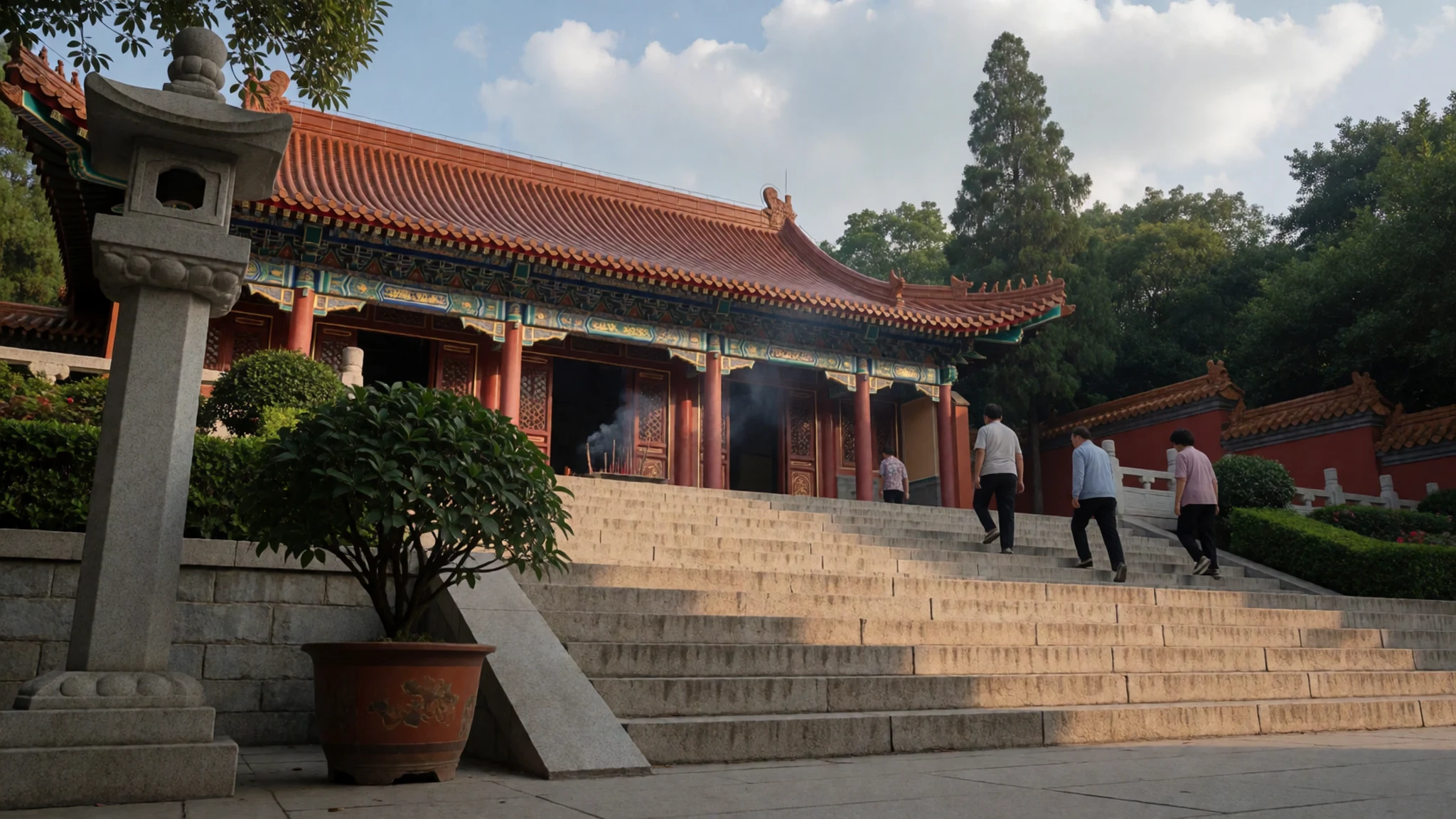
Culture
Lin Family Mansion reflects the culture of Hokkien-speaking settlers who crossed from southern Fujian to Taiwan, among them the Zhangzhou and Quanzhou communities whose rivalry shaped Banqiao in the nineteenth century. The family's wealth came from land and rice, but the garden shows what such families did next: they spent on education, ritual and display. Pavilions, studies and winding paths follow the Chinese garden idea of a landscape in miniature, where walking is a way of reading a composition, one framed view after another. Nearby, temples such as Cihui Mazu Temple and Jieyun Temple show the living side of local belief. Mazu protects sailors, which makes sense in a place settled by sea crossings, and worshippers still bring offerings and burn incense. The ancestral side of the family matters too. Part of the property belongs to a Lin family association connected with ancestral rites, which is one reason the residence is entered only on a guided tour. The garden itself is now a protected historic site, looked after by public bodies, so the experience is quieter and more orderly than that of a temple in active use. Locals treat it as a calm place to walk, and the best way to see it is to move slowly and look up at the roof lines. At the temples near the garden, keep your voice low, do not step on the thresholds, and ask before photographing anyone who is praying.
What to wear
Lin Family Mansion belongs to a Qing-era world in which wealthy Han Chinese families such as the Lins would have worn silk: long gowns and short jackets for men, embroidered tunics and skirts for women, with cotton and ramie for everyday work clothes. Silk signalled rank and was kept for festivals, weddings and ancestral rites. Today those styles survive as the changshan, a man's long gown, and the qipao, a fitted dress, mostly worn for weddings, photo shoots and cultural events rather than daily life. Taiwan's Indigenous peoples have their own woven, beaded and embroidered clothing traditions, which belong to other places and communities. In Banqiao, people dress for a warm, humid city: T-shirts, shorts or light trousers, trainers or sandals, a rain jacket or umbrella close at hand, and neat office wear on weekday commuters. Visitors to the garden should wear light, breathable layers, a hat for the sun, and comfortable flat shoes with good grip, as stone paths and steps can be slippery after rain. For the nearby working temples, covering shoulders and knees is a polite choice, and a thin scarf or an overshirt does the job easily.
What to eat
- Oyster omelette (蚵仔煎) — Nanya Night Market and other night-market stalls
Small oysters cooked into an egg and starch batter until the edges crisp, then topped with a sweet-savoury sauce. It is a classic night-market order in Taiwan, eaten standing or from a paper tray. Nanya Night Market in Banqiao is the obvious place to look.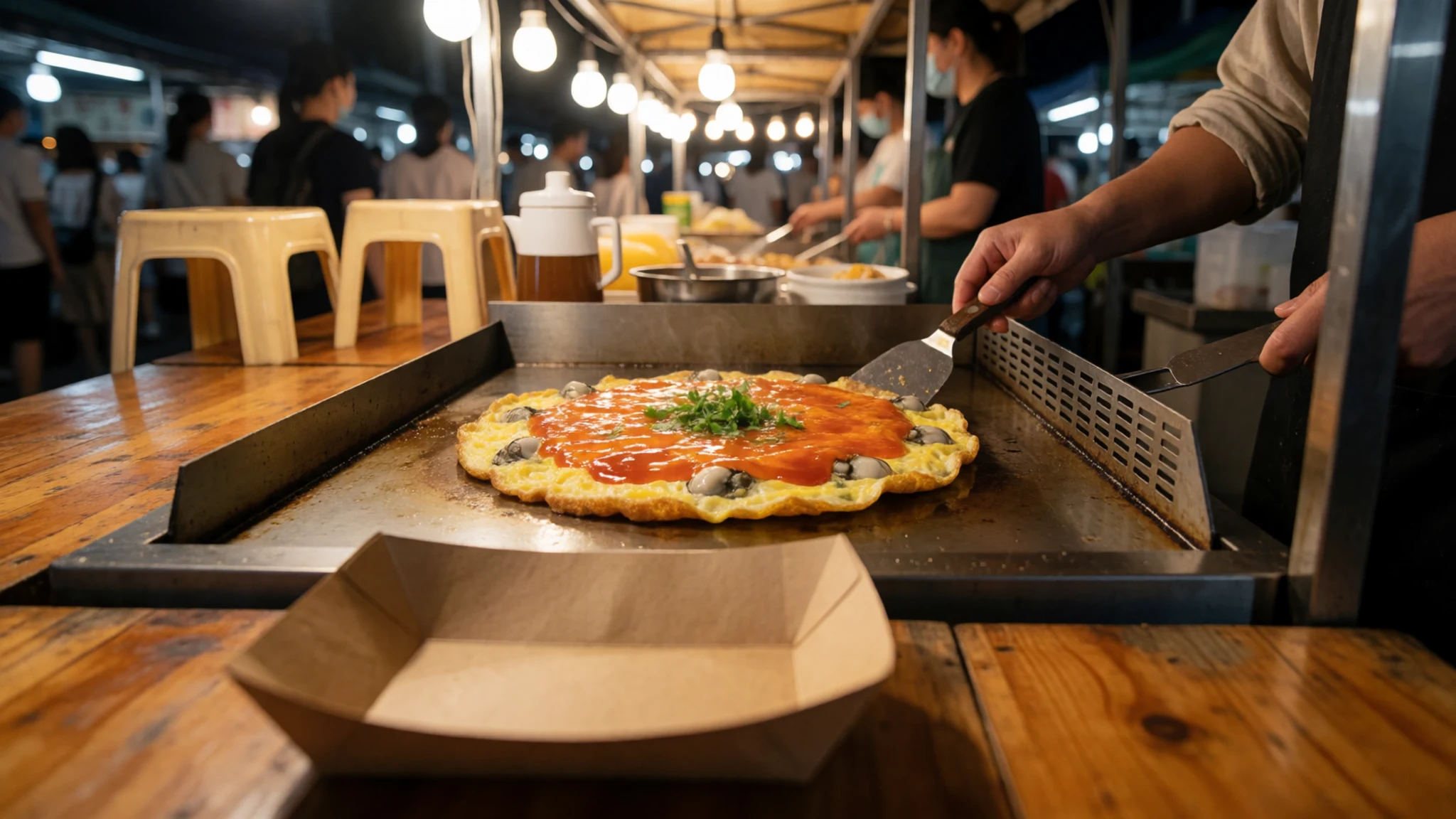
- Braised pork rice (滷肉飯) — Small neighbourhood eateries on the side streets around Banqiao station
Minced fatty pork simmered slowly in soy sauce and spices, spooned over plain rice. It is humble, quick and filling, usually served with a few pickles or a bowl of soup. Look for the small eateries that serve it all day.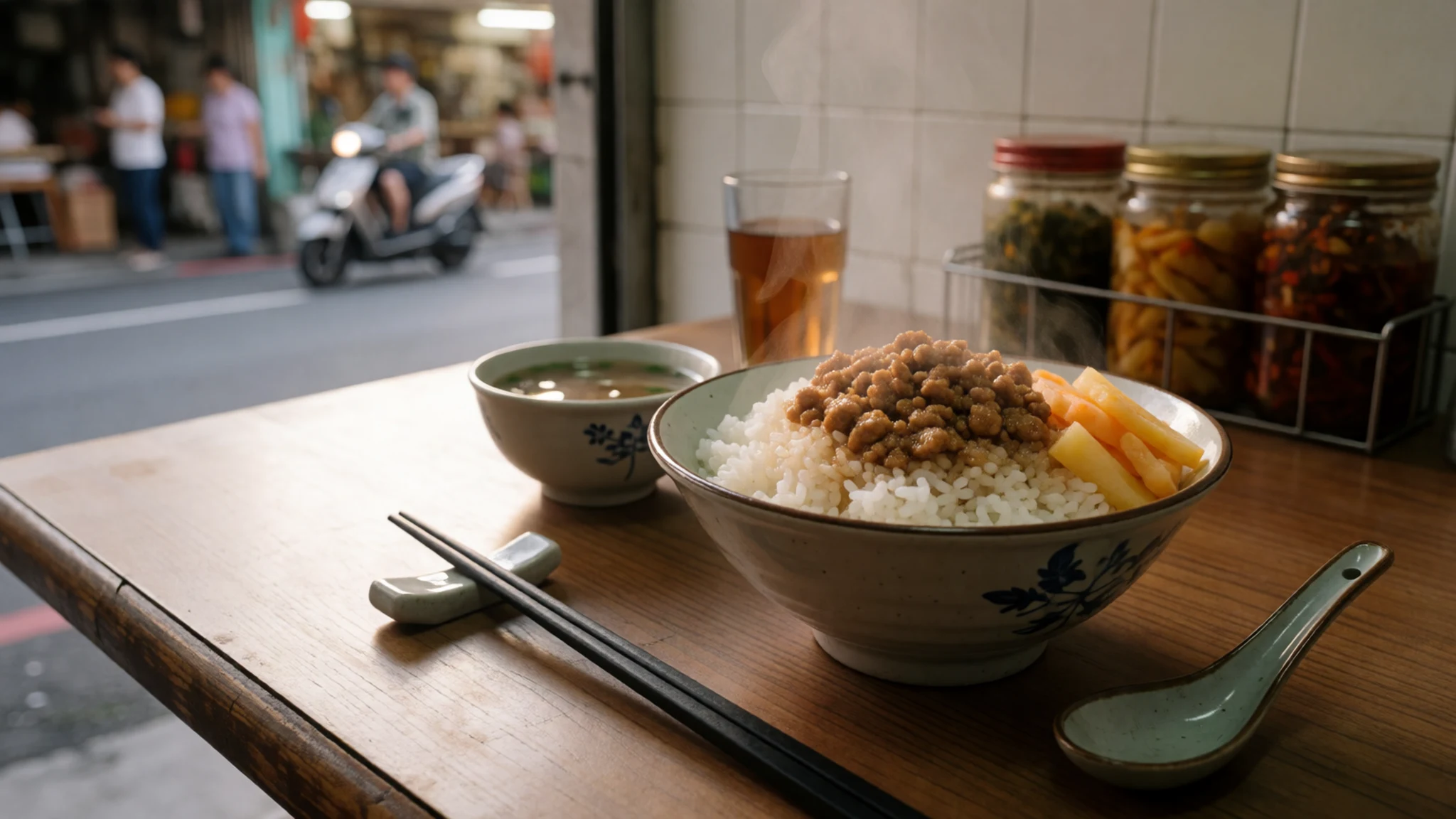
- Beef noodle soup (牛肉麵) — Noodle shops across Banqiao and Taipei
A deep, long-simmered broth with braised beef and wheat noodles, sometimes spiced and sometimes clear. Taiwan treats it as an everyday staple, and each shop has its own version. A bowl after a morning in the garden makes an easy lunch. - Salt-and-pepper fried chicken (鹽酥雞) — Night-market stalls and street-corner fryers
Bite-sized pieces of chicken fried until crisp and tossed in pepper and often basil, usually sold by the bag. Stalls will fry vegetables and tofu the same way. It suits a walk through the night market in the evening. - Bubble tea (珍珠奶茶) — Tea shops on almost any busy Banqiao street
Sweet milk tea with chewy tapioca pearls, served cold with a wide straw. Shops let customers choose sweetness and ice levels, so it is easy to order a lighter version. A cold cup helps in the humid months.
Plan it
Best time. October–November and March–April, when Banqiao is mild and comfortable for slow walking in the garden. Summer is hot, humid and often wet, and typhoons can disrupt travel in late summer; winter is cooler and can be damp and grey, so carry an umbrella in any season.
How long. 1
Getting there. Fly into Taiwan Taoyuan International Airport or Taipei Songshan Airport, then take rail or the MRT to Banqiao. Banqiao has a Taiwan High Speed Rail station, a Taiwan Railways station and a stop on the MRT blue line, and it is a short hop from central Taipei. The last leg is a short walk, bus or taxi; confirm the route on the official site.
Budget. low
Tips
- Check the official site (https://www.linfamily.ntpc.gov.tw/) for opening days, ticketing and guided-tour arrangements before going, especially to enter the Three-Courtyard Mansion.
- Aim for a weekday morning for quieter paths and softer light for photographs.
- Staying in Taipei is simpler, as Banqiao has no major chain places to stay, although a few small ones exist.
- Carry water and an umbrella or hat, as parts of the route are open to sun and rain.
- Combine the garden with Cihui Mazu Temple and an evening at Nanya Night Market.
Etiquette
- Follow the guide's instructions and any photography rules inside the Three-Courtyard Mansion.
- Keep your voice low at temples and ask before photographing worshippers.
- Stay on the paths and avoid climbing on railings, rockwork or building edges.
Nearby
Sources
- Wikidata Q6550027 (CC0)
- Wikipedia — Lin Family Mansion and Garden (rev 1366212115) (CC BY-SA 4.0)
- Wikivoyage — Banqiao (rev 5394431) (CC BY-SA 4.0)
- Photo: Qi Xian Lin, zh:User:Weihao.chiu (CC BY 3.0)
- Photo: Ji Gu Shu Wu, zh:User:Weihao.chiu (CC BY 3.0)
- Photo: Xiang Yu Yi, zh:User:Weihao.chiu (CC BY 3.0)
- Photo: Yue Bo Shui Xie, zh:User:Weihao.chiu (CC BY 3.0)
- Photo: 板橋 ~林家花園, 吳鴻鴦 (CC BY-SA 4.0)
- Photo: Traditional Chinese eaves of a building in Banqiao, tomscoffin (CC BY 2.5)
- Photo: Ancient map of Banqiao City, 阿道 (CC BY-SA 4.0)
- Photo: Arcade at Lin Garden, Udo Schoene (CC BY 3.0)


