Limbang
Limbang, Malaysia
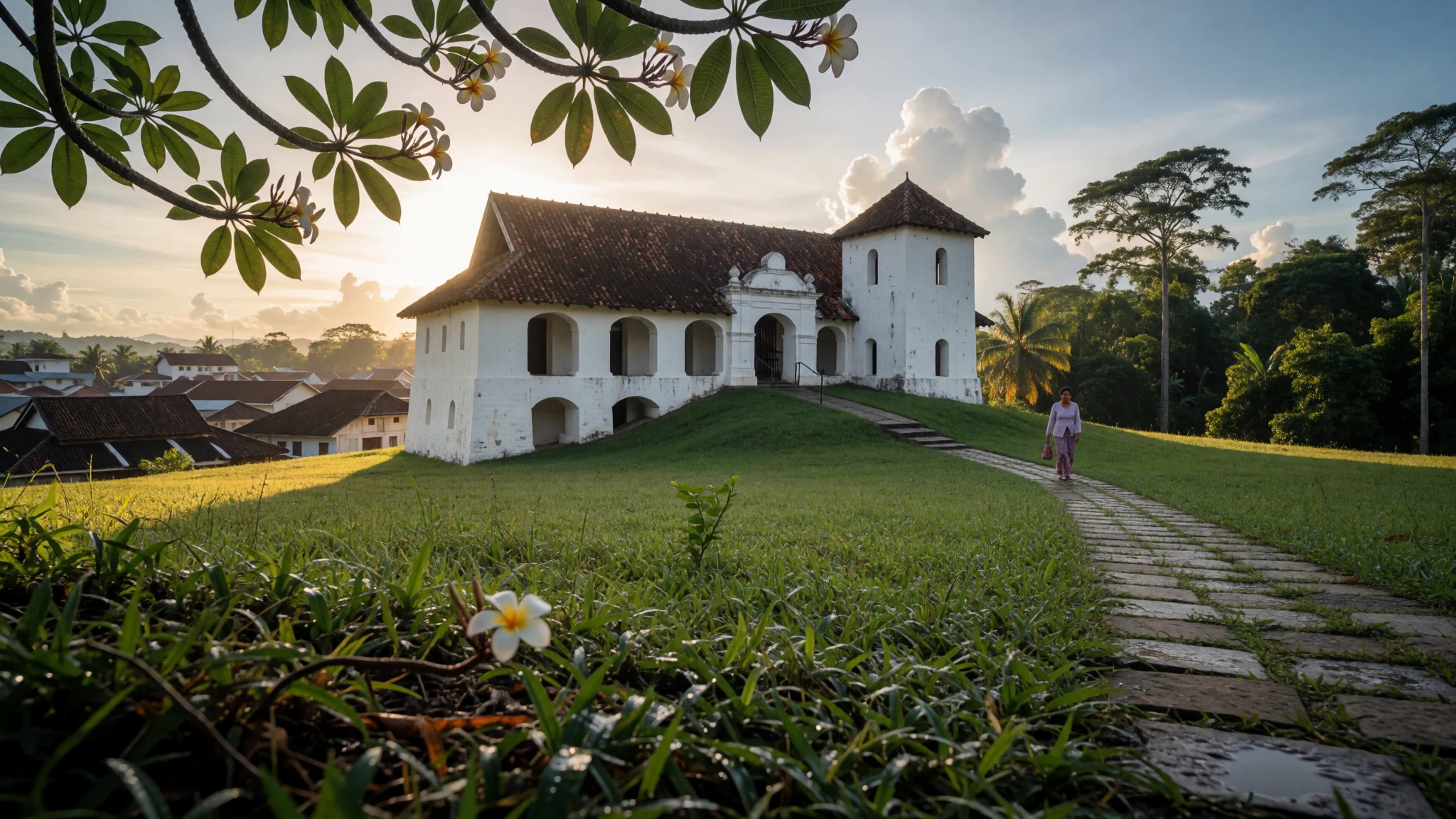
Limbang is a small Bornean river town that Brunei wraps around on both sides, good for border curiosity, a Friday market and slow days.
The place
Limbang is a small riverside town in northern Sarawak, on the island of Borneo, and the administrative seat of its district. It sits on the Limbang River in a pocket of Malaysia that Brunei wraps around on both sides, so the map shows a Malaysian town almost pinched in two by another country's land. That geography shapes daily life. Many road journeys to the rest of Sarawak run through Brunei, which means passports at checkpoints, changes of bus and a habit among locals of thinking in terms of borders. Brunei has never fully dropped a quiet territorial claim to the area, though it rarely comes up in ordinary talk.
The town itself is compact and low-rise: a plaza with shops and offices, a weekly market, a lake park on a hill, an old fort now used as a museum, and a riverfront where boats still matter. It is not a resort. Visitors tend to come as a stop between Brunei, Miri and the national parks inland, or out of curiosity about the border itself.
The climate is equatorial: warm and wet in every month, with heavier rain in the monsoon periods, from December to March and again from about June to October. Expect humidity, sudden downpours and bright intervals in between. The interior of the district is undeveloped, which is why roads are few and why river and air links count for so much. Limbang rewards a day or two of unhurried wandering rather than a packed itinerary.
Its story
Limbang's story is one of taxes, rivalry and a river valley that wanted out of Brunei. In 1884 people along the Limbang River rose against the heavy levies of the Bruneian sultanate. A British official, William Hood Treacher, offered to mediate, arrived on a naval ship, and secured a promise from the Bruneian chief that no more arbitrary taxes would be imposed. Treacher then leased several territories further east from the sultan.
That worried Charles Brooke, the White Rajah of Sarawak, who was expanding his own state along the coast. Brooke pressed Brunei for compensation over killings in the Trusan area, threatened to halt the cession payments, and then occupied Trusan by force before Brunei formally accepted the loss.
Limbang was the next prize. Sultan Hashim, backed by his princes, refused to give up more land, fearing that his title would soon mean nothing. But the river chiefs told a visiting British governor that they rejected Bruneian rule and would accept a European one. In 1890 the district passed to the Brooke government, with the sultan forced to cede it.
Before that, the valley had been a farming area supplying food to the Bruneian court, so the loss stung. Brooke built a fort here in 1897, and it now houses the regional museum. The odd shape of the border today, and Brunei's lingering claim, are the direct leftovers of these few years.
What to see
- Limbang Regional Museum — Town centre, near the river
The museum occupies a fort built by Charles Brooke in 1897, on land he annexed to Sarawak in 1890. Come for the building and the border story it represents, then step outside to see how the town grew around it. Check the official Sarawak museum pages for opening times.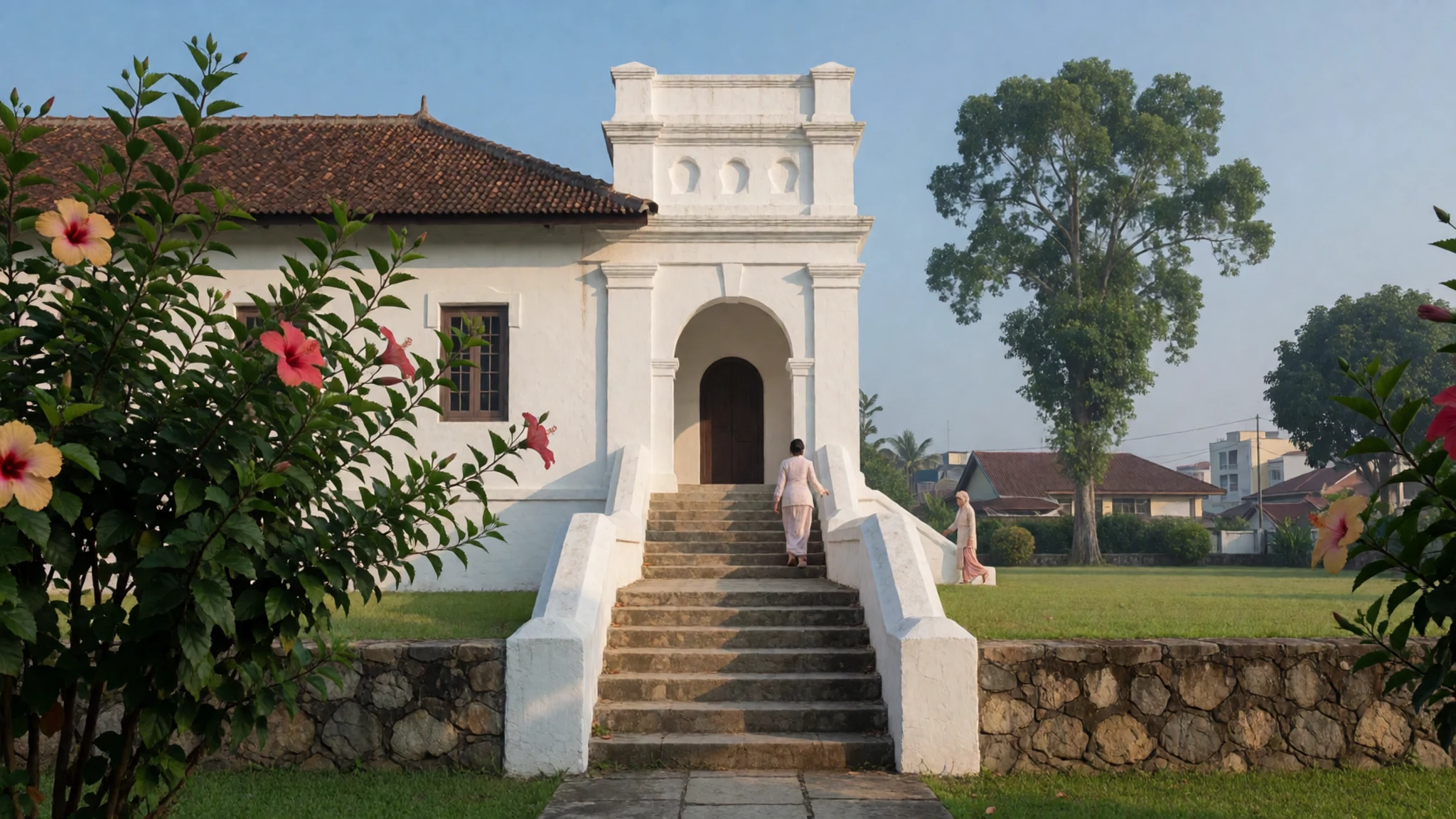
- Taman Tasik Bukit Mas — Bukit Mas, edge of town
Gold Hill Lake Park wraps a small lake on the hill that locals treat as Limbang's landmark. In the evening families walk, children use the playground and others set up barbecues. A suspension bridge crosses part of it. Go late afternoon, when the heat eases and the park fills.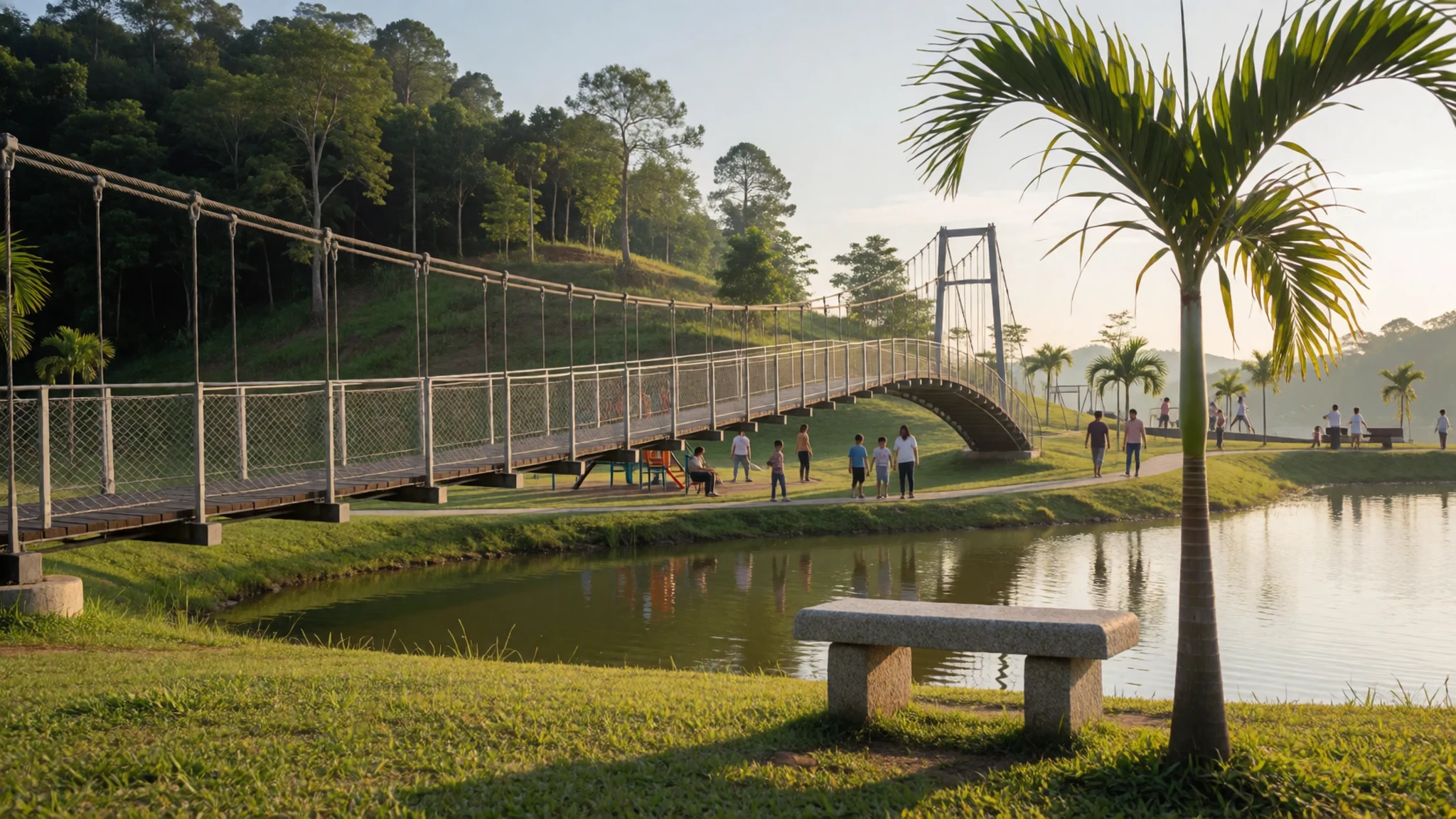
- Pasar Tamu — Town centre market ground
A tamu is a periodic gathering market where villagers bring produce and goods into town, here held on Fridays with set-up beginning the day before. Bruneians cross the border to shop too. Go early for the best choice, and bring small notes and a bag.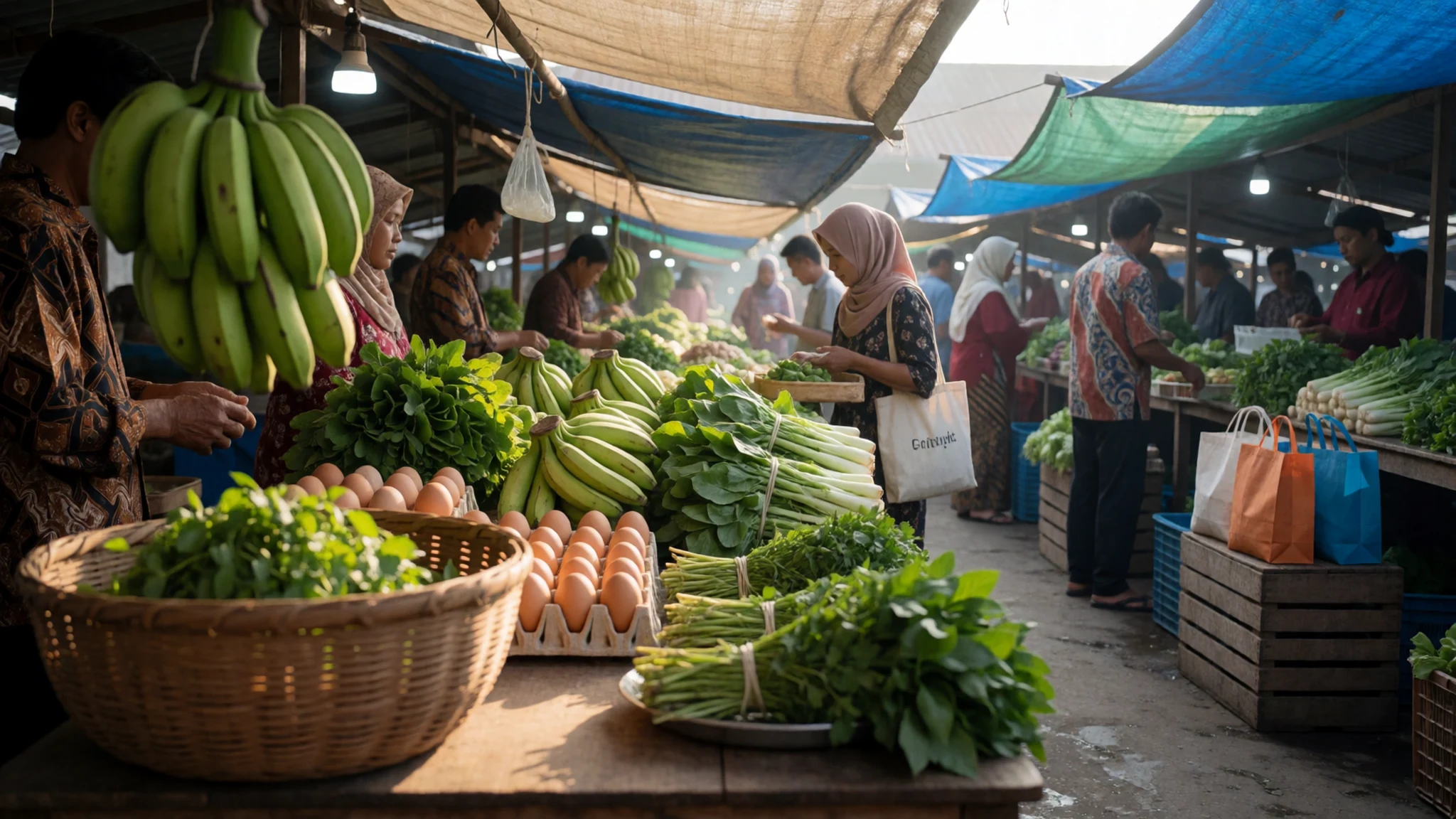
- Limbang Plaza and the town centre — Jalan Buangsiol area
The plaza is the practical heart of town: a shopping mall, a hotel and government offices in one building, with a local supermarket chain as the main tenant. It is not sightseeing in the usual sense, but it is the place to change money, buy supplies and watch ordinary Limbang life.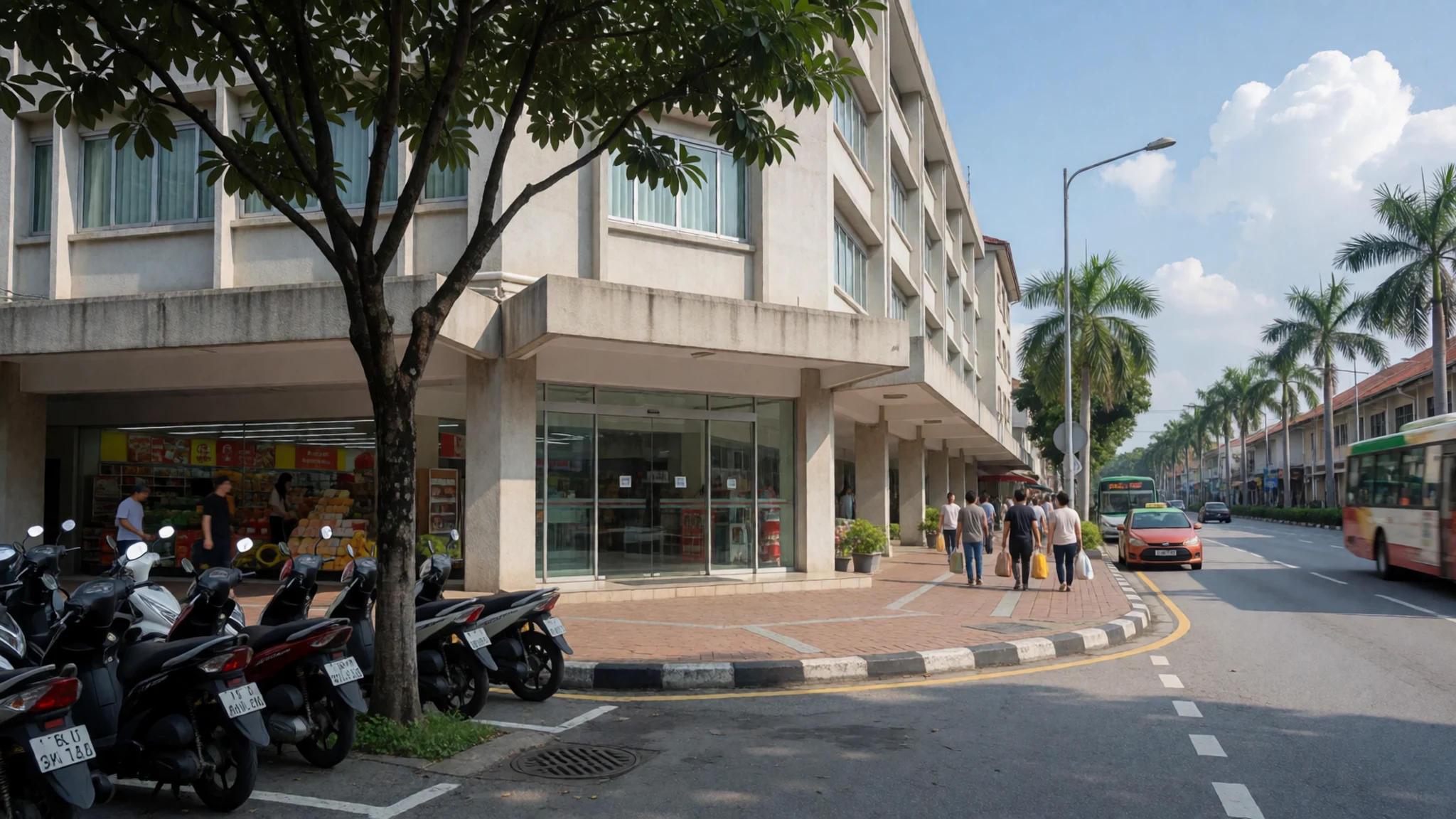
- The Limbang River waterfront — Riverbank and wharf
The river explains the town: it was the trade route, the revolt's setting and now a border crossing point, with passport stamps issued at the wharf. Walk the bank at dusk for boat traffic, shophouse backs and a sense of how close Brunei sits.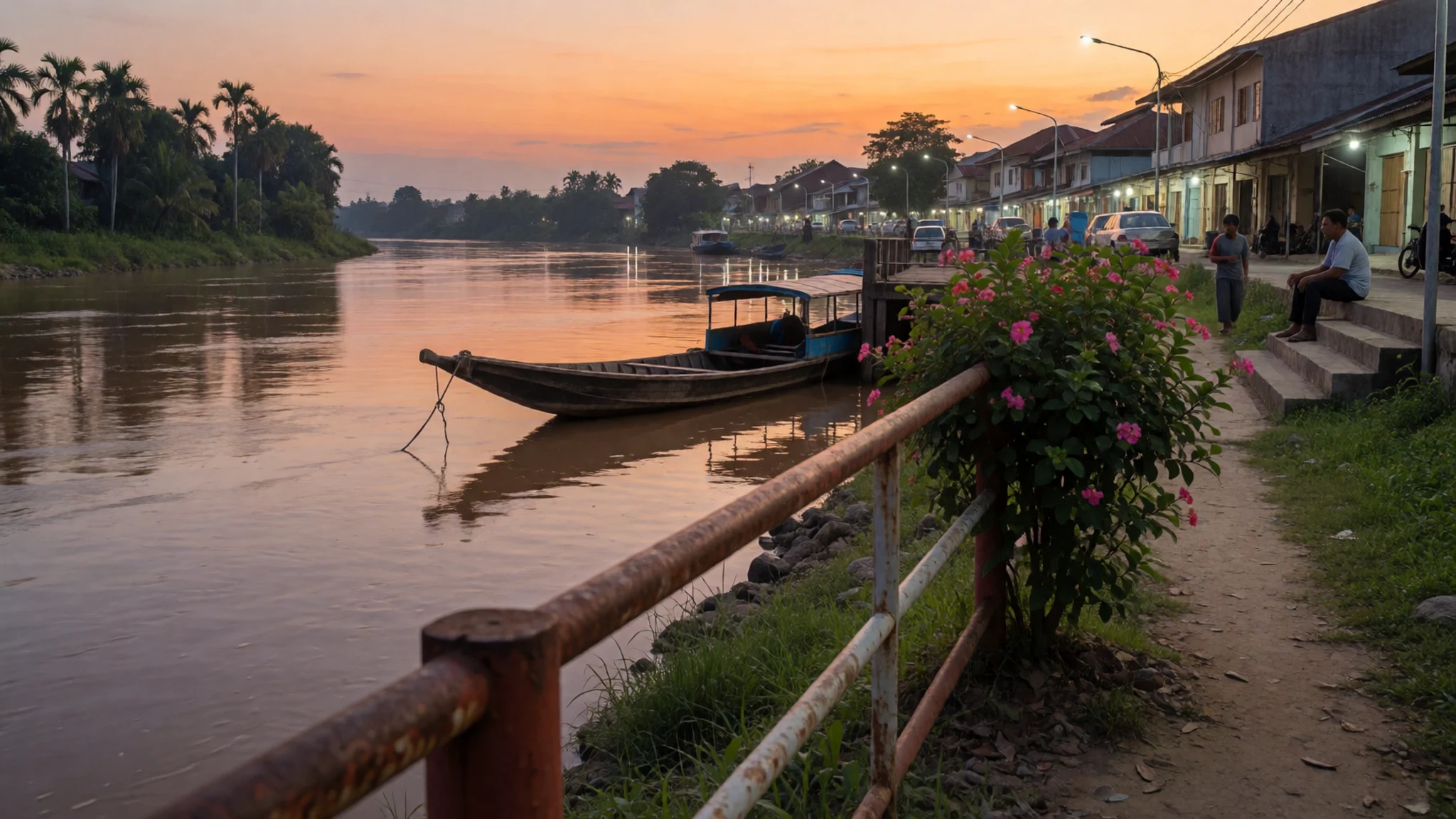
Culture
Limbang is a meeting point of communities from both sides of the Sarawak–Brunei line, and it feels more like a market town than a museum piece. Malay, Bisaya, Chinese and several inland peoples share the same streets, shops and coffee shops, and the Friday tamu is where that mix is most visible. Villagers arrive with produce from upriver and farm plots, trade with townspeople, and meet relatives, so the market is a social event as much as a commercial one.
The border shapes social habits too. Many Bruneians cross for shopping, meals and evenings out, particularly around the Tedungan checkpoint, where bars and nightclubs cater to people who cannot find them at home. That gives the area a slightly split character: devout and quiet in most neighbourhoods, livelier near the crossing.
History is present in small ways. The old fort, the museum inside it and the claim that Brunei still holds in principle are all remembered locally, though usually without drama. Evenings revolve around the lake park, where families walk, children play and neighbours stop to talk.
For visitors, the tone is friendly and unhurried. People are used to travellers passing through to Brunei or the inland parks, and a greeting and a smile go a long way. Ask before photographing people at the market, and accept any offered food or drink with your right hand.
What to wear
Limbang's clothing reflects the mix of communities in the district, so there is no single costume. Traditional Malay dress includes the baju kurung, a long tunic over a skirt, and the baju Melayu for men, often worn with a songket sarong, a silk or cotton cloth with gold or silver thread woven in. Iban communities elsewhere in Sarawak are known for pua kumbu, a cotton cloth patterned by tie-dyeing the threads before weaving, and several inland peoples use beadwork on collars, headbands and hats. These appear mostly at festivals, weddings and cultural events rather than daily life.
Everyday wear in town is practical and modest: light cotton shirts, T-shirts and trousers or knee-length skirts for men and women, and many Muslim women wear a headscarf with loose long sleeves. Office staff may wear batik shirts on set days. Rubber sandals are common because of the rain.
Visitors should dress for heat, humidity and sudden downpours. Pack light, quick-drying fabrics, a compact umbrella or rain jacket, and sandals that cope with wet pavement. Cover shoulders and knees in town and at religious buildings, since this is a conservative region. If heading upriver or into forest, bring long sleeves, long trousers and closed shoes with grip, plus insect repellent.
What to eat
- Ambuyat — Malay eateries and family-run restaurants near the town centre
A sticky, almost translucent sago starch, twirled onto a bamboo fork and dunked in a sour, spicy dip. It is the signature dish of Brunei and nearby Malay communities. It has little taste of its own; the sauce and side dishes carry it.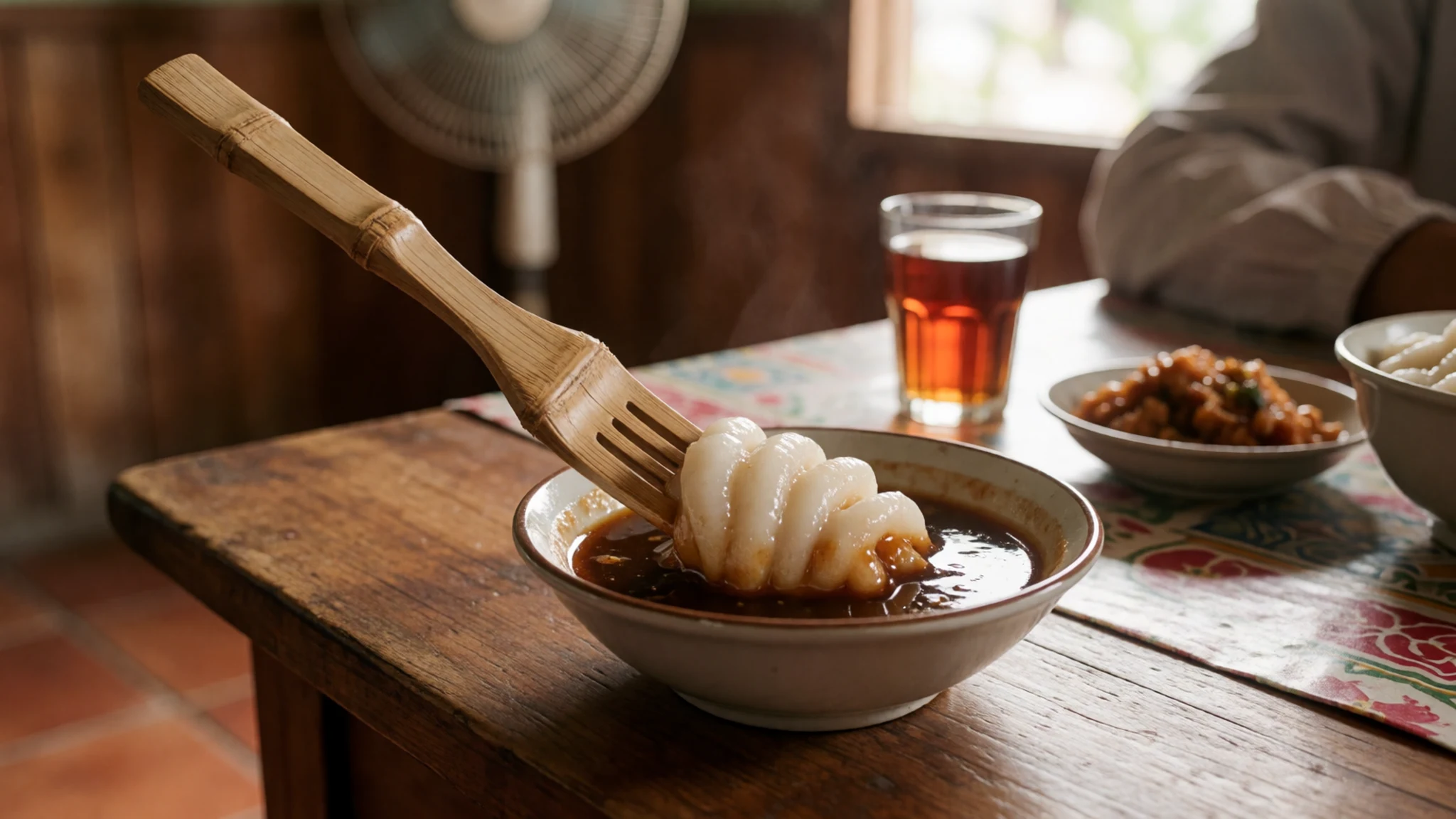
- Sarawak laksa — Coffee shops and breakfast stalls in town
A noodle soup in a spice-and-coconut broth, topped with shredded omelette, prawns and chicken. It is a Sarawak breakfast staple rather than a Limbang speciality, but the town's coffee shops serve it, and a bowl makes a solid start to a humid day.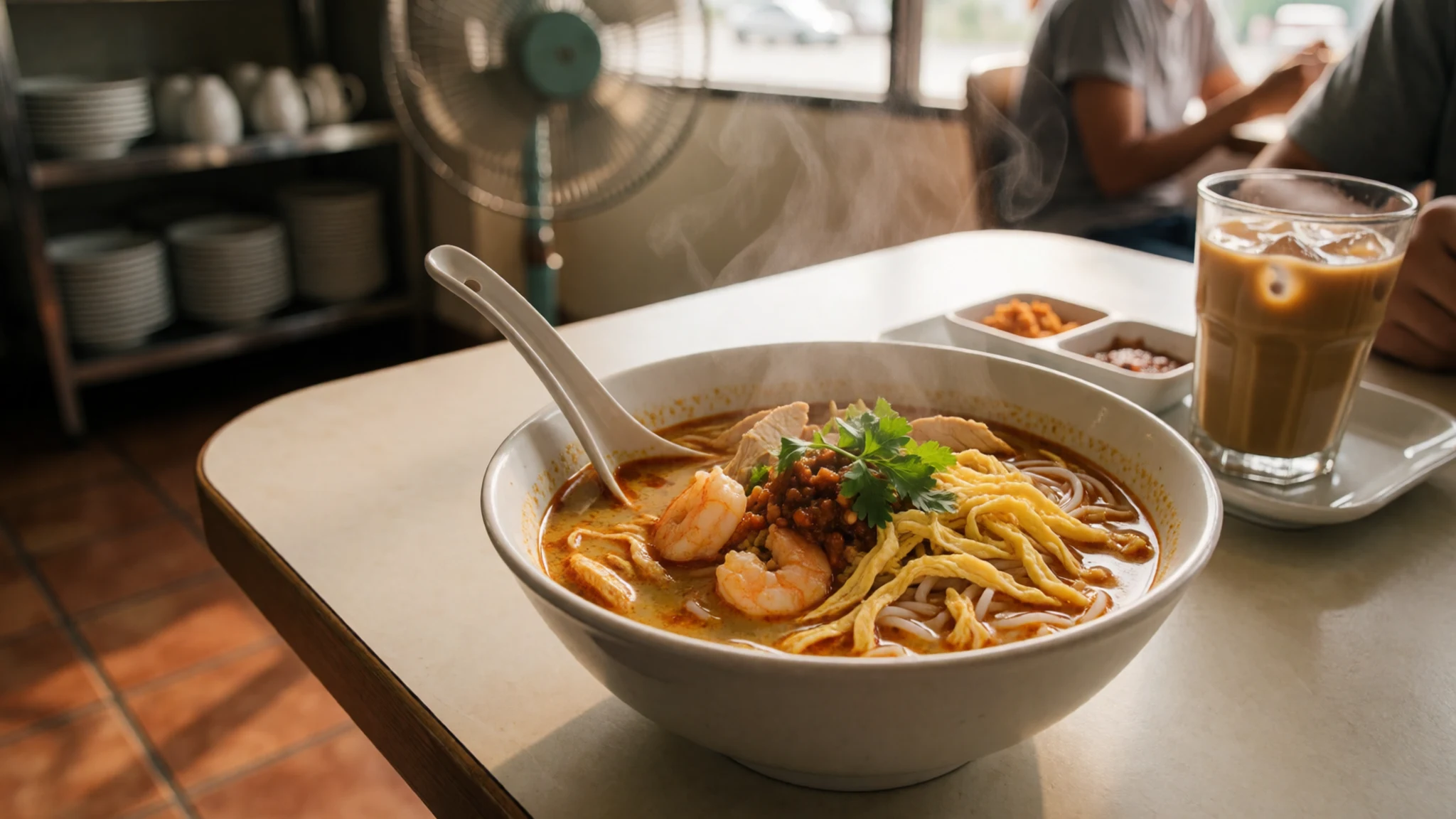
- Kolo mee — Chinese-run coffee shops along the main streets
Springy egg noodles tossed in a light dressing with minced pork or chicken and fried shallots, eaten dry rather than in soup. It is the everyday lunch of Sarawak, easy to find, filling and cheap by most visitors' standards. - Midin — Pasar Tamu, as raw fern, and on restaurant menus as a stir-fry
A crisp wild jungle fern with curled tips, usually stir-fried with garlic or belacan, the fermented shrimp paste. It is a Sarawak favourite, and the Friday market is a good place to see it sold fresh by villagers. - Grilled river fish — Riverside eateries and market food stalls
Freshwater fish from the district's rivers, grilled over charcoal and served with rice, sambal and raw vegetables. Ask what is local that day. Seafood from the coast also appears on menus, but river fish better suits a town built on its river.
Plan it
Best time. April–May and November sit between the two monsoon periods, so rain is usually lighter, though Limbang is wet in every month. Expect the heaviest weather from December to March and again from about June to October. If the Friday market matters, plan the visit around it.
How long. 1–2
Getting there. The nearest practical way in is MASWings turboprop flights from Miri to Limbang, with the airport a short drive from town; check the airline's official site for current schedules. By road, the usual route runs through Brunei, changing buses at the Tedungan border checkpoint, so allow time for passport control on both sides.
Budget. low
Tips
- Carry your passport everywhere near the border and expect checks
- Visit the Pasar Tamu early on Friday, before stock thins out
- Pack a light rain jacket and plan indoor stops for afternoon downpours
- Carry cash for market stalls and small eateries
- Book flights early, as the small aircraft fill and services are limited
Etiquette
- Dress modestly in town and at religious buildings
- Ask before photographing people, especially at the market
- Use your right hand when giving or receiving food and money
Nearby
Sources
- Wikidata Q2181642 (CC0)
- Wikipedia: Limbang (rev 1374530908) (CC BY-SA 4.0)
- Wikivoyage: Limbang (rev 5248016) (CC BY-SA 4.0)
- Photo: Limbang plaza (Arifen) (CC BY 2.5)
- Photo: Topographic locator map of Borneo (Sadalmelik) (CC BY 3.0)
- Photo: Map of Limbang District (Pinangjawa) (Public domain)
- Photo: Exit stamp via Tedungan (MosheA) (CC BY-SA 4.0)
- Photo: Entry stamp via Pandaruan (MosheA) (CC BY-SA 4.0)
- Photo: Passport entry stamp from Limbang wharf (Slleong) (Public domain)
- Photo: Limbang Regional Museum (Jacob Mojiwat) (CC BY 2.5)
- Photo: Limbang Town (Taka Nozaki) (CC BY 3.0)


