Lifou
Lifou, France
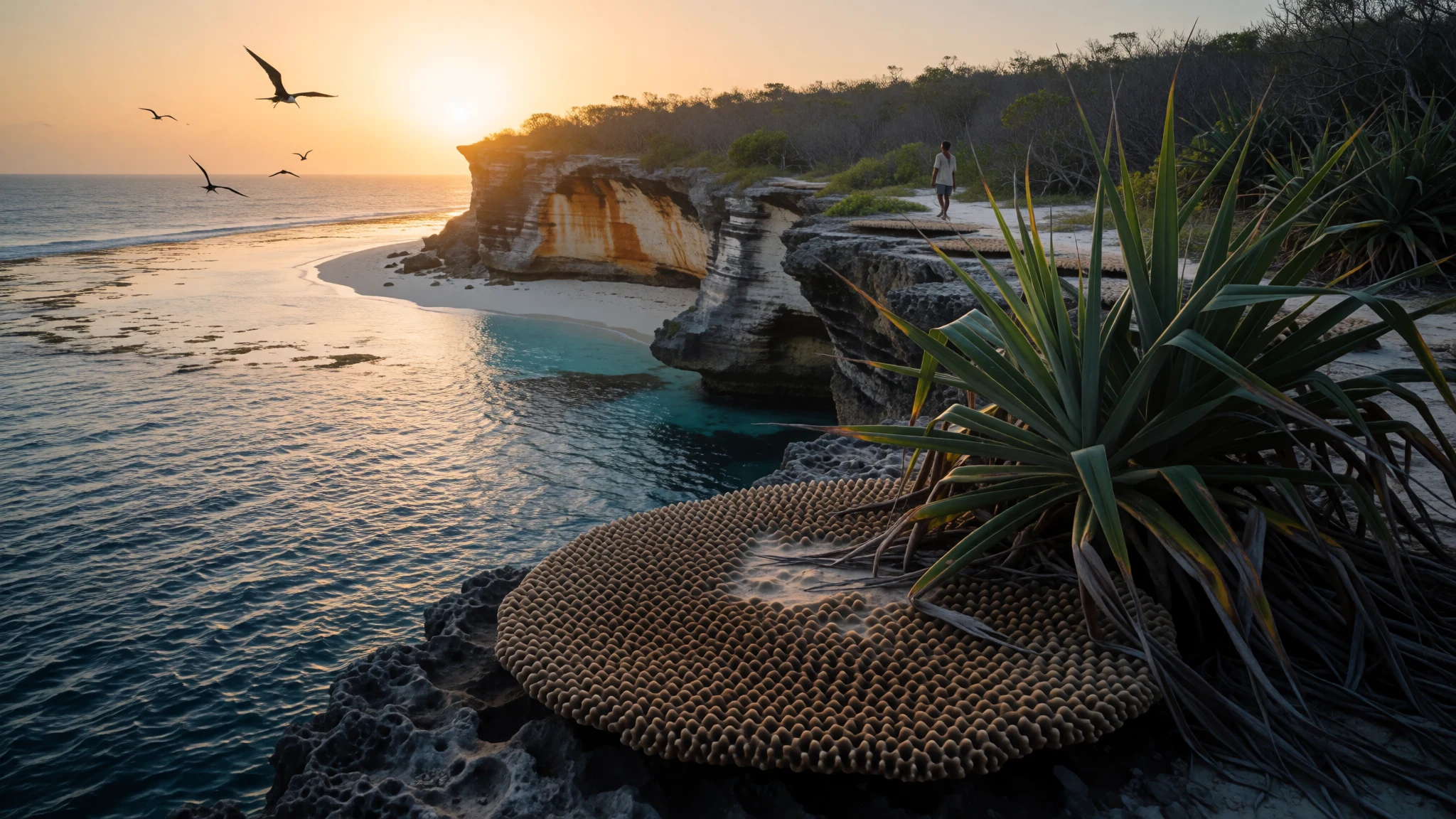
Lifou is a flat coral island in the Loyalty Islands with clear water, reef snorkelling and quiet villages, reached by a short flight from Nouméa.
The place
Lifou is the largest of the Loyalty Islands, a chain lying about 190 kilometres north-east of the New Caledonian mainland. It is a French commune in the Loyalty Islands Province, home to roughly 9,200 people. The commune also takes in the small island of Tiga and a scatter of uninhabited islets between the two. Geologically the island is a raised coral platform, pushed up to about 60 metres at its highest point. That explains the scenery: limestone cliffs, caves, dense low forest and pale bays, with no mountains at all. Lifou is often called an atoll, though it has no classic lagoon in the middle. The administrative town is Wé, on the east side where the island narrows to a waist, and it is also the provincial seat. Away from Wé the island is mostly villages, gardens and churches along quiet roads, so distances feel longer than the map suggests and a car or a driver is useful. Flights from Nouméa land at Ouanaham airport, while cruise ships anchor off Easo and send passengers ashore by tender. The climate is tropical and humid. The annual average is about 23 °C, February is the warmest month and August the coolest, and March is the wettest. Annual rainfall is around 1,600 mm. French is the common language, and Drehu, the local Kanak language, is heard everywhere in daily life.
Its story
Lifou's recorded history with outsiders begins in the first half of the nineteenth century. Whalers were the first Europeans to deal with the islanders, and those meetings were brief and wary rather than friendly. Sandalwood traders followed, reaching the wider New Caledonian region around 1841. The bigger change came through religion. Anglican missionaries were working on Lifou by the middle of the century, building on earlier teaching by islanders and Polynesian settlers who had arrived before them. French Catholic missionaries landed in 1843, and the two Christian camps soon became bitter rivals. The quarrel grew into a religious war that ran on until France took control of Lifou in 1864. Out of this rivalry came something lasting: the missionaries opened schools, and from 1840 into the early twentieth century they taught most of the population to read. Churches became anchors of village life. St Anne Chapel at Inagoj dates from 1866, and the island's Christianity remains strong today, with Sunday services shaping the rhythm of the week. Beneath the mission story sits an older one of Kanak chiefdoms, clan land and oral history, kept alive in the Drehu language. Farming still reflects that long continuity. Families grow yams, taro and bananas, and copra, the dried coconut flesh used for oil, has long been the island's cash product.
What to see
- Santal Bay — Western Lifou
Santal Bay is a wide, sheltered curve of pale sand and shallow green water on the island's western side. It suits a slow day of swimming, snorkelling over patches of coral and sitting under the trees. Facilities are modest, so bring water and food, and expect the quiet to be broken only when a cruise group arrives.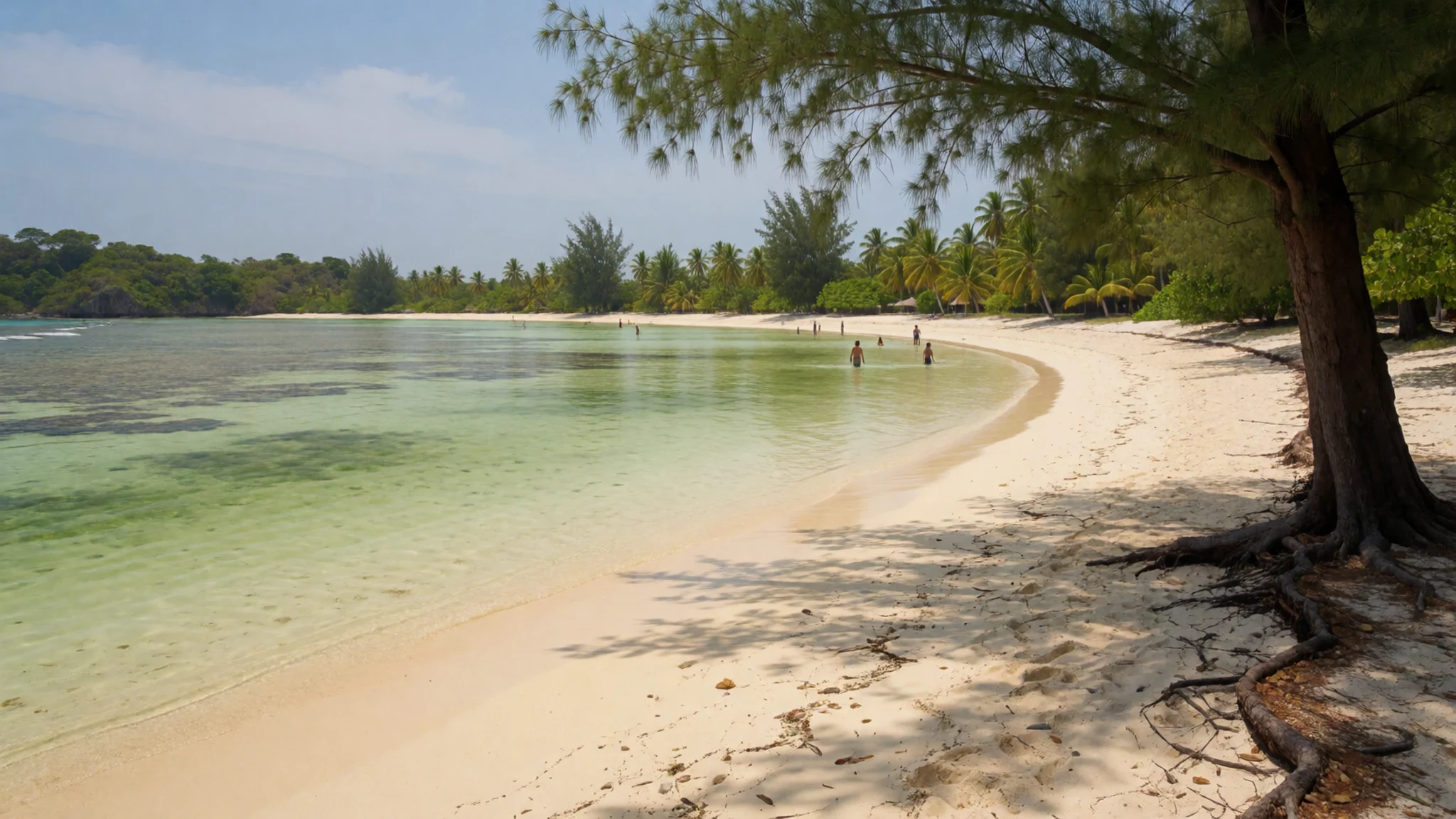
- Falaises de Xodre — Northern coast
The cliffs at Xodre show the island's raised-coral structure plainly: pale limestone walls dropping to deep blue water, with scrubby forest on top. It is a place for walking the edge, looking down into the clear sea and watching for seabirds. Keep well back from the drop, which is unfenced in places.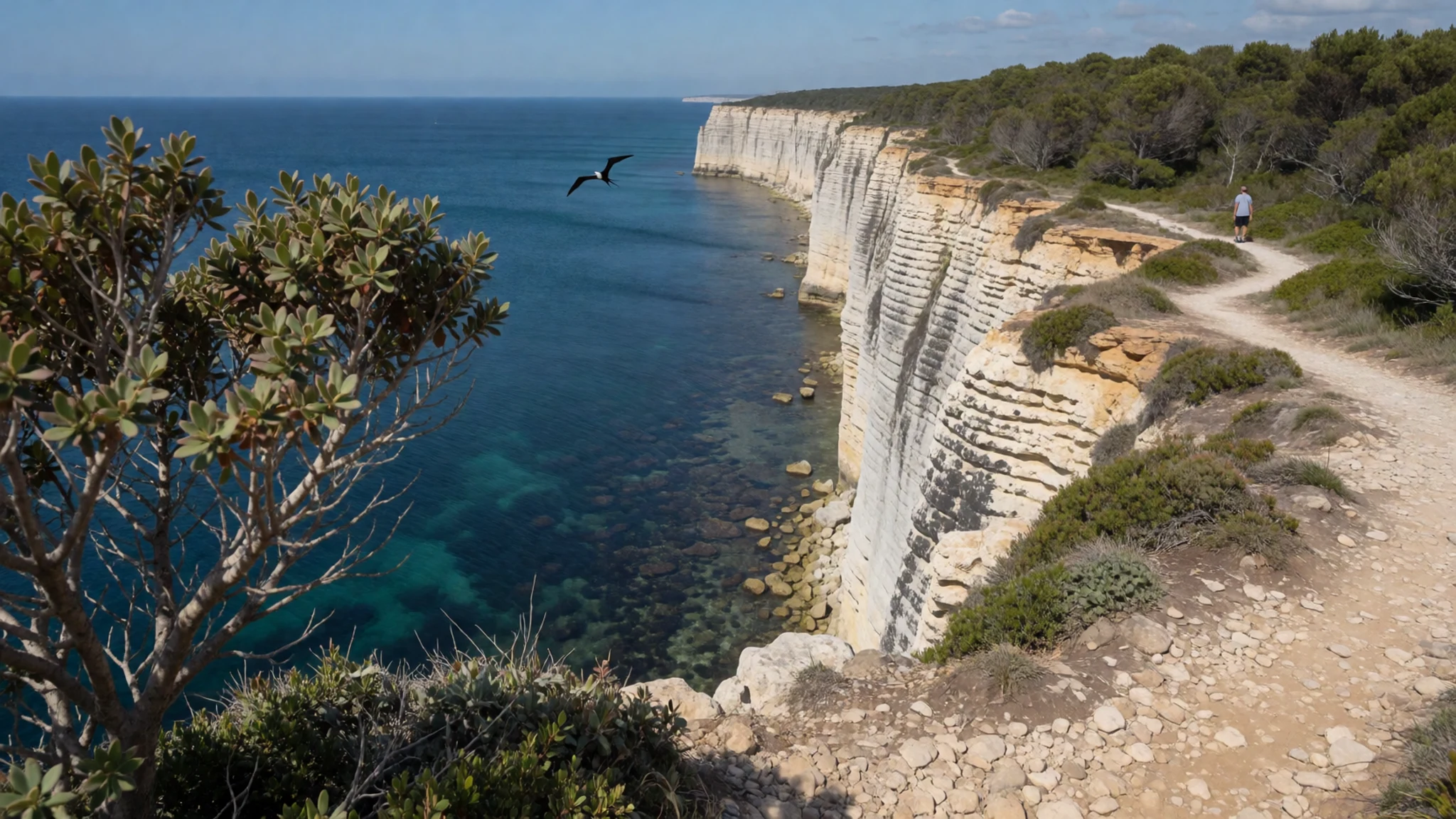
- Reefs and snorkelling — Bays around the coast
Lifou is known for its snorkelling, and the fringing reef is the main reason many visitors come. Water is clear and the coral sits close to shore at several bays. Go early, when it is calm, wear a rash vest against sun, and never stand on or touch the coral.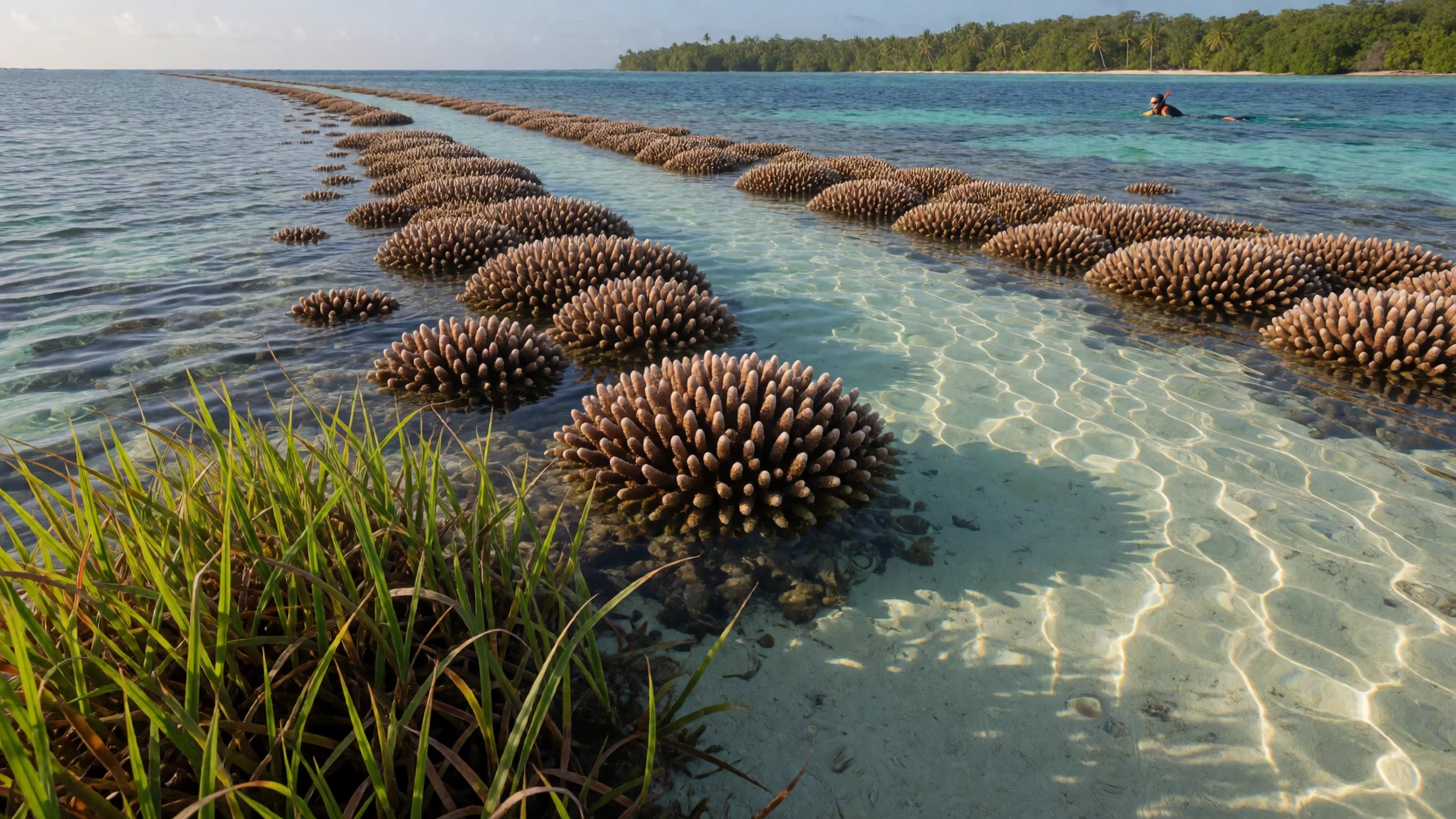
- Wé and the east coast — Wé, east coast
Wé is the island's small administrative centre, and it makes a practical base for banks, shops and local transport. The seafront and the roads around it give a feel for everyday Lifou beyond the beaches. It is quiet in the evening, so treat it as a place to stock up and move on.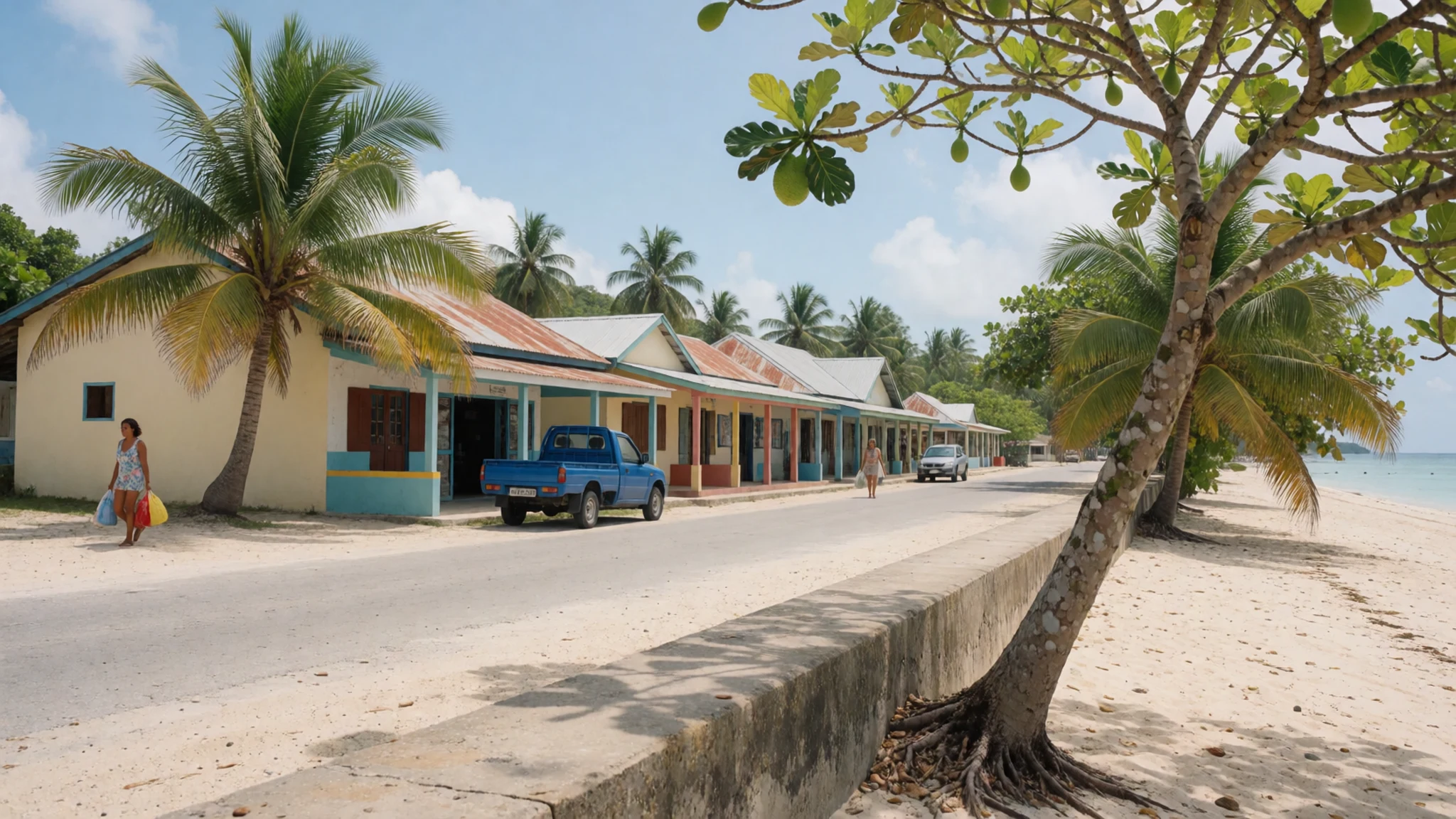
- St Anne Chapel, Inagoj — Inagoj
This small chapel, built in 1866, is a reminder of the missionary era that reshaped the island. It is still part of community life, not simply a monument. Visit respectfully, ideally outside service times, and ask locally before going inside or taking photographs.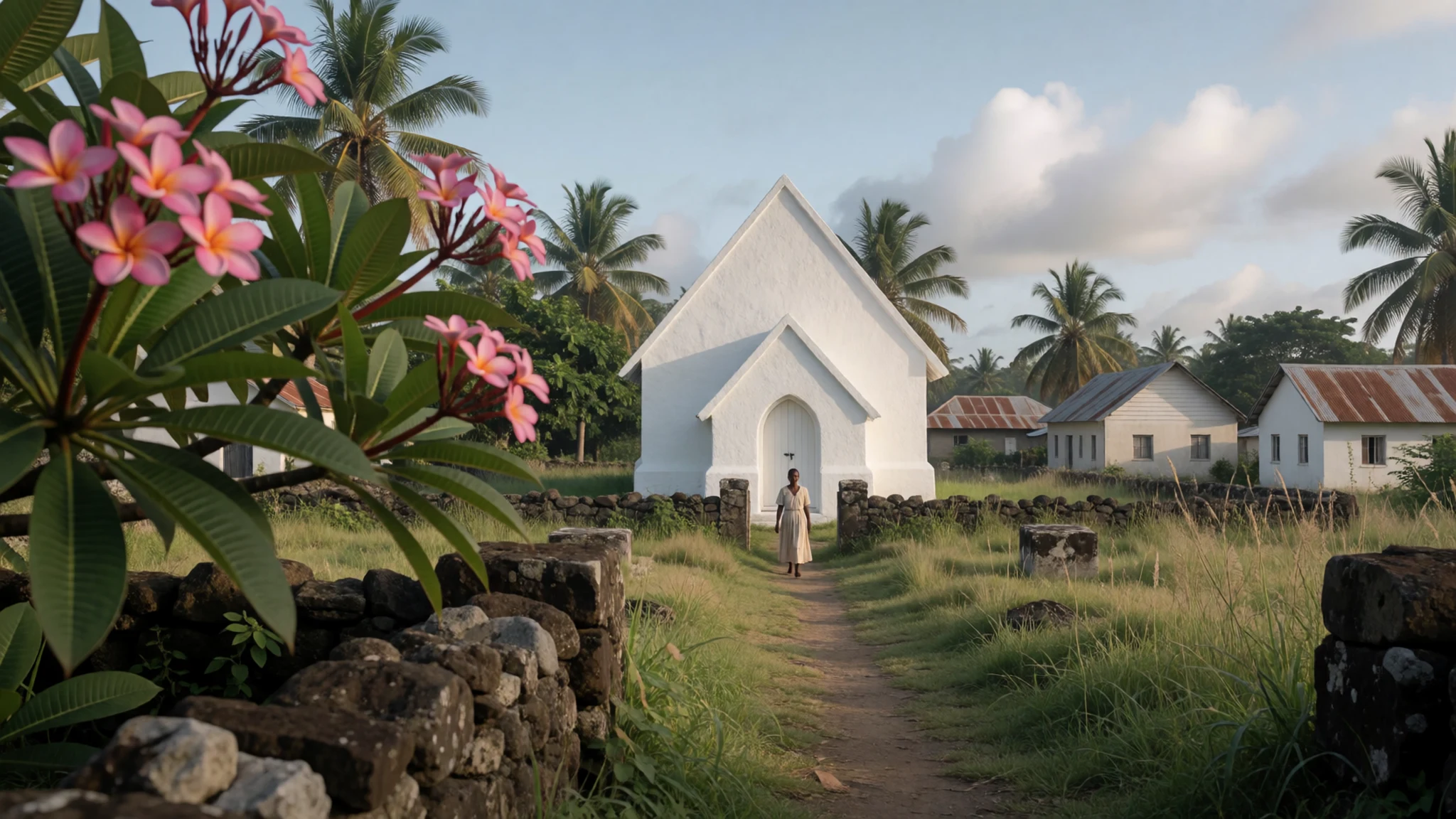
- Roadside forest and butterflies — Interior and villages
Inland Lifou is low, warm forest and garden, and it rewards slow walks or short drives with stops. Bright butterflies, including the blue swallowtail native to New Caledonia, drift along the verges in sunshine. It is gentle exploring, best in the cooler morning hours before the humidity builds.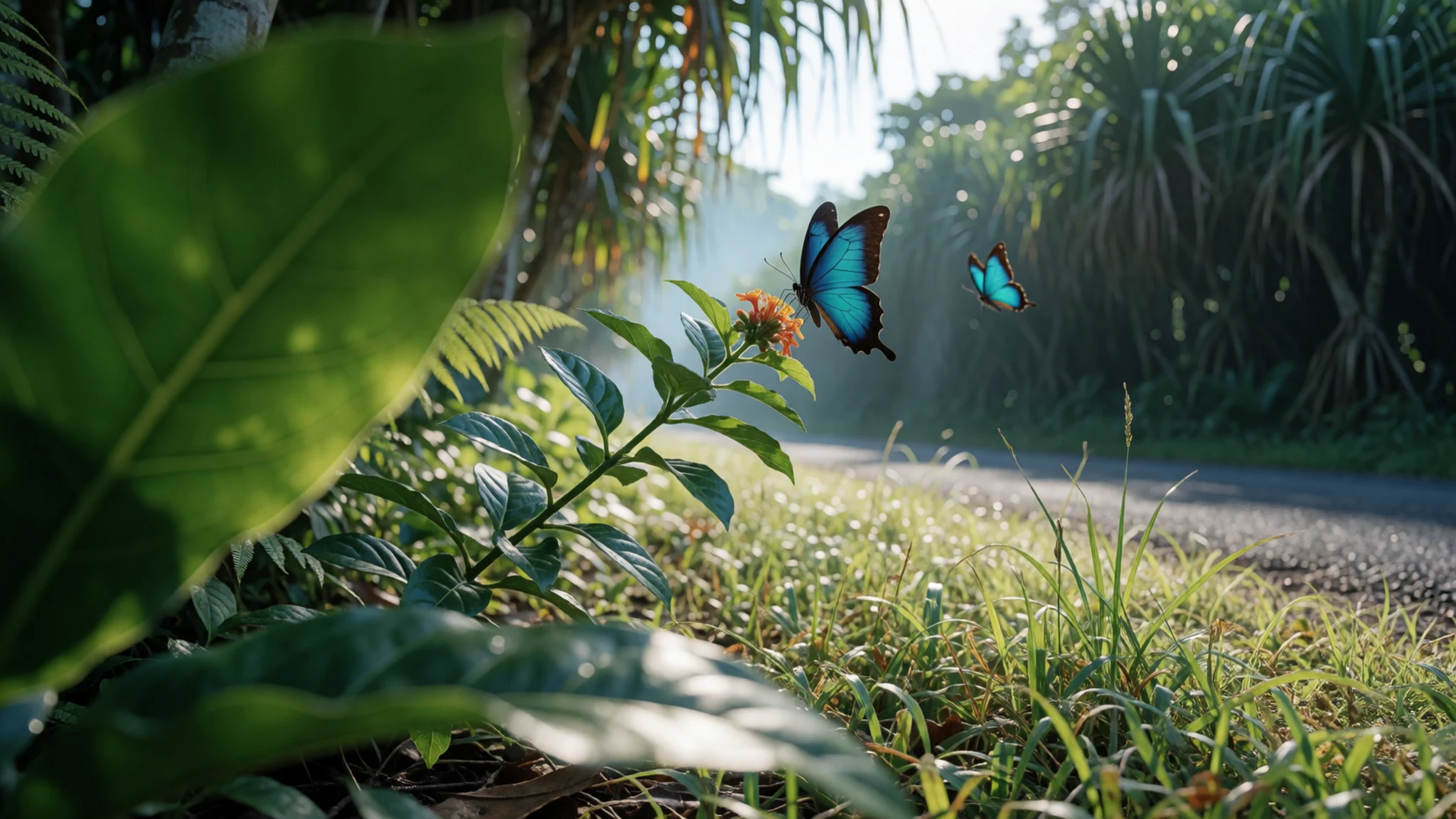
Culture
Lifou is a Kanak island within a French territory, and daily life is organised around clans, chiefdoms and the church as much as around the state. The Drehu language is spoken at home and in village meetings, with French used for administration, school and dealing with outsiders. Land is not simply property here. It belongs to families and clans whose ties to particular places run back many generations, so a pleasant beach or clifftop may be someone's ancestral ground. Customary protocol, known in French as la coutume, governs how guests are received. In many villages that means a short exchange of words and a small gift, often cloth or a modest present, offered to the elders or the chief before going further. Christianity is strong after the missionary rivalry of the nineteenth century, and Sunday is a day for church, family meals and rest. Shops can be shut and the roads very quiet. Music, dance and storytelling still carry community memory, and visitors who are invited to a gathering will usually be welcomed warmly if they arrive humbly and follow the lead of their hosts. Cruise days bring crowds to a few places, but most of the island is run at a slower rhythm. Always ask permission from a villager or landowner before walking onto private land or photographing people, and if you are visiting a village, bring a small gift for the host and follow their guidance on where to go.
What to wear
Traditional dress on Lifou has two layers: Kanak customary cloth and the mission-era dress introduced in the nineteenth century. Older garments and ceremonial costume use plant fibres such as pandanus and bark, woven or knotted into skirts, belts and mats, and these appear mainly at customary events and festivals. The long, loose cotton dress known in French as the robe mission, with a yoke and full skirt in bright printed fabric, is the everyday and Sunday outfit for many women. Men commonly wear a shirt with a wrap or trousers, often in printed cotton too. Day to day, people now dress much as in other warm island communities: shorts, T-shirts, cotton shirts, sundresses, rubber flip-flops and caps, with something smarter for church. Visitors should dress for heat, humidity and sun: light cotton or linen, a wide hat, sunglasses and a long-sleeved rash vest for snorkelling. Away from the beach, cover shoulders and knees in villages and certainly at church, since swimwear in a settlement can offend. Pack reef shoes for rocky entries and sharp limestone, sturdy sandals or trainers for walking, and a light rain jacket, as showers can be sudden, especially around March. Evenings are mild, but a thin layer is useful in the cooler months, when August temperatures drop to about 20 °C.
What to eat
- Bougna — Village feasts and guesthouses
Bougna is the signature Kanak dish: yam, taro and sweet potato, often with chicken or fish and coconut milk, wrapped in banana leaves and steamed in an earth oven. It is usually made for gatherings, so ask locally about village meals or guesthouse nights.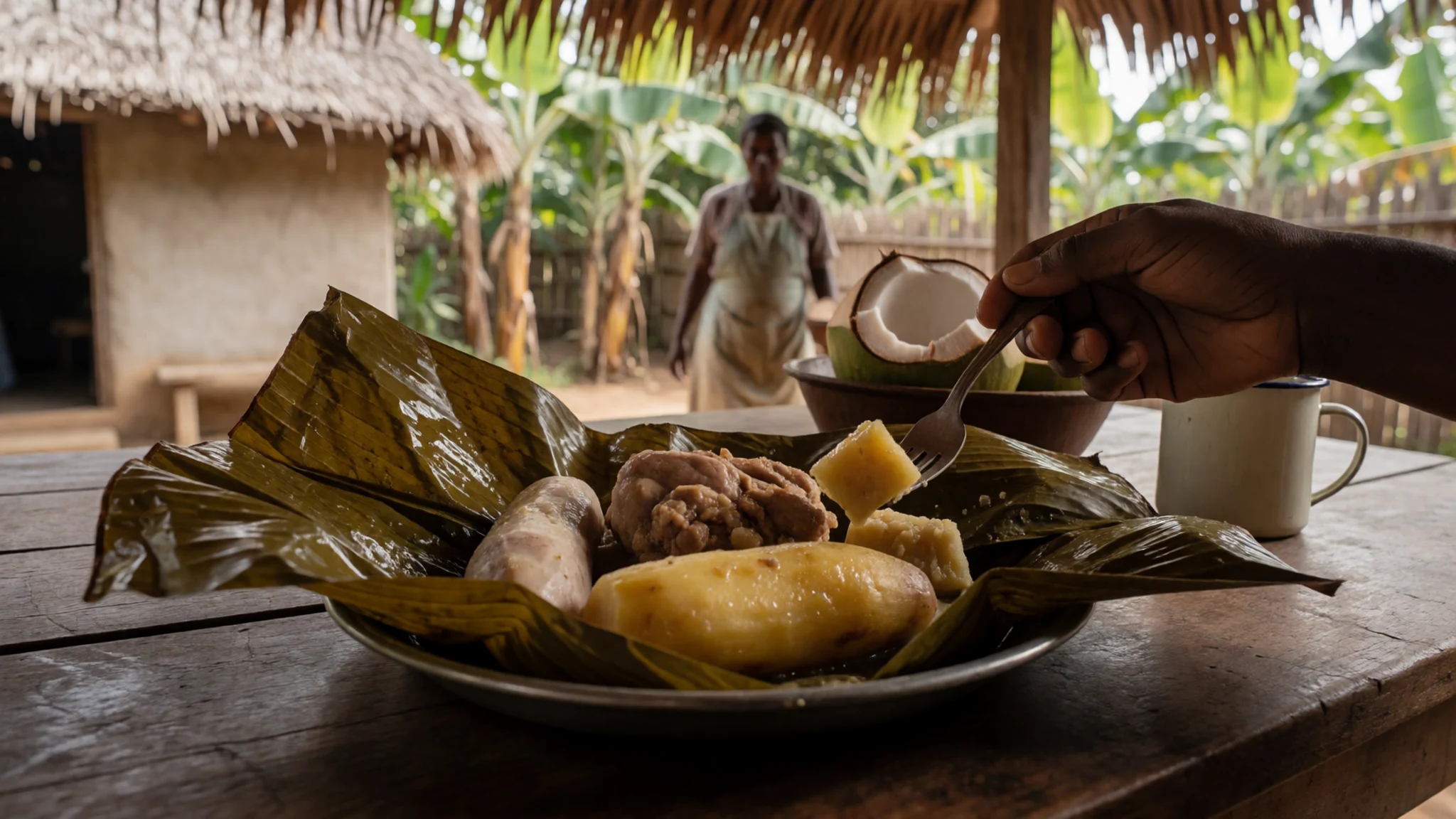
- Yam — Village lunches and roadside stalls
Yam is the staple crop and holds cultural weight, especially around harvest ceremonies. Served boiled or roasted, it is dense, filling and mildly sweet, and it often sits beside fish or meat at lunch. Enjoy it simply, with a little coconut milk if offered.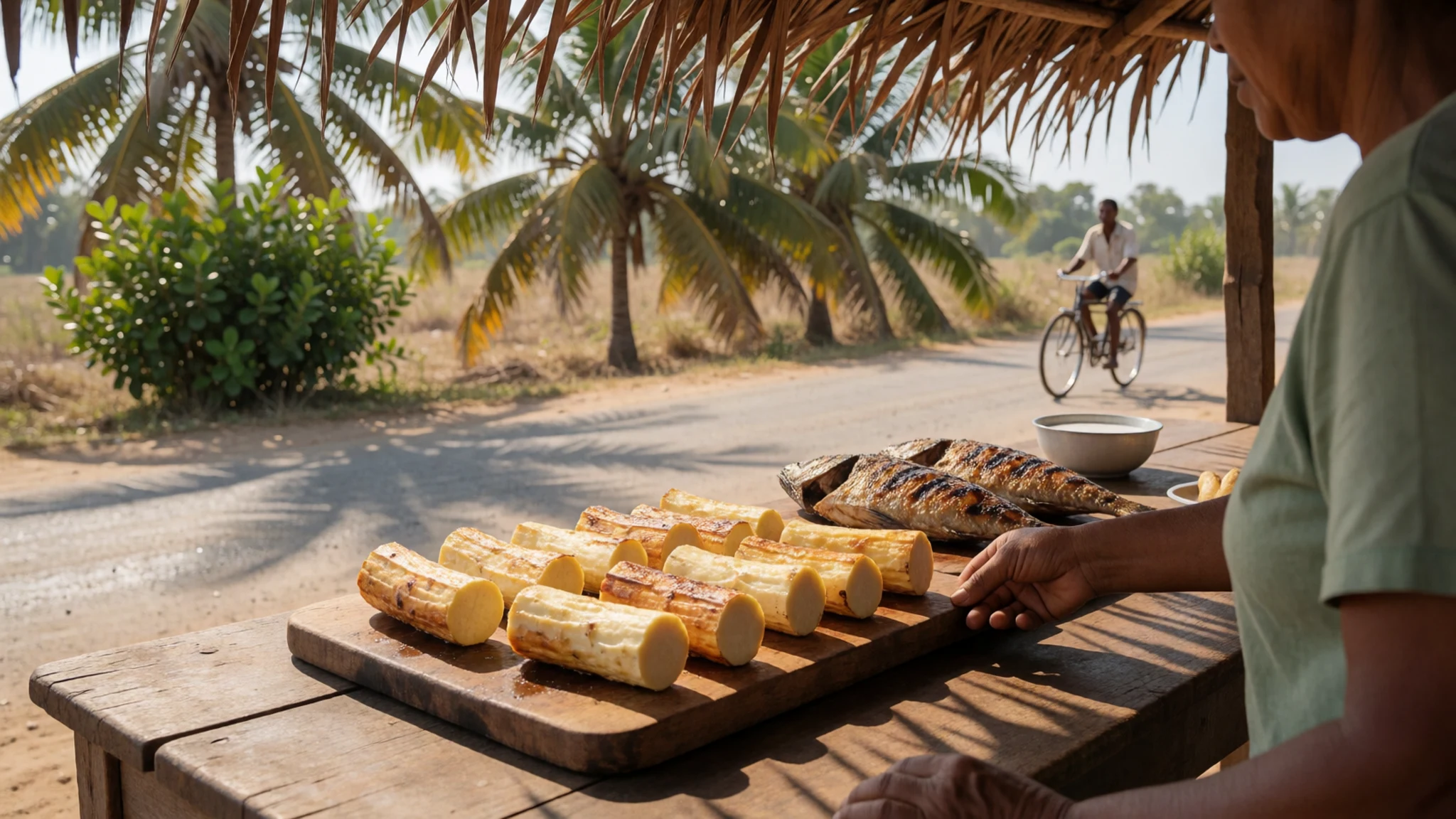
- Taro — Family meals and local markets
Taro is another garden crop on the island, grown for its starchy corm and its leaves. Boiled or steamed, it has a soft, nutty taste and often accompanies fish. It rarely appears on tourist menus, so look for it at family-run tables. - Grilled reef fish — Seaside eateries near Wé and the beaches
Fresh fish from the surrounding sea is cooked over a fire or on a grill, often with lime and a side of root vegetables. It is simple and good. Ask what was caught that day and avoid taking fish from the reef yourself. - Bananas and coconut — Roadside stalls and village gardens
Bananas grow in village gardens and come cooked or raw, sometimes baked in the embers. Coconut, the base of the island's copra trade, shows up as milk, flesh and fresh drinking nuts. Buy from a roadside seller when you see one.
Plan it
Best time. September to November, and May, are the easiest months: warm without the peak heat of February and before the wetter weather. March is the wettest month, and August is the coolest, at about 20 °C, which is still fine for the beach.
How long. 3–4
Getting there. Fly from Nouméa's Magenta domestic airport to Ouanaham airport on Lifou with Air Calédonie, then take a taxi, hire car or pre-booked transfer to your lodging. A ferry from Nouméa also serves the Loyalty Islands, but check the operator's current schedule before relying on it. Cruise passengers arrive by tender at Easo.
Budget. mid
Tips
- Book flights and accommodation well ahead, as seats and rooms are limited
- Hire a car or arrange a driver, since distances and public transport are limited
- Carry cash and food supplies, as card acceptance and shops are sparse outside Wé
- Bring reef-safe sun cream, a rash vest and your own snorkel kit
- Visit beaches early to avoid cruise-ship crowds when a ship is in
Etiquette
- Ask permission before entering private land or photographing people
- Dress modestly in villages and at church, and keep swimwear for the beach
- Do not touch or stand on coral, or take shells from the reef
Nearby
Sources
- Wikidata Q9728 (CC0)
- Wikipedia — Lifou (CC BY-SA 4.0)
- Wikivoyage — Lifou (CC BY-SA 4.0)
- Santal Bay, Lifou, 2007 (Bahnfrend) (CC BY 3.0)
- Lifou falaises Xodre (Bruno.menetrier) (Public domain)
- Locator map of Lifou 2018 (Tschubby) (CC BY 3.0)
- Lifou island (NASA) (Public domain)
- Loyalty Islands Lifou map (Pujolle Sylvain) (CC BY-SA 2.5)
- Corail Lifou (Bruno.menetrier) (Public domain)
- Aboard Pacific Sun, 2007 (Bahnfrend) (CC BY-SA 4.0)
- Blue Swallowtail, Papilio montrouzieri (Bernard Dupont) (CC BY-SA 2.0)


Wildlife
- Blue swallowtail (animal)
The blue swallowtail is a butterfly found nowhere else but New Caledonia, like a scrap of bright sky with wings. Look for it drifting along the verges in sunshine. Stand back, keep quiet and still, and let it wander past in its own time. Never touch it or try to feed it, and consider asking a local guide to help you spot it, so you can enjoy it without disturbing it.