Lambir Hills National Park
Lambir Hills National Park, Malaysia
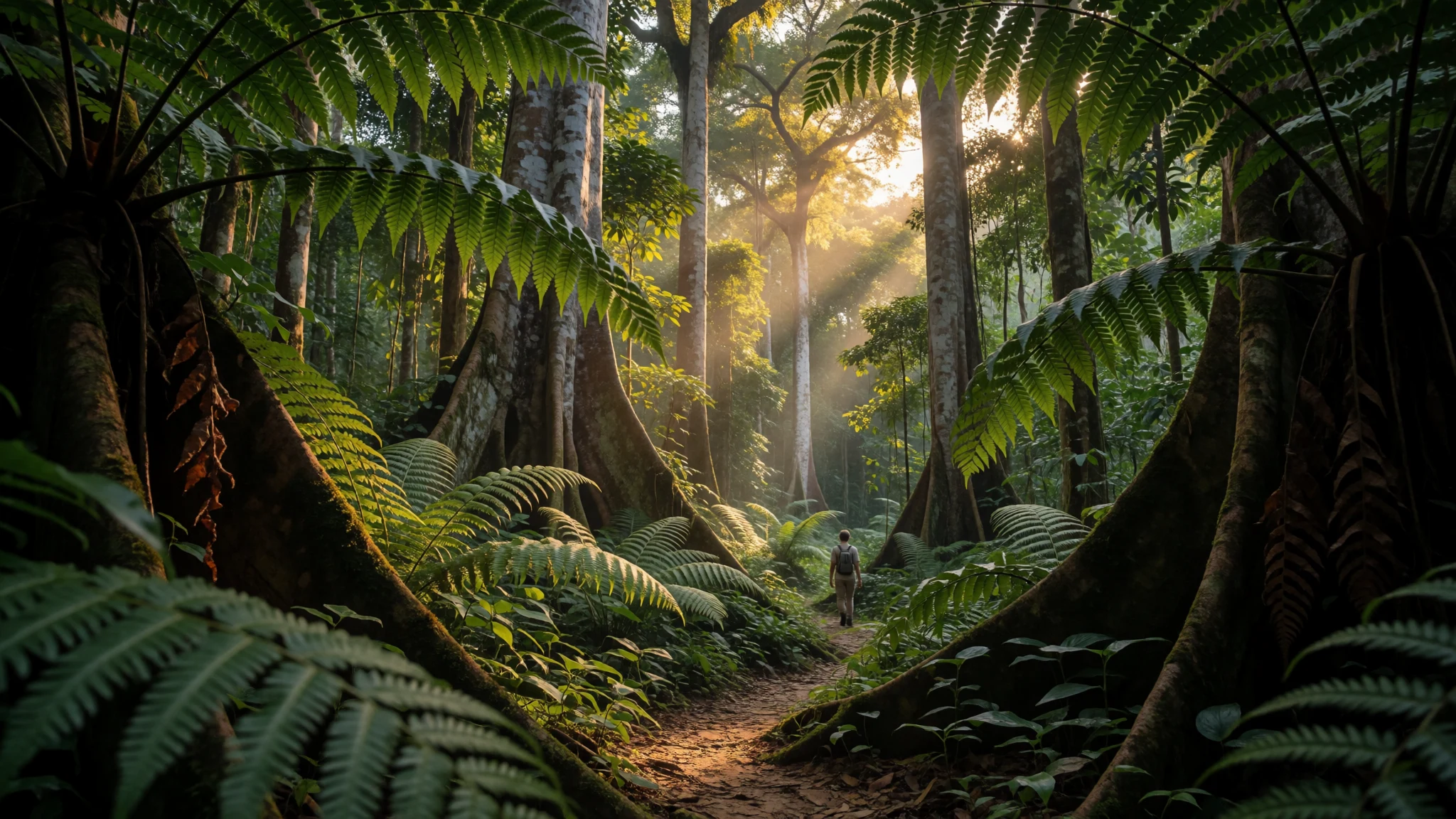
Lambir Hills National Park puts real Bornean rainforest, cool waterfall pools and a treetop walkway within easy reach of Miri.
The place
Lambir Hills National Park sits in northern Sarawak, on the Malaysian side of Borneo, a short drive inland from the oil-and-resort city of Miri. It protects a block of low, steep sandstone hills under lowland rainforest, cut by streams that tumble over rock ledges into clear pools. Nothing here is high or remote. The appeal is how quickly the road gives way to dense green, with straight trunks rising and branches meeting far overhead. The forest is the mixed dipterocarp type, built around the tall, resinous trees that define much of lowland Borneo, and botanists have long treated the park as an outdoor laboratory. Visitors arrive at a headquarters area with a small visitor centre, a car park and simple accommodation, and a network of marked trails fans out from there. Short ones lead to waterfalls and swimming spots; longer ones climb ridges to lookouts over the treetops. Heat and humidity are constant, and rain can arrive in the afternoon with little warning, which turns paths slick and streams brown. Weekends bring local families and school groups to the pools, while weekdays are noticeably quieter. Wildlife is more often heard than seen: cicadas, birdcall at dawn, the occasional squirrel or lizard crossing the path. Patient walkers may spot a hornbill overhead or a snake resting along a branch. The park works well as a half-day or full-day escape from Miri, and as a gentle introduction to Bornean rainforest for anyone not ready for a multi-day trek. Facilities are basic, so food, water and insect repellent are worth bringing from town.
Its story
Lambir Hills National Park owes its shape to geology. The hills are sandstone and shale, laid down as sediment in ancient coastal waters and later lifted and folded. Rain has since carved them into steep ridges and small valleys, and the same rock gives the streams their stepped ledges and plunge pools. Poor, sandy soils on the ridges grow a different forest from the richer ground in the valleys, so a short walk can pass through several kinds of woodland. That variety is a large part of why scientists took an interest. An international forest research plot was set up here, where trees above a set size are tagged, identified and followed over the years, and a canopy walkway and tower were built so that researchers and visitors could work and look at crown level rather than from the ground. Around the hills, much of the surrounding land in this part of Sarawak was logged or converted to plantations and farms, which makes the remaining continuous forest of the park more valuable as a refuge for birds, bats, reptiles and plants. Communities across the Miri hinterland, including Iban and Orang Ulu peoples, have long used forest products from the region, and the park now sits alongside that wider working landscape rather than apart from it. Today it is managed for both protection and visitors, which means the story here is still being written: trails are maintained, research continues, and the pressure of weekend crowds has to be balanced against the quiet that the forest needs.
What to see
- Latak Waterfall — Near the park headquarters
Latak Waterfall is the easy first stop from the park headquarters, reached by a gentle forest path. Water slides over a sandstone ledge into a shallow pool shaded by trees. It is popular for paddling, especially at weekends, so weekday mornings are calmer. The rock is slippery, and the stream can rise fast after rain.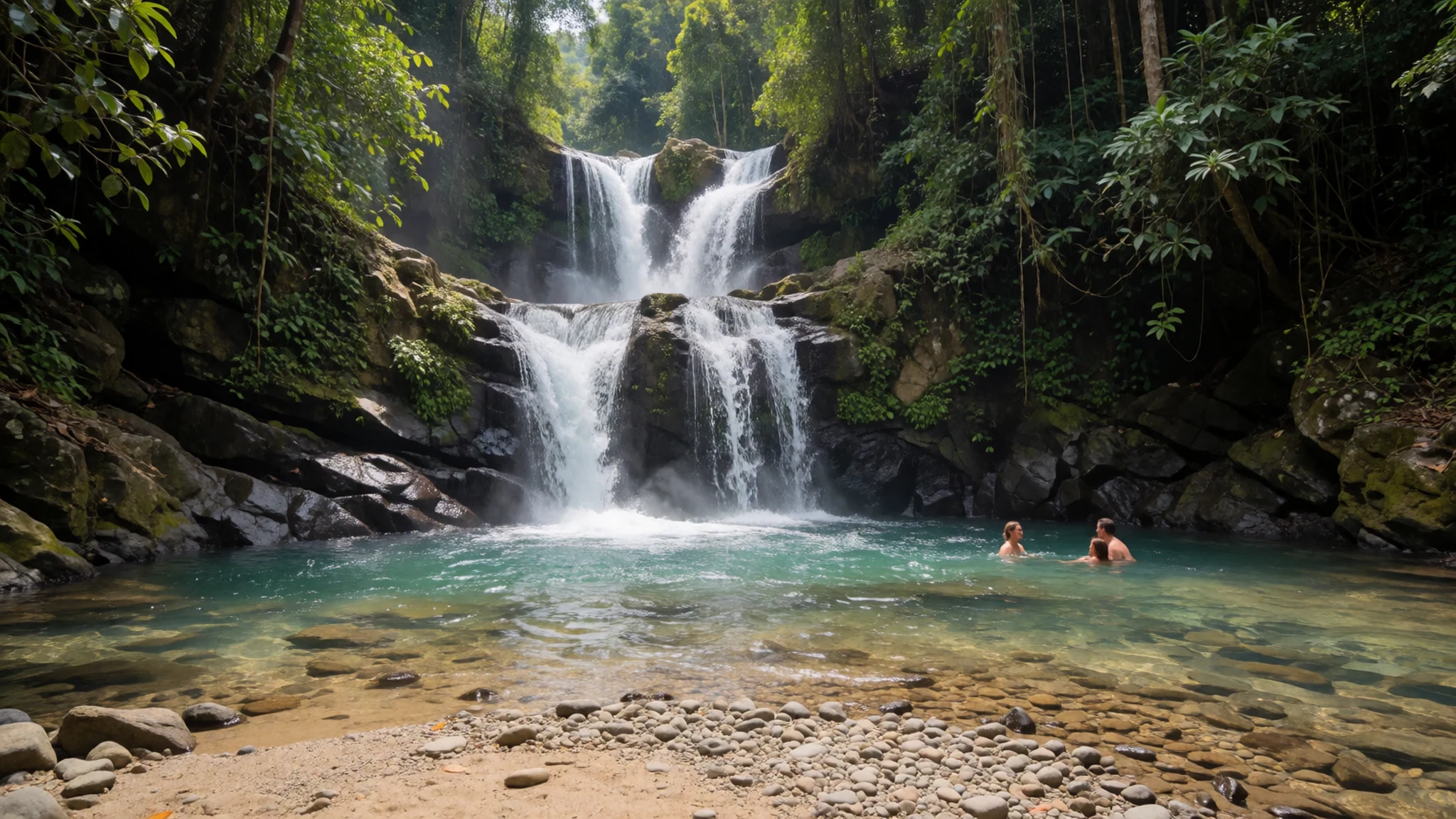
- Nibong Waterfall and the stream trails — Stream trails inside the park
Beyond Latak, the trail follows the stream upstream past smaller cascades and rock pools, each quieter than the last. The path crosses water several times and is rooty in places, so proper footwear matters. Nibong Waterfall is a worthwhile objective for walkers who want a longer outing without a steep climb.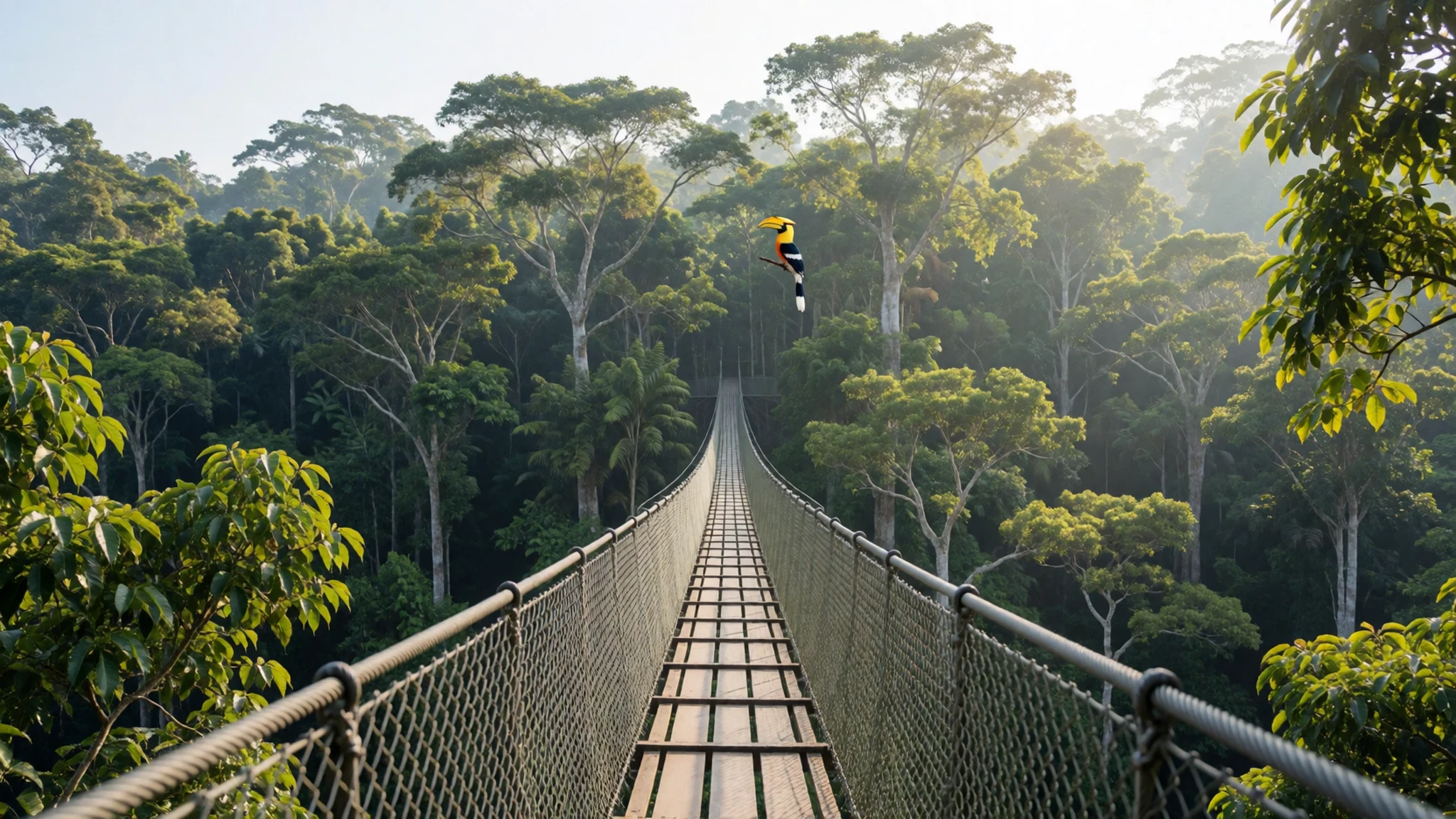
- The canopy walkway — Forest research area, inside the park
A suspended walkway lifts visitors into the middle of the forest, among crowns of tall trees, epiphytes and climbers that are invisible from the ground. Birds and insects are easier to spot at this height. Access can depend on maintenance and weather, so ask at the visitor centre before planning a day around it.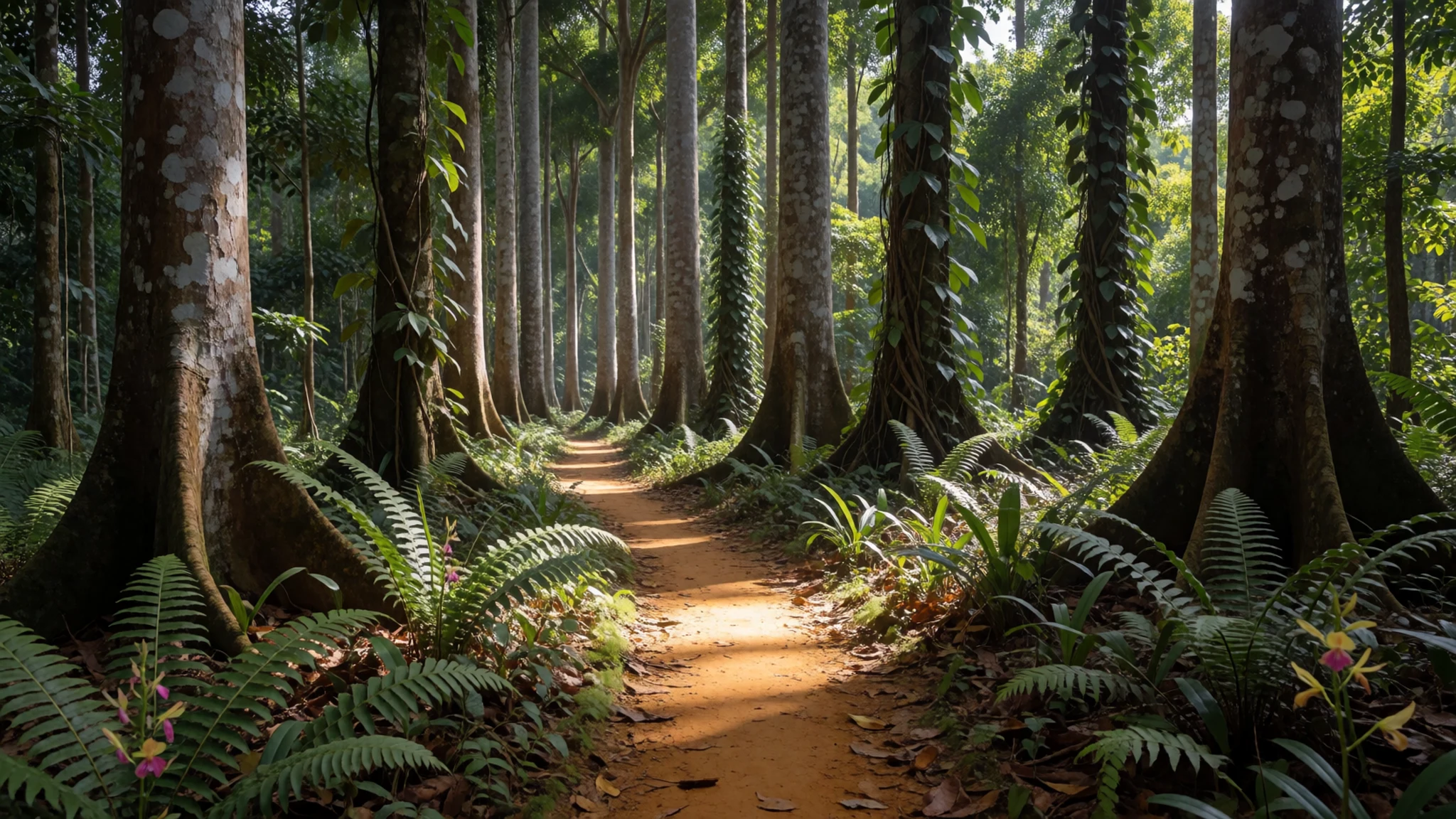
- Ridge trails and the summit lookouts — Ridges above the headquarters
Longer trails climb sandstone ridges through drier, more open forest, and the effort is real in the heat. At the top, lookouts give a view across unbroken canopy towards the coast on clear days. Start early, carry plenty of water, and check conditions with park staff before setting out.
- Snakes and other wildlife on the trail — Forest edges and trailsides
The park's reptiles are part of the experience, including the Bornean keeled green pit viper, a slow, well-camouflaged snake that rests on low branches. Look, do not touch, and keep a safe distance. A torch on any walk near dusk helps. Bird calls at dawn and dusk are often the best clue that wildlife is near.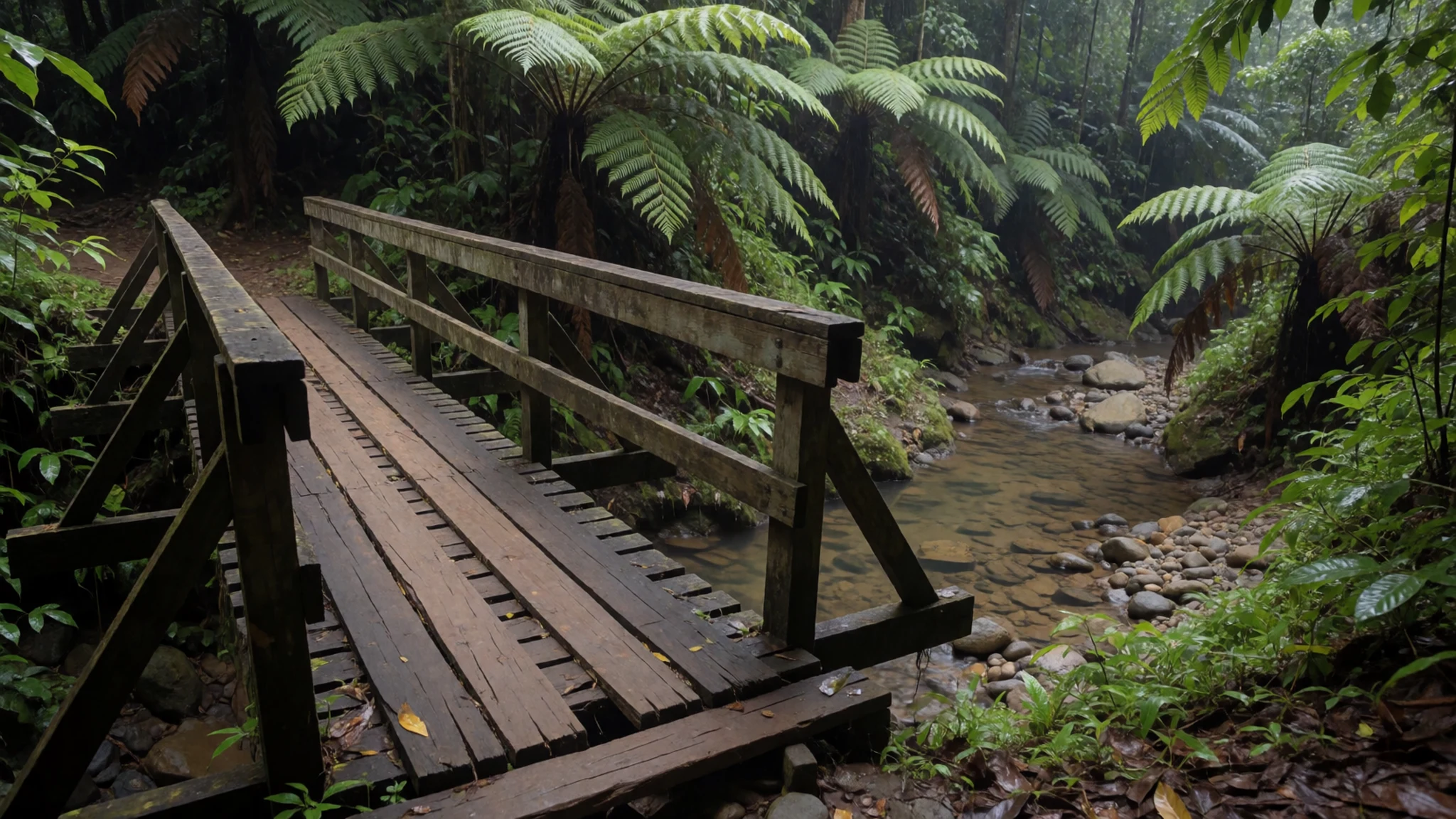
Culture
Lambir Hills National Park lies in a part of Sarawak where Iban, Orang Ulu, Malay, Melanau and Chinese communities share towns such as Miri, and where many families keep ties to longhouses and villages in the interior. Forest is not simply scenery in these traditions. It supplies timber, medicinal plants, rattan, bamboo and wild foods, and it carries stories, taboos and ideas about omens, including the meaning of particular birds. The hornbill is a powerful symbol across Borneo, appearing in carving, beadwork and festival costume, and it is a reason to listen for the heavy wingbeats overhead. Many visitors to the park are local Malaysians, and the mood at the pools is relaxed, with picnics, laughter and children in the water, especially around public holidays and school breaks. Harvest festivals and Christmas are major events in Sarawak's calendar, and Miri's restaurants and markets reflect that mix of communities throughout the year. A visit here is easy to combine with a stop at a market or a longhouse tour arranged through a local operator, which is a more respectful way to meet communities than turning up uninvited. Rain and heat set the rhythm of the day, and local people tend to do things early, then rest through the hottest hours. Keep to the marked trails, carry your litter out, and if you are invited into a longhouse, ask before photographing people or their belongings and follow your host's lead on where to sit and when to eat.
What to wear
Lambir Hills National Park is a forest, so the clothing story here begins with the communities around it. Iban women traditionally weave pua kumbu, ritual cotton blankets patterned by tie-dyeing the threads before weaving, and wear them or hang them at ceremonies. Orang Ulu communities are known for beadwork, with intricate collars, headbands and baby carriers, and for feathered headdresses that draw on hornbill imagery. Malay festive dress includes baju kurung and songket, a silk or cotton cloth brocaded with metallic thread, usually worn at weddings and Hari Raya. Traditional dress comes out mainly at harvest festivals, weddings and cultural events. In daily life in Miri, people wear light cotton shirts, T-shirts, jeans or loose trousers, and long dresses or skirts, with sandals or trainers. Modesty norms are relaxed in the city, but covering shoulders and knees is polite away from the beach, particularly in mosques and in villages. For the park itself, wear quick-drying light clothing, long trousers if possible against insects and scratches, and a hat. Shoes with a good grip matter more than style, because sandstone and wet roots are slippery. Bring a light rain jacket, and a change of clothes if you plan to swim. Swimwear is fine at the pools but cover up on the walk back and when stopping at village stalls and eateries.
What to eat
- Sarawak laksa — Any breakfast kopitiam or coffee shop in Miri
Sarawak laksa is a noodle soup with a fragrant paste base, thin rice noodles, prawn, shredded chicken and omelette. It is lighter than versions found elsewhere in the region and is a standard breakfast in Miri.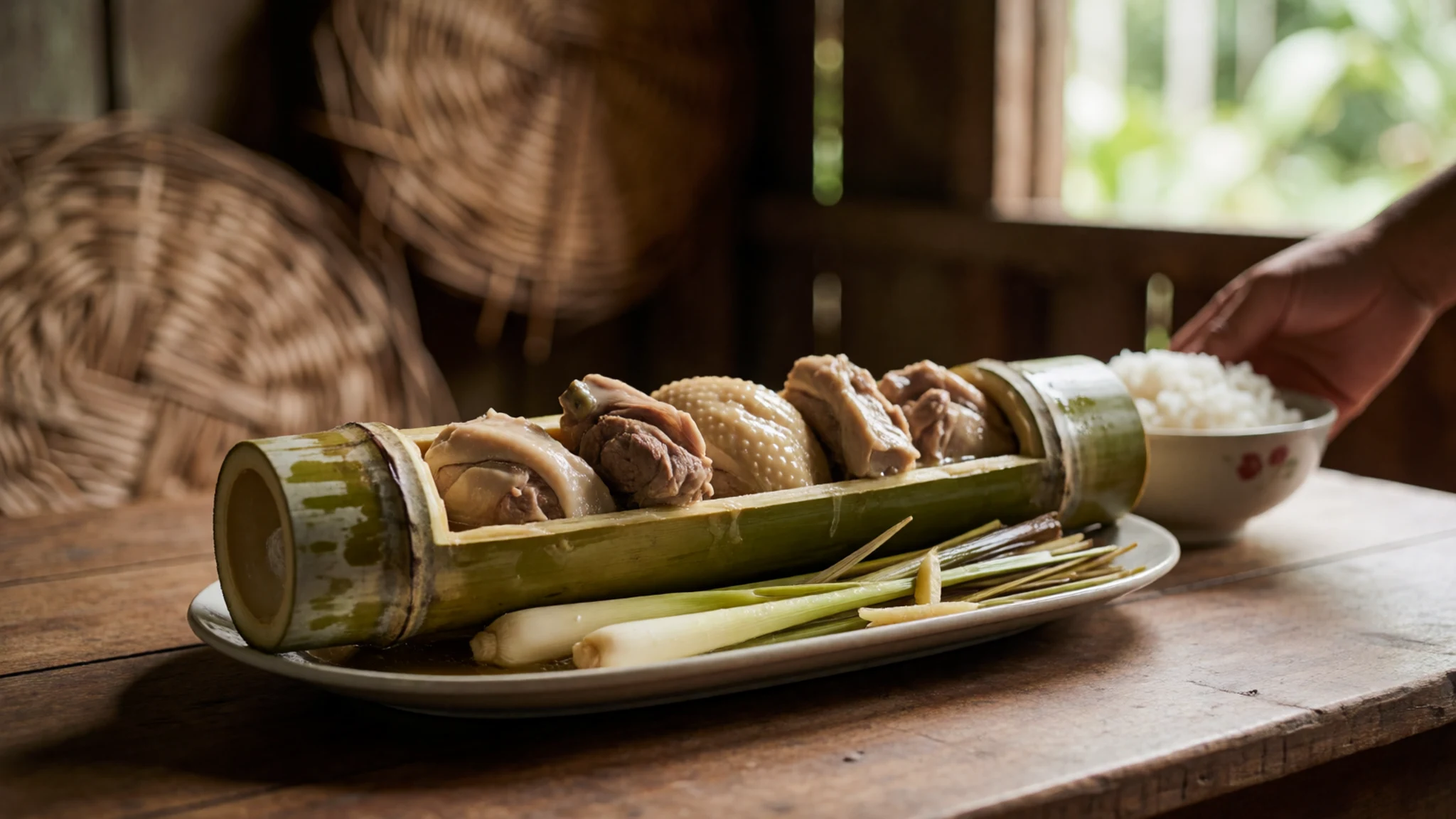
- Kolo mee — Coffee shops and hawker centres in Miri town
Kolo mee is a dry noodle dish tossed in a light, slightly sweet sauce with minced pork or beef, barbecue-style meat and spring onion. It is a quick, cheap lunch and sold from early morning in coffee shops.
- Ayam pansuh — Longhouse meals and restaurants serving Sarawak native food
Ayam pansuh is chicken cooked inside a length of bamboo with lemongrass, ginger and tapioca leaves, an Iban method that gives the broth a clean, smoky depth. It is often served at festivals and at longhouse meals. - Midin — Local restaurants and the open-air tamu market in Miri
Midin is a wild jungle fern, crisp and slightly sweet, stir-fried with garlic or belacan, the fermented shrimp paste. It is a common side dish and a good vegetable choice when other greens are scarce. - Umai — Seafood restaurants and eateries along the Miri waterfront
Umai is a Melanau dish of raw fish cured in lime juice with onion, chilli and ginger, similar in idea to ceviche. It is eaten fresh and cold, and it makes a good light starter after a hot day.
Plan it
Best time. March to September is generally the drier part of the year, with fewer rain-soaked afternoons, though showers can arrive in any month. November to February brings the heaviest rain, which can swell streams and close trails. Heat and humidity stay high all year.
How long. 1–2
Getting there. Fly to Miri Airport, which has domestic links around Malaysia and some regional routes. From Miri, the park is a short drive south along the main trunk road, by taxi, ride-hailing app or hired car. Public buses run along the road, but the last stretch to the park headquarters may need a short walk or a taxi. Check the official Sarawak Forestry or national parks pages for current access and entry details.
Budget. low
Tips
- Go on a weekday morning to avoid weekend crowds at the pools
- Bring water, insect repellent, a hat and a small towel
- Carry some cash, as the park and nearby stalls may not take cards
- Ask at the visitor centre about trail and canopy walkway conditions before setting out
- Start longer hikes early to avoid afternoon storms and the worst heat
Etiquette
- Stay on marked trails and keep a safe distance from snakes and other wildlife
- Take all rubbish out with you and keep music low in the forest
- Ask before photographing people, and follow your host's lead at any longhouse
Nearby
Sources
- Wikidata: Lambir Hills National Park (CC0)
- Wikipedia: Lambir Hills National Park (CC BY-SA 4.0)
- Wikivoyage: Lambir Hills National Park (CC BY-SA 4.0)
- Wikimedia Commons: Lambir Hills photographs (CC BY-SA 4.0 / CC BY-SA 2.0)
Wildlife
- Bornean keeled green pit viper (animal)
Remember the Bornean keeled green pit viper as the green snake with the very long name. Lambir Hills National Park shelters a rich mix of wildlife, and this viper is one of the animals that live there. Ask a local guide to help you look, keep a generous distance, stay calm and quiet, and never touch it or try to feed it. Patience and respect are the best ways to watch it well.