Lala Mustafa Pasha Mosque
Lala Mustafa Pasha Mosque, Cyprus
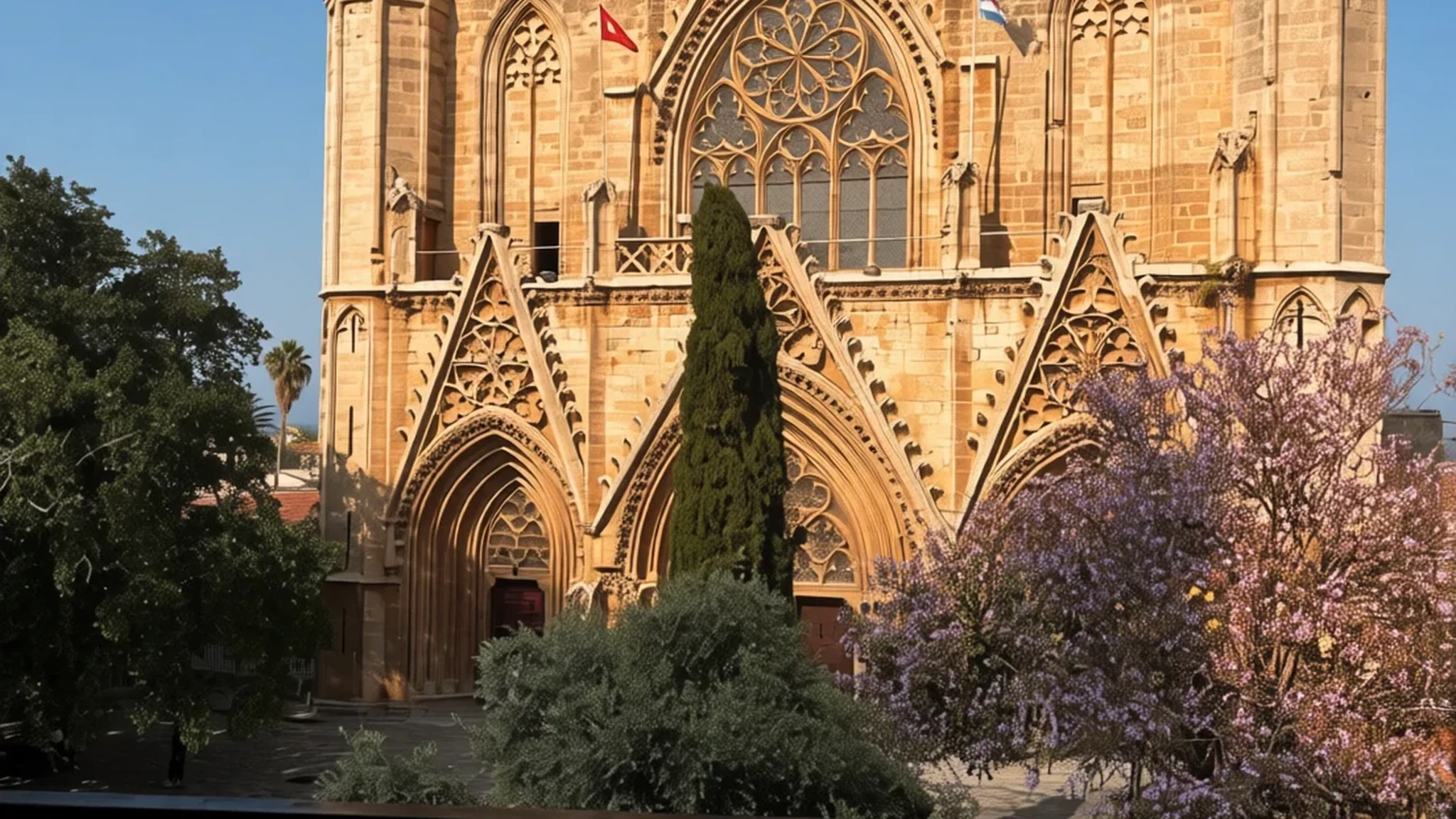
Lala Mustafa Pasha Mosque is a French Gothic cathedral turned mosque, where Crusader-era stonework and a minaret share one skyline in Famagusta.
The place
Lala Mustafa Pasha Mosque stands in the walled old town of Famagusta (Gazimağusa), on the east coast of Cyprus, in the northern part of the island administered as the TRNC. From the square it looks like a French cathedral that has acquired a minaret. It has three tall doorways, twin towers over the side aisles, a flat roofline and a pale stone face that warms to honey colour in the late afternoon. Inside, the nave is open and uncluttered. There are no pews, carpets cover the floor, and the Gothic vaulting rises overhead without the clutter of altars or statues. The building has led two lives. It was the Catholic Cathedral of Saint Nicholas, and since the Ottoman conquest of 1571 it has served as a mosque. It was known for centuries as the Ayasofya Mosque. Only from 1954 did it take its present name, honouring the Ottoman grand vizier who led the campaign against Venetian Cyprus. Around it the old town is low-rise and quiet, with cafés and eateries along Namık Kemal Sokak, fragments of Lusignan and Venetian buildings, and sea walls a short walk away. The mosque is the town's visual anchor and the easiest landmark for finding your bearings. Most visitors give it an hour, then spend the rest of the day wandering the ruins and lanes nearby. Famagusta itself was once known to Greek speakers as Ammochostos, 'hidden in the sand'.
Its story
Lala Mustafa Pasha Mosque began as a statement of Lusignan power. The French dynasty ruled Cyprus as kings from 1192 to 1489 and brought current Gothic fashion with them. Work on the cathedral ran from 1298 to 1312, and it was consecrated in 1328. A carved inscription beside the south door records how far the building had got in 1311. Funds came partly from a bequest by Bishop Guy of Ibelin, though the building fund is also said to have suffered when one bishop helped himself to it. The style is Rayonnant Gothic, rare outside France, and its likeness to Reims Cathedral earned it the nickname 'the Reims of Cyprus'. Famagusta's cathedral held a special role in royal ceremony. Lusignan kings were crowned kings of Cyprus in Nicosia, then crowned again as kings of Jerusalem here, a claim that was more symbolic than real. Some time after 1480 the Venetians, by then the island's masters, added the small Loggia Bembo at the south-west corner as a meeting chamber. In 1571 the Ottomans took Famagusta after a long siege, and the cathedral became a mosque, with the minaret and prayer arrangements added to the Gothic shell. Venetian anxiety over this very conflict even left a trace in literature: Shakespeare's Othello, set in a Cypriot port that notes suggest is Famagusta, was written when the memory of 1571 was still fresh.
What to see
- The west front — Mosque square, Famagusta old town
Stand in the square and read the facade: three portals, twin towers and the traceried windows that give the building its French feel. The minaret on the side is the clearest sign of the building's second life. Late afternoon light suits the stone best.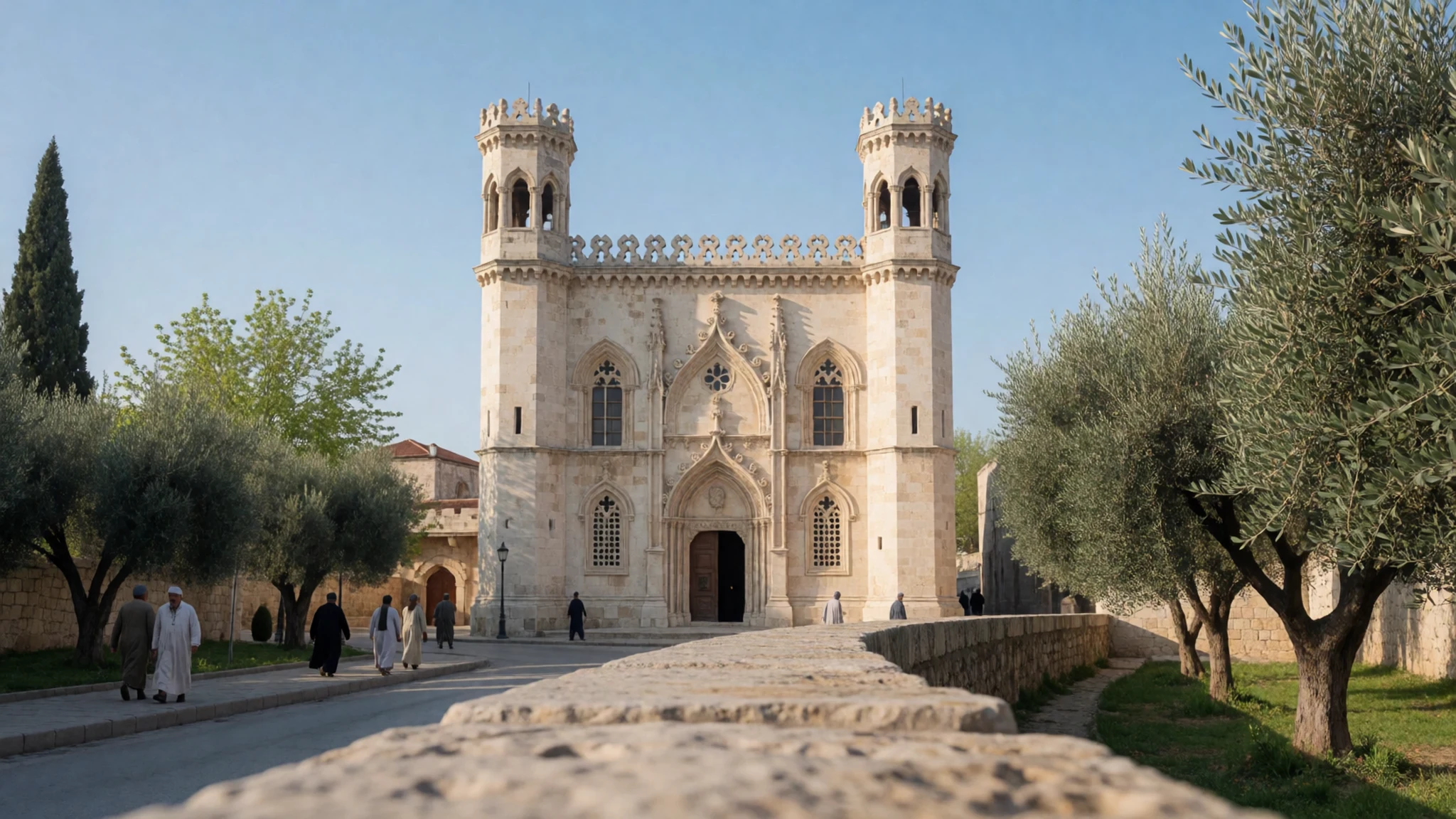
- The prayer hall — Inside the mosque
Inside, the Gothic ribs and tall windows are left to speak for themselves. The absence of pews and statues makes the space feel larger than the outside suggests. Visit outside prayer times, keep voices low, and look up at the vaulting rather than around for ornament.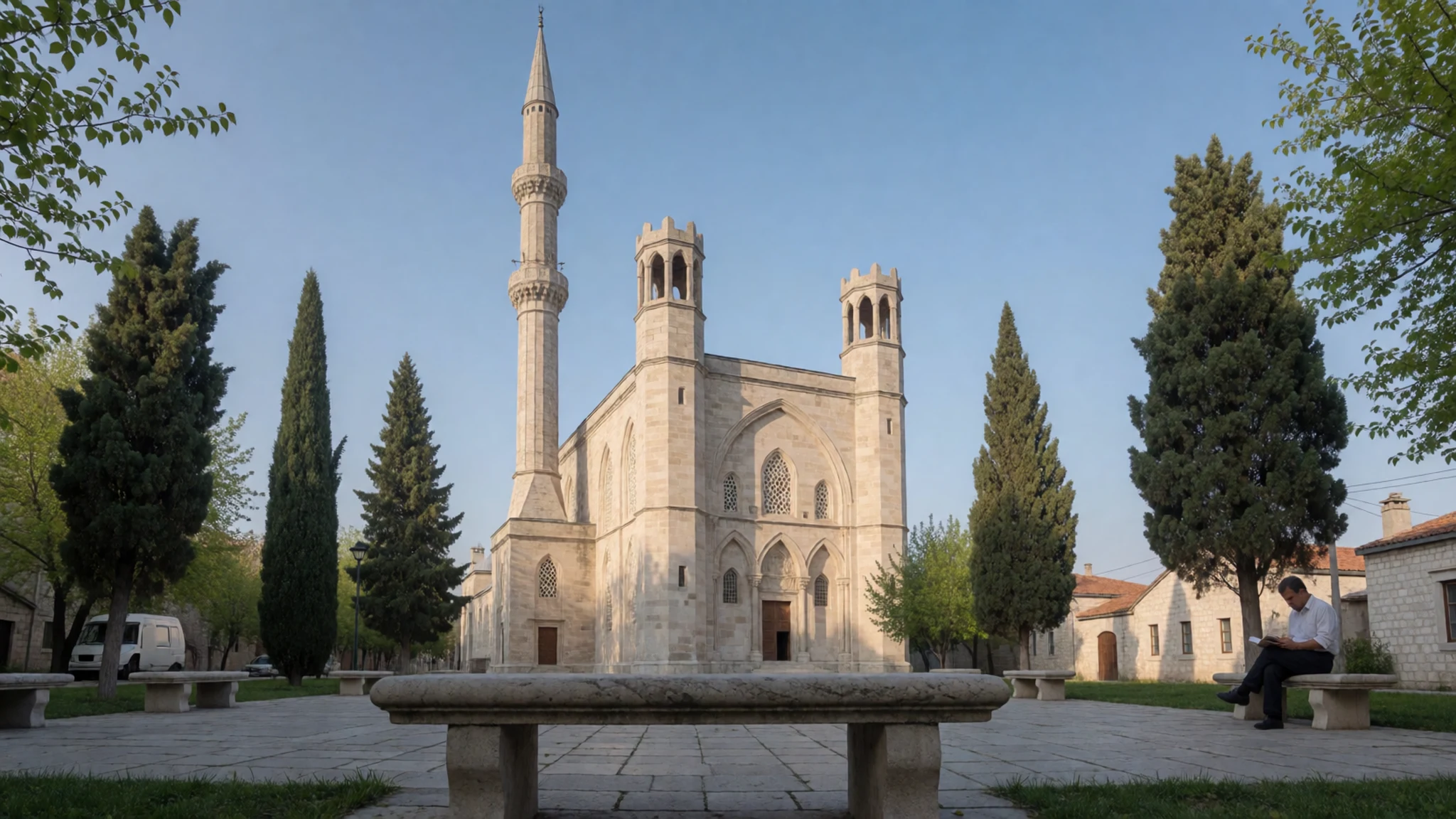
- The 1311 inscription — South side of the mosque
On a buttress beside the south door, a carved inscription records the state of construction in 1311. It is easy to miss and small, but it pins a human date on a very large building. Look for it at about head height and photograph it from a step back.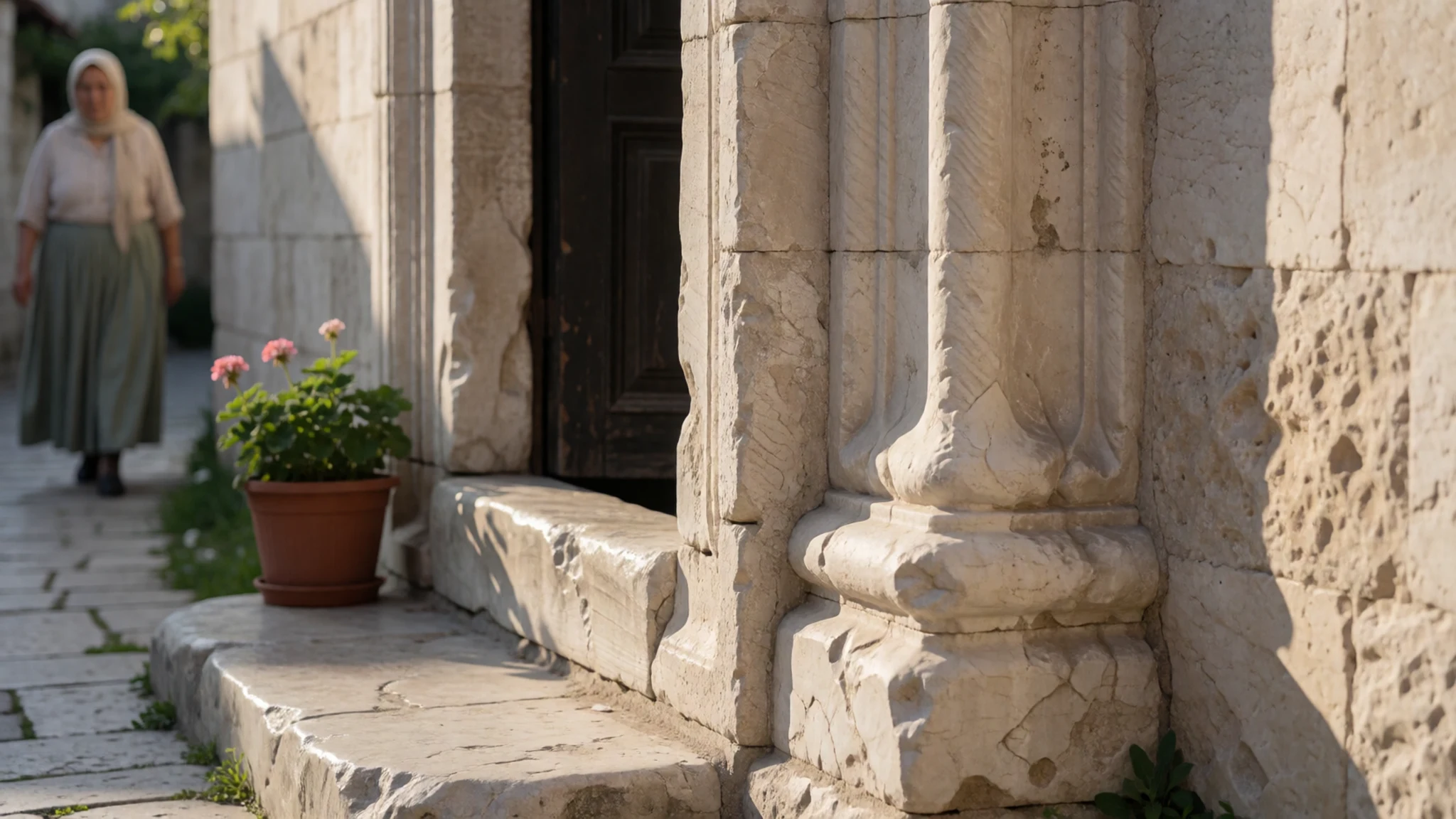
- Loggia Bembo — South-west corner of the mosque
This small meeting chamber was attached at the south-west corner after about 1480, during Venetian rule. Its entrance carries finely worked Renaissance detail, a neat contrast with the severe Gothic wall beside it. Look for old carved stones used as seats in front.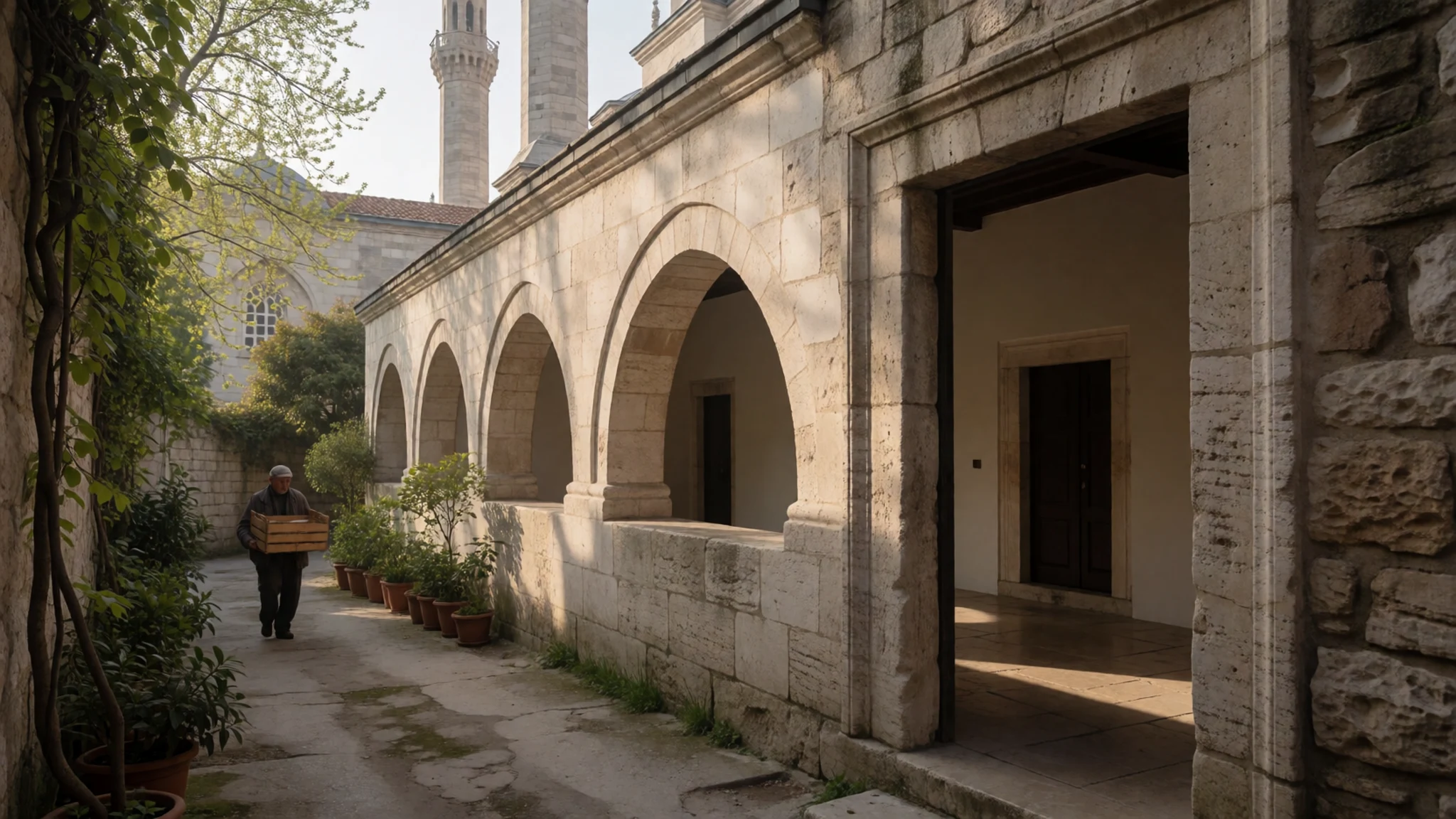
- Palazzo del Provveditore and Namık Kemal's Dungeon — Namık Kemal Caddesi, old town
Just along Namık Kemal Caddesi, only the facade of this Lusignan-era palace remains. Part of the complex was used as a prison for the writer Namık Kemal in the 1870s, and it now carries his name. It makes a quick stop between the mosque and the castle.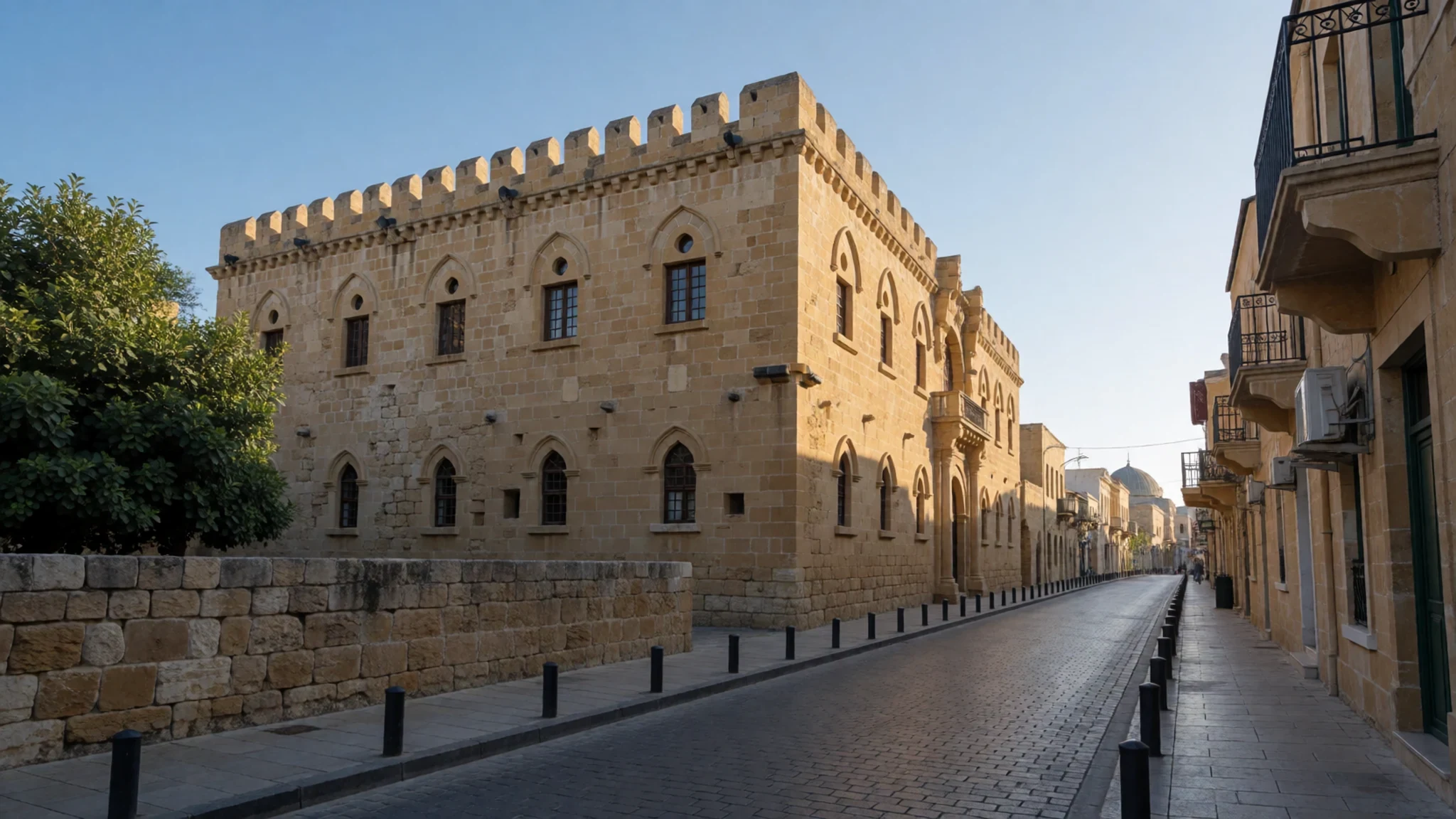
Culture
Lala Mustafa Pasha Mosque shows how a single building can carry two religious traditions without erasing either. Its Gothic structure was designed for Catholic ritual under French-descended kings. Since 1571 it has been a place of Muslim worship, and that is the role it plays today, with prayers held in the same space that once held a Latin liturgy. Local people use it as a working mosque, not just a monument, and the call to prayer carries across the old town. The history is also tied up with wider politics. Cyprus has been divided for decades, and Famagusta sits in the northern part, so the mosque is read differently depending on who is telling the story: as a Gothic treasure, as an Ottoman conquest, or as part of the island's shared past. Most visitors simply admire the architecture and move on, but a little reading beforehand helps. The Venetian fortifications, the Lusignan palace fragments and the 'Othello' connection all point to Famagusta's role as a Mediterranean crossroads. Friday midday prayers are the busiest time, and the building is quiet and generally more welcoming outside prayer hours. Take off your shoes before stepping onto the carpet, dress modestly with shoulders and knees covered, and stay out of the prayer hall when worshippers are praying.
What to wear
Fashion around Lala Mustafa Pasha Mosque mixes Turkish Cypriot tradition with everyday Mediterranean clothing. Traditional dress, seen mostly at weddings, folk performances and festivals, uses cotton, silk and wool. Women wear embroidered blouses with full skirts or the baggy trousers called şalvar, often with a headscarf or a lace-edged veil. Men wear a waistcoat over a white shirt with dark trousers or a sash. Handwork such as crochet lace and needlework is a long-standing local craft. In daily life, people dress much as they do across the eastern Mediterranean: light cotton, linen and denim, with a mix of conservative and casual styles. Many women wear headscarves, many do not, and students around the university dress in whatever is fashionable. For visitors, the climate calls for light, breathable clothing and a hat, since summers are hot and the old town has little shade. For the mosque itself, cover shoulders and knees. Women should carry a light scarf for their hair, and men should avoid shorts. Shoes come off at the entrance, so slip-ons are easier. Comfortable walking shoes are essential for the uneven paving and ruined sites nearby, and a light layer is handy in winter, when evenings can be cool and breezy.
What to eat
- Set meze — Restaurants along Namık Kemal Sokak, near the mosque
A spread of small dishes arrives in waves: salads, dips, grilled cheese, meats and bread. It is designed for sharing and is a good way to try many things at once. Ask for a set meze at the larger old-town restaurants.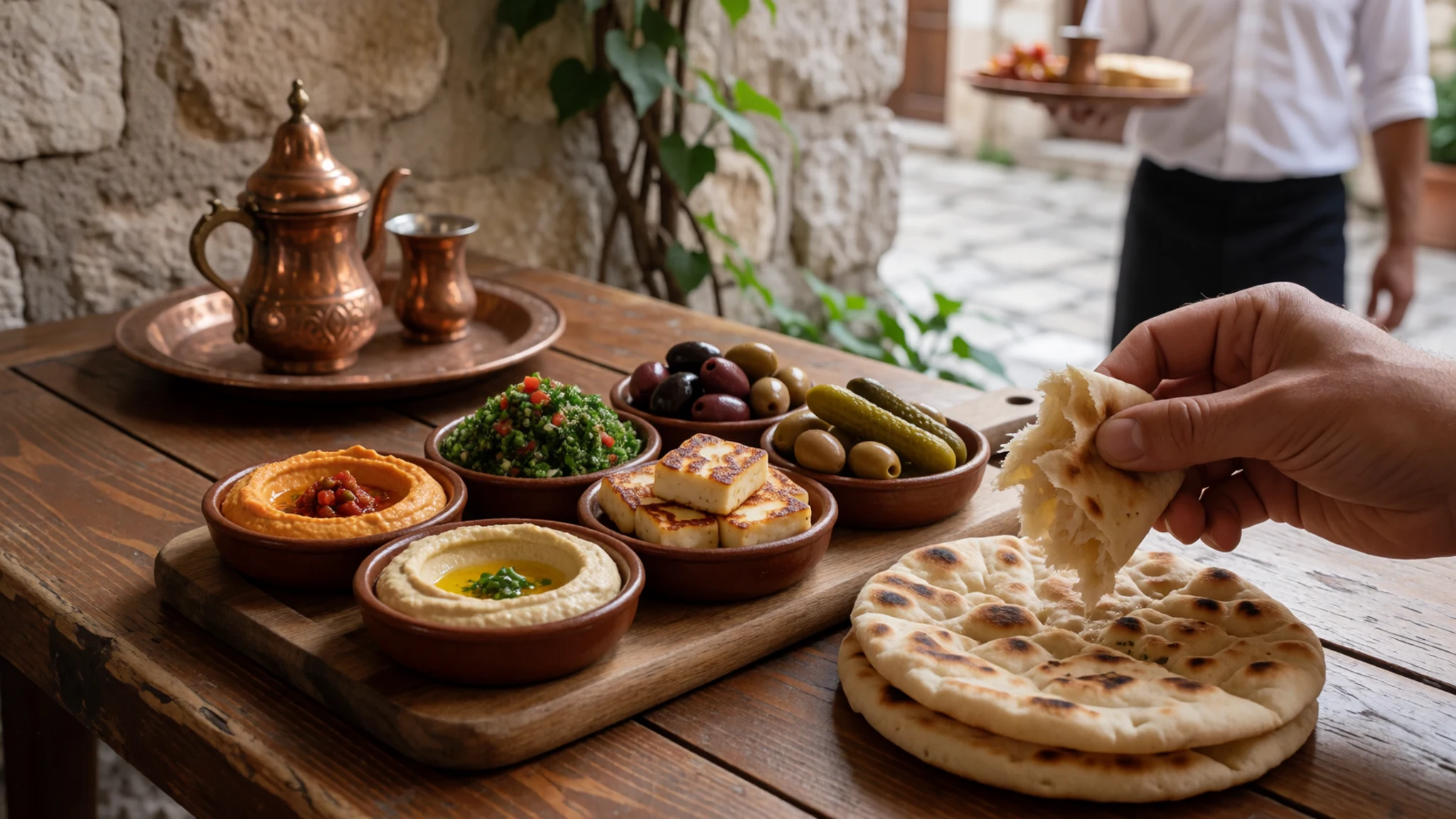
- Hellim — Old-town eateries and café breakfast tables
Grilled or fried Cypriot cheese, firm and salty, usually served with bread, tomatoes and olives. It also appears in breakfast spreads and sandwiches. Look for it on most menus, and order it hot.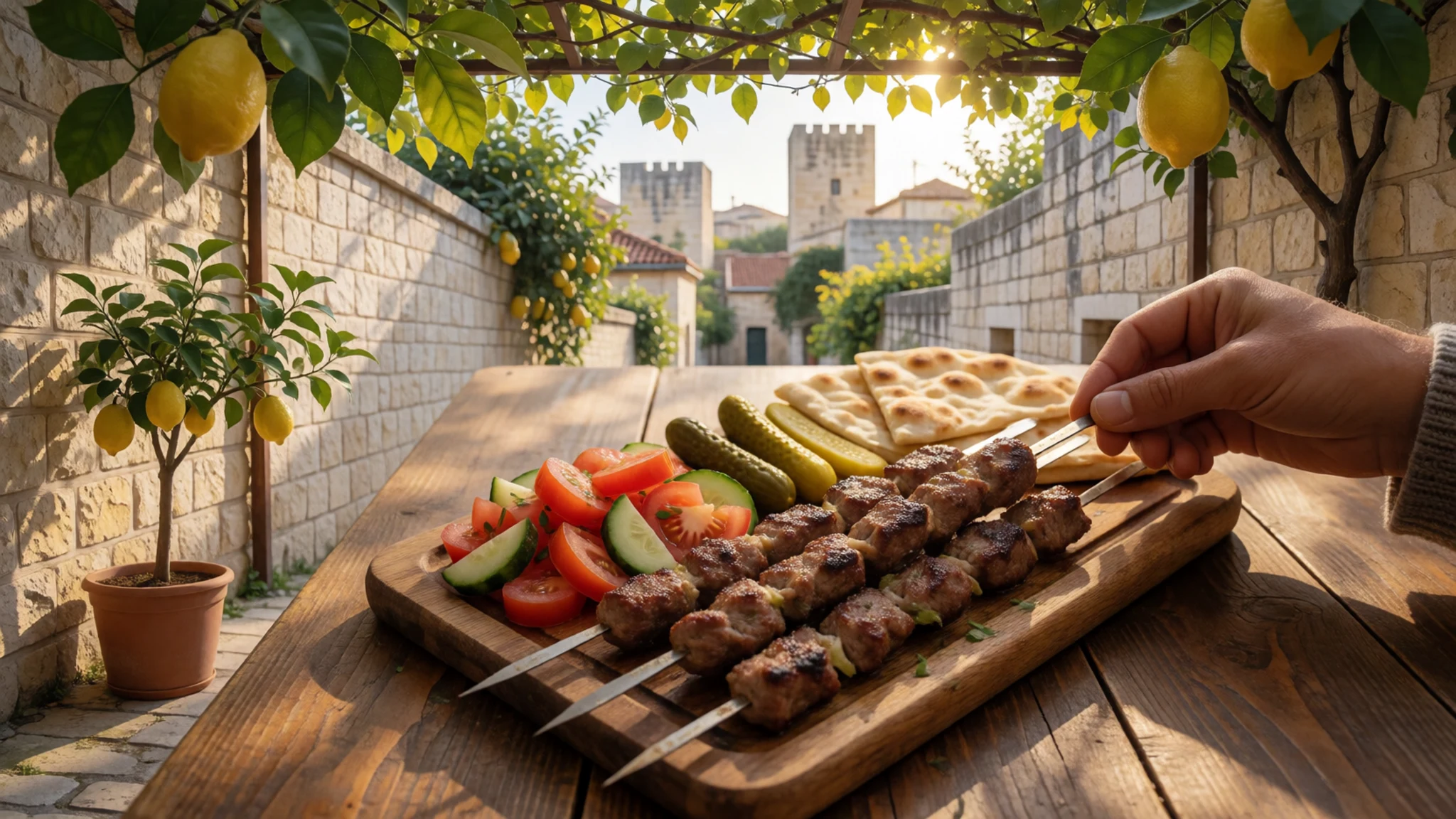
- Şiş and köfte kebab — Casual kebab places in the old town and the Salamis road
Grilled skewered meat or spiced meatballs, served with flatbread, salad and grilled vegetables. Simple, filling and widely available, it is the standard lunch for many local people and visitors alike.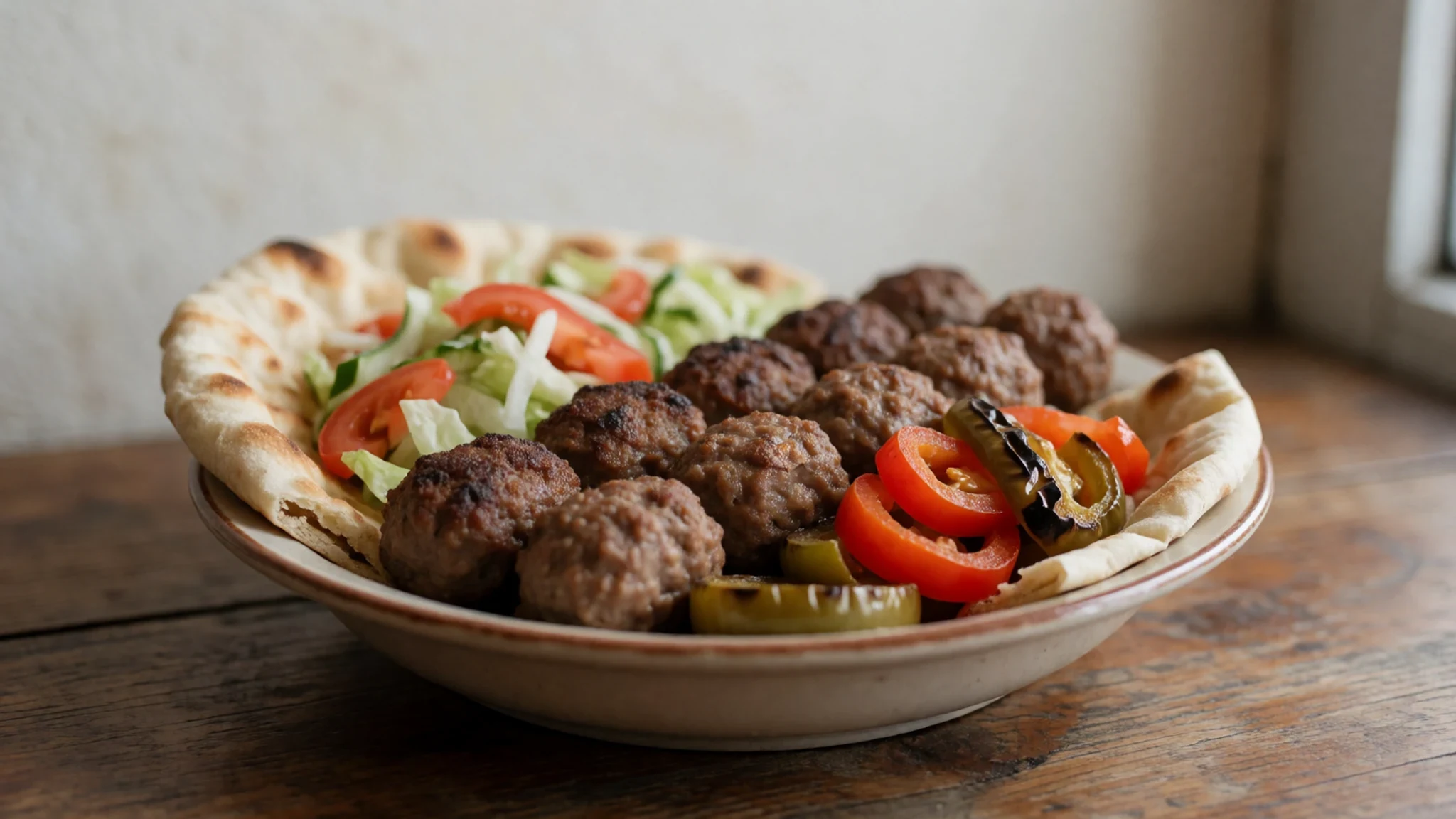
- Turkish coffee — Cafés on the squares around the mosque
Strong, small cups of coffee, brewed with the grounds left in and often served with a glass of water. Sip slowly and stop before the sediment. It suits a pause after the mosque.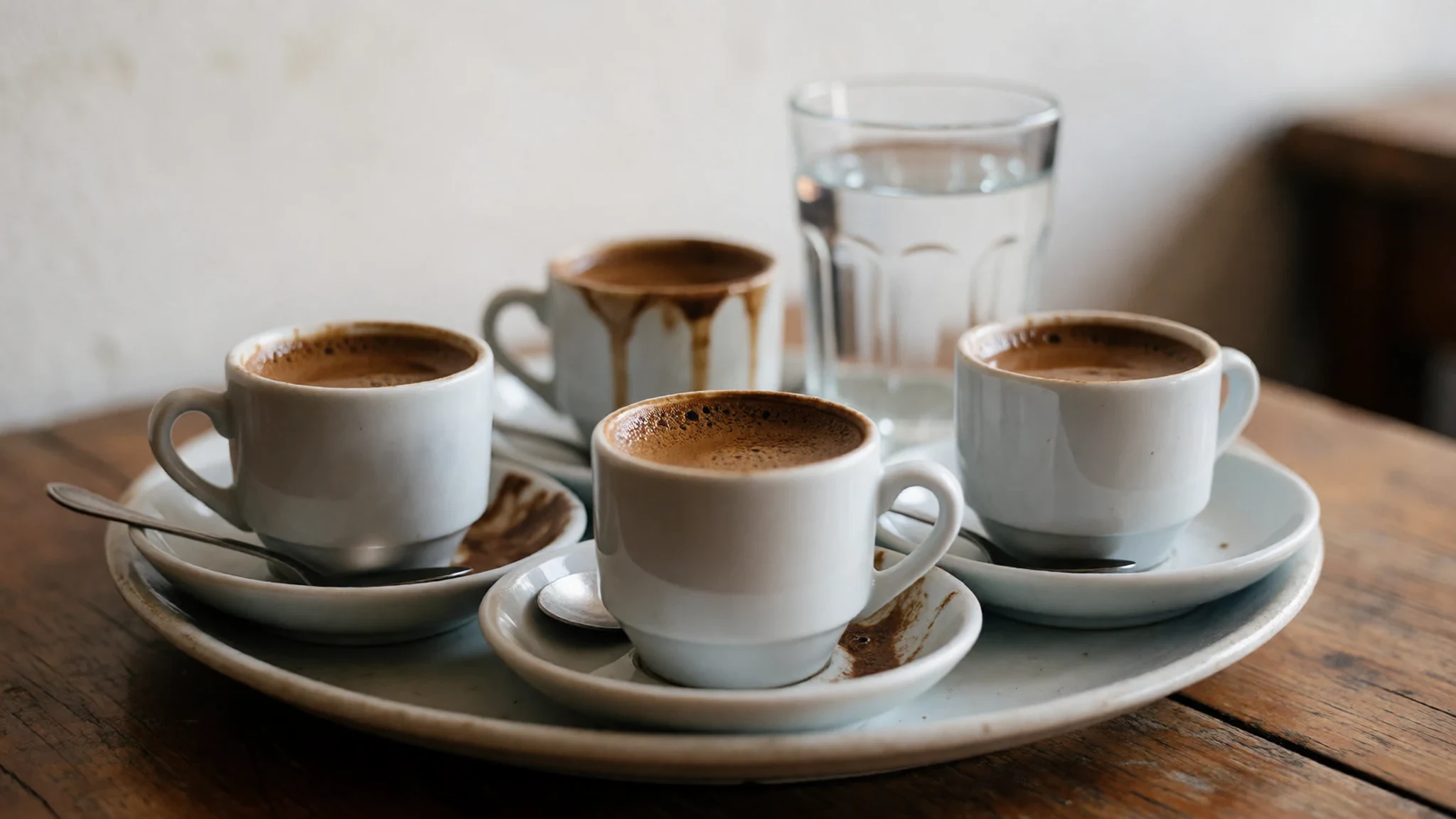
- Market produce and snacks — The Thursday market at the bus station
Fruit, vegetables, olives, pastries and clothing fill the stalls on market day. It is a good place for seasonal fruit, nuts and sweets to take back to the hotel room or eat on a bench.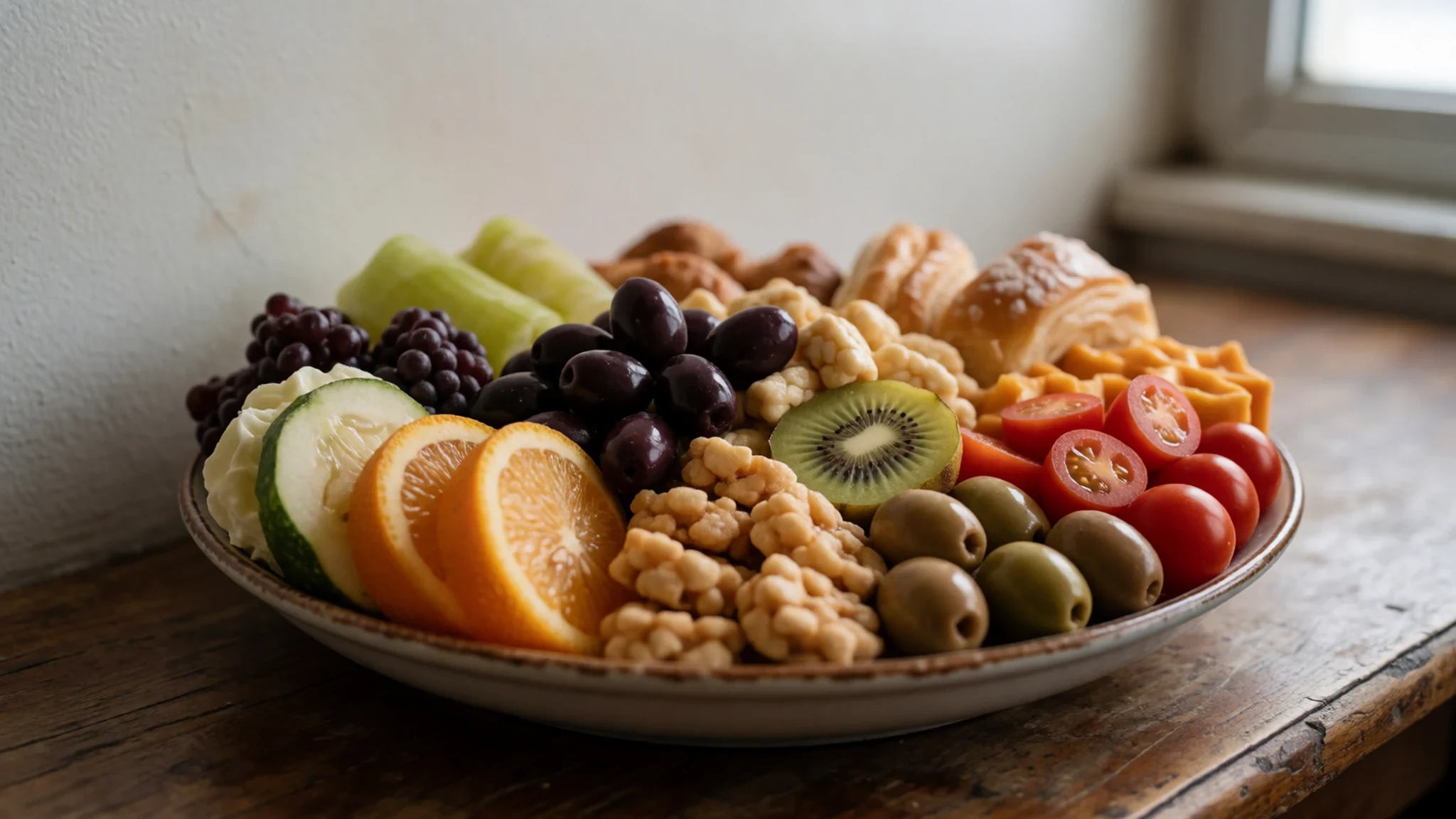
Plan it
Best time. April–May and October–November, when days are warm rather than hot and the old town can be walked comfortably. Summer is hot with little shade, and winter is mild but can be wet and breezy.
How long. 1–2
Getting there. Most visitors reach Famagusta by road. Buses run from Nicosia and Kyrenia to the Gazimağusa bus station, about 500 m west of the main roundabout, and dolmuş minibuses leave from the roundabout when full. Ferries from the Turkish mainland sail via Kyrenia. From the south, drivers cross at Strovilia, but check that your insurance and rental agreement cover both sides.
Budget. low
Tips
- Visit in the morning or late afternoon, when it is cooler and the light on the stone is best
- Carry water and a hat, since the old town has little shade
- Check the mosque's current visiting arrangements locally, especially around Friday prayers
- Combine the mosque with the other old-town sites, which are all within walking distance
- Bring some cash for markets and small cafés
Etiquette
- Remove your shoes before entering the prayer hall
- Cover shoulders and knees, and carry a scarf for your hair if you are a woman
- Do not walk through or photograph worshippers during prayer
Nearby
Sources
- Wikidata Q2047700 (CC0)
- Wikipedia: Lala Mustafa Pasha Mosque (rev 1376225892) (CC BY-SA 4.0)
- Wikivoyage: Famagusta (rev 5401915) (CC BY-SA 4.0)
- Photo 01: Gerhard Haubold (CC BY-SA 2.0)
- Photo 02: Daniel Attarian (CC BY-SA 2.5)
- Photo 03: Pavloscy (CC0 1.0)
- Photo 04: Shirazibustan (CC BY-SA 4.0)
- Photo 05: Shirazibustan (CC BY-SA 4.0)
- Photo 06: Shirazibustan (CC BY-SA 4.0)
- Photo 07: Chris06 (CC BY-SA 4.0)
- Photo 08: Nicholas Catsimpoolas (Public domain)


