Cape Greco
Cape Greco, Cyprus
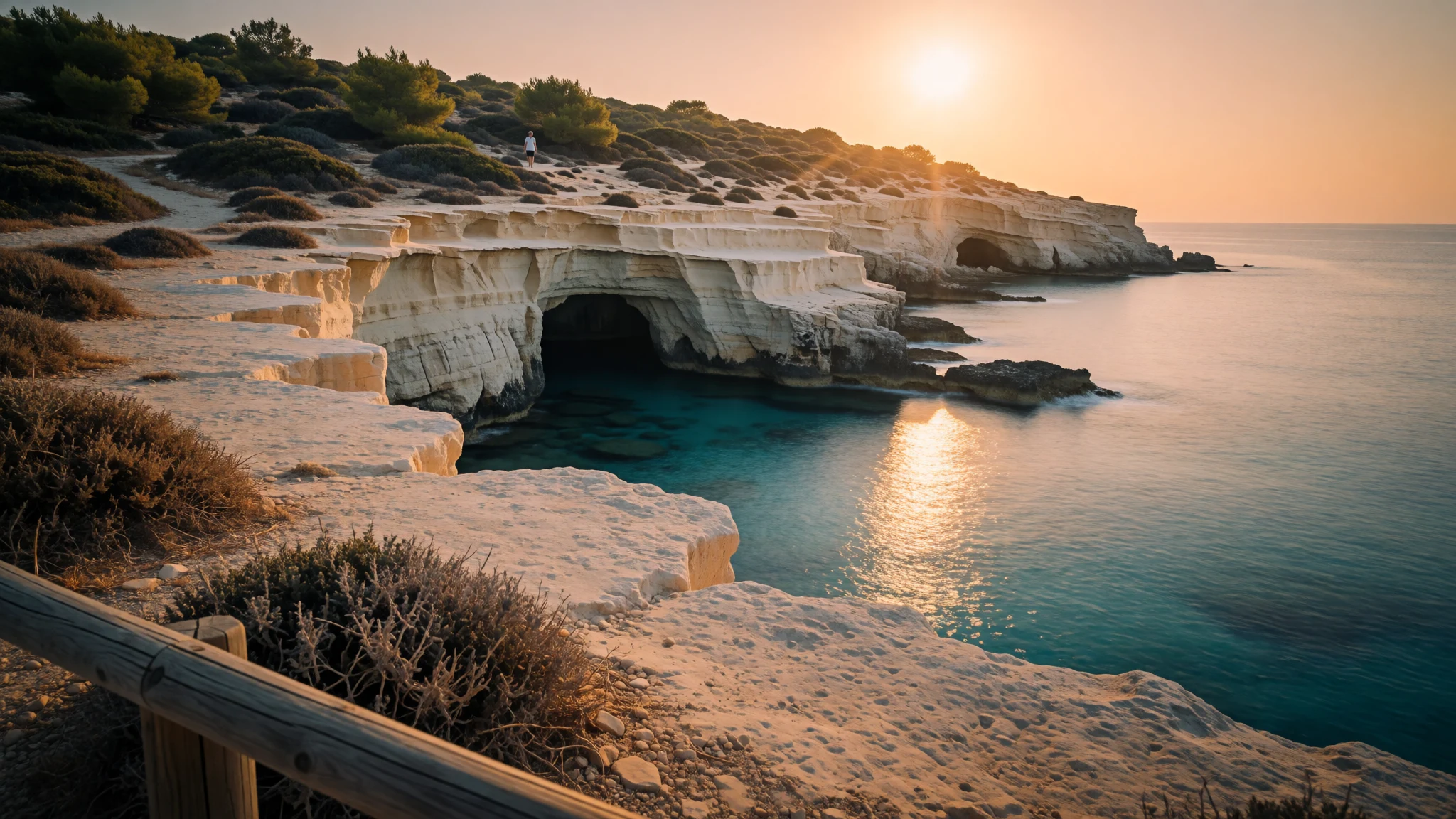
Cape Greco is a wild limestone headland between two busy resorts, with sea caves, clear water for snorkelling and Cyprus's easternmost government-controlled point.
The place
Cape Greco is a rocky headland on the south-eastern corner of Cyprus, at the southern end of Famagusta Bay and within the municipality of Ayia Napa. It sits between two resort towns, Ayia Napa and Protaras, yet the cape itself is mostly left alone: pale limestone, low scrub and cliffs that drop straight into very clear water. The recorded elevation is just 7 m, so this is a landscape of flat-topped cliffs, ledges and small coves rather than summits.
The cape is the easternmost point of the areas of the Republic of Cyprus under government control, and de facto of the European Union once its far-flung outermost regions are set aside. Much of it is protected as a national forest park and conservation area, which is why the headland feels so different from the hotel strips on either side.
The coast is cut by sea caves, and the water below is known for snorkelling and scuba diving. Paths run along the cliff tops, and a few rocky platforms and inlets are used for swimming. A nature reserve information centre now stands on the headland, providing guidance for visitors to the park.
The honest caveats are shade, heat and crowds. There is little tree cover, the summer sun is fierce by late morning, and the car parks and best swimming spots fill quickly in high season. Spring and autumn, or the first hours of the day, show the cape at its calmest.
Its story
Cape Greco carries a name that tells part of its history. Capo Greco is Italian for "Greek cape", a label that probably came from sailors and mapmakers of the Mediterranean's later centuries, long after the headland was first named. In antiquity it was known as Cape Pedalion, and the geographer Strabo noted that the flat-sided, trapezoid hill above it was sacred to Aphrodite.
That link matters, because Cyprus has been tied to the goddess of love for millennia, and a high point beside the sea would have made a natural place for a shrine and a landmark for ships coming in from the east. The headland was a navigation point before it was a holiday spot: from the water it announces the end of Famagusta Bay.
Folk memory has added a stranger layer. Local legend gives the cape a sea monster, the so-called Ayia Napa sea monster, said to lurk along this shore. It is a story told with a grin, and it grew naturally from a coastline of dark caves, sudden drops and water that changes colour with the light.
The modern chapter is about tourism and protection pulling in opposite directions. Ayia Napa and Protaras grew into major resorts on either side, while the cape between them was set aside as a national forest park. What visitors walk through today is partly a wilderness and partly a deliberate decision to keep one stretch of this coast unbuilt.
What to see
- The headland and cliff paths — Cape Greco National Forest Park
The main experience is simply walking the cliff-top paths of the headland. Limestone drops to blue water, scrub and low pines fill the gaps, and views open both north towards Protaras and south along the coast. Go early, wear proper shoes, and bring water, because shade is scarce.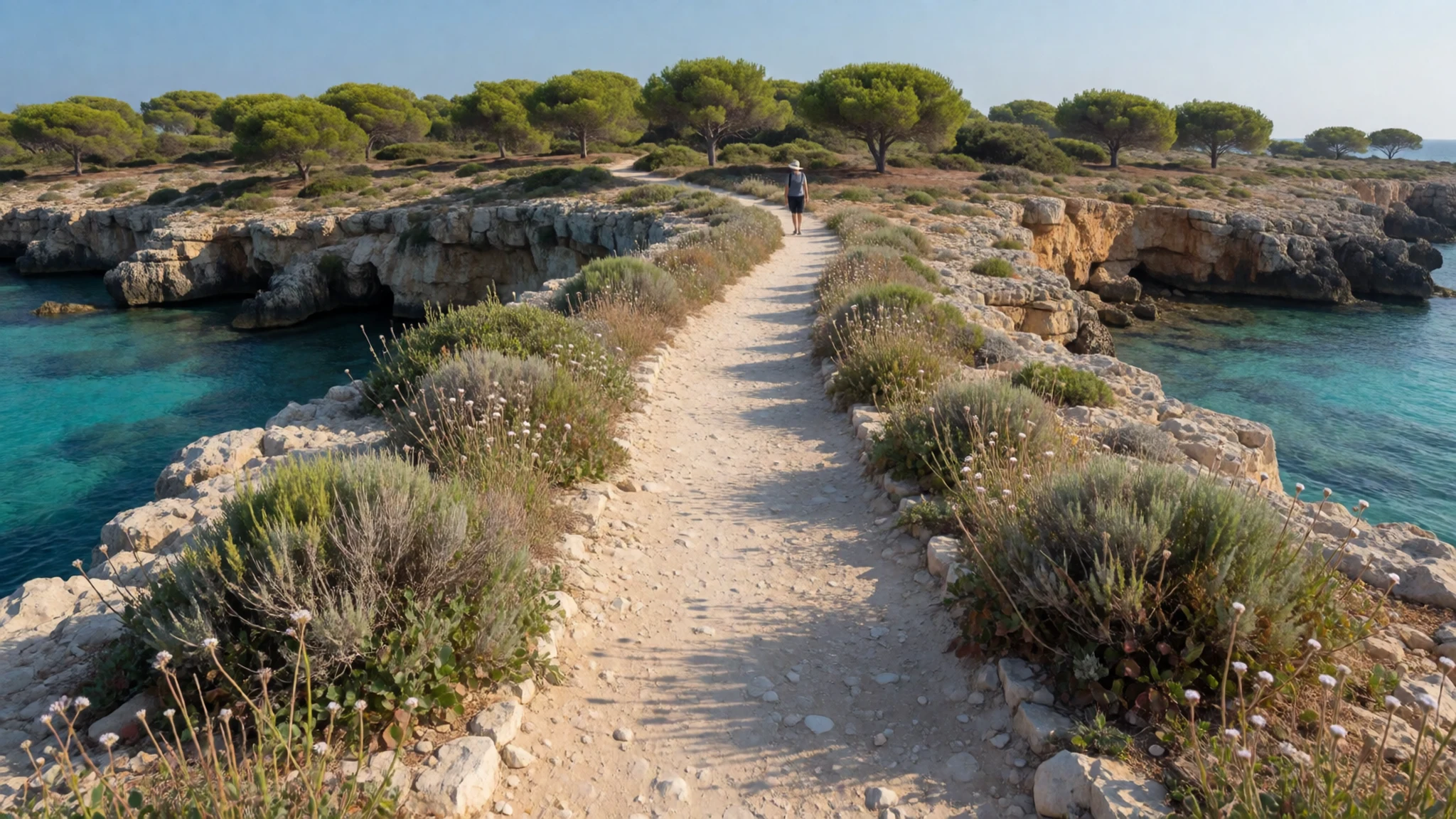
- The sea caves — Along the cliffs of the cape
Wind and waves have hollowed the limestone into arches and caves, sometimes called the fairy caves or palaces. Seen from the cliff edge they make dramatic photographs, and from a boat or in the water they feel bigger. Keep well back from unstable edges, and swim only in calm conditions.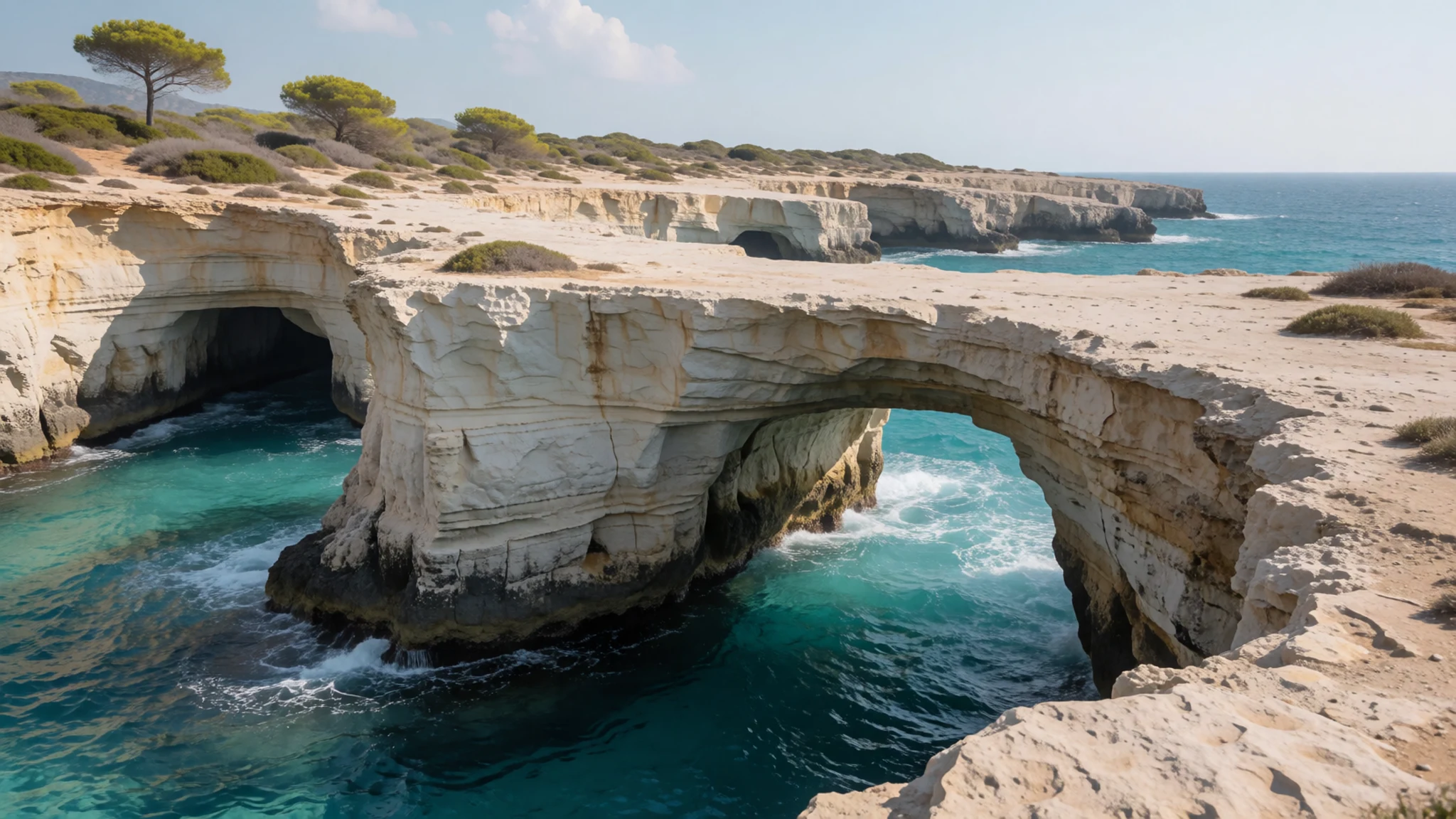
- Snorkelling and diving coves — Rocky inlets around the cape
The clear water and rocky seabed make the cape a favourite for snorkelling and scuba diving. Entry is usually over rock or via a ladder or ledge, not a sandy beach, so water shoes help. Local dive centres in Ayia Napa and Protaras run guided trips; check their current offers directly.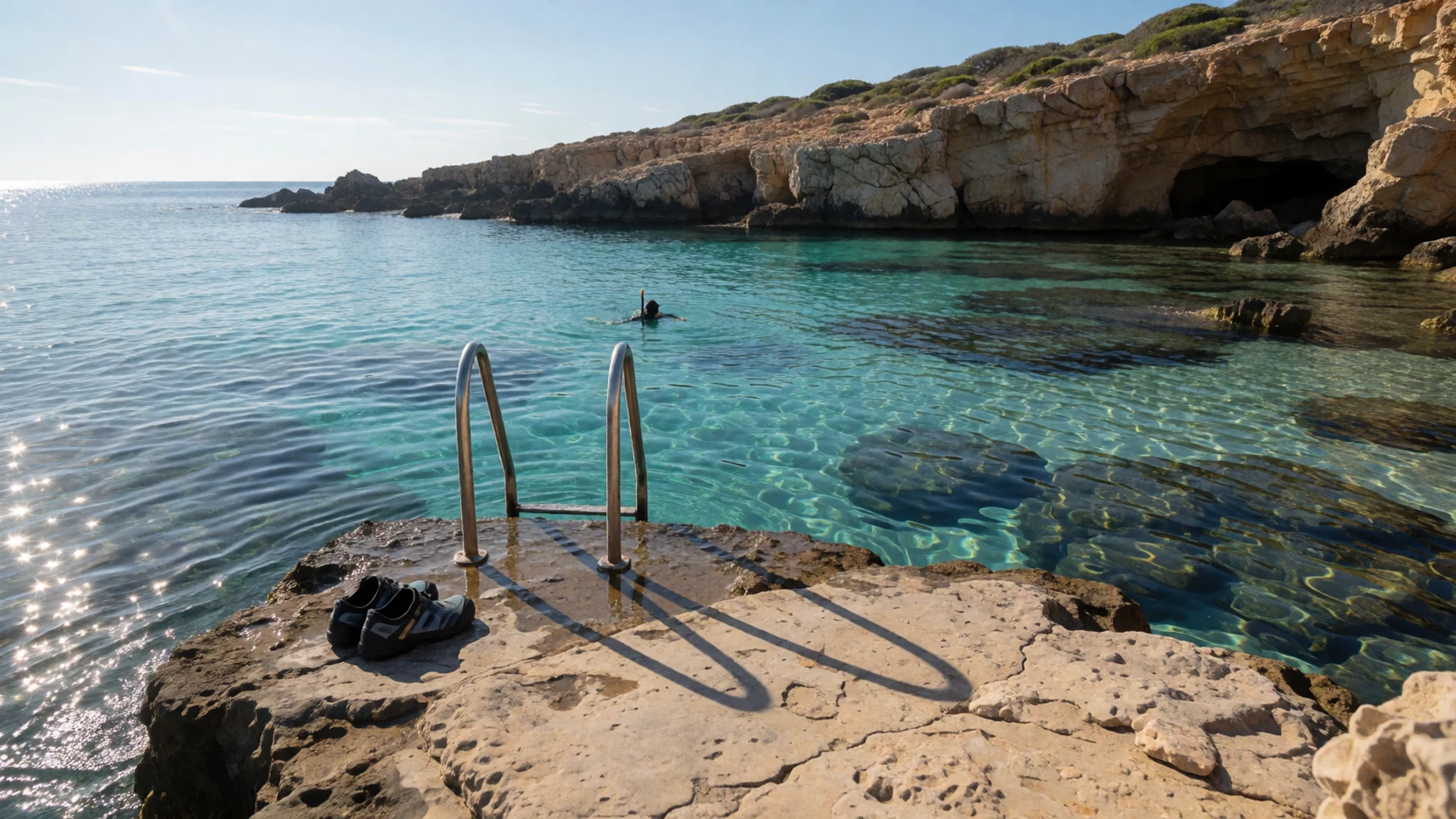
- Monument of Peace — Near the cape's southern tip
A modern monument stands on the headland, set against open sea and sky. It is a simple, quiet stop on the way along the coast, and the view from here shows the stepped cliffs well. It rarely holds visitors for long, so it makes a pleasant pause out of the sun.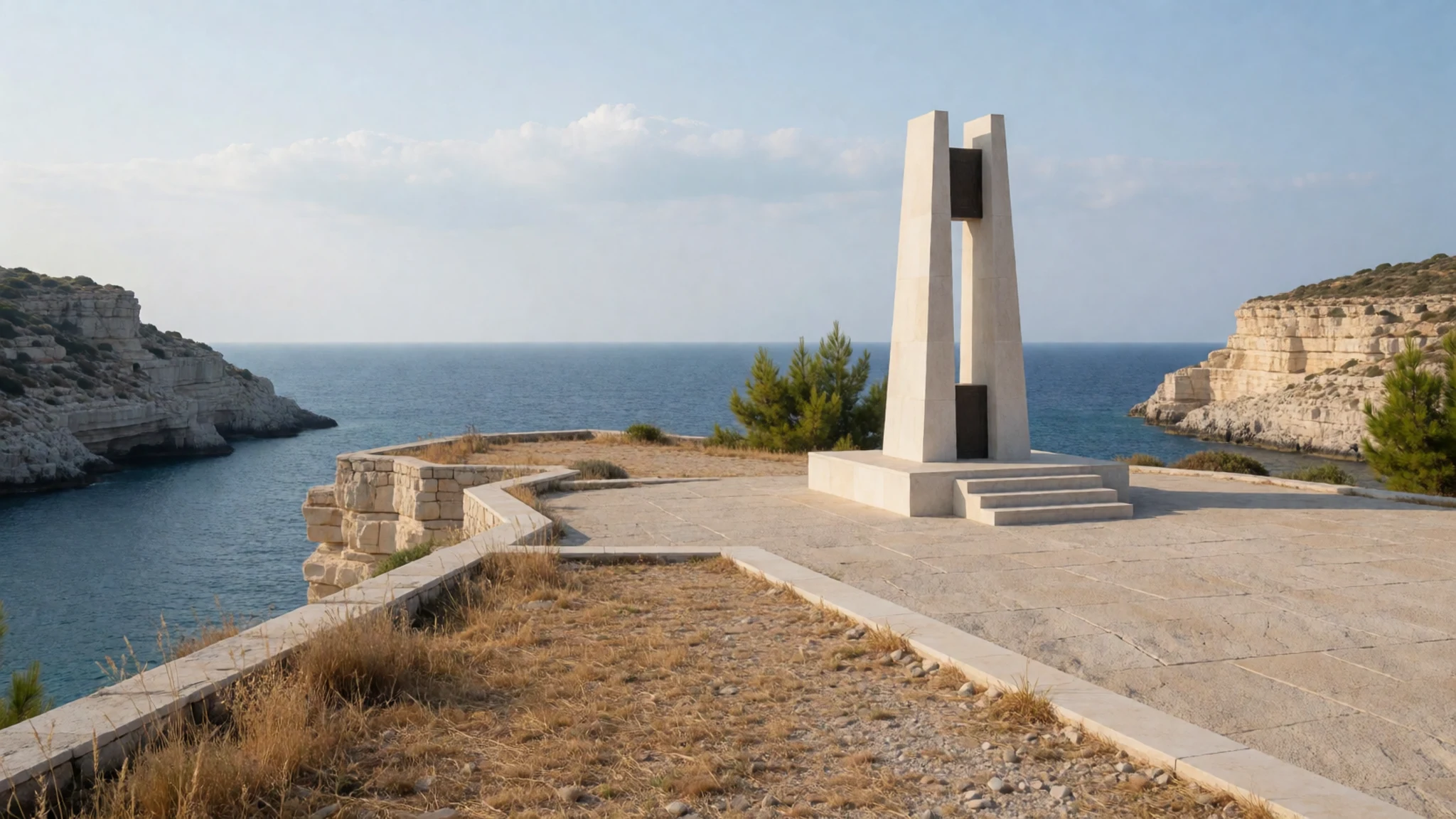
- Information centre and the eastern lookout — The upper part of the headland
A nature reserve information centre sits on the cape, providing a useful stop that highlights how exposed and open the high ground is. Beyond them, wide viewpoints look across the water towards the easternmost edge of the government-controlled part of Cyprus. Late afternoon light is softest here.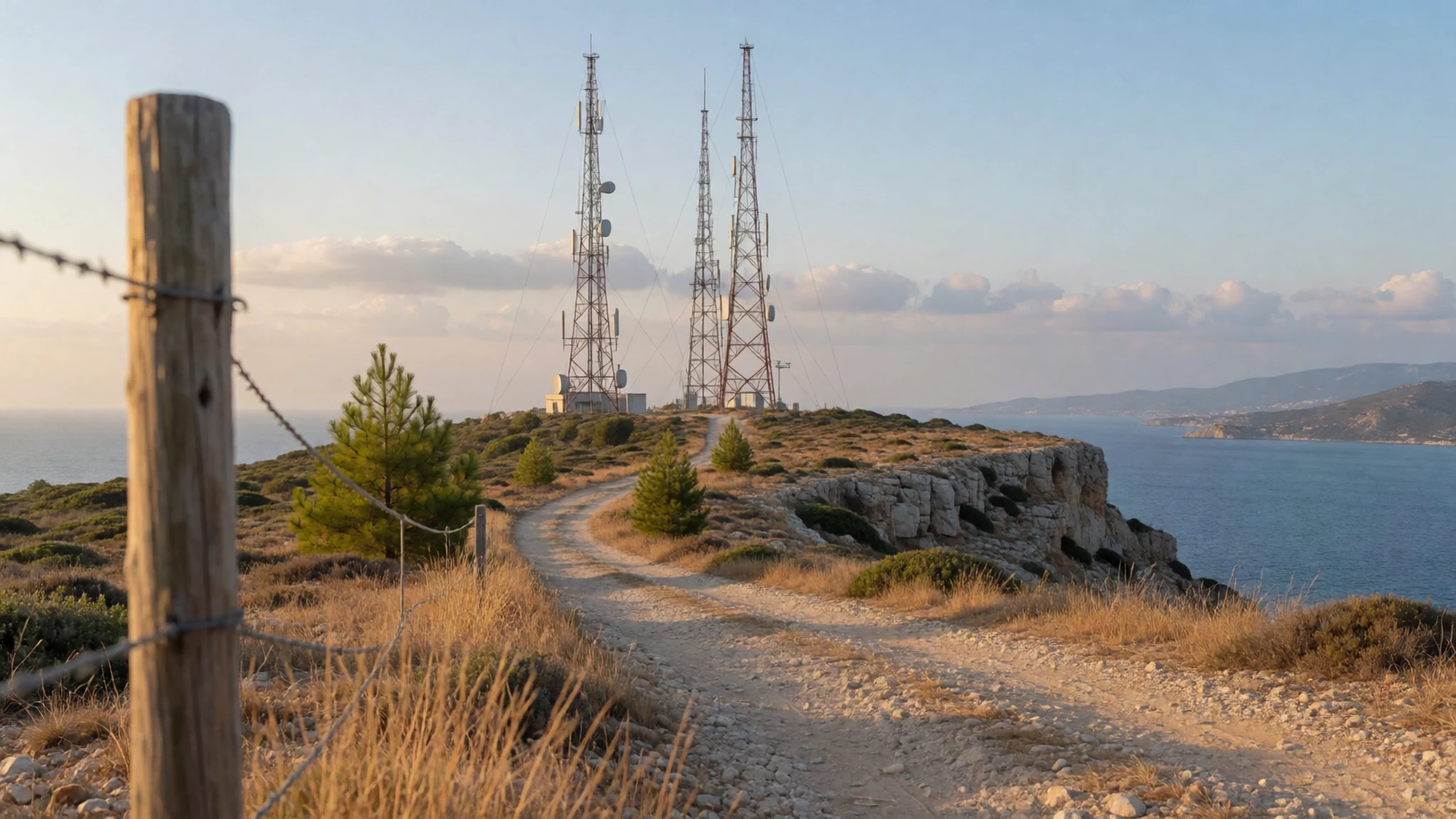
Culture
Cape Greco sits in the Greek Cypriot south-east of the island, and its culture is that of the coast around it: a farming and fishing heritage now layered with decades of resort tourism. Ayia Napa and Protaras are lively, international and often loud in summer, but the villages inland keep slower rhythms, with coffee houses, village churches and long Sunday lunches.
The Orthodox Church shapes the calendar. Saints' days and Easter bring processions, bells and big family meals, and small whitewashed chapels dot the countryside. Hospitality is a point of pride: a visitor who shows interest in a taverna's food or a village's story is usually met with generosity, and coffee or a small sweet may arrive unasked.
The cape itself carries older stories. Strabo wrote of a hill sacred to Aphrodite nearby, and local legend gives the coast its own sea monster. Cyprus as a whole has long been tied to the goddess, and that mythic association is still used proudly in the island's tourism and in everyday storytelling.
There is also a modern layer: the cape is a protected conservation area, and rangers, divers and local guides increasingly speak about it as a landscape to be kept rather than built on. Respect for the sea and the cliffs is the new local etiquette.
Stay on the marked paths, keep well back from crumbling cliff edges and cave openings, and carry all your litter out with you.
What to wear
Cape Greco is a coastal nature park, so fashion here is mostly about sun and terrain, but Cyprus has a textile heritage worth knowing. Traditional village dress for men included the vraka, baggy dark breeches gathered below the knee, worn with a sash, waistcoat and boots. Women wore a long dress, the foustani, with an apron and headscarf, often in cotton, linen or wool depending on season. The best-known craft is Lefkara lace, white embroidery on linen from the village of Lefkara, still sold in the island's shops. Costume of this kind is now seen mainly at folk dance performances, festivals and church feast days.
What people wear now is thoroughly casual. Around Ayia Napa and Protaras that means swimwear, shorts, sandals and light cotton, with smarter shirts or dresses for an evening out. Locals in towns and villages dress practically, with covered shoulders more common inland and at religious events.
For a visit, plan for strong sun and rock. A wide-brimmed hat, sunglasses and high-factor sun cream matter more than style, as do light breathable layers. Sturdy trainers or walking sandals suit the cliff paths, and water shoes help at rocky swimming spots. If the day includes a village church or monastery, pack a light scarf or shirt to cover shoulders and knees. A windproof layer is useful on exposed headland days in spring and autumn.
What to eat
- Halloumi — Any village taverna or bakery, grilled or fried
Cyprus's squeaky, salty cheese is served grilled or fried, often with watermelon in summer or tucked into bread. It holds its shape over heat, which makes it a staple on the coast. Order it as a starter at almost any taverna around Ayia Napa.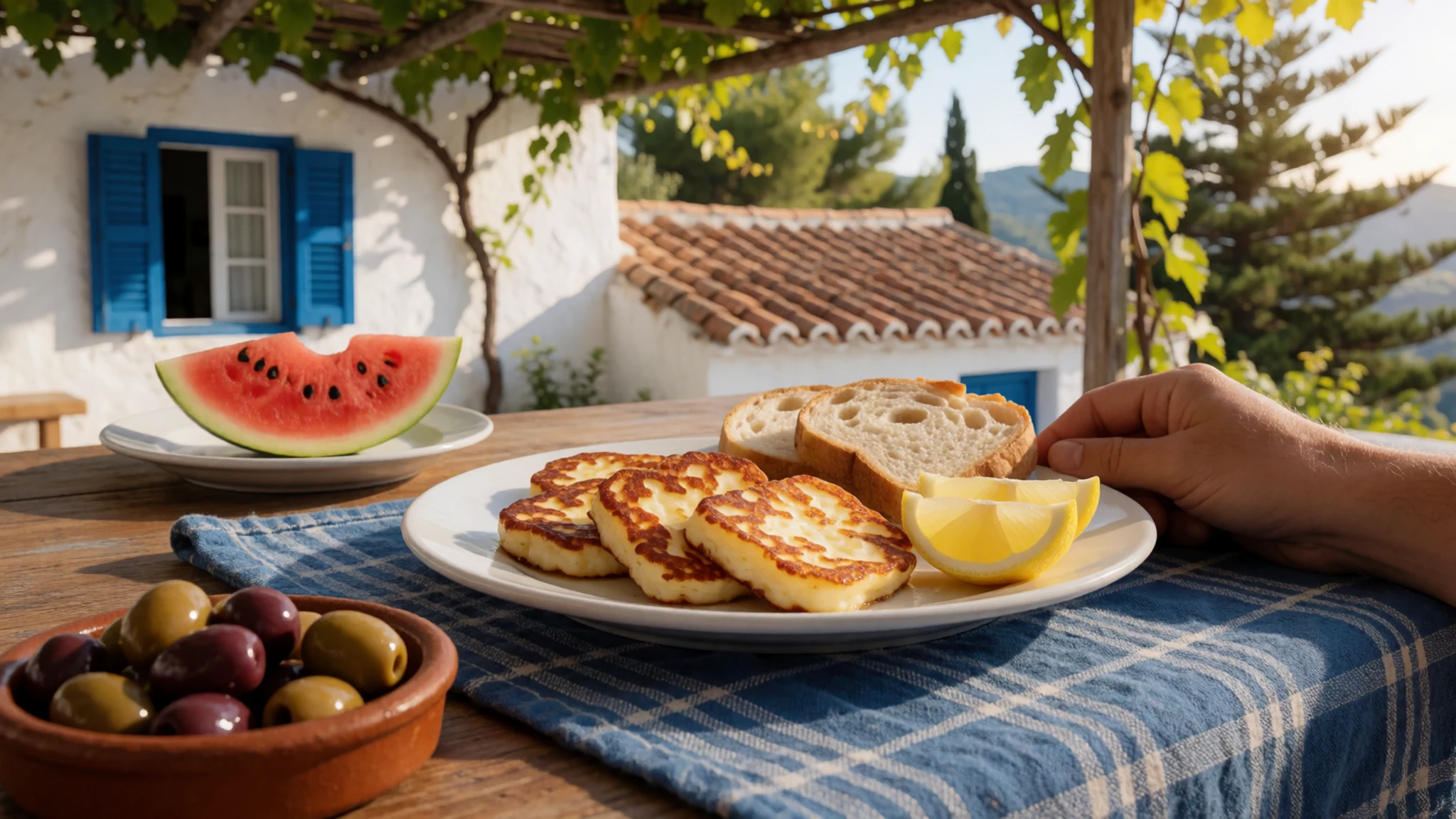
- Meze — Traditional tavernas in Ayia Napa, Protaras and nearby villages
Meze is a long run of small dishes, usually dips, salads, grilled meats, fish and cheese, brought out in waves for the whole table. It is the best way to try many local flavours at once. Go hungry, and pace yourself.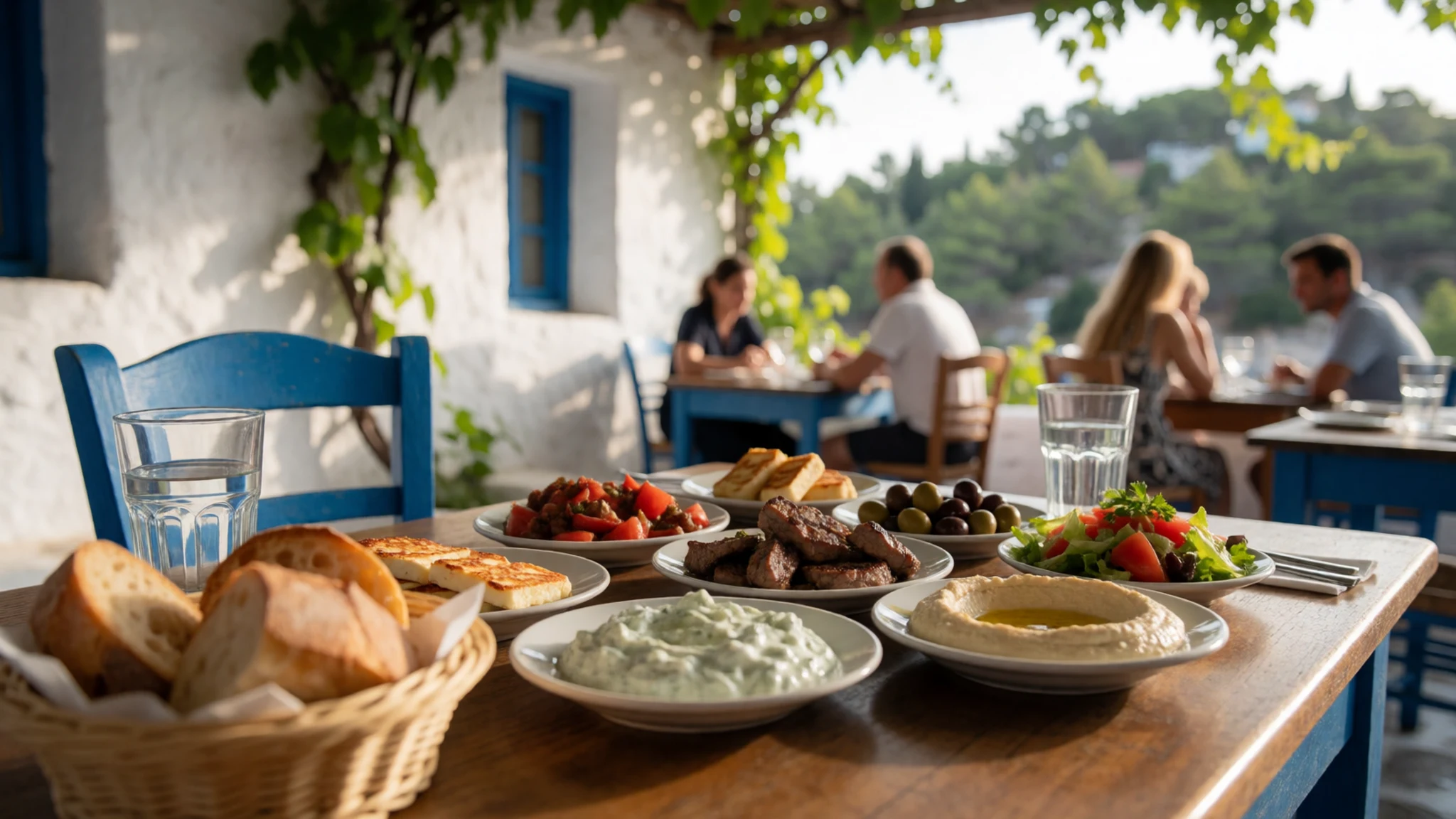
- Souvlaki and sheftalia — Grill houses and casual eateries along the resort roads
Skewered grilled pork or chicken, often wrapped in pitta with salad and tzatziki, is the everyday fast meal. Sheftalia are herby minced-meat sausages grilled over charcoal. Both suit a beach day when a sit-down lunch feels like too much. - Fresh fish and seafood — Fishing harbour and waterfront tavernas in Ayia Napa and Protaras
With a coastline this clear, grilled fish, calamari and prawns are natural choices, often sold by the portion and cooked simply with olive oil and lemon. Ask what was caught locally, and check how it is priced before ordering. - Loukoumades — Dessert cafes and bakeries in the resort towns
These are small fried dough balls soaked in honey syrup and scattered with cinnamon or nuts. They are served warm, sticky and quick to disappear. Cypriot coffee and a plate of them make a good break from the sun.
Plan it
Best time. March to May and October to November, when the sea is swimmable and the heat is most comfortable. July and August are the hottest months, with little shade on the headland; December and January are the wettest and coolest.
How long. 1–2
Getting there. Larnaca International Airport is the usual gateway, followed by a transfer by hire car, taxi or bus to Ayia Napa or Protaras, which sit either side of the cape. The last stretch is a short drive or taxi ride from either town, so a car or booked taxi makes the day easier.
Budget. mid
Tips
- Go early in the morning, before the heat and the car parks fill
- Bring plenty of water and sun protection, because shade on the headland is scarce
- Wear closed shoes for the cliff paths and water shoes for rocky swim spots
- Book dive or boat trips in advance in summer, and check each operator's own website for current details
- Carry some cash for small kiosks and snack stops, though cards work in most towns
Etiquette
- Keep to marked paths and stay back from cliff and cave edges
- Take all rubbish with you and do not disturb plants or wildlife in the protected area
- Cover shoulders and knees when stepping into a village church or monastery
Nearby
Sources
- Wikidata Q1672526 (CC0)
- Wikipedia: Cape Greco (rev 1364547787) (CC BY-SA 4.0)
- Wikivoyage: Cape Greco (rev 5235361) (CC BY-SA 4.0)
- Photo: View of Cape Greco near Paralimni, Cyprus (kallerna) (CC BY-SA 4.0)
- Photo: Sea caves at Cape Greco National Park (kallerna) (CC BY-SA 4.0)
- Photo: Transmitting antennas on Cape Greco (Mboesch) (CC BY-SA 4.0)
- Photo: Cape Greco (Qasinka) (CC0 1.0)
- Photo: Cape Greco (Qasinka) (CC0 1.0)
- Photo: Cape Greco. Monument of Peace (Qasinka) (CC0 1.0)
- Photo: Cape Greco, Ayia Napa, Cyprus (Zairon) (CC BY-SA 4.0)
- Photo: Cape Greco, Ayia Napa, Cyprus (Zairon) (CC BY-SA 4.0)


