Kykkos Monastery
Kykkos Monastery, Cyprus
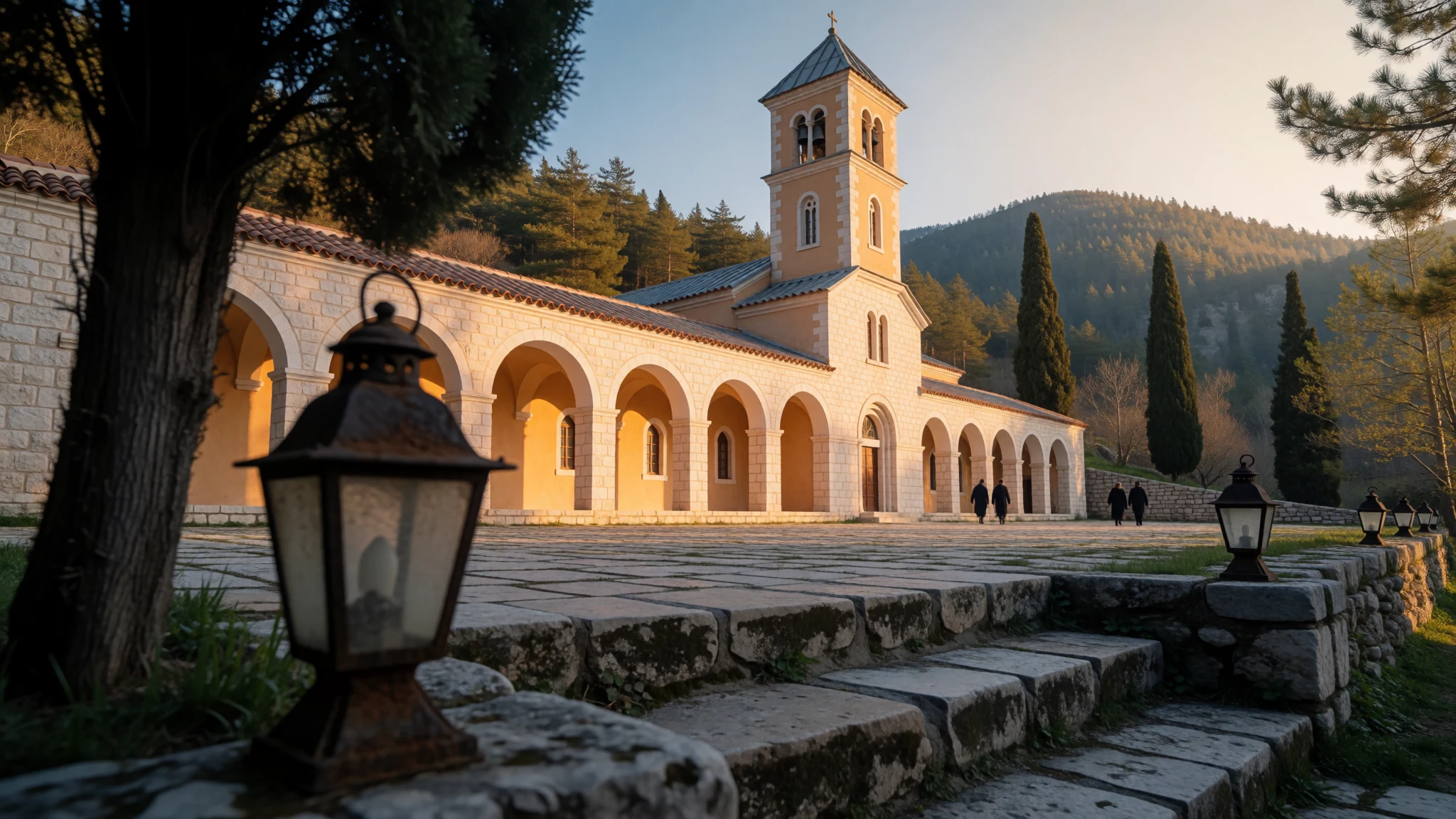
Kykkos Monastery is a rebuilt mountain monastery in the Troodos, where a famous icon, a hermit's legend and cool pine air share one stop.
The place
Kykkos Monastery sits in the Troodos Mountains of western Cyprus at 1,183 metres, on forested slopes where the air is noticeably cooler than on the coast. It is a working monastery of the Greek Orthodox Church, dedicated to the Virgin Mary, and its fame rests on an icon that tradition attributes to the Apostle Luke. The first president of Cyprus, Archbishop Makarios III, began his church career here as a monk and is buried on a hilltop nearby, which is why the site is also recorded as a mausoleum. The road up from the coast winds through pine woods and past small villages of the Marathasa valley, where stone houses and orchards cling to terraces. The buildings seen today are not medieval. Fire has destroyed the monastery several times, and what stands now is a rebuilt complex of arcaded courtyards, an ornate church and a museum of icons and church treasures. Walls and arches are covered in mosaics and painted scenes in Byzantine style, much of it modern work. The monastery was founded around the end of the eleventh century under the Byzantine emperor Alexios I Komnenos, who reigned from 1081 to 1118. On summer weekends the car park fills with coaches, school groups and Cypriot families, many of them pilgrims; on a weekday morning in spring or autumn it is far quieter. Services still shape the day, and monks and visitors share the courtyards. A few hours is enough here, and the visit pairs naturally with a drive through the mountain villages.
Its story
Kykkos Monastery owes its origin to a legend rather than a charter, and the version most often retold involves a hermit, a short-tempered governor and a sacred icon. The hermit, Esaias, lived in a cave on the mountain. One summer the Byzantine governor of Cyprus, Manuel Boutoumites, escaped the heat of the plains to a village in the Marathasa valley and rode into the woods to hunt. Lost among the trees, he came upon Esaias and demanded directions. The monk, who had turned his back on worldly talk, stayed silent. Boutoumites lost his temper, abused him and struck him. Back in Nicosia he fell gravely ill with a sleep-like sickness that no physician could treat. Remembering his cruelty, he prayed for recovery so that he could beg the hermit's pardon, and he recovered. He set out for the mountain, where Esaias told him that a vision had foretold everything. The monk's instruction was daunting: Boutoumites was to ask the emperor in Constantinople for the icon of the Virgin that Saint Luke was said to have painted, and bring it to Cyprus. The icon was kept in the imperial palace, and the governor thought the request hopeless. Tradition holds that the emperor was persuaded in the end, and the icon was carried across the sea and up into the mountains, where the monastery was raised to house it. Scenes from the tale appear in painted panels at the site. Fires have since destroyed the buildings several times, so none of the original structure survives, but the story of the icon has kept pilgrims climbing here through every rebuilding.
What to see
- Courtyard arcades and mosaics — Monastery courtyard
The arcaded courtyard of Kykkos Monastery is covered in mosaics and painted scenes in Byzantine style, with gold backgrounds that catch the mountain light. Most of the work is modern, since fire has destroyed earlier buildings more than once. Walk slowly under the arches and look up; the ceilings carry as much detail as the walls.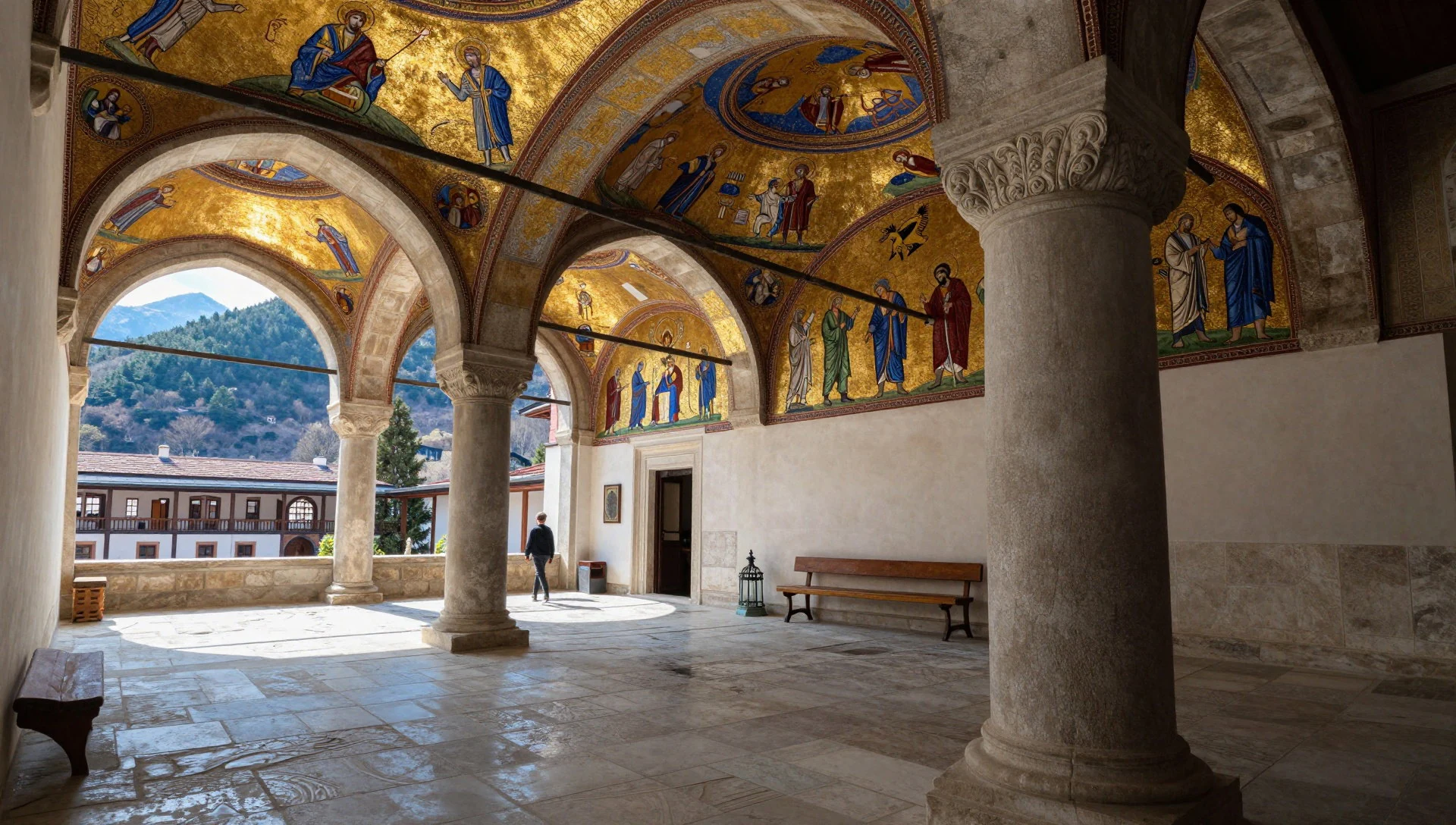
- The church and the icon of the Virgin — Monastery church
The church at Kykkos Monastery houses the icon of the Virgin attributed by tradition to Saint Luke. The painting itself is kept screened from view, so what most visitors see is the richly decorated interior and the quiet devotion of pilgrims who stop, cross themselves and light a candle before moving on.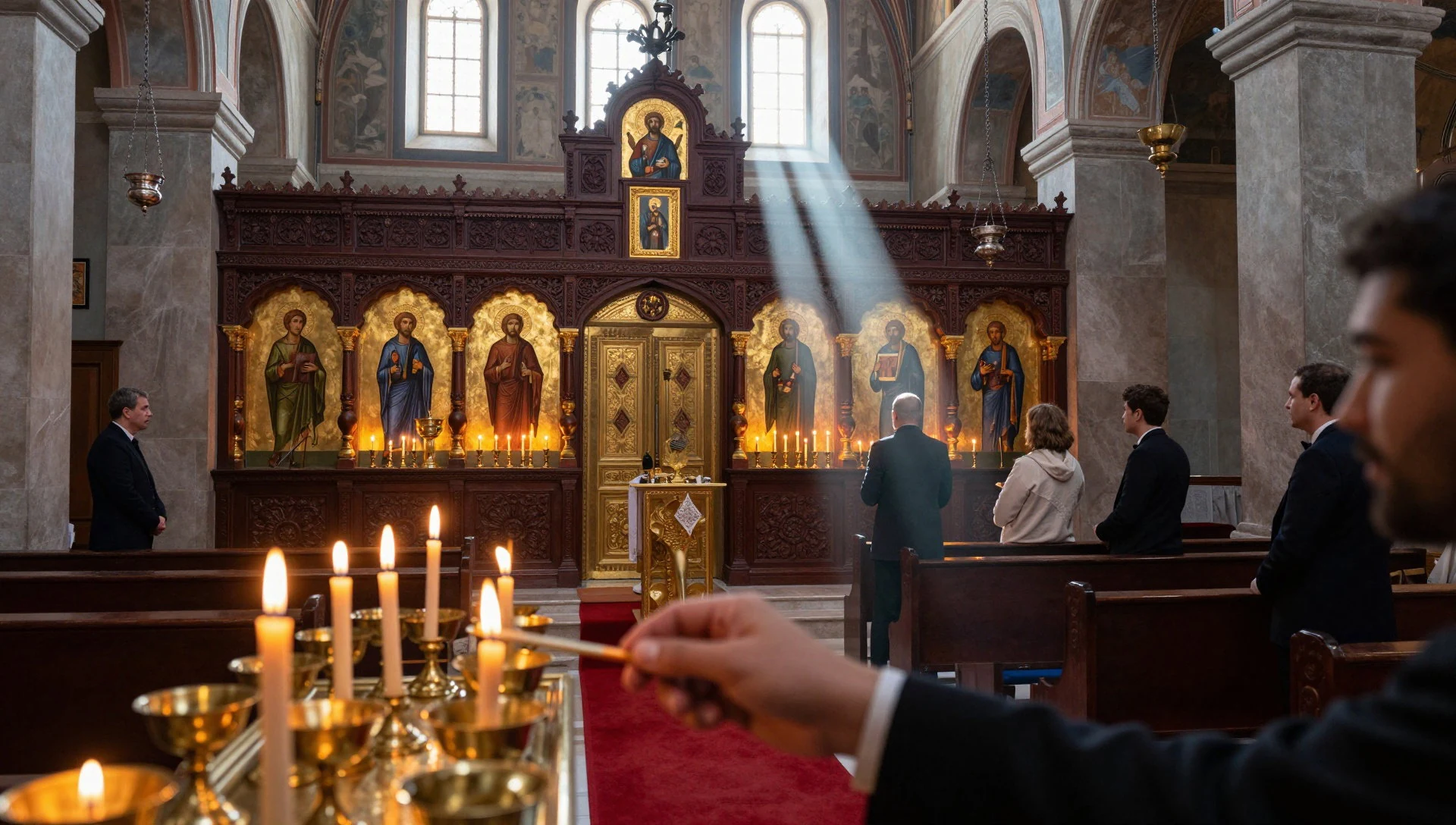
- The legend panels — Monastery courtyard
Painted panels at Kykkos Monastery tell the founding story in sequence: the governor striking the hermit Esaias, Saint Luke painting the icon, and the icon's procession from the coast to the Troodos. They work like a comic strip for the legend, and reading them before going into the church makes the place easier to follow.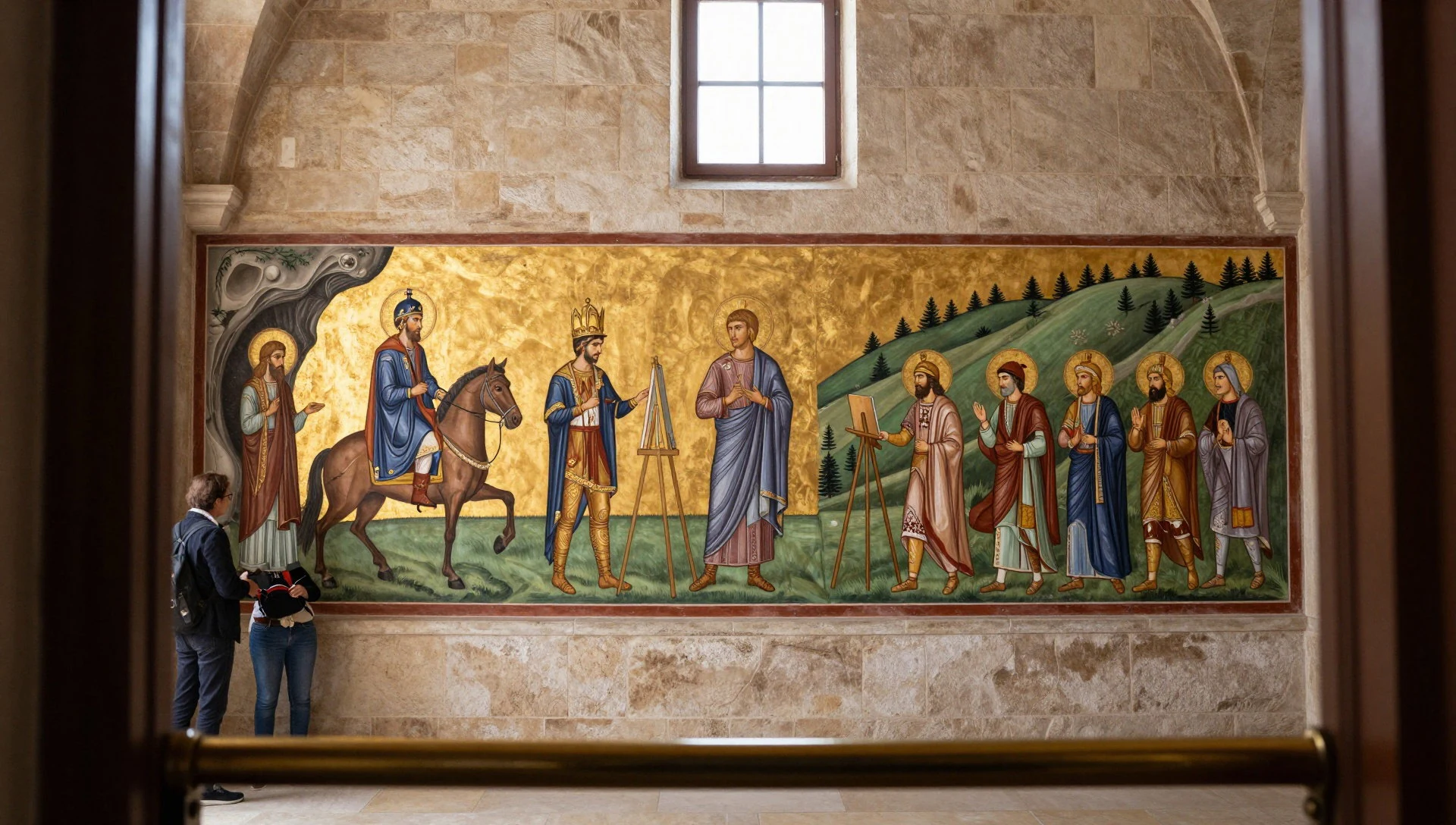
- The monastery museum — Monastery complex
The museum at Kykkos Monastery holds icons, vestments and other church treasures gathered over the centuries, and gives context to the rebuilt buildings outside. Opening days and ticket arrangements change, so check the official site before planning around it. It is a useful wet-weather stop, and a calm one when the courtyards are full of coach groups.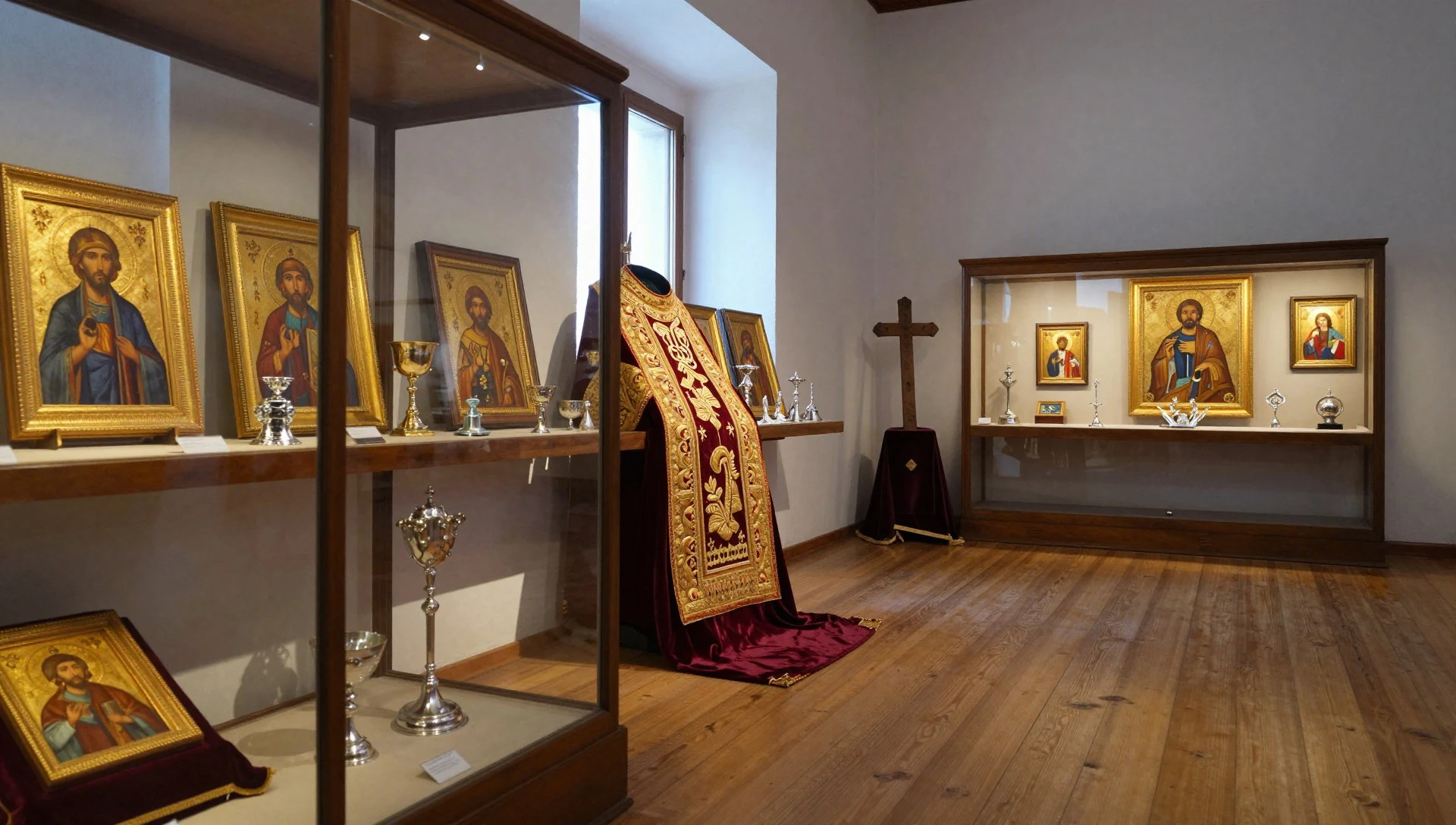
- Makarios III's tomb at Throni — Throni hill, near the monastery
On a hilltop near Kykkos Monastery lies the grave of Archbishop Makarios III, the first president of Cyprus, who began his career as a monk here. The spot gives wide views over pine-covered ridges. Ask locally about the approach, as the access road is separate from the monastery's own entrance.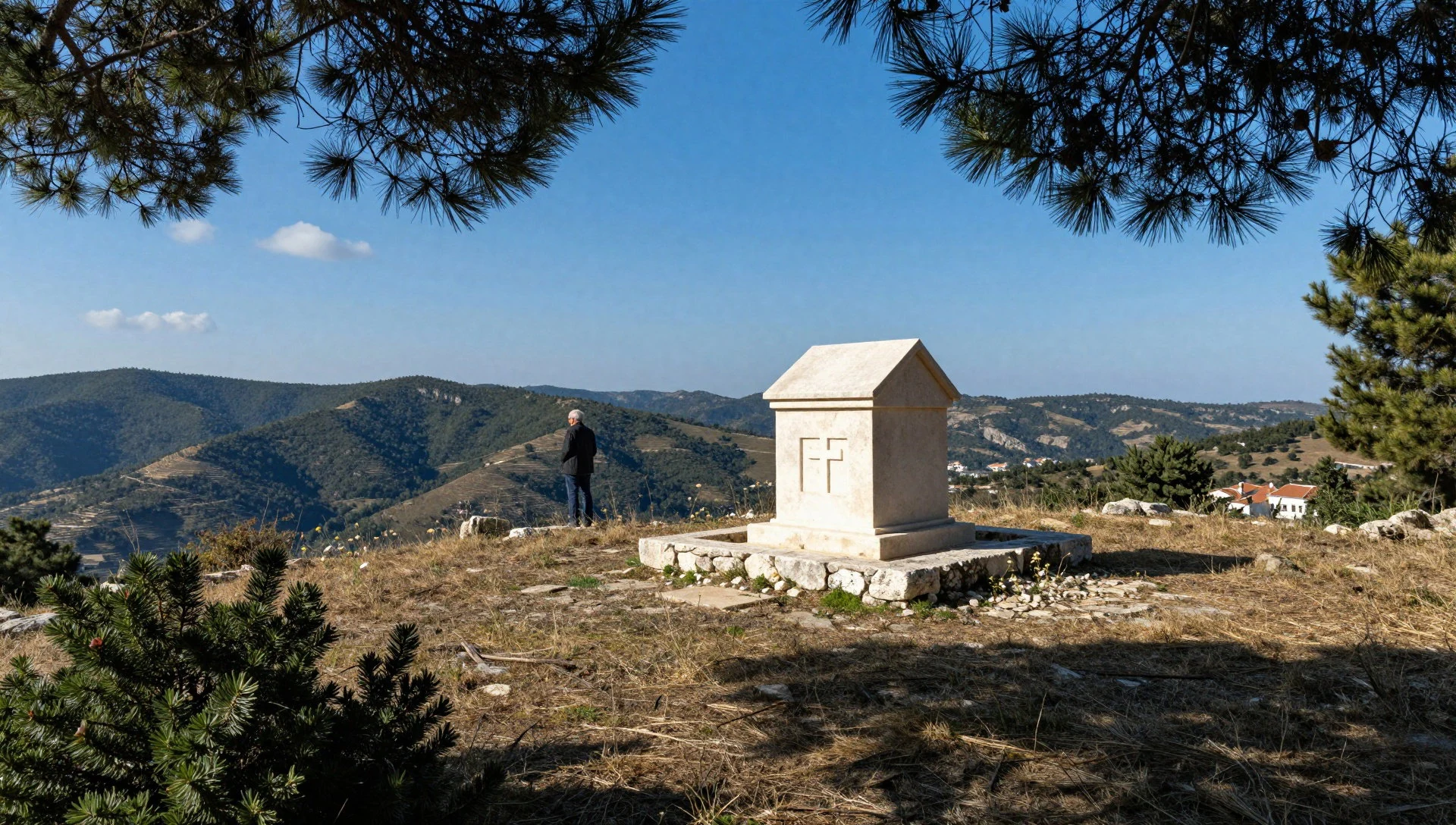
- Pedoulas and the Marathasa villages — Marathasa valley
The Marathasa valley villages below Kykkos Monastery, Pedoulas among them, make an easy pairing with the visit. Stone houses, small churches and village tavernas sit among orchards, and the walking is gentle. It is a sensible place for lunch before or after the monastery, away from the coach groups.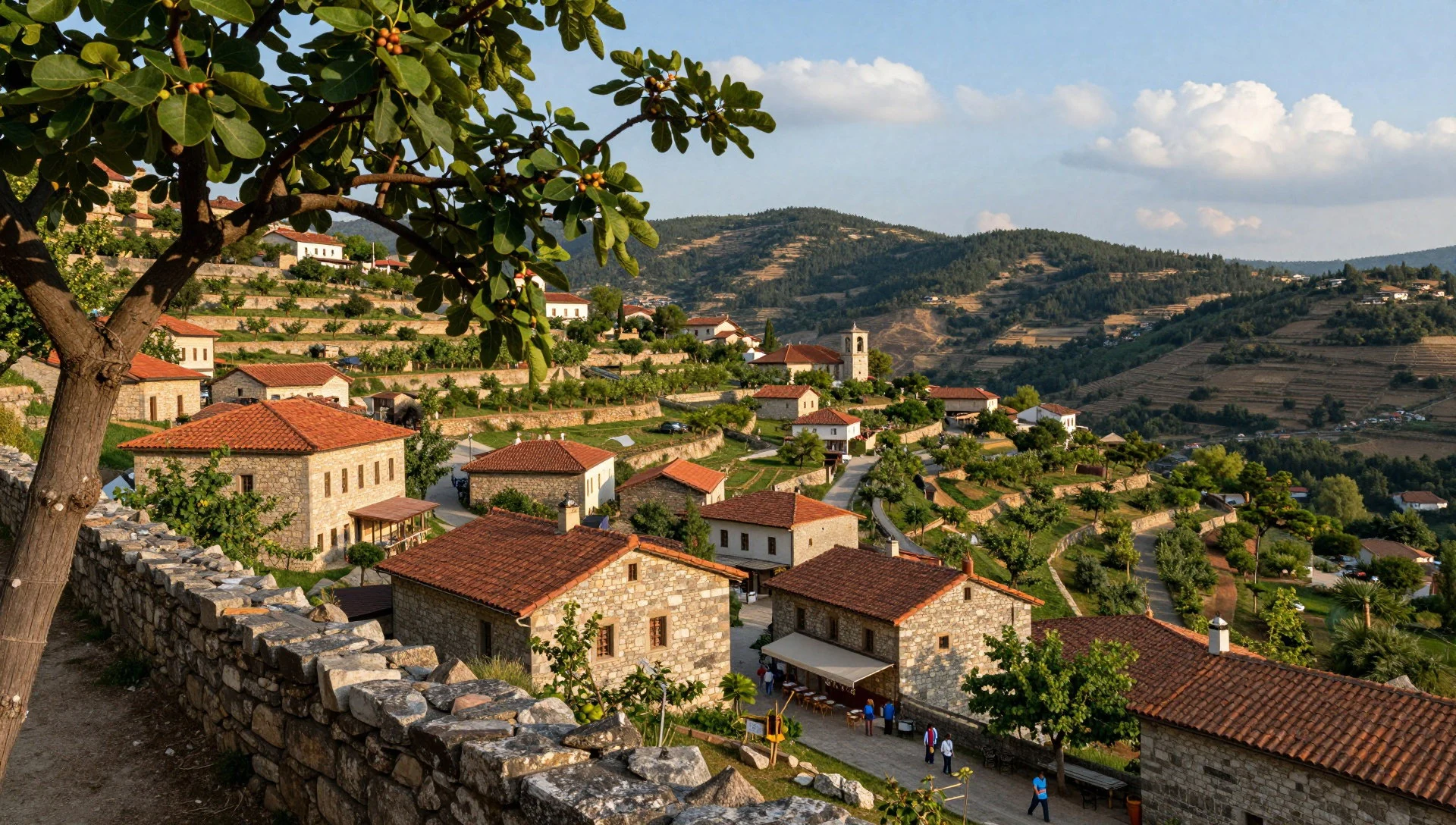
Culture
Kykkos Monastery sits inside a wider Cypriot culture that visitors usually find welcoming. Greek and Turkish Cypriots alike have a reputation for hospitality, and in the mountain villages around the monastery that often means coffee, sweets or a plate of something offered before any question of payment arises. Cypriots tend to speak directly and say what they think, and conversations run long without anyone glancing at a watch. Personal questions about family, work or marriage are common, and are meant as friendliness rather than prying. Family sits at the centre of social life, and respect for elders is expected, so avoid swearing or yawning in front of older people. Cypriots also prize straightforwardness, so do not promise to send a photograph or return for a meal unless you mean it. The monastery itself is devotional. Kykkos belongs to the Greek Orthodox Church, and many who come are pilgrims who light candles, kiss icons and cross themselves on entering. Monks live and work in the complex, and the church keeps its own rhythm of services. Visitors are welcome to look, but this is a living house of prayer rather than a museum, and the mood is quiet even when the courtyards are crowded. Cover your shoulders and knees, keep your voice low, and ask before taking photographs inside the church.
What to wear
Traditional Cypriot dress around Kykkos Monastery belongs to village life rather than daily wear. Men once wore the vraka, baggy dark trousers gathered below the knee, with a white shirt, a sash and a waistcoat, usually in wool or cotton. Women traditionally wore a long cotton or linen gown with an embroidered apron and a headscarf, often white with bright trim. Cyprus is known for Lefkara lace, worked by hand on linen, and for woven cloth from the village of Fyti. These costumes now appear at folk-dance festivals, weddings and national holidays. Monks at Kykkos wear black robes and a tall black hat, the Orthodox clerical habit, every day. Most people in Cyprus today dress in ordinary modern clothes, light cotton in summer, with smarter outfits for church services and family occasions. Visitors should dress for a mountain monastery. At this height the air is cooler than on the coast, and evenings and winter days can be cold, so bring a fleece or jacket even in summer. Cover shoulders and knees for the church; a light scarf or long-sleeved shirt in the bag solves it. Wear flat, grippy shoes for polished stone and steps, and carry a hat and sun cream for the open courtyards.
What to eat
- Meze — Village tavernas in the Marathasa valley, such as around Pedoulas
A long run of small plates, meat, fish or a mix of both, brought in waves for the table to share. It suits a slow lunch after the monastery and lets a group taste many local things at once. Pace yourself, as the dishes keep coming.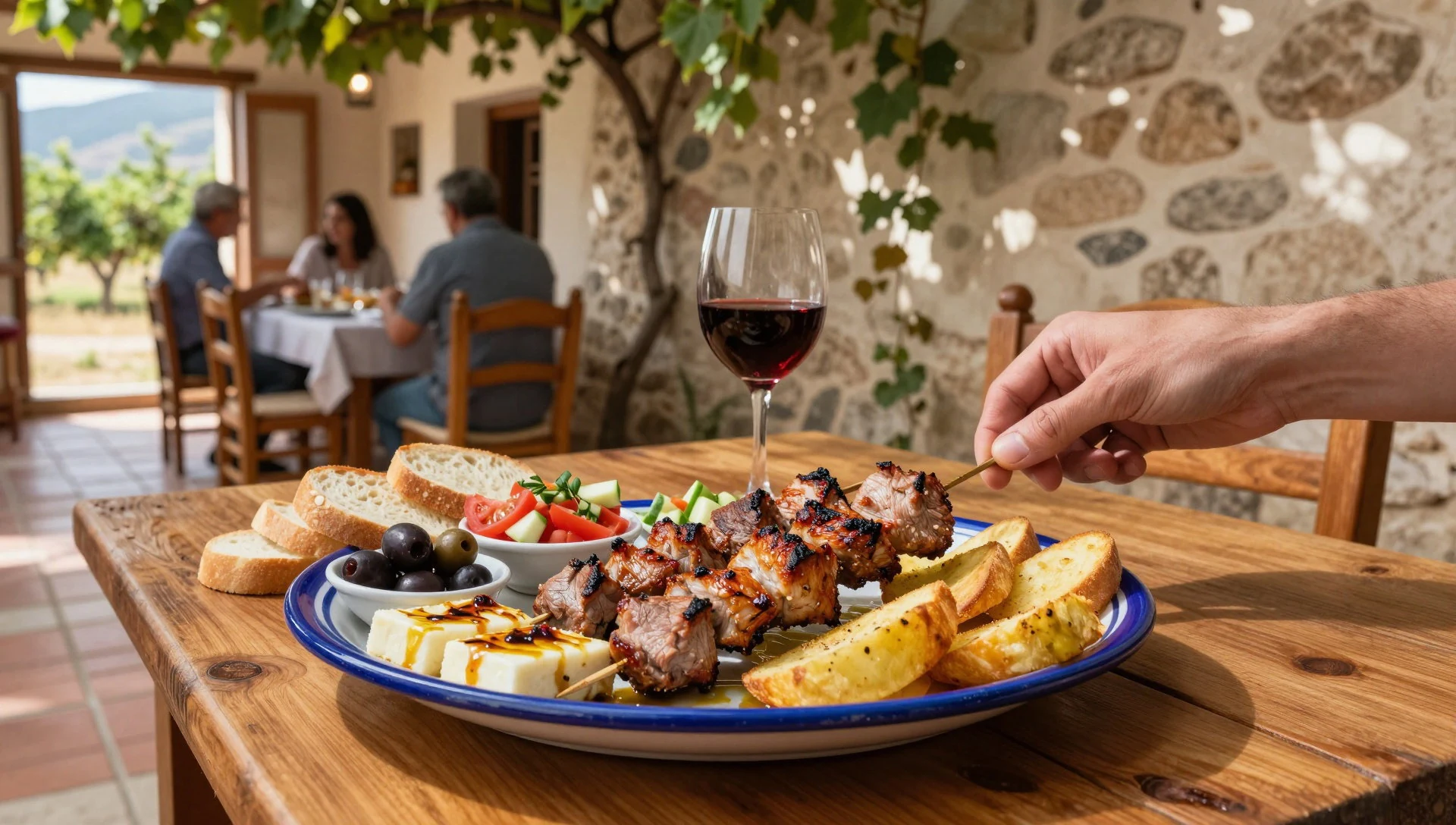
- Halloumi — Village shops and tavernas across the Troodos
A Cypriot cheese made from goat's and sheep's milk, firm and salty when raw and softer once cooked. It is usually served grilled, often with bread, tomato or watermelon in summer. Look for it fresh from village dairies and shops.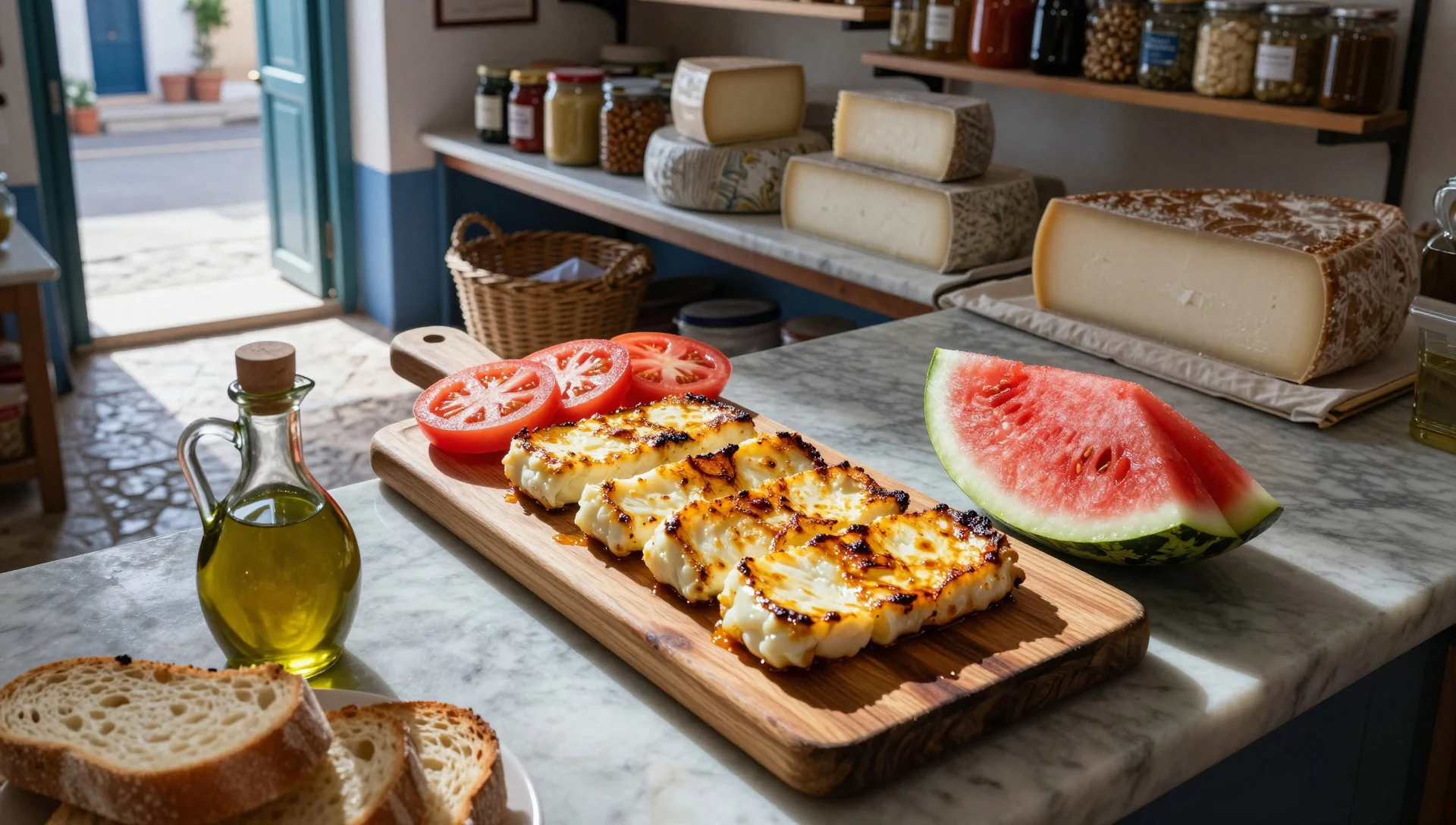
- Kleftiko — Traditional tavernas in the mountain villages
Lamb roasted slowly with herbs and lemon until the meat falls from the bone. It is a hearty mountain dish, well suited to a cool day at altitude, and it often needs ordering ahead or going early before it runs out. - Taramosalata — Any taverna serving meze
A pink-beige dip of salted fish roe blended with bread or potato, lemon juice and olive oil. It arrives early in a meze spread with bread and olives, and its sharp, salty taste wakes the appetite. - Shoushoukos — Roadside stalls and village shops in the Troodos
A chewy traditional sweet made from thickened grape juice, usually formed by dipping strings of nuts into it. It travels well, keeps for days and makes an easy edible souvenir from the hills.
Plan it
Best time. Late March to April and November, when the days are mild at this altitude and the roads are clear. July and August are cooler here than on the coast but busy with pilgrims and holidaying families. Winter brings cold, wet weather and possible snow in the Troodos, so check conditions before driving.
How long. 1
Getting there. Fly to Larnaca, the main airport in the south, then drive into the Troodos by hire car via Nicosia or Limassol and take the mountain road to the monastery. Public transport to the site is limited, so a car or a tour makes the last leg far easier.
Budget. mid
Tips
- Arrive early on weekdays; weekend and summer mornings bring coach groups and families
- Bring a fleece, as it is cooler at this height than on the coast
- Check the official site (http://www.kykkos.org.cy/) for opening times and museum arrangements before setting out
- Fill the fuel tank before climbing, and allow extra time on bends and narrow village streets
- Carry some cash for village shops and small tavernas
Etiquette
- Cover shoulders and knees before entering the church
- Keep your voice low and ask before photographing inside
- Do not photograph monks or worshippers without asking
Nearby
Sources
- Wikidata Q225373 (CC0)
- Wikipedia: Kykkos Monastery (rev 1362387540) (CC BY-SA 4.0)
- Wikivoyage: Cyprus (rev 5408216) (CC BY-SA 4.0)
- Kykkos klooster van uit de lucht — Dickelbers (CC BY 3.0)
- Boutoumites hitting Monk Esias — SigTif (CC BY-SA 4.0)
- The Apostle Luke painting the icon of the Virgin — SigTif (CC BY-SA 4.0)
- The procession of the icon from the coast to the Troödos Mountains — SigTif (CC BY-SA 4.0)
- Cyprus, Kykkos monastery (stitch) — Berthold Werner (CC BY-SA 4.0)
- Cyprus, Kykkos monastery — Berthold Werner (CC BY-SA 4.0)
- Kykkos Monastery mosaic in archway — Seric2 (Public domain)
- Icon from Kykkos Monastery, Cyprus — anonymous (CC BY 3.0)


