Larnaca Castle
Larnaca Castle, Cyprus
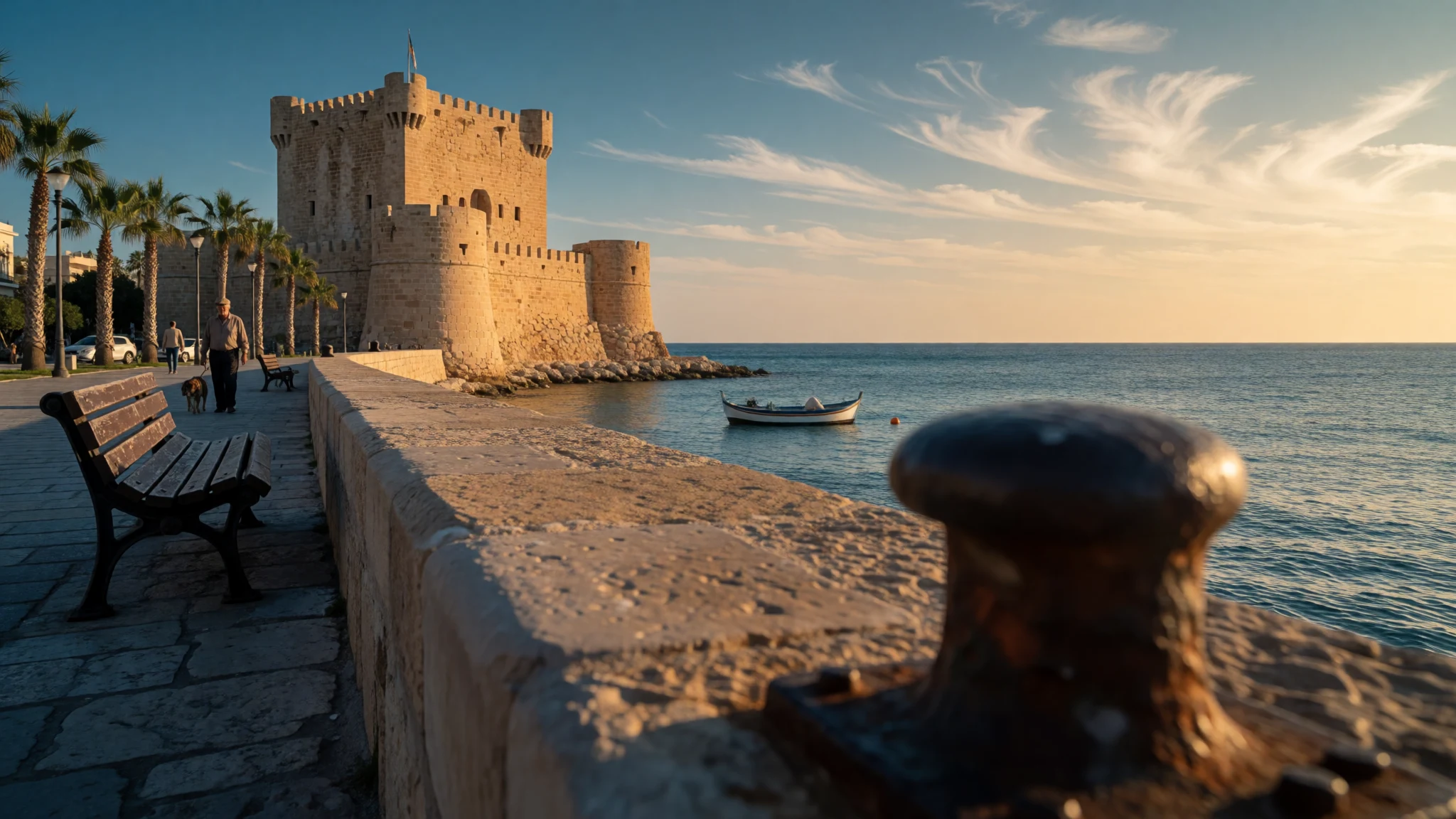
Larnaca Castle is a compact seafront fort that explains how a relaxed Cypriot resort town began as a port needing protection.
The place
Larnaca Castle sits right on the waterfront of Larnaca, on the south coast of Cyprus, and its position explains most of what it is. At about 1 metre above sea level, it is not a hilltop stronghold but a low, squat harbour fort, built to watch the anchorage and cover the town behind it. The walls are plain, honey-coloured stone, and the whole building is compact enough to take in within a few minutes from the promenade. Greek speakers call it Κάστρο Λάρνακας, and Turkish speakers Larnaka Kalesi. Across its working life it has been a coastal defence, an artillery post, a prison and, today, a small museum, which gives it an unusually layered feel for something so modest in size. Around it, the town carries on as a seaside place: cafés and restaurants along the front, boats bobbing in the water, and a steady stream of people walking the esplanade at dusk. The castle is not somewhere to spend a whole day. Most visitors fit it into a morning or an early-evening walk that also takes in the church of St Lazaros and the Finikoudes strip. What it offers is context: a physical reminder that this easy-going town was once a harbour that needed guarding, and that the sea was the way in. Summers here are hot and bright, and the pale stone and open courtyard throw the heat back, so timing matters. Photographers tend to like the low evening sun, when the walls turn warm and the sea behind them darkens.
Its story
Larnaca Castle belongs to a long chain of changes along this stretch of coast. People have lived at Larnaca since the 14th century BC, when Mycenaean Greek settlers founded a small town. The Byzantines later put up a modest fort near the harbour; excavation around the walls suggests building began in the late 12th century AD, though the exact date is uncertain. The site gained weight in the medieval period. When Famagusta, the island's main port, fell under Genoese control, shipping needed another outlet, and Larnaca grew into one of the kingdom's key harbours. A harbour that busy needed protection, so between 1382 and 1398, under James I, the small Byzantine work was rebuilt into a stronger castle. By the 18th century its military value had faded. The traveller Abbot Giovanni Mariti found it half ruined, though a small garrison remained, and he guessed the Ottomans had built it because of its Turkish look and its inscriptions. Under British administration it became a prison, with a gallows added; the final hanging took place in 1948. In the years of intercommunal conflict from 1958 to 1974 it served as a place of detention again, this time under Greek Cypriot control. That history of shifting hands, and of uses that range from defence to confinement to display, is what the building now quietly holds.
What to see
- The castle courtyard — Seafront, Larnaca
The inner courtyard of Larnaca Castle is the calm heart of the visit. Thick walls cut out the traffic noise, and the open space shows how the fort was organised around a central yard. Mid-morning light works well here; by afternoon in summer it can feel like an oven.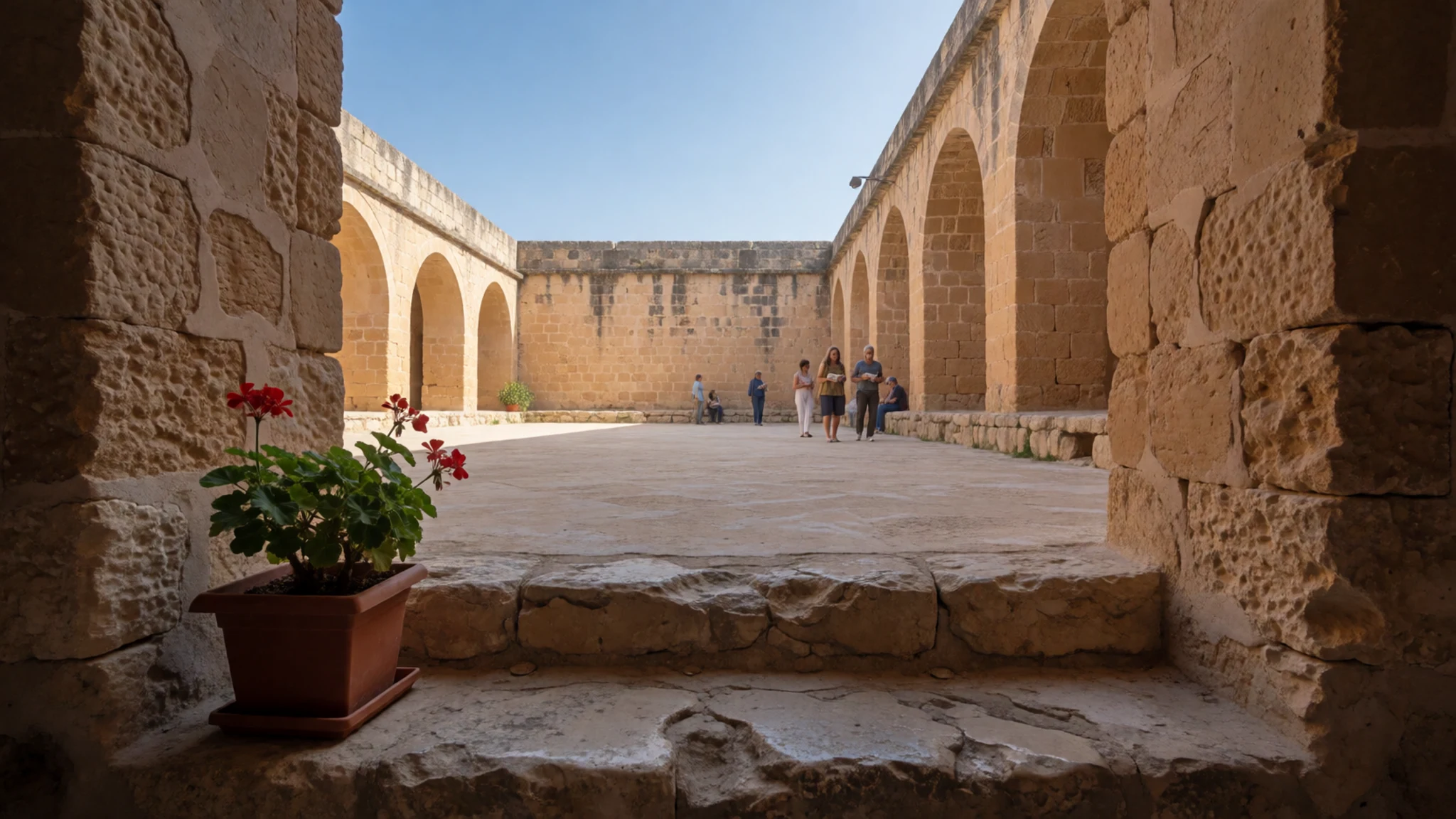
- Entrance and sea wall — Seafront, Larnaca
The plain entrance and the walls facing the water show the castle's original purpose better than any panel. Stand on the promenade and look at how low and close to the waves it sits. This is also the easiest angle for photographs, especially near sunset.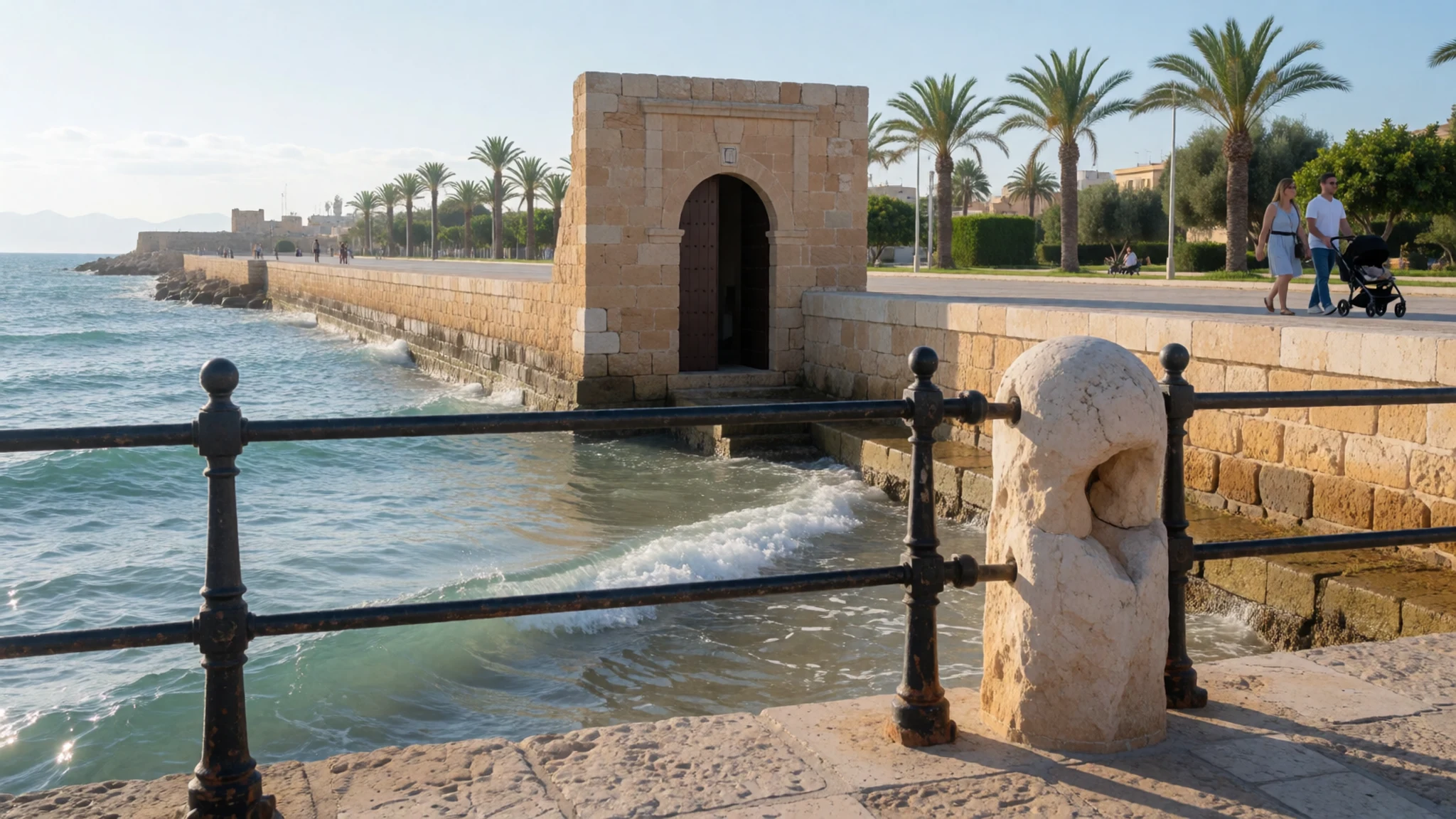
- Finikoudes promenade — Waterfront, Larnaca
Finikoudes is the palm-lined esplanade running along the town beach, a few steps from the castle. It is where Larnaca strolls, eats ice cream and watches the evening settle. Expect crowds on summer nights and weekends, and plenty of cafés for a long sit-down.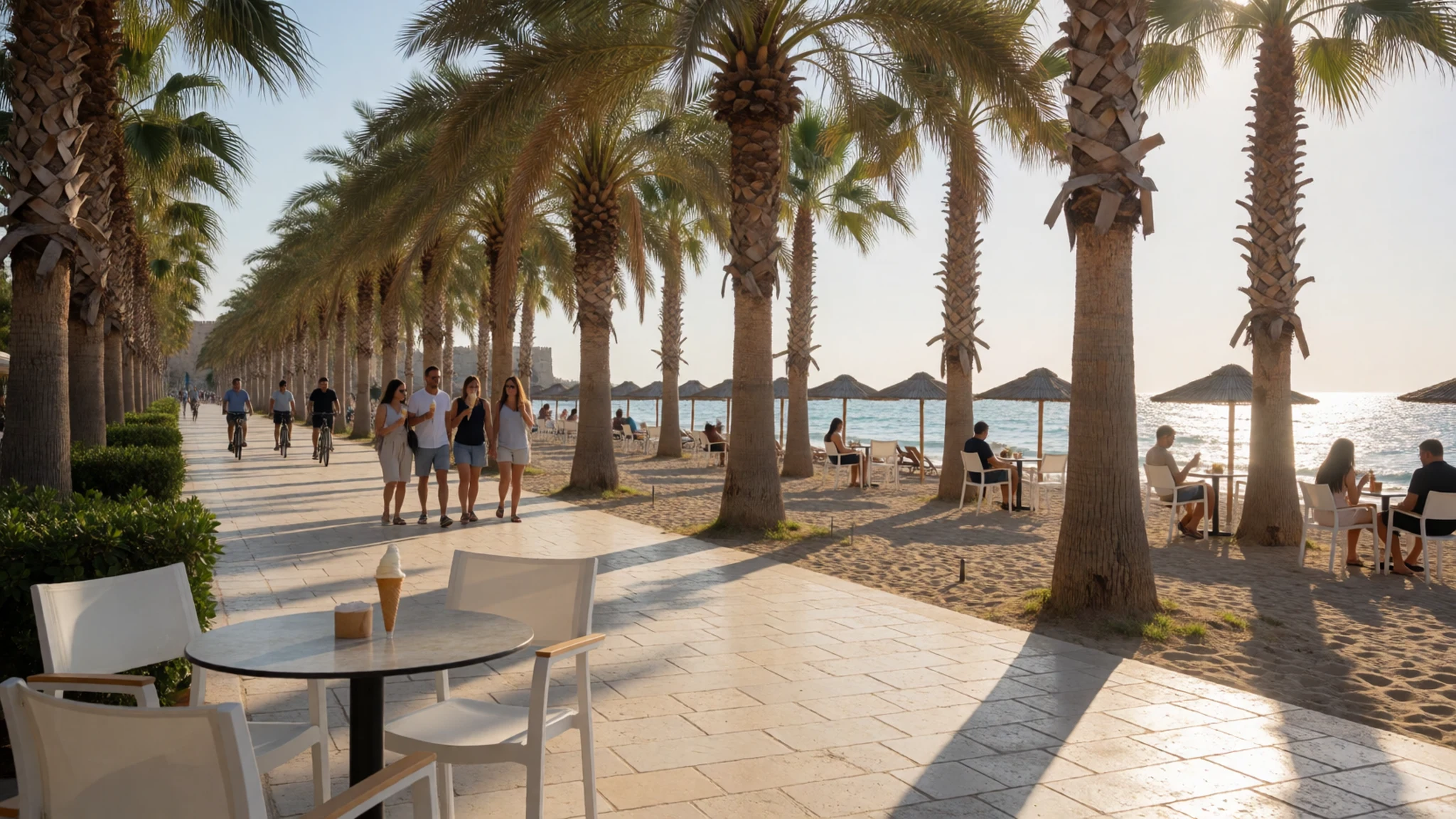
- St Lazaros Church — Old town, Larnaca
St Lazaros is a short walk inland from the castle and is among the best-known churches in town. Its interior is dim, ornate and still used for worship, so it makes a quiet counterpoint to the bright seafront. Visit outside service times and dress modestly.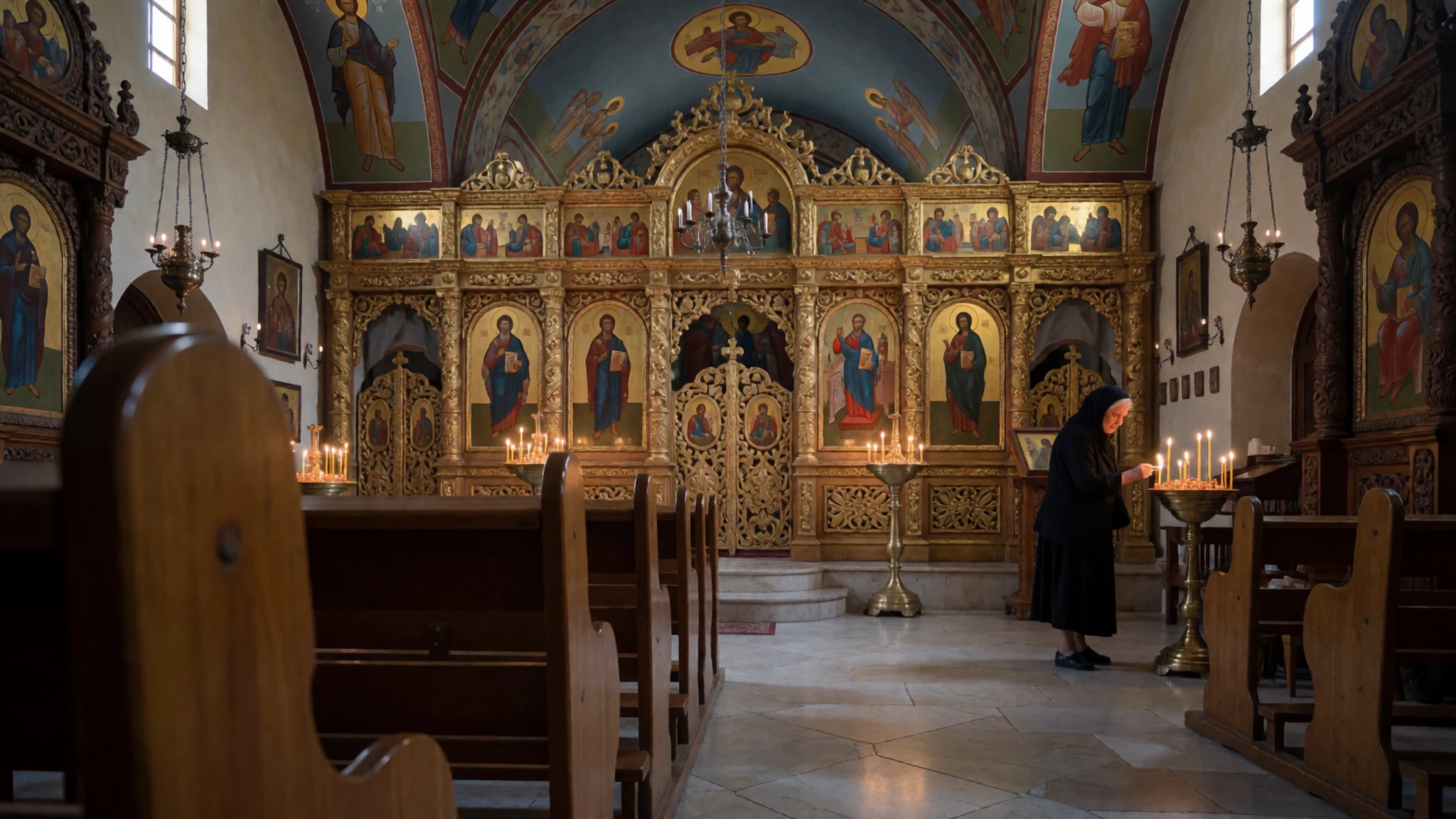
- Choirokoitia — Larnaca district, inland
Choirokoitia is a prehistoric settlement and a UNESCO World Heritage site, set in the hills to the south-west of Larnaca. It needs a car or an organised trip and a few hours, but it adds a much deeper layer of time than the castle alone. Bring water and a hat.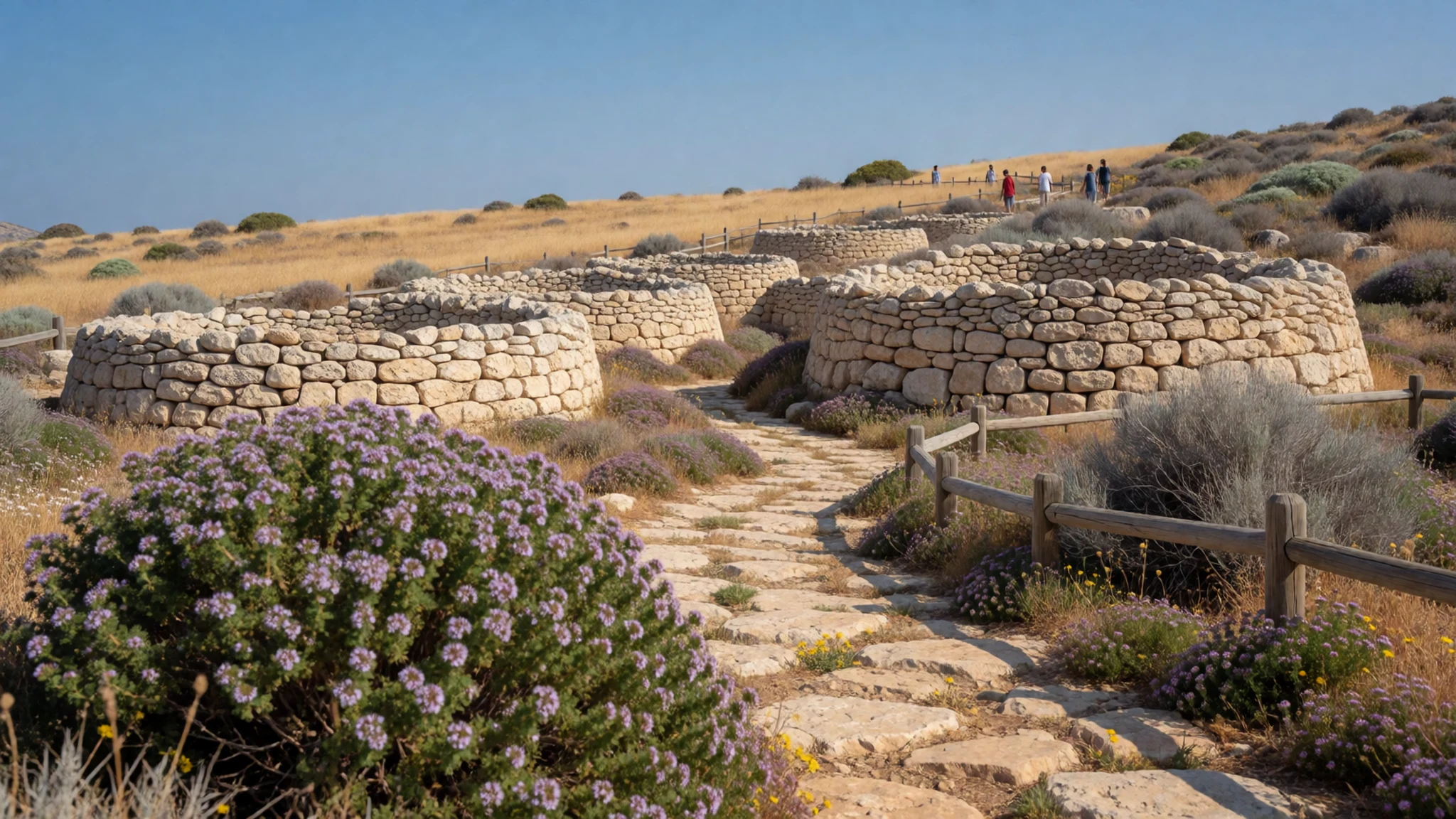
Culture
Larnaca Castle sits in a town where Greek Orthodox tradition, Mediterranean seafaring and a layered colonial past all show up in everyday life. The castle itself reflects that: Byzantine beginnings, medieval and later strengthening, Ottoman associations, British use as a prison and later conflict-era detention. Locals generally take this history as a matter of fact rather than spectacle, and a respectful, curious attitude goes down well. Life on the seafront runs on café time. Coffee is slow, conversation is unhurried, and families gather in the evening once the heat eases. Hospitality is a point of pride, and a friendly greeting at a small eatery or shop is usually returned with real warmth. Religion remains visible: St Lazaros Church draws worshippers as well as visitors, and Orthodox customs such as candles, icons and quiet prayer are part of ordinary weekdays, not just festivals. The recent history of the island is sensitive, particularly the years of intercommunal violence, so it is wiser to listen and ask gently than to offer strong opinions on politics. Where the castle's past as a prison comes up, a quiet tone suits it better than jokes. In St Lazaros Church, cover shoulders and knees, keep your voice low, and ask before photographing worshippers or any service in progress.
What to wear
Larnaca Castle stands in a part of Cyprus with a rich needlework tradition. Traditional Cypriot dress included the vraka, the baggy breeches men wore with a sash and waistcoat, and long embroidered dresses for women, made from cotton, linen, silk and wool depending on season and means. Lefkara, a village in the Larnaca district, is known for its fine lace and embroidery, usually worked in white or cream thread on linen. Today these garments appear mainly at festivals, folk-dance performances, weddings and in museums, though lace remains a popular souvenir. Everyday dress in Larnaca is relaxed and seasonal: light cotton, shorts, sandals and swimwear near the beach, with smarter casual clothes for evening dining along the front. Visitors should plan for strong sun and heat from late spring to early autumn: breathable fabrics, a hat, sunglasses and sunscreen. Flat, comfortable shoes are best for the castle's uneven stone and the walk along the promenade. Beachwear belongs on the sand, not in churches or in town. For St Lazaros and other Orthodox churches, carry a light scarf or shirt so shoulders and knees can be covered. In winter, evenings can be cool and breezy by the sea, so a light jacket is useful.
What to eat
- Halloumi — Seafront cafés and any traditional taverna
Cyprus's best-known cheese, firm and salty, is usually grilled or fried until golden and eaten with bread, watermelon or in a sandwich. It turns up on almost every menu and is an easy first taste of the island.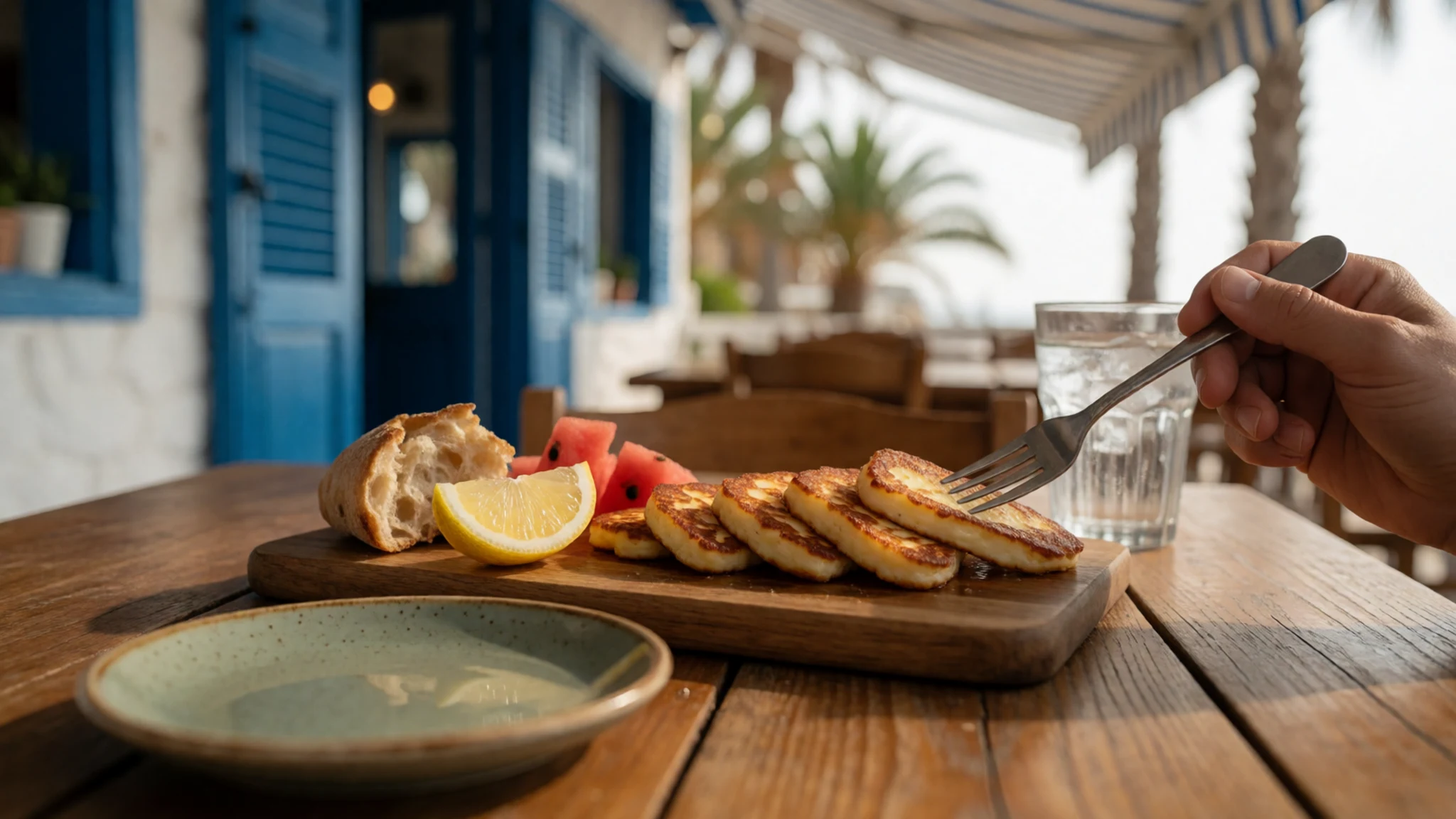
- Meze — Tavernas around the old town and the seafront
A meze is a long run of small dishes brought out in waves: dips, salads, grilled meats, fish and cheeses. Go hungry and share it with others. It is the best way to try many local flavours in a single, slow meal.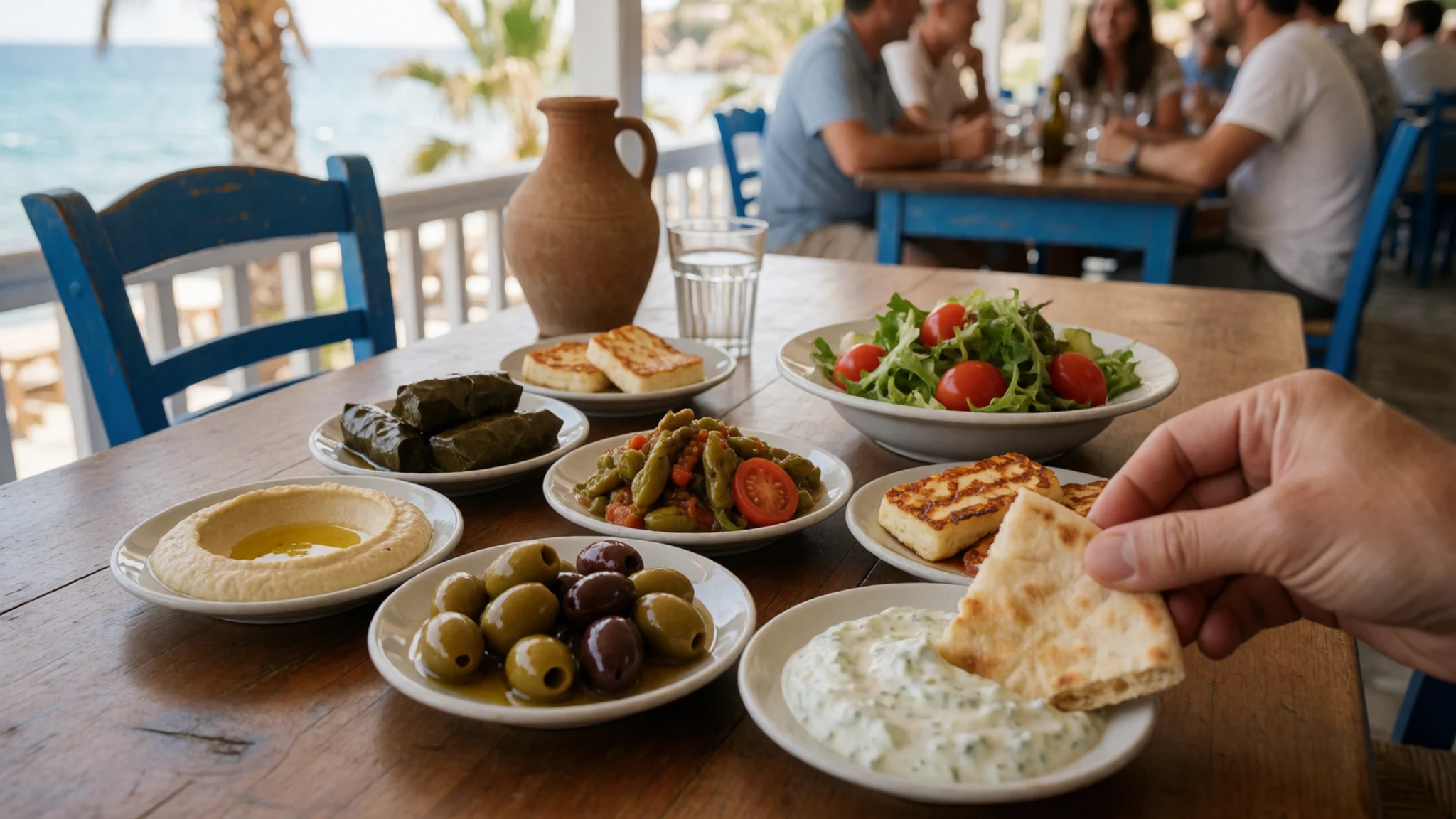
- Souvla — Charcoal grill restaurants and family-run eateries
Large pieces of pork or chicken are cooked on a long skewer over charcoal, then served with pitta, salad and lemon. The smoky flavour is simple and filling, a regular choice for family lunches and weekend gatherings. - Koupepia — Traditional tavernas, often on set meze menus
Vine leaves are rolled around seasoned rice and sometimes minced meat, then simmered until soft. They appear as part of a meze or as a home-style main with lemon, and taste of Cypriot home cooking. - Loukoumades — Dessert shops and cafés near the promenade
These small fried dough balls are drenched in syrup or honey and often finished with cinnamon. They are best eaten warm, as a sweet end to an evening stroll along the front.
Plan it
Best time. April–May and October–November, when the sea air is warm but the heat is bearable. July and August are hot and bright, with the busiest beach and promenade crowds; winter is mild but can be breezy and unsettled.
How long. 1–2
Getting there. Fly into Larnaca International Airport, then take a short taxi or bus ride into town. The castle is on the seafront and easy to reach on foot from the Finikoudes promenade and the old town.
Budget. mid
Tips
- Check the current opening times and entry arrangements before you go, as they can change by season
- Visit in the morning or around sunset to avoid the strongest heat on the open stone
- Carry water, a hat and sun protection, as the courtyard has little shade
- Pair the castle with St Lazaros Church and a promenade walk, as all are close together
- Hire a car or book a trip if you want to reach Choirokoitia
Etiquette
- Dress modestly and keep quiet when entering St Lazaros Church
- Ask before photographing worshippers or local people
- Treat the castle's prison history with a respectful tone
Nearby
Sources
- Wikidata Q580797 (CC0)
- Wikipedia: Larnaca Castle (rev 1378887204) (CC BY-SA 4.0)
- Wikivoyage: Larnaca district (rev 5235362) (CC BY-SA 4.0)
- Cyprus - Larnacacastle 1, Dickelbers (CC BY 3.0)
- Entrance of Ancient Larnaca Castle in Cyprus, Andreas2009 (CC BY 3.0)
- Larnaca kasteel, Dickelbers (CC BY 3.0)
- Nádvoří hradu (pevnosti) v Larnace (Kypr), Qasinka (CC0 1.0)
- Larnaca Castle (1), Chris06 (CC BY-SA 4.0)
- Larnaca Castle (2), Chris06 (CC BY-SA 4.0)
- Larnaca Castle (3), Chris06 (CC BY-SA 4.0)
- Larnaca Castle (4), Chris06 (CC BY-SA 4.0)


