Kourion
Kourion, Cyprus
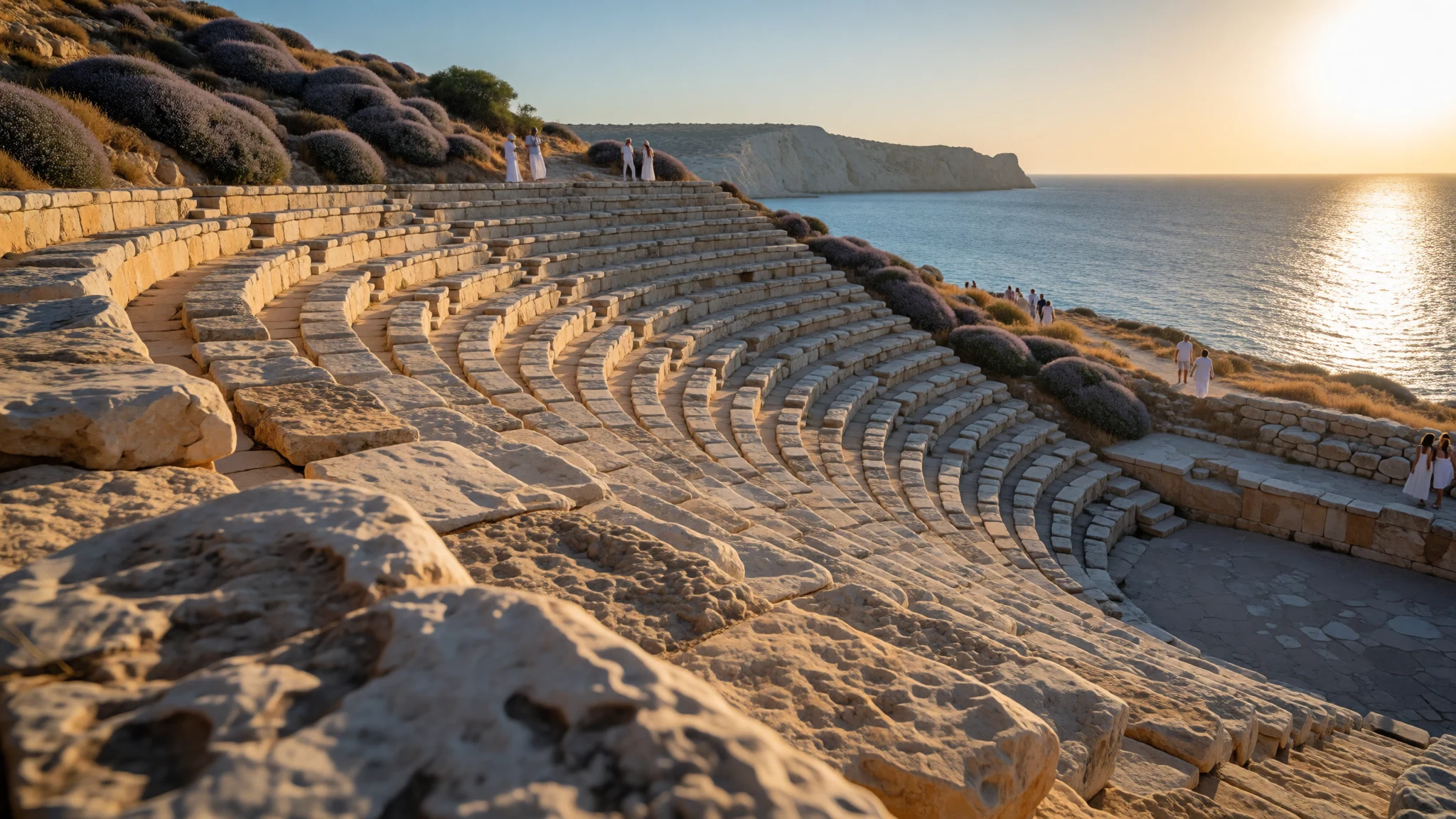
Kourion is a Greek and Roman city on a sea cliff in southern Cyprus, where mosaics, a theatre and Apollo's sanctuary survive.
The place
Kourion sits on the south-western coast of Cyprus, on a limestone promontory that rises nearly 100 metres above Episkopi Bay. The ruins lie about 13 km west of Limassol, and the village of Episkopi is the nearest settlement. The cliff gives the site its character: a flat, open ridge of pale stone, scrub and wind, with the Mediterranean on one side and the dry coastal plain on the other. Very little of it is shaded, and on a clear day the view runs along the full curve of the bay.
Politically the site is unusual. It stands inside the Akrotiri and Dhekelia area, a British Overseas Territory, yet the antiquities are looked after by the Cyprus Department of Antiquities. Most visitors never notice the boundary.
What survives is mostly Roman and early Christian: the houses of wealthy residents with mosaic floors, public baths, a theatre facing the sea, and the foundations of a large basilica. Older Greek layers lie beneath and around them, and a sanctuary of Apollo sits a little way to the west, among trees. The main site is compact enough to cover in a morning, but the sun, the exposed paths and the detail in the floors reward a slower pace. Kourion works well as a half-day from Limassol, or as a stop on the road towards Paphos.
Its story
Kourion's story begins before the city itself. Villages of the Neolithic and Copper Age stood in the Kouris river valley, and by the Late Bronze Age the valley was a corridor for copper coming down from the Troodos mountains, with a busy town at Episkopi-Bamboula that was abandoned around 1050 BCE. A kingdom of Kourion emerged soon afterwards, although archaeologists have not found its earliest settlement. The best evidence comes from graves in the Kaloriziki cemetery, below the bluffs.
Tradition gave the city a Greek founding. Colonists from Argos were said to have come in the twelfth century BCE, as the Mycenaean world broke up, and Kourion kept that Argive identity as one of the island's independent city-kingdoms. Under later Hellenistic and Roman rule it grew into the town whose remains are visible now, with a theatre, villas, baths and a cult centre for Apollo Hylates.
The setting was also its danger. Cyprus lies in an active earthquake zone, and in the fourth century Kourion was struck by five heavy quakes. Its people kept returning and rebuilding, which is why the surviving layers mix older foundations with repairs and Christian additions. In the end the city was left behind, and the cliff, plain and sea reclaimed it until modern excavation began. What visitors walk through is best read as a place repeatedly broken and patched, not a single moment frozen in time.
What to see
- The Greco-Roman theatre — Kourion acropolis, Episkopi
Kourion's theatre faces the open sea from the cliff edge, its curved rows of stone restored for modern use. Sit in the upper rows to take in the bay and the whole headland. It is exposed and bright, so go early, and check local listings if performances are on.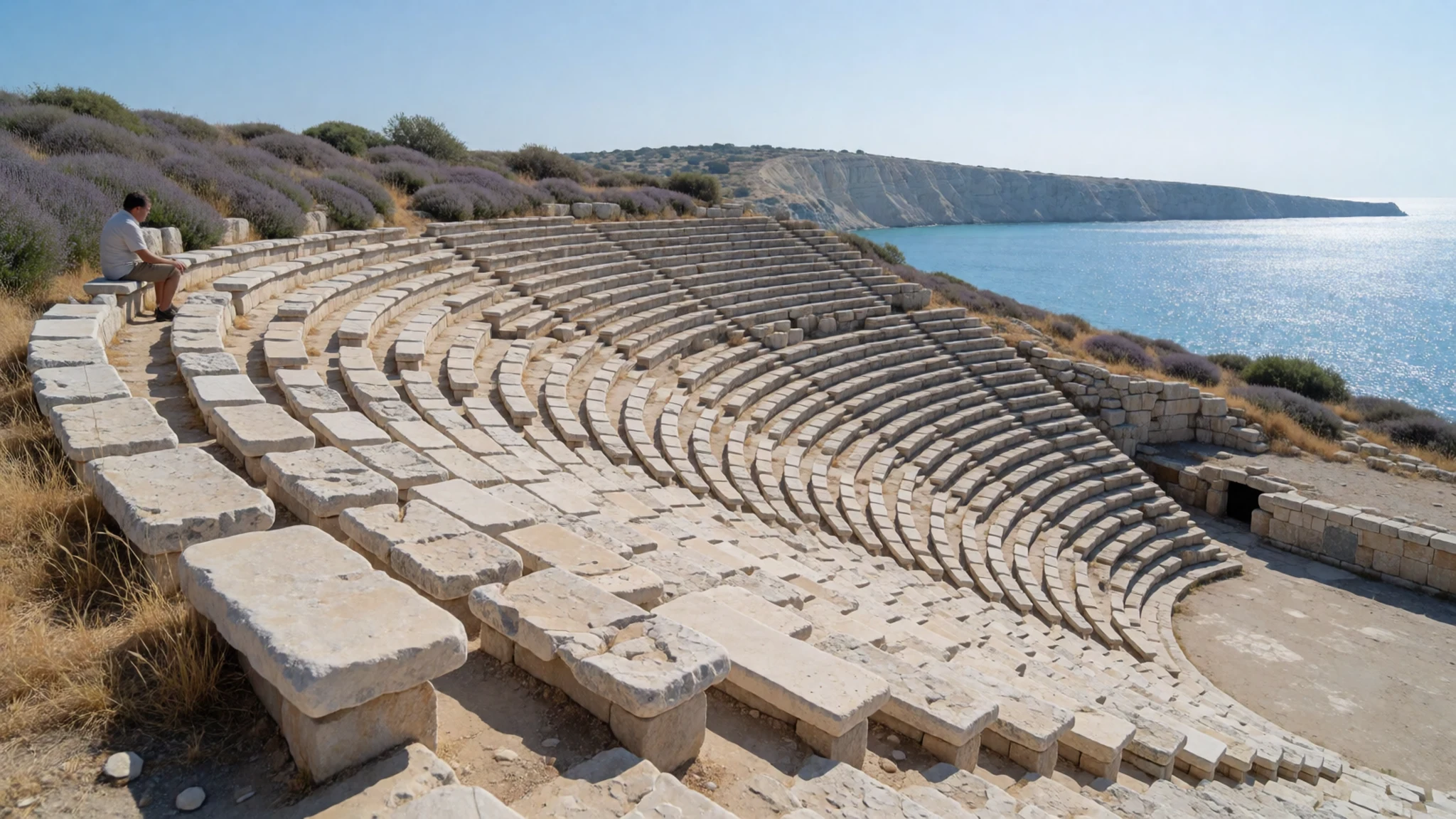
- House of Eustolios — Kourion archaeological area
A grand late Roman villa with a bath suite attached, notable for its floor mosaics of birds, geometric borders and Greek inscriptions. Visitors can admire the patterns from the edges of the rooms without stepping on them. It gives a feel for how a wealthy family lived beside the sea.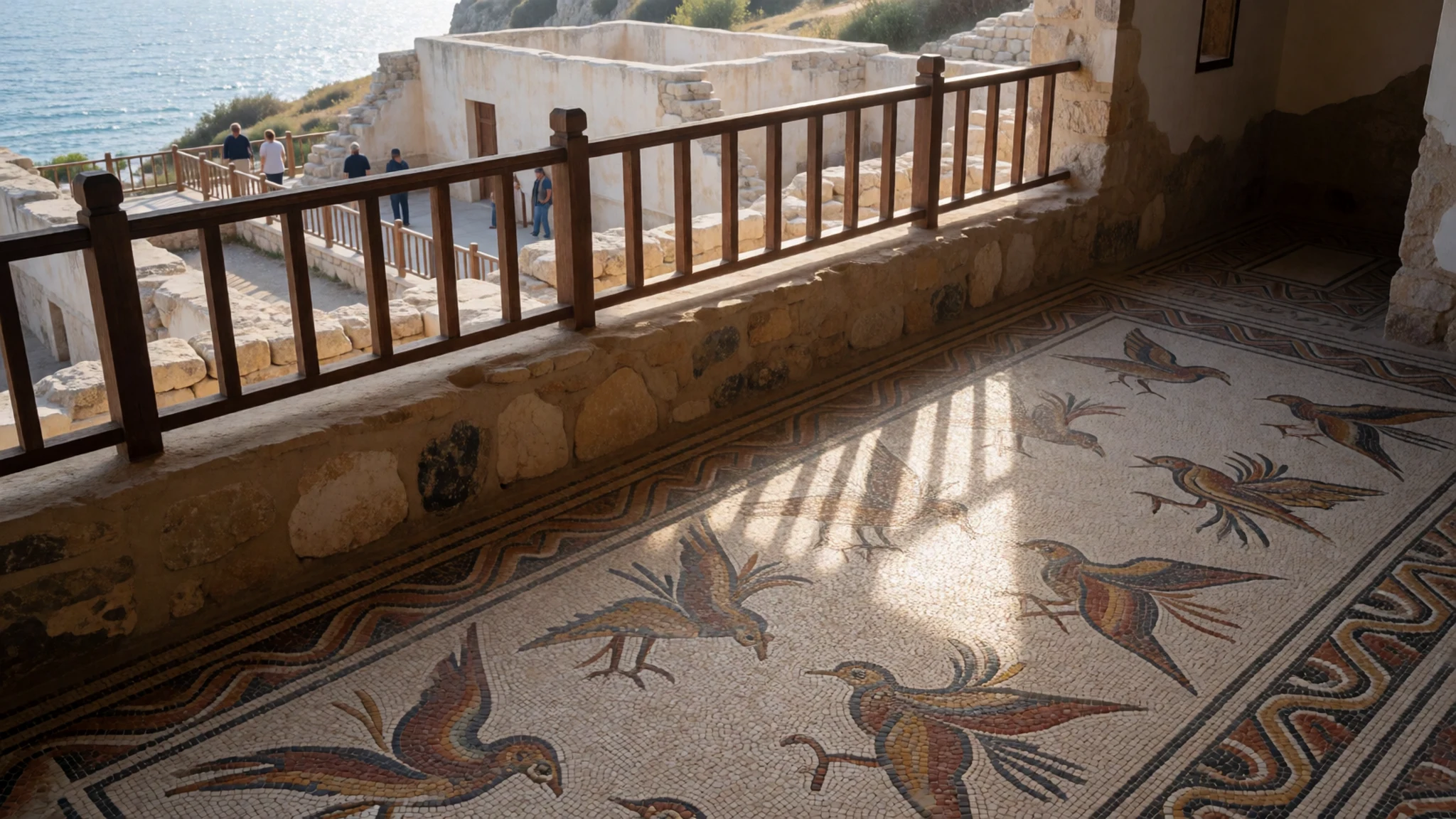
- House of the Gladiators — Kourion archaeological area
This Roman house is named for its mosaic showing pairs of fighters in combat, with attendants and labels in Greek. The panel sits around a central courtyard and is protected from the weather. It is a small stop but a vivid one, linking the town to the wider Roman world of public spectacle.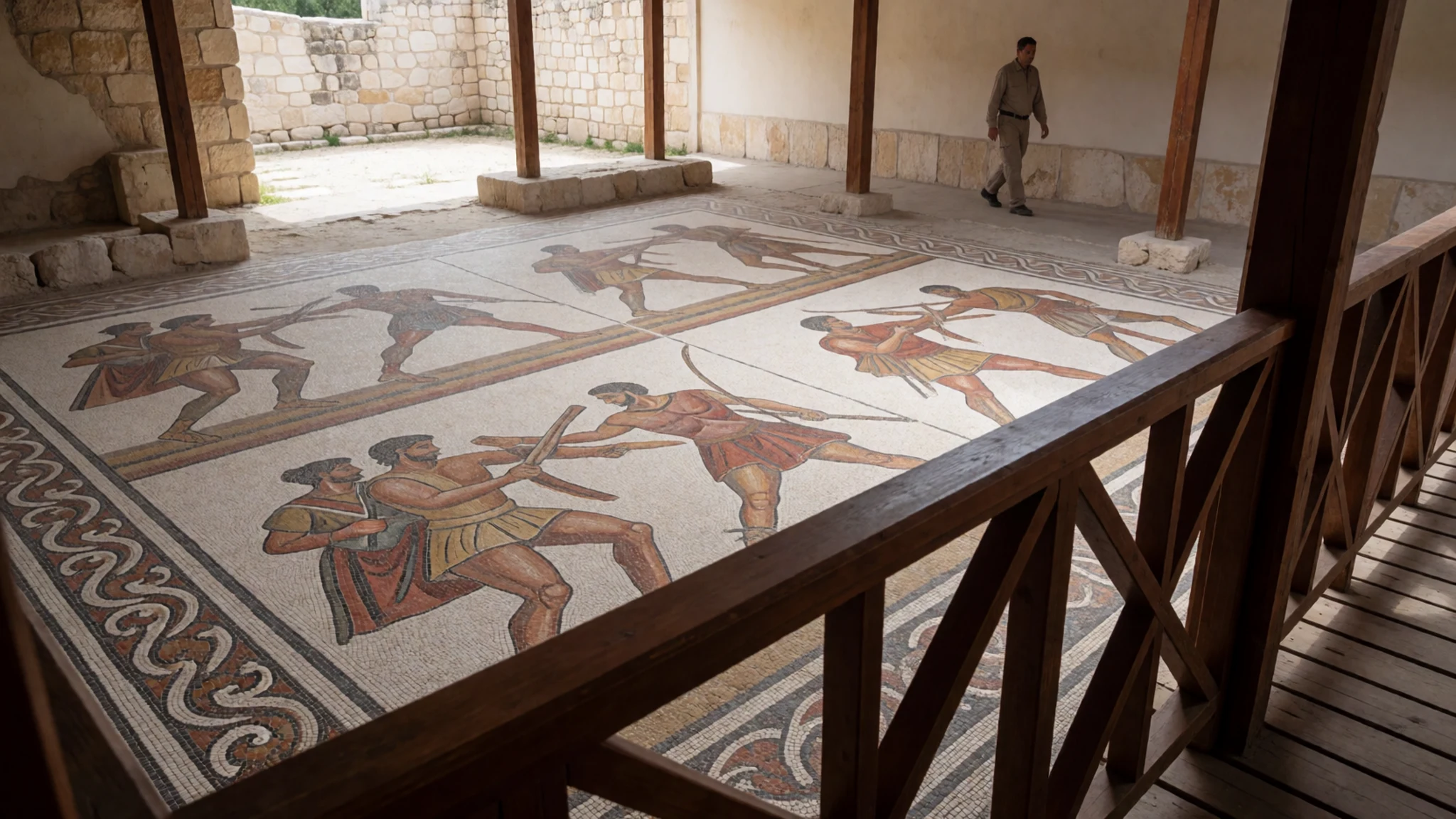
- Earthquake House — Kourion archaeological area
Excavators found this dwelling collapsed, with remains of people and animals among the rubble, and linked it to one of the quakes that struck the city in late antiquity. The low walls and sections of fallen masonry make the destruction easy to imagine. It is a quieter, more sobering corner of the site.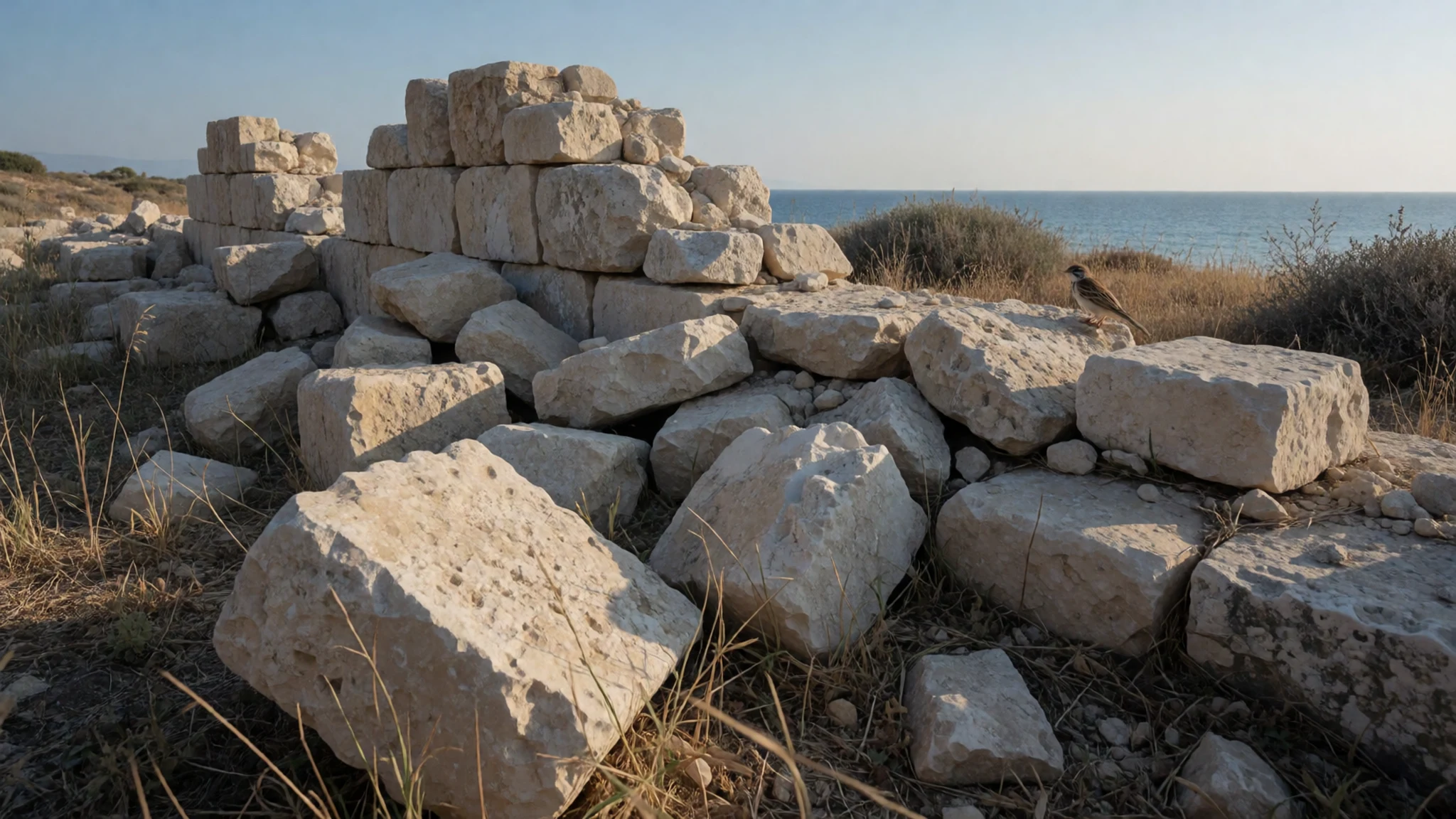
- Sanctuary of Apollo Hylates — West of Kourion, near Episkopi
West of the main city, among pine and scrub, stands the sanctuary where Apollo was worshipped as a god of woodland. Column bases, a partly rebuilt temple and the outline of pilgrim buildings remain. It is shadier and calmer than the cliff-top, and worth the short drive or a longer walk.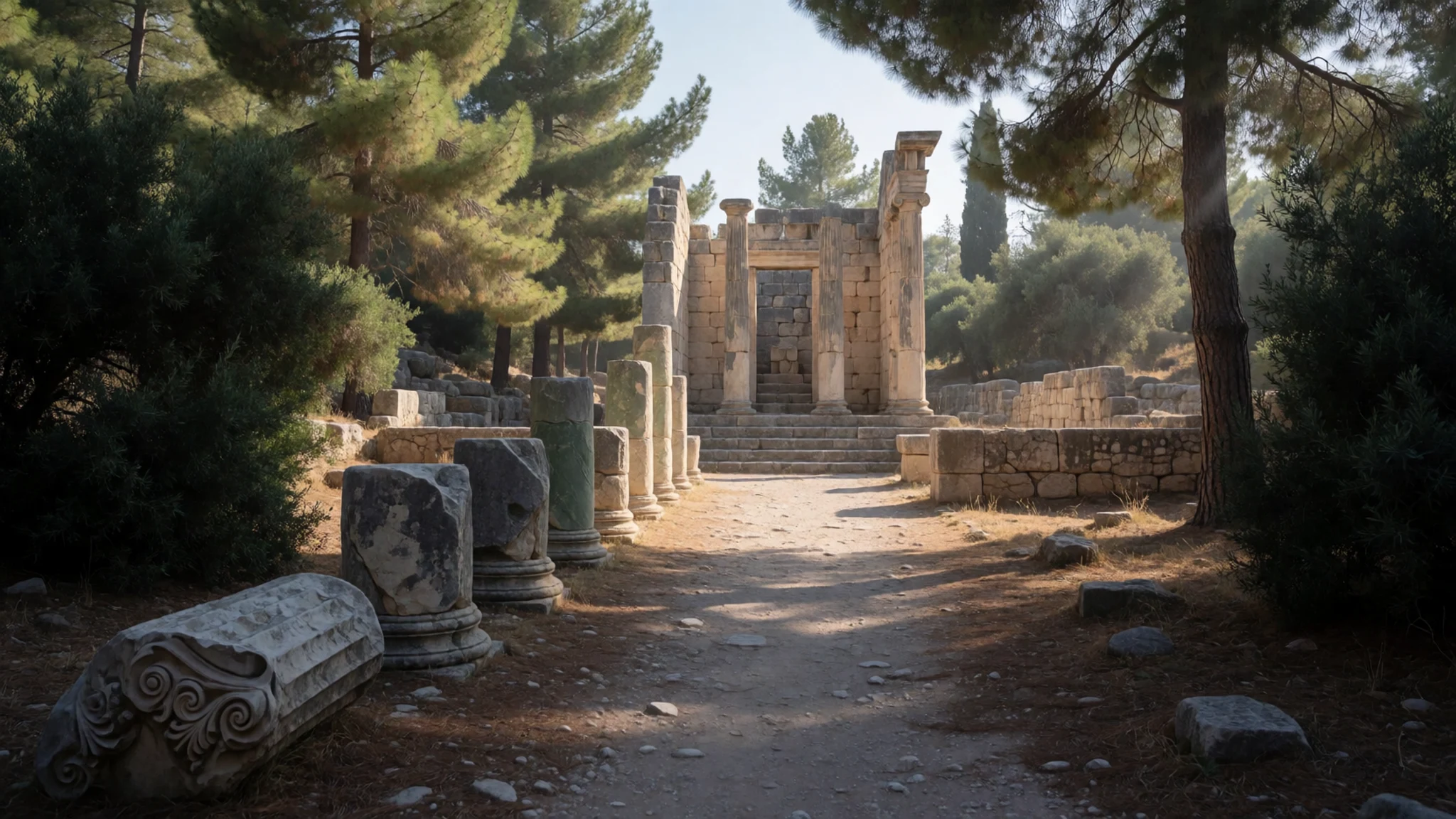
- The Nymphaeum — Kourion archaeological area
A Roman fountain house, once a place for water display and meeting in the city. Today only its basin and a few architectural remains stand, but it hints at how water, shade and public life were arranged in a hot, dry town. Photographers tend to prefer the low afternoon light here.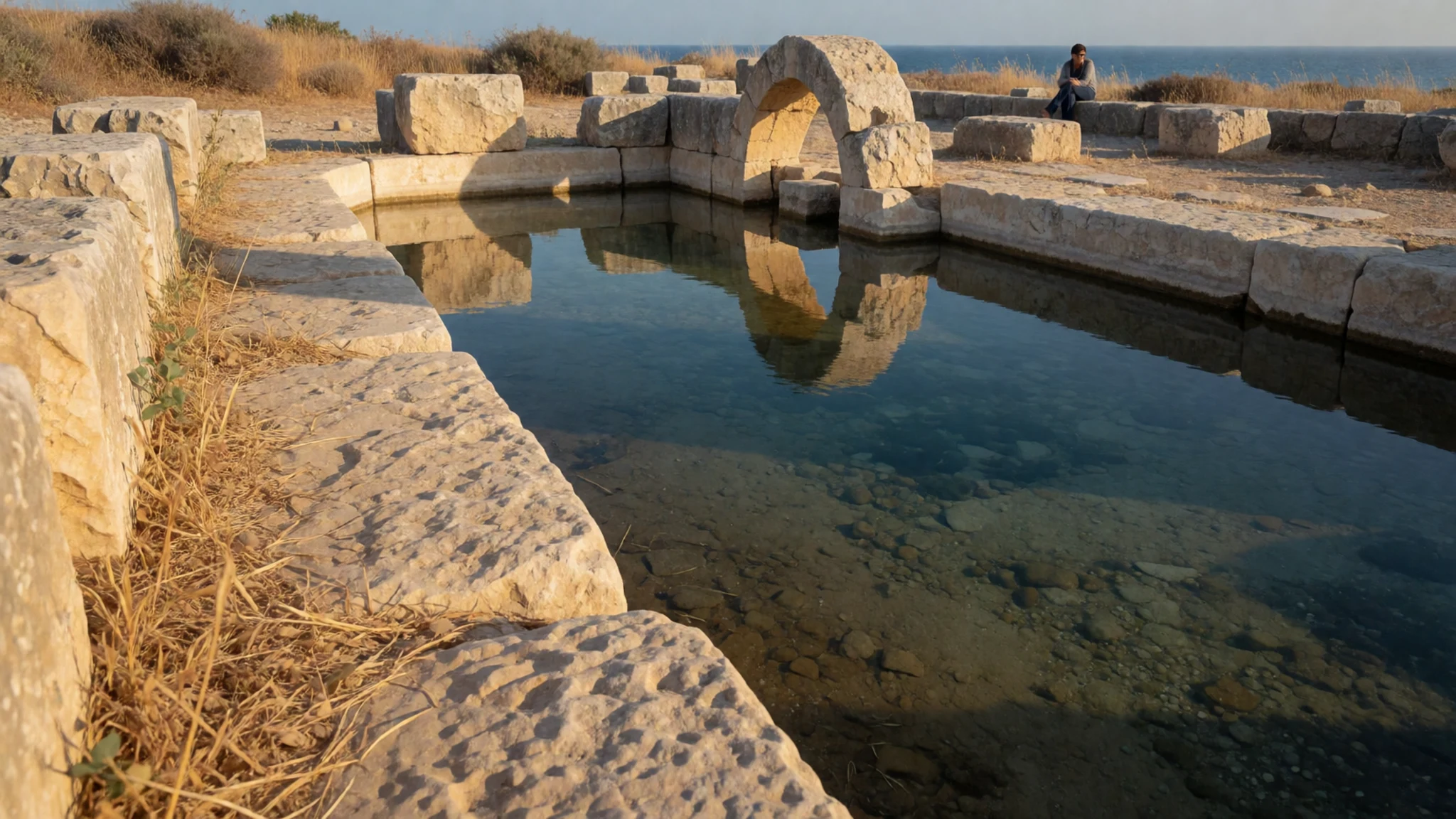
Culture
Kourion belongs to the Greek-speaking south of Cyprus, where history is part of everyday conversation. Local families, school groups and visiting scholars share the same paths, and the ancient city is treated as a shared inheritance. Island culture blends Greek Orthodox faith, Mediterranean hospitality and long habits of trade: coffee, sweets and a drawn-out lunch count for more than hurried sightseeing. Apollo was worshipped here as a god of woodland, and the sanctuary is a reminder that religion on this coast is far older than the churches in the surrounding villages.
Orthodox Easter is a major festival, and many shops and offices slow down around it, with church services, lamb on the table and red-dyed eggs. Greek is the everyday language, though English is widely understood after the long British presence on the island. A simple 'kalimera' (good morning) is warmly received. In the villages near Limassol, wine and halloumi are points of local pride, and an invitation to taste is usually sincere.
The British base area that surrounds parts of the coast is a reminder of the island's more recent past, and it shapes daily life in places like Episkopi. Visitors to Kourion should stay on the marked paths, keep off the mosaic floors and low walls, and speak quietly near the fragile tesserae so that the site stays intact for the next group.
What to wear
Kourion lies in the part of Cyprus where traditional village dress was shaped by local crafts and a warm climate. Women wore a long dress called a sarka or foustani, often with an apron, a sash and an embroidered headscarf, made of cotton, linen and sometimes silk. Men wore the vraka, loose dark breeches gathered at the knee, with a waistcoat, a wide sash and boots for work. Island textiles included the fine needlework of Lefkara lace and the woven cloth of Fyti. These costumes now appear mainly at folk festivals, weddings and in dance groups.
Day to day, people in the Limassol area dress as they do across the Mediterranean: light cotton and linen, sandals and sunglasses, with smarter clothes for church, family occasions and evenings out.
Visitors to the ruins should plan for sun and exposed ground. A brimmed hat, sunscreen, sunglasses and a light long-sleeved shirt help, and shoes with good grip matter because the stone is uneven and can be slippery where it has been polished by feet. Swimwear belongs on the beach. For village churches and monasteries, cover shoulders and knees, and carry a scarf or light layer. In winter, add a windproof jacket, since the cliff is breezy and rain can arrive quickly.
What to eat
- Halloumi — Any village taverna or bakery near Episkopi and Limassol
The island's well-known cheese, firm and salty, usually grilled or fried until golden and served with watermelon in summer or tucked into sandwiches. It is easy to find, and the best versions come warm from a grill.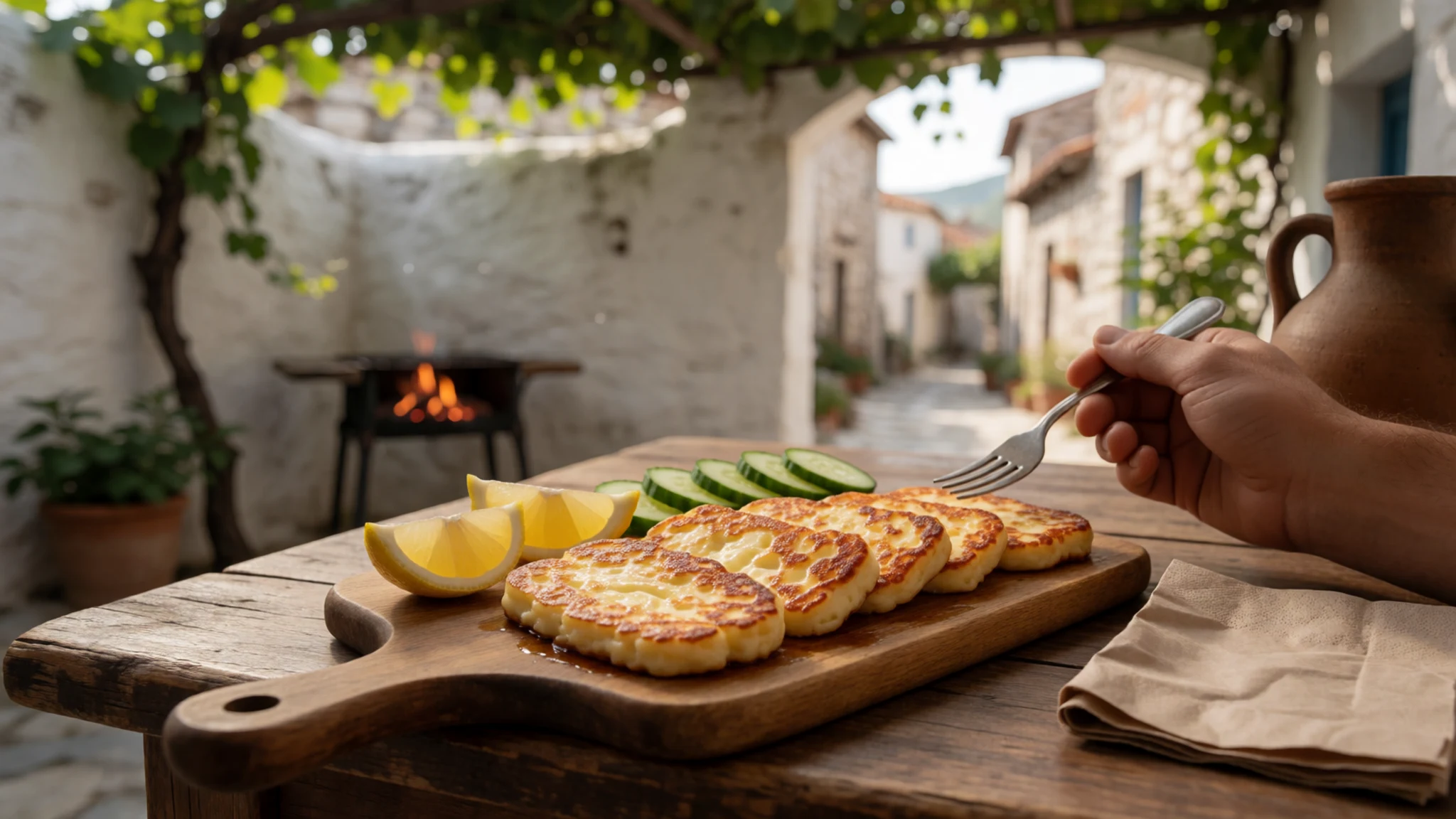
- Souvla — Grill houses and tavernas along the coast road
Large pieces of pork, lamb or chicken cooked slowly on a long skewer over charcoal, then served with salad, pitta and lemon. It is often a weekend family dish and has a smoky, simple flavour.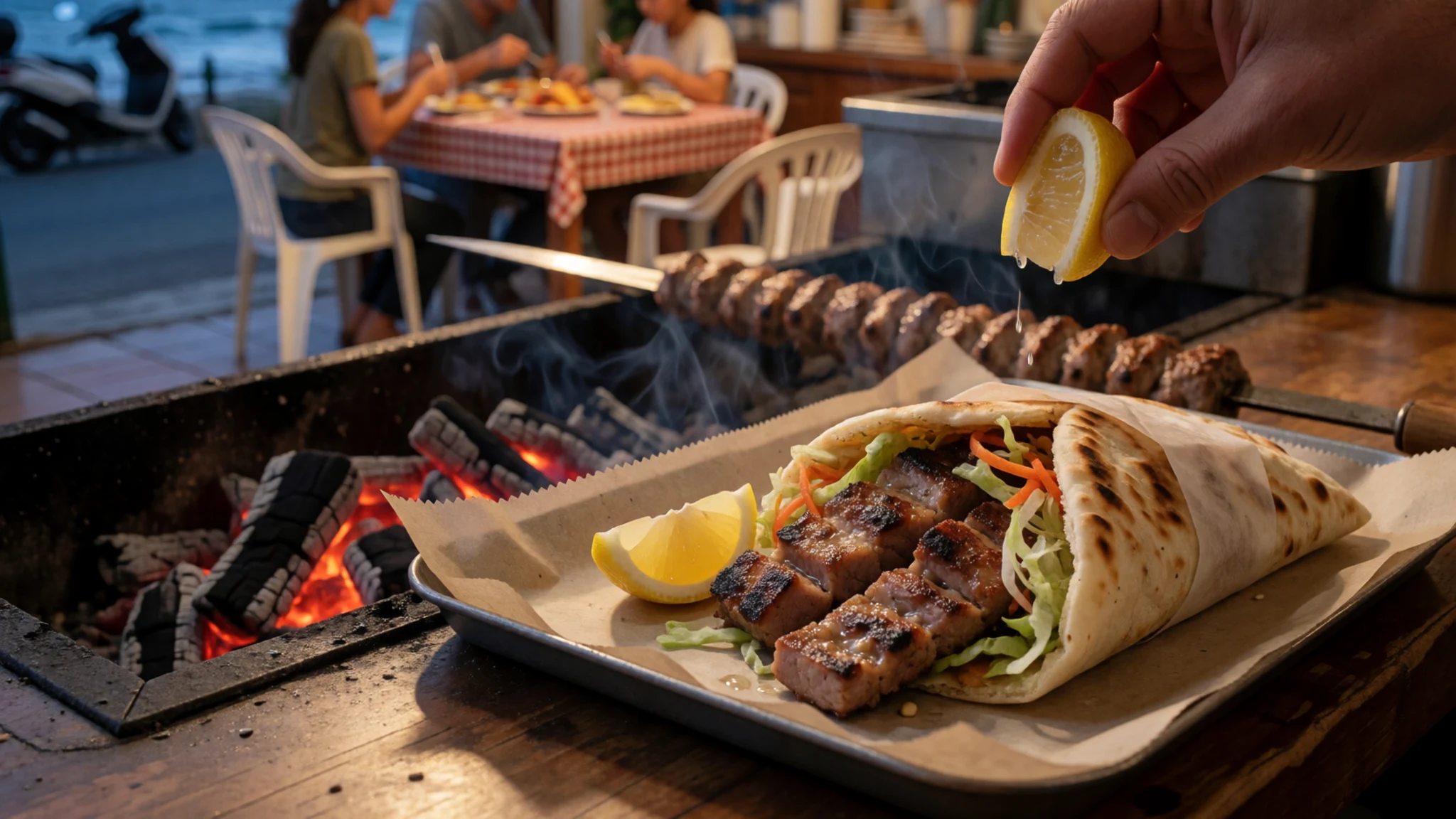
- Kleftiko — Traditional tavernas in the villages inland from Limassol
Lamb cooked slowly in a sealed oven until it falls from the bone, traditionally with potatoes, garlic and herbs. It is a rich main dish and usually shared at a long lunch. - Afelia — Family-run tavernas in the foothill villages
Pork marinated in red wine and crushed coriander seed, then braised until tender. The sauce is dark and fragrant, and it is usually served with rice or fried potatoes. - Meze — Seafront tavernas in Limassol, or village restaurants
A long spread of small dishes brought in rounds: dips, olives, grilled meats, fish, salads and cheeses. Come hungry and pace yourself, because the table keeps filling. It is the best way to taste many dishes at once. - Commandaria — Village wine shops and cellars north of Limassol
A dark, sweet dessert wine from the vineyards on the slopes of the Troodos foothills, with notes of raisin and caramel. Sip it slowly after a meal, or buy a bottle as a souvenir.
Plan it
Best time. March–April and October–November, when days are mild and sunny and the exposed cliff is comfortable to walk; spring brings green hillsides and wildflowers. July and August are very hot with almost no shade, so go early in the morning or late in the day. Winter can be windy and rainy but is quiet.
How long. 1
Getting there. Fly into Paphos or Larnaca airport, then drive or take a taxi to Limassol and continue west along the coast road to Episkopi; the site is signposted. Buses run between Limassol and Episkopi, but check the current local timetable for the last stretch and the return.
Budget. low
Tips
- Go early, before the tour groups and the heat, and carry water because shade is scarce.
- Check the official Cyprus Department of Antiquities site for current opening times and entry fees before you travel.
- Wear shoes with grip, since paths and mosaic shelters can be uneven.
- Hire a car or taxi if you want to see the Sanctuary of Apollo Hylates as well as the main site.
- Carry some cash for village cafes and small shops, though cards are widely accepted in towns.
Etiquette
- Stay on marked paths and never step on mosaics or climb on low walls.
- Cover shoulders and knees when entering village churches and monasteries.
- Ask before photographing people, especially in villages and at religious services.
Nearby
Sources
- Wikidata Q1785592 (CC0)
- Wikipedia — Kourion (rev 1374724518) (CC BY-SA 4.0)
- Wikivoyage — Limassol district (rev 5235363) (CC BY-SA 4.0)
- Photo: Kourion Archeological Museum, Cyprus — Michal Osmenda (CC BY 2.5)
- Photo: Cylinder seal, falcon headed figure (CC0 1.0)
- Photo: The Sanctuary and Temple of Apollo Hylates at Kourion, Cyprus — Carole Raddato (CC BY-SA 2.0)
- Photo: Pyramidal structure, Hellenistic — Rjdeadly (CC BY-SA 4.0)
- Photo: Mosaic of the house of the Gladiators, Kourion — Diego Delso (CC BY-SA 4.0)
- Photo: House of the Gladiators, Kourion, Cyprus — Diego Delso (CC BY-SA 4.0)
- Photo: Earthquake House, Kourion, Cyprus — Diego Delso (CC BY-SA 4.0)
- Photo: Nympheum, Kourion — Rjdeadly (CC BY-SA 4.0)


