Nicosia
Nicosia, Cyprus
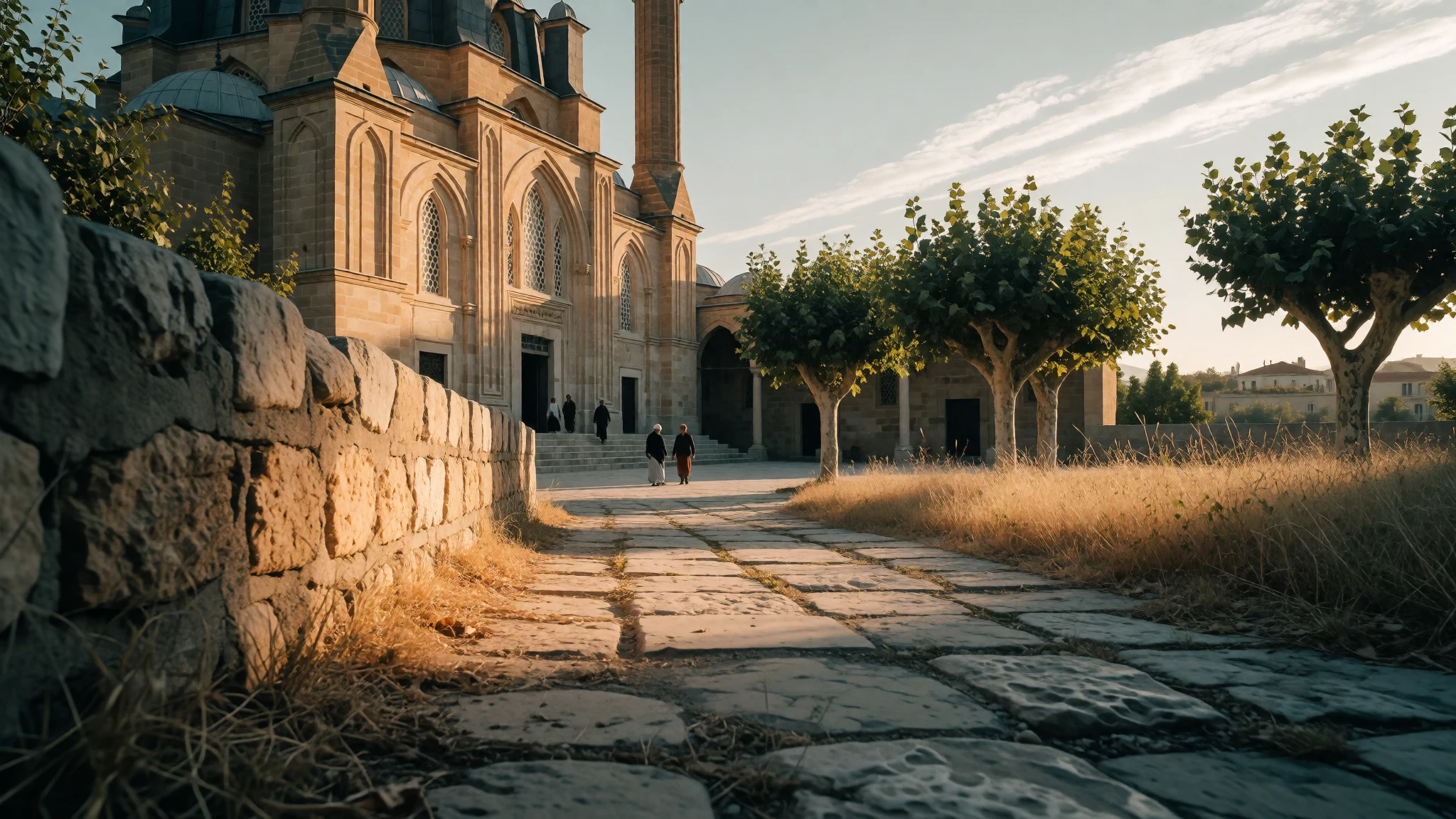
Nicosia is a walled Mediterranean capital split by a buffer zone, where Venetian ramparts, Ottoman lanes and Orthodox icons sit a short walk from the border.
The place
Nicosia (Lefkosia in Greek, Lefkoşa in Turkish) is the capital of Cyprus. It stands about 220 m above sea level on the dry Mesaoria plain, in the middle of the island and away from the beaches. The municipality has about 56,800 residents, which is small for a capital, and inside the old core it feels more like a large town than a metropolis. That core is ringed by a star-shaped circuit of Venetian walls. Through it runs the Green Line, a UN-patrolled buffer zone that has divided the city since 1974 between the Republic of Cyprus in the south and the Turkish Cypriot north. Few capitals anywhere are split in this way, and the division shapes daily life: streets that stop at barrels and sandbags, shuttered shopfronts near the line, and pedestrian crossing points used by people going to work or visiting relatives. Beyond the walls spreads a modern city of banks, ministries, offices and apartment blocks, because Nicosia is also where much of the island's government and business sits. Inside, the mood is slower. Sandstone lanes, wooden balconies, small museums, church domes and minarets share a few square kilometres. Summers are fierce and the streets empty around midday, so spring and autumn suit walking far better. Nicosia rewards curiosity rather than a checklist, and it is calmer and usually cheaper than the coastal resorts a short drive away.
Its story
Nicosia has been lived in since about 2500 BC, when early settlers chose the fertile Mesaoria plain for farming. The ancient city-state of Ledra is linked to the area. Tradition says it was one of twelve kingdoms founded by Achaean Greeks after the Trojan War, and an Assyrian text of 672 BC names a Cypriot ruler, Onasagoras, who paid tribute to the Assyrian king. By 330 BC, Ledra was a small farming town that leaned on nearby Chytri, and it missed out on the trade-driven growth of the coastal ports. The city became the capital of Cyprus in the 10th century and stayed at the centre of island affairs through Lusignan, Venetian and Ottoman rule. The Venetians built the great circular walls, and the Ottomans later left mosques, baths and houses. The British followed, and Cyprus became independent in 1960. Peace did not hold. Intercommunal violence in 1963 led, in 1964, to Greek Cypriots and Turkish Cypriots separating into the south and north of the city. In 1974 a coup backed by the Greek junta, which aimed to unite Cyprus with Greece, was followed within days by a Turkish invasion. The island was split, and the dividing line ran straight through Nicosia. Today the capital is both a working modern city and a place where that unfinished history is visible on almost every street corner.
What to see
- Cyprus Museum — Just outside the walls, west of the old town
The Cyprus Museum is the place to understand the island before looking at the city. Its galleries follow Cypriot archaeology from the earliest settlements to the end of antiquity, through pottery, terracotta figures and sculpture. Allow a slow morning, and use the café in the grounds as a break from the heat. - Byzantine Museum — Old town, near the archbishop's palace
A large statue of Archbishop Makarios stands outside the Byzantine Museum, which makes it easy to find. Inside is a dense collection of Orthodox icons and church art, mostly from the Byzantine and later medieval centuries. The gold backgrounds and worn faces suit a quiet visit, and the rooms stay cool when the streets are not. - Leventis Municipal Museum — Old town, Laiki Geitonia area
This museum fills a converted two-storey house and tells the story of Nicosia itself, from the Bronze Age to the present. Maps, costumes, furniture and everyday objects make the city's layers easy to follow, and it is a good first stop before walking the lanes around it. - National Struggle Museum — Old town, near the Byzantine Museum
The National Struggle Museum covers the Cypriot independence movement of the 1950s through photographs, documents and personal items. It is told from a strongly Greek Cypriot point of view and openly admires the EOKA fighters, so it is worth reading alongside other accounts to get a rounded picture. - Venetian walls — Encircling the old town
The Venetian walls form a near-perfect ring of eleven heart-shaped bastions around the old town. Much of the circuit is now green park and moat, with traffic skirting the edge. Walking a stretch at sunset gives a sense of the city's shape, and of how the defences were fitted around it.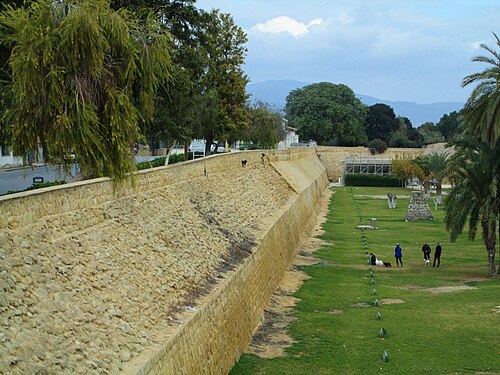
- Selimiye Mosque — North Nicosia, near the crossing at Ledra Street
Selimiye Mosque began life as the Gothic cathedral of St Sophia, built by the Lusignan kings, and later gained minarets under Ottoman rule. The pale stone façade still looks like a French church. It stands on the northern side of the divide and is reached on foot through a crossing point; carry your passport.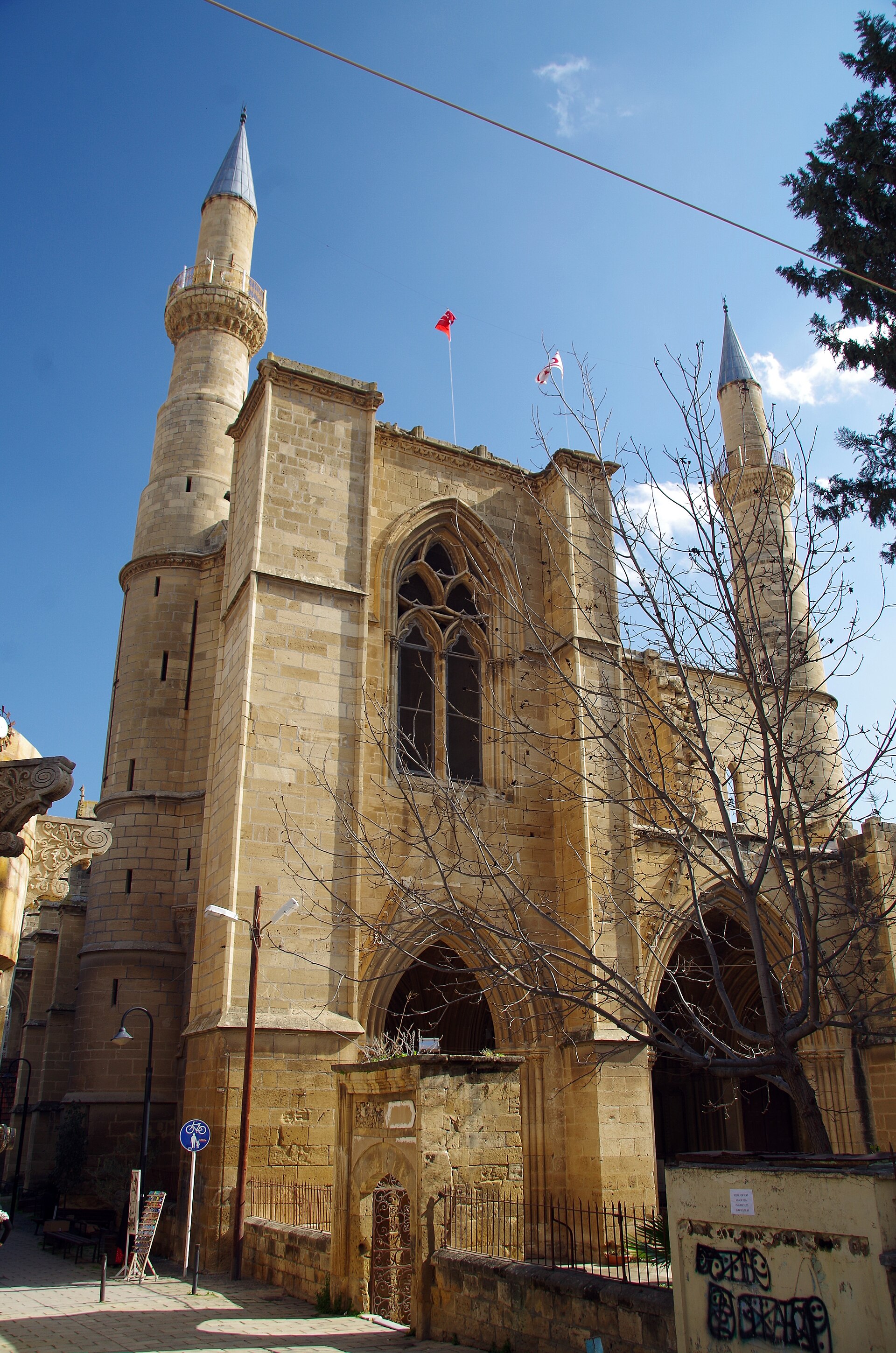
Culture
Nicosia's culture is shaped by living side by side with an unresolved border. Greek Cypriot and Turkish Cypriot communities share a language of food, hospitality and family loyalty, yet each has its own history, holidays and school books, and conversations can turn political quickly. Orthodox Christianity is strong in the south, with icons, saints' days and Sunday services still central to many families, while the north has mosques, Ottoman hammams and a Muslim calendar. Other communities have also left their marks. The Armenian Apostolic church in the northern half, once a convent of Benedictine nuns, was restored in recent years and honoured with a European heritage award, a sign of how much shared heritage still stands on both sides. Coffee is a social ritual in either half: strong, thick coffee served in small cups in a café where friends can linger for an hour. Evenings are for walking, eating late and meeting family. Many locals work in offices or the public sector and live in the suburbs, then come into the old town for meals and festivals. Hospitality is generous, and a visitor who shows interest in local views will usually be welcomed warmly. Dress modestly with covered shoulders and knees when entering a church or mosque, and remove your shoes at the door of a mosque.
What to wear
Traditional Cypriot dress is now mostly seen at festivals, weddings and folklore performances. Village women once wore long embroidered dresses and aprons, often of cotton or linen, with a headscarf, and the island is known for lace and for fine weaving and embroidery that adorned household textiles as well as clothes. Men wore dark baggy breeches called vrakes, tucked into high boots, with a sash at the waist and a waistcoat. Turkish Cypriot dress shared many of these elements, with shalvar trousers and colourful headscarves. On a normal day in Nicosia, people dress like the rest of southern Europe: smart casual in offices, lightweight cotton and linen in the heat, and neat clothes for evenings out. Business suits are common near the ministries and banks. Young people wear sneakers and fashionable street clothes, and the café culture ensures that many people dress with care. Visitors should plan for strong sun and hot summers with breathable cotton or linen, a hat, sunglasses and sun cream. Winters are mild but evenings can be chilly, so a light jacket helps. Comfortable closed shoes are best for cobbled lanes and uneven pavements. For churches and mosques, cover shoulders and knees, and carry a light scarf for the head where needed. Beachwear belongs on the coast, not in the old town.
What to eat
- Souvlaki and grilled meats — Meat-focused tavernas around the old town and Laiki Geitonia
Charcoal-grilled pork, lamb and chicken are central to Cypriot eating. Skewers come with pitta, salad, tomato and lemon, and often a dip of yoghurt or tahini. Portions are generous, so sharing is common. - Halloumi — Cafés, bakeries and any local taverna
Halloumi is the island's squeaky, salty cheese, usually grilled or fried until golden and served with watermelon in summer. It also turns up in sandwiches, pies and breakfast plates across the city. - Meze — Traditional tavernas in the old town
Meze is a long meal of many small dishes, such as dips, olives, grilled meats, salads and sometimes fish, brought out in waves. It suits groups and is best taken slowly over an evening. - Kleftiko — Family-run tavernas and village-style restaurants
Kleftiko is lamb or goat cooked slowly with herbs and potatoes until the meat falls from the bone. It is a cold-weather favourite and appears on menus in most traditional restaurants. - Cypriot coffee and sweets — Old-town cafés and pastry shops on both sides of the divide
Thick coffee is served in small cups with the grounds left in, often alongside syrup-soaked pastries, preserved fruit spoon sweets or loukoumi. Order it sweet, medium or plain.
Plan it
Best time. April–May and October–November. Nicosia has a hot semi-arid climate with long, sweltering summers and mild, wetter winters, so spring and autumn give comfortable walking weather. July and August can be punishingly hot; the city once recorded 46.2 °C.
How long. 1–2
Getting there. Fly into Larnaca Airport, the main gateway to Cyprus, since Nicosia's own airport has been closed since the partition. From Larnaca, take a taxi or a shuttle bus towards Nicosia; the bus stops away from the centre, so plan a taxi or a short walk and a local bus for the last stretch.
Budget. mid
Tips
- Start sightseeing early and rest during the midday heat in summer
- Carry your passport if you plan to walk across the border crossings
- Check opening hours on the official city site before visiting museums: https://www.nicosia.org.cy/
- Carry some cash for small cafés and market stalls, though cards work in most restaurants
- Drink plenty of water and wear a hat from late spring to early autumn
Etiquette
- Cover shoulders and knees in churches and mosques, and remove shoes at mosque doors
- Do not photograph military installations or border posts in the buffer zone
- Avoid taking sides when politics comes up; listen first
Nearby
Sources
- Wikidata Q3856 (CC0)
- Wikipedia: Nicosia (rev 1384758458) (CC BY-SA 4.0)
- Wikivoyage: Nicosia (rev 5412618) (CC BY-SA 4.0)
- Photo: Nicosia's skyline 2024 — PomposPompou (CC BY-SA 4.0)
- Photo: Nicosian Evening — Dr. Matthias Ripp (CC BY 2.5)
- Photo: Selimiye Moschee — Balou46 (CC BY-SA 4.0)
- Photo: Liberty Monument — Berthold Werner (CC BY-SA 4.0)
- Photo: City of Nicosia, Cyprus — CAPTAIN RAJU (CC BY-SA 4.0)
- Photo: Selimiye Mosque (St. Sophie Cathedral) — Chris06 (CC BY-SA 4.0)
- Photo: Venetian walls and green parks — Nicosia029 (CC BY 3.0)
- Photo: Nicosia by Giacomo Franco (CC BY 2.5)


