Akamas
Akamas, Cyprus
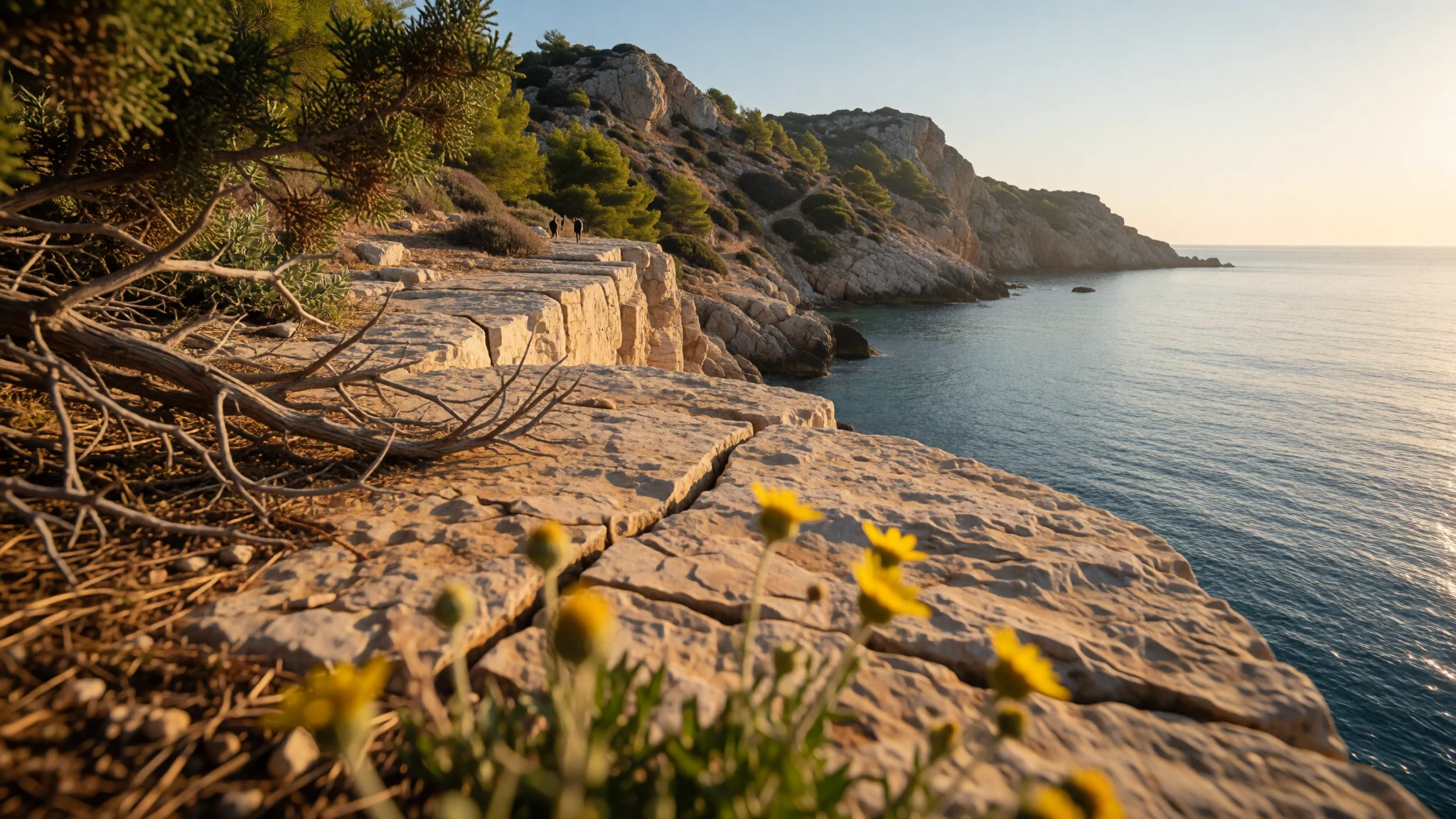
Akamas is the roadless, scrub-and-pine tip of Cyprus, where gorges, turtle beaches and walking trails replace the usual resort strip.
The place
Akamas is the wild northwestern tip of Cyprus, a promontory that pushes out into the Mediterranean beyond Polis on its northeast side and Pegeia at its southern end. The listed elevation for the cape is 193 m, which says little about the experience. What matters is how crumpled the ground is: low ridges, pine and juniper, dry gorges and small pebble coves are packed together so tightly that no road crosses the middle. Some tracks drawn on Cypriot road maps are unsealed, so a route that looks easy on paper can turn into a slow, rattling drive. Most people walk, cycle, join a jeep tour or arrive by boat from the harbour at Latsi.
The visitors who come here tend to want more than a beach holiday. Walkers, birdwatchers, botany enthusiasts and people curious about nature protection make up much of the crowd, and the area has been marketed as a quieter, more thoughtful alternative to the busier Cypriot resort coasts. A loggerhead turtle sanctuary sits on the shore, and the Baths of Aphrodite, a shaded spring pool near Polis, draw the day-trippers.
Be realistic about conditions. Shade is scarce on the open hillsides, summer afternoons are hot, and the best-known stops fill up in the high season. Spring and autumn give the landscape its best light and the walking its best temperatures.
Its story
Akamas has been a landmark for as long as sailors have rounded the northwest corner of Cyprus. The ancient geographer Ptolemy described it as a thickly wooded headland split in two by a line of summits rising towards the north, a description that still roughly fits the ridge-and-forest character of the land today. The name is tied to Akamas, a son of the Athenian hero Theseus, who fought in the Trojan War and is linked in tradition with the founding of the city-kingdom of Soli.
Myth also shaped the western end of the island more generally. Aphrodite, the goddess of love, is said to have bathed in a pool near Polis, and the spot became the Baths of Aphrodite, a name that still pulls in visitors who want a story with their walk. Those legends sit comfortably alongside much older rhythms of shepherding, small-scale farming and fishing from the villages around the peninsula.
The modern chapter is odder. Under the treaty that accompanied Cypriot independence, British forces kept the right to use the land for training, and the peninsula served as an exercise area and firing range until the turn of the century. One unplanned side effect was that large-scale building never took hold. When military use ended, the question became how to protect a coast that had stayed unusually undeveloped while still allowing walkers and local communities to benefit. That debate over access, conservation and tourism is the live story of Akamas now.
What to see
- Lara Beach — Southwest coast, near Pegeia
Lara Beach is a wide sandy cove on the western side of the peninsula, reached by a rough track from the Pegeia side. It is a nesting site for loggerhead turtles, so conservation staff and marked nest areas shape how the beach can be used. Go early, take water and shade, and treat the sand with care.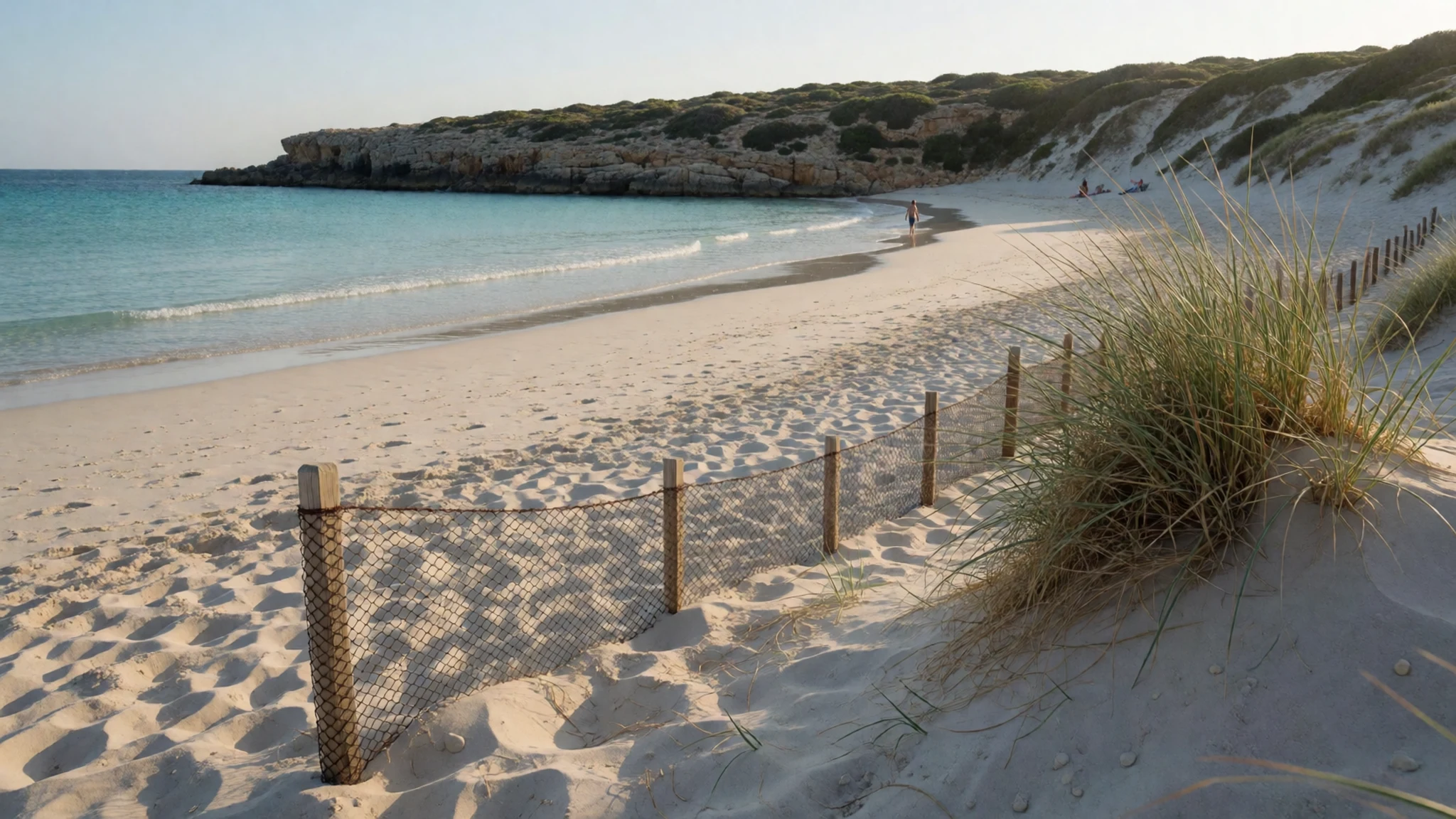
- Avakas Gorge — Southern Akamas, inland from Lara
Avakas Gorge is a narrow limestone cleft that walkers can follow between tall rock walls, with a stream bed underfoot in places. It is cooler and more sheltered than the open hillsides, though rain can change the ground quickly. Sturdy shoes matter more than anything else here, and mobile signal can be patchy.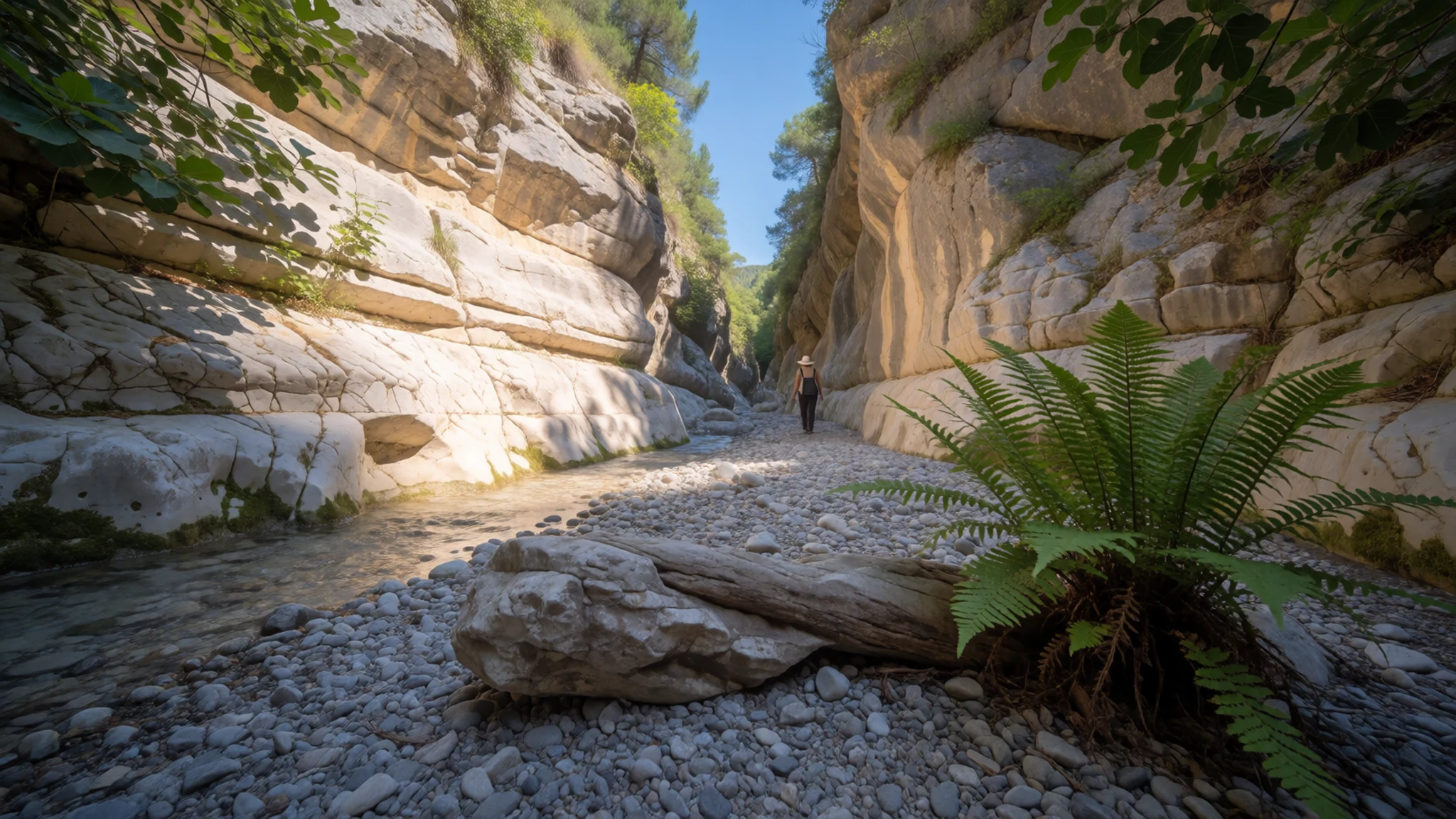
- Moutti tis Sotiras viewpoint — Interior of the peninsula
Moutti tis Sotiras is a high point on the peninsula's spine that gives a wide view across scrub, ridges and sea. It is the place to understand how empty and folded the land is. The approach is by track or on foot, so check the route and carry plenty of water.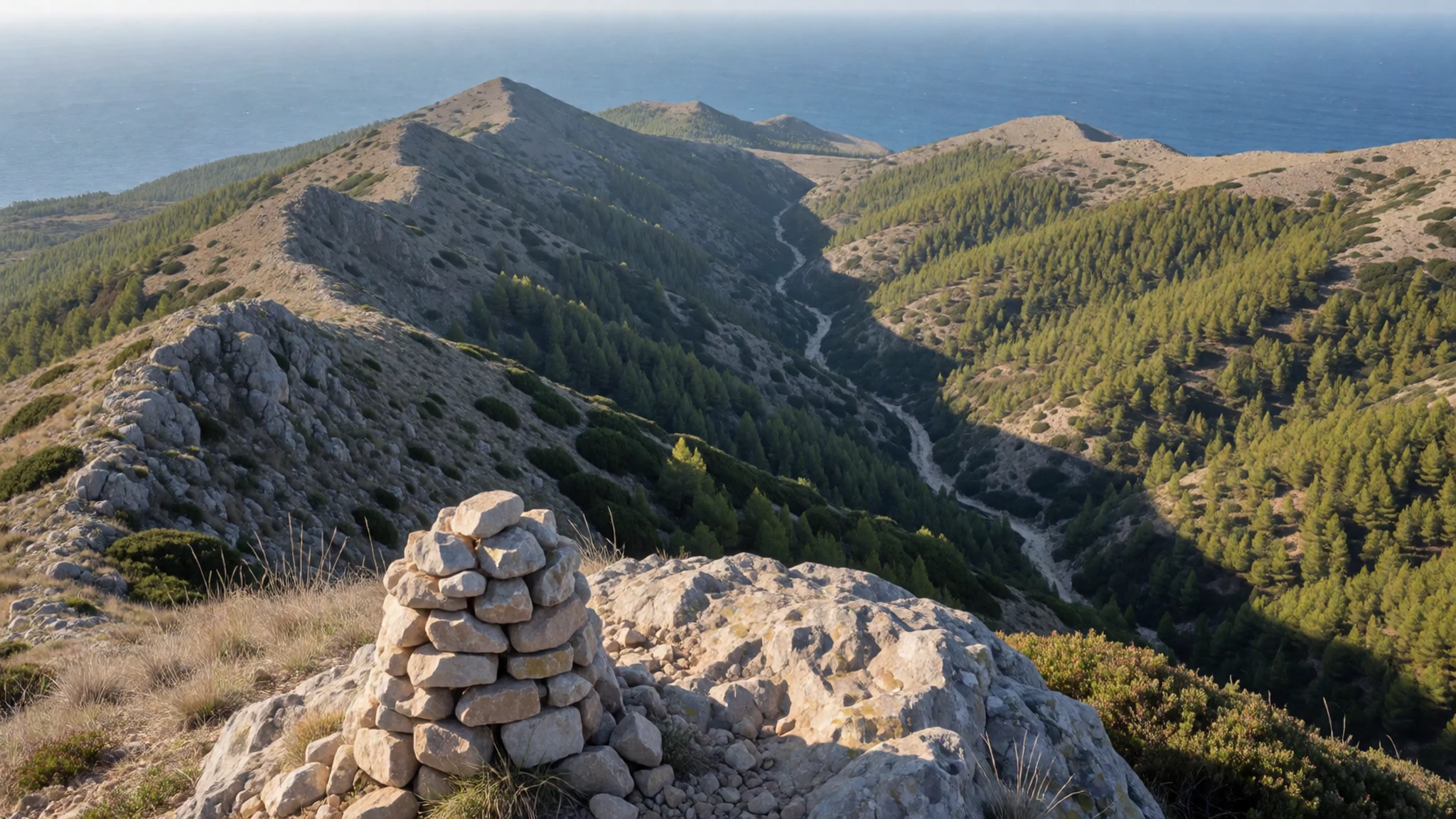
- Amphitheatre Bay and the rocky coast — Northern shore of the peninsula
The northern coast is a run of pale rock, small bays and clear water, with Amphitheatre Bay named for the way the slopes curve down to the shore. Reaching it usually means a boat trip or a long walk. After storms the sea can turn rough, so conditions decide whether landing is possible.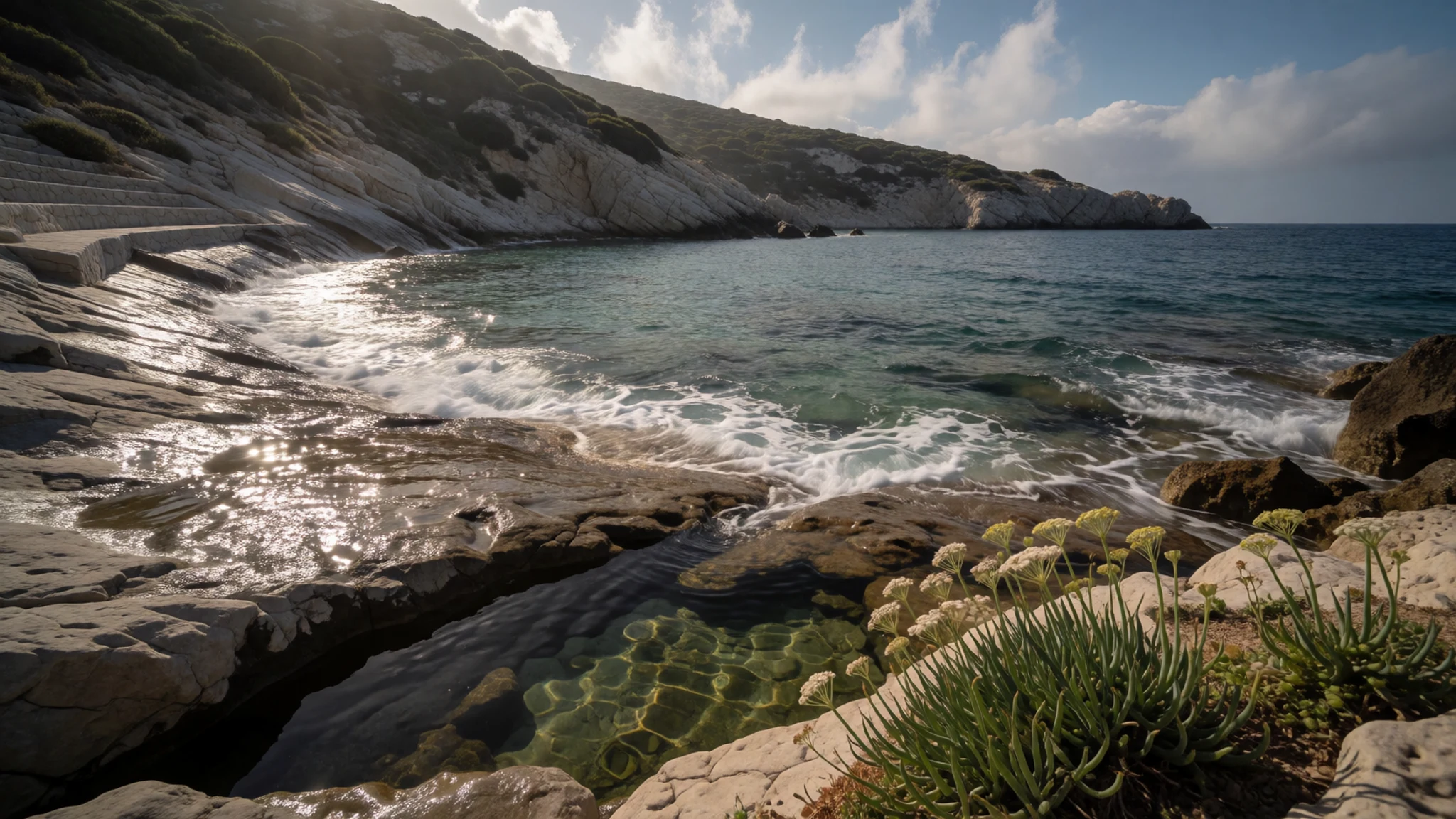
- Baths of Aphrodite — Near Polis, on the northern edge of Akamas
The Baths of Aphrodite is a small, leafy spring pool where the goddess is said to have bathed. It is modest in scale and often crowded in summer, but it works well as the start of a walking trail into the peninsula. Check local notices for rules about swimming and access.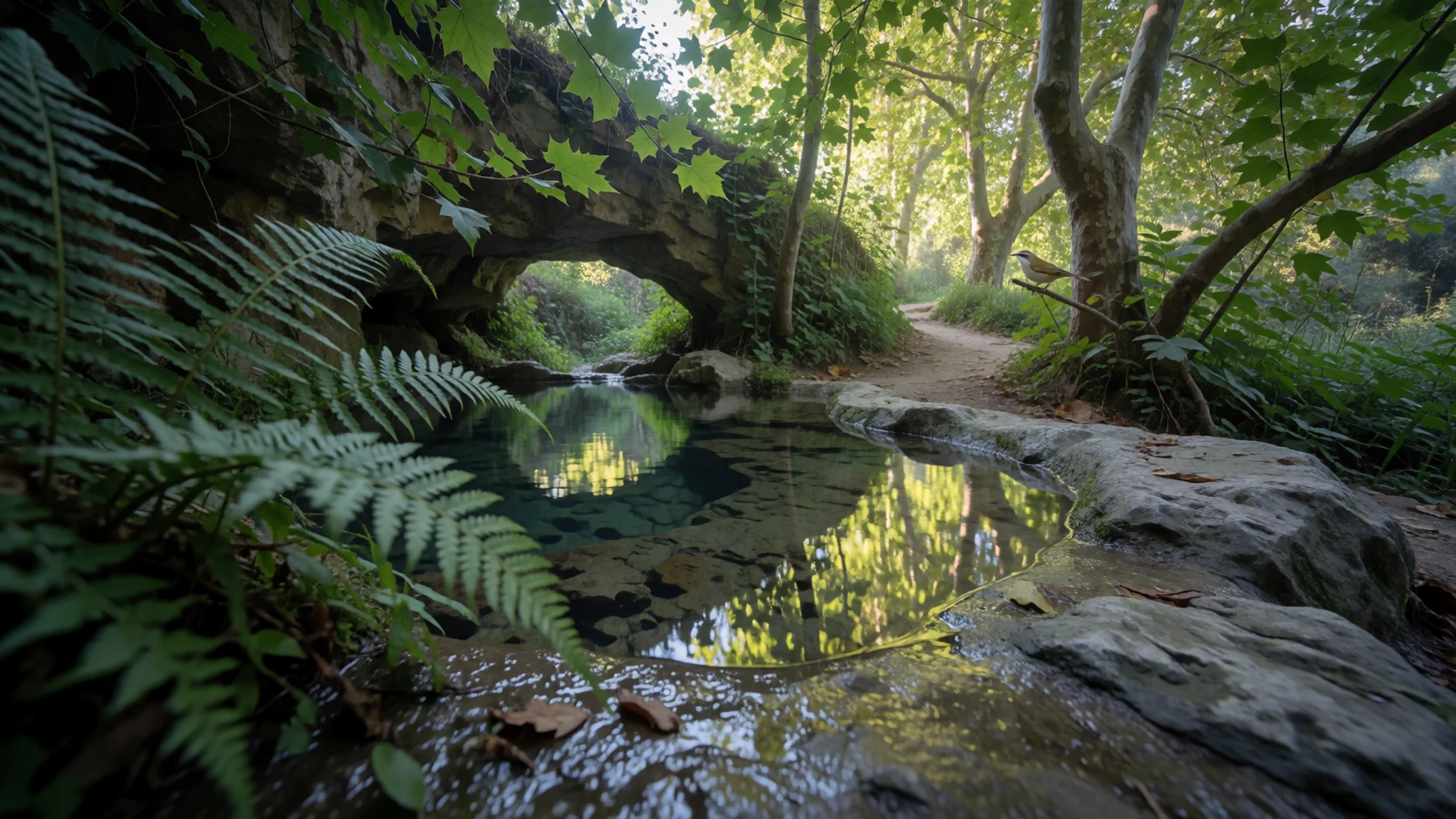
Culture
Akamas sits in a part of Cyprus where Greek Cypriot village life, Orthodox Christianity and ancient myth overlap. Polis and Pegeia, the two towns at the edges of the peninsula, keep a rhythm of morning coffee, long family lunches and evening walks that continues regardless of the tourist season. Village churches are usually small, whitewashed or stone-built, with painted icons inside and a quiet, working feel rather than a museum atmosphere.
The Aphrodite legend gives the area a romantic reputation, and local businesses lean on it with names, souvenirs and boat trips. Older stories of Akamas, son of Theseus, are less commercial but more rooted in the classical tradition that still shapes Cypriot ideas of heritage.
Conservation is part of the culture here too. Turtle nesting beaches, protected plants and the memory of the military years have made many locals and visitors alike aware that the peninsula's emptiness is not simply an accident. Guides, volunteers and small hospitality businesses often talk about walking lightly, taking rubbish out and staying on established tracks. Hospitality is generous: a coffee or a plate of fruit may be offered unprompted, and a polite acceptance goes a long way.
On the beaches near Lara, keep to marked paths, stay out of fenced nest areas and never touch eggs, hatchlings or turtle tracks.
What to wear
Akamas has no single costume of its own, but the wider Cypriot countryside has a rich textile tradition. Older village dress for women combined long skirts or dresses in cotton, linen or silk with embroidered aprons and headscarves, while men wore the vraka, loose dark baggy trousers gathered below the knee, with a waistcoat and a sash. Lefkara embroidery and lace, known as lefkaritika, and handwoven cloth from villages such as Fyti are the best-known craft textiles on the island. These outfits now mostly appear at festivals, folk dance performances, weddings and heritage displays rather than in daily life.
Everyday clothing around Polis and Pegeia is relaxed and practical: shorts, linen shirts, sundresses, trainers and sandals for the warm months, with light jackets and jumpers for cooler evenings. Walkers and cyclists in technical gear are common, and nobody expects formal dress in a taverna.
Visitors should dress for the terrain first. Wear sturdy walking shoes or trail trainers, not flip-flops, because tracks are stony and gorges can be slippery. Bring a hat, sunglasses and high-factor sun cream, and use light long sleeves on exposed hillsides. A cover-up for shoulders and knees is useful for village churches and monasteries, and swimwear is best kept for the beach rather than town streets. Pack a waterproof layer for spring and autumn showers.
What to eat
- Meze — Village tavernas in Pegeia, Polis and the hill villages
Meze is a long sequence of small plates, usually including dips, grilled meats, salads, olives, pulses and cheese. It suits a slow lunch after a morning's walking, and it is the easiest way to taste many Cypriot dishes in one sitting.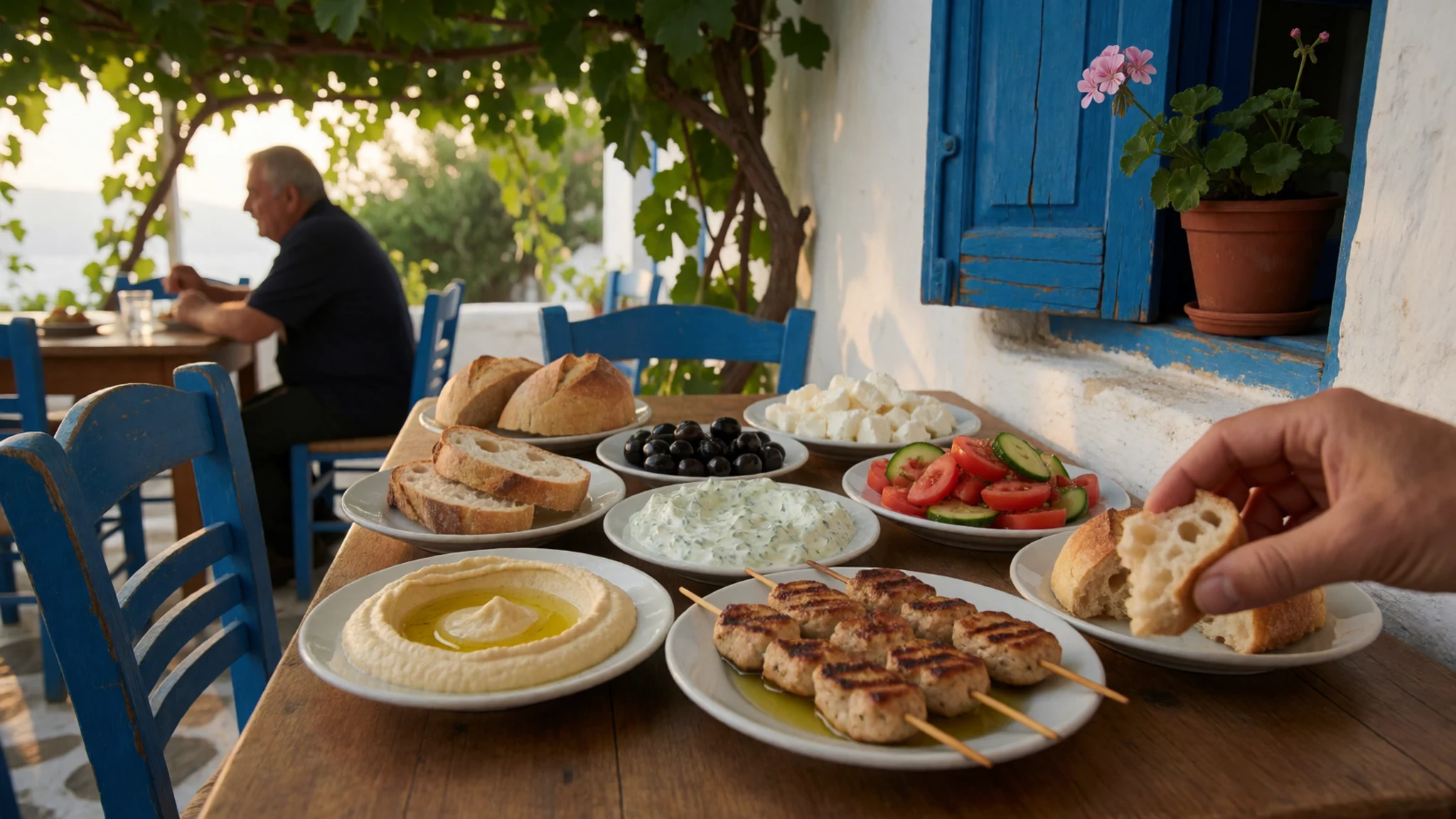
- Grilled halloumi — Cafés and tavernas across Polis and Latsi
Halloumi is Cyprus's well-known firm cheese, often grilled or fried so the outside browns while the inside stays soft. It appears with watermelon, tomatoes, bread or as part of a meze, and it is one of the simplest vegetarian choices.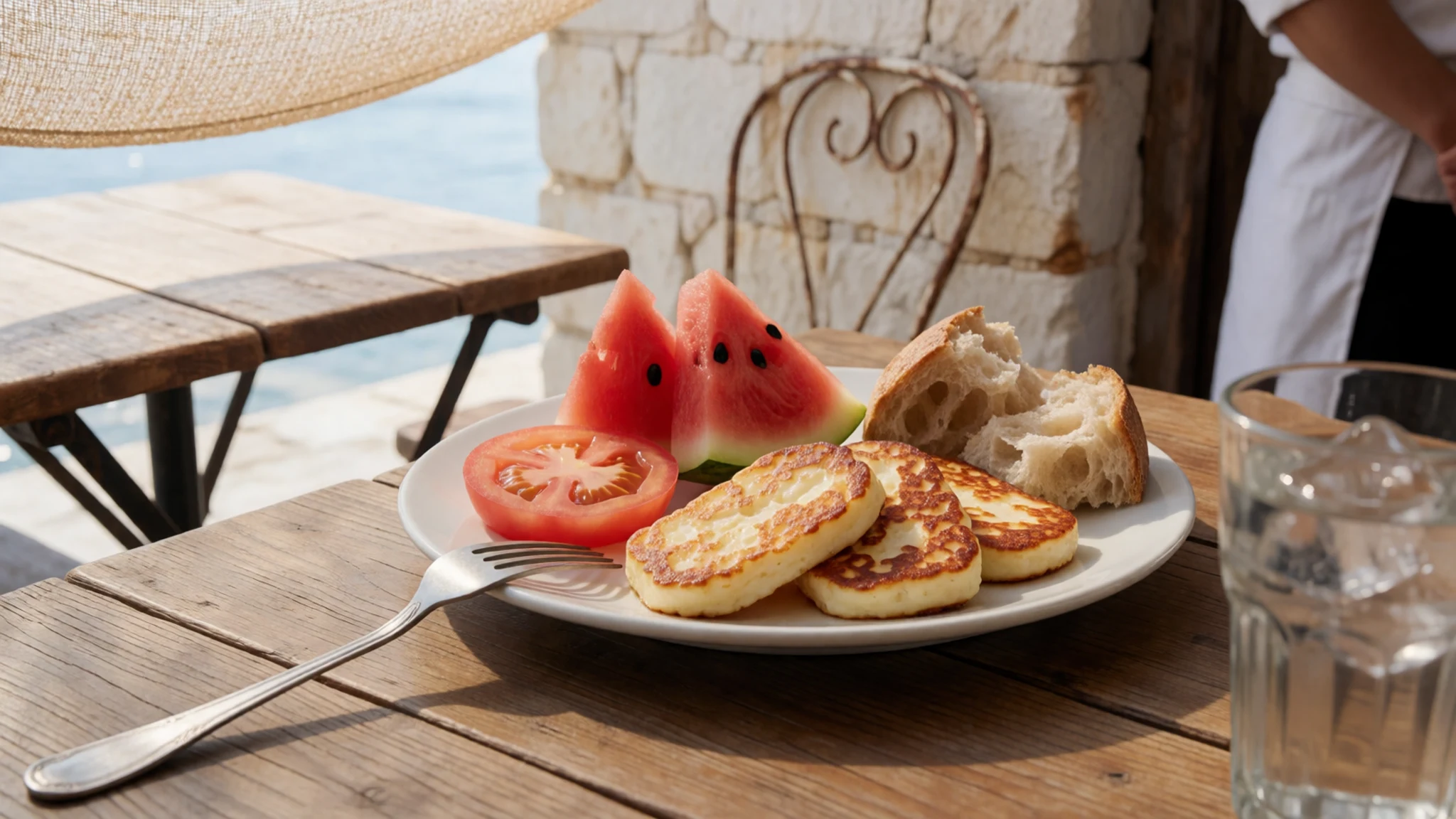
- Kleftiko — Traditional village tavernas, often as a weekend lunch
Kleftiko is lamb or goat cooked slowly with herbs and potatoes until it falls off the bone. It is a hearty meal, best after a long walk rather than before one, and many places need notice if it is cooked in an oven. - Fresh fish — Harbour eateries at Latsi
Latsi harbour is the obvious place for grilled fish with lemon, olive oil and salad. The catch and choice vary by day and season, so ask what came in locally and check how it is being sold before ordering. - Loukoumades — Bakeries and dessert cafés in Polis
Loukoumades are small fried dough balls, usually served warm with honey syrup and sometimes cinnamon or nuts. They make a good sweet stop after a morning on the trails, and they pair well with strong Cypriot coffee.
Plan it
Best time. April–May for wildflowers and comfortable walking temperatures, and October–November for milder days once the summer heat eases. July and August are hot with little shade, and the main stops are busiest then.
How long. 2–3
Getting there. Fly into Paphos airport, then drive or take a taxi to Polis or Pegeia, which are the practical bases for the peninsula. Reaching the interior and the coves usually means a hire car with suitable clearance, a jeep tour, a boat trip from Latsi or a long walk, so check road and track conditions locally.
Budget. mid
Tips
- Start walks early, carry far more water than seems necessary and plan for little shade.
- Check current track conditions before driving, as some roads marked on maps are unsealed and rental car insurance may not cover them.
- Book boat trips and guided jeep or walking tours ahead in summer, and check the official site or operator for access rules.
- Carry some cash for small cafés and village shops, and download offline maps because signal can be patchy.
Etiquette
- Take all rubbish with you and stay on marked trails to protect the scrub and wildlife.
- Keep clear of turtle nest areas and do not touch eggs or hatchlings.
- Cover shoulders and knees when entering a village church.
Nearby
Sources
- Wikidata Q2087483 (CC0)
- Wikipedia: Akamas (rev 1339793457) (CC BY-SA 4.0)
- View from Moutti Tis Sotiras, Akamas Paninsula, Cyprus — Michal Klajban (CC BY-SA 4.0)
- Lara Beach — Andrek33 (CC BY-SA 4.0)
- Rocky coast of Akamas Peninsula, Cyprus — Michal Klajban (CC BY-SA 4.0)
- Amphitheatre Bay right after a storm. Akamas, Cyprus — Michal Klajban (CC BY-SA 4.0)
- Avakas Gorge, Akamas Peninsula, Cyprus — Dm Bsg (CC BY 3.0)
- A double rainbow in Akamas Peninsula, Cyprus — Michal Klajban (CC BY-SA 4.0)
- A puddle in Akamas Peninsula, Cyprus — Michal Klajban (CC BY-SA 4.0)
- A rainbow in Akamas Peninsula, Cyprus — Michal Klajban (CC BY-SA 4.0)
- Wikivoyage (CC BY-SA 4.0)


Wildlife
- Loggerhead turtle (animal)
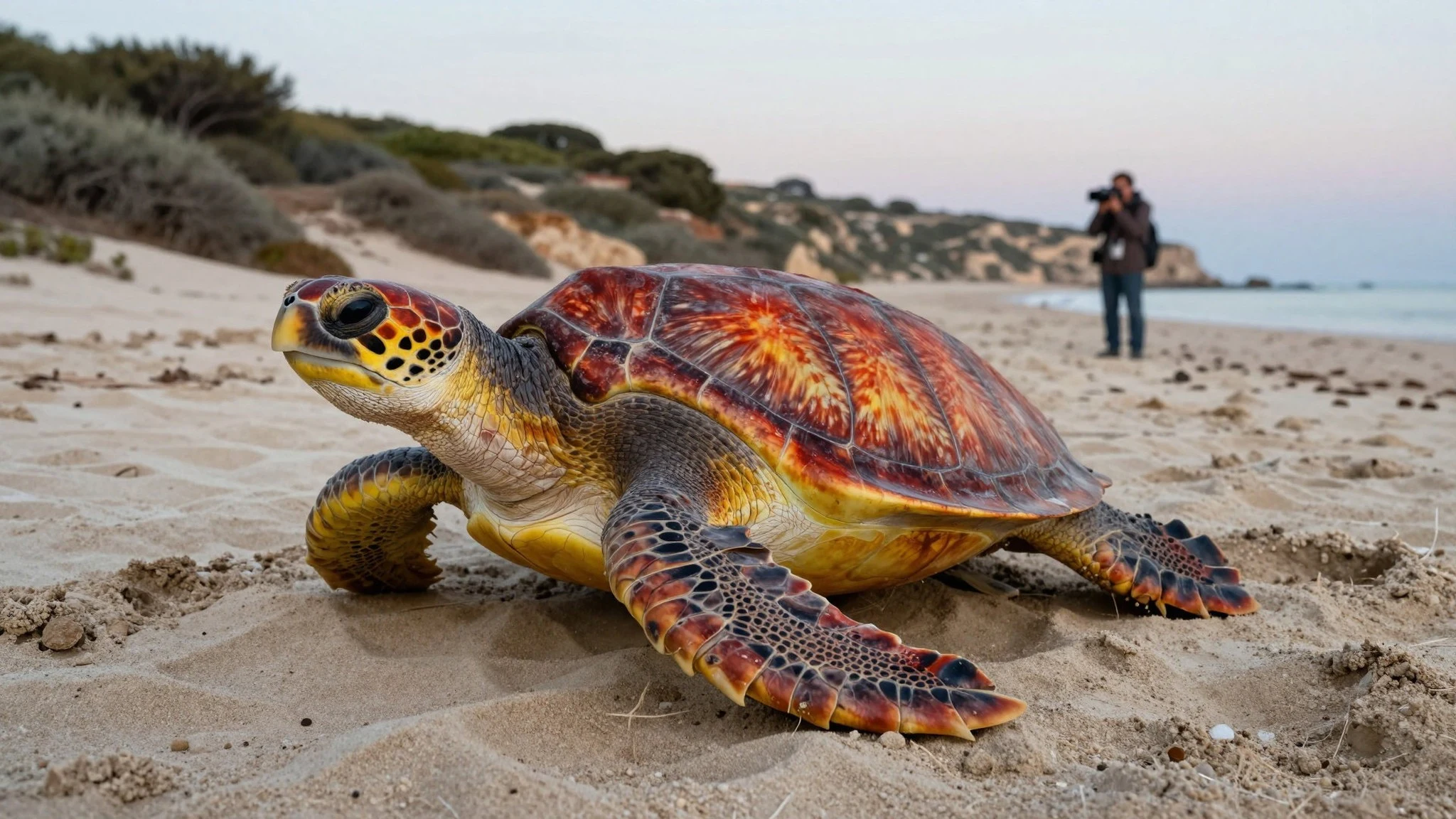
The loggerhead is a sea turtle: a reptile of the sea, with yellow-to-brown skin and a reddish-brown shell, found in oceans right around the world. Akamas matters to it because the area is a nesting site, which is why conservation staff look after the turtles there. To watch well, keep out of the marked nest areas and follow the staff's guidance, since they shape how the beach can be used. Treat the sand as the turtles' nursery first and your own beach second.