St Hilarion Castle
St Hilarion Castle, Cyprus
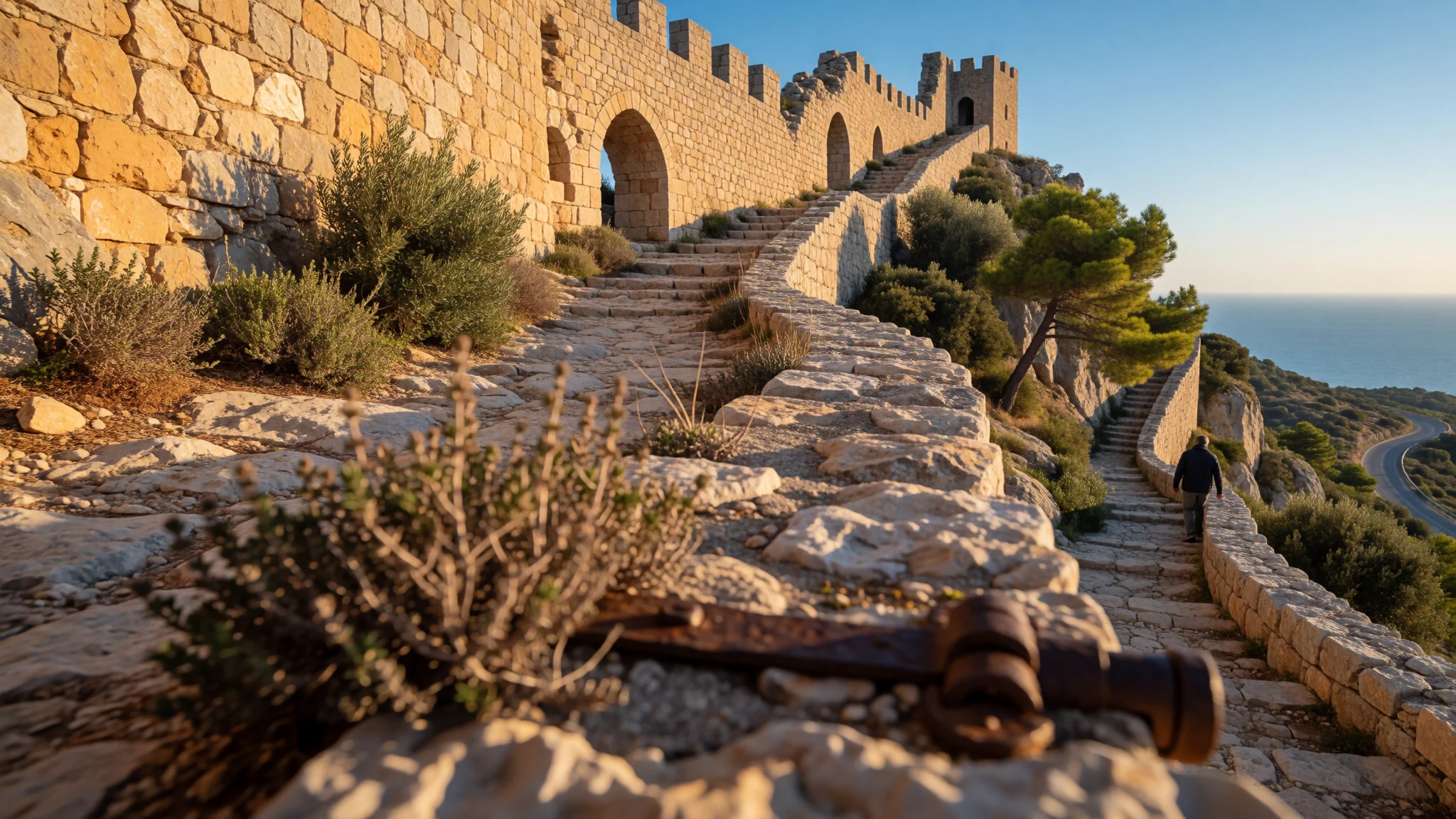
St Hilarion Castle is a ruined mountain fortress in northern Cyprus, where stone walls climb a crag above the sea and the Kyrenia road.
The place
St Hilarion Castle stands in the Kyrenia Mountains of northern Cyprus, 622 metres above sea level, on a crest of rock that looks down on the road linking the coast at Kyrenia (Girne) with the capital, Nicosia. That position explains the castle. Whoever held it could watch the pass, the plain behind it and the sea in front. It is one of a trio of mountain strongholds along the range, together with Buffavento and Kantara. The ruin climbs the hillside in stages: a lower ward near the entrance gate, a middle ward with the remains of halls and a church, and an upper ward on the summit crags, where rooms open onto sheer drops. The walls follow the rock rather than imposing a plan on it, so the whole place feels grown rather than built. The paths are steep, the steps uneven and the top takes real effort, especially in summer, when shade is scarce and the stone holds the heat. Reward comes at the upper windows, where the view runs over Kyrenia's harbour and red roofs to the Mediterranean on one side and across the central plain on the other. Most visitors base themselves in Kyrenia, below, where the harbour castle, cafés and fish restaurants make a natural second stop. A hire car or taxi is the practical way up, since public transport on this side of the island is thin.
Its story
St Hilarion Castle takes its name from a hermit, but not the famous one. The saint in question is an obscure figure, said to have escaped to Cyprus after the Arab conquest of the Holy Land and to have lived out his days on this hilltop. A medieval English traveller reported seeing his relics, and some writers have guessed that a monastery stood here before the fortress. Nobody has found solid evidence for that. The military story is clearer. From the 11th century the Byzantines fortified the ridge, and with Buffavento and Kantara it formed a line against raiders coming from the Arab world by sea. Later the Lusignan rulers of Cyprus strengthened parts of the castle, and their kings may have stayed here in summer, which would make sense given the cooler air at height. In the early 13th century the castle became the centre of a four-year contest between the Holy Roman Emperor Frederick II and the regent John of Ibelin over who would control the island. By the 15th century the Venetians, now in charge, judged the garrison too costly to keep and pulled down much of the structure. What survives is therefore a partial ruin, shaped by building, war and deliberate demolition.
What to see
- Lower ward and entrance gate — Base of the castle, Kyrenia Mountains
The climb begins at the gate into the lower ward, where thick walls and a narrow approach show how the defenders controlled who came in. Stables and storerooms once stood here. Allow time for the steep stepped paths beyond, and wear shoes with grip, because the worn stone is slippery.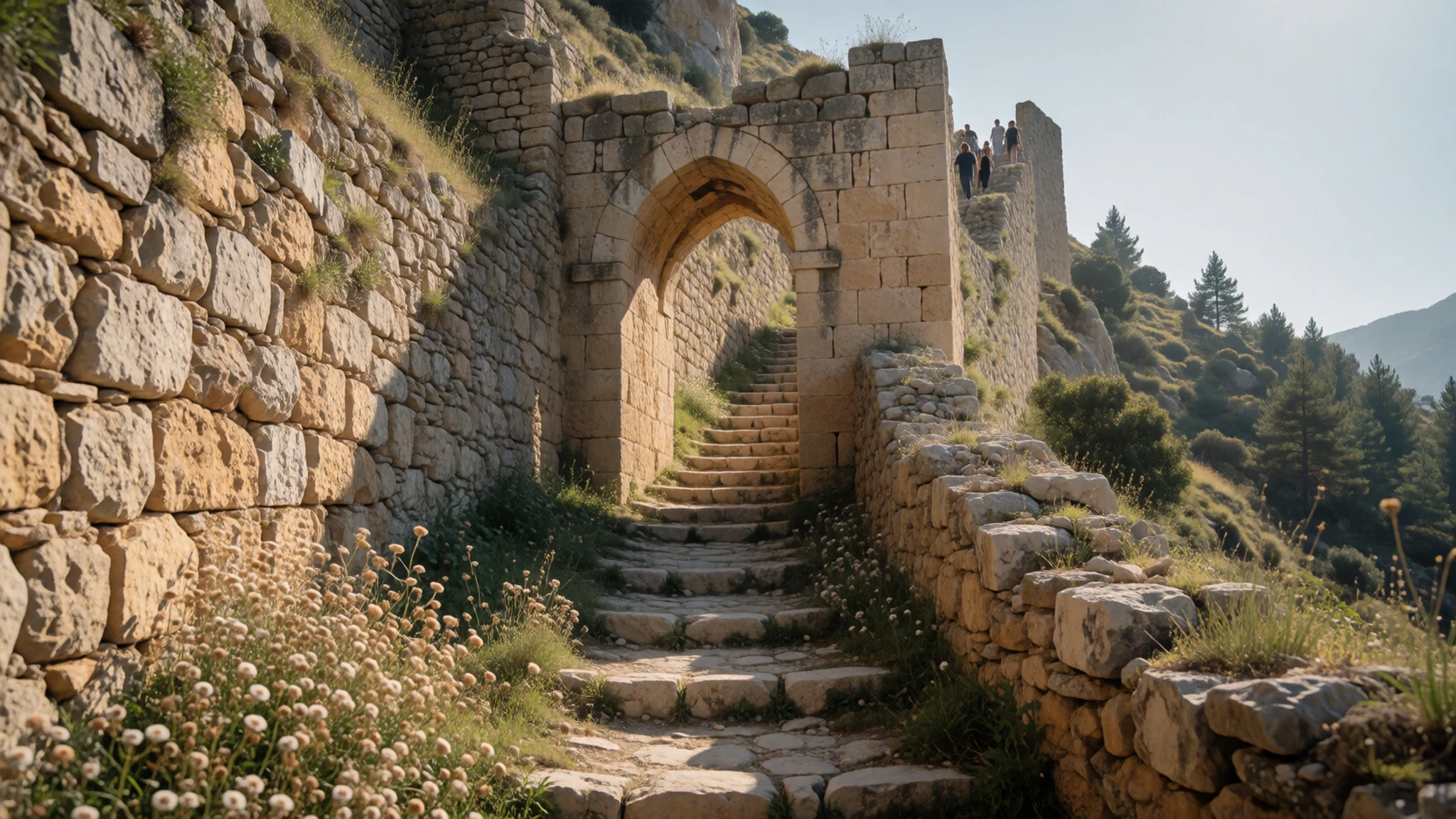
- Queen's Window — Upper ward, summit of St Hilarion Castle
High in the upper ward, a pair of arched openings frames the coast like a picture. Legend ties the window to a medieval queen, though the story is better as folklore than as record. Come early, as the ledge fills quickly. Keep children and loose belongings well back from the drop.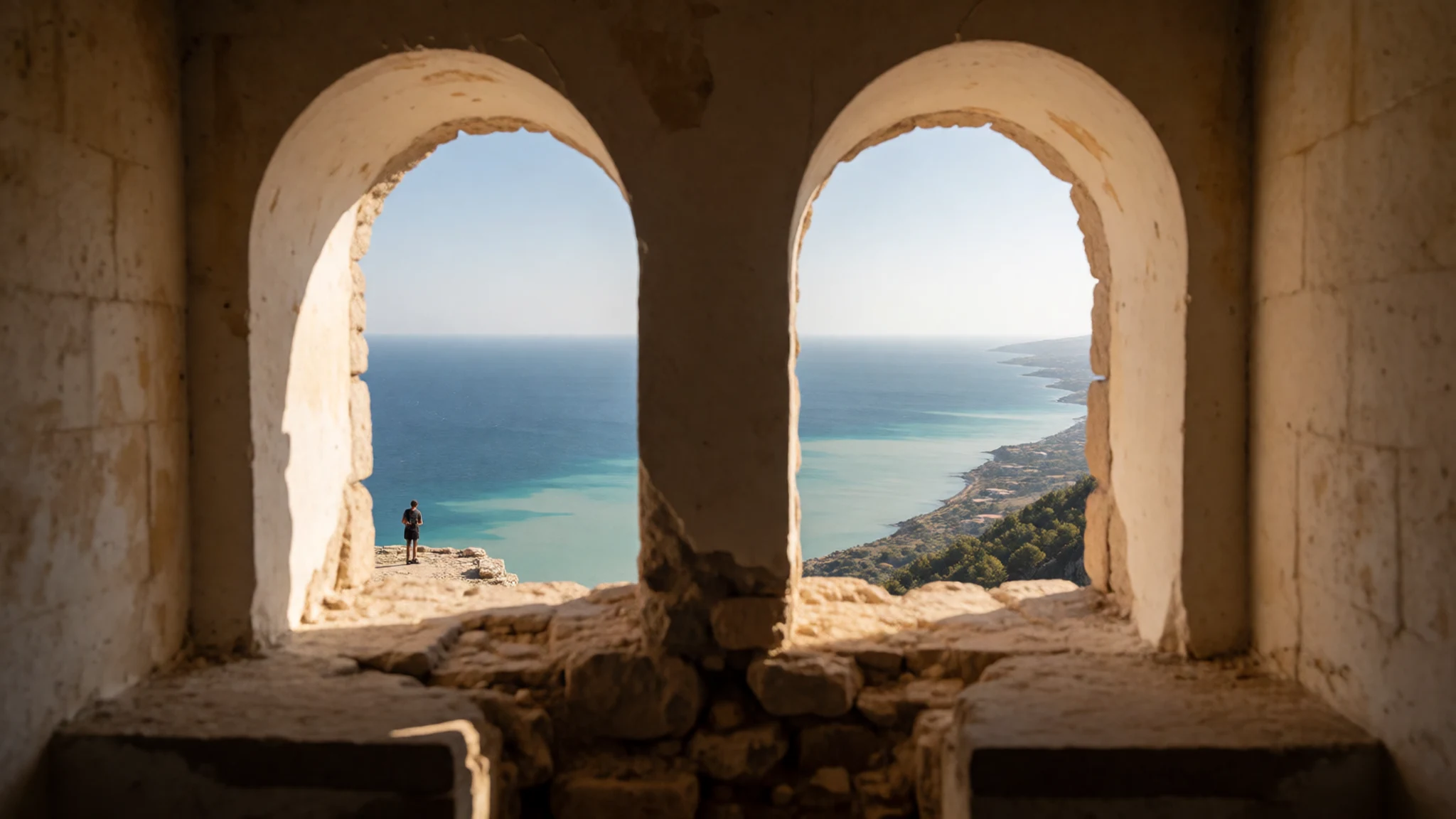
- Kyrenia Castle and harbour — Kyrenia (Girne) old harbour
Down on the coast, Kyrenia Castle commands the harbour with heavy walls that were Byzantine in origin and rebuilt in later centuries. It makes a good contrast with the mountain fortress: one built to guard a port, the other a pass. Cafés and fish restaurants line the waterfront nearby.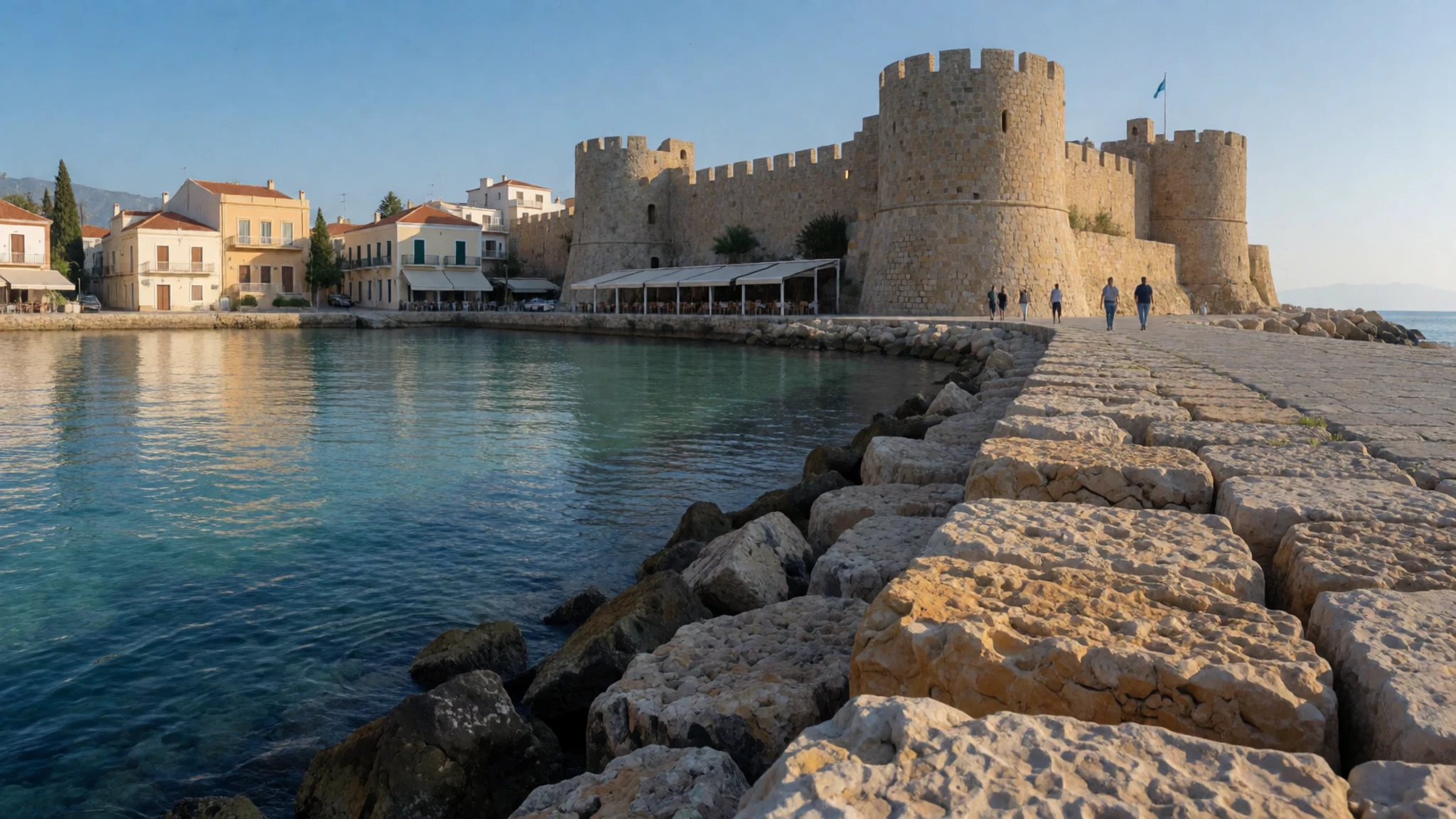
- Bellapais Abbey — Bellapais village, east of St Hilarion
Bellapais Abbey was founded by canons who fled Jerusalem, and its Gothic cloister and refectory still stand among the village houses. It is a calmer visit than the castle, with shaded arches and sea views. The writer Lawrence Durrell lived in the village in the 1950s, and the area still draws literary visitors.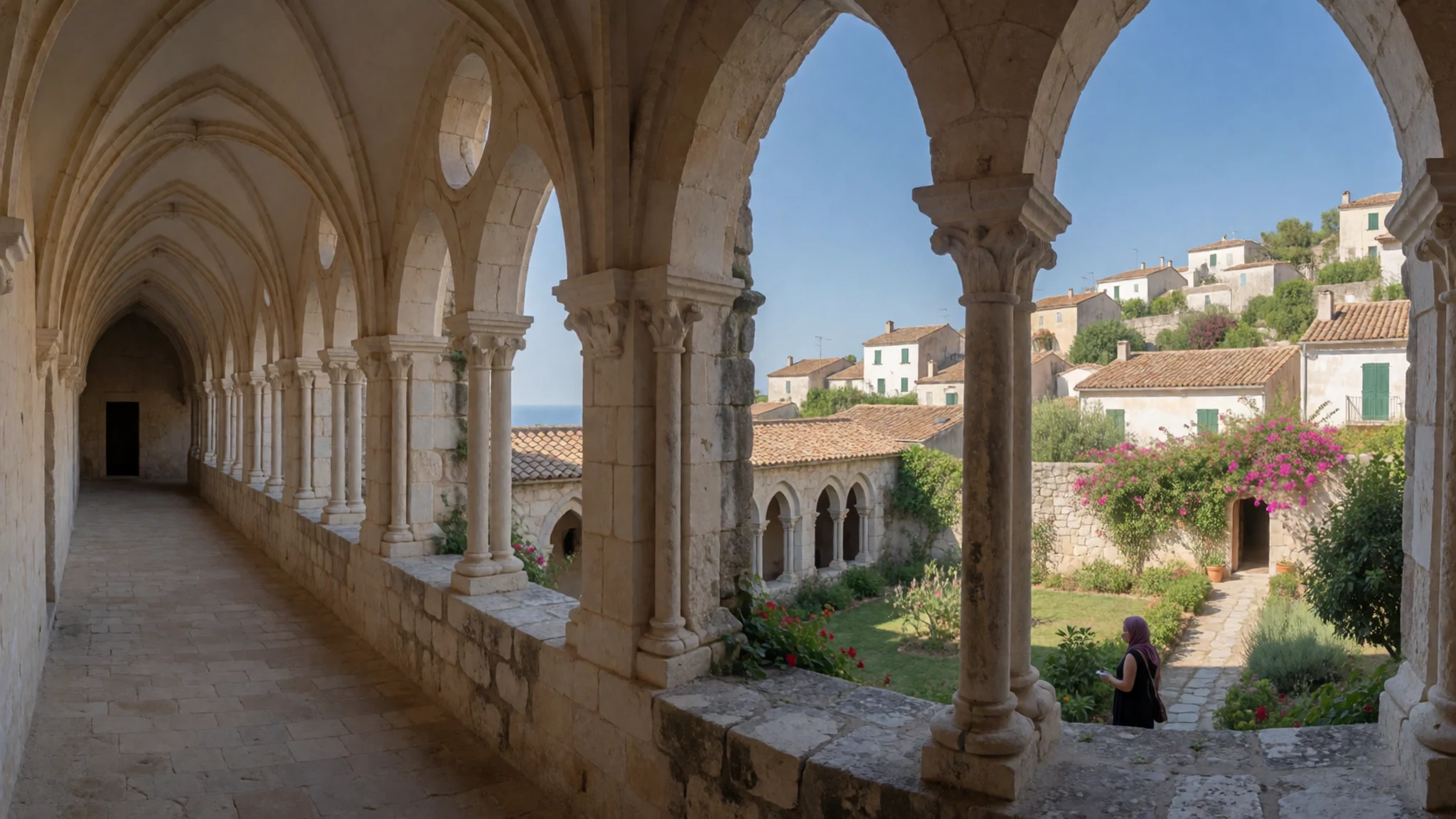
- Buffavento Castle — Kyrenia Mountains, along the ridge
Buffavento is the sister fortress along the ridge, a Byzantine stronghold reached by a rugged trail from the south side. It is bleaker and less restored than St Hilarion, so suits confident walkers with water and good footwear. Several other trails cross the range, but check conditions and daylight before setting out.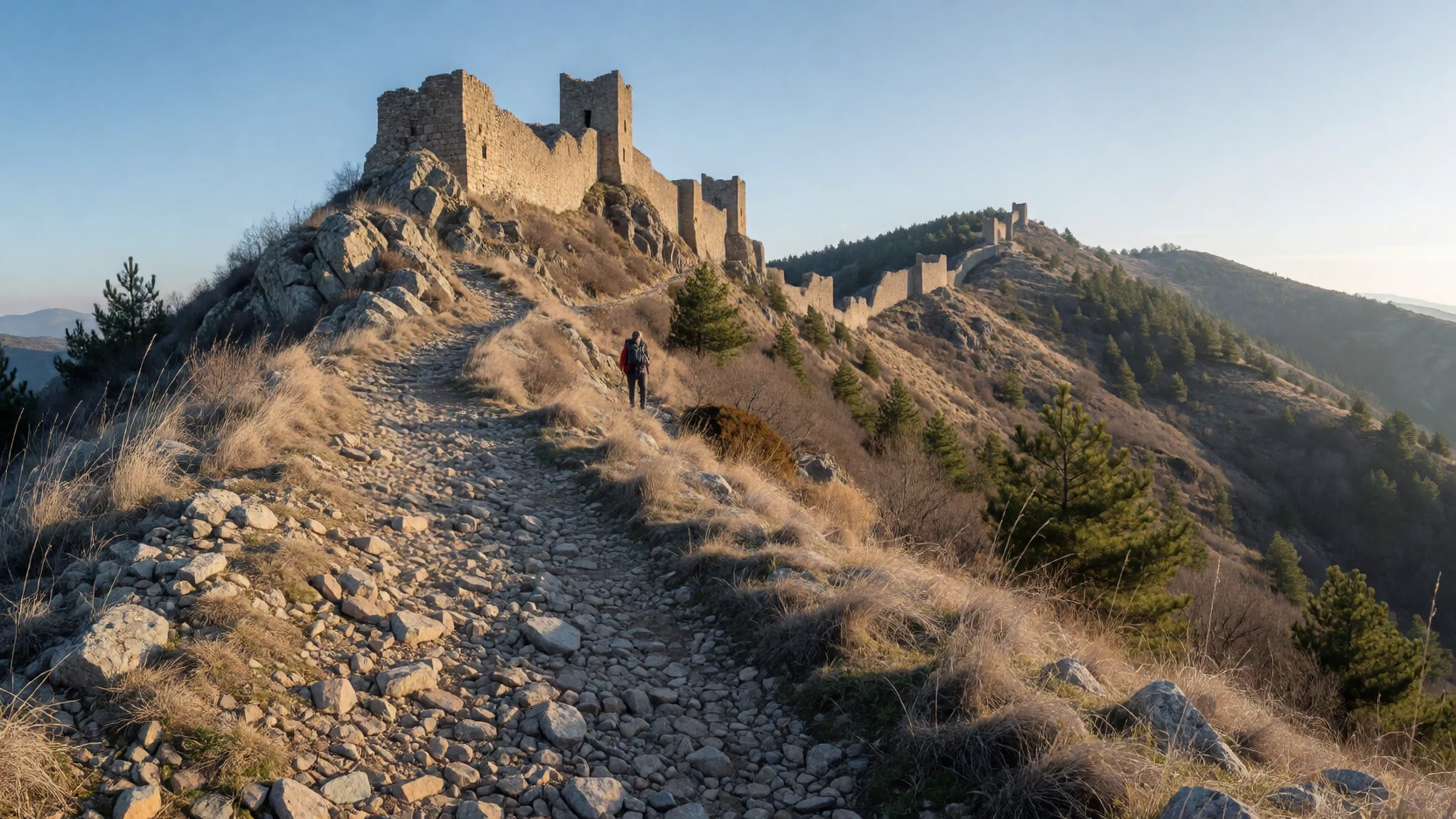
Culture
St Hilarion Castle sits in a part of Cyprus where the island's divided modern history is part of any visit. Kyrenia, below the mountain, had a Greek majority until 1974, when the island split and communities moved north and south. Today the town is home mainly to Turkish Cypriots and settlers from Turkey, with many foreign residents and visitors from Britain and elsewhere, and the town is usually called Kyrenia in English though Girne locally. The castle itself predates all of this. Byzantine, Lusignan and Venetian rulers each left their mark, and later centuries added Ottoman and British layers to the coast below. The town shows it: the Ağa Cafer Pasha Mosque dates from 1590, an Anglican church stands near the harbour, and a Greek Orthodox church nearby has been closed for rebuilding. People are generally relaxed and used to foreign visitors, and English is widely understood in Kyrenia. Politics is best left to those who raise it first, since views on the island's division are strongly held. Tea and coffee are offered freely, and meals are social, long and shared. Cafés and restaurants serve alcohol, though Muslim customs shape daily life, with mosque calls marking the day. Expect warm welcomes, slow service and bargaining only in markets. Cover your shoulders and knees and take off your shoes before entering any working mosque in Kyrenia.
What to wear
St Hilarion Castle lies in a Cypriot region where traditional dress varied by community. Turkish Cypriot women historically wore şalvar, loose gathered trousers, with embroidered headscarves, while Greek Cypriot men wore vraka, dark baggy breeches with boots and a sash. Cotton, wool and some silk were the usual materials, often woven at home, and embroidery and lace were the pride of village households. These outfits now appear mostly at folk festivals, weddings and dance performances rather than in daily life. What people wear now is ordinary Mediterranean clothing: light shirts, linen, shorts and sandals on the coast, with smarter casual wear in the evenings. Kyrenia is a resort town and visitors in swimwear are common near the beaches, though locals dress more modestly away from the shore, especially inland villages. For the castle, wear sturdy shoes or trainers with a good grip, because the stone steps are worn and uneven, and flip-flops are a poor choice. Bring a hat, sunglasses and sun cream, as shade is limited, and a light layer for the summit, where the wind can cool quickly. Long trousers protect legs from thorny scrub on side paths. For mosques and any working religious site, carry a scarf or light shawl to cover shoulders and knees, and slip-on shoes make removing footwear easy.
What to eat
- Meze — Harbour waterfront restaurants in Kyrenia
Meze is a spread of small dishes, such as salads, dips, grilled cheese and seafood, brought out in rounds for the table to share. It suits groups and slow evenings. Fish restaurants along the harbour do it well, and ordering a set meze spares you choosing.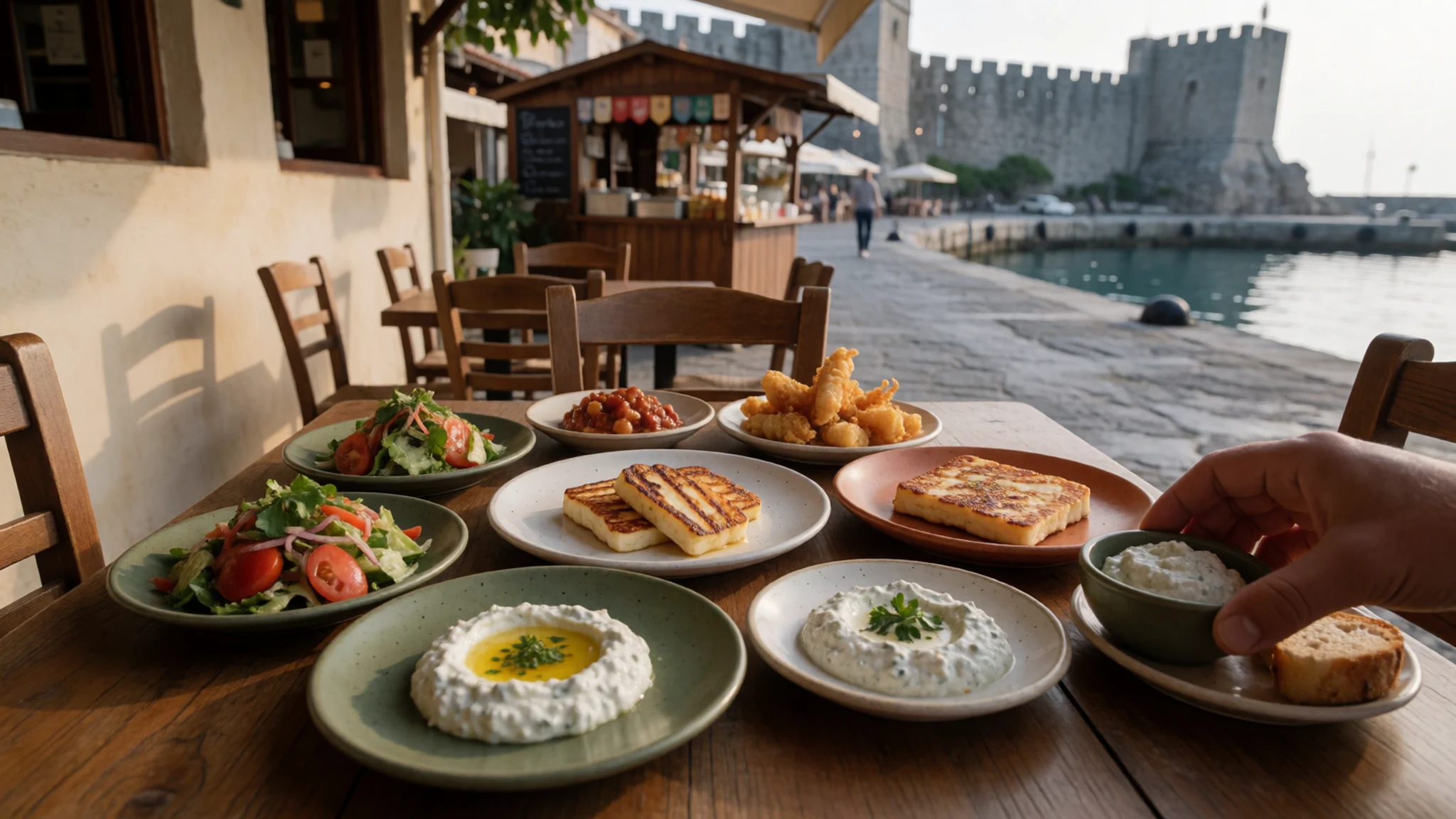
- Fresh grilled fish — Fish restaurants along the Kyrenia harbour
Fish is grilled whole and served simply with lemon, salad and bread. Menus change with the catch, so ask what came in that day. The harbour front is the usual place, with tables facing the old castle and the boats moored below.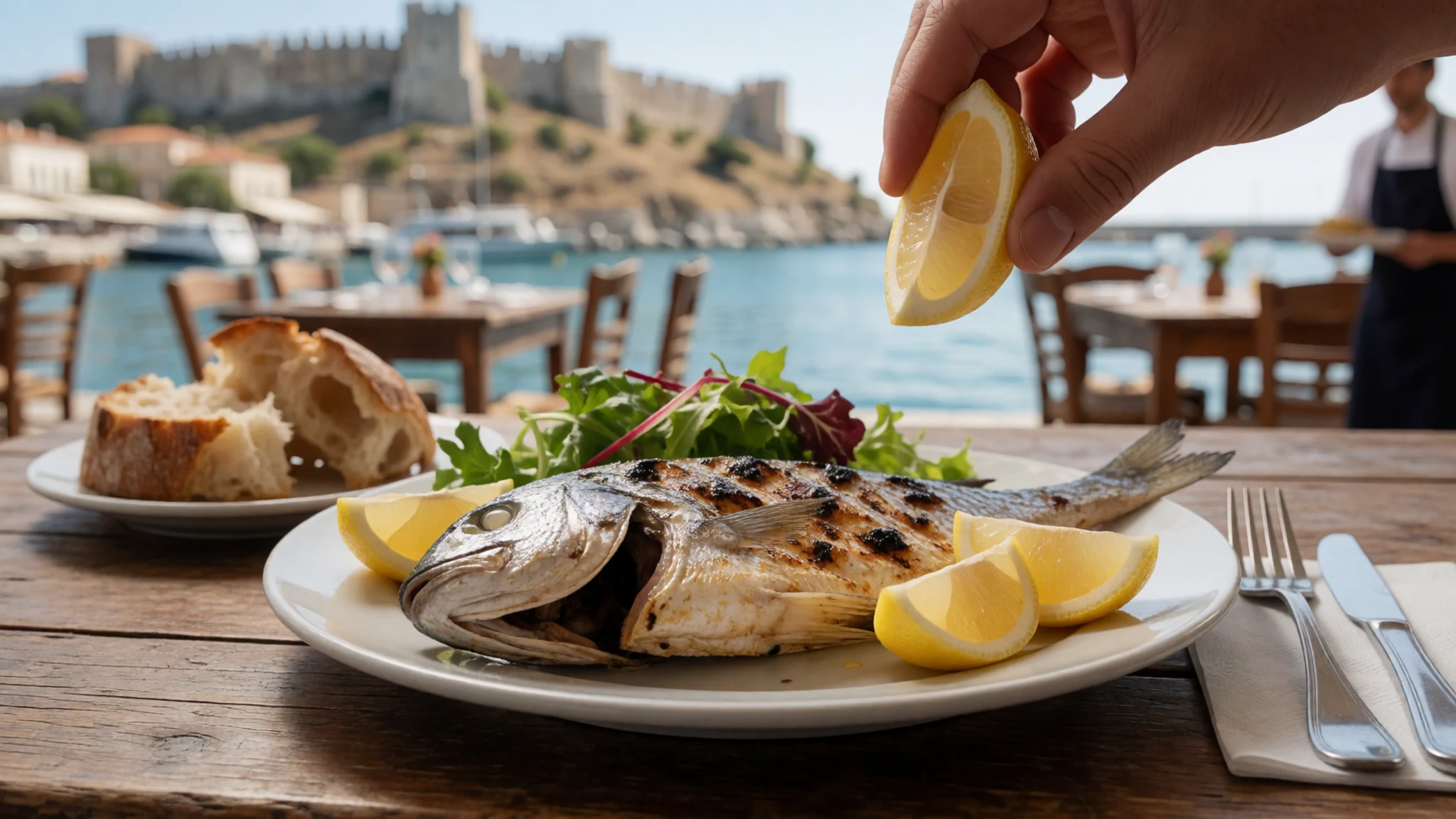
- Hellim (grilled halloumi) — Cafés and breakfast tables across Kyrenia
Hellim is the local name for halloumi, a firm, salty cheese that holds its shape on a grill. It appears at breakfast with tomatoes and olives, in sandwiches and in pastries. Order it hot off the grill, when the outside is golden and the middle soft. - Mantı — Turkish eateries in the streets behind the harbour
Mantı are small parcels of pasta filled with spiced meat, served with garlic yoghurt and a drizzle of butter and chilli. It is comforting after a hot climb. Look for restaurants a block or two back from the waterfront, where menus lean towards home-style Turkish cooking. - Turkish coffee and tea — Any café or tea garden in Kyrenia
Strong Turkish coffee comes in small cups with the grounds left in, and tea is poured in tulip-shaped glasses. Both are served all day, often with something sweet. Sit as long as you like. Beer on the island is mostly imported, with Efes common.
Plan it
Best time. April–May and October–November, when walking up the mountain is comfortable; summer is hot and exposed, so go very early if visiting then, and winter can bring wind and rain on the ridge.
How long. 2–3
Getting there. Fly to Ercan (ECN), the airport for northern Cyprus, with flights routed via Turkey, or to Larnaca (LCA) in the south and cross the border. Hire a car, as public transport from Ercan is limited and a rental from the south needs extra insurance. From Kyrenia the castle is a short drive up the mountain road. Seasonal ferries run from the Turkish mainland, so check current sailings.
Budget. mid
Tips
- Go early in the morning, before the heat and the coach groups arrive
- Carry plenty of water, since there is little shade and the climb is steep
- Check opening times and entry fees locally before you go, as no official website is listed
- Allow two to three hours for the castle, and more if you stop for photographs
- Carry some cash for small cafés and taxis, and check card use in advance
Etiquette
- Cover shoulders and knees and remove shoes before entering a mosque
- Stay on marked paths and do not climb on fragile walls or ledges
- Avoid raising the island's political division unless a local does
Nearby
Sources
- Wikidata Q2302532 (CC0)
- Wikipedia: Saint Hilarion Castle (rev 1368140914) (CC BY-SA 4.0)
- Wikivoyage: Saint Hilarion Castle (rev 5407799) (CC BY-SA 4.0)
- Photo: Hilarion kasteel, Dickelbers (CC BY 3.0)
- Photo: Saint Hilarion Castle, Northern Cyprus, Maris Teteris (CC BY 3.0)
- Photo: Queen's Window, Saint Hilarion Kalesi, Ira Goldstein (CC BY 3.0)
- Photo: St Hilarion Castle, Cyprus 1952, Stavros1 (Public domain)
- Photo: View of Kyrenia from St Hilarion, Chneophytou (CC BY 3.0)
- Photo: Festung Hilarion, Xenophon (CC BY-SA 2.5)
- Photo: Hilarion Burgtor zur Sektion I, CTHOE (CC BY-SA 4.0)
- Photo: Kalenin Ana Giriş Kapısı, Cosinus34 (CC BY-SA 4.0)


