Paphos Castle
Paphos Castle, Cyprus
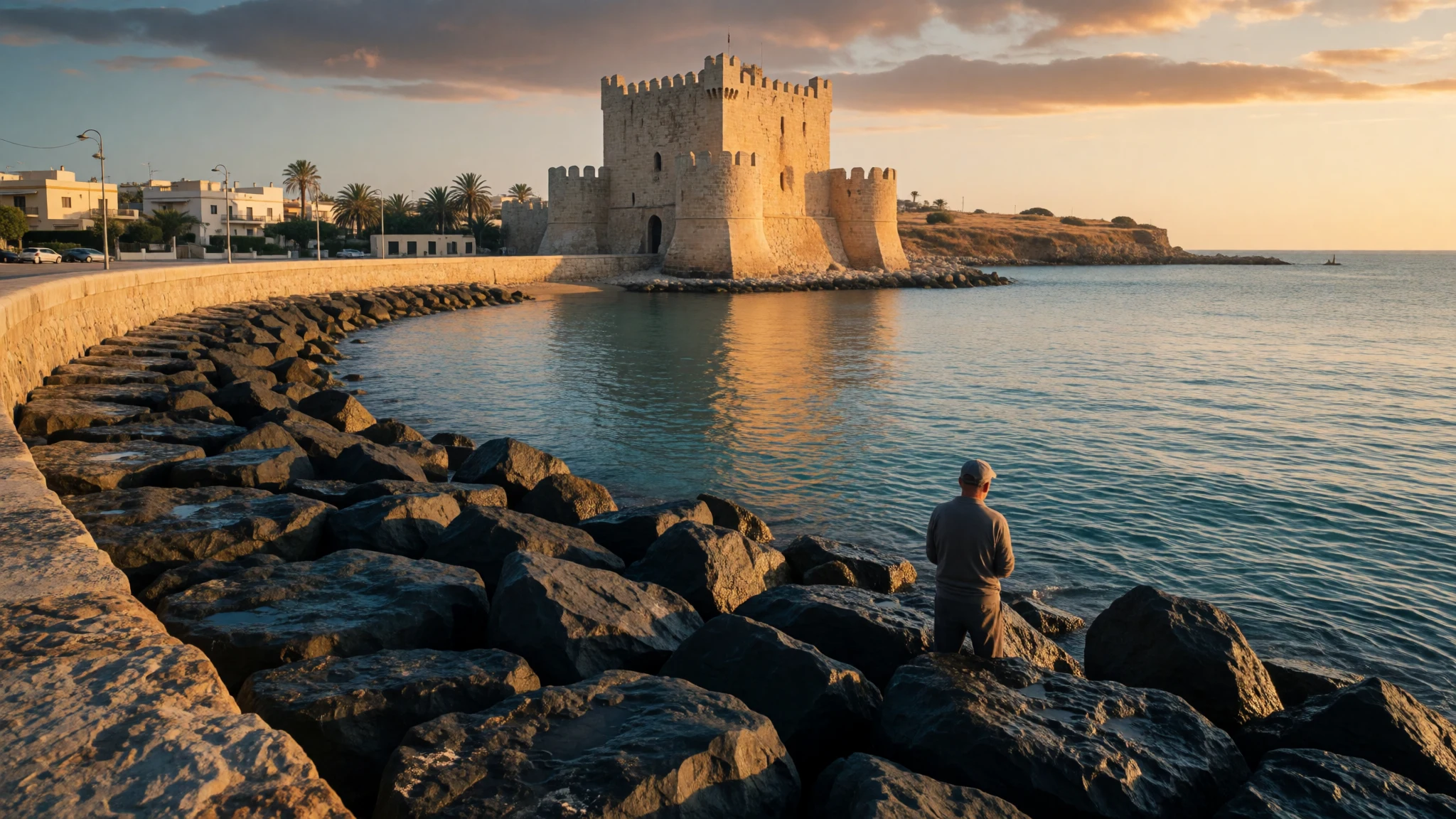
Paphos Castle is a small, weathered harbour fort whose stones carry Lusignan, Genoese, Venetian, Ottoman and British history, with sea views from the roof.
The place
Paphos Castle stands at the western end of the harbour in Kato Paphos, the lower, coastal half of the town of Paphos in Cyprus. It is a compact, square block of stone right at the water's edge beside a small marina, and it reads more as a squat harbour fort than a storybook castle. From the roof the view runs across the moored boats, the sea and the sweep of the shoreline.
Paphos itself is split into two parts. The upper town, on the hill, is where everyday commerce happens. Kato Paphos, below, holds most of the archaeological sites along with the bulk of the places to stay, the bars and the tavernas. A coastal path leads from the castle round the marina and along the shore, and it is the natural way to arrive: a flat walk with little shade, best taken in the morning or towards sunset.
The castle is no longer a garrison. It now operates as a visitor attraction and sometimes stages themed exhibitions, so what is inside can change from one season to the next. Opening arrangements are not something to guess at; the local tourist information office is the place to check.
Paphos is tied in popular memory to Aphrodite, the Greek goddess of love, said to have been born on this stretch of coast, which gives the town a mythic gloss that sits oddly beside the plain military stonework. The town shared the title of European Capital of Culture for 2017 with Aarhus in Denmark. The castle works well as a first stop or a last one: easy to fit in, close to everything else in Kato Paphos, and a useful anchor for understanding why this harbour mattered.
Its story
Paphos Castle owes its existence to a disaster. When an earthquake in 1222 brought down Saranta Kolones, the older fortress a short way to the north-east, the harbour was left without a stronghold, and the Lusignan rulers of Cyprus raised a new one at the water's edge during the 13th century. Two further towers, usually called the Genoese Towers, guarded the harbour mouth nearby; they seem to have worked as a separate small castle rather than as part of the main one.
The centuries that followed were turbulent. Genoese forces took the harbour in 1373 and strengthened it, heightening the walls and reworking the moat. A treaty the next year, in 1374, returned most of the island to Cypriot control. In 1426 Mamluk raiders did serious damage to the Genoese Towers, but the castle itself held out under its commander, a Spanish mercenary named Sforza. Venice took over Cyprus in 1489. A German traveller passing through in 1491 reported that an earthquake had wrecked the eastern tower, and in 1570, with an Ottoman invasion imminent, the Venetians pulled down the western tower themselves so that it could not be used against them.
The Ottomans rebuilt it in 1592, and a marble slab above the entrance records the work. They garrisoned the building with 100 men and 12 cannons, and the garrison left when the British arrived in 1878. Many layers are packed into a very small footprint: a medieval foundation, repeated damage, and repairs by successive rulers who each judged the harbour worth holding.
What to see
- Paphos Castle and its roof — Western end of the harbour, Kato Paphos
The castle itself is small, so a visit is short, and the roof is the real reward, with views over the marina, the moored boats and the open sea. Inside, the rooms hold whatever exhibition is currently running. Check local tourist information for opening arrangements rather than relying on old guidebook notes.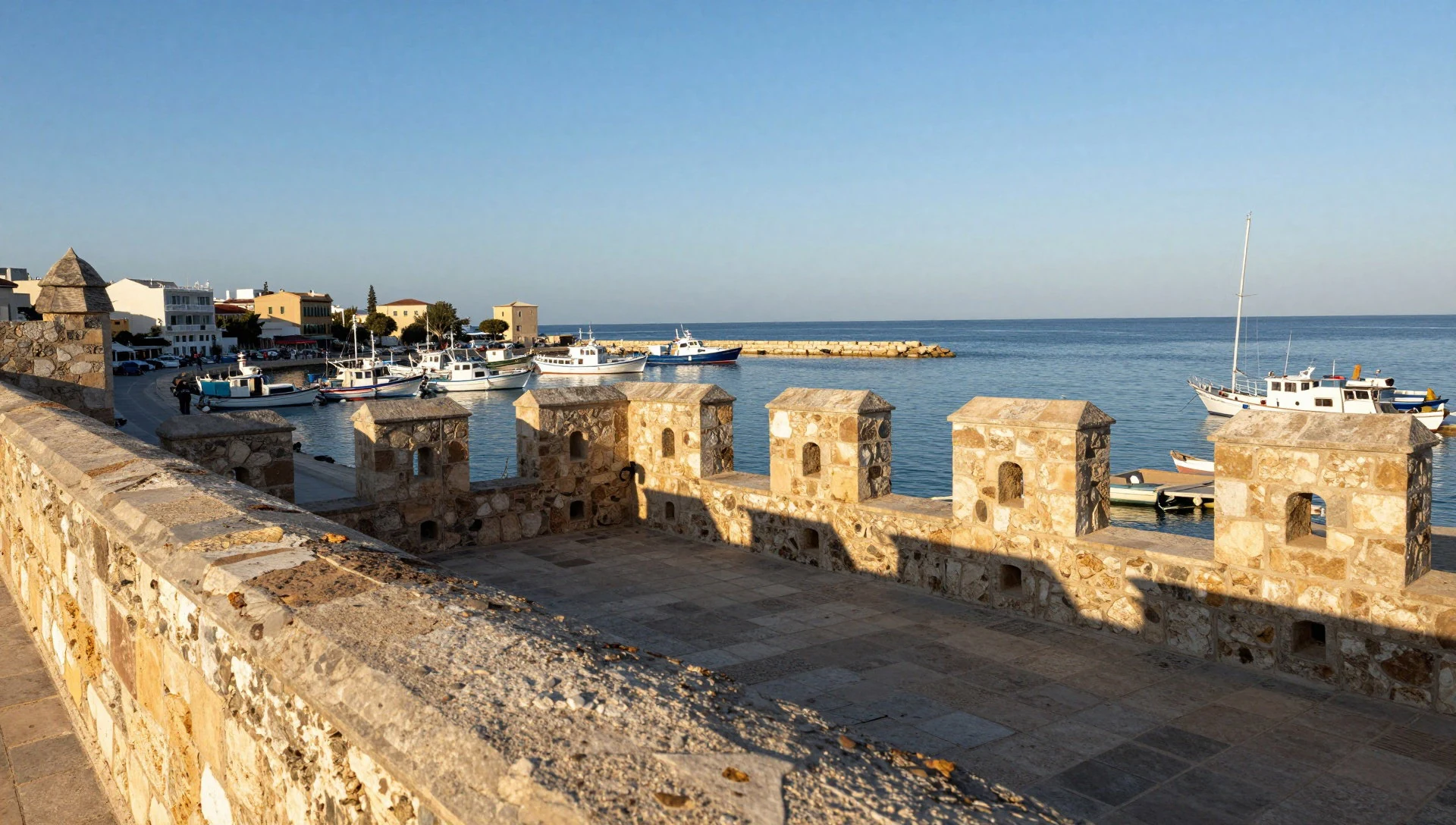
- Paphos Archaeological Park — Kato Paphos
Paphos Archaeological Park is a short walk from the castle and gathers several ancient sites in one enclosure. The House of Dionysos and the House of Theseus are the big draws, the ruins of large Roman villas known for their floor mosaics. Shade is scarce, so bring water and a hat.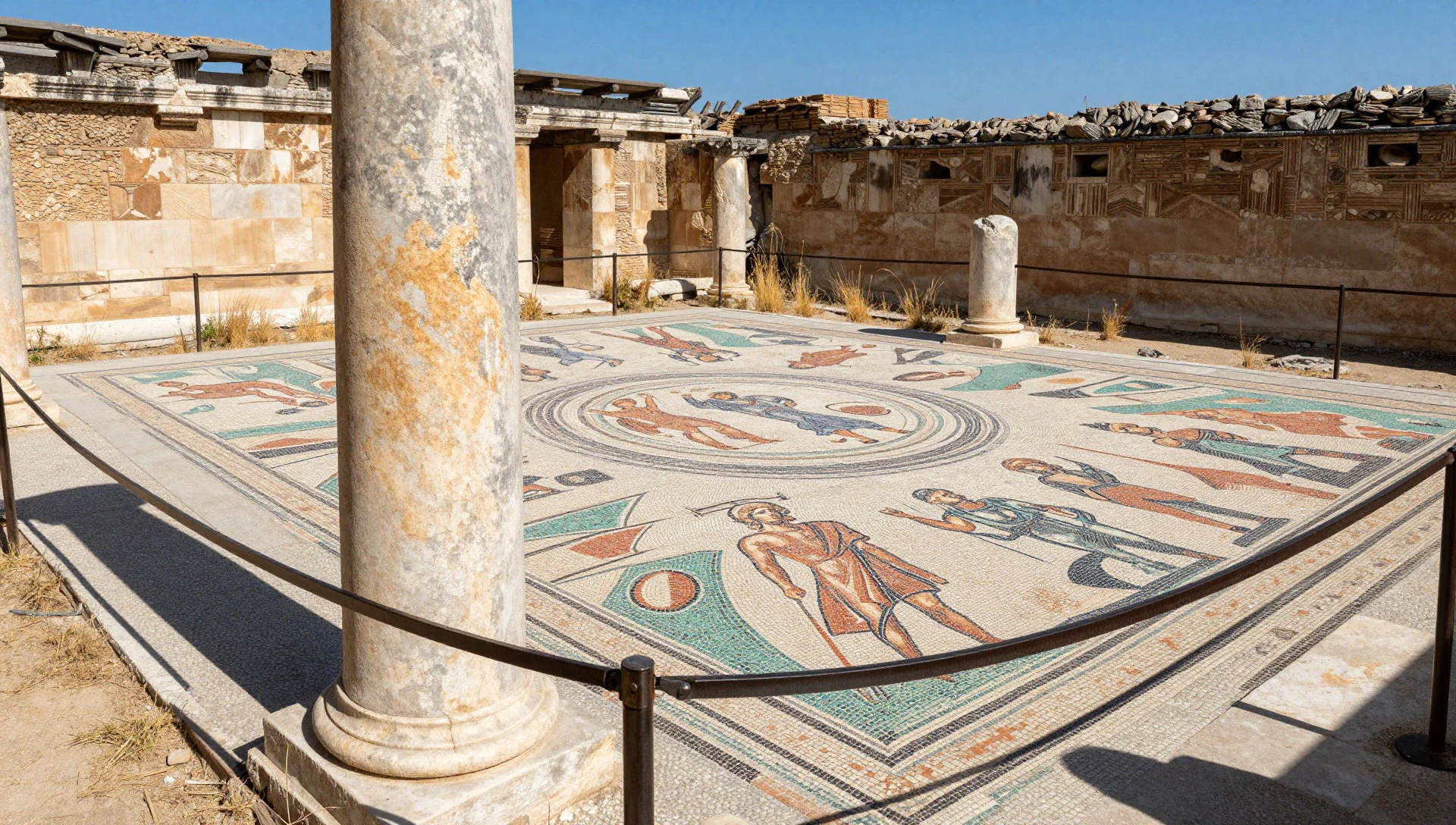
- The Odeon — Inside the archaeological park, Kato Paphos
The Odeon is a Greek-style amphitheatre inside the archaeological park, with tiers of stone seating facing a small stage. It occasionally hosts plays and concerts, so an evening visit is worth checking for. Even when empty, it gives a clear sense of how public life was staged in the ancient town.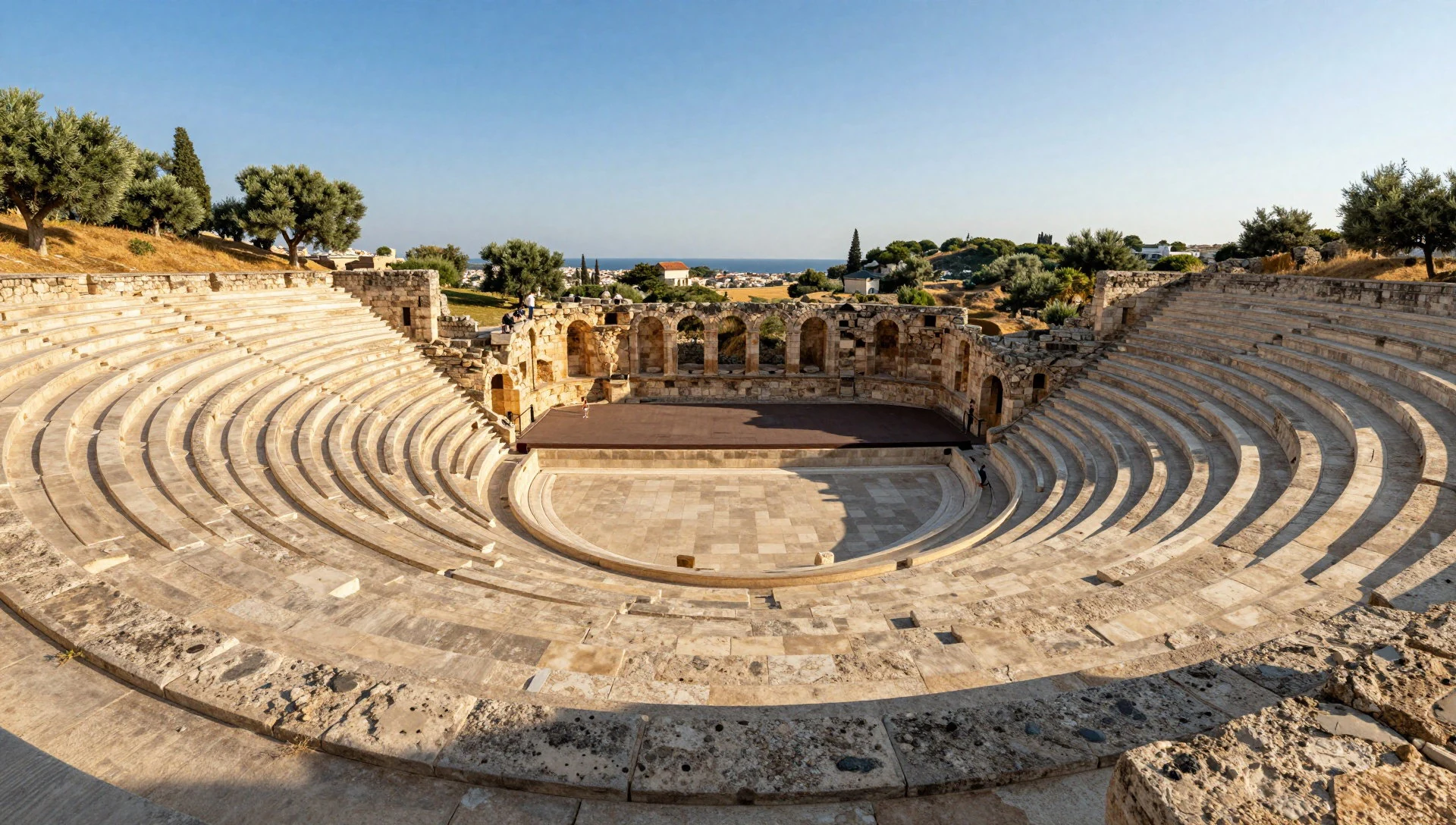
- Tombs of the Kings — North of Kato Paphos
The Tombs of the Kings lie north of Kato Paphos, close to the coast. The name is generous: the burials were more likely for high officials and wealthy citizens than for royalty. The site is a wide, open stretch of rock-cut tombs with little cover, so early morning or late afternoon suits it best.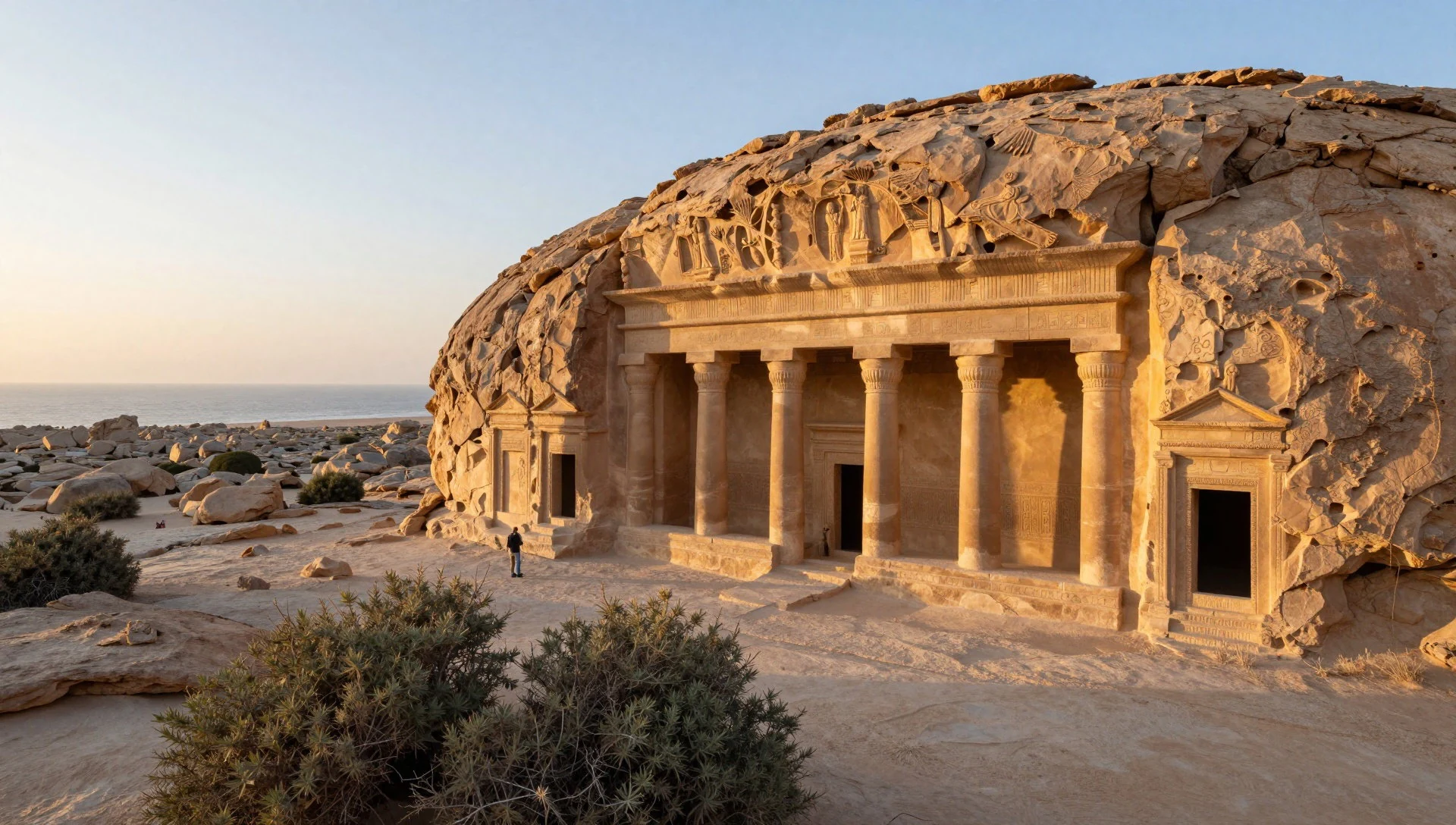
- The harbour front and coastal path — Kato Paphos waterfront
The harbour front begins beside the castle and runs round the marina, then continues along the shore for a few kilometres past bars, tavernas and places to stay. The walking is flat and easy. It is best in the morning or around sunset, when the heat eases and the light on the water is kinder.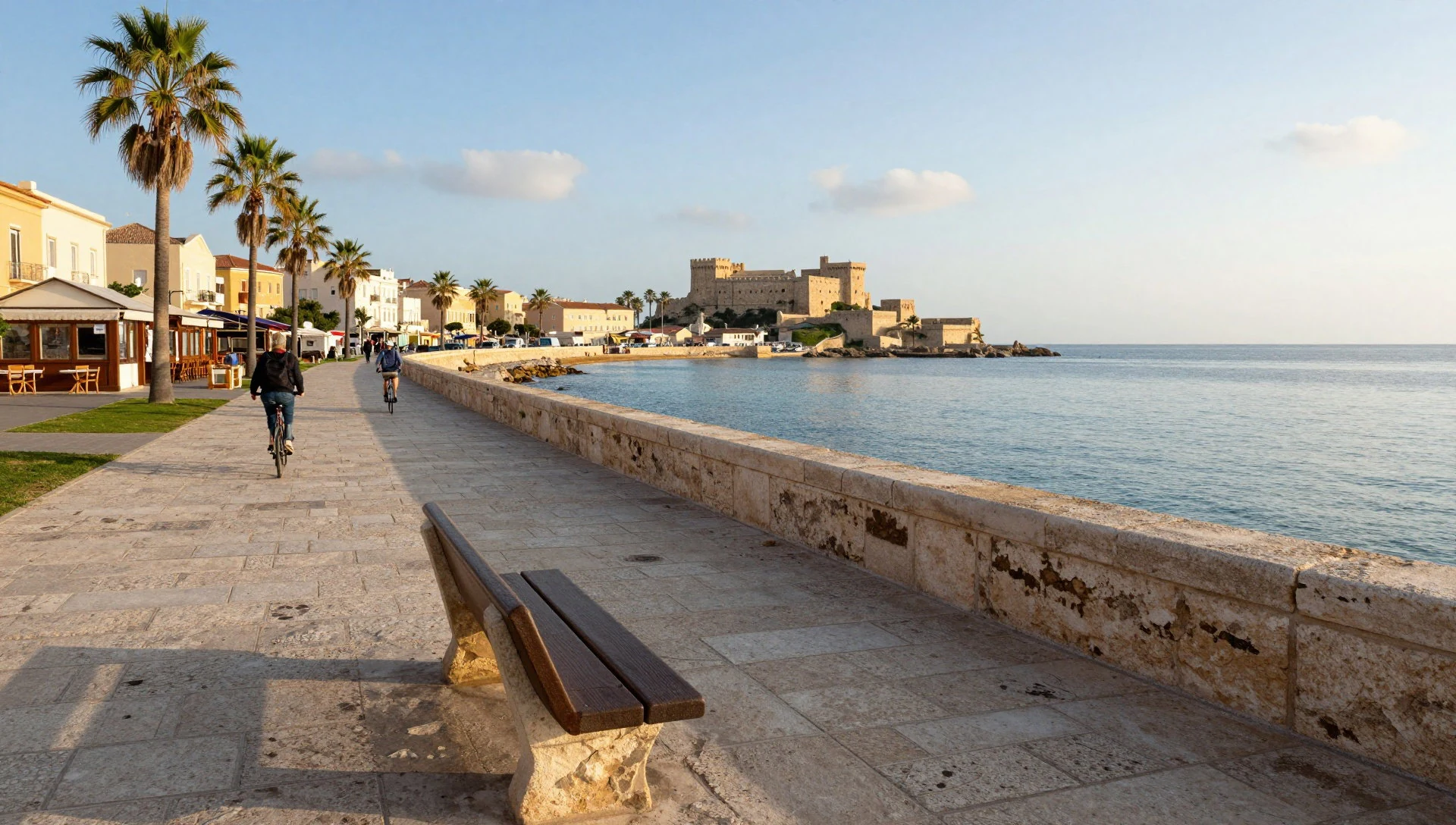
Culture
Paphos Castle sits in a town whose culture is Greek Cypriot at heart, with centuries of Lusignan, Venetian, Ottoman and British rule layered on top. That mixture shows in small things: an Ottoman inscription over a medieval doorway, English spoken easily in Kato Paphos, Greek in the upper town. Myth runs through local identity too. Aphrodite is the figure most associated with the area, and the town leans on the connection, from souvenirs to the stories told on guided walks. In 2017 Paphos shared the title of European Capital of Culture with Aarhus, and the legacy is visible in the occasional open-air performances at the Odeon and the themed exhibitions that sometimes appear in the castle.
Daily life follows a Mediterranean rhythm. Mornings are active, the middle of the day is slow in summer, and evenings are long, with families and visitors strolling the harbour front. Meals are social and unhurried; a meze spread is meant to be shared and lingered over. Village life in the hills behind the town, in places like Tala and Tsada, is quieter and more traditional, and rewards a day out with a hire car or a tour. Orthodox churches and monasteries in the area are active places of worship rather than museums. Cover shoulders and knees in any church or monastery, and ask before photographing people at work around the harbour.
What to wear
Paphos Castle looks over a coast where everyday clothing is mostly practical, but Cyprus has its own traditional dress. Village women once wore a long embroidered dress, often with an apron and headscarf, while men wore dark baggy trousers called vrakes, a sash and boots. Fabrics were handmade: woven cotton, and the fine white embroidered linen of Lefkara, known as Lefkaritika, which still turns up on tablecloths and in souvenir shops. These costumes now appear mainly at festivals, weddings and folk-dance performances, and in museums, rather than on the street.
Everyday dress in Kato Paphos is relaxed and seaside: shorts, light cotton shirts, sundresses, sandals and sunglasses, with smarter casual wear for evenings along the harbour. In the upper town, where people go about errands, clothes are a little more covered.
For a visitor, the climate decides most things. Summers are hot and the castle roof has little shade, so bring a hat, sunscreen and light, loose layers in cotton or linen. Footwear matters more than it seems: the castle has worn stone steps and the archaeological park has uneven ground, so closed shoes or sturdy sandals with grip are better than flip-flops. Beachwear belongs on the beach. For any church or monastery, carry a scarf or shawl to cover shoulders, and wear something that covers the knees.
What to eat
- Meze — Family-run tavernas in Kato Paphos and village restaurants in the hills
Meze is a long succession of small shared dishes, usually dips, salads, grilled meats and cheese, brought out in waves. It is the best way to taste many things at once. Order the set menu and pace yourself.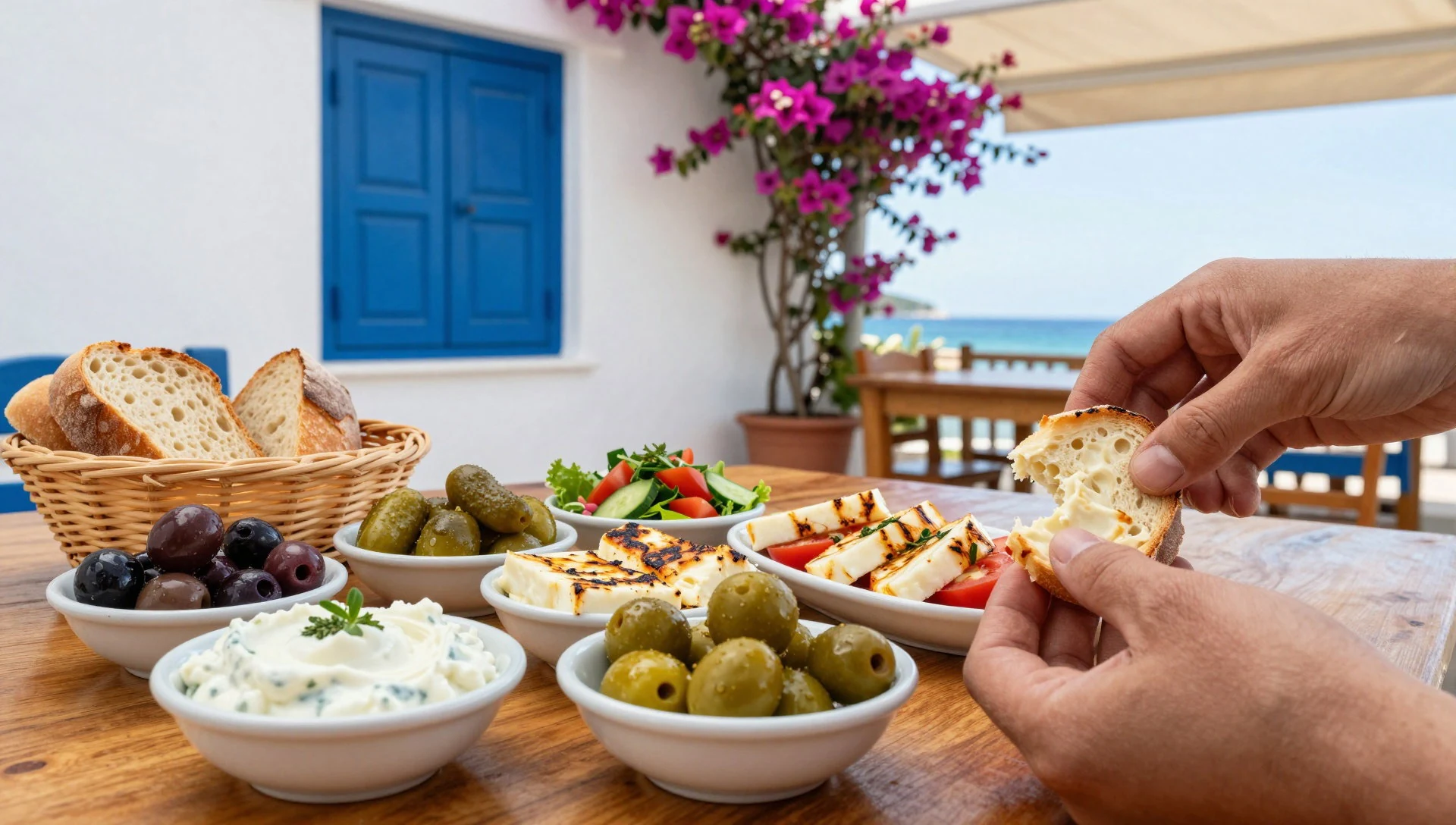
- Souvlaki and kalamaki in pitta — Grill houses and takeaway counters in the upper town and around the harbour
Skewers of grilled pork or chicken, tucked into warm pitta with salad and sauce. It is the standard quick, filling meal. Good for lunch on the move between the castle and the archaeological park.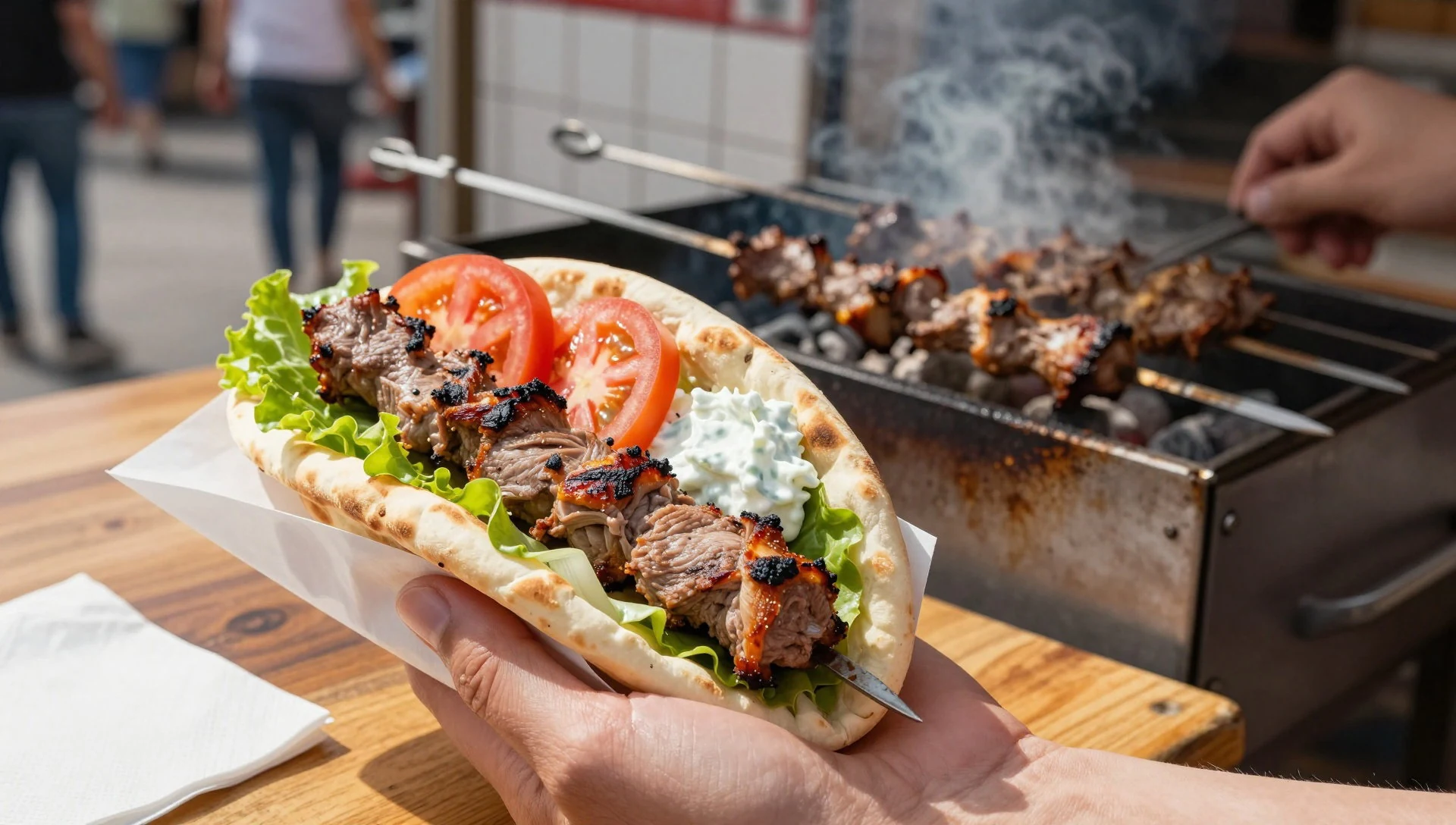
- Halloumi — Tavernas, cafés and bakeries throughout Paphos
Halloumi is Cyprus's well-known firm cheese, squeaky when fresh and best grilled until golden. It appears at breakfast, in meze, in sandwiches and beside salads. Lightly salty, it pairs well with watermelon in summer. - Koupepia — Village tavernas in the hills, such as around Tala and Tsada
Vine leaves rolled around rice, herbs and sometimes minced meat, then simmered until soft. It is home cooking, often made in a big batch. Expect it in a meze spread or as a village lunch. - Loukoumades — Cafés and dessert counters along the harbour front
Small fried dough balls, crisp outside and soft within, served warm with honey syrup and often cinnamon. A simple sweet for an evening stroll by the water, and good for sharing.
Plan it
Best time. March and November, when the sun is warm but not punishing and walking the harbour front and archaeological park is comfortable. July and August are hot, with little shade on the castle roof or at the ancient sites.
How long. 2–3
Getting there. Fly to Paphos airport, then take a taxi or bus to Kato Paphos; Cyprus has no railway. The castle stands at the western end of the harbour and is an easy walk from the waterfront.
Budget. mid
Tips
- Visit the castle and the archaeological park early or late in the day to avoid the strongest sun
- Check Paphos tourist information for current opening arrangements and any exhibition before you go
- Carry water and sun protection, as shade is limited at the castle and the ancient sites
- The coastal path from the castle is flat and easy, so keep a taxi or hire car for the Tombs of the Kings and the hill villages
Etiquette
- Cover shoulders and knees in churches and monasteries
- Ask before photographing people at work around the harbour
- Do not climb on ancient walls or take stones from the archaeological sites
Nearby
Sources
- Wikidata Q2505824 (CC0)
- Wikipedia: Paphos Castle (rev 1363117213) (CC BY-SA 4.0)
- Wikivoyage: Paphos (rev 5413860) (CC BY-SA 4.0)
- Paphos ~ Castle, Alan Samuel (CC BY 2.5)
- Fort pafos.jpg, Unknown author (CC BY-SA 2.5)
- Hafen mit mittelalterlichem Kastell von Kato Paphos, Rüdiger Stehn (CC BY-SA 2.0)
- Das mittelalterliche Kastell im Hafen von Kato Paphos, Rüdiger Stehn (CC BY-SA 2.0)
- Paphos Archeological Park, Peter Collins (CC BY-SA 2.0)
- Fort Paphos, Peter Collins (CC BY-SA 2.0)
- Blick vom Dach, Arnold Schott (CC BY 3.0)
- Blick vom Dach, Arnold Schott (CC BY 3.0)


