Lake Yamanaka
Lake Yamanaka, Japan
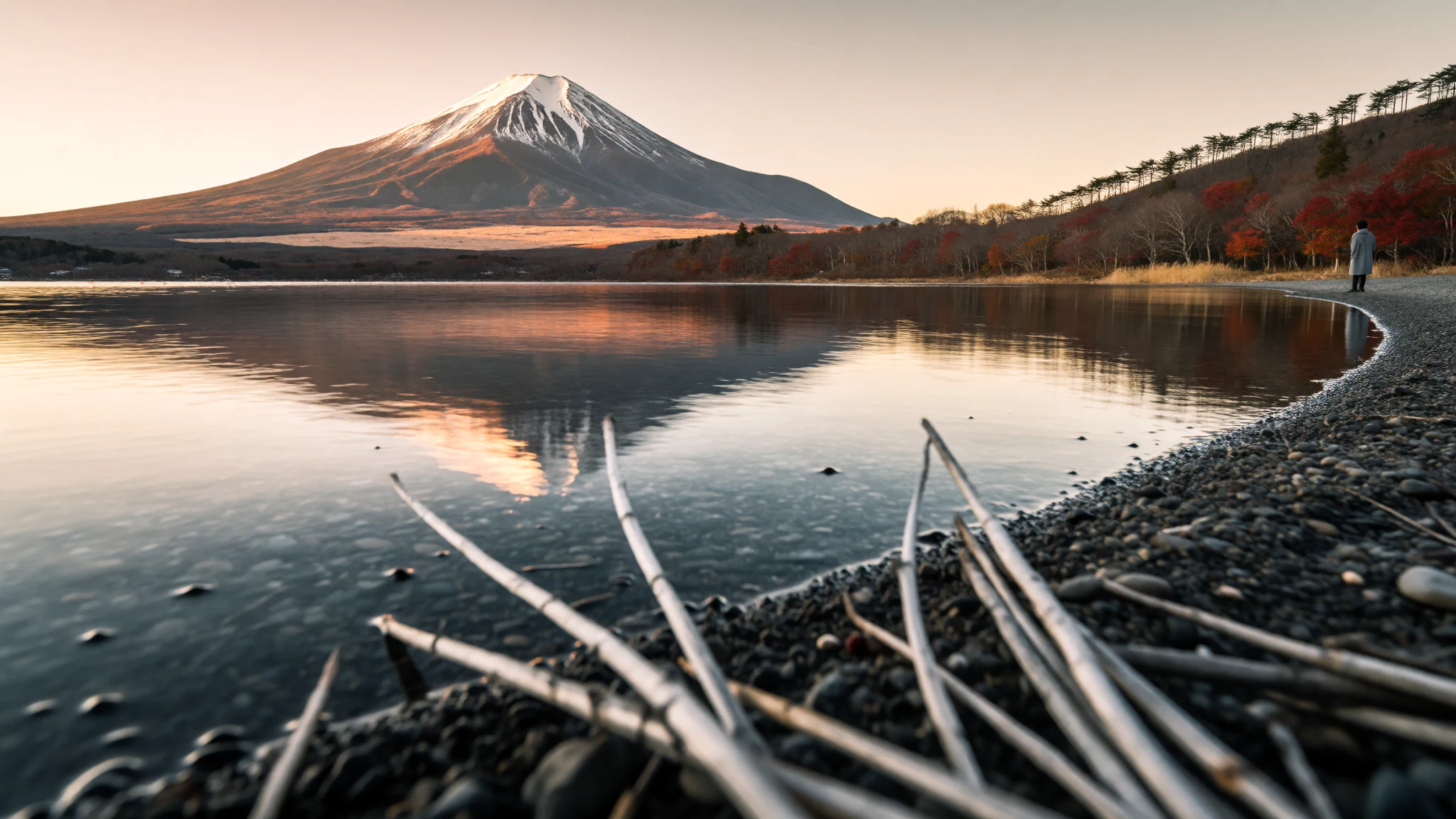
Lake Yamanaka is the high, breezy lake where Mount Fuji fills the far shore and Tokyo feels a long way off.
The place
Lake Yamanaka (山中湖, Yamanaka-ko) lies in the village of Yamanakako, in Yamanashi Prefecture, on the northeastern side of Mount Fuji. At 982 metres above sea level it is a cool, breezy refuge from the Tokyo plain, and the air at the shore can feel a season behind the city. Of the five lakes ringing Fuji's northern foot, this one covers the most ground and sits highest, yet it is also the shallowest, which gives the water a flat, pale look on calm days. Fuji rises directly across it, and on clear mornings the cone doubles in the surface.
Lava from an old Fuji eruption dammed the water, and Wikidata classes it as a landslide-dammed lake. Unlike its neighbours it has a natural outlet, the Sagami River, which carries water away toward the south. The shoreline is a patchwork of reed beds, holiday cabins, campsites, small guesthouses and woodland, all inside Fuji-Hakone-Izu National Park.
People come for boating, fishing, windsurfing, swimming and, when the wind blows from the west, paragliding off Mount Myōjin. Tennis courts and sports camps fill with students during school holidays. Introduced fish such as black bass and bluegill now compete with native species. Weekends and summer holidays bring heavy traffic from Tokyo, so the quiet days are midweek or out of season, when the lake belongs mostly to anglers, cyclists and the odd photographer waiting for the cloud to lift.
Its story
Lake Yamanaka owes its existence to Mount Fuji. Lava from an ancient eruption blocked a valley on the volcano's northern side, and rain and spring water pooled behind the barrier. The result is a high, shallow lake whose only natural outlet feeds the Sagami River. For centuries the surrounding land belonged to Kai Province, now Yamanashi, a region ringed by steep mountains that kept it somewhat apart from the rest of Japan. Kai was the base of the warlord Takeda Shingen, who came close to dominating the country before dying mysteriously on campaign, and his name still turns up on festivals, shrines and sweets across the prefecture.
Fuji has drawn pilgrims for generations, and the lakes at its foot became part of that devotional landscape: places to rest, purify and look at the mountain before or after a climb. Fuji's cultural weight eventually earned it international protection, and Lake Yamanaka is one of the components of the Fujisan site (UNESCO reference 1418-011).
The lake's modern character took shape from the Meiji period onwards, when carp, dace and smelt were introduced; early attempts with sockeye salmon failed. Later arrivals such as black bass and bluegill have pushed out native species. The shore gradually became a holiday strip of cabins, campsites and sports camps within easy reach of Tokyo, while national park status helps keep forest and mountain views intact around much of the water.
What to see
- Mount Myōjin viewpoint — Yamanakako, above the lake's northern shore
Mount Myōjin rises beside Yamanakako and gives the classic wide view: the lake in the foreground and Fuji's full slope behind it. Paragliders launch here when the west wind is right. The walk up is short but can be slippery after rain, so wear shoes with grip and start early for clear air.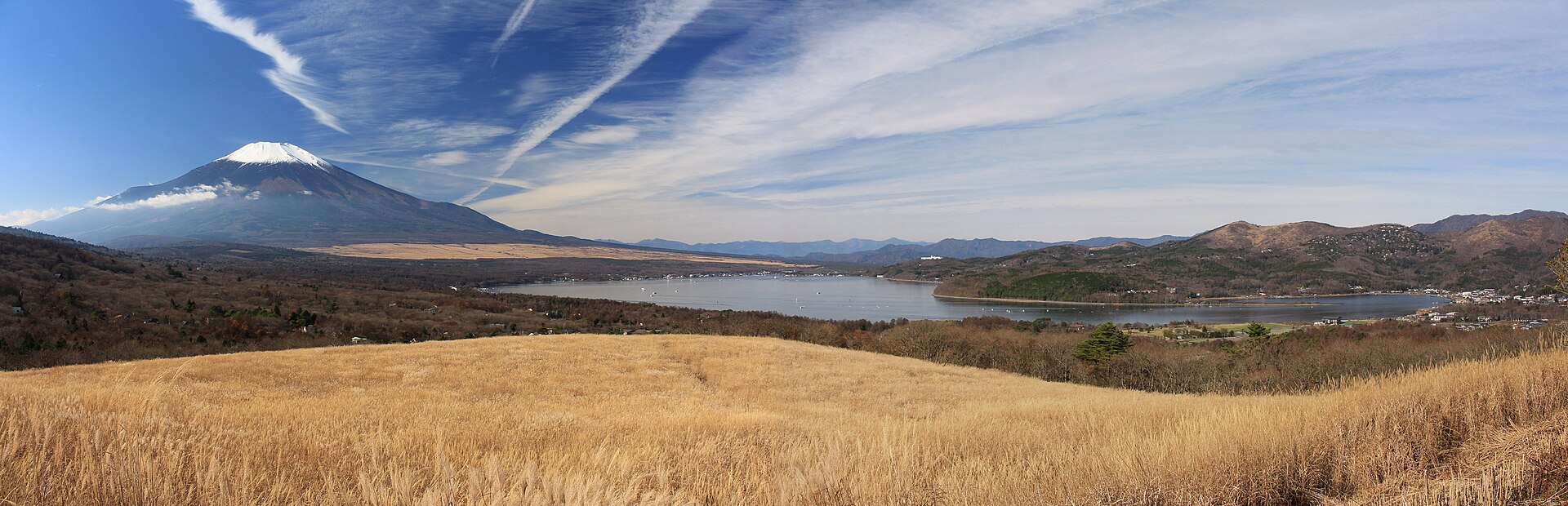
- The lakeshore in autumn colour — Lakeside paths around Yamanakako
In autumn the deciduous woods along the shore turn red and gold, and tree-lined paths run close to the water. Fuji appears between the trunks and across the lake. Cyclists and walkers share the route, and weekends in peak colour are busy, so weekday mornings give a calmer visit.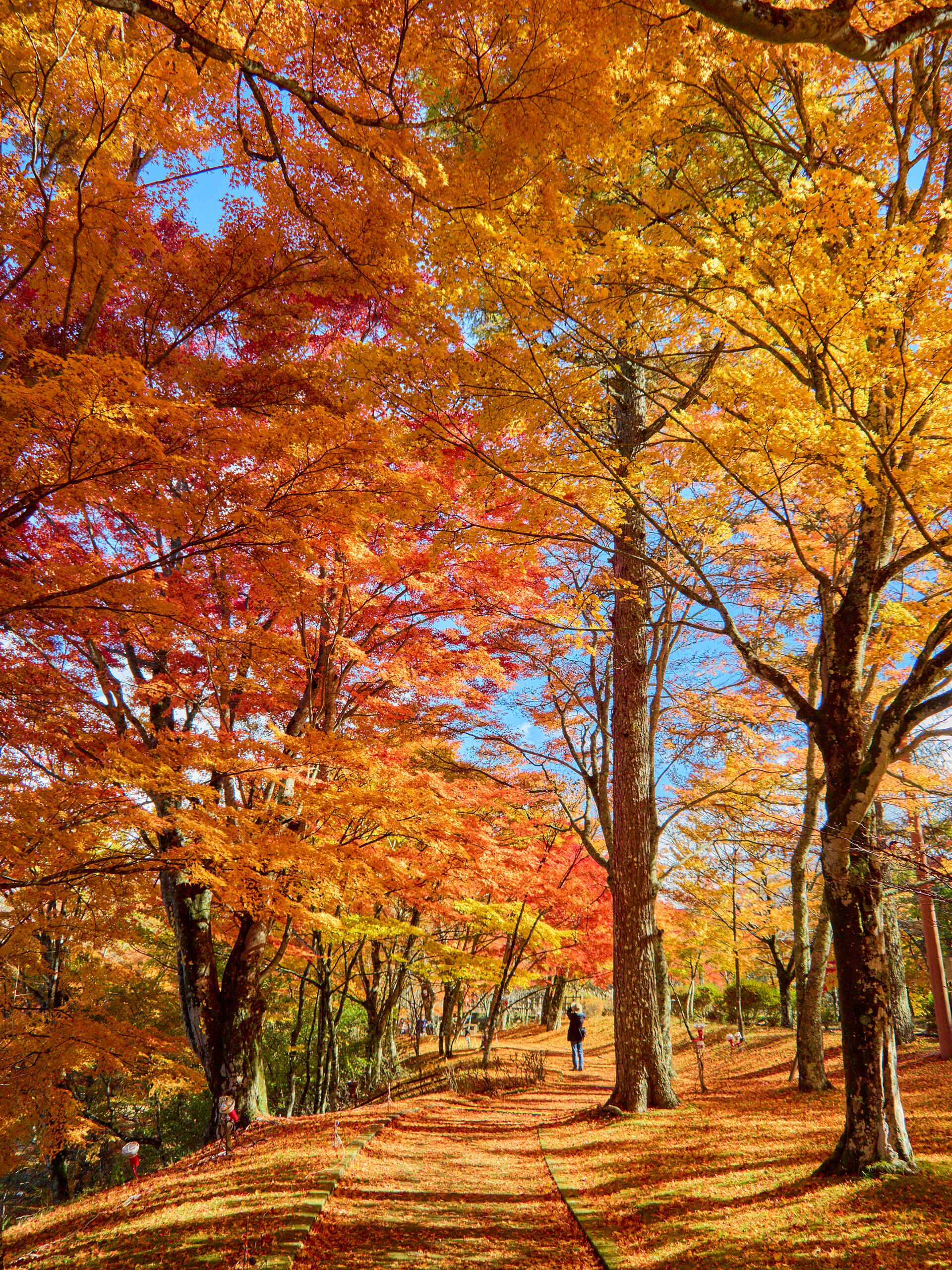
- Fuji across the water — Public shoreline, Yamanakako
The simplest pleasure here is standing on the shore and looking at Mount Fuji over the lake. Autumn light and a still surface give the best reflections, and winter often brings the sharpest air. Cloud can hide the peak for days, so build in a spare morning rather than betting on one.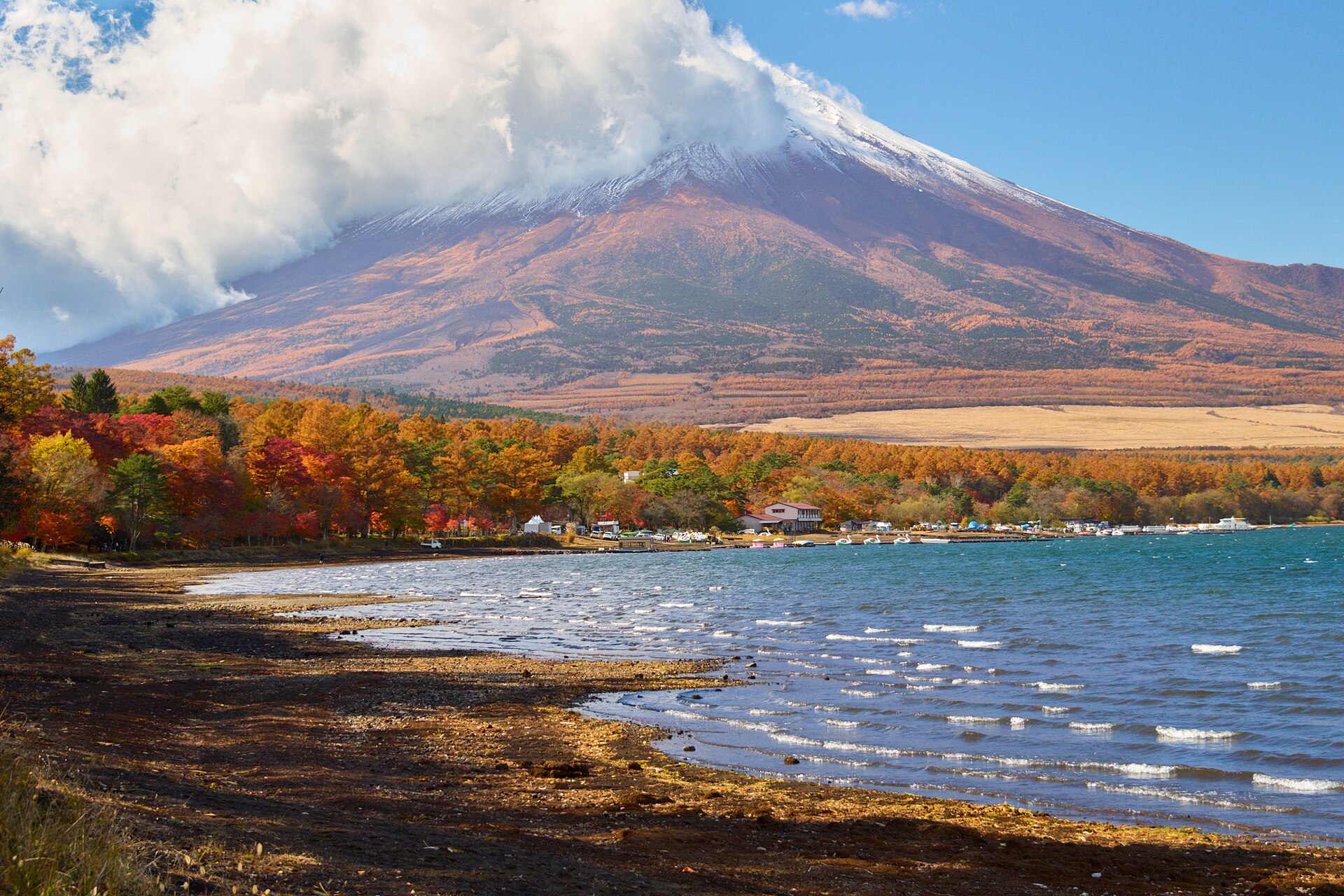
- On the water — Boat and activity points along the shore
The lake is a working leisure spot: boating, fishing, windsurfing, swimming and water-skiing all happen here. The shallow, wind-exposed surface suits beginners and hobbyists rather than serious racers. Rental and activity operators cluster along the shore; confirm seasons and conditions through the village website before planning a day around it. - Yoshida Fire Festival — Fuji-Yoshida, a short trip from the lake
At the foot of Fuji in nearby Fuji-Yoshida, a two-day fire festival in late summer honours the goddess of the mountain. Streets glow with tall torches and the crowds are large. It is worth timing a stay around it only if the visitor is happy with crowds, heat and limited rooms; check dates locally.
Culture
Lake Yamanaka sits in a landscape where religion, history and recreation overlap. Mount Fuji has long been treated as sacred, and pilgrims once climbed it in white robes, stopping at shrines and lakes along the way. That devotional layer is still visible in small shrines, in festivals such as the fire festival at nearby Fuji-Yoshida, and in the way many Japanese visitors pause to bow or simply stand quietly when the mountain appears.
Yamanashi has its own regional pride, rooted in the old province of Kai and the warlord Takeda Shingen. He is treated as a local hero, with a shrine on the site of his former home and parades in which residents dress as his army. Wine, fruit and the wheat-noodle dishes of the prefecture are part of the same sense of belonging to a place apart from Tokyo.
At the lake itself the mood is that of a holiday village. Families, student sports groups, anglers, campers and photographers all share the shore, and much of the village life revolves around seasonal visitors. Quiet matters: cabins and guesthouses are often close together, and sound carries over water, especially in the evening. Rubbish is usually taken home or sorted into marked bins, and public toilets and car parks expect tidy use.
At shrines and temples around the lake, bow slightly at the gate, keep voices low, and ask before photographing anyone, especially people at prayer.
What to wear
Around Lake Yamanaka, traditional dress belongs to festivals and ceremonies rather than daily life. At events honouring Takeda Shingen, locals wear armour and costume of the samurai age, while shrine festivals bring out cotton yukata, light summer kimono, and happi coats worn by those carrying or running the event. Silk kimono are kept for weddings, tea gatherings and formal occasions. Yamanashi's silk and textile traditions are not covered in the sources used here, so no specific local cloth is claimed.
Day to day, people dress for the outdoors. Cyclists wear sports kit, anglers wear waders and caps, campers wear layers and boots, and families in the village keep to plain, practical clothes. Younger visitors from Tokyo tend to mix casual city style with trail shoes and light jackets. Nothing is formal, and nobody will look twice at hiking gear in a café.
A visitor should dress for altitude rather than for the city. At 982 metres the lake is cooler than Tokyo, mornings and evenings can be chilly even in warm months, and winter is properly cold. Bring layers, a windproof jacket and a hat, plus a light rain shell because Fuji often hides in cloud. Shoes with grip suit lakeside paths and the climb to Mount Myōjin. For shrines and temples, no special dress code applies, but covered shoulders and knees are respectful, and socks without holes help where shoes come off.
What to eat
- Hōtō — Local noodle restaurants in Yamanakako and Fuji-Yoshida
Hōtō is a wide, flat wheat noodle simmered in a miso broth with pumpkin, radish, carrot, taro and other vegetables. It is a winter staple of Yamanashi, hearty enough to count as a full meal after a cold lakeside walk. - Yoshida udon — Small udon shops and family eateries around Fuji-Yoshida
Yoshida udon is a firmer, chewier thick noodle than the soft udon found elsewhere in Japan. It is served in a hot broth, with or without meat, and is a standard lunch near the foot of Fuji. - Yamanashi white wine — Wineries and wine shops in the Katsunuma area, a day trip away
Yamanashi is a centre of Japanese wine, and the sweet local fruit tends to give the wines a softer taste than many visitors expect. The whites are the better bet; the reds can be hit and miss. Tasting is best done at a winery. - Peaches and grapes — Roadside fruit stalls and farm shops around the lake
The prefecture is known for peaches and grapes, grown in a basin whose climate makes the fruit very sweet. They appear fresh in summer and early autumn and turn up as jam, juice, jelly and sweets year round. - Basashi — Traditional izakaya-style eateries in Kofu and larger towns
Basashi is raw horse meat, sliced thin and eaten with soy sauce, ginger or garlic. It is a regional speciality rather than an everyday dish, and visitors who do not eat raw meat can skip it without missing the rest of the menu.
Plan it
Best time. October–November for autumn colour along the shore and crisp, often clear views of Fuji; April–May for mild days and fresh green. Summer is cooler than Tokyo but busy, and cloud often hides the mountain. Winter is properly cold, though the air can be very clear.
How long. 1–2
Getting there. Yamanashi has no airport; Tokyo's Haneda is far easier than Narita. From Tokyo take the Chuo Line side of the rail network towards Yamanashi, then continue by bus or taxi from the Fuji-Yoshida area to the lake. Bus connections vary by season, so check timetables on the official site: http://www.yamanakako.gr.jp/
Budget. mid
Tips
- Allow a spare morning, because cloud can hide Fuji for days
- Go midweek or early in the day to avoid weekend traffic from Tokyo
- Carry cash for small shops, stalls and rental points, as not all take cards
- Bring warm layers even in summer, since the lake sits high and evenings cool quickly
- Check the village website for event dates, boat rentals and seasonal bus services
Etiquette
- Take rubbish home or use the sorted bins provided
- Keep noise down near cabins and campsites, especially after dark
- Ask before photographing people, particularly at shrines and festivals
Nearby
Sources
- Wikidata Q1203756 (CC0)
- Wikipedia: Lake Yamanaka (rev 1366284983) (CC BY-SA 4.0)
- Wikivoyage: Yamanashi (prefecture) (rev 5214058) (CC BY-SA 4.0)
- Photo: Mount Fuji and Lake Yamanaka — Alpsdake (CC BY-SA 4.0)
- Photo: Japan natural location map — Alexrk2 (CC BY 3.0)
- Photo: Lake Yamanaka and Mt Fuji panorama — Valentin Saussois (CC BY 3.0)
- Photo: Yamanakako 6757 — lumoplank (CC0 1.0)
- Photo: Yamanakako 6741 — lumoplank (CC0 1.0)
- Photo: Yamanakako 6751 — lumoplank (CC0 1.0)
- Photo: 020419山中湖 — daizukan (CC BY 3.0)
- Photo: Lake Yamanaka Japan — 663highland (CC BY-SA 4.0)


Wildlife
- Black bass (animal)
The largemouth bass is a big-mouthed fish that hunts other animals in fresh water, a bit like a wolf of the lake. It comes originally from North America, and it is one of the newcomers now sharing Lake Yamanaka with the native fish, which it competes with. No particular season or hour is known for seeing it, so ask locally. Watch from a respectful distance, stay quiet and calm, consider going with a guide, and never feed it.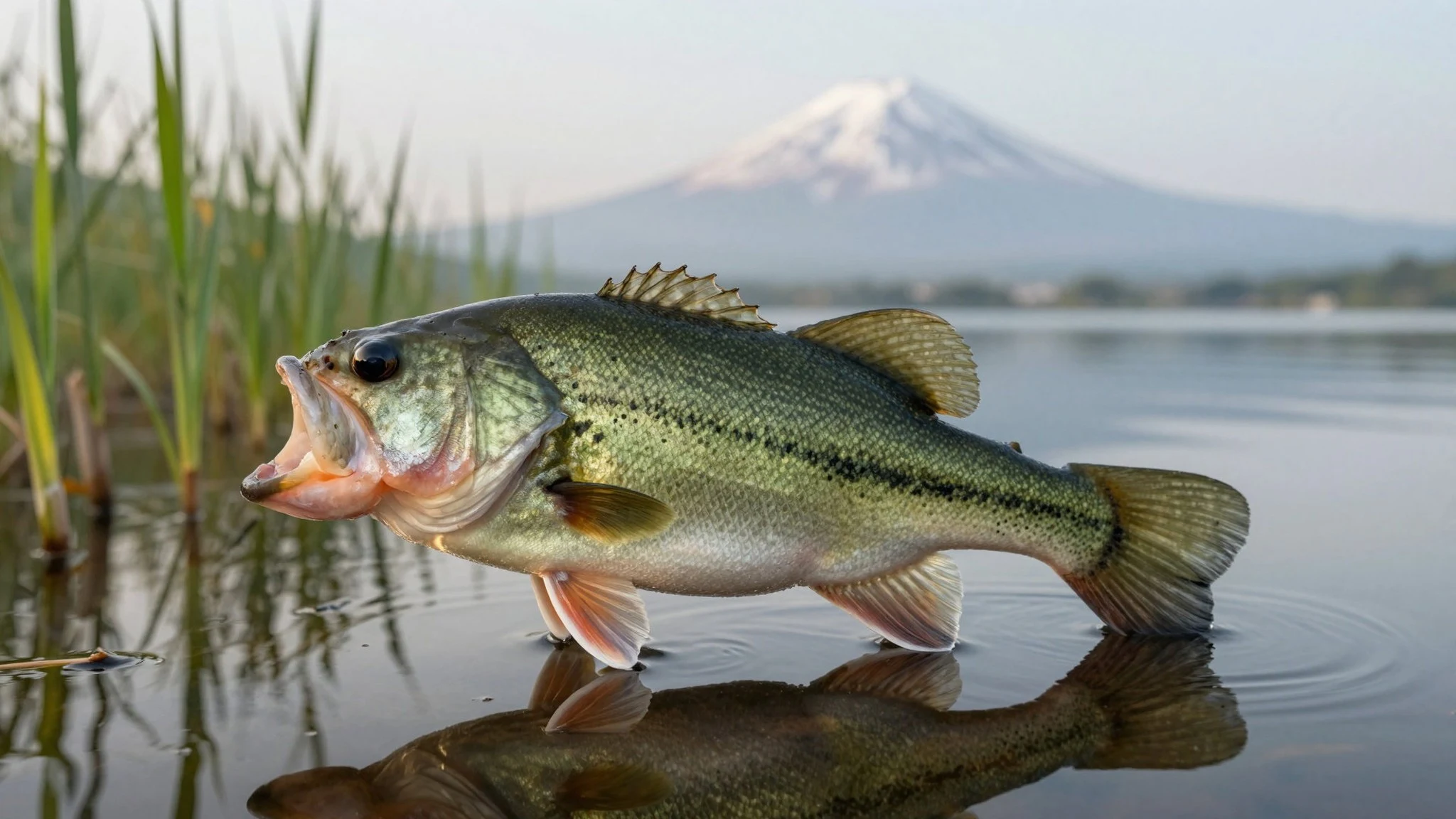
- Bluegill (animal)
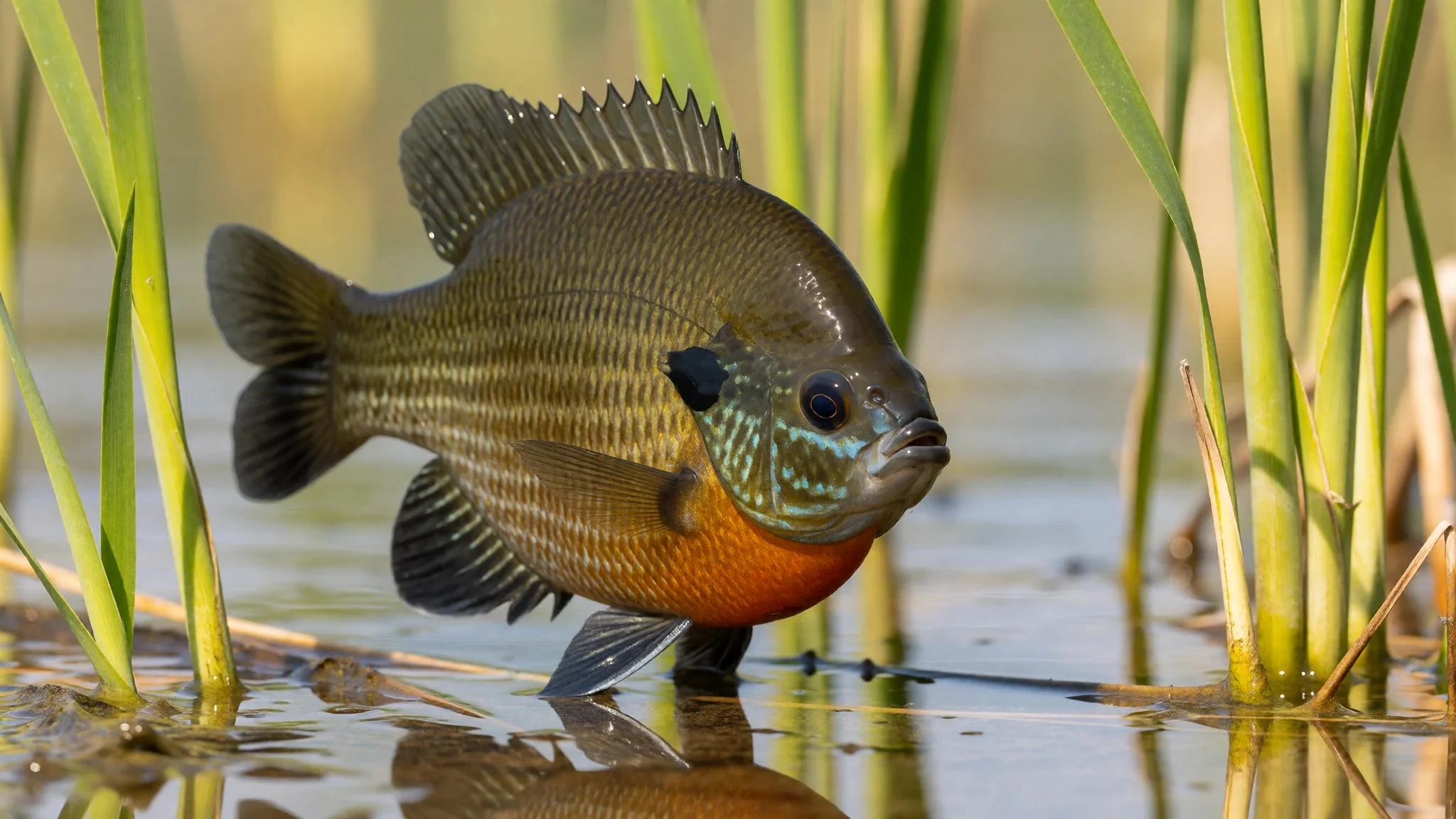
The bluegill is a freshwater fish from North America that likes lakes, ponds and slow waters, and it is a cousin of the largemouth bass. Like the bass, it is a newcomer to Lake Yamanaka, where it now competes with the native fish. No particular season or time of day is known for seeing it, so ask locally. Watch from a respectful distance, keep quiet and still, consider a guide, and never feed it.