Lake Suwa
Lake Suwa, Japan
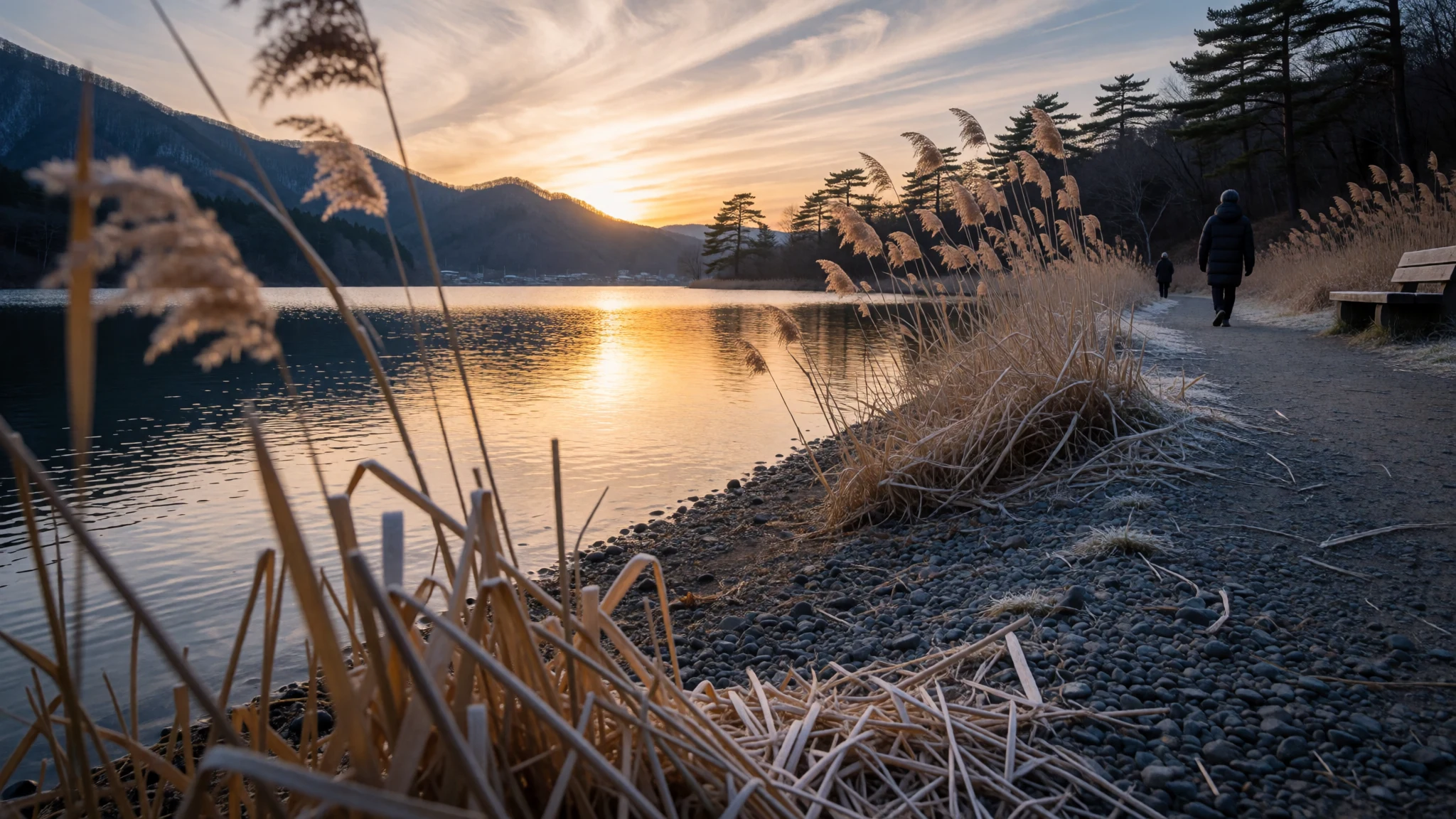
Lake Suwa is a shallow highland lake in Nagano where winter ice, hot springs and Shinto legend share one shoreline.
The place
Lake Suwa (諏訪湖, Suwa-ko) lies at 759 m above sea level in the middle of Nagano Prefecture, in the mountainous Central Highland of Japan. It is a tectonic lake, a basin left by movement in the earth's crust, and it is shallow, which matters more than it sounds. A shallow lake warms and cools quickly, so it reacts sharply to each season's weather. Three settlements share the shoreline: the city of Suwa, the city of Okaya and the town of Shimosuwa. Between them the water works like a village green, ringed by paths, small parks and onsen (hot-spring bath) districts facing the view. The Tenryū River begins here and heads away to the south. A hot spring also rises from beneath the lake bed itself, which keeps one patch of the surface from freezing even in hard winters. Life around the lake follows the calendar. Highland summers are cooler than in Japan's big cities, which is why Nagano as a whole draws people escaping the heat below. Winters are cold and clear, with mountains standing around the water on every side. Early mornings are the quietest time. Fine weekends bring walkers, cyclists and bath-seekers, but the mood stays local and unhurried. Lake Suwa is not a place of one great monument. It suits slow hours: a bath, a walk round the shore, a long look across the water to the hills, and a visit to the shrine tradition that grew up around the lake.
Its story
Lake Suwa is known across Japan above all for the omiwatari (御神渡り), 'the gods' crossing'. In hard winters the surface freezes across and the ice buckles into long ridges that run from shore to shore. Local Shinto belief reads them as a path. The guardian deity Takeminakata-no-kami walks over the frozen water to visit his wife, the goddess Yasakatome, on the far bank, moving between the sites of the Suwa Grand Shrine. For generations the ridges have been watched and written down each year, and that long run of entries has become useful to scientists studying sunspots, local development and the warming climate. The pattern is uncomfortable reading. Because the lake is shallow it responds quickly, and winters with no full freeze have become tied to rising carbon dioxide in the atmosphere. Leisure development along the shore in the 1950s also increased the output of the hot spring under the lake, so the unfrozen patch above it grew, and the rule for declaring a full freeze now makes allowance for that opening. The lake also drew artists. Katsushika Hokusai included a view of it in his woodcut series on Mount Fuji, a sign that travellers on the old routes through Shinano Province stopped here and carried the scene away with them. Today the crossing is rarer, and when the ice does form it is an event, not a routine.
What to see
- The lakeshore walk — Suwa, Okaya and Shimosuwa shores
Lake Suwa has a shoreline path linking parks, jetties and viewpoints in the cities of Suwa and Okaya and the town of Shimosuwa. Walk a stretch rather than the whole circuit, ideally early, when the water is still and the hills are clear. Benches and small lakeside parks make easy stopping points.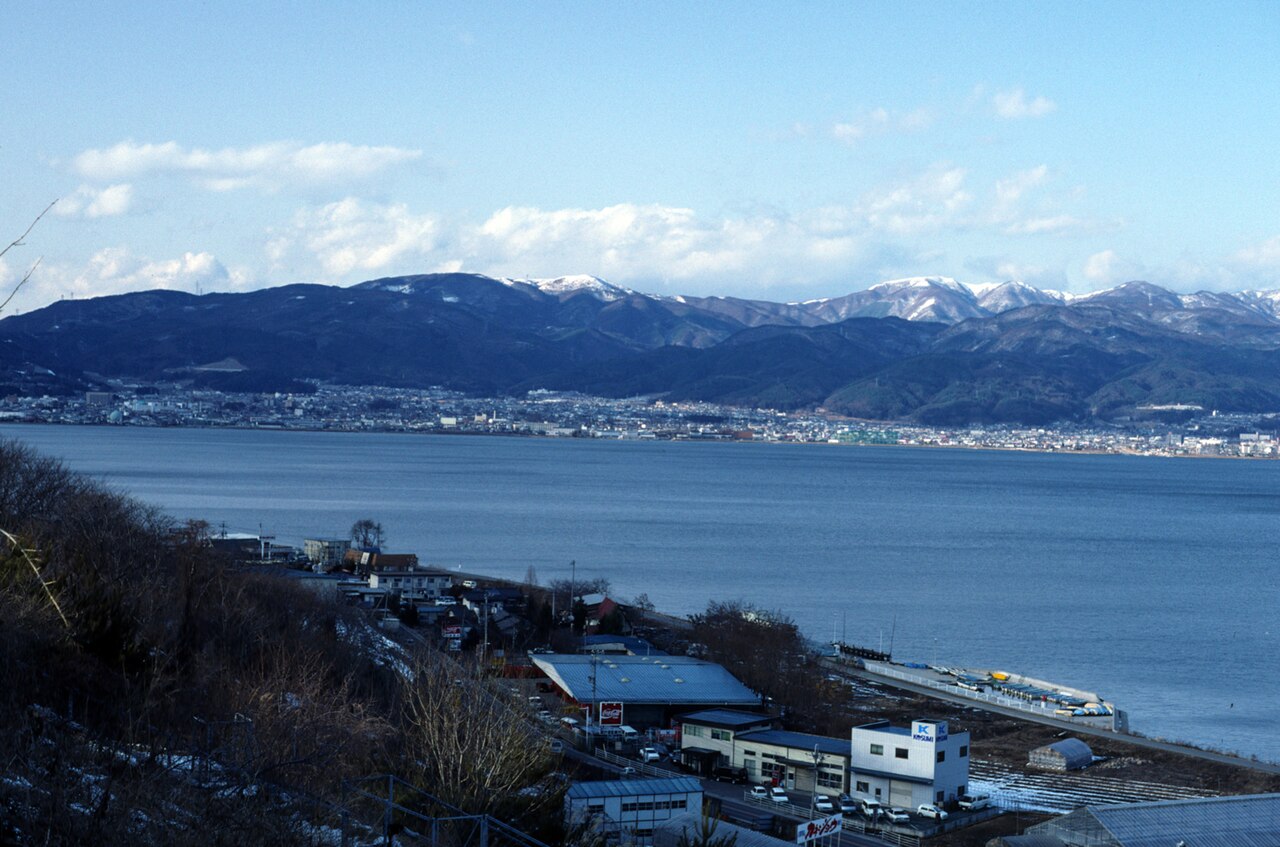
- Tateishi Park viewpoint — East shore, Suwa
On the east side of Lake Suwa, Tateishi Park gives a wide view over the water towards the mountains. It is best in the last hour of daylight, when winter sunsets colour the surface. Wrap up warmly, as the wind off the lake can be sharp after dark.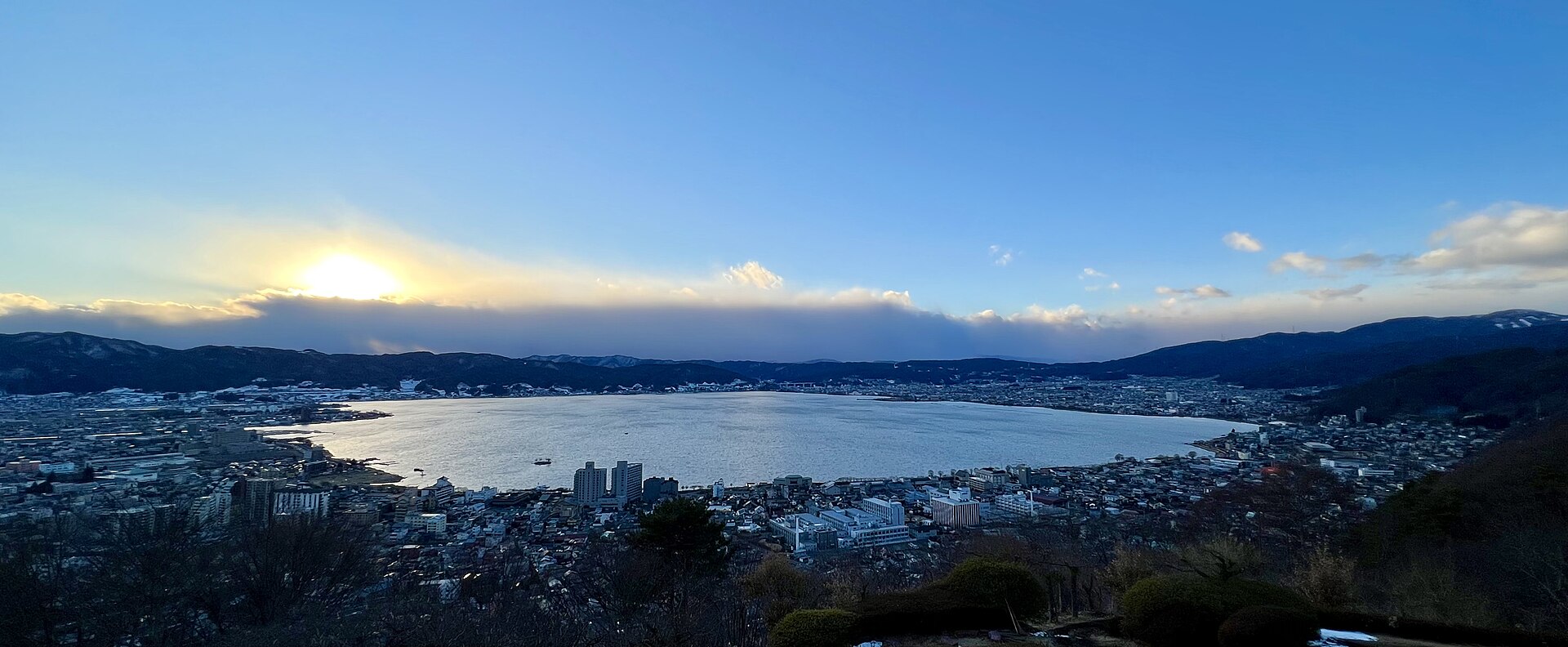
- The omiwatari ice ridges — Open lake surface, winter only
When the lake freezes fully, ridges of heaved ice cross the surface, the phenomenon known as the omiwatari. It does not happen every winter, so treat it as a bonus. Ask at local tourist offices about conditions, and never walk on the ice unless local officials say it is safe.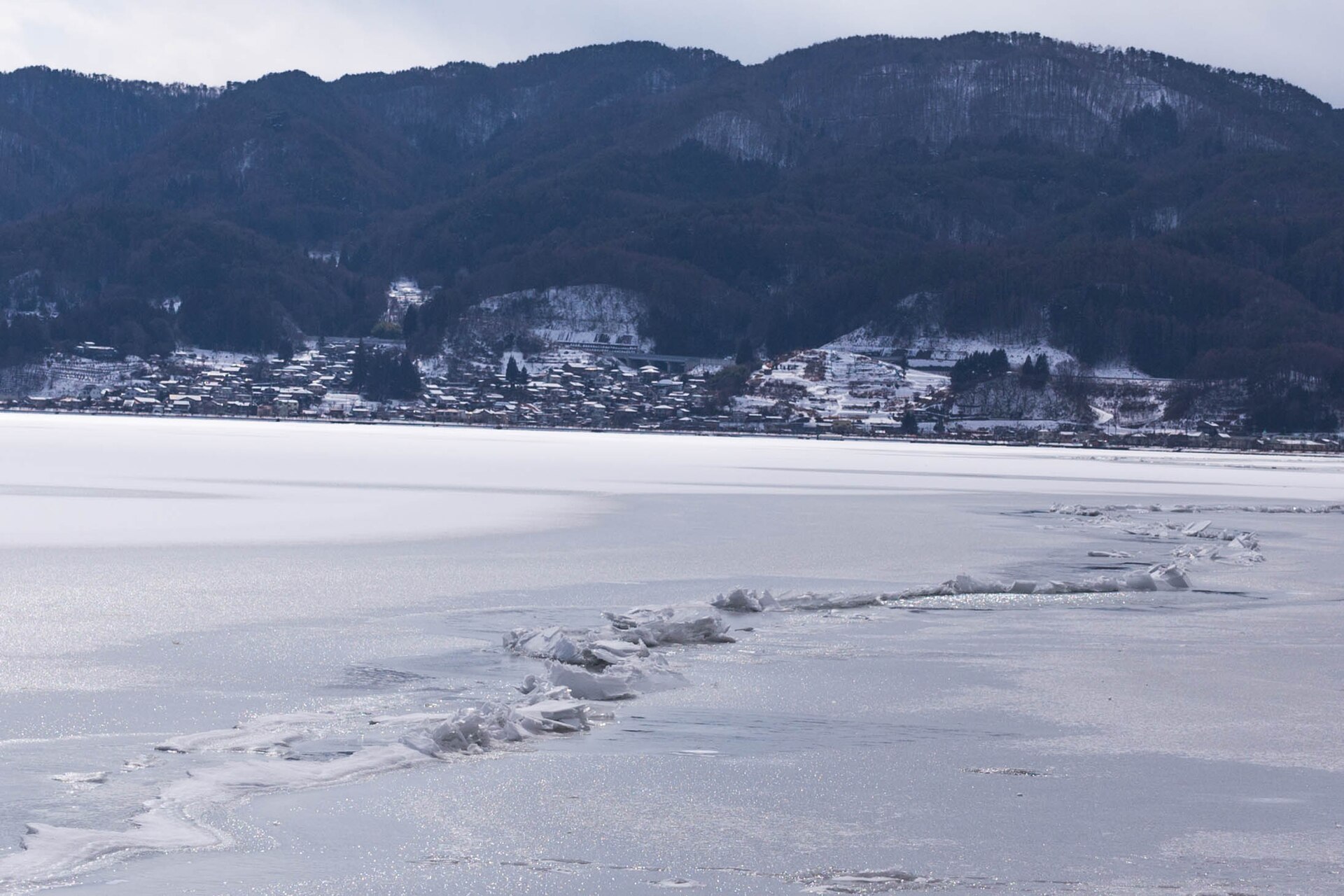
- Kamisuwa Onsen — Kamisuwa, Suwa
Kamisuwa Onsen is the hot-spring district on the lake's eastern shore, with bathhouses and inns within sight of the water. A soak after a cold walk is the natural way to end a day here. Some baths are open to day visitors, so check each one before going.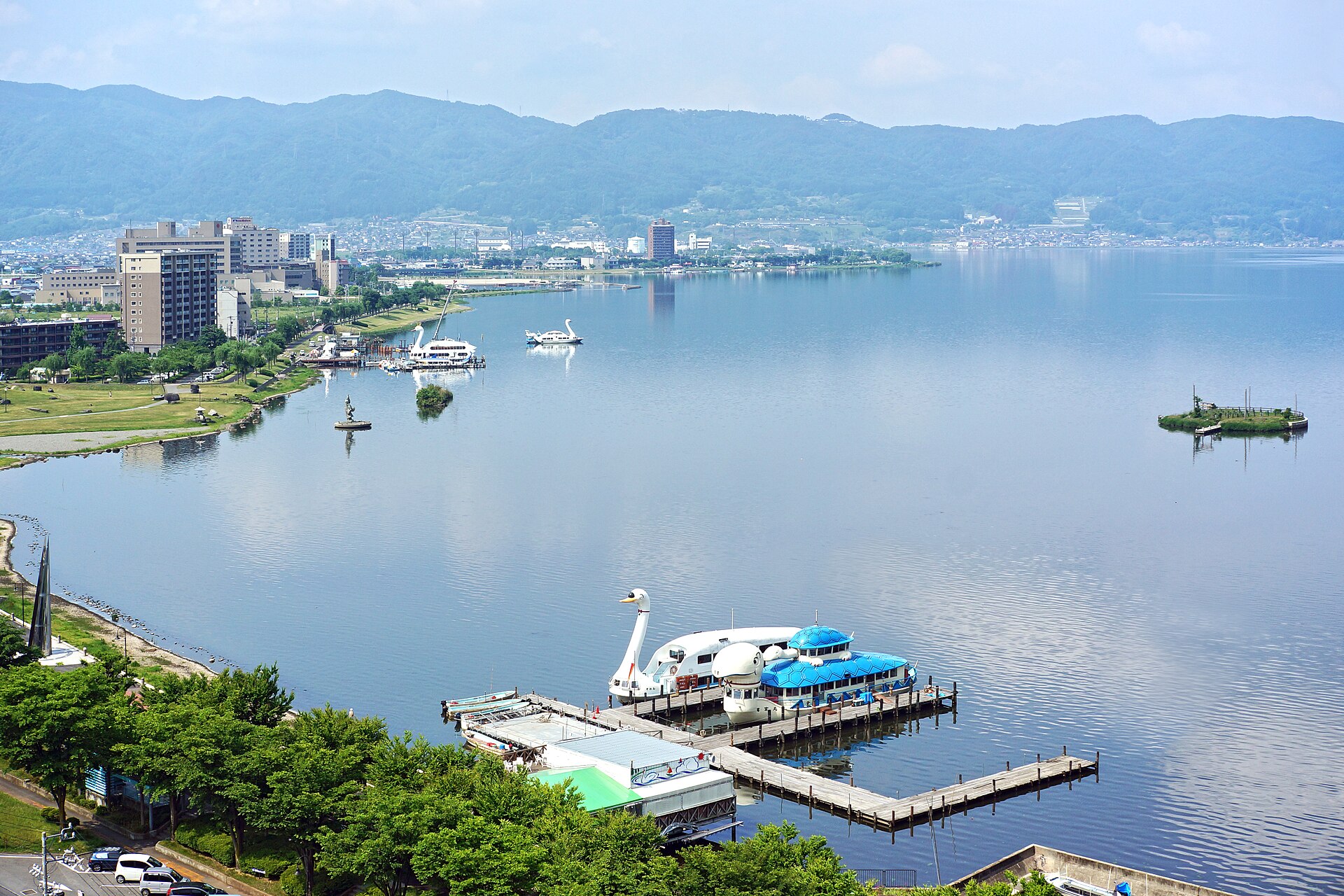
- Suwa Grand Shrine — Around the lake, Suwa and Shimosuwa
The Suwa Grand Shrine is a group of shrines around the lake, tied to the legend of the god who crosses the ice. Visiting more than one gives a feel for the faith that shaped the area. Check the shrine's official site for ceremonies and opening arrangements.
Culture
Lake Suwa is a place where Shinto, the native faith of Japan, is part of everyday geography. The shrines around the water belong to the Suwa Grand Shrine, and the story of the god who walks across the winter ice is still told as local tradition and not only as a curiosity. Many residents will have grown up with the idea that the cracking of the ice carries meaning. Shinto practice is simple for a visitor to follow. At a shrine gate people bow lightly, rinse their hands at the water basin, approach the main hall, bow, clap and pray quietly, then bow once more. Nobody expects visitors to take part in full, but a respectful pause at the gate goes a long way. Onsen culture is the other strong thread. Hot-spring bathing here is communal and strictly ordered: you wash thoroughly at the seated shower stations first, then enter the shared bath without clothes or a swimming costume. Small towels stay out of the water. Some baths turn away people with tattoos, so ask before you go in. Nagano is also a highland region where people have long lived with cold winters, and there is a quiet, practical, undemonstrative feel to the lakeside towns. At a shrine or onsen, keep your voice low, and leave your phone camera off the ceremonies and out of the bathing areas unless someone has clearly said photographs are welcome.
What to wear
Around Lake Suwa, as in the rest of Japan, traditional dress means the kimono, a wrapped robe usually made of silk, and the lighter cotton yukata worn in summer and at onsen inns. Kimono appear at weddings, coming-of-age ceremonies and formal festivals, while happi, short cotton festival coats, turn up at local matsuri, the shrine celebrations. Day to day, people on the shore dress for the highland climate: layers, fleece and padded jackets, sturdy shoes and hats in winter, light trousers and shirts in the cool summer. The look is practical and unflashy, closer to a mountain town than a fashion capital. Visitors should plan for the altitude and the wind. In winter bring a warm coat, gloves, a hat and shoes with grip, since paths near the water can be icy. In summer a light jacket is still useful for evenings. Wear clothes that are easy to remove, and socks without holes, because shoes come off at inns, some restaurants and shrine buildings. Shrines have no strict dress code, but covered shoulders and knees are the polite choice. For the onsen no swimwear is needed, only a small towel. Good walking shoes make the shore path far more pleasant, and a compact umbrella helps in showers.
What to eat
- Shinshū soba — Soba shops in Suwa, Okaya and nearby towns
Soba, buckwheat noodles, is the signature food of Nagano, where it is called Shinshū soba. It is served cold on a bamboo tray with dipping sauce or hot in broth. Look for specialist noodle shops in the towns around the lake. - Oyaki — Roadside snack stalls and local bakeries
Oyaki are small grilled dough parcels filled with vegetables or meat, a regional snack and easy to eat on the move. The dough is soft and slightly charred. They suit a cold lakeside walk. - Miso dishes — Everyday eateries and local miso shops
Miso, the fermented bean paste, is a famous Nagano product. It turns up in soups, pickles and simple home-style meals around the lake. Try a set meal at a family-run eatery to taste the local style. - Nagano apples — Fruit stalls and farm shops, autumn especially
Apples are one of Nagano's special products, with a sweet, juicy taste. Buy them fresh in season, or look for apple sweets and juice. Shops often sell local fruit near stations and on the roads between towns. - Basashi and inago — Traditional izakaya (Japanese pubs) and regional restaurants
For the adventurous, Nagano has unusual local foods: basashi, raw horse meat, and inago, locusts cooked in sweet soy. They are acquired tastes and not for everyone. Try them as small side dishes before committing to a full plate.
Plan it
Best time. February for a chance of winter ice and clear cold air, though the freeze is not guaranteed; May and October–November for mild walking weather. Summer is cooler than in Japan's big cities, which makes it a popular escape from the heat.
How long. 1–2
Getting there. Fly into a Tokyo airport, then take a train towards Nagano Prefecture and on to the Suwa area; a limited express service on the Chūō Line runs from Shinjuku, so check the operator's timetable. Highway buses from Tokyo also serve the region. Once at the lake, local trains, taxis and walking cover the shore.
Budget. mid
Tips
- Check local reports on ice conditions before travelling in winter, as full freezes are not every year
- Carry cash for small eateries, shrine stalls and some onsen
- Dress in layers, as wind off the water makes it feel colder than the air temperature
- Aim for early mornings on the shore path, when the lake is calm and quiet
- Confirm onsen opening arrangements for day visitors before you set out
Etiquette
- Wash thoroughly before entering a shared onsen bath, and keep towels out of the water
- Bow lightly at shrine gates and keep voices low near the main hall
- Ask before photographing people or ceremonies
Nearby
Sources
- Wikidata Q1206692 (CC0)
- Wikipedia: Lake Suwa (rev 1380051616) (CC BY-SA 4.0)
- Wikivoyage: Nagano (prefecture) (rev 5333508) (CC BY-SA 4.0)
- Suwako.jpg, Wikimedia Commons (Public domain)
- Lake Suwa as seen from Tateishi Park (east), Irvin, Wikimedia Commons (CC BY 4.0)
- Japan natural location map, Alexrk2, Wikimedia Commons (CC BY 3.0)
- 180205 Lake Suwa omiwatari 01, Kzu06, Wikimedia Commons (CC BY-SA 4.0)
- Lake Suwa in the Shinano province, Katsushika Hokusai, Wikimedia Commons (Public domain)
- Kamisuwa Onsen, 663highland, Wikimedia Commons (01n) (CC BY 3.0)
- Kamisuwa Onsen, 663highland, Wikimedia Commons (02n, cropped) (CC BY 3.0)
- Kamisuwa Onsen, 663highland, Wikimedia Commons (02n) (CC BY 3.0)


