Lake Salda
Lake Salda, Turkey
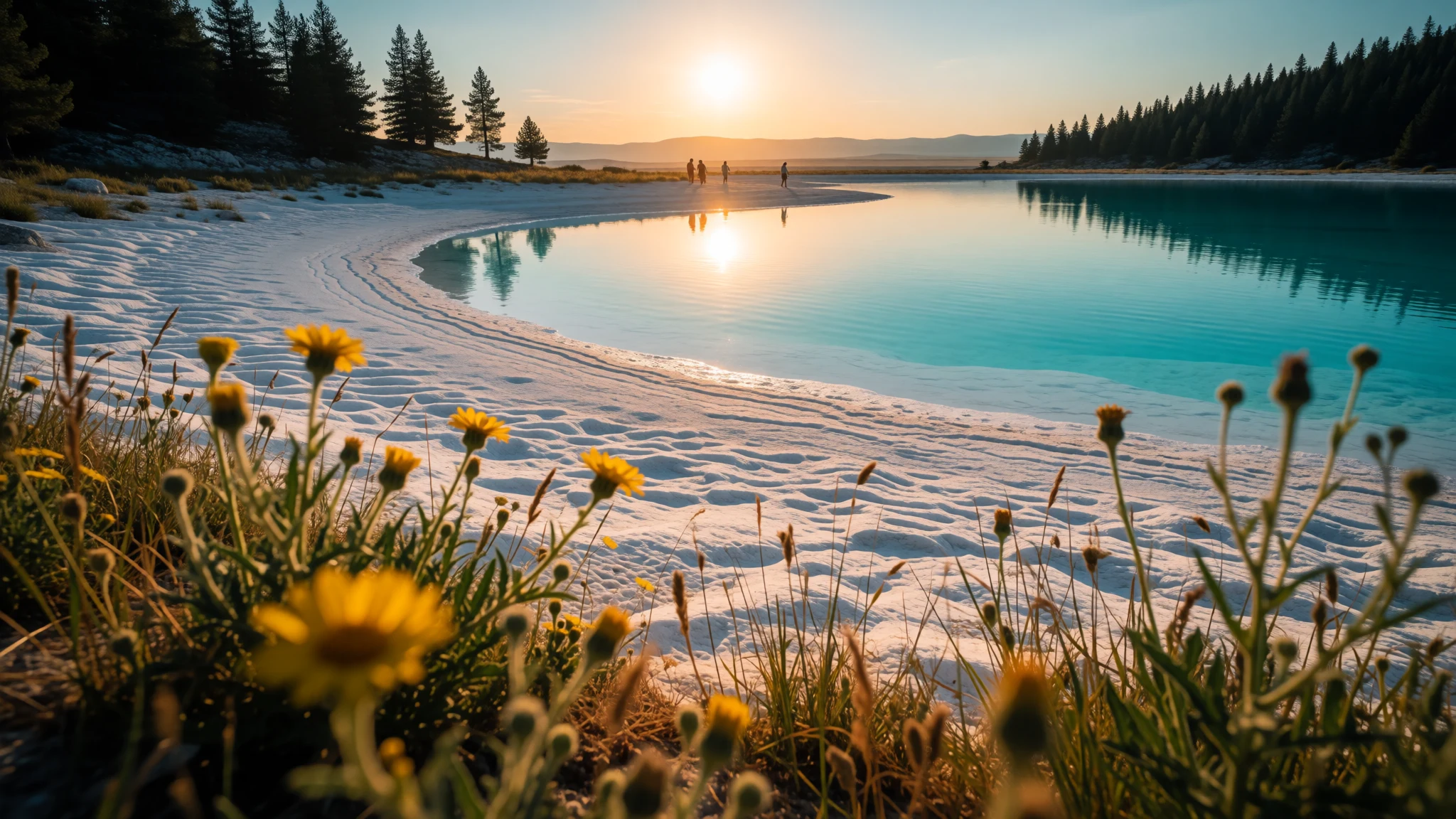
Lake Salda is a pale turquoise crater lake in the Turkish uplands, ringed by white shores and black pine, and calm outside summer weekends.
The place
Lake Salda sits in the uplands of south-western Turkey, in Burdur Province, at about 1640 m above sea level. It fills an old volcanic crater roughly 50 km west of Burdur town and belongs to the district of Yeşilova. The surface covers 4,370 ha and the water drops to 196 m, deep enough that the colour shifts from milky green near the edge to a darker blue further out. The shoreline is the draw: pale sand and chalky mineral crust, backed by black pine forest, with seven small white islets offshore. Two settlements frame the lake. A small township also called Salda begins almost at the water on the south-western side, and Yeşilova, the district seat, lies about four kilometres to the east; its municipality runs the camping areas. Geographically the lake stands apart from the string of lakes usually grouped as the Turkish Lakes Region, and its carbonate-rich sediments make it unlike them. The white colour comes from hydromagnesite, a magnesium mineral that local belief links with skin remedies, a claim best treated as folklore rather than medicine. Researchers read the lake bed for past climate, and NASA has studied its shoreline rocks as an Earth comparison for Mars. As a destination Salda is a day-trip and camping place for people from the surrounding provinces, busiest in summer and quietest in spring and autumn.
Its story
The story of Lake Salda is written mostly in water and rock rather than in monuments. The basin is a volcanic crater, long extinct, that filled up and has been collecting sediment ever since. Because that sediment settles in fine layers, it works like a diary: academic teams have used it to trace climate swings across the last thousand years and to test links with changes in the sun's output. The unusual chemistry is the second chapter. Magnesium-rich water here deposits hydromagnesite, and in the shallows microbes help build pale, lumpy rock structures called microbialites. These drew the attention of NASA, which used the lake as an Earth comparison in its search for signs of past life on Mars, and a photograph of the shoreline rocks now sits in the agency's image library. Ordinary life carried on alongside the science. The pine-covered shores have long been hunting country for quail, hare, fox, boar and wild duck, and the lake has its own fish. More recently the white beaches turned Salda into a regional outing, with families from nearby provinces wading, picnicking and smearing on mineral mud. The present challenge is how to share a delicate shoreline without wearing it down, which is why sticking to marked paths and tracks matters more here than at most lakes.
What to see
- The white western shore — Salda township, south-western shore
The south-western side near Salda township has the whitest sand and the shallow, clear water that photographs make famous. Wading is easy, the colour changes with the light, and the surface underfoot is soft and chalky. Come early or late in the day to avoid the crowds and the strongest glare.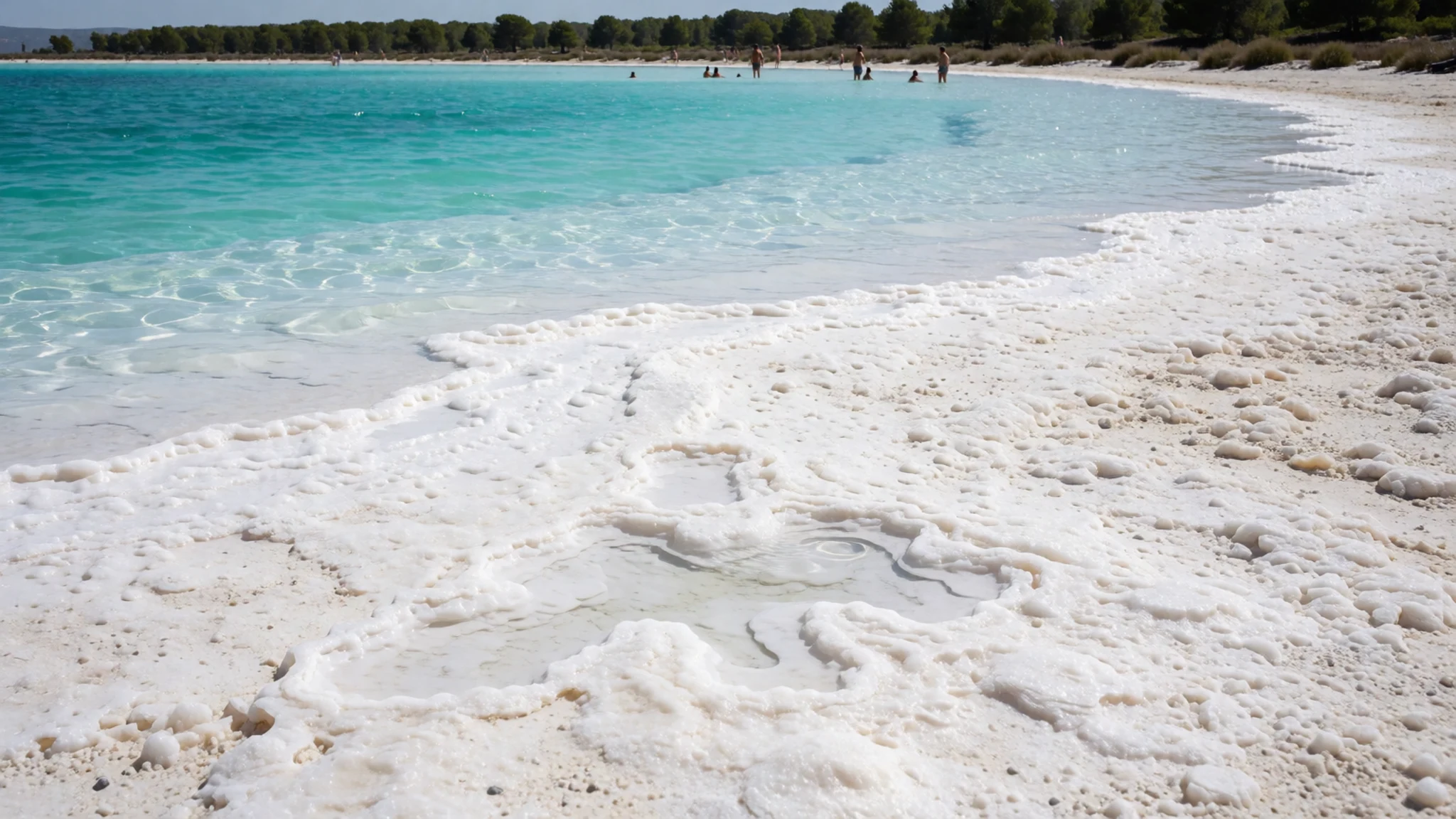
- The seven islets — Open water, central lake
Seven small white islets rise from the water, and the best way to take them in is from a high point on the shore or in aerial images. Their pale rock and the deepening blue around them show the lake's layered colours. Treat them as scenery and do not try to reach them.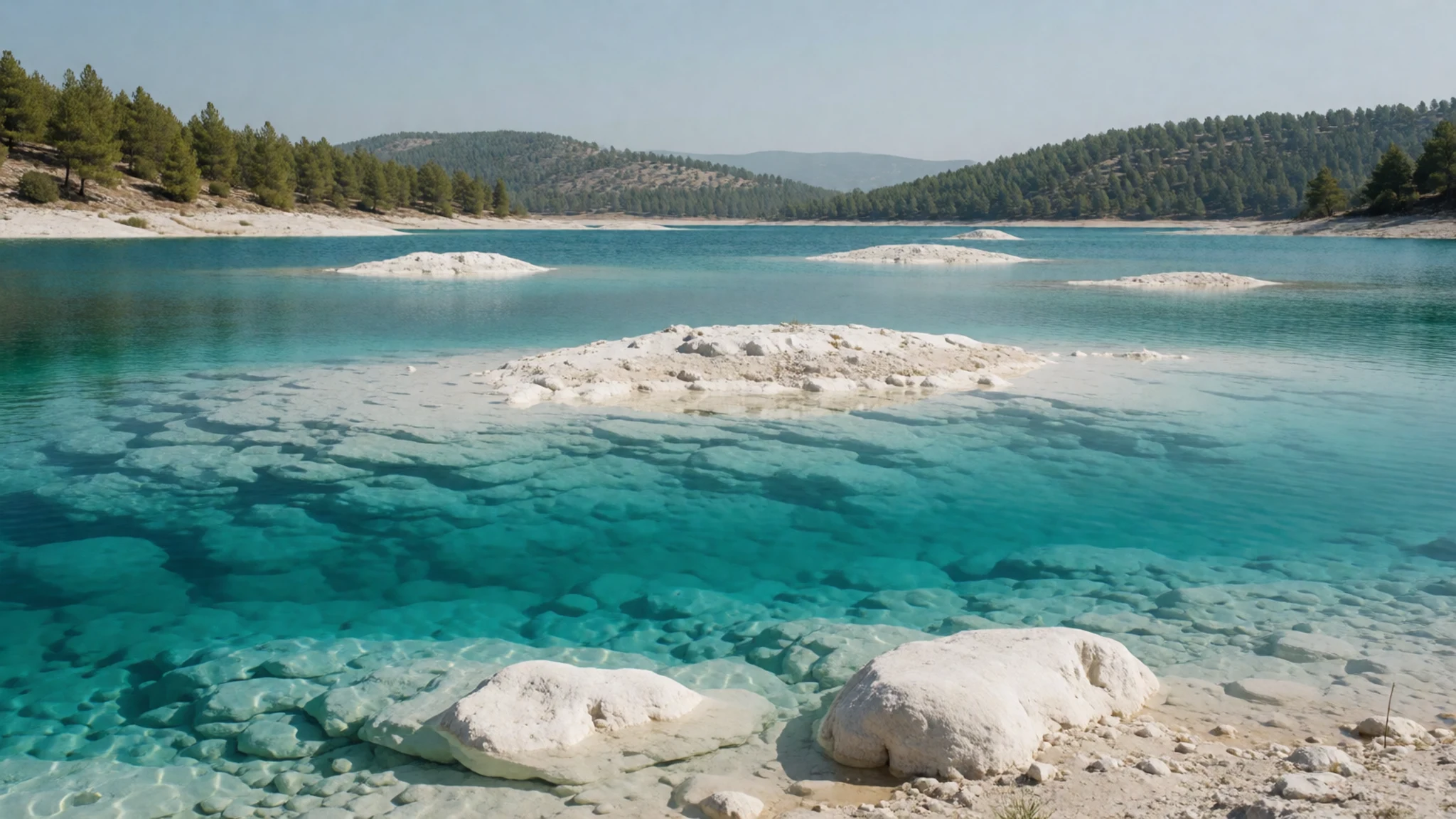
- Microbialite shallows — Shallow shoreline margins
In places along the shoreline, lumpy pale rock forms in the shallows where microbes and magnesium-rich water work together. These are the structures that interested NASA as a Mars comparison. Look but do not break pieces off or stand on them; they grow slowly and are easily damaged.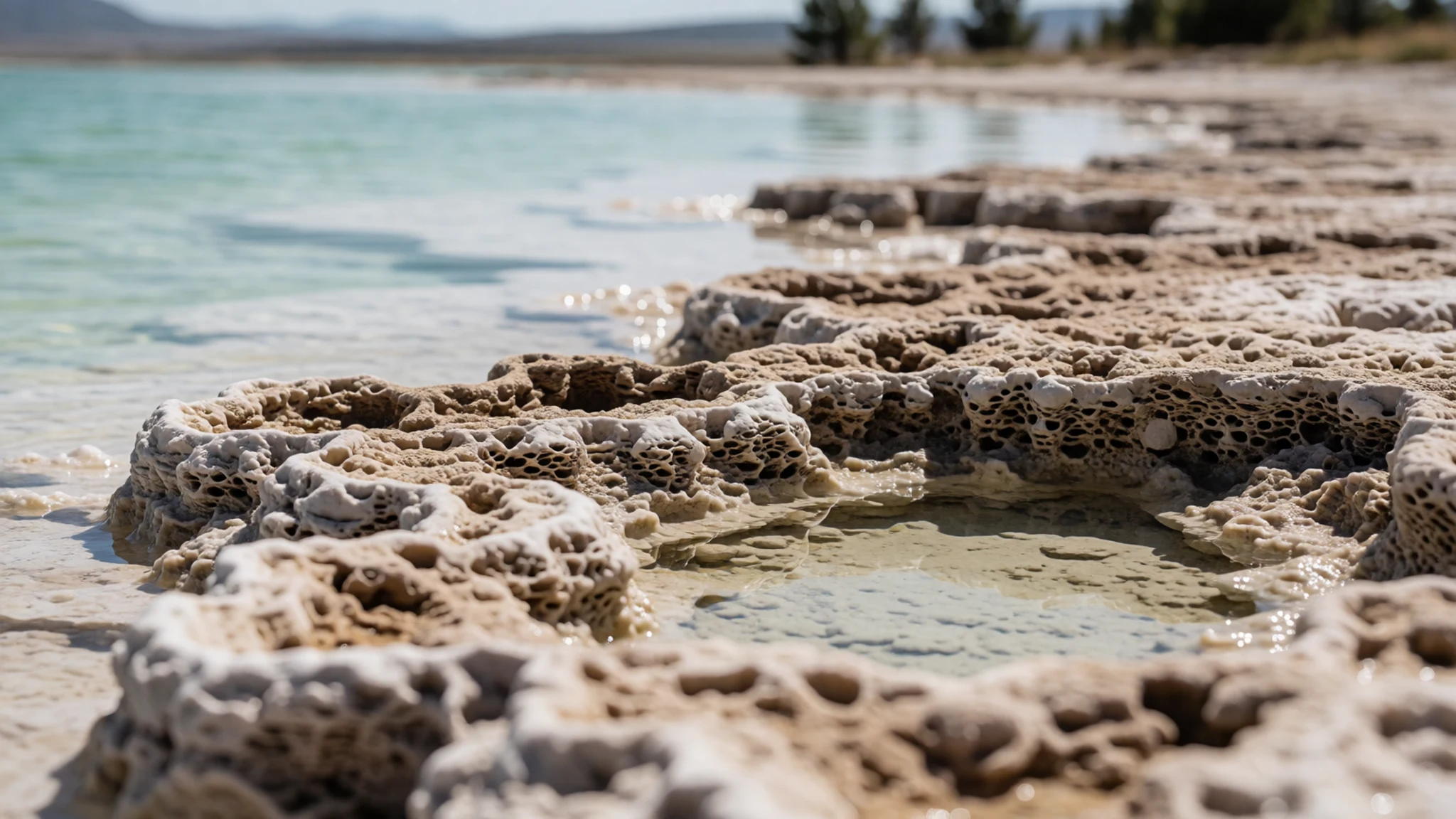
- Black pine shoreline walks — Forested shore around the lake
Black pine forest backs much of the lake, and the edge between trees and white sand is good for slow walks, picnics and birdwatching. Shade is welcome in summer. Hunting is part of local life in the forest, so stay on obvious tracks in the hunting season and ask locally if unsure.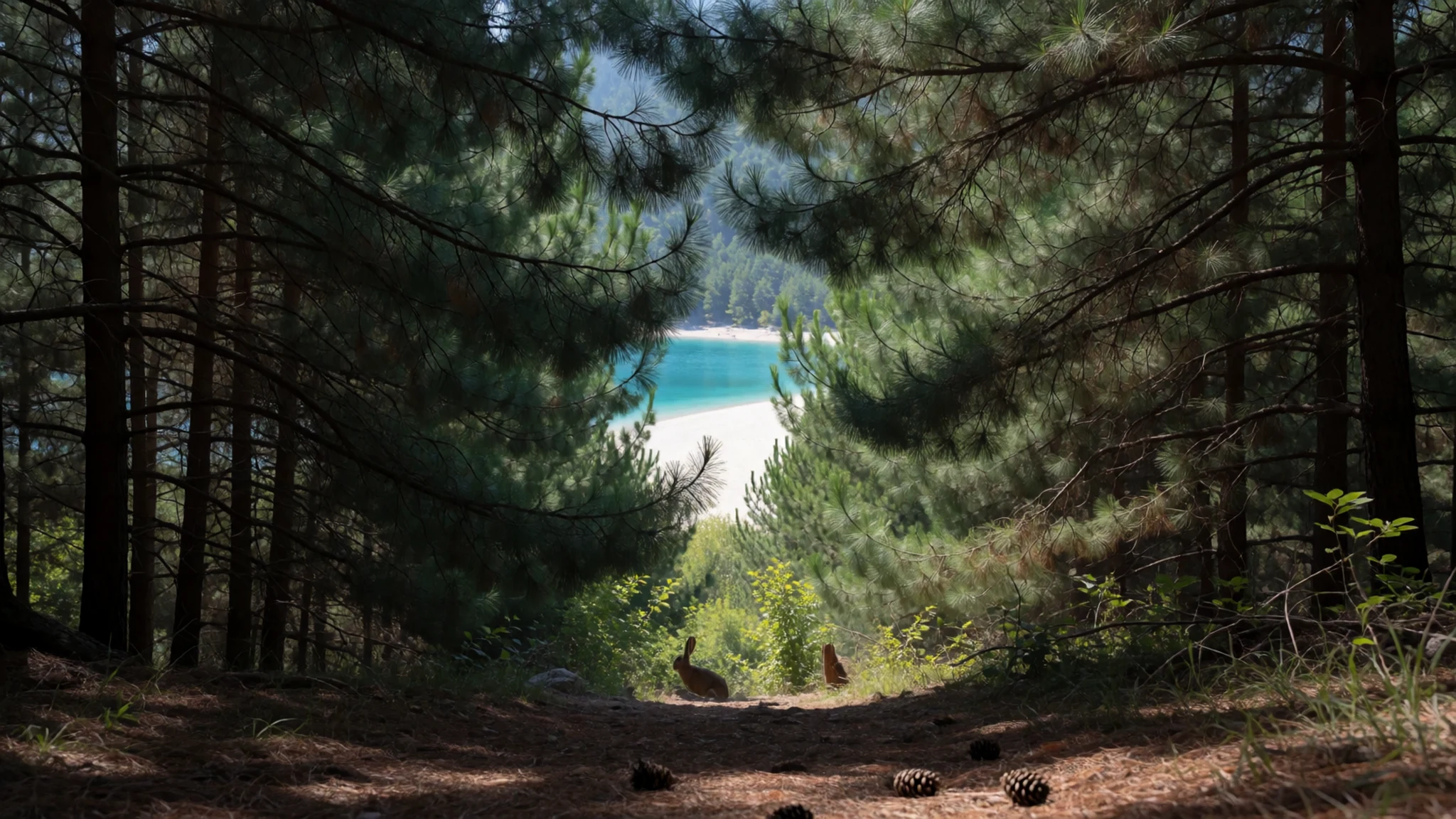
- Yeşilova side and camping areas — Eastern shore, near Yeşilova
The eastern shore, close to the district seat of Yeşilova, is where the municipality manages camping. It is a practical base for a night by the water, with the town close by for supplies. Facilities and rules change, so check with the local authority before travelling.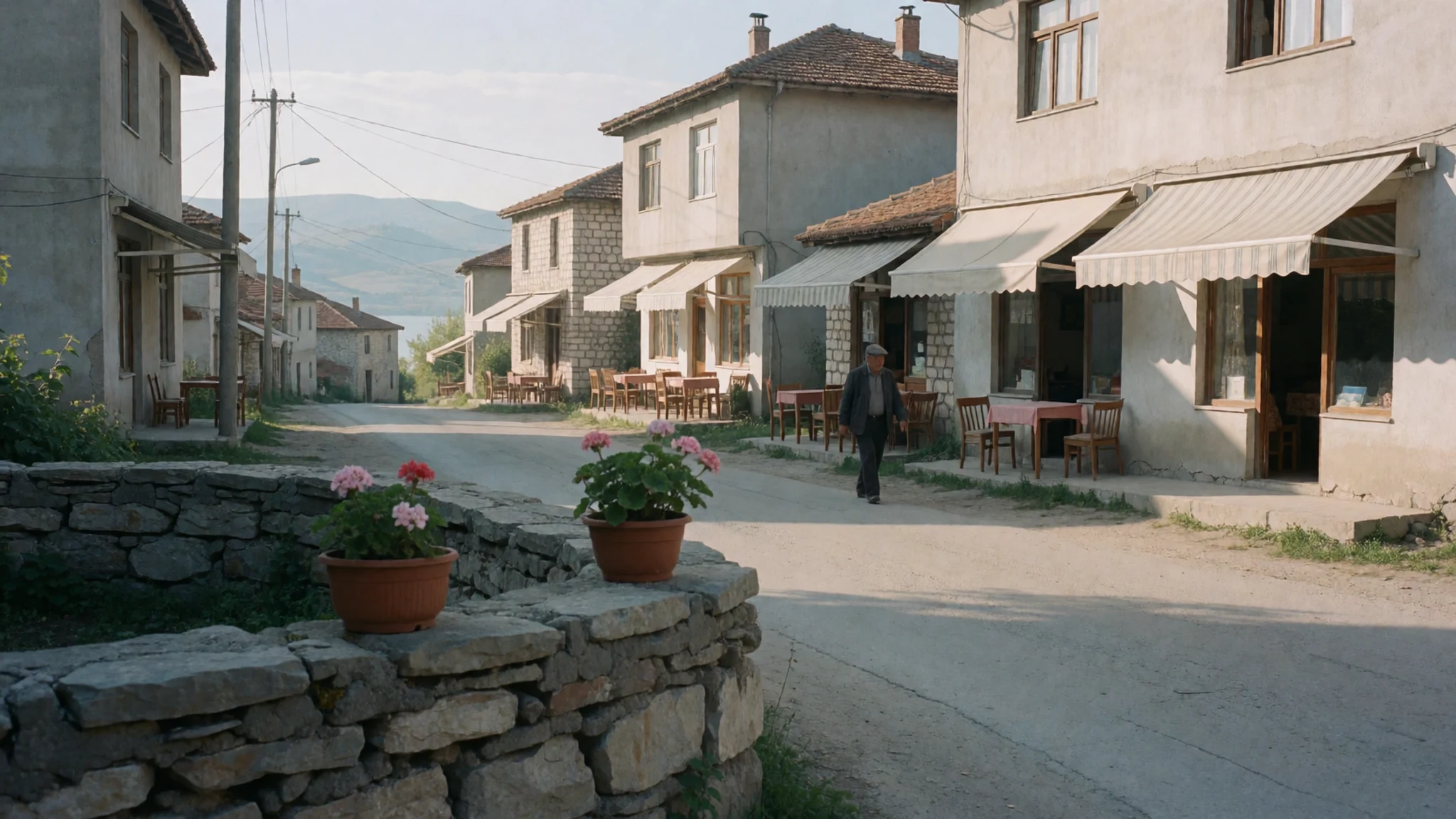
Culture
Around Lake Salda, as across Turkey, hospitality is the first custom a visitor meets. People are friendly and polite, often to a degree that surprises newcomers, and an invitation to tea or a meal is usually sincere. Anyone invited into a home is expected to bring a small gift: flowers, chocolates or something typical of their own country all work. Alcohol is best avoided as a gift unless the host is well known to you, because many Turks do not drink, for religious or personal reasons. Shoes come off just outside or just inside the door, unless the host clearly says to keep them on, and even then removing them is the more polite choice. Thank the host for the invitation and compliment the food; asking for things is unnecessary, since they will be offered. Turkish coffee, served in tiny cups, is a regular part of such visits; the thick grounds stay in the bottom of the cup and are not drunk. The lake itself is a shared weekend spot for local families, so the mood is relaxed but modest, with picnics, music kept low and plenty of children. In small towns like Salda and Yeşilova, daily life revolves around shops, tea houses and the mosque, and visitors are treated as guests. At Lake Salda, keep to the marked paths, carry all rubbish out with you, and ask before photographing local families.
What to wear
In Lake Salda's part of Burdur Province, traditional dress belongs mainly to rural Anatolia and to festivals and weddings. Women's older costume includes şalvar, the loose gathered trousers, worn with a long entari or tunic in cotton or silk blends, and a printed cotton headscarf, often edged with needle lace (oya). Men's older dress used a short jacket and wide trousers tied at the waist. Cotton and wool are the everyday traditional textiles, woven at home or locally. Today most people wear what is common across Turkey: jeans, shirts, trainers and light jackets, with plenty of long sleeves and headscarves among older and more observant women. At the lake in summer, families wear swimwear or modest shorts and T-shirts, and some women swim in full-coverage clothing. A visitor should dress for sun, wind and elevation: the crater sits high, so mornings and evenings can be cool even when afternoons are hot. Bring a hat, sunglasses and a light layer. The shoreline is chalky and can be sharp or slippery underfoot, so sandals or water shoes with a firm sole are sensible. In Salda township and Yeşilova, cover shoulders and knees, especially when entering a mosque, where women also carry a scarf for the head.
What to eat
- Burdur şiş kebap — Grill eateries in Burdur town and Yeşilova
Skewered, grilled meat is the local dish people mention first, usually served with bread and a simple salad. It suits a meal after a day by the lake. Look for it at eateries in Burdur town and in Yeşilova rather than at the shore.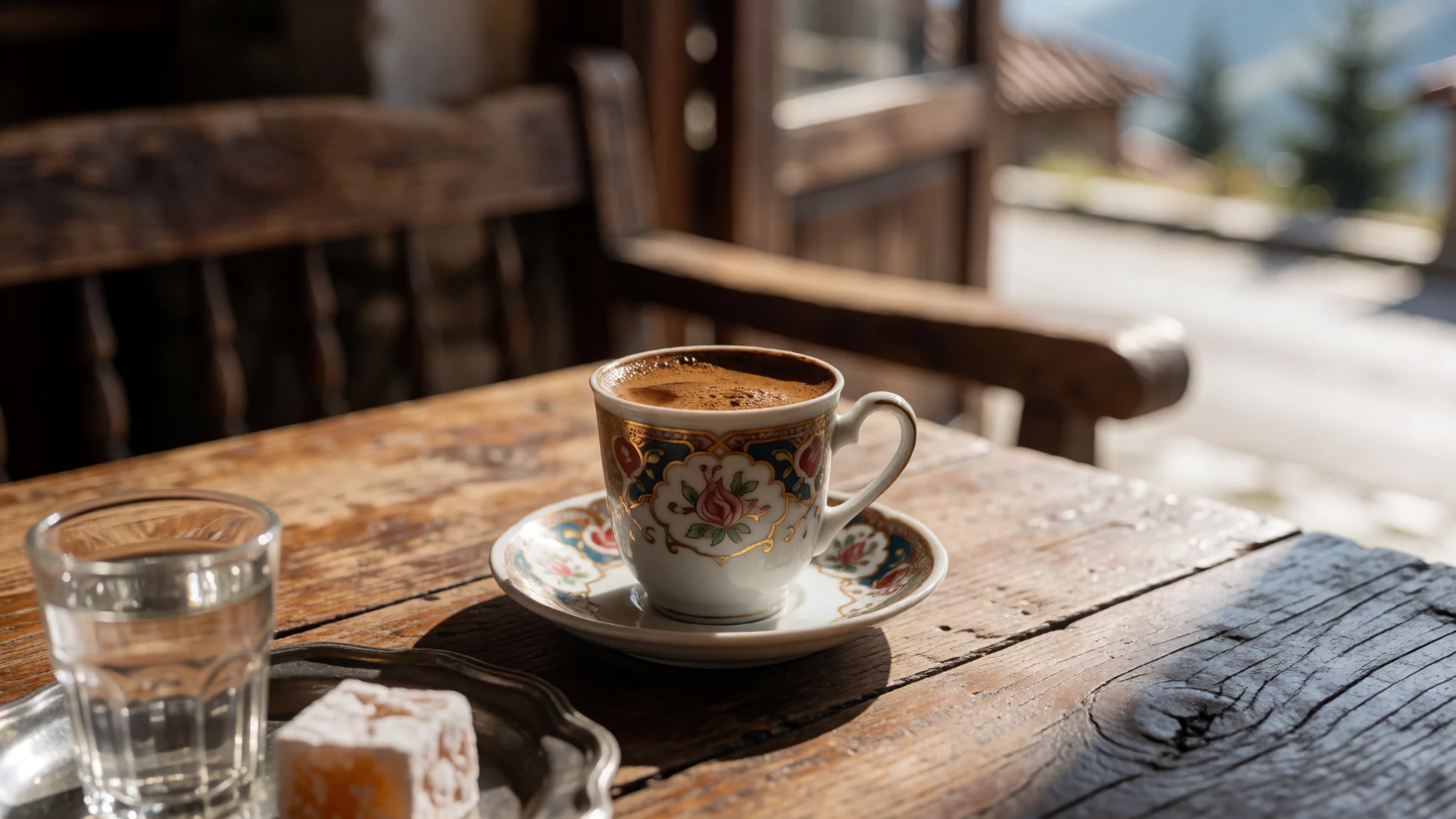
- Gözleme — Roadside stalls and village tents near the lake
Thin dough is rolled out, filled with cheese, spinach or potato, and cooked on a hot griddle, often by women working in view of the customers. It is cheap, filling and easy to eat on a picnic blanket. Roadside stalls and village tents near the lake often sell it.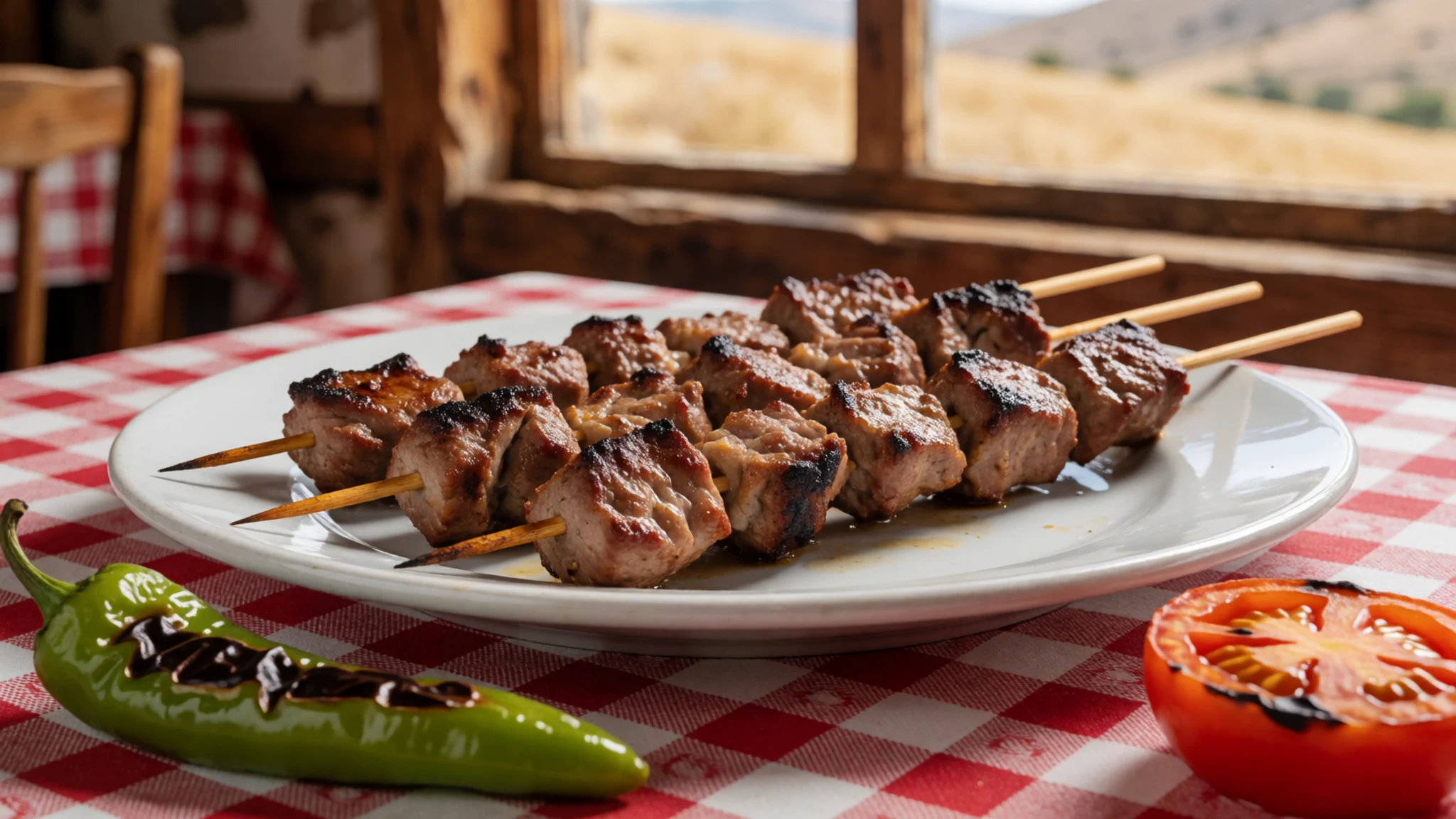
- Mercimek çorbası — Everyday lunch eateries in Yeşilova
Red lentil soup, smooth and lightly spiced with lemon on the side, is a staple of lunch counters across Turkey. It makes a gentle start when evenings are cool at this elevation. Eateries in Yeşilova usually keep it on the daily menu. - Grilled lake fish — Simple lakeside eateries, when available
The lake supports its own fish, and where it is offered it is typically grilled simply with salt and lemon. Availability varies and local rules apply to fishing, so ask at the eatery rather than expecting it everywhere. - Turkish coffee and çay — Tea houses in Salda township and Yeşilova
Strong coffee in tiny cups, with the grounds left undrunk, and tulip-glass black tea are the standard way to end a meal or fill a pause. Tea houses in Salda township and Yeşilova are good places to sit and watch local life.
Plan it
Best time. May–June and September–October. The lake sits high up in the interior, so spring and early autumn bring warm days and cooler nights, while July and August are the busiest and hottest months, and winter can be cold.
How long. 1–2
Getting there. Fly to a regional airport such as Antalya or Denizli, then continue by road via Burdur to Yeşilova, which is the closest town to the lake. A hired car is the easiest option; check local bus routes and timetables ahead of travel.
Budget. low
Tips
- Go on a weekday or early morning in summer, when the beaches are busiest with day-trippers
- Bring a hat, sun cream and water, as shade is limited on the white shore and the sun at this elevation is strong
- Carry some cash for stalls and small eateries, and keep your passport or ID with you
- Pack water shoes for the chalky, sometimes sharp shoreline and a warm layer for evenings
- Dial 112 for any emergency service from any phone
Etiquette
- Stay on marked paths and take all rubbish away
- Do not break or stand on the rock formations in the shallows
- Ask before photographing local people or families
Nearby
Sources
- Wikidata Q3234128 (CC0)
- Wikipedia: Lake Salda (rev 1384116625) (CC BY-SA 4.0)
- Wikivoyage: Turkey (rev 5393139) (CC BY-SA 4.0)
- Photo: Lake Salda in June 2020, NASA Earth Observatory (Public domain)
- Photo: Turkey relief location map, NordNordWest / Uwe Dedering (CC BY 3.0)
- Photo: Lake Salda rocks (microbialites), NASA/JPL-Caltech (Public domain)
- Photo: Lake Salda Nature Park, Shanti Alex (CC BY-SA 4.0)
- Photo: Lake Salda Nature Park, Iamozlem (CC BY-SA 4.0)
- Photo: Panoramic Salda Lake, Needemm (CC BY-SA 4.0)
- Photo: Saldives Reflection, Glocal Citizen (CC BY-SA 4.0)
- Photo: Aerial photo of Lake Salda, Yair-haklai (CC BY-SA 4.0)


Wildlife
- Fox (animal)
The red fox is the biggest of the true foxes, a wild meat-eater that lives across much of the northern world. Around Lake Salda it makes its home in the forests that surround the water, sharing them with boars and wild ducks. Nothing is said here about the best season or hour, so ask your guide where to look. Keep well back, stay quiet, let the fox go about its day, and never offer it food.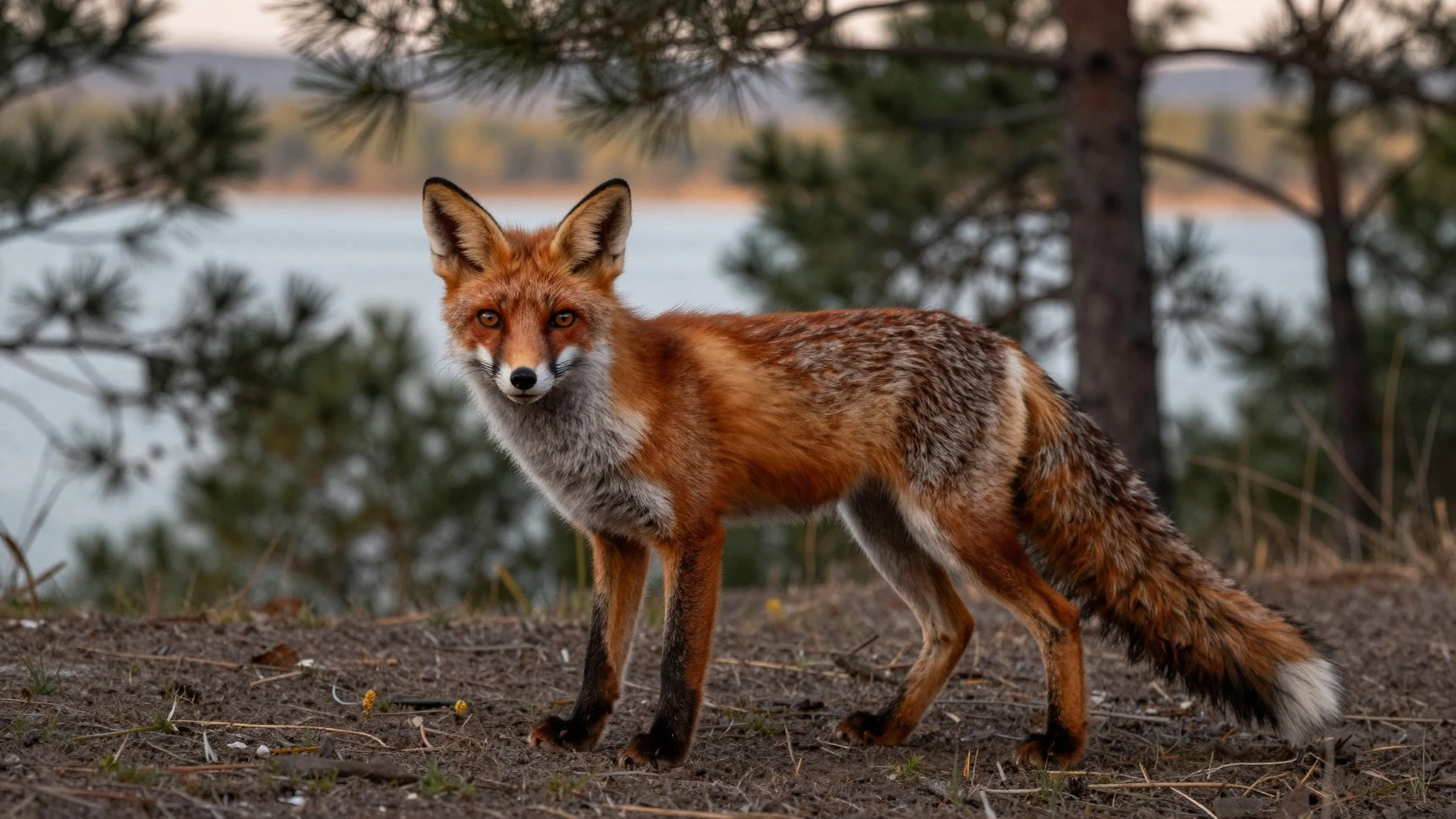
- Hare (animal)
The European hare, also called the brown hare, is a long-legged grass-nibbler that escapes danger by running fast and far. It favours open country, and in the autumn months it is a pleasure to spot on gentle walks in the Salda area. Move slowly, keep a good distance and speak softly, ideally with a local guide who knows the paths. Never feed it; hares find their own grasses, herbs and buds.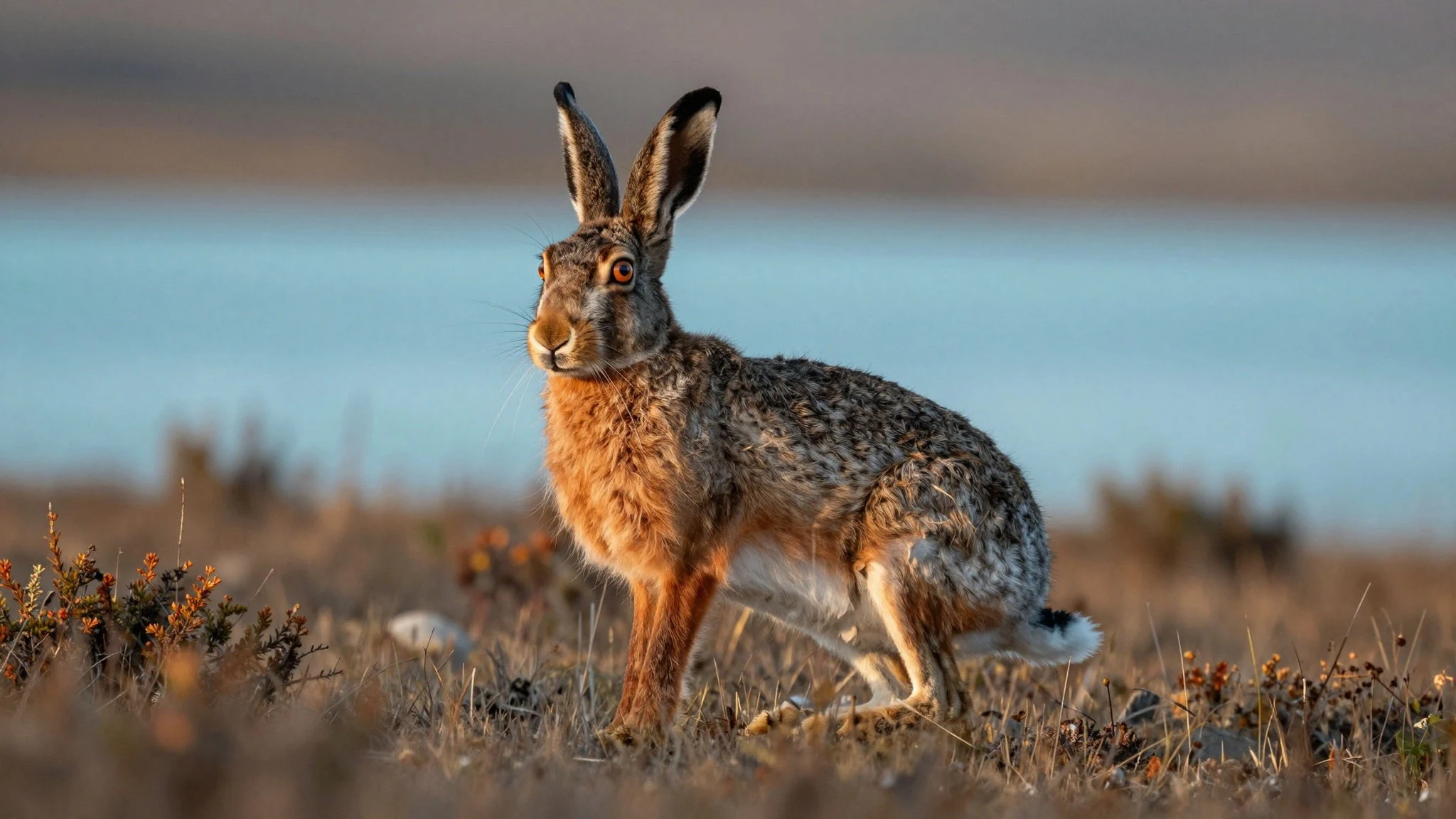
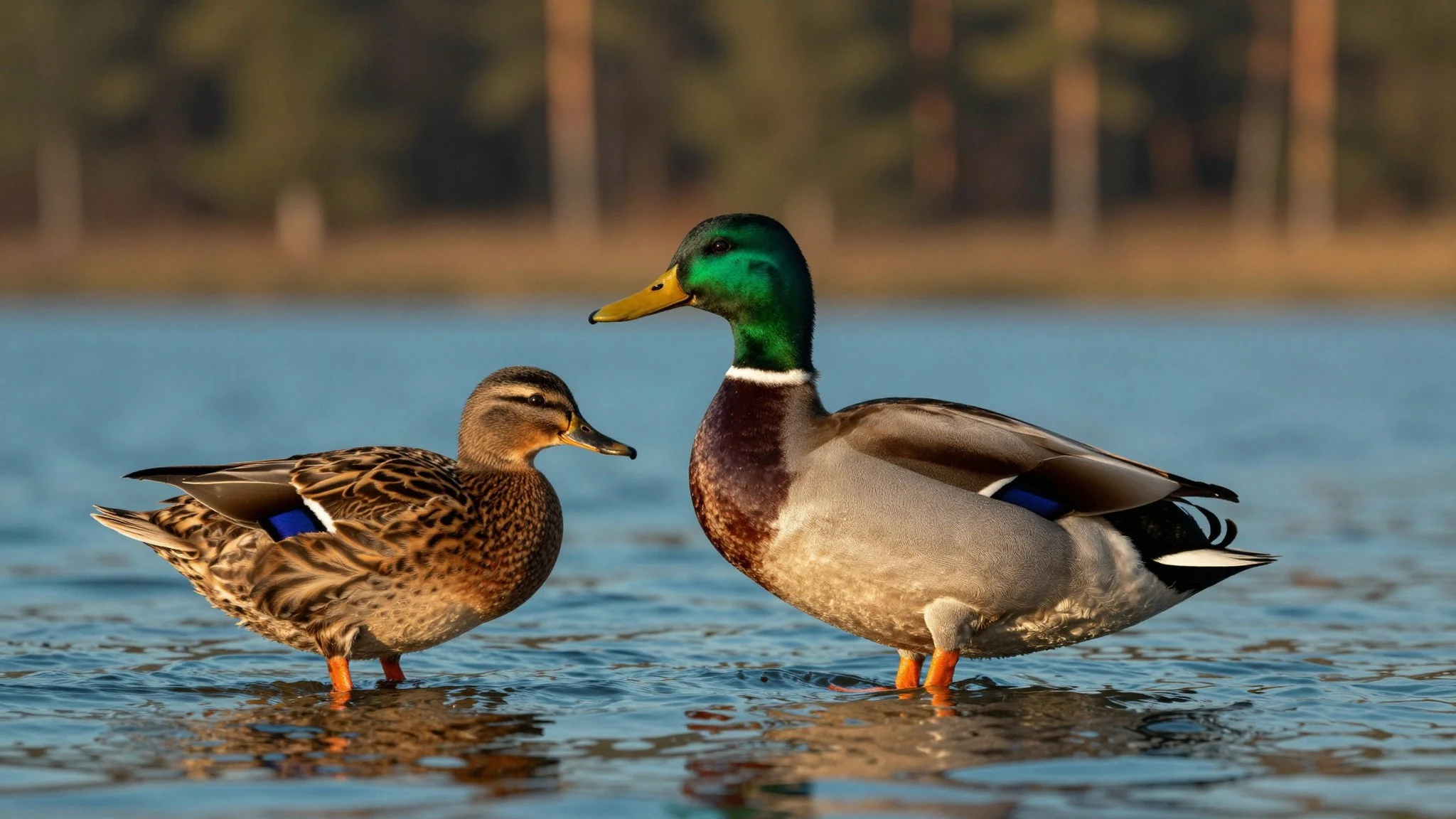
- Wild duck (bird)
The mallard is the wild duck, a sociable water bird that likes to paddle about in groups and dabble for plants and small creatures. Wild ducks are counted among the wildlife of the forests around Lake Salda, and autumn is a lovely season to watch them. Stay at a respectful distance, keep your voice low, and let a guide show you where they gather. Never feed them, however tame they seem.