Lake Poso
Lake Poso, Indonesia
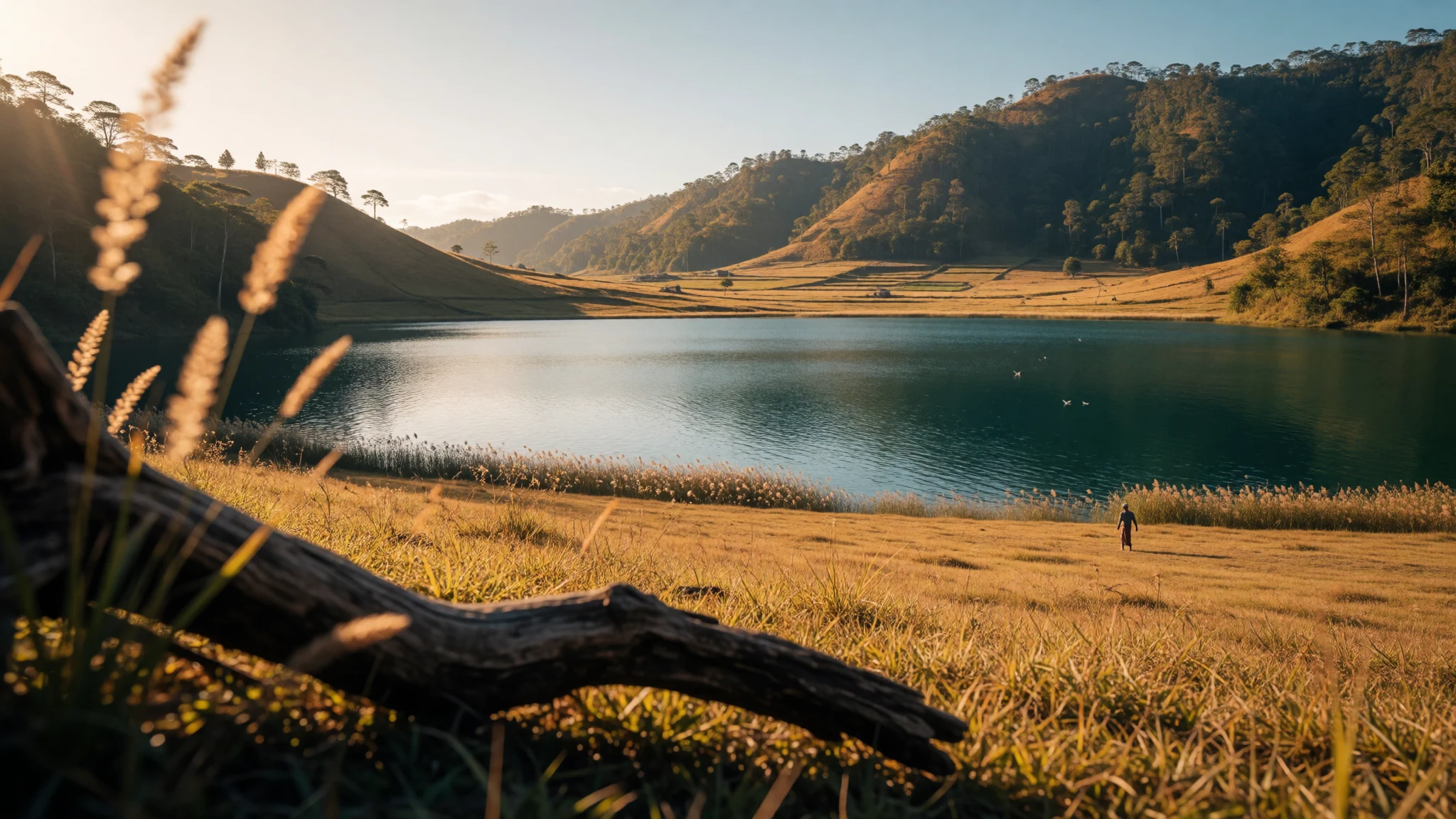
Lake Poso is a deep, quiet highland lake in Central Sulawesi, with lakeside warungs, eel and hornbills, far from the usual Indonesian circuit.
The place
Lake Poso sits in the highlands of Central Sulawesi, at an elevation of 485 metres, which keeps the air a little softer than on the coast. By depth it ranks third among Indonesian lakes, though most visitors simply meet it as a wide, calm sheet of water ringed by hills, with small boats tied up along the edge. Tentena, the main town, lies at the northern end, and the lake empties there into the Poso River. That river runs on towards the coast and reaches the Molucca Sea at the town of Poso. At the opposite end sits Pendolo, a much smaller settlement, and between the two a scatter of villages follows the shoreline, linked by a road that hugs the water in places and climbs away from it in others. Life here is organised around the lake: fishing, small farms on the flatter ground, and a modest trickle of visitors who come for the water rather than for sights in the usual sense. Meadow-like grass grows on parts of the shore, and patches of forest nearby shelter birds, including hornbills. Facilities are simple. Expect guesthouses, family-run eateries and very few places that call themselves restaurants. Most travellers arrive overland from Palu or from Tana Toraja, so the lake works best as a slow stop on a longer Sulawesi route rather than a destination in itself. Roads can be rough and journeys slow, which is part of why the place stays quiet.
Its story
Lake Poso gives its name to a whole chain of places: the lake itself, the river that drains it, the coastal town where that river meets the sea, and the surrounding district. That shared name is why the lake is often discussed in the same breath as the district's troubled recent past. Communal violence between Christians and Muslims scarred the area for years before it ended in 2007. Later, militant attacks hit the wider region, in 2017 around the town of Poso and again in 2021 in several districts. Tourists were not the target, but visitor numbers fell sharply and a heavy police and military presence became normal. Many foreign governments still advise against travel in parts of the region, so anyone planning a trip should read current official advice first. Tentena, at the lake's northern end, has long been a calmer corner, and the lake's own routines carried on through the bad years: fishermen setting out at first light, eel traps in the shallows, families gathering at the waterfront in the evening. Today the story is mostly about quiet recovery, with a small number of travellers heading for the water, the birdlife and the road between the Toraja highlands and the north coast. Satellite images of the district show how much of the surrounding land is still forest and hill country, which helps explain why the lake feels remote.
What to see
- Tentena waterfront — Tentena, northern end of the lake
Tentena is the natural base for the lake, and its waterfront is where the day finds its rhythm: boats coming and going, children swimming off the shore, and warungs a few steps from the water. The lake leaves through the Poso River here, so a short walk shows both the stillness and the current. Dusk is the pleasant hour, once the heat eases.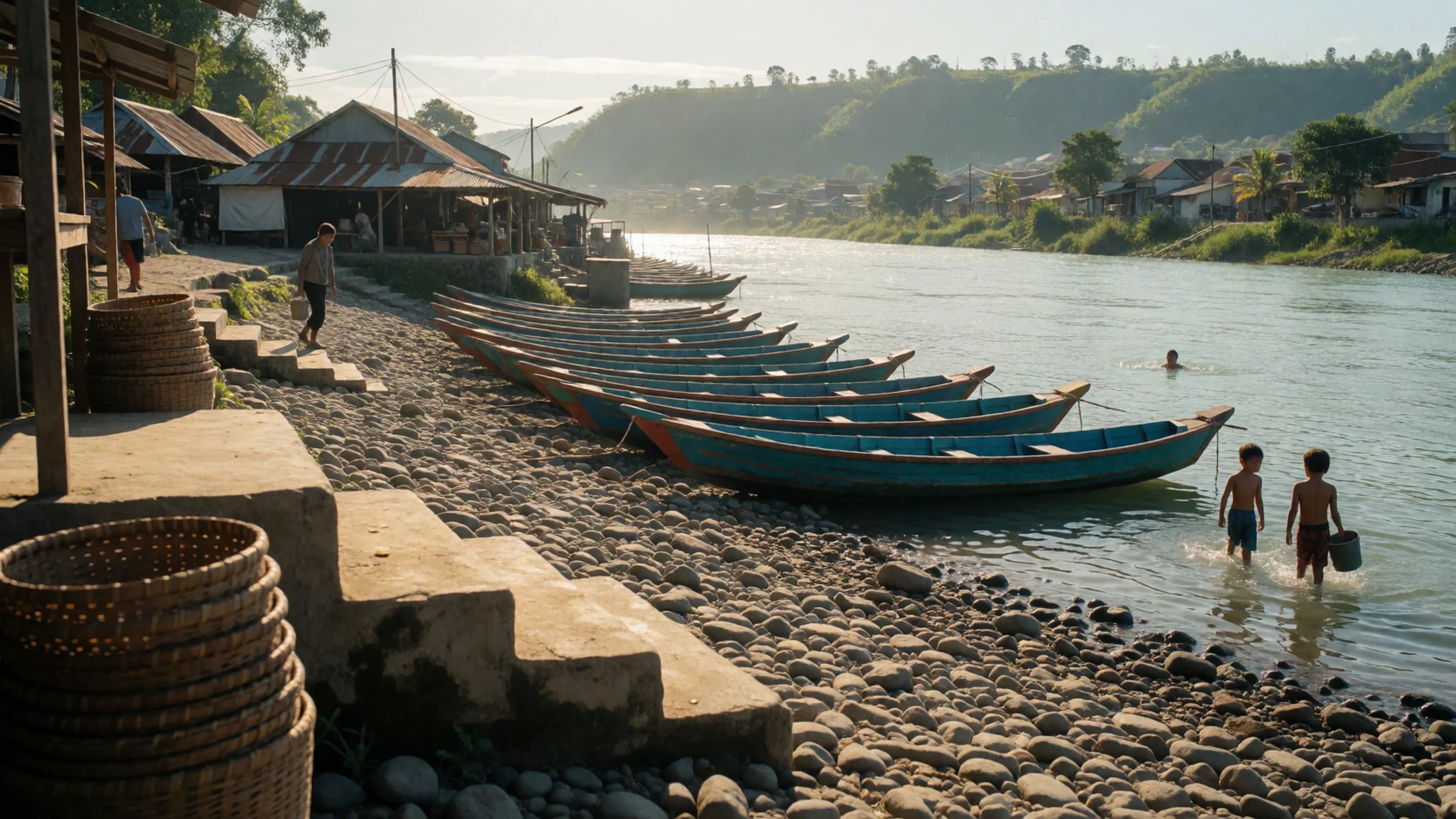
- Bancea Nature Park — Near Tentena
A protected patch of forest near the lake, known for birdlife, including the Sulawesi hornbill, which is found on this island and nowhere else. Early morning gives the best chance of seeing or hearing one. Go with a local guide if possible, as trails are rough and signs are few.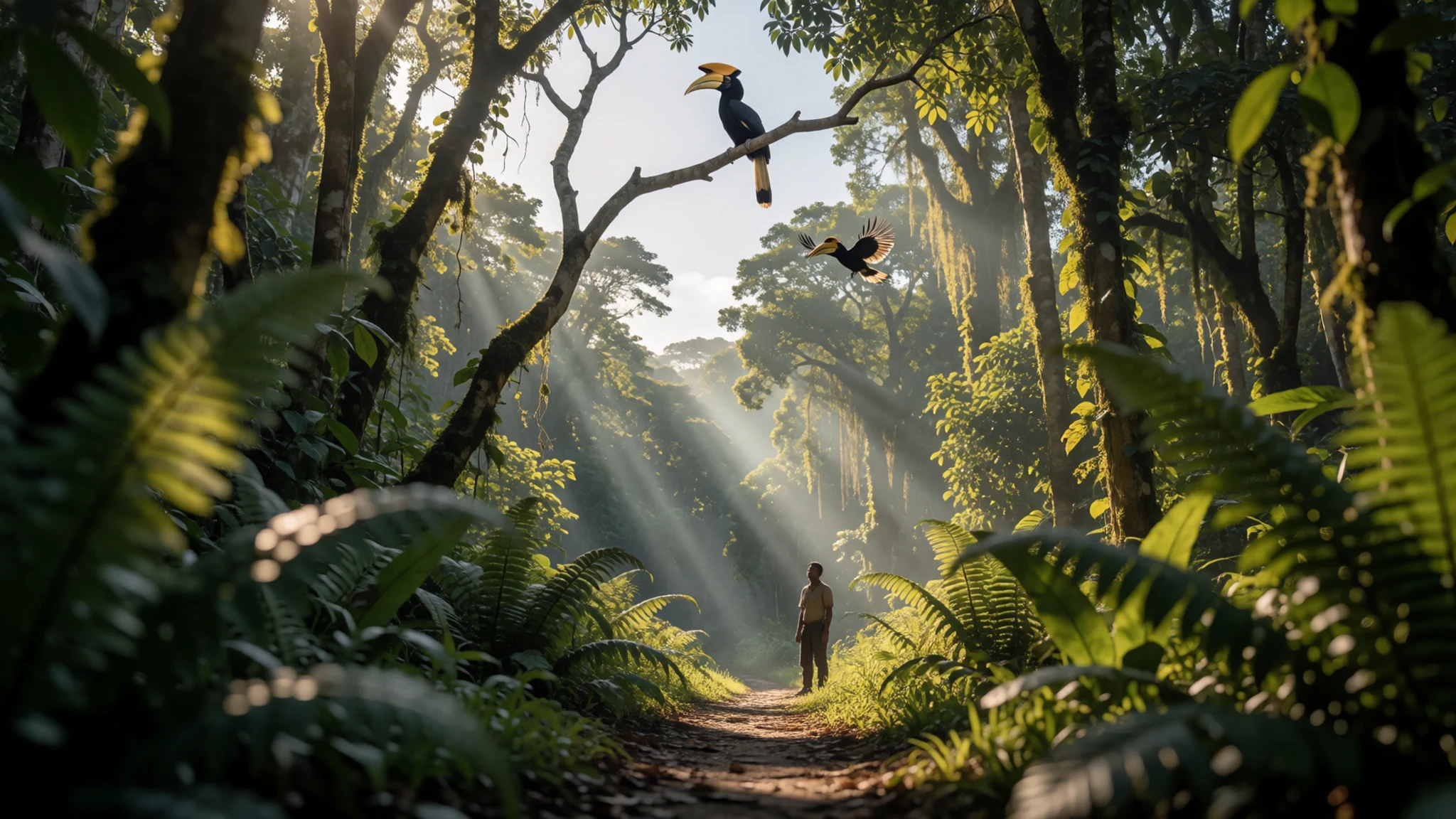
- Padamarari lakeshore — Lakeshore village
Padamarari is one of the shoreline villages where the road gives a wide view across the water to the far hills. It suits a slow stop rather than a long visit: a drink at a roadside stall, some photographs, and a chat with whoever is mending nets nearby. Light is kindest in the morning.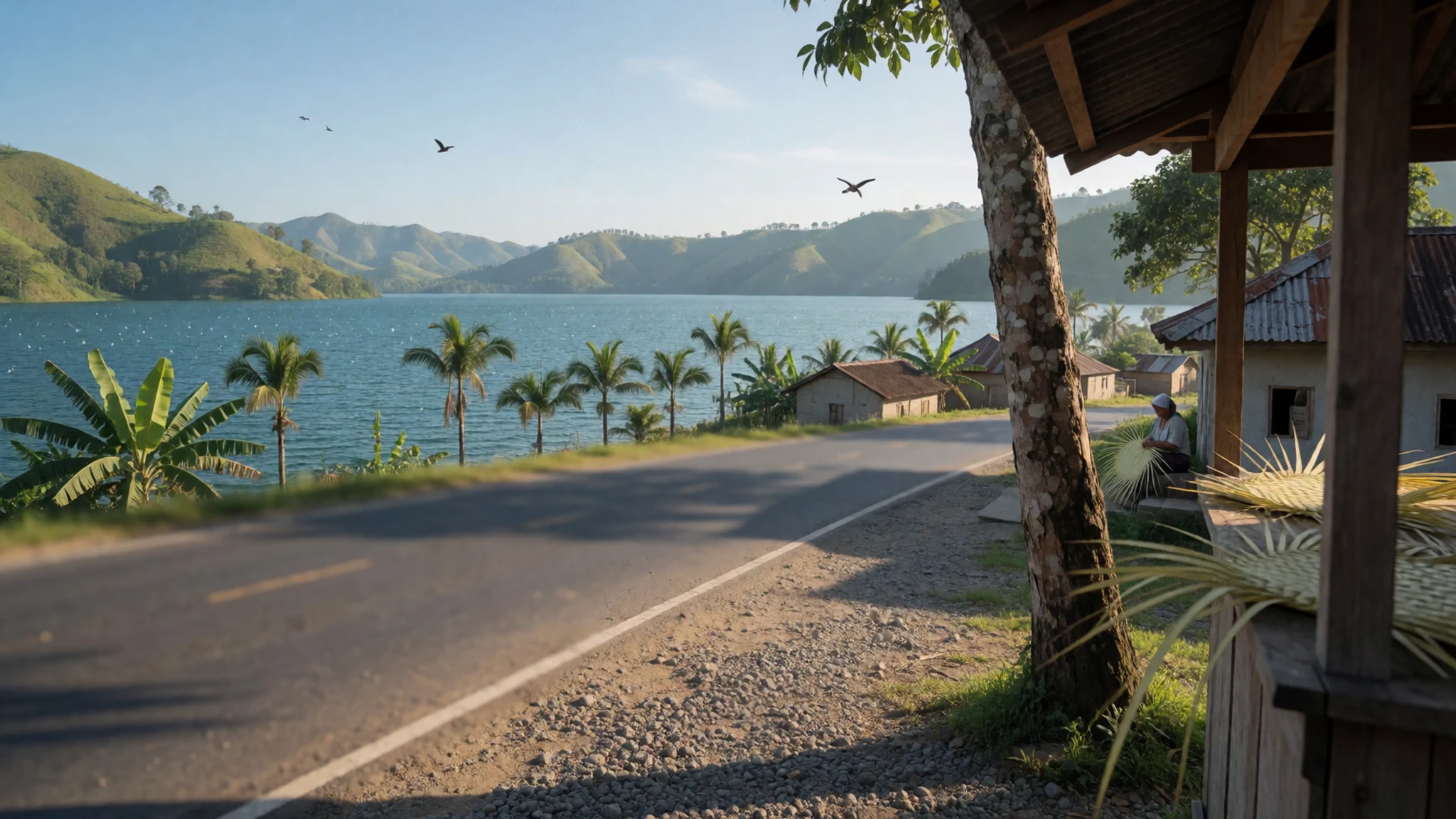
- Pendolo and the southern shore — Southern end of the lake
Pendolo, at the southern end, is smaller and quieter than Tentena, and it feels like the far edge of the lake. Fishing boats pull up on the shore, and the land around is a mix of farms and open grass. It is a sensible stop for anyone travelling the road to or from Tana Toraja.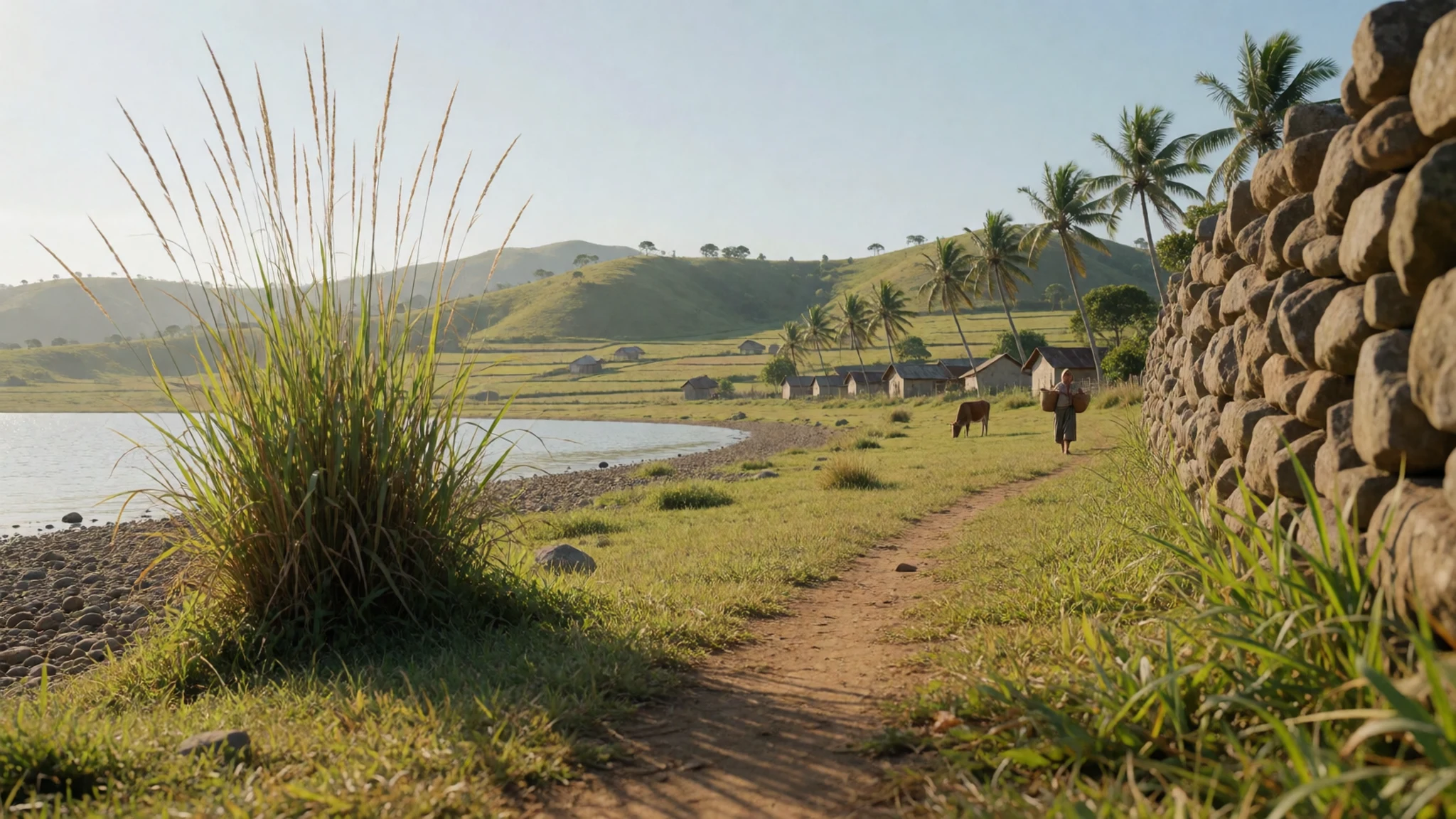
- Shoreline meadows — Open shores around the lake
In places the lake's edge opens into broad grassy flats that look more like pasture than tropical shore. They are good for a quiet walk, for watching birds over the water, and for seeing how the lake level shapes the land. Ground can be soggy after rain, so wear shoes that cope with mud.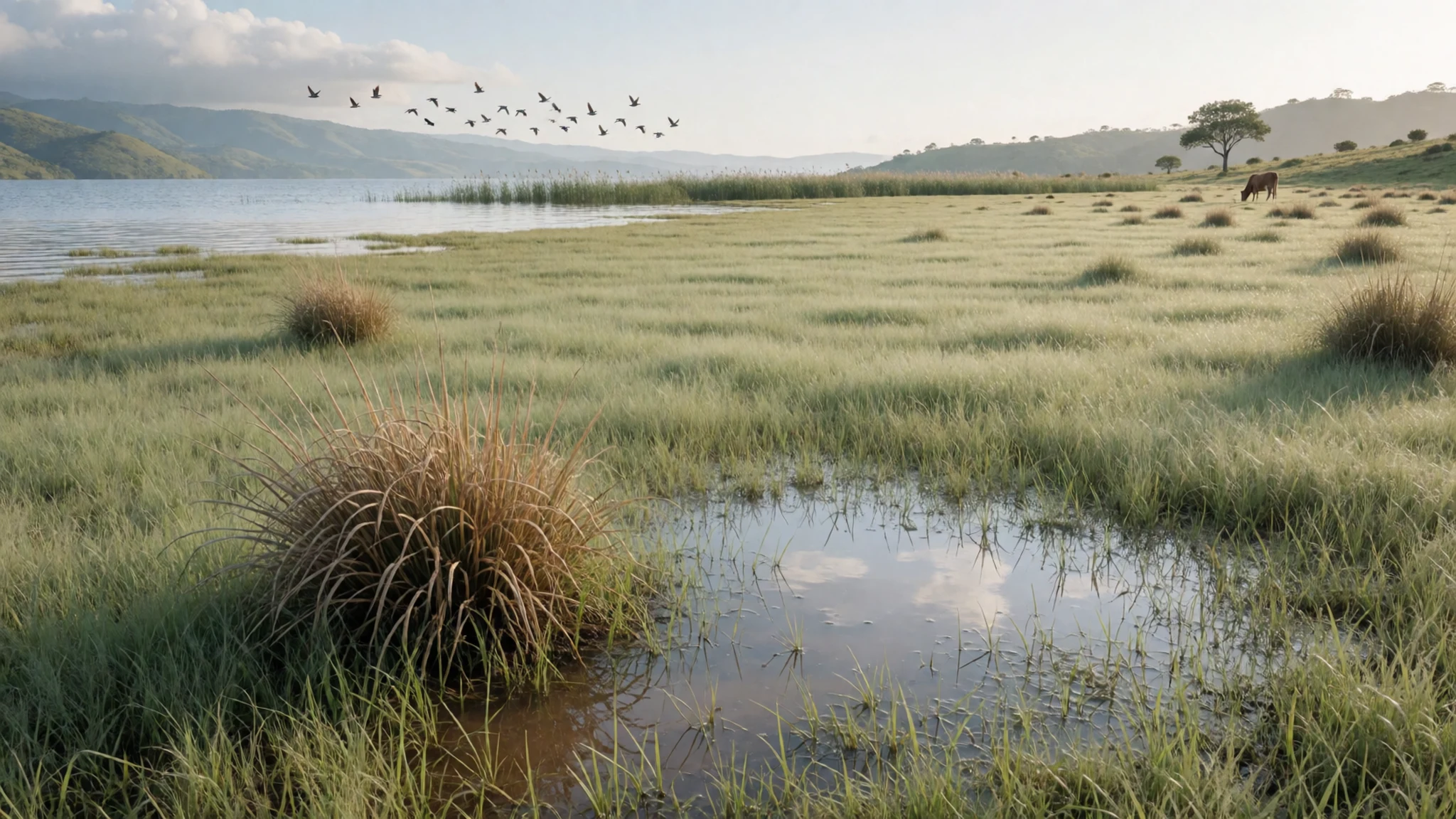
Culture
The communities around Lake Poso include both Christian and Muslim families, and daily life reflects that mix. Tentena in particular has a strong church-going tradition, so Sunday mornings are quiet, with people in their best clothes heading to services and many shops opening late or not at all. Highland peoples such as the Pamona have their own languages, songs and customs, and ceremonies, weddings and harvest gatherings are often marked with music, shared meals and traditional dress. The lake is also a working landscape. Fishing is a livelihood, not a pastime, and eel and other catches go straight to local eateries. Hospitality is warm but unhurried: a stranger arriving in a village is likely to be offered a seat, a cup of coffee or tea, and a round of friendly questions about family and where they come from. Conversations are easiest with a few words of Indonesian, and a smile covers most gaps. The region's recent history of conflict is a sensitive subject, and many residents prefer to talk about the lake, food and farming. Visitors who follow local lead on that tend to be received well. Take care on Sundays and on days of religious observance, when events may be private or crowded and the pace of the town changes. Ask permission before photographing people, church services or private ceremonies, and respect a polite refusal.
What to wear
Traditional dress in the Lake Poso highlands draws on bark cloth, beaten from tree bark into soft sheets, and on woven textiles decorated with beads, shells and metal ornaments. These pieces now appear mostly at ceremonies, weddings and cultural festivals, where headbands, sashes and necklaces add colour, rather than in daily life. Everyday clothing is practical and modest: T-shirts, long trousers or knee-length skirts, sarongs at home, and headscarves for many Muslim women. On Sundays in Tentena, people dress up for church, with neat shirts, batik prints and polished shoes. Men working on the water usually wear shorts or lightweight trousers and a hat against the sun. A visitor should pack light, breathable cotton or quick-dry fabrics that cover shoulders and knees, since modest dress is the norm in villages and around places of worship. Mornings and evenings at 485 metres can feel cooler than the coast, so a thin layer is useful. Bring a sun hat, sunglasses and a light rain jacket, as showers arrive quickly. For swimming, board shorts or a one-piece with a T-shirt over it suit local expectations better than skimpy beachwear. Sandals work around the lakefront, but sturdy shoes with grip are better for forest trails and muddy shore meadows.
What to eat
- Lake eel — Warungs and eateries along the Tentena waterfront
The eel from Lake Poso is the local speciality, usually grilled or cooked in a spiced sauce and served with rice. Locals sometimes call it sogili. The flesh is rich and firm, and it tastes best when caught the same day.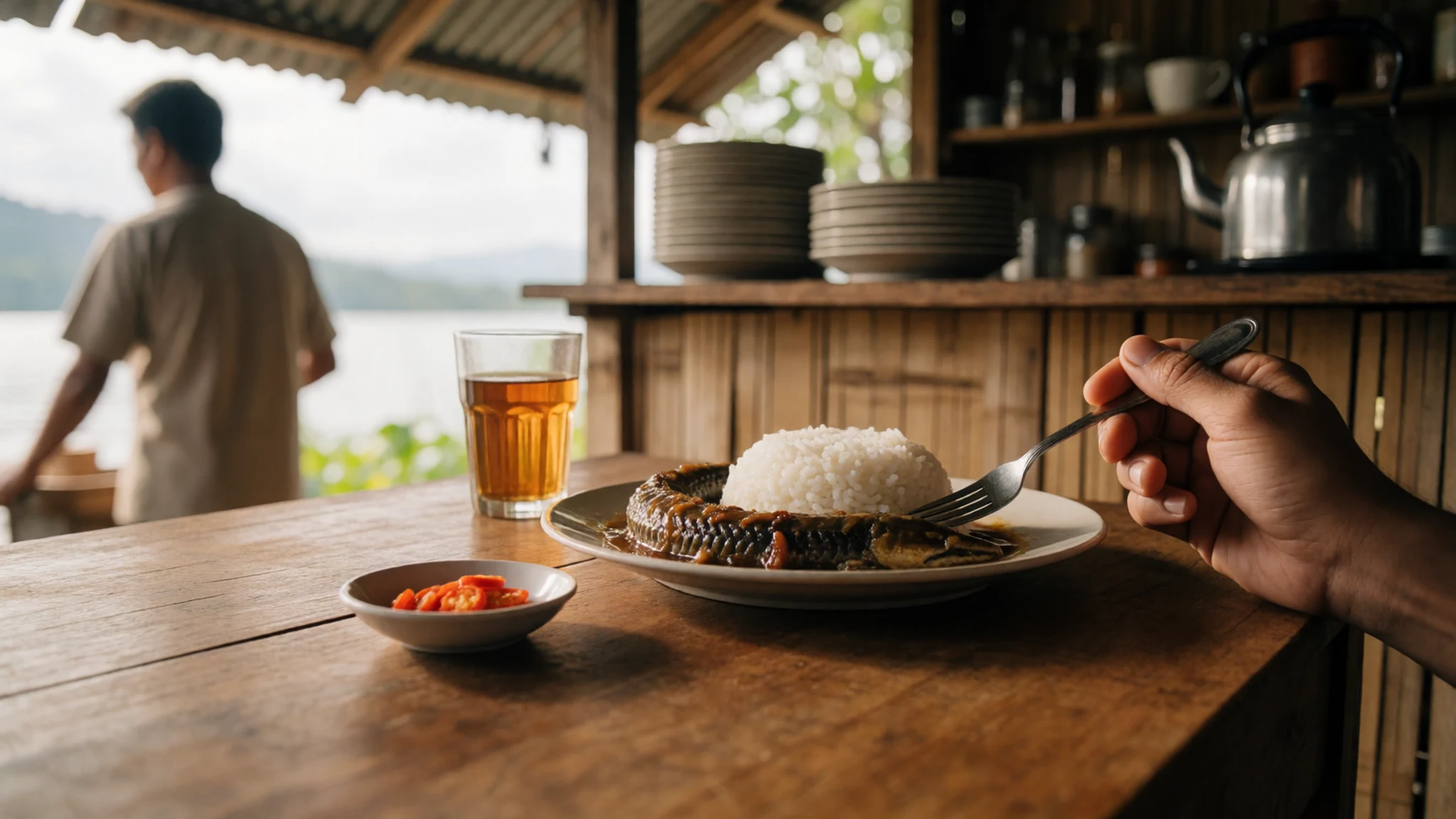
- Grilled lake fish — Lakeside warungs in Tentena and shoreline villages
Freshwater fish from the lake is grilled over coals, then served whole with chilli sambal, raw vegetables and plain rice. It is simple, filling food, and the quality depends on how recently the boats came in.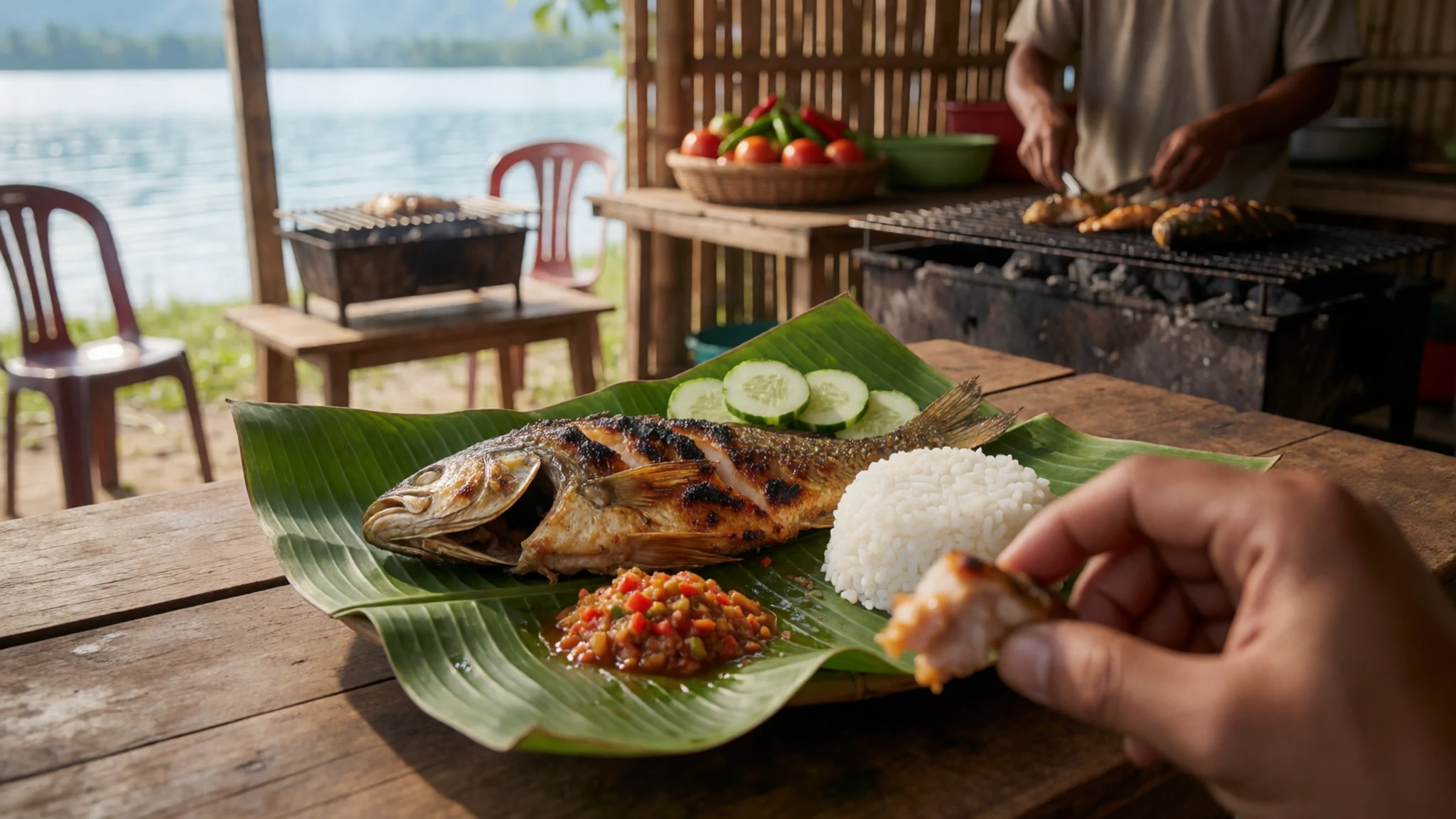
- Spicy bat — Selected warungs near the Tentena lakefront
Bat is a local delicacy sold in a few warungs in Tentena. It is cooked in a very hot chilli-heavy sauce and is quite bony, so it takes patience. Adventurous eaters try it once; others happily skip it. - Warung rice plate — Any family-run eatery in Tentena or along the main road
The everyday meal is a plate of rice with a choice of fried or stewed fish, egg, greens and sambal, picked from dishes laid out behind the counter. It is cheap, quick and a reliable default when the menu is mostly in Indonesian. - Sulawesi coffee — Roadside stalls, small cafés and warungs
Central Sulawesi grows good coffee, and a glass of strong, sweet black brew is the usual way to end a meal or start a morning. Beans from Donggala, such as Sojol Arabica, turn up in some cafés and shops.
Plan it
Best time. May to September is a sensible window, as the lake region is generally more pleasant with fewer rainy days, though highland showers can arrive at any time of year. Mornings are best for clear views and birdwatching.
How long. 2–3
Getting there. Fly to Palu (PLW), a domestic airport with services from Jakarta, Makassar and Manado, then take a bus or car south via the coastal town of Poso to Tentena. From Tana Toraja, a daily bus from Rantepao runs to Tentena; the road is poor and delays are common, so choose the more comfortable executive bus if one is available.
Budget. low
Tips
- Check your government's current travel advice for Central Sulawesi and the Poso region before booking, and recheck close to departure.
- Allow slack in the schedule: roads are rough, buses run late, and a missed connection can cost a day.
- Carry enough cash for the whole stay, as cards are rarely accepted in warungs and villages.
- Bring insect repellent, sun protection and a refillable bottle, and drink only bottled or properly treated water.
Etiquette
- Ask before photographing people, religious services or private ceremonies.
- Dress modestly in villages and near churches or mosques, with shoulders and knees covered.
- Keep Sundays low-key in Tentena, and avoid loud music or noisy behaviour near the lake in the early morning or at night.
Nearby
Sources
- Wikidata Q29503 (CC0)
- Wikipedia: Lake Poso (CC BY-SA 4.0)
- Wikivoyage: Central Sulawesi (CC BY-SA 4.0)
- Danau Poso scene, Rainer Jehl (CC BY-SA 4.0)
- Indonesia relief location map, Uwe Dedering (CC BY 3.0)
- Sulawesi topography plain, RXerself (CC BY-SA 4.0)
- Rhyticeros cassidix, Raynton Rare'a (CC BY-SA 4.0)
- Landsat Poso (1994), NASA (Public domain)
- Poso Lake from Padamarari, Bagas Chrisara (CC BY-SA 4.0)
- Poso lake Tentena, Vicartb (CC0 1.0)
- Steppa near Lake Poso, a_rabin (CC BY 2.5)


Wildlife
- Sulawesi hornbill (animal)
Picture a small black bird with a chunky bill: that is the Sulawesi hornbill, a bird found only on this island. Around Lake Poso, Bancea Nature Park, a sheltered stretch of forest loved by birdwatchers, is the place to look. Males wear a yellow face and throat; females are black all over. Keep well back, speak softly, ask a local guide to lead you, and never feed it. - Sulawesi hornbill (bird)
Picture a small black bird with a chunky bill: that is the Sulawesi hornbill, a bird found only on this island. Around Lake Poso, Bancea Nature Park, a sheltered stretch of forest loved by birdwatchers, is the place to look. Males wear a yellow face and throat; females are black all over. Keep well back, speak softly, ask a local guide to lead you, and never feed it.