Lake Inawashiro
Lake Inawashiro, Japan
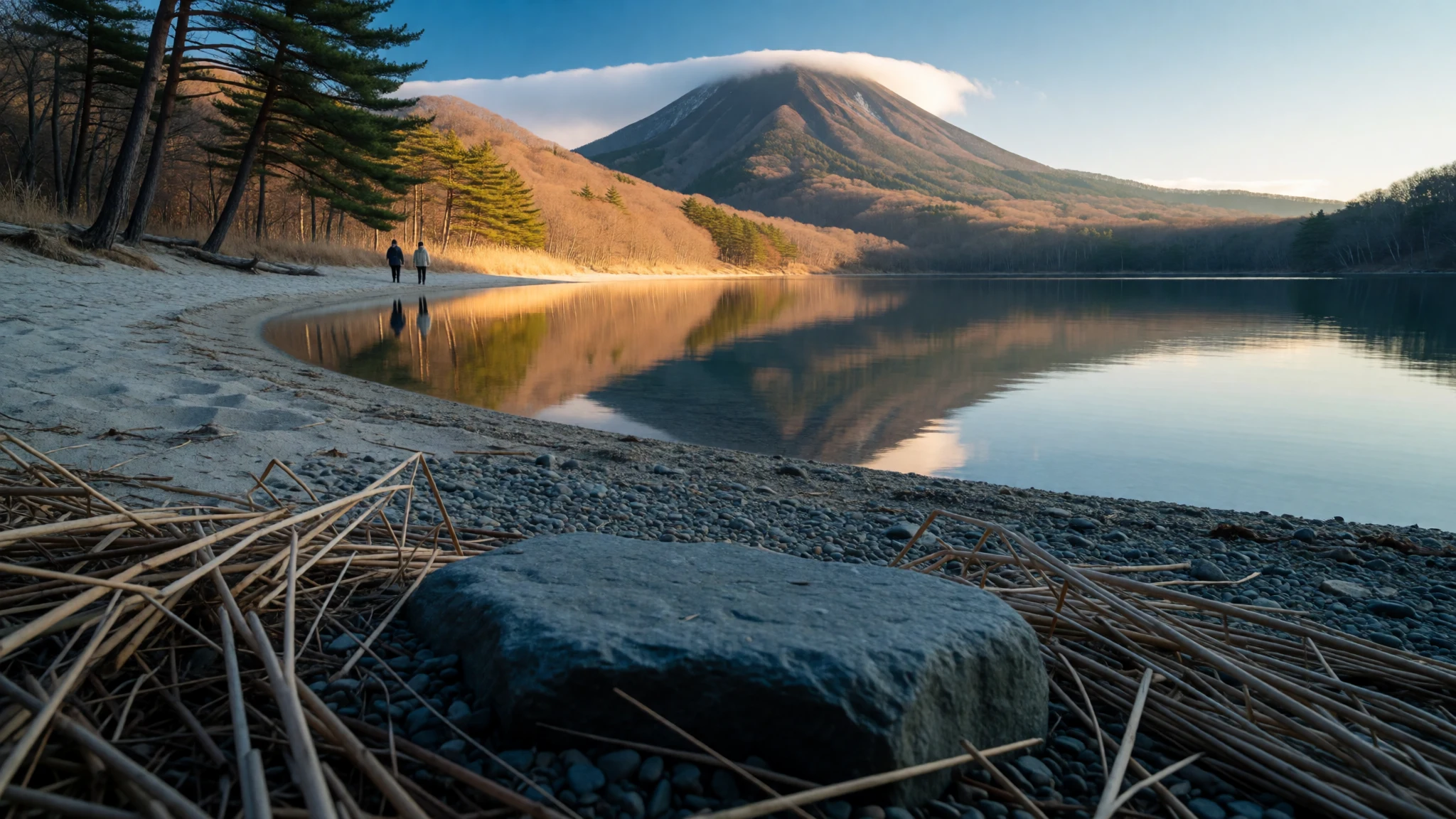
Lake Inawashiro is a clear, mirror-calm volcanic lake in Fukushima, with swans in winter, summer beaches and samurai-era Aizuwakamatsu close by.
The place
Lake Inawashiro (猪苗代湖, Inawashiro-ko) lies in central Fukushima Prefecture, directly south of Mount Bandai, at an elevation of 514 m. Japanese writers have long called it the Heavenly Mirror Lake (天鏡湖, Tenkyōko), and on a still morning the name makes sense: the water is unusually clear and hands back the sky and the volcano almost without a ripple. It sits inside Bandai-Asahi National Park and is classed as a tectonic lake, meaning it fills a hollow where the ground sank, rather than a crater. The shore is long and mostly gentle. Around it are sandy beaches, campsites and small resort towns, where families come in summer to swim, paddle and sail. In winter the character changes completely. Swans arrive on the beaches and stay until spring, the air turns sharp, and the surrounding hills whiten and fill with skiers. The lake is also working water. It feeds farmland and power stations, so canals and intakes are part of the landscape as much as the views are. Most visitors treat it as a day out from Aizuwakamatsu, the castle town to the west, or as a pause on the way between Tokyo and the Aizu region. Summer weekends bring traffic and crowded beaches, while weekdays and the shoulder months are far calmer. Cloud often sits on Bandai, so a clean view of the volcano is never guaranteed, and a bright day can turn grey within an hour. The area's official multilingual guide is the SAMURAI CITY Aizuwakamatsu site, which is the best place to check current local information.
Its story
Lake Inawashiro began as a tectonic depression, a sunken hollow in the crust of northern Honshu. Tens of thousands of years ago a major eruption of Mount Bandai sent a pyroclastic flow across the area and dammed that hollow, and the water that gathered behind the barrier became the lake. The volcano still stands over the northern shore as a reminder of how it was made. The water is mildly acidic and very transparent, which suits a lake with few of the nutrients that cloud so many others. Water levels were once much lower. Pottery fragments and other artefacts from the Jōmon period have been found offshore, which suggests that people lived on land now covered by the lake. In more recent centuries the lake became a resource as much as a landmark. Its water irrigates the Aizu region of western Fukushima Prefecture, first through a canal dug in the Edo period and later through the Asaka Canal, finished in the Meiji era. Another canal, completed in the early twentieth century, carries drinking and industrial water to the city of Kōriyama. Hydroelectric plants also draw on the flow. So the story of the lake is partly geological drama and partly quiet engineering, a volcanic accident that farmers and engineers learned to put to use. Tourism arrived later and now sits alongside those older uses, with beach resorts on the shore and a long tradition of excursions from the historic town of Aizuwakamatsu.
What to see
- The lakeshore and beaches — Inawashiro town and the lake shore
Lake Inawashiro's shoreline is the main attraction, and the sandy beaches around Inawashiro town are where most people swim, camp and launch boats in summer. In winter the same sands host migrating swans. Walk the water's edge early, before the crowds and the wind arrive.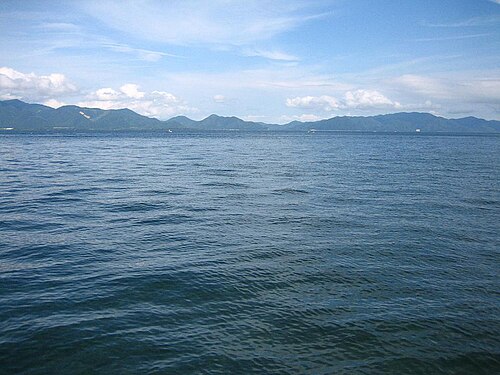
- Mount Bandai viewpoints — Slopes of Mount Bandai, north of the lake
Mount Bandai rises just north of Lake Inawashiro, and the view from its slopes shows the whole lake spread out below, with the mountains of Aizu beyond. The volcano is also a place for skiing and fishing. Clouds often cover the summit, so keep the plan flexible.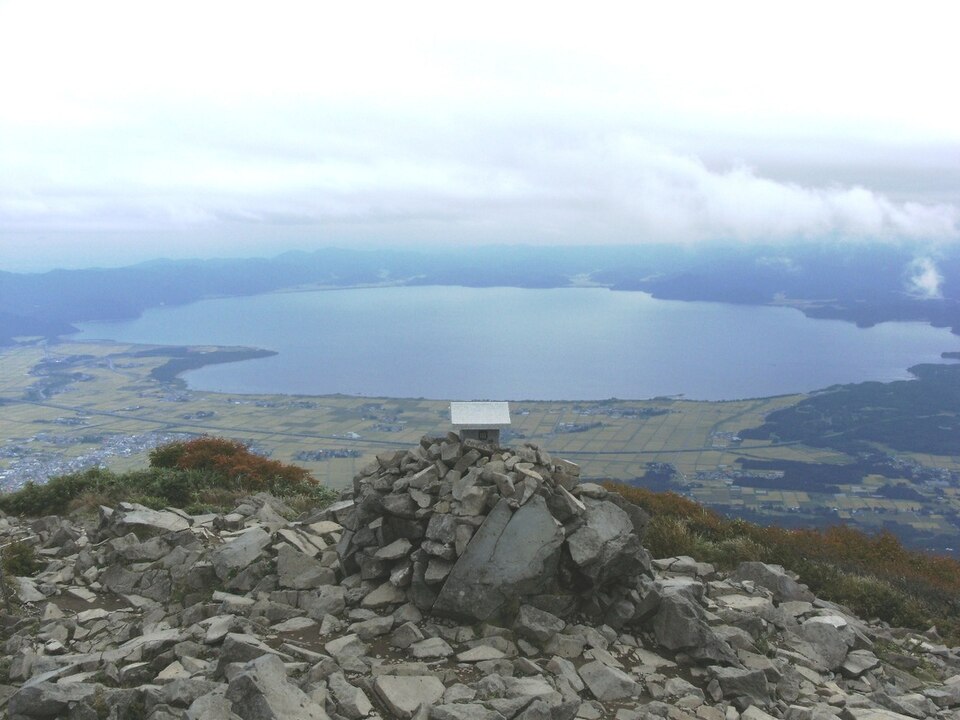
- Aizuwakamatsu Castle — Aizuwakamatsu city centre
Aizuwakamatsu Castle in the town of the same name is a concrete replica of the original, which was besieged for about a month at the end of the Edo period before the Aizu forces were defeated. It is worth visiting for the history and the view over the town. - Iimoriyama — Hillside on the edge of Aizuwakamatsu
Mount Iimoriyama in Aizuwakamatsu is tied to the Byakkotai, the White Tiger Force of teenage samurai who retreated here after a lost battle. Their graves lie on the hill, and incense is kept burning. Visitors can climb the steps or ride the escalator; it is a quiet, sombre stop. - Sazaedo — Eastern side of Aizuwakamatsu
Sazaedo is a hillside temple hall in Aizuwakamatsu built around a double spiral. Two ramps wind in opposite directions, so people climbing never meet those coming down. It is a small, clever piece of timber architecture and works well as a short stop after Iimoriyama. - Oyakuen Garden — Aizuwakamatsu, southeast of the castle
Oyakuen Garden was laid out as a teahouse garden for the lords of Aizu and is known for medicinal herbs, with hundreds of kinds still grown there. It is a calm, shaded walk away from the busier castle area, and best in late spring or autumn.
Culture
Lake Inawashiro sits in the Aizu region, whose culture is shaped by the samurai clan that ruled it and by the heavy memory of the war that ended that rule. In Aizuwakamatsu the story of the Byakkotai, the teenage samurai who died on Mount Iimoriyama, is told with real seriousness, and local people still honour them. Higashiyama Onsen nearby offers dances by geigi, the local word for geisha, performed as a memorial to those boys; they are not simple entertainment and are usually booked in advance. Aizu is also known for study and discipline. The former Aizu clan school, the Nisshinkan, taught academics, martial arts and ethics together, and the region still carries a reputation for being proud and reserved rather than showy. Around the lake, daily life is more practical: farming, canals, fishing, and summer tourism. The Edo-period irrigation works are part of the local identity, and Hideyo Noguchi, the bacteriologist from the area who appears on the 1000 yen note, is a source of regional pride. Quiet courtesy goes down well everywhere, from inn lobbies to graveyards. Winter brings ski culture and onsen bathing, and the rhythms of the year are set by snow, rice and the arrival of the swans. At graves, shrines and memorial sites such as Iimoriyama, keep your voice low, do not touch offerings or incense, and ask before photographing anyone who is praying.
What to wear
Lake Inawashiro lies in a part of Japan where traditional dress is now mostly ceremonial. The kimono, made of silk or sometimes cotton, is worn for weddings, tea gatherings and festivals, and the hakama, a pleated divided skirt, is worn over it by men and by women at graduations. In Aizu, samurai history is a strong theme, so costumes tied to that era appear at local events. The yukata, a light cotton robe, is the everyday traditional garment for summer evenings and for walking around onsen towns. Hanten, padded cotton jackets, appear in the cold months. Day to day, local people dress practically: jeans, fleeces and waterproofs by the lake, smarter and quieter clothes in Aizuwakamatsu, and thermal layers in winter, when the Fukushima hills are cold and snowy. Visitors should dress for the season rather than the city. In summer wear light, quick-drying clothes, a hat and sun protection, and bring swimwear and a towel for the beaches. In winter, pack insulated layers, waterproof boots with grip, gloves and a hat, since paths can be icy. For temples and memorial sites such as Iimoriyama, no special dress is required, but covered shoulders and tidy clothes are respectful. Shoes that are easy to slip on and off help at inns, onsen and some halls, and clean socks are worth carrying.
What to eat
- Sauce katsudon — Any local shokudo (casual diner) in Aizuwakamatsu, especially near the station
Aizuwakamatsu's signature dish is a pork cutlet in a sweet sauce, served over rice with shredded cabbage. An egg is sometimes added as a local variation. It is filling and plain, a good lunch after a morning of sightseeing. - Ramen — Ramen shops in Aizuwakamatsu and in nearby Kitakata
Ramen is a staple across the Aizu area, and the neighbouring town of Kitakata is known across Japan for its noodles. A bowl is a reliable, quick meal, particularly in cold weather, when the broth is welcome after time outdoors. - Agemanju — Sweet shops and snack stalls in Aizuwakamatsu
Agemanju is a Japanese-style bun filled with sweet adzuki bean paste and then deep-fried. It is a warm, sugary snack, easy to eat on a walk, and is the sort of treat the area is known for. - Udon — Family-run shokudo around Aizuwakamatsu Station
Udon, thick wheat noodles in a light soy-based broth, is another everyday choice, often found on the same menus as ramen and katsudon. It is gentler than ramen and suits those wanting something lighter. - Whisky and local drinks — Jazz bars and small bars in the town centre
Evenings in Aizuwakamatsu can end in a small bar, and some jazz bars keep a well-chosen selection of whiskies. Check opening times locally, since small places keep irregular hours, and expect a quiet, adult atmosphere.
Plan it
Best time. July to October for swimming, boating and autumn colour, with warm days and clear water. Winter, roughly December to February, is cold and snowy but brings swans on the shore and skiing on Mount Bandai. Spring is quieter and fresh, though cloud over the volcano is common.
How long. 2–3
Getting there. From Tokyo, take the Shinkansen to Kōriyama and change to the Ban-etsu Saisen Line for the lake and Aizuwakamatsu, a journey of about three hours. Direct highway buses run from Tokyo's Shinjuku terminal, and buses connect Sendai Airport to Aizuwakamatsu Station. Fukushima Airport has only limited flights, so most visitors use Sendai or Tokyo.
Budget. mid
Tips
- Weekdays and shoulder months are far quieter than summer weekends, when beaches and roads fill up
- Check opening hours and ticket details on the official SAMURAI CITY Aizuwakamatsu site before visiting sights
- Carry some cash for small eateries, snack stalls and rural buses
- Allow time to base yourself in Aizuwakamatsu and visit the lake by train or bus
- In winter, bring proper boots and check road and rail conditions in advance
Etiquette
- Take rubbish home or use the bins provided at the beaches and campsites
- Wash before entering an onsen bath and keep towels out of the water
- Keep noise down at graves and memorials, including the hillside at Iimoriyama
Nearby
Sources
- Wikidata Q1140672 (CC0)
- Wikipedia: Lake Inawashiro (rev 1381644780) (CC BY-SA 4.0)
- Wikivoyage: Aizuwakamatsu (rev 5433382) (CC BY-SA 4.0)
- Photo: Lake Inawashiro 1 (Brian Adler) (Public domain)
- Photo: Lake Inawashiro view from Mt.Bandai (Stingfield) (CC BY 3.0)
- Photo: Japan natural location map (Alexrk2) (CC BY 3.0)
- Photo: Aizu Nunobiki-yama and Lake Inawashiro (BehBeh) (CC BY 3.0)
- Photo: a bird (shinohal) (CC BY 3.0)
- Photo: Inawashiro Ski Area (Famifamifami) (Public domain)
- Photo: ISS039-E-12345 View of Japan (NASA) (Public domain)
- Photo: ISS039-E-12346 View of Japan (NASA) (Public domain)


Wildlife
- Whooper swan (animal)
Picture a very large swan from the northern world, the Eurasian twin of North America's trumpeter swan: that is the whooper. At Lake Inawashiro it comes to the beaches and remains until spring, through the cold, snowy months when the nearby hills fill with skiers. Watch from a polite distance, speak softly and move slowly, and think about joining a local guide. Please never feed the swans, however friendly they seem.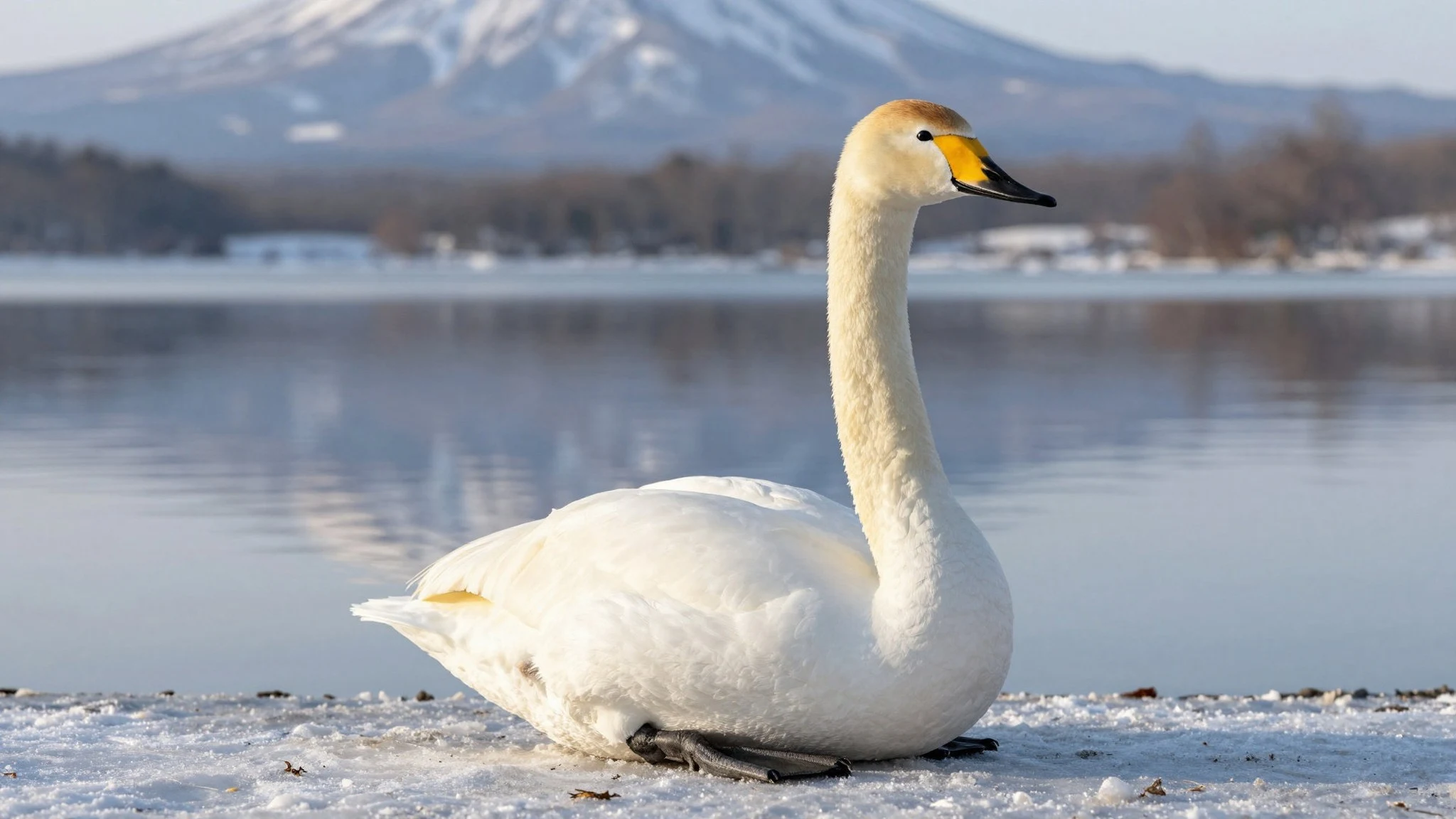
- Whooper swan (bird)
Picture a very large swan from the northern world, the Eurasian twin of North America's trumpeter swan: that is the whooper. At Lake Inawashiro it comes to the beaches and remains until spring, through the cold, snowy months when the nearby hills fill with skiers. Watch from a polite distance, speak softly and move slowly, and think about joining a local guide. Please never feed the swans, however friendly they seem.