Kusatsu Onsen
Kusatsu Onsen, Japan
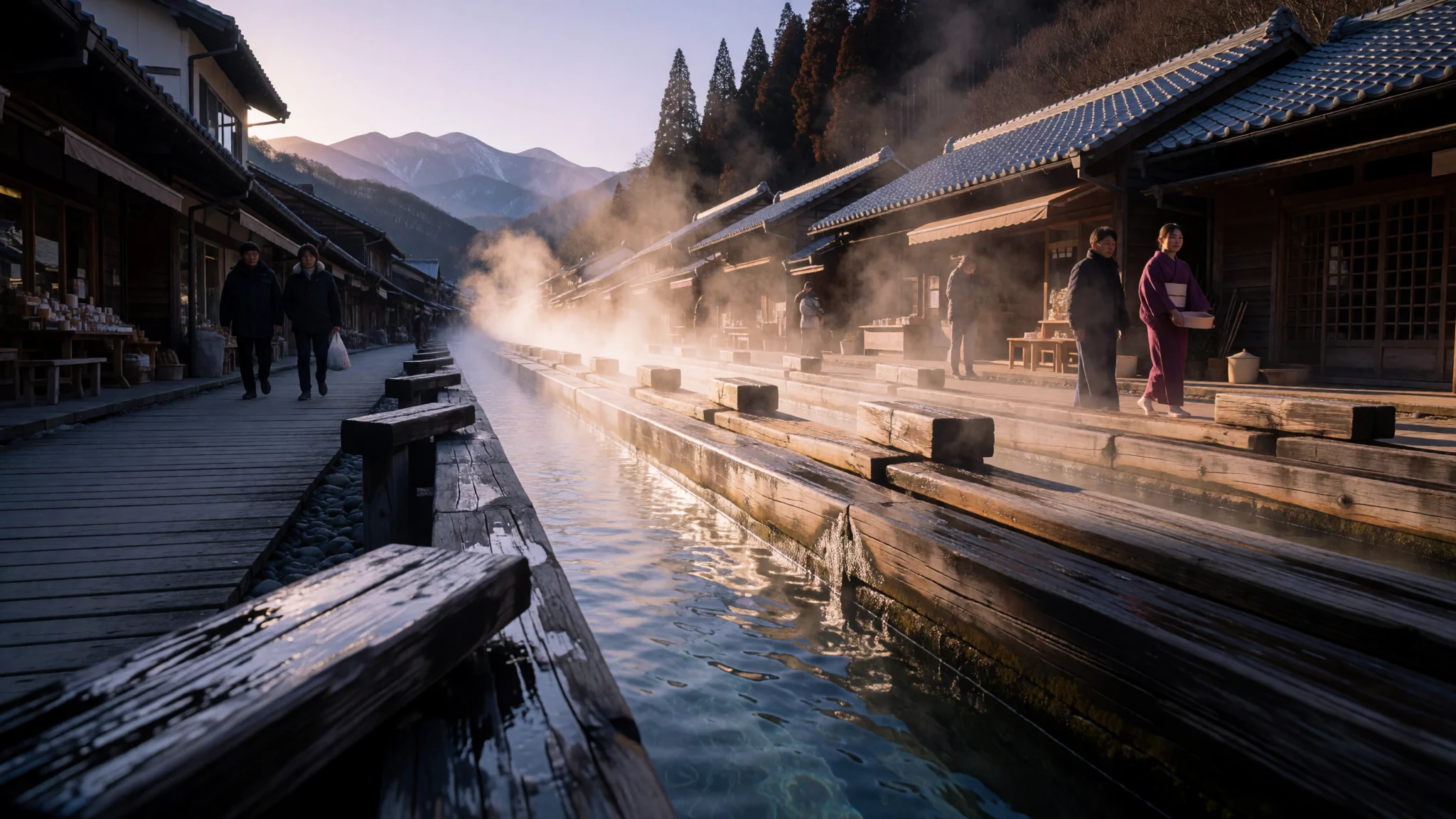
Kusatsu Onsen is a Gunma mountain town where acidic volcanic hot water steams through the streets and bathing is a daily ritual.
The place
Kusatsu Onsen (草津温泉) is a hot spring town in Gunma Prefecture, north-west of Tokyo, set on a volcanic slope about 1,200 metres above sea level. It has no railway station of its own, so arrival is by road from the valley below. The first things most people notice are the smell of sulphur and the steam lifting from drains, courtyards and the open channel at the town's centre. The hot water comes down from the slopes of Mount Kusatsu-Shirane, an active volcano close by, at more than 32,000 litres a minute. It is strongly acidic, and the town makes much of that sharpness. Thirteen public baths are spread through the lanes. Some are tidy halls aimed at visitors, while the small bathhouses are looked after by the residents themselves and are open to guests as well as neighbours. The water in them runs from cloudy to clear because each bath draws on a different source. The centre is small enough to cross on foot in a few minutes, so a day here mostly means soaking, walking between baths in a cotton robe, eating noodles and drifting up to the park or the crater. It is busiest at weekends and holidays. At this altitude winter is cold and snowy, while summer is a cool break from the lowland heat. The water is hot enough that short soaks are wiser than long ones.
Its story
Kusatsu Onsen was a bathing destination for centuries before it became known across Japan. During the Edo period its reputation for healing grew until, by one telling, a shogun had casks of the water carried to his castle so that he could bathe in it at home. The tale is repeated more as local pride than as record, but it shows how far the name travelled. The modern fame owes most to Erwin von Bälz, a German physician who taught medicine at Tokyo University and served the imperial court in the Meiji period. He studied the springs, wrote about their effects and recommended them, and the endorsement of a doctor with his standing helped spread the town's reputation. A small memorial hall in his name stands in Kusatsu today. Locals still say the water cures every ailment except lovesickness, a line delivered with a grin. Visitors report aches easing after a soak, though the hot, acidic water deserves respect rather than blind faith, and anyone with a heart condition or other health worries should ask a doctor first. A favourite party piece says an iron nail left in the water dissolves to a sliver, which gives a fair picture of how acidic it is. The town's character, practical and a little theatrical, grows from that long relationship with water that is both useful and slightly dangerous.
What to see
- Yubatake — Town centre
The Yubatake, or 'hot water field', is a set of long wooden channels in the middle of Kusatsu Onsen where spring water pours out in clouds of steam, at about 5,000 litres a minute and around 70°C. The channels cool the water as it flows toward the baths. It is lit after dark, when the steam glows.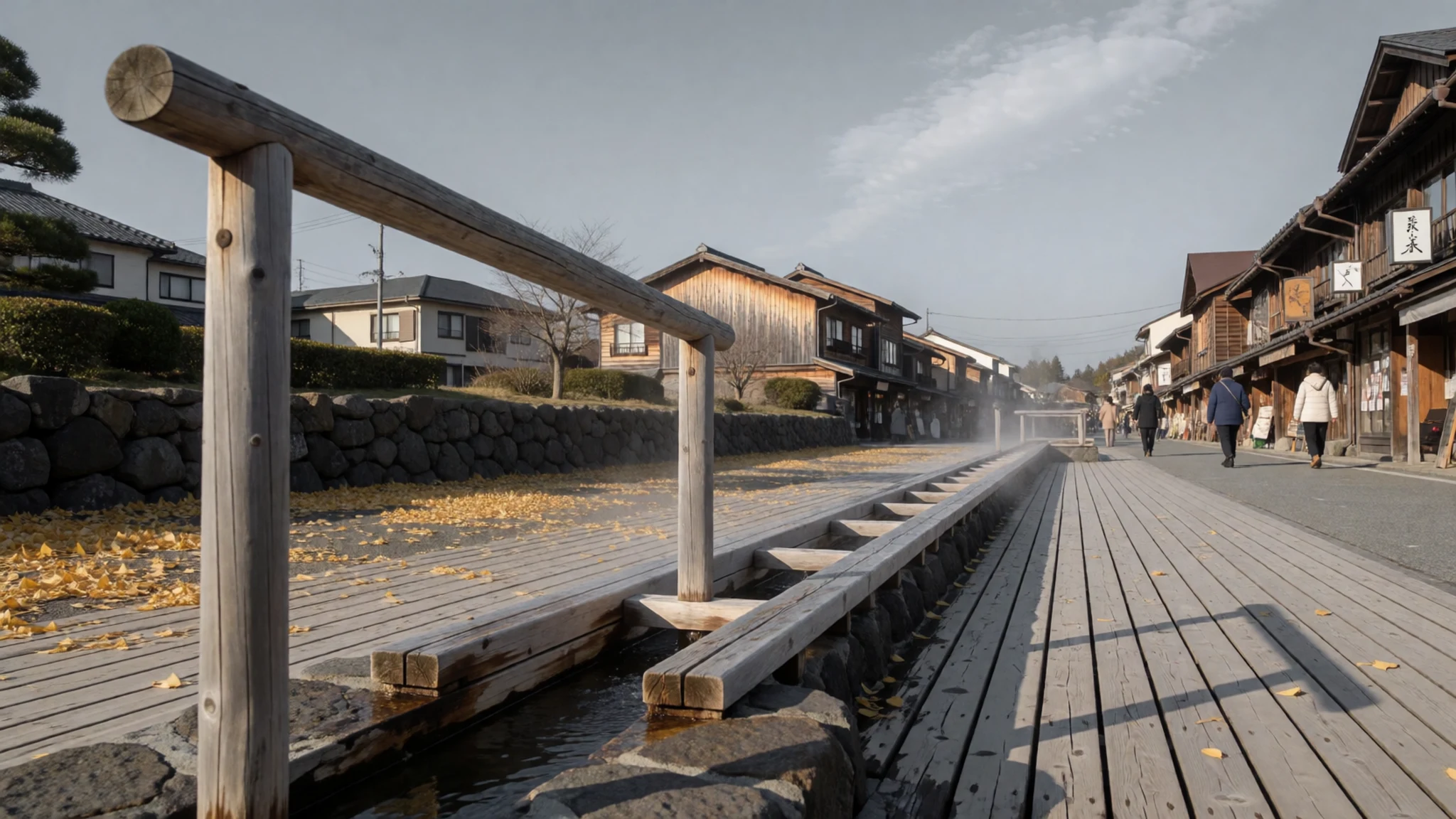
- Sainokawara Park — West of the town centre
Sainokawara Park is a small forested valley just west of the centre, where a stream fed by hot springs runs among the trees and steam drifts between the trunks. It makes an easy walk from the Yubatake and a quieter break from the shopping lanes. Paths can be icy in winter, so wear boots.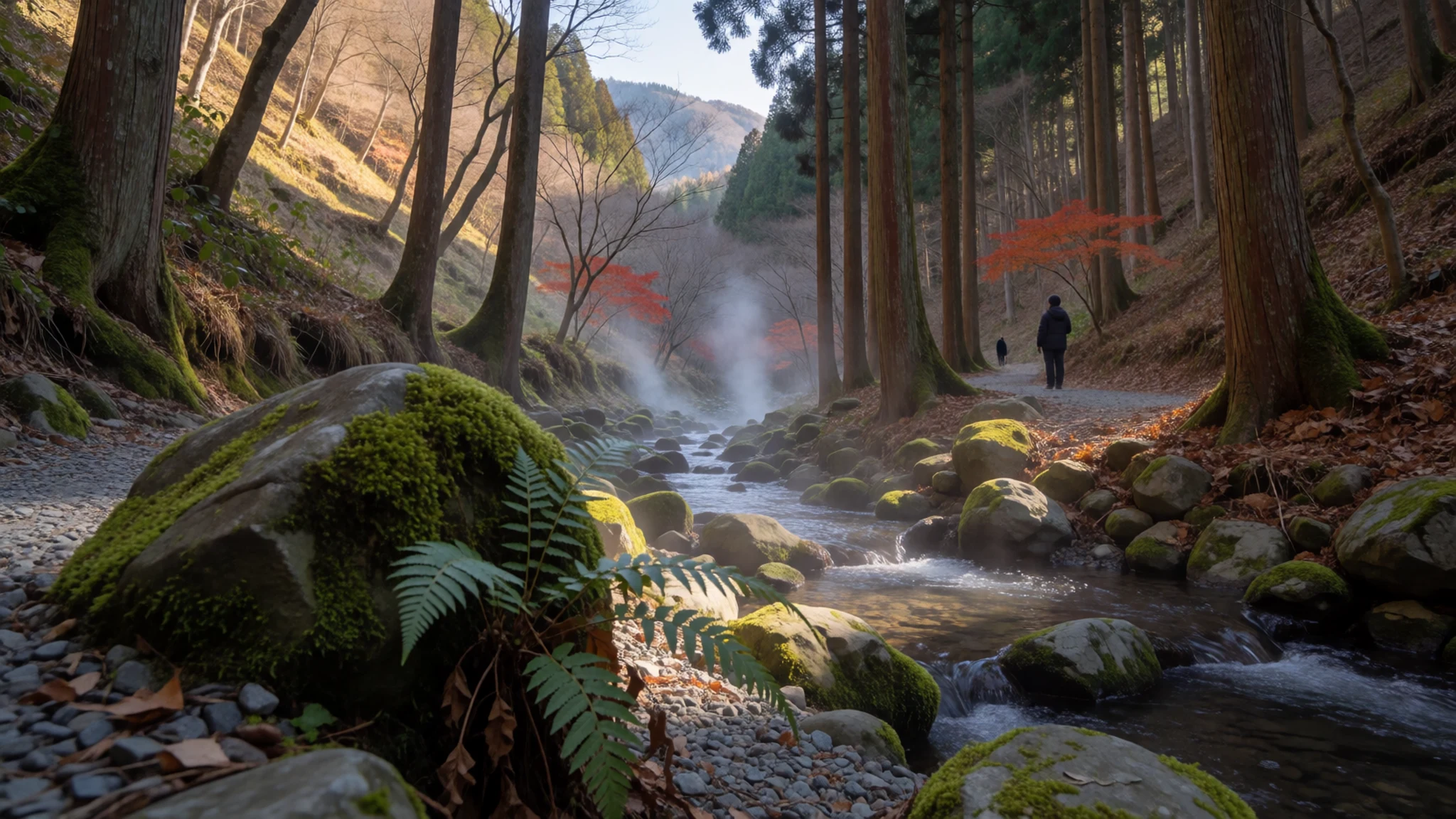
- Kusatsu-Shirane crater lake — Mountains north-west of town
Mount Kusatsu-Shirane is an active volcano, and its crater lake is known for water of an emerald green. It sits in the mountains outside town. Access can be limited by volcanic gas and weather, so check conditions on the official site, https://www.kusatsu-onsen.ne.jp/, and with the bus operator before setting out.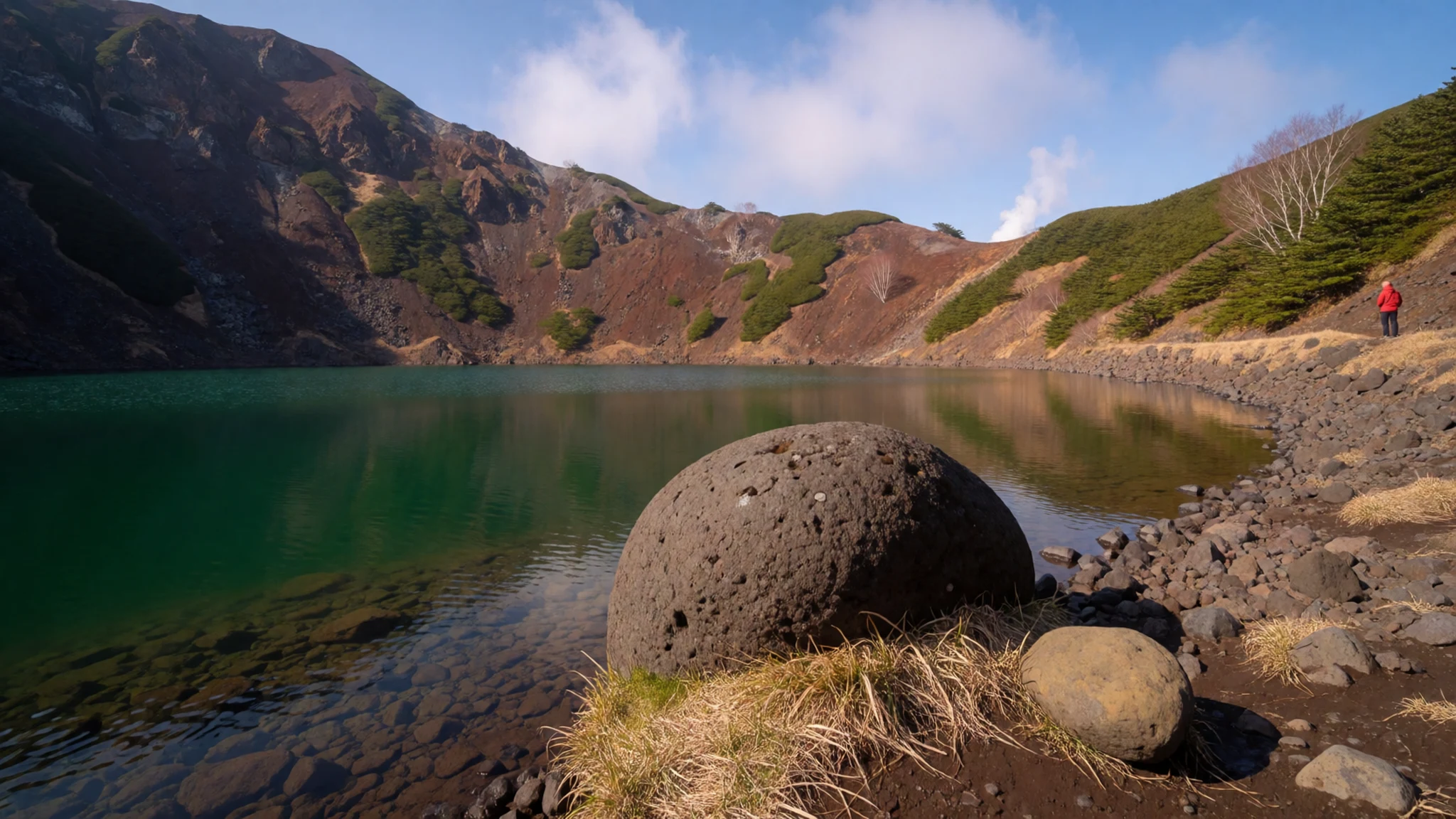
- Kusatsu Bälz Memorial Hall — South of the town centre
This small exhibit honours Erwin von Bälz, the German doctor who championed the springs. It is a short visit that gives context to the town's reputation, and it pairs well with a walk through the quieter streets on the southern side. Opening arrangements can change, so check locally.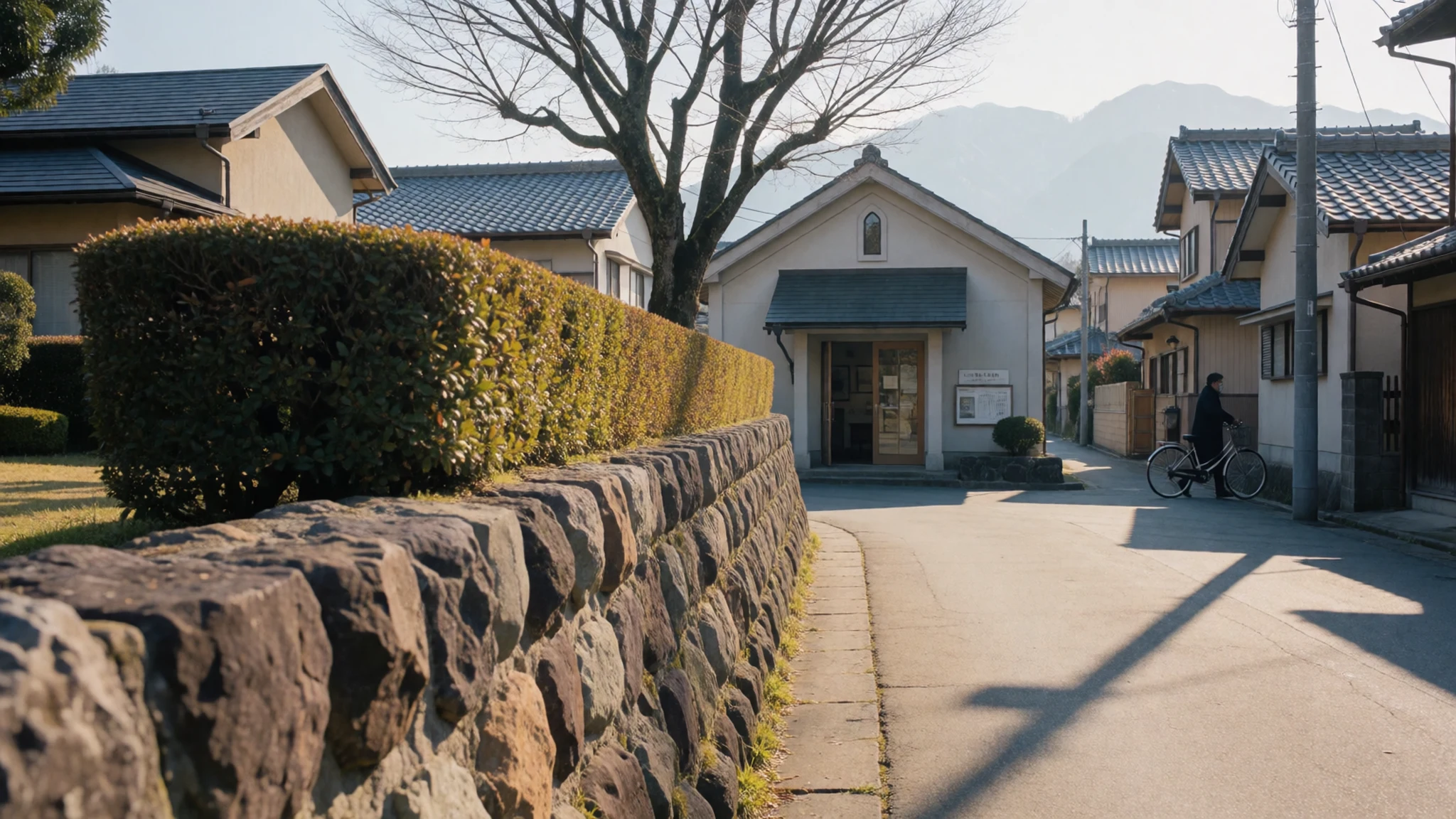
- Kataoka Tsurutaro Art Museum — Near the town centre
This museum is devoted to the actor and artist Tsurutarō Kataoka. Its idea is that visitors can drop in wearing a yukata (浴衣) straight from the bath, and the dress code matches the town's mood. There is a souvenir shop. It is a gentle indoor stop when the weather turns.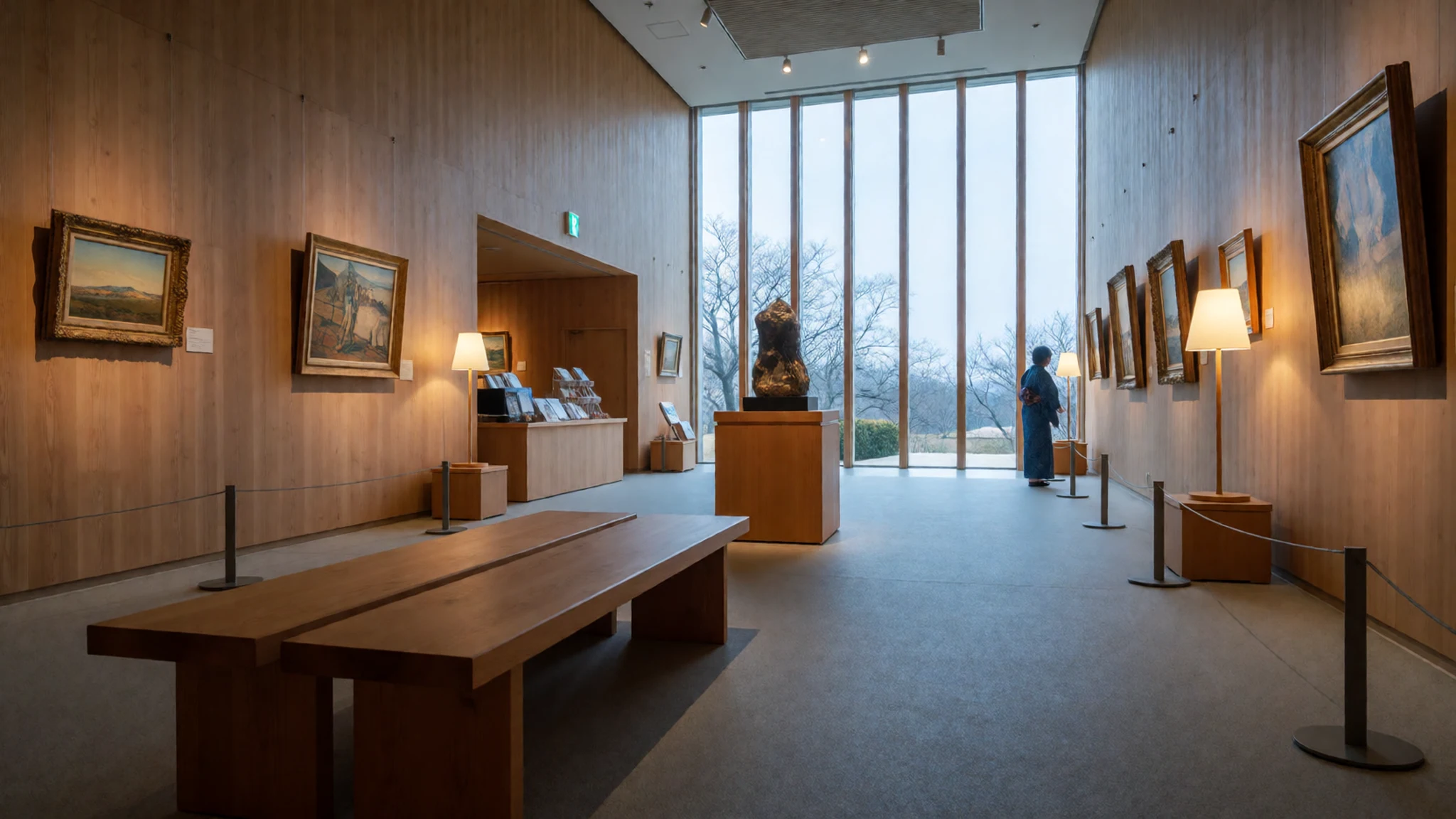
Culture
Kusatsu Onsen's culture is built around bathing as a health practice rather than as leisure alone. For generations people came here to stay for treatment, and the habit of taking several short soaks a day, then resting, still shapes how inns and bathhouses work. The public baths are a shared civic resource. The small ones are looked after by residents, who keep them clean, and visitors are welcomed as guests in a neighbourhood space rather than as customers in a spa. Many people stroll between baths and shops in a yukata (浴衣), the light cotton robe, and the town treats this as ordinary dress. At the Yubatake, a traditional demonstration of cooling the water with long wooden paddles, known as yumomi, is performed for visitors; check the official site for times. Evenings are quiet, with steam hanging over a centre that empties early. Visitors from India or the UK may find single-sex communal bathing, where everyone is unclothed, unfamiliar, so it helps to know the routine before going: wash first, enter slowly, keep soaks short and rest afterwards. Rinse thoroughly at the washing stations before entering any bath, keep your towel out of the water, and follow the posted rules at the small resident-run bathhouses.
What to wear
Kusatsu Onsen's traditional dress is the yukata (浴衣), an unlined cotton robe tied with a sash, worn after bathing and for strolling the lanes. Inns usually provide one, and in cold months a padded jacket over it keeps the chill off. Cotton suits the damp, steamy air and dries quickly. Day to day, residents wear practical outdoor clothing: fleeces, waterproof jackets and sturdy shoes, since the town sits on a mountain slope with real winters. Visitors should dress in layers. Winter needs a warm coat, hat, gloves and boots with good grip for snowy or icy lanes, while summer is milder than the plains but evenings can turn cool. Shoes that slip on and off easily help, as many inns and baths ask for footwear to be removed. Sulphur in the water can tarnish silver and some other jewellery, so leave it in the room before bathing. Bathing itself is unclothed and single-sex, with a small towel for modesty; swimwear is not used in the baths. Rules on tattoos vary from bath to bath, so check at the entrance or ask your inn. Beyond the baths, ordinary casual clothes are fine everywhere, with no special dress needed for the town's streets, shops or museums.
What to eat
- Himokawa udon — Noodle shops on the lanes near the town centre
Kusatsu Onsen is a good place to try himokawa, wide, flat udon noodles made with Gunma flour and a regional speciality. They are chewy and served hot or cold, often with tempura as a set meal.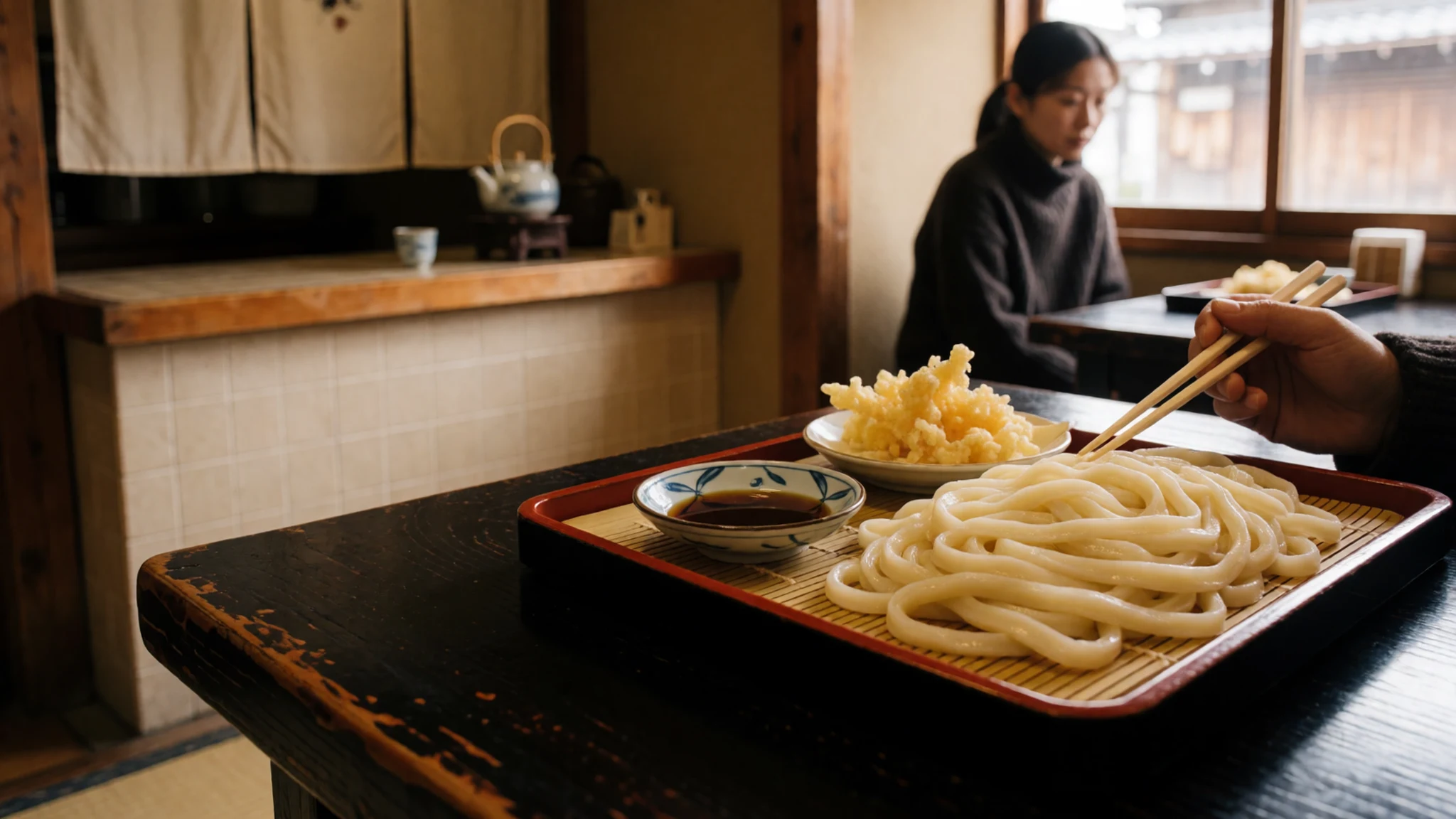
- Hand-made soba — Soba shops along Sainokawara Street and nearby lanes
Buckwheat noodles are cut by hand in small shops around town and served hot in broth or cold on a tray with dipping sauce. The cold version is refreshing after a hot soak, and rice dishes are often on the menu too.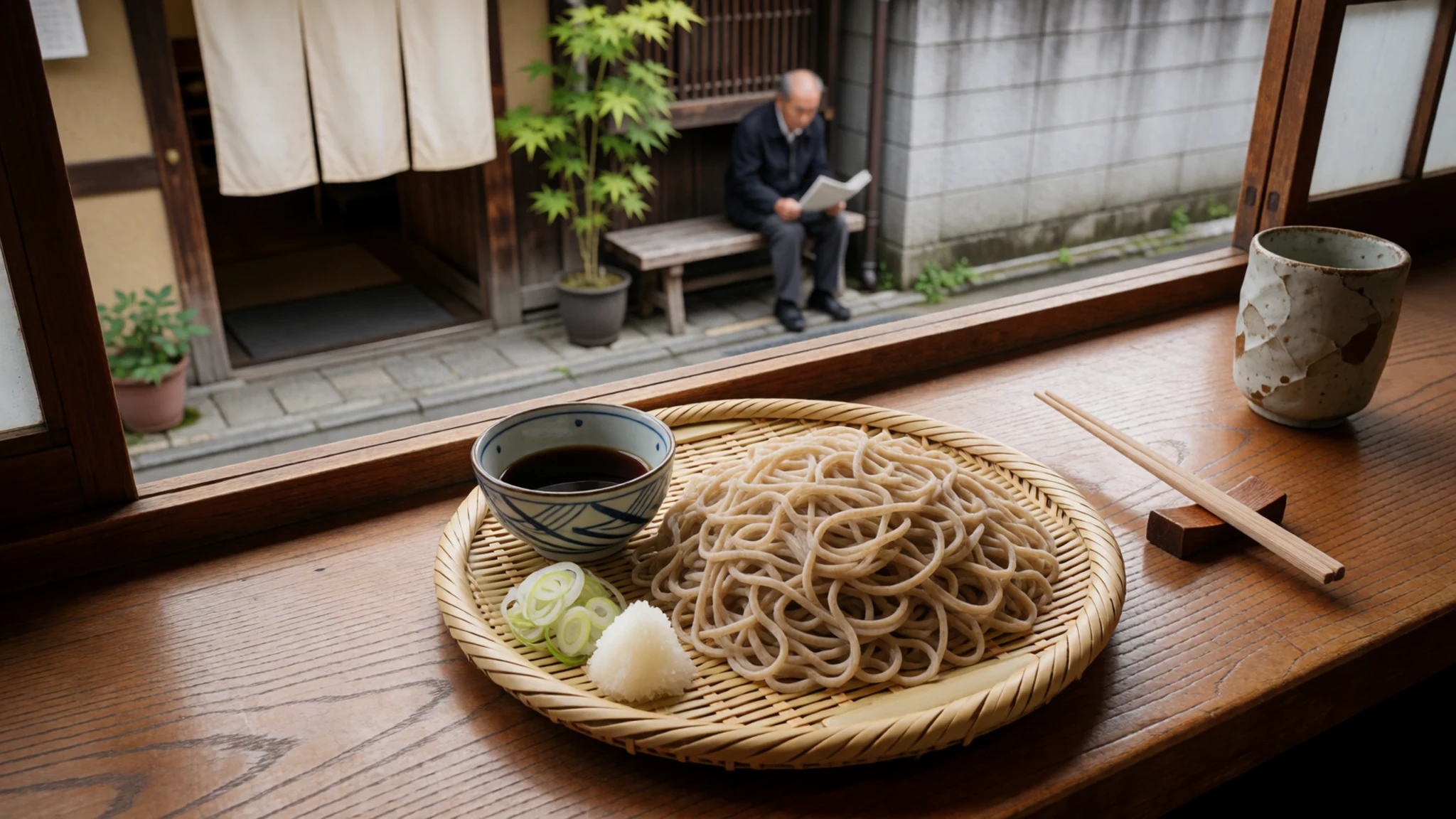
- Pork shabu-shabu — Shabu-shabu restaurants near the centre
Thin slices of pork are swished through a pot of simmering broth at the table, then dipped in sauce and eaten with vegetables. It is warming on a cold evening and easy to share among friends or family. - Sushi — Sushi counters in the middle of town
Local sushi counters serve a wide range of fish, with special menus that change by season. They are used by residents as well as visitors, which usually means fair quality and an unhurried atmosphere. - Onsen manju — Snack stalls and sweet shops around the Yubatake
Onsen manju are steamed buns with a sweet bean-paste filling, a classic hot spring town snack. They are best eaten warm and make an easy pick-me-up while walking between baths.
Plan it
Best time. September–November for cool, clear days and autumn colour, or May for mild weather. Winter is cold and snowy at this altitude, which suits hot baths but needs proper boots; summer is cooler than the plains but weekends can be busy.
How long. 1–2
Getting there. Kusatsu has no station of its own. Take the JR Agatsuma Line to Naganohara-Kusatsuguchi Station, then a bus up to the town, about 25 minutes. From Tokyo, a direct expressway bus from Shinjuku takes around four hours. Check the official site, https://www.kusatsu-onsen.ne.jp/, and operators for current timetables.
Budget. mid
Tips
- Book inns well ahead for weekends, holidays and autumn colour season
- Pack layers and grippy footwear, as the town is on a slope and can be icy in winter
- Keep soaks short and drink water, since the hot, acidic water is tiring
- Carry some cash for small shops, snack stalls and neighbourhood baths
- Check the official site for crater lake access, as volcanic gas and weather can close it
Etiquette
- Wash thoroughly before entering any bath and keep towels out of the water
- Treat resident-run bathhouses as neighbourhood spaces: keep voices low and follow posted rules
- Remove shoes where you see a step up or slippers waiting
Nearby
Sources
- Wikidata Q3137477 (CC0)
- Wikipedia: Kusatsu Onsen (rev 1303866815) (CC BY-SA 4.0)
- Wikivoyage: Kusatsu (rev 5407758) (CC BY-SA 4.0)
- Photo 01-03.jpg — くろふね (CC BY-SA 4.0)
- Photo 02-kusatsu-onsen-gunma-prefecture-november-2018-13.jpg — Raita Futo (CC BY 2.5)
- Photo 03-kusatsu-gunma.jpg — Aw1805 (CC BY-SA 4.0)
- Photo 04-yubatake-14308957671.jpg — hoge asdf (CC BY 2.5)
- Photo 05-yubatake-7154088129.jpg — bizmac (CC BY 2.5)
- Photo 06-bt-panoramio.jpg — KΛNΛTΛ (CC BY 3.0)
- Photo 07-panoramio.jpg — Shift (CC BY 3.0)
- Photo 08-panoramio.jpg — Shift (CC BY 3.0)


