Kurokawa Onsen
Kurokawa Onsen, Japan
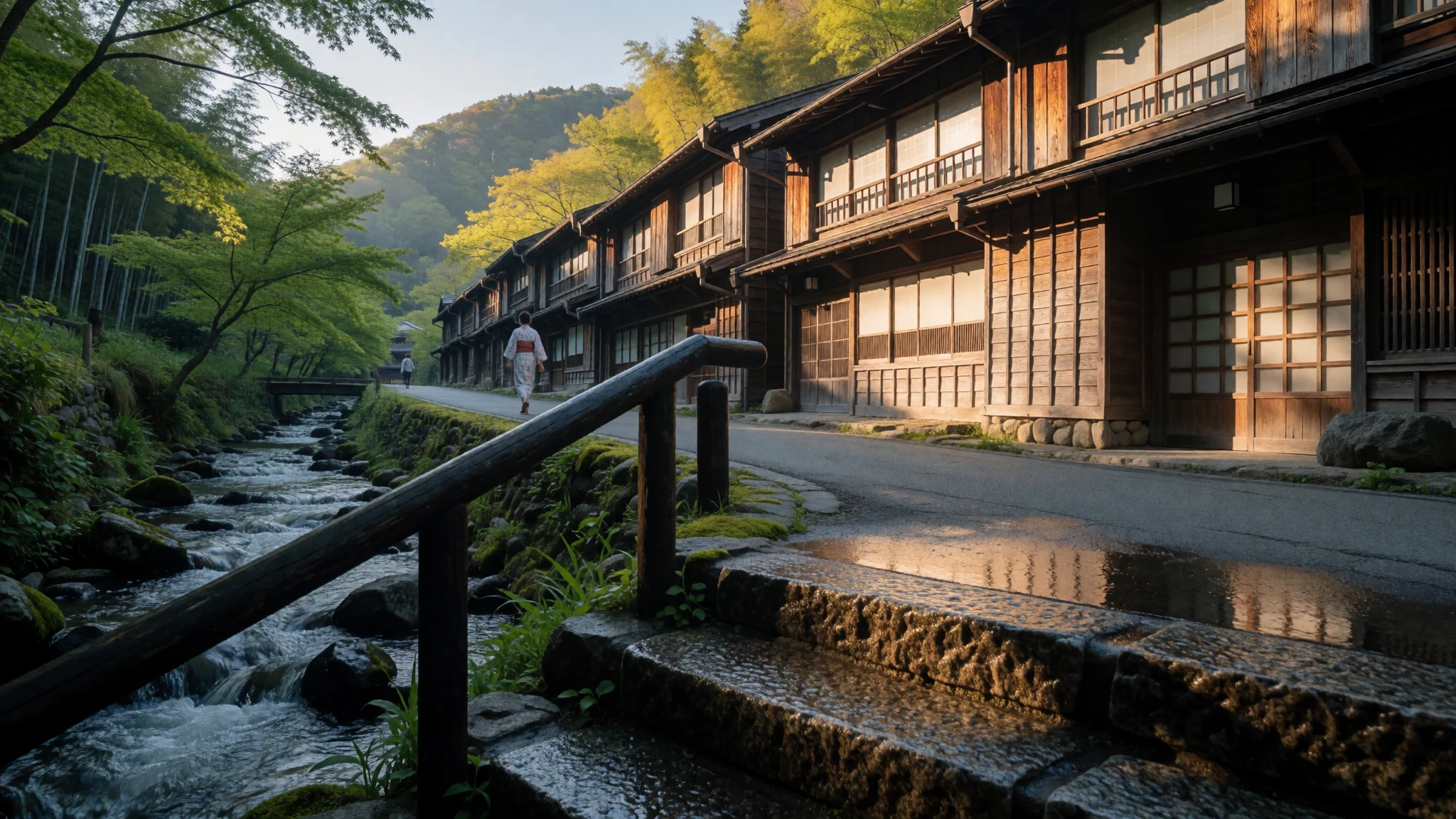
Kurokawa Onsen is a small hot-spring village in the hills of Kyushu, where guests stroll between outdoor baths in cotton robes.
The place
Kurokawa Onsen is a small hot-spring village in Kumamoto Prefecture, on the island of Kyushu in Japan. It sits in a wooded river valley in the hills north of Aso, and it is classed as a spa town built around sulfur springs. The village is compact: one main street, a stream running beside it, and ryokan (traditional inns) tucked among cedar and bamboo. The lanes are narrow, so most guests park once and walk everywhere.
What sets the place apart is restraint. Buildings are low and timber-clad, signs are modest, and the baths are mostly outdoors, set into rock beside the water or among trees. Steam drifts from drains and bathhouse roofs, and in cool weather the whole valley smells faintly of minerals. Guests move between baths in cotton robes and wooden sandals, which gives the lanes a slow, slightly theatrical look.
It is a place for staying overnight rather than ticking off sights. Day visitors can join in, but the village is at its best in the evening and early morning, when the coach parties have gone and the stream is the loudest thing around. Crowds build at weekends, during autumn colour and over Japanese holiday periods, so midweek stays are calmer. The official tourism site, https://www.kurokawaonsen.or.jp, carries current bath and pass information.
Winters can be cold and damp, summers warm and humid, and the rainy season turns the valley lush and misty. None of this puts people off for long; hot water suits nearly every kind of weather.
Its story
Kurokawa Onsen owes its present look to a deliberate choice by the people who live and work there. The springs were a local resource long before the lanes filled with visitors, and bathing was an everyday habit in this part of the Kyushu uplands before it became a business. As domestic leisure travel grew across Japan, many hot-spring towns added large concrete hotels and loud signage to chase numbers. A small, remote village in a river valley struggled to compete on those terms.
Its answer was to go the other way. Inn owners and residents worked together on a shared look for the whole settlement: planting trees along the lanes, keeping buildings low, using timber and stone in place of raw concrete, and holding back on advertising. A wooden bathing pass, usable at the outdoor baths of several inns, encouraged guests to wander the village rather than stay inside one building. That spread custom between businesses that might otherwise have been rivals, and it made the village itself, not any single inn, the thing people came for.
The approach has been widely admired as a way of keeping a rural place distinctive. It also carries a tension. Attention can wear away the quiet that earned it, and weekends and the autumn season test the village's patience. Residents manage this through shared rules, a local tourism association that handles information and passes, and a steady preference for overnight guests who slow down over day trippers who rush through.
What to see
- The main street — Village centre
The main street runs beside the stream through the centre of Kurokawa Onsen, lined with timber-fronted inns, small shops and snack counters. It is short enough to walk end to end in minutes, but most people take far longer, stopping to peer into gardens. Early morning, before day trippers arrive, is the quietest time.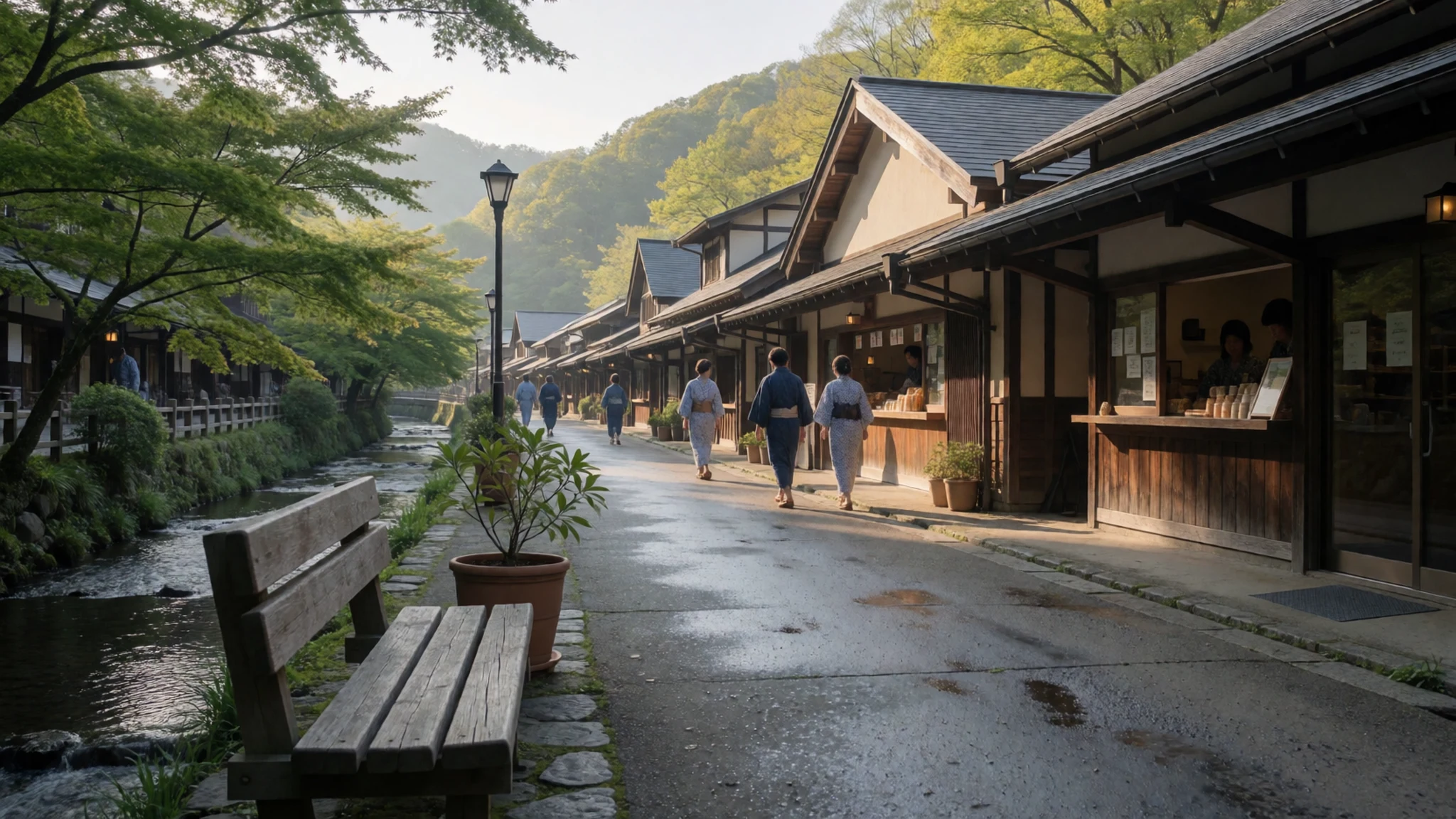
- Outdoor baths and the bathing pass — Inns across the village
Bath-hopping is the signature outing at Kurokawa Onsen. A wooden bathing pass, sold through the village's inns and information office, lets guests try the outdoor baths of different inns during one stay. Some baths sit beside the river, others in rock pools under trees. Check the official site for how the pass currently works.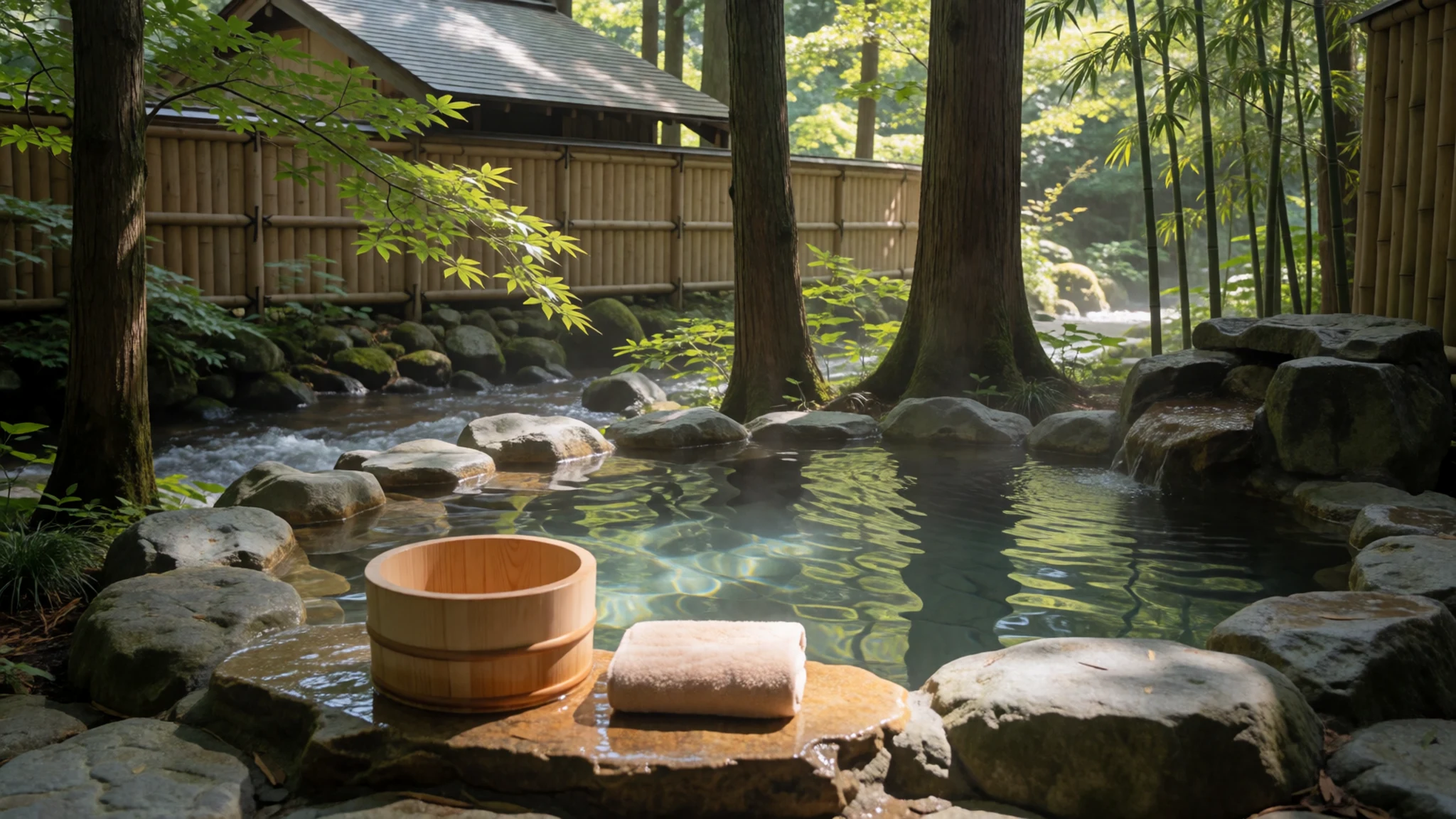
- A night in a ryokan — Village lanes
A night in a ryokan is the centre of a visit to Kurokawa Onsen. Rooms have tatami floors and futon bedding, tea is poured on arrival, and the evening meal comes in courses. Sanga Ryokan and Ikoi Ryokan appear in the reference photos, and many other inns have gardens worth a slow look. Book well ahead for weekends and autumn.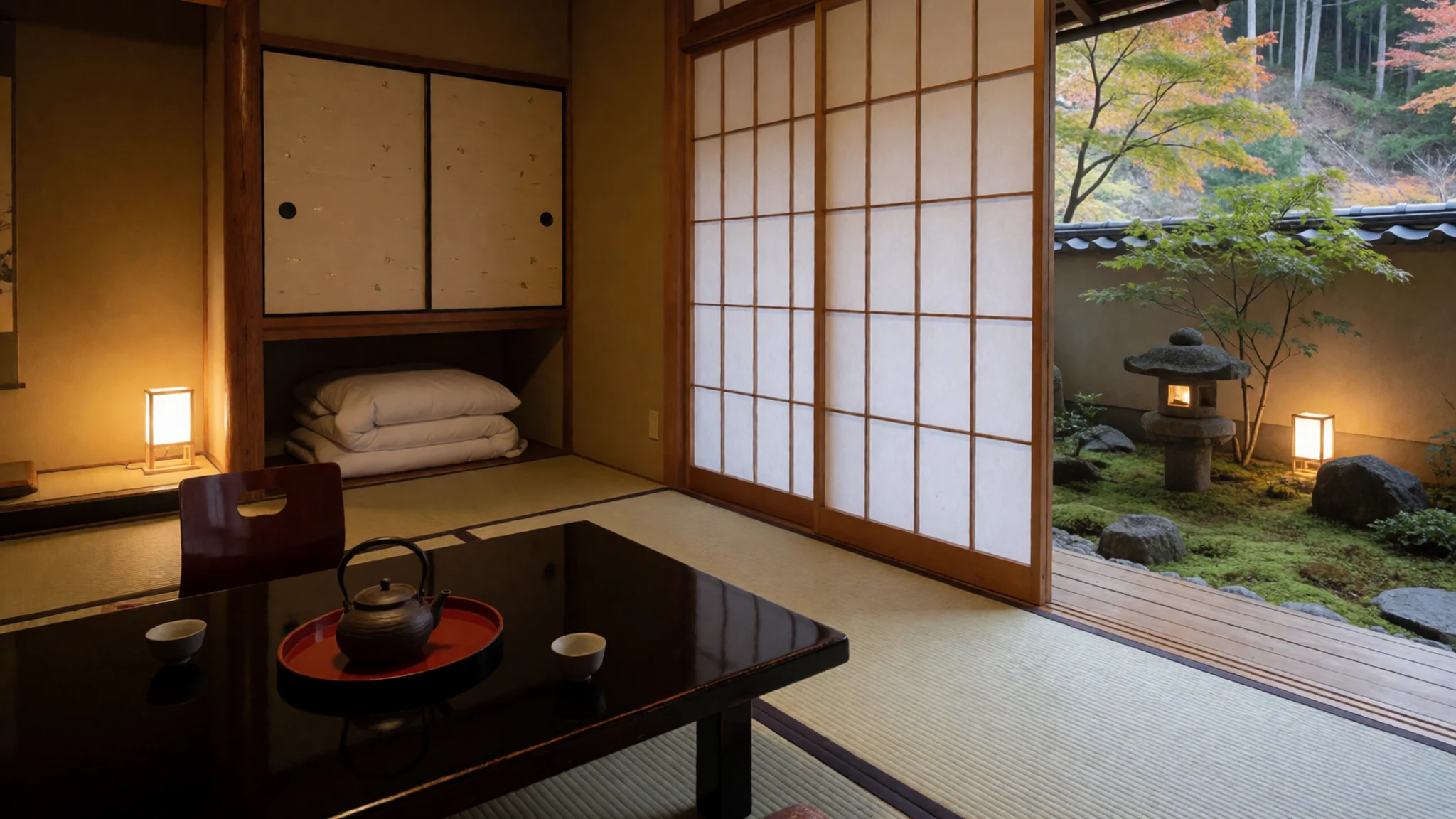
- Autumn hills — Hills around the village
The wooded hills around Kurokawa Onsen turn red and gold in autumn, and the valley is photographed heavily then. Walking up the lanes from the stream gives views over the roofs to the slopes beyond. Late October into November is the usual window, though timing shifts with each year's weather.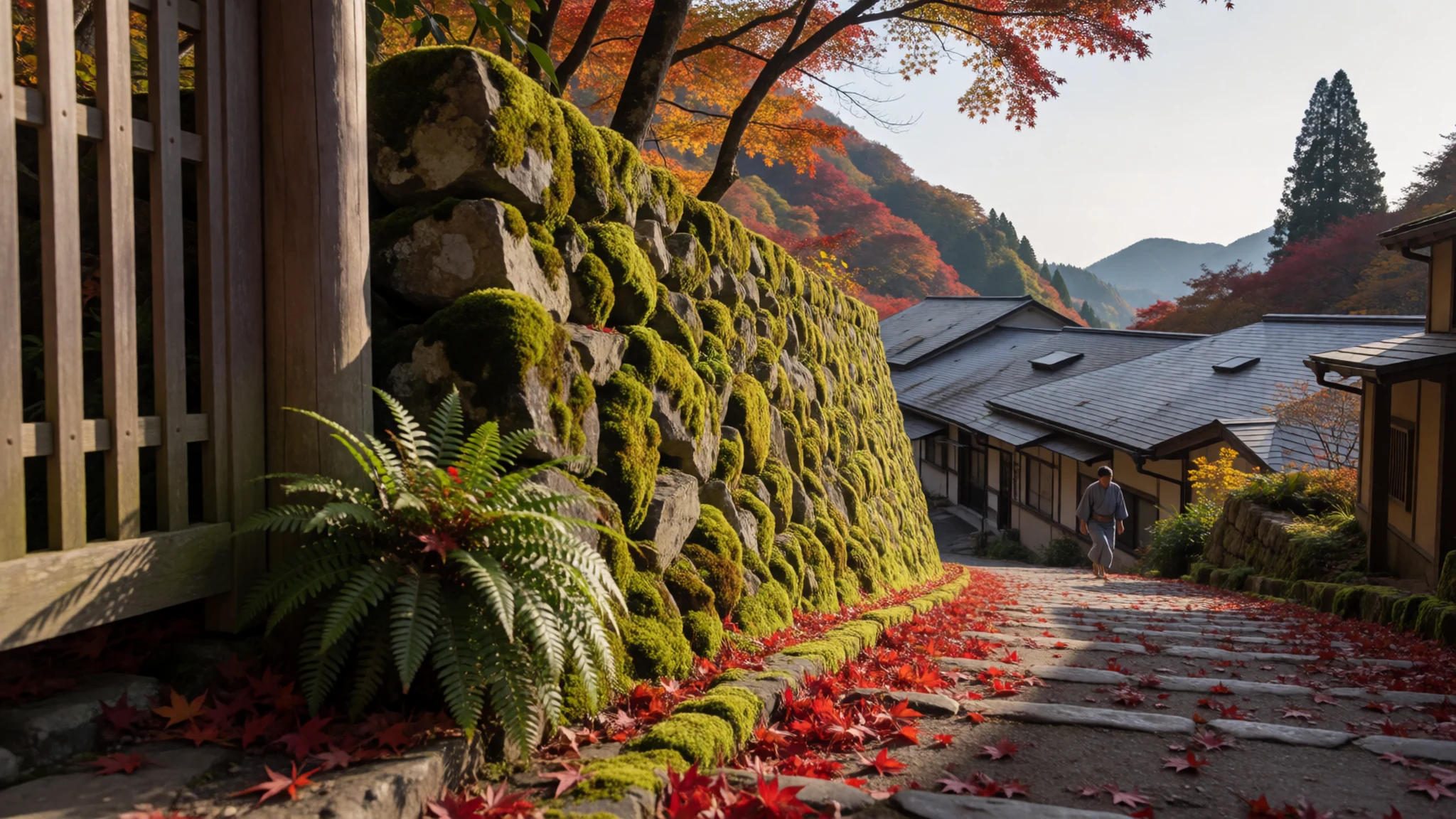
- The stream and its footbridges — Along the stream
The stream that threads through Kurokawa Onsen is the village's backbone, with small bridges, stone steps and gardens along its banks. Evening is atmospheric, when lantern light and the sound of water replace the day's chatter. Stay on the paths and keep voices low after dark, as many guests are already asleep.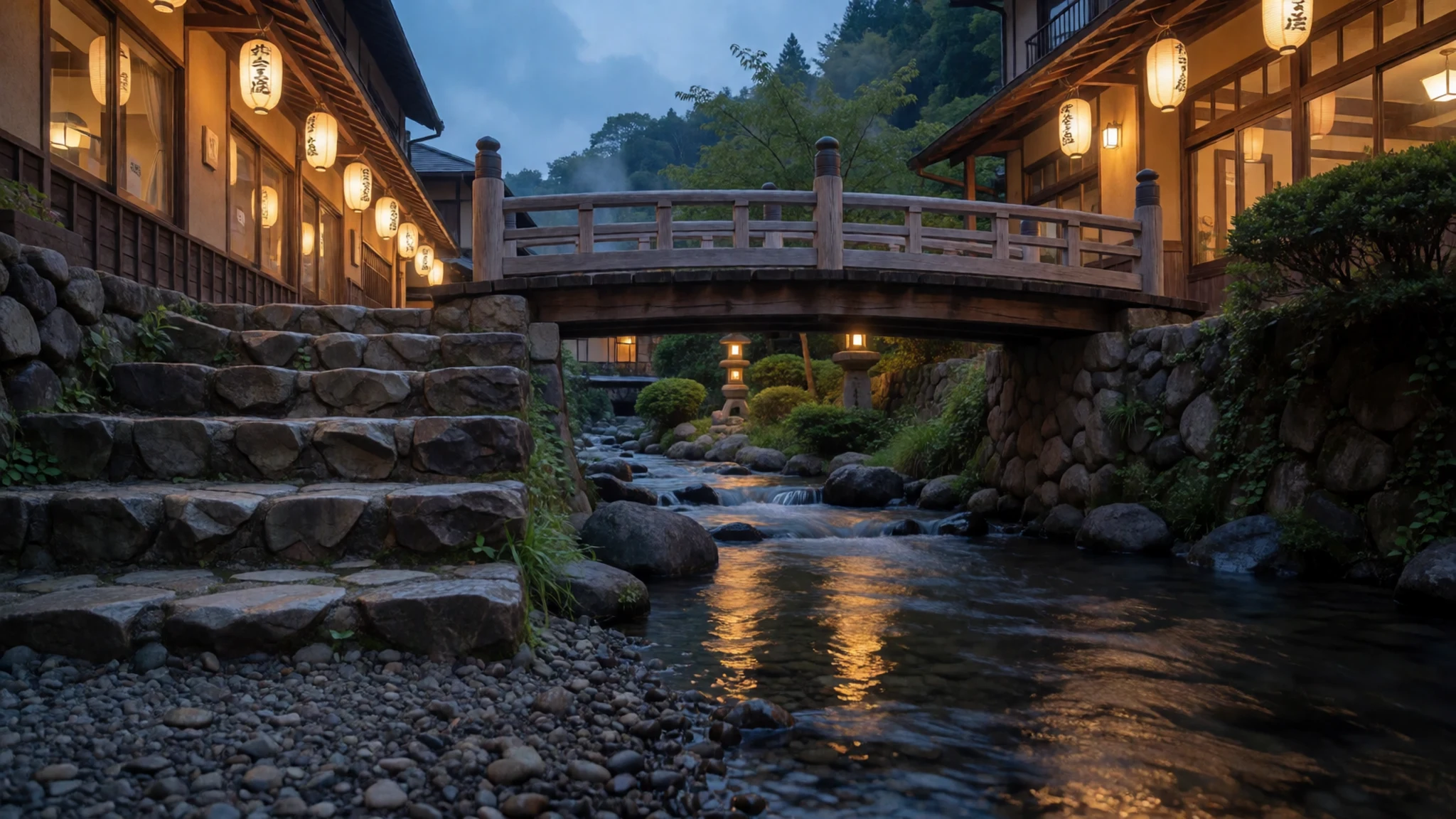
Culture
Kurokawa Onsen is a village built on the Japanese habit of communal bathing, and the customs around it shape the whole stay. Bathing is not a quick wash but a slow, restorative ritual, often repeated before dinner, after dinner and again in the morning. Guests wear a cotton robe (yukata) around the inn and the lanes, and walking between baths in it is entirely normal.
Inns here follow the ryokan tradition. Shoes come off at the entrance, rooms are floored with tatami mats, and meals are served as a sequence of small seasonal dishes, often in the room itself. Staff are formal but unhurried, and arrival times matter, because the evening meal is prepared for a set hour.
The village also has a strong sense of shared custody. Residents and inn owners have kept the place low-key on purpose, so quiet voices, tidy lanes and modest behaviour are part of the local code. Tattoos are restricted at some Japanese baths, so it is worth asking an inn before booking if this applies. Hot springs are also treated with respect as a natural resource, and mineral water should not be wasted or fouled.
Before entering any bath, wash thoroughly at the washing stations, keep your towel out of the water, and keep your voice low.
What to wear
Kurokawa Onsen is a place where clothing is part of the experience, because the inn robe is the village's everyday dress. The traditional garment here is the yukata, a light unlined cotton robe worn in summer and at hot springs, tied with a sash (obi). It differs from the silk kimono, which is heavier, formal, and now reserved for weddings, festivals and tea ceremonies. In colder months many inns add a padded jacket (tanzen or hanten) over the yukata, and guests wear wooden sandals (geta) outdoors.
What people wear now is mostly practical and casual. Residents dress for mountain weather in jackets, fleeces and sturdy shoes, while visitors from cities tend to wear relaxed travel clothes by day and switch to the inn's yukata in the evening. The village rarely sees anything formal outside weddings or special events.
For a visit, pack for changeable hill weather. Layers matter in winter and in the cool shoulder seasons, and a light waterproof is useful in the rainy season. Shoes that slip off easily are far more convenient than laced boots, since inns, baths and many shops ask guests to remove footwear. Bring a small bag for toiletries and a spare towel if wanted, and wear modest, comfortable clothes. Swimwear is not worn in Japanese baths, so there is no need to pack any.
What to eat
- Basashi — Local eateries and izakaya in Kumamoto Prefecture; some ryokan dinners
Basashi is raw horse meat, a Kumamoto speciality, sliced thin and eaten with soy sauce and grated ginger. Texture is soft and clean in flavour. A nigiri version appears in the reference photos. Order it only from places that handle raw meat carefully.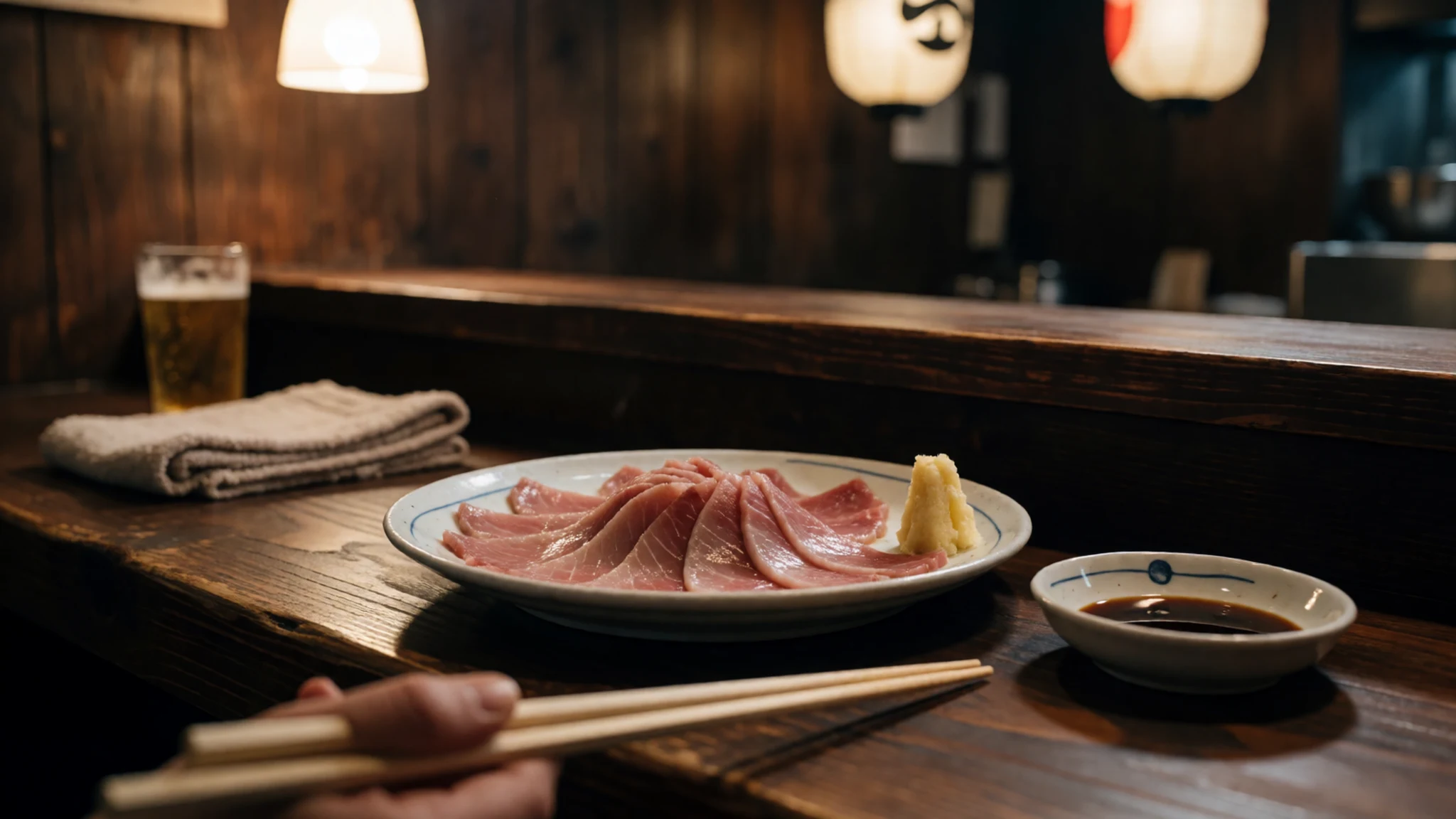
- Karashirenkon — Traditional eateries across Kumamoto Prefecture
Karashirenkon is lotus root with mustard paste packed into its holes, coated in a batter of soybean and wheat flour, and fried. The slices are crisp outside and sharp inside, so a little goes a long way. It is a classic Kumamoto side dish.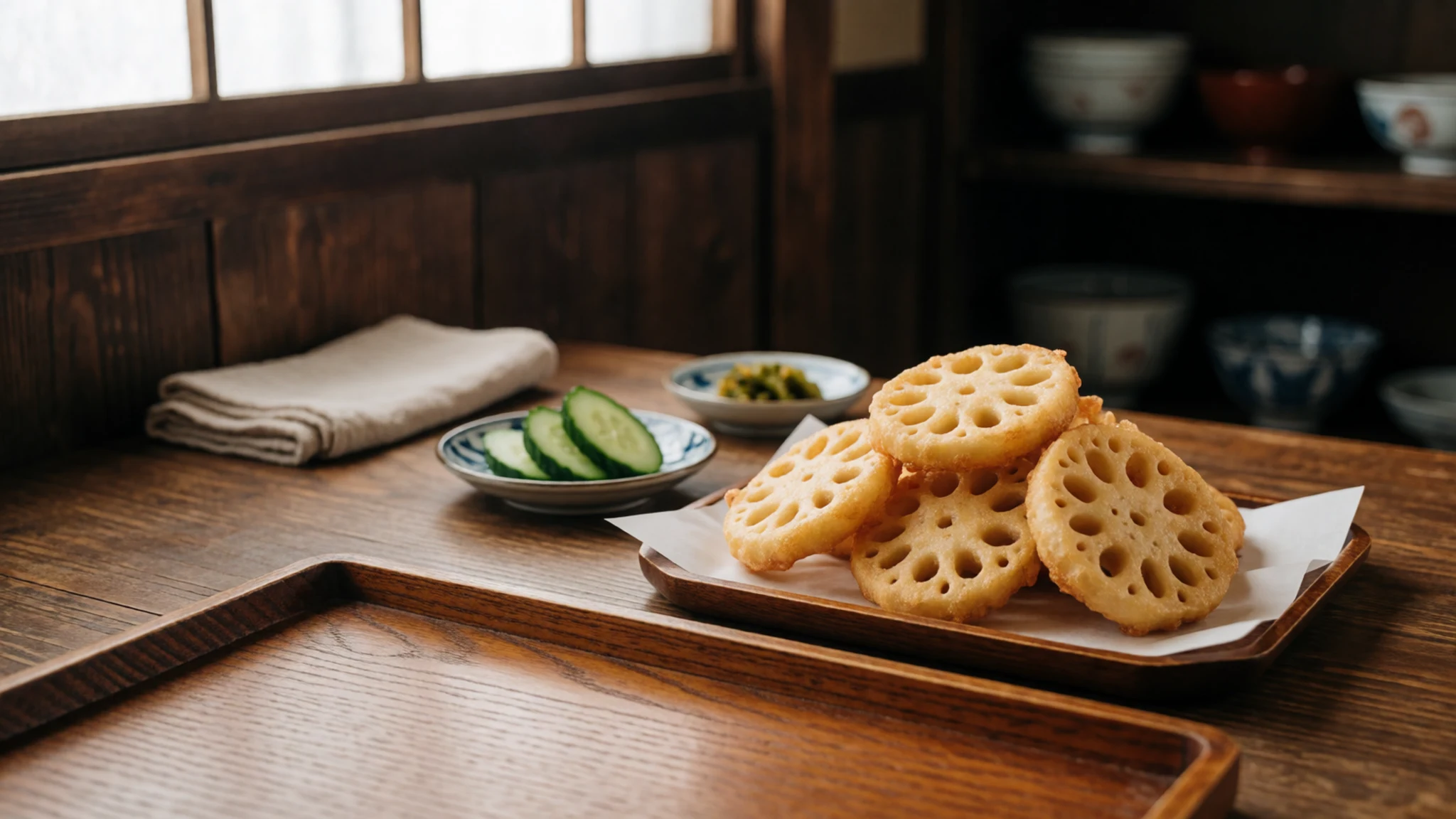
- Takana — Rural restaurants and shops around Aso
Takana is a leafy mustard-type vegetable linked with the Aso area, usually pickled and tangy, with a pleasant bite. It is often chopped into rice or served alongside it. Good for travellers who want something lighter than meat or fried dishes. - Kumamoto tonkotsu ramen — Ramen shops in Kumamoto city and larger towns
Kumamoto is known for tonkotsu ramen, noodles in a rich pork-bone broth, and queues outside popular shops are normal. Regional versions tend to be hearty, so it works well after a cool-weather soak or a long travel day. - Ikinaridango — Sweet shops, souvenir stalls and snack counters in Kumamoto Prefecture
Ikinaridango is a soft wheat-flour dumpling filled with sweet potato and sweet bean paste. The name relates to the local sense of 'as it is', meaning served simply. It makes a good light snack between baths or during a walk.
Plan it
Best time. April–May for fresh green hills and mild days, and late October–November for autumn colour. Winter is cold and the steam looks lovely, but dress warmly. The rainy season brings mist and humidity, and midsummer is warm and sticky.
How long. 2
Getting there. Aso-Kumamoto Airport (KMJ) is the nearest airport named in the brief; Kumamoto is the main city for onward connections. The last leg to the village is by road, usually bus or hire car, so check the official site for current routes and services.
Budget. mid
Tips
- Book inns well ahead for weekends, autumn colour and Japanese holiday periods
- Arrive in the afternoon so the baths and the evening meal are not rushed
- Carry some cash for small shops and snack counters, as card use can be patchy
- Pack layers and easy slip-on shoes for mountain weather and frequent shoe removal
- Drink water after bathing, as hot mineral water can leave you drained
Etiquette
- Wash before entering a bath and keep towels out of the water
- Keep voices low in the lanes and inns, especially in the evening
- Ask an inn about tattoo policy before booking
Nearby
Sources
- Wikidata Q11678251 (CC0)
- Wikipedia, Kurokawa Onsen (CC BY-SA 4.0)
- Wikivoyage, Kumamoto (prefecture), rev 5214632 (CC BY-SA 4.0)
- The main street of Kurokawa Onsen, hiroooooki (CC BY 2.5)
- Cigarette vending machine, tjabeljan (CC BY 2.5)
- Bathing token at Kurokawa Onsen, tjabeljan (CC BY 2.5)
- Basashi nigiri, Agtx (CC BY-SA 4.0)
- David Stanley at Sanga Ryokan, David Stanley (CC BY 2.5)
- Ikoi Ryokan at Kurokawa Onsen, Hans Suter (CC BY 2.5)
- Kurokawa onsen 001, Yosemite (assumed) (CC BY-SA 2.0)
- Mountains in autumn in Kurokawa Onsen (banner), Fabimaru (CC BY 3.0)


