Kurobe Gorge
Kurobe Gorge, Japan
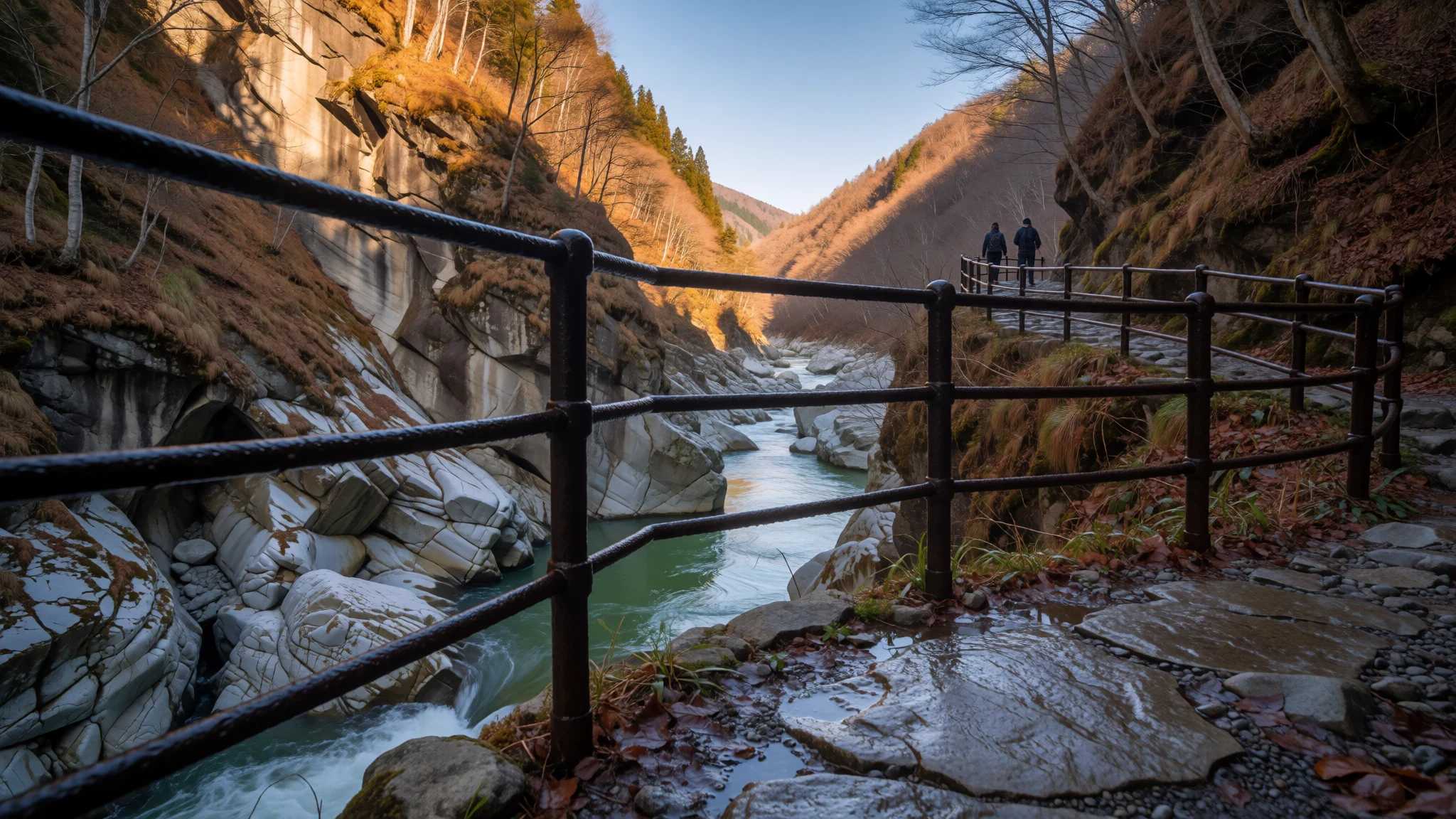
Kurobe Gorge is a deep granite canyon in the Northern Japan Alps, explored by open-sided mountain train, riverside trail and hot spring.
The place
Kurobe Gorge (黒部峡谷, Kurobe-kyōkoku) is a steep, V-shaped canyon in Kurobe city, Toyama Prefecture, on the Sea of Japan side of Honshu. It lies within the Northern Japan Alps, where the Kurobe River has cut down through hard granite and left walls that close in tightly around the water. The valley falls inside a national park, so the land above the river is mostly forest and bare rock rather than farms or villages.
Most visitors meet the gorge from its lower end, in the hot-spring town of Unazuki Onsen, which has its own Shinkansen station. From there a small railway pushes upstream along the cliff. It is the easiest way to see the canyon without a serious hike. Beyond the railway, walking paths follow old working routes high above the river, and hot springs turn up along the way.
Further into the mountains, the same river feeds Kurobe Dam, one of the highlights of the Tateyama Kurobe Alpine Route, which crosses the range by a chain of cable cars, buses and tunnels. The gorge and the dam make two quite different days out. One is a narrow green corridor at low altitude, the other a high alpine reservoir.
This is a place shaped by water and engineering at once. The colours change sharply with the seasons, mountain weather can turn quickly, and the train and trails are busy at weekends and through the autumn colour season.
Its story
Kurobe Gorge owes its shape to patience. The Kurobe River spent a very long time grinding through granite as the mountains around it rose, and the result is a canyon that is narrow at the bottom and sharply walled on both sides. Few people lived in it. The terrain was simply too steep for settlement.
The same steepness made it attractive to engineers. A river that drops fast through a confined valley is ideal for hydroelectric power, and in the twentieth century power companies set about harnessing the Kurobe. Building dams and power stations in such country meant carrying workers and materials into places with no roads. A narrow railway was laid along the gorge wall for this purpose, and trails were cut into the cliffs so that crews could reach their sites on foot.
What began as working infrastructure later became the visitor experience. The railway now carries passengers instead of construction crews, and some of the old works paths have been opened to walkers. The Kurobe Dam, at the head of the route, became a landmark in its own right and a stop on the Tateyama Kurobe Alpine Route.
The wider area was protected as a national park before the Second World War, which is why the slopes above the works remain wooded. Visiting today means seeing a wild-looking valley that is, in fact, a working landscape, and that tension is much of its character.
What to see
- Unazuki Onsen — Lower end of the gorge, Kurobe city
Unazuki Onsen is the hot-spring town at the foot of the gorge and the usual starting point. Its station on the Shinkansen line connects to the gorge railway. It is worth arriving early or staying a night, so the morning train and a soak in the town's baths are not rushed.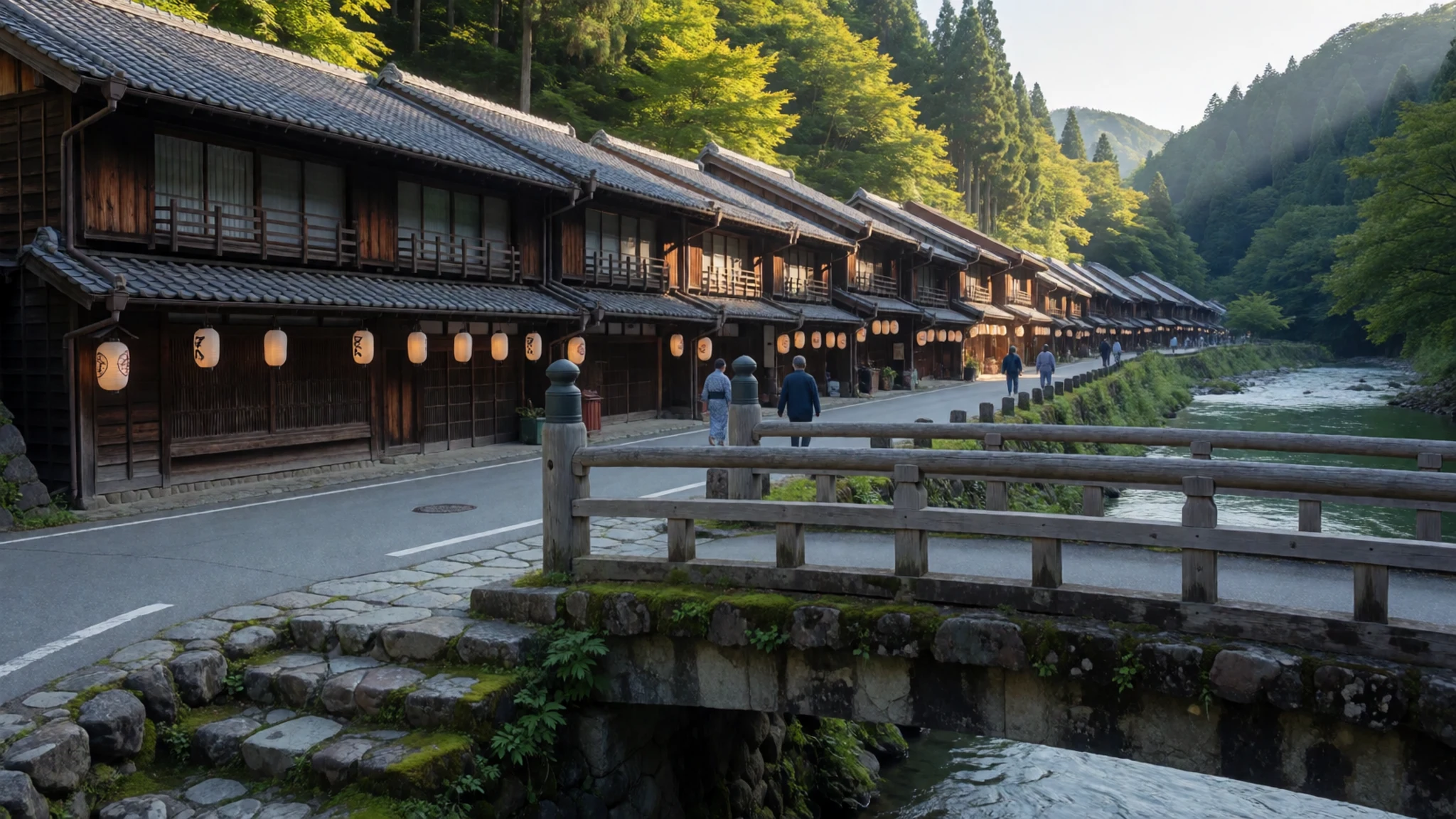
- Kurobe Gorge Railway — Unazuki Onsen upstream along the gorge
The gorge railway is the main way in, a small line with open-sided carriages that creeps upstream beside the river, over bridges and through short tunnels. Wikivoyage describes it as a unique truck-style train running about halfway up the canyon. Services are seasonal, so check the official site before planning.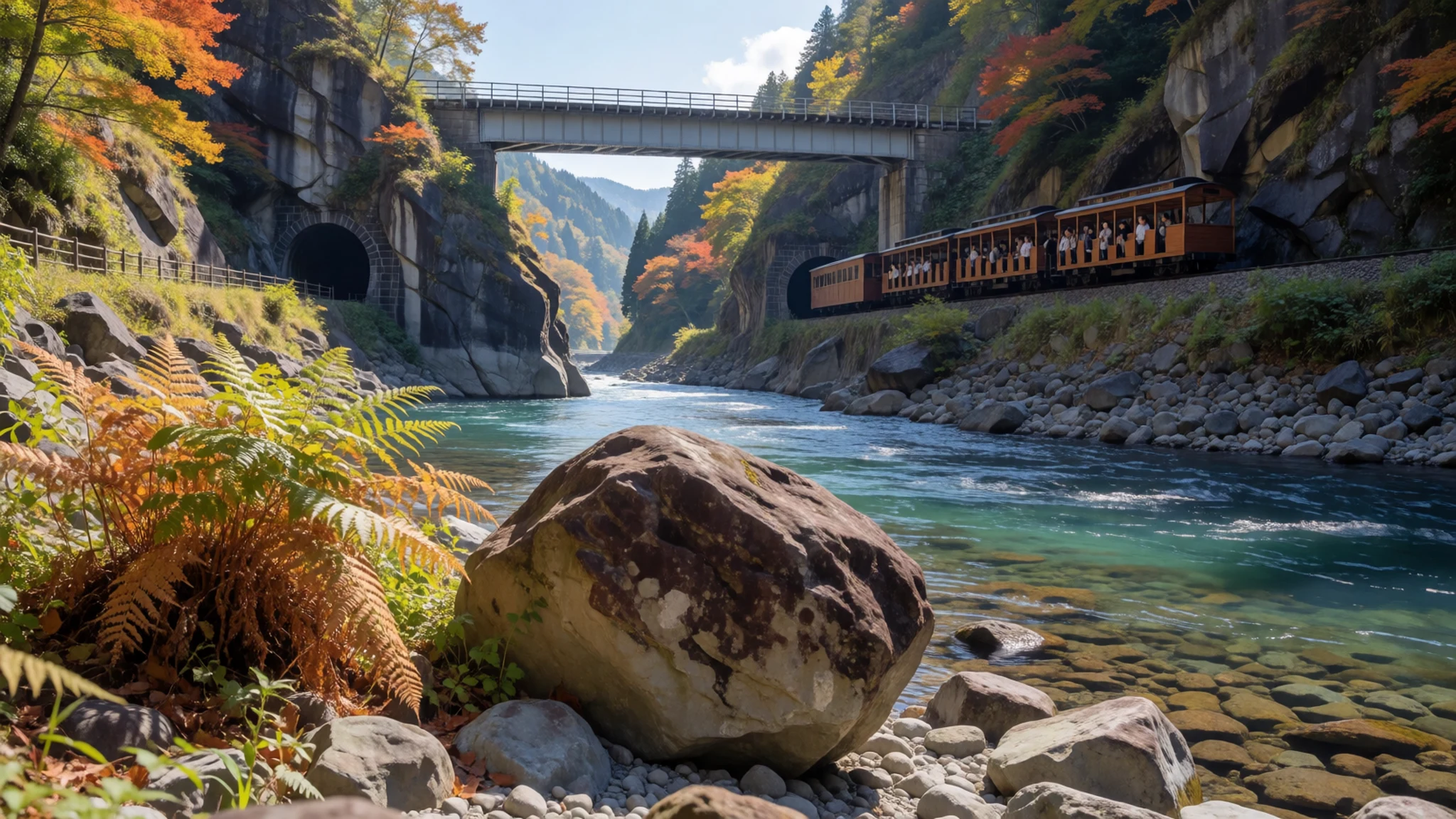
- Okukane Bridge — Upper reaches of the gorge near Keyakidaira
Okukane-bashi is a bridge high over the river that gives a view straight down into the narrow canyon and along the wooded walls. The colour is strongest in autumn, when red and gold leaves cover the slopes. Bring a camera, but keep clear of other walkers on the deck.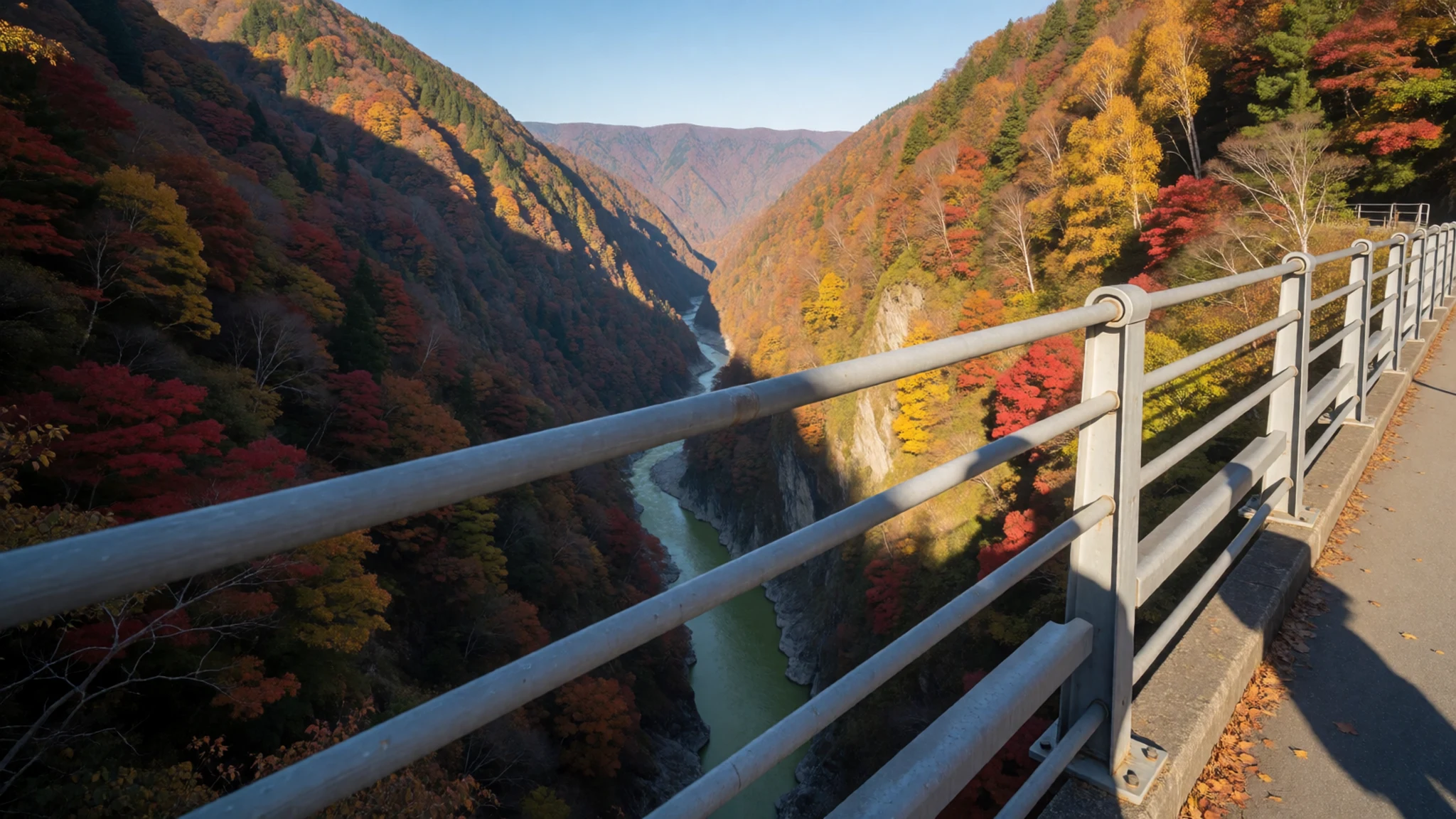
- Keyakidaira and the Nichiden Hodo trail — Mid-gorge, reached by the railway
Keyakidaira is a stop on the railway and a gateway to walking. The Nichiden Hodo, an old works path cut into the cliff, runs from here above the river, with views of the S-shaped bend known as Sōji-kyō. Expect narrow sections and drops, and check trail conditions locally.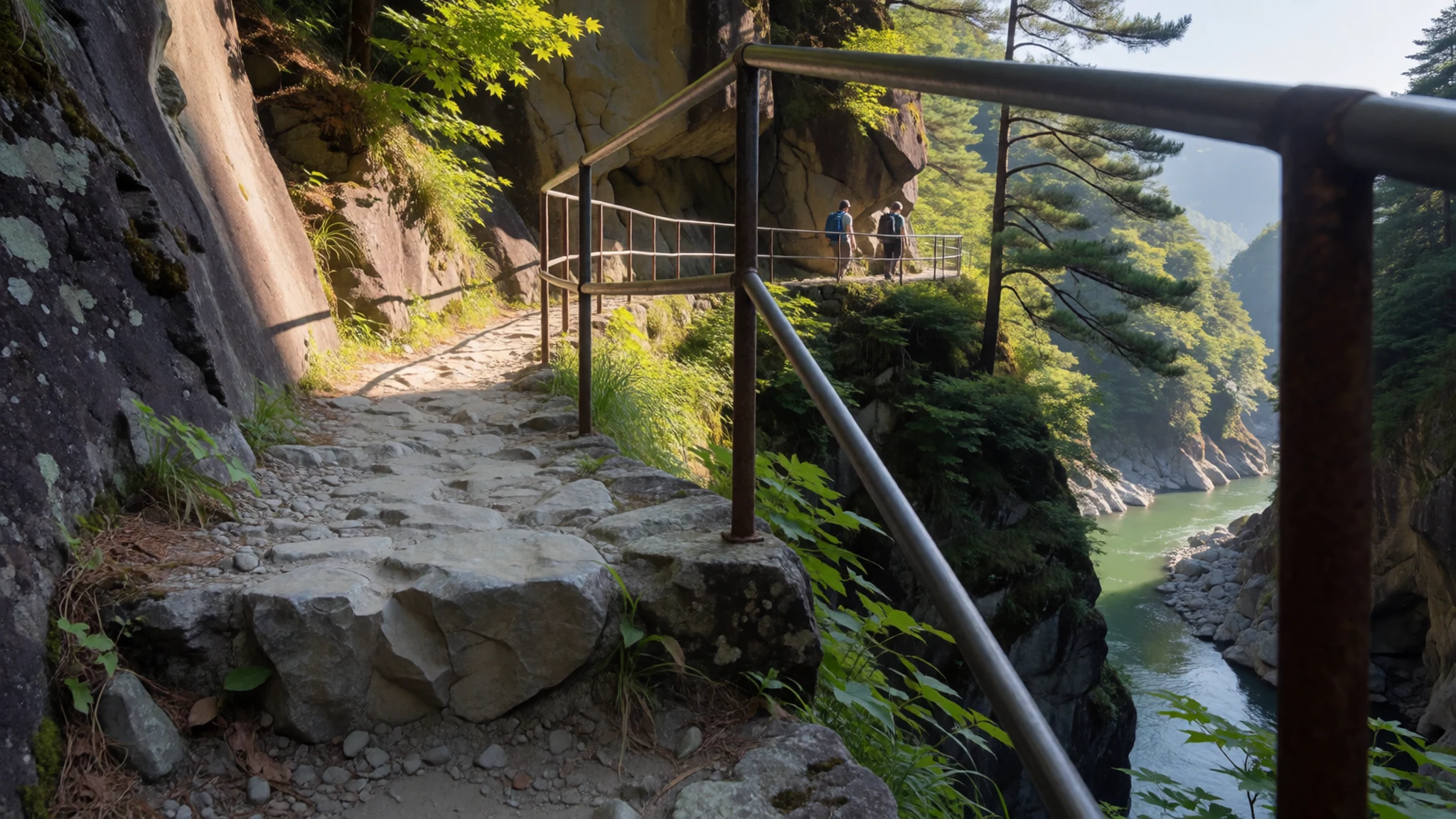
- Kurobe Dam — Tateyama Town, upstream in the Alps
Kurobe Dam is a high-mountain reservoir and one of the highlights of the Tateyama Kurobe Alpine Route. It is reached by a chain of transport from the Toyama side or the Nagano side, rather than by the gorge railway. It makes a separate day out, so plan around the route's seasonal opening.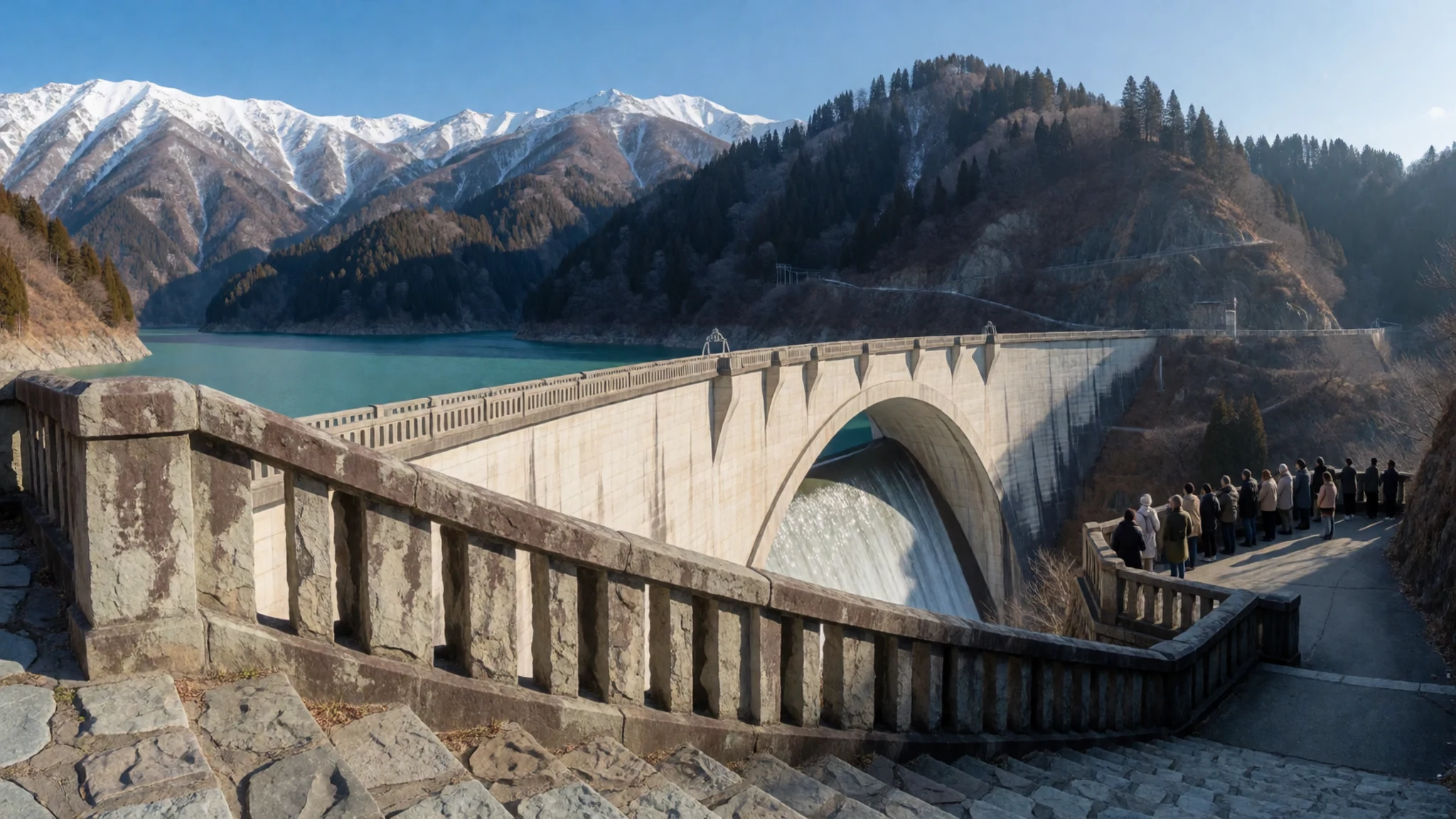
Culture
Kurobe Gorge is shaped by two overlapping traditions: Japanese mountain-and-onsen culture, and the heritage of the engineers and labourers who built the power works. Walking and soaking in hot water is a long-standing way of enjoying the Japanese mountains, and Unazuki Onsen leans on that custom, with bathing houses and inns serving people coming down from the gorge.
The infrastructure itself carries meaning. The railway, trails and dam were built by crews working in steep, cold, dangerous terrain, and local museums and displays acknowledge that effort. Visitors often find the gorge as much a story about people and rivers as about scenery.
In Toyama Prefecture, seasons matter. Autumn colour draws crowds, spring brings snowmelt and fresh green, and winter closes much of the upper area. Locals are used to visitors planning around these cycles, and information is available in several languages through the prefecture's official guide site, Visit Toyama.
Mountain courtesy applies here as it does elsewhere in Japan. Rubbish is carried out, voices are kept low on narrow trails and in the open carriages, and walkers give way to people coming the other way on cliff paths. Onsen rules are strict and are followed quietly.
Before any onsen visit, wash thoroughly at the washing stations, keep your towel out of the bath, and ask in advance whether tattoos are accepted.
What to wear
Kurobe Gorge has no single local costume, so the traditional dress that matters is the national one. The yukata, a light cotton robe, is what guests wear around onsen towns such as Unazuki Onsen, usually supplied by inns and worn in the evening. Kimono, made from silk or sometimes cotton blends, is kept for festivals, weddings and formal occasions, and happi coats appear at local festivals.
Day to day, people in Toyama dress for the weather: practical layers, waterproof jackets, and sturdy shoes. Walkers on the gorge trails wear proper hiking gear, while townspeople wear simple, neat casual clothes. Many visitors on a train day trip dress in light outdoor clothing rather than anything formal.
For visitors, layers are the sensible answer. Gorge air is cooler and damper than the valley floor, and the weather changes quickly, so carry a light waterproof, a warm mid-layer and a hat. Autumn and spring evenings can be cold, and winter is serious mountain weather. Wear shoes with real grip, since cliff paths, bridges and wet rock can be slippery. Closed shoes are better than sandals on any trail.
Onsen etiquette affects dress too. Bathing is done without swimwear, and a small towel is the only item carried into the bath area. Shrines in the area are best approached in tidy, modest clothing, with shoulders and knees covered where convenient.
What to eat
- Shiroebi (white shrimp) — Seafood counters and sushi shops around Toyama Bay
Toyama Bay is known for shiroebi, a small, translucent shrimp served raw over rice, as tempura, or as a topping in other dishes. It is sweet and delicate. Look for it at seafood counters in Toyama city, Himi and on the menus of local sushi shops.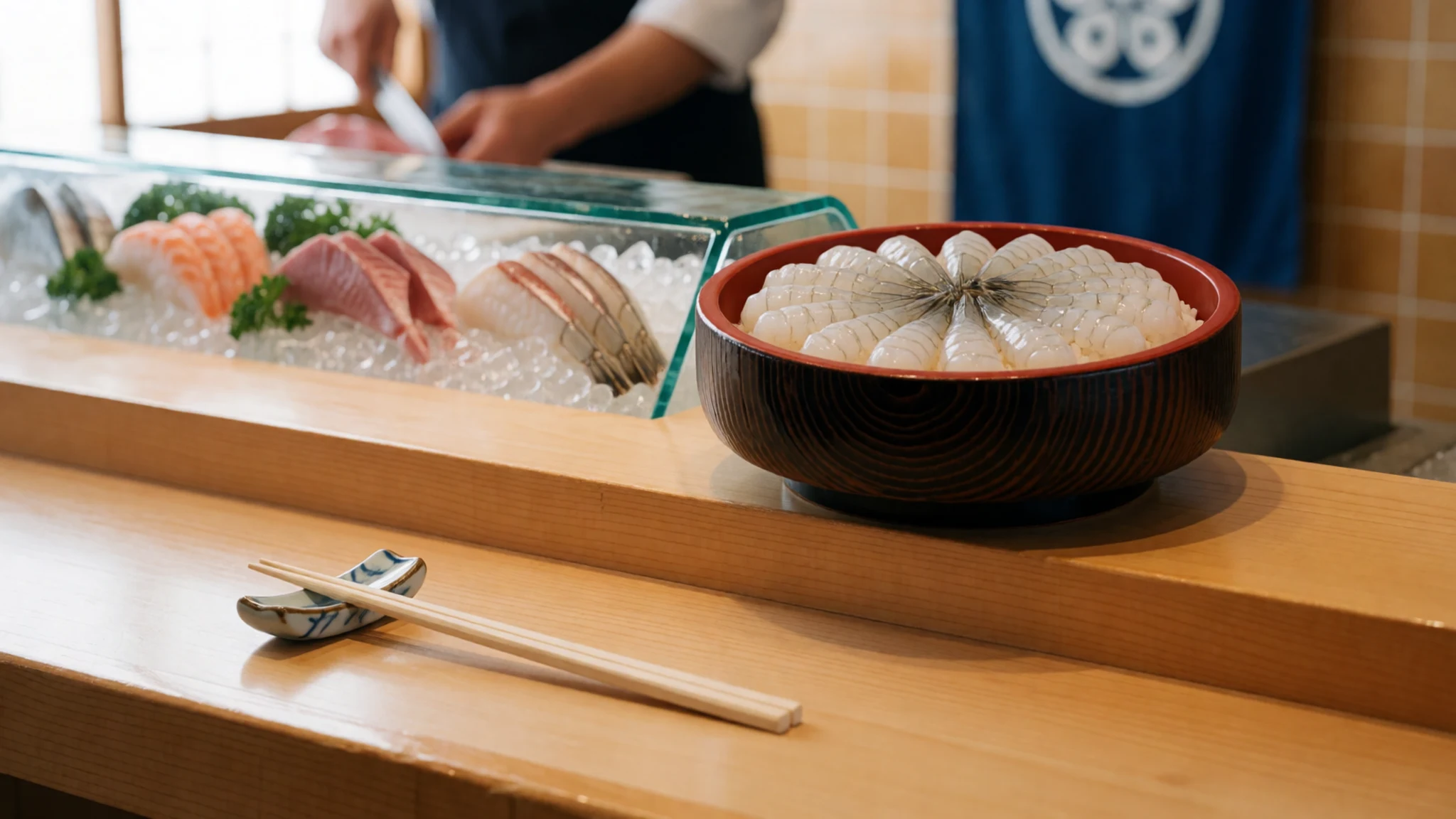
- Masu-zushi — Station shops and food halls in Toyama
Masu-zushi is pressed sushi made with cured trout and rice, usually pressed in a round wooden box and sold sliced into wedges. It travels well, so it is a sensible picnic or train meal for the gorge. Station shops in Toyama sell it.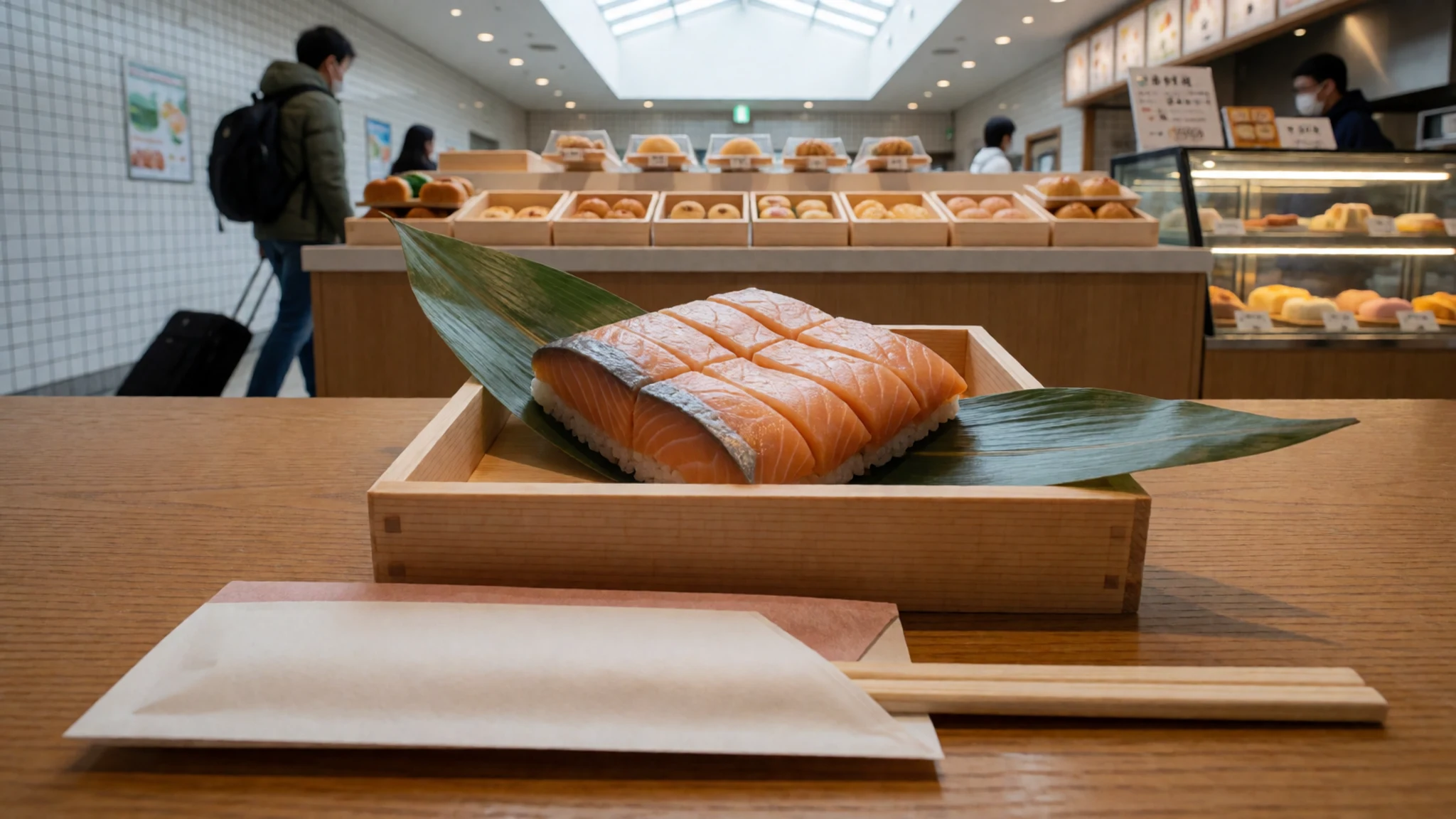
- Toyama black ramen — Ramen eateries in Toyama city
Toyama black ramen is a dark soy-based noodle soup, strongly seasoned and generously peppered, traditionally eaten by workers who needed salt and energy. It is a hearty meal after a cold gorge walk. Look for small ramen eateries in Toyama city. - Fresh fish at Himi — The fish market and harbour area at Himi
Himi is a seaside fishing town with a well-regarded fish market, according to Wikivoyage, and is a good place to eat the day's catch. Winter is the time for fatty yellowtail, while other seasons bring different fish. Ask what is in season. - Onsen-town set meals — Inns and small eateries in Unazuki Onsen
Inns and eateries in Unazuki Onsen serve regional set meals built around mountain vegetables, river fish and local rice. Meals at inns are usually booked in advance with the room. Casual eateries near the station suit a quick lunch before the train.
Plan it
Best time. Late October to November for autumn colour, and May for fresh green and cooler walking. Summer is warmer but good for the high-altitude parts of the area; winter brings snow, and much of the gorge railway and the alpine route run only in season, so check the official sites before planning.
How long. 1–2
Getting there. Toyama Airport (TOY) has flights from Tokyo, Sapporo, Seoul and Taipei. The Hokuriku Shinkansen links Tokyo and Toyama in about 2 hrs and Kanazawa and Toyama in about 30 min, with a stop at Unazuki Onsen. From Unazuki Onsen station, the gorge railway departs from the nearby terminus.
Budget. mid
Tips
- Check the railway and the Tateyama Kurobe Alpine Route's opening dates on their official sites before booking anything.
- Go early on weekends and in the autumn colour season, when trains and bridges fill up.
- Carry a waterproof jacket and layers, because gorge weather changes quickly.
- Bring some cash for small shops and inns in onsen towns, though many places also take cards.
- Stay a night in Unazuki Onsen so the morning train is not rushed.
Etiquette
- Keep voices low on trains and narrow cliff trails, and give way on single-width paths.
- Take all rubbish with you when walking.
- Wash before using an onsen and check the tattoo policy in advance.
Nearby
Sources
- Wikidata Q11179607 (CC0)
- Wikipedia: Kurobe Gorge (rev 1363939457) (CC BY-SA 4.0)
- Wikivoyage: Toyama (prefecture) (rev 5213990) (CC BY-SA 4.0)
- Photo: S-ji-kyo in Kurobe Gorge, Yasu (CC BY 3.0)
- Photo: Kurobe kyokoku view from Kurobe Dam, Qurren (CC BY 3.0)
- Photo: Kurobe Gorge in autumn, lumoplank (CC0 1.0)
- Photo: Keyakidaira Station, 江戸村のとくぞう (CC BY-SA 4.0)
- Photo: Okukane Mountain, Reggaeman (CC BY 3.0)
- Photo: Kurobe Gorge railway bridges, Luka Peternel (CC BY-SA 4.0)
- Photo: Kurobe Dam survey, Qurren (CC BY 3.0)
- Photo: Tateyama Kurobe Alpine Route map, Batholith (Public domain)


