Kumejima
Kumejima, Japan
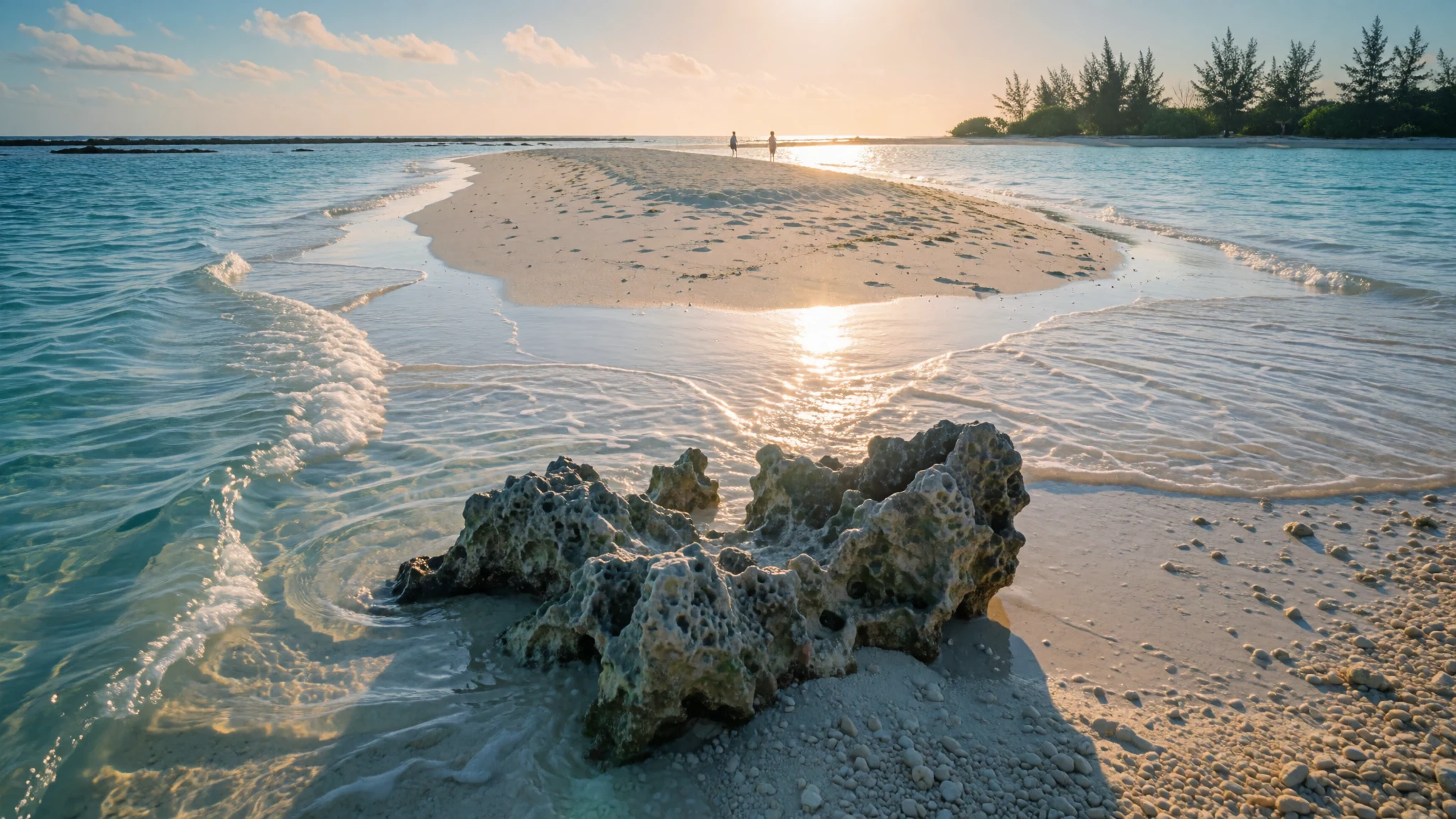
Kumejima is a quiet Okinawan island of white sandbars, odd hexagonal rocks and silk weaving, reached only by a short flight or a long ferry from Naha.
The place
Kumejima is a small island town in Okinawa Prefecture, roughly 100 km west of Naha, and the town takes in several islets as well as the main island. Of those, just Kumejima itself and neighbouring Ōjima have residents. About 7,180 people live here, spread across twenty-seven wards, and much of the working landscape is sugar cane. Tourism and products made from deep seawater are the other pillars of the local economy. The interior feels pastoral, but the coast is the draw: pale sand, shallow lagoon water, and a sandbar that surfaces off the eastern end and can be reached by boat or kayak. A protected area of land and sea forms Kumejima Prefectural Natural Park, and a stretch of wetland carries Ramsar status. Strange rock formations are scattered around, with names such as Tatami Rocks, Bird Mouth Rock and Tachijami, along with the Yajiyagama cave system. Local pride rests on two crafts. One is Kumejima-tsumugi, a woven textile recognised as an Important Intangible Cultural Property. The other is Kumesen, the island's own awamori, a distilled Okinawan spirit. Visitor numbers stay modest, helped by the effort of reaching the place, and it feels slower and more rural than Okinawa's main island. The climate is humid subtropical, summers are very warm and sticky, and rain can arrive in any month, so a flexible plan serves better than a fixed one.
Its story
Kumejima's history starts with water. Streams and springs gave the island enough fresh water to grow rice on a scale unusual for the Ryukyu islands, which made it worth controlling. In 1506 the Ryukyu Kingdom sent an expedition under King Shō Shin and brought Kume under Shuri's rule. Afterwards the island became a regular stop for the Chinese envoys, known as sapposhi, who sailed to the kingdom's court at Shuri Castle on the main island and broke their journey here. When the kingdom was absorbed into Japan, many noble households left Shuri and settled on Kume, which helps explain the number of old gentry houses and castle sites that survive. The modern town dates only from 2002, though the villages it joined are far older. The island's darkest episode came in 1945. After Japan's surrender had been announced, a garrison commander named Tadashi Kayama ignored it and carried on as if the war continued. His men put twenty islanders to death on suspicion of spying or collaborating, and the victims included very young children. Local people have not forgotten it, and it is handled as a matter for quiet remembrance rather than display. Today the island's sense of itself rests more on farming, weaving and distilling, with the older Ryukyuan layers visible in stone ruins and walled house compounds.
What to see
- Hateno Beach sandbar — Offshore, east of Kumejima
Hateno Beach is a strip of white sand that sits in open water off the eastern tip of Kumejima, a short boat ride from shore. Tour boats, kayaks and jet skis all go there. The water is clear and shallow, good for snorkelling, though there is no shade, so bring sun cover. - Tatami Ishi, Ōjima — Ōjima, linked to Kumejima
On the small island of Ōjima, flat grey rock has cracked into pentagonal and hexagonal slabs that look like the shell of a giant tortoise. They sit at the water's edge, so tide and waves change what is easy to walk on. Wear shoes with grip, because the stones can be slick.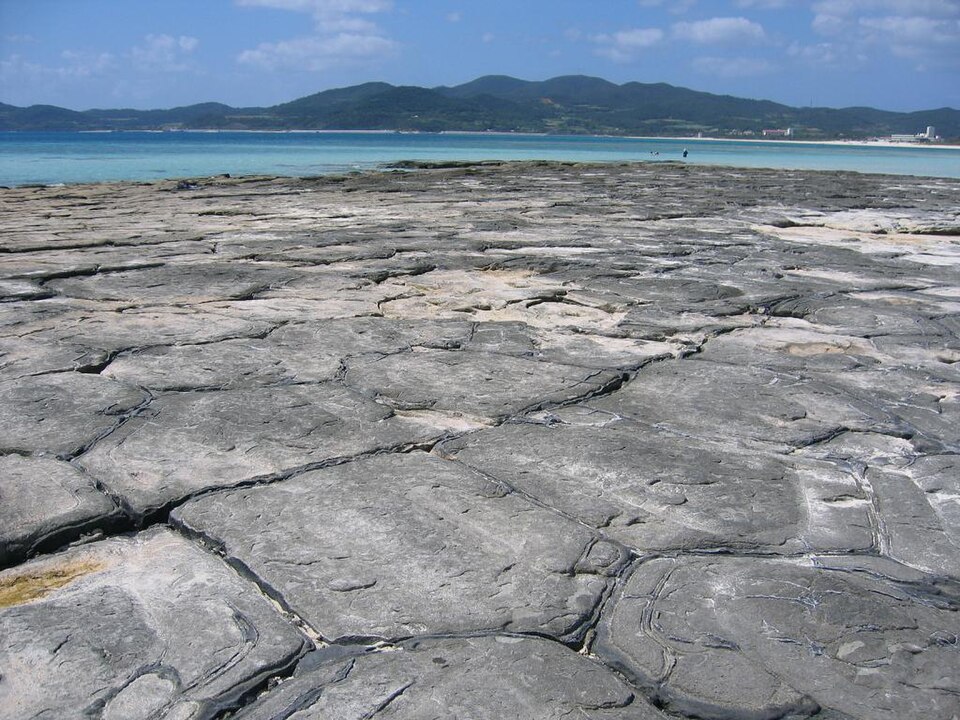
- Iifu Beach — Western Kumejima
Iifu (Eef) Beach is a long stretch of fine white sand on the western side of the island, with a resort and water-sports operators close by. It suits swimming, paddling and sunset watching, and it is among the easier beaches for those who prefer facilities nearby. - Uezu House — Kumejima town area
Uezu House is a traditional Okinawan residence built in 1726, once home to local officials of the Ryukyu Kingdom. A wall surrounds a garden, a main house and smaller outbuildings. It is calm and unhurried, a good way to see how a well-off family lived. Check the town website for entry arrangements. - Uegusuku Castle ruins — Mount Uegusuku, central Kumejima
The ruins of Uegusuku Castle crown a hill and give wide views across Kumejima, towards the Hateno sandbar and the neighbouring islets. Only foundations and stone walls remain, so the pleasure lies in the outlook and the climb. Five castle sites on the island can be visited, and this one is the best known.
Culture
Kumejima's culture mixes Ryukyuan tradition with a strong farming and craft base. Houses such as the Uezu residence show the old gentry style: a walled compound, a main hall for receiving guests, and gardens designed to be viewed from the veranda. The castle ruins, five of which are open to visitors, recall the period when the island sat between the Ryukyu court and the Chinese envoys who passed through. Crafts matter here. Weavers still produce Kumejima-tsumugi, and distillers make Kumesen awamori, which is poured at most island restaurants and at celebrations. The calendar is built around a few community events. Boat races, called hari, take place in early May, the town festival fills the first weekend of August with Okinawan music, dance and food stalls, and a marathon is run in late October. Dates can shift, so check the town website before planning around them. The wartime killings of 1945 remain part of local memory, and islanders prefer that the subject be treated soberly. Okinawan hospitality is understated: people are friendly but not effusive, and a polite greeting goes a long way. At Uezu House, if no attendant is present, leave the entry fee in the tray provided and take off your shoes before stepping onto the veranda or into any room.
What to wear
Kumejima's traditional dress centres on Kumejima-tsumugi, a silk pongee woven by hand from spun silk thread. The fabric is dyed with natural materials, including plants and the island's mud, giving it muted browns, greys and deep earth tones, and it is recognised as an Important Intangible Cultural Property. It is made into kimono and obi, and wearing it is now mostly reserved for weddings, formal occasions, festivals and dance performances, partly because hand-woven cloth is costly. At the August festival and the May boat races, performers and organisers may turn out in Okinawan costume, often with bright sashes and headwraps. In daily life, islanders dress for heat and fieldwork: cotton T-shirts, shorts or light trousers, sun hats, and rubber sandals or trainers. Farmers working the cane fields cover arms and necks against the sun. Visitors should pack for a humid subtropical climate: quick-drying clothes, a wide-brimmed hat, sunglasses and reef-safe sun protection. A rash vest helps at the sandbar, where shade is scarce. Water shoes or grippy sandals are worth having for the rocky shore at Ōjima and for entering the sea off the beaches. Bring a light waterproof layer, as rain is common. Modest dress is expected when visiting historic houses and any shrine, meaning covered shoulders and no swimwear away from the beach, and shoes that slip off easily are practical for entering buildings.
What to eat
- Okinawa soba — Noodle shops and local eateries in the town
Okinawa soba uses wheat noodles in a clear pork and bonito broth, usually topped with stewed pork. It is the island's everyday lunch, filling and mild. Look for it at small noodle shops and family-run eateries in Kumejima town, where the same few dishes anchor most menus. - Champuru — Most restaurants and izakaya-style eateries
Champuru means a stir-fry of tofu and vegetables with egg or pork, and bitter melon (goya) is the classic version. Each kitchen has its own balance of salt and oil. It appears at nearly every restaurant here and is an easy introduction to Okinawan home cooking. - Fresh local fish — Harbour-side and village eateries
Fish caught around the island is served raw as sashimi, grilled, or fried, depending on the catch that day. The choice changes with season and sea conditions, so ask what came in. Small eateries near the ports are the most natural place to look. - Kumesen awamori — Almost any restaurant; distillery shops
Kumesen is the island's own awamori, a spirit distilled from rice in the Okinawan style. It is usually drunk with water or ice, and stronger than most visitors expect. It is poured at most restaurants and is the usual souvenir to carry home. - Southeast Asian plates — Small bars and casual restaurants in the town
A few small bars and restaurants on Kumejima serve Indonesian and Thai dishes alongside Okinawan fare, such as curries, noodle dishes and rice plates. It makes a welcome change after several days of soba, and is useful for anyone wanting something spicier than the local norm.
Plan it
Best time. July is the driest month and the sea is warm, which suits the beaches and the sandbar, though summers are very warm and humid. October and November are milder, and the island hosts its marathon in late October. May is the wettest month, so expect showers if you come for the boat races. Rain can arrive at any time of year.
How long. 2–3
Getting there. Fly from Naha to Kumejima Airport with either Japan Transocean Air or Ryukyu Air Commuter; in July and August Japan Transocean Air also links Tokyo Haneda directly. The alternative is the Kume Shosen ferry from Naha's Tomarin Port to Kanegusuku Port, which takes several hours. Check current flights, sailings and fares with the operators. From the airport or port, use a taxi or a rental car. The island is a dead end, so any onward trip goes back through Naha.
Budget. mid
Tips
- Book flights and a hire car early for the festival weekend in August and for the October marathon
- Hire a car or scooter, since sights are spread around the island and public transport is limited
- Carry some cash for small eateries and village shops, and check which places accept cards
- Use boat tours or kayaks to reach the Hateno sandbar, and check sea conditions on the day
- Carry water and sun protection, as the sandbar has little shade
Etiquette
- Take off your shoes before entering historic houses or any room with a raised floor
- Leave the entry fee in the tray if no attendant is at Uezu House
- Treat wartime sites and memorials with quiet respect, and ask before photographing local people
Nearby
Sources
- Wikidata Q1206086 (CC0)
- Wikipedia: Kumejima, Okinawa (rev 1381678655) (CC BY-SA 4.0)
- Wikivoyage: Kumejima (rev 5407715) (CC BY-SA 4.0)
- Photo: Tatami Rock, Kumejima, by Snap55 at Japanese Wikipedia (CC BY 3.0)
- Photo: Kumejima Island, Okinawa, by Paipateroma (CC BY 3.0)

