Kumbhalgarh
Kumbhalgarh, India
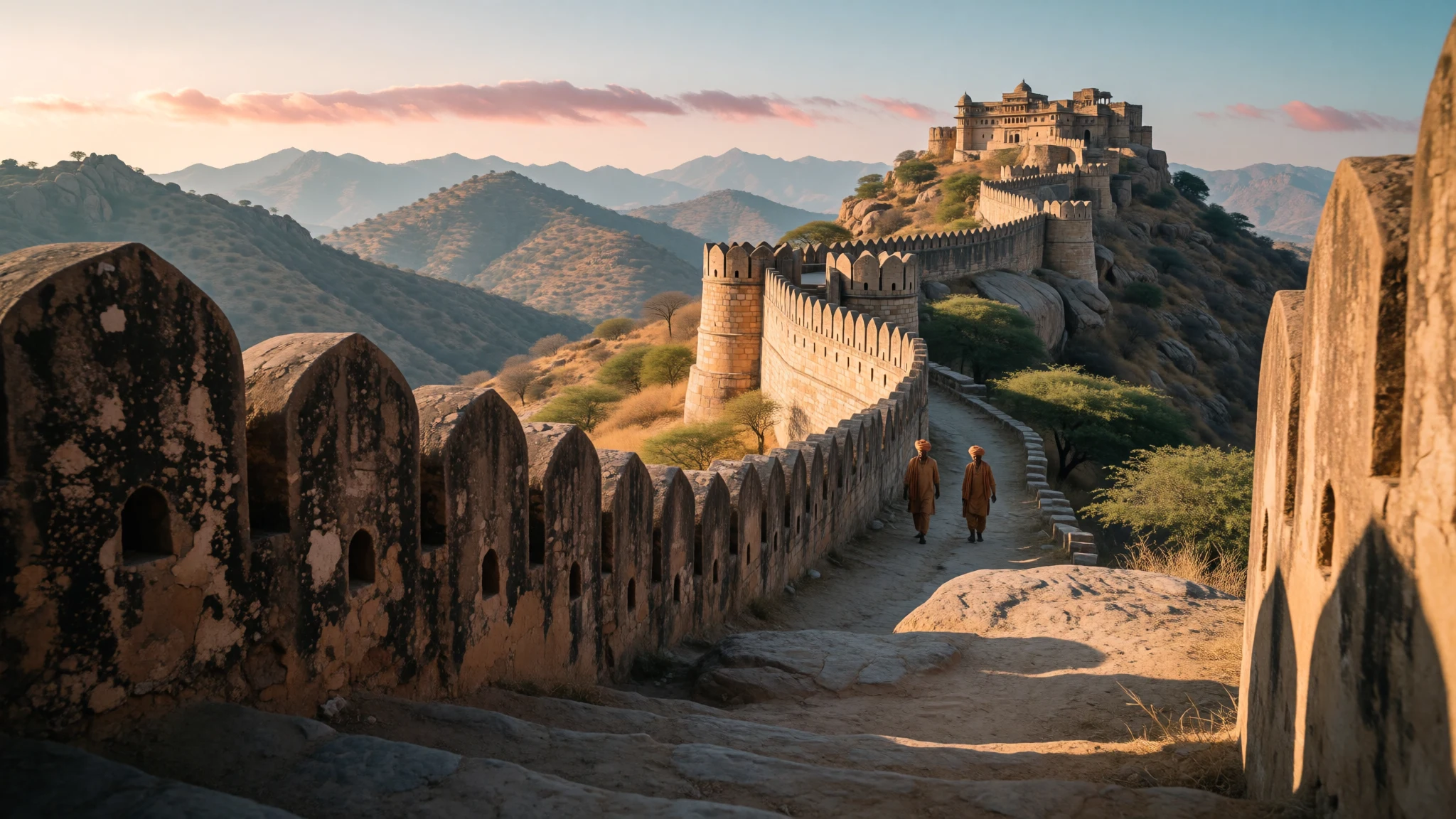
Kumbhalgarh is a remote Aravalli hill fort whose ramparts ripple along the ridges for kilometres, with quiet temples and wide views at the top.
The place
Kumbhalgarh stands on the western flank of the Aravalli Hills in Rajsamand district, Rajasthan, at about 1100 m above sea level. It is a hill fort rather than a walled town. A ring of ramparts follows the ridgelines for around 36 km, rising and dropping with the land, and that continuous wall is why the place is sometimes nicknamed the Great Wall of India. Inside are gates, temples, ruined residential quarters and a palace crowning the summit, all in pale stone that turns gold late in the day. Udaipur is the practical base, about 84 km away by road, while Rajsamand is about 48 km off. The settlement below the fort is small, and the hilly ground means there is no railway line nearby, so nearly everything is done by road. Most visitors come on a day trip from Udaipur, often pairing the fort with the Jain temples at Ranakpur. The climb through the gates and along the wall takes a good half day if taken slowly. The fort belongs to the Hill Forts of Rajasthan, a group of six forts inscribed as a World Heritage Site in 2013. A wildlife sanctuary lies close by, which gives the area a wooded, quieter feel than the Rajasthan of dunes and bazaars. Weekends, holidays and the monsoon bring crowds, and the narrow road to the entrance can jam. The practical fix is to park lower down near the Maharana Pratap circle and walk the last stretch uphill, which is only a kilometre or two.
Its story
Kumbhalgarh grew out of the contest for Mewar's western hills. In the late fourteenth century Rana Lakha took the Godwar plains from the Chauhan Rajputs of Nadol. A generation or so later Rana Kumbha, ruler of Mewar, ordered a great fortress built to hold the frontier. The architect was Mandan, and an inscription from the fort records the commission. Kumbha was a prolific builder, credited with a good share of the forts in his realm, and tradition names Kumbhalgarh as the largest and most elaborate of them. It served as a favoured second capital. Local legend adds a darker note: the walls kept collapsing by nightfall until a holy man advised a voluntary human sacrifice, and a pilgrim eventually stepped forward. Guides still tell the tale at the gates. The fort held. Sultanate rulers tried it in the mid-fifteenth century and gave up, and one is said to have wrecked the temple of the guardian deity Banmata, believing she protected the place. In the sixteenth century a general of Akbar besieged it for months before it fell, and Maharana Pratap, born here, won it back within a few years. Early in the nineteenth century a band of ascetics garrisoned it until James Tod persuaded them to leave. The British then took charge and later returned it to Udaipur state. Later Maharanas made additions, but the core is still Kumbha's work.
What to see
- Ram Pol and the seven gates — Fort approach, Kumbhalgarh
The approach to Kumbhalgarh climbs through seven gates, and Ram Pol is a good place to pause and study them. Each is a chokepoint of heavy stonework and bastions, built so that attackers arrived bunched and uphill. Walking them in order is the clearest way to grasp how the fort was defended.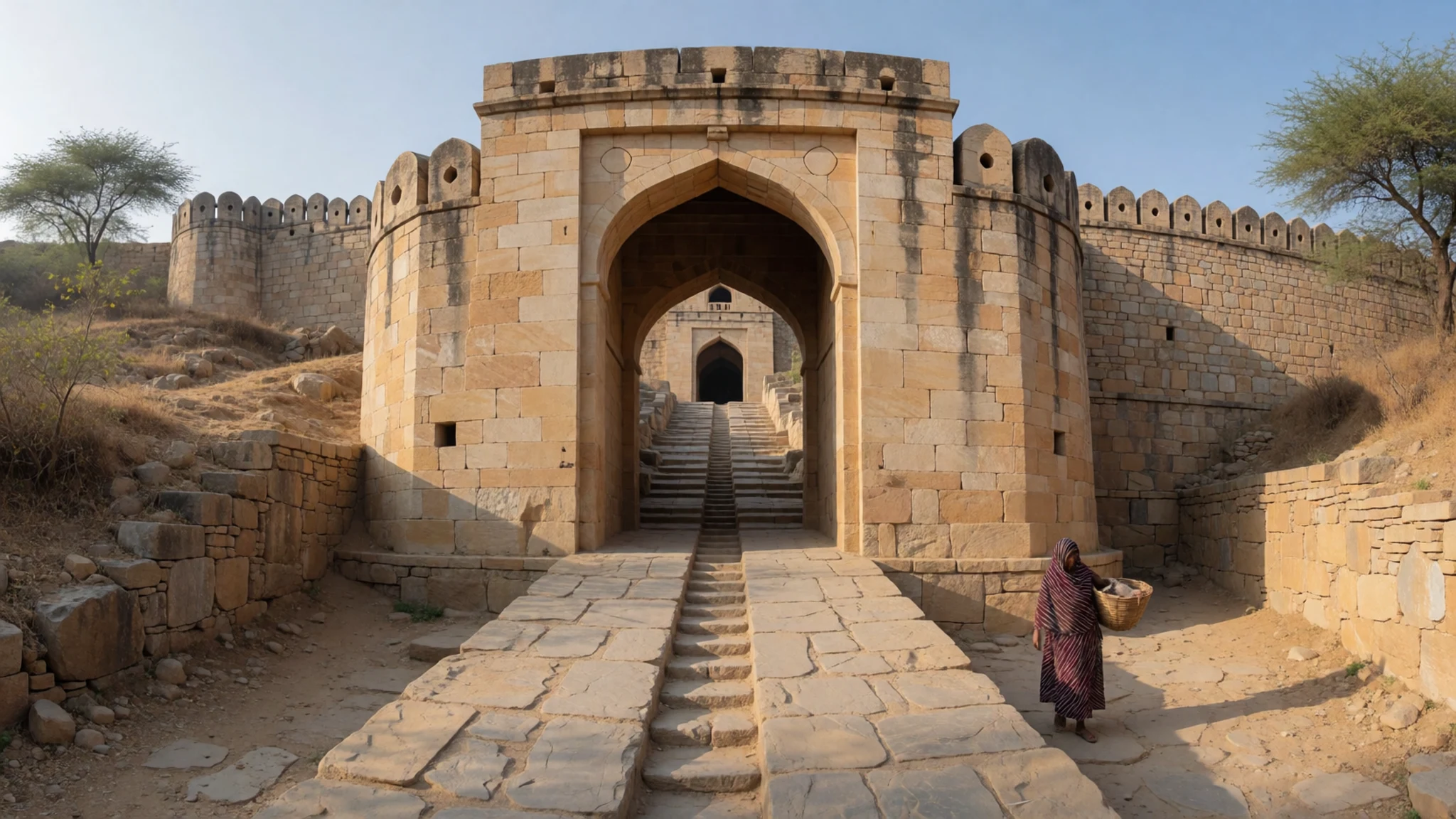
- The ramparts — Summit ridge, Kumbhalgarh
The curtain wall is the reason for the fort's fame. It runs for about 36 km along the ridges, and near the summit the top is broad enough to walk comfortably. Come for views over the folded Aravalli ranges and the plains beyond, and go early or late, since the stone heats up by midday.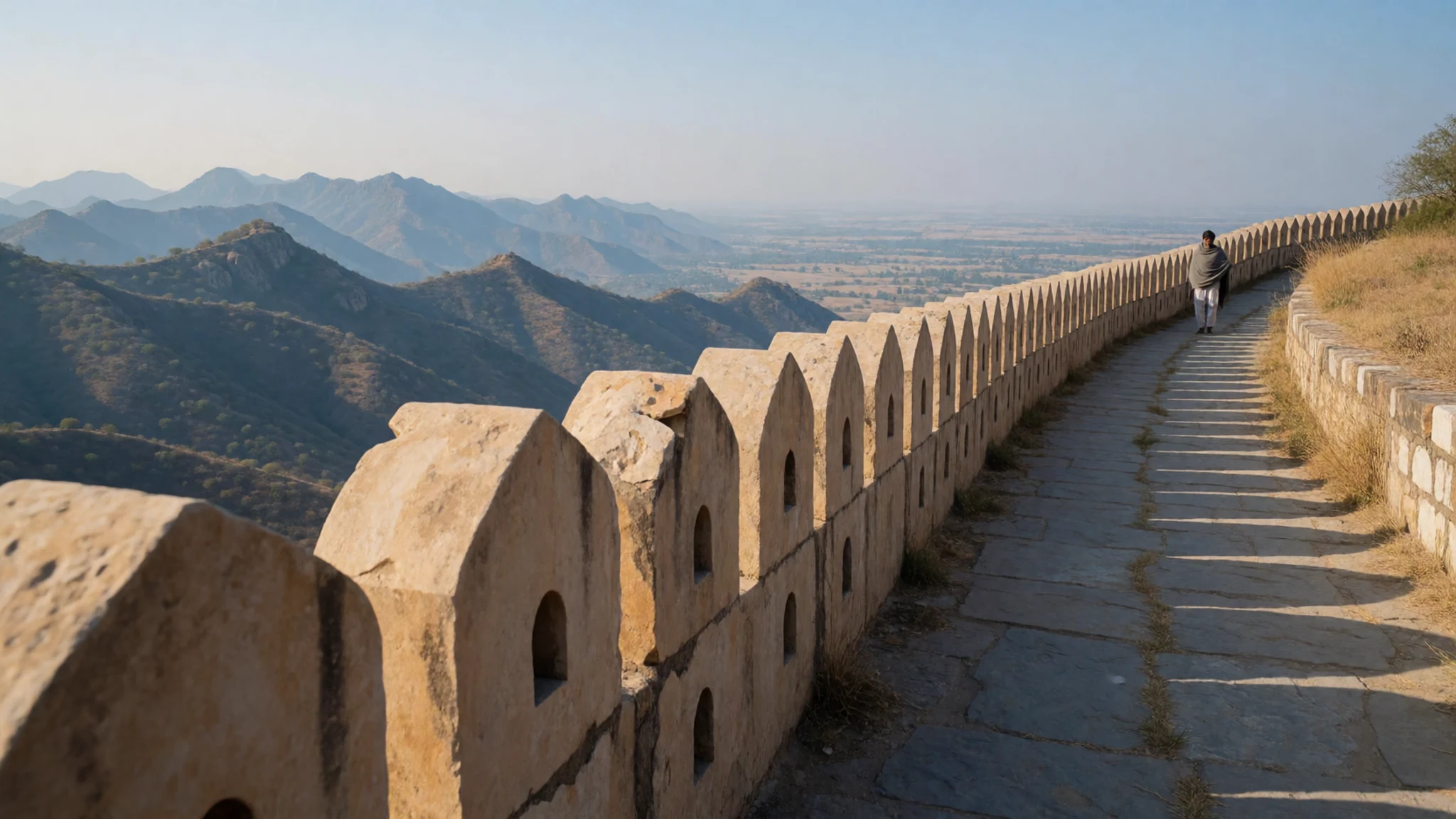
- Vedi Temple — Inside the fort, Kumbhalgarh
Vedi Temple is a three-storey Jain temple ordered by Rana Kumbha and later renovated by Maharana Fateh Singh. It is a rare survivor among the fort's early sacred buildings. Its tiers of carved stone reward a slow look, and the courtyard feels calmer than the busy gateways lower down the slope.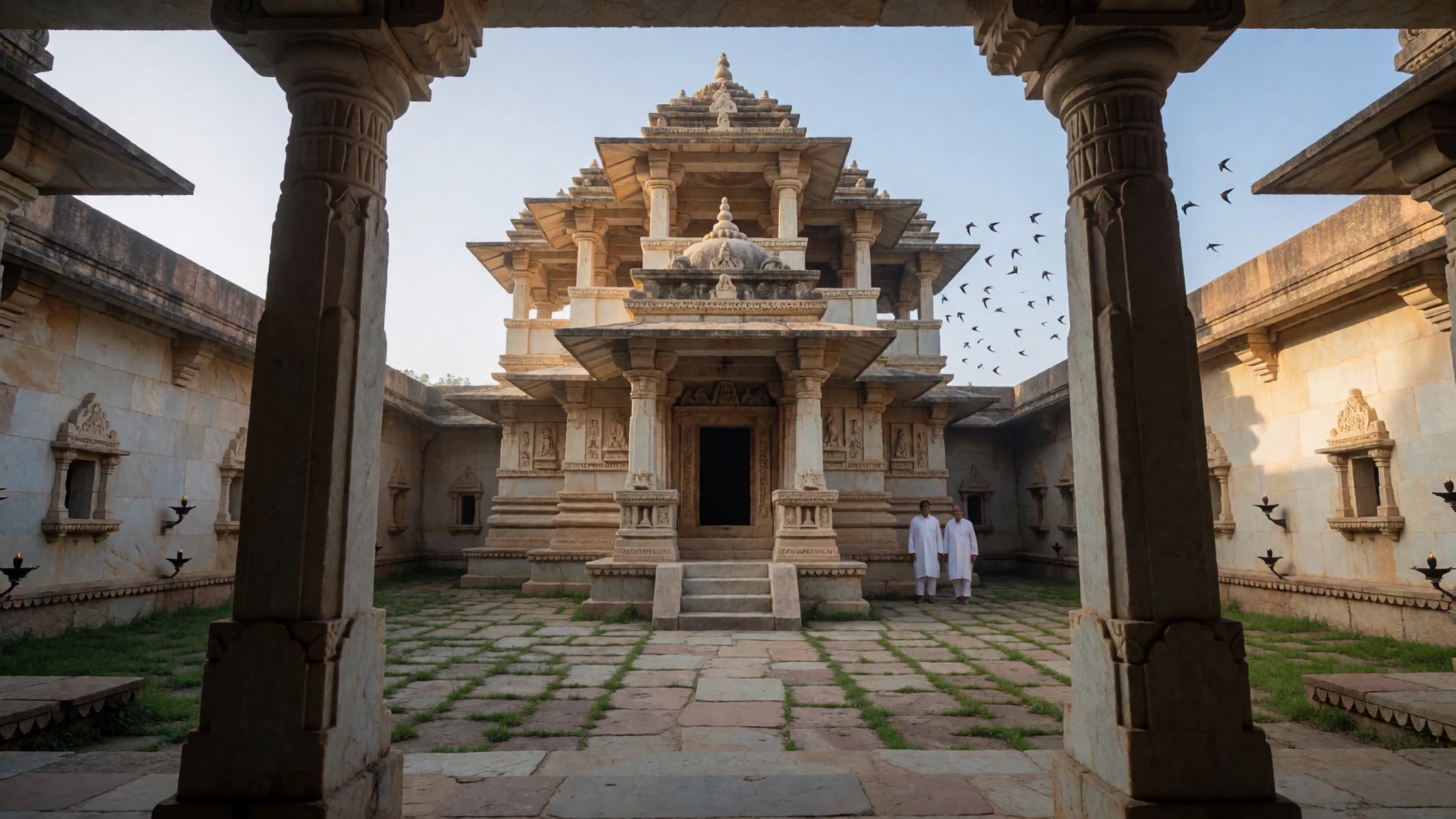
- Mammadev Temple — Base of the fort, Kumbhalgarh
Mammadev Temple and its kund, a stepped water tank, were built by Rana Kumbha and lie at the foot of the fort. The temple once held large inscribed slabs, so it is a useful stop for anyone curious about how the court recorded its own achievements. It is a quiet pause on the way up.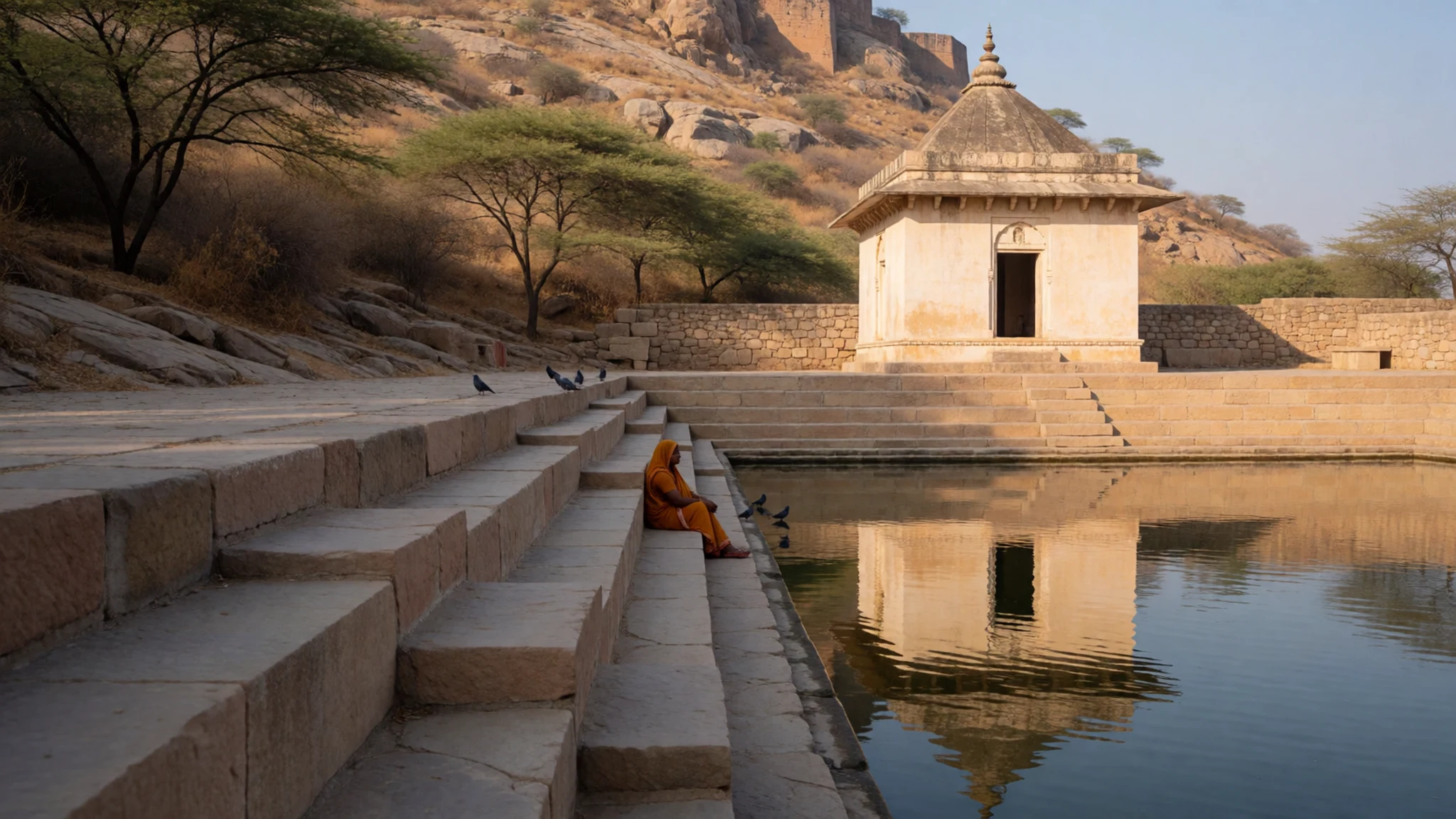
- Temples within the walls — Inside the fort, Kumbhalgarh
Several stone temples, Hindu and Jain, stand inside the walls in varying states of repair. Carved porches, small shrines and domes sit among grass and ruined residential blocks, and the surviving buildings are well preserved. Linger for the carving, and look for the tiered roofs that mark Jain shrines.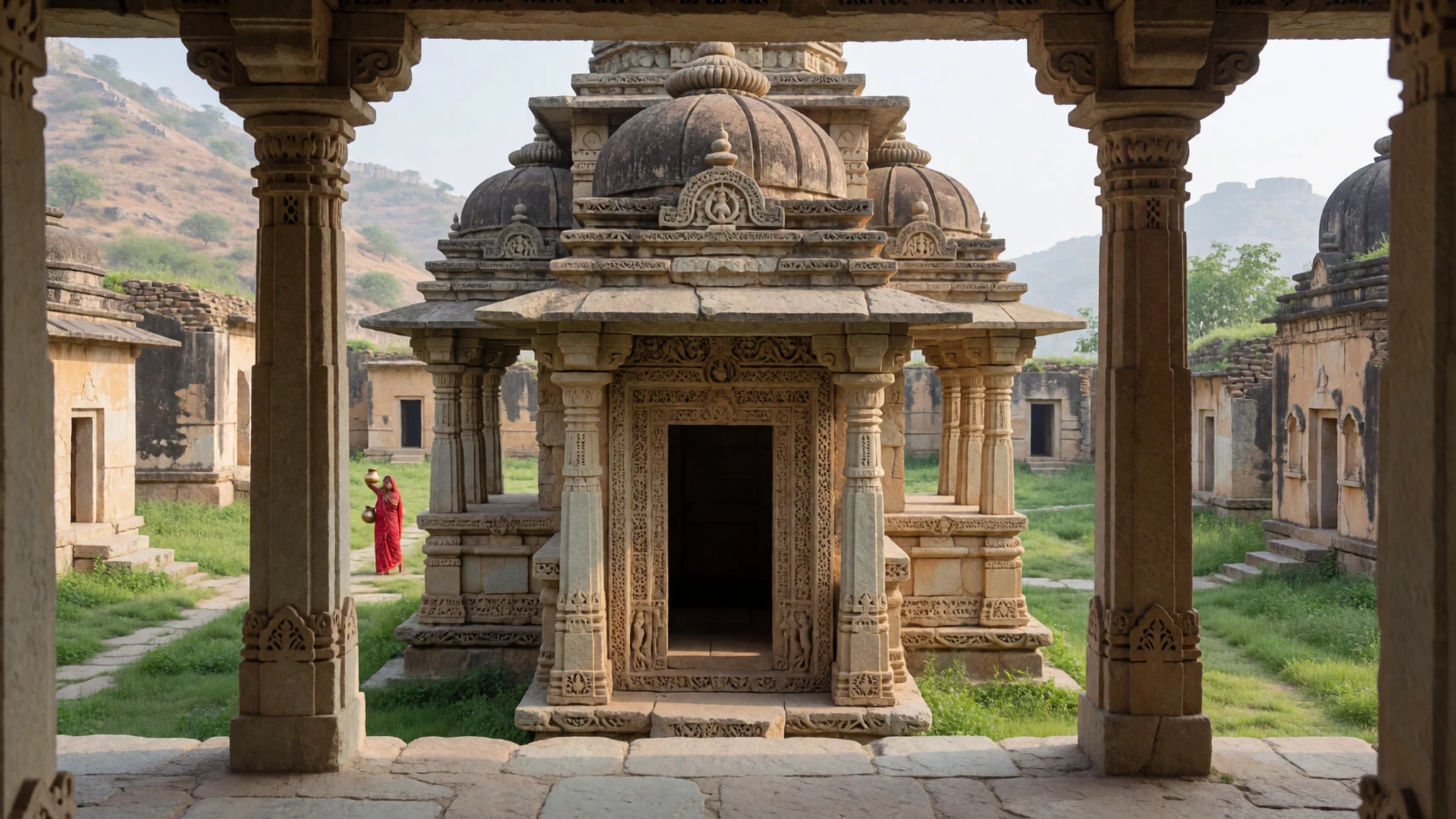
Culture
Kumbhalgarh carries the memory of Mewar, the Rajput kingdom whose rulers prized resistance and royal honour. The fort is tied to Maharana Pratap, who was born here and remains a hero across Rajasthan, and the Maharana Pratap circle on the approach road is a local landmark. Religion here is lived rather than staged. Hindu and Jain shrines sit inside the walls, and the story of Banmata, the protective deity whose temple was attacked, shows how closely faith and defence were tied together. Guides blend folklore and history without much embarrassment, and the tale of the pilgrim whose sacrifice let the walls stand is told with real conviction. Each year the Rajasthan Tourism Department stages a three-day festival in the fort in memory of Rana Kumbha's love of art and architecture. It brings sound and light shows, concerts, dance, guided walks of the fort, turban tying, tug of war and mehendi mandana, a henna-style craft. The festival is the best chance to see local performers, but it is also busy. On ordinary weekends and holidays the crowds are mostly families from nearby towns, so the mood is closer to a day out than a pilgrimage. Quieter weekdays suit anyone who wants to hear the wind on the ramparts. Remove your shoes before entering any shrine inside the fort, and ask before photographing worshippers or priests.
What to wear
Traditional dress around Kumbhalgarh is Mewari and Rajasthani. Men wear the pagri or safa, a turban of cotton or silk wound in regional styles, with the angrakha, a wrap-over tunic, and dhoti or churidar. Women wear the ghagra-choli with a long odhni veil, often in bandhani tie-dye or leheriya, the wave-striped resist-dyed cloth, trimmed with gota, metallic ribbon. Bright colours, mirror work and silver jewellery appear at weddings, festivals and temple days, and turban tying is a showpiece at the annual fort festival. Day to day, people in the villages below the fort wear practical clothes: cotton shirts and trousers for men, salwar kameez or saris for women, with a headcloth against the sun. Visitors in Udaipur and at the fort dress in jeans, kurtas and sports shoes. For a visit, choose light, loose cotton that covers shoulders and knees, partly for the sun and partly because Hindu and Jain shrines inside the fort expect modest dress. The climb is on uneven stone ramps, steps and slopes, so wear shoes with a good grip and easy removal, and carry a hat, sunglasses and sunscreen. Winter mornings and evenings can be cool at this elevation, so a thin layer is useful, while the monsoon makes stone slippery and calls for a light rain jacket.
What to eat
- Dal baati churma — Thali eateries near the fort approach and in Udaipur's old city
Rajasthan's signature plate: hard baked wheat balls broken into spiced lentils and ghee, with sweet crumbled churma on the side. It is filling after the climb. Look for it at thali eateries on the road up to the fort and in Udaipur's old city.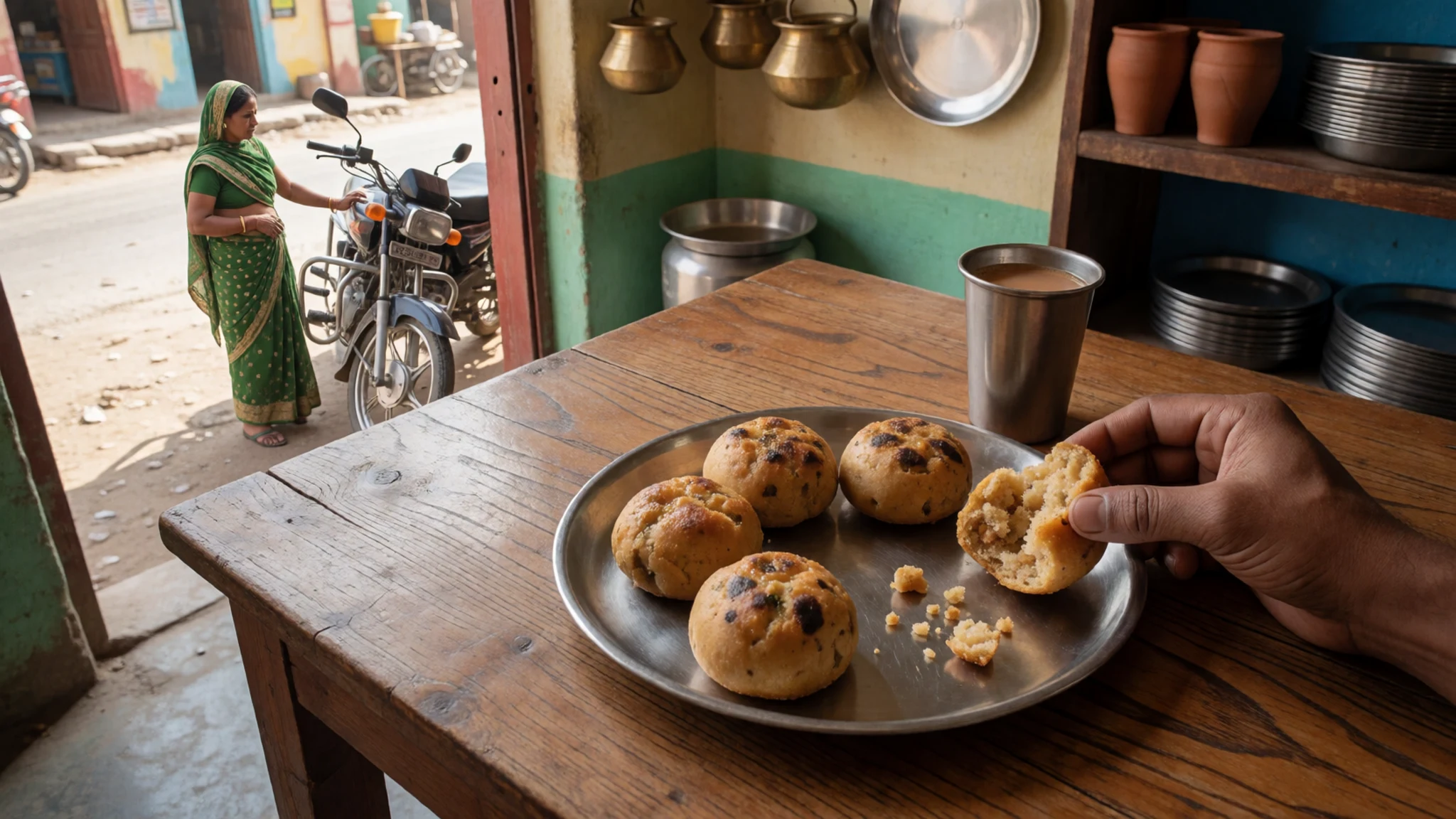
- Gatte ki sabzi — Village dhabas and family-run eateries around Kumbhalgarh
Gram-flour dumplings simmered in a tangy curd-based gravy, a staple of vegetarian Rajasthani kitchens where fresh greens are scarce. It tastes best with plain rotis. Roadside dhabas and family-run eateries in the villages around Kumbhalgarh usually serve it at lunchtime.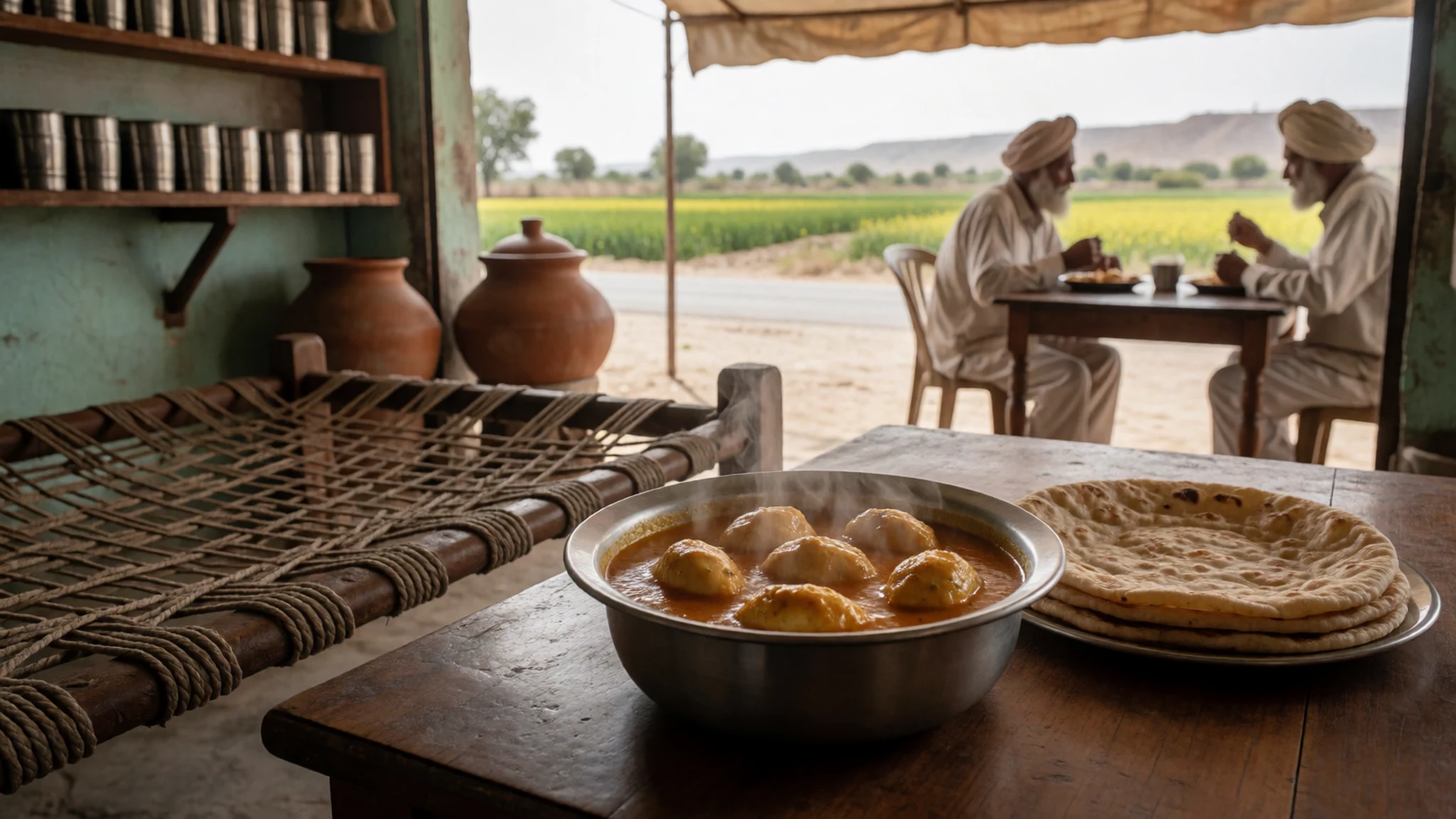
- Ker sangri — Vegetarian thali restaurants along the highway to Udaipur
A desert-style dish of dried ker berries and sangri beans, cooked with spices and sometimes yoghurt, with a sharp, smoky flavour. It travels well and appears on most thalis in the region. Ask for it at vegetarian thali places along the highway. - Laal maas — Non-vegetarian eateries in Udaipur
A fiery red curry of mutton cooked with local chillies, traditionally a Rajput hunting dish. It is hot, so ask for it milder if needed. Non-vegetarian eateries in Udaipur serve it with bread, and some heritage-style restaurants do a gentler version. - Mirchi vada and kachori — Roadside snack stalls and bus-stop corners on the route to the fort
Fried snacks for a morning stop: stuffed green chillies in gram-flour batter, and flaky kachoris with lentil filling, eaten with chutney. They are cheap and quick, and sold from stalls at crossroads and bus stops on the way to the fort.
Plan it
Best time. October to March, when days are mild and the climb is comfortable, with cool mornings in December and January. Summer is hot and shadeless on the ramparts. The monsoon turns the hills green, but weekends and holidays are then crowded and the road to the entrance can jam.
How long. 1–2
Getting there. Fly to Udaipur, the nearest airport, then take a taxi or private cab to Kumbhalgarh, about 84 km and roughly an hour and a half on the road via Nathdwara. By train, Falna on the Delhi–Mumbai line is about 80 km away, and taxis wait outside the station. There is no railway station near the fort. Buses run from Udaipur. For the final stretch on busy days, park near the Maharana Pratap circle and walk 1–2 km uphill.
Budget. mid
Tips
- Check the official site for current opening hours and entry fees before you go; they are not listed here
- Start early to climb the gates and walk the wall in cooler light, before weekend crowds arrive
- Stay in Udaipur and make a day trip, as there is little decent accommodation near the fort; Haldighati and Nathdwara are other bases
- Agree a taxi fare before setting off, especially if combining Kumbhalgarh with Ranakpur
- Carry water, a hat and cash for small stalls and guides, and wear shoes with a good grip
Etiquette
- Remove shoes before entering shrines and temples inside the fort
- Ask before photographing worshippers, priests or local families
- Dress modestly, with shoulders and knees covered, at religious sites
Nearby
Sources
- Wikidata Q1246283 (CC0)
- Wikipedia: Kumbhalgarh (rev 1376815908) (CC BY-SA 4.0)
- Wikivoyage: Kumbhalgarh (rev 5283376) (CC BY-SA 4.0)
- Walls of Kumbhalgarh — Shivam Chaturvedi – Aryarakshak (CC BY-SA 2.5)
- Kumbhalgarh 055 — Rajesh Kapoor (CC BY-SA 4.0)
- Temple in Kumbalgarh fortress — Uncle Alf (CC BY-SA 4.0)
- Temple in Kumbalgarh fortress 01 — Uncle Alf (CC BY-SA 4.0)
- Ram Pol — Shivam Chaturvedi – Aryarakshak (CC BY-SA 2.0)
- Aerial view of Kumbhalgarh — Heman kumar meena (CC BY 3.0)
- Kumbhalgarh fort — Hemantisbest (CC BY 3.0)
- Gate of Kumbhalgarh — Yayawar monk (CC BY-SA 4.0)


