Kratie
Kratie, Cambodia
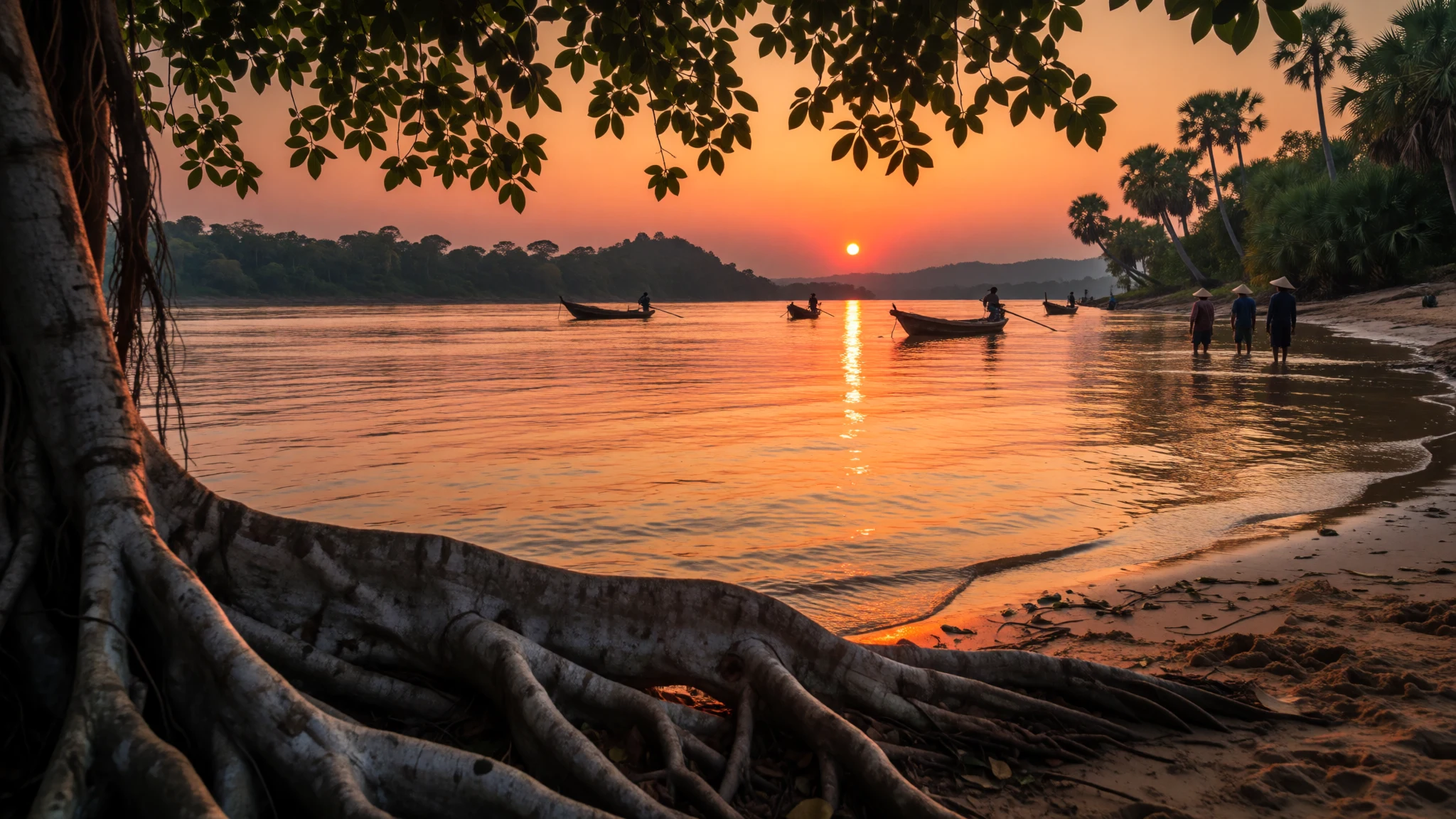
Kratié is a slow riverside stop on the Mekong, where dolphins, flooded islands and long sunsets matter more than any checklist of sights.
The place
Kratié lies in north-eastern Cambodia, in a province the Mekong crosses from north to south. The river shapes almost everything here: the shape of the settlements, the pace of the day, the seasons and the food. The provincial capital, Kratié town, is a small riverside place with a promenade, a market and little traffic, and it makes a sensible base for exploring the stretch of river beyond. The province borders Stung Treng to the north, Mondulkiri to the east, Kampong Thom and Kampong Cham to the west, and Tboung Khmum and Vietnam to the south. About 374,755 people live in the province.
The Mekong here is broad and changeable. Its level swings sharply between seasons, covering and uncovering hundreds of islands, and its channels shelter Irrawaddy dolphins, fish and many birds. The government has proposed damming the river near the town, so the scene is not guaranteed to stay as it is. Away from the water, dense forest covers most of the province, along with the Phnom Prech and Phnom Pram Poan ranges and rubber plantations. The eastern side is recognised as an important area for birdlife. Farming takes up less land than in much of the rest of Cambodia. In the countryside, some craters left by wartime bombing can still be seen, a few filled with water.
The weather follows the monsoon. Days are cooler and drier from November into March, then the heat builds until about May, when the rains arrive and stay until October. Honestly, Kratié is a place for slowing down rather than for ticking things off. Most travellers stay a night or two, watch the sun go down over the river, spend a morning looking for dolphins, and move on.
Its story
The land around Kratié was part of the early kingdom of Funan, which was absorbed by Chenla around the sixth century. Sambor, in the district of the same name, served as a royal capital in the Chenla period, and the Mekong corridor near Kratié was among the more densely settled parts of pre-Angkorian Cambodia. The river was the road, and communities grew along it. Wikidata dates the province's founding to 1907, in the colonial era.
The local landscape holds older layers too. Several temples in the province date from the early Khmer centuries, and a pagoda in Sambor is tied to a well-loved legend about a monk called Thun and a crocodile. Locals tell it as a story of faith, and the pagoda's long colonnaded hall is the setting people connect it with.
The twentieth century was harder. Lon Nol, later a national leader, served as governor of the province in the mid-1940s. During the Vietnam War and the Cambodian civil war, Kratié saw heavy fighting. American bombing under the secret Operation Menu fell on border areas, and the craters are still visible. Clearing unexploded ordnance and mines has been a significant effort for years, and some rural land remains affected.
The Khmer Rouge period ended in this region when Vietnamese forces took Kratié town at the close of the decade. Since then the province has been rebuilt slowly, and today it is better known for its river than for its history. Visitors who ask about the past will usually find that families here have memories of it, so questions are best put gently.
What to see
- The Mekong waterfront at sunset — Kratié town
Kratié town's riverside promenade faces west across the Mekong, and the evening light turns the water copper before the sky goes red. Locals come out to walk, exercise and eat snacks. It costs nothing, needs no planning, and is the clearest way to understand why the town exists.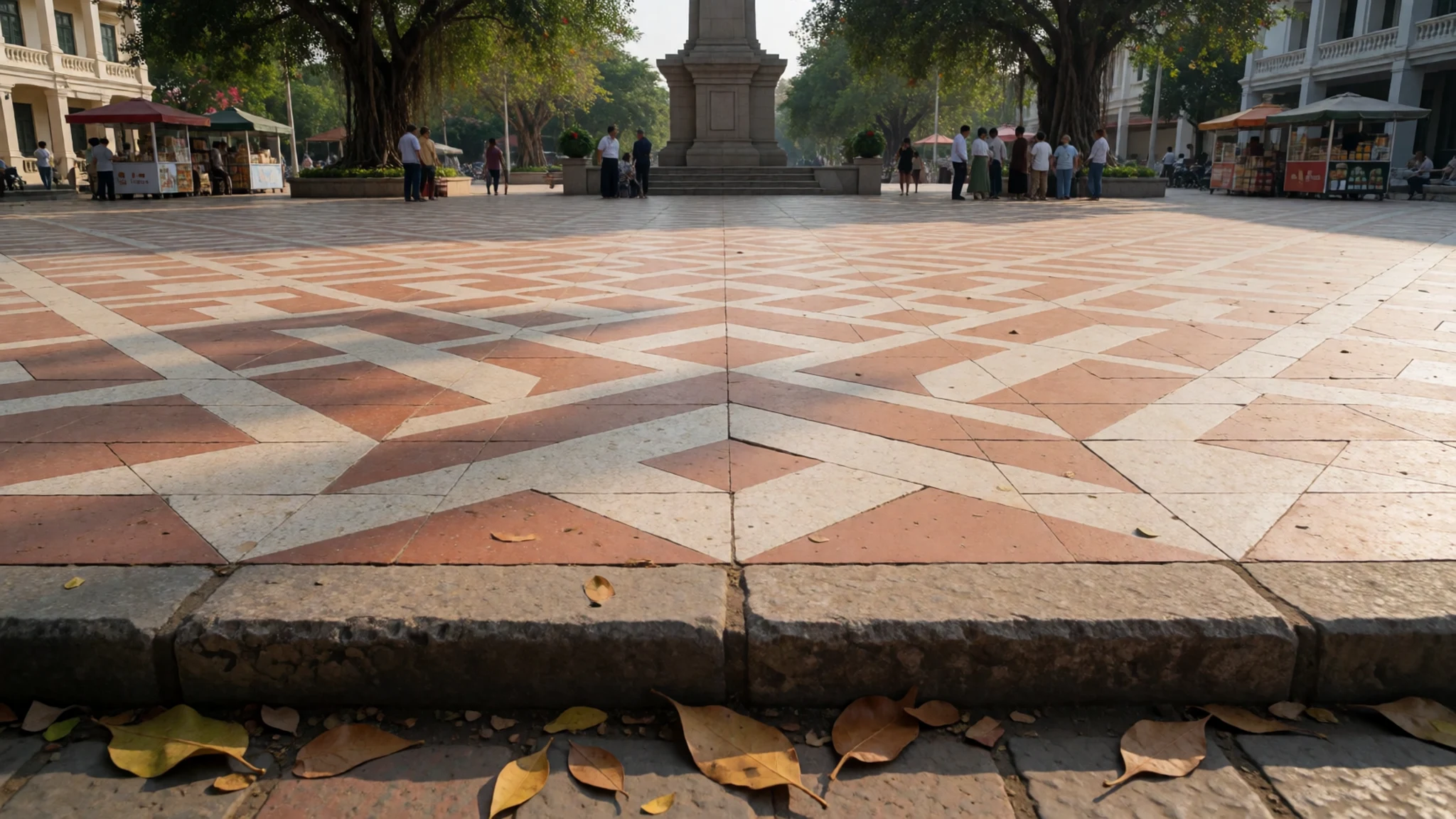
- Irrawaddy dolphins on the river — Mekong north of Kratié town
Small groups of Irrawaddy dolphins live in deeper pools of the Mekong north of Kratié town. Boat trips set out from a landing a short ride away. Sightings are brief, a grey back and a puff of breath, so go early, stay quiet and treat any trip as a chance, not a promise.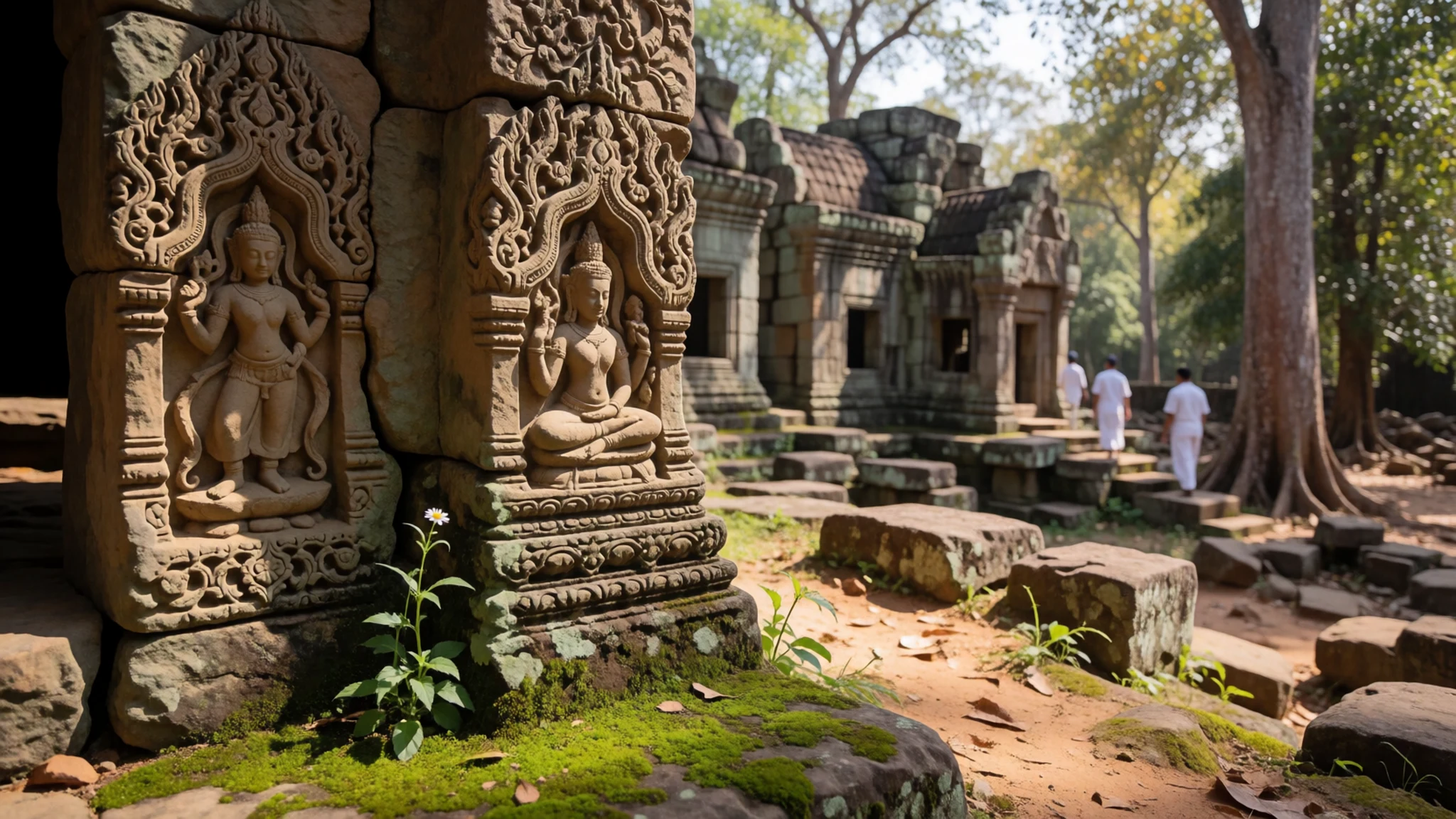
- Islands in the Mekong — Mekong opposite Kratié town
The river is dotted with islands, many of which flood in the rainy season and reappear as sandbars and farmland later. Hiring a bicycle or joining a local guide gives a picture of village life away from the road, with orchards, cattle and wooden houses on stilts.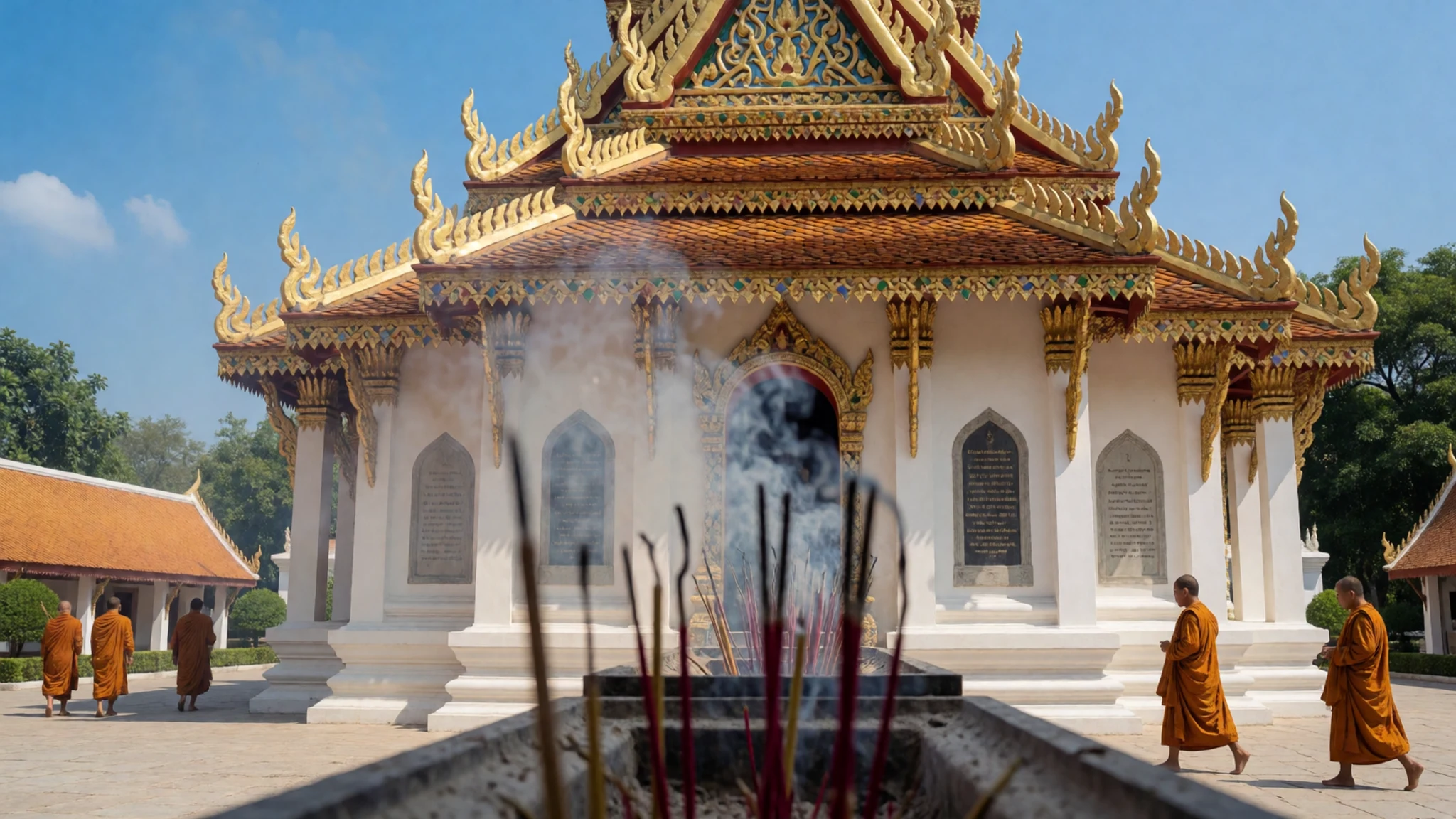
- Sasar Muoy Roy pagoda, Sambor — Sambor district
The sixteenth-century pagoda at Sambor is known locally as the hundred-column temple, after its forest of pillars. It connects to the legend of the crocodile monk Thun, and sits in a district that was a royal capital in the Chenla era. Dress modestly and ask before taking photographs.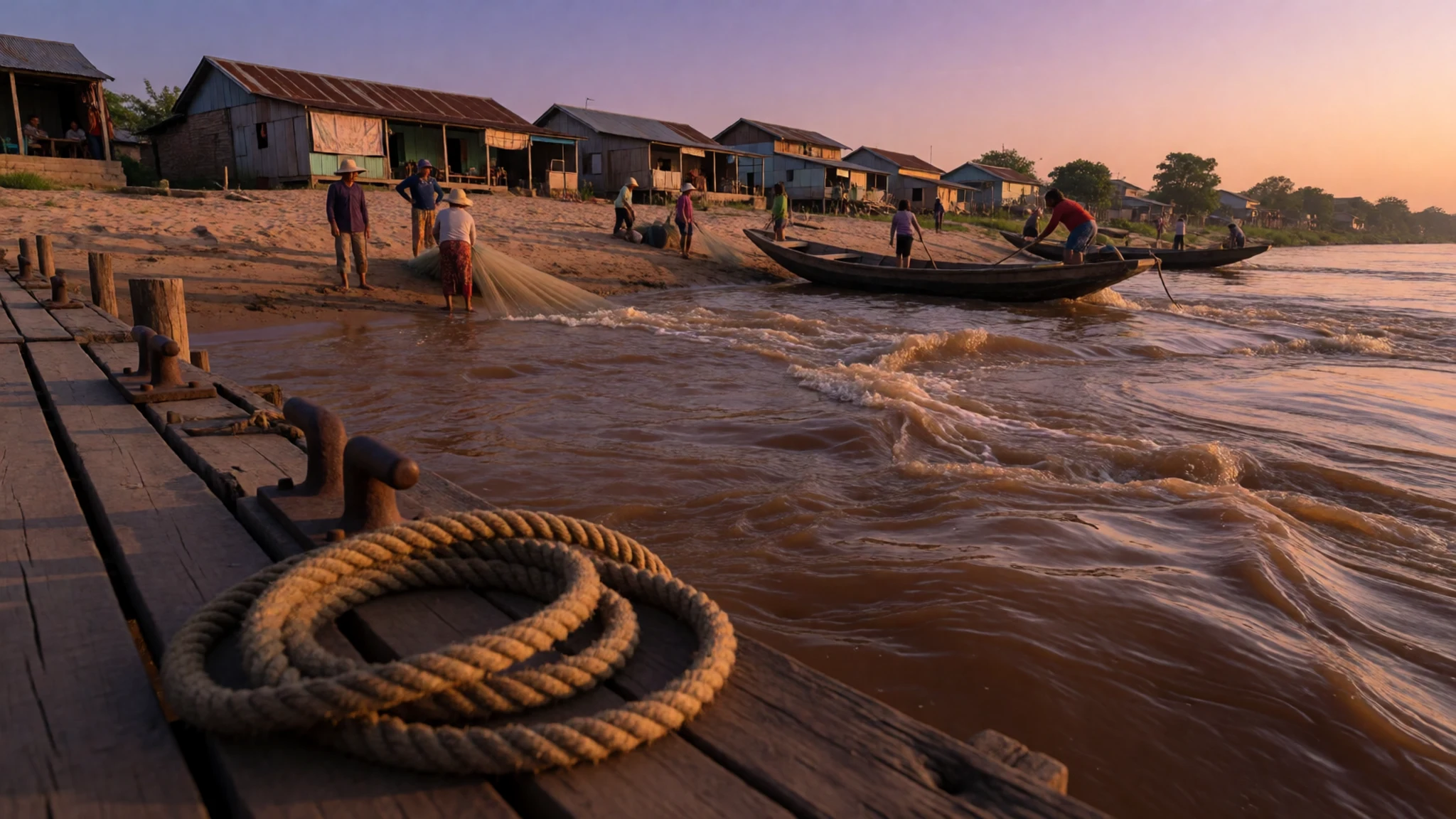
- Solidarity Front memorial monument — Kratié town
This concrete monument in Kratié town commemorates the founding of the Solidarity Front, the movement that opposed the Khmer Rouge. It is a quick stop, but it gives context to the Vietnamese arrival in the town and to how Cambodians remember the end of that era.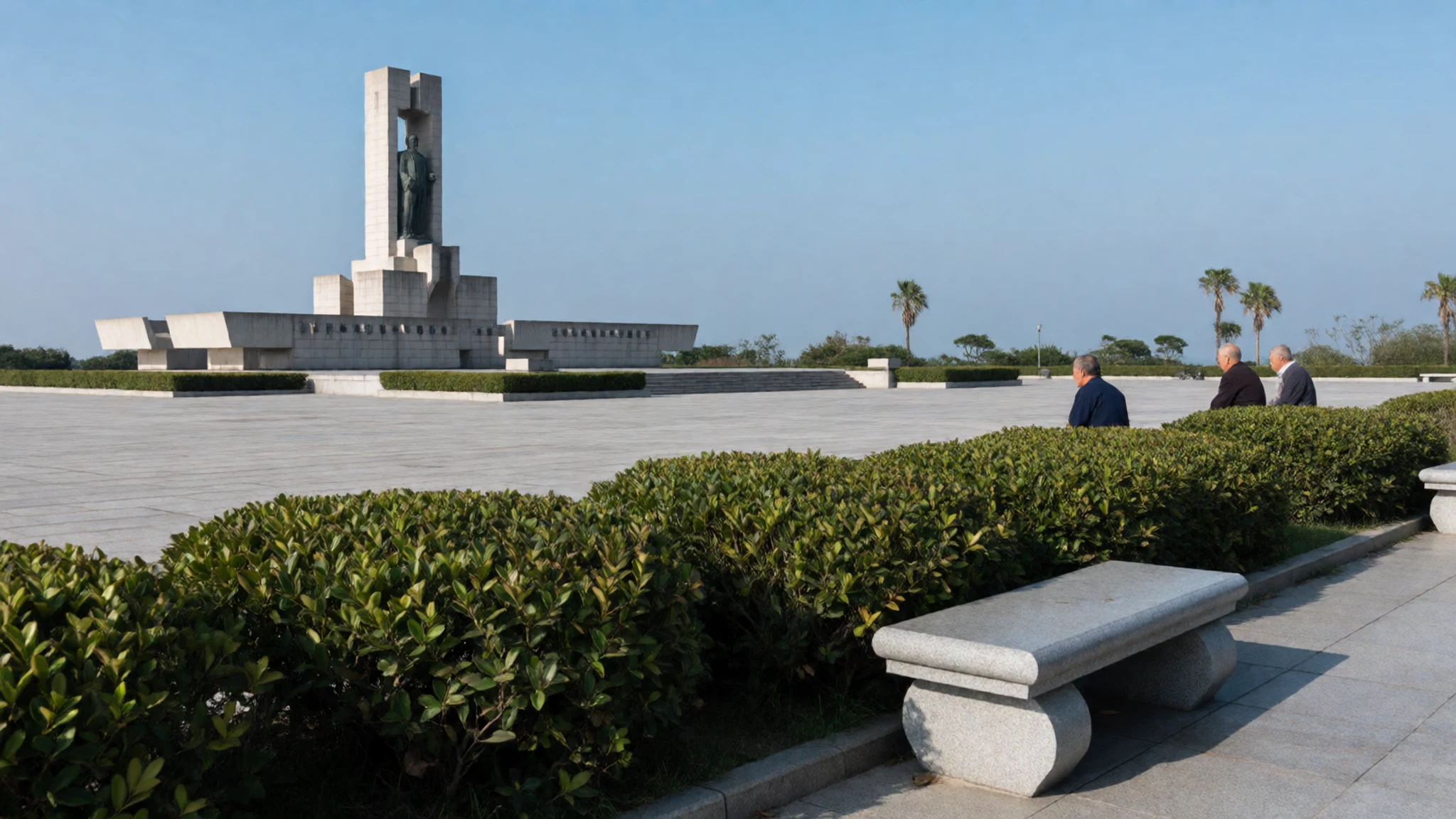
Culture
Kratié is a Theravada Buddhist province. The great majority of residents are Buddhist, and the pagoda is the centre of village life, used for festivals, funerals, schooling and meals. A smaller community, mostly Cham, follows Islam, and there are very small Christian and animist groups. Monks in saffron robes walk the streets collecting alms at dawn, and it is common to see families bringing food to the pagoda on holy days.
Life here is less shaped by tourism than in Siem Reap or Phnom Penh, and that matters in small ways. Many people in rural areas dislike being photographed, and some will say so directly. The same goes for people living on the river, who are working, not performing. Courtesy is valued: greet people with a smile, lower your voice in disagreements, and avoid pointing your feet at people or at images of the Buddha.
The past is also close. Many families lost relatives during the civil war and the Khmer Rouge years, and unexploded ordnance is a real risk away from marked paths. Locals are generally open about everyday things but may not volunteer stories about the war, so let them lead.
At the pagoda, shoes come off at the door of any hall, and people sit with feet tucked behind them. Monks should not be touched by women. Meals are shared, and refusing food or drink offered by a host can seem curt. Ask first before photographing anyone, and always before pointing a camera at a monk, a child or a family at home.
What to wear
Traditional Khmer dress in Kratié is built around the sampot, a length of cloth wrapped and tucked at the waist, worn by men and women. Silk versions, often with ikat patterns known as hol, are kept for weddings, festivals and pagoda ceremonies, and for Khmer New Year. The krama, a checked cotton scarf, is the everyday textile: it shades the head, serves as a towel, ties a baby to a back and is knotted around the waist for work. Cham Muslim women in the province often wear headscarves, and men may wear a skullcap on Fridays.
What people actually wear now is practical. In town, young people wear jeans, T-shirts and trainers, and many women wear matching patterned tops and trousers or light dresses. On the riverbank and in the fields, long sleeves and wide-brimmed hats protect against the sun, and a krama is almost always close at hand. Motorbike riders wear helmets, and on the hot days the pace of dressing is lazy and loose.
A visitor should dress for heat first and modesty second. Light cotton or linen shirts and long trousers or knee-length shorts are comfortable and respectful, particularly outside Phnom Penh and Siem Reap, and women will be more at ease with covered shoulders. For pagodas, carry something to cover knees and shoulders, and wear sandals or slip-on shoes that come off easily. Forest and island walks call for sturdy closed shoes, repellent and a light rain jacket between May and October.
What to eat
- Fish amok — riverside eateries in Kratié town
Freshwater fish steamed in a mild coconut and lemongrass curry paste, often served in a banana-leaf cup or small bowl. It is a gentle, aromatic dish that suits a first meal in Cambodia and is easy to find in most riverside eateries in Kratié town.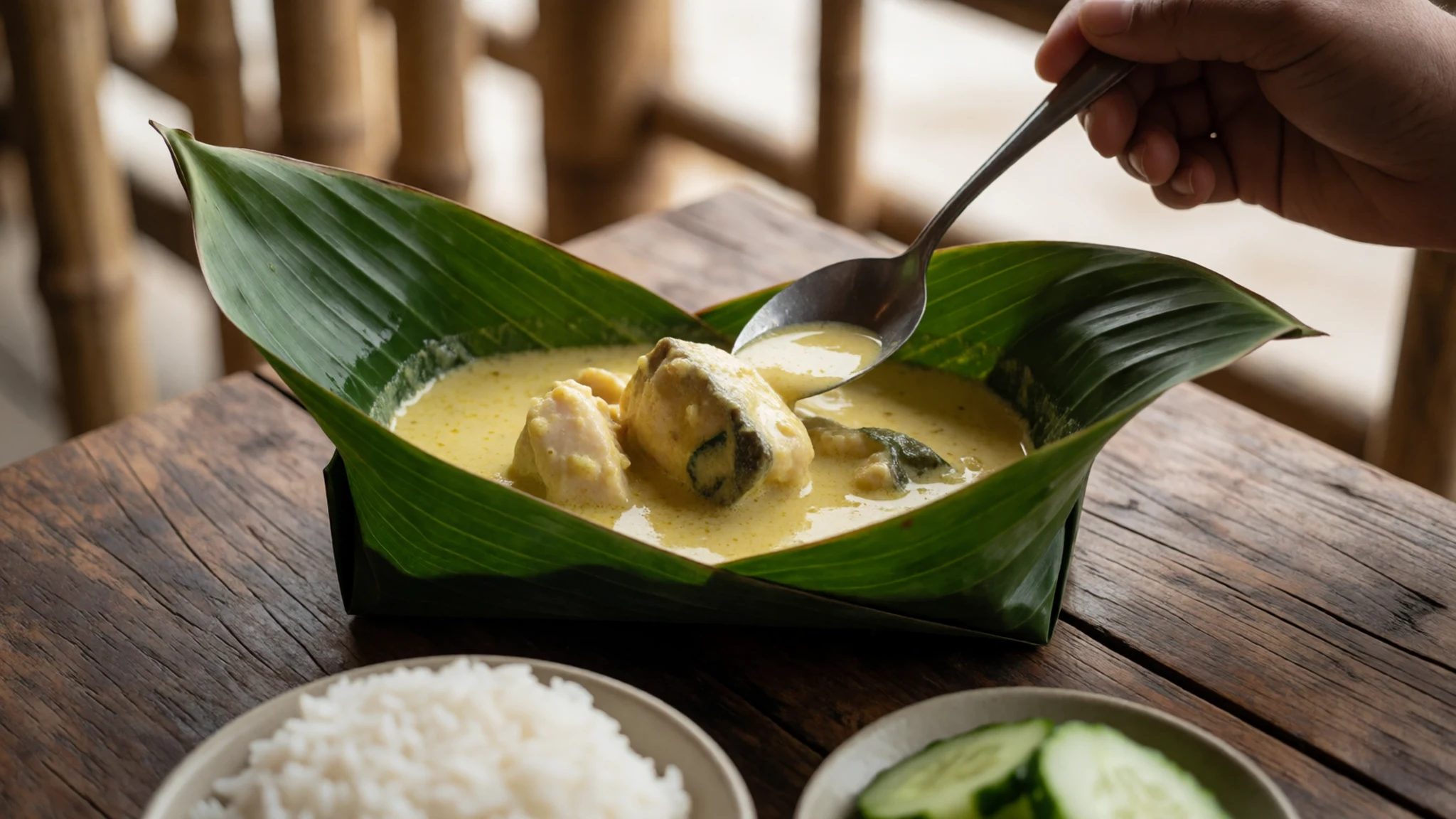
- Num banh chok — the morning market and street stalls near it
Fresh rice noodles topped with a green fish-based gravy and a heap of raw herbs, flowers and cut vegetables. It is mostly eaten at breakfast, and the best bowls come from vendors who start early, so go before the morning heat.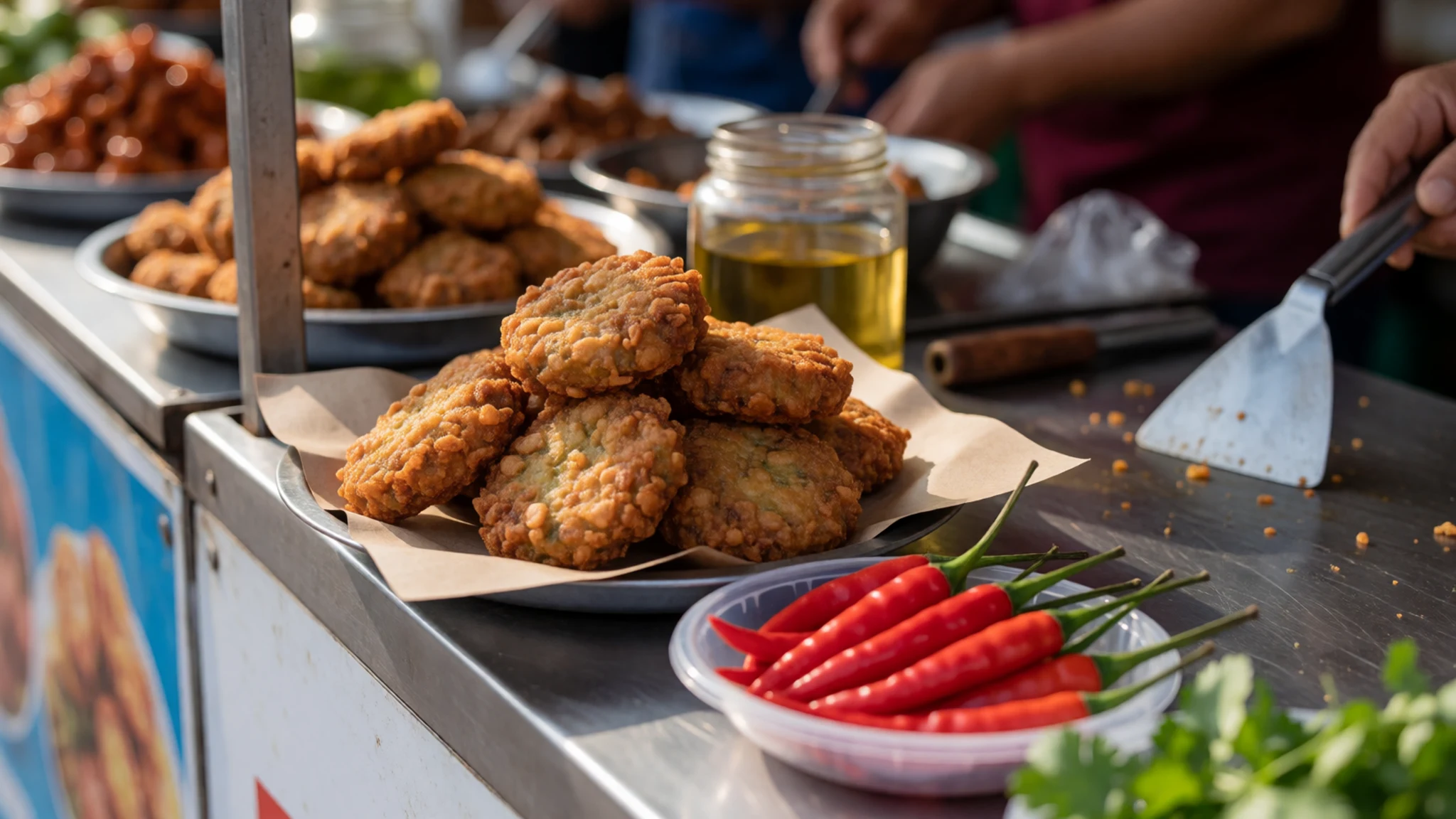
- Lok lak — local restaurants around the town centre
Stir-fried beef cubes served on lettuce and tomato with a dipping sauce of lime juice and black pepper. It reflects the Khmer preference for pepper over chilli, and it is a safe, filling choice for travellers who want something familiar. - Grilled river fish — riverfront grill stalls, especially in the evening
Whole fish from the Mekong, grilled over charcoal and eaten with fresh herbs, rice paper and a sour, salty dip. It is a dish of the river itself, and the choice depends on what the boats landed that day, so ask what is fresh. - Bobor — market stalls and small breakfast eateries
Rice porridge cooked until soft and served with dried fish, pickles, herbs or pork, depending on the cook. It is a common breakfast and comfort food, plain enough for upset stomachs and cheap enough to eat daily. Some versions include prahok, a fermented fish paste, so ask if that is a worry.
Plan it
Best time. November to February is the best window: the days are cooler and drier, and the river is easier to explore. March to May is hot, and the rainy season from May to October brings downpours, muddy tracks and a higher river.
How long. 2
Getting there. Phnom Penh is the nearest large international airport; from there, buses and minibuses run north along the Mekong to Kratié town, and the road journey takes most of a day. Siem Reap and Stung Treng also connect by road. Once in town, tuk-tuks, bicycles and motorbike taxis cover the last leg to the river and the nearby sights.
Budget. low
Tips
- Book dolphin trips early in the morning, when the river is calm and the light is soft
- Carry cash in small notes, as cards are rarely accepted outside larger places
- Bring water, sun protection and insect repellent, especially in the hot and rainy months
- Stay on marked paths in rural areas, as unexploded ordnance remains in some places
- Check the current visa rules on the official Cambodian e-visa site before you travel
Etiquette
- Ask permission before photographing people, and respect a refusal
- Remove shoes before entering pagoda halls and cover shoulders and knees
- Keep your voice low and avoid pointing your feet at people or Buddha images
Nearby
Sources
- Wikidata Q785896 (CC0)
- Wikipedia: Kratié province (rev 1384382499) (CC BY-SA 4.0)
- Wikivoyage: Cambodia (rev 5395048) (CC BY-SA 4.0)
- Sunset over Mekong River in Kratié — Jakub Hałun (CC BY-SA 4.0)
- The "December 2" Memorial Monument — Photasia (CC BY 2.5)
- Mekong — Adriaan Castermans (CC BY 3.0)
- Kratie, Cambodia — CortoMaltese_1999 (CC BY 2.5)
- Global Forest Change tree-cover loss year in Kratie — Yourecoveredinbees (CC BY 4.0)
- December 2 Memorial Monument — Photasia (CC BY 2.5)
- Kratie sunset — JM (CC BY 2.5)
- 100 Column Temple — Adriaan Castermans (CC BY 3.0)


Wildlife
- Irrawaddy dolphin (animal)
The Irrawaddy dolphin is a slate-grey to bluish dolphin from the sea family that also makes its home in rivers, so it is a sea creature you can meet in fresh water. Kratie is the gateway to the river's quieter residents, and these dolphins are among them. Ask a local guide which stretch of river, and which season or hour, suits best. Watch from a respectful distance, keep your voice low, let the dolphins go about their day, and never feed them.