Koh Kong
Koh Kong, Cambodia
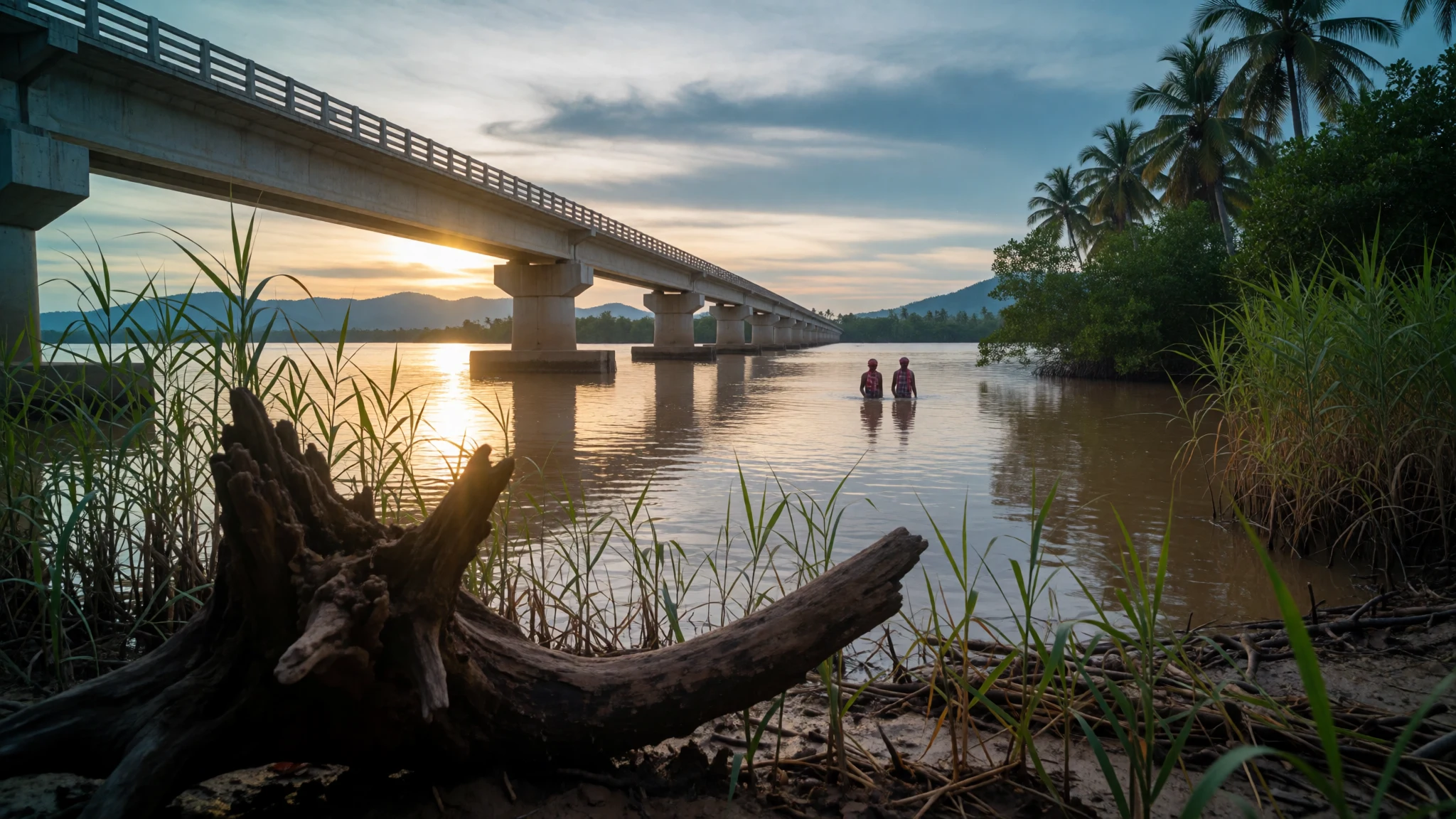
Koh Kong is a sleepy Cambodian river town where mangrove channels, dolphins and Cardamom Mountain forest lie close to a wide, uncrowded main street.
The place
Koh Kong, officially Khemarak Phoumin, is the capital of Koh Kong Province in south-west Cambodia. It has 33,591 people and sits about 3 m above sea level. The town stands near the mouth of the Kah Bpow river on the Gulf of Thailand, not far from the Thai border, and that position explains much of its character. This is a gateway town, where travellers cross the frontier, regroup, and head off by boat or road into the wild country around it.
The town itself looks a little odd. Streets are improbably wide, blocks are long and buildings are thinly scattered, so it feels spacious rather than busy. Distances are too great for casual strolling in the heat, so visitors usually hire a motorbike or rely on motorbike taxis and tuk-tuks. Small eateries cluster around the central roundabout, and a handful of bars and restaurants face the river, where evenings are the pleasantest part of the day.
What draws people here is the surrounding landscape rather than the streets. Mangrove-lined estuaries run out to the sea, the lower Cardamom Mountains rise behind the town, and islands lie offshore. Rain decides the experience: the wet months bring very heavy downpours that make boats and forest trails harder work, while the dry months are far easier.
A few honest warnings. Litter is a visible problem in and around town, and the heat and humidity rarely let up. Koh Kong is a border town where your change might come back as a handful of Baht, Dollars and Riel all at once, so keep a close eye on what you hand over.
Its story
Koh Kong's story is mostly one of position. The town's formal name, Khemarak Phoumin, joins Khmer and Pali-derived words and is usually rendered as a peaceful land ruled by a king, while the everyday name Koh Kong is the one on signs, buses and the roundabout sculpture at the heart of town. The two names sit side by side, much as Thai, Khmer and English do in the shops.
For most of its recent history the area was remote. The forested Cardamom Mountains behind it made overland travel slow, and the coast was reached mainly by water. That isolation is why the estuaries and hill forest remain so little disturbed compared with much of the region.
Things changed as roads improved. The winding route through the lower Cardamoms was paved and given new bridges over several large rivers, and a long bridge completed in the early 2000s joined the town to the road leading to the Thai frontier at Cham Yeam. Koh Kong became a practical overland link between Bangkok and the rest of Cambodia, and a trickle of visitors turned into a steady flow of border crossers, day trippers and nature travellers.
Development continues. The town has an airport on paper but no scheduled flights, and plans for a deep-sea port have been discussed in recent years. Whether the quiet riverside atmosphere survives that growth is an open question, and anyone who likes the place as it is would do well to come sooner rather than later.
What to see
- Irrawaddy dolphin trips — Estuary mouth near Koh Kong town
Koh Kong sits beside estuary waters where Irrawaddy dolphins live, mostly around the river mouths and mangroves. Small boat tours go out to look for them, usually arranged through a riverside restaurant or guesthouse. Sightings are not guaranteed, so go with patience, a hat and water, and ask the boatman to keep a respectful distance.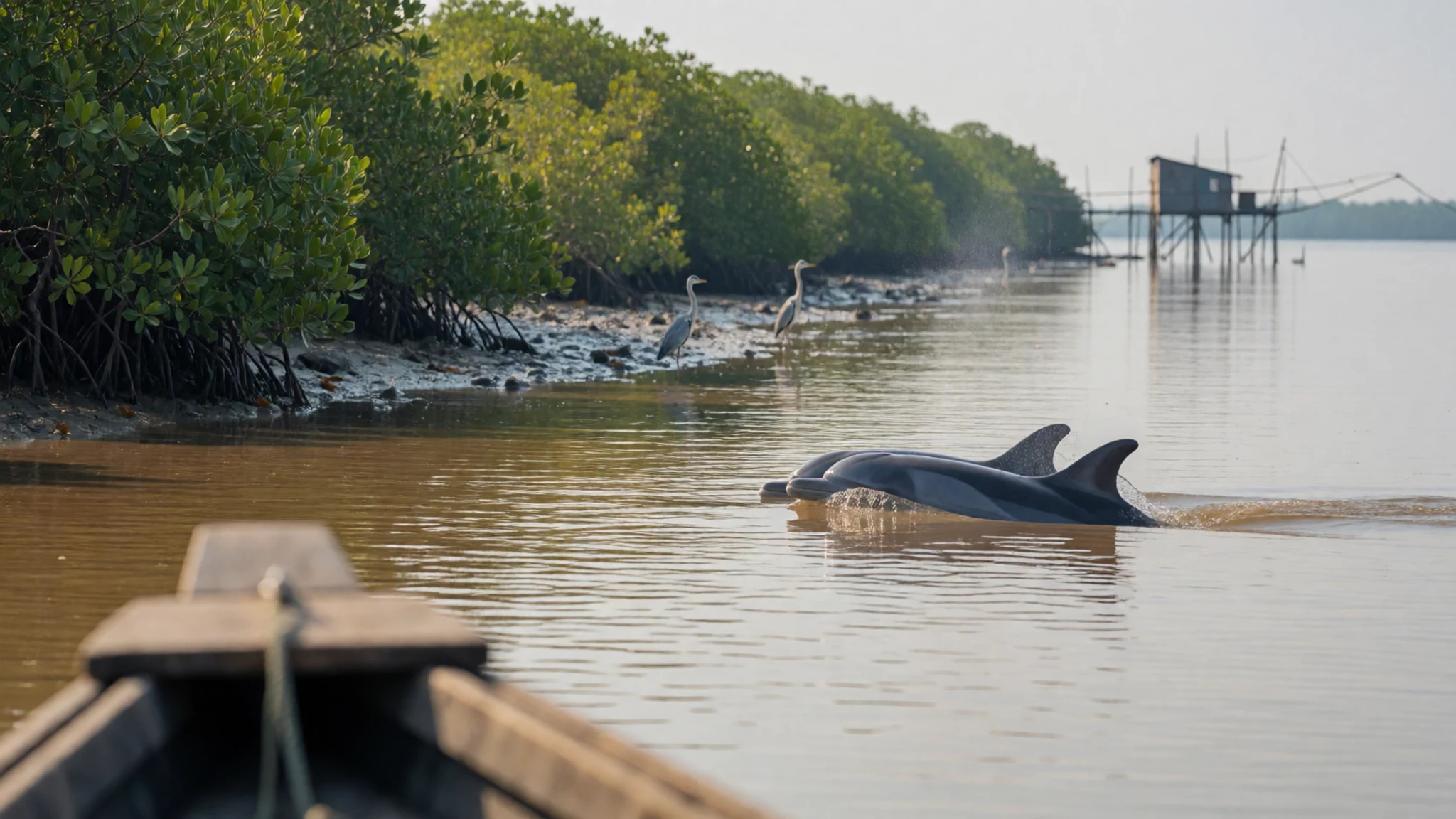
- Peam Krasop mangroves — Mangrove coast west of town
Dense mangrove forest fringes the coast here, and it is described by Wikivoyage as the biggest stretch in Asia. Narrow channels thread between the roots, home to otters, shorebirds and fish nurseries. A boat or kayak is the best way in, and quiet early mornings give the best chance of seeing wildlife.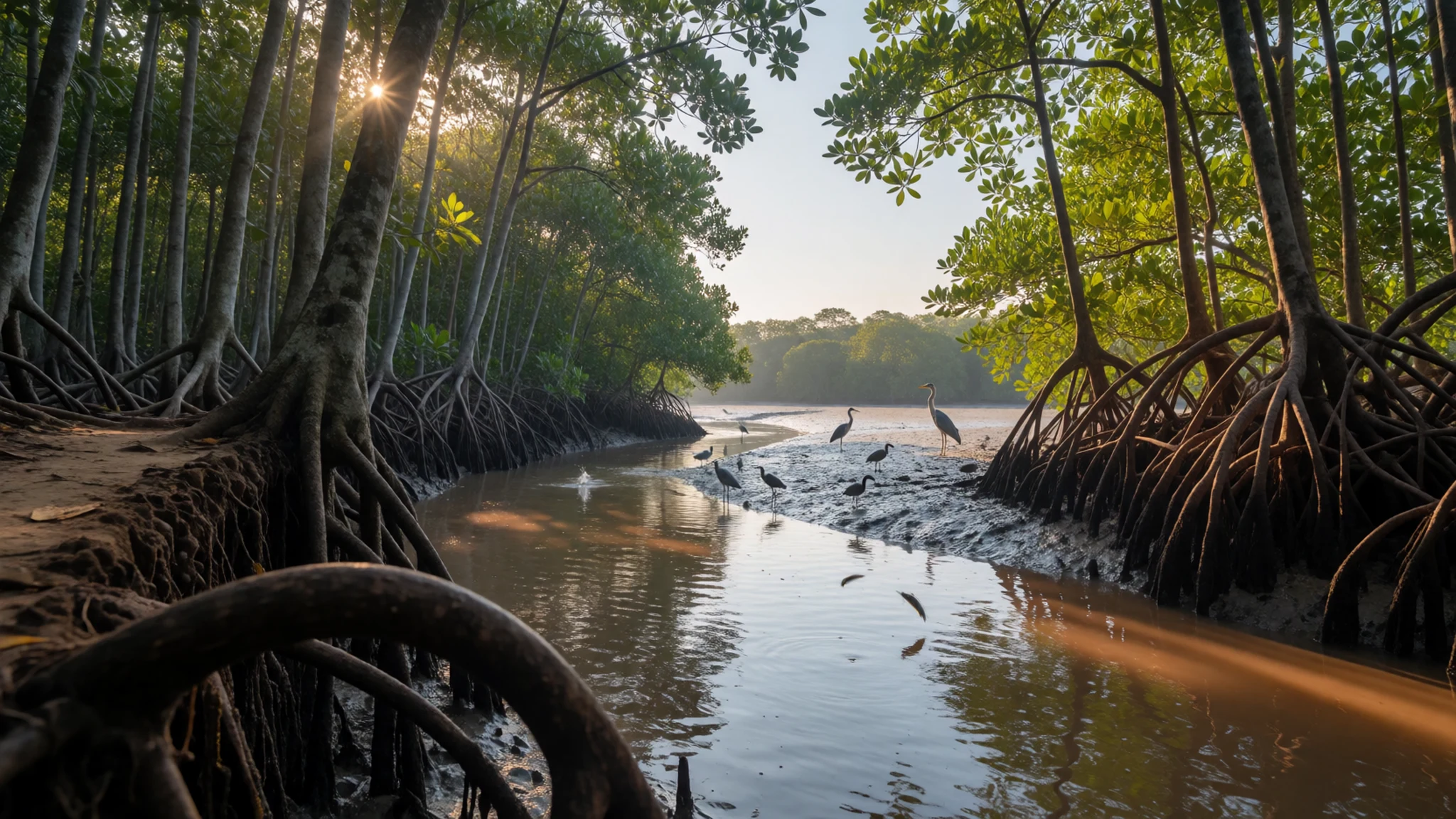
- Koh Kong Island — Offshore, reached by boat from Koh Kong town
This large, mostly undeveloped island lies offshore and is known for its beaches. It is a military site, so overnight stays are not allowed; visits are day trips by speedboat, arranged privately and priced by negotiation. Agree the cost, the return time and what is included before you leave the jetty.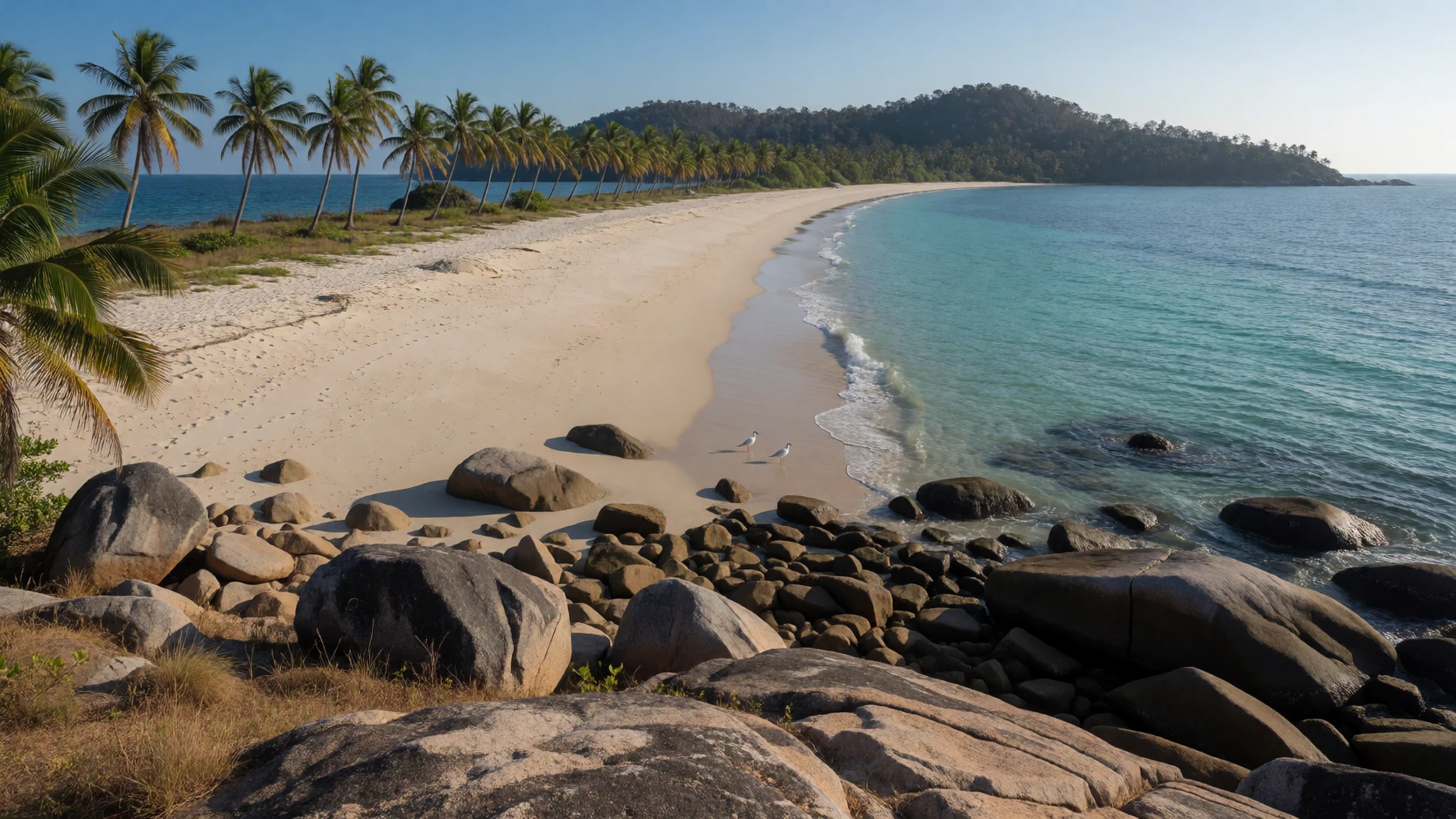
- Cardamom Mountains foothills — Hills inland from Koh Kong town
Behind the town, the lower Cardamom Mountains offer forest walks, rivers and waterfalls, and the road through them is itself a scenic drive. Treks and overnight stays can be organised with local guides. Go in the drier months, wear sturdy shoes, and expect leeches and mud if rain has fallen recently.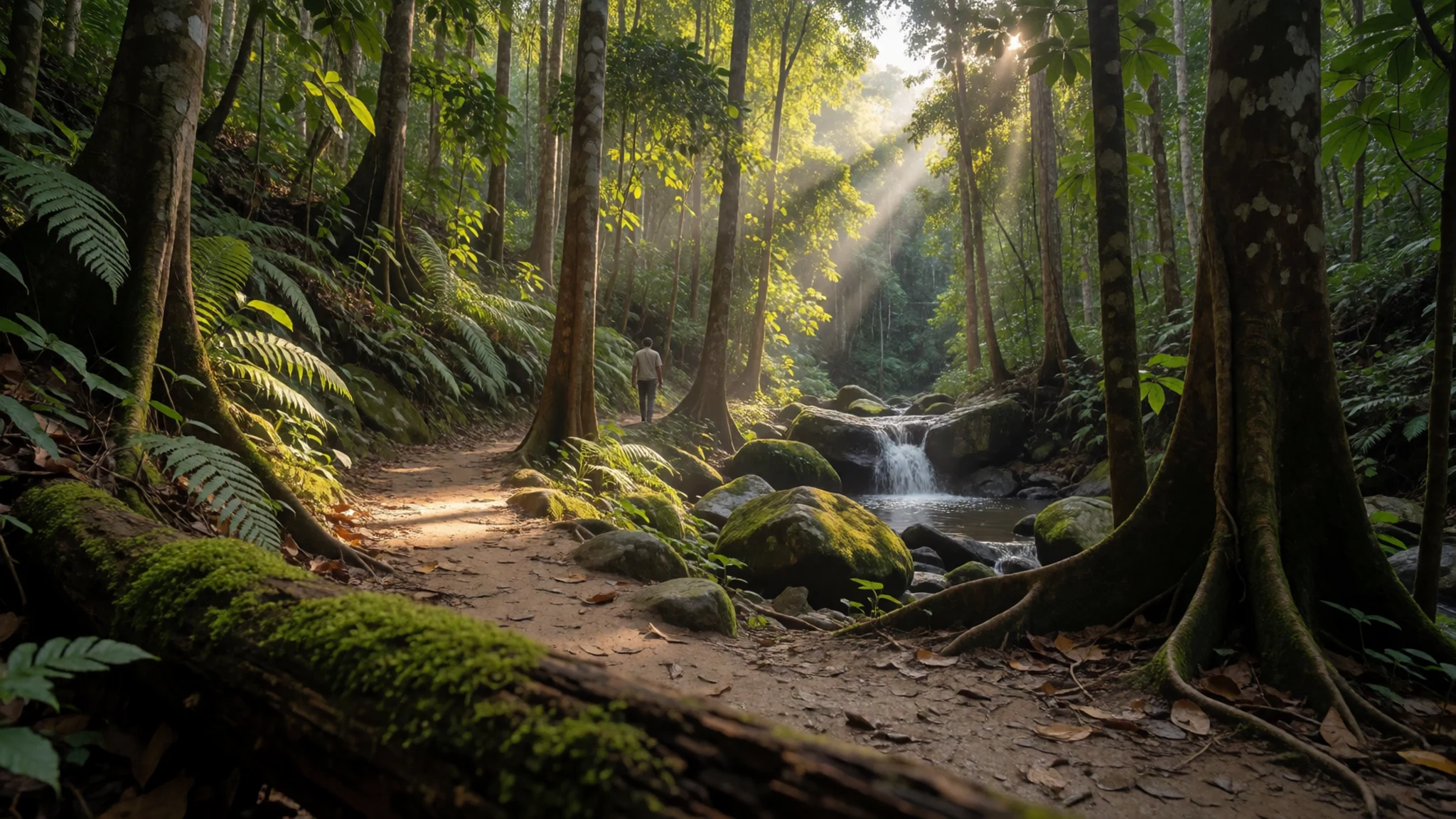
- O'bak Retes rapids — Beside the main road on the way to Sre Ambel
Along the main road towards Phnom Penh and Sihanoukville, a small turn-off on the western side leads down to a set of rapids called O'bak Retes. It is a handy place to break a long bus or taxi journey, stretch your legs and cool off, though water levels vary greatly between the dry and wet seasons.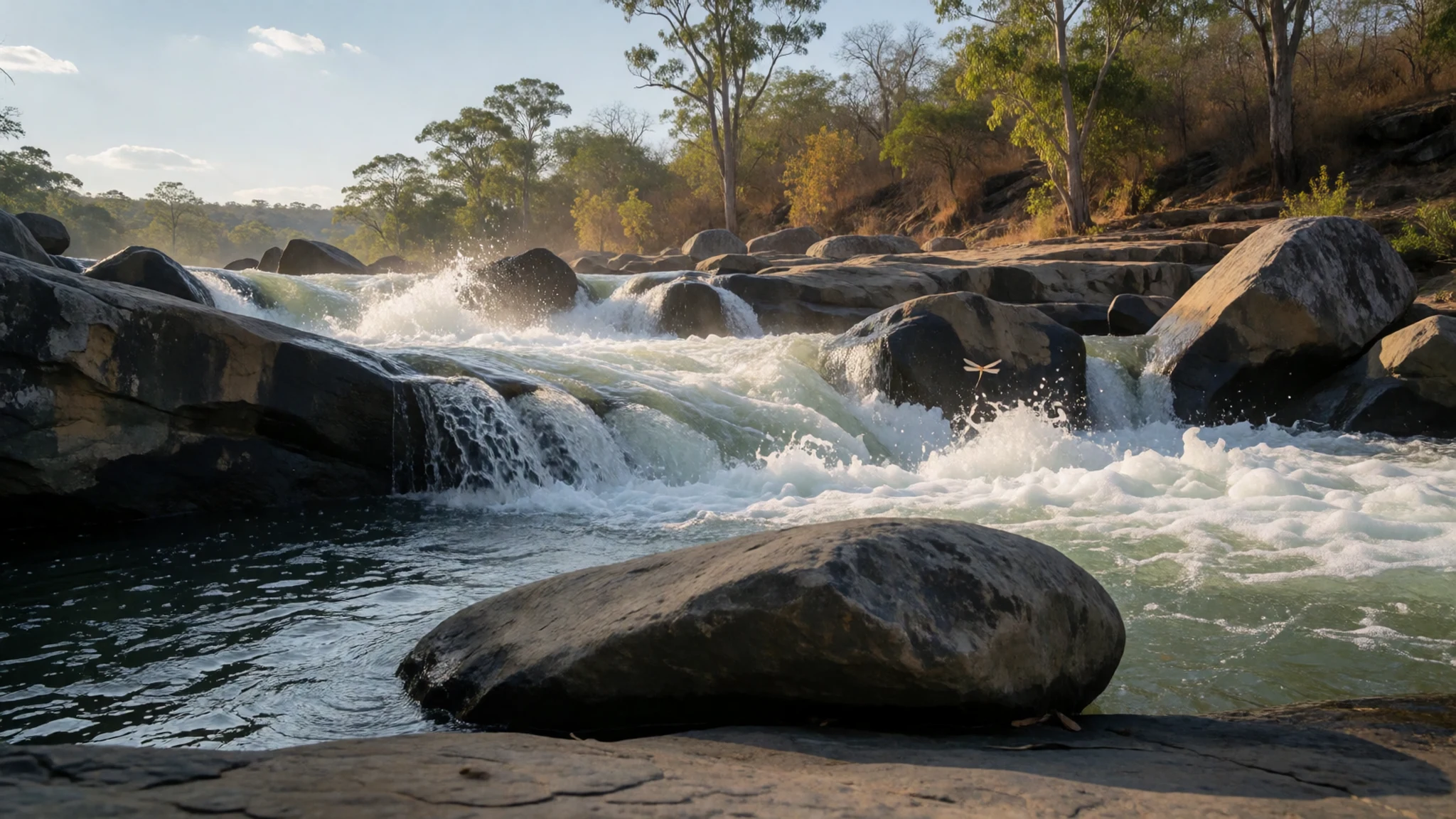
Culture
Koh Kong is a Cambodian town, and daily life follows Khmer customs with a noticeable Thai influence from the nearby border. Most people are Theravada Buddhists, and neighbourhood pagodas (wats) are the centre of festivals, funerals and quiet merit-making. Monks in saffron robes walk the streets for alms in the early morning, and locals greet them with food and a respectful bow.
The usual Khmer greeting, the sompeah, is a slight bow with palms pressed together; the higher the hands, the greater the respect. A smile and a sompeah go a long way, and visitors who try a few words of Khmer are warmly received. The head is treated as the most respected part of the body and the feet as the lowest, which shapes small habits such as not touching people's heads and not pointing your feet at others.
Much of the local economy depends on fishing, small trade and cross-border business, so you will see boats pulled up along the river, vendors selling the day's catch and a mix of languages at the market. Money is flexible too: shopkeepers quote in baht, dollars or riel depending on who is asking. Bargaining is normal in markets and for transport, but should stay good-humoured.
At a local pagoda, cover your shoulders and knees, take your shoes off before entering any hall, and never point your feet towards a Buddha image or a monk.
What to wear
In Koh Kong, as across Cambodia, traditional dress centres on the krama, a checked cotton scarf worn by many people for sun, as a headcloth, a sling for a child, a towel or a belt. For formal occasions women wear the sampot, a wrapped skirt of silk or cotton, often woven in rich colours, with a fitted blouse; men may wear a sampot-style wrap or a pressed shirt and trousers. These outfits appear at weddings, Khmer New Year and temple festivals.
Everyday clothes are simpler and shaped by the heat. Locals wear light cotton shirts, loose trousers or knee-length skirts, T-shirts and sandals or flip-flops. Fishermen and market traders favour quick-drying shorts and wide-brimmed hats, and motorbike riders often cover their arms against the sun. Swimwear is for the beach or boat, not for the town streets.
Visitors should dress for a hot, humid climate with sudden downpours. Pack breathable cotton or linen, a hat, sunglasses and a light rain jacket for the wet months. Shoulders and knees should be covered at a pagoda, so carry a scarf or a light long-sleeved top. For boat trips and forest walks, bring sandals that stay on in water and closed shoes with grip for trails, plus long trousers and insect repellent for dusk in the mangroves.
What to eat
- Fresh crab and seafood — Riverside seafood restaurants along the Kah Bpow
Crab, prawns, squid and fish come in daily from the coast and are grilled, steamed or stir-fried with pepper and garlic. The riverside seafood restaurants are the usual place to eat it, and ordering by weight is common, so ask for the price first.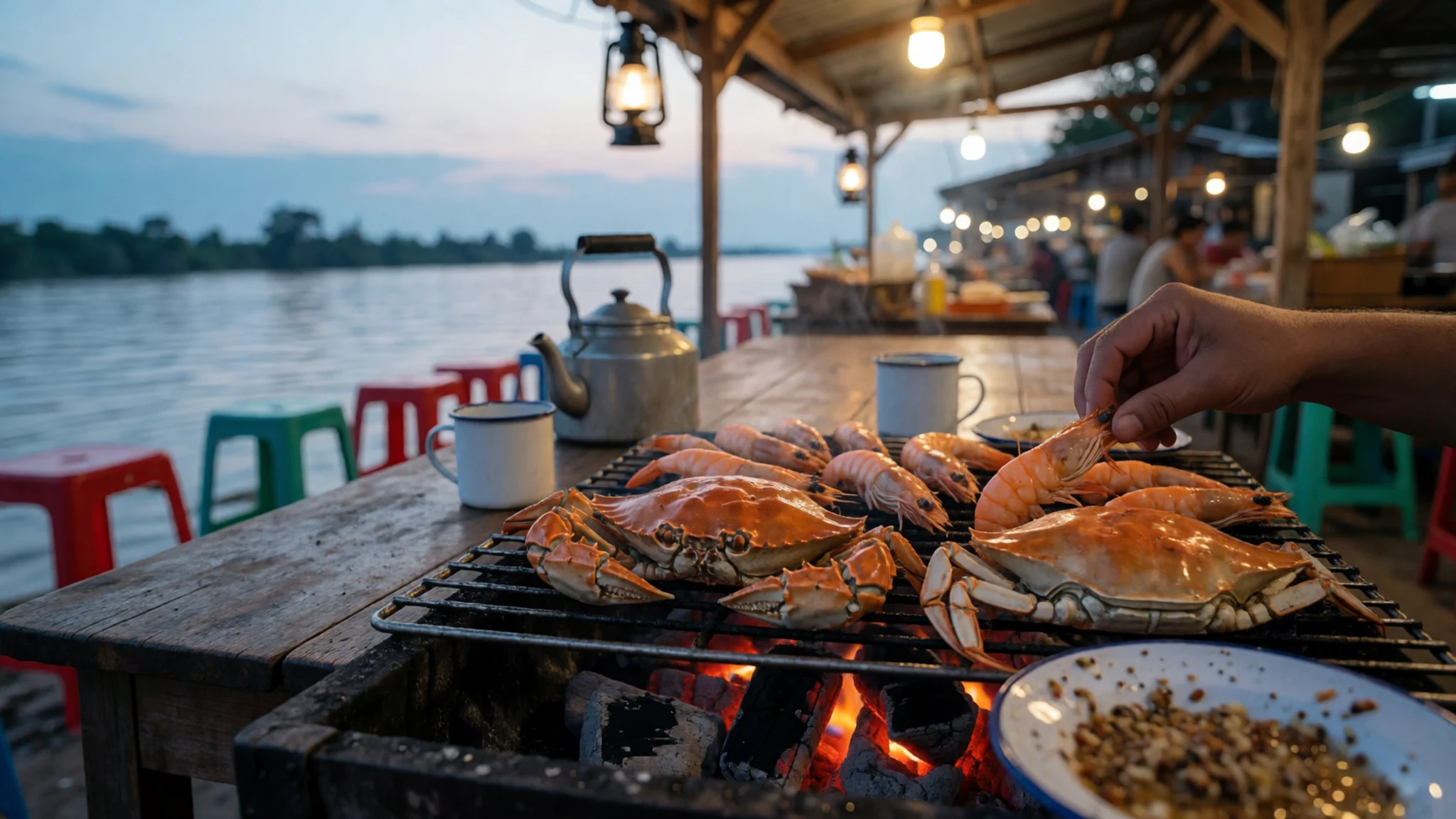
- Fish amok — Khmer restaurants near the central roundabout
A mild, creamy Khmer curry of fish steamed with coconut milk and kroeung paste, traditionally in a banana-leaf cup. It is soft rather than fiery and easy for first-time eaters. Most Cambodian restaurants in town serve a version.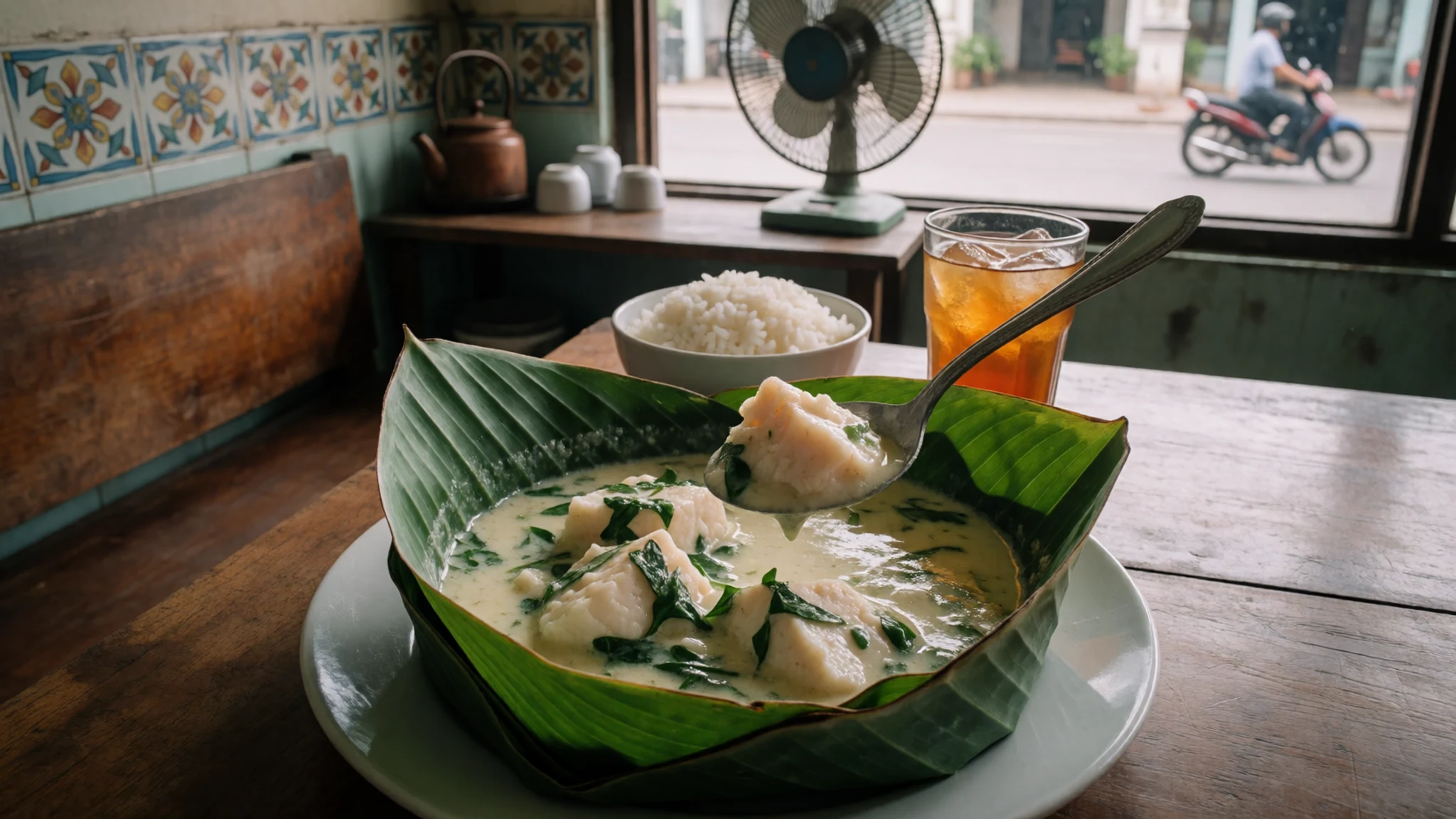
- Lok lak — Eateries around the town-centre roundabout
Stir-fried beef cubes in a peppery soy sauce, served with rice, salad and a lime-and-pepper dipping sauce. It is a dependable, filling dish found on almost every local menu and works well after a day on the water. - Num banh chok — Morning market stalls and street vendors
Fresh rice noodles topped with a cool fish-based green curry and a heap of raw herbs, flowers and cucumbers. It is a typical Khmer breakfast, sold early from market stalls and gone by midday. - Grilled river and sea fish — Evening food stalls and open-air eateries by the river
Whole fish rubbed with salt and herbs and cooked over charcoal, usually eaten with rice, fresh greens and a spicy dipping sauce. Choose a stall with a busy grill and a good turnover of customers.
Plan it
Best time. November to April is the drier season, with moderate to very little rain and easier boats and trails. May to October brings very heavy rainfall, and the Cardamom hills behind Koh Kong are far wetter than inland Cambodia. Heat is constant year round.
How long. 2–3
Getting there. There is an airport at Koh Kong, but no scheduled flights, so travel is by road. Most visitors come by bus, minibus or shared taxi from Phnom Penh or Sihanoukville via Sre Ambel, then along the winding road through the Cardamom foothills. From Bangkok, travel by road to the Thai border at Hat Lek, cross at Cham Yeam, then take a motorbike taxi or taxi for the short last leg into town.
Budget. low
Tips
- Book intercity buses and minibuses for the morning, as afternoon departures run only if demand allows.
- Carry small notes in baht, dollars and riel, since prices and change are often mixed.
- Go on boat and mangrove trips early, when it is cooler and wildlife is more active.
- Bring water, sun protection and insect repellent for boats and forest walks.
- Agree prices for motorbike taxis, tuk-tuks and island day trips before you set off.
Etiquette
- Cover shoulders and knees and remove shoes at pagodas.
- Keep a respectful distance from dolphins and nesting birds, and take your litter back with you.
- Ask permission before photographing monks or local people.
Nearby
Sources
- Wikidata Q1375645 (CC0)
- Wikipedia: Khemarak Phoumin (CC BY-SA 4.0)
- Wikivoyage: Koh Kong (CC BY-SA 4.0)
- Cambodian fishing boats, Haydn Blackey (CC BY-SA 2.0)
- Map of Koh Kong Province, Stefan Fussan (Public domain)
- Koh Kong roundabout sign, Hippietrail (CC0 1.0)


Wildlife
- Smooth-coated otter (animal)
The smooth-coated otter is a river otter with sleek, short fur, just as its name promises. In Koh Kong it lives in the slim waterways winding among the tree roots, sharing them with shorebirds and young fish. I cannot say which season or hour is best, so ask a local guide. Keep well back, stay quiet and still, and never offer food. These otters are vulnerable, so your calm respect matters.
- Irrawaddy dolphin (animal)
The Irrawaddy dolphin is a slate-grey dolphin of the sea that is just as happy living in rivers. Around Koh Kong, look for it where the rivers meet the sea, mostly near the river mouths and among the mangroves. I cannot promise a best season or hour, so ask a local guide when to go. Watch from a respectful distance, keep the boat slow and voices low, and never feed it.