Kizhi Pogost
Kizhi Pogost, Russia
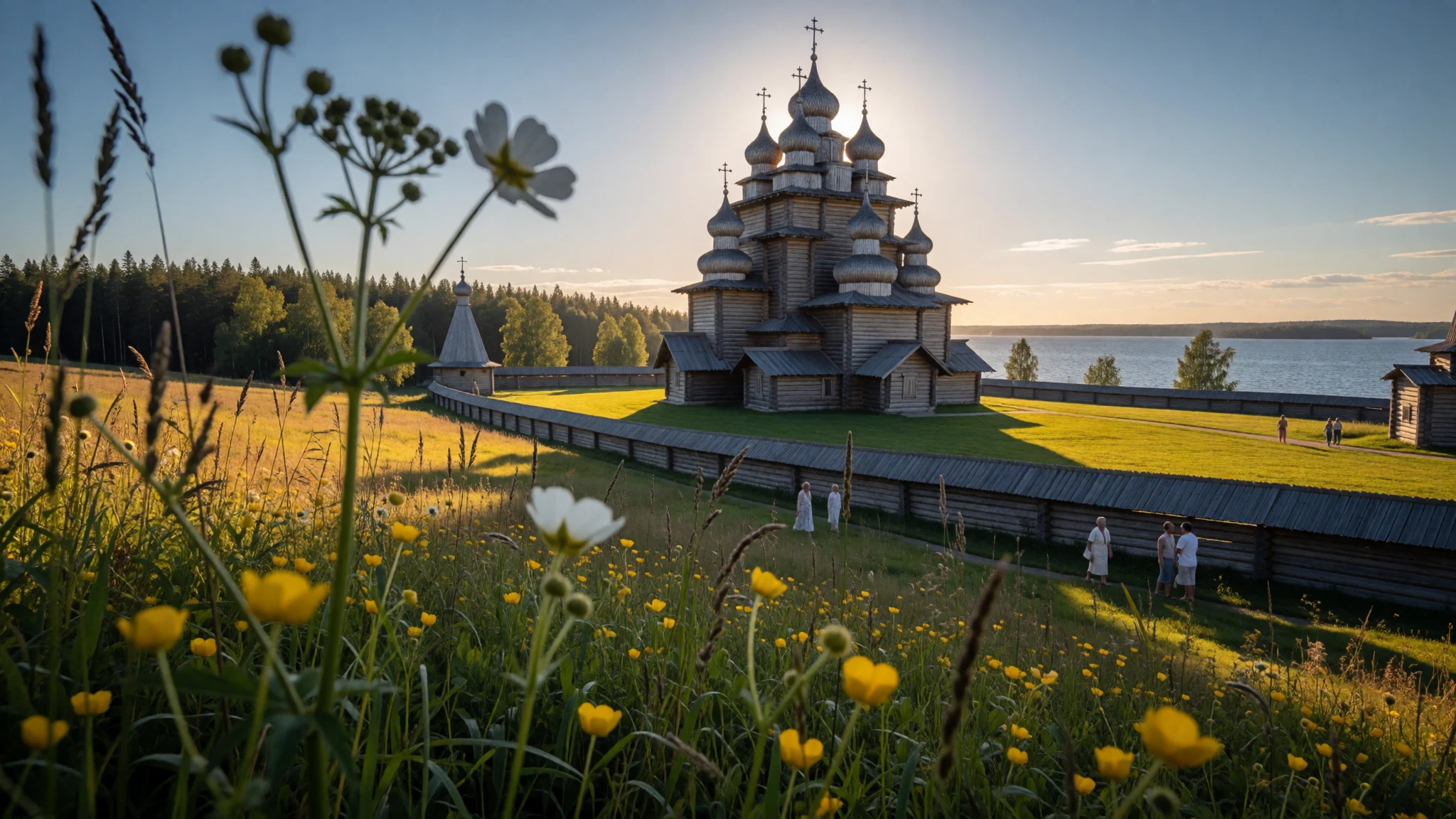
Kizhi Pogost is a cluster of timber churches on a Lake Onega island, crowned with domes and built entirely of wood.
The place
Kizhi Pogost stands on a long, narrow island in Lake Onega, in the Republic of Karelia in north-west Russia. A pogost is a fenced churchyard, and this one holds three timber buildings: the Transfiguration Church with its 22 domes, the Intercession Church with 9, and a bell tower. The whole group reads as a single composition against open water and a wide sky. The island is small enough to cross on foot, and the pogost is only part of what it holds. An open-air museum has gathered farmhouses, barns, chapels and windmills from villages around the region, so a visit is as much about northern rural life as about the churches. Light does a great deal of the work. In June the sun barely sets, the lake can turn from glass to chop within an hour, and the weathered timber shifts between silver, honey and grey. The domes are covered in small wooden shingles that catch the light like fish scales. Because the island lies across open water, it feels apart from the mainland. In high summer the landing area and the main path fill with tour groups, so early and late hours are calmer. The churches are not large inside; the effect is outdoors. UNESCO listed the site in 1990 (reference 544), and the museum manages it with rules about which buildings can be entered and when.
Its story
Kizhi Pogost grew out of a parish whose scattered villages sat around the shores and islands of Lake Onega. The word pogost once meant a rural church centre, and the fenced yard here served worshippers who arrived by boat in summer and by sleigh across the ice in winter. The standing ensemble is dated to 1714, though the site's roots go back into the 17th century, and earlier churches stood here before the present ones. Local lore tells of a master carpenter, Nestor, who finished the great church, flung his axe into the lake and declared that none like it had been built or ever would be. It is a story, not a record, but it captures how the building was regarded. Over the following centuries the Russian Empire, and later the Soviet Union, ruled the region, and Kizhi remained a working parish for a time before becoming a museum. Old wooden buildings from other villages were brought to the island to save them from decay or demolition. That rescue gave Kizhi its second identity as a collection of northern vernacular architecture. Preserving timber outdoors in a damp, freezing climate is an unending job, and the restoration of the Transfiguration Church in particular has been long and complex. UNESCO inscribed the pogost in 1990, and Russia added it to its own heritage list in 1993.
What to see
- Transfiguration Church — Kizhi Pogost enclosure
The Transfiguration Church is the centrepiece of Kizhi Pogost, a cluster of 22 timber domes rising in tiers over a modest base. Seen from the lake, the silhouette looks almost too elaborate to be wood. Its shingled domes darken and silver with weather. Restoration work has at times hidden parts of it behind scaffolding, so check the museum's current notice before planning photographs.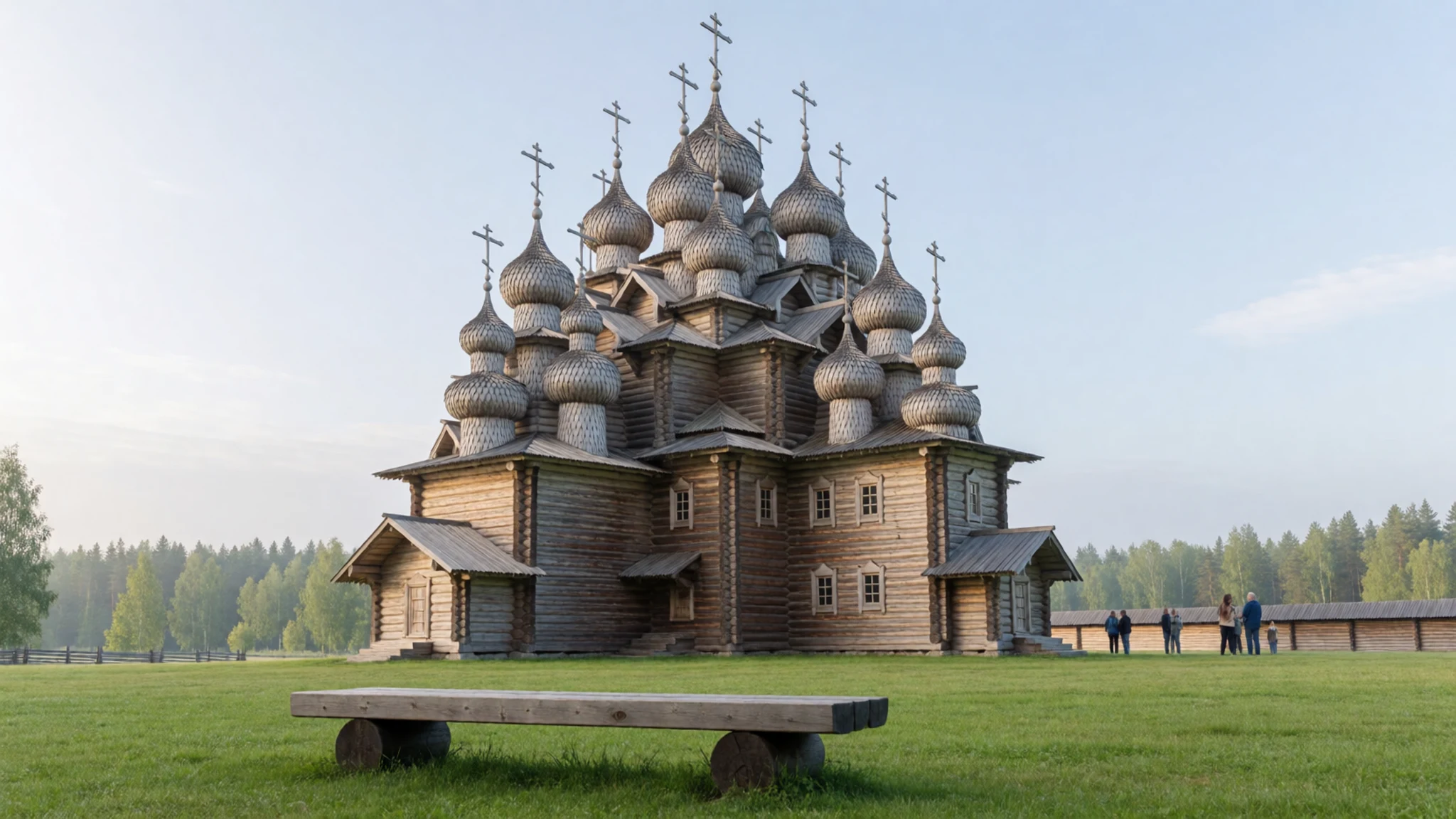
- Intercession Church — Kizhi Pogost enclosure
The Intercession Church, with its 9 domes, stands beside the larger church and is the calmer of the two, more compact and more upright. Traditionally it served as the winter church. Its interior, with a tall painted icon screen, is sometimes open to visitors, though access varies, so ask at the museum on arrival rather than assuming.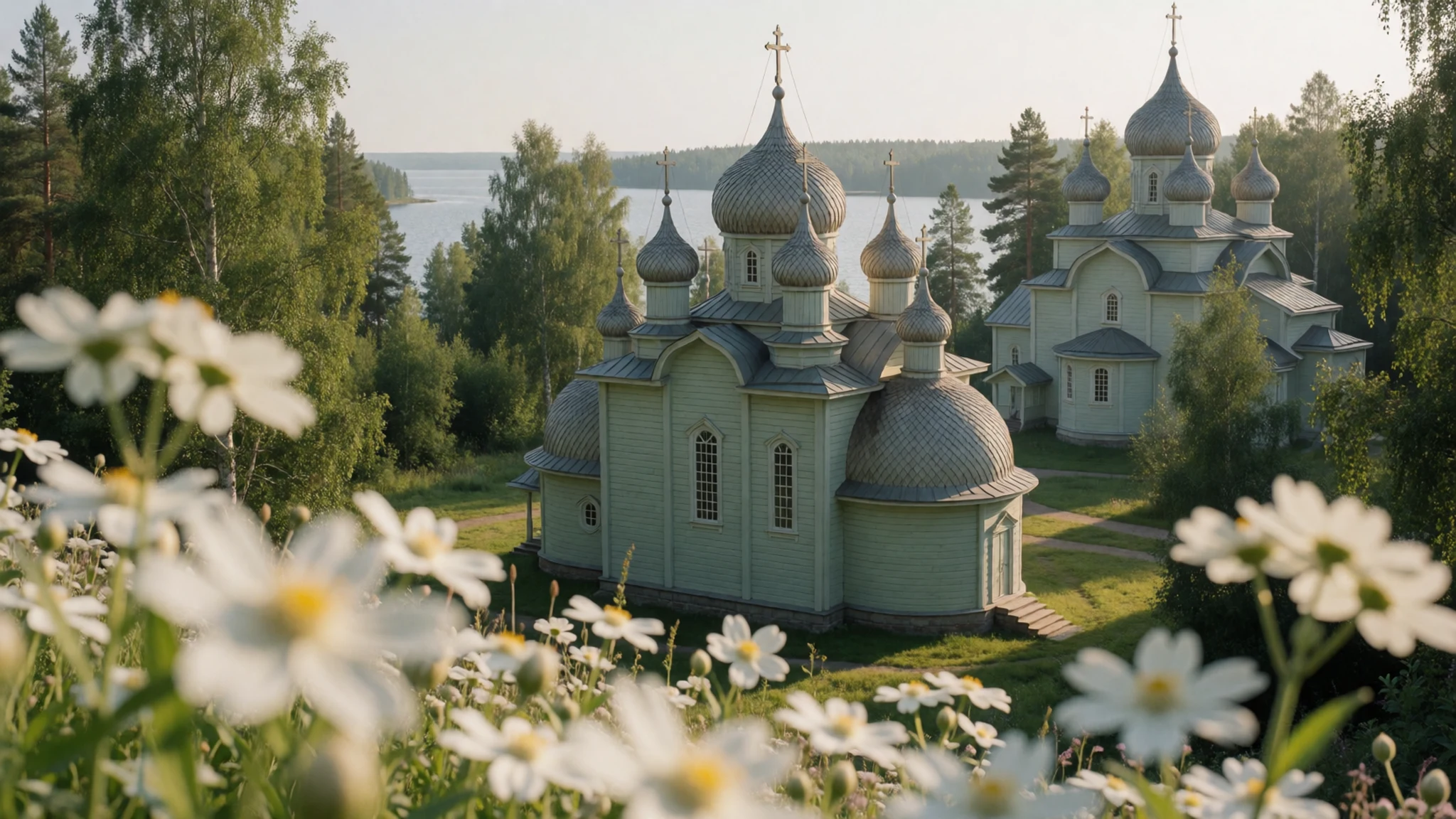
- The bell tower — Kizhi Pogost enclosure
The bell tower at Kizhi Pogost completes the trio, a plain, tall timber frame that gives the two churches a vertical counterpoint. It is the least showy element of the ensemble, and many visitors walk past it. Stand back near the fence to see all three buildings in one frame, which is easier early or late in the day.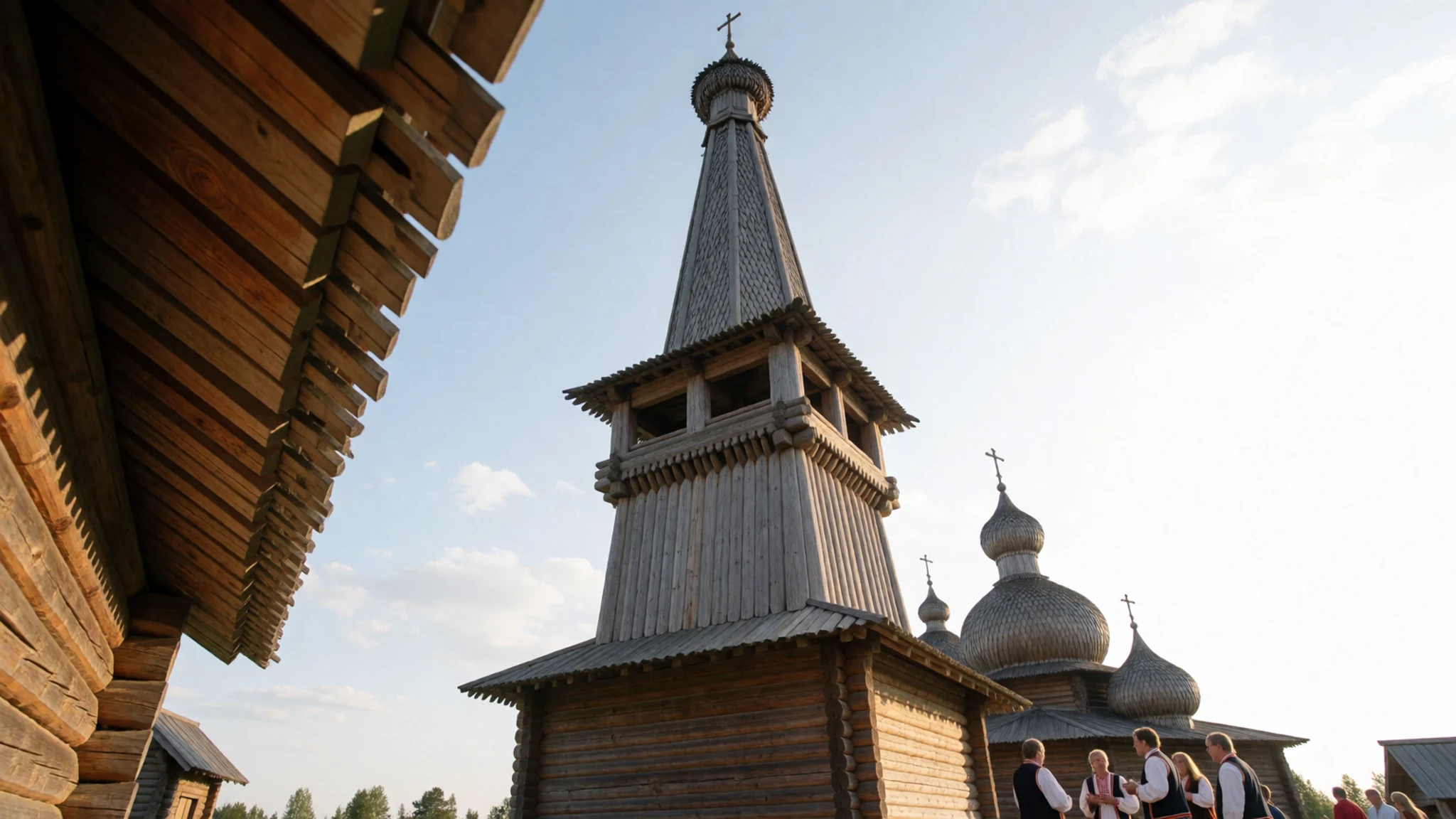
- The open-air museum buildings — Kizhi island, beyond the pogost
The open-air museum around Kizhi Pogost gathers wooden houses, barns, chapels and windmills moved from villages across Karelia. Stepping into the farmhouses shows how families lived under one roof with their animals and stores through long winters. Allow time for these as well as the churches; the footpaths are gentle, and the quiet corners feel far from the crowds at the pogost.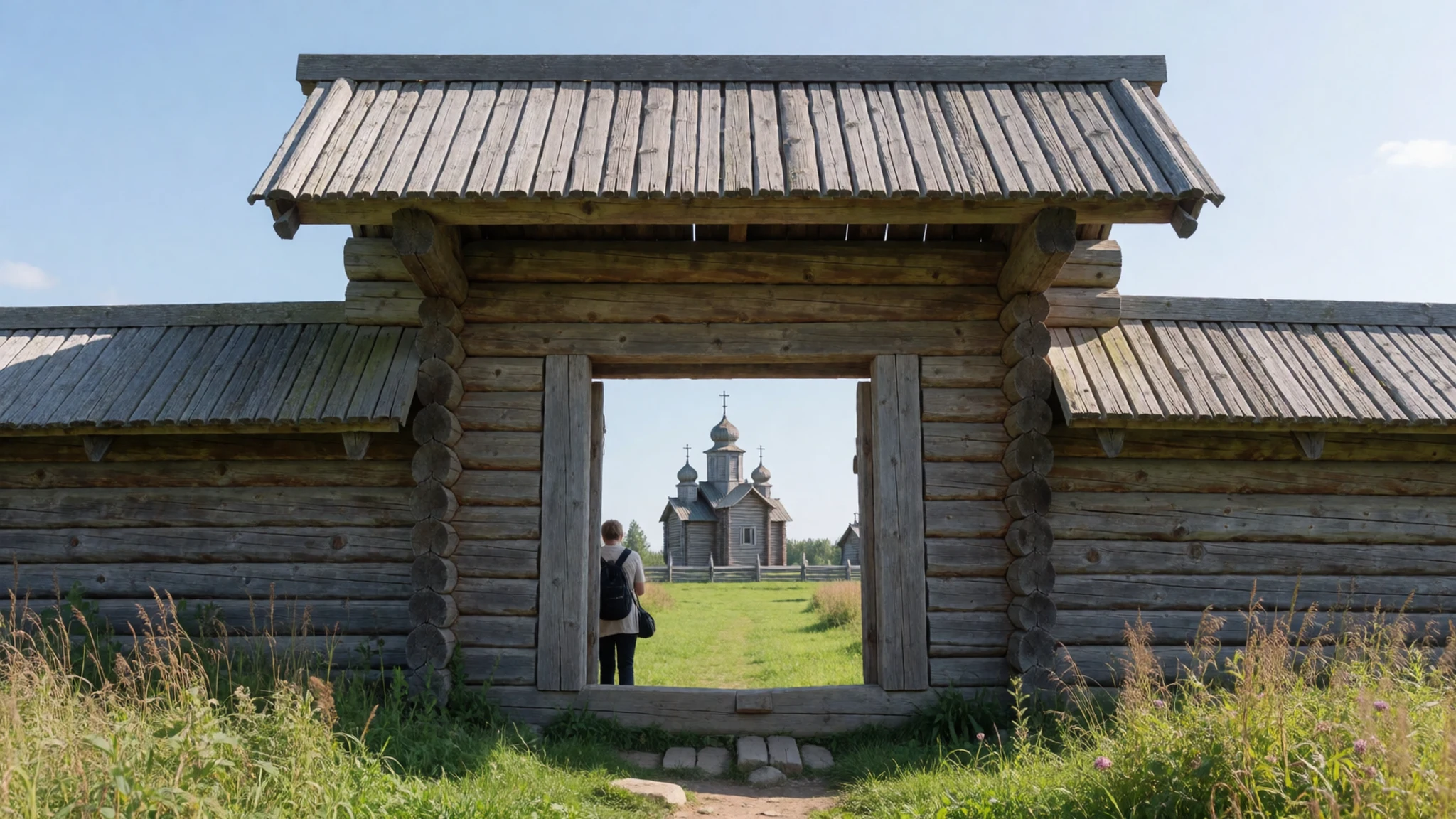
- The approach across Lake Onega — Lake Onega, off Kizhi island
Kizhi Pogost is reached by boat across Lake Onega, and the crossing is part of the experience. The domes appear first as a small cluster on the horizon, then sharpen as the island nears. Sit on the deck if the weather allows. Wind off the lake is cooler than on the mainland, even in summer, so bring a layer.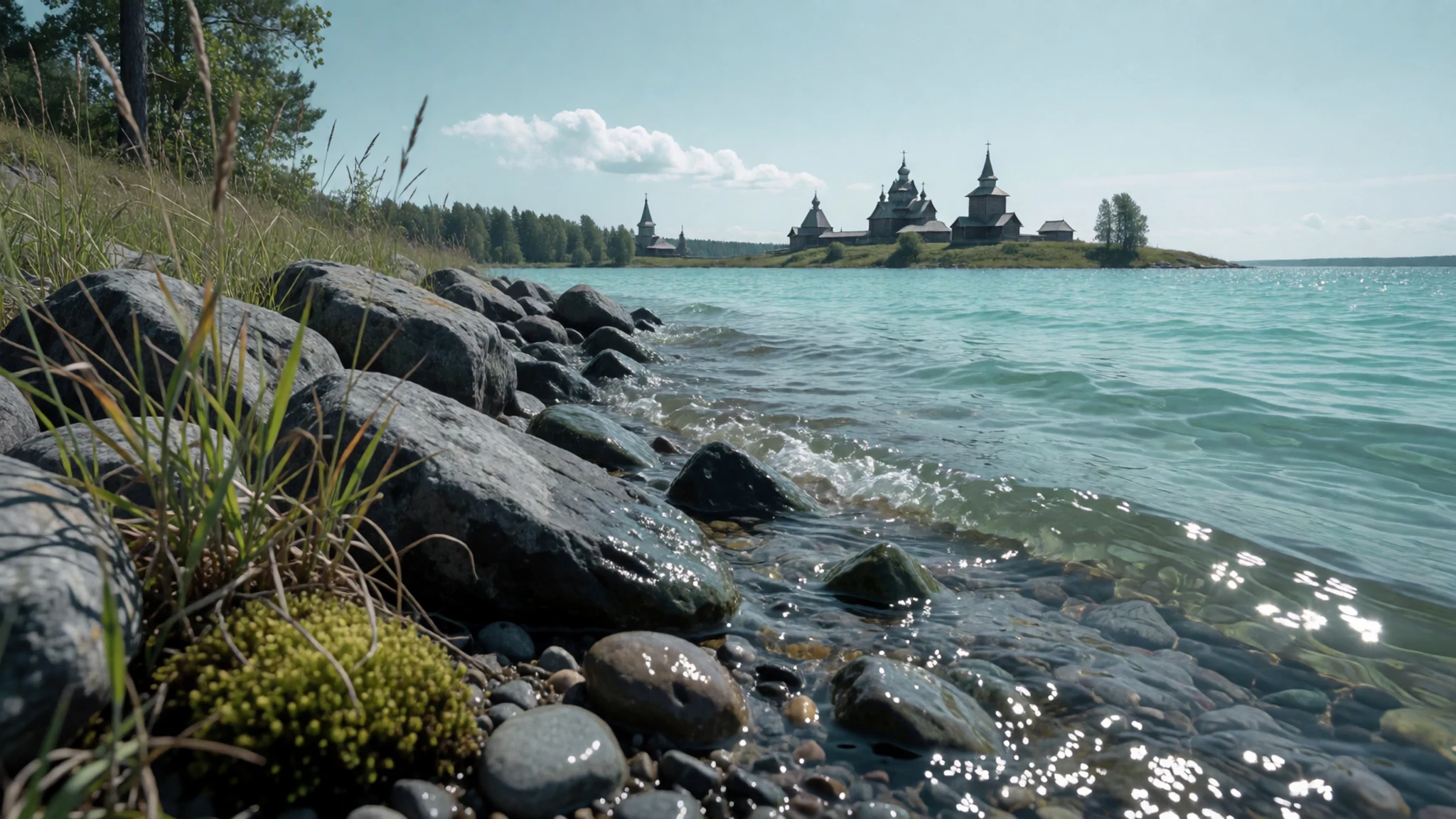
Culture
Kizhi Pogost belongs to the Russian Orthodox tradition of the north, where a parish centre usually meant a church, a bell tower and a fenced yard serving scattered villages around a lake. The architecture reflects that role: the churches were community landmarks, built by local carpenters whose main tool was the axe and whose main material was pine, with aspen for the shingles. Karelia has its own mix of peoples and languages, including Karelian and Veps alongside Russian, and the museum's farm buildings speak of a practical rural past more than of courtly ambition. Inside Orthodox churches, icons, candles and the iconostasis, the painted screen that separates the altar area, carry real meaning for worshippers, even where a building now works as a museum. Folk life here revolved around fishing, farming through short seasons, and crafts such as weaving, embroidery and carving, which museum demonstrations sometimes show. Kizhi's story is also one of care: keeping timber standing outdoors means constant repair, and the museum's carpenters and conservators matter as much as the buildings. Bells, too, are part of the tradition, and a church bell heard across the water is a reminder that these were working places of worship long before they were visitor attractions. Where a church interior is open, dress modestly, take hats off and follow the staff's instructions on photography.
What to wear
Kizhi Pogost sits in a part of Russia where traditional dress was shaped by linen, wool and long winters. Women in the Russian north wore a linen shirt under a sarafan, a sleeveless dress, often with an embroidered or woven border and a headdress such as the kokoshnik on festive days. Men wore a linen shirt with a woven belt, wool trousers and a coat for cold weather. Karelian costume favoured red and white embroidery and narrow woven belts. Today this clothing appears at festivals, folk performances and museum events rather than daily life. People in Karelia now dress practically: jeans, fleeces, waterproof jackets and sturdy boots, with a smarter outfit for town evenings. A visitor should plan for a lake climate, where a sunny hour can turn cold and wet. Pack layers, a rain jacket, a hat and sunglasses, plus insect repellent in summer. Shoes matter more than style: the island has wooden boardwalks, grass and muddy paths, so choose comfortable, grippy footwear. For churches, carry a light scarf for the head or shoulders and wear trousers or a skirt that covers the knees. In winter, insulated boots, thermal layers and gloves are essential.
What to eat
- Kalitki — Bakeries and cafés in Petrozavodsk
Kalitki are small open-faced Karelian pastries with a rye crust folded up around a filling, often potato, millet or rice, sometimes brushed with butter. They are a local snack rather than a restaurant dish, and quality varies, so try a few.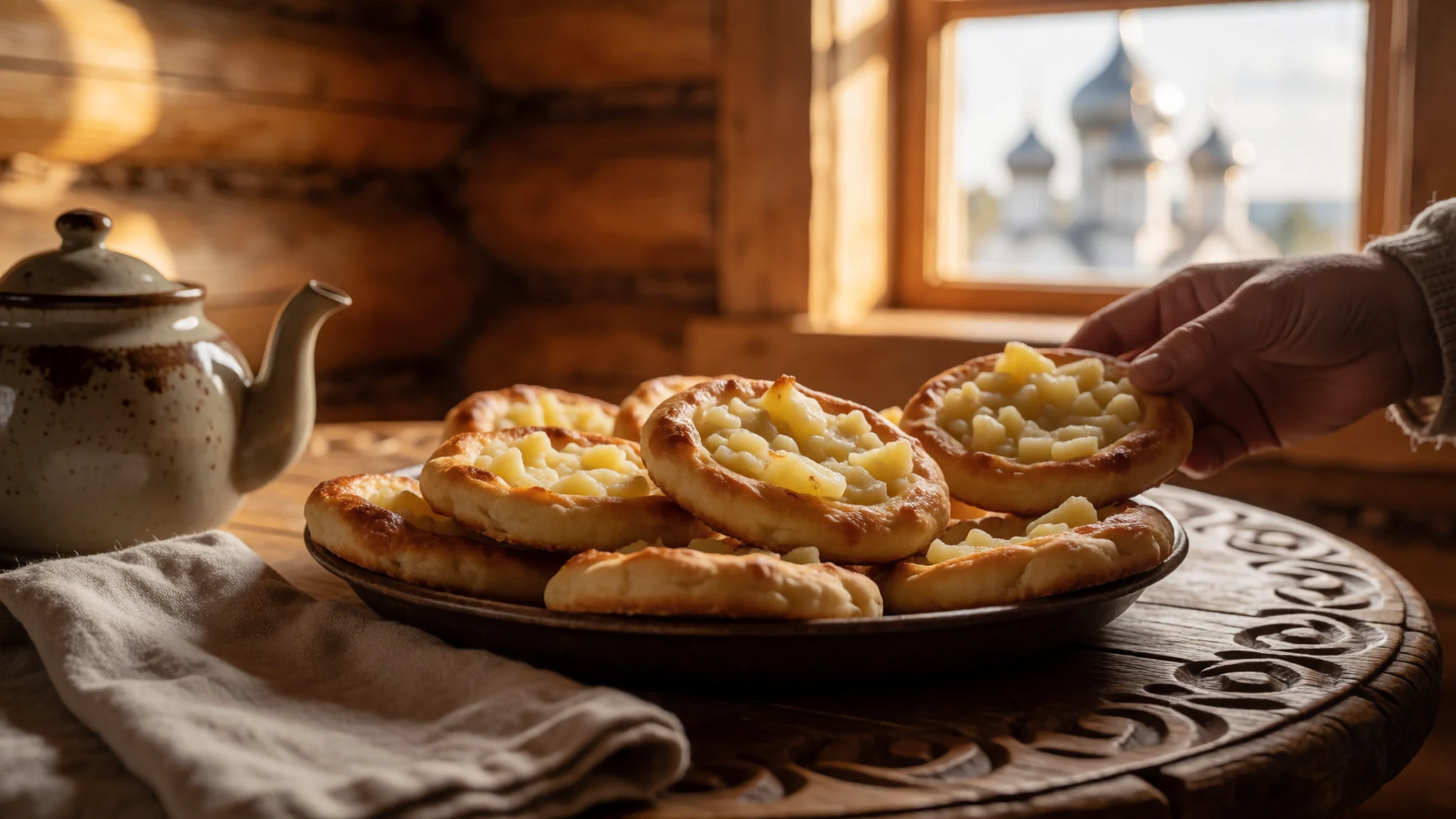
- Ukha — Restaurants and cafés in Petrozavodsk
Ukha is a clear, lightly seasoned fish soup, traditionally made with fresh lake or river fish, onion, potato and a bay leaf. It suits a cool day on the water and is a reliable choice in northern Russia, where fish is part of everyday cooking.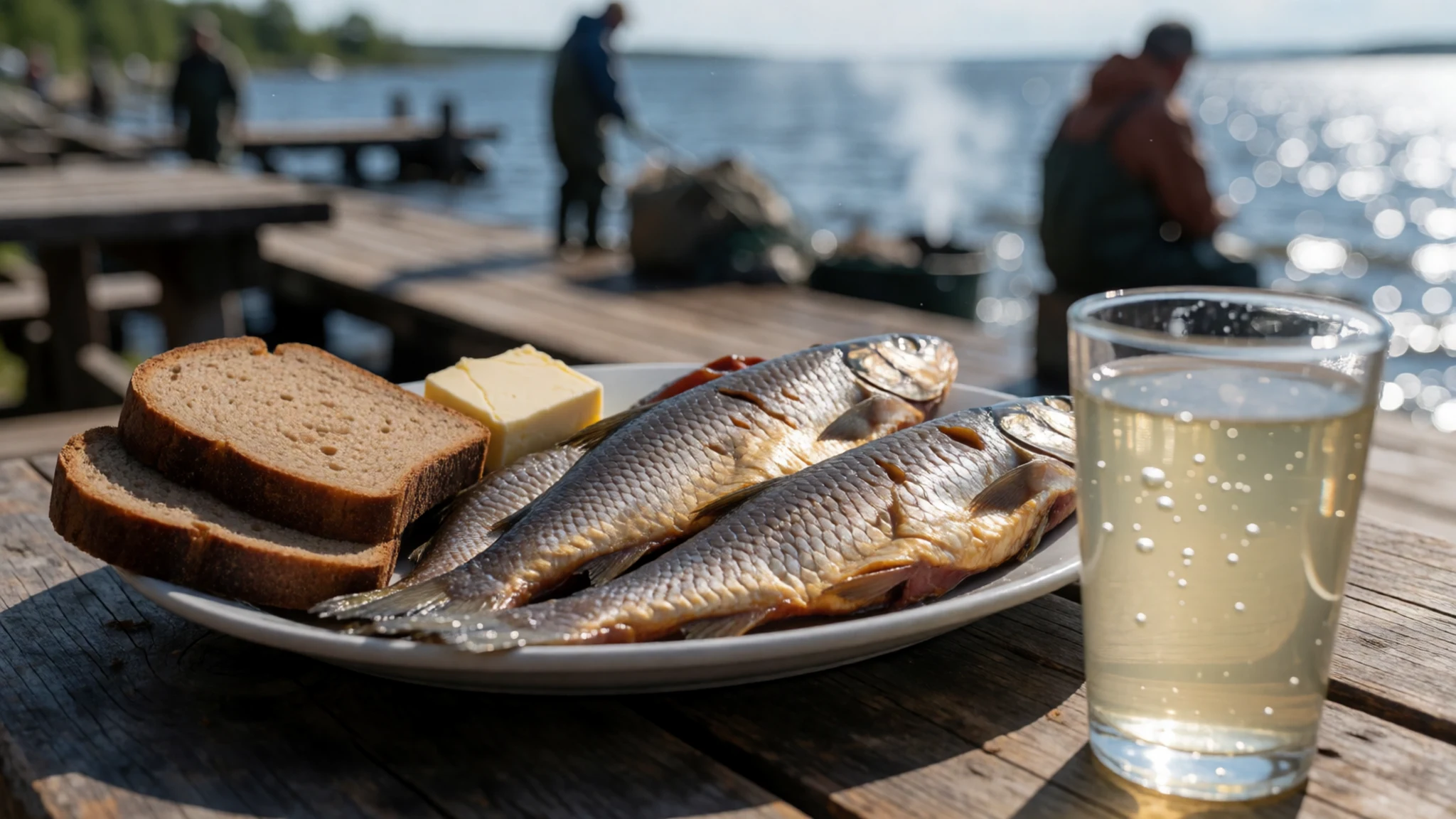
- Smoked or grilled lake fish — Market stalls and lakeside cafés in Petrozavodsk
Smoked or grilled lake fish is a staple around Lake Onega, served whole or in thick pieces with boiled potatoes, dill and pickles. The flavour depends on the species and the smoke, so ask what is local and what has been brought in from elsewhere. - Wild mushrooms in sour cream — Restaurants and cafés in Petrozavodsk, and seasonal roadside stalls
Wild mushrooms in sour cream, or a simple mushroom soup, appear on northern Russian menus in late summer and autumn, when foraging is at its peak. Expect earthy, creamy flavours, often with potato and dill. Vegetarians can usually find a version here, though stock may contain meat. - Rye bread — Bakeries and food shops in Petrozavodsk
Dense, slightly sour rye bread is the base of many northern meals, eaten with butter, salted fish or soup. Bakeries in Petrozavodsk are good places to pick up a fresh loaf, which makes an easy picnic for the boat or the island paths. - Berry kissel and cloudberry jam — Cafés and souvenir shops in Petrozavodsk
Kissel is a thick, lightly sweet fruit drink or pudding, made here with local berries such as cranberries and lingonberries. Cloudberry jam, golden and tart, is a northern speciality worth buying as a gift. Both turn up in cafés and souvenir shops.
Plan it
Best time. June to August for the warmest weather, the longest days and the fullest boat season; early September is quieter and cooler, with autumn colour. Winters are very cold and snowy, and the island is far quieter and reached differently.
How long. 1–2
Getting there. Fly or take the train to Petrozavodsk, the capital of Karelia, then take a boat across Lake Onega to Kizhi in the navigation season. In winter, different transport operates, so check the museum's official site for current schedules. Before planning from India or the UK, check current travel advice and entry rules for Russia.
Budget. mid
Tips
- Book boat seats ahead in July and August, when crossings fill up
- Aim for the first crossing of the day to reach the pogost before tour groups
- Carry some cash as well as a card, as payment options on the island can be limited
- Bring layers and a rain jacket, because wind off the lake is cooler than on the mainland
- Pack insect repellent for summer, especially near the water and in the woods
Etiquette
- Dress modestly and take hats off if a church interior is open
- Follow staff instructions on photography and on which buildings can be entered
- Stay on marked paths and do not touch or lean on the timber structures
Nearby
Sources
- Wikidata Q477462 (CC0)
- Wikipedia: Kizhi Pogost (rev 1364839646) (CC BY-SA 4.0)
- Photo: Kishi church (Laban66) (CC BY-SA 2.5)
- Photo: Kishi church detail roof (MatthiasKabel) (CC BY-SA 2.5)
- Photo: Church of the Intercession (AlixSaz) (CC BY-SA 4.0)
- Photo: Church of the Transfiguration (Reshinna) (CC BY-SA 4.0)
- Photo: Kizhi Pogost (Andrey Korchagin) (CC BY-SA 2.0)
- Photo: Kizhi Pogost 0432Ac (Александровы АГ) (CC BY-SA 4.0)
- Photo: Kizhi Island 0433Ac (Александровы АГ) (CC BY-SA 4.0)
- Photo: Kizhi Pogost 0434Ac (Александровы АГ) (CC BY-SA 4.0)
- Wikivoyage (CC BY-SA 4.0)


