Khyargas Lake
Khyargas Lake, Mongolia
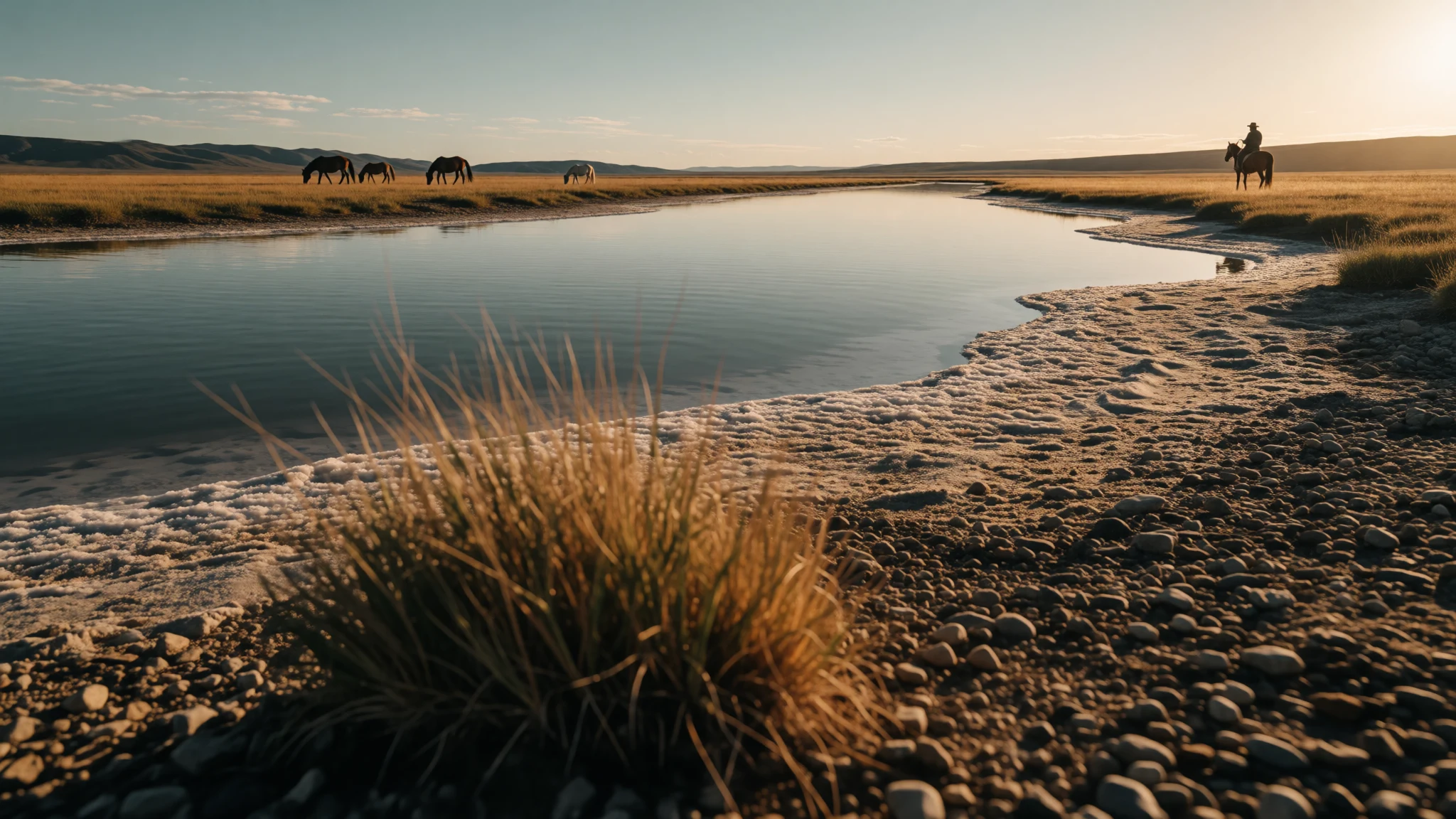
Khyargas Lake is a wide salt lake in far-western Mongolia, where long tracks, open steppe and herding life reward travellers who accept slow travel.
The place
Khyargas Lake (Khyargas Nuur, Хяргас нуур) lies in Uvs Province, in the far west of Mongolia, at 1028 m above sea level. Its water is salty, a clue to how the landscape works: the lake sits at the bottom of a basin, so what flows in has no outlet to the sea and the minerals stay behind. From orbit it looks like a dark sheet of water, with a smaller freshwater neighbour, Airag Nuur, close by. Both lie inside a national park named after the larger lake. On the ground, the scene is quieter than any satellite picture suggests. The shore is low and open, with steppe grass, sand and stony ground, and ranges standing pale on the skyline. Trees are scarce, so weather, light and sky do most of the work. Mongolia as a whole is thinly populated, and this corner is more remote than most, which means long drives, few buildings and plenty of empty horizon. Summers are generally warm by day and can turn cool at night, with rain in some areas; winters are bitterly cold. Visitors who come for facilities will be disappointed. Those who come for space, silence and herders moving livestock across the plain tend to leave with the lake lodged firmly in memory. Services are basic and the nearest towns are some way off, so the lake rewards planning far more than spontaneity.
Its story
Khyargas Lake sits in a part of Mongolia where history is carried by people and animals rather than by buildings. The steppes around it belong to the homeland of the Mongol Empire, yet the empire left few monuments at home; its main built trace is the short-lived capital at Karakorum (Kharkhorin), far to the east. What survives across the country is lighter: carved and standing stones, some of great age, and later Tibetan Buddhist monasteries that rose as the empire faded. In the west the story widens. Kazakh communities live alongside Mongol herders, and in the cold months some Kazakh hunters still fly eagles at foxes and hares, which show up clearly against snow. Herding is the older thread underneath all of it: horses, sheep, goats and other stock follow the grass, and camps move with the seasons. The modern chapter for travellers is recent. Mongolia was once hard to enter, with an invitation letter needed until the mid-1990s, and entry rules have relaxed since, though they can change again. The lake's national park is a newer idea still, a way of protecting the lake and its freshwater neighbour while grazing carries on around them. That mix of old routes and new protection explains the feel of the place: unhurried, a little austere, and still organised around pasture and weather.
What to see
- The south-eastern shore — Khyargas district, Uvs Province
The south-eastern shore is a good place to grasp the lake's scale. Water runs to the horizon, the ground is open steppe, and there is almost no shade. Walk the edge slowly, watch the colour shift with the weather, and bring binoculars for distant ridges and passing herds.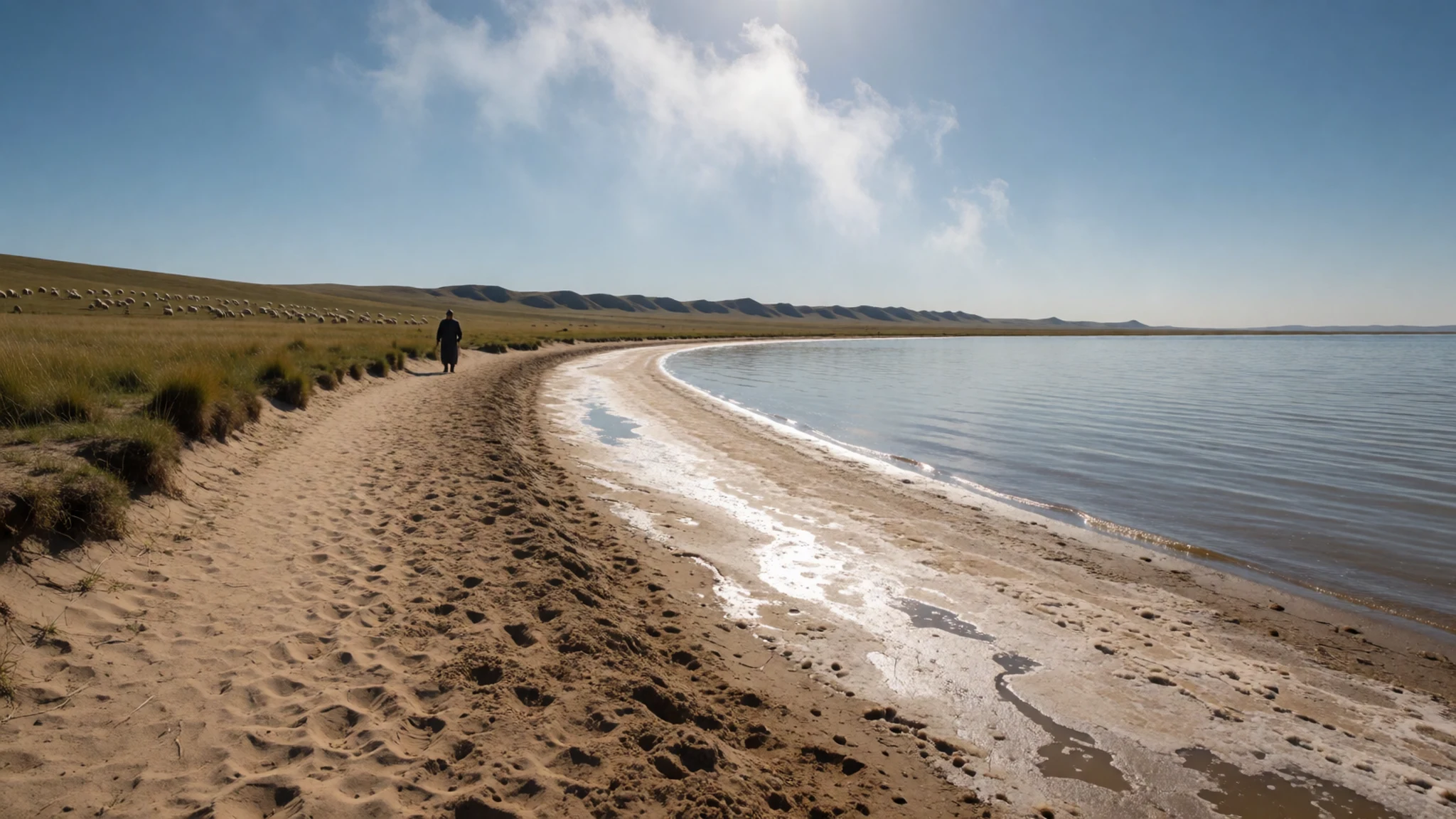
- Airag Nuur — Inside Khyargas Lake National Park
Airag Nuur is the freshwater lake in the same national park, and it makes a useful contrast with its salty neighbour. From higher ground on a clear day the two look quite different, though they lie close together. Ask a local driver which tracks are passable, because wet ground changes the route.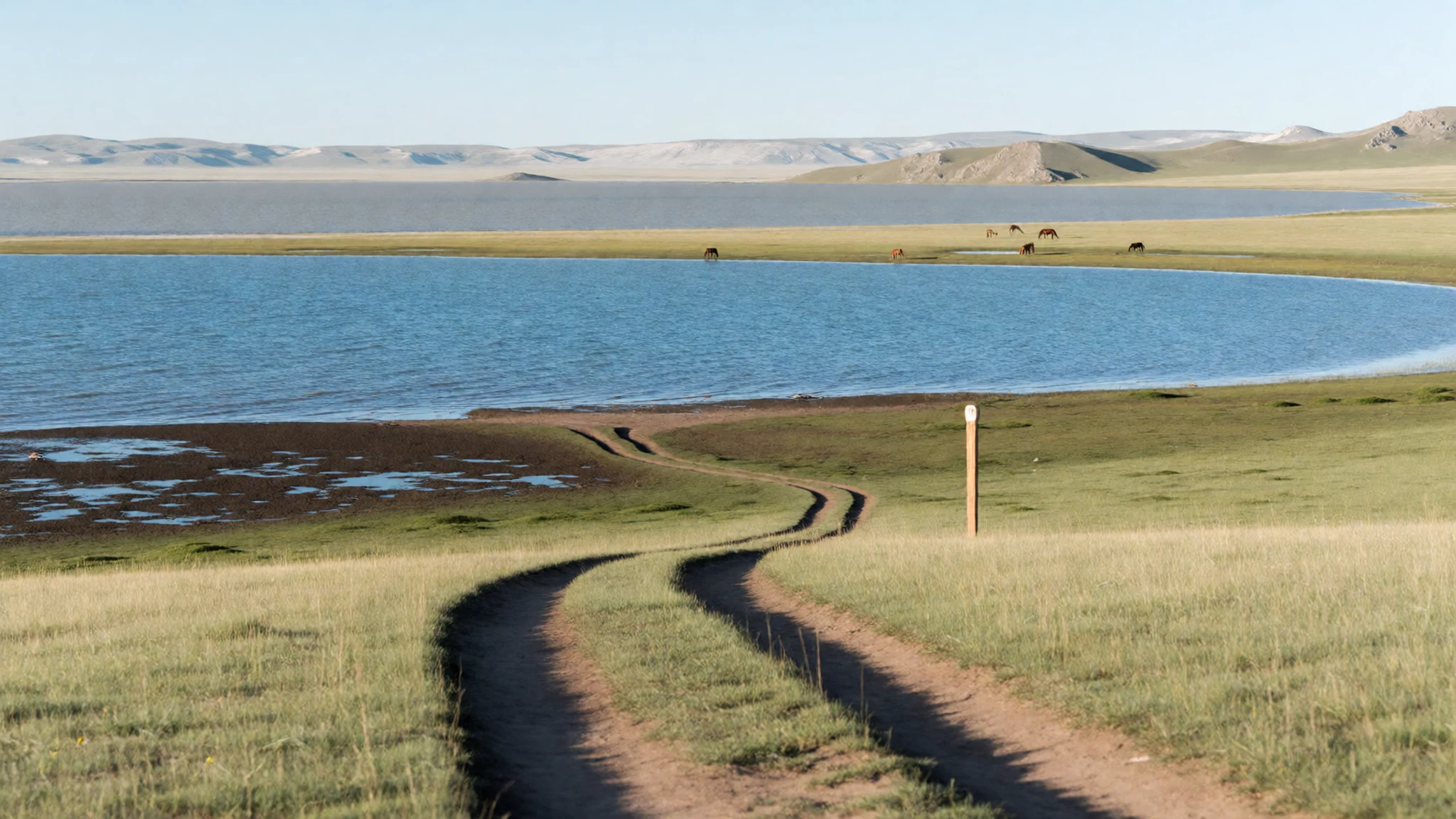
- Khyargas Lake National Park — Uvs Province
The national park wraps around both lakes and is best treated as a landscape rather than a list of sights. Expect steppe, shoreline and long views, with few signs or built facilities. Check with local authorities about any permits or rules before setting out, and carry everything you need for the day.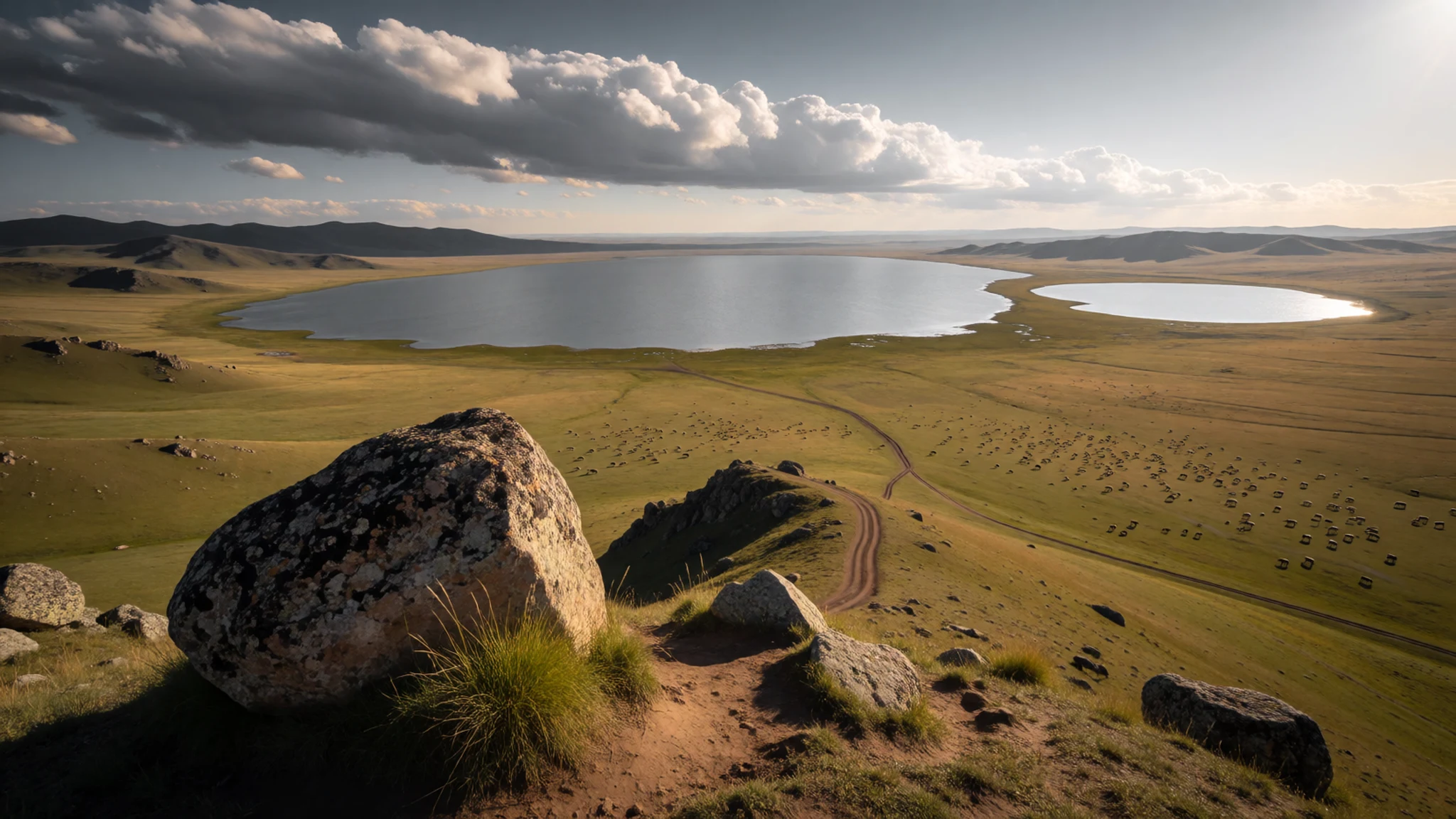
- Dawn and dusk on the shore — Lake shore, any accessible point
Early morning and evening are the kindest hours here. The wind often settles, the light turns low and warm across the water, and the heat of a summer day fades. It is also when herders move animals, so keep distance from livestock and let working dogs see you coming.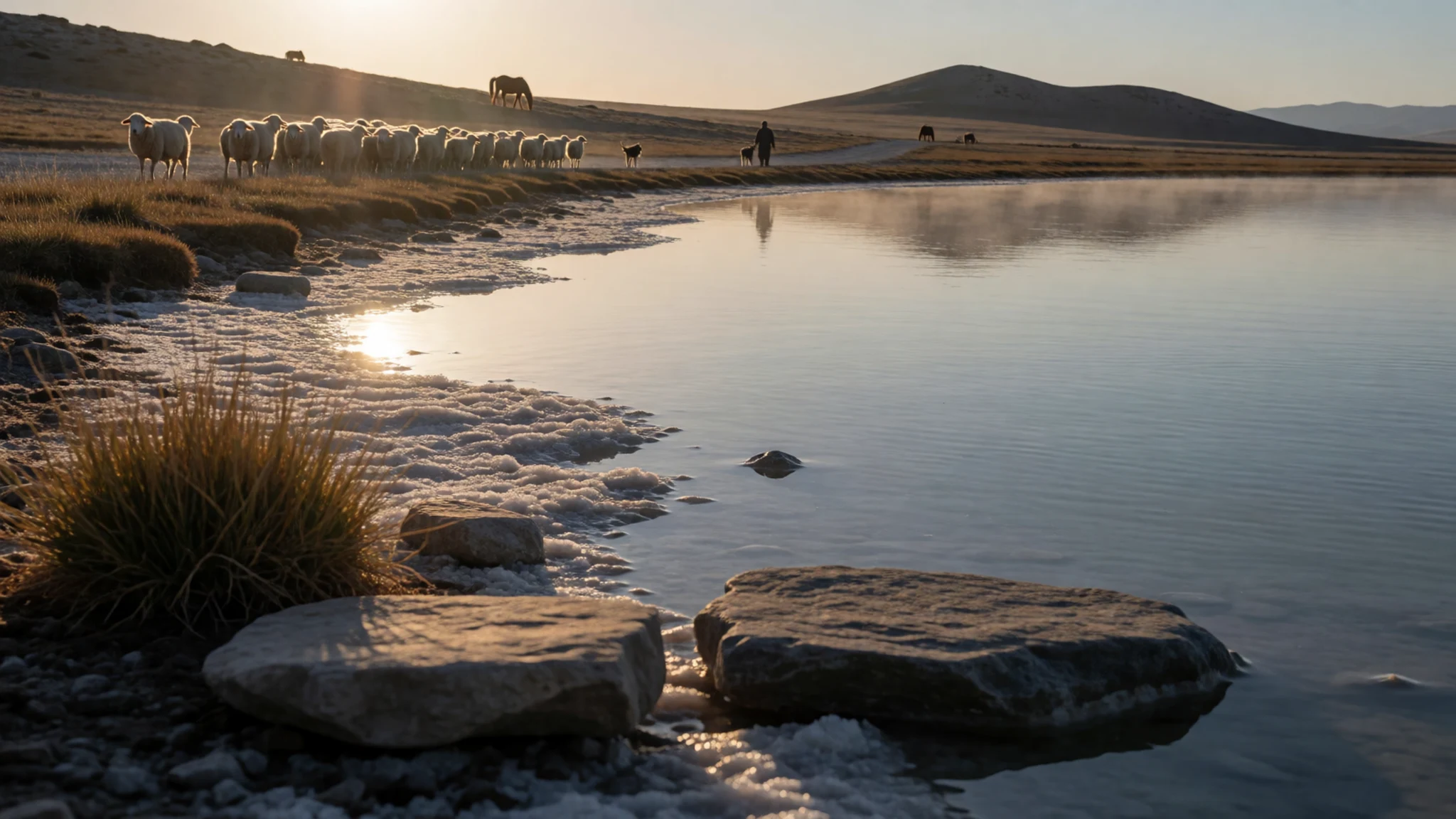
- Kazakh eagle hunting in winter — Western Mongolia, around Uvs Province
In the cold months, Kazakh hunters in western Mongolia ride out with eagles to take foxes and hares, which are easier to spot on snow. A winter trip is demanding and the cold is severe. Go through a reputable local guide, and ask before photographing people or birds.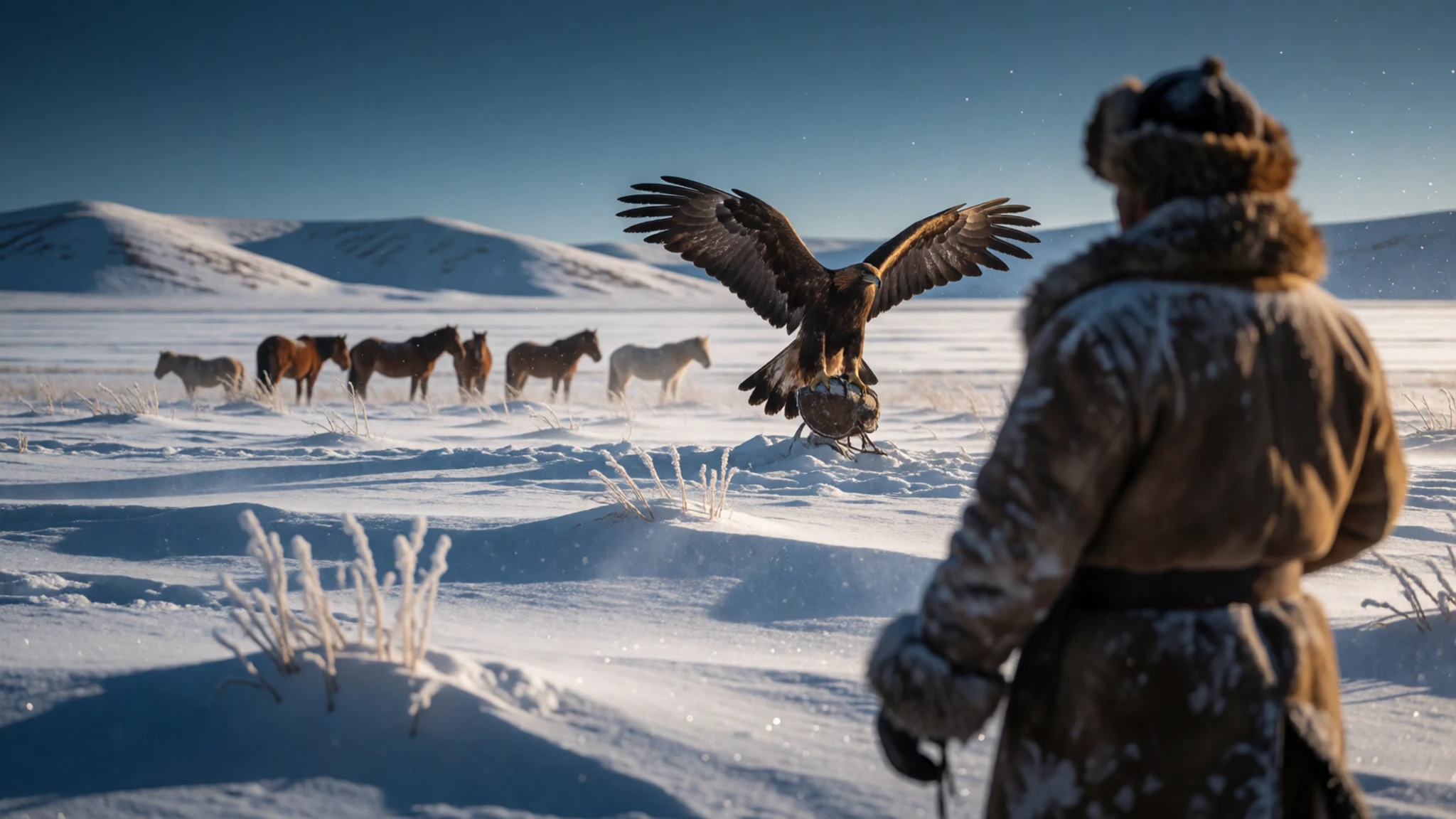
Culture
Khyargas Lake lies in herding country, and the customs a visitor meets are those of the Mongolian steppe. People tend to be direct: expect a clear opinion, an honest no, and little padding of small talk. Hospitality matters a great deal, and a family in a ger (felt tent) is likely to offer tea, dairy foods and sometimes meat to anyone who arrives. Refusing outright is taken badly, so accept something, even a small taste. Giving and receiving has its own manners, with the right hand used and the palm turned up. Life here is organised around animals. Horses, sheep and goats set the daily rhythm, so a visit during a busy herding spell means hosts are working, and flexibility is appreciated. In the west, Kazakh and Mongol communities live side by side, each with its own language, dress and food customs, so ask rather than assume. Politics can be sensitive: many Mongolians feel strongly about China, so avoid Chinese-themed clothing and do not raise the subject yourself. Religion blends Tibetan Buddhist heritage with older local habits, and any shrine or ritual cairn deserves quiet respect. When a host hands you a cup, a gift or food, take it with your right hand, palm up, and at least taste it before putting it down.
What to wear
Around Khyargas Lake, the traditional garment is the deel, a long wrap-over robe with a high collar, fastened at the side and tied with a sash. Herders wear it in cotton or silk for warmth and shade, and lined with wool or sheepskin in winter; richer silks appear at festivals and family occasions. Boots with turned-up toes (gutal) and felt or fur hats go with it. Kazakh families in the west add embroidered coats and fur-trimmed caps, and eagle hunters favour heavy fur and leather against the cold. Day to day, people mix tradition with practical modern clothing: jeans, fleeces, padded jackets and trainers in settlements, a deel for riding and herding. A visitor should dress for exposure rather than style. Pack layers, a windproof shell, a warm hat and gloves even in summer, because nights turn cool. Add a sun hat, sunglasses and sunscreen for the open shore, long trousers against wind and insects, and sturdy broken-in boots for rough ground. In winter, expect extreme cold and bring proper insulated gear. Cover shoulders and knees if you visit a monastery, and avoid clothing associated with China.
What to eat
- Boiled mutton — A herder's ger, or a small canteen in any town
Boiled mutton is the everyday centre of the diet here, cooked simply with salt and little else. It is filling, fatty and warming after a day in the wind. If a family serves it to you, that is a real welcome, so eat what you are offered.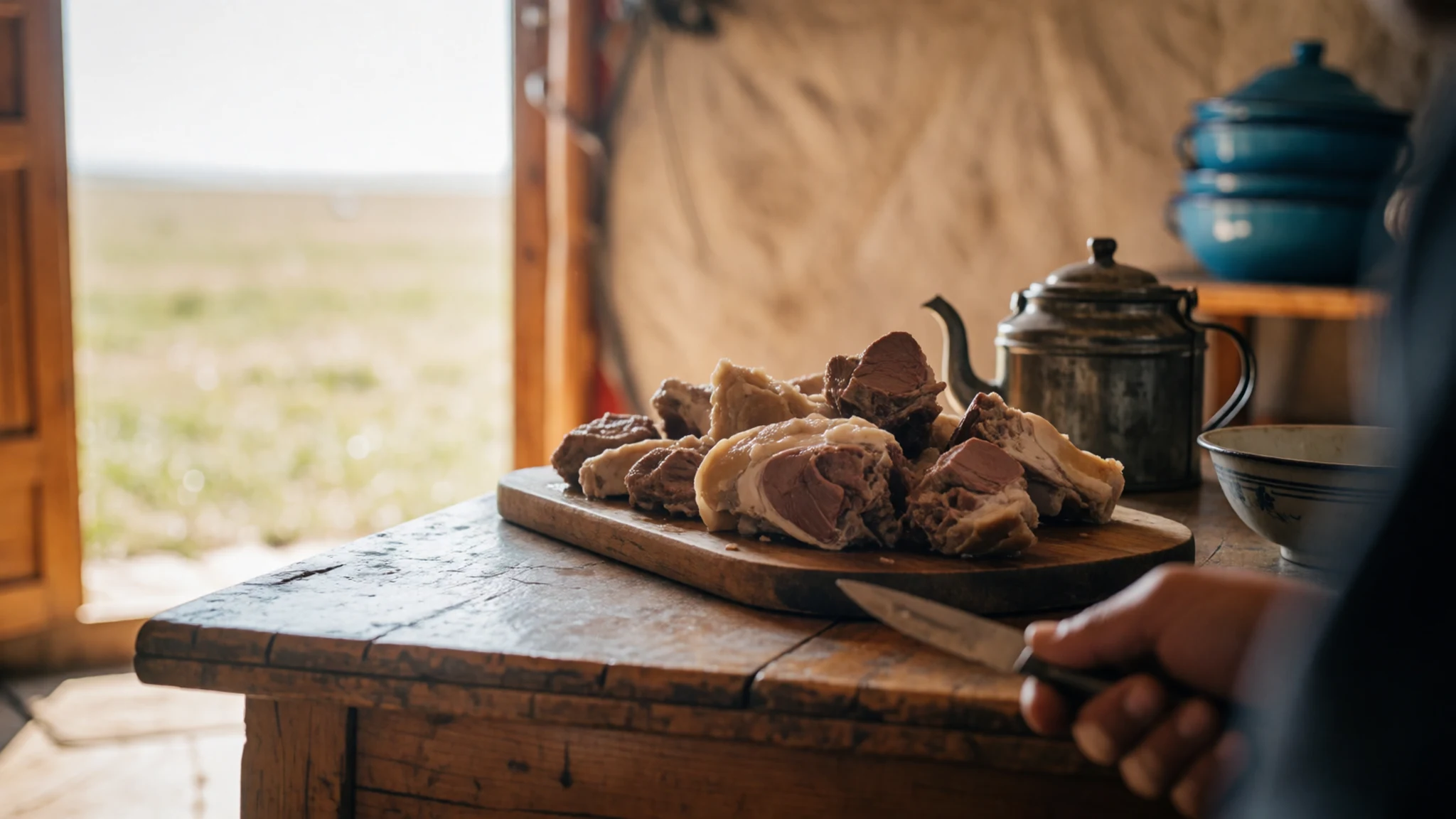
- Buuz — Tea shops and canteens in Ulaangom and larger villages
Buuz are steamed dumplings filled with minced meat, usually mutton, with minimal seasoning. They arrive hot and juicy, and are a reliable meal on a long travelling day. Eat them by hand, bite a corner first, and drink the juices.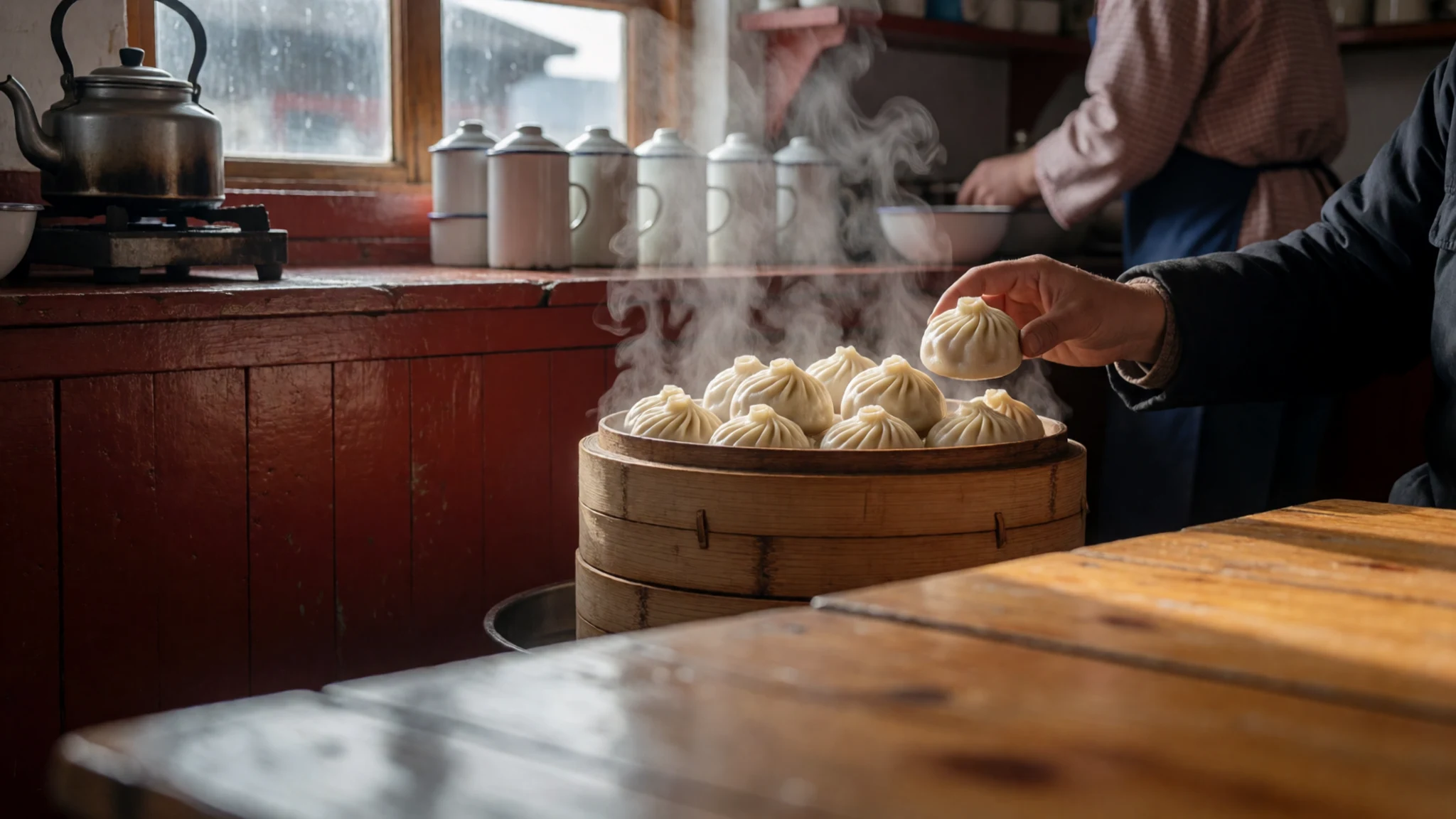
- Khuushuur — Roadside eateries and market stalls
Khuushuur are fried pastry pockets of minced meat and onion, once a festive treat and now sold almost everywhere. They are greasy, crisp at the edges and very filling, so a few go a long way. Eat them fresh from the pan. - Tsuivan — Local canteens and tea shops
Tsuivan is a plate of hand-cut noodles stir-fried with meat and sparse vegetables. It is plain, salty and practical food that suits long days outdoors. Expect sauces on the side rather than strong spice, and ask for it freshly cooked. - Byaslag and öröm — A family's ger in summer, or a local market
Byaslag is a mild fresh cheese, similar in spirit to paneer, and öröm is thick clotted cream. Dairy foods are especially common in the warmer months. They often appear with tea and bread as a welcome, so try a little of each.
Plan it
Best time. June to August is the practical window: days are warm, tracks are generally easier, and the lake is at its most welcoming, though nights can be cool and rain falls in places. September is workable but colder. Winter is bitterly cold and suits only well-equipped travellers, for example those seeking eagle hunting.
How long. 3–4
Getting there. Fly from Ulaanbaatar to Ulaangom, the Uvs provincial centre, or to Khovd, and check current airline schedules because services are limited. The last leg is by hired off-road vehicle with a driver over unsurfaced tracks.
Budget. mid
Tips
- Hire a local driver or guide; tracks are rarely signed and mobile signal can be patchy.
- Carry cash, water, food and spare fuel margin, since services are few and cards are unlikely to work outside towns.
- Pack for sudden weather: layers, a windproof shell and sun protection, even in summer.
- Check entry rules on the official Mongolian government site before booking; visa-free allowances have been time-limited for some nationalities, and Indian passport holders should confirm whether a visa is needed.
- Allow slack in the schedule, because rain and rough ground can slow every journey.
Etiquette
- Take food, cups and gifts with your right hand, palm up, and accept at least a small taste.
- Ask before photographing people, their animals or their homes.
- Avoid Chinese-themed clothing and leave that topic to your hosts.
Nearby
Sources
- Wikidata Q1125601 (CC0)
- Wikipedia: Khyargas Nuur (rev 1366037679) (CC BY-SA 4.0)
- Wikivoyage: Mongolia (rev 5427090) (CC BY-SA 4.0)
- Photo: Khyargas-Nuur lake, south-eastern shore, Uvs aimag (Bogomolov.PL) (Public domain)
- Photo: Relief map of Mongolia (NordNordWest, Виктор_В) (CC BY 3.0)
- Photo: Khyargas Nuur and Airag Nuur lakes, Landsat image (NASA) (Public domain)
- Photo: Great Lakes Depression, Terra/MODIS (NASA) (Public domain)
- Photo: Hetsuu Had, Hyargas lake (Mongolia Expeditions) (CC BY 3.0)
- Photo: Khyaras-Nuur 01 (Alexandr frolov) (CC BY-SA 4.0)
- Photo: Khyaras-Nuur 02 (Alexandr frolov) (CC BY-SA 4.0)
- Photo: Khyaras-Nuur 03 (Alexandr frolov) (CC BY-SA 4.0)


Wildlife
- Red fox (animal)
The red fox is the biggest of the true foxes, a wild dog-like hunter that lives right across the northern half of the world. In the cold months it stands out clearly against the snow, and some Kazakh hunters near the lake still fly eagles at foxes. Watch from a good distance, stay quiet and still, and go with a local guide who knows the ground. Never feed a fox; wild animals should find their own food. - Tolai hare (animal)
The tolai hare is a yellow, brown or grey hare whose long ears look as if their tips were dipped in black ink. It favours steppe, grassland and river valleys, mostly stirring at dusk and through the night, though it sometimes forages by day, and young ones are often out in daylight. In the cold months it shows clearly against snow, and some Kazakh hunters fly eagles at hares. Watch from afar, stay quiet, go with a guide, and never feed it.