Khorgo-Terkhiin Tsagaan Nuur National Park
Khorgo-Terkhiin Tsagaan Nuur National Park, Mongolia
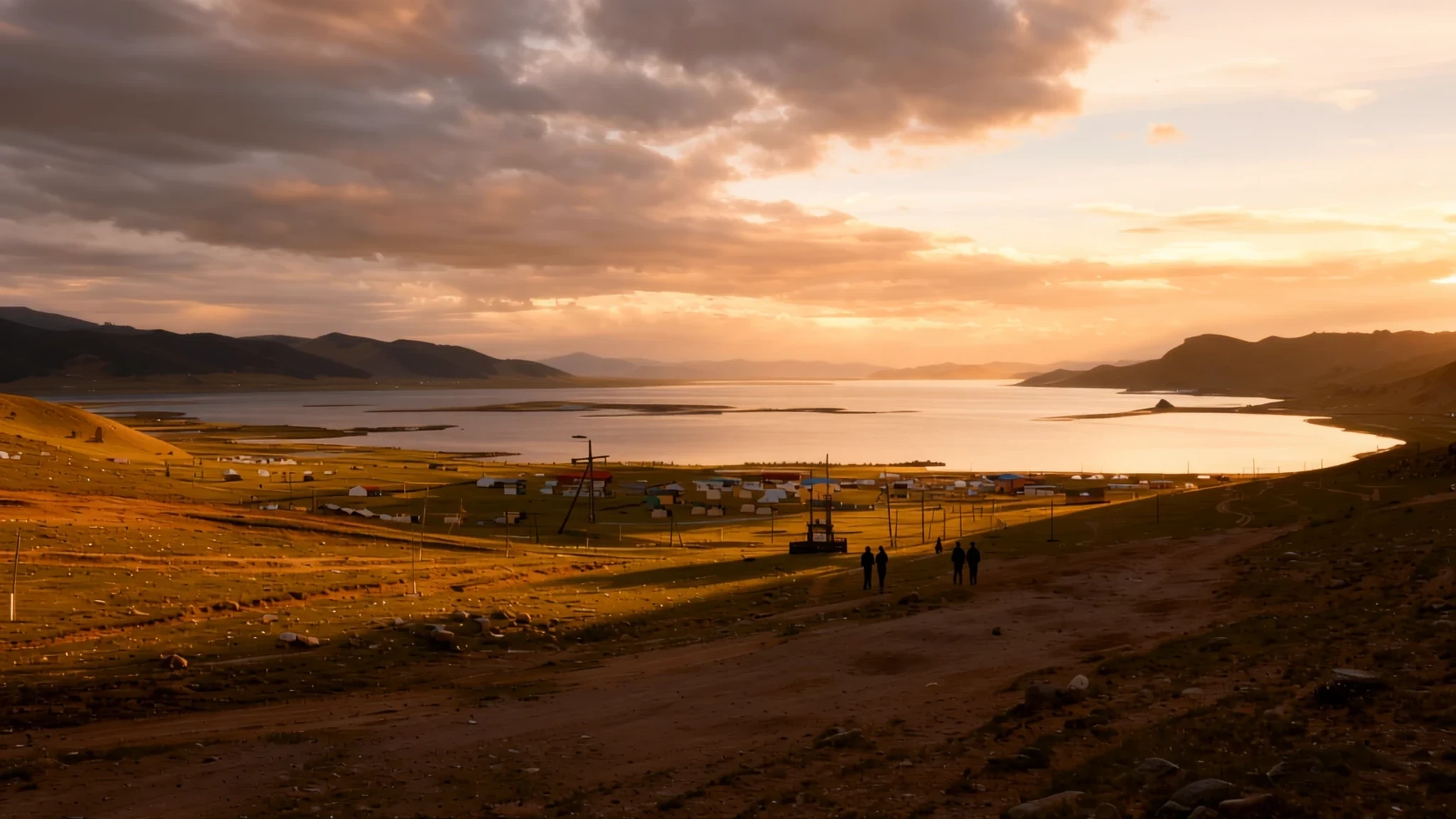
Khorgo-Terkhiin Tsagaan Nuur National Park pairs a volcano crater you can walk around with a high mountain lake, among herders and their yaks.
The place
Khorgo-Terkhiin Tsagaan Nuur National Park sits in the Khangai Mountains of Arkhangai Province, in central Mongolia, within Tariat District. It was established in 1965 and protects two neighbours: a lake called Terkhiin Tsagaan Nuur, often translated as the Great White Lake, and Khorgo, a volcano that last erupted in the geologically recent past. The country is high, open and treeless in most directions, with larch forest gathering on the cooler slopes. The lake is long and broad, fed and drained by the Terkh river system, and its western end turns to marsh, where waterbirds gather to breed and rest on migration. Around the shores the land is still used the way it has long been: families on the hillsides, herds moving without fences, yaks everywhere. The park is not a place of ticketed paths and visitor centres. It is a working pastoral landscape that happens to be protected, and a visit tends to mean fresh air at altitude, big skies, wind, and long quiet stretches. Distances are large and roads are rough, so most people treat it as a destination in itself rather than a stop on the way. The nearest settlement of any size is Tariat, a few kilometres away, and the lake and volcano are close enough to combine in a single stay.
Its story
Khorgo-Terkhiin Tsagaan Nuur National Park owes its lake to its volcano. Lava from the cluster of volcanoes here spilled across the valley and blocked the Terkh river, closing off the water's way out and letting a basin fill behind the dam. The result is a lake that is a natural reservoir rather than a glacial scoop, which helps explain its shape and the marshy western margin. Khorgo itself is only one of several volcanic cones in the park, and the crater is wide enough to be read as a landform from the rim, with larch forest clothing the northern side. Human history here is mostly pastoral. Herding families have grazed these slopes for generations, moving livestock with the seasons, and the park was drawn around a landscape already lived in rather than emptied. Protection arrived in 1965, aimed at the mountain scenery, the wetland birds and the rarer animals and plants. The compromise between conservation and grazing is visible: the hills are dotted with gers and herds, while fishing needs a permit and the lakeshore camps run only in the warm months. The place feels young in geological terms and old in how people use it, and the two stories sit side by side on a single horizon.
What to see
- Khorgo volcano rim — Khorgo volcano, near Tariat
The main climb in the park. A path leads up to the crater rim, and walkers can follow the edge all the way round. From the top the view takes in the lake, the surrounding hills and a small village below. Allow time for the wind and the altitude, and bring a windproof layer.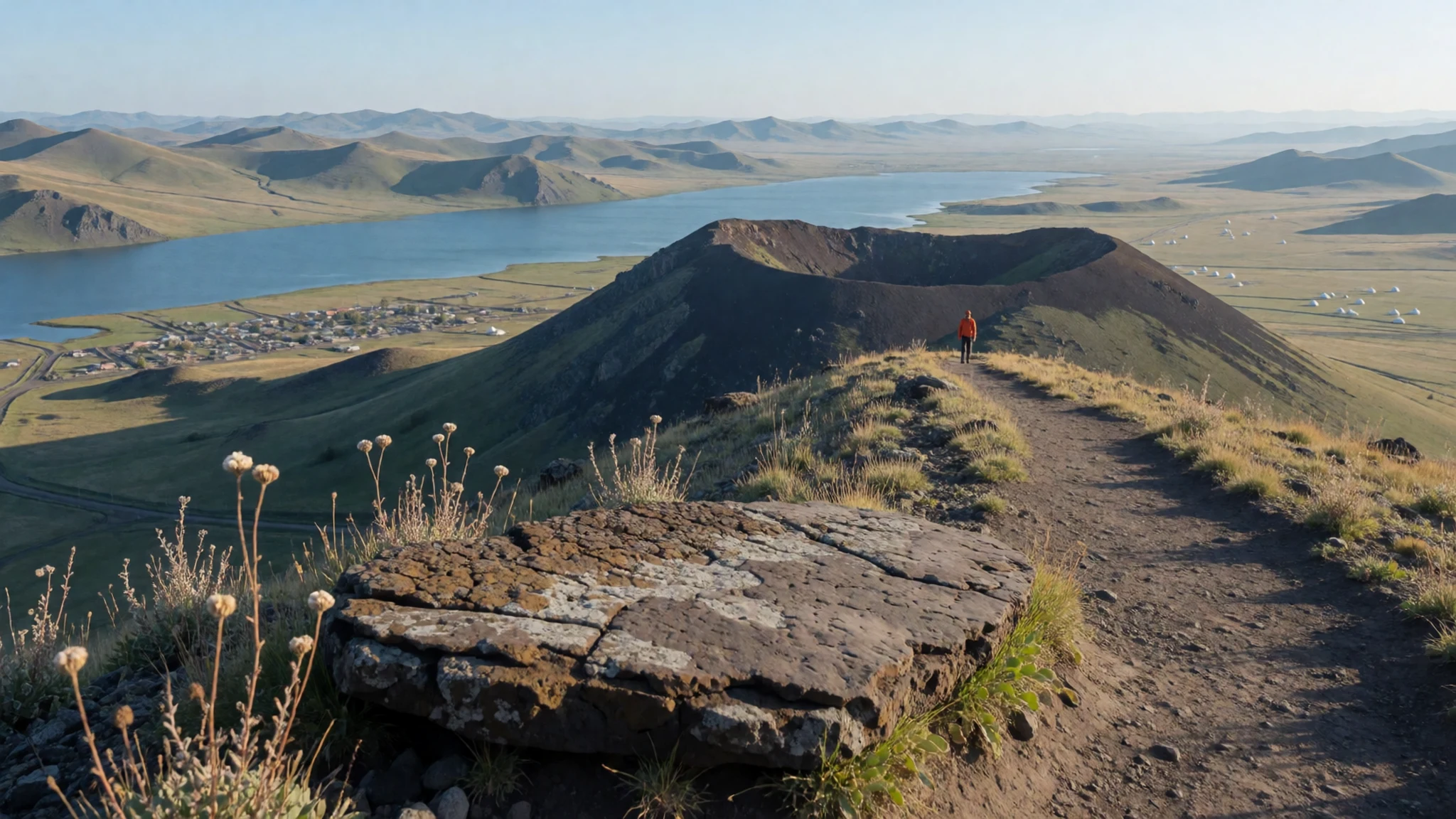
- Terkhiin Tsagaan Nuur shoreline — Northern and eastern shores
The lake is long, wide and shallow enough to look calm on still mornings. The northern and eastern shores have the guest gers and the easiest access. It is a good place to sit, walk the edge, swim on a warm afternoon if the water allows, or arrange a boat trip.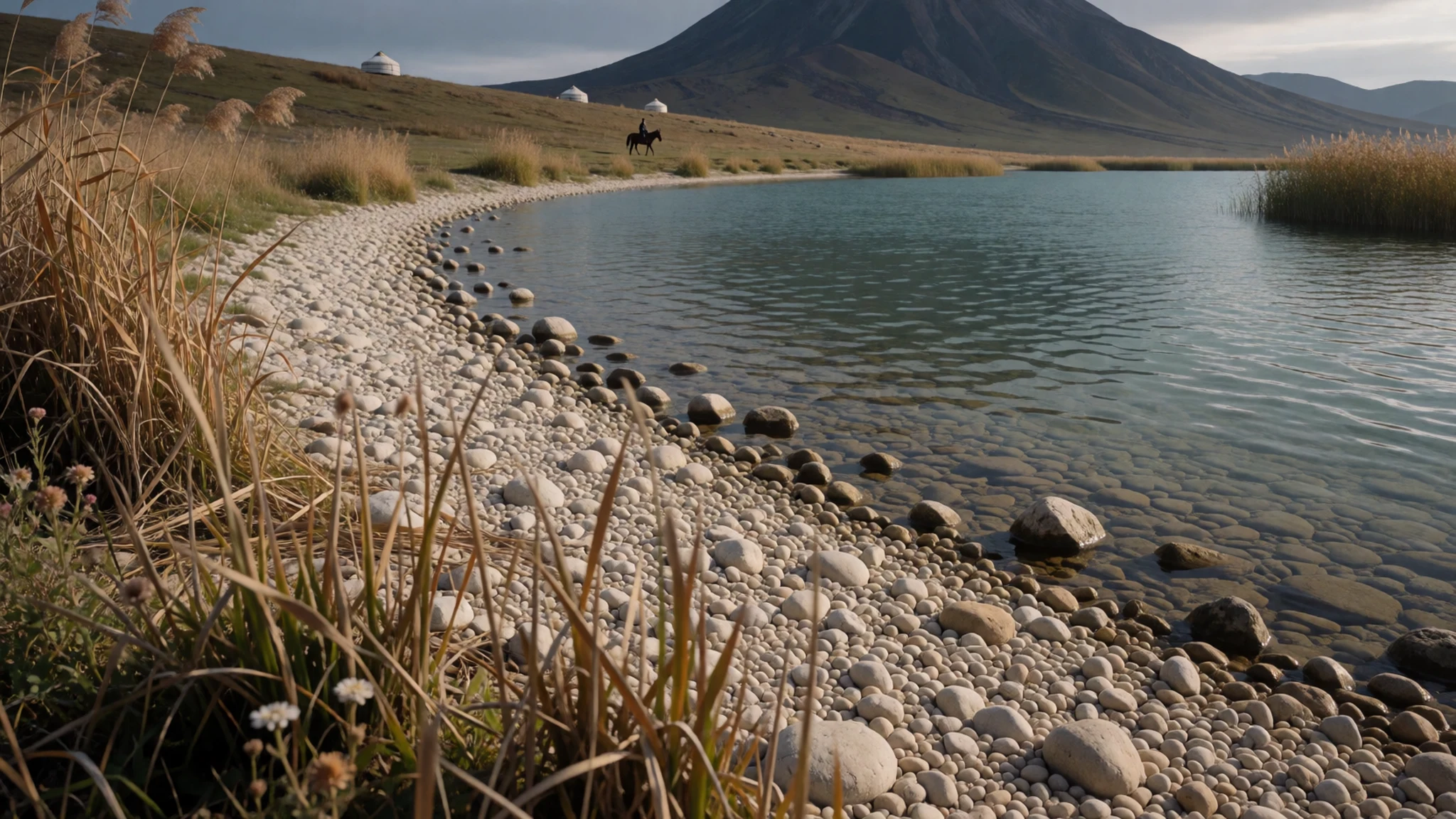
- West-end marshes — Western end of the lake
The marshy western end of the lake is where waterbirds breed and stop over. It is the quietest part of the park, best approached on foot or horseback with binoculars, early or late in the day. Keep distance from nesting birds and avoid walking through wet ground.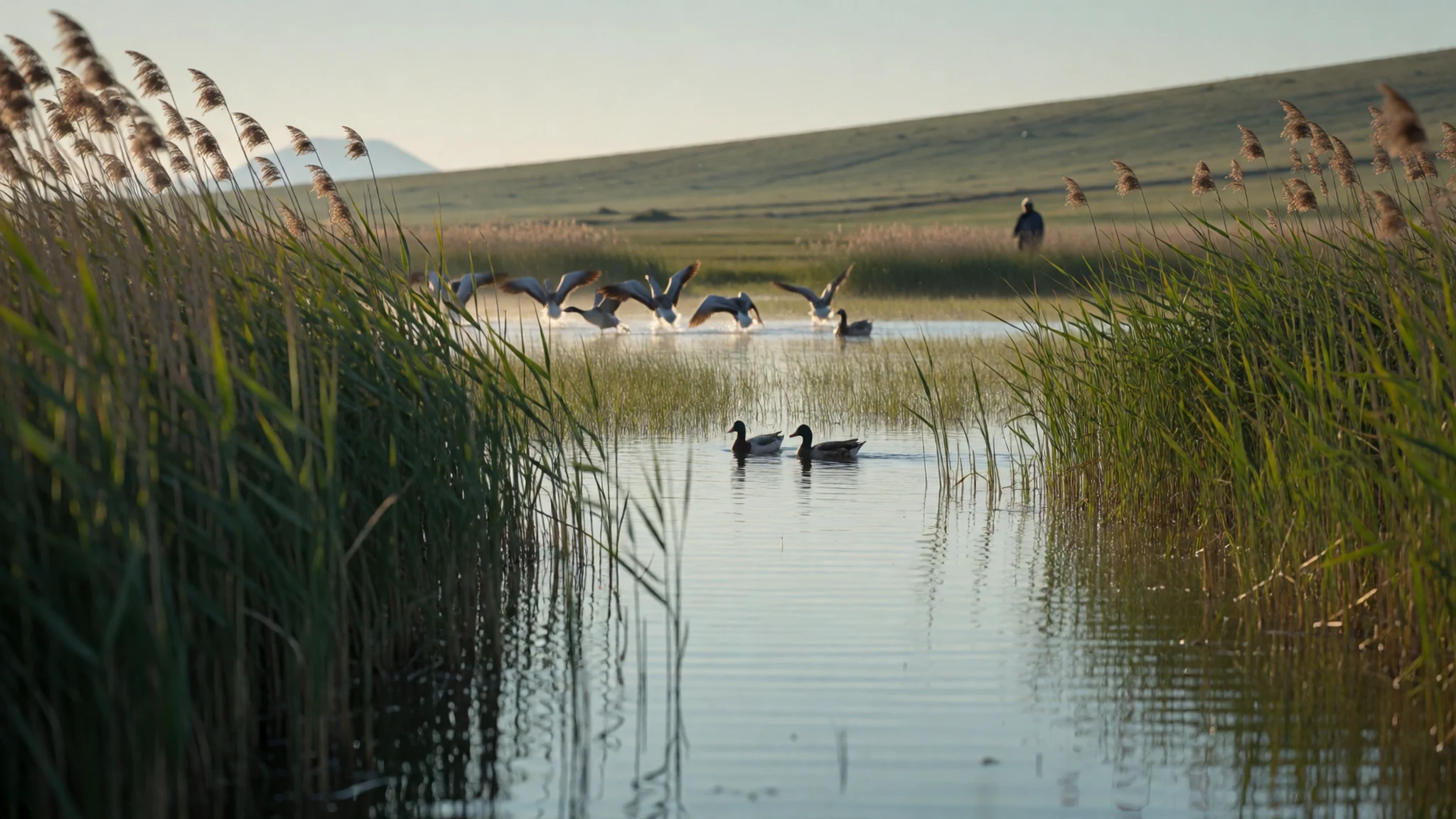
- Herder camps on the southern slopes — Southern slopes above the lake
Families live on the mountain slopes south of the lake, looking down over the water, with herds grazing without fences. Visiting a household is possible through a guest ger or a local arrangement, and gives a view of seasonal herding life, including yaks, that no viewpoint can match.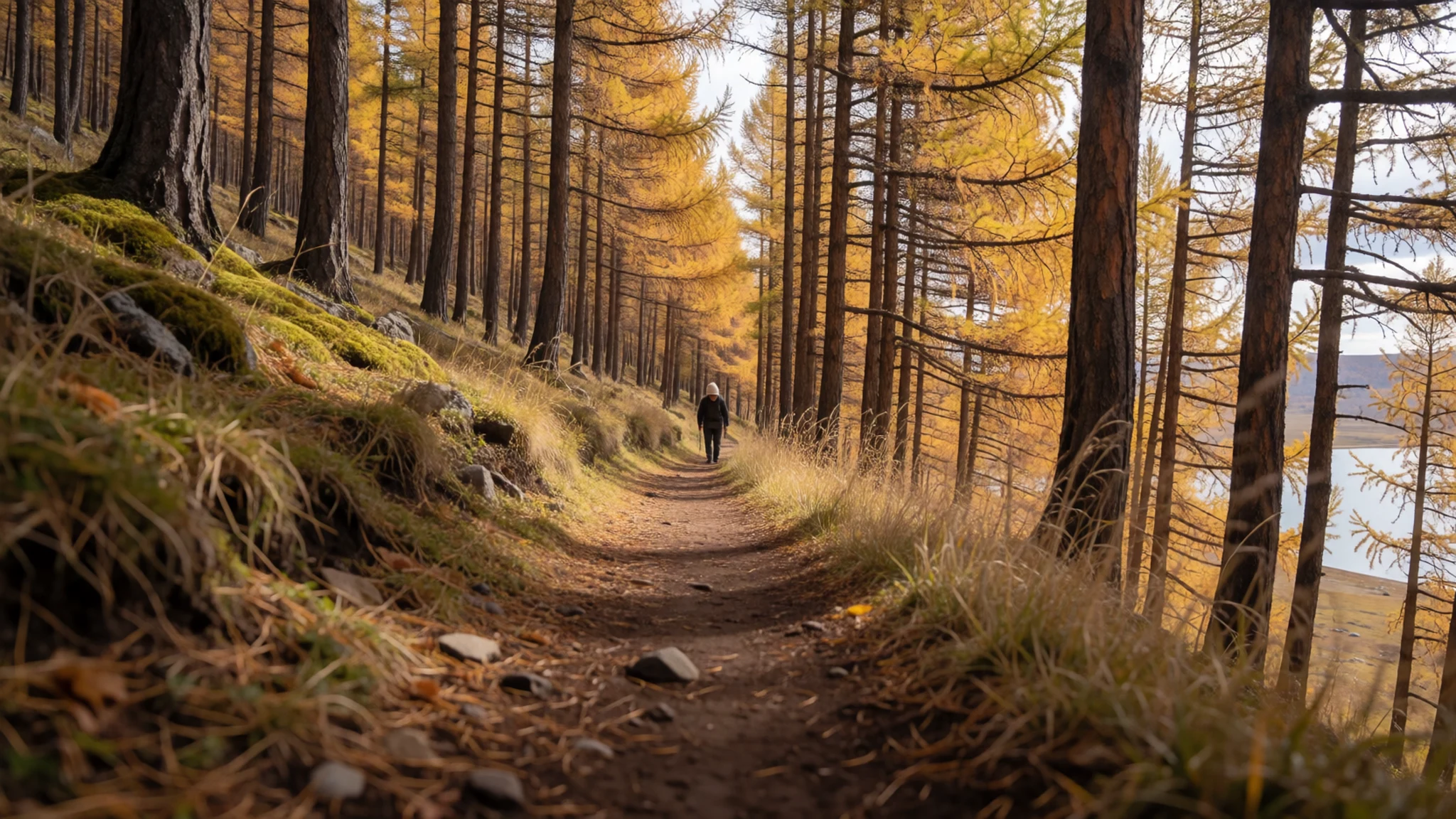
- Horse and trekking routes — Hills around the lake
The hills around the lake are good riding and walking country. Local families offer horses, and routes range from short afternoon rides to multi-day treks through larch forest and open slopes. Agree the route, the horse and the guide in advance, and check conditions with your hosts.
Culture
Khorgo-Terkhiin Tsagaan Nuur National Park is herding country, and the culture a visitor meets is that of Mongolian nomadic pastoralism. Families live in gers, the felt-covered round tents, and move with their animals through the seasons. Hospitality is a duty rather than a transaction: a stranger arriving at a ger is expected to be welcomed, offered tea or something to eat, and given a place to sit. The ger has its own order, with the hearth at the centre, the family's honoured side opposite the door and the men's and women's sides set out left and right. Livestock, above all horses, yaks, sheep and goats, are both livelihood and wealth, and the open grazing means animals wander freely across paths and shores. Spiritual life draws on Buddhism and older mountain and water worship, which is why cairns of stones, often draped with blue cloth, appear on passes and summits. Lakes and volcanoes in particular are treated with respect, and the rules of the place are often unwritten. Tourism here is small-scale and family-run, with guest gers open only in the warmer months, so a visit is usually a direct exchange with the household hosting you. When you enter a ger, step over rather than onto the threshold, and do not lean on the central posts or point your feet at the hearth.
What to wear
Khorgo-Terkhiin Tsagaan Nuur National Park is in herding country where the traditional dress is the deel, a long, wrap-over robe fastened at the side and secured with a bright sash. It is made of cotton or silk for summer and heavier wool or sheepskin-lined cloth for the cold months, often in strong blues, greens and burgundies, with trim at the collar and cuffs. Felt boots with turned-up toes and hats suited to season and occasion complete the outfit, and the finest versions come out for festivals and family events. Day to day, herders often wear a plain deel over modern layers, or practical jackets, jeans and rubber or leather boots, since the work involves horses, wind and cold mornings. Younger people in nearby towns dress much as elsewhere, with deels kept for celebrations. For a visitor, the key is layering. Even in summer the altitude makes evenings cold, and the weather can change from sun to rain or hail within an hour. Bring a windproof and waterproof jacket, a warm fleece or down layer, a hat and sun protection. Sturdy, broken-in walking boots suit the volcano rim and rough ground. Modest, practical clothing is appropriate when visiting families, and no special dress is needed for any site in the park.
What to eat
- Suutei tsai — Any herder's ger or tourist ger camp
Salted milk tea, the first thing offered in almost any ger. It is made with milk, often with a little rice or fat, and served hot in a bowl. Accept it with your right hand; it is worth tasting even if the saltiness is unfamiliar.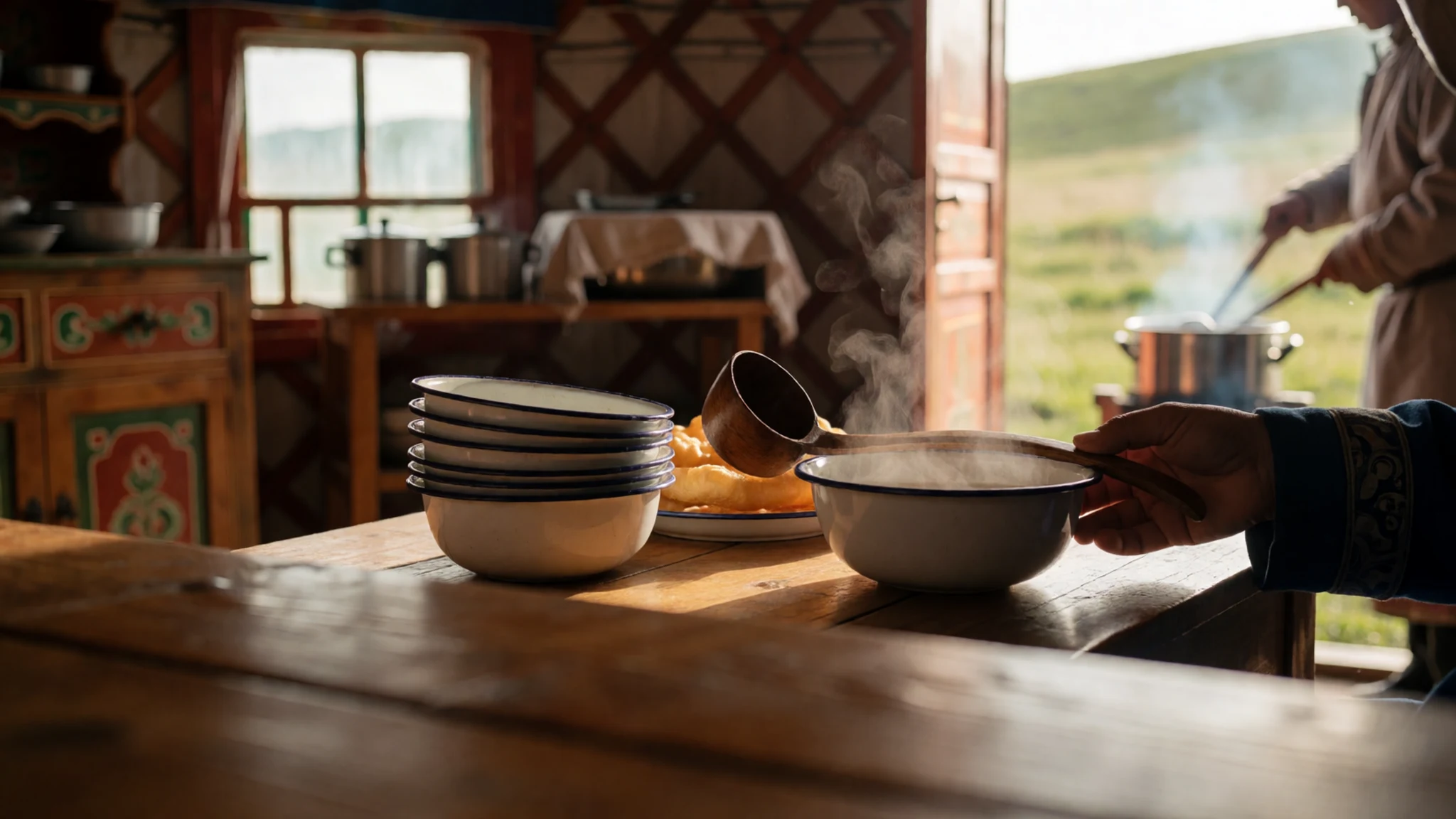
- Buuz — Ger camps and small eateries in Tariat
Steamed dumplings filled with minced mutton or beef and seasoned simply with onion and salt. They are a staple of Mongolian meals and festivals, usually eaten by hand while hot, and are among the easiest traditional dishes for visitors to enjoy.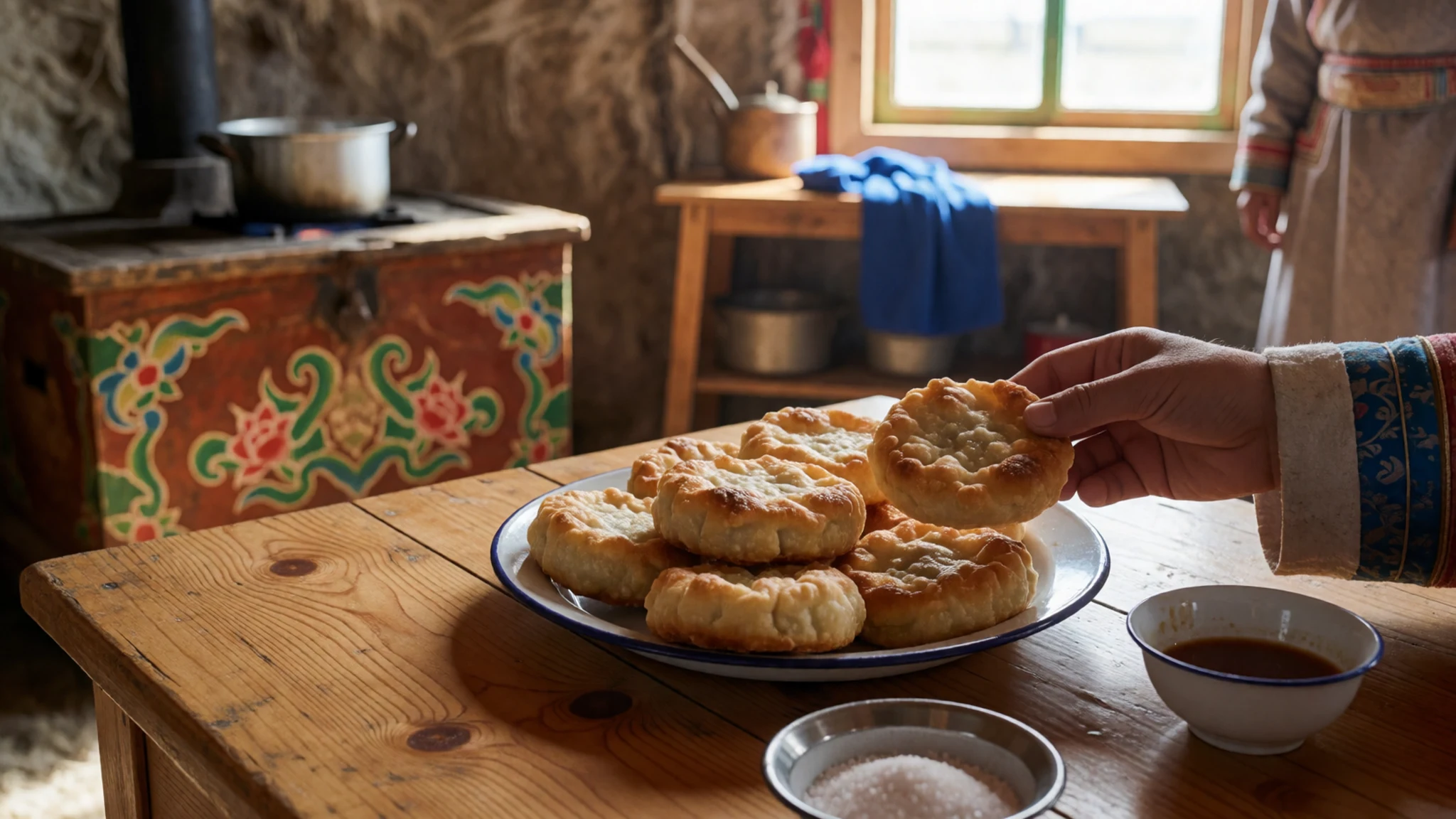
- Khuushuur — Small eateries in Tariat and tour camps
Flat fried pastries filled with minced meat, crisp at the edges and juicy inside. They are made fresh and eaten warm as a hearty snack or meal, and fit well after a morning's climbing in the cold wind. - Tsuivan — Guest gers and ger camps around the lake
Hand-cut noodles stir-fried with meat and vegetables, a filling one-plate meal. It is a common everyday dish in herding households and tourist camps, with the portion sizes tending to be generous. - Aaruul and other dairy — Herder households on the lake's slopes
Dried curds, hard and sour, made by herding families from the milk of their animals. Yoghurt, cream and cheese are also on offer in summer. They are an acquired taste, and buying them supports the local households that make them.
Plan it
Best time. June to September, when the guest gers are open and the weather is mildest; most of the year's rain falls in July and August, and winters are bitterly cold, with at least one month averaging below freezing.
How long. 2–3
Getting there. There is no working airport at Tariat, so most visitors travel by road from Ulaanbaatar, about 660 km away, or from Tsetserleg, about 180 km to the southeast. The park is only a few kilometres from Tariat; arrange a driver or tour, as the final stretch is rough.
Budget. mid
Tips
- Book a guest ger or tour in advance, as camps run only from early June to late September
- Bring layers for cold evenings and sudden weather, even in summer
- Carry cash, snacks and water, as supplies near the lake are limited
- Get a permit before fishing
- Allow time for altitude on the volcano climb
Etiquette
- Ask before entering a herder's ger or photographing a family
- Keep to paths on the volcano and away from nesting birds in the marshes
- Take all rubbish with you
Nearby
Sources
- Wikidata Q4499886 (CC0)
- Wikipedia: Khorgo-Terkhiin Tsagaan Nuur National Park (rev 1362780067) (CC BY-SA 4.0)
- Wikivoyage: Khorgo Terkhiin Tsagaan Lake National Park (rev 5314750) (CC BY-SA 4.0)
- Terkhiin Tsagaan Nuur panorama, User:Doron (CC BY 3.0)
- Terkhijn Tsagaan Nuur1, Alex Ang (CC BY 3.0)
- Relief map of Mongolia, NordNordWest / Виктор_В (CC BY 3.0)
- View from Khorgo volcano, Torbenbrinker (CC BY 3.0)


