Khongoryn Els
Khongoryn Els, Mongolia
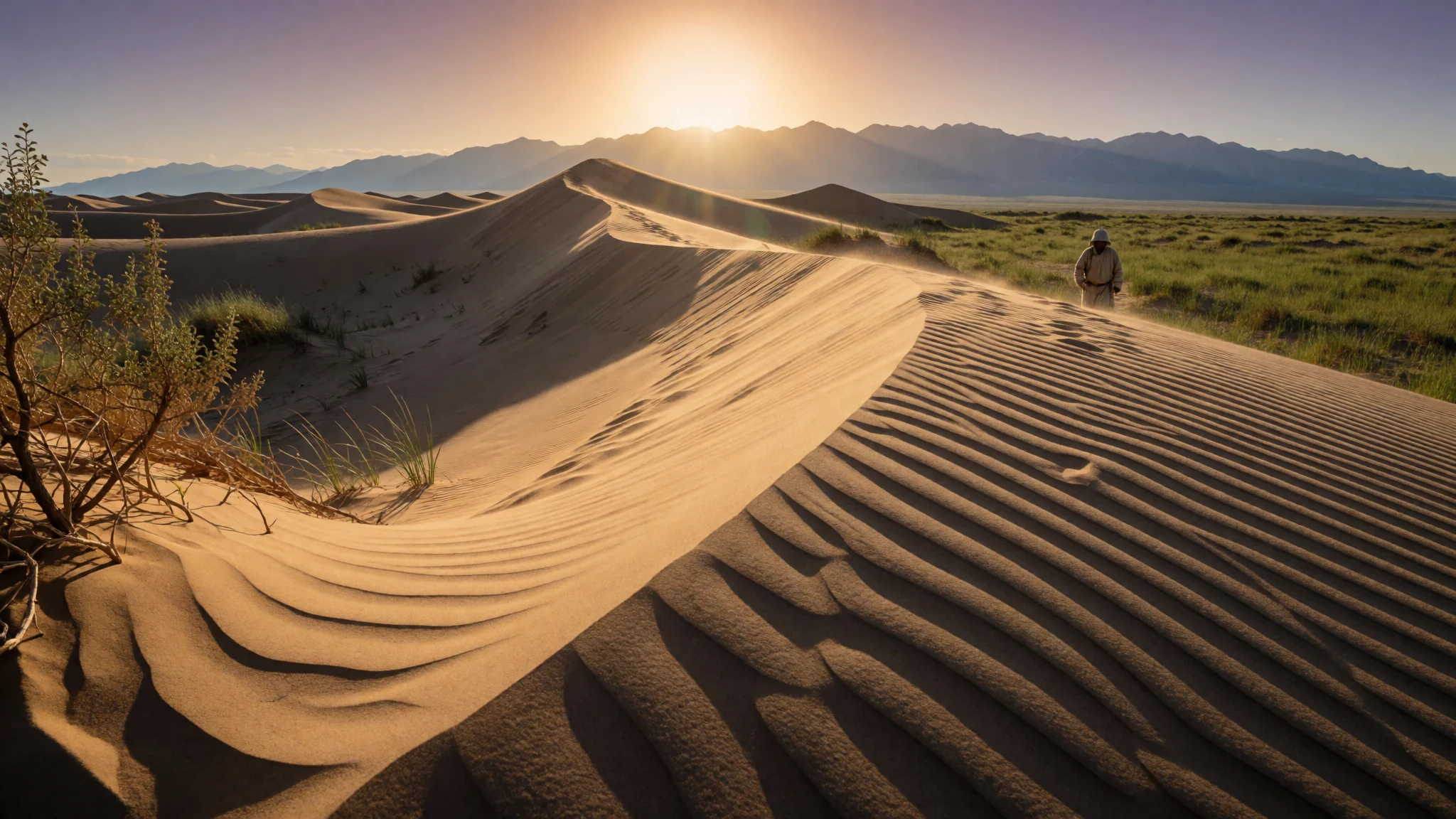
Khongoryn Els is a vast band of Gobi dunes below the Altai mountains, famed for the low hum its sand can make.
The place
Khongoryn Els sits in the south of Mongolia, inside Gobi Gurvansaikhan National Park, where a long ribbon of sand runs against the foot of the Altai range. The dunes cover over 965 square kilometres (373 sq mi), so this is a landscape in its own right rather than a single hill to climb. Locals also call the sands Duut Mankhan, and visitors often know them as the Singing Sands. The nearest town of any size is Dalanzadgad, about 180 kilometres (110 mi) away, and the way there is by desert tracks rather than roads in the usual sense. Other routes run north to Bogd, about 130 kilometres (81 mi) over sand tracks, and north-west to Bayanlig, about 215 kilometres (134 mi). Because of those distances, most people arrive in a van with a driver who knows the way, often as one stop on a longer Gobi loop. What the place looks like depends on the hour. At midday the sand is pale and flat in the glare; at dawn and dusk the ridges throw long shadows and the colour turns to gold and rust. A strip of greener ground and a stream lie at the base of the dunes, and herders bring camels and goats there to drink. Distances are large, shade is scarce, and the nearest shop may be a long drive away.
Its story
Khongoryn Els has long been known to herding families as a place with a voice. On some days, when dry sand slides down a steep face, it gives off a low hum that people compare to a distant engine or a drone. That is the origin of the popular name, the Singing Sands, and Duut Mankhan carries a similar idea in Mongolian. The sound is attributed to a thin surface coating of slate over the sand grains, heat, weather conditions, and the avalanche effect of particles moving harmoniously. The dunes themselves are the work of wind. Over a very long time, gusts across the open Gobi carried sand until the Altai mountains stopped it, and the grains gathered along their foot. That is why the dunes form one long band rather than scattered mounds. The surrounding steppe and desert have long been grazing country, and families still move camels, goats and sheep between pastures with the seasons. The stream at the base of the dunes gives the animals water, and it is why this corner feels more alive than the bare sand suggests. The area now lies within Gobi Gurvansaikhan National Park, and tourism arrived as an addition to herding life rather than a replacement for it. Ger camps near the dunes are often run by local families. The old tracks remain the main routes, which keeps the pace slow and the visitor numbers modest.
What to see
- The main dune crest — Main dune face, Gobi Gurvansaikhan National Park
The highest ridges of Khongoryn Els can be climbed on foot, and the climb is slow because the sand slips back with each step. Going up barefoot or in light shoes works for many people. From the top the dunes fall away in folds, with the mountains behind. Humming is sometimes heard on the way down.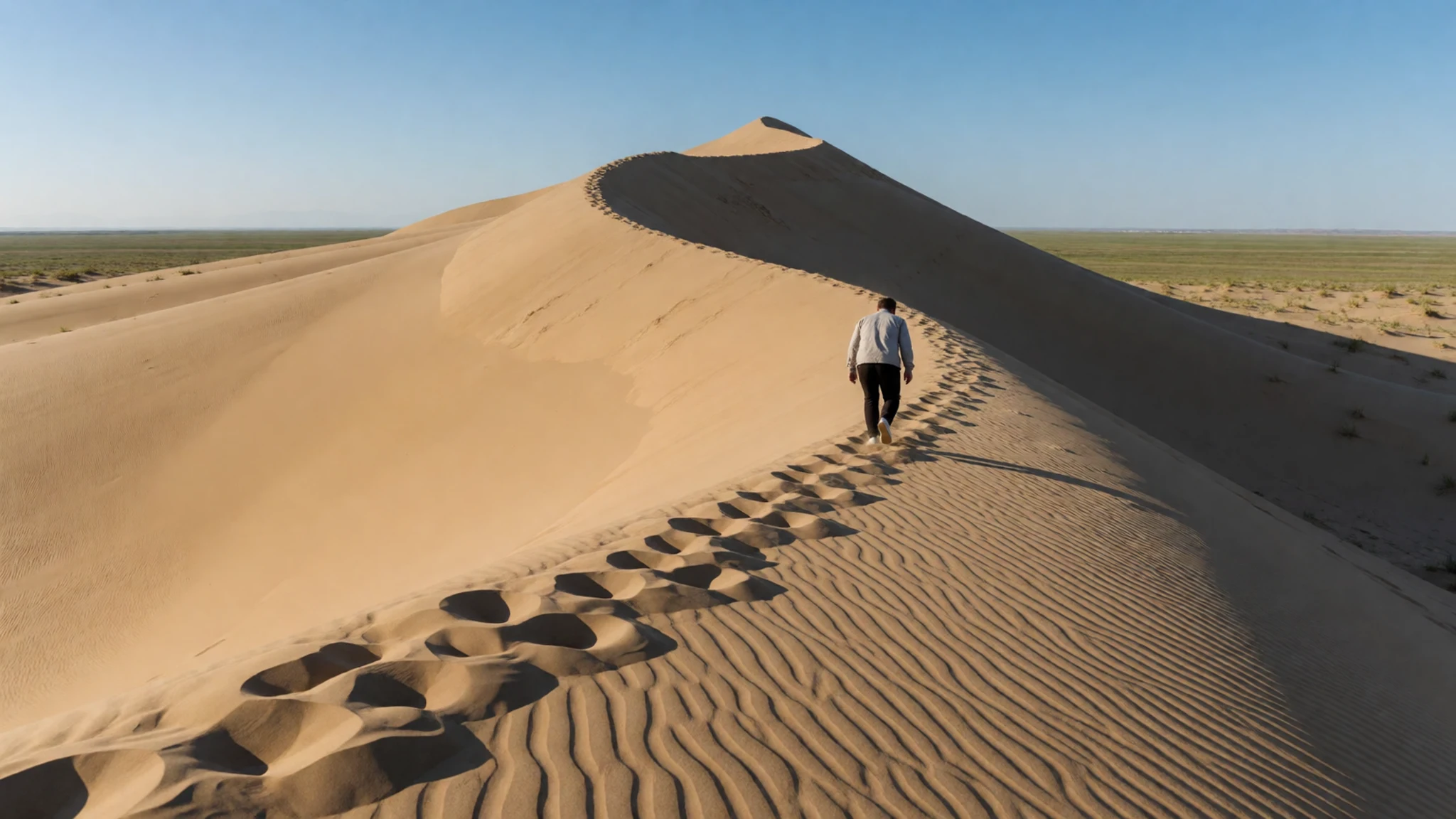
- Dawn and dusk on the ridges — Dune ridges near the ger camps
The light is the real show here. Just after sunrise and before sunset, the wind-rippled slopes pick up deep shadows and the sand moves through gold, orange and rust. Midday is flat and harsh by comparison. Most ger camps sit close enough to walk out, so a short early start costs little.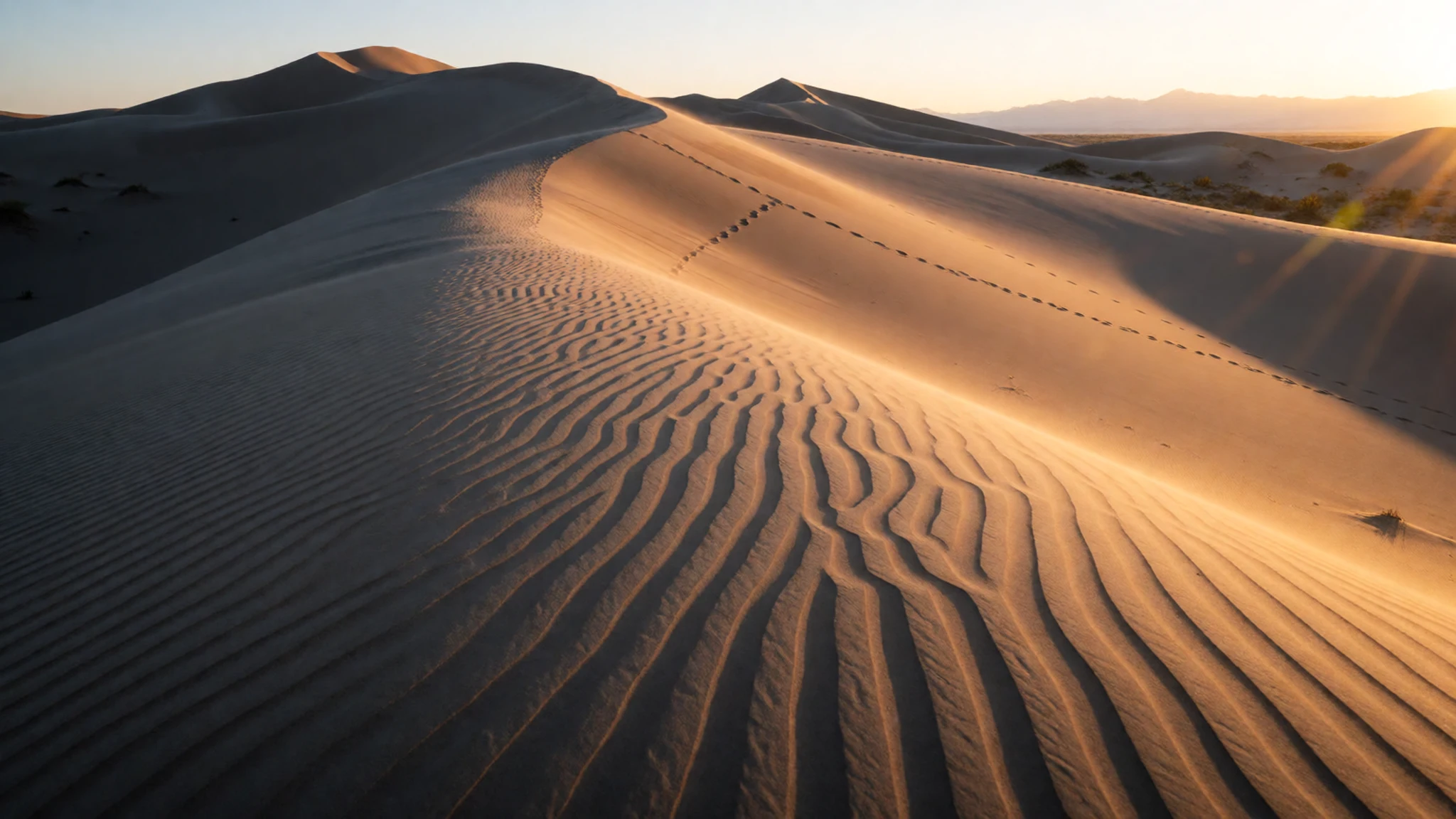
- The stream at the dune foot — Base of the dunes, near the stream
Where the dunes meet the plain, a stream and a patch of greener ground make a sharp contrast with the dry sand. Herders water camels and goats here, and wildlife of the steppe is sometimes seen at the edges. The water level changes with the season, so it may be broad or barely a trickle.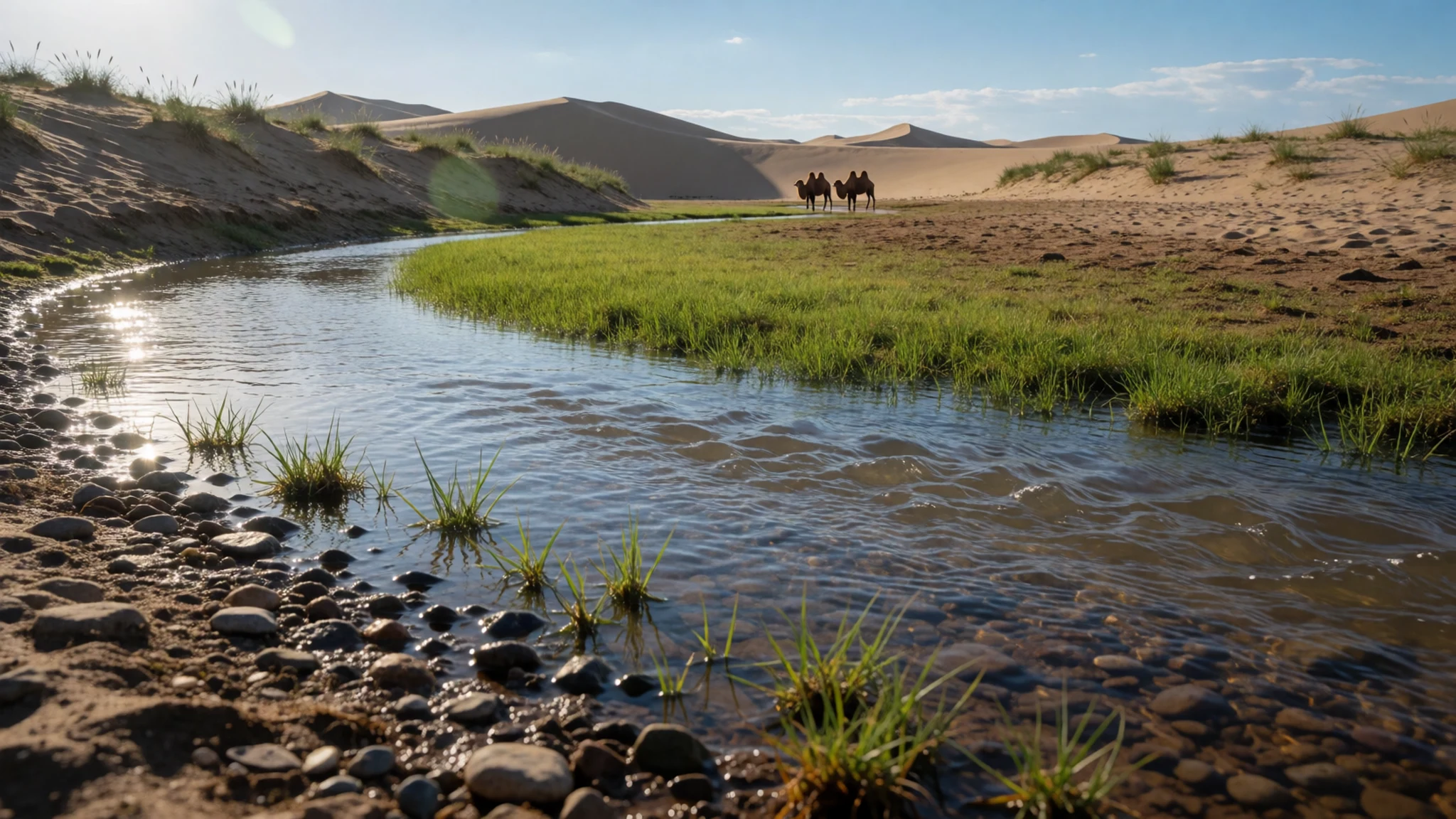
- Camel ride across the dune foot — Foot of the dunes, beside the ger camps
Local families offer short camel rides along the base of the dunes, usually timed for sunset. The animals are Bactrian camels, with two humps, and the pace is slow and swaying. It is a gentle way to see the scale of the sands without the effort of a climb, and the fee goes directly to the herders.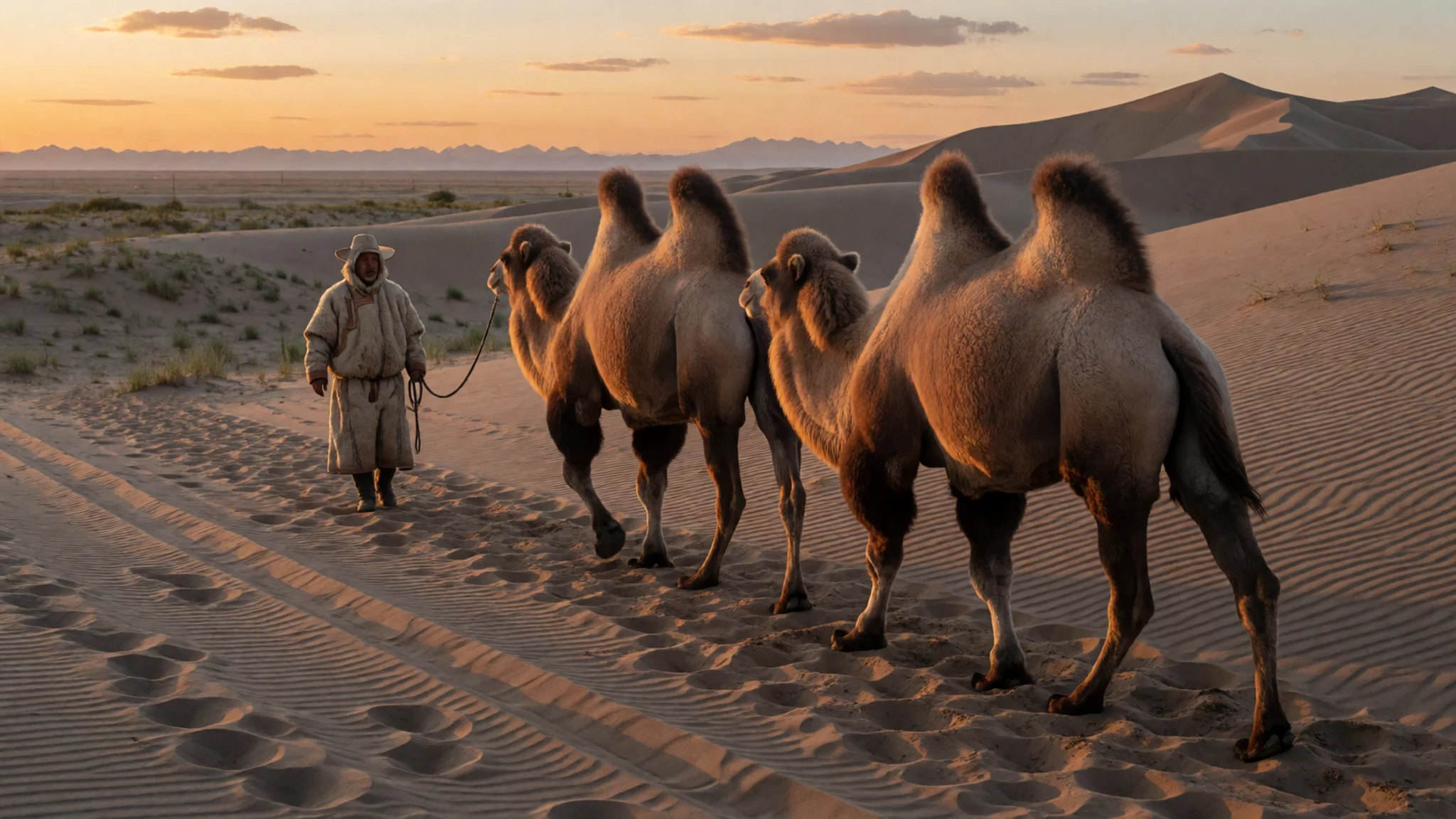
- The Altai backdrop — Northern edge of the dunes, towards the mountains
On clearer days the high Altai range stands behind the dunes, and the contrast of rock, sand and sky is the picture most people carry home. A walk along the dune edge, away from the camps, gives a quieter view. Haze and dust can hide the mountains, so patience pays off.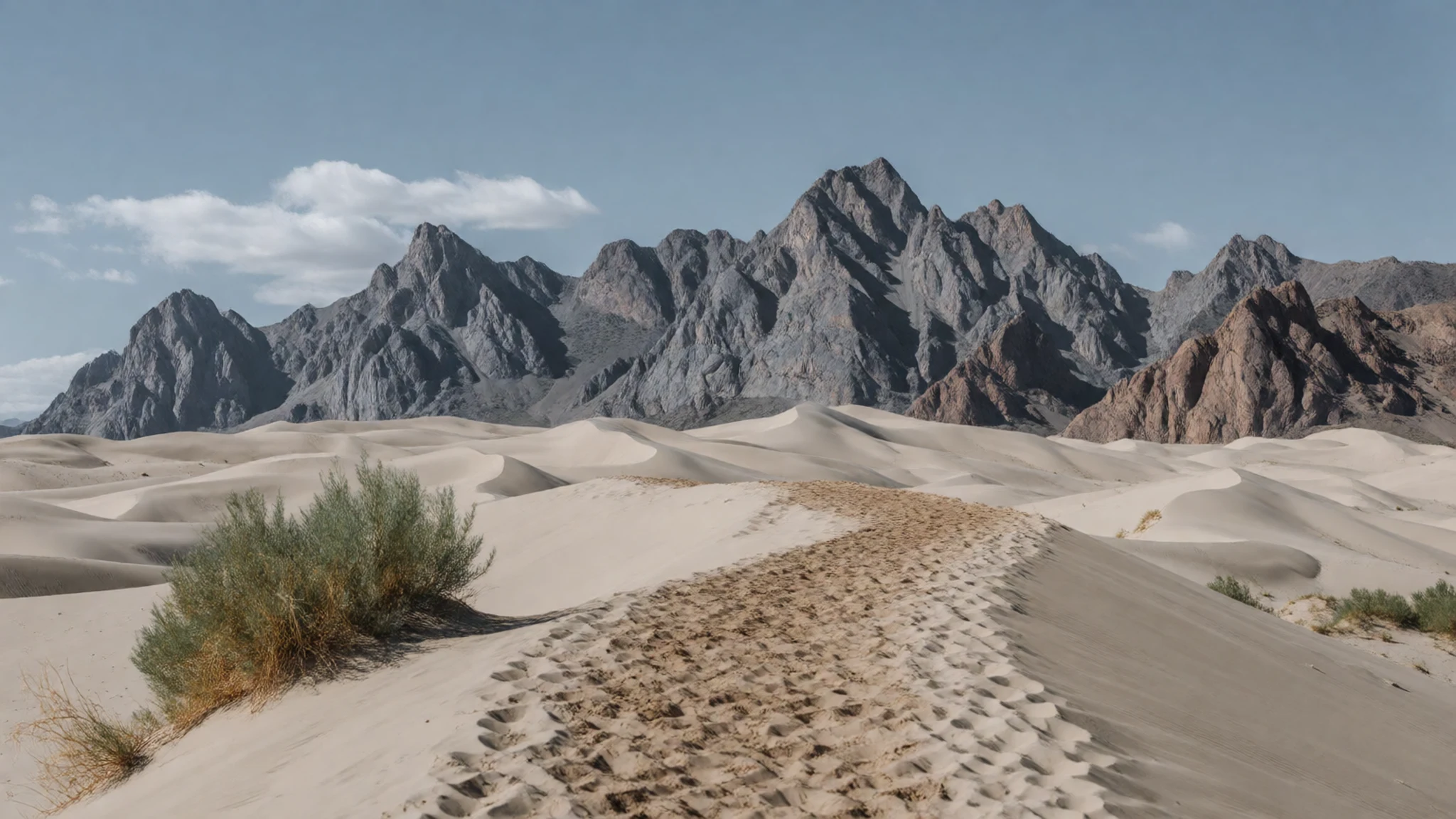
- The night sky — Open ground beside the ger camps
With few lights for many kilometres, the sky above the dunes turns dark and crowded with stars on clear nights. Camps usually sit a short walk from the sand, so there is no need to go far. It gets cold quickly after sunset, even in summer, so warm layers matter.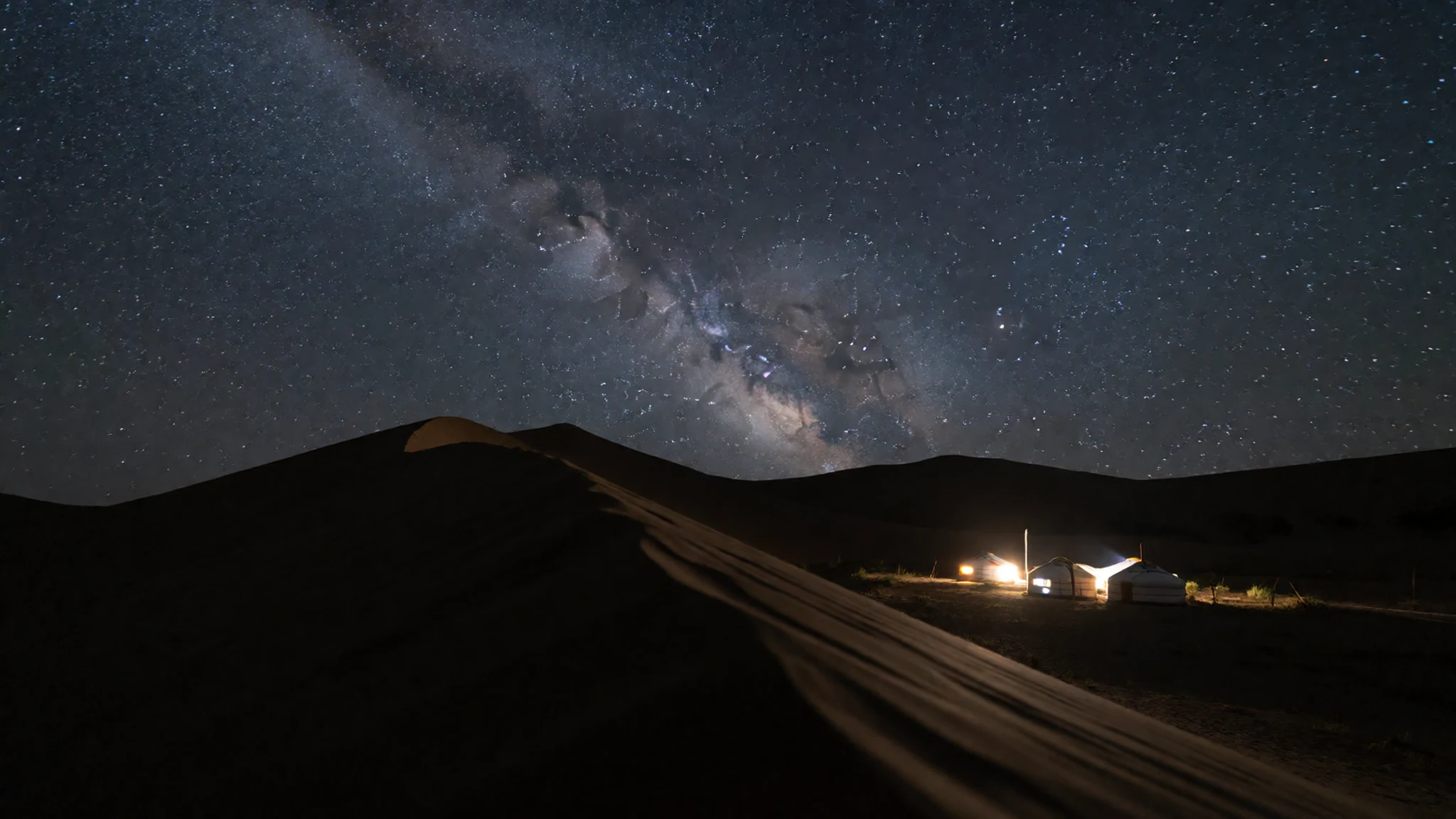
Culture
Khongoryn Els lies in herding country, and daily life here follows the needs of livestock and the season. Families live in a ger, the round felt-covered tent, which can be taken down and moved when pastures thin out. Most households keep camels, goats and sheep, and the year turns on births in spring, milking through summer and preparing for the long cold of winter. Hospitality is a serious matter on the steppe. A traveller who arrives at a ger is expected to be offered tea, and dried curd or biscuits often follow. Refusing outright can seem cold, so even a small taste is the polite answer. Inside a ger the space is arranged by custom: the hearth sits at the centre, the area opposite the door is the place of honour, and the household's altar and treasured things are kept there. Beliefs here mix Buddhism with older customs of reverence for mountains, springs and open places. Stone cairns called ovoo mark such places, and people walk around them clockwise, often adding a stone. Some local people also treat the dunes with respect rather than as a playground. Mongolian is the language of daily life, and a few words of greeting go a long way, though in tourist camps English is often spoken. Step over the threshold of a ger rather than on it, and take any offered tea or food with your right hand.
What to wear
The traditional dress of Khongoryn Els is the deel, a long wrap-over robe fastened at the side and tied with a bright sash. Everyday deels for herders are made of wool or thick cotton, lined for winter, while festival versions use silk or brocade in deep blue, green or burgundy. Felt hats, sheepskin and leather boots with upturned toes (gutal) complete the outfit. The deel is worn daily by many older herders and by almost everyone at Naadam and family celebrations. Today, most people near the dunes wear practical modern clothing: jeans, fleece jackets, trainers or work boots, and caps against the sun. Many young herders travel by motorbike, so helmets and windproof layers are common sights. Visitors should dress for a desert with big temperature swings. Light long sleeves and trousers protect against sun and blown sand, and a wide hat, sunglasses and a scarf to cover the face help on windy days. Nights are cold even in summer, so bring a warm fleece and a windproof layer. Closed, sturdy shoes suit the tracks and camps, though many people climb the dunes barefoot or in light socks. Modesty norms are relaxed in camps, but covered shoulders and knees are polite when visiting a family ger or a monastery elsewhere on the route.
What to eat
- Suutei tsai — Any family ger or ger camp
Salted milk tea, made with tea leaves, milk and a little salt, and offered to almost every guest. It tastes savoury rather than sweet, and some people find it an acquired taste. It is served in every family ger and ger camp.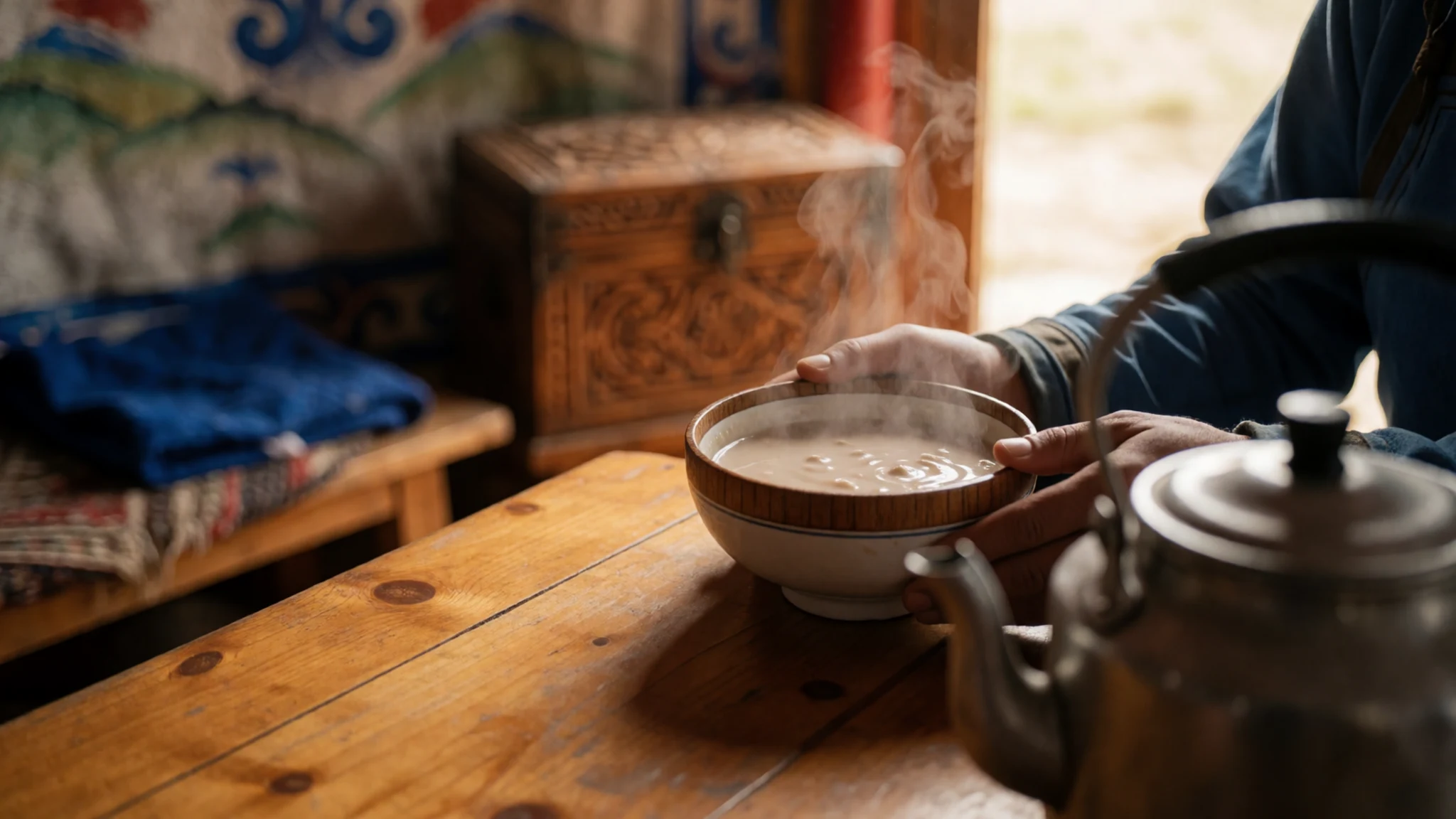
- Buuz — Ger camp dining tents and small eateries in Dalanzadgad
Steamed dumplings filled with minced mutton or beef, onion and a little seasoning, closed with a small pleat on top. They are the standard comfort food in Mongolia and are often eaten by hand. Camp kitchens usually serve them on request.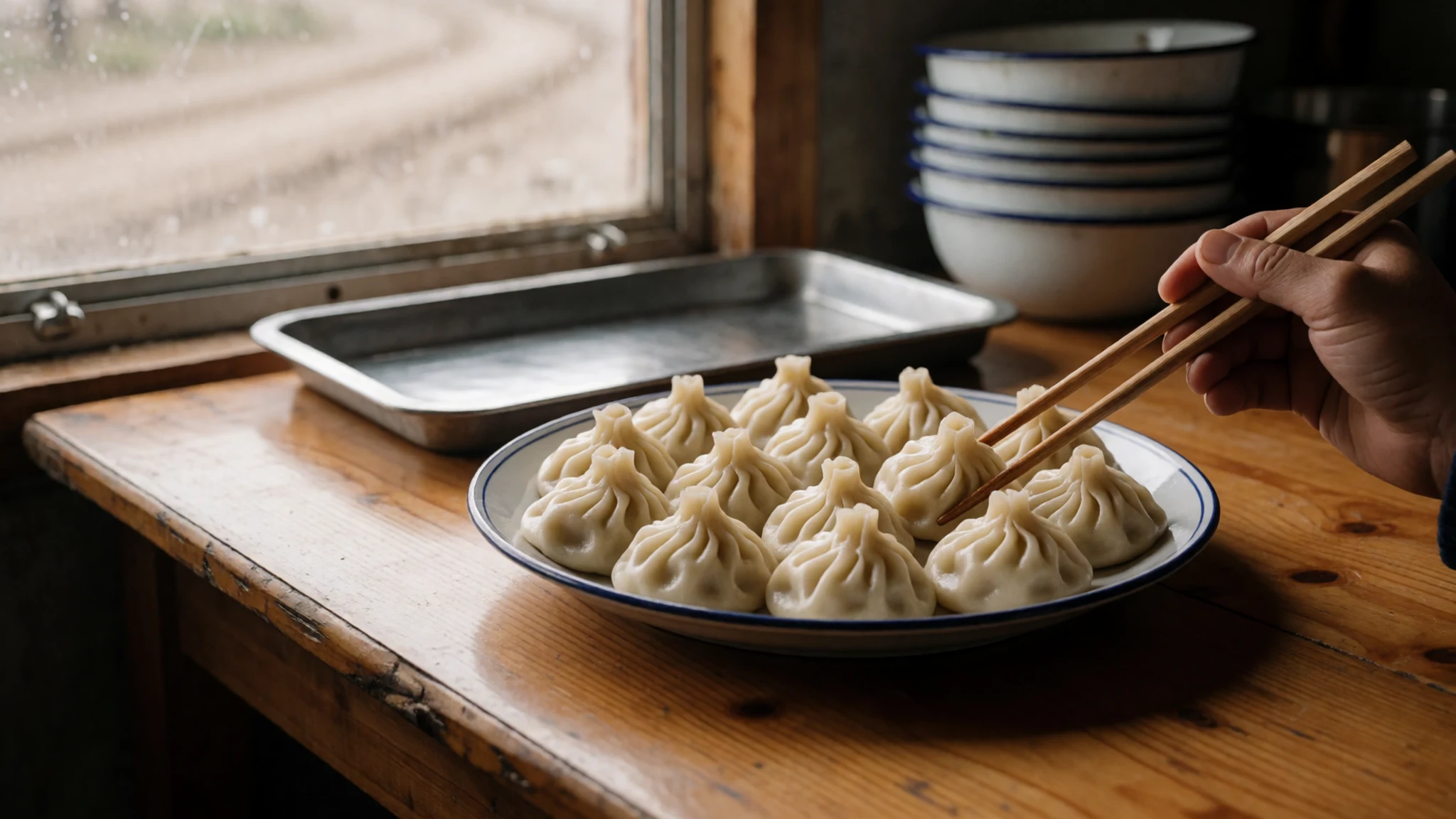
- Khuushuur — Roadside stalls and market food stalls in Dalanzadgad
A flat, fried pastry parcel stuffed with minced meat, crisp at the edges and juicy inside. It is a common road snack and a favourite at festivals. Eaten hot, it is best with a cup of tea. - Tsuivan — Ger camp canteens and small eateries on the main route
Hand-cut noodles stir-fried with meat and a few vegetables, such as carrot and cabbage. It is a filling, plain meal, well suited to hungry travellers after a day of climbing dunes. - Aaruul — Family gers, and the market in Dalanzadgad
Dried curd, shaped into hard pieces and left to cure in the sun. It is sour, chewy and long-lasting, made by herding families through the summer for the winter ahead. It is often offered to guests alongside tea.
Plan it
Best time. June to August, when days are hottest and wettest; July is the peak of summer, though the air cools sharply at night. Winters are very cold and most camps close, while spring brings strong winds and sandstorms.
How long. 2–3
Getting there. Most travellers fly or drive to Dalanzadgad, the nearest town, and then take a van with a driver along desert tracks for about 180 kilometres to the dunes. Check current flight schedules with the airline and the national park authority.
Budget. mid
Tips
- Go with a driver who knows the tracks; the desert has few signs
- Book ger camps well ahead for June to August, when the dunes are busiest
- Climb early morning or late afternoon to avoid midday heat
- Carry cash, as cards are unlikely to work at camps
- Bring plenty of drinking water and sun protection
Etiquette
- Step over the ger threshold, never on it
- Ask before photographing people or their animals
- Take all litter back out of the park with you
Nearby
Sources
- Wikidata Q25047802 (CC0)
- Wikipedia, Khongoryn Els (rev 1296506801) (CC BY-SA 4.0)
- Wikivoyage, Khongoryn Els (CC BY-SA 4.0)
- Photo 01: Hiking in Khongoryn Els, Sarah Lachise (CC0 1.0)
- Photo 02: Khongoryn Els 04, Bernard Gagnon (CC0 1.0)
- Photo 03: Khongoryn Els 10, Bernard Gagnon (CC0 1.0)
- Photo 04: dunes Khongoryn Els, Ljuba brank (CC BY-SA 4.0)
- Photo 05: dunes Khongoryn Els, Ljuba brank (CC BY-SA 4.0)
- Photo 06: dunes Khongoryn Els, Ljuba brank (CC BY-SA 4.0)
- Photo 07: dunes Khongoryn Els, Ljuba brank (CC BY-SA 4.0)
- Photo 08: river and dunes Khongoryn Els, Ljuba brank (CC BY-SA 4.0)


