Khoit Tsenkher Cave
Khoit Tsenkher Cave, Mongolia
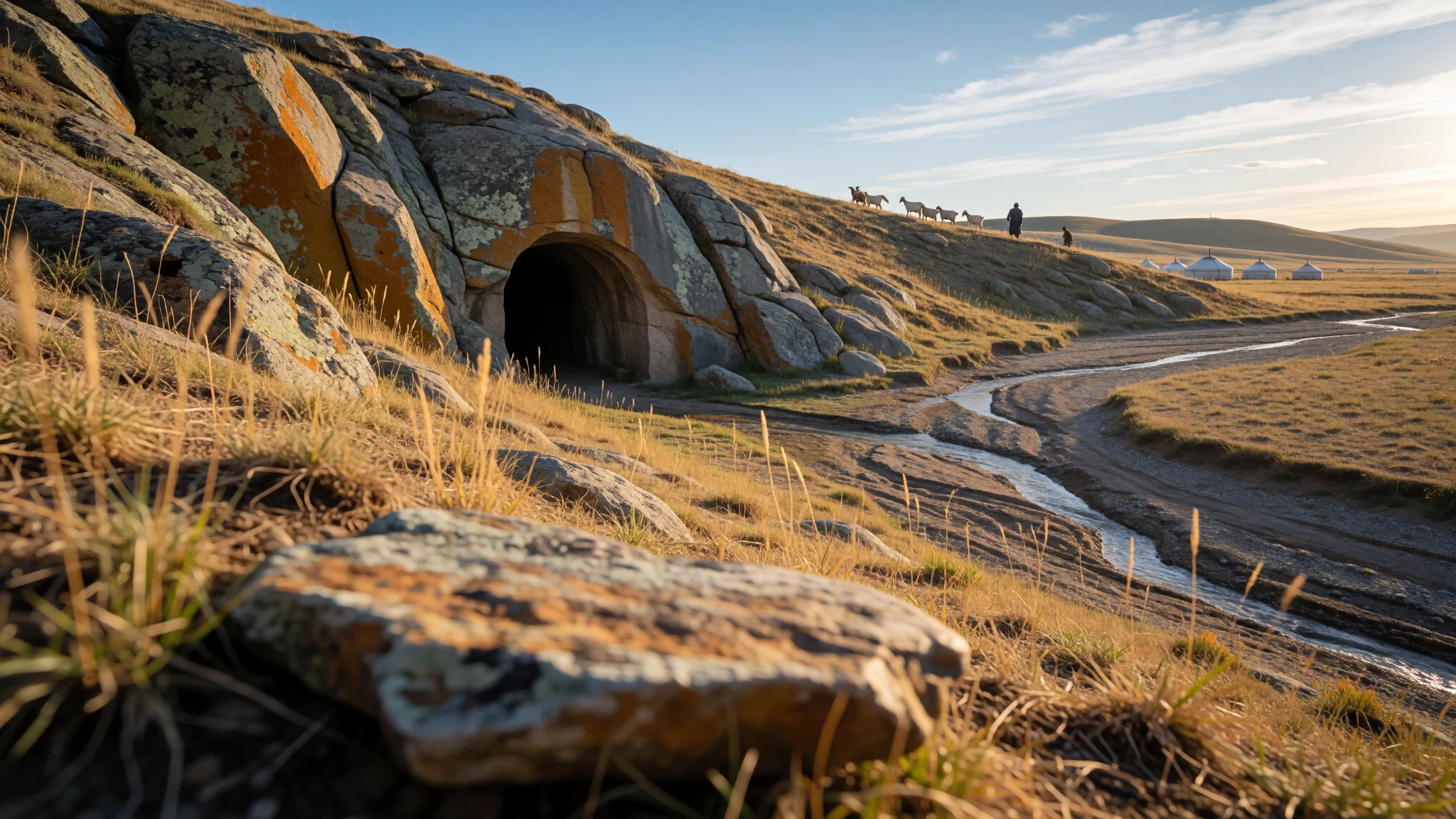
Khoit Tsenkher Cave in western Mongolia holds red paintings of prehistoric animals, reached by a long, remote drive across the Altai steppe.
The place
Khoit Tsenkher Cave, also called the North Blue Cave and listed in Wikidata as Gurban Tsenkher Cave Rock Art, sits in Mankhan sum, a rural district of Khovd Province in far western Mongolia. This is the Altai side of the country, a long way from Ulaanbaatar, where dry steppe gives way to rocky hills, braided streams and mountains that hold snow late into the year. Herding families keep sheep, goats and camels in the valleys, and distance is measured in hours of rough track rather than kilometres of road. The site is a cave with prehistoric art: pigment applied to rock walls by people who lived here long before herding, writing or any state. It is not a grand cavern with halls and formations. The interest lies in the paintings and in the setting, a modest opening in a hillside that looks over open country. Further rock-art locations lie around it, so the name covers a cluster of places more than a single chamber. Anyone expecting a museum will be surprised, because there is little built infrastructure and the experience depends on weather, light and a good local driver. In summer the grassland is green and the sky is huge; in winter the same ground is hard, white and bitterly cold. Khovd city, the provincial centre, is the usual base for reaching Mankhan, and the cave works best as one stop in a wider trip through the Altai rather than a destination on its own.
Its story
Khoit Tsenkher Cave holds paintings made by hunting peoples of the Stone Age, and the story of the site is mostly the story of what those paintings show. Researchers who have studied the walls describe figures in red-brown pigment: animals drawn in profile, some of them species that no longer live anywhere near Mongolia. Mammoths and ostrich-like birds are frequently mentioned in reports, and they hint at a landscape quite different from today's dry Altai valleys. Dating is the hard part. Pigment on rock is difficult to date directly, and published estimates vary, so this reading offers no figure. What can be said is that the images are very old, that they were made by people who depended on wild animals for food, and that the cave appears to have been a place worth returning to. The wider region has other rock-art sites with carvings and paintings from later periods, which suggests that people kept coming to these hills for a long time. For much of recent history the cave was, by most accounts, known chiefly to local herders. Wider attention came as archaeologists and rock-art specialists documented the area, and the paintings are now treated as part of Mongolia's heritage. That recognition brings a tension familiar from other fragile sites: more visitors means more risk to pigment that has survived by being remote, dry and largely left alone.
What to see
- The cave mouth — Mankhan sum, Khovd Province
The opening of Khoit Tsenkher Cave is modest, a dark mouth in the hillside rather than a grand entrance. It is worth studying the rock face and the slope below before going in, because the position probably explains the choice of site: shelter from wind, a view over open ground and a natural meeting point. Morning light is kindest.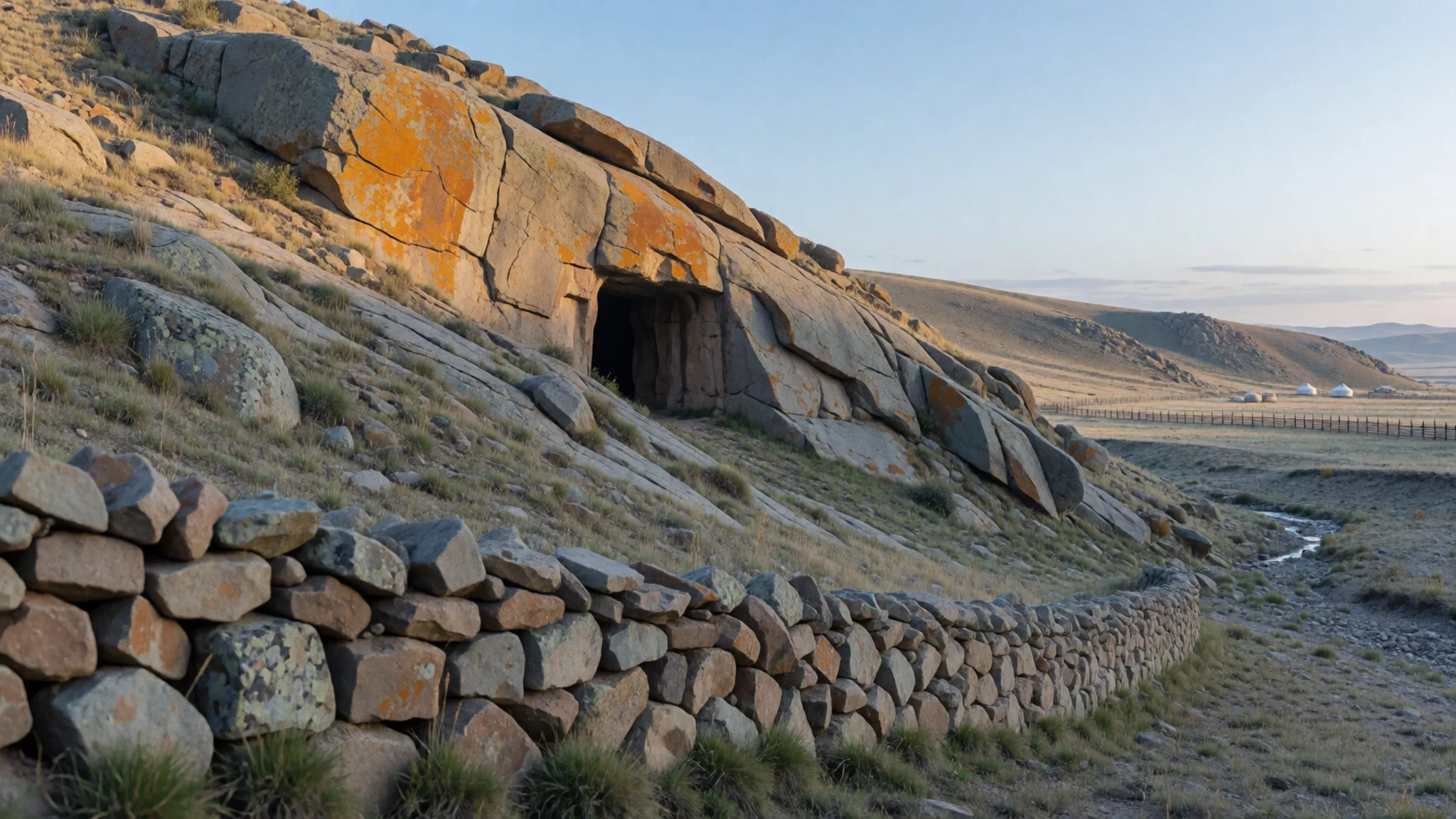
- The painted panels inside — Inside the cave
Inside Khoit Tsenkher Cave the paintings are in red-brown pigment on the walls and ceiling. Animal outlines are the main theme, and the mammoth-like and bird-like figures are the ones usually highlighted. A torch helps, but a harsh beam can wash out faint lines, so it pays to go slowly and let the eyes adjust.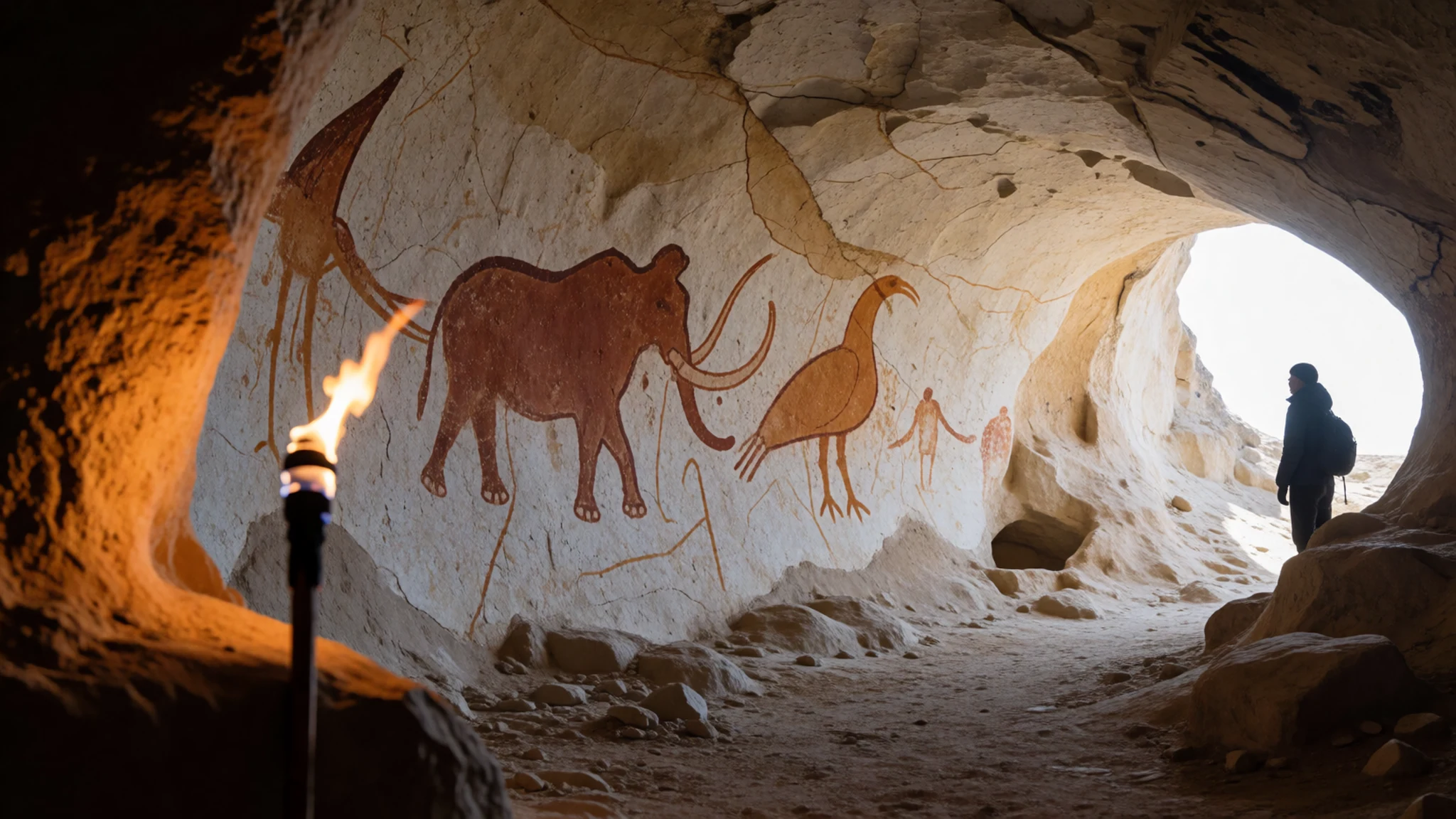
- Rock art around the cave — Hillsides around the cave
Other rock surfaces near Khoit Tsenkher Cave carry painted and marked images, and a local guide can point out which are worth the walk. These outdoor panels are weathered and easy to miss, so they reward patience more than speed. Photographs taken in low, raking light show shapes that the eye misses at midday.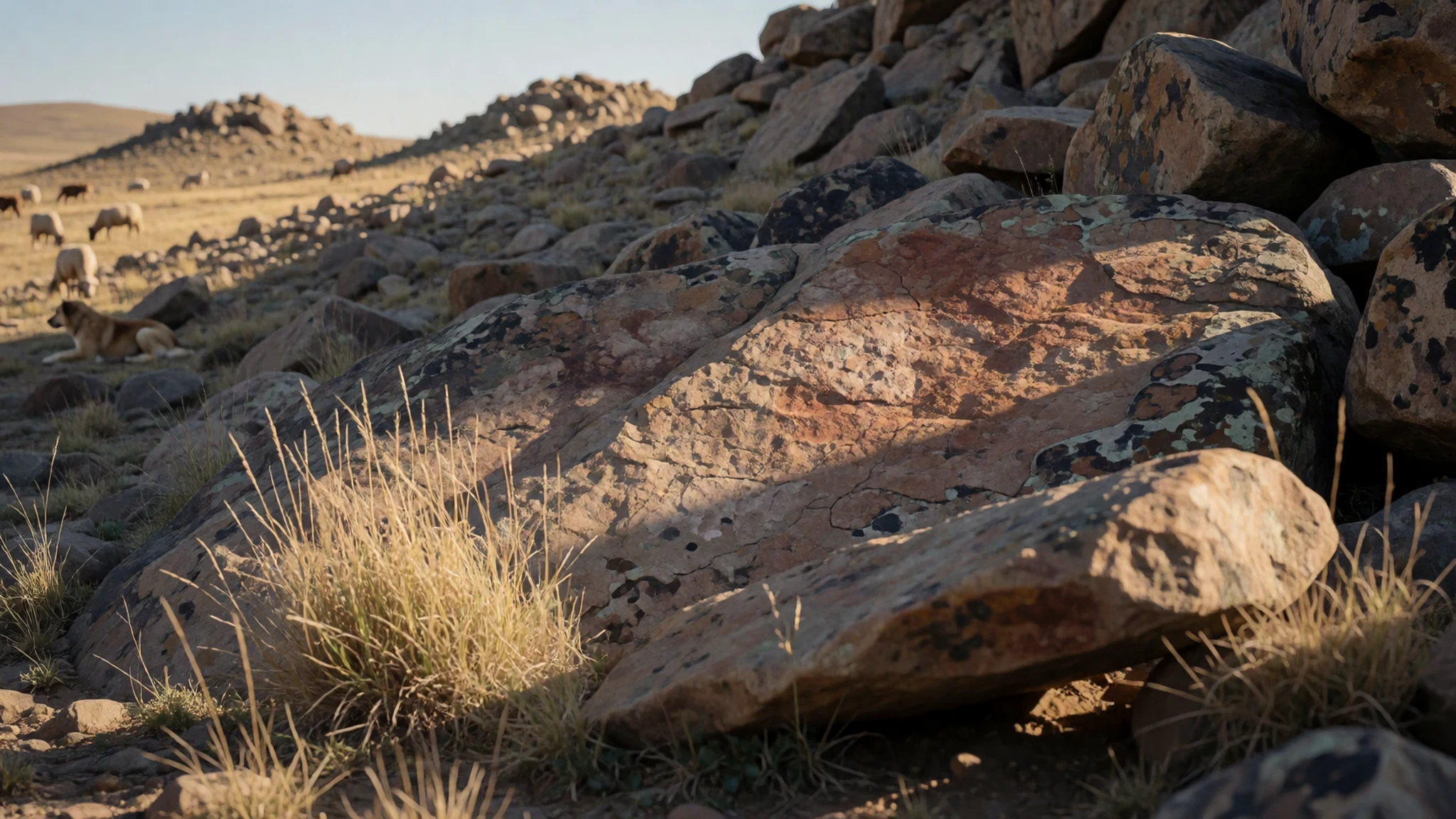
- The approach through the Altai — Valleys between Khovd city and Mankhan
The track towards Khoit Tsenkher Cave crosses open Altai country: stony slopes, dry stream beds and herders' camps with animals grazing nearby. The drive is part of the visit. Stopping at a high point on the way gives a sense of how isolated the paintings are, and why the area has stayed so little built up.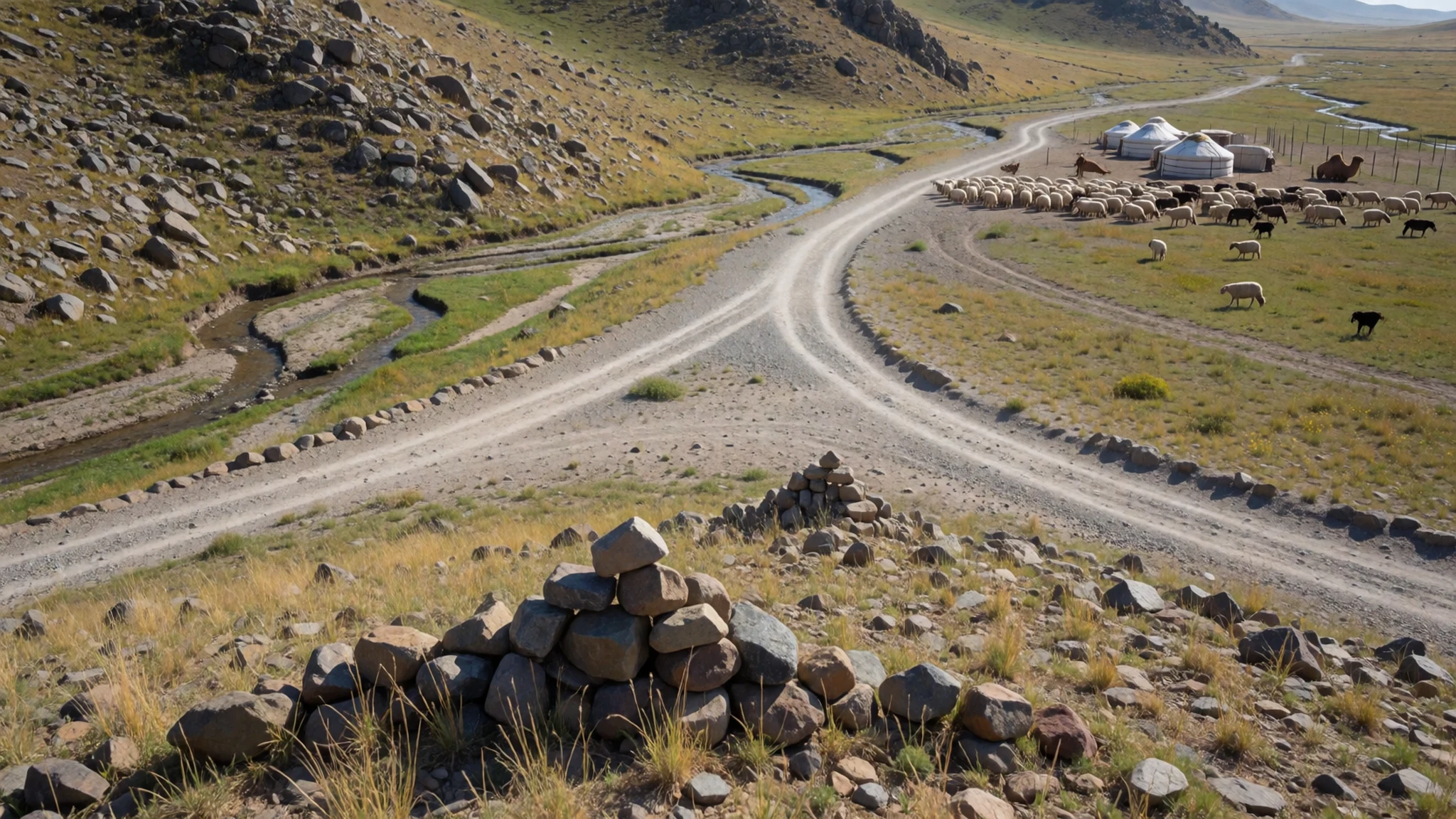
- Khovd city as a base — Khovd city
Khovd city, the provincial centre, is where most trips to Khoit Tsenkher Cave begin. It has markets for food and supplies, eateries, places to sleep, and drivers and guides who know the Mankhan tracks. An evening here is well spent sorting fuel, water and cash before the rough road, and asking about current conditions.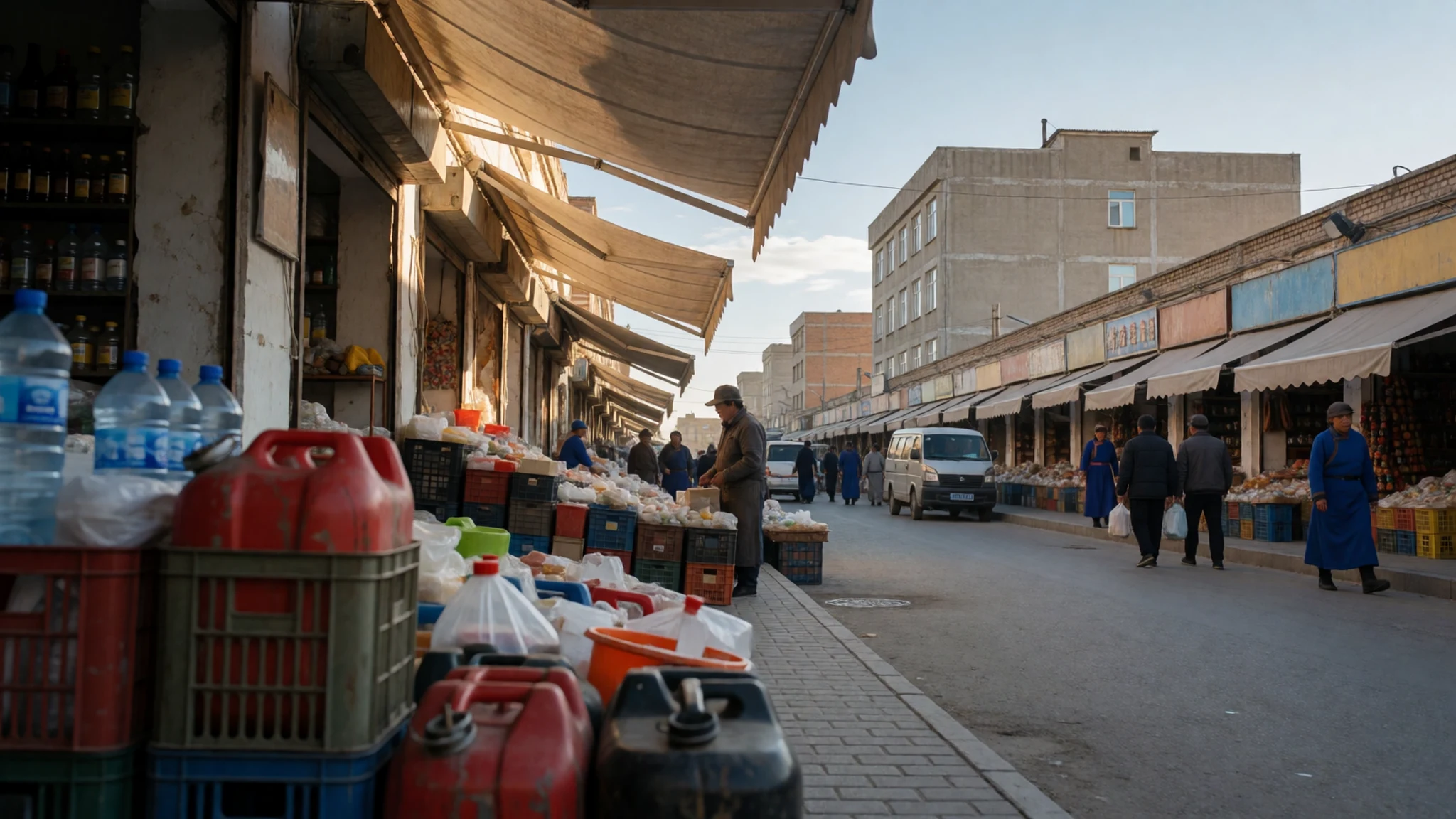
Culture
Khoit Tsenkher Cave lies in herding country, and the culture around it is that of Mongolian and Kazakh pastoralists in the Altai. Families move livestock between seasonal pastures, live in felt-covered gers, and treat hospitality as a basic duty: a stranger arriving at a camp is normally offered tea, dried curds and a place to sit. Khovd Province is home to several communities, including Oirat Mongol groups, Uriankhai and Kazakhs, each with its own songs, dialect and dress. Buddhism and older shamanic beliefs both shape daily life, which is why mountains, springs and striking rock formations are often treated as places with spirits. Cairns of stones called ovoo mark passes and high points, and passers-by walk round them clockwise, often adding a stone. The cave paintings sit within that same landscape of respect for the land. They also connect present-day herders with much earlier people who sheltered and hunted in these hills, which gives the site a meaning beyond its archaeology. Visitors are guests in a working pastoral region, not in a managed heritage park, so manners learned in a ger matter as much as manners at the cave itself. When you visit, keep your hands off the paintings, walk clockwise around any ovoo, and ask before entering a ger or photographing a family.
What to wear
Around Khoit Tsenkher Cave, the traditional garment is the deel, a long wrap-over robe with a high collar that fastens on the right side and is held by a bright sash. Summer deels are cotton or silk; winter ones are lined with sheepskin or wool and can be heavy. Leather boots with upturned toes, called gutal, and felt or fur hats complete the outfit, which is worn at festivals, weddings and the lunar new year, and every day by many older herders. Kazakh families in the province favour embroidered velvet and felt, with fox-fur hats in cold weather. Day to day, most people wear what suits the work: jeans, fleece, rubber or leather boots, and a deel thrown over the top when the wind turns. Long days outdoors and travel by motorbike mean practical layers matter more than style. Visitors should dress for a wide swing in temperature: a sun hat, sunglasses and sunscreen for summer, plus a windproof jacket and a warm layer, because evenings cool quickly even in July. Sturdy boots with good grip suit the loose rock and steep ground at the cave. Modesty rules are relaxed, though covering shoulders and knees is polite in a monastery or a family home.
What to eat
- Suutei tsai — Any herder's ger, guesthouse or roadside eatery
Salty milk tea, sometimes with a little butter or millet, is the first thing offered in any home. It is warming and filling, and an acquired taste for many visitors. Accepting a bowl shows courtesy, and refills tend to arrive without asking.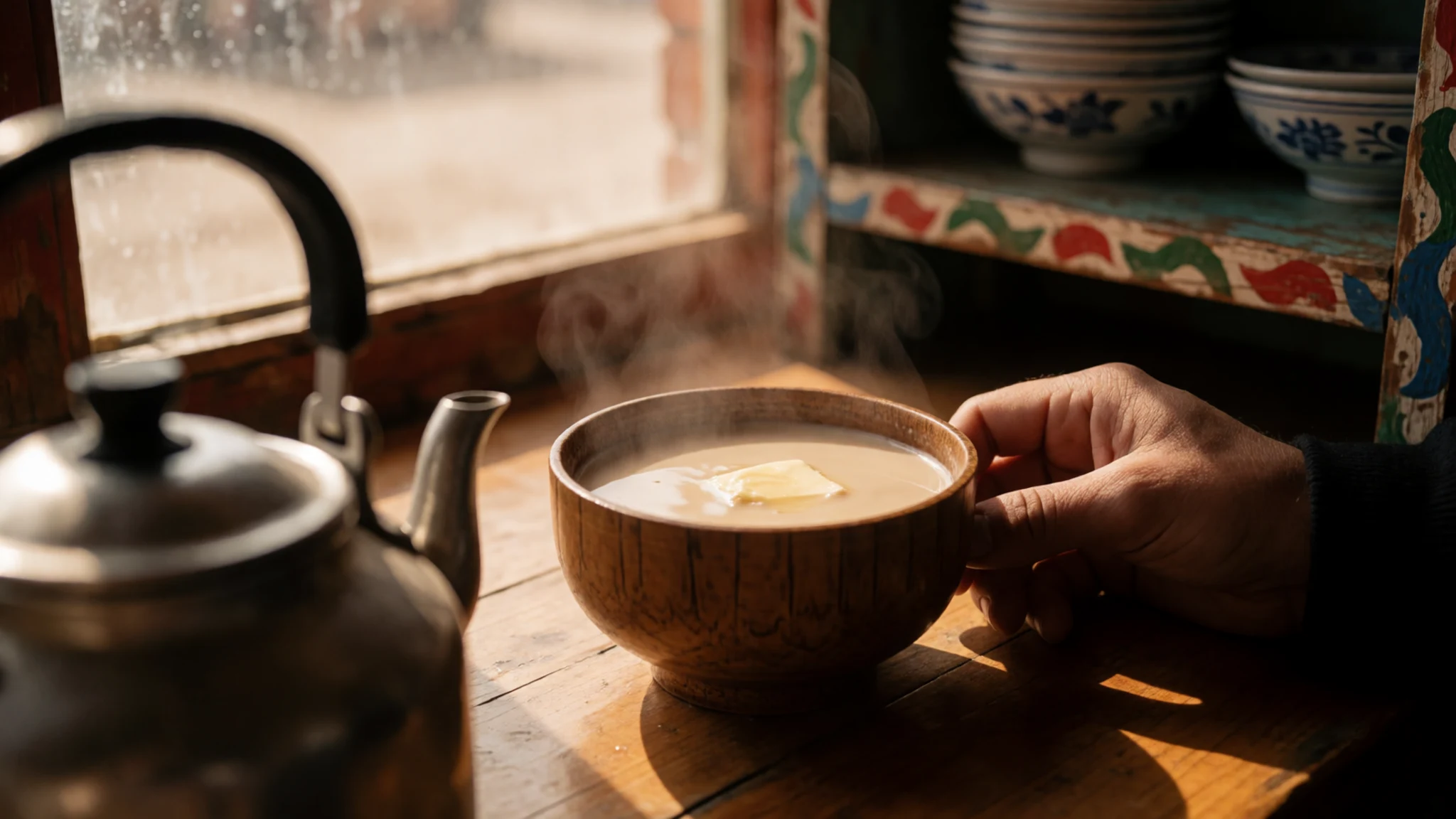
- Buuz — Canteen-style eateries (guanz) in Khovd city
Steamed dumplings filled with minced mutton or beef, seasoned simply with onion and salt. They are a staple at celebrations and an ordinary lunch, eaten by hand while still hot, with the juices drunk from the pleated top.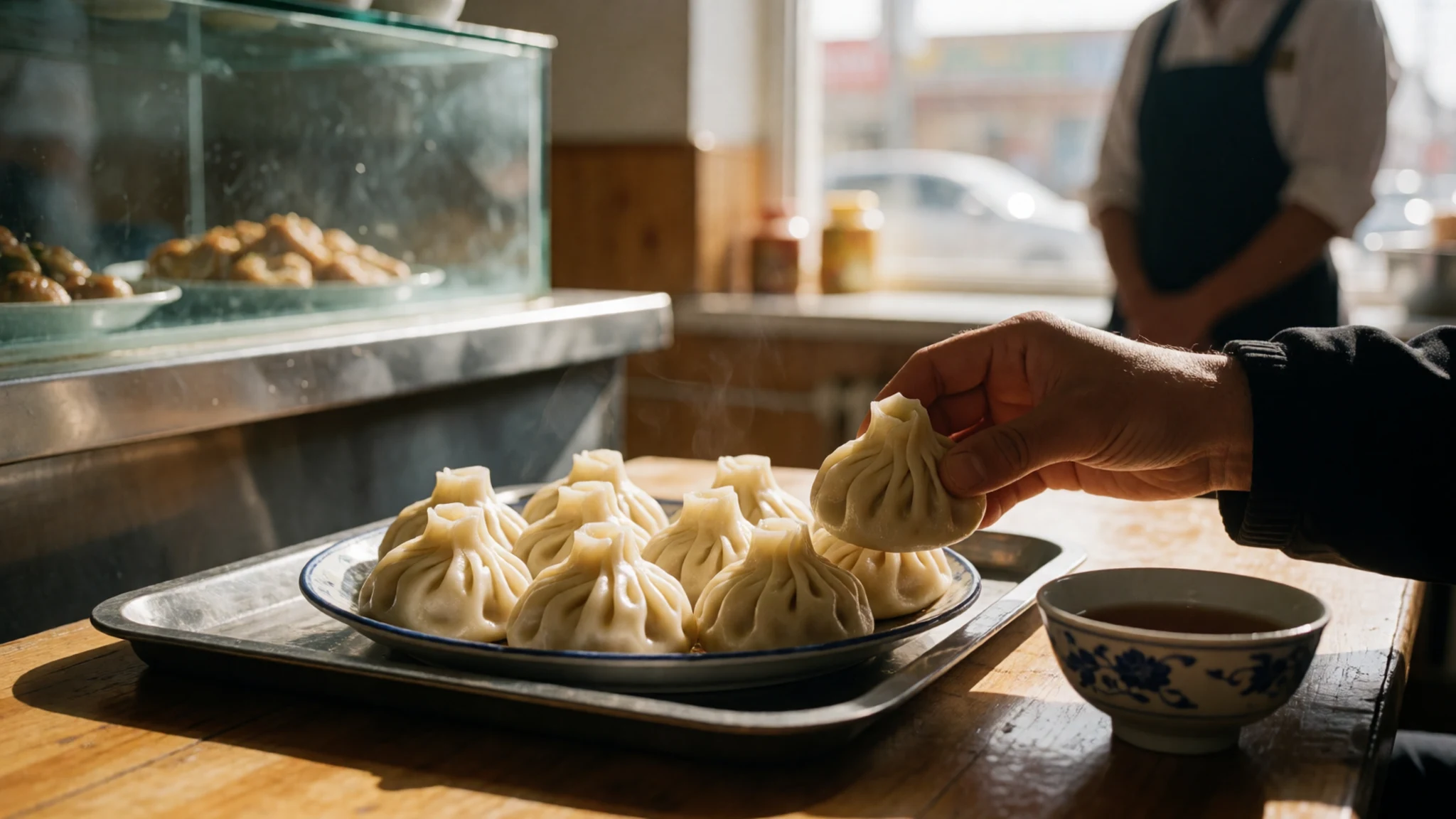
- Khuushuur — Market stalls and small eateries in Khovd city
Flat fried pastry parcels stuffed with seasoned minced meat, crisp at the edges and juicy inside. They are filling, easy to carry and a sensible choice before a long, rough drive across the steppe. - Tsuivan — Canteen-style eateries in Khovd city and larger villages
Hand-cut noodles steamed or stir-fried with meat, carrot, onion and other vegetables. It is a plain, hearty one-plate meal, and home versions vary from family to family, so the dish tastes different almost every time. - Aaruul — Markets in Khovd city and herder households
Dried curds, shaped into small pieces and left to harden in the sun. They are sour, chewy and very durable, meant to be sucked slowly rather than bitten. Families often offer them with tea as a welcome. - Beshbarmak — Kazakh households and eateries in Khovd Province
A Kazakh dish of boiled meat served over wide noodles with broth on the side. It is made for gatherings and guests, and is best eaten in a family setting where the whole table shares from large plates.
Plan it
Best time. June to September, when days are warm, the grass is green and tracks are generally passable. Winters are long and severely cold, and spring can bring wind and mud, so travel outside summer needs careful local advice.
How long. 3–5
Getting there. Fly from Ulaanbaatar to Khovd city (check current schedules with the airline), or take the long overland route across the country. From Khovd, hire a driver with a robust off-road vehicle for the last leg to Mankhan and the cave, which is on tracks rather than tarmac.
Budget. mid
Tips
- Arrange a driver and guide in Khovd city before heading out, and ask about current track conditions
- Carry extra fuel, drinking water, food and cash, as card machines are rare outside the city
- Start early to get the best light and avoid afternoon wind
- Ask the local tourism office in Khovd whether any permit or fee applies before travelling
- Pack layers, because temperatures swing sharply between day and night
Etiquette
- Do not touch the paintings or use chalk, water or flash on them
- Walk clockwise around ovoo cairns and ask before entering a herder's ger
- Ask permission before photographing local people, and take all rubbish away
Nearby
Sources
- Wikidata Q3123692 (CC0)
- Wikipedia: Khoit Tsenkher Cave Rock Art (rev 1364838972) (CC BY-SA 4.0)
- Rock Art around Khoit Tsenkher Cave in Mankhan, Khovd (6), BatboldDorjgurkhem (CC BY 4.0)
- Khoit Tsenkher Cave Rock Art site, BatboldDorjgurkhem (CC BY 4.0)
- Relief map of Mongolia, NordNordWest / Виктор_В (CC BY 3.0)
- Rock Art around Khoit Tsenkher Cave in Mankhan, Khovd (3), BatboldDorjgurkhem (CC BY 4.0)
- Rock Art around Khoit Tsenkher Cave in Mankhan, Khovd (2), BatboldDorjgurkhem (CC BY 4.0)
- Rock Art around Khoit Tsenkher Cave in Mankhan, Khovd (4), BatboldDorjgurkhem (CC BY 4.0)
- Wikivoyage (CC BY-SA 4.0)


