Khndzoresk
Khndzoresk, Armenia
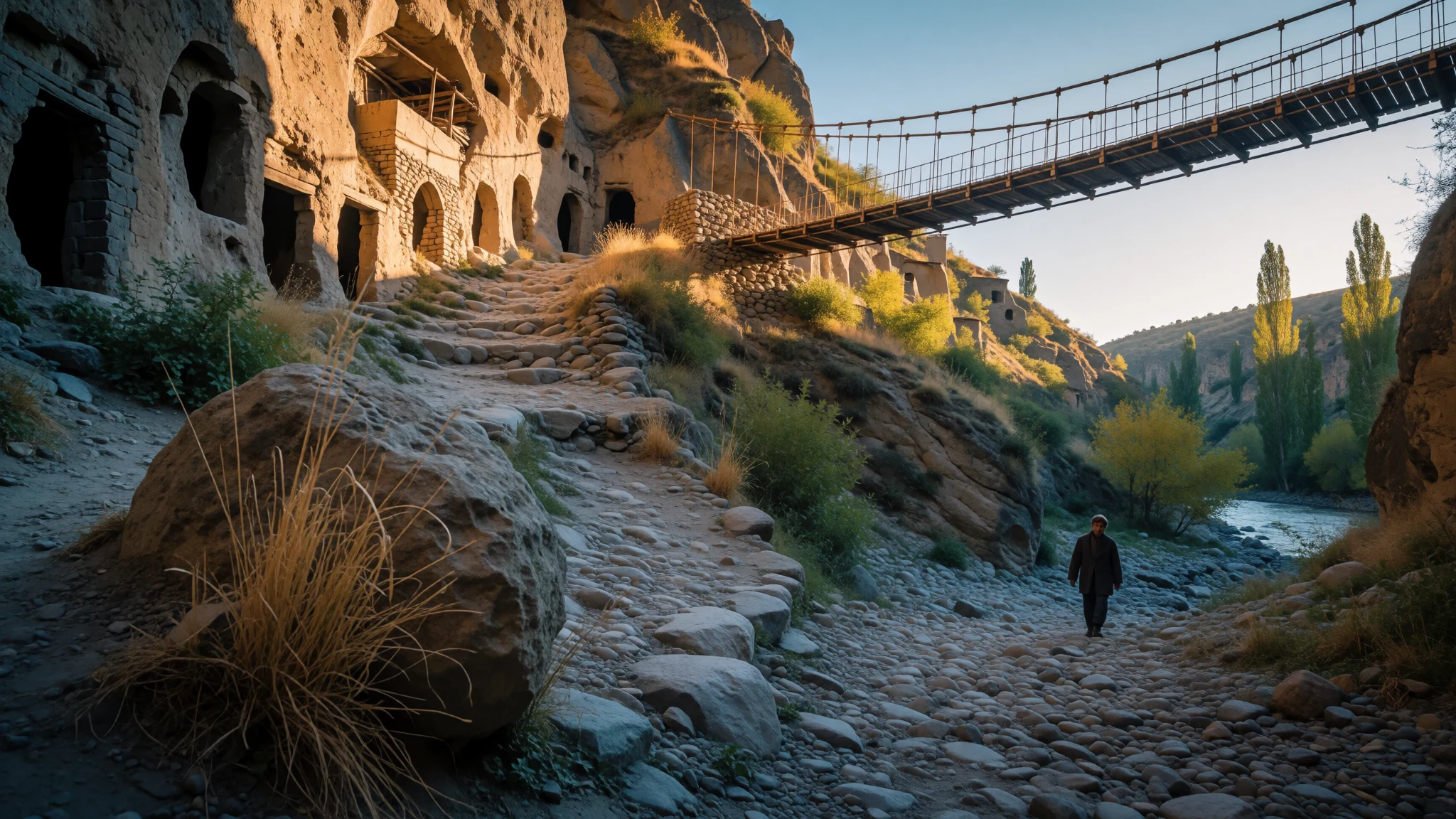
Khndzoresk is a gorge whose cliffs were lived in for generations, a village of cave homes reached by a swaying footbridge in southern Armenia.
The place
Khndzoresk is a village in Armenia's Syunik Province, part of Goris Municipality in the far south-east of the country. It stands at 1,580 m on the steep sides of a deep gorge, and tradition holds that the gorge, Khor Dzor, gave the village its name. The gorge is the reason to come. Its walls are soft volcanic rock, and over many generations people dug homes, stables and storerooms straight into the cliffs, leaving slopes pocked with doorways and linked by worn footpaths. The community today numbers about 2,070 people, and most of them live in the newer village raised in the 1950s on level ground above, while the cave quarter below stands largely empty and open to walkers. A suspension bridge crosses the gorge near the village entrance and gives the best way into the old slopes. Goris, the nearest town, is a short drive away and the highway runs close by, so the village fits easily into a day on the road through Syunik. Facilities are modest: expect a quiet settlement with a few small stalls rather than a resort, and tour groups on summer weekends rather than constant crowds. One source describes the climate as warm and fairly humid with mild winters, and yearly rainfall of roughly 450–700 mm. At this altitude the exposed slopes can still be hot at midday in summer, and the rock and paths turn slippery after rain or frost.
Its story
Khndzoresk was once among the biggest villages in eastern Armenia. By the early twentieth century it held about 8,300 people in some 1,800 households, and a count from 1913 lists 27 shops, three dye-works, tanneries and seven schools, which is a lot of trade for a place now reached by a gorge track. Its name also runs through the history of Armenian resistance. The village is remembered for backing the movement led by David Bek, and Mkhitar Sparapet used the village fortress as his base from 1728 to 1730. In 1735 the head of the Armenian Apostolic Church, Catholicos Abraham Kretatsi, visited and wrote the community up in his chronicles, which is why the village appears in the record so early. The cave dwellings are the physical side of that story. Families lived in and among the rock for generations, and the building of the new village in the 1950s left the old slopes to walkers and the weather. A smaller offshoot, Nerkin Khndzoresk or Lower Khndzoresk, appeared about 7 km away in the 1980s, shaped by political unrest of that decade. The result is a place with several layers: a cave town, a village of the mid-twentieth century and a small newer settlement, each marking a different chapter of the same community.
What to see
- Old Khndzoresk cave quarter — Slopes of the Khor Dzor gorge, below the new village
The old village is the main sight: terraces of dark doorways cut into pale volcanic rock, with rooms that once served as homes, stables and stores. Paths wander between them and some interiors can be entered. Take care on loose stone, and expect to spend a couple of unhurried hours climbing and looking.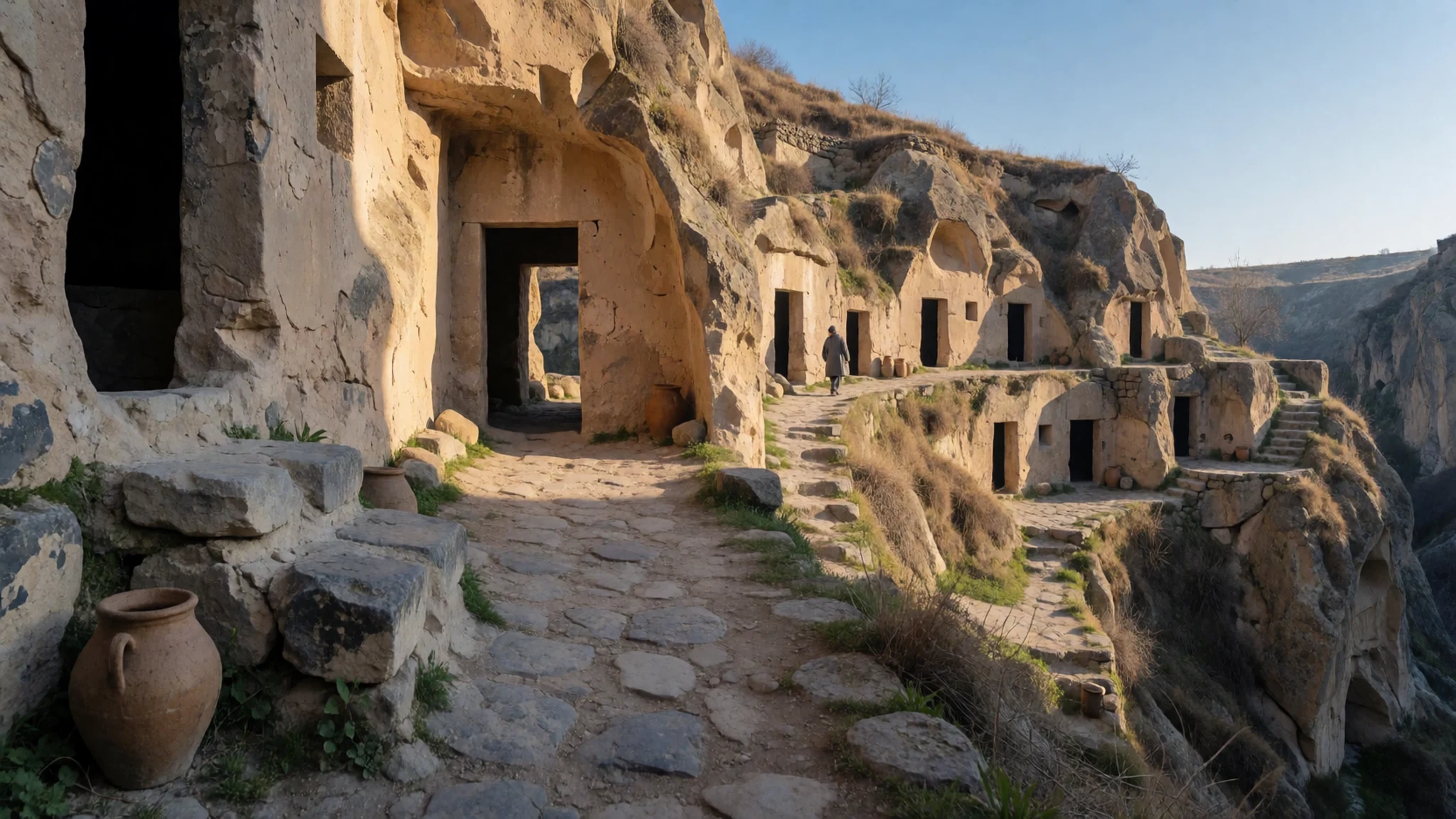
- Khndzoresk suspension bridge — Gorge crossing near the village entrance
A footbridge strung high across the gorge links the new village side to the cave slopes. It sways a little underfoot, which is part of the experience, and it gives long views along the cliffs. Go early or late for softer light and fewer people on the deck.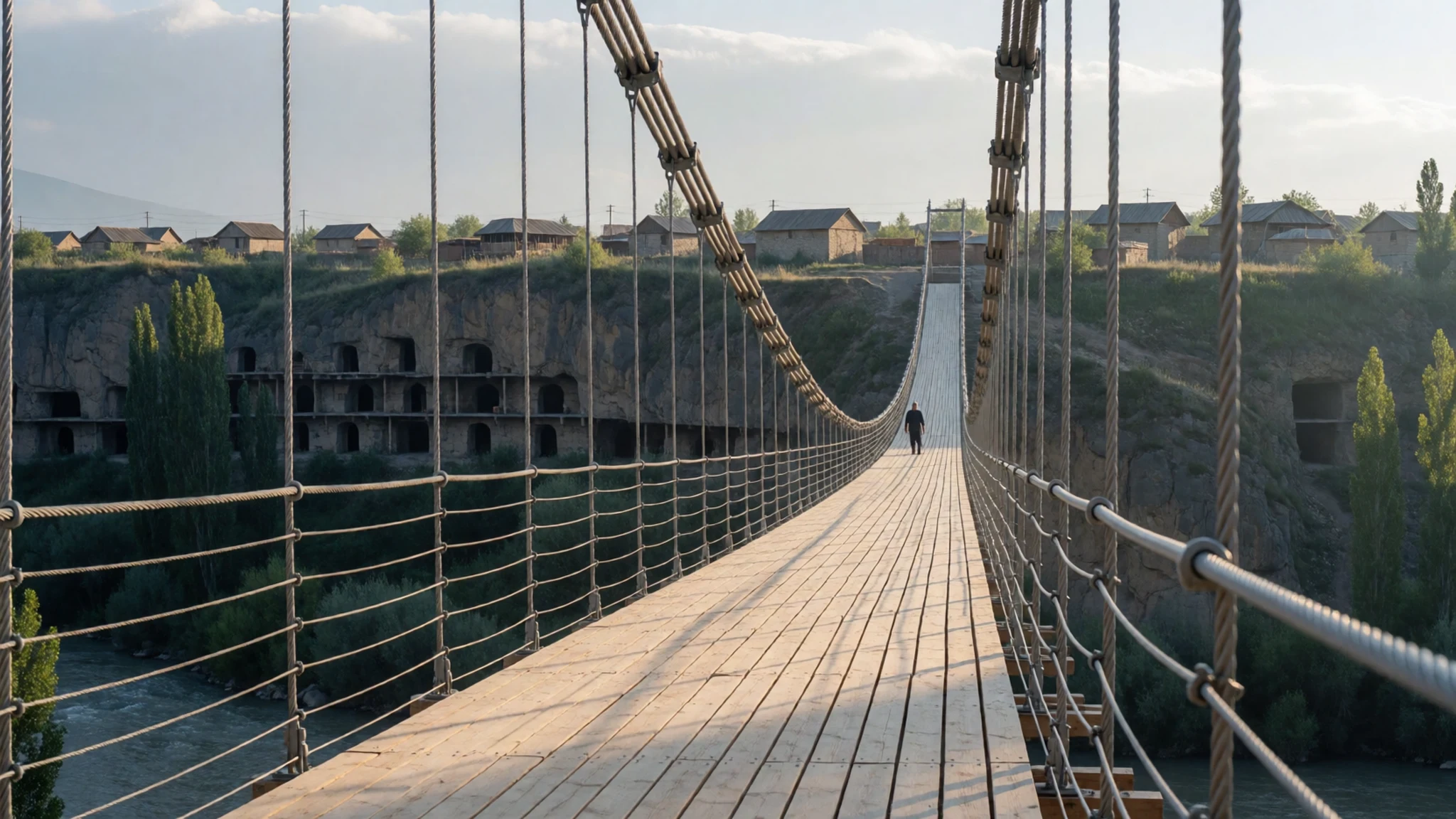
- Church of Surb Tadevos — Old Khndzoresk, among the cliffs
A small church stands among the cave dwellings, showing that the old community had a place of worship in the rock as well as homes. It is plain and quiet, best visited slowly after the walk down. Whether it is open varies, so do not count on getting inside.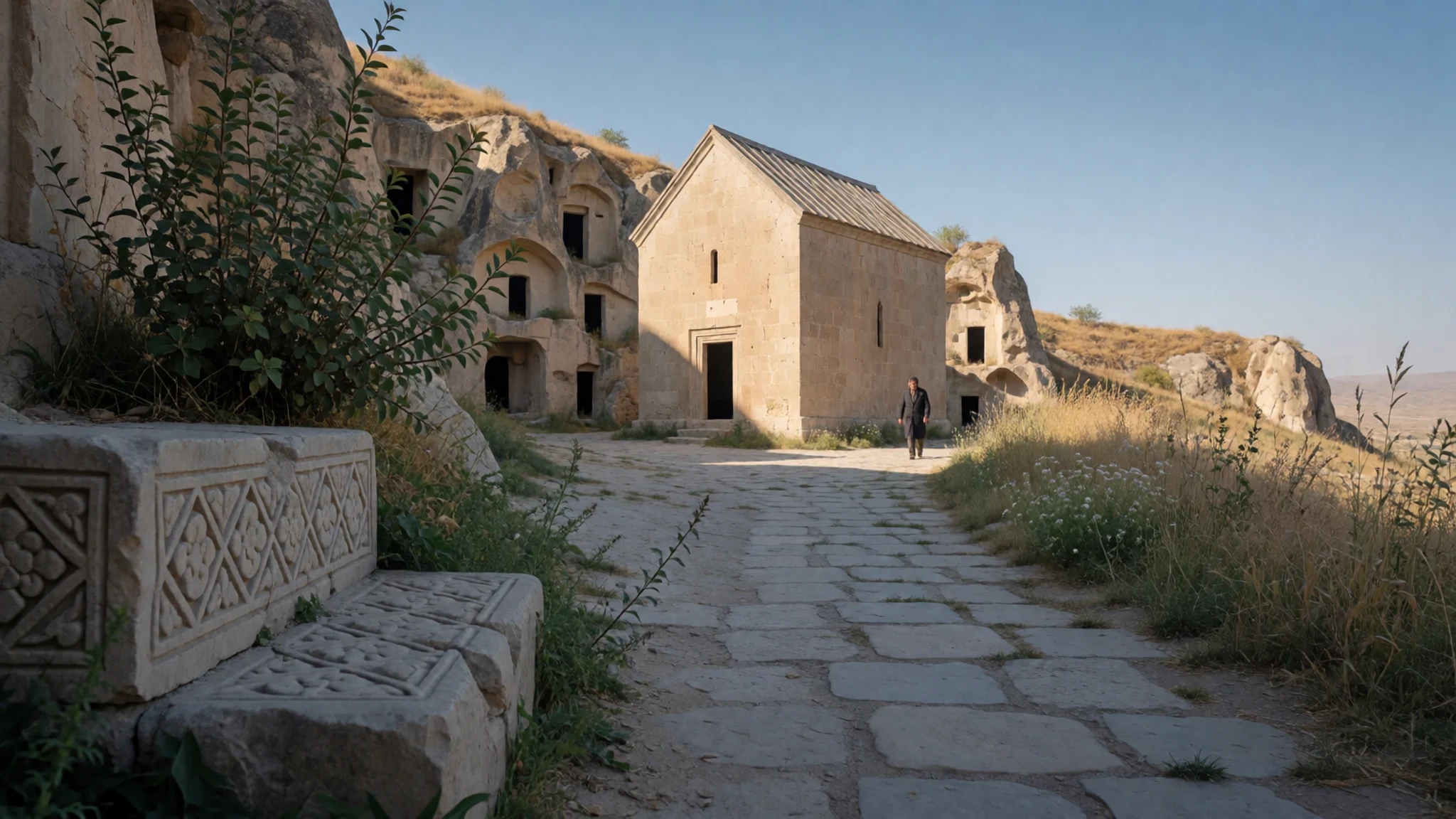
- Memorial khachkar — Khndzoresk village
A carved cross-stone, or khachkar, commemorates villagers of Khndzoresk who died in the Karabakh war. It is a reminder that this is a living community and not only a scenic ruin. Stop for a moment, read the carving if you can, and leave the surroundings as you found them.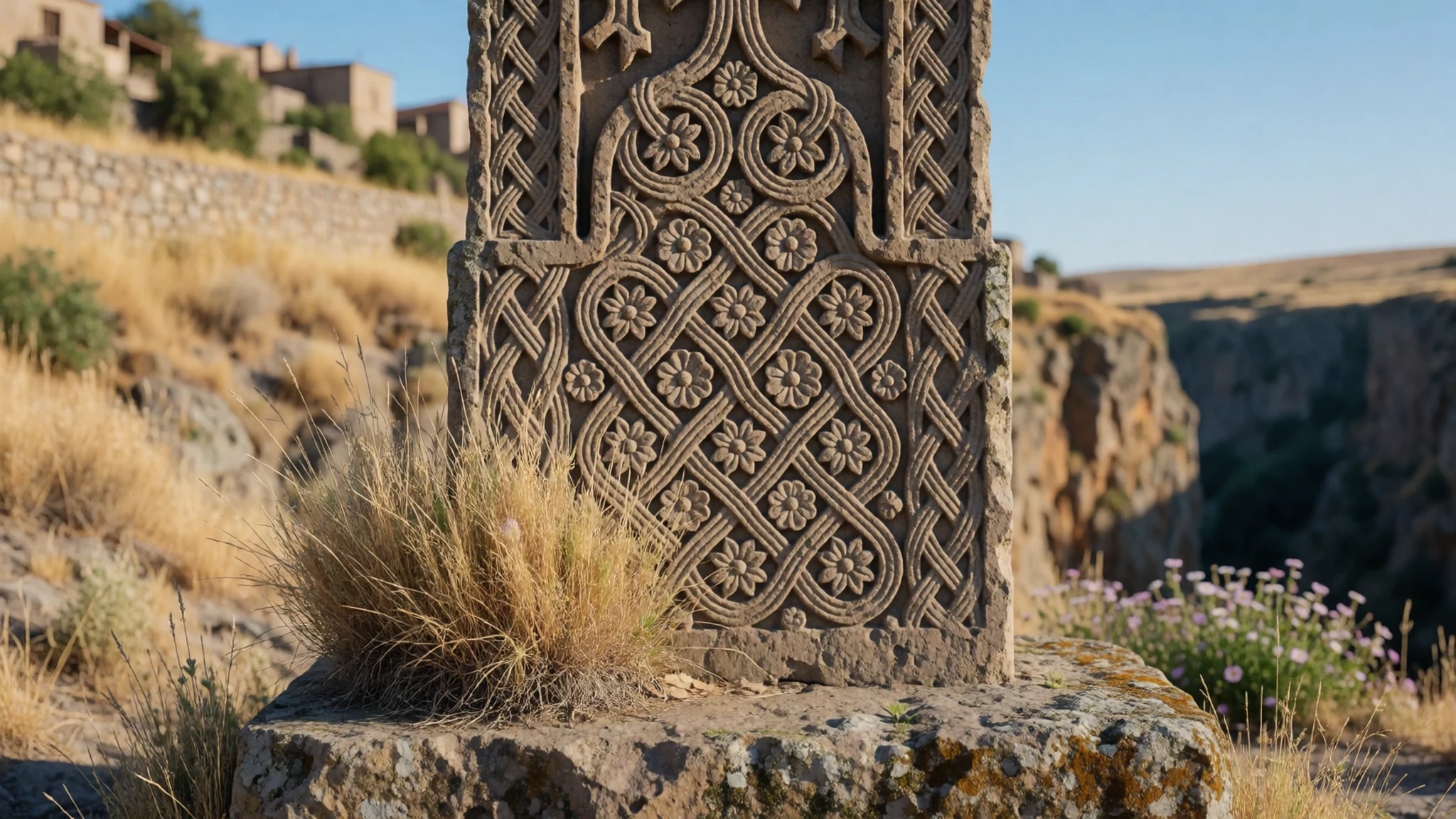
- Gorge floor and river walk — Base of the Khor Dzor gorge
A path drops to the bottom of the gorge, where the cliffs rise on both sides and the noise of the village fades. The climb back is the hard part, so carry water and allow time. Spring and early summer bring the greenest views, and photographers favour the low-sun hours.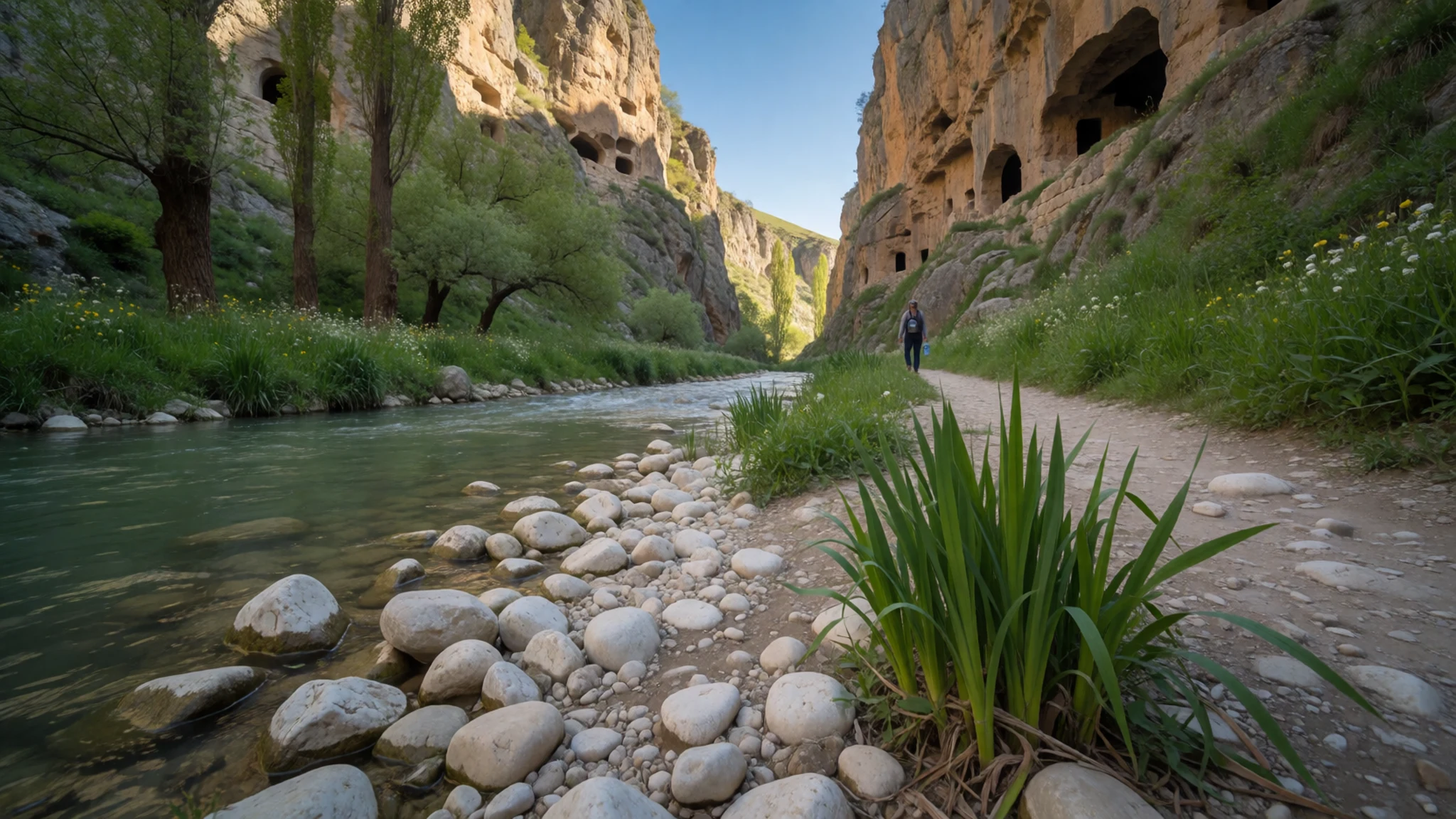
Culture
Khndzoresk sits in a part of Armenia where church, family and hospitality still shape daily life. Armenia is described as deeply religious and rather traditional in its manners, and the country adopted Christianity under its king in 301 AD, a date the villagers' own churches and carved cross-stones sit within. In a small village that means greetings matter, refusing a second cup of coffee can take effort, and an invitation indoors is meant sincerely. Chivalry is a habit as much as a courtesy: men often pick up bills, open doors and give up seats for women, and the idea of putting ladies first is taken seriously. Male visitors are expected to follow along, and female visitors should not be alarmed if offered help they did not ask for. Khndzoresk also carries history on its surface. The cave quarter was a home for generations, the village played a part in the eighteenth-century resistance led by David Bek, and the memorial khachkar speaks to more recent losses. Locals tend to be proud of this story and happy to share it if you show real interest. Be wary of political opinions, and listen more than you talk when the conversation turns to the region's wars. When visiting the church or the memorial khachkar, dress modestly, keep your voice low and ask before photographing villagers or their homes.
What to wear
Khndzoresk's traditional clothing belongs to the wider Armenian tradition. Women once wore long, fitted dresses and an arkhalukh, a closely cut over-garment, with embroidered belts, aprons and head coverings; men wore a tailored coat of the chokha type with a sash. Wool was the everyday cloth in highland villages, with cotton, silk and velvet kept for better occasions and festivals. These outfits now appear mostly at folk performances, weddings, church feasts and in museums rather than daily life. What people wear in Khndzoresk today is ordinary and practical: jeans, trousers, shirts, knitwear and jackets, with sturdy shoes for farm work and steep paths. Older women in the village may favour darker, more modest dress, and church or memorial visits call for tidy clothes. Visitors should wear shoes with a good grip, such as trail shoes or light boots, since the gorge paths are steep and the volcanic rock can be slick. Bring a hat, sunscreen and a light layer for summer heat, and warm, waterproof clothing outside high summer. For churches and the memorial, shoulders and knees should be covered, and women may carry a scarf. Avoid sandals and thin soles on the cave slopes, and take a small day bag to keep both hands free for balance on the bridge and the climb.
What to eat
- Khorovats — Roadside grill houses and family eateries around Goris
Armenian barbecue of pork, lamb, chicken or beef, usually seasoned with onion and local spices and grilled over charcoal with tomatoes, aubergine and peppers. Look for it at roadside grill houses and family-run eateries on the road through Syunik, and at village feasts.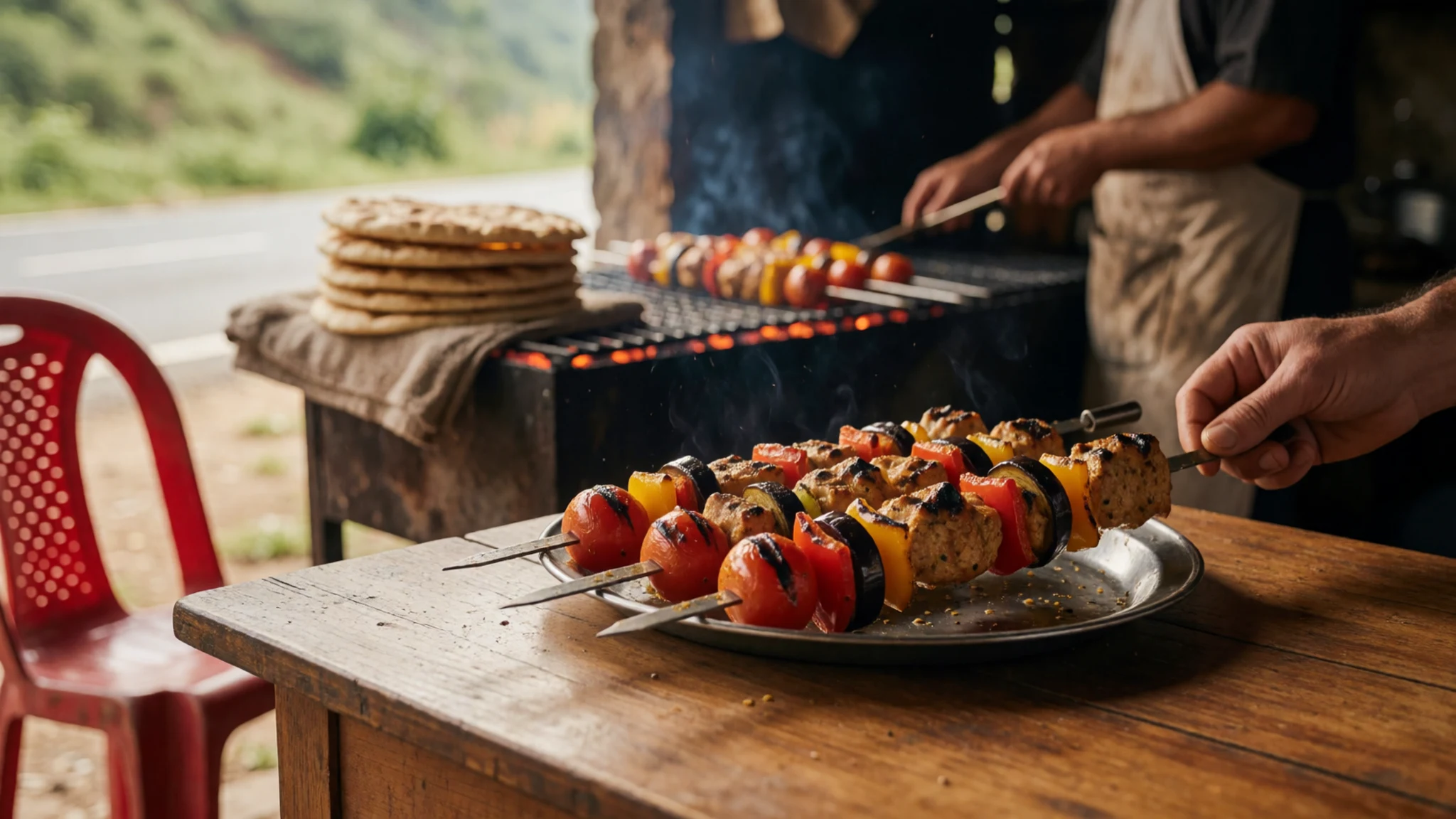
- Harissa — Home kitchens and traditional restaurants in Goris, mainly around church festivals
A smooth porridge of slow-cooked chicken or lamb stirred with coarsely ground wheat, traditionally served at Easter. It is a national dish and takes hours to make, so ask locally whether a restaurant or home kitchen has it on that day. It has no connection with the North African chilli paste.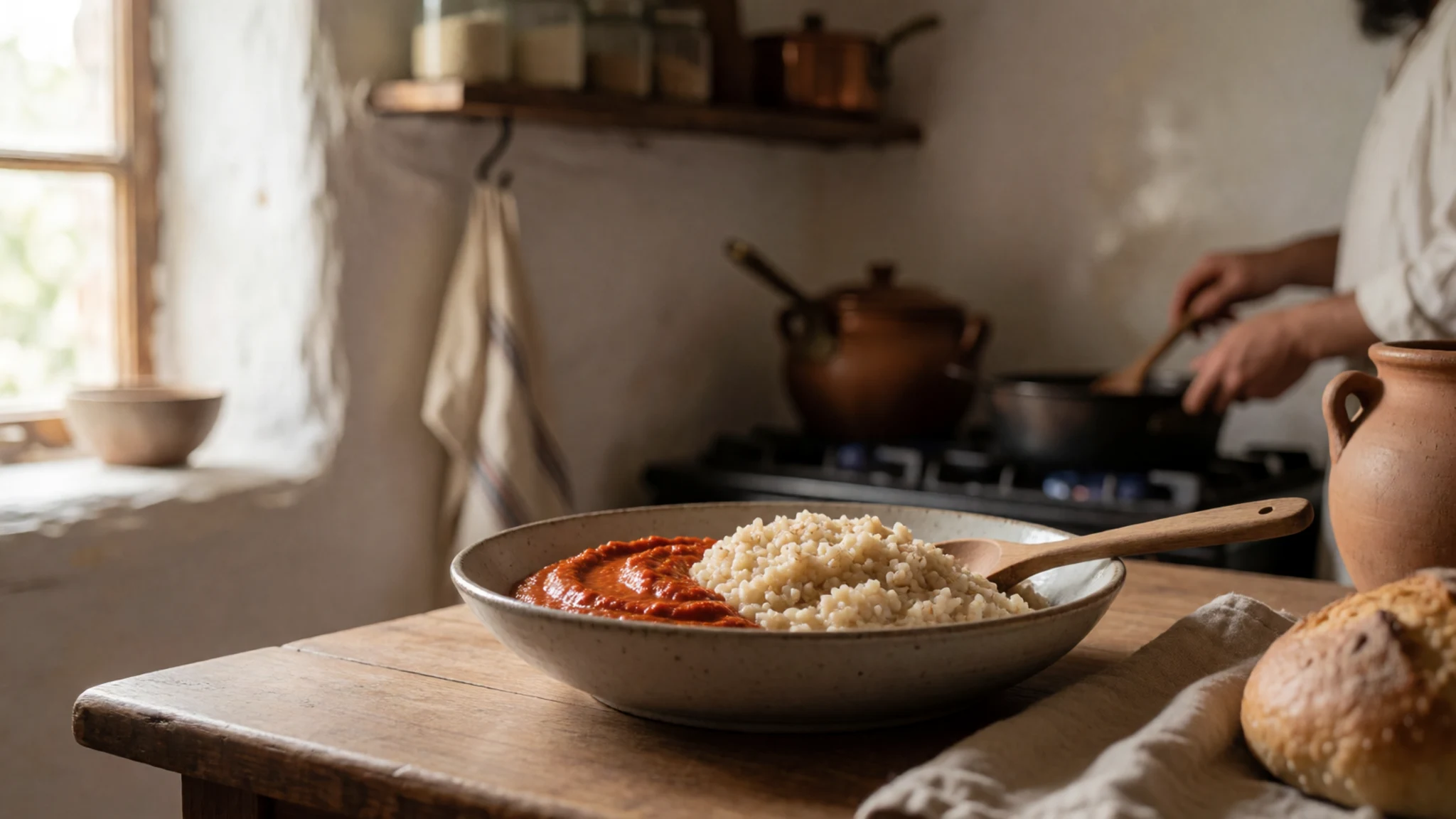
- Lavash with cheese and herbs — Village bakeries and small food stalls in Goris and nearby villages
Thin flatbread baked on the walls of a clay oven, eaten fresh and often wrapped around fresh cheese and green herbs. It turns up with almost every meal, and the best versions are the ones still warm from the oven. - Gata — Bakeries and market stalls in Goris, plus homes if you are invited
A sweet, buttery bread or pastry, sometimes filled with a sugar and flour mixture, usually enjoyed with tea or coffee. Regional bakers have their own versions, and it travels well in a bag as a snack for the gorge walk. - Borscht — Everyday cafés and canteen-style eateries in Goris
A beetroot-red vegetable soup that came to Armenia through Soviet-era shared cooking and is a fixture on menus. It is a simple, filling dish for a cool day, usually served hot with bread and sometimes sour cream.
Plan it
Best time. May–June and September–October, when the walking is comfortable and the slopes are green or golden; July–August can be hot on the exposed cliffs, and winter brings cold, icy paths. The source climate note is warm, fairly humid and mild-wintered, with 450–700 mm of rain a year.
How long. 1
Getting there. Fly to Yerevan's airport, then travel south by road through Syunik to Goris (a long day by bus, minibus or hired car); Khndzoresk lies a short drive from Goris by taxi or hired car. Check current regional travel advice before setting out.
Budget. low
Tips
- Allow at least half a day to walk the old cave quarter and the bridge, and start early to avoid midday heat
- Carry water and some cash, since stalls are few and card machines are not guaranteed
- Wear shoes with a good grip; the rock and paths turn slippery after rain or frost
- Use Goris as a base for rooms and meals, and arrange a taxi back in advance
- Check visa rules before you travel; many nationalities, including the UK, are visa-free for stays of up to 180 days per year, and others can get a visa on arrival at Yerevan airport
Etiquette
- Dress modestly for the church and the memorial khachkar
- Ask before photographing villagers or going into anyone's property
- Take rubbish with you and do not climb on fragile walls or carved stones
Nearby
Sources
- Wikidata Q2640140 (CC0)
- Wikipedia: Khndzoresk (rev 1376412224) (CC BY-SA 4.0)
- Wikivoyage: Armenia (rev 5424247) (CC BY-SA 4.0)
- Photo 01, Vahagn Grigoryan (CC BY-SA 4.0)
- Photo 02, Satenik Avetisyan (CC BY-SA 4.0)
- Photo 03, Arian Zwegers (CC BY 2.5)
- Photo 04, Marcin Konsek (CC BY-SA 4.0)
- Photo 05, Arman musikyan (CC BY-SA 4.0)
- Photo 06, Արարատ Թրվանց (CC BY-SA 4.0)
- Photo 07, Robot8A (CC BY-SA 4.0)
- Photo 08, Արարատ Թրվանց (CC BY-SA 4.0)


