Etchmiadzin
Etchmiadzin, Armenia
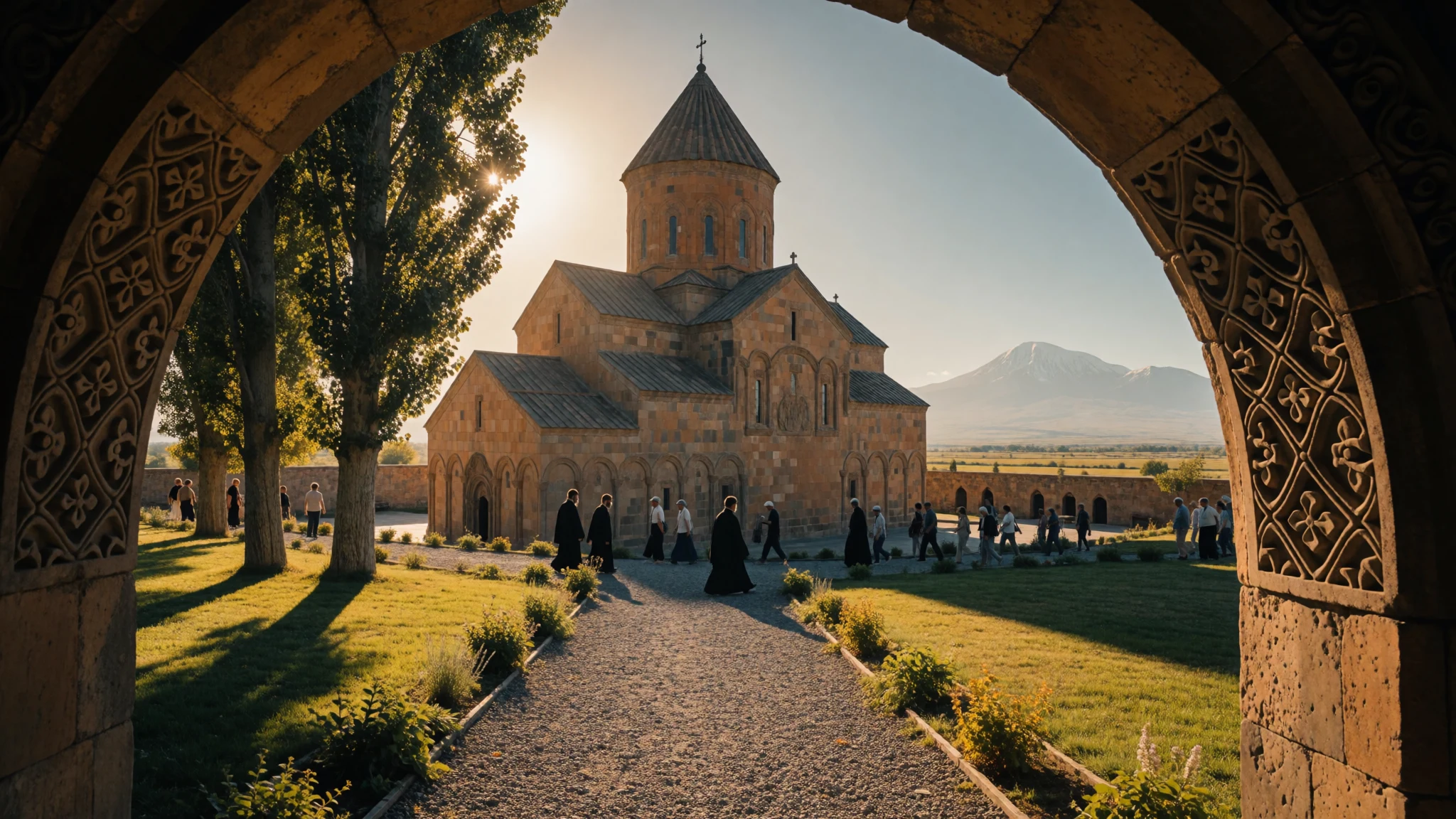
Etchmiadzin is where Armenia's national church has its headquarters, and its cathedral is an easy half-day from Yerevan.
The place
Etchmiadzin is the spiritual centre of the Armenian Apostolic Church. It lies in a flat, farmed plain in a town that is also called Vagharshapat or Ejmiatsin, a short minibus ride from Yerevan. The cathedral stands inside a walled compound of lawns, chapels, seminary buildings, a museum and a treasury. The church runs the whole complex as the Mother See of Holy Etchmiadzin, and the Catholicos, the church's supreme head, has been based here since 1441.
The cathedral is a compact, cross-shaped building of pale stone, crowned by a central dome. Its outline is modest compared with the great domed churches of Istanbul or Rome. What gives it weight is age and function: it is a working cathedral, with services, clergy in black robes, pilgrims lighting candles and seminary students crossing the courtyards. It is not a preserved relic. The cathedral is listed as part of a UNESCO World Heritage property, together with other early churches nearby.
The town around it is ordinary and pleasant: wide streets, a market, bakeries, and a few churches within walking distance. Most visitors come as a half-day trip from the capital, so the compound is busiest in late morning and on Sundays and feast days, when worshippers arrive in large numbers. Summers on this plain are hot and exposed, and there is little shade in the open courtyards, so early or late in the day is kinder. The setting is calm rather than dramatic. The pleasure here is in the details of the stonework, the sound of the liturgy and the sense of a church that has been in continuous use for a very long time.
Its story
Etchmiadzin's foundation story begins with King Tiridates III, whose kingdom of Greater Armenia adopted Christianity as its state religion in the early fourth century. Church tradition credits the patron saint, Gregory the Illuminator, with founding the cathedral, placing it between 301 and 303, though scholars have argued for other dates. The town was then the royal capital, known as Vagharshapat, and the church rose close to the palace.
The best-known legend comes from the chronicler Agathangelos. Gregory dreamed of a radiant figure coming down from heaven and striking the ground with a hammer to mark where the church should stand. Armenians still remember this as the origin of the name Etchmiadzin, usually read as 'the descent of the only-begotten'.
Excavations in the 1950s under the main altar turned up an Urartian stone stele from the eighth to sixth centuries BC and an amphora linked to a fire temple. Together they suggest that the spot was sacred long before Christianity arrived, which fits the tradition that the church replaced a pagan temple.
The core of today's building dates to the late fifth century, when Vahan Mamikonian rebuilt it after Persian invasions had damaged it. The seat of the Catholicos later moved away, and the cathedral went through centuries of neglect before becoming the headquarters of the church again in 1441. In 1604 Shah Abbas I of Persia plundered it, removing relics and stones to New Julfa in an attempt to weaken Armenians' bond with their homeland. Restorations have followed ever since.
What to see
- Etchmiadzin Cathedral — Etchmiadzin compound
The main church sits at the centre of the compound. Look at the dome, the carved reliefs on the walls and the altar area, where excavations found traces of earlier worship. Services give the building its atmosphere, so visit while one is running if the clergy allow it, and move quietly.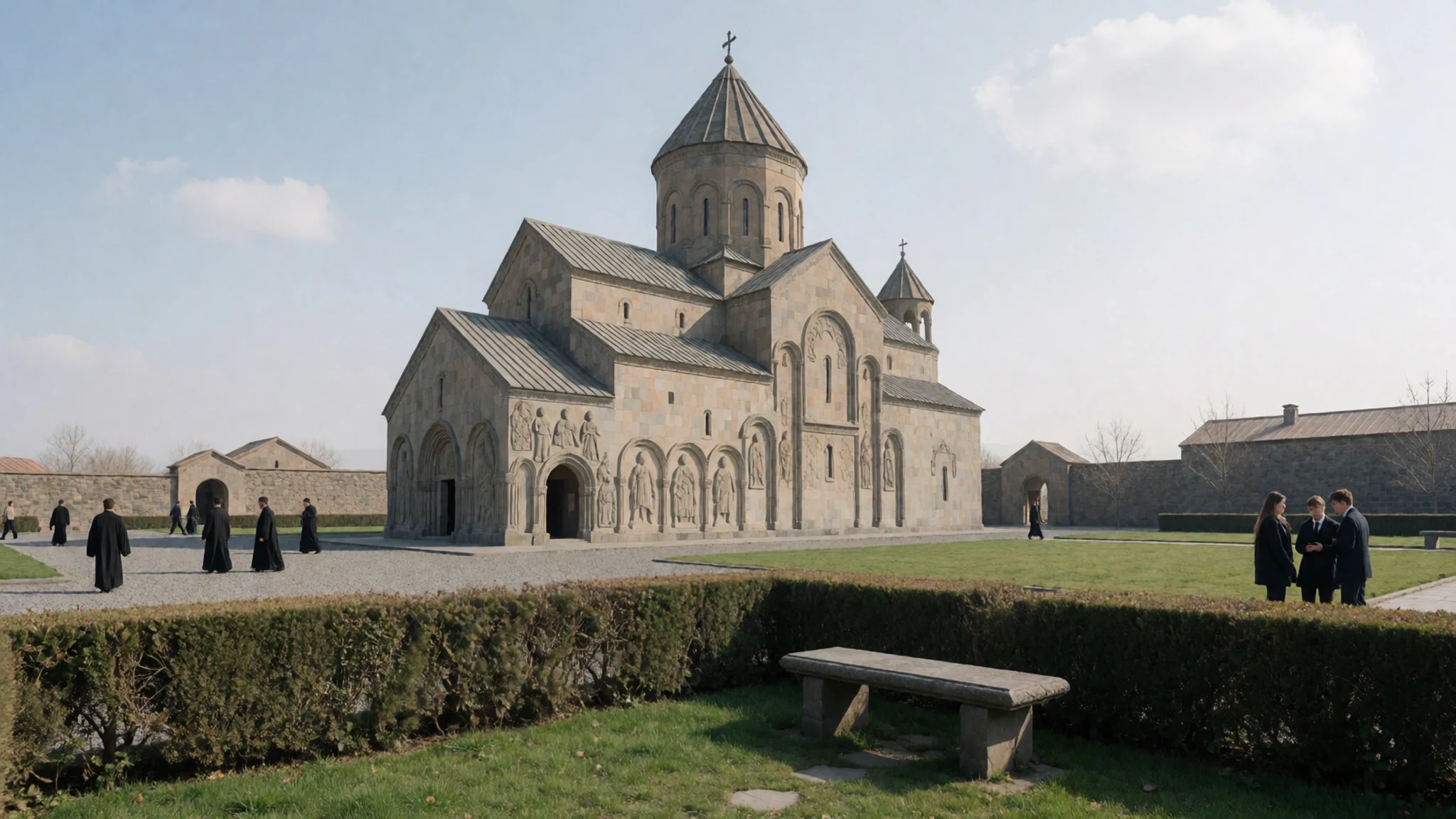
- St Hripsime Church — north-east edge of town
A short walk from the main compound, this seventh-century church is admired for its tall interior and the clarity of its plan, which later Armenian builders drew on. It is quieter than the cathedral and a good place to see how the early church architecture of the region worked.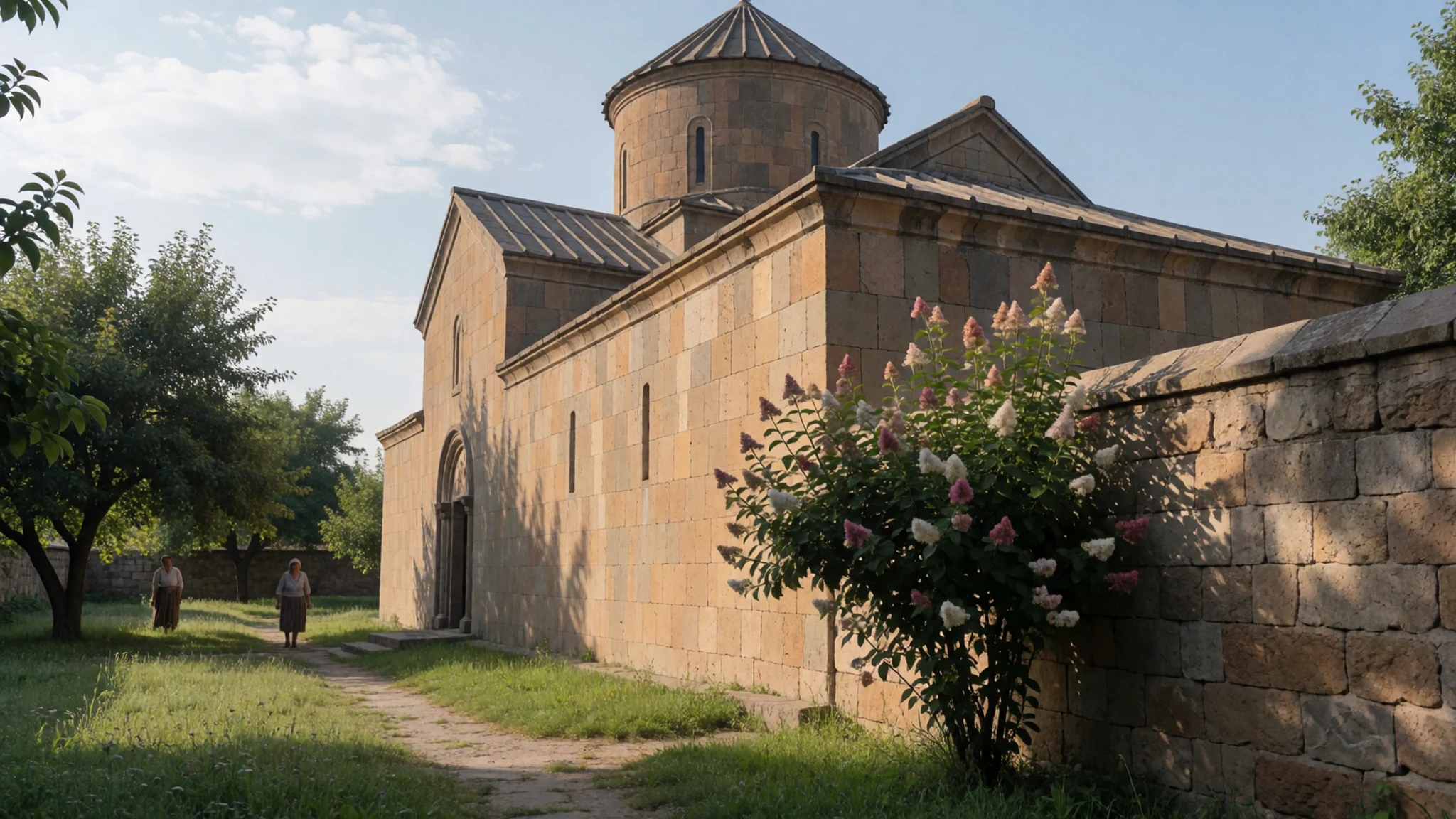
- St Gayane Church — south of the compound
Gayane is a smaller church with an arcade at its entrance, a few blocks south of the main compound. It honours one of the women martyred in the story of the conversion, linked to Hripsime. The courtyard is calm and often empty, which makes it a pleasant pause.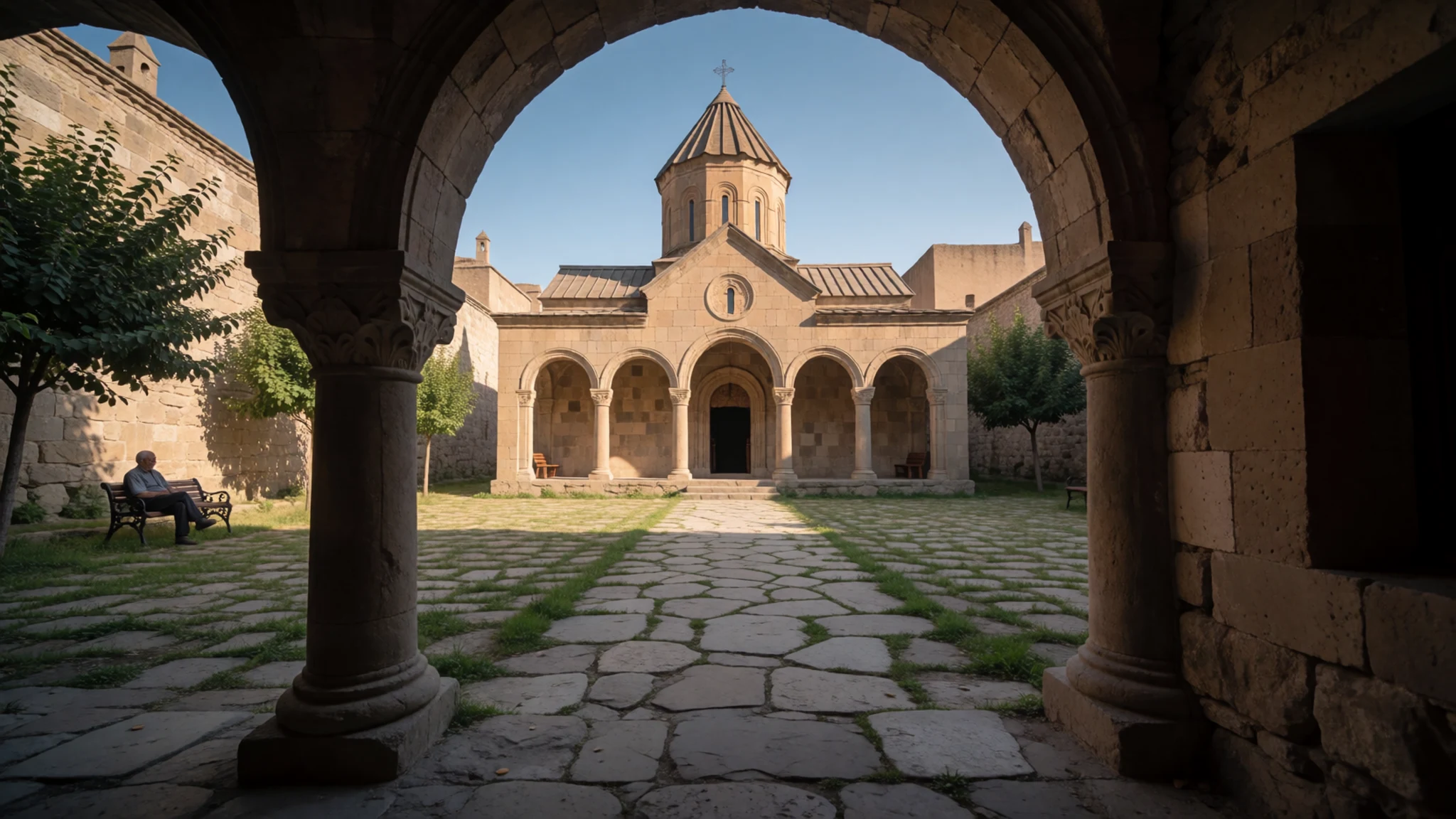
- Zvartnots ruins — between Etchmiadzin and Yerevan
The remains of a seventh-century cathedral stand on a platform in open ground near the airport road, with a small museum beside them. The scattered columns and carved capitals give a sense of a very ambitious circular church. It is exposed to the sun, so bring a hat in summer.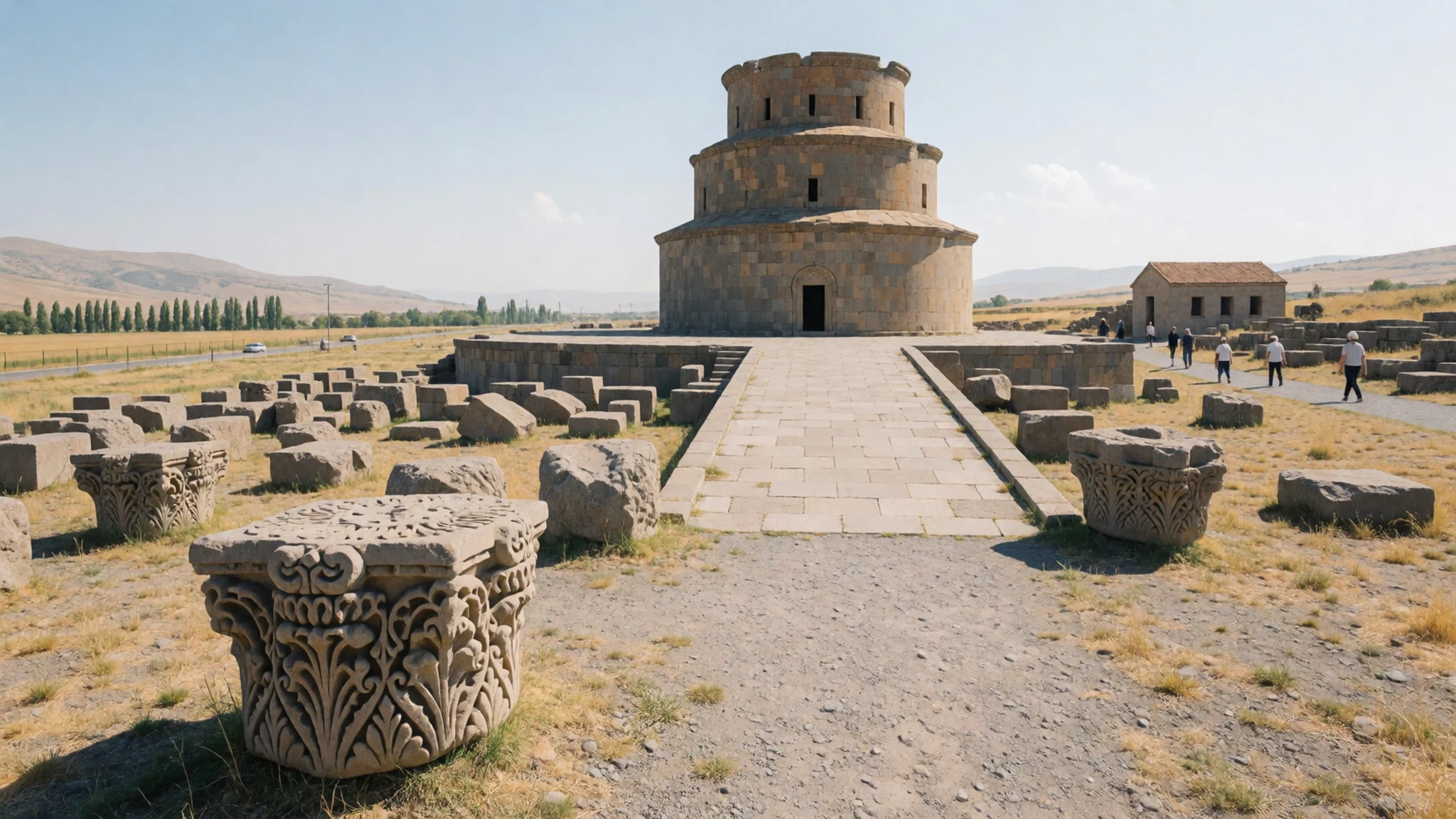
- Manoogian Treasury House — Etchmiadzin compound
Built in 1982, this treasury inside the compound displays church objects, including crosses, vestments, manuscripts and relics. It helps explain how the church has kept hold of its heritage through invasions and upheaval. Check the official site for opening arrangements before planning around it.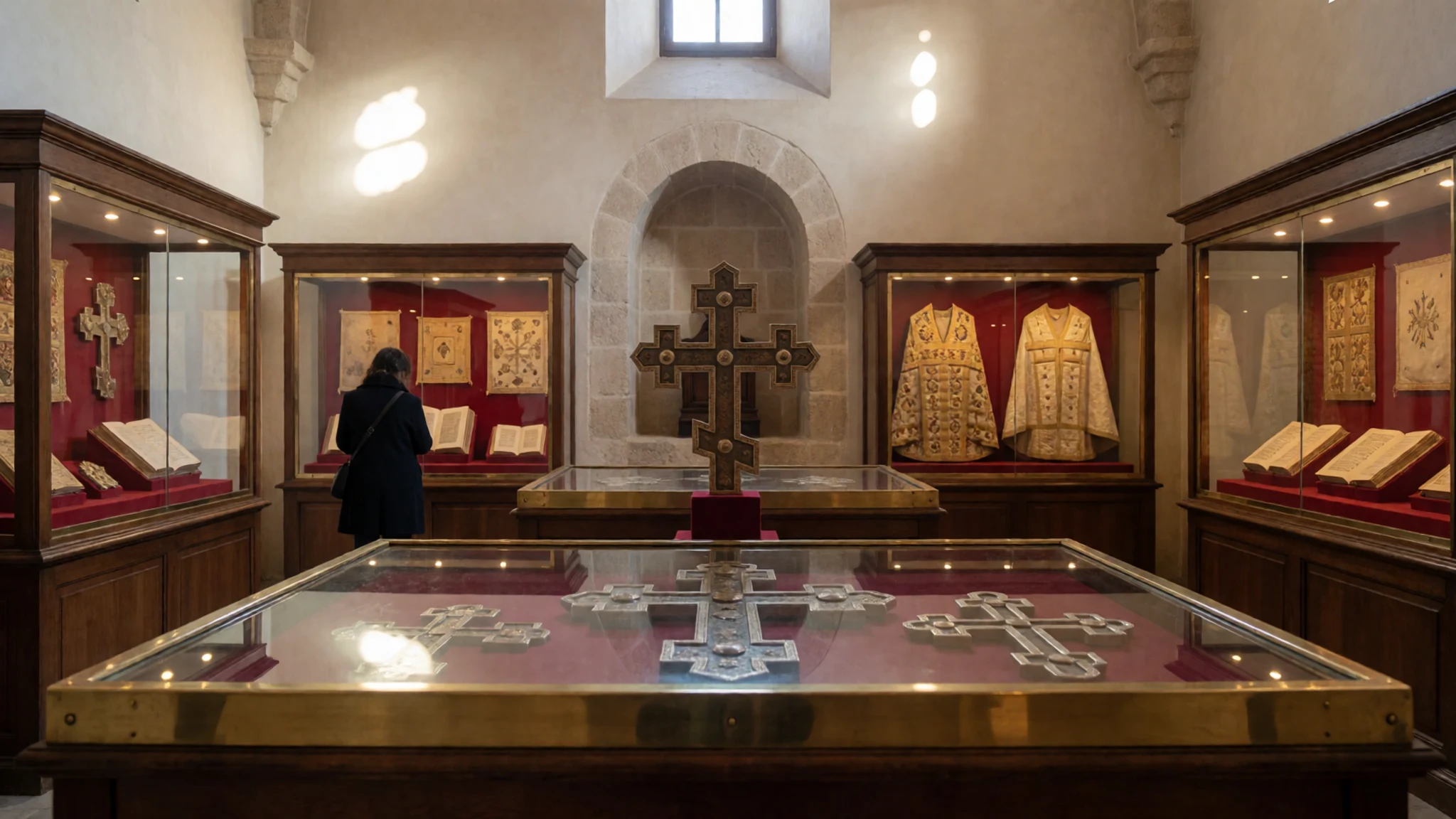
Culture
Etchmiadzin is a living religious centre, and its culture is that of the Armenian Apostolic Church, one of the oldest Christian traditions in continuous practice. Armenians take pride in being the first state to adopt Christianity, and that pride is visible here in the pilgrims who come to pray, light candles and mark baptisms and weddings.
The liturgy is sung in Classical Armenian (Grabar), with choral music that is plain, resonant and unaccompanied by instruments. Even a short visit during a service is memorable, whether or not one follows the words. Worshippers cross themselves, kiss crosses and icons, and often bow towards the altar. Feast days bring crowds, families in their best clothes and a festive mood in the courtyards.
Armenian khachkars, carved stone crosses, appear in and around the compound and across the country. They are used as memorials, as markers of faith and as works of craft, each carved with its own lacework of patterns. Visitors can look at them closely, but they are sacred objects and are not for climbing on or leaning against.
Hospitality matters in everyday life here. Visitors who are polite and curious usually find clergy, guides and townspeople willing to explain things, though the compound is a place of worship first and a sight second. When a service is under way, speak softly, keep phones silent and ask a steward before taking photographs of worshippers or clergy, and cover your shoulders and knees when entering any church.
What to wear
Traditional Armenian dress in Etchmiadzin and the surrounding region is now mostly seen at festivals, weddings, folk dance performances and church celebrations. Women's costume historically included a long dress called a taraz, often layered with an embroidered apron, a fitted jacket and a headdress or veil, with fabrics ranging from wool and cotton to silk and velvet. Men wore a wool coat called a chokha with a belt and wide trousers, often with a tall hat made of lambskin. Embroidery and decorative braid were important marks of status and place.
Today people in Etchmiadzin dress much as they do in Yerevan: jeans, shirts, dresses, jackets and trainers. Dress is smart-casual and slightly conservative in town. Clergy and seminarians stand out in long black robes and hoods, and on feast days families dress up for church. Folk costume appears at celebrations and in craft displays.
Visitors should dress for both the weather and the church. Summers are hot, so light, breathable fabrics help, along with a hat and sunscreen for the open courtyards. Winters can be cold, so a warm coat is useful. Inside churches, cover shoulders and knees. Women are often expected to cover their heads, so carry a light scarf, and men should remove hats. Wear comfortable flat shoes, as the compound has long stretches of paving and gravel, and the walk between churches adds up.
What to eat
- Etchmiadzin kufte — the town market (shuka) and local eateries
A local speciality made from finely pounded beef, formed into a large ball, boiled and served with melted butter. It is rich and filling. Ask for it at the town market, known as the shuka, or at traditional eateries nearby.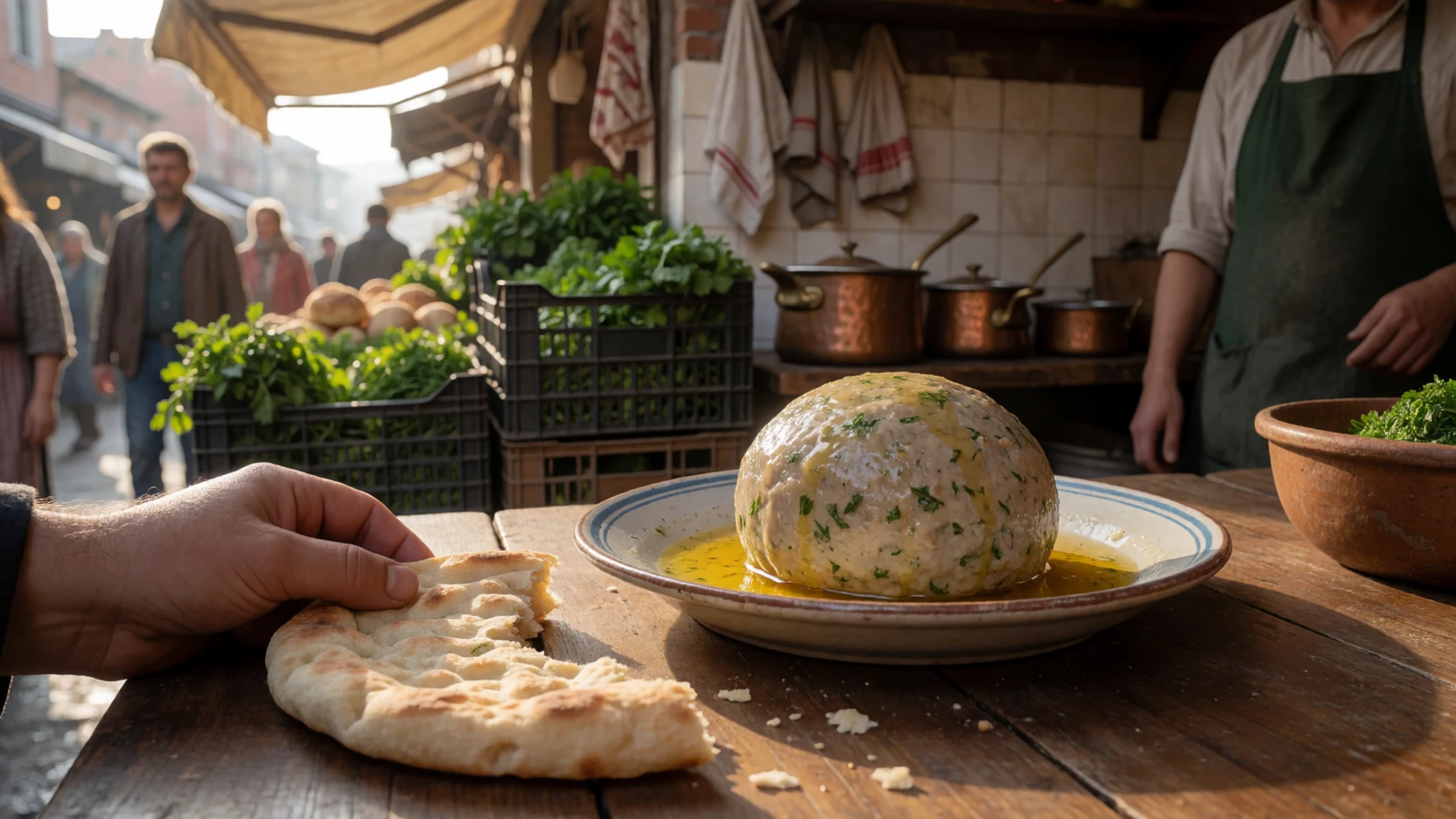
- Khorovats — grill restaurants on the main streets
Armenian barbecue, usually pork, lamb or chicken cooked on skewers over charcoal and served with grilled vegetables and flatbread. It is a standard family meal and works well after a morning of sightseeing. Look for grill restaurants along the main roads.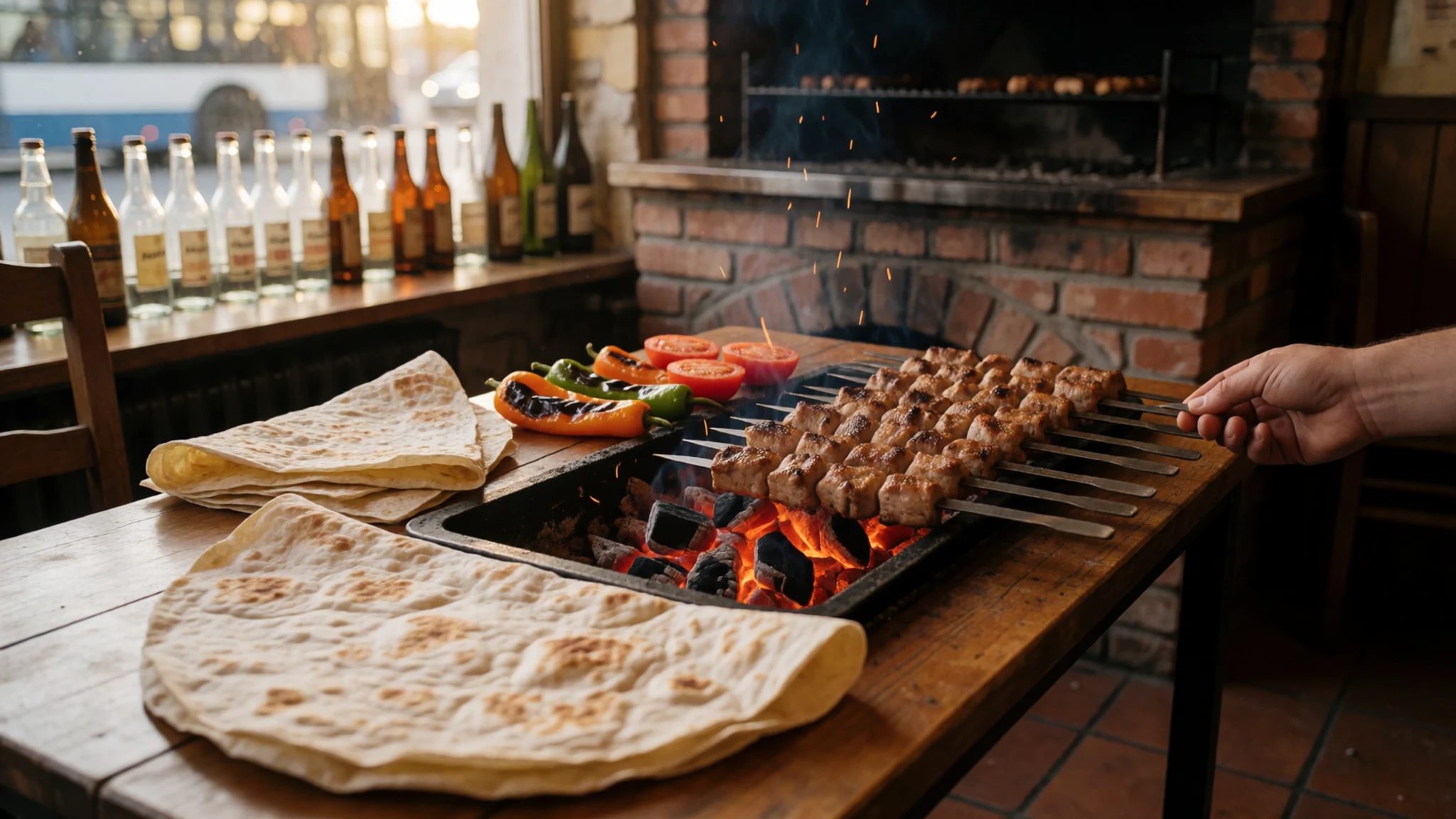
- Lavash — neighbourhood bakeries and the market
A thin, soft flatbread baked against the walls of a clay oven. It is eaten with cheese, herbs, meat and almost everything else on the table. Fresh sheets are the best, so find a neighbourhood bakery and buy it warm. - Tolma — traditional eateries near the compound
Vine leaves, or sometimes cabbage or other vegetables, stuffed with spiced minced meat and rice and cooked slowly. Served with yoghurt, it is a home-style dish that appears at family tables and in many traditional restaurants. - Gata — bakeries and market stalls
A sweet, flaky bread with a buttery sugar filling, baked in rounds and cut into wedges. It goes well with strong coffee or tea. Bakeries and market stalls sell it, and it travels well as a snack or gift.
Plan it
Best time. April–May and September–October, when days are warm and the courtyards are comfortable. Summers on this plain are hot and sunny with little shade, and winters can be cold, though the compound is quieter then.
How long. 1
Getting there. Fly to Yerevan's international airport, then take a marshrutka (shared minibus) from the Kilikia bus station in Yerevan to Etchmiadzin. These run frequently and the ride takes about half an hour. The route ends near the cathedral complex, and the Zvartnots ruins are on the way if you want to stop.
Budget. low
Tips
- Arrive in the morning, before the tour groups and the heat, and allow time to see more than one church.
- Sundays and feast days are the most atmospheric and the busiest, so choose according to whether you want services or space.
- Carry some cash for the market and small eateries, and check the official site (https://www.armenianchurch.org/) for treasury and museum arrangements.
- Bring water and a hat in summer, as the compound has little shade.
- Plan to return to Yerevan afterwards, since onward connections to other places usually go through the capital.
Etiquette
- Cover your shoulders and knees in churches, and carry a scarf if you are a woman.
- Keep voices low during services and ask before photographing worshippers or clergy.
- Do not touch or lean on khachkars or carved stonework.
Nearby
Sources
- Wikidata Q1294648 (CC0)
- Wikipedia: Etchmiadzin Cathedral (rev 1385203206) (CC BY-SA 4.0)
- Wikivoyage: Echmiadzin (rev 5279684) (CC BY-SA 4.0)
- Photo 01: Эчмиадзинский кафедральный собор, Well-read MountainMan (CC BY-SA 4.0)
- Photo 02: Etchmiadzin Cathedral, Yerevantsi (CC BY 4.0)
- Photo 03: Ejmiatsin cathedral aerial, Yerevantsi (CC BY-SA 4.0)
- Photo 04: Etchmiadzin Cathedral aerial, Yerevantsi (CC BY 4.0)
- Photo 05: Plan of Ejmiatsin, Ghevont Alishan (Public domain)
- Photo 06: Etchmiadzin Cathedral plan, H. F. B. Lynch (Public domain)
- Photo 07: Relief of Gregory the Illuminator, Rita Willaert (CC BY 2.5)
- Photo 08: St Gregory the Illuminator's Vision, Yeghishe Tadevosyan (Public domain)


