Khor Virap
Khor Virap, Armenia
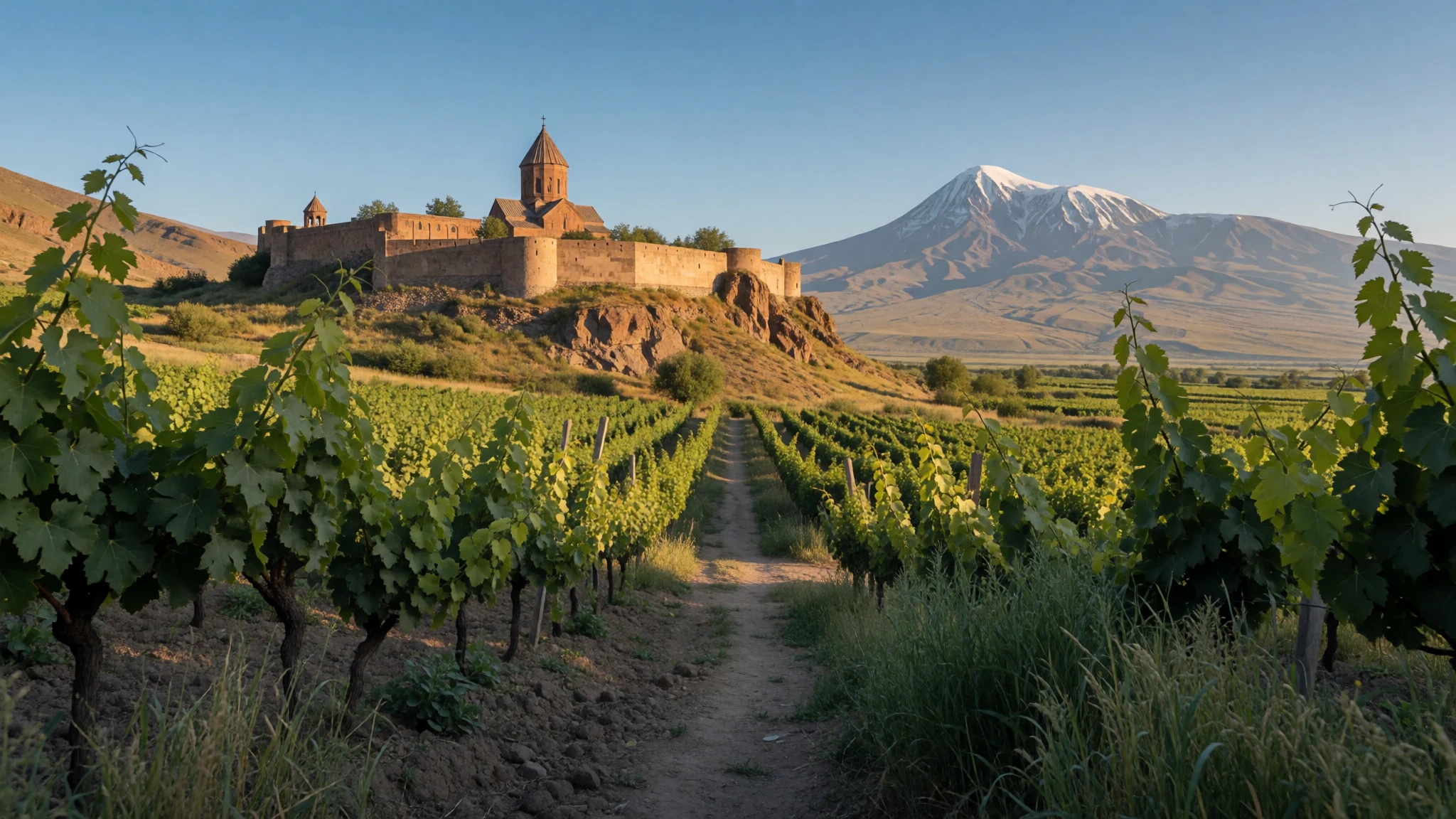
Khor Virap is a small hilltop monastery where Armenia's conversion story began, set against the sharpest view of Mount Ararat you can get from Armenian soil.
The place
Khor Virap stands on a low hill in the Ararat Plain, in southern Armenia, so close to the Turkish border that the frontier fence is part of the view. The name means 'deep dungeon' in Armenian (Խոր Վիրապ), and the monastery is built over the pit that gave it that name. Around the hill the plain is flat, dusty and farmed: orchards, vineyards, vegetable plots and the village of Pokr Vedi at the foot of the slope. Beyond the fields, across the border, Mount Ararat rises as a huge snow-capped cone that dominates the horizon on clear mornings. The compound itself is modest, a walled enclosure of pale stone with the church of St Astvatsatsin (Holy Mother of God) at its centre, a few chapels and the cells where monks once lived. Khor Virap has served as a theological seminary and as a residence of the Catholicos, the head of the Armenian Church. The facts record a foundation around 601, though the buildings seen today are later. Services are still held, and the site works both as a pilgrimage place and as a fixed stop on day trips from the capital. Expect tour coaches, souvenir kiosks near the entrance and Armenian families visiting at weekends. The ruins of ancient Artaxata lie on the plain nearby, and the modern town of Artashat is the closest place for supplies. Most travellers stay in Yerevan and come out for the day.
Its story
Khor Virap owes its fame to a prisoner. By Armenian tradition, Gregory, later known as the Illuminator, was a Christian in the service of King Tiridates III, a follower of the old gods. Gregory refused to make offerings to the goddess Anahit, and the king also learned that Gregory's father had been behind the death of the royal father. The king had Gregory bound and dropped into a pit near the capital, Artaxata, which was used as a royal prison, and then largely forgot him. Gregory is said to have survived 13 years there. He was eventually brought out, the king converted, and Gregory became his religious mentor. Together they spread the new faith, and Armenia's official adoption of Christianity is traditionally dated to 301. Artaxata had been made a capital around 180 BC by King Artashes I, and some accounts link Hannibal, a refugee from Rome's pursuit, to its planning. The court later moved to Dvin, and Artaxata was ruined by Persian attack. A chapel was raised over the pit in 642 by Nerses III, called the Builder, and the complex was rebuilt several times in the centuries after. The larger church of St Astvatsatsin, which wraps around the older chapel and the monastic buildings, dates to 1662. Pilgrims still come to climb down into the pit where Gregory is remembered.
What to see
- Khor Virap Monastery and the pit — Pokr Vedi, Ararat Province
The compound on the hill is the reason for the trip. Walk through the gate to the church of St Astvatsatsin, then find the chapel where a narrow ladder drops into the pit. It is cramped, dark and often queued, so go early and be patient. The walls make a good circuit afterwards.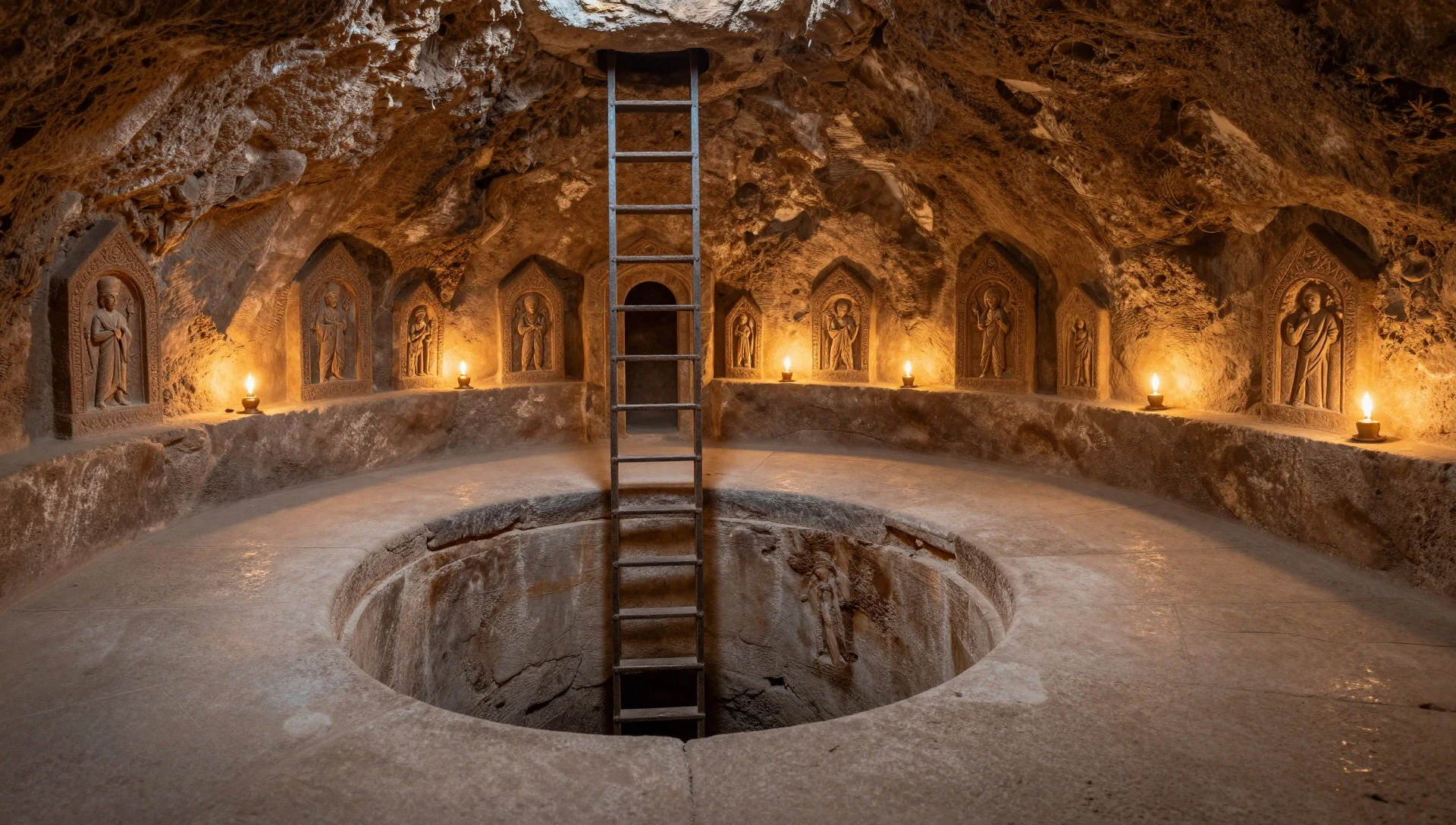
- Mount Ararat from the walls — Khor Virap hilltop
The best view of Ararat is from the monastery's terrace and outer walls, with the church in the foreground and the mountain's twin peaks behind. Haze often hides it by midday, especially in summer, so morning light and cooler months give the clearest picture. The border fence runs across the plain below.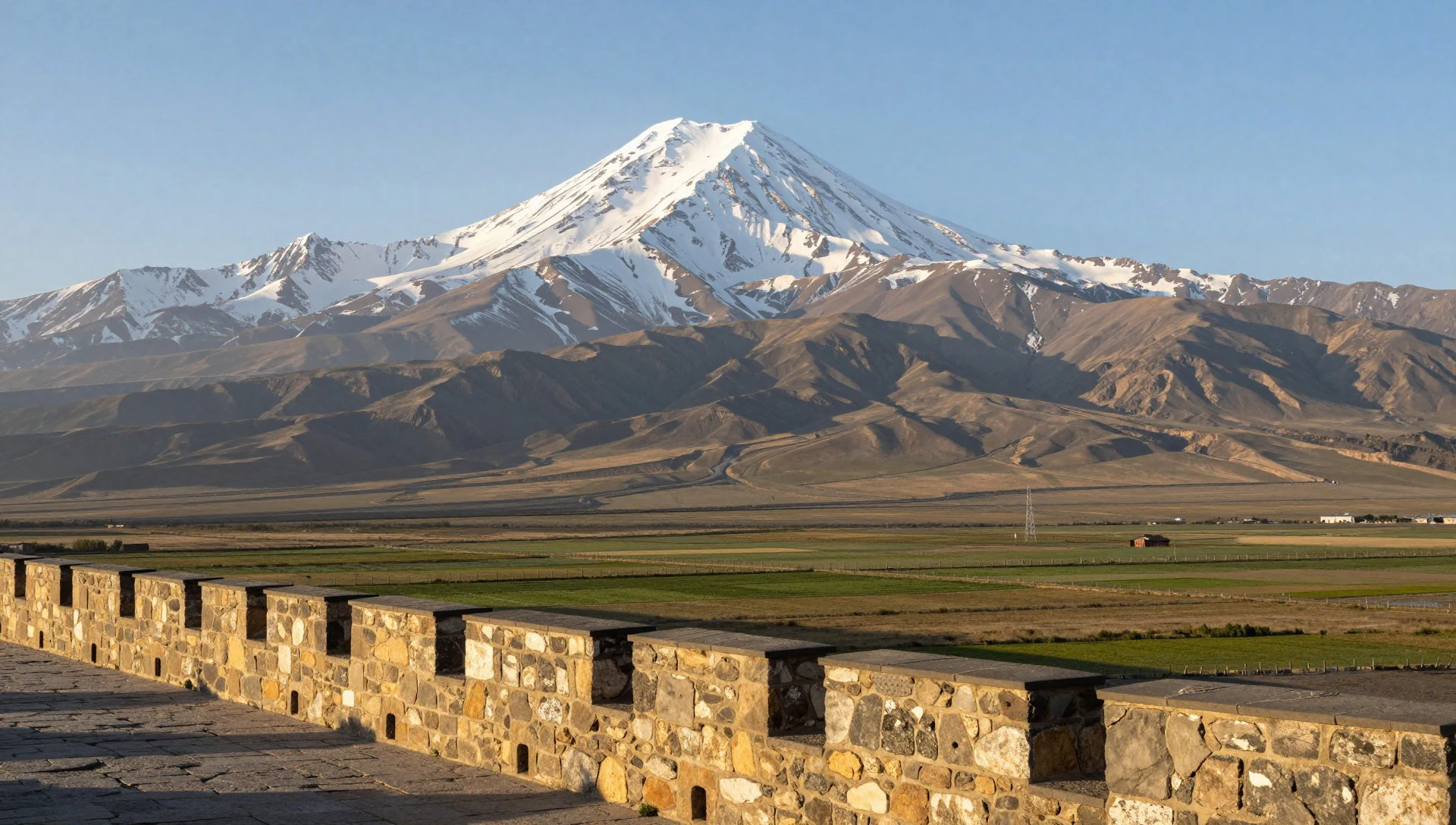
- Ruins of Artashat — Ararat Plain, near Khor Virap
Low mounds and scattered stones on the plain mark the ancient capital Artaxata, a short walk or drive from the monastery. Little is standing, so this suits people who enjoy empty landscapes. A local man on a bicycle guards the area against looters and is friendly to visitors who touch nothing.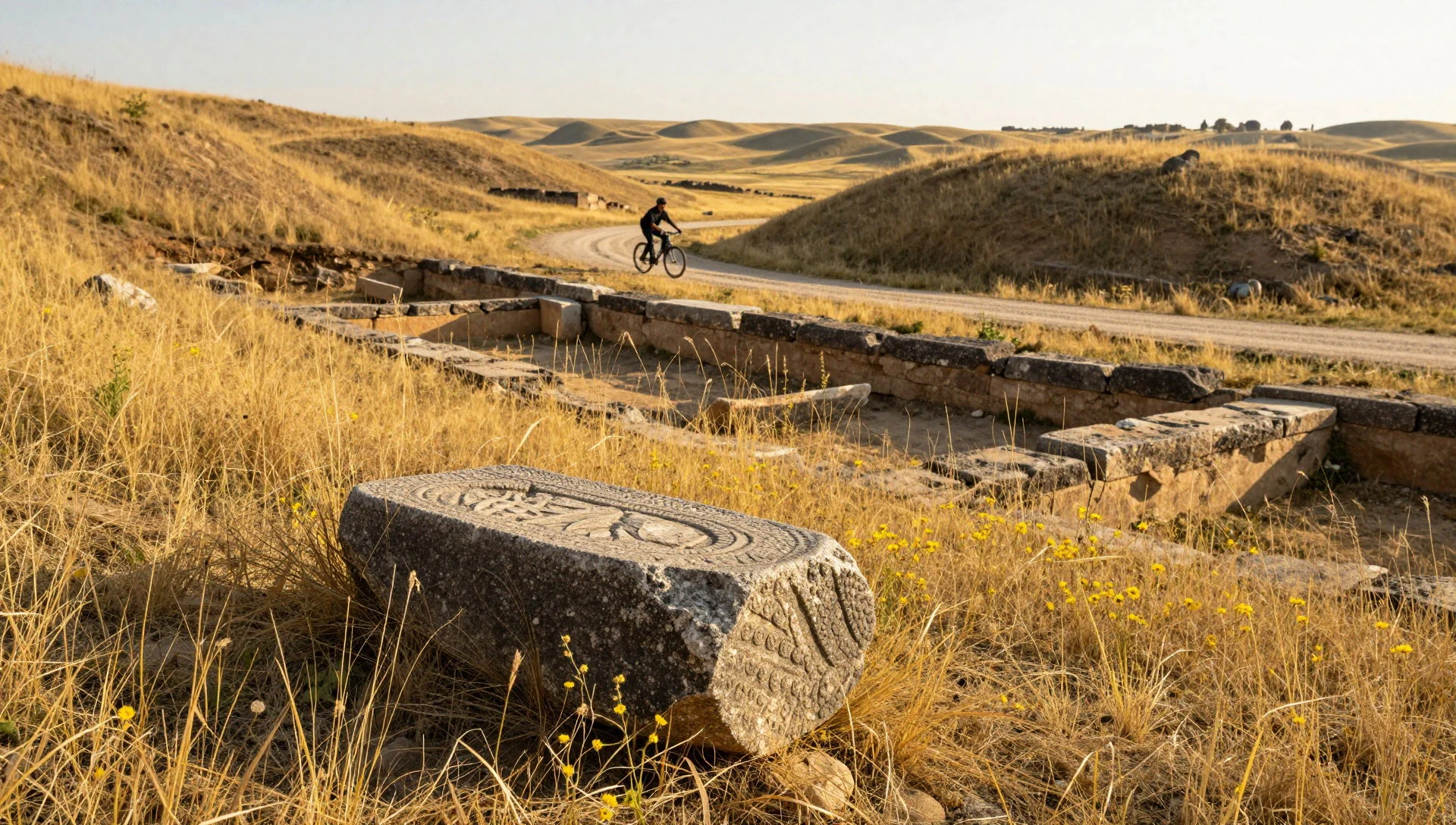
- Dvin excavations — North of Artashat
Dvin was the Armenian capital after Artaxata, and the excavated site lies north of the monastery. The entrance area holds carved capitals and column bases, and the footings of a large cathedral from late antiquity show how big the building once was. It is quiet and best with a driver.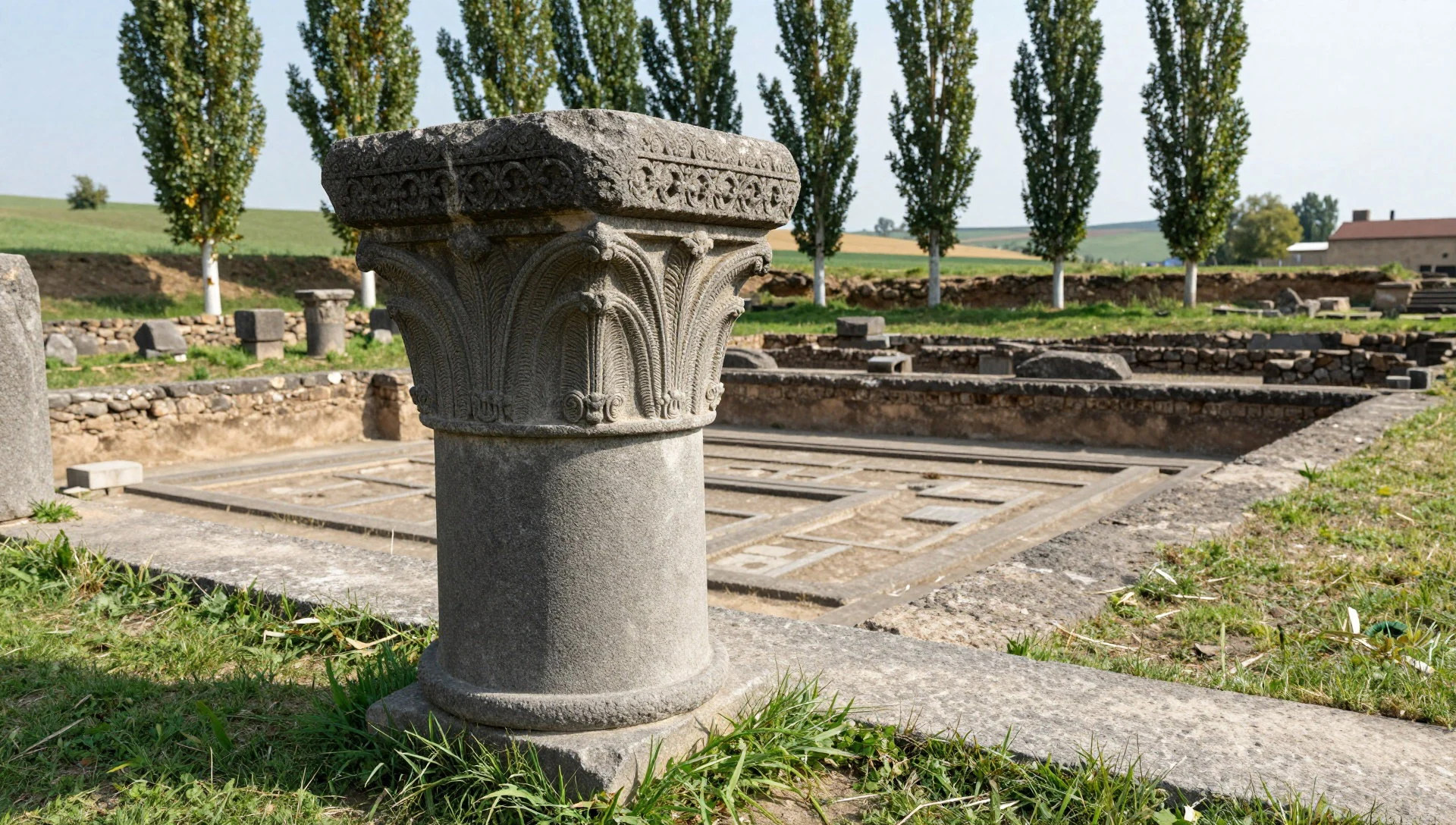
- Khosrov Forest State Reserve — Ararat Province hills
The Khosrov reserve is a protected area of dry hills and woodland in the same province, with a cave also worth asking about locally. It offers a very different landscape from the open plain and suits walkers who want a half-day away from the churches. Check access and guiding arrangements before going.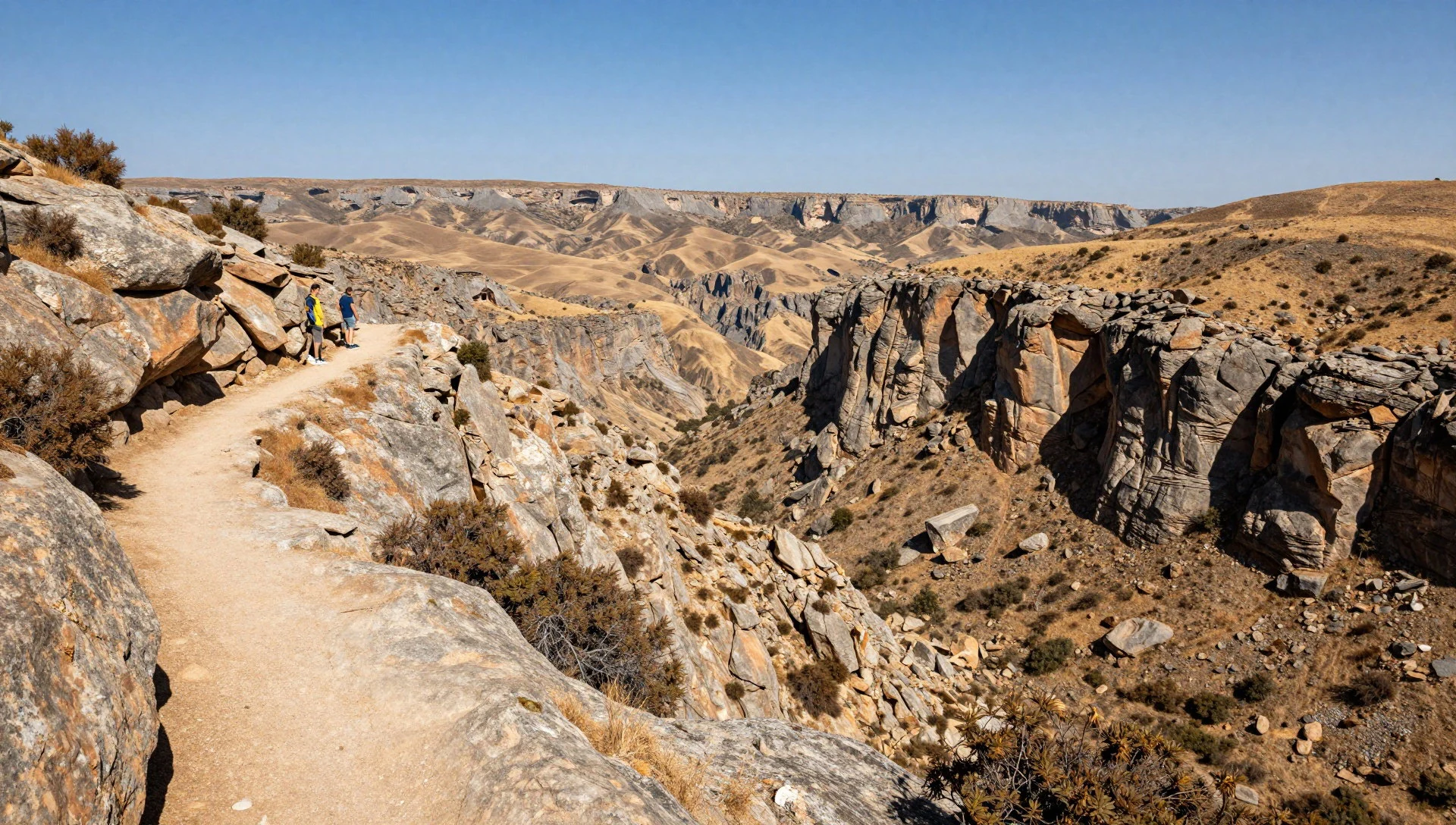
Culture
Khor Virap is a working pilgrimage place, and Armenian visitors come for reasons that go beyond sightseeing. Families bring children here for baptism, and couples sometimes come after a wedding to offer a matagh, a ritual animal sacrifice whose meat is shared with others. The pit connects the site to the idea of light: on New Year's Day a flame is carried from Khor Virap to the Illuminator's cathedral in Yerevan, and the anniversary of Gregory's release is marked there too. In one well-known ceremony, the Catholicos Garegin II went down into the pit and climbed out holding a lit candle, a gesture meant to recall the light Gregory is said to have brought to Armenia. Visitors often release doves from the hill in the hope that they will fly towards Mount Ararat, which Armenians see as a national symbol even though it now lies across the border. Souvenir kiosks sit near the entrance, and the atmosphere shifts between devotion and busy tourism depending on the hour. Services in the church follow the Armenian Apostolic tradition, with candles lit by visitors at the door. In the pit chapel and the church, cover your shoulders and knees, keep your voice low, and ask before photographing anyone who is praying.
What to wear
Khor Virap sits in a region where traditional Armenian dress now appears mostly at festivals, folk performances and weddings. Women's costume, known as taraz, is a long gown often made of silk or velvet with embroidered edges, worn with a small cap and veil. Men's dress centres on the chokha, a fitted wool coat with a belt. Heavy embroidery and woven trims mark regional styles. Day to day, people in Ararat Province dress practically: jeans, shirts, light jackets and sturdy shoes for work in the fields, with smarter clothes for church and family gatherings. Younger people from Yerevan follow European street fashion. Older women at the monastery often cover their hair with a scarf. For visitors, the plain has a harsh climate: hot, dry and shadeless in summer, cold and windy in winter. Bring a hat, sunglasses and sun cream in summer, and a warm layer in spring and autumn, when mornings on the hill can be cool. Wear closed, grippy shoes, because the hill path is stony and the pit ladder is steep. For the church, choose clothes that cover shoulders and knees, and keep a light scarf in the bag; women do not need to cover their hair, but many do so inside as a courtesy.
What to eat
- Khorovats — Roadside restaurants on the Yerevan–Artashat highway
Armenian barbecue of pork, lamb or chicken cooked over coals on skewers, served with grilled vegetables, herbs and flatbread. Roadside restaurants along the highway from Yerevan to Artashat specialise in it, and families order it by the kilo for long lunches.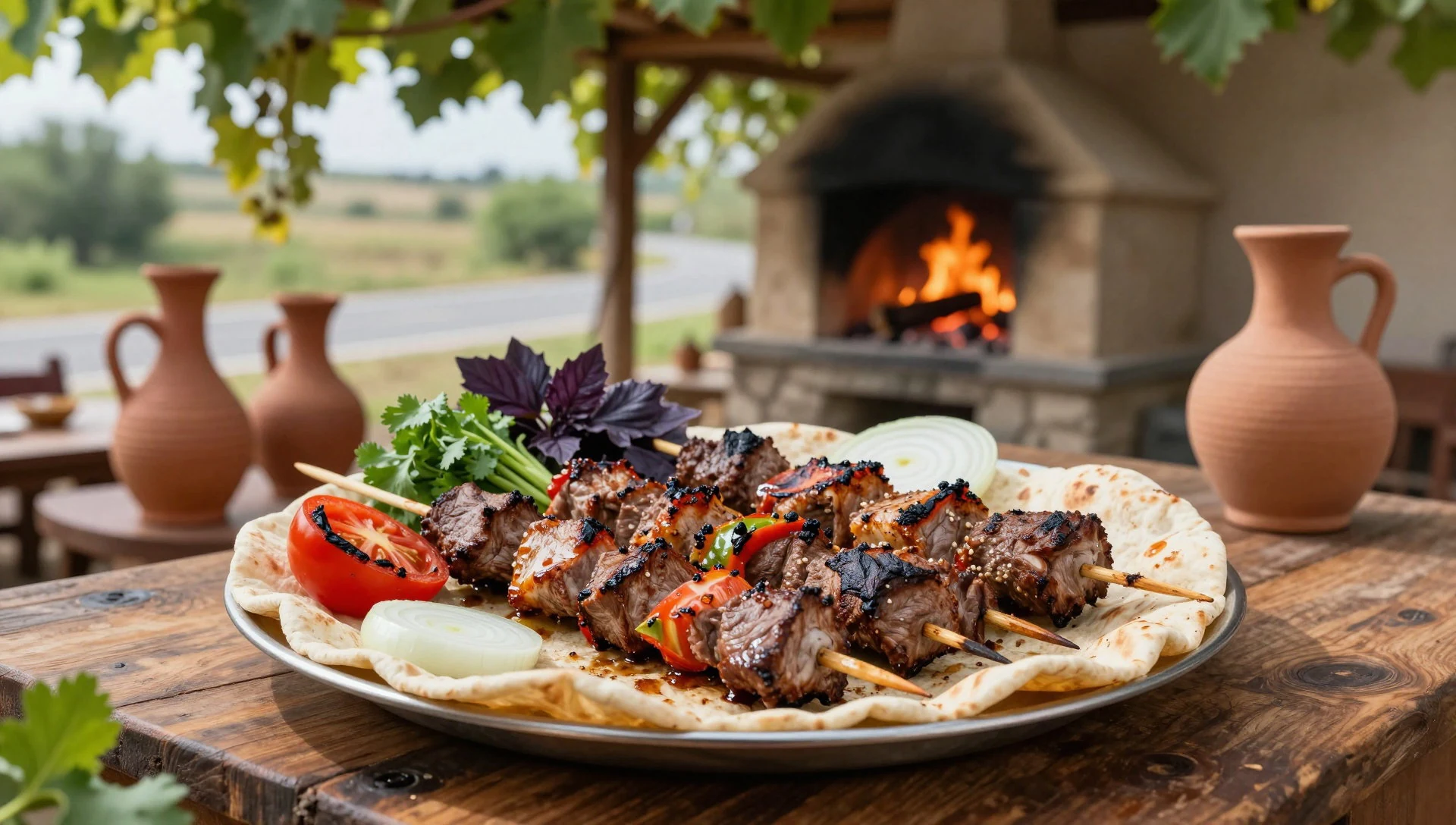
- Lavash — Village bakeries and roadside stalls around Artashat
Thin, stretchy flatbread baked against the wall of a clay oven called a tonir. It is eaten with cheese, herbs and tomatoes, or used to wrap kebabs. Village bakeries and roadside stalls near Artashat sell it warm, and it is also a handy picnic base.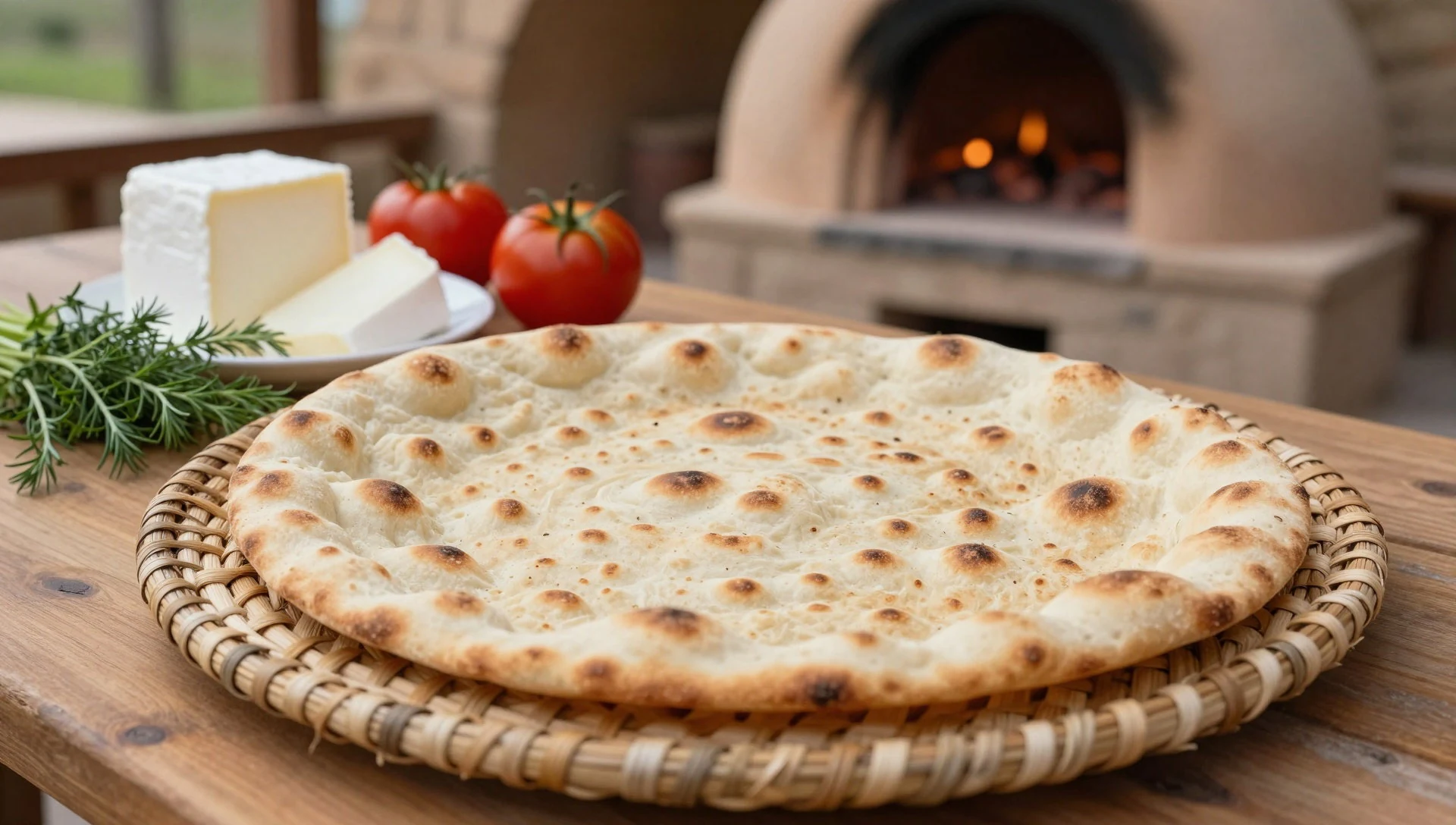
- Tolma — Family-run restaurants in Artashat and Yerevan
Vine leaves or cabbage leaves stuffed with minced meat, rice and herbs, simmered until soft and served with yoghurt. Home cooks make it for celebrations, and many restaurants in Artashat and Yerevan offer it. The vine-leaf version is a good match for the Ararat Plain's vineyards. - Fresh and dried fruit — Roadside stalls near Khor Virap and along the highway
The Ararat Plain is known for fruit, including apricots, peaches, grapes and pomegranates, sold fresh in season and dried year-round. Stalls near the monastery and along the highway sell bags for the road, and the fruit is often sweeter than anything in a supermarket. - Gata — Bakeries in Artashat and Yerevan
A sweet, flaky bread filled with a butter, sugar and flour paste, baked in rounds and cut into wedges. It is a classic with coffee or tea and is easy to carry. Bakeries in Artashat and Yerevan sell it, and some stalls near tourist sites do too.
Plan it
Best time. March and November are the most comfortable months, with mild days and good chances of a clear Ararat view in the morning. Summer on the plain is hot and hazy, and winter can be cold with snow on the hill.
How long. 1
Getting there. Fly to Yerevan, then take a marshrutka (shared minibus) from the Southern Bus Station behind the rail station towards Artashat, which is about half an hour away, and finish by taxi to the monastery. Day tours from Yerevan, often combined with Noravank, are the easiest option. Hiring a taxi for the round trip is also common.
Budget. low
Tips
- Go in the morning for clearer views of Mount Ararat and fewer coaches
- Carry water and a hat, as there is little shade on the hill
- Bring some cash in local currency for kiosks, taxis and roadside stalls
- Stay in Yerevan rather than Artashat, since accommodation is better arranged there
- Check opening arrangements and any entry details before you go, as no official website is listed
Etiquette
- Cover shoulders and knees when entering the church
- Keep voices low in the pit chapel and let worshippers go first
- Ask before photographing people at prayer
Nearby
Sources
- Wikidata Q1144626 (CC0)
- Wikipedia: Khor Virap (rev 1378765791) (CC BY-SA 4.0)
- Wikivoyage: Khor Virap (rev 5300562) (CC BY-SA 4.0)
- Photo: Diego Delso, Monasterio Khor Virap, 2016-10-01, DD 25 (CC BY-SA 4.0)
- Photo: Moreau.henri, no-man's-land frontalier avec la Turquie vu du monastère de Khor Virap (CC BY-SA 1.0)
- Photo: Plan of Khor Virap, Armenian SSR Academy of Sciences (CC BY 3.0)
- Photo: Diego Delso, Monasterio Khor Virap, 2016-10-01, DD 06 (CC BY-SA 4.0)
- Photo: Marcin Konsek, Prowincja Ararat, Chor Wirap (01) (CC BY-SA 4.0)
- Photo: Vahag851, Khor Virap (CC BY 3.0)
- Photo: Maks Karochkin, Khor Virap Monastery and Ararat (CC BY 2.5)
- Photo: Diego Delso, Monasterio Khor Virap, 2016-10-01, DD 26 (CC BY-SA 4.0)


