Haghpat Monastery
Haghpat Monastery, Armenia
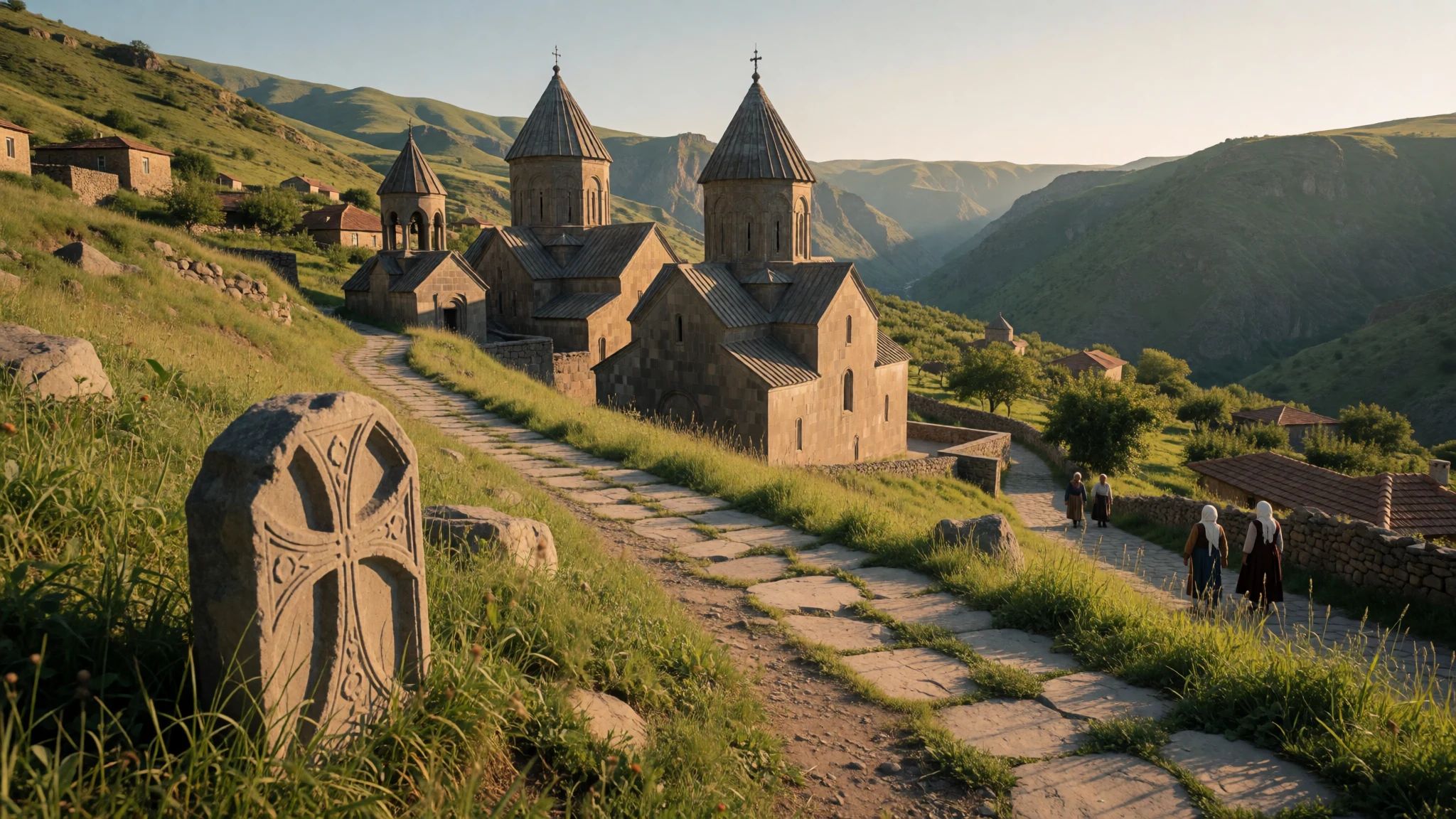
Haghpat Monastery is a medieval Armenian stone complex of churches, carved cross-stones and a belltower, set on a green hillside above the Debed canyon.
The place
Haghpat Monastery sits in the Lori region of northern Armenia, partway up a hillside that looks down on the Debed River. The builders did not choose a summit. They picked a fertile shelf on the slope, where the complex was sheltered and hard to spot from the valley floor, and that placement still shapes the visit. The monastery appears gradually, first as a roofline among trees, then as a cluster of grey-brown stone buildings with conical domes, a square belltower and a scatter of carved cross-stones in the grass.
It is not a remote place. Haghpat is also the name of the village around it, and houses, gardens and small farms press right up to the monastery grounds. Locals pass through, cows wander lanes nearby, and the working life of the settlement carries on beside buildings that have stood for around a thousand years. Wikidata dates the foundation to about 901, while the standard historical account points to 976, and the main buildings went up between the tenth and thirteenth centuries.
The monastery is a UNESCO World Heritage property, and it is usually visited together with Sanahin, a sister monastery nearby that was built around the same time. The setting is the other half of the appeal: forested slopes, a deep river valley and, on clear days, long views across the canyon. The stone is dark, weathered and plain on the outside, which makes the carved details and painted interiors feel like discoveries. Expect a quiet, unhurried site, busier when tour groups arrive and very still outside them.
Its story
Haghpat Monastery grew under the Bagratid dynasty, the Armenian royal house of the tenth century. The usual account credits Queen Khosrovanuysh, wife of King Ashot III, with founding it, probably in 976, at about the same time as nearby Sanahin. Her great church, the Cathedral of Surb Nshan (Holy Sign), was most likely begun in the years around then and finished in 991 under King Smbat II. It follows the classic tenth-century Armenian plan: a central dome carried on four heavy piers, with triangular recesses cut into the outer walls.
The complex kept expanding. A small domed church of St Gregory dates from 1005, and chapels, a library, a scriptorium and a refectory followed in the thirteenth century. The freestanding belltower was added in 1245. Inside the cathedral, painted donors tell the story of who paid for what: princes are shown in the south transept, and the founder's sons appear in relief with their mother on the east gable.
Haghpat was also a place where relics gathered. After a campaign in 1260 in which Armenian and Georgian forces fought alongside the Mongols, relics taken from a captured city were brought home, and the monastery received the hand of the Apostle Bartholomew. The buildings have not had an easy life, though. An earthquake around 1130 damaged parts of the monastery, and repairs took about fifty years. The lasting image of Haghpat is of a community that kept rebuilding, adding and copying manuscripts across centuries of upheaval.
What to see
- Cathedral of Surb Nshan — Main monastery court, Haghpat
The main church at Haghpat Monastery is the anchor of any visit. Its central dome rests on four large piers, and the outer walls are broken by triangular recesses. Inside, a painted Christ in the apse and donor portraits make it worth lingering. Allow time for your eyes to adjust to the dim light.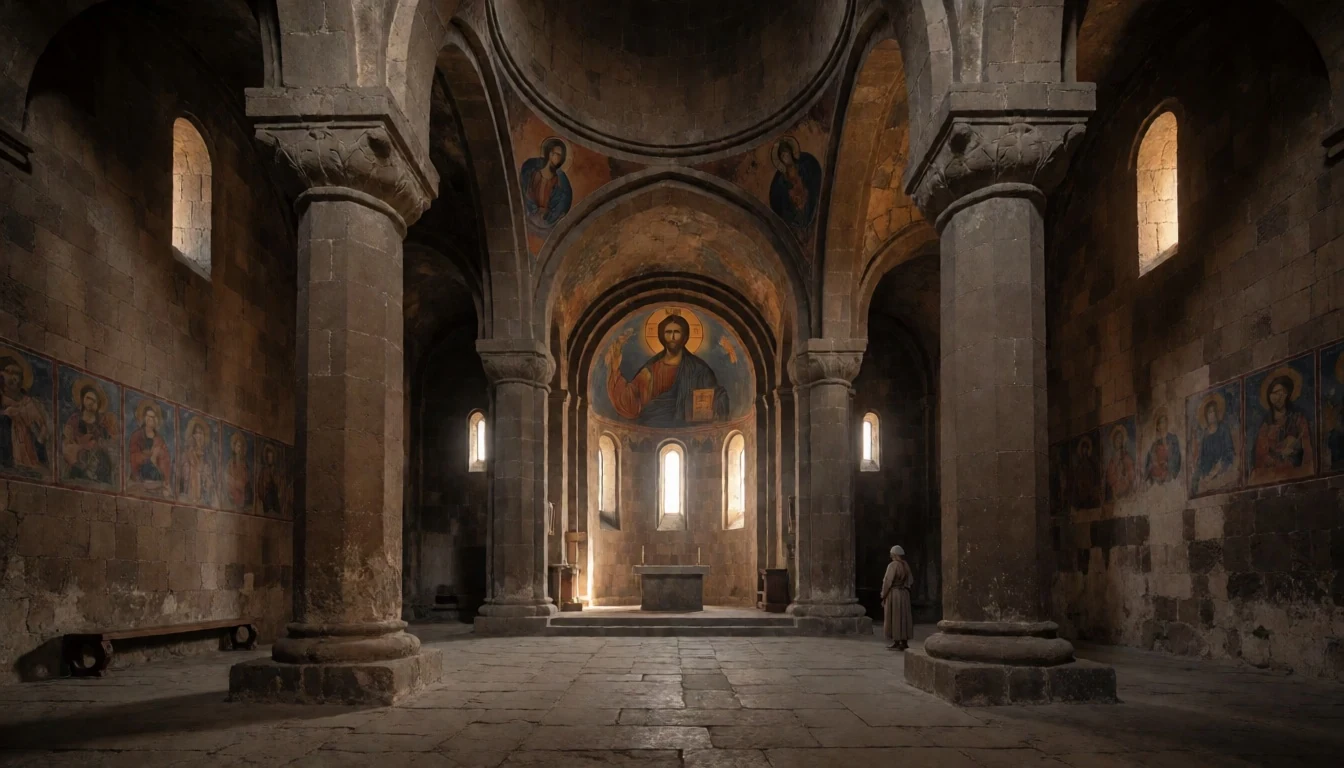
- The belltower — Within the monastery grounds, Haghpat
Haghpat Monastery's freestanding belltower dates from 1245 and has three storeys. It stands apart from the churches, so it is easy to photograph against the hillside and valley. Looking at how it sits beside the older domed buildings shows how the complex was added to over generations.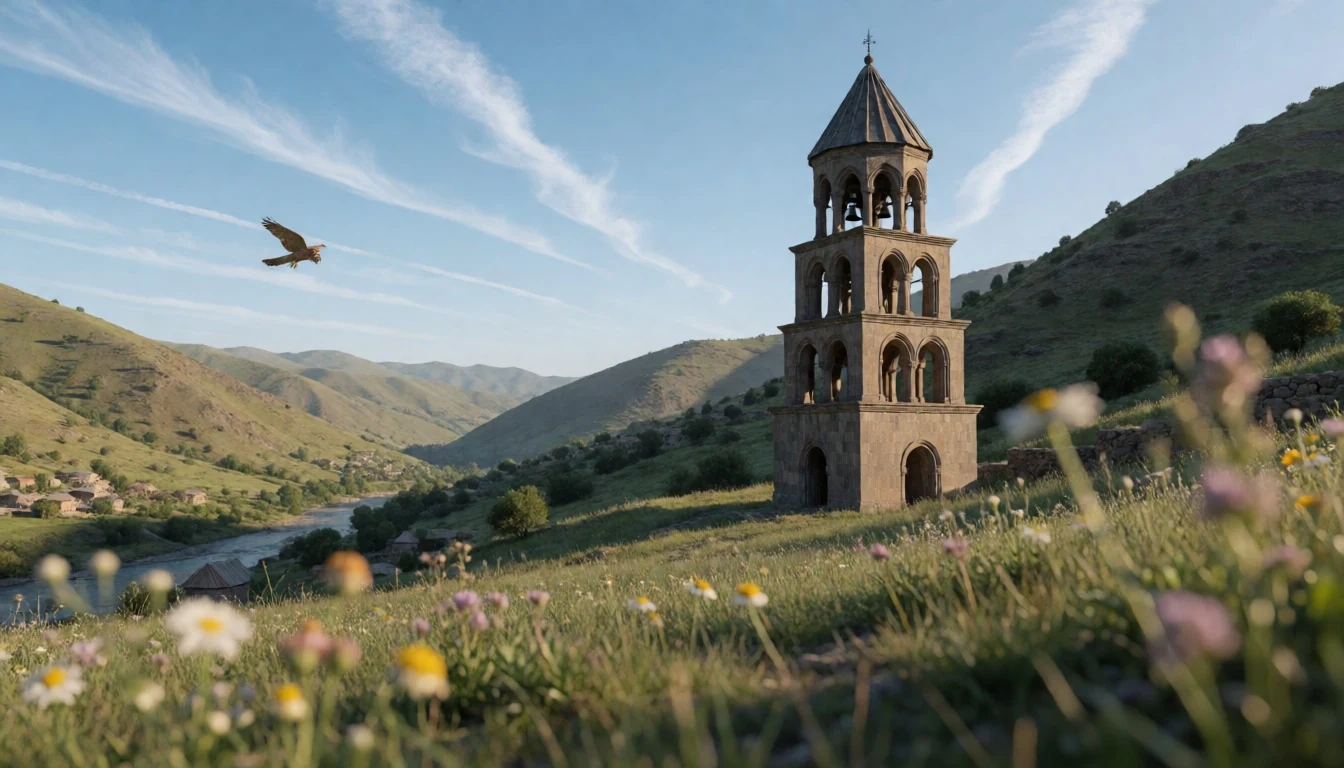
- Amenaprkich khachkar — Monastery grounds, Haghpat
A khachkar is an Armenian carved cross-stone, and Haghpat Monastery has many from the eleventh to thirteenth centuries. The best known is the Amenaprkich, or All-Saviour, standing since 1273. Look closely at the lacework patterns around the cross, each stone slightly different, worn soft by weather and by time.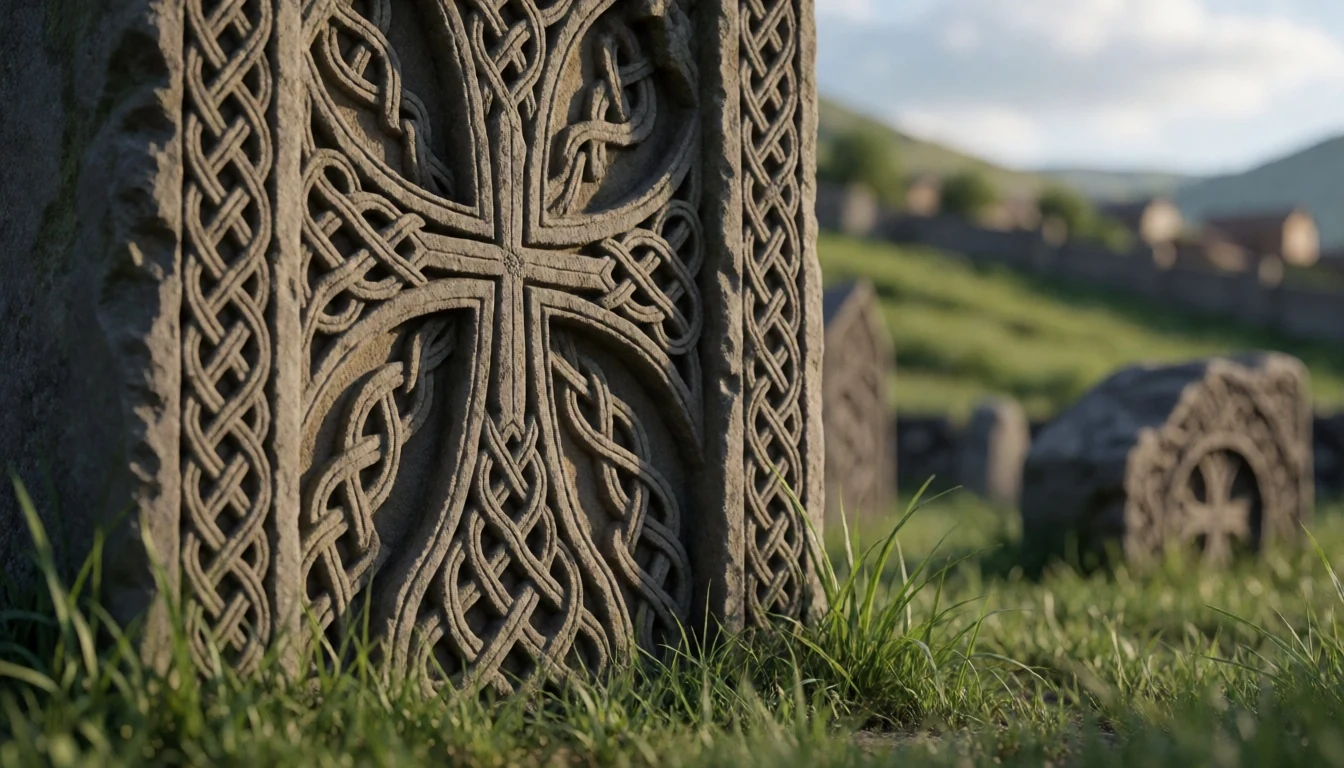
- Wall paintings of the Church of the Holy Sign — Church of the Holy Sign, Haghpat
Haghpat Monastery keeps traces of medieval painting, including a Deesis scene in a semi-dome from the early thirteenth century and a later mural showing a donor figure on the southern wall. Colours have faded, but the compositions remain readable, and they connect the stone shell to the people who funded it.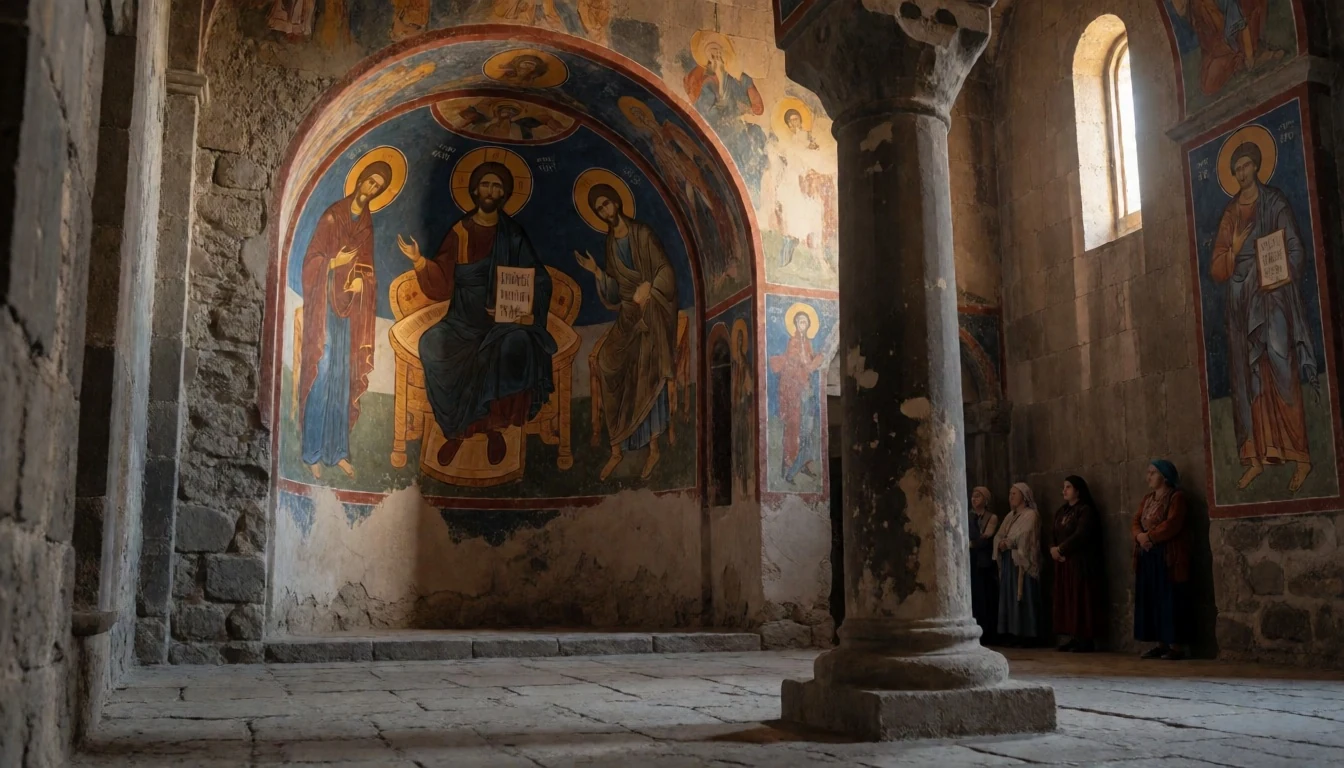
- Haghbat Gospels at the Matenadaran — Matenadaran, Yerevan
Haghpat Monastery was once a place of copying and learning, and one of its illuminated manuscripts, the Haghbat Gospels of 1211, is now kept in Yerevan's Matenadaran manuscript museum. Seeing its decorated canon tables there, before or after the trip, adds a bookish layer to the stone buildings.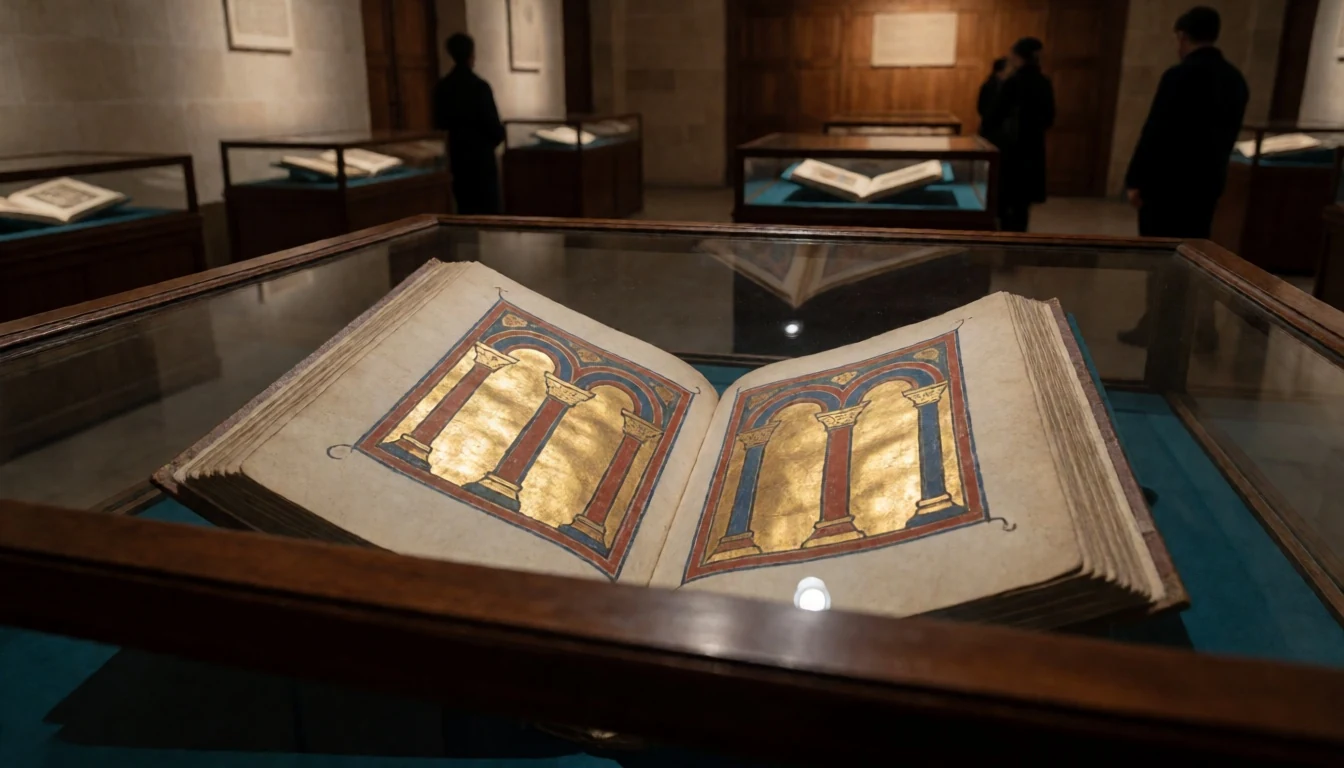
Culture
Haghpat Monastery belongs to the Armenian Apostolic tradition, one of the oldest Christian churches, and the buildings are still treated as sacred rather than simply as heritage. Candles are lit in the churches, visitors cross themselves at the door, and a service or a baptism may be going on while sightseers file past. Nothing about the place is staged for tourists, which is much of its charm.
The most distinctive Armenian art form on show is the khachkar, a cross carved in stone, often with interlaced foliage and geometric patterns around the central cross. Each one was made as a memorial, a thanks-offering or a protection against harm, and no two are identical. Haghpat has examples from the eleventh to the thirteenth centuries, so it works as an open-air gallery of how the style developed.
The monastery was also a centre of scholarship. A library and scriptorium were added in the thirteenth century, and monks copied and illuminated manuscripts there. That tradition of the written word, together with church music and the Armenian alphabet, is a point of national pride, and local guides are often happy to talk about it.
Villagers around the monastery are used to visitors but are not performers. A greeting in Armenian, a smile, and a request before taking a portrait go a long way. Please keep your voice low inside the churches, remove your hat, and dress and behave as you would on entering any active place of worship.
What to wear
Traditional Armenian dress around Haghpat Monastery is now mostly seen at festivals, church celebrations, folk dance performances and in museums. Women's festive dress, the taraz, is a long gown that can be made of silk or velvet and is richly embroidered, often with a belt, headwear and silver or gold-coloured jewellery. Men's formal dress draws on the Caucasian coat, the chokha, in wool, with a belted waist and a papakha-style fur hat. These are worn on special days, not for everyday life.
Day to day, people in Lori dress much as in other parts of Armenia and the wider region: jeans, jackets, fleeces and practical shoes in the villages, and smarter clothes in towns for church or family events. Older women in villages may still wear headscarves and dark colours, and farm clothes are common on working days.
For visitors, comfort and modesty both matter. Haghpat Monastery is an active religious site, so cover shoulders and knees, and women may want a light scarf to hand for church interiors, though rules are relaxed rather than strict. The terrain is a hillside with worn stone steps, damp grass and sometimes mud, so wear shoes with grip, not sandals. The climate in the uplands changes quickly: bring layers, a windproof jacket, and rain protection outside summer. In winter, add a warm hat and gloves, since stone buildings stay cold.
What to eat
- Lavash with cheese and herbs — Village bakeries and roadside eateries in the Debed valley
Lavash is the thin, soft Armenian flatbread baked in a clay oven. In northern Armenia it is commonly eaten wrapped around fresh cheese and a handful of green herbs, a simple, light lunch that suits a day of walking around the monastery.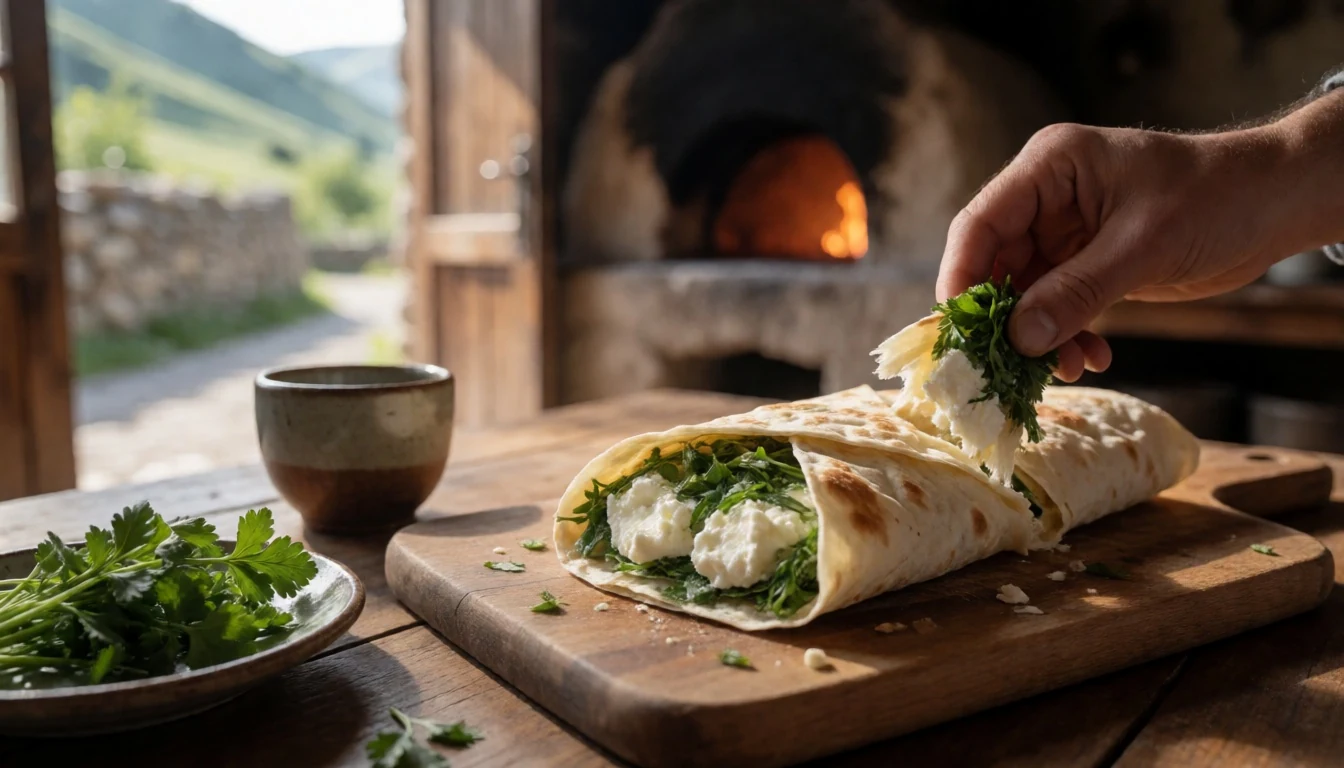
- Khorovats — Family restaurants and roadside grills near Alaverdi
Khorovats is Armenian barbecue, usually pork, lamb or chicken grilled over open coals on skewers, served with flatbread, onions and grilled vegetables. It is the standard celebratory meal and easy to find in family-run eateries across Lori.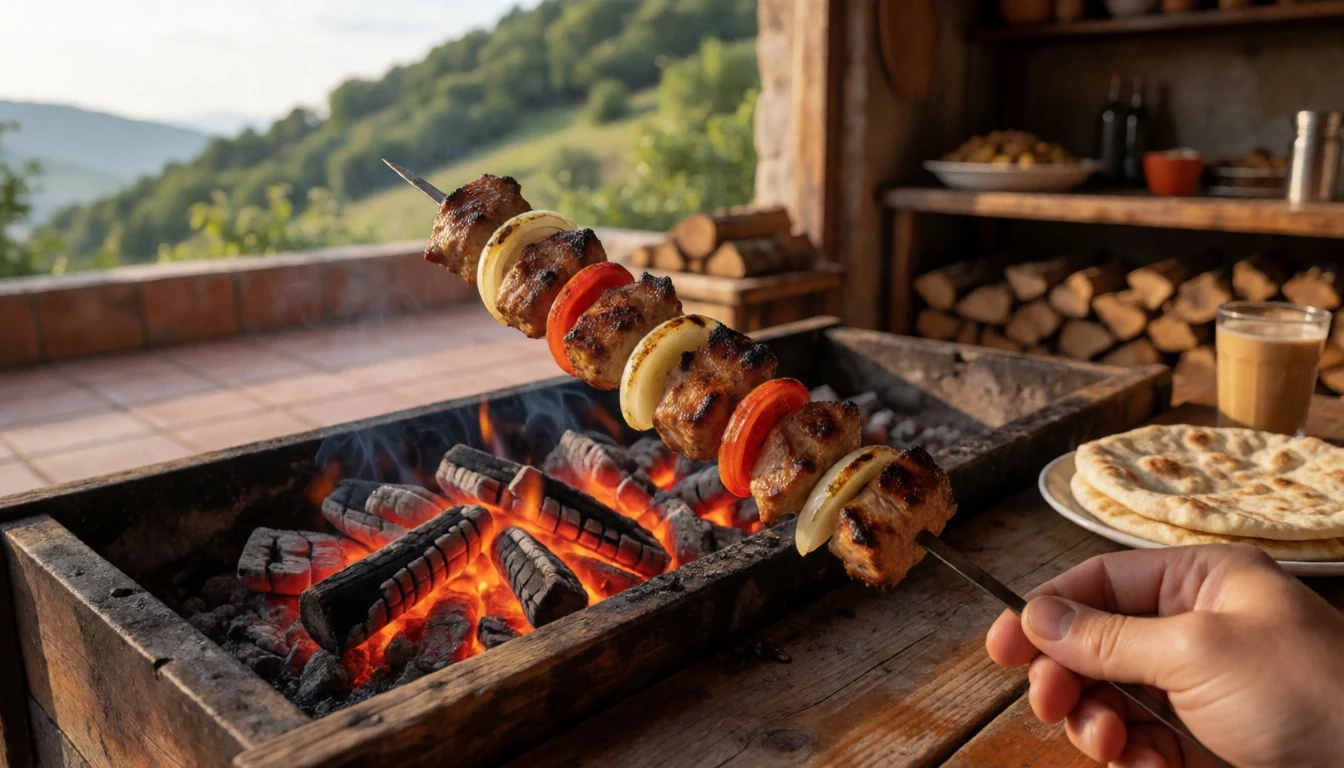
- Tolma — Home-style eateries and guesthouse dinners in Haghpat and Alaverdi
Tolma is minced meat and rice, seasoned with herbs, wrapped in vine leaves or stuffed into vegetables and slowly cooked. It is home cooking at its most comforting, often served with yoghurt, and it appears at both everyday and festive tables. - Spas — Village guesthouses and traditional restaurants in the Lori region
Spas is a warm yoghurt soup thickened with wheat grains and flavoured with herbs. It is tangy and filling, especially welcome on a cool or damp day in the hills, and many cooks have their own version. - Gata — Bakeries and market stalls in Alaverdi and Yerevan
Gata is a sweet, crumbly Armenian bread or pastry, often filled with a buttery sugar-and-flour mixture. It goes well with strong coffee or tea after a visit, and families commonly bake it for gatherings and holidays.
Plan it
Best time. May–June and September–October, when the hills are green or golden and days are mild enough for walking. Summer can be warm in the valley, while winters are cold with snow and ice on the slopes and steps, which makes the site slippery and the roads less pleasant.
How long. 1–2
Getting there. Fly to Zvartnots International Airport near Yerevan, then travel north by road towards Alaverdi in the Debed valley; Haghpat village and the monastery are a short drive up the hillside from there. A hired car or driver is the easiest way to combine Haghpat with Sanahin, and shared minibuses run to Alaverdi. Check current schedules locally.
Budget. low
Tips
- Visit early or late in the day to avoid tour groups and catch softer light on the stone
- Combine Haghpat with Sanahin, the sister monastery nearby, on the same day
- Carry some cash, as village shops and small eateries may not take cards
- Bring water and a layer, since weather in the hills changes quickly
- Check the official Armenian tourism or church sources for current opening arrangements before you travel
Etiquette
- Dress modestly and speak quietly inside the churches
- Ask before photographing people, especially clergy and villagers
- Do not climb on or touch the carved khachkars more than necessary
Nearby
Sources
- Wikidata Q2423898 (CC0)
- Wikipedia: Haghpat Monastery (rev 1376249950) (CC BY-SA 4.0)
- Wikivoyage: Haghpat (CC BY-SA 4.0)
- Photo: Haghpat Monastery, Armenia (Diego Delso) (CC BY-SA 4.0)
- Photo: Haghpat Monastery aerial (Yerevantsi) (CC BY 4.0)
- Photo: Haghpat monastery (Marcin Konsek) (CC BY-SA 4.0)
- Photo: Haghpat Monastery, Armenia (Shaun Dunphy) (CC BY-SA 2.0)
- Photo: Canon tables from the Haghbat Gospels, 1211 (Public domain)
- Photo: Mural representing Khutlubuga (Soghomon Matevosyan) (CC BY-SA 4.0)
- Photo: Deesis, Church of the Holy Sign (Robot8A) (CC BY-SA 4.0)
- Photo: Haghpat Monastery, Armenia (Diego Delso, HDR) (CC BY-SA 4.0)


