Tatev Monastery
Tatev Monastery, Armenia
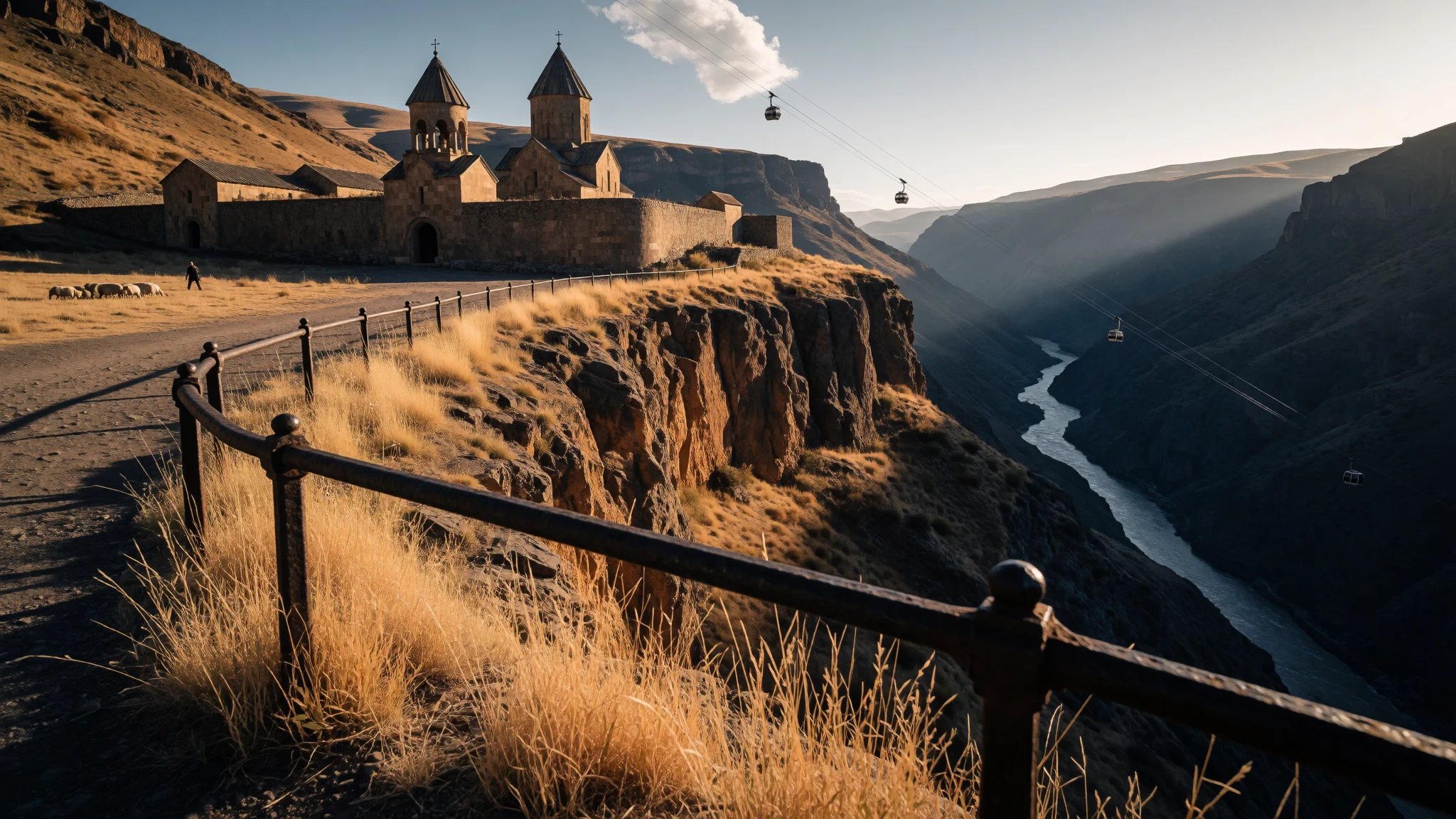
Tatev Monastery is a stone fortress-monastery on the rim of a deep gorge, reached by a dramatic cable car or a winding mountain road.
The place
Tatev Monastery sits on a broad basalt plateau in Syunik Province, in the far south-east of Armenia, right at the lip of the Vorotan River gorge. The buildings run to the very edge of the rock, and from the valley floor the whole complex looks like a continuation of the cliff. The village of Tatev beside it is tiny, with a population of 864, so the monastery dominates everything around it. Goris is the nearest town of any size, and Yerevan lies about 280 km away, a long day on mountain roads. For centuries this was the seat of the bishops of Syunik, and it did the work of a regional capital: it held land, trained clergy, copied books and shaped politics. Inside the walls stand churches, a refectory, cells and workshops, all in dark local stone that looks nearly black in rain and warm gold near sunset. Most visitors now arrive on Wings of Tatev, the cable car that crosses the gorge from the village of Halidzor. A sealed road and a hilly walking route cover the same ground for those who prefer to go slowly. The setting is high and exposed, so conditions change fast. Fog can wipe out the view completely, while clear days show long folded ridges in green and brown. Cafés and restaurants near the entrance serve a meal after the walk round, and a few guesthouses in the area suit anyone who wants to see the place in early light, before the tour groups arrive.
Its story
Tatev Monastery stands on ground that was sacred long before the present churches. A pagan temple occupied the plateau, and after Armenia turned Christian in the fourth century it was replaced by a modest church. The real rise began around 801, when Tatev became the seat of the bishop of Syunik. The historian Stepanos Orbelian wrote that a new church went up beside the old one in 848, funded by Prince Philip of Syunik. Later, Bishop Hovhannes won the backing of Prince Ashot of Syunik for a grander complex, as the old buildings could no longer cope with the monastery's growing importance. By the start of the eleventh century roughly 1,000 monks lived here alongside many craftsmen. Security was never certain. In 1044 forces from neighbouring emirates destroyed St Gregory's Church and the buildings around it, though they were rebuilt soon afterwards. St Mary's Church was added to the north in 1087. The twelfth century was harsher still, with Seljuk raids and an earthquake in 1136. In 1170 Seljuk Turks sacked the monastery and burned about 10,000 manuscripts, a loss that says much about how much learning was kept here. Tatev recovered, and in the fourteenth and fifteenth centuries it housed a university that taught religion, philosophy and science, copied books and developed miniature painting. Its scholars helped keep Armenian culture and belief alive through a turbulent period. In recent decades a revival programme has restored the buildings and brought back teaching and monastic life.
What to see
- Tatev Monastery — Tatev plateau, above the Vorotan Gorge
The main complex is the reason for the trip. Walk the courtyard, then go into the churches, where the stone is dark, cool and often quiet. St Gregory's, St Mary's and the church of Saints Paul and Peter reward slow looking. The best photographs come from the walls at the plateau edge.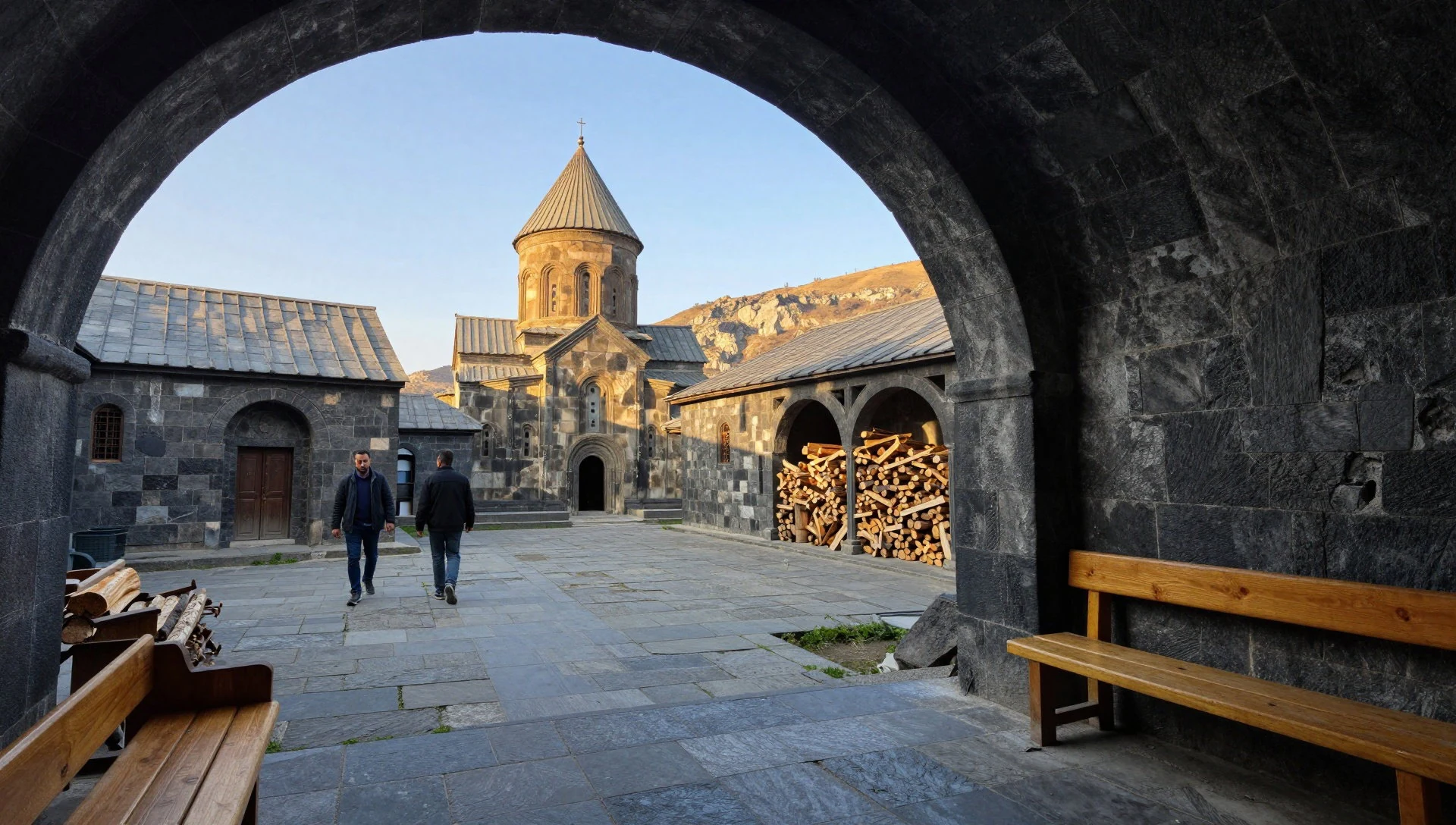
- Wings of Tatev — Halidzor cable car station
This cable car crosses the Vorotan Gorge between Halidzor and Tatev, with the road and river far below. It opened as part of the Tatev Revival Program. Opening hours are complicated, and weekends can mean a long queue, so check the operator's site. Fog or rain can hide the landscape from the cable car.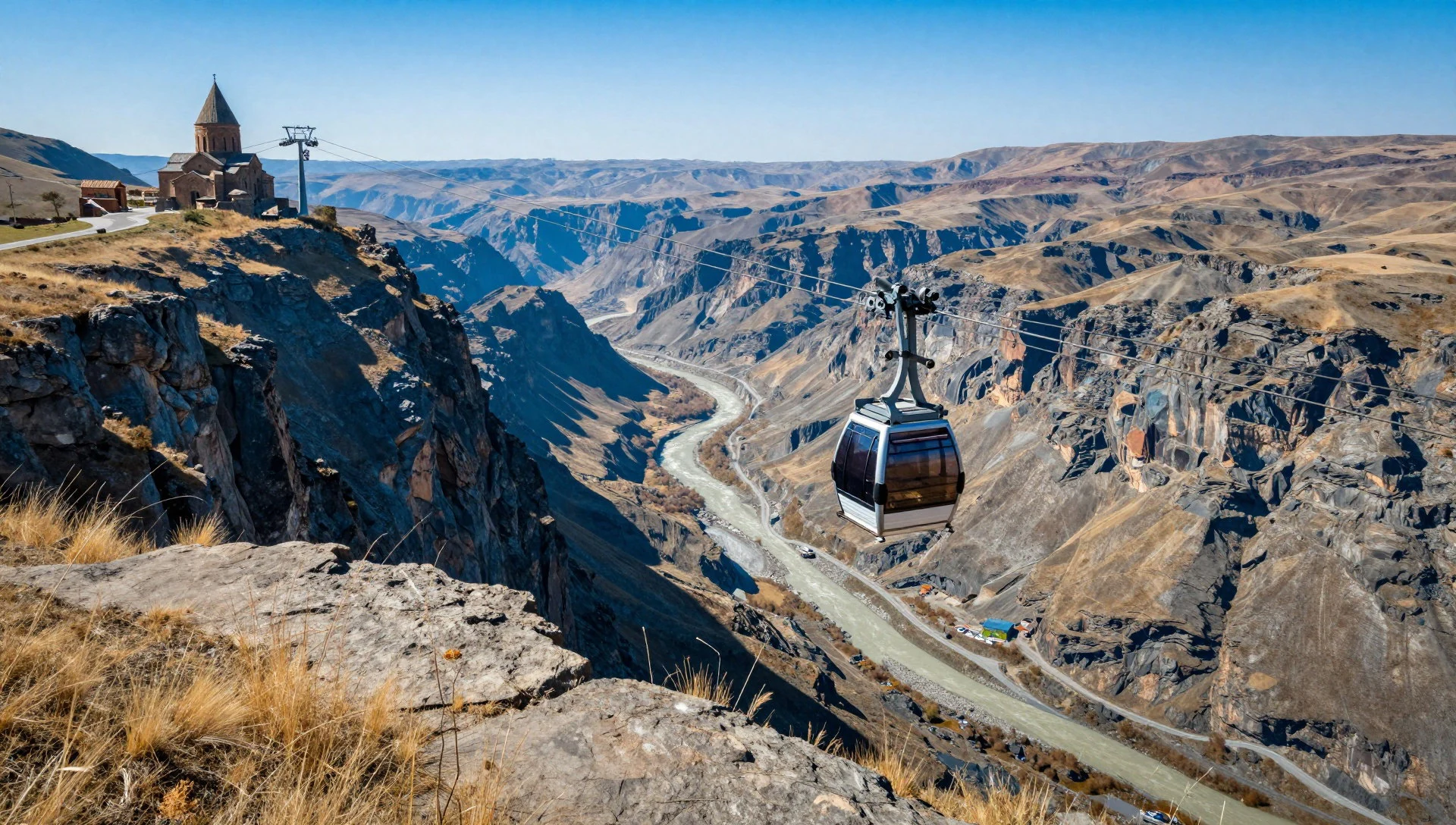
- Devil's Bridge — Vorotan Gorge floor, on the Halidzor–Tatev road
At the bottom of the gorge, a natural rock span crosses the Vorotan, known locally as Satanayi Kamurj. Pools of water gather nearby. It makes an easy stop for anyone driving the road from Halidzor, and it breaks up the walking route between the cable car station and the monastery.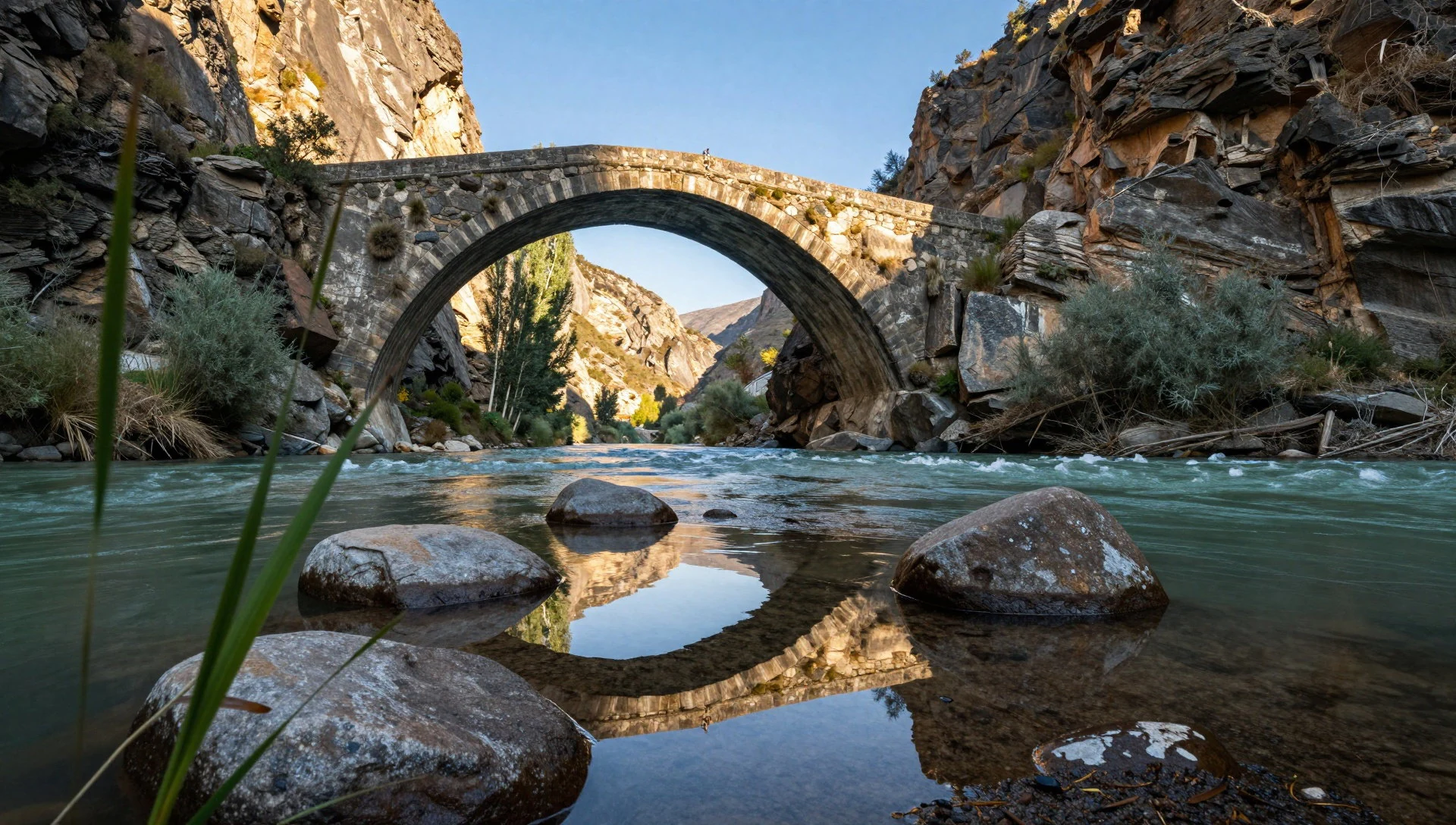
- Tatev Oil Mill — Just outside the monastery walls
Monks built this mill in the seventeenth century outside the monastery walls, so the noise would not disturb prayer. Four production rooms include domed storage chambers and pressing rooms with arched ceilings. It shows how the monastery fed and supplied itself, and the vaulted stonework is worth the short detour.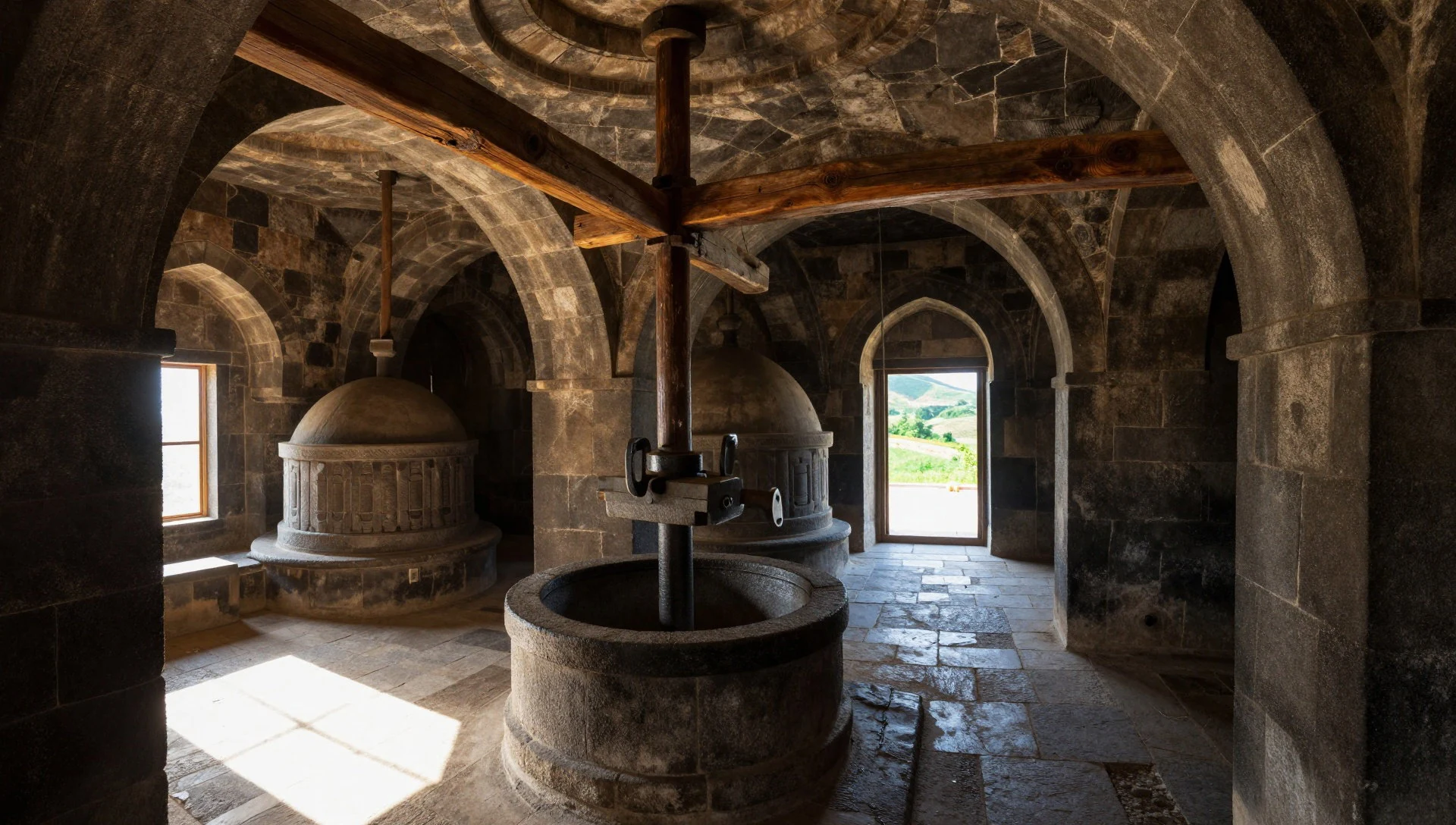
- Harsnadzor Watchtower — Above the gorge, near Harsnadzor
This watchtower overlooks the Vorotan Gorge and was the third in a chain of signal stations across the Zangezur Mountains, set up to warn of approaching enemies. It is a quieter stop than the monastery, and a useful reminder that Tatev needed defending as well as praying in.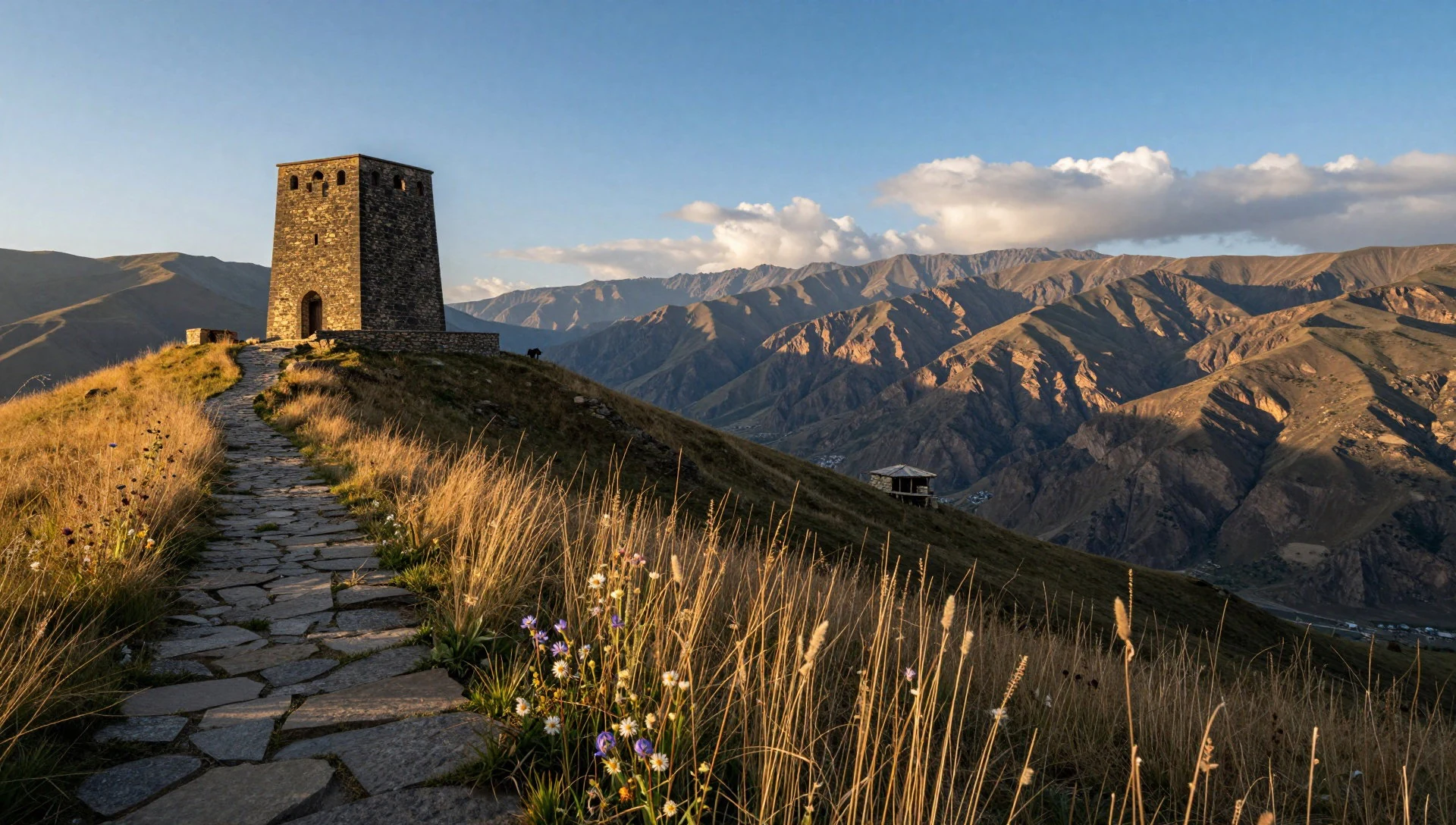
- Viewpoint over the monastery — Edge of the plateau near the entrance
A short walk from the main gate, this lookout gives a wider frame of the whole complex against the gorge. Early morning and the hour before sunset give the best light. In clear weather it explains the monastery's defensive position better than any sign.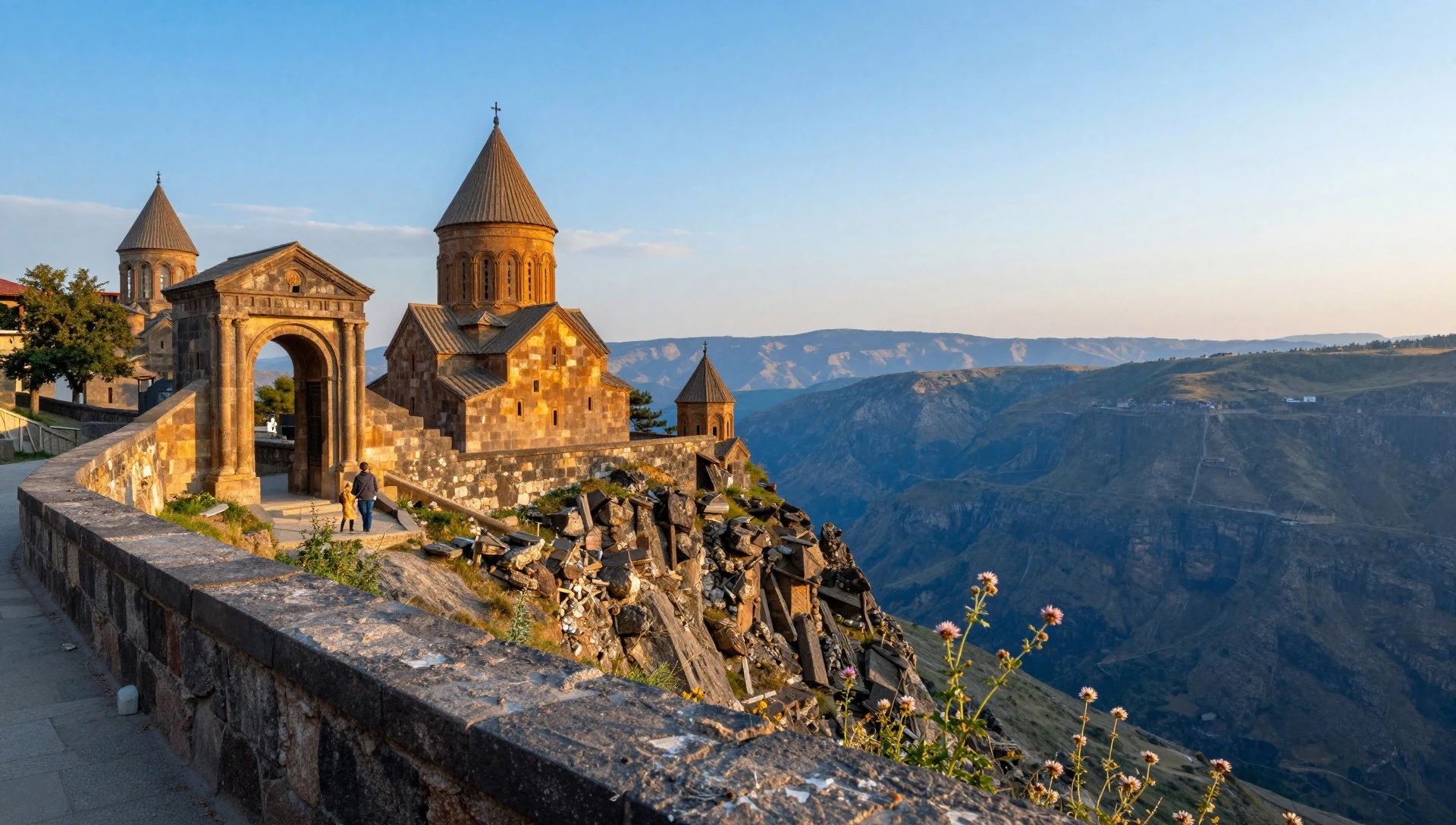
Culture
Tatev Monastery belongs to the Armenian Apostolic Church, which has its own alphabet, liturgy and calendar of feast days. The churches here are not museums. Services and private prayer happen under the same domes where visitors take photographs, and local families come to light candles, often combining a pilgrimage with a day out. Carved stone crosses called khachkars are a familiar feature of Armenian religious sites, and Tatev's masonry shows the same pride in carved detail. The monastery's history as a school also matters to Armenians. It preserved manuscripts, trained scribes and miniature painters, and kept learning going in the century after century of upheaval that followed raids and earthquakes. Today a revival programme has restored its educational purpose as well as its walls. Armenian hospitality is real and easy to meet at the cafés and guesthouses nearby, where visitors are often offered coffee, fruit or a second helping before they have asked. A simple greeting in Armenian is appreciated, though English and Russian are widely understood by those who work with visitors. Silence matters inside the churches, particularly during services, and photography is usually accepted in public areas but should be discreet around worshippers. Dress modestly with covered shoulders and knees, keep voices low and phones silent inside the churches, and do not photograph people at prayer without asking first.
What to wear
Traditional Armenian dress around Tatev, as elsewhere in the country, was made from wool, cotton and silk. Women wore a long fitted dress called a taraz, sometimes with an embroidered jacket (arkhalukh), a belt and a headdress with a veil. Men wore the chokha, a long wool coat with a fitted waist common across the Caucasus, with a belt and a tall sheepskin hat. Hand-knitted woollen socks and carpets from the region show the local love of colour and pattern. These clothes now come out for weddings, folk dance performances, festivals and church feast days rather than for daily life. Everyday dress in Syunik is plain and practical: jeans, shirts and jackets in towns, with older villagers favouring darker, sturdier clothing and headscarves. Younger people dress much as they do in any city. A visitor should wear for the terrain and the building. Good walking shoes or trainers with grip matter, since the courtyard stone is uneven and the approach paths can be steep. The plateau is high and exposed, so bring a windproof layer even on warm days, and a hat and sunscreen in summer. For the churches, cover shoulders and knees. Women may like to carry a light scarf, and it is a simple courtesy for anyone entering a place of worship.
What to eat
- Khorovats — Restaurants and roadside grills around Goris and the Tatev road
Armenian barbecue of pork, lamb or chicken, grilled over open coals on skewers and served with flatbread, grilled vegetables and herbs. It is the standard celebration meal, and it is easy to find in restaurants around Goris and at roadside eateries.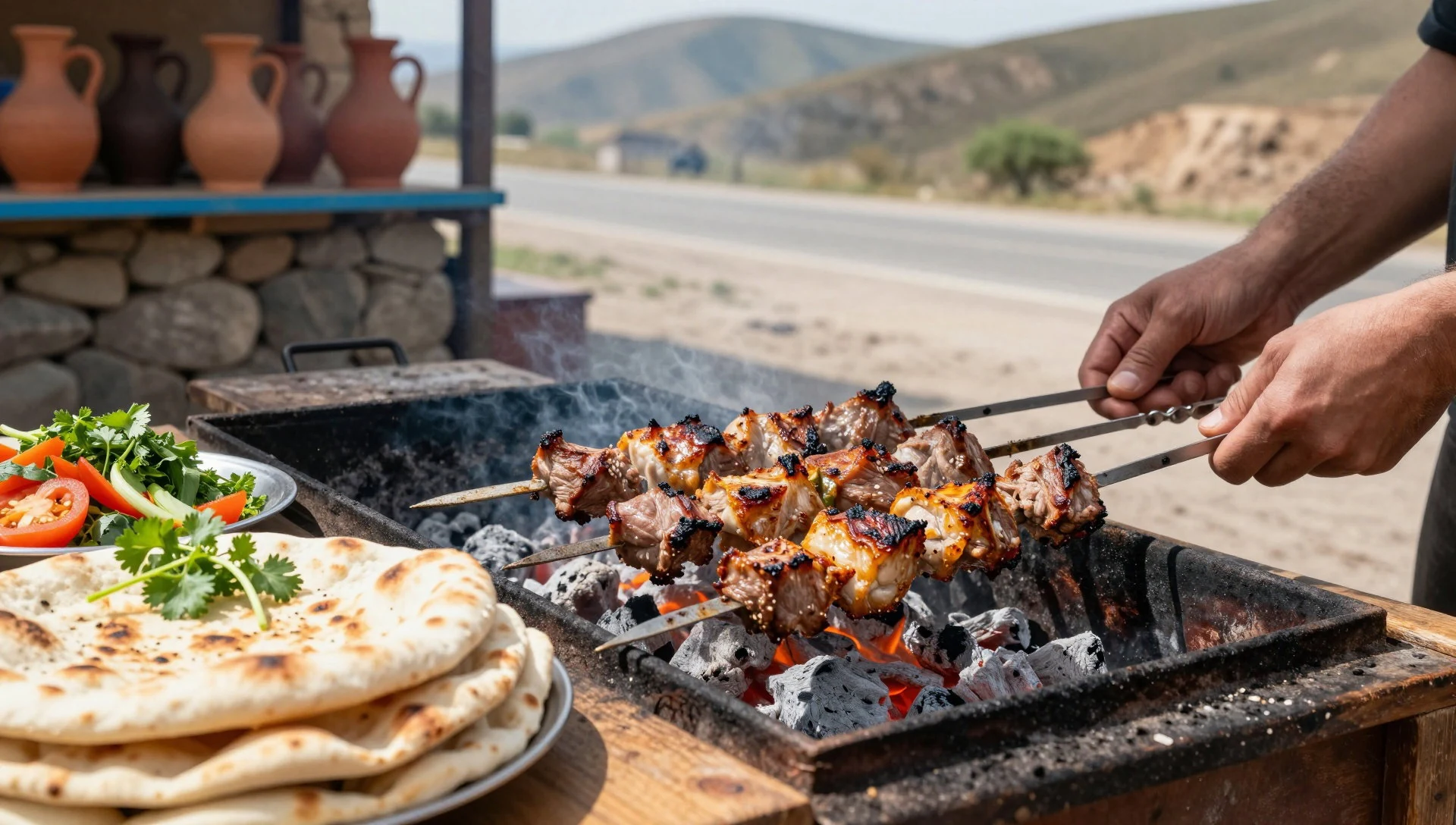
- Tolma — Family guesthouses and home-style eateries in Tatev and Goris
Vine leaves, or sometimes cabbage or peppers, stuffed with minced meat, rice and herbs, and served with a spoonful of yoghurt. Home-style versions are common, and guesthouses often make their own for dinner guests.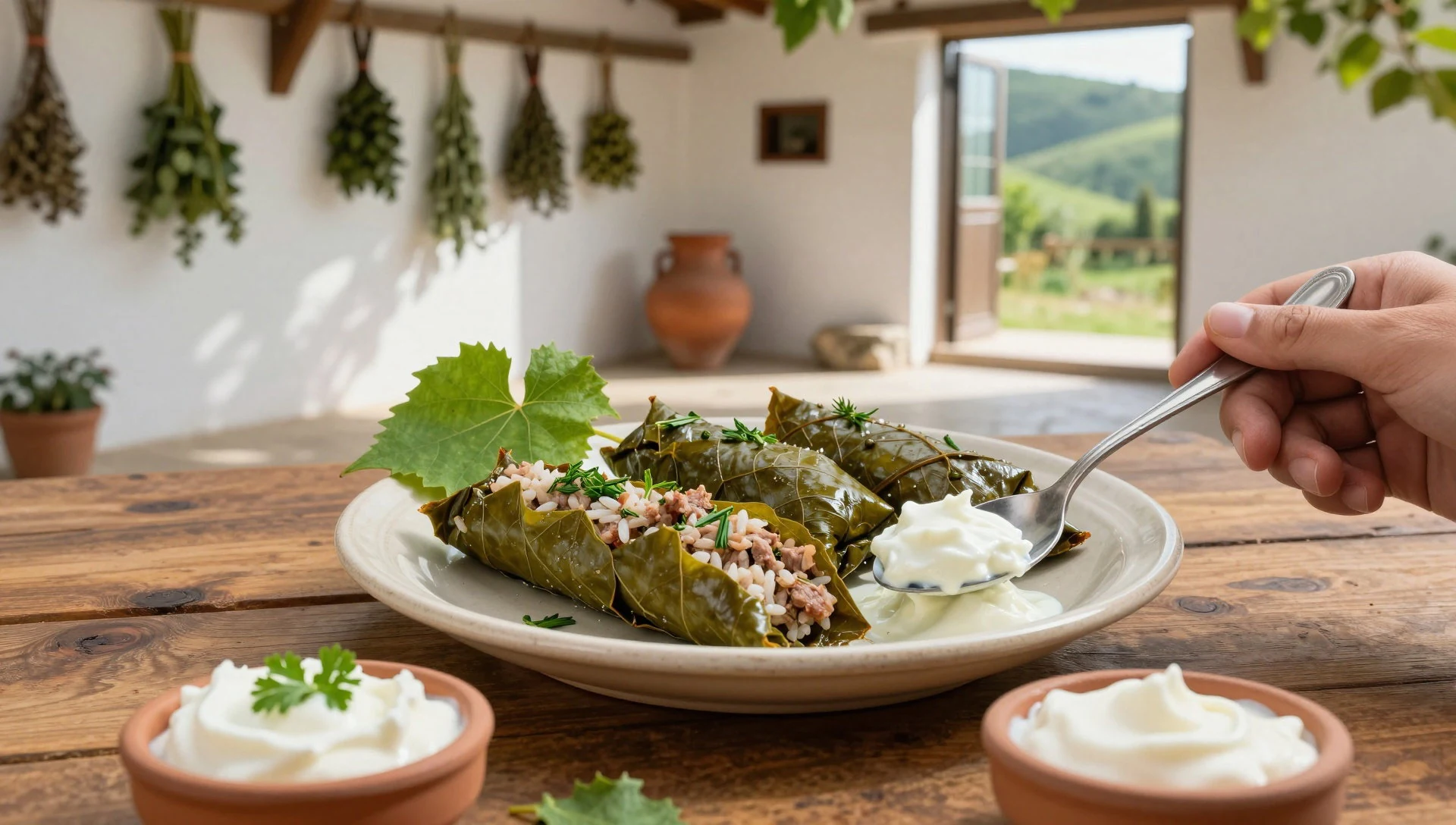
- Zhingyalov hats — Small cafés and bakeries in Goris and nearby villages
A thin flatbread stuffed with a mix of chopped wild greens and herbs, then cooked on a hot griddle. It is light, green and sharp with herbs, and sold as a quick lunch or snack. - Lavash with cheese and greens — Roadside stalls, bakeries and the table of any restaurant
Soft, thin lavash bread wrapped around fresh cheese and bunches of herbs such as tarragon, basil and coriander. It is a simple, vegetarian snack that also arrives at the start of most meals. - Gata — Bakeries in Goris and café counters near the monastery
A sweet, flaky bread filled with a buttery sugar and flour paste. It goes well with strong Armenian coffee after a long walk, and families often bake it for feast days.
Plan it
Best time. May and October usually offer the most comfortable balance of mild days and clearer views, though July and August are hottest and driest. Fog or rain can hide the gorge completely, so check the forecast before riding the cable car, and expect cold, possibly snowy conditions at this altitude in winter.
How long. 1–2
Getting there. Fly into Yerevan, then travel by road to Goris, about 280 km from Yerevan to Tatev, by marshrutka (shared minibus), taxi or hired car. From Goris, a taxi or marshrutka reaches the Halidzor cable car station, or continues to Tatev by road. Check current timetables locally, as they change.
Budget. low
Tips
- Check the Wings of Tatev operator's site for opening hours before you go, and expect queues at weekends
- Go early in the morning to see the monastery quiet and in softer light
- Take the cable car one way and return by road or on foot, so you can stop at Devil's Bridge
- Carry some cash for small cafés and taxis, and agree taxi fares before setting off
- Bring a windproof layer and water, since the plateau is exposed and the walking can be steep
Etiquette
- Cover shoulders and knees before entering the churches
- Keep voices low and do not photograph worshippers without asking
- Do not climb on walls or carved stones
Nearby
Sources
- Wikidata Q554947 (CC0)
- Wikipedia: Tatev Monastery (rev 1383621119) (CC BY-SA 4.0)
- Wikivoyage: Tatev (rev 5244765) (CC BY-SA 4.0)
- Photo: Tatev Monastery from a distance (Alexander Naumov) (CC BY 3.0)
- Photo: Татевский монастырь 1 (Well-read MountainMan) (CC BY-SA 4.0)
- Photo: Tatev Monastery by Alexander Roinashvili (Public domain)
- Photo: Tatev monastery, 1881 (Paros Hayastani) (Public domain)
- Photo: Татевский монастырь 3 (Well-read MountainMan) (CC BY-SA 4.0)
- Photo: St Gregory Church at sunset (Diego Delso) (CC BY-SA 4.0)
- Photo: Gavazan, Poghos and Petros church (AnDavtyan) (CC BY-SA 4.0)
- Photo: Holy Mother of God Church (Alexxx1979) (CC BY-SA 4.0)


