Noravank
Noravank, Armenia
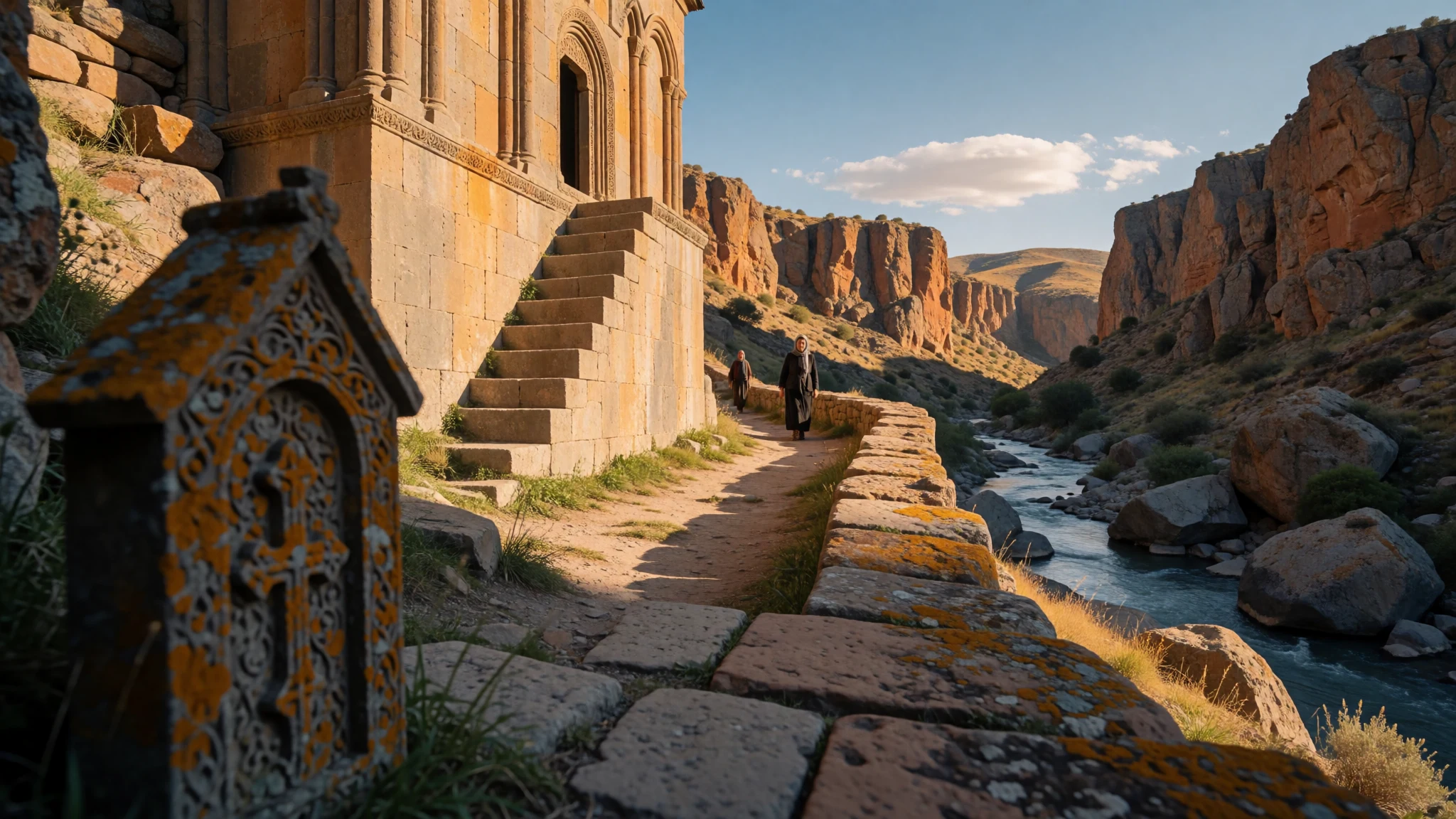
Noravank is a red-cliffed gorge monastery in southern Armenia, where a narrow stone staircase climbs the face of a two-storey church.
The place
Noravank is a 13th-century Armenian monastery in a narrow gorge cut by the Amaghu River, in southern Armenia near the town of Yeghegnadzor. The name means 'new monastery' (Նորավանք). The setting is what people remember first. Tall, sheer cliffs the colour of red brick stand across the gorge from the buildings, and the stone seems to glow when the sun is low. The approach road drops into the canyon, and the monastery appears on a ledge, small against the rock.
The complex is compact and easy to walk round. Its best-known building is the two-storey church of Surb Astvatsatsin, the Holy Mother of God, whose upper floor is reached by a narrow stone staircase jutting out from the façade. Beside it stand the church of Surb Karapet and a chapel of Surb Grigor with a vaulted hall. Carved cross-stones, known as khachkars, and the ruins of lesser buildings are scattered inside and outside the compound walls.
The full name is often given as Noravank at Amaghu, after a small village above the canyon that is now abandoned. This separates it from another Noravank near Goris. From Yerevan the journey takes a little over two hours by road, and most people combine it with the wine village of Areni, a short distance along the same route. Like most famous sites, Noravank is calmer early in the day, and the cliffs photograph best in softer morning or late-afternoon light. The gorge is exposed, so summer afternoons are hot and the stone steps are worth taking slowly. A visit itself is short, but the drive and the surrounding villages fill a day easily.
Its story
Noravank grew from a bishop's foundation into a major religious and cultural centre of medieval Armenia. Tradition names Bishop Hovhannes, a former abbot of Vahanavank near Kapan in Syunik, as its founder. The monastery was founded in 1105, and most of what stands today belongs to the 13th and 14th centuries. The difference suggests a site built and rebuilt in layers rather than raised all at once.
The patrons were the Orbelian princes, who made Noravank their residence. Under their protection it became the seat of Syunik's bishops, which brought books, scholars and craftsmen to a remote canyon. It was closely linked with the school at Gladzor, a famous university and library of the period, so manuscripts and ideas moved between the two places.
Two artists define the monastery. Siranes was the architect, and Momik was a sculptor and miniature painter. Both worked here in the later 13th and early 14th centuries. Momik's hand shows in the carving of the Surb Astvatsatsin church, where figures and ornament are cut into the stone with the fine control of a manuscript illuminator. A church at Areni nearby is also credited to him, which shows how far his reputation reached across the district.
The village of Amaghu above the canyon is now abandoned, which leaves the monastery alone in the landscape. What remains is the church group, the chapel with its vaulted hall, and the khachkars and ruined civil buildings that hint at a much busier community.
What to see
- Surb Astvatsatsin church — Noravank monastery, Amaghu gorge
Noravank's best-known building is this two-storey church, with a narrow stone staircase jutting out from its façade to the upper floor. Go up slowly, since the steps are steep and worn, and allow time to look at the carving around the doorways and the proportions of the whole building.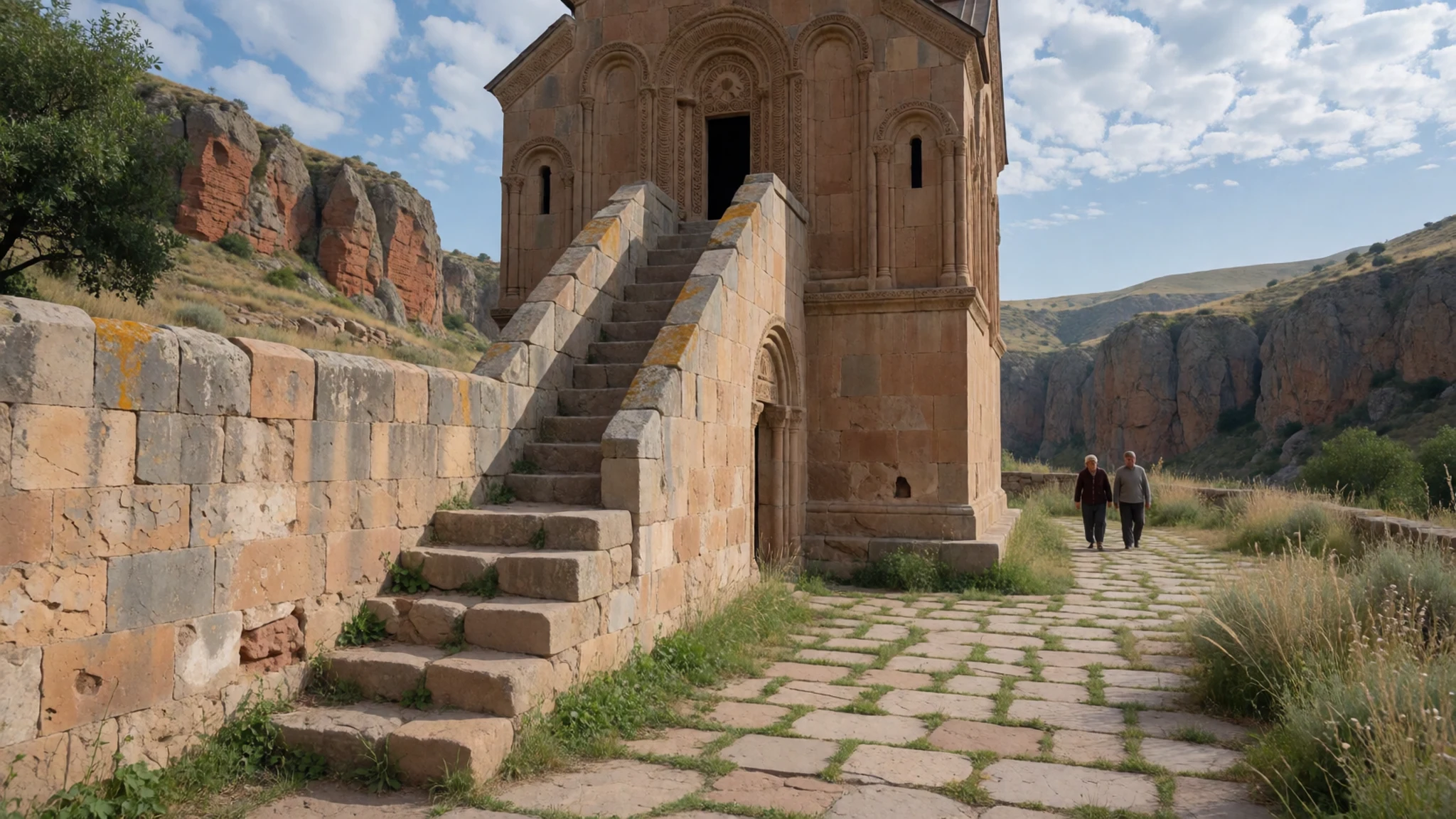
- Surb Karapet and the Surb Grigor chapel — Noravank monastery, Amaghu gorge
Standing close to the main church, Surb Karapet and the chapel of Surb Grigor complete the monastery group. The chapel has a vaulted hall. Seeing all three together shows how a small community fitted worship, burial and gathering into a few buildings on one narrow ledge.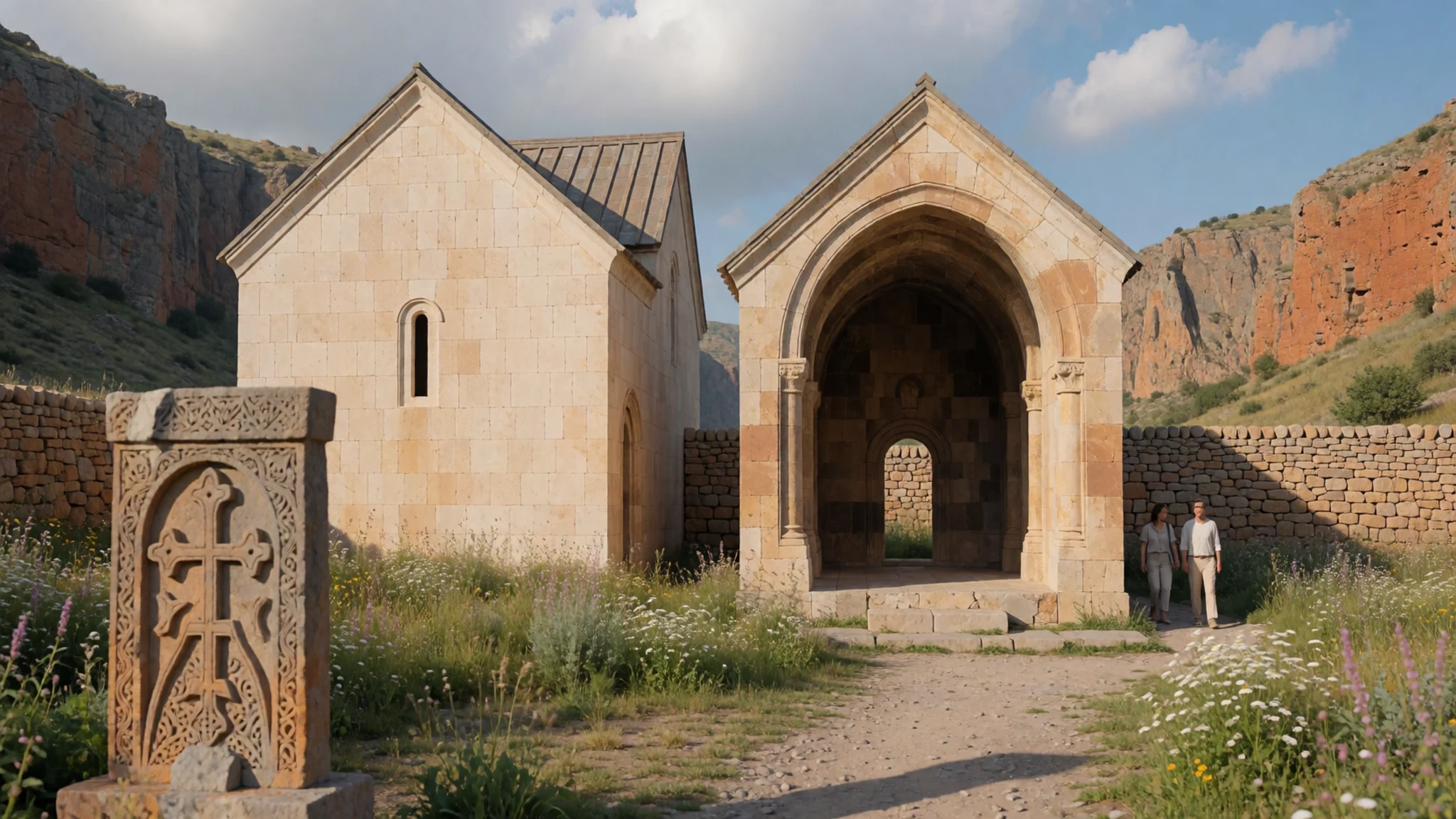
- Carved façade details — Noravank monastery, Amaghu gorge
The stonework on the Surb Astvatsatsin church rewards a close look. Figures, borders and ornament are cut into the pale stone, and the work is associated with the sculptor Momik. Khachkars near the walls show the same Armenian habit of turning a cross into dense, lace-like carving.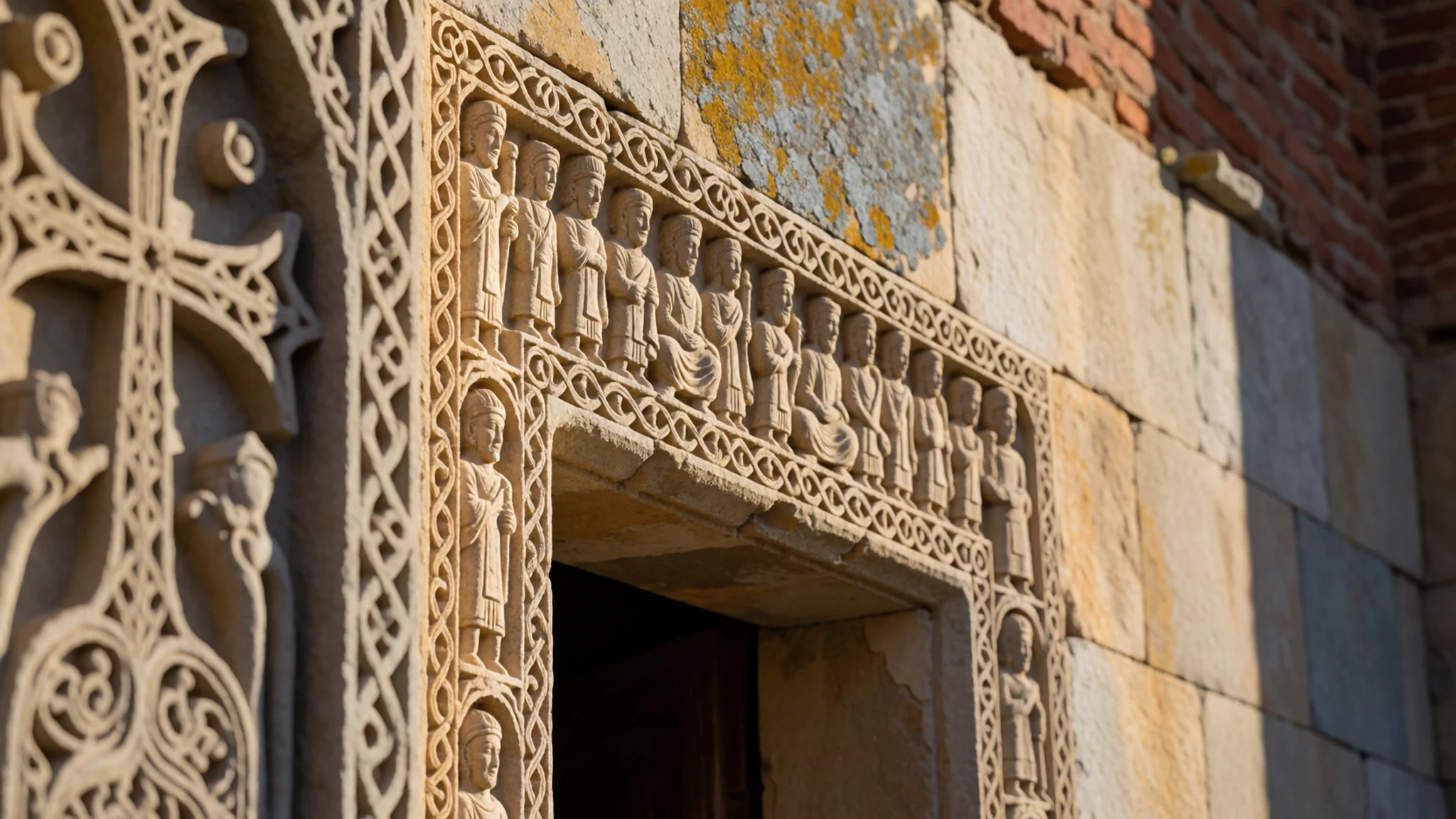
- The gorge approach and red cliffs — Amaghu River canyon
The road in is part of the sight. It follows the narrow Amaghu canyon, and the brick-red cliffs rise sharply opposite the monastery. Stopping at a safe pull-in on the way gives a view of the buildings small against the rock, and it helps explain why the site was chosen.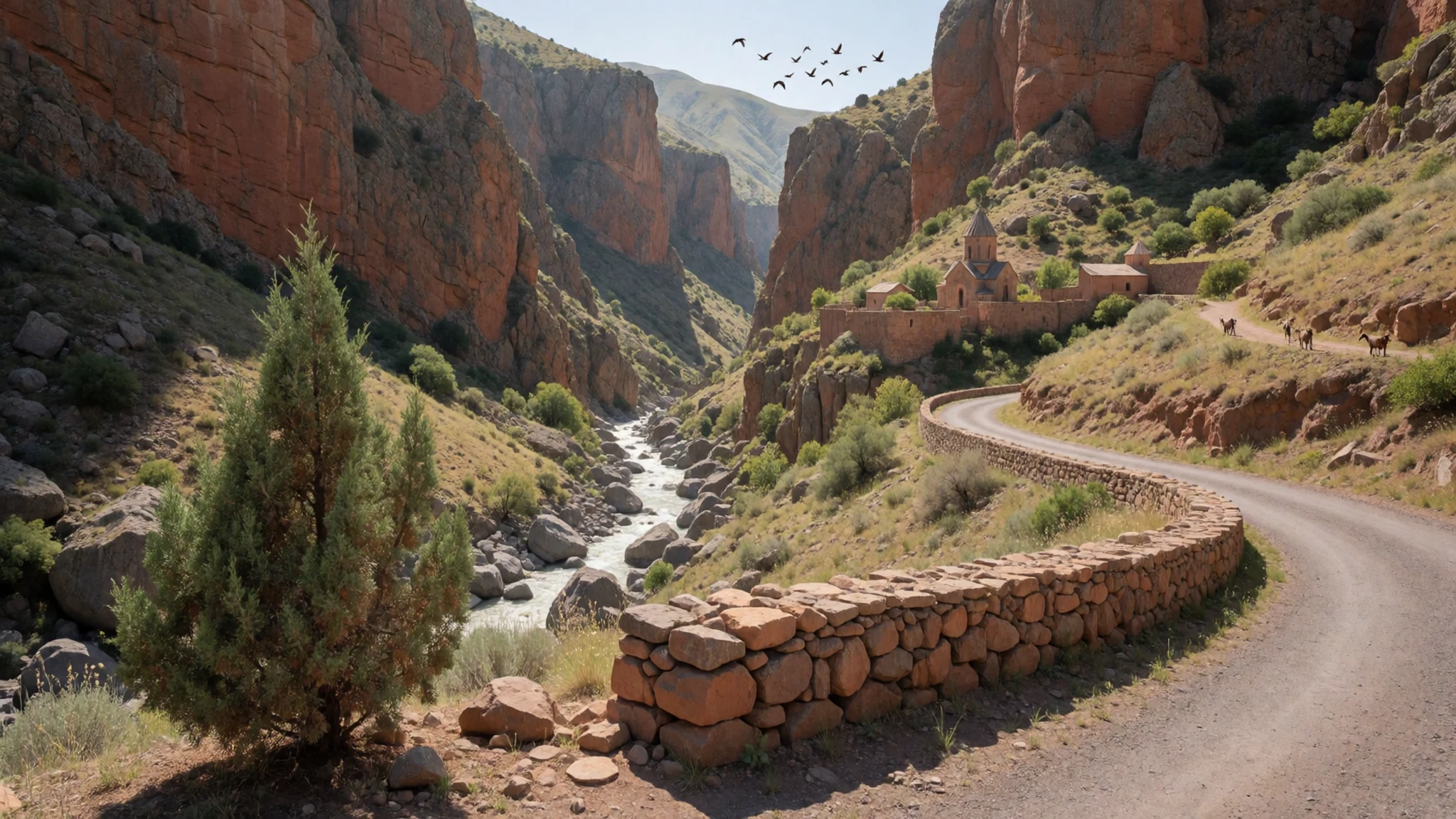
- Areni Surb Astvatsatsin church — Areni village
This church stands on a small hill above Areni village, so the walk up also gives a view over the settlement. It dates to the 14th century and is credited to the master Momik, the same artist linked with Noravank, which makes it a natural second stop on the same day.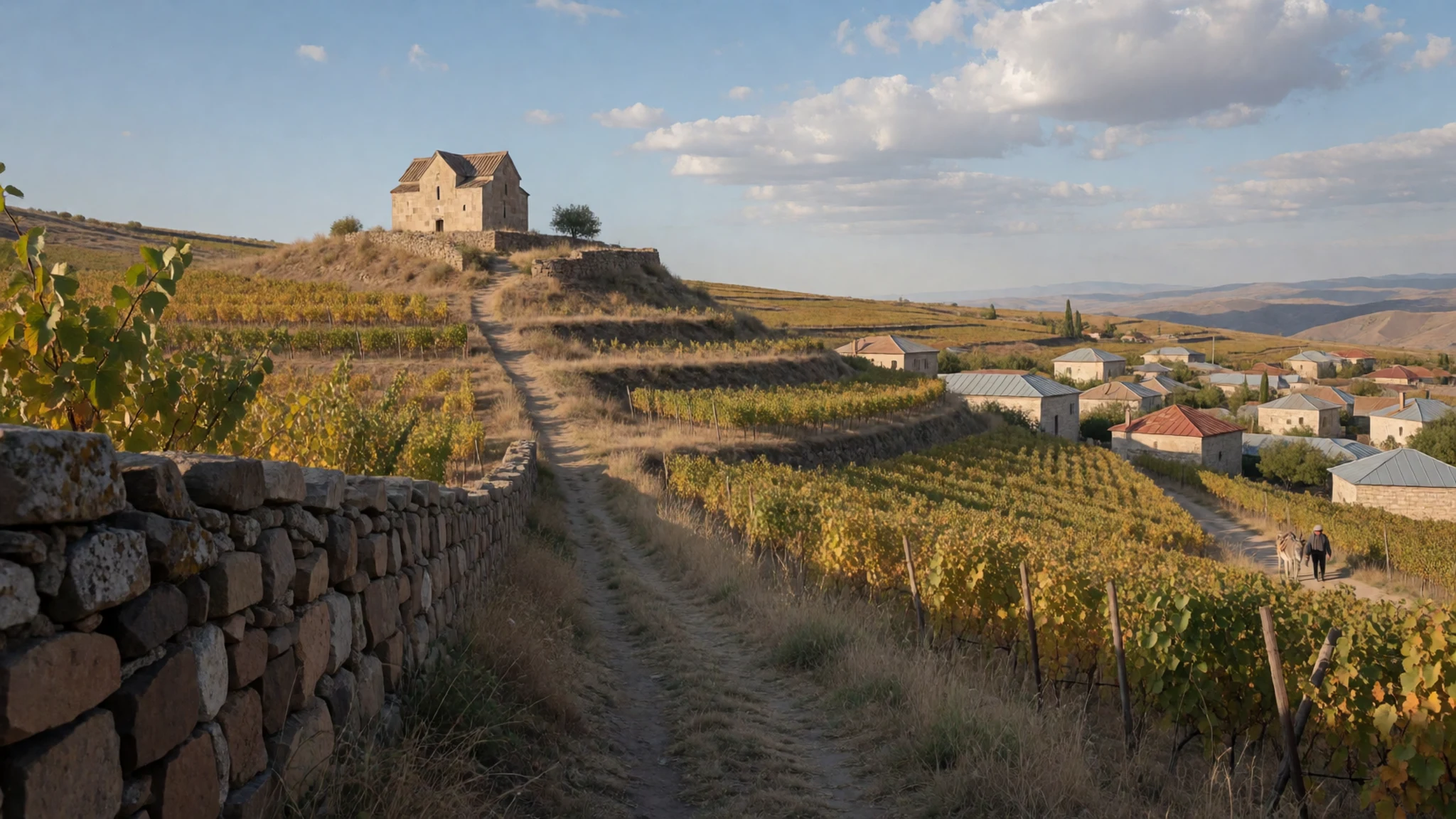
- Areni-1 Cave — Near Areni village
Close to the wine village of Areni, this cave is known as an ancient winemaking site, with presses, large storage jars and fermentation vessels. It adds a very different layer to a day that otherwise centres on a medieval monastery. Check locally before going, as access arrangements can change.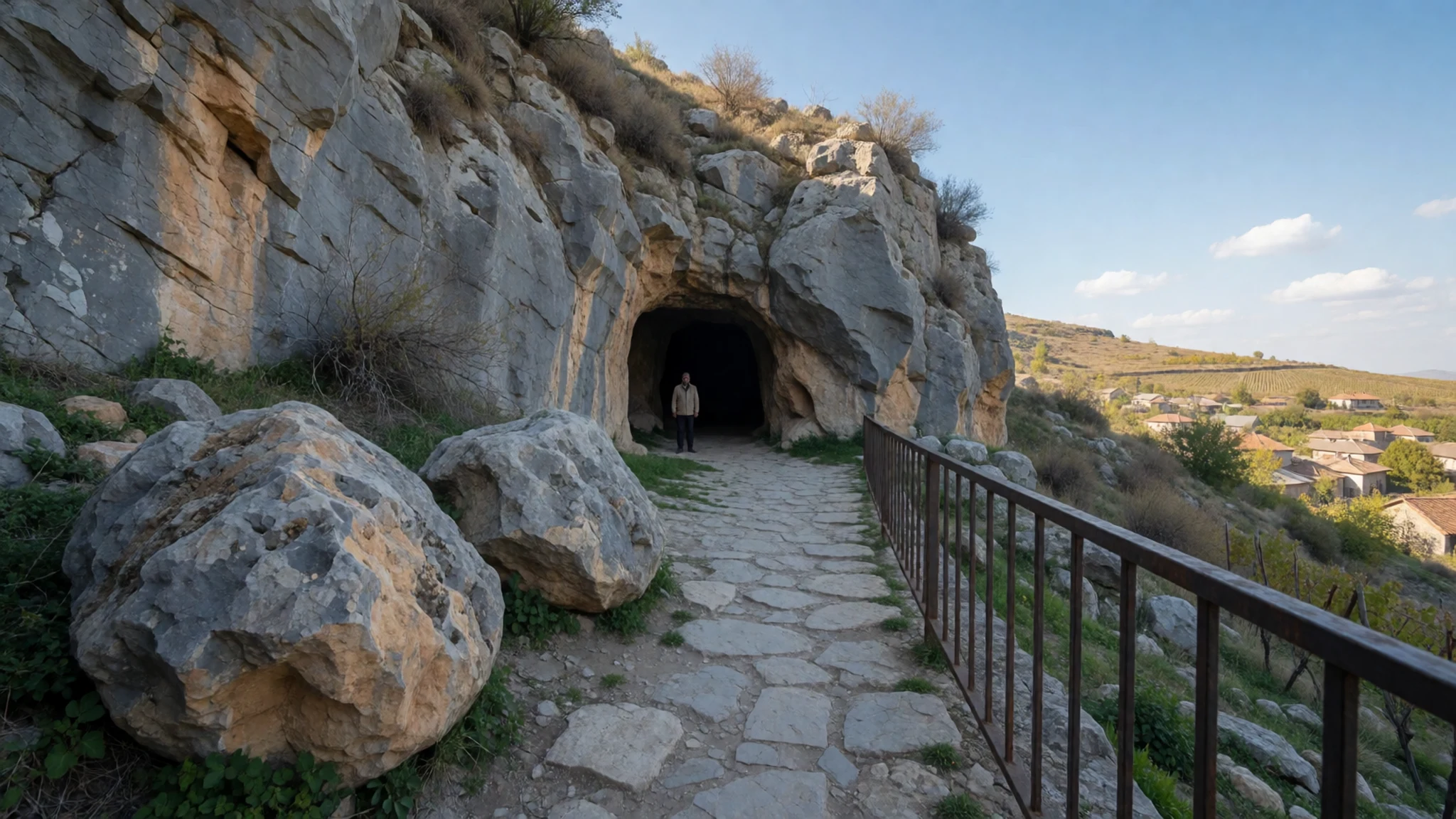
Culture
Noravank sits within the Armenian church tradition, and its buildings show how closely faith, learning and craft were bound together. The monastery served as a residence for Syunik's bishops and had links with the school at Gladzor, so reading, copying and illuminating manuscripts were part of its life as much as prayer. The stonework of Momik, who also painted miniatures, carries that same attention to detail into architecture.
The khachkar, or cross-stone, is the most recognisable Armenian art form around the site. Each is a slab of carved stone with a cross at its centre, surrounded by interlaced patterns, and no two look quite alike. They stand inside and outside the compound walls and are treated with respect locally, not as decorative objects.
The wider district, centred on the village of Areni, is also known for winemaking. Areni is the name of a local grape variety, Areni Noir, and the village has several large wineries as well as many families who make wine at home. Each October the village hosts a wine festival with food, dances and traditions linked to the harvest, so autumn visits can combine the monastery with a lively local celebration.
In practice, a visit blends quiet architecture with rural village life: churches that are still places of worship, a river gorge with few services, and hospitality that tends to centre on food and wine. Dress modestly, keep voices low inside the churches, and ask before photographing anyone who is praying or lighting candles.
What to wear
In Noravank and the surrounding Vayots Dzor district, traditional Armenian dress survives mainly at festivals, weddings, church events and folk-dance performances. Women's costume centres on a long, fitted dress, often called a taraz, made from wool, silk or velvet and decorated with embroidery and braid, usually with a headdress or veil. Men's formal dress traditionally includes a long coat of the chokha type, worn with a belt, in heavy cloth. Embroidery and woven patterns vary from region to region, and many families keep pieces as heirlooms.
Day to day, people around Yeghegnadzor and Areni wear ordinary modern clothes: jeans, shirts, jackets and practical shoes for village and farm work. Smarter dress appears at church services and family occasions, but nothing is formal or uniform.
Visitors need to plan for terrain and climate more than for any strict dress code. Wear sturdy shoes with good grip, since the paths and the stone steps at Noravank are uneven and can be slippery when wet or icy. Summer in the valley is hot and exposed, so bring a sun hat, sunscreen and light, loose clothing, while spring and autumn mornings can be cool enough for a jacket. Because the churches are active religious places, cover shoulders and knees. Women may like to carry a light scarf to cover the head if they wish to follow local custom when entering.
What to eat
- Areni Noir wine — Wineries and tasting rooms in Areni village, along the main road from Yerevan
Areni gives its name to a local red grape, and the village is the district's wine centre. Tastings range from large producers to small family cellars. Ask for a local red with a plate of cheese and bread, and arrange a driver if sampling several.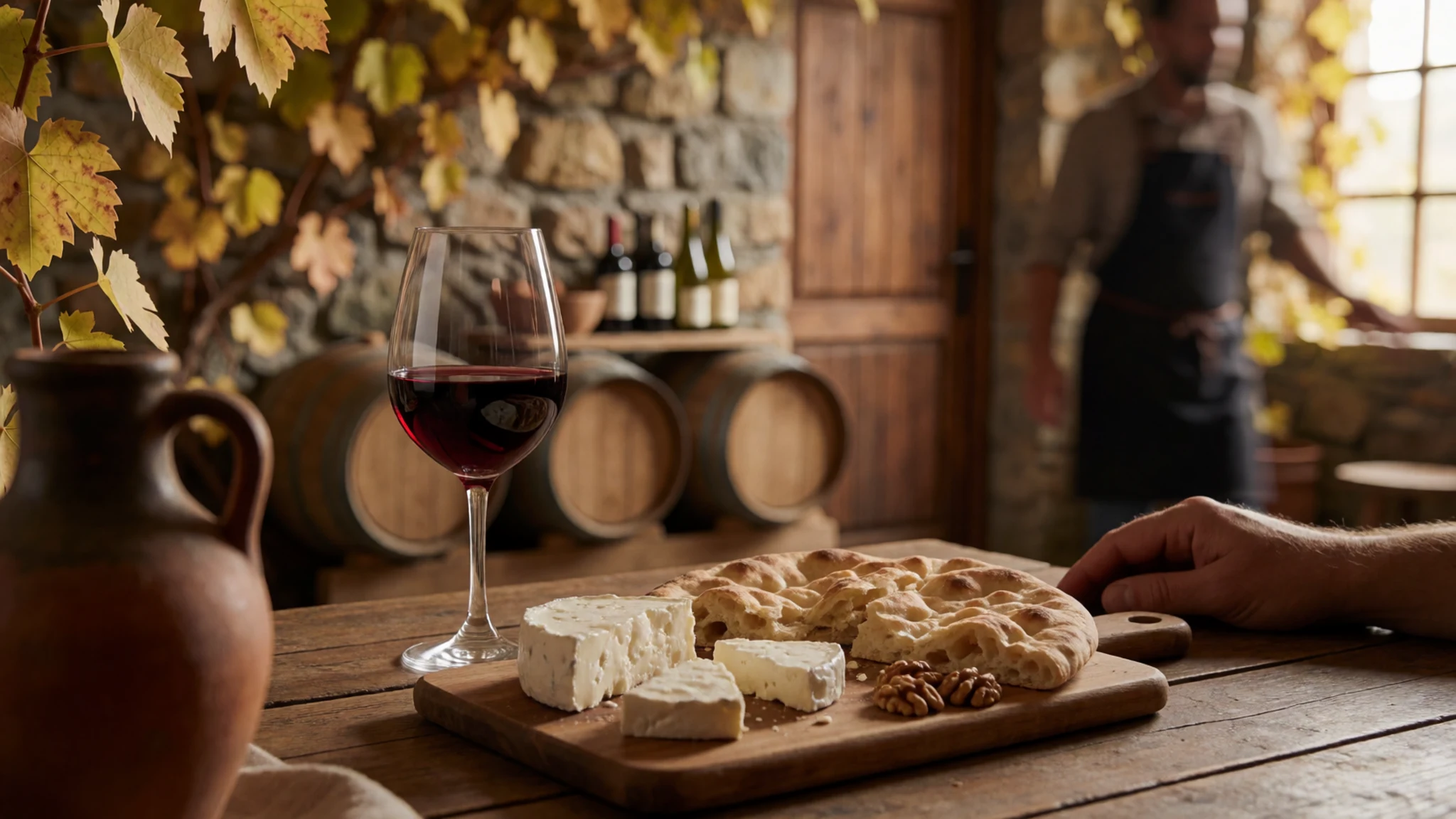
- Khorovats — Roadside eateries and family restaurants in Yeghegnadzor and Areni
Khorovats is Armenian barbecue, usually pork, lamb or chicken, grilled over charcoal on skewers and served with grilled vegetables and herbs. It is a standard meal for groups and families, and a good choice after a morning of walking at the monastery.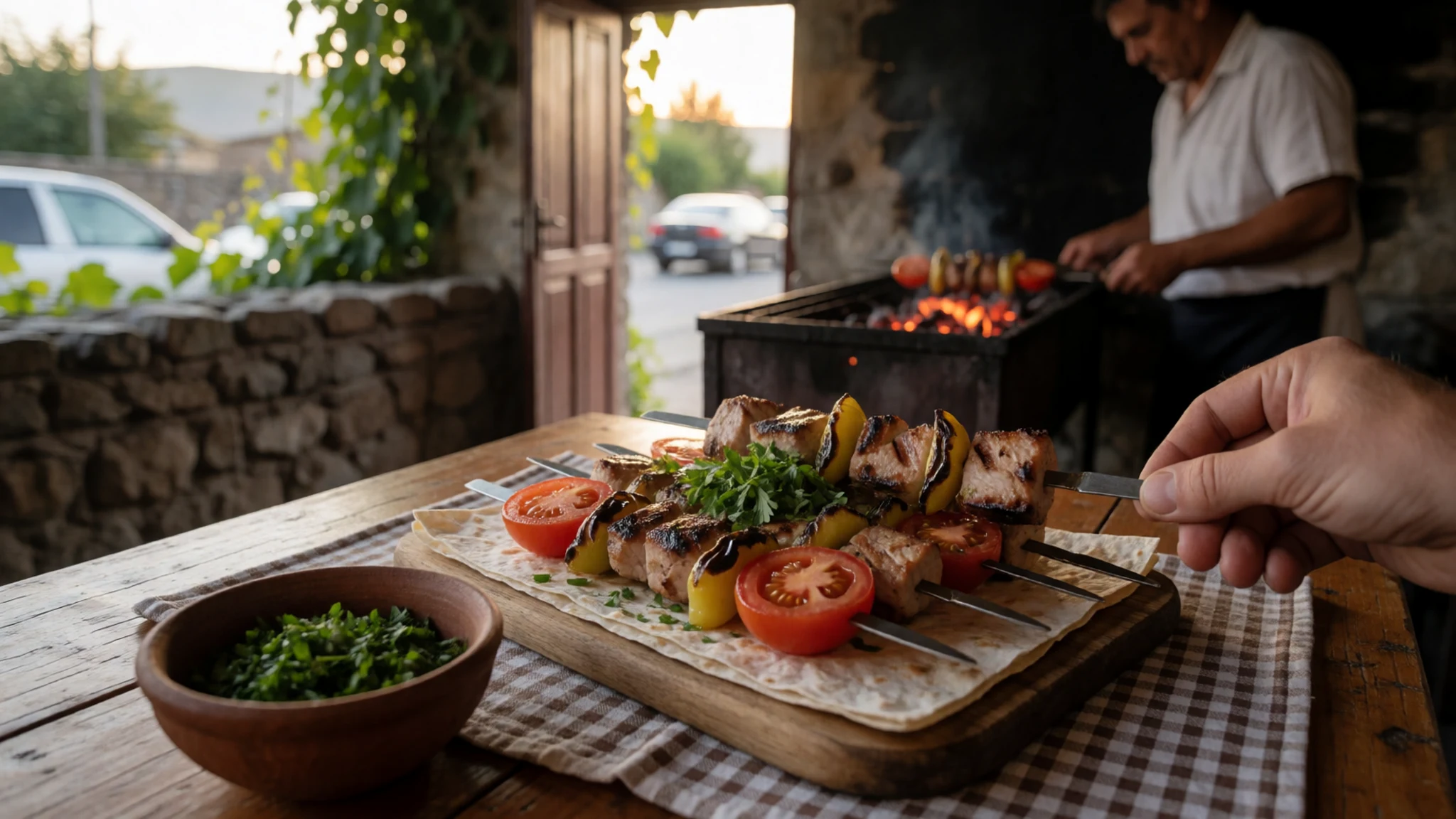
- Tolma — Home-style eateries and guesthouse tables in the villages
Tolma is minced meat and rice or grain wrapped in vine leaves or cabbage and simmered slowly. Vine leaves are common around Areni, so the dish fits the local landscape. Many guesthouses serve it as a family-style main course, often with yoghurt. - Lavash with cheese and herbs — Village bakeries and market stalls on the road from Yerevan
Lavash is thin, soft flatbread baked in a clay oven. Eaten fresh, it is often wrapped around white cheese and a handful of green herbs for a quick snack. Bakeries and roadside stalls are the easiest places to find it warm. - Gata — Bakeries in Yeghegnadzor and village shops
Gata is a sweet, flaky Armenian bread or pastry filled with a sugar-and-butter mixture. It goes well with strong coffee or tea and keeps for a day or two, which makes it practical to buy as a snack for the road.
Plan it
Best time. April, May and October, when daily highs stay between 31°C and 34°C against 41°C in July and August. Spring and early autumn are warm without the heat of the exposed valley in high summer, and the stone steps are safer. Winters are cold, and ice can make the paths and the church stairs slippery.
How long. 1–2
Getting there. Fly to Yerevan, then travel south by minibus, taxi or hire car to Areni and Yeghegnadzor, a drive of about two hours via the H10 and E117 roads. The last leg to the monastery is a short taxi or car ride up the Amaghu gorge road, so arrange a driver in advance if travelling without a car.
Budget. low
Tips
- Go early in the day for quieter buildings and softer light on the cliffs
- Wear shoes with good grip for the stone steps and uneven ground
- Carry water and sun protection, as the gorge has little shade and few services
- Combine Noravank with Areni for wine and the cave, but arrange a driver if tasting
- Check the official site or local contacts for opening arrangements before travelling
Etiquette
- Dress modestly and cover shoulders and knees when entering the churches
- Keep voices low inside and ask before photographing people at prayer
- Do not climb on khachkars or lean on carved walls
Nearby
Sources
- Wikidata Q1474586 (CC0)
- Wikipedia: Noravank (rev 1382071455) (CC BY-SA 4.0)
- Wikivoyage: Areni (rev 5393781) (CC BY-SA 4.0)
- Photo 01-img-noravanq.jpg — Vahagn Grigoryan (CC BY-SA 4.0)
- Photo 02-noravank.jpg — Eupator (CC BY 3.0)
- Photo 03-noravanq-plan.jpg — Armenian SSR Academy of Sciences (CC BY 3.0)
- Photo 04-noravank-astvatsatin-facade-details-img-2037.jpg — Arlen Dilsizian (CC BY 2.5)
- Photo 05-noravank12.jpg — BBCLCD (CC BY-SA 4.0)
- Photo 06-surb-astvatsatsin-church-noravank-monastery-armenia.jpg — Petar Milošević (CC BY-SA 4.0)
- Photo 07-monasterio-noravank-armenia-2016-10-01-dd-29.jpg — Diego Delso (CC BY-SA 4.0)
- Photo 08-noravank-kev1.jpg — Kevorkmail (CC BY 3.0)


