Sanahin Monastery
Sanahin Monastery, Armenia
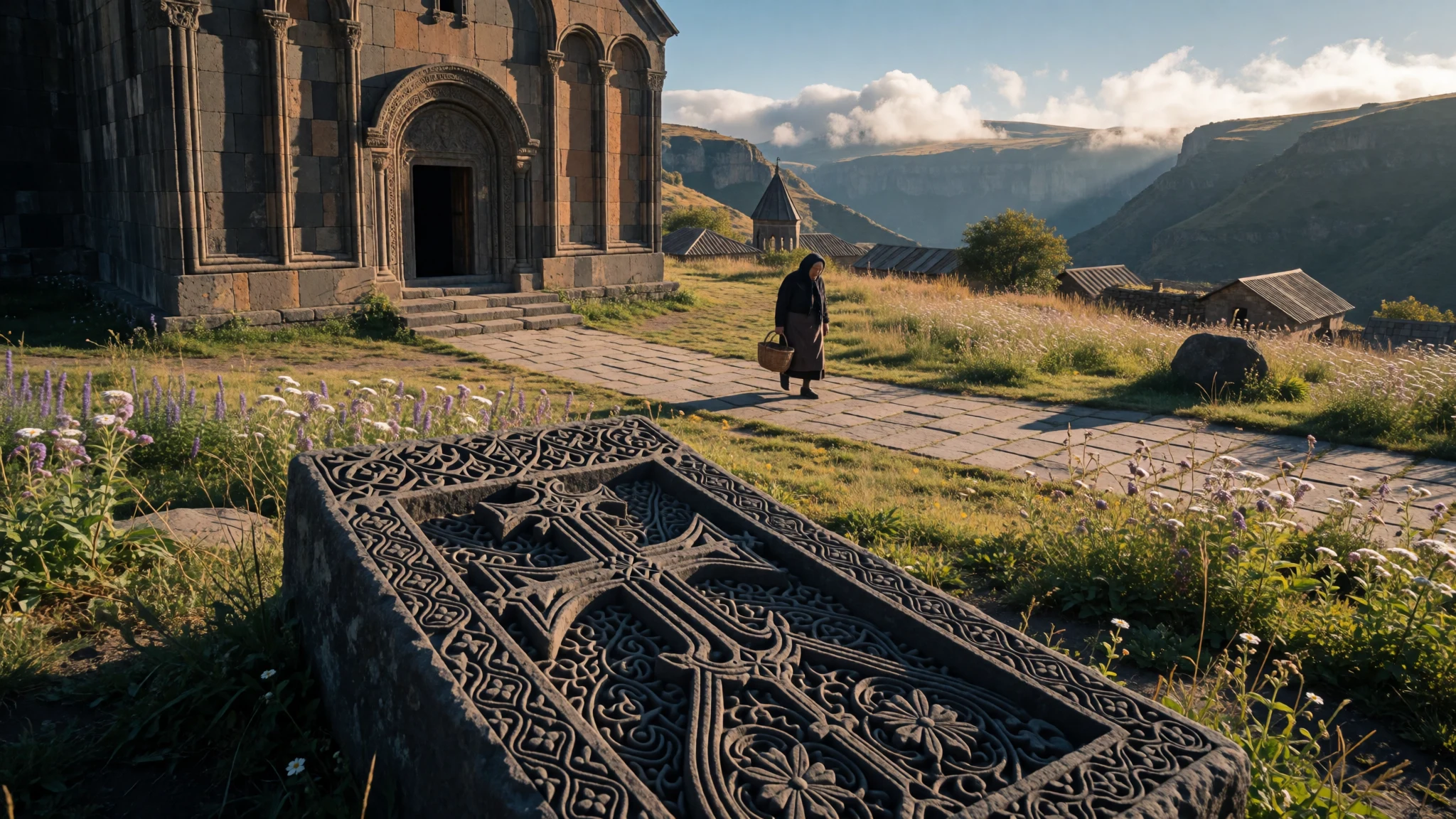
Sanahin Monastery is a quiet stone complex of churches, scholars' rooms and carved crosses above the Debed Canyon, best paired with its neighbour Haghpat.
The place
Sanahin Monastery stands in the village of Sanahin in Armenia's Lori Province, on a plateau that the Debed River and its tributaries have cut into deep gorges. The monastery belongs to the Armenian Apostolic Church and is still a living religious site, not only a monument. Its dark stone buildings are clustered together, with steep conical roofs, shaded entrance halls and old gravestones set into floors and walls. Khachkars, the carved cross-stones typical of Armenia, stand all around the grounds, along with the graves of bishops.
The name is usually explained as 'this one is older than that one'. That reads as a friendly boast aimed at Haghpat Monastery, which lies about 3 km to the east and is in plain view across a small river gorge. Together the two monasteries form one UNESCO World Heritage listing, and the two villages have much in common.
The nearest town for supplies, buses and a meal is Alaverdi, which grew up around copper mining. It has little historic charm beyond an old footbridge, and the mining works are impossible to miss. The monastery is the reason to come. More agencies now put Sanahin and Haghpat on their Armenian itineraries, so tour groups do appear, but the site is usually calm and a walk up from the canyon floor gives a good sense of how the buildings sit in the landscape. The slopes are steep, the paths are rough, and the village itself feels like a working place rather than a heritage set.
Its story
Sanahin Monastery has its roots in the 10th century, when the Bagratuni kings of Armenia were building churches across the north of their realm. Wikidata gives the founding as around 901. The first church, dedicated to the Holy Mother of God, was raised under King Abas I. Later, in 966, King Ashot III and Queen Khosrovanuysh funded the church of the Holy Saviour. Their sons Kiurike and Smbat founded a community of monks here and began to turn it into a place of learning, bringing in clergy, scholars and writers. Polycarp served as the first abbot, followed by the scholar Hovhannes.
The monastery's standing grew. In 979 a decree from King Smbat II made Sanahin the seat of a bishop for the Kyurikian kingdom, a role it kept until the middle of the 11th century. By then the monastic school had become a significant centre of education. Under the churchman Dioscoros Sanahnetsi, a celebrated orator, a library and the chapel of St Gregory were added, and scribes copied and produced many manuscripts.
Teaching went well beyond theology. Students were offered philosophy, rhetoric, music, medicine and the study of calendars. Scholar-monks such as Anania Sanahnetsi and Hakobos Karapnetsi studied, taught and wrote here. That mix of prayer, reading and copying explains why the complex has so many connected rooms, a library, a scriptorium and a school alongside the churches, rather than a single grand building.
What to see
- Sanahin Monastery complex — Sanahin village, Lori Province
The monastery is the main reason for the journey. Churches, chapels, entrance halls and the old library space are packed tightly together in dark stone, so a slow circuit works better than a quick look. Khachkars and bishops' gravestones fill the grounds, and the setting looks out over the canyon country.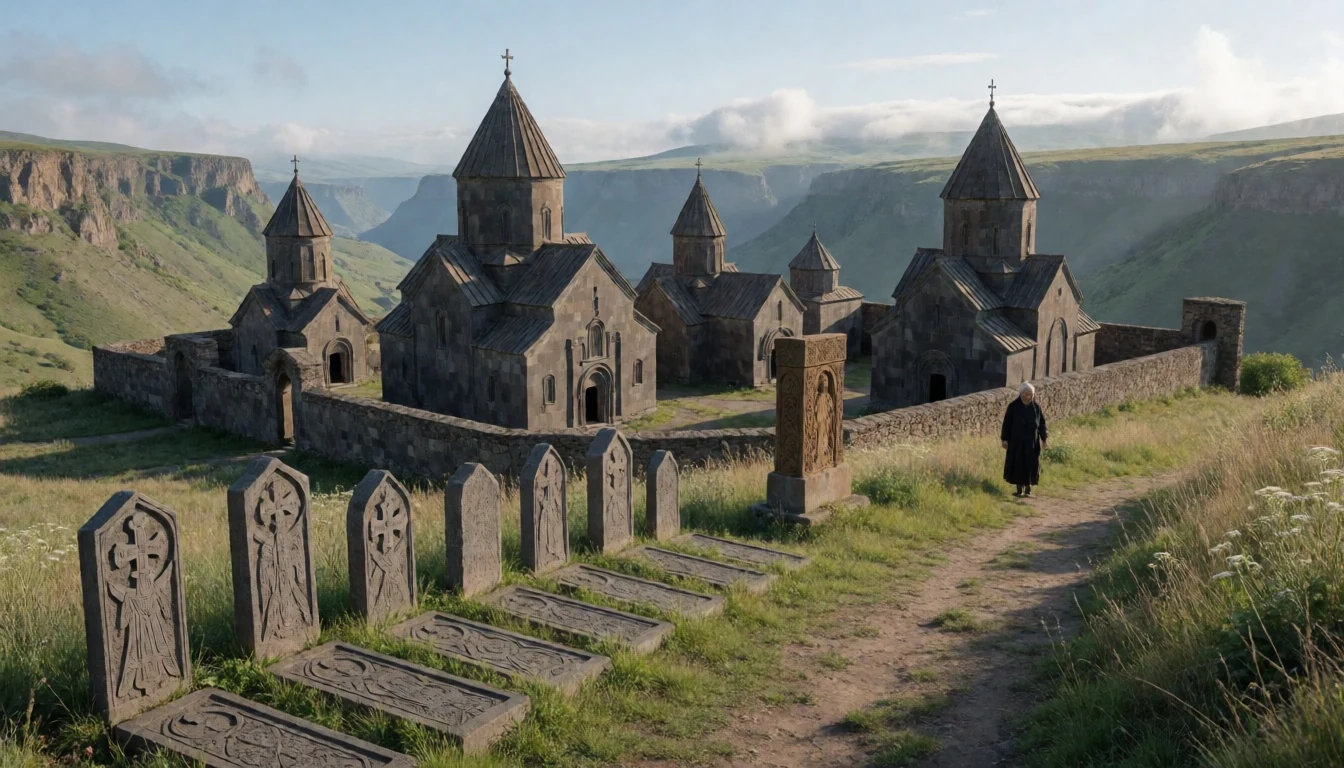
- Church of the Holy Saviour — Inside the monastery grounds
Built in the late 10th century by the royal family, this church is one of the oldest parts of the complex. Look for the sculpted relief of the two princes, Smbat and Gurgen, holding a model of the church, and for the careful stonework on the walls and doorways.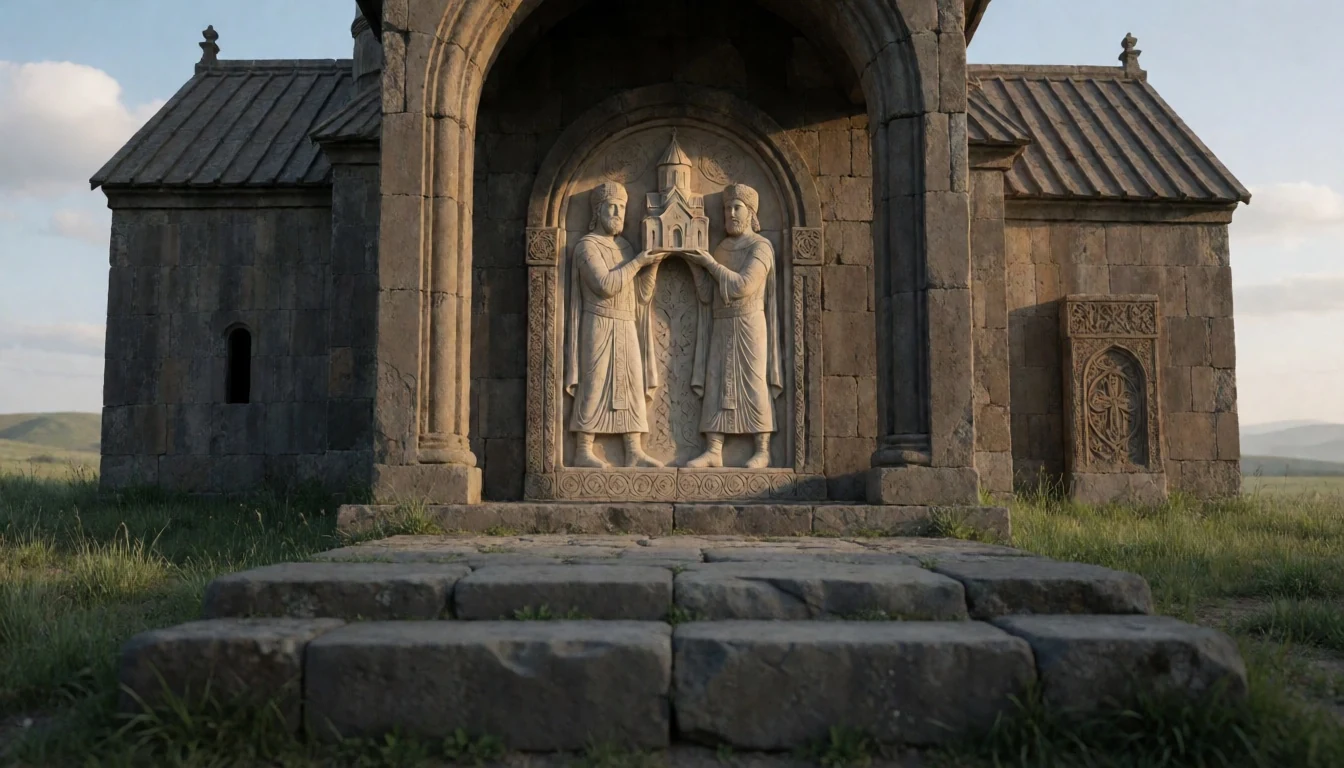
- Haghpat Monastery — Haghpat village
Part of the same World Heritage listing, Haghpat is the sister monastery across the gorge. Its passages, chambers, khachkars and views make it easy to compare with Sanahin. Visitors often struggle to pick a favourite. Allow time to see both, and the road between the villages makes that straightforward.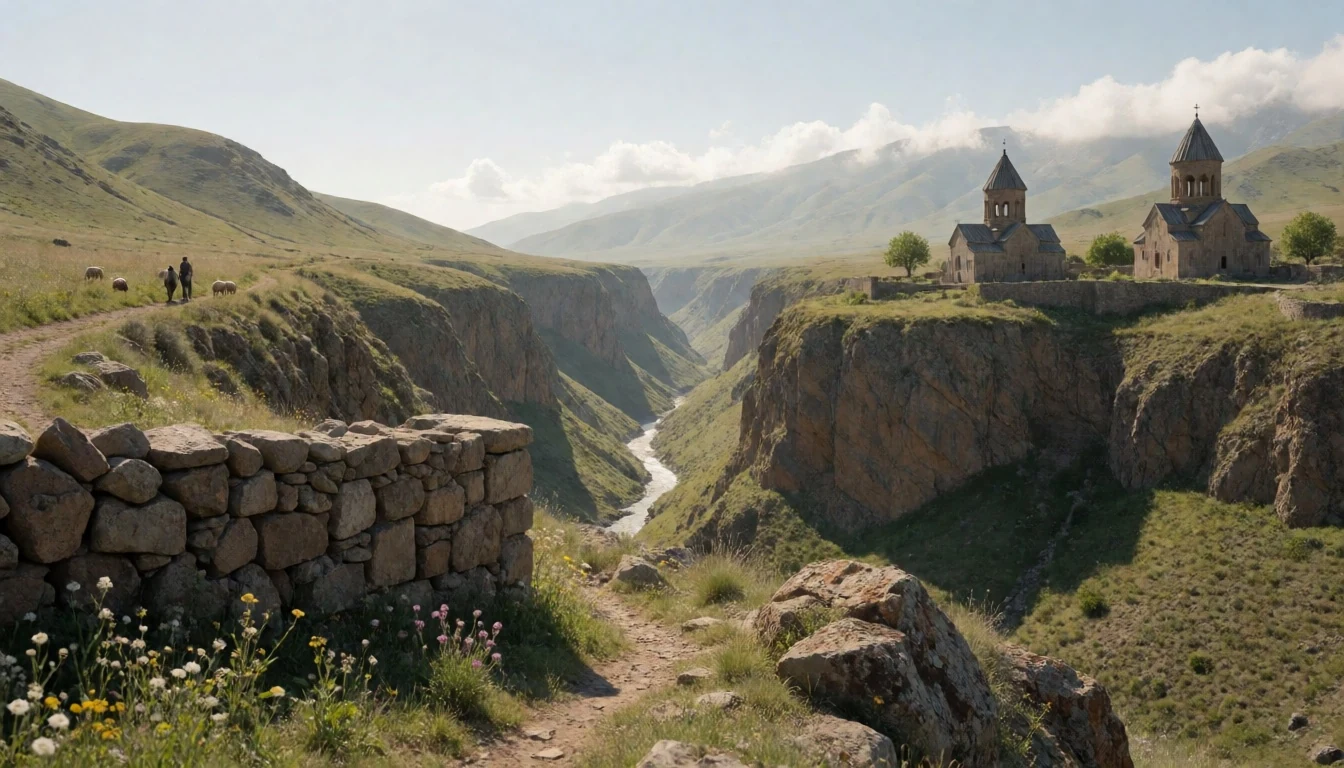
- 12th-century bridge of Sanahin — Debed Canyon, below Sanahin
This old stone bridge crosses the Debed River below the village. It is a pleasant stop in its own right, and a footpath from here climbs to the canyon rim and on to the monastery. Cafés nearby serve simple snacks with river views. The path is steep and rough in places.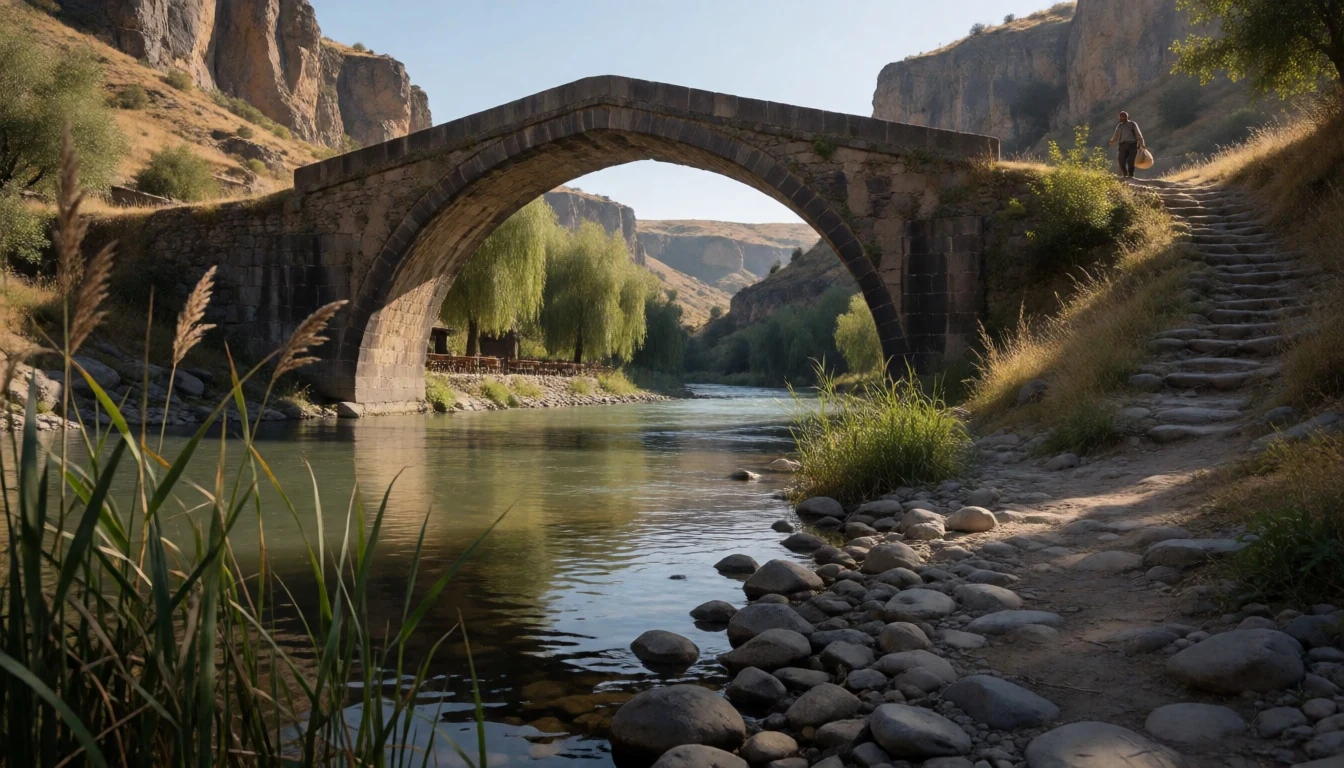
- Mikoyan Brothers Museum — Sanahin village
A local museum devoted to two brothers from Sanahin. Artyom Mikoyan designed the MiG fighter aircraft, and a MiG is parked out front. His brother Anastas rose to lead the Soviet government. It adds a very different, twentieth-century chapter to a visit centred on a medieval monastery.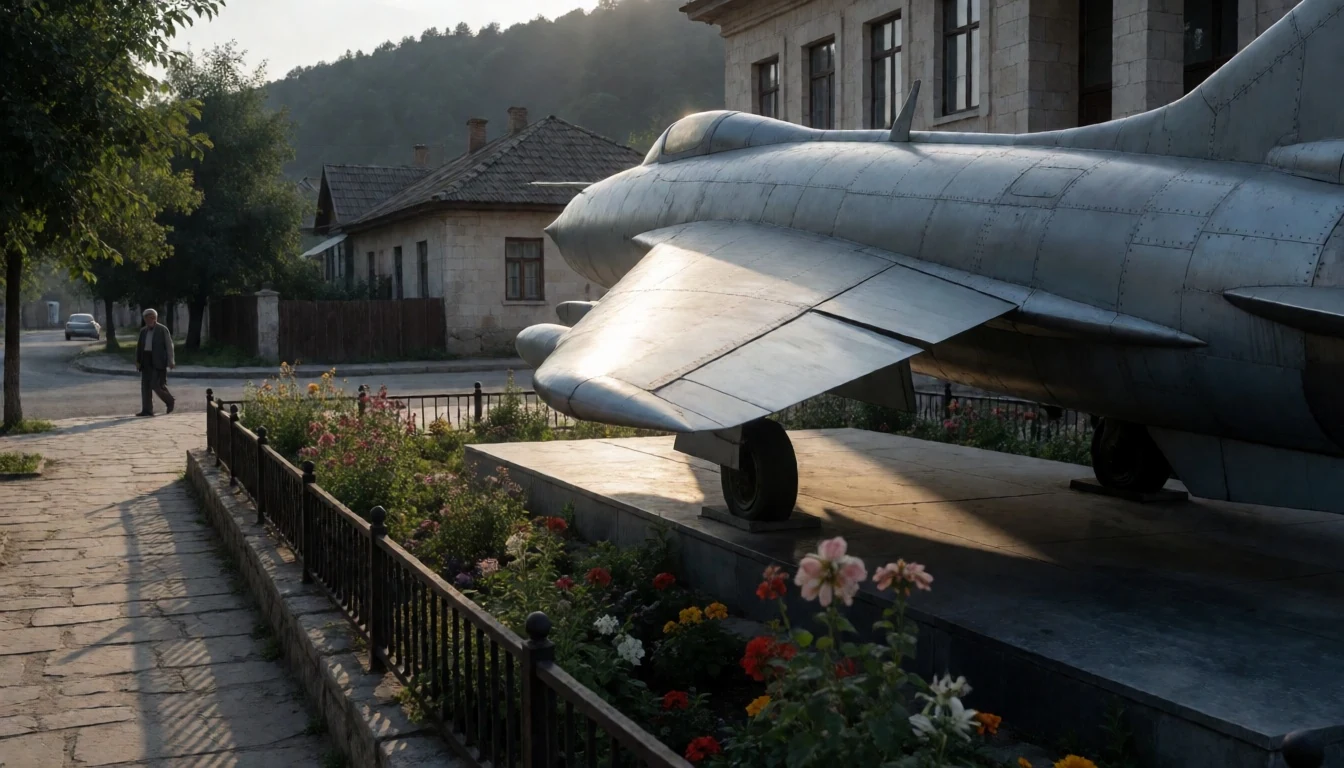
Culture
Sanahin Monastery belongs to the Armenian Apostolic Church, one of the oldest Christian traditions, and the monastery still reflects that faith in its architecture and carving. The khachkar is the clearest example. These upright stones, carved with a cross surrounded by interlaced patterns, were set up as memorials, as thanks for blessings, or as markers of faith, and no two are quite alike. At Sanahin they stand in rows around the grounds, and many bishops are buried in the complex.
The monastery's history as a school matters too. For centuries the buildings were a place where manuscripts were copied, music and medicine were taught, and ideas were debated. That scholarly tradition is a source of local pride, and guides in the area often talk about Sanahin as a place of learning rather than just prayer.
The wider Debed Canyon has a mixed identity. Villages like Sanahin and Haghpat keep a strong sense of heritage, while Alaverdi below carries the marks of industry, especially mining. Local people are generally welcoming to visitors who show interest, and a few words of Armenian, such as a polite greeting or thanks, are well received. Sunday and feast days can bring worshippers, so the atmosphere may be quieter and more devotional then.
When entering the churches, dress modestly, keep your voice low, and ask before photographing worshippers or any service in progress.
What to wear
Sanahin Monastery sits in a part of Armenia where traditional dress now appears mainly at festivals, weddings, folk performances and church celebrations. The classic women's outfit is a long, fitted dress, often called a taraz, made from silk, velvet or wool, with embroidery at the hem, sleeves and chest. A headdress or veil and silver belt are common additions. Men's traditional clothing includes a tunic or coat with a sash, trousers and a woollen or fur hat. Embroidered cloth, hand-woven wool and decorative metalwork are a source of pride in rural areas.
Day to day, people in Alaverdi and the surrounding villages wear practical, modern clothes. Jeans, jackets, sturdy shoes and layers are normal, and older women in villages may wear headscarves and dark colours, especially for church. Mining-town practicality shapes what people choose more than fashion does.
For a visit, the canyon climate swings between warm summers and cold, wet or snowy winters, so layers work well. Wear footwear with good grip, because village lanes and canyon paths are steep, muddy when wet, and uneven. Churches call for modest dress: cover the shoulders and knees, and carry a light scarf or shawl if women prefer to cover their heads. Bring a rain jacket in spring and autumn, a warm coat in winter, and sun protection in summer, since there is little shade on the open plateau.
What to eat
- Khorovats (Armenian barbecue) — Barbecue restaurants along the highway near Alaverdi
Grilled pork, lamb or chicken cooked over charcoal and served with flatbread, onions and herbs. This is the standard meal in the region, and barbecue restaurants line the main road through the canyon, making it an easy lunch after the monastery.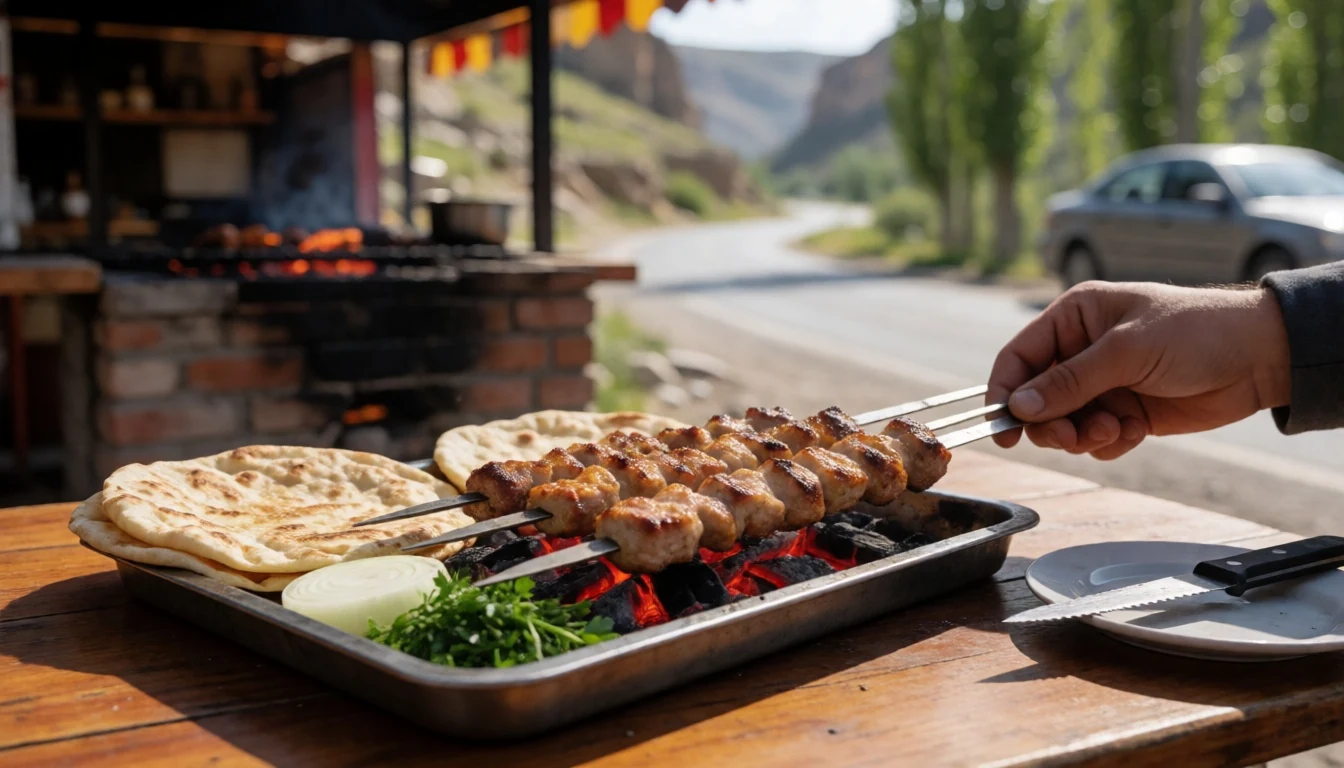
- Lavash with cheese and herbs — Bakeries and small cafés in Alaverdi and nearby villages
Thin, soft flatbread baked in a clay oven, usually wrapped around fresh cheese and green herbs. It is a simple snack or side dish, found on most tables and available at small cafés and bakeries in Alaverdi and the villages.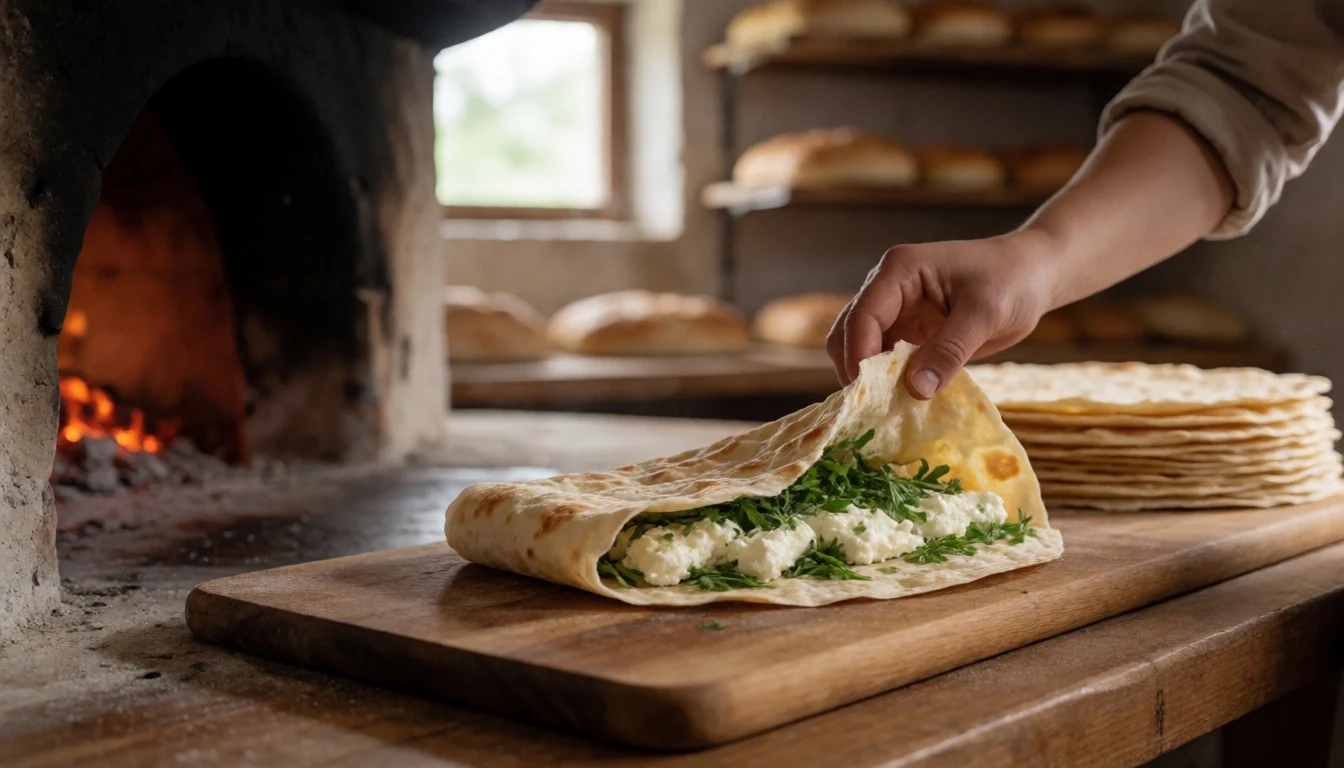
- Dolma — Riverside taverns along the Debed and village guesthouses
Vine leaves, or sometimes cabbage, stuffed with spiced minced meat and rice, then simmered. In summer and autumn, when fresh leaves are available, it is a home-style favourite. Families often serve it with yoghurt, and some riverside taverns offer it on the menu. - Fresh river-valley produce — Guesthouses and B&Bs in Sanahin, Haghpat and Alaverdi
Local tables are often filled with tomatoes, cucumbers, herbs, pickles and seasonal fruit, served alongside the main dish. Guesthouse hosts frequently bring out home-made preserves and fruit as well, which makes a gentle introduction to Armenian everyday food. - Armenian coffee — Cafés near the old bridge of Sanahin
Strong, fine-ground coffee brewed in a small pot and served in tiny cups, often with the grounds left in the bottom. It makes a good break after the climb up from the bridge, and cafés near the old bridge serve it with simple snacks and views.
Plan it
Best time. September–October is the most comfortable stretch, with drier weather for walking the canyon paths and exploring the grounds, while late spring and June bring the heaviest rain. Summer can be warm, and winter brings cold and a risk of snow and ice. Paths are slippery when wet, so dry spells are best.
How long. 1–2
Getting there. Fly into Yerevan's Zvartnots airport or arrive overland from Tbilisi in Georgia. The nearest practical base is Alaverdi, reached by marshrutka (shared minibus) or bus from Yerevan, Vanadzor and Tbilisi; ask locally for current departures. The train between Yerevan and Tbilisi passes through but does not stop at Alaverdi, and Vanadzor is the better station. From Alaverdi, take a taxi up to the village or walk up from the old bridge.
Budget. low
Tips
- Check marshrutka and bus times locally the day before, as schedules change and services thin out later in the day
- Carry some cash in dram, since small cafés and village guesthouses may not take cards
- Bring water and wear shoes with grip, as canyon trails are steep, have no guard rails and can be slippery when wet
- Combine Sanahin with Haghpat, and start early to enjoy the sites before tour groups arrive
- Many hotels and B&Bs have their own restaurants, so ask your host about meals before heading out
Etiquette
- Dress modestly in the churches, covering shoulders and knees
- Speak quietly and ask before photographing worshippers or services
- Do not climb on khachkars or gravestones
Nearby
Sources
- Wikidata Q1975614 (CC0)
- Wikipedia: Sanahin Monastery (rev 1367273680) (CC BY-SA 4.0)
- Wikivoyage: Alaverdi (rev 5423823) (CC BY-SA 4.0)
- Photo 01-64.jpg, Vahag851 (CC BY 3.0)
- Photo 02-sanahin-external-view.jpg, Steven C. Price (CC BY-SA 4.0)
- Photo 03-der-architekt-1919-02.jpg, unknown author (Public domain)
- Photo 04-armenie-sanahin-st-sauveur-smbat-and-gurgen.jpg, jacgroumo (CC BY 2.5)
- Photo 05-monasterio-de-sanahin-armenia-2016-09-30-dd-36.jpg, Diego Delso (CC BY-SA 4.0)
- Photo 06-monasterio-de-sanahin-armenia-2016-09-30-dd-50-51-hdr.jpg, Diego Delso (CC BY-SA 4.0)
- Photo 07-monasterio-de-sanahin-armenia-2016-09-30-dd-52-54-hdr.jpg, Diego Delso (CC BY-SA 4.0)
- Photo 08-monasterio-de-sanahin-armenia-2016-09-30-dd-47-49-hdr.jpg, Diego Delso (CC BY-SA 4.0)


