Khangai Mountains
Khangai Mountains, Mongolia
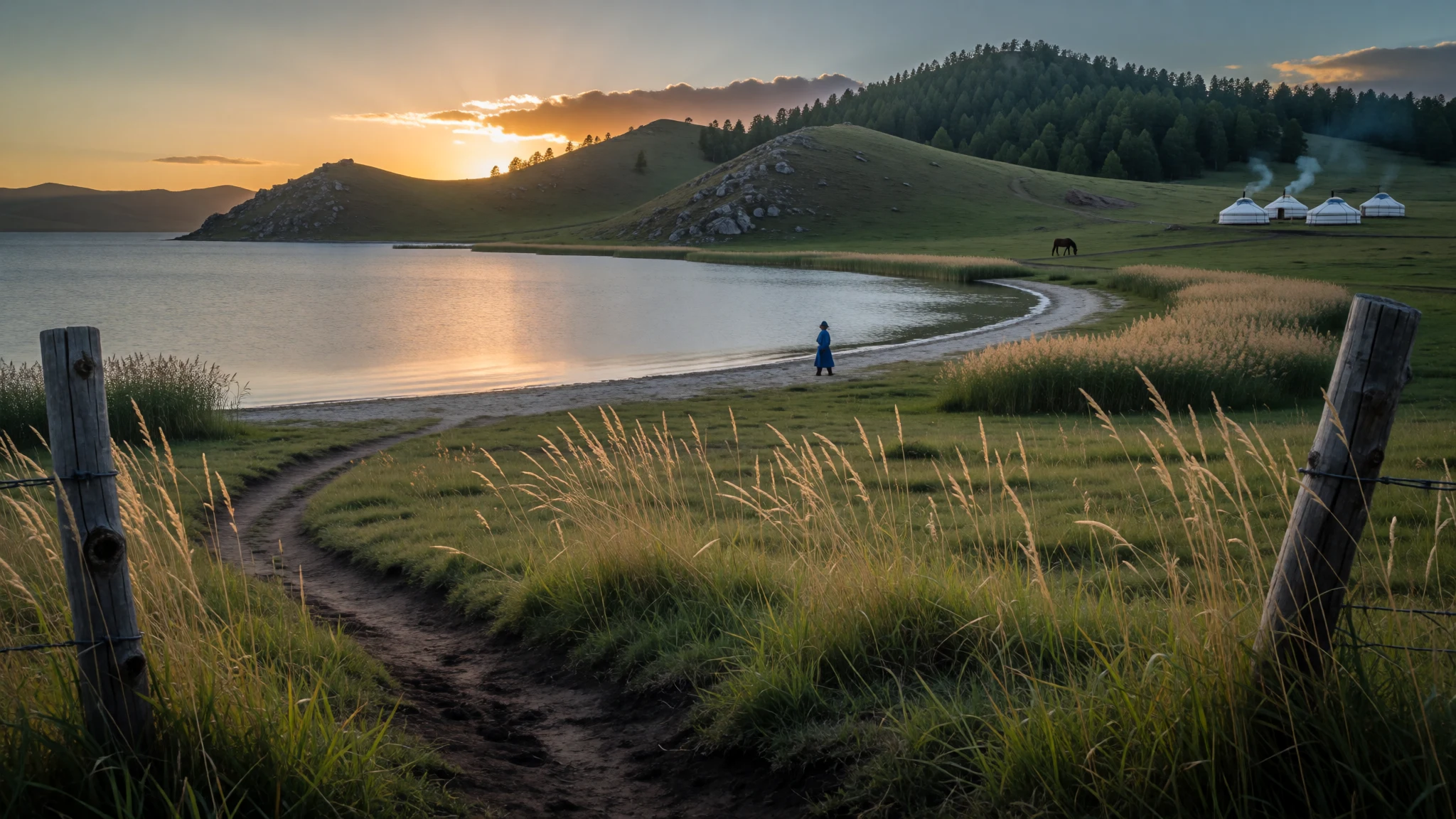
The Khangai Mountains offer slow, open-sky travel through herding country: lakes, an old volcano and ger camps, far from any crowd.
The place
The Khangai Mountains rise in central Mongolia, west of Ulaanbaatar, and are less a row of sharp peaks than a broad upland of rounded ridges, forested north-facing slopes, open grass valleys and scattered lakes. The range reaches 4031 metres at its top, though most visitors spend their days far lower, on pastureland where the horizon is wide and trees are few. Arkhangai province holds much of the range's visitor country, with Tsetserleg as its town and the usual place to stock up. Herding families move their animals between seasonal camps here, so the landscape is lived in rather than empty: gers stand beside streams, and horses, yaks, sheep and goats graze right up to the roadside. Mongolia's nickname, the Land of Blue Skies, is earned, with plenty of sunshine through the year, but weather turns quickly. Summer days can be warm and then go cold after dark, and rain falls in many areas. Winters here are not as harsh as in other parts of the country. Outside the towns, many routes are unsurfaced tracks, so distances on the map mean little; a short hop can eat half a day. Mobile signal is patchy. The Khangai suits people who enjoy slow, practical journeys: hiring a driver, sleeping in a ger camp, walking a ridge, sitting by a lake. Services are thin, so food, fuel and water need planning ahead.
Its story
The Khangai Mountains sit in the heartland of the steppe peoples, and the history of the region is largely the history of herders and the empires they raised. Records of the Xiongnu reach back to the third century BC. They left almost nothing written about themselves, so much of what survives comes from Chinese chroniclers, who cast them as the barbarians that walls were built against. Centuries later the Mongol Empire grew out of this same grassland world. Its short-lived capital, Karakorum (Kharkhorin), was raised on the steppe beyond the range's eastern foothills by Ögedei, son of Genghis Khan. The city has vanished, though the site and the objects found there live on in the ground and in museum cases. Tradition credits Genghis Khan himself with just one lasting structure, a store for plunder, which says something about how little the Mongol elite invested in fixed architecture. After the empire fragmented, Tibetan Buddhist monasteries became the most visible marks of the past. Stalinist purges destroyed most of them, and only a few still stand, among them Erdene Zuu at Kharkhorin, which remains an active place of worship with resident lamas. The pattern throughout is impermanence: tents, tracks and shifting pastures, with stone monuments and carved drawings scattered across the country, some of them thousands of years old.
What to see
- Terkhiin Tsagaan Nuur (Great White Lake) — Arkhangai province
This lake in Arkhangai province sits among grassy hills and old volcanic ground, and it is the most popular stop in the Khangai. Walk the shore, ride a horse, or simply sit by the water at dusk. Ger camps cluster nearby, so book ahead in summer.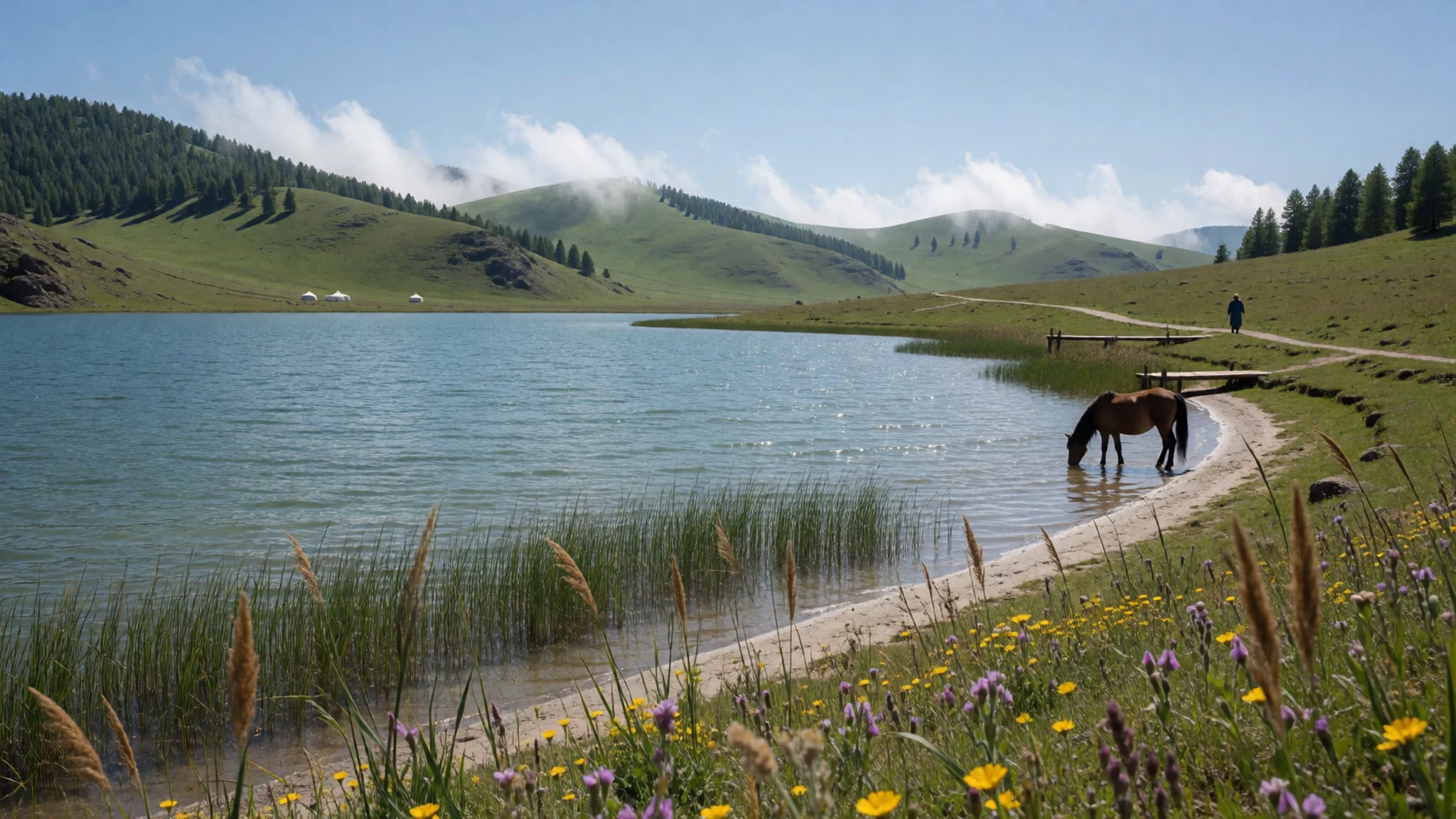
- Khorgo volcano — Near Terkhiin Tsagaan Nuur
Khorgo is an extinct volcanic cone near the Great White Lake, with a crater rim that can be reached on foot. From the top the lava fields, forest edge and surrounding steppe lie spread out below. Wear sturdy shoes, as the rock is loose and sharp.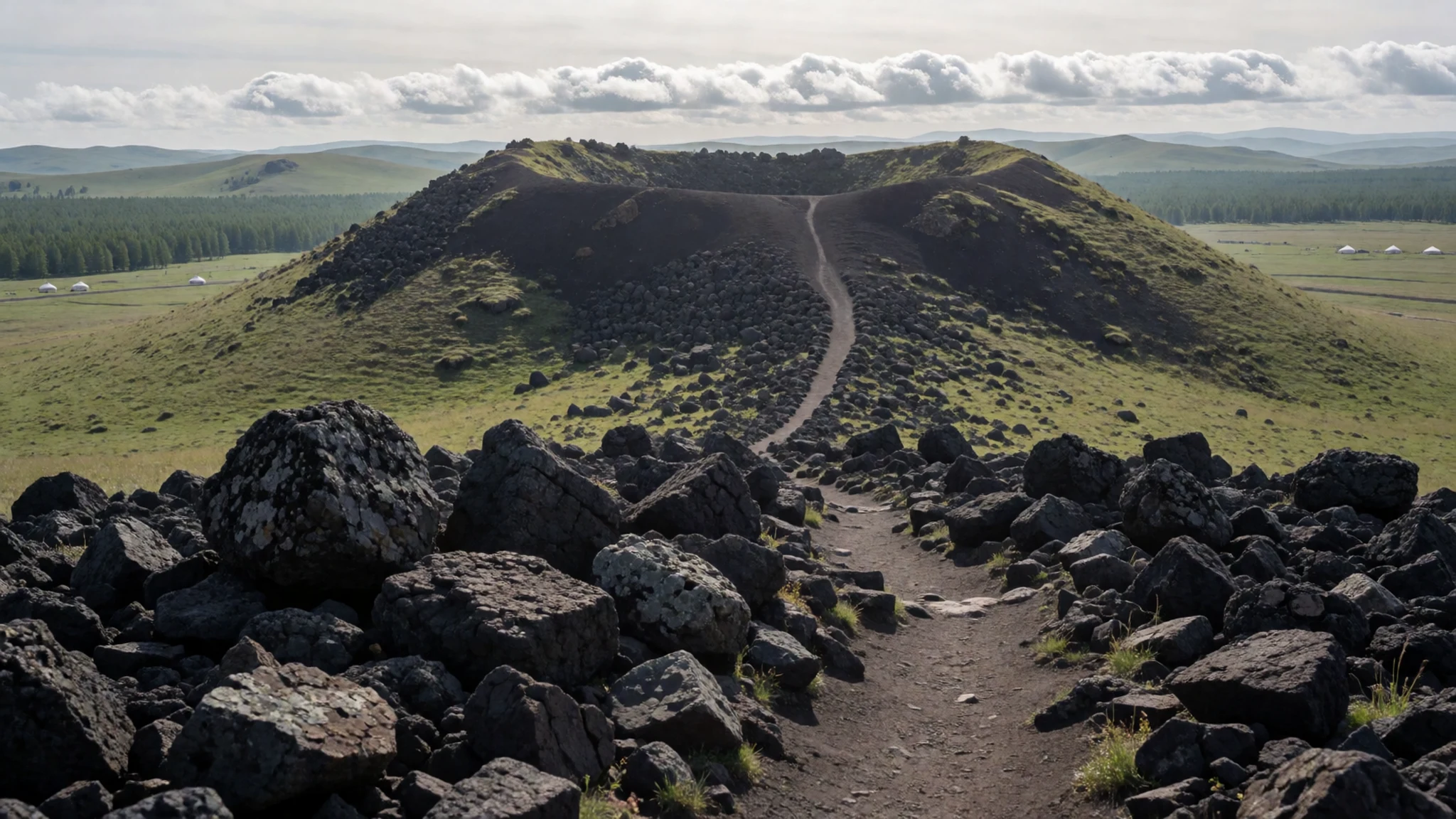
- Tsetserleg — Arkhangai province
Tsetserleg is the capital of Arkhangai province and the practical gateway to the range. It is a small town set against forested hills, useful for markets, fuel, cash and a plain meal before heading into the countryside. Allow time to wander its streets and hillside views.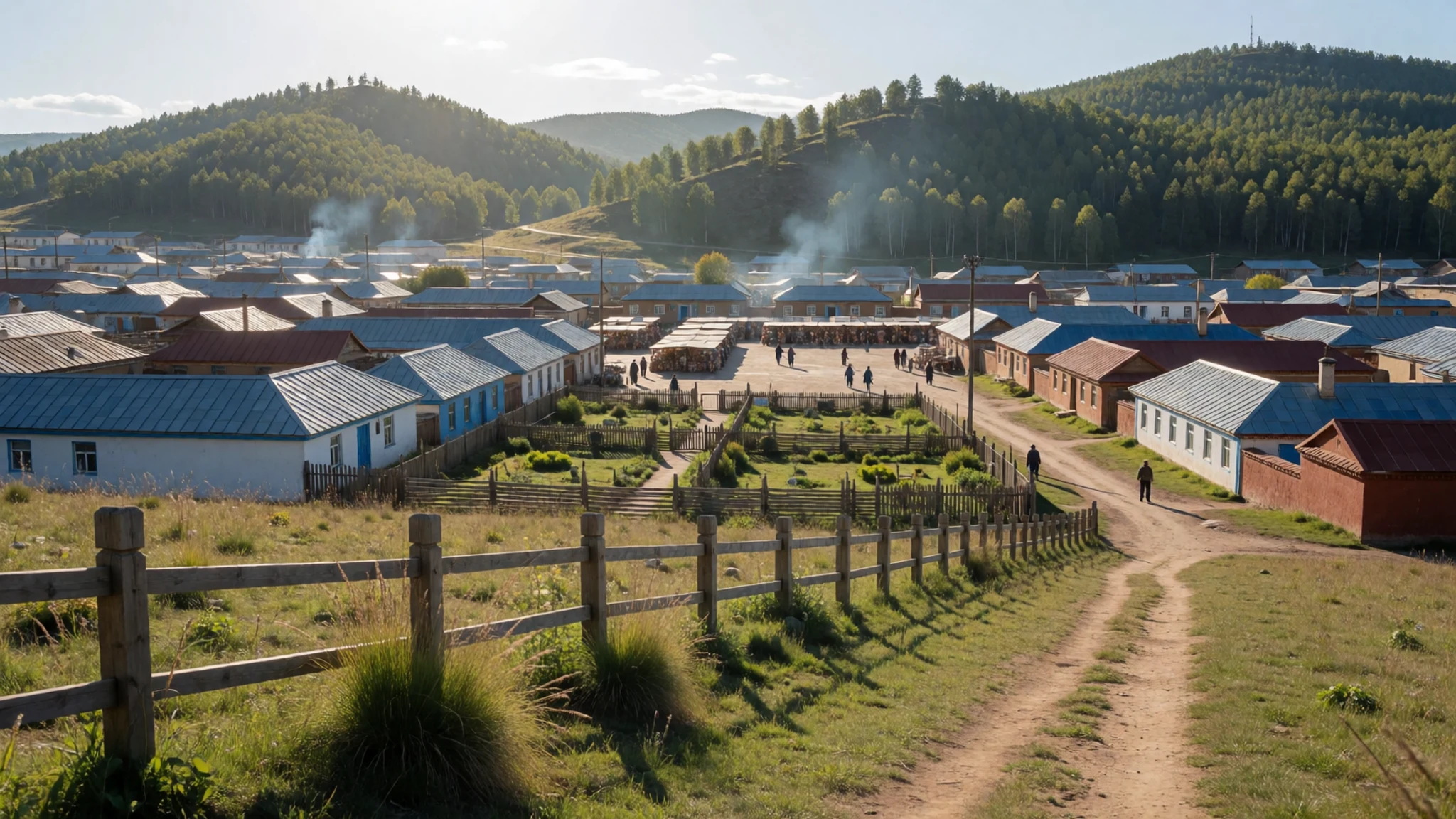
- Mount Erkhet — Central Khangai
Mount Erkhet is one of the higher summits of the Khangai, a bulky, rounded massif rather than a technical peak. It rewards walkers and drivers who want proper mountain scenery away from the lake crowds. Go with a local guide, since tracks are faint and weather changes fast.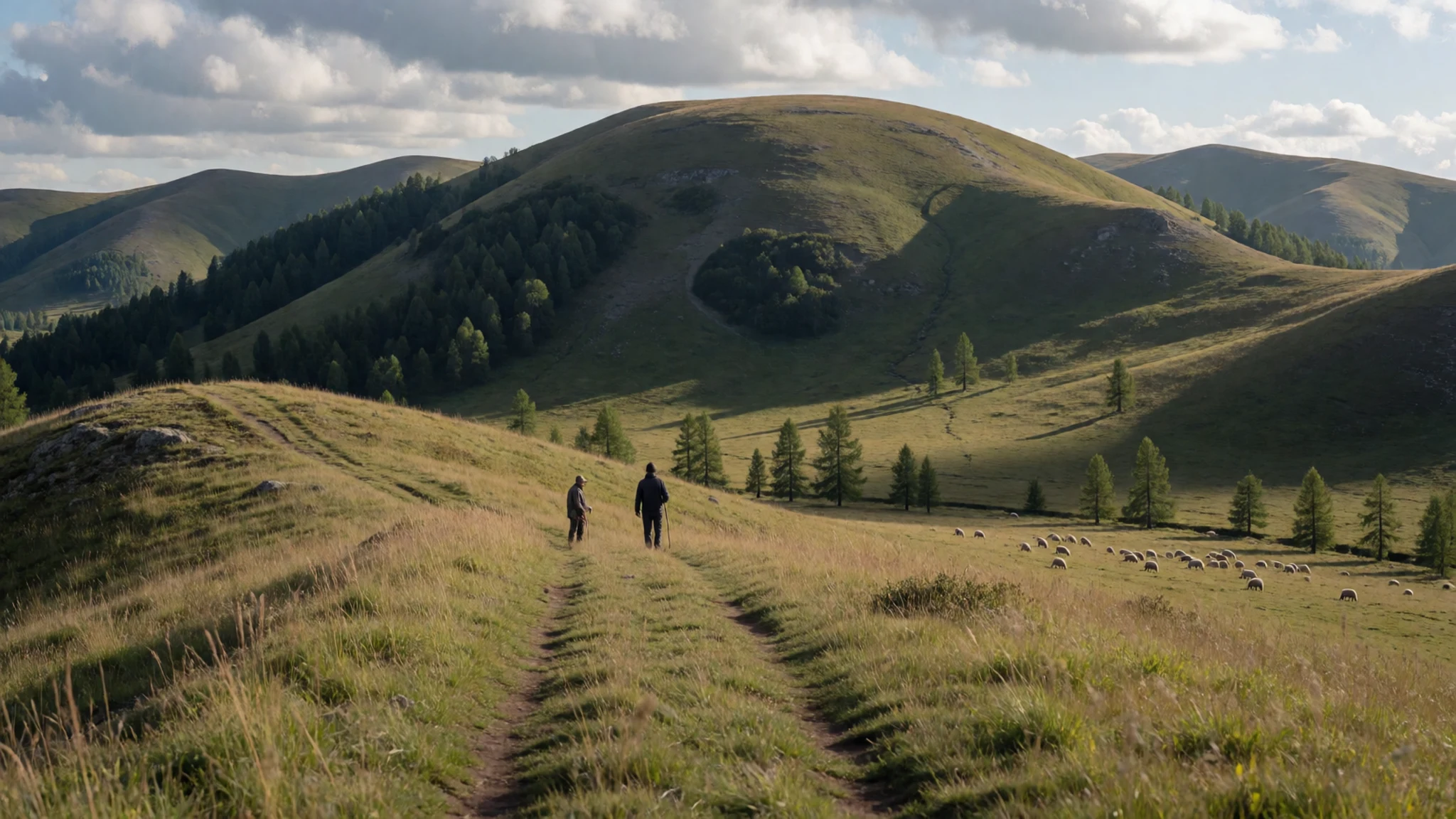
- Erdene Zuu Monastery, Kharkhorin — Kharkhorin, east of the range
Erdene Zuu stands at Kharkhorin, close to the site of the old Mongol capital, east of the range. It is among the few Tibetan Buddhist monasteries to have survived the Stalinist purges, and it is still active, with resident lamas. Dress modestly and keep voices low.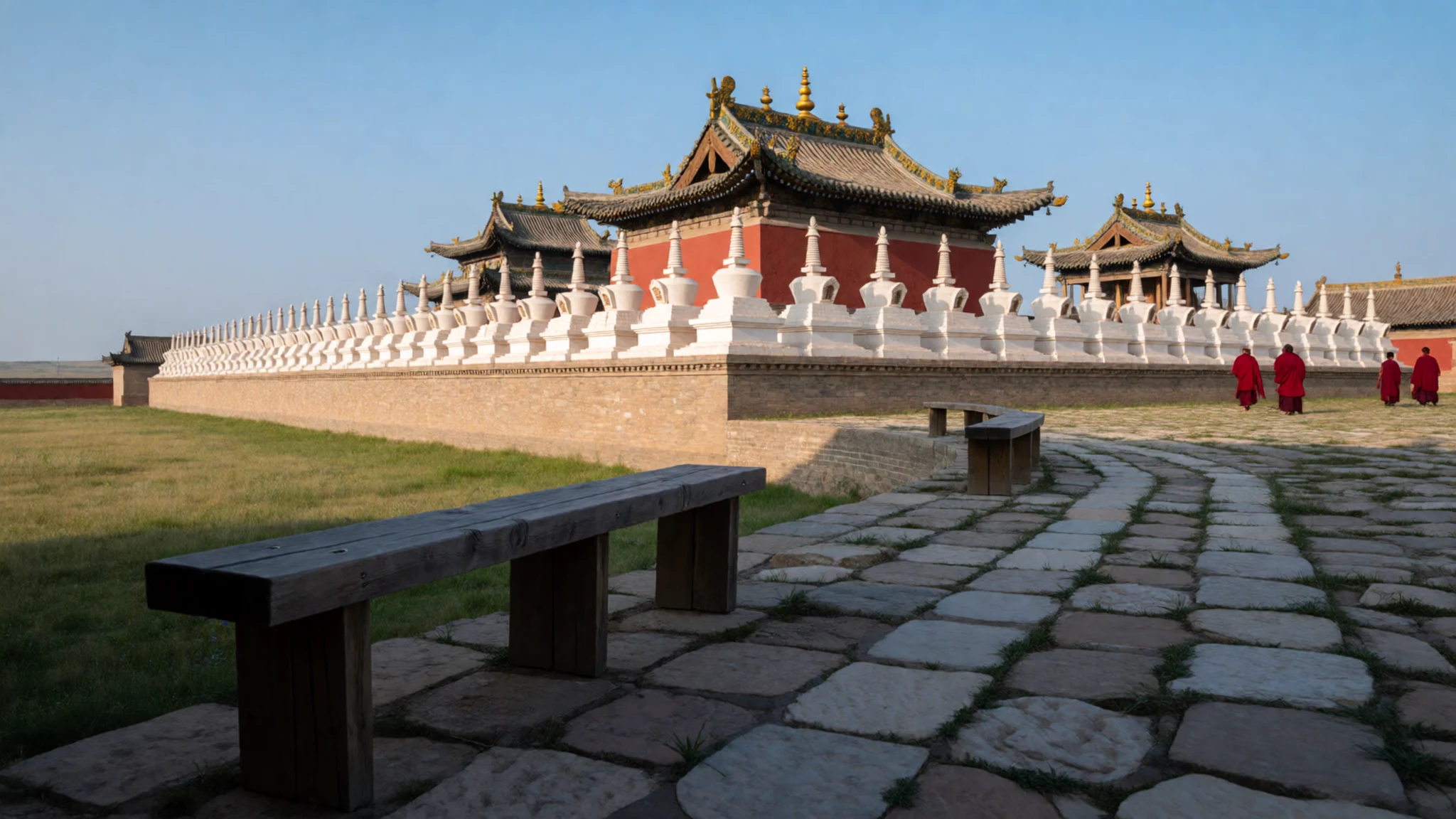
Culture
The Khangai Mountains are herding country, and daily life here follows the needs of animals and seasons. Families live in gers, felt-covered round tents, and move between pastures, so hospitality is a practical matter: any visitor is a guest, and a guest is expected to be fed. Mongolians tend to be direct, and people will say plainly what they think, which is meant as honesty rather than rudeness. Tibetan Buddhism shapes much of the spiritual life, and the monasteries that survived the twentieth-century purges are working places of worship, not museums. Many Mongolians feel strongly about their history with China, and the province of Inner Mongolia is often called southern Mongolia, so it is wiser to leave that subject alone unless a host raises it. Horses matter enormously, both as work animals and as part of national identity, and a family's herd is a source of pride. Expect to be offered tea, dried curds and conversation before any business is discussed. Refusing a gift outright is considered rude, and small gestures of courtesy count for a lot. Gifts and cups are handled with the right hand, palm turned up. When you step into a ger, accept the first bowl of milk tea or the plate of dried curds with your right hand, palm up, and take at least a small taste rather than refusing.
What to wear
In the Khangai Mountains, the traditional garment is the deel, a long, wrap-over robe fastened at the side and tied with a bright sash. Everyday versions are made of cotton or wool for work and warmth, while festival and wedding deels use silk and brocade in deep blues, reds and golds. Leather boots with turned-up toes and felt or fur-trimmed hats complete the outfit. Deels are worn at celebrations such as Naadam and the lunar new year, and many herders still wear them for daily work because they are warm and suit riding. In towns such as Tsetserleg, people mostly wear jeans, jackets, trainers and fleeces, with deels kept for special occasions. Visitors should dress for rapid change: thermal layers, a windproof and waterproof shell, a warm hat and gloves even in summer, plus sun protection, since the sky is often clear and the air thin. Sturdy walking boots suit tracks, volcanic rock and wet grass. At monasteries, cover shoulders and knees, and remove hats indoors. Avoid clothing with Chinese slogans or symbols, which can cause offence.
What to eat
- Buuz — Canteens and tea shops in Tsetserleg and other small towns
Steamed dumplings filled with minced mutton and onion, usually served in small sets. They are plain, filling and hot, a good first meal after a cold drive. Find them in town canteens and tea shops, and at family tables in the countryside.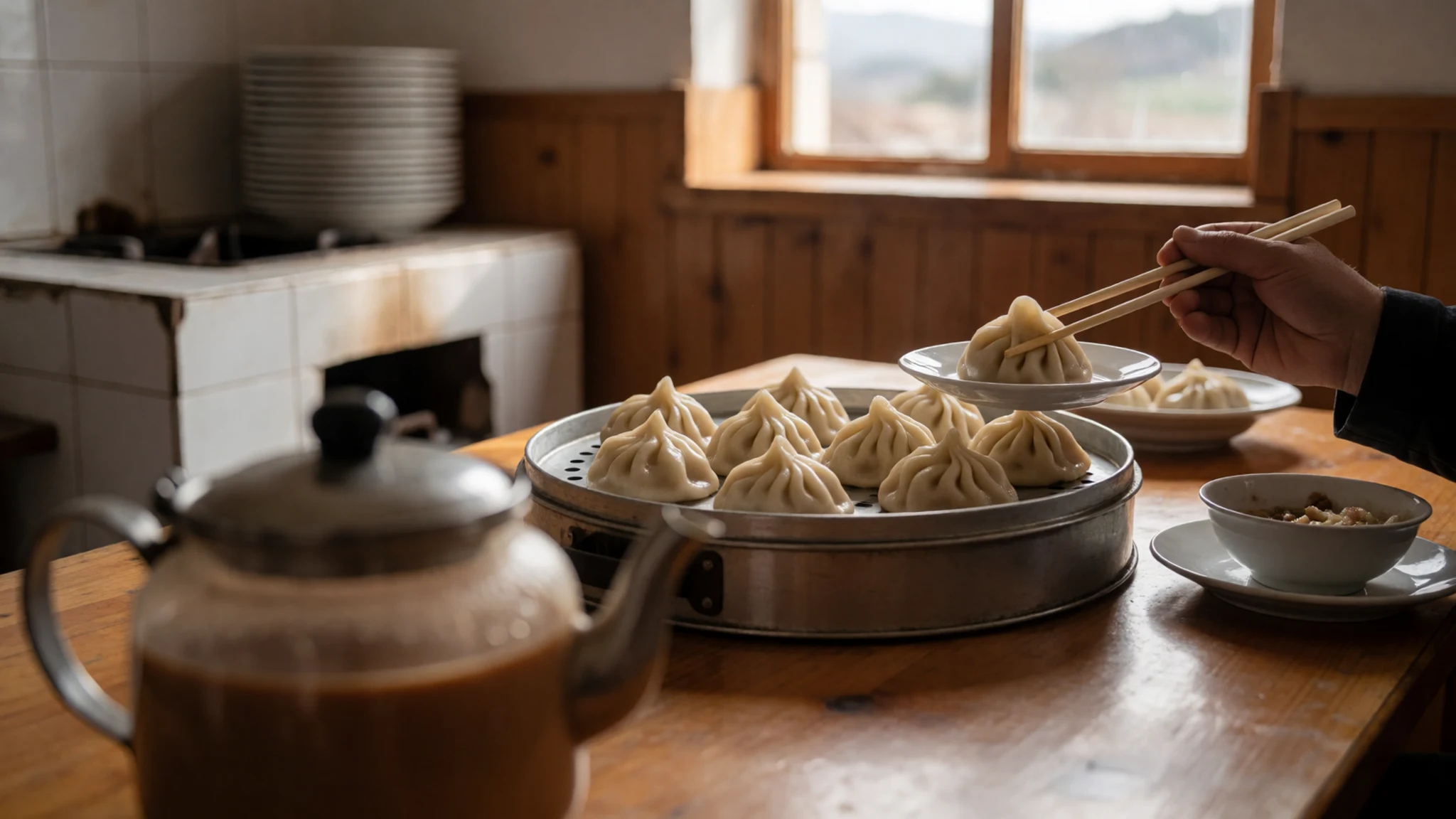
- Khuushuur — Roadside eateries and town markets
A deep-fried flatbread folded around meat and onion, with a crisp shell and a juicy centre. Once a festive dish, it is now common everywhere. Eat it hot and carefully, as the fat inside holds heat. A few will make a meal.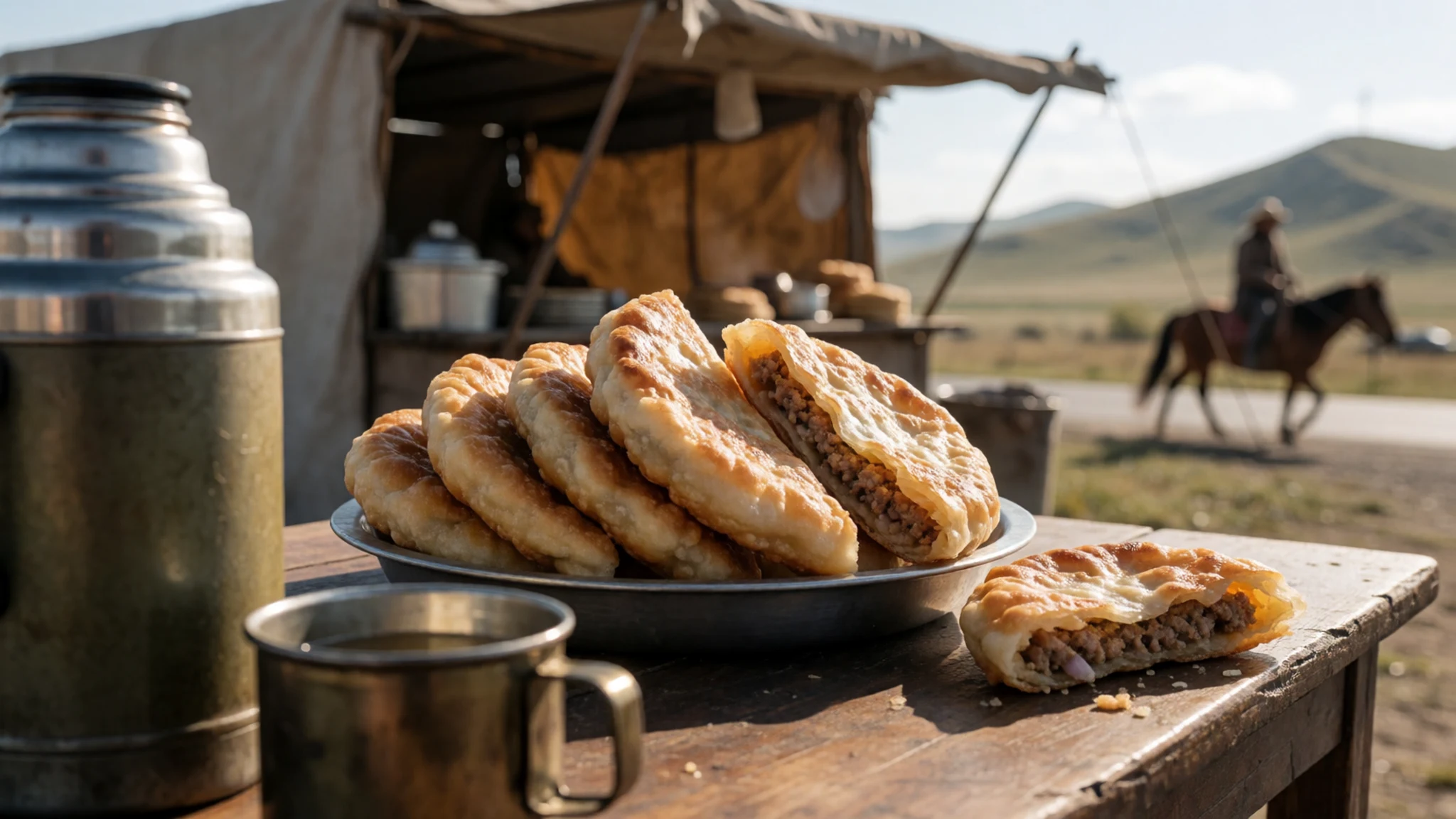
- Tsuivan — Town canteens and ger camp dining tents
Hand-cut noodles stir-fried with meat and a few vegetables, often served with ketchup on the side. It is hearty, salty and simple, suited to long days outdoors, and one of the few dishes with any vegetables in it. - Süütei tsai (salted milk tea) — Any ger, and most restaurants and tea shops
Boiled milk and water with a few tea leaves and a pinch of salt, drunk throughout the day. It is the first thing offered in a ger. Many visitors find it odd at first, but it warms and settles in cold weather. - Aaruul and öröm — Herder family gers and local markets
Aaruul are dried curds, rock hard and meant to be dissolved slowly in the mouth. Öröm is clotted cream, rich and mild, often eaten with bread. Both come from the dairy that herding families make in summer, and both appear on hospitality plates.
Plan it
Best time. June to September, when the grass is green, days are mild and ger camps are open, though evenings stay cold and rain is common in some areas. Winters are severe and many camps close.
How long. 4–7
Getting there. Fly to Ulaanbaatar, then travel west by road to Arkhangai province and Tsetserleg; check current domestic flight options. The last stretch to the lakes and volcano is on unsurfaced tracks, best done with a hired driver and a sturdy four-wheel-drive vehicle.
Budget. mid
Tips
- Hire an experienced local driver or guide; tracks are faint, signs are rare and mobile signal is patchy.
- Carry cash for rural stops, fuel and ger camps, as cards are not reliable outside towns.
- Pack layers, waterproofs and a warm hat even in summer, since nights are cold and weather turns quickly.
- Book ger camps near the Great White Lake ahead in July and August.
- Check current entry and visa rules on official government sources before booking, as waivers have been time-limited.
Etiquette
- Receive tea, food and gifts with the right hand, palm up, and always take at least a small taste.
- Be wary of dogs around gers and keep your distance from herding animals.
- Dress modestly and keep voices low at working monasteries.
Nearby
Sources
- Wikidata Q747843 (CC0)
- Wikipedia: Khangai Mountains (rev 1384872529) (CC BY-SA 4.0)
- Wikivoyage: Mongolia (rev 5427090) (CC BY-SA 4.0)
- Photo: Mount Erkhet, Imartin6 (CC BY 3.0)
- Photo: Terkhiin Tsagaan Nuur, User:Doron (CC BY 3.0)
- Photo: Relief map of Mongolia, NordNordWest / Виктор_В (CC BY 3.0)
- Photo: Tsetserleg, Imartin6 (CC BY 3.0)
- Photo: Khorgo volcano, Torbenbrinker (CC BY 3.0)


