Khamar Monastery
Khamar Monastery, Mongolia
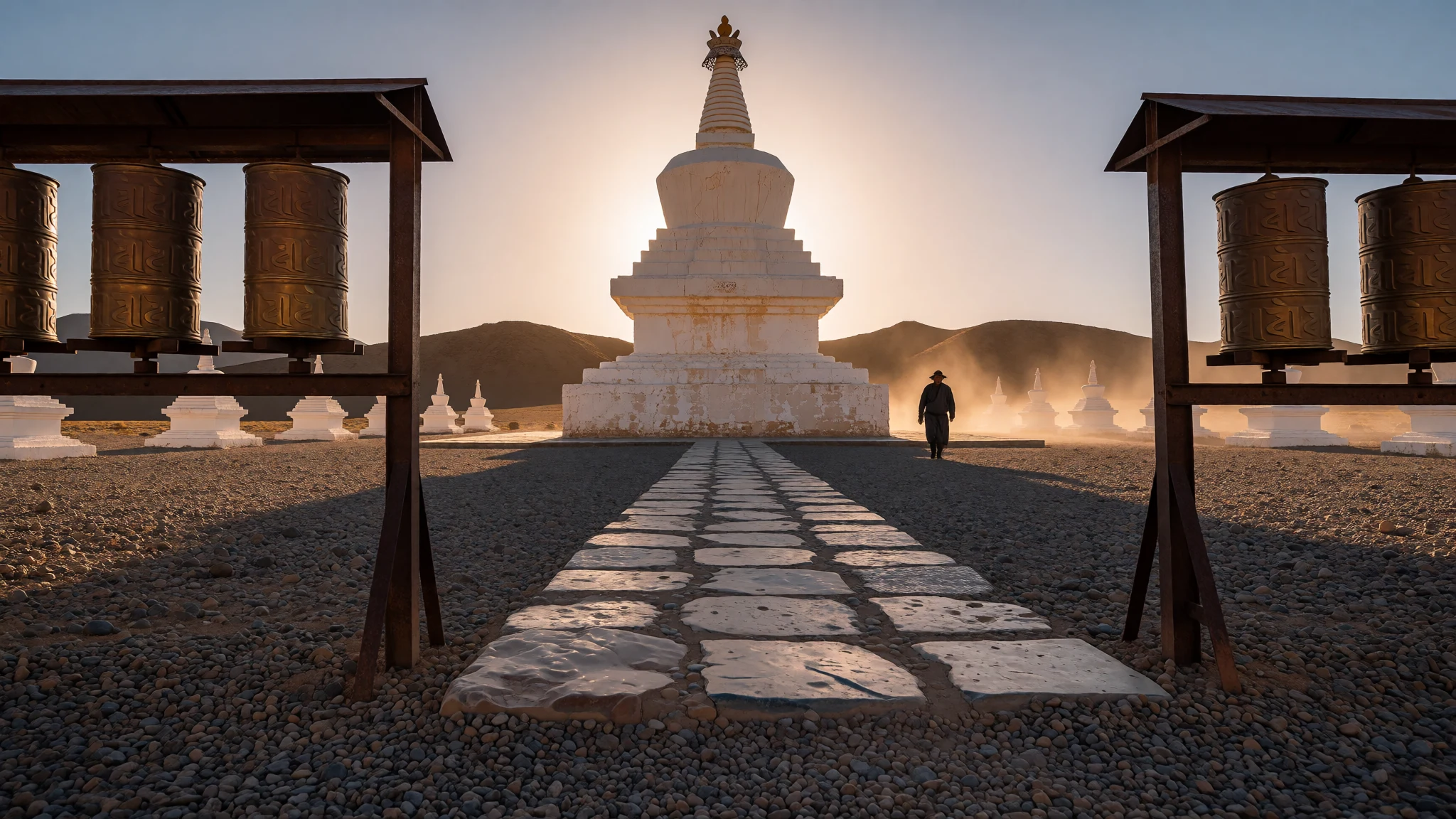
Khamar Monastery is a rebuilt Buddhist monastery in the Gobi, founded by a poet-monk, where silence and sky matter more than architecture.
The place
Khamar Monastery sits in the Gobi of south-eastern Mongolia, in Dornogovi Province, under an hour's drive from the railway town of Sainshand. It belongs to the Red Hat tradition of Tibetan Buddhism, and what stands today is a rebuilt monastery: a gate, temple halls, prayer wheels and a cluster of white stupas on open, stony desert with very little around them. Photographs show low buildings under a huge pale sky, and that is accurate. The place is about space and quiet more than grand architecture. The setting matters to Mongolian Buddhists, who regard the surrounding ground as charged with spiritual energy, and local families come to walk the site, spin the wheels and make offerings. Foreign visitors mostly arrive as a side trip from the Trans-Mongolian railway, which stops at Sainshand on its way between Ulaanbaatar and the Chinese border. Sainshand itself is a modest provincial town with a couple of museums and a handful of eateries. Services at the monastery are minimal, so water, snacks and sun protection need to be brought along. Crowds are rarely a problem, although summer weekends and festival days bring more local visitors. Winter is severe, and many travellers avoid it, though the desert looks stark and clear then. The site is compact. An hour or two covers the main buildings, with longer for walking if the weather allows.
Its story
Khamar Monastery was founded in 1820 by Danzanravjaa, a young monk of the Nyingma tradition who was then about 17. He chose the spot because he sensed that this stretch of the Gobi carried a spiritual charge. In caves to the north, monks later withdrew for 108 days of unbroken meditation, a figure with sacred weight in Buddhist counting. Danzanravjaa, known as the Noyon Khutagt, was a poet, composer, painter and physician as well as a teacher, and he was blunt about the failings of the society around him. He argued for schooling open to all and for respect towards women, and he wanted the monastery to show what such a community could look like. So it was far more than a place of prayer. It had a library, a museum and a hall for reciting verse, and its theatre company toured the Gobi with several hundred performers. A children's school taught secular subjects alongside reading and writing in Mongolian and Tibetan. At its height the monastery reportedly held over 80 temples and some 500 monks. That ended in 1937, when Stalinist purges under Choibalsan drove out the lamas, burned the whole complex and left many monks executed or forced back into lay life. After the democratic revolution of 1990 the monastery was rebuilt, and restoration work continues.
What to see
- The entrance gate — Monastery entrance
The entrance gate at Khamar Monastery is what most visitors photograph first, and it frames the arrival well: a painted gateway at the edge of the open desert, with the rebuilt compound and stupas beyond. Early or late in the day the light is low and warm, and the stony ground picks up colour.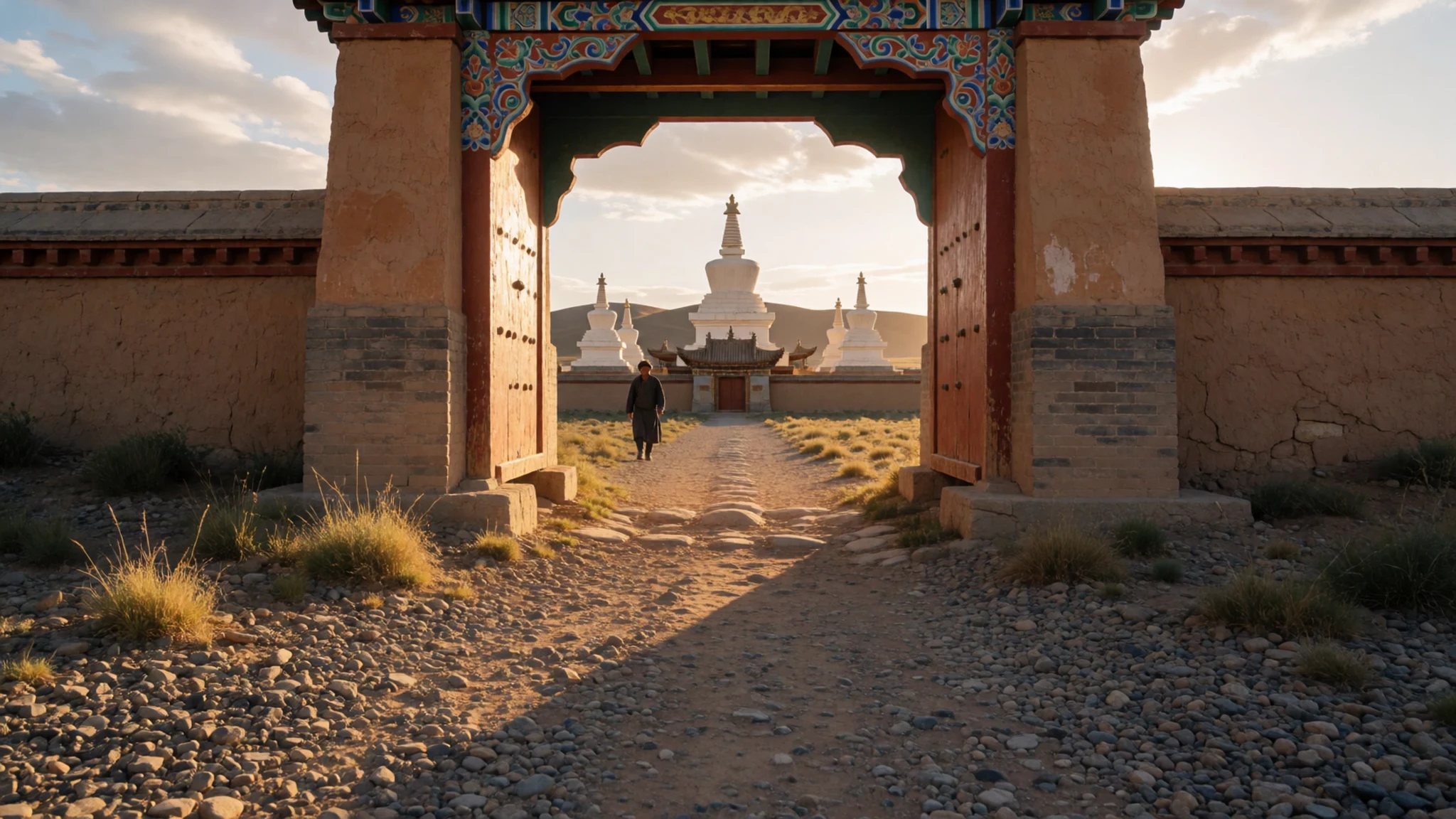
- The main stupa — Central compound
The main stupa is the visual anchor of Khamar Monastery, a white, tiered structure that can be seen from a distance across the flat ground. Pilgrims walk around it slowly, always in the same direction, and the quiet here is broken mostly by wind and the occasional passing vehicle.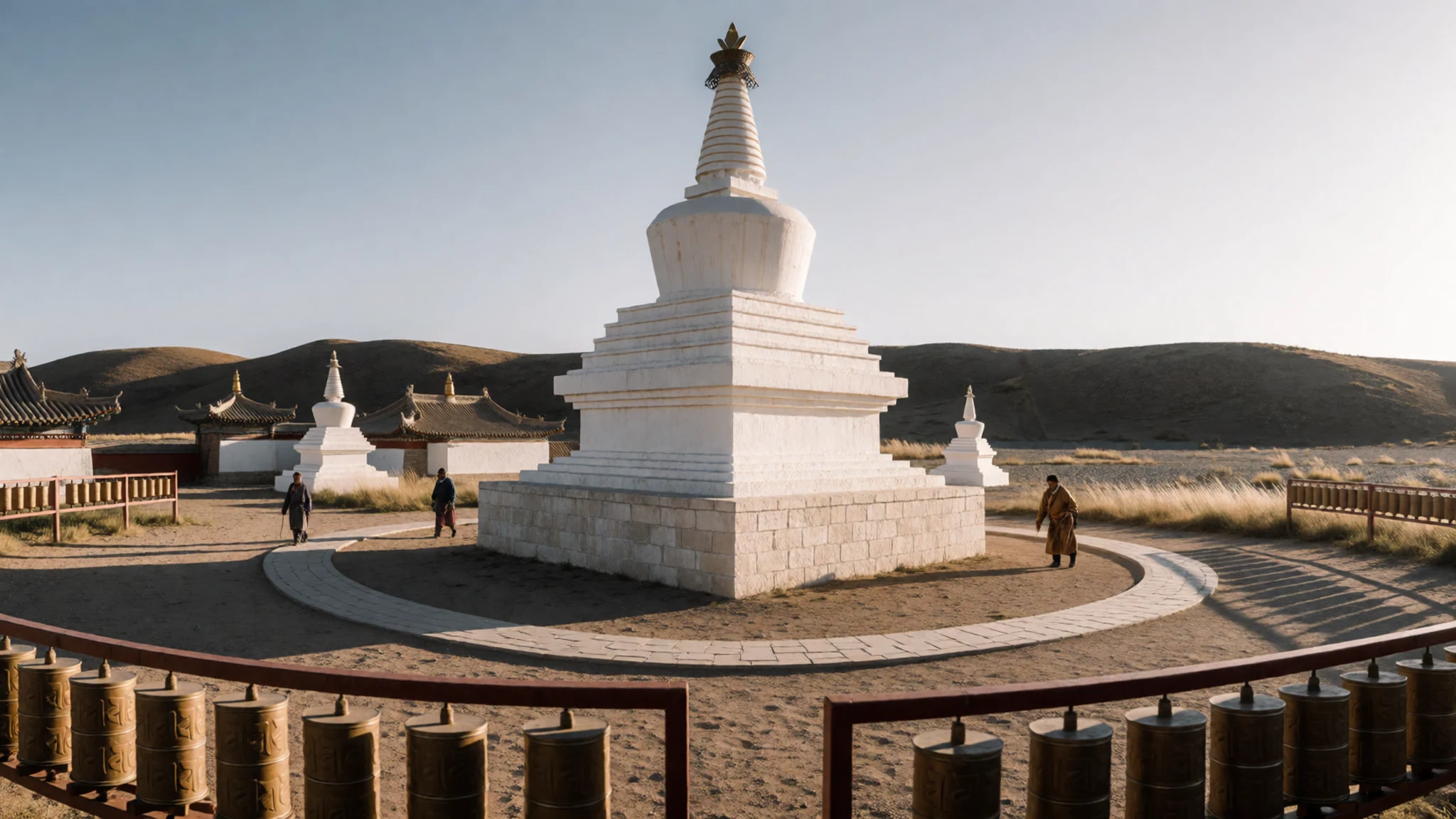
- Prayer wheels and smaller stupas — Within the grounds
Rows of prayer wheels and smaller stupas stand within the grounds of Khamar Monastery. Local visitors spin the wheels as they pass, murmuring prayers, and leave small offerings at the bases of the stupas. Joining in respectfully is welcome. It is a good spot to simply watch how people use the place.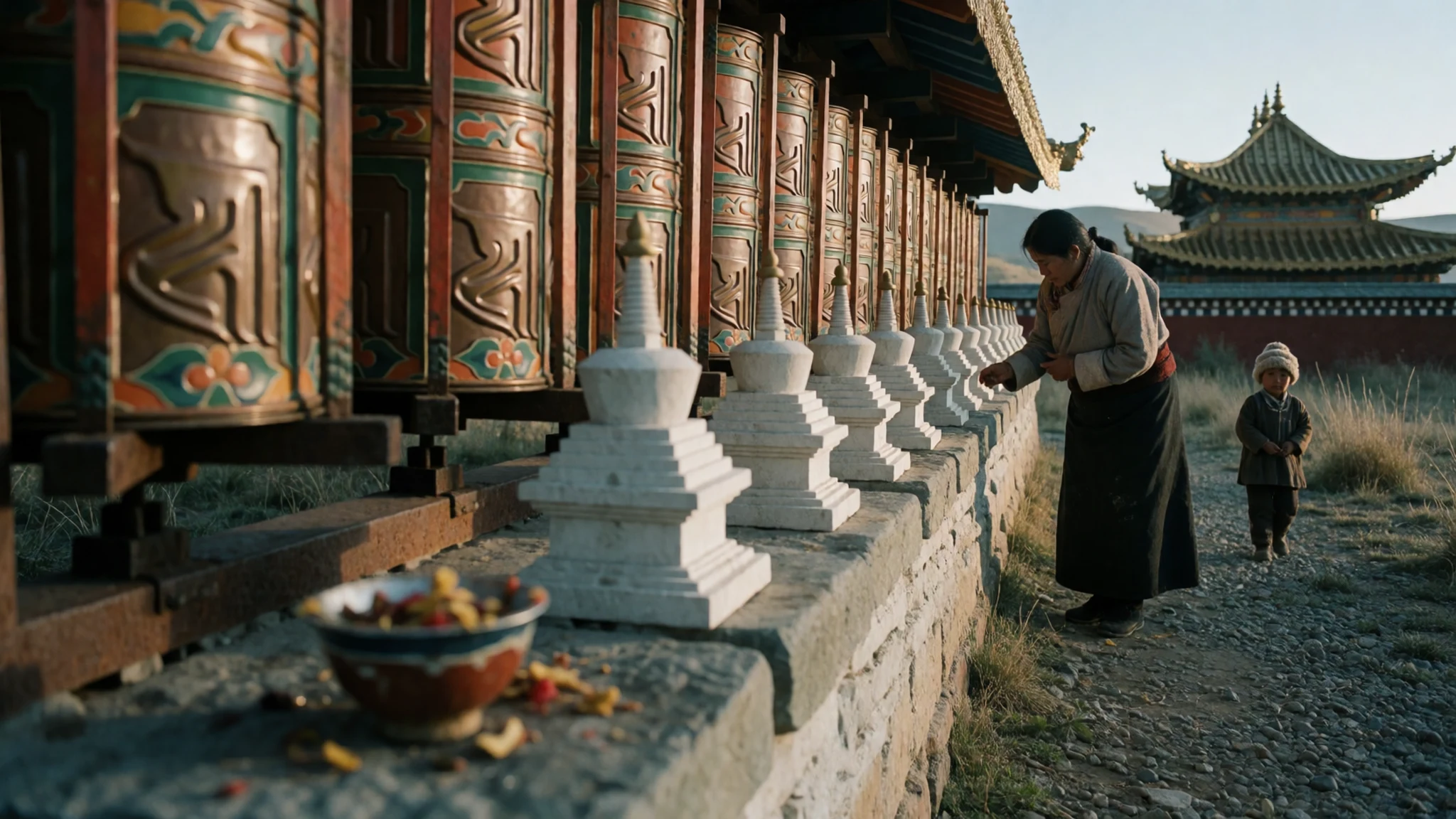
- The Buddha statue — Temple area
A statue of the Buddha at Khamar Monastery gives the rebuilt site a focal point for prayer. The figure is recent, like the buildings around it, and its presence reflects the revival of Buddhist practice after 1990. Visitors tend to pause here briefly, and locals may bow or leave a small offering.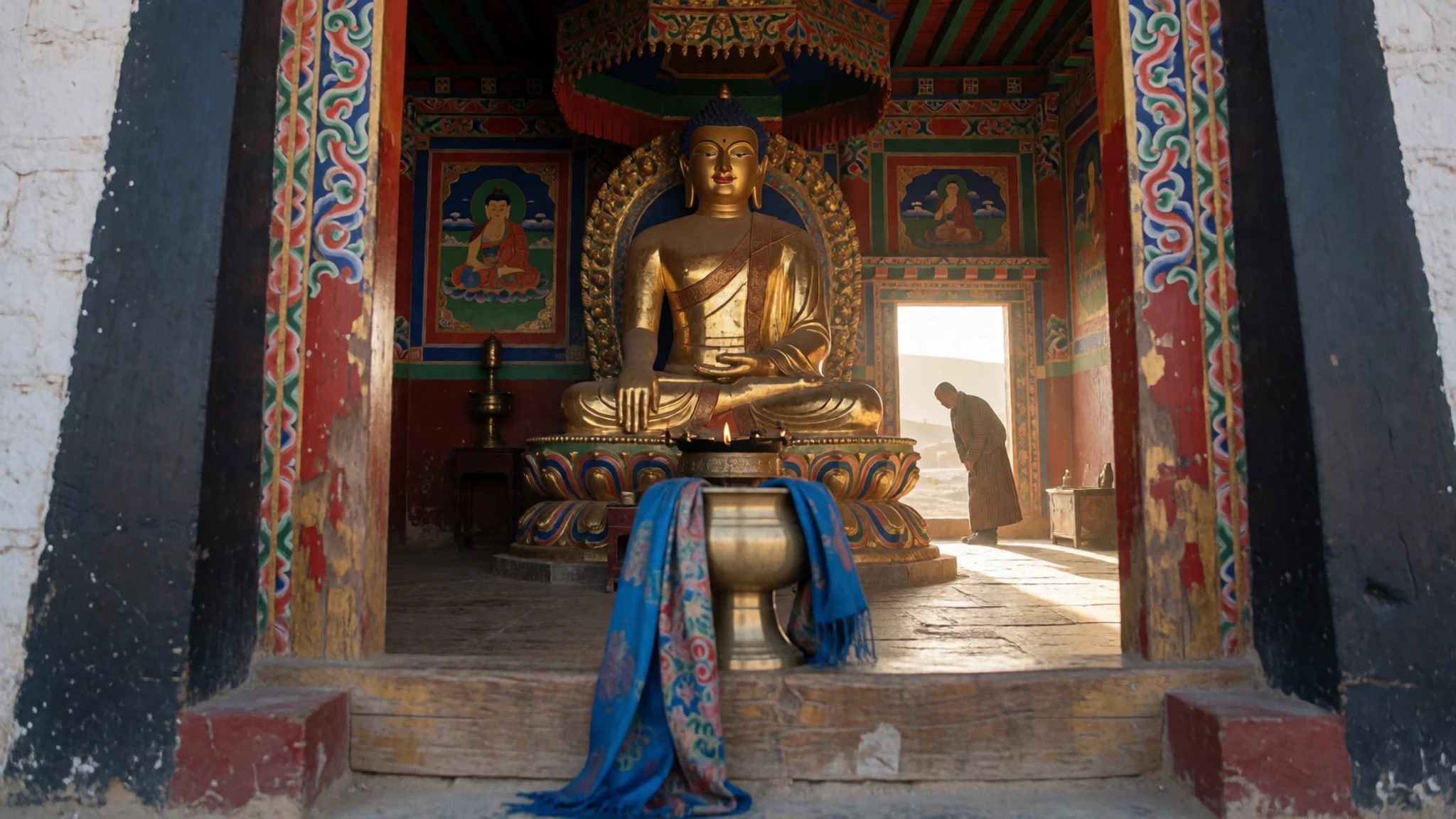
- The meditation caves — North of the monastery
North of Khamar Monastery lie caves where monks once undertook long retreats of meditation. They are part of why the founder chose this site, and some Mongolians consider the ground around them especially potent. Ask at the monastery about access and conditions before setting off, as paths are not obvious and the terrain is rough.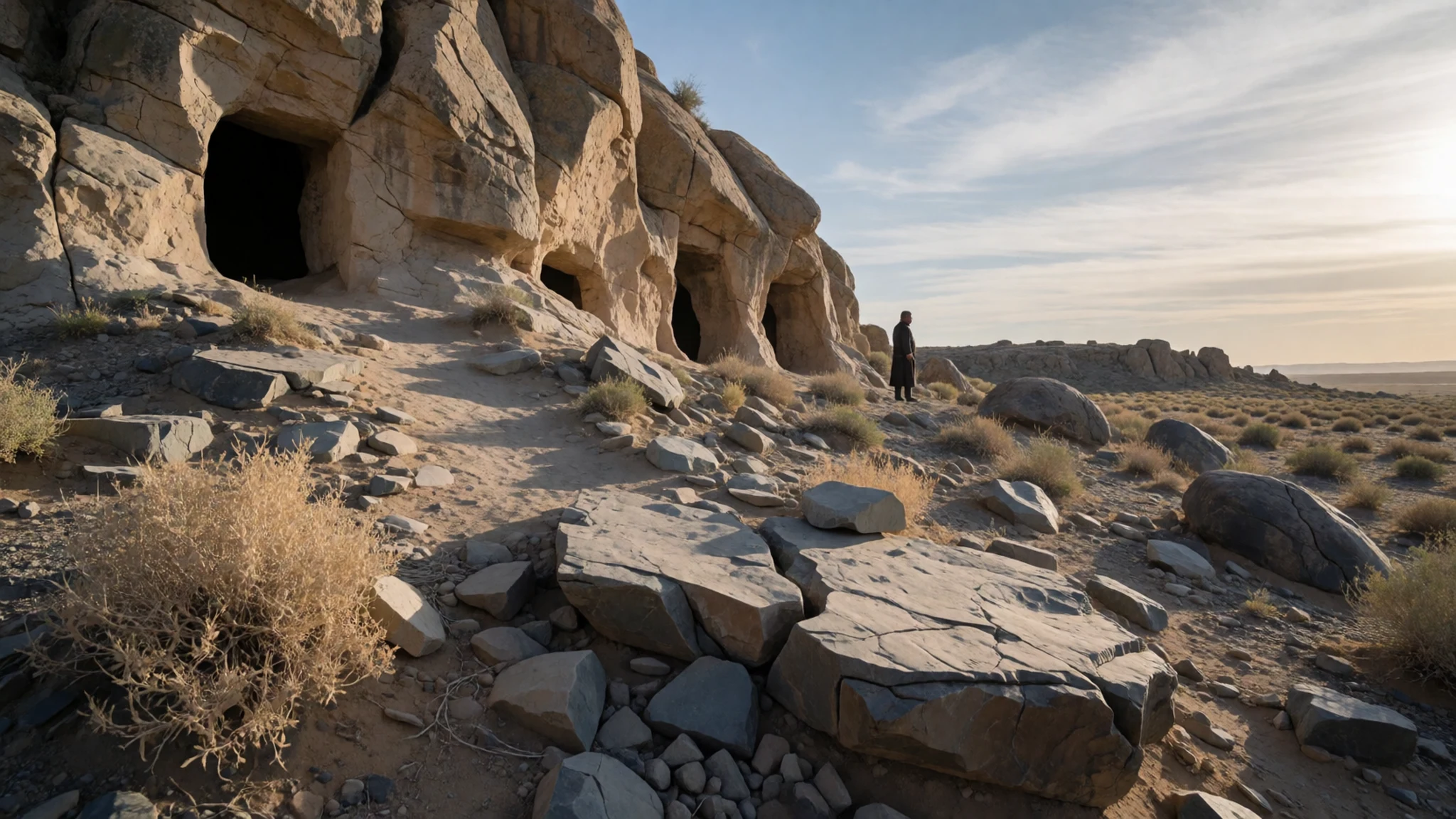
- Danzanravjaa Museum, Sainshand — Sainshand town centre
In Sainshand, the Danzanravjaa Museum shows Mongolian cultural artefacts and is the natural companion to a visit to Khamar Monastery, since it explains the life and work of the monk who founded it. It is worth a stop before the drive out, especially for context on his writing and theatre.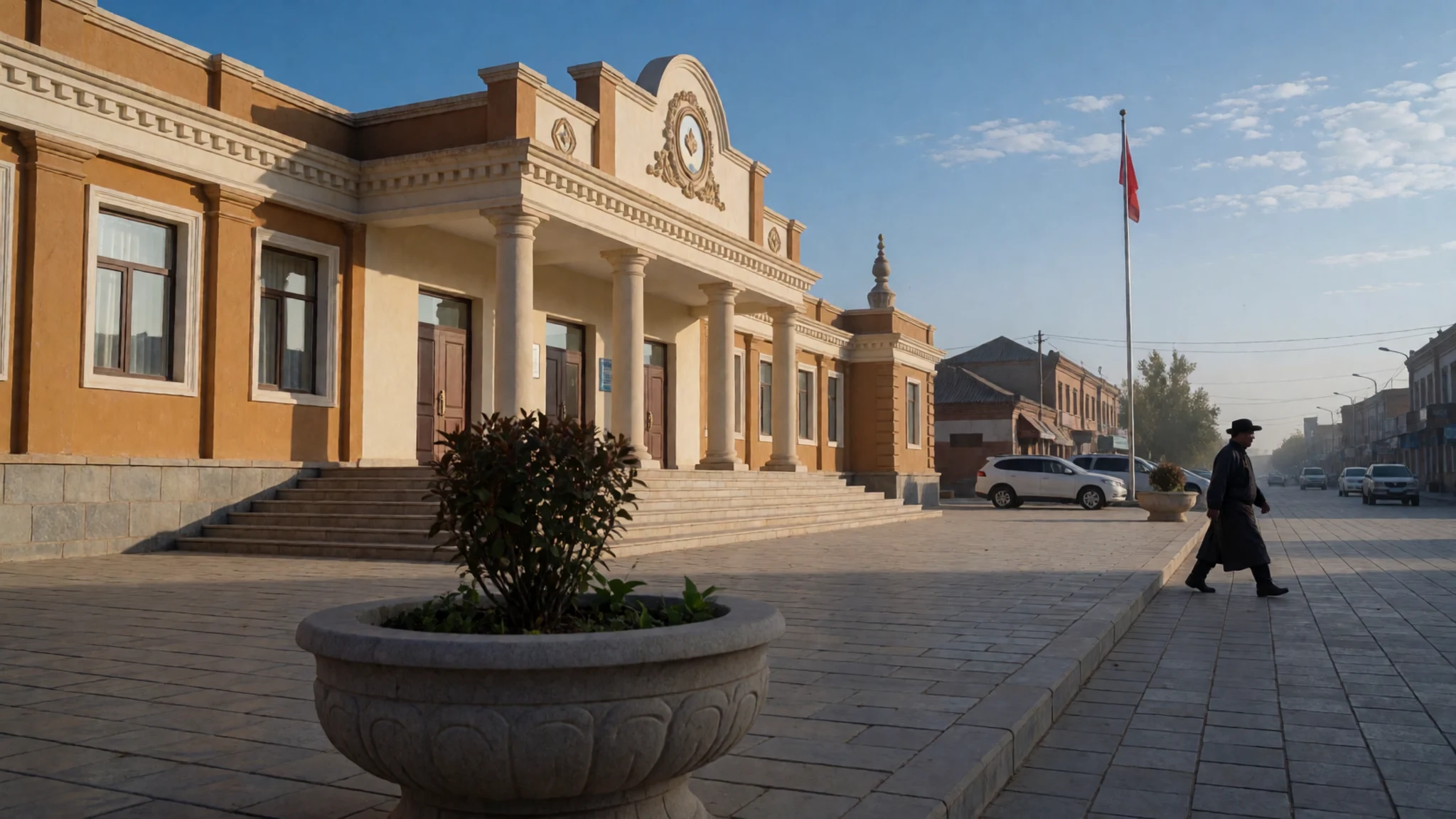
Culture
Khamar Monastery belongs to the Red Hat branch of Tibetan Buddhism, and its founder, Danzanravjaa, is still honoured across Mongolia as much for his songs, poems and plays as for his teaching. Stories about him are told in the Gobi as living memory rather than distant history. The years after the 1937 destruction left a long gap in religious life, and the rebuilt monastery carries the weight of that interruption: much of what happens here is recovery, with families relearning practices and monks restoring buildings step by step. Local visitors come to absorb the energy of the place, walk slowly around the stupas, spin prayer wheels and leave small offerings. Many treat the caves to the north as the most charged ground, where monks once sat in long retreat. Visits are quiet and unhurried, and nobody expects foreigners to know the rituals. Watching what others do, then following, works well. Mongolian hospitality is generous, and a monk or caretaker may offer tea or explain a statue if a shared language turns up. Donations are welcome but never demanded. Walk clockwise around stupas and prayer wheels, keep your voice low, and ask before photographing monks or worshippers.
What to wear
At Khamar Monastery the clothing on show ranges from monastic robes to the deel, Mongolia's traditional long coat. The deel is a wrap-over garment fastened on the right side and tied with a long sash. Summer versions are cotton or silk, while winter ones are padded or lined with sheepskin. Colour and brocade vary with the occasion, and people bring out their finest deel for festivals, weddings and visits to holy places. It goes with high leather boots, often with upturned toes, and a hat that changes with the season. Monks wear maroon and saffron robes in the temple. Day to day in Sainshand, most people wear jeans, jackets, fleeces and trainers, with the deel kept for ceremonies and worn more regularly by older people and herding families. Visitors should dress for the weather first: the Gobi swings from hot afternoons to cold nights, and wind is constant. Wear layers, a brimmed hat, sunglasses and sunscreen in summer, and add a warm coat, hat and gloves in colder months. Sturdy closed shoes suit the stony, sandy ground. For the temple, cover shoulders and knees, carry a scarf, and take hats off before stepping indoors.
What to eat
- Buuz — Canteens and eateries around Sainshand
Steamed dumplings filled with minced mutton or beef, seasoned simply with onion and salt. Buuz is the everyday Mongolian meal and the safest first order. Look for small canteens and family-run eateries in Sainshand, especially near the railway station.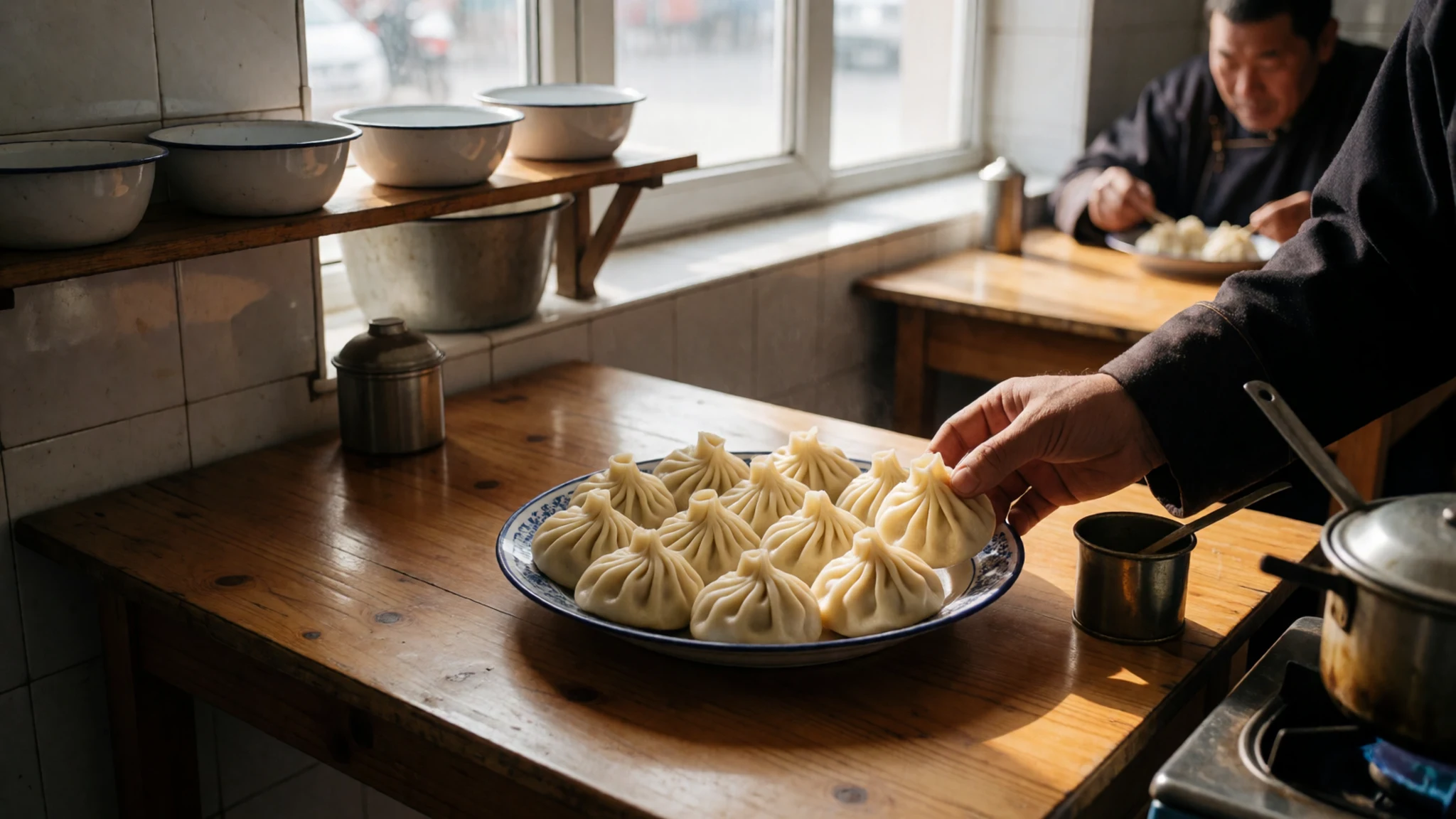
- Khuushuur — Roadside stalls and canteens in Sainshand
Flat fried pancakes of minced meat, crisp at the edges and juicy inside. They are filling and portable, which suits a day trip to the monastery. Eat them hot, with the grease, and pair with tea.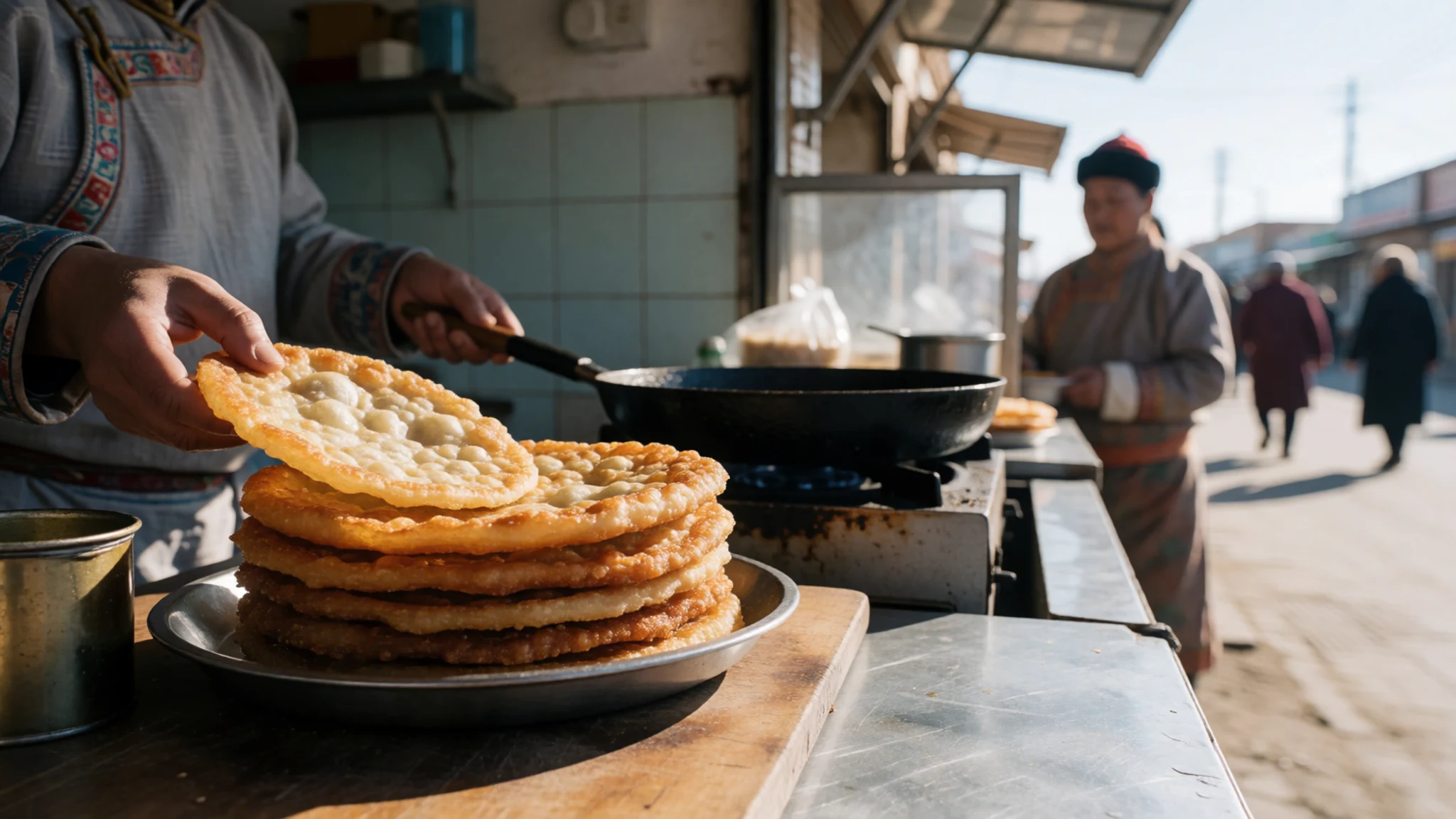
- Tsuivan — Local eateries in Sainshand
Hand-cut noodles stir-fried with meat and a few vegetables, usually carrots and onion. It is hearty, plain and reliably available, and a good option after a windy morning in the desert. - Suutei tsai — Ger camps, canteens and family homes
Salty milk tea, made with tea leaves, milk and a little salt, served hot throughout the day. It tastes unusual at first and grows on most visitors. Accepting a cup is a courtesy when offered by a host. - Aaruul — Local markets and herder stalls near Sainshand
Hard dried curd, sour and chewy, made by herding families and often sold as a snack. It travels well and gives a taste of the Gobi's pastoral life. Small pieces are enough at first.
Plan it
Best time. Late May–June and September are the most comfortable: days are warm rather than fierce and the roads are dry. July–August can be hot, with strong sun and sudden storms. Winter is bitterly cold and windy, and best left to the well-prepared.
How long. 1–2
Getting there. Fly to Ulaanbaatar, then take the Trans-Mongolian line south to Sainshand; there are two daily trains, plus faster express services on some days. Buses also run from Ulaanbaatar along the paved road finished in 2013. From Sainshand, hire a car and driver for the drive to the monastery, which takes under an hour.
Budget. mid
Tips
- Arrange a driver in Sainshand the day before, and agree the plan clearly
- Carry plenty of water, snacks and sun protection, as there are few services at the monastery
- Bring cash, since cards are not reliable outside the town
- Start early to avoid midday heat and strong afternoon wind
- Check train and bus timetables on the official railway site close to your travel date
Etiquette
- Walk clockwise around stupas and prayer wheels
- Ask before photographing monks or worshippers
- Dress modestly and take your hat off inside temple buildings
Nearby
Sources
- Wikidata Q6399902 (CC0)
- Wikipedia: Khamar Monastery (rev 1367124131) (CC BY-SA 4.0)
- Wikivoyage: Sainshand (rev 5355818) (CC BY-SA 4.0)
- Photo: Entrance to Khamar Monastery (Tsend) (CC BY 3.0)
- Photo: Khamar Monastery, Gobi Desert (Marcin Konsek) (CC BY-SA 4.0)
- Photo: Danzanravjaa Museum of Sainshand (David Berkowitz) (CC BY 2.5)
- Photo: The entrance gate to the Khamar Monastery (Marcin Konsek) (CC BY-SA 4.0)
- Photo: The main stupa (Marcin Konsek) (CC BY-SA 4.0)
- Photo: Statue of Buddha (Marcin Konsek) (CC BY-SA 4.0)
- Photo: Prayer wheel and stupas (Marcin Konsek) (CC BY-SA 4.0)
- Photo: Dornogovi Province, Mongolia (David Berkowitz) (CC BY 2.5)


