Khajjiar
Khajjiar, India
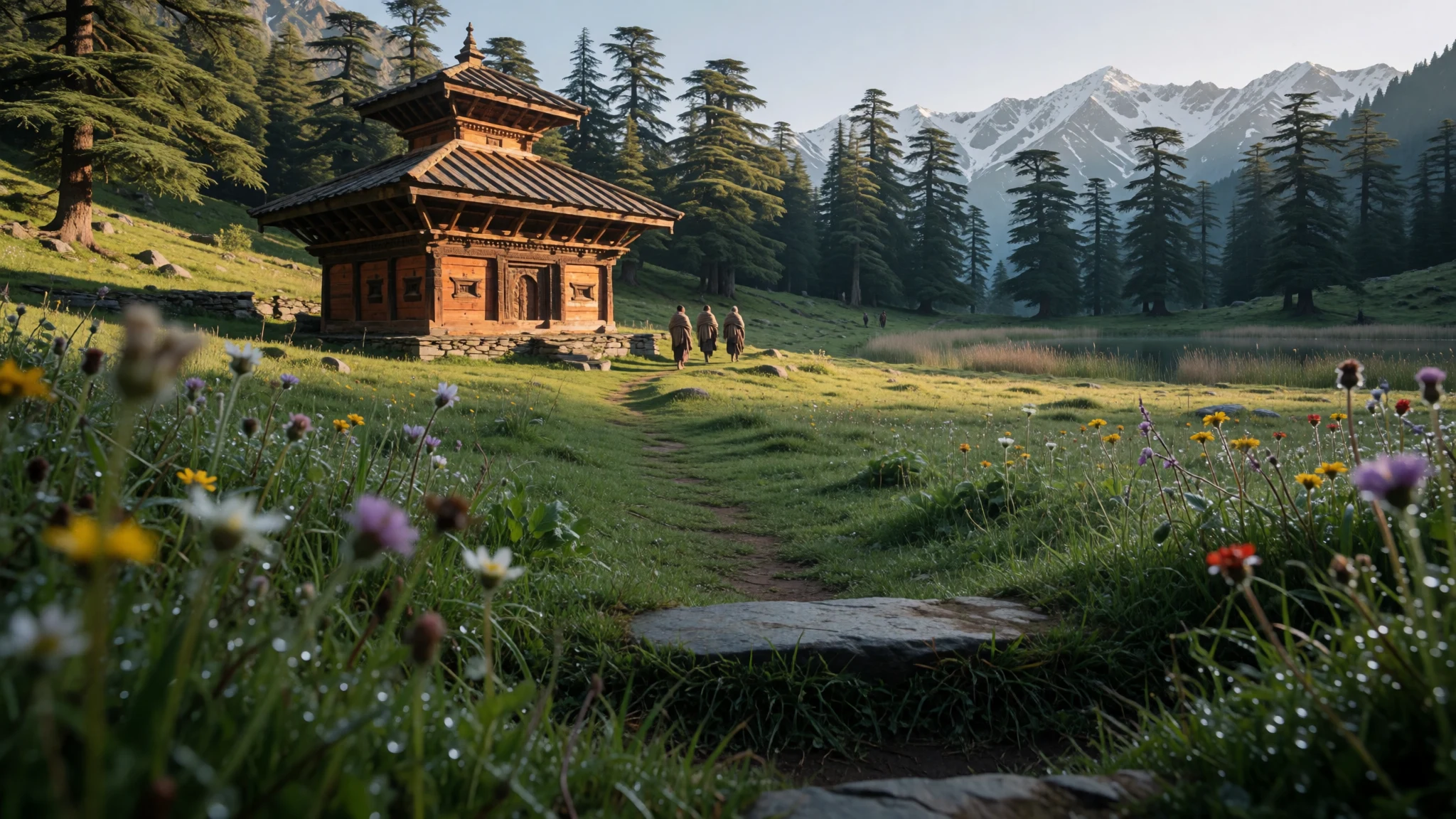
Khajjiar is a cool, open Himalayan meadow with a lake, a serpent temple and deodar forest, close enough to Dalhousie for an easy day out.
The place
Khajjiar is a small hill station in Chamba district of Himachal Pradesh, set on a plateau at 1,920 metres in the foothills of the Dhauladhar range. Dalhousie, about 24 km away, is the nearest major town and the usual base. What makes the place distinctive is how compact it is: a saucer of open grass, a lake near the middle and a dark wall of conifers around the rim, with snow peaks showing behind on clear days. Most visitors come for a day, walk the meadow, eat something hot and leave by late afternoon. That is a fair way to see it, though it undersells the setting. The meadow lies inside the Kalatop Khajjiar Sanctuary, so the forest around it is protected, and the slopes above carry walking routes that few day-trippers touch. The village itself is modest: a scatter of stalls, eateries and guesthouses, with a temple at the meadow's edge. Weekends and school holidays bring coaches, horse rides, photo stalls and plenty of noise, while weekday mornings are far calmer. The nickname 'Switzerland of India' appears on signboards everywhere. It is a marketing line rather than a description, and the place is better taken as what it is: an Indian Himalayan meadow that is grazed, prayed at and picnicked on. Mist can roll in within minutes, so views are never guaranteed, and a clear morning is worth planning around.
Its story
Khajjiar's story is told mostly through its temple and its grass. The name is usually linked to Khajji Nag, the serpent deity honoured at the Khajjinag temple on the meadow's edge. Serpent worship runs through much of the Himalayan foothills, where nag deities are tied to water, rain and the wellbeing of livestock. A lake-and-pasture plateau is exactly the sort of place such a shrine would anchor. Herding communities have long used high summer grazing like this, and the shrine gave the open ground a centre of gravity. The modern chapter is shorter. Motor roads from Dalhousie turned the plateau into an easy excursion, and the old hill-station habit of escaping the heat of the plains did the rest. At some point the meadow was compared to an Alpine one and the 'Switzerland of India' label stuck, though the exact origin of the phrase is unclear, so any tidy origin story deserves a pinch of salt. Today Khajjiar's identity is split. For local families and pilgrims it is still a temple and a place for a day-long picnic. For travellers from the plains it is a cool, green stop on a Dalhousie trip. The sanctuary status of the surrounding forest ties the two together: land that herders once relied on is now managed as habitat, and the openness of the meadow depends on that care continuing.
What to see
- Khajjiar Lake and meadow — Centre of Khajjiar
The grassy bowl and its small lake are the heart of Khajjiar, and walking the full rim takes far longer than the flat ground suggests. Go early, before the horse rides and loudspeakers start. The lake's edge can be soft and boggy after rain, so footwear matters more than it looks.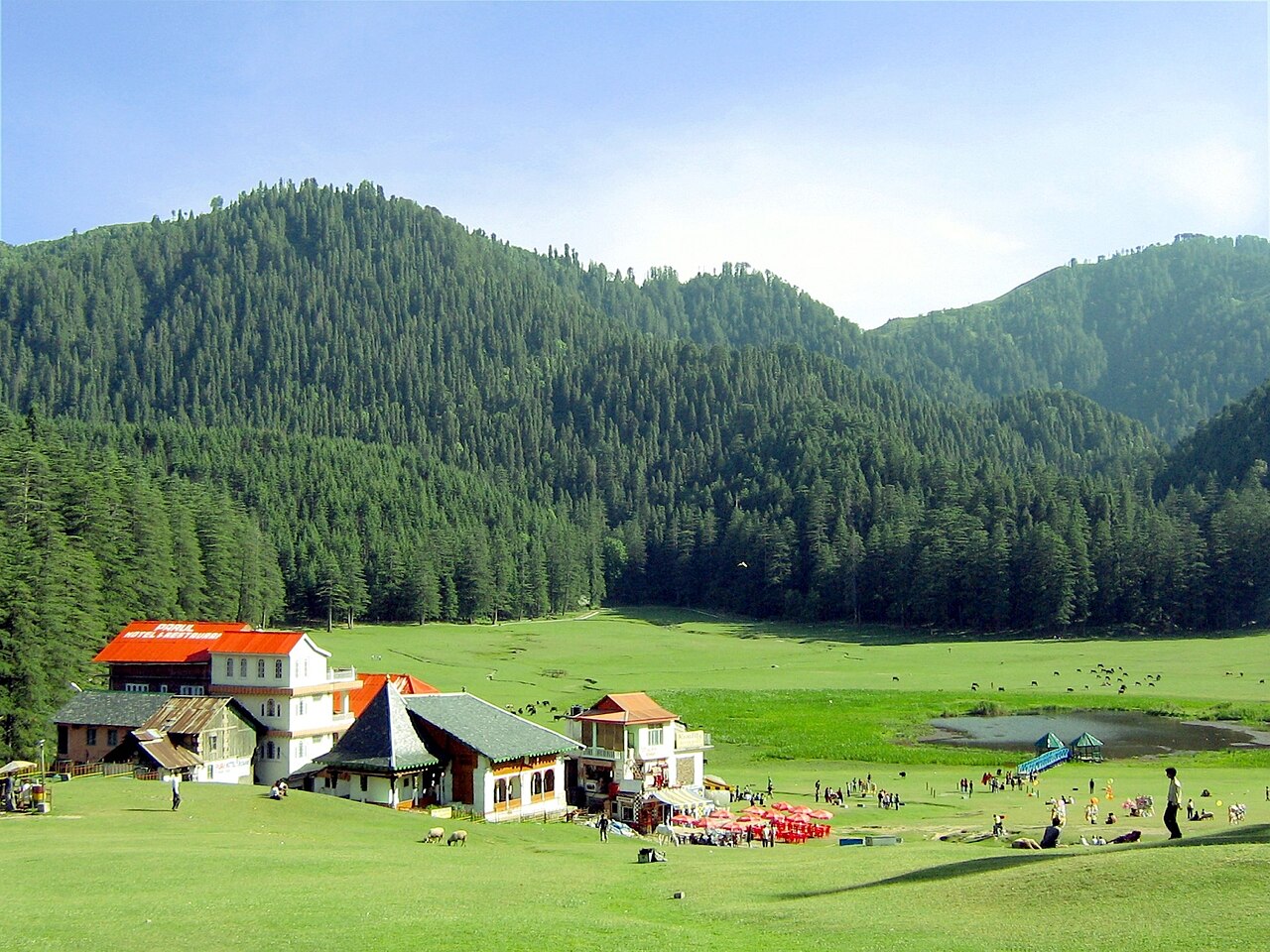
- Khajjinag temple — Edge of the meadow
A wooden-roofed shrine at the meadow's edge, dedicated to the serpent deity the place is named after. It is a working temple, so expect worshippers rather than a museum hush. Look at the carved timber and the quiet courtyard, and step back from the doorway when devotees are queuing.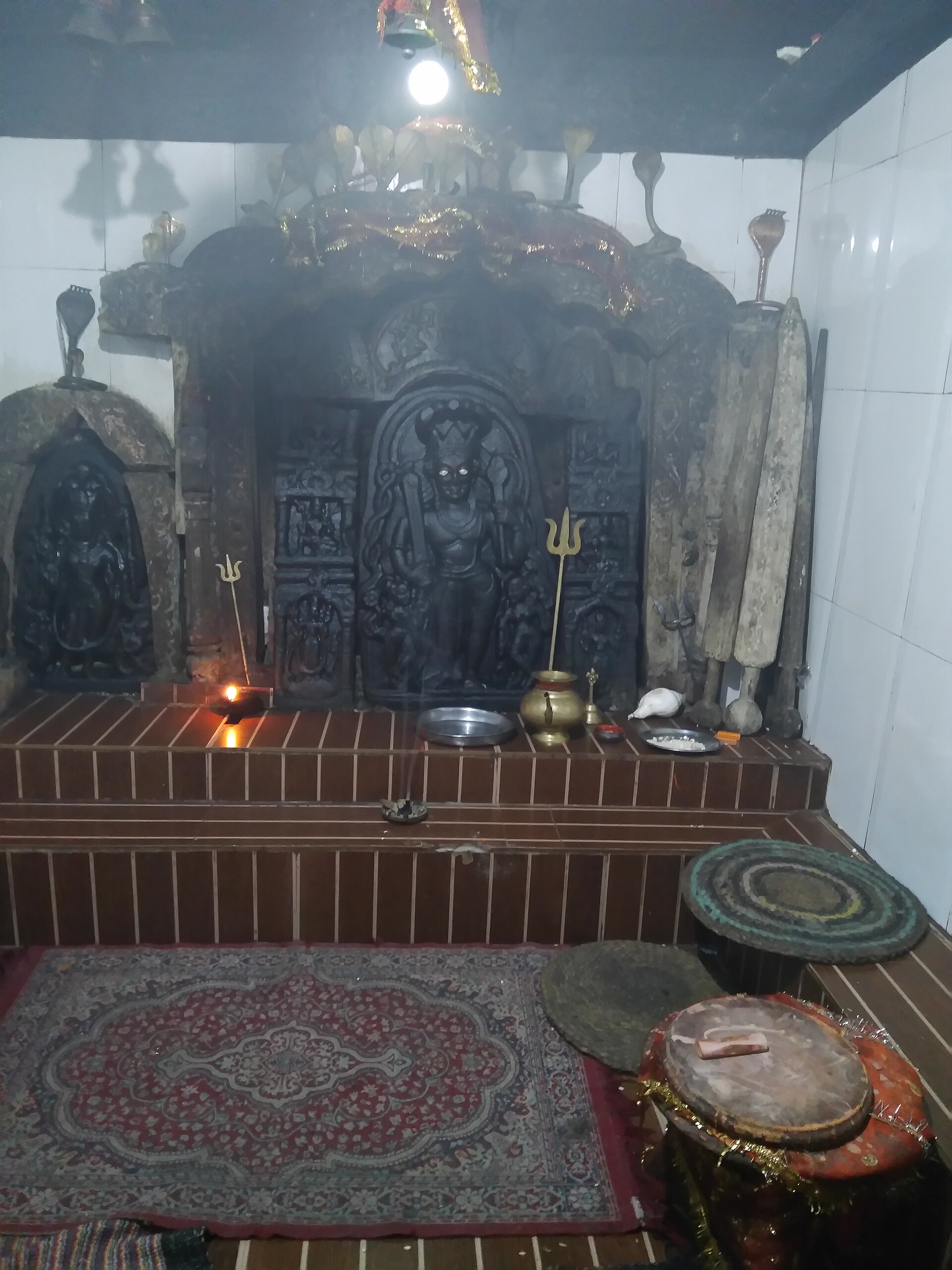
- Dhauladhar views — Dhauladhar range, north and east of the meadow
Khajjiar sits at the foot of the Dhauladhar range, and on clear days the snow line shows above the treetops. The best light is usually early morning, before cloud builds. Wikivoyage lists the range as a sight in its own right, but from here it is a backdrop, not a destination.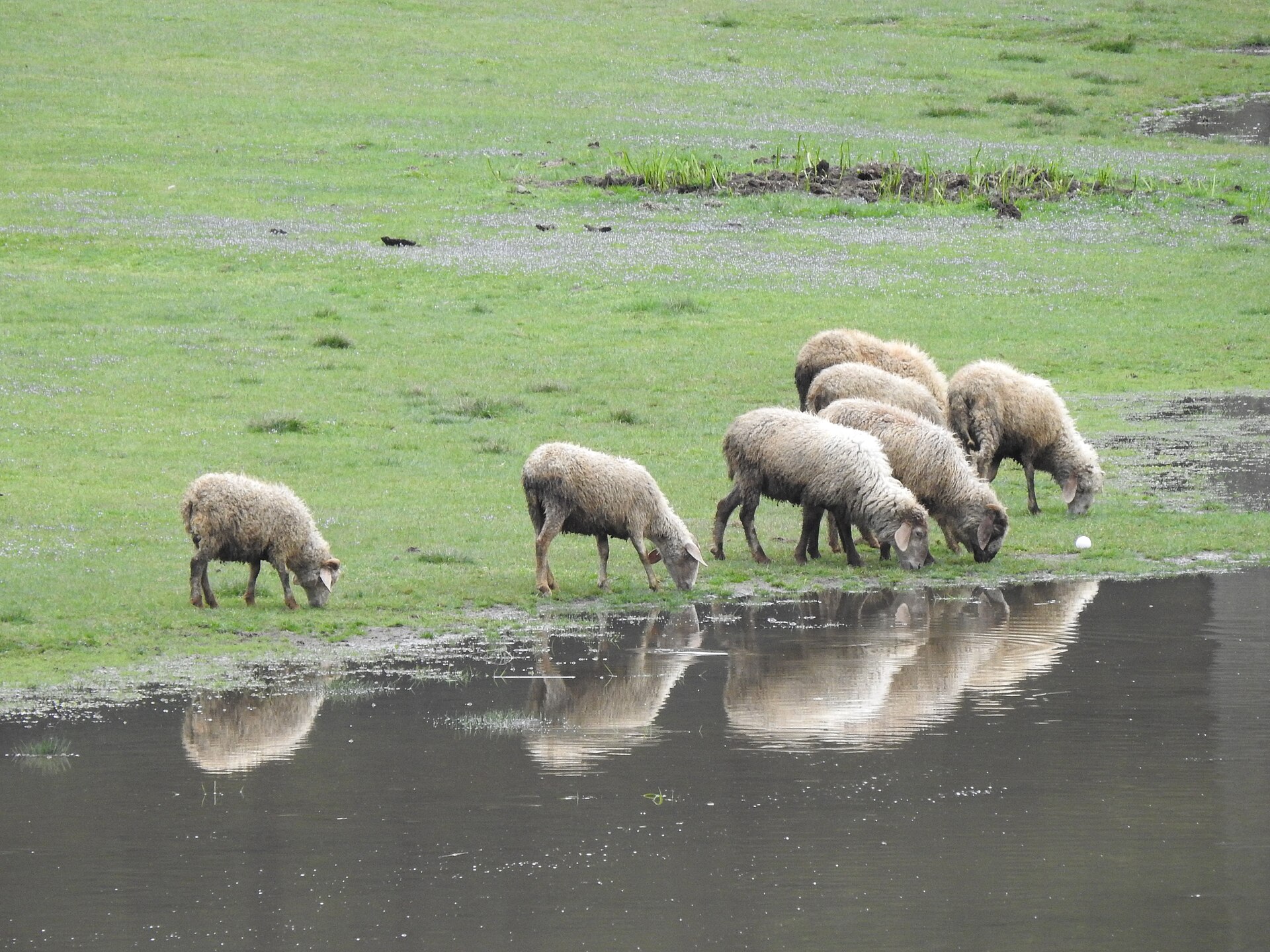
- Kalatop Khajjiar Sanctuary edge — Forest around Khajjiar
The forest ringing the meadow belongs to the sanctuary, and the quietest walking is under the conifers rather than on the open grass. Keep to established paths, carry out litter and keep voices low. Wildlife is shy, so patience and early hours matter more than any particular route.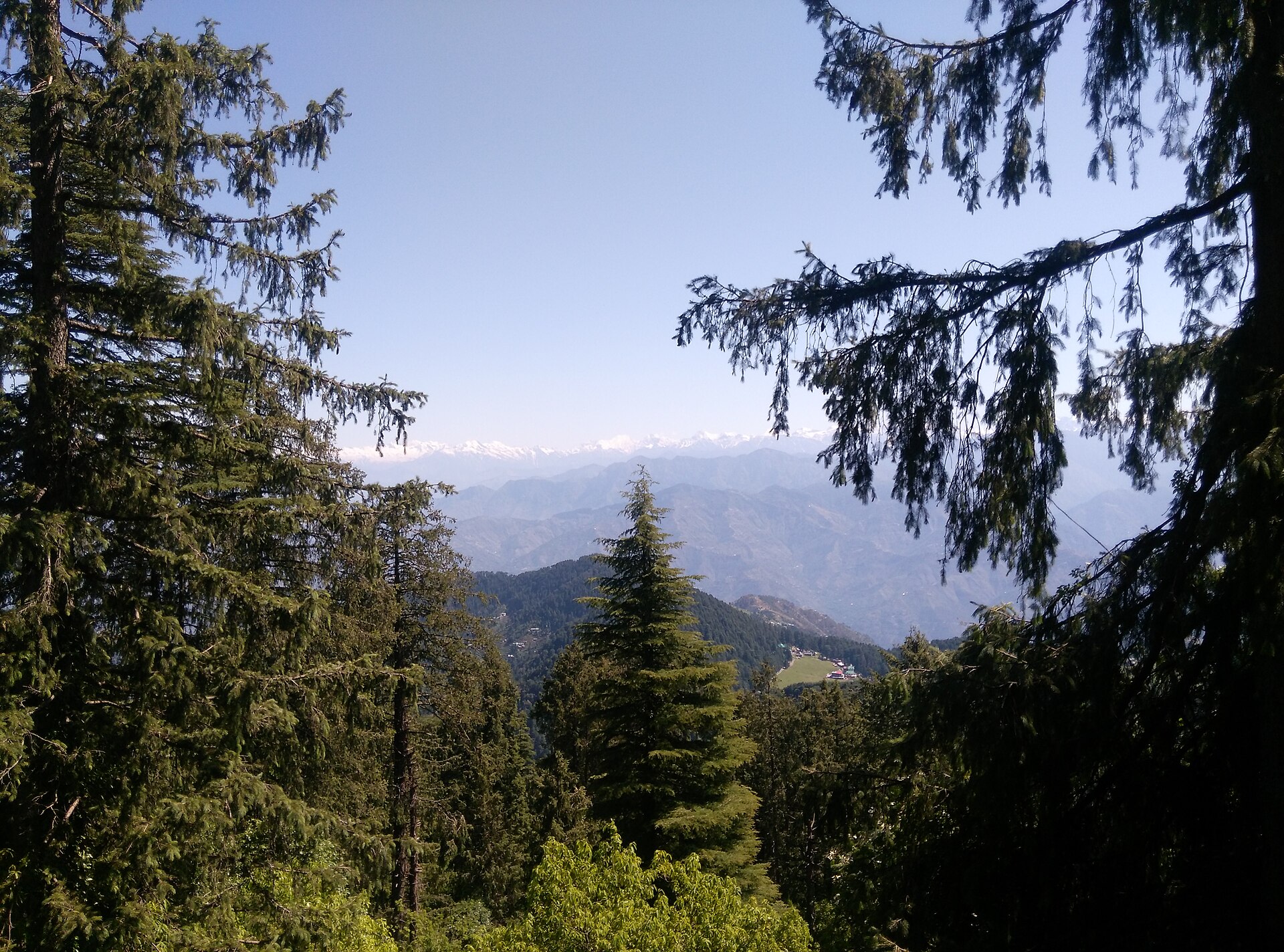
- Khajjiar to Dainkund trek — Between Khajjiar and Dalhousie
A walking route links Khajjiar with Dainkund, a ridge above Dalhousie, and it is the obvious way to get beyond the picnic crowds. Conditions and trail markings change, so ask locally or at a guesthouse before setting off, start early, and carry water and a rain layer.
Culture
Khajjiar belongs to the Chamba region, where Pahari, or hill, culture shapes daily life. Pahari-speaking families, many of them farmers and herders, have long moved between valley villages and high summer pastures. The Gaddi shepherd communities of the Dhauladhar slopes are the best known of these groups, and their seasonal journeys with flocks are part of how the region understands itself. Religion here is rooted in local deities as much as in the major Hindu traditions. The Khajjinag temple is a good example: a serpent god honoured by people who still associate such beings with rain, water and the safety of animals. Village fairs and festivals are tied to the farming calendar, and visitors are often welcome to watch if they keep a respectful distance. Day to day, Khajjiar is quieter and more reserved than the crowds at the meadow suggest. People are friendly, but the place is a living community and a place of worship, not only a picnic spot. Weekend visitors bring loud music and litter, and locals notice. Bargaining is normal at the stalls, but good humour goes a long way. Hindi is widely understood and a few words of greeting are always appreciated. Remove your shoes before stepping onto the temple's raised floor, and ask before photographing worshippers or priests.
What to wear
Khajjiar's traditional dress belongs to the Pahari and Gaddi communities of the Chamba hills. The Gaddi shepherd's classic outfit is the chola, a long woollen coat, tied at the waist with a dora, a thick black rope of wool, and often worn with a white cap. Woven woollen shawls, called pattu, keep out the cold, and women wear them over the shoulders or as head coverings, along with silver jewellery. Chamba is also known for its embroidered rumals, silk or cotton cloths worked in fine needlework. Traditional garments mostly appear at fairs, weddings, festivals and in photographs, and some visitors will meet them on women from nearby villages posing at the meadow. Day to day, people wear what is practical for a cool hill climate: jackets, fleeces, salwar kameez or trousers, woollen caps and sturdy shoes. Visitors from the plains are easy to spot by their thin cotton layers. For a visit, think in layers. Mornings and evenings are cool even in summer and the weather can change fast, so carry a fleece and a waterproof. Wear shoes with grip, since the meadow gets muddy and the forest trails are uneven. Cover shoulders and knees for the temple, and carry a scarf for your head if you want to go inside. In winter, expect proper cold-weather clothing.
What to eat
- Momo — Stalls and small eateries around the meadow
Steamed dumplings with a vegetable or meat filling, served with a sharp red chilli chutney. They are the most reliable hot snack in a cool meadow and are sold at most stalls around the grass. Ask for them freshly steamed rather than reheated. - Thukpa — Small eateries along the road into Khajjiar
A hot noodle soup with vegetables or meat, brought over from Tibetan kitchens and now a staple across the Himalayan foothills. It is the dish to order when mist rolls in and the temperature drops, and it is usually filling enough for a meal. - Maggi noodles — Tea stalls and roadside eateries near the lake
Instant noodles cooked to order with vegetables, an egg or a squeeze of lime, and a long-standing hill-station comfort food across India. It is nothing local, but it tastes right with a view of the meadow and a cold wind. - Chai and pakoras — Tea stalls at the meadow's edge
Milky, sweet tea with fried fritters of potato, onion or paneer, the simplest and most dependable way to warm up after a walk. Orders come quickly, and a stall facing the meadow makes a decent place to sit and watch the weather. - Chamba madra — Local homes, festival meals and some guesthouse kitchens in the Chamba area
A slow-cooked dish of chickpeas in a yoghurt sauce, part of the festive meal called dhaam in the Chamba region. It is more often served at weddings and festivals than at roadside stalls, so ask at a guesthouse whether a local family can arrange it.
Plan it
Best time. April to June for cool, pleasant weather and open views, and September to October once the rains clear and the air is crisp. July and August bring monsoon mist and heavy cloud that often hide the mountains, while winter is cold and can bring snow, so check conditions and road access before travelling.
How long. 1–2
Getting there. Pathankot in Punjab is the usual rail head and the practical gateway, with the nearest airports a few hours away by road, so check current flights. From Pathankot, take a bus or taxi to Dalhousie, then a shorter road climb of about 24 km to Khajjiar, by hired car or shared taxi.
Budget. low
Tips
- Arrive before mid-morning on weekdays to beat coaches and horse-ride crowds
- Carry a fleece and rain jacket, as weather changes fast at this altitude
- Bring cash for stalls and small eateries, since card and phone signal can be patchy
- Book a guesthouse ahead for weekends and school holidays
- Combine Khajjiar with Dalhousie rather than rushing both in one afternoon
Etiquette
- Remove shoes before stepping onto the temple's raised floor
- Ask before photographing worshippers, priests or women in traditional dress
- Carry your litter out, as the meadow lies within a protected sanctuary
Nearby
Sources
- Wikidata Q6399144 (CC0)
- Wikipedia: Khajjiar (rev 1383538703) (CC BY-SA 4.0)
- Wikivoyage: Khajjiar (rev 5281099) (CC BY-SA 4.0)
- Photo: A summer afternoon at Khajjiar, SriniG (CC BY 3.0)
- Photo: Nature of Khajjiar, 7018412375 (CC BY-SA 4.0)
- Photo: A view of Khajjiar 02, Harvinder Chandigarh (CC BY-SA 4.0)
- Photo: A view of Khajjiar, Harvinder Chandigarh (CC BY-SA 4.0)
- Photo: A view of Khajjiar 01, Harvinder Chandigarh (CC BY-SA 4.0)
- Photo: Himachali women folk in traditional garments, Harvinder Chandigarh (CC BY-SA 4.0)
- Photo: Khajjiar Naag Mandir, Rajkumarjnub (CC BY 3.0)
- Photo: Khajjiar, Mini Switzerland of India, Anujpanwar92 (CC BY-SA 4.0)


