Kgalagadi
Kgalagadi, South Africa
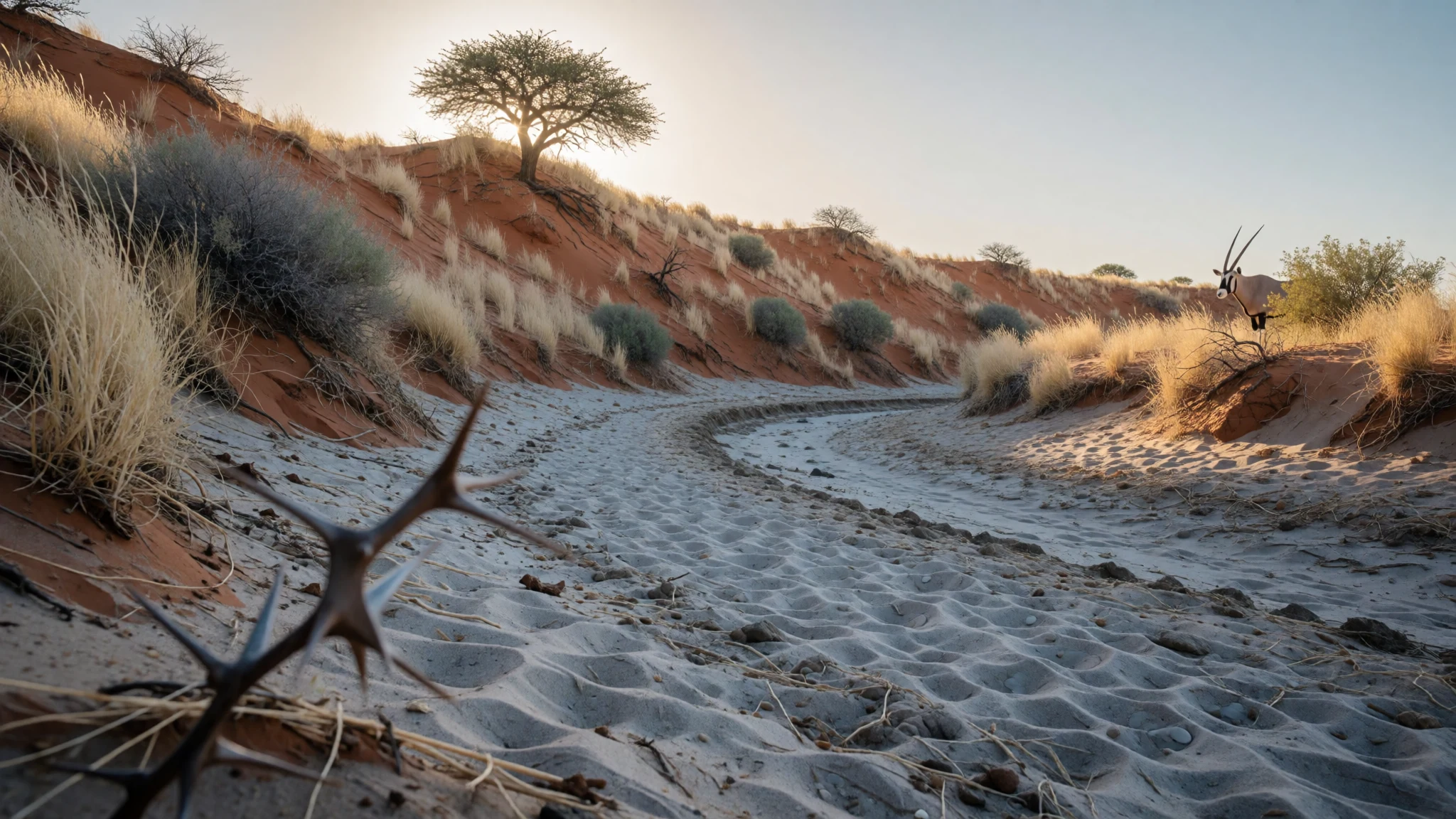
Kgalagadi is a vast red-dune desert shared by South Africa and Botswana, where predators, antelope and silence matter more than any checklist.
The place
Kgalagadi Transfrontier Park lies across the border between South Africa and Botswana, in the southern Kalahari, and is managed as a single wildlife area even though two countries share it. About three-quarters of the land is on the Botswana side and a quarter in South Africa. The name is usually translated as "place of thirst", and the landscape explains why: long red dunes, thin grass, scattered camelthorn trees (Vachellia erioloba) and two dry riverbeds, the Nossob and the Auob, that are said to flow on the surface only about once a century. Water does move underground, though, and that hidden supply keeps grass and trees alive along the channels. Animals follow the same lines, so the roads tracing the riverbeds are where most sightings happen. Gemsbok, springbok, lions, cheetahs and meerkats are the regulars, along with sociable weavers and their enormous shared nests. Waterholes along the dry channels draw game in through the drier months. Distances are big and settlements are few. Camps with chalets, small shops and fuel are the fixed points, and the nearest cities are a long drive away. Heat is a real factor in summer, when daytime temperatures often pass 40 °C, and winter nights can fall below freezing. Rain is sparse. This is a place for slow looking and long silences rather than for ticking off animals, and the reward is often a single patient hour at one waterhole.
Its story
Kgalagadi Transfrontier Park grew out of a plain conservation worry. The South African half, then called the Kalahari Gemsbok National Park, was set up in 1931 mainly to stop poaching of migrating game, the gemsbok above all. The Botswana half followed a few years later. Long before either, the desert belonged to the Khoe and other nomadic peoples, who moved with the seasons and the game, and later Afrikaans-speaking settlers arrived to exchange goods with the people who lived in the Kalahari. Animals paid no attention to the border, so after the Second World War the two governments reached an informal verbal understanding to treat the neighbouring lands as one conservation area. Decades later a joint management committee was formed, a plan was drafted and approved, and the two countries agreed to share park entrance income equally. A formal bilateral agreement at the turn of the millennium committed both to run the parks as a single ecological unit, and presidents Festus Mogae of Botswana and Thabo Mbeki of South Africa launched the park as Southern Africa's first peace park. There is no fence along the boundary, so wildlife still moves freely across what is also an international frontier. The park has not been free of worry since: reports of gas exploration rights in the Botswana section circulated in the 2010s, and the Botswana government later denied them.
What to see
- The Nossob and Auob riverbeds — Along the main park roads
These two dry rivers are the spine of Kgalagadi. Roads follow them, and so do the animals, because grass and camelthorn trees draw grazers and grazers draw lions and cheetahs. Drive slowly, stop often and scan the shade under trees. A quiet morning here can produce more than a day of rushing.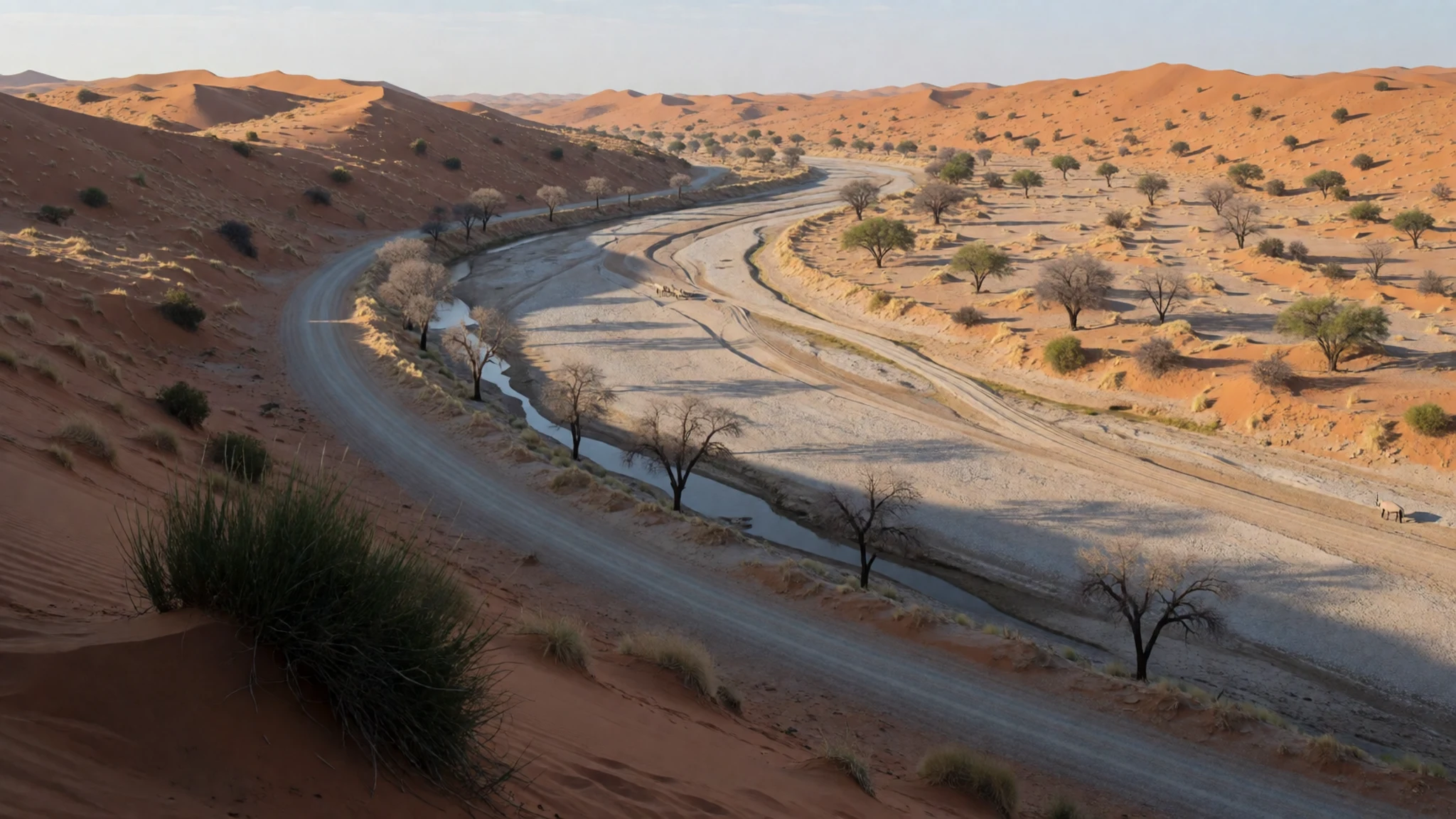
- Meerkats at Twee Rivieren — Twee Rivieren rest camp
A gang of meerkats lives around the visitor centre at Twee Rivieren, the main South African gate. They are easy to watch for a long time as they forage, stand sentry on their hind legs and bolt for burrows. Further out in the dunes, wild groups can be followed on foot with a guide.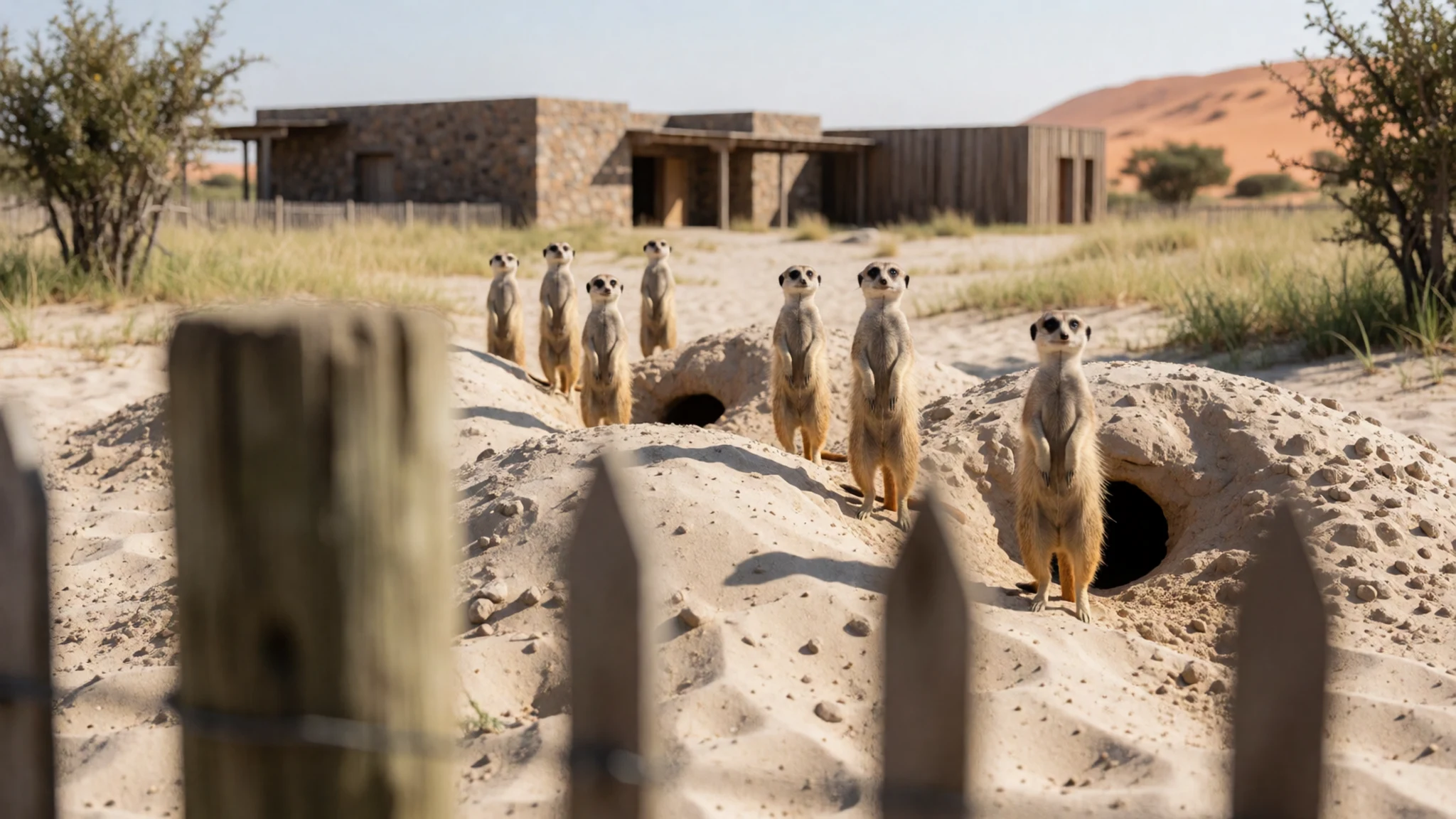
- Red dunes and open gemsbok country — Dune country between the two riverbeds
Away from the riverbeds the Kalahari rolls out in rust-red dunes with pale grass on the crests. Gemsbok, the animal the park was first set up to protect, stand out sharply against the colour. The light is best soon after sunrise and before sunset, when the sand glows.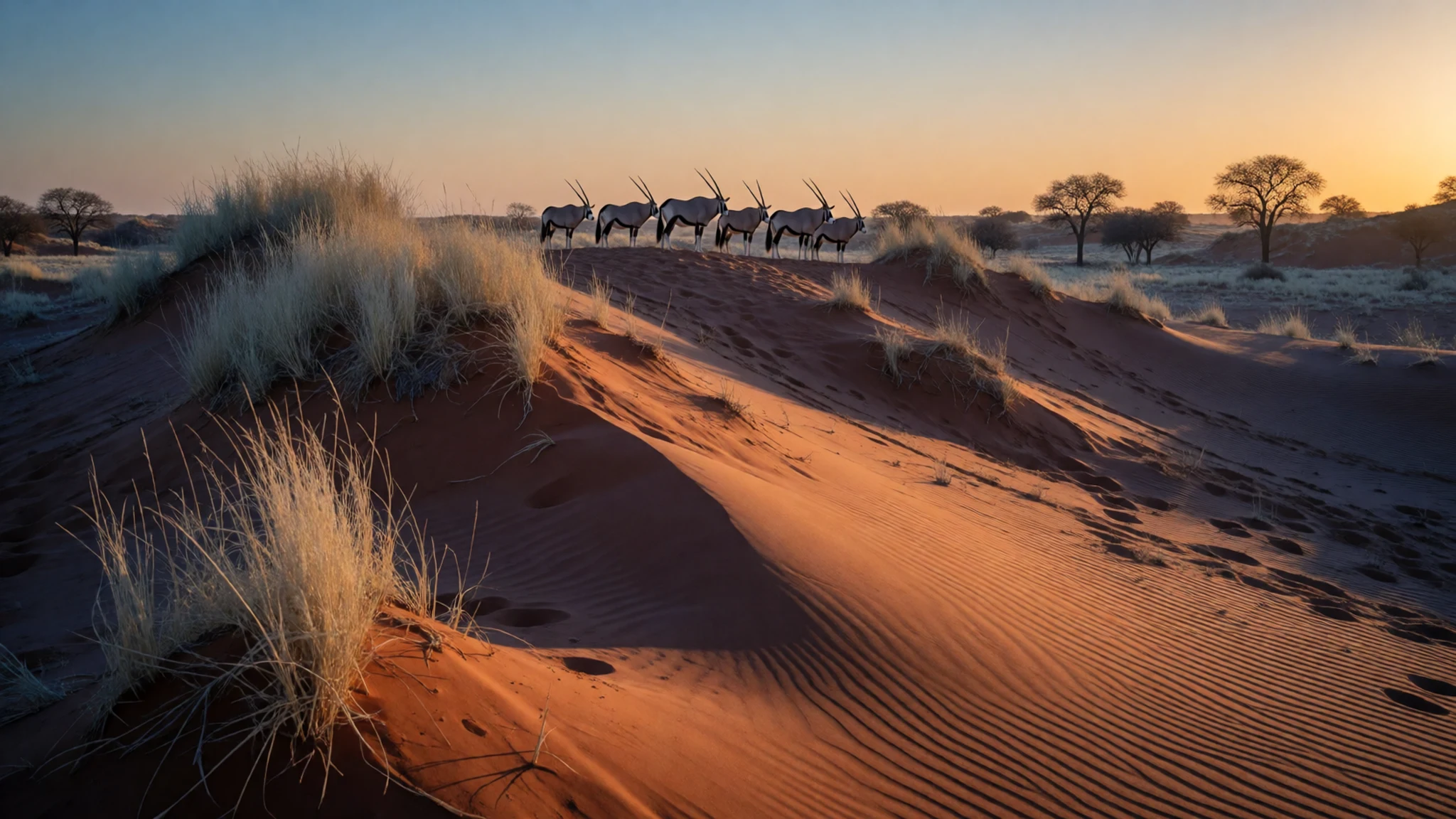
- Sociable weaver nests — Camelthorn trees along the park roads
Sociable weavers build huge straw nests in camelthorn trees, sometimes sagging the branches under the weight. A single nest holds many chambers and many birds, and other creatures use it too, from small falcons to snakes. They are easy to spot from the road and worth a stop for the engineering alone.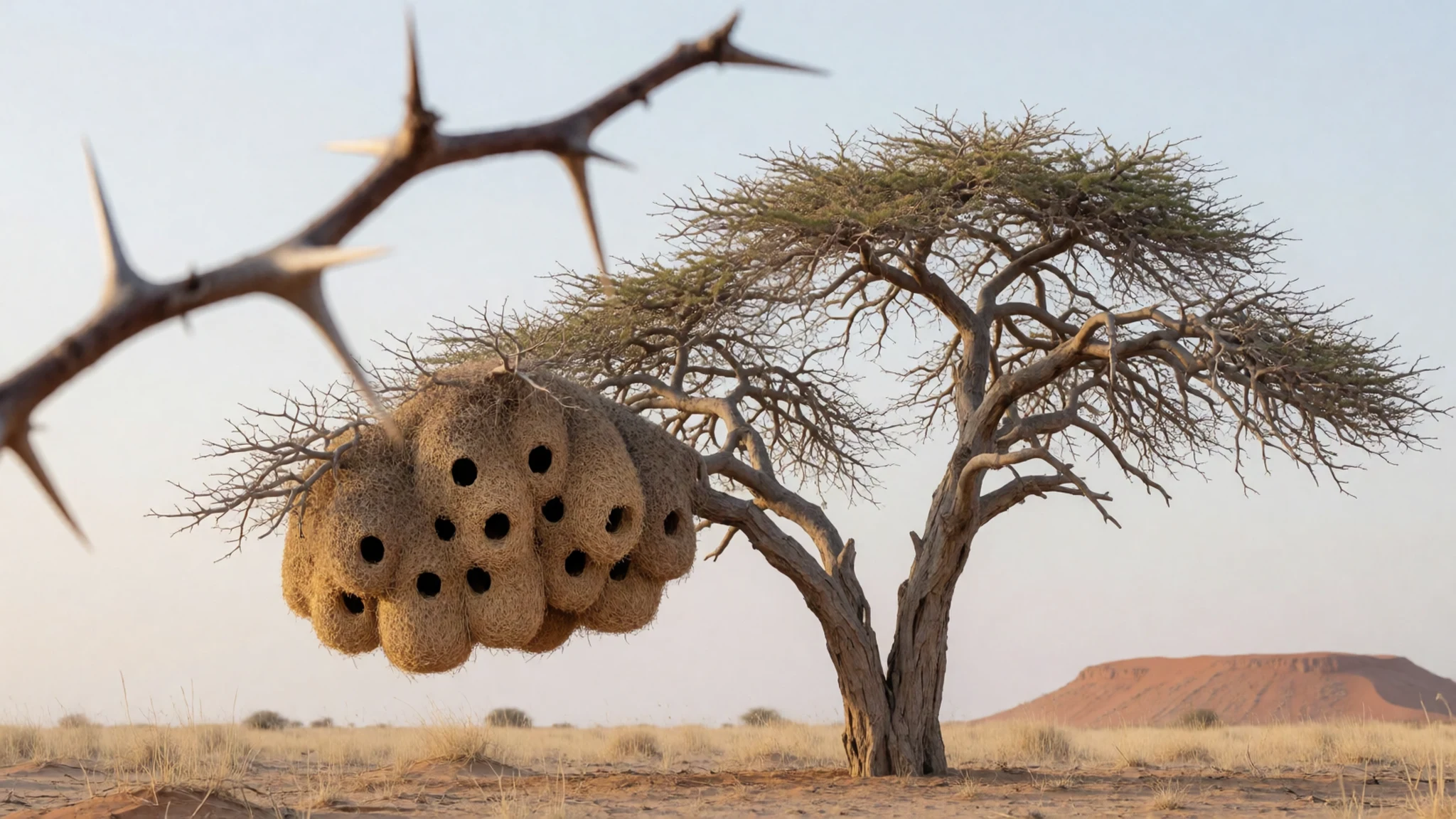
- Waterhole watching and cheetah country — Waterholes in the Nossob and Auob valleys
Many waterholes lie along the dry riverbeds, and parking beside one is the most patient way to see the park. Let the animals come to the vehicle. Cheetahs hunt on the open plains here, and a successful chase, though rare, is among the park's most memorable sights.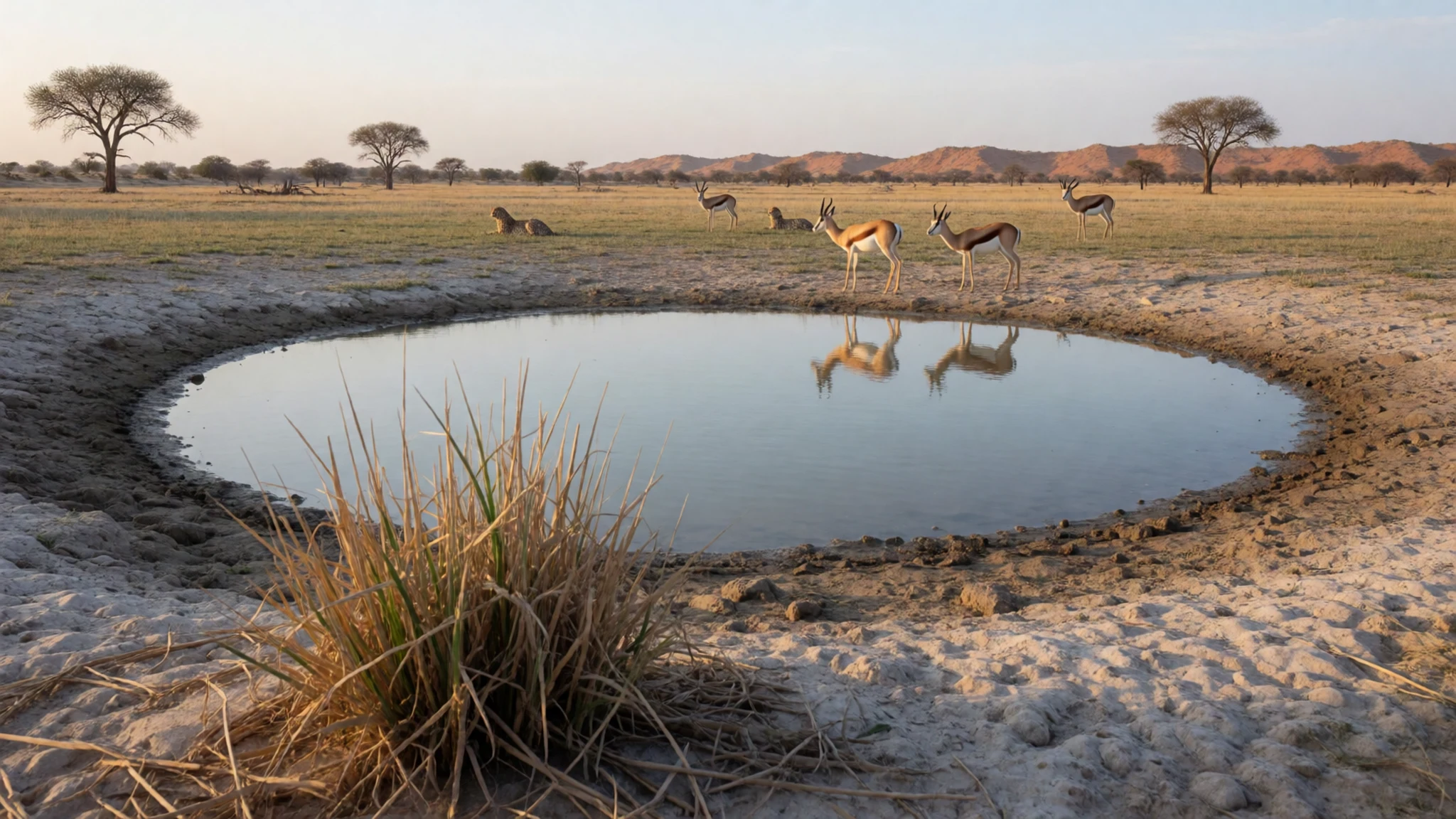
Culture
Kgalagadi Transfrontier Park carries two kinds of heritage. The older one belongs to the Khoe and other nomadic desert peoples, and to the Kgalagadi people whose name the park keeps. Their knowledge of where water hides, how animals move and when the land turns green made life possible in a place called "thirst". The newer layer is Afrikaans and Tswana-speaking, visible in place names such as Twee Rivieren, which means "two rivers", and in the way South African holidaymakers treat the park as a seasonal ritual. The second layer is easiest to meet in the camps. Evenings revolve around the braai, the South African barbecue, with neighbouring chalets swapping the day's sightings over the fire. The park is also a political landmark: two governments agreed to manage it as one, and visitors can cross between countries inside the park, provided the paperwork is in order. Silence is part of the experience too. Many visitors remark on how total it feels at a picnic spot at midday, and travellers tend to speak softly out of respect. Wildlife, not people, sets the pace, and a day often follows the movement of one pride, one cheetah or one herd. Keep to the marked roads, stay inside your vehicle except at fenced camps and designated picnic spots, and keep your voice low so animals and other visitors can enjoy the quiet.
What to wear
Kgalagadi Transfrontier Park has no single costume, but its peoples have distinct clothing traditions. Desert communities such as the Khoe and San historically used tanned animal hides and ornaments of beads, often made from ostrich eggshell. Setswana communities on the Botswana side are associated with printed cotton dresses and wrapped blankets worn for weddings and festivals, while shweshwe, a printed cotton, is common in South African celebrations. These are dress-up clothes, worn at ceremonies rather than daily. What people wear now is practical. Park rangers and guides wear khaki or olive uniforms, local residents wear everyday cotton and jeans, and South African holidaymakers favour shorts, sturdy sandals and wide-brimmed hats. For a visitor the climate decides everything. Summer days can pass 40 °C, so light, loose cotton in neutral colours, a brimmed hat, sunglasses and strong sunscreen matter. Winter nights fall below freezing, so pack a fleece, a warm jacket, a beanie and gloves for early game drives in an open vehicle. Closed shoes with grip suit sandy ground, and check them each morning before putting them on, since scorpions shelter in them in summer. Bright colours and strong perfume are best avoided on walks and drives, and no formal clothing is needed anywhere.
What to eat
- Springbok biltong — Main camp shops
Biltong is air-dried, spiced meat, and springbok is the local favourite. It makes a dependable snack for long drives between camps. Buy it ready-sliced or in a stick at the main camp shops, and ask for a dryer or a moister cut.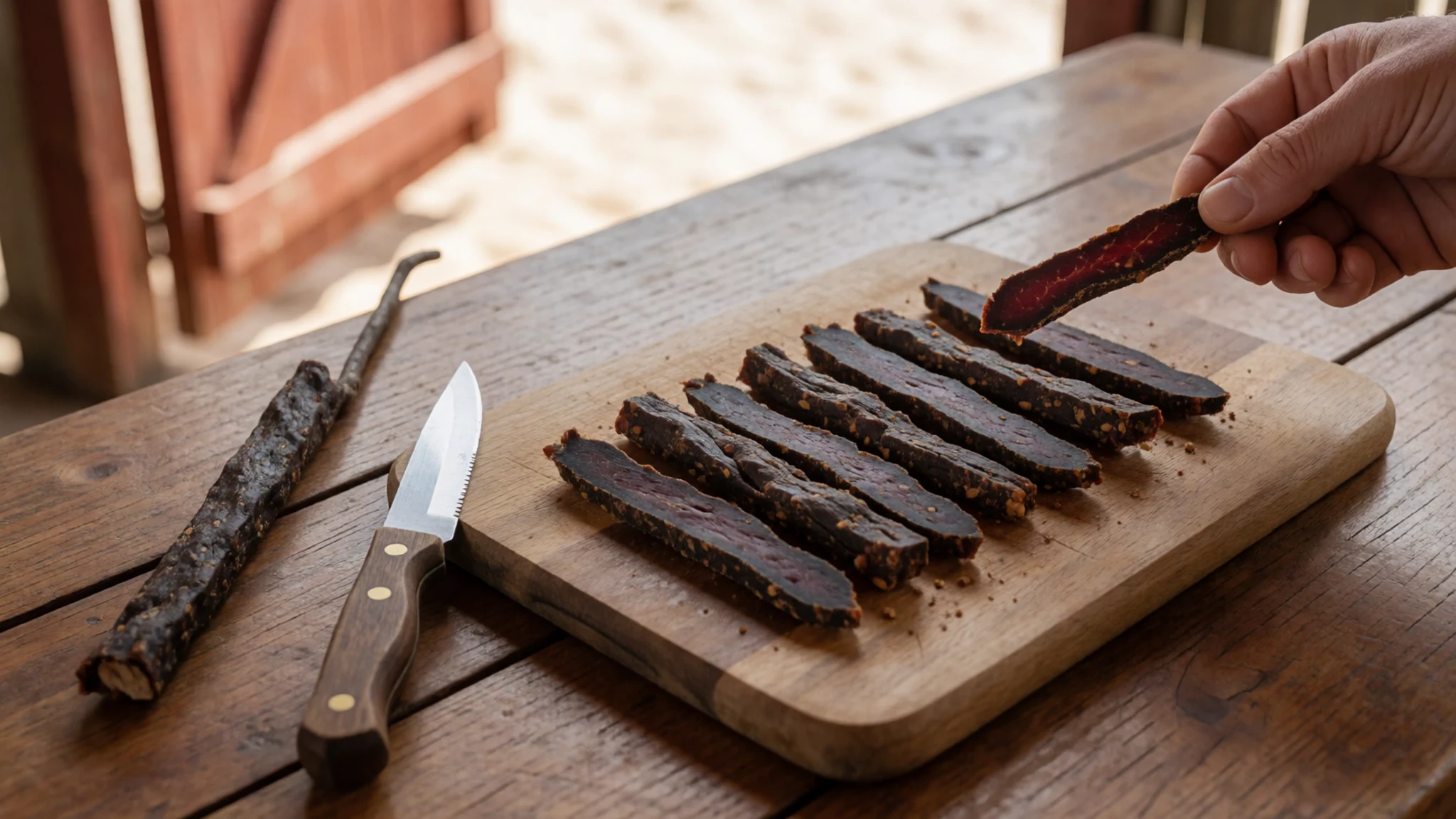
- Ostrich steak — Camp shops and camp kitchens
Ostrich is a lean, red meat with a flavour closer to beef than poultry. It cooks quickly, so it suits a camp braai or a simple pan. Look for it among the fresh and frozen meat at the main camp shops.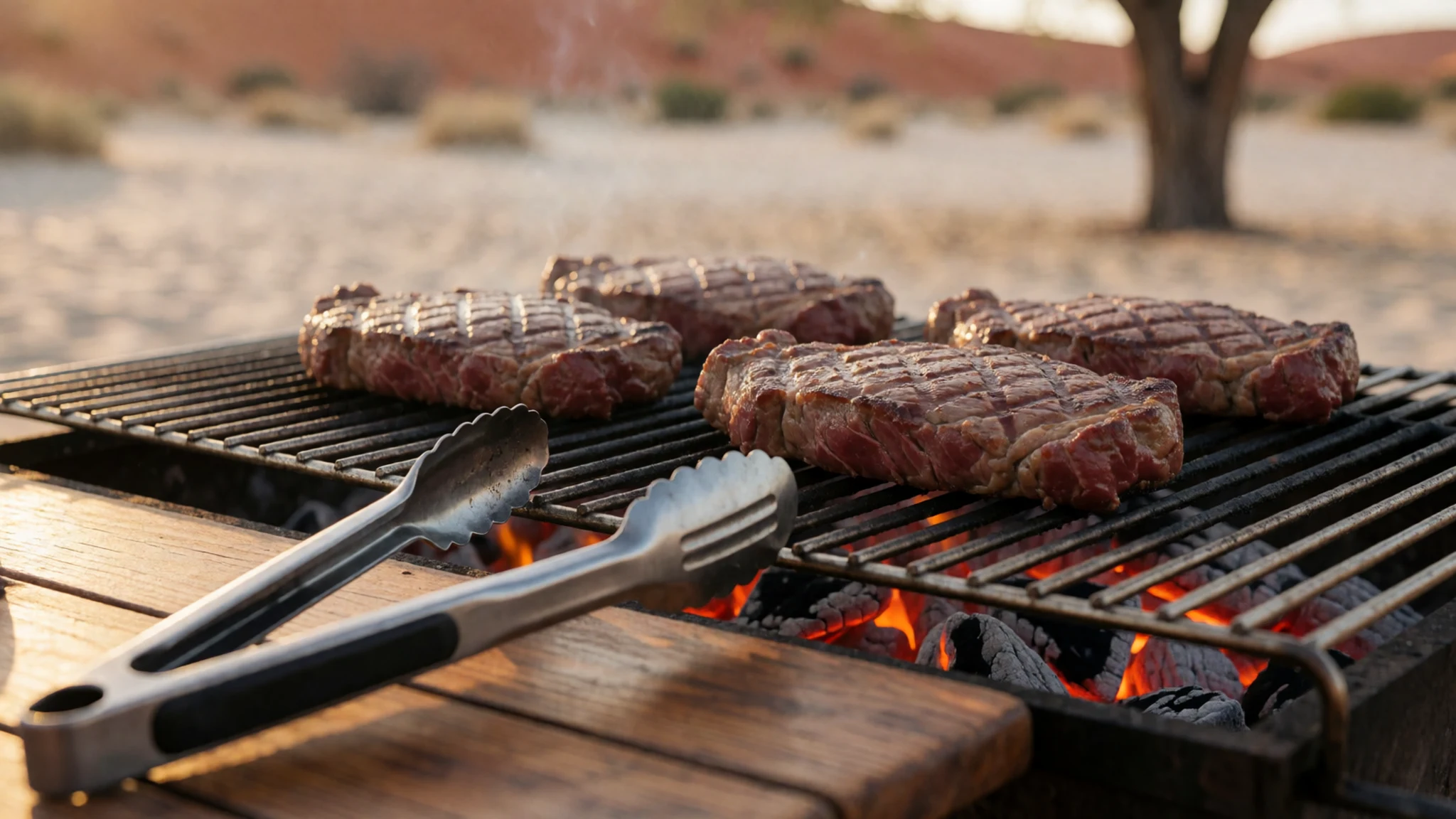
- Karoo lamb cutlets — The braai area at any camp
Lamb cutlets from the Karoo, grilled over coals, are the classic evening meal in the camps. They are sometimes called skaap tjops. Cooking them yourself at the braai stand outside the chalet, with a beer and the sunset, is the point. - Pap and boerewors — Campfires at the rest camps
Pap is a stiff maize porridge, served with boerewors, a coiled spiced sausage cooked on the fire. It is the usual South African camp supper, and a neighbour at the next fire is often happy to share a plate and the recipe.
Plan it
Best time. March to May and September for milder days and good animal viewing at waterholes. Summer, from about November to February, brings extreme heat above 40 °C and the rainy season, when flash floods and mud can close roads. Winter nights are often below freezing but days are clear.
How long. 3–5
Getting there. Fly to Upington, hire a car there and drive to the park, which is a long, sealed road journey; collecting a hire car at Twee Rivieren is possible with advance booking. Twee Rivieren (South Africa) and Two Rivers (Botswana) gates double as border posts, so carry passports and any visas. Check the official site, sanparks.org/parks/kgalagadi, for road conditions.
Budget. mid
Tips
- Book camps and chalets well ahead through the official site, since popular dates fill early
- Carry plenty of drinking water and spare water in the vehicle; camp tap water is safe but often salty, and bottled water is sold in the shops
- Start drives early and rest in the heat of the day, when animals shelter and the roads shimmer
- Fuel up and stock food at the main camps, because services between them are few
- Check the state of the roads before travelling in the rainy season, and use a high-clearance four-wheel-drive for sandy tracks
- Shake out shoes each morning in summer, as scorpions hide in them
Etiquette
- Stay in your vehicle outside the fenced camps and marked picnic spots, and if you break down, wait inside it
- Declare any firearms at the gate, where they are sealed until you leave, and do not bring pets
- Keep voices low and give animals space at waterholes
Nearby
Sources
- Wikidata Q859385 (CC0)
- Wikipedia: Kgalagadi Transfrontier Park (rev 1363568394) (CC BY-SA 4.0)
- Wikivoyage: Kgalagadi Transfrontier Park (rev 5331954) (CC BY-SA 4.0)
- Photo: Gemsbock in the Kalahari National Park, Klaus Donath (CC BY 3.0)
- Photo: Nossob River Bed, Bernard DUPONT (CC BY-SA 2.0)
- Photo: Twee Rivieren Camp, Hansm (CC BY-SA 2.5)
- Photo: Red dunes Kgalagadi kalahari, Bougnat87 (CC BY-SA 1.0)
- Photo: Female Gemsbok near Urikaruus camp, Malapo Country Lodge (CC BY-SA 1.0)
- Photo: Sociable Weaver nest, Jeppestown (CC BY-SA 2.0)
- Photo: Urikaruus Camp, Malapo Country Lodge (CC BY-SA 1.0)
- Photo: Cheetah with kill, Peter Thomas (CC BY-SA 4.0)


Wildlife
- Sociable weaver (bird)
Picture a block of flats built by birds: sociable weavers make one enormous shared nest of straw, and a whole community lives inside. In Kgalagadi they favour camelthorn trees, and the branches can sag under the weight. Few birds build anything so remarkable. Watch from a respectful distance, speak softly, never poke at or climb the nest, and let your guide point out the best trees.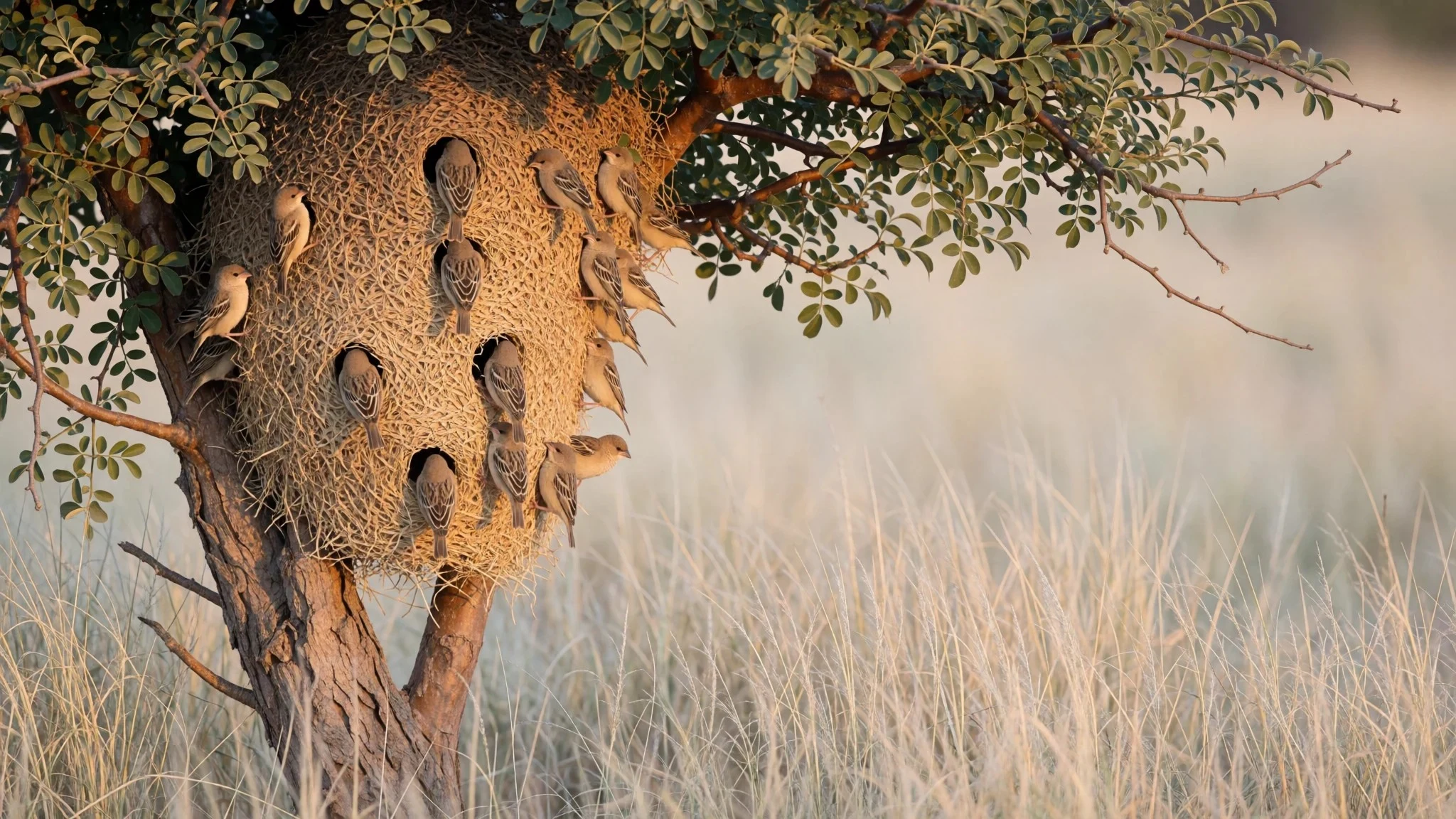
- Meerkat (animal)
A meerkat is a small, long-legged mongoose with big eyes and a pointed nose, like a tiny lookout in a banded grey-brown coat. A gang makes its home by the main South African entrance at Twee Rivieren, near the visitor centre, so you may meet them early on. Their claws are built for digging. Watch from a polite distance, keep your voice low, ask a guide where to look, and never offer food. - Gemsbok (animal)
The gemsbok is a large desert antelope, a type of oryx that thrives where little else can. It belongs to the dry Kalahari and Namib country of southern Africa, and Kgalagadi was first created to protect it, so it is a fitting animal to hope for. Keep well back, stay quiet in your vehicle, and let a guide help you read its mood. Never feed it. - Pygmy falcon (bird)
The pygmy falcon is a tiny hunting bird, the smallest of its kind in Africa and among the smallest anywhere. It often turns up at the great communal nests of sociable weavers, whose many chambers shelter more than their builders. Look there, but keep your distance, stay quiet and still, let a guide help you spot it, and never feed it or disturb the nest.