Boulders Beach
Boulders Beach, South Africa
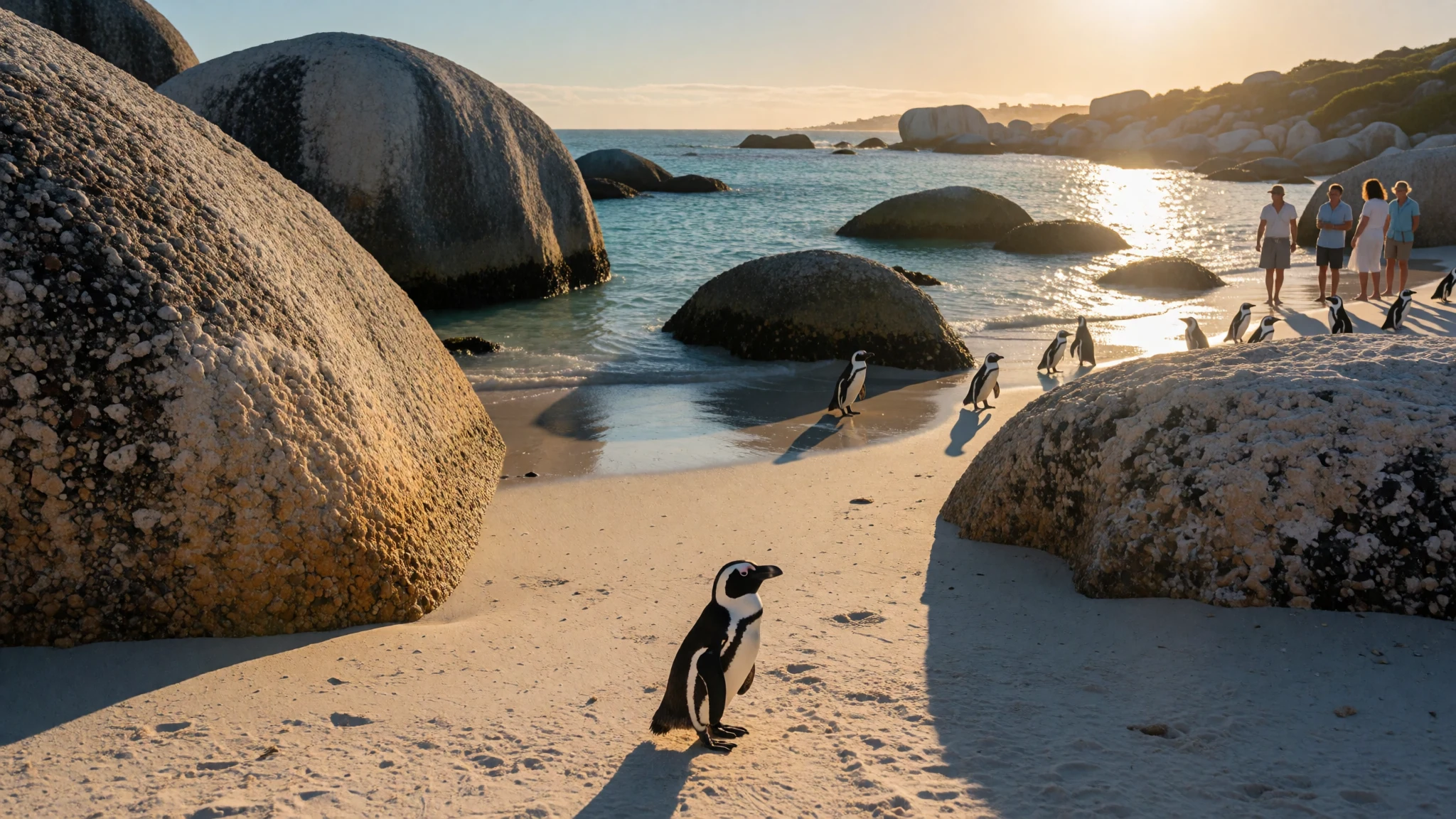
To swim in calm, turquoise waters alongside a colony of endangered African penguins sheltered by massive granite boulders.
The place
Boulders Beach is a sheltered sanctuary located in Simon's Town on the eastern side of the Cape Peninsula. The beach is defined by its namesake: enormous granite boulders that create a series of protected inlets, shielding the sand and water from the fierce winds that typically batter the South African coastline. This geography makes the water unusually calm and inviting for a swim, providing a rare pocket of tranquility in a region known for its wild Atlantic and Indian Ocean clashes.
While the scenery is striking, the primary draw of Boulders Beach is the resident colony of African penguins. These flightless birds settled here in 1982, turning the beach into a vital stronghold for a critically endangered species. Today, the area is managed as part of the Table Mountain National Park, balancing the needs of wildlife conservation with the demands of global tourism. Visitors navigate a series of boardwalks to observe the birds without disturbing their nesting grounds, though the penguins often venture beyond the fences and into the surrounding town. The atmosphere is a mixture of a nature reserve and a seaside resort, where the slow pace of the penguins dictates the rhythm of the day.
Its story
The story of Boulders Beach is one of unexpected adaptation. For years, the African penguin populations on nearby islands were vulnerable to predators and environmental shifts. In 1982, a few adventurous birds decided to make the mainland their home, finding the granite crevices of Boulders Beach to be a perfect fortress against the wind and a safe place to raise their young. What started as a small group grew into a thriving colony of thousands, as more penguins migrated from the surrounding islands to join the mainland community.
This shift transformed Simon's Town into an accidental wildlife sanctuary. The penguins quickly became local celebrities, known for their boldness and their tendency to wander into residential gardens or stroll down the street like pedestrians. However, this proximity to humans creates a delicate tension. While the colony provides a crucial educational tool for conservation and attracts hundreds of thousands of visitors, the birds must contend with the noise and presence of crowds. The evolution of the site—from a quiet cove to a managed park with extensive boardwalks—reflects a broader effort to protect the species while allowing people to witness their charm. It is a living experiment in cohabitation, where the boundary between the wild and the urban is as porous as the sandy gaps between the boulders.
What to see
- The Penguin Colony — Boulders Beach
The heart of the experience involves watching the African penguins in their natural habitat. From the elevated boardwalks, you can observe them nesting in the scrub or waddling across the sand. For those who enter the beach area, there is the chance to swim in the calm water alongside these birds.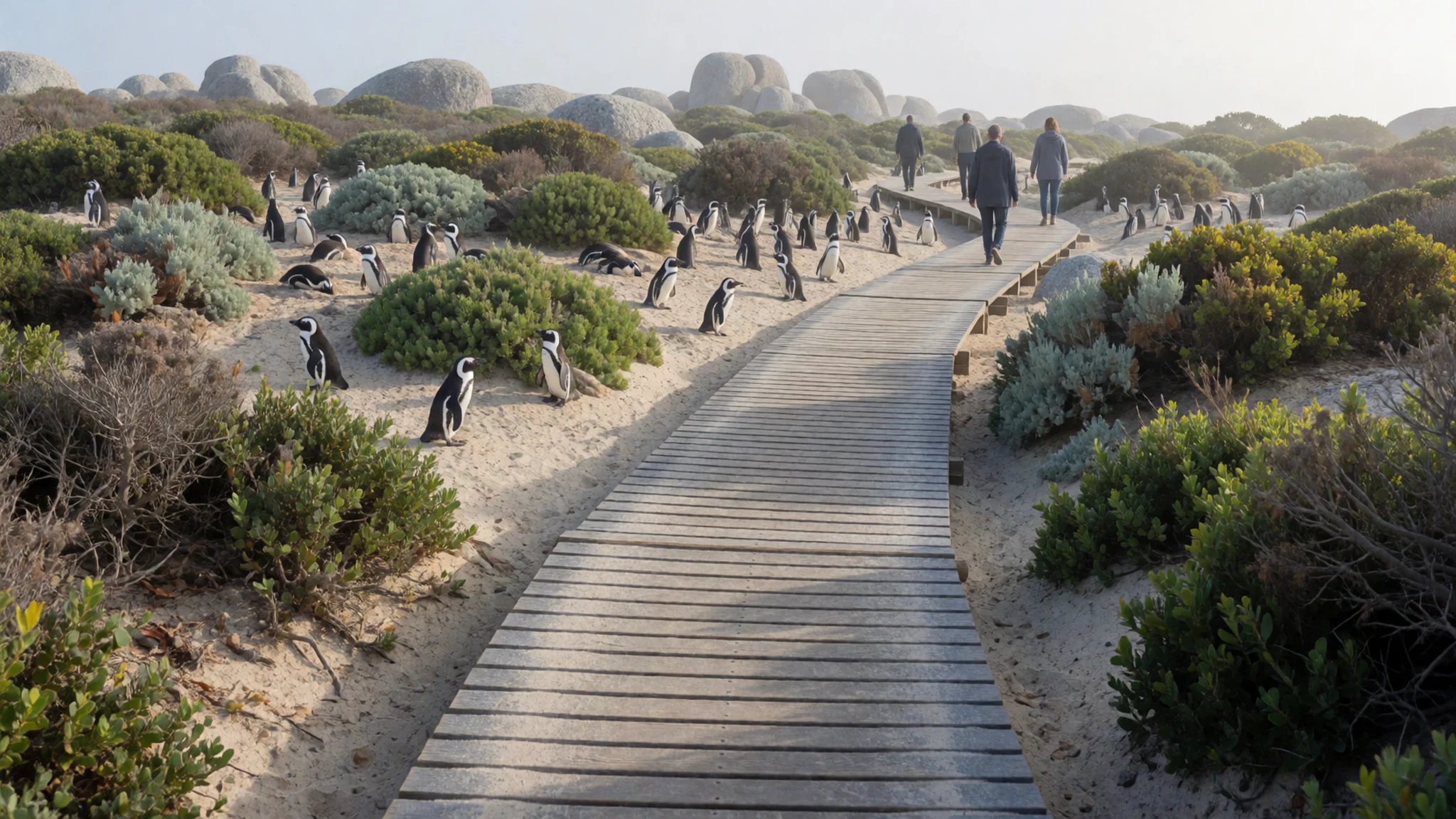
- Foxy Beach — Boulders Beach
One of the specific areas where the colony first established itself. This section of the beach offers a more intimate look at how the penguins use the granite boulders for shelter and protection from the elements while remaining close to the shoreline for feeding.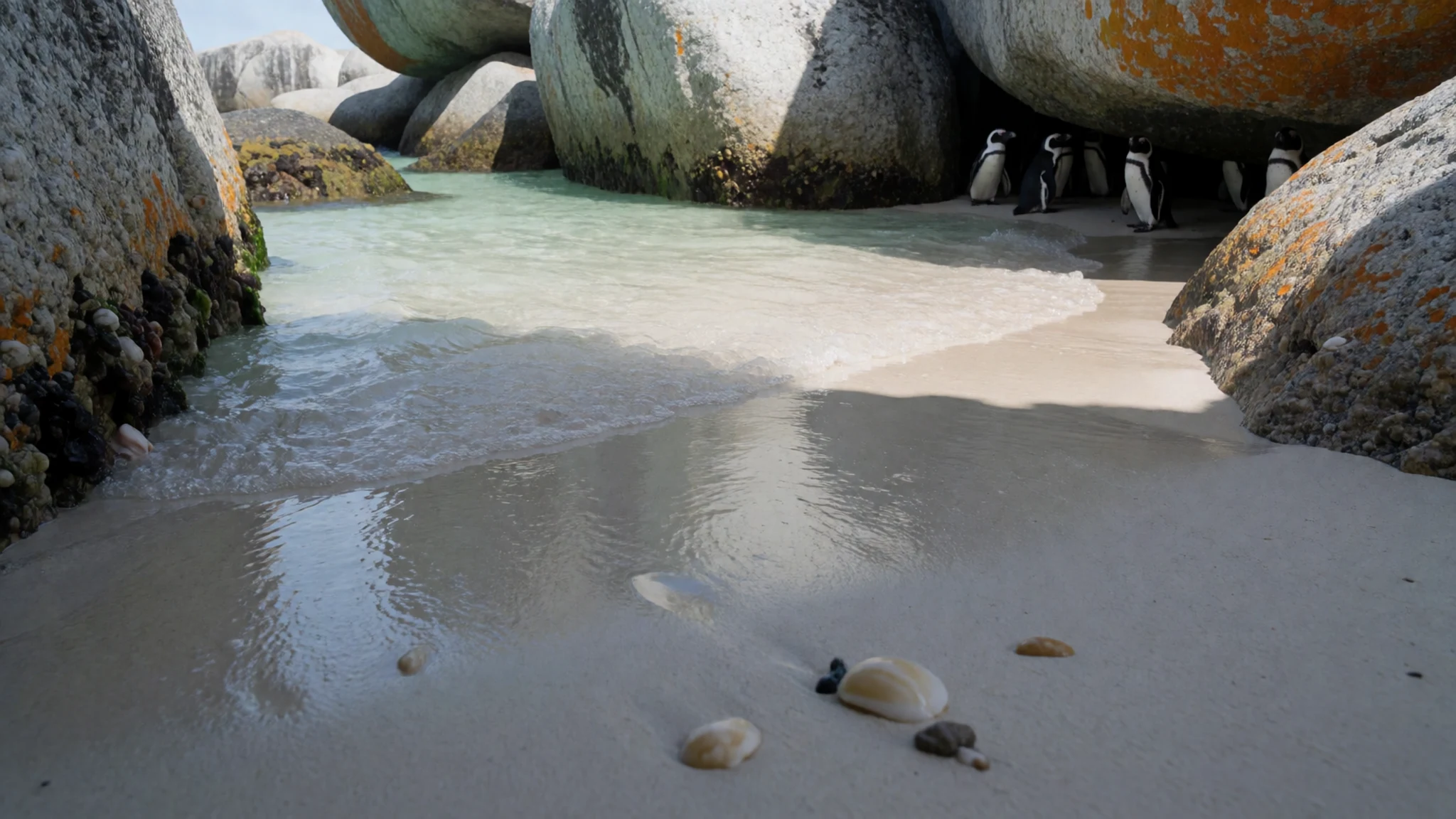
- The Spotting Points — Boulders Beach
For those who prefer not to enter the sand, the managed spotting areas provide a safe distance to photograph and observe the colony. These points are designed to minimize human impact on the penguins' nesting sites while providing clear views of the colony's activity.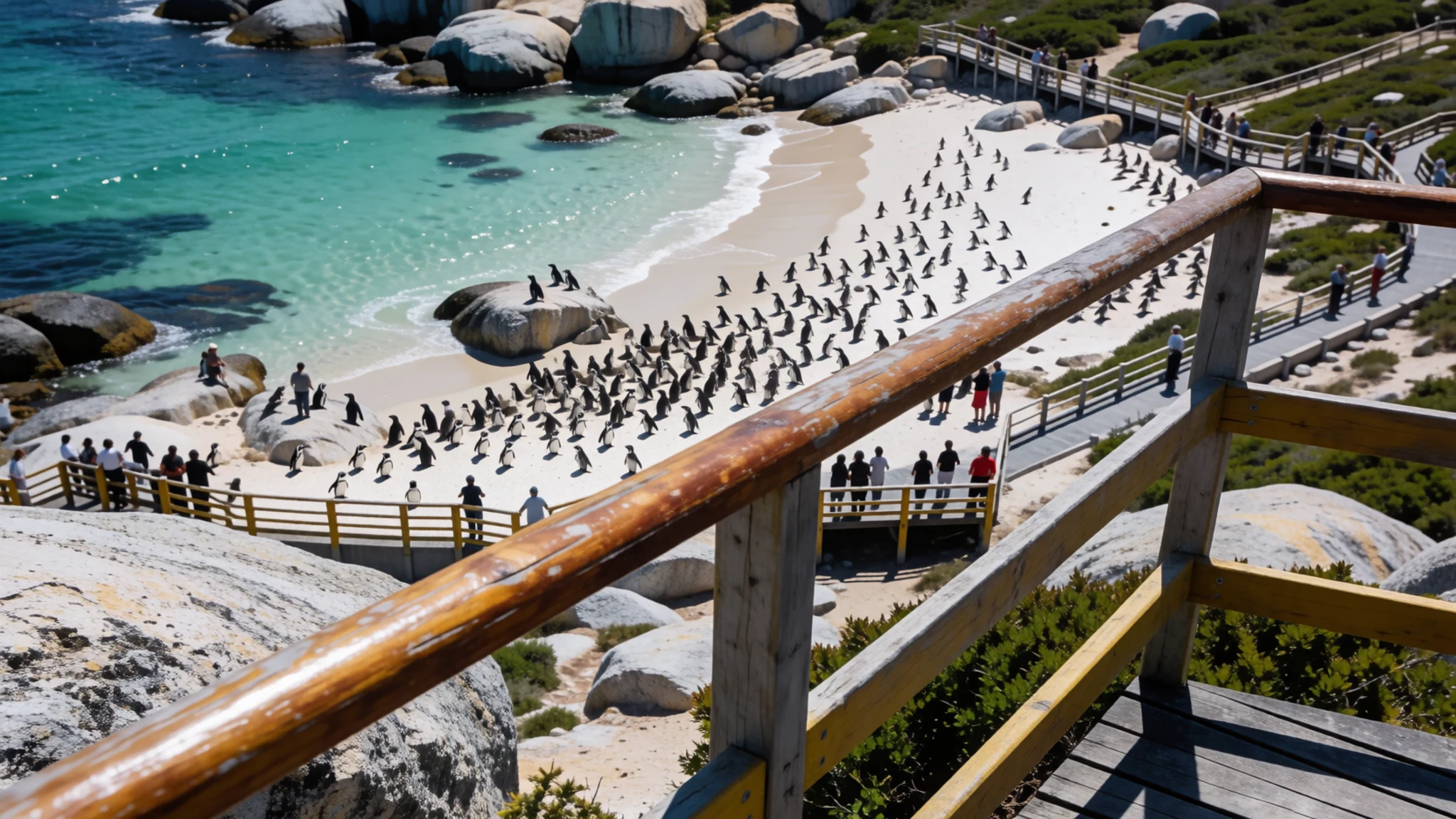
- Mini-golf Course — Parking area
Located adjacent to the parking area, this provides a light-hearted break from the wildlife watching. It is a simple leisure spot that caters to families visiting the peninsula for the day before they head further toward Cape Point.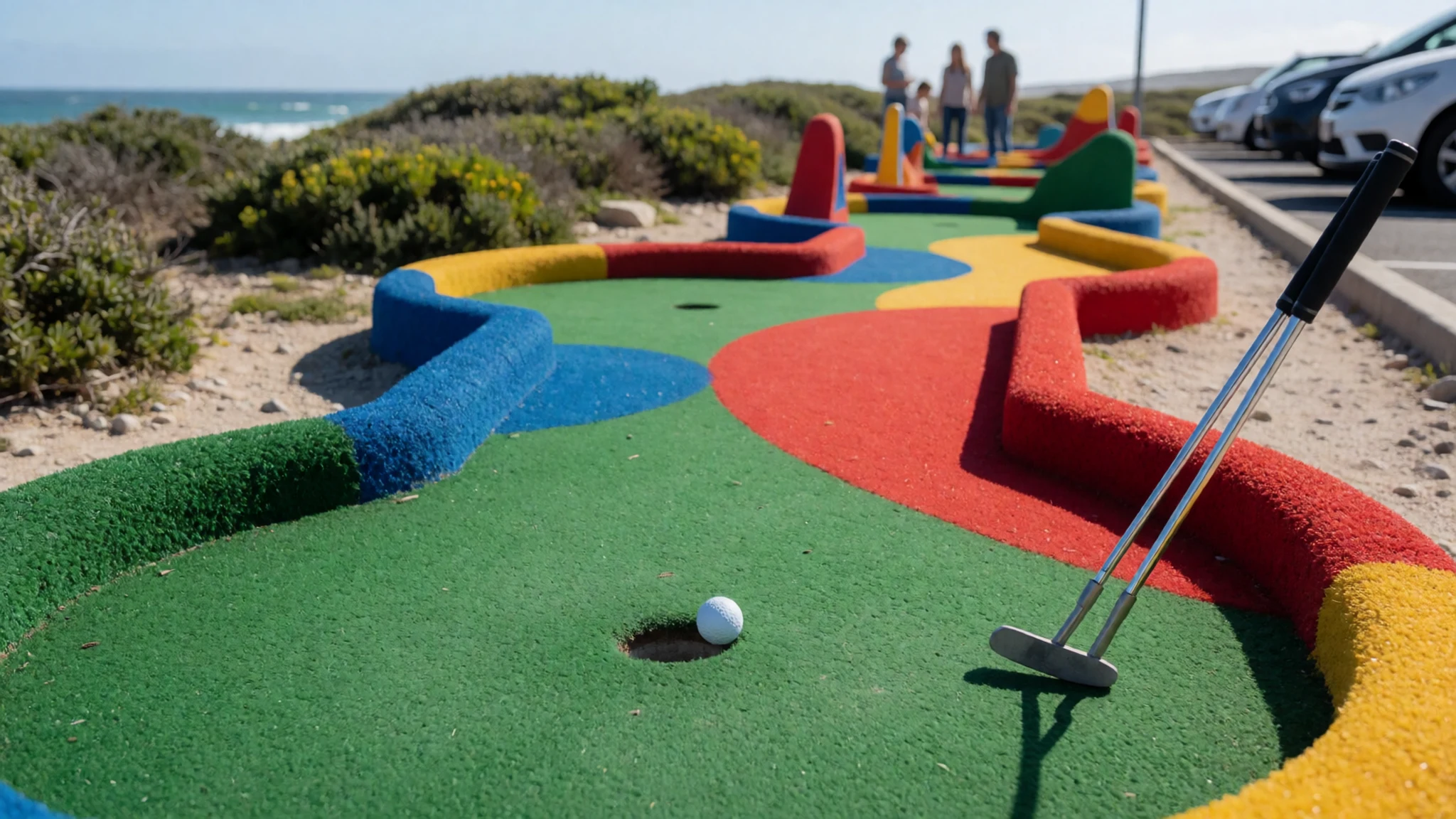
Culture
Culture at Boulders Beach is defined by a deep commitment to environmental conservation and the protection of the African penguin. The site operates under the stewardship of the Table Mountain National Park, and the ethos here is one of respectful observation. There is a strong local pride in Simon's Town regarding the penguins; they are viewed as neighbours rather than just attractions. Visitors will find a community of guides and park rangers who are passionate about the birds' survival and the threats they face from overfishing and pollution.
The experience is heavily structured to protect the animals, with designated paths and strict rules against interaction. This creates a culture of 'look but don't touch,' where the value of the experience comes from witnessing wild animals in a semi-urban setting. The interaction between the international tourist crowds and the quiet, sleepy vibe of Simon's Town creates a unique coastal energy. Please maintain a respectful distance and never attempt to touch or feed the penguins.
What to wear
There is no specific traditional dress associated with Boulders Beach, but the wider region of the Western Cape reflects a blend of colonial and indigenous influences. In the surrounding towns, you will see a mix of practical coastal wear and modern South African urban fashion. Most locals opt for comfortable, casual clothing suitable for the unpredictable Cape weather.
For visitors, the key is layering. The Cape Peninsula is famous for its shifting winds and sudden temperature drops, even in summer. A light windbreaker or a fleece is essential, as the breeze can be biting even when the sun is out. For the beach itself, swimwear and a quick-dry towel are necessary if you plan to swim, but sturdy sandals or walking shoes are best for navigating the rocky areas and boardwalks. Sun protection is non-negotiable; the South African sun is intense, so a wide-brimmed hat and high-SPF sunscreen are the standard 'uniform' for anyone spending a few hours among the boulders.
What to eat
- Fresh Seafood — Penguin Point Restaurant
Platters of local fish and calamari, often served with a lemon-butter sauce, reflecting the town's maritime heritage.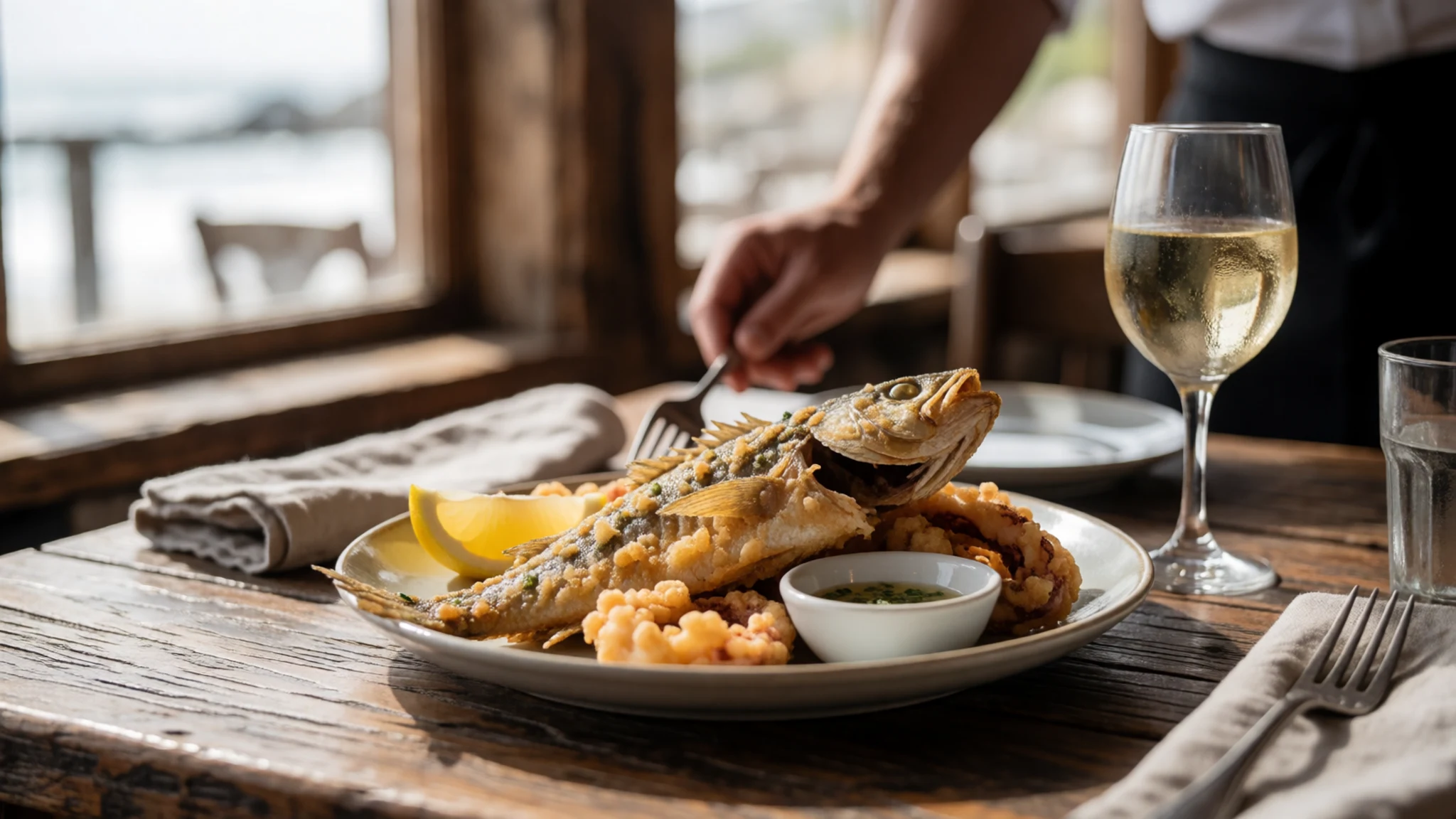
- Coastal Salads — Penguin Point Restaurant
Light, fresh salads featuring seasonal vegetables and grains, designed for a warm day by the ocean.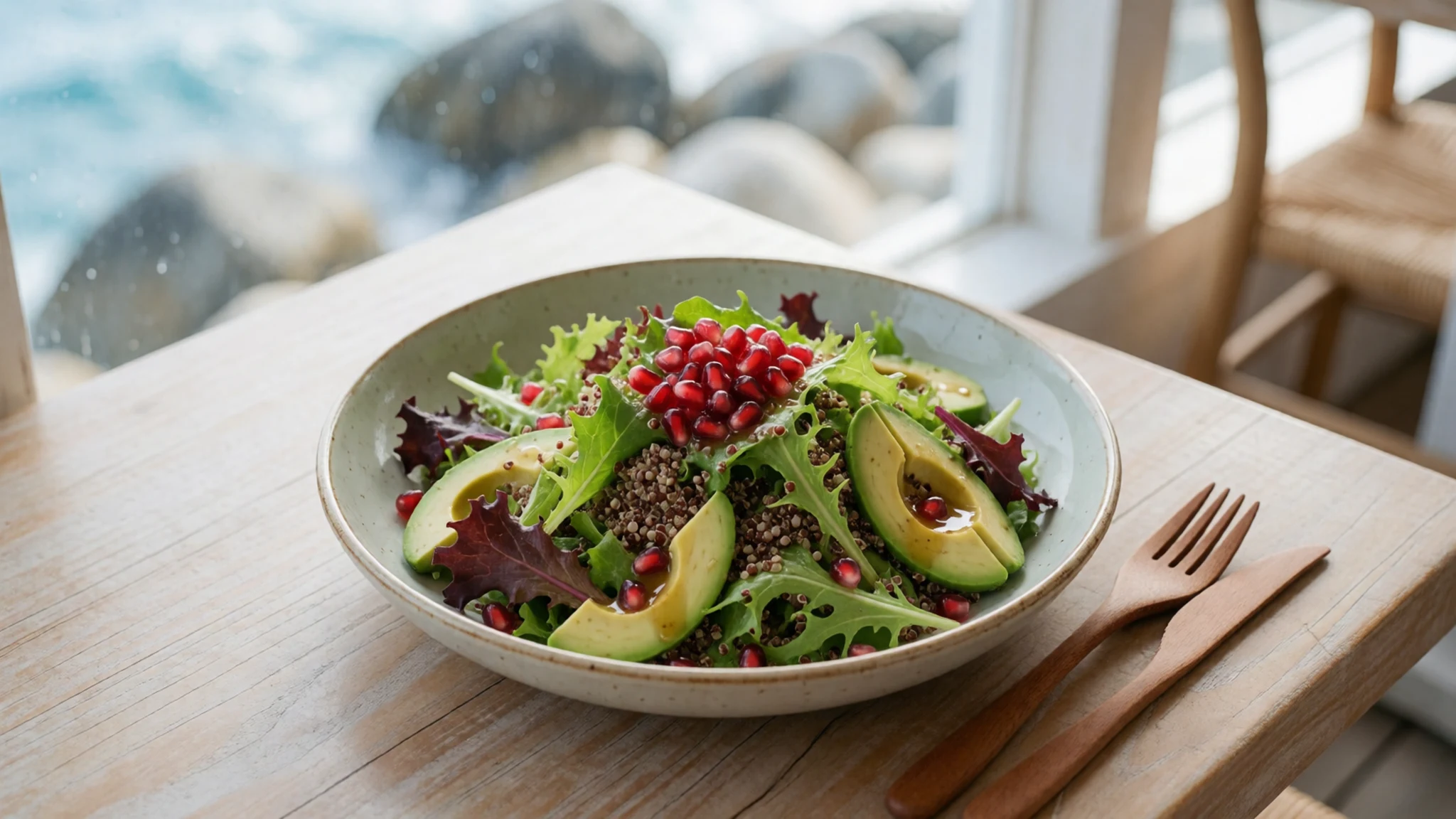
- Traditional Fish and Chips — Eateries in Simon's Town
A hearty staple of the Cape coast, typically consisting of battered hake and thick-cut chips. - Local Ice Cream — Kiosks near the beach entrance
Refreshing scoops of vanilla or fruit-based ice creams, a favourite for families after a walk on the boardwalks.
Plan it
Best time. November to December is the moulting season, while February to August is the breeding season. September to October sees fewer penguins on shore as they feed at sea.
How long. 1
Getting there. Drive south from Cape Town via the M3; take the M4 along the east coast through Simon's Town, following signs to the Boulders parking lot.
Budget. mid
Tips
- Arrive before 10 am to avoid the crowds and ensure entry, as capacity is limited
- Carry a windbreaker even in summer
- Consider a circular route including Cape Point to make the most of the trip
- Check for Wild Card eligibility to save on entrance fees
Etiquette
- Stay on the designated boardwalks to avoid destroying nests
- Keep noise levels down to avoid stressing the birds
- Do not leave any litter on the beach
Nearby
Sources
- Wikidata Q895056 (CC0)
- Wikipedia (CC BY-SA 4.0)
- Wikivoyage (CC BY-SA 4.0)
Wildlife
- African penguin (animal)
Think of the African penguin as a small, flightless bird with flippers instead of wings, built for life in the sea. This endangered colony at Boulders Beach shelters among huge granite boulders beside calm, turquoise water, a lovely setting in which to see them. Keep a polite distance, stay quiet so you do not startle them, and never offer food. Following a guide's advice will help you enjoy them while keeping them safe and undisturbed.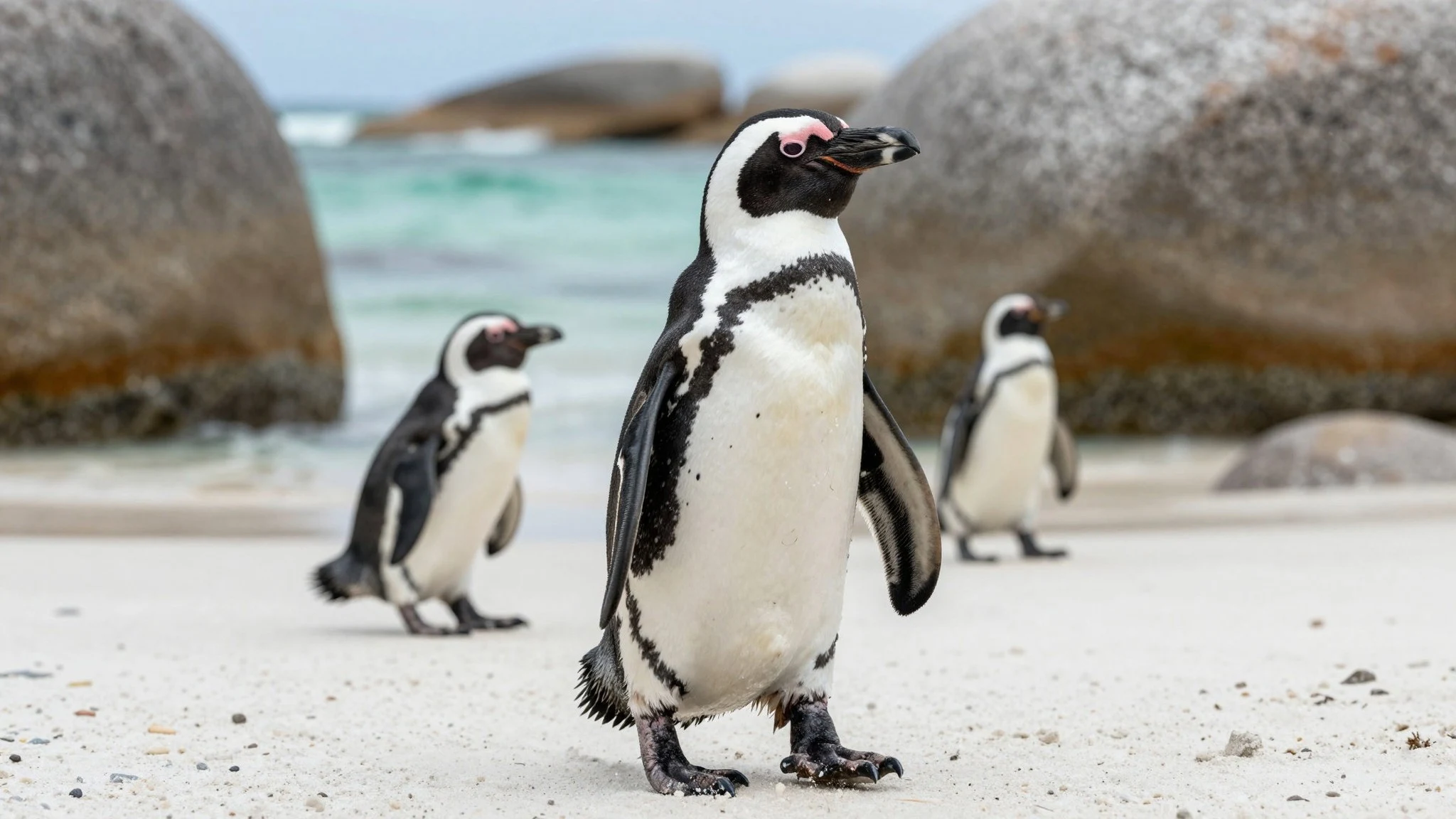
- African penguin (bird)
Think of the African penguin as a small, flightless bird with flippers instead of wings, built for life in the sea. This endangered colony at Boulders Beach shelters among huge granite boulders beside calm, turquoise water, a lovely setting in which to see them. Keep a polite distance, stay quiet so you do not startle them, and never offer food. Following a guide's advice will help you enjoy them while keeping them safe and undisturbed.